Abstract
Introduction:
Open government has gained prominence as a governance paradigm aimed at enhancing transparency, participation, and accountability; however, its conceptual relationship with the rule of law remains fragmented within existing scholarship. This study addresses this gap by systematically examining how academic discourse positions open government as a mechanism for strengthening rule-of-law outcomes.
Methods:
A bibliometric and scientometric analysis was conducted on peer-reviewed publications indexed between 2014 and 2023. Bibliographic data were extracted and analysed using VOSViewer to generate keyword co-occurrence networks, citation relationships, and thematic clusters. The analysis follows a transparent and reproducible review protocol adapted from PRISMA guidelines. To contextualize the findings, the World Justice Project Rule of Law Index 2024 is used as an external reference for the Philippine governance environment.
Results:
The results reveal several dominant thematic clusters, including transparency and accountability, citizen participation, digital governance, anti-corruption, and institutional capacity. Keyword and citation networks indicate that open government is most frequently conceptualized as an enabling mechanism for accountability and administrative transparency, while linkages to judicial effectiveness and enforcement remain comparatively underexplored. The Philippine context reflects moderate institutional openness alongside persistent weaknesses in corruption control and justice systems.
Discussion/Conclusion:
This study contributes by clarifying the intellectual structure of open government and rule-of-law scholarship and highlighting conceptual gaps between openness and legal enforcement. The findings offer implications for governance research and inform policy discussions on strengthening rule-of-law outcomes through open government reforms.
1 Introduction
1.1 Background
Open government, a concept rooted in the New Public Governance paradigm, gained international prominence following its articulation by U. S. President Barack Obama in his State of the Union address, which emphasized transparency, participation, and accountability as core principles of modern governance (Alma, 2023). This normative shift was later institutionalized through the establishment of the Open Government Partnership (OGP) at the United Nations General Assembly, with the Philippines among its founding members. The OGP emerged in response to growing public demands—particularly in the United States—for greater citizen involvement in public policy formulation. Within this framework, open government is understood as a governance model characterized by the redistribution of authority between state institutions and civil society actors, thereby fostering collaborative decision-making and shared accountability (Kulsum et al., 2022). The partnership seeks to advance democratic governance by promoting public access to government information, strengthening civic participation, institutionalizing ethical standards, and leveraging digital technologies to enhance transparency and accountability.
In the Philippine context, the global open government agenda was adopted through the establishment of Open Government Philippines (OGI) in 2011, following the country’s engagement with the OGP movement initiated in 2009. Central to this initiative is the recognition that unimpeded access to public information is a fundamental prerequisite for participatory governance, effective decentralization, and democratic consolidation. The evolution of open government in the Philippines has been shaped by increasing societal demands for transparency, accountability, and citizen participation in public decision-making processes. Legislative developments, such as Republic Act No. 9184 governing public procurement and information disclosure, reflect these commitments and are intended to mitigate corruption and administrative inefficiency through enhanced public oversight (Luthfia et al., 2021).
Subsequent reforms, including the New Government Procurement Act and Executive Order No. 2 (2016), further operationalized openness by strengthening transparency in public spending and providing a legal basis for citizens to request information held by executive agencies. However, despite these institutional advances, the practical implementation of the Philippine Freedom of Information regime remains uneven. Empirical studies indicate persistent challenges, including limited public digital literacy, insufficient institutional readiness to ensure secure and timely information access, and weak enforcement mechanisms (Purnomo, 2001; Luthfia et al., 2021). These constraints are compounded by increasing public expectations for service delivery comparable to private-sector standards and by organizational cultures within public institutions that are historically resistant to information-sharing.
Moreover, entrenched bureaucratic practices and limited public awareness of information rights continue to undermine effective communication between government and citizens. While many public bodies maintain formal information and media centers, long-standing norms of administrative secrecy—particularly at the local government level—have contributed to ineffective public communication management. At the societal level, low levels of awareness regarding the right to access public information further weaken demand-driven accountability. Addressing these challenges requires coordinated efforts across government, civil society, the private sector, and academia. In this regard, the media plays a particularly strategic role, as it occupies a central position in society and serves as a critical intermediary for disseminating information, fostering public debate, and sustaining pressure for transparency and accountability within the Philippine open government framework (Luthfia et al., 2021).
1.2 Problem formulation
The rule of law has long occupied a central position in political and legal thought, and contemporary interpretations of the concept can only be fully understood by situating them.
Within this extensive intellectual heritage. Classical foundations can be traced to Aristotle’s assertion that law should govern rather than arbitrary rule, a principle later refined by medieval thinkers such as Sir John Fortescue in distinguishing lawful from despotic governance. Early modern theorists—including Machiavelli, Harrington, and Locke—further developed ideas of constitutional restraint and accountability, which were elaborated during the Enlightenment by Montesquieu and embedded in American constitutionalism through The Federalist Papers and their critics. In the modern era, scholars such as Dicey, Hayek, Raz, Finnis, Fuller, Dworkin, and Rawls advanced influential accounts of legality, institutional constraint, and the moral dimensions of law. This enduring tradition underscores the rule of law not merely as a formal legal doctrine, but as a governance principle concerned with accountability, transparency, and the limitation of power—concerns that closely intersect with contemporary open government reforms.
Against this theoretical backdrop, open government has emerged as a prominent governance paradigm in response to growing demands for transparency, accountability, and participatory decision-making. Rooted in the New Public Governance model, open government seeks to recalibrate the relationship between state institutions and society by promoting access to public information, inclusive policy processes, and collaborative governance arrangements. In the Philippines, this agenda has gained institutional expression through participation in the Open Government Partnership and through the adoption of legal and administrative instruments intended to strengthen openness. However, the practical realization of these reforms remains uneven, constrained by disparities in digital literacy, institutional capacity, bureaucratic culture, and civic awareness. These limitations raise critical questions about the extent to which open government initiatives can effectively support rule-of-law outcomes in developing democratic contexts.
Institutionally, the Philippine open government framework is characterized by partial and sector-specific legal entrenchment. Unlike jurisdictions with comprehensive freedom of information legislation enacted by parliament, public access to information in the Philippines is primarily operationalized through Executive Order No. 2 (2016), which mandates disclosure obligations within the Executive Branch. While this executive measure represents a significant advance in transparency, its limited scope excludes the legislative and judicial branches, resulting in a fragmented freedom of information regime. In parallel, transparency and accountability in public procurement are governed by Republic Act No. 9184 (Government Procurement Reform Act of 2003) and have been further strengthened by the New Government Procurement Act (Republic Act No. 12009). These procurement laws institutionalize competitive bidding, disclosure requirements, open contracting principles, and beneficial ownership transparency, thereby enhancing accountability in public spending.
Despite these advances, procurement legislation does not confer a general right of access to public information and therefore cannot substitute for a comprehensive freedom of information law. Accordingly, this study conceptualizes procurement laws as sector-specific transparency mechanisms that complement, rather than replace, rights-based access to information frameworks. By distinguishing between executive-driven FOI instruments and procurement-focused transparency reforms, the Philippine case illustrates a model of open government characterized by incremental legal institutionalization and persistent rule-of-law gaps. This context provides an analytically relevant setting for examining how open government practices are positioned within scholarly discourse as mechanisms for reinforcing legal accountability and democratic resilience. Employing a scientometric approach, this study maps bibliometric trends from 2014 to 2023 to illuminate how the intersection of open government and the rule of law is theorized and operationalized within the academic literature.
1.3 Research objective
The primary objective of this study is to systematically map and analyze the scientific discourse on the relationship between open government and the rule of law using bibliometric And scientometric methods. Rather than assessing the implementation or effectiveness of open government policies in the Philippines, the study focuses on identifying global research trends, dominant thematic clusters, conceptual linkages, and gaps within the peer-reviewed literature published between 2014 and 2023. Through keyword co-occurrence analysis, citation network mapping, and thematic clustering, the study examines how scholarly debates conceptualize transparency, public participation, accountability, and legal frameworks as mechanisms influencing rule-of-law outcomes, thereby providing a structured overview of the intellectual landscape in this field.
To contextualize these global patterns, the study draws on the World Justice Project (WJP) Rule of Law Index 2024 as an external reference point for the Philippine governance environment. The Philippines is ranked 99th out of 142 countries, with an overall score of 0.46, reflecting uneven performance across the index’s eight dimensions, including Constraints on Government Powers, Absence of Corruption, Open Government, and the administration of civil and criminal justice. While the country performs relatively better in Order and Security, persistent weaknesses in corruption control and judicial effectiveness highlight structural constraints that may limit the impact of openness reforms. The Open Government factor indicates moderate institutional transparency and participation, suggesting partial progress alongside enforcement gaps.
Importantly, the Philippines is employed solely as a contextual lens rather than as an object of empirical policy evaluation. Findings from the scientometric analysis are used to interpret how global scholarly debates align with, inform, or contrast the governance challenges reflected in international rule-of-law indicators. This approach enables the study to make a conceptual contribution to the literature on open government and the rule of law while maintaining methodological rigor and analytical consistency.
2 Literature review
2.1 Explaining the term law
The law is the organization of the natural right of lawful defense. It creates a structure in which people, as a group, grant a governing body the power to defend their inalienable rights. This group seeks to provide a fair and balanced exercise of legitimate defense for the greater welfare of society through the enactment and enforcement of just laws. Propositions of law can be very abstract and general, like the proposition that states of the United States may not discriminate on racial grounds in supplying basic services to citizens, or they can be relatively concrete, like the proposition that someone who accepts a check-in the normal course of business without notice of any infirmities in its title is entitled to collect against the maker, or very concrete, like the proposition that Mrs. X is liable in damages to Mr. Y for $1,150 because he slipped on her icy sidewalk and broke his hip. In each case, a puzzle arises (Rights, U, 1982). These legal conundrums highlight the delicate balance between general guidelines and specific situations, underscoring the need for the legal system’s flexibility in addressing the diverse nature of conflicts. The changing character of law necessitates a prudent approach to provide reasonable and equitable resolutions in each distinct case, whether one is dealing with significant constitutional concerns or intricate contractual intricacies.
2.2 Defining the rule of law
The rule of law is among the essential pillars upon which any high-quality democracy rests (O’Donnell, 2004). It fosters a democratic atmosphere where people’s rights are upheld, and the values of justice prevail, serving as a buffer against arbitrary power. The Rule of Law is one star in a constellation of ideals that dominate our political morality: the others are democracy, human rights, and economic freedom (Waldron, 2016). To conceive of the rule of law in a manner coherent across the many contexts in which it is invoked requires a formal, minimalist understanding that does not seek to include substantive Political outcomes-democracy, promoting certain human rights, redistributive justice, or laissez-faire capitalism, and so on-in its definition (Chesterman, 2008).
Instead, this conception stresses a framework that ensures a consistent and unbiased administration of justice across various geopolitical landscapes. This framework is centered on legal procedures, equal application of the law, and the restraint of arbitrary authority. The rule of law means that government officials and citizens are bound by and abide by the law (Tamanaha, 2012). This idea ensures that a society is built on a foundation of accountability, fairness, and predictability. It upholds the notion that justice is administered fairly, fostering a system in which legal standards are consistently applied and promoting the community’s trust and well-being.
2.3 Defining the open government
The term “open government” refers to ideas and procedures designed to enhance accountability, public engagement, and transparency in governmental decision-making. Encouraging citizens to participate in decision-making, providing public access to information, and guaranteeing public accountability are the objectives. As a global initiative established in September 2011, the Open Government Partnership (OGP) has become a platform for participating countries to develop governance that promotes openness, public engagement, accountability, and the use of technology to strengthen government (Nurdin, 2018).
Despite these regulatory advances, the implementation of open government in the Philippines continues to face structural and societal challenges. These include uneven institutional compliance across agencies, limited inter-branch transparency, digital literacy gaps among citizens, and bureaucratic resistance to the disclosure of information. Moreover, the executive-based nature of the EO NO. 2 (2016) regime limits enforcement capacity and legal remedies when access requests are denied. These constraints underscore the need to analyze open government not merely as a policy commitment, but as a rule-of-law issue requiring stronger legal institutionalization, judicial oversight, and civic empowerment.
Open Government is committed to enhancing the quality of information available on government activities, promoting civil society participation in governance, upholding professional standards in public administration to prevent corruption and abuse of power, and increasing access to new technologies to support accountability and transparency (Romadhon and Herdiansyah, 2021). Yang et al. investigated the influential factors and impact on open government initiatives from four perspectives: legislation and policy, technology, organization, and environment (Mandasari, 2023). It was discovered that laws and policies have the most Effects, whereas current regulations and policies serve as barriers. Technology-related factors provide a constraint, but they are also easier to address with sufficient assistance.
2.4 Use of open government in the Philippines
In the Philippines, the Open Government movement, which was initiated by the United States in 2009, was responded to by the Philippine government through the Open Government program. The Philippine government responded to the movement initiated by the United States in 2009 through the Open Government Partnership (OGP), which was established in 2011 by both the central and local governments. Eight statements, known as “The Open Government Declaration,” were made at the founding of the Open Government Partnership, and each of the eight nations stated its individual action plan in that declaration. One of the OGP’s member nations is the Philippines. This worldwide movement is being implemented in the Philippines under the name Open Government Philippines, or OGI for short. OGI is part of the global OGP movement that aims to encourage a more transparent government and a more proactive society to achieve good governance (Isaura, 2007).
The Philippines, as one of the OGP initiator countries, still falls into the category of non-open states, with 25 percent openness, which is still below that of Singapore and Thailand, both at 25 percent openness, in Southeast Asia (Premilasari et al., 2023). The Global Open Data Index states that the Philippines is only open in the areas of national statistics, laws and regulations, and government budgets, but is still closed in other aspects (“Data Open Government,” 2021; Premilasari et al., 2023). In 2018, the Open Government Initiative (OGI) was established in the Philippines, mandating the implementation of administrative reform in each region through public access to government administration data. OGP mandates that public sector reforms be implemented in each autonomous region—in this example, the Regency, City, and Province—by providing access to data on government activities that will result in local governments taking a strong initiative to innovate in response to intense public demands. As shown in Table 1.
Table 1
| Papers | Summarized Abstract | Results |
|---|---|---|
| Opening Government |
|
|
| Open Government - Retooling Democracy for the 21st Century |
|
|
| Open Government: Connecting Vision and Voice |
|
|
| Open government: connecting vision and voice |
|
|
| Open Government: Concepts and Challenges for Public Administration's Management in the Digital Era |
|
|
| Open Government Philippines (OGI) in corruption eradication: A literature study |
|
|
Taxonomy of research data.
2.5 Theoretical framework
The theoretical foundation of this study integrates the concepts of the rule of law, open government, and public governance, drawing from classical legal theory and contemporary discourse on transparency and accountability. Together, these frameworks.
Explain how open government mechanisms can enhance legal certainty, foster public trust, and strengthen democratic governance in the Philippines.
2.5.1 The rule of law as a foundation of democratic governance
The rule of law has long served as a cornerstone of democratic political systems, dating back to classical political philosophy and evolving through the works of scholars such as Aristotle, Locke, Montesquieu, Dicey, Raz, Fuller, and Dworkin. Contemporary interpretations emphasize procedural fairness, equality before the law, and the limitation of arbitrary governmental power. As O’Donnell argues, the rule of law is an essential pillar of high-quality democracy, ensuring that public authority operates within established legal constraints and safeguards individual rights. Minimalist conceptions of the rule of law stress that it should focus on procedural guarantees rather than predetermined political or economic outcomes.
Chesterman observes that defining it through a formal lens—rather than embedding specific political goals—allows the concept to be applied consistently across different political systems. Similarly, Tamanaha emphasizes that both government officials and citizens must abide by the law, ensuring predictability, accountability, and fairness in public administration. Within this theoretical frame, the rule of law is understood as the structural condition that enables transparency, limits corruption, and holds public institutions accountable—conditions necessary for effective open government.
2.5.2 Open government as a governance paradigm
Open government refers to a set of principles and practices designed to enhance transparency, promote public participation, and foster accountability in governmental decision-making. Defined broadly, it promotes access to public information, facilitates citizen engagement, and embeds ethical standards into public service operations. The global Open Government Partnership (OGP), launched in 2011, formalized these principles by encouraging member states—including the Philippines—to advance accountability and technological innovation in governance.
Scholars note that open government is far more than the release of information online; it requires meaningful collaboration between state institutions, civil society, and citizens, supported by technology, regulation, and organizational readiness. Mandasari identifies four major dimensions that shape the implementation of open government—legislation, technology, organization, and environment—highlighting that legal and policy frameworks exert the most decisive influence on success. At the same time, technological constraints both serve as barriers and present opportunities for reform. In the Philippines, initiatives such as the Freedom of Information Law and the New Government Procurement Act reflect attempts to institutionalize open government practices. However, challenges remain, including digital literacy gaps, cultural resistance to information-sharing, bureaucratic inertia, and weak civic awareness.
2.5.3 Linking open government and the rule of law
The relationship between open government and the rule of law is mutually reinforcing. Open government enhances rule-of-law outcomes by improving transparency, reducing opportunities for corruption, and enabling public oversight of state institutions. Conversely, the rule of law provides the legal framework that guarantees access to information, protects civil liberties, and ensures that public authorities comply with norms of openness and accountability.
Bibliometric patterns reveal that the core concepts underpinning this relationship— government, transparency, public administration, and public participation—form tightly connected thematic clusters in global research trends. These clusters underscore that implementing rule-of-law principles through open government requires an integrated governance ecosystem in which legal structures, administrative processes, and citizen engagement operate in synergy.
The Philippines’ performance in the Rule of Law Index further illustrates this connection. The country scores moderately in open government (0.47) but faces persistent weaknesses in corruption control (0.43), civil justice (0.46), and criminal justice (0.31). Improving transparency, strengthening participation, and enforcing regulations are therefore essential to addressing these governance gaps.
3 Research method
3.1 Type of research
The purpose of this article is to examine how the rule of law is conceptualized and operationalized through open government within scholarly discourse, using a bibliometric and scientometric analytical framework. Given the exploratory and theory-mapping nature of the research, a qualitative research orientation is adopted to enable systematic interpretation of thematic patterns, conceptual relationships, and intellectual trajectories across the literature. Rather than generating primary empirical data, the study employs bibliometric evidence to support qualitative analysis of how transparency, participation, accountability, and legal frameworks are positioned in relation to rule-of-law outcomes, with the Philippine context used as an interpretive reference.
Methodologically, the study adopts a bibliometric and scientometric review design to systematically map global academic literature on open government and the rule of law. Bibliometric techniques are employed to identify publication trends, influential sources, and conceptual structures within the corpus, while scientometric visualization tools are used to reveal intellectual networks and thematic clusters. To ensure methodological rigor, transparency, and replicability, the review process follows a structured and reproducible protocol adapted from PRISMA guidelines for bibliometric reviews.
3.2 Research of location
Bibliographic data were collected from three academic databases—Scopus, Dimensions, and Google Scholar—to ensure comprehensive coverage of governance, public administration, and legal scholarship. Searches were conducted on January 12, 2025 (Scopus and Dimensions) and January 13, 2025 (Google Scholar) to account for platform-specific indexing updates. Only records published between 2014 and 2023 were considered, reflecting the period following the global diffusion of open government initiatives. To ensure conceptual consistency while accommodating, the following queries were applied;
(“open government” OR “open governance” OR “government transparency”) AND (“rule of law” OR “legal accountability” OR “legal governance”).
Additional results were retrieved using keyword searches with identical terms and manually screened for relevance. Filters were applied uniformly where available:
Language: English.
Document types: peer-reviewed journal articles, conference papers, book chapters.
All records retrieved from the three databases were exported in RIS format and combined into a single dataset. Deduplication was conducted using reference-management software by matching titles, authors, publication years, and DOIs, followed by manual verification to eliminate residual duplicates across databases. The screening process involved.
three stages:
3.2.1 Screening and inclusion criteria
The screening process followed three steps:
-
Title and Abstract Screening
Articles were initially screened for conceptual relevance to open government, rule of law, transparency, accountability, or public administration.
-
Full-text Eligibility Assessment
Studies that articulated conceptual discussions, theoretical contributions, empirical observations related to governance mechanisms, or legal-principal applications were retained.
-
Final Inclusion for Mapping
Only documents containing sufficient bibliographic metadata (e.g., author affiliations, keywords, citations) were included, ensuring compatibility with VOSViewer analysis.
This process produced a dataset suitable for bibliometric mapping and qualitative synthesis. As shown in Figure 1.
Figure 1
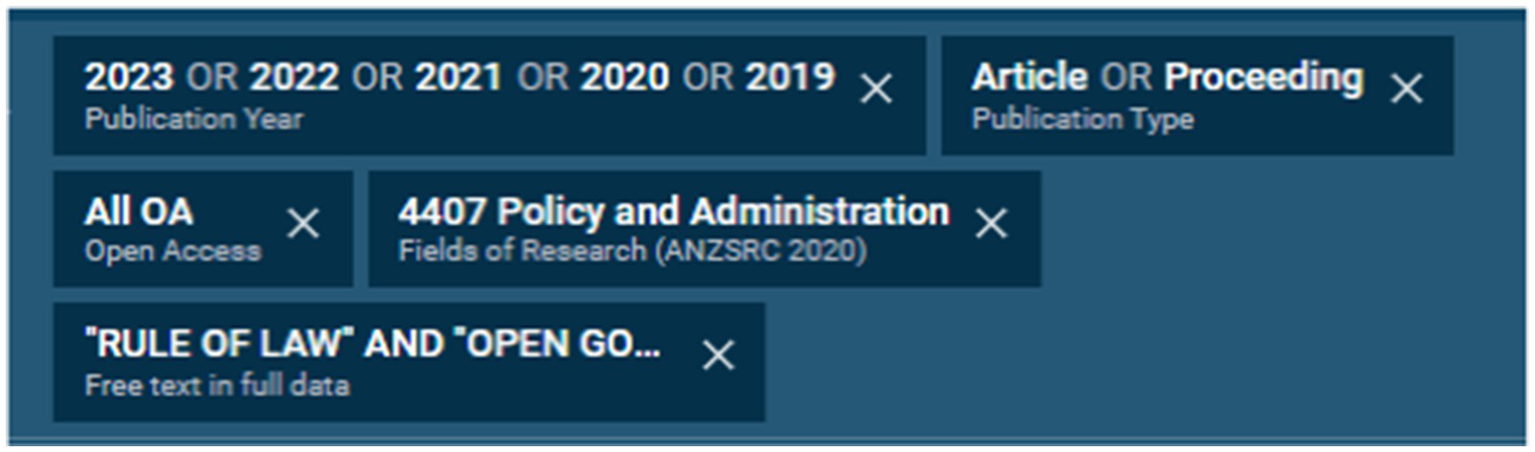
Filters and keywords used for research - source: dimension AI.
3.3 Data collection techniques
The literature selection followed a PRISMA-style workflow adapted for bibliometric analysis. An initial total of 230 records were identified across the three databases. After removing duplicates (n = 20), 210 unique records remained and were screened based on titles and abstracts. Following relevance screening and metadata completeness checks, 130 records were retained for final bibliometric and scientometric analysis. This process is visually summarized in Figure 2.
Figure 2
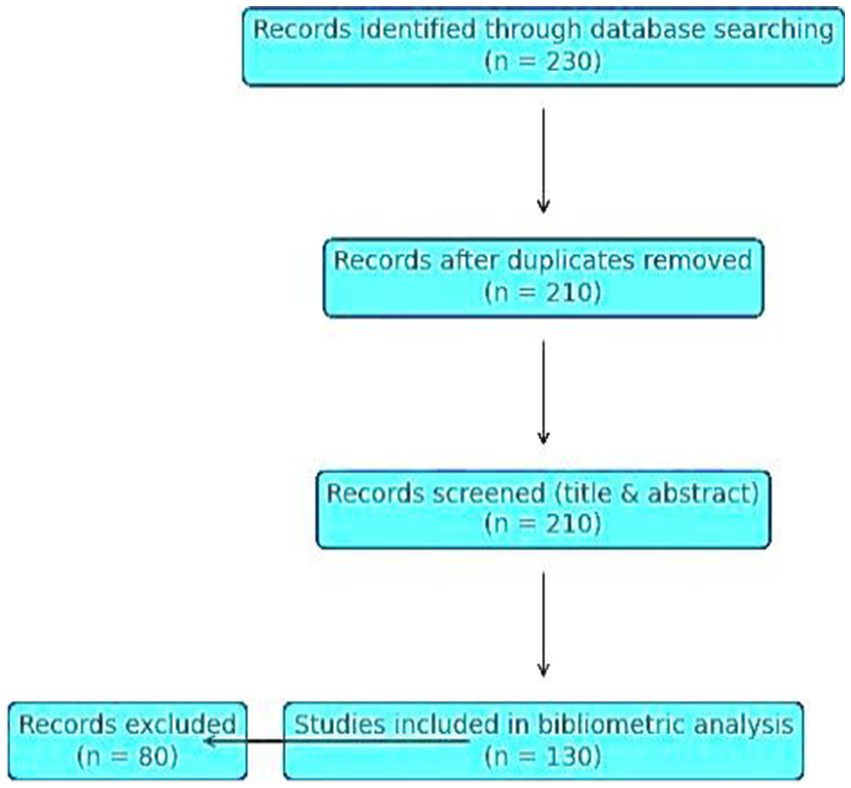
PRISMA flow diagram.
Deduplication was performed by matching titles, authors, publication years, and DOIs using reference-management software, followed by manual verification. Records were included if they substantively addressed open government, transparency, participation, accountability, or legal governance within a public sector or rule of law framework. Studies that mentioned “open government” only tangentially or focused exclusively on technical systems without governance implications were excluded.
The research team identified key search terms—such as “open government,” “transparency,” “rule of law,” and “governance”—and applied them across multiple academic databases, including Scopus, Google Scholar, and Dimension AI. The search was restricted to peer-reviewed journal articles published within the last decade (2014–2023) to ensure contemporary relevance. The initial screening involved reviewing abstracts to assess their thematic alignment with the research objectives. Articles that met the inclusion criteria were then downloaded in RIS format for bibliometric processing. This approach enabled the researchers to compile a comprehensive dataset that reflects both the breadth and depth of scholarly engagement with the topic. As shown in Figure 2.
3.3.1 Scientometric techniques and parameters
Scientometric analysis was conducted using VOSViewer (version 1.6.20). Four complementary techniques were employed to map the intellectual structure of the field:
-
Keyword co-occurrence analysis
Unit of analysis: author and index keywords Counting method: complete counting Minimum occurrences: 5.
Normalization: association strength
-
Co-Citation Analysis (Sources and Authors)
Unit of analysis: cited references and cited authors.
Purpose: to identify foundational theories and influential scholarly communities shaping open government and rule-of-law research.
-
Bibliographic Coupling Analysis
Unit of analysis: documents.
Purpose: to detect contemporary research fronts by identifying publications sharing standard reference bases.
-
Overlay Visualization (Keyword Evolution)
Color gradient based on average publication year.
Purpose: to trace the temporal evolution of research themes, highlighting shifts from early transparency-focused studies toward more recent emphases on accountability, judicial governance, and anti-corruption mechanisms. All networks were clustered using the VOS clustering algorithm (default resolution), and results were interpreted qualitatively in relation to governance theory.
3.4 Data analysis techniques
Scientometric mapping in this study was conducted using VOSViewer (version 1.6.20), a specialized software tool for bibliometric analysis and visualization. Bibliographic data were imported into the software in RIS format and systematically processed to generate keyword co-occurrence networks, co-authorship maps, and citation- and density-based visualizations. These analytical outputs enabled the identification of dominant research themes, intellectual clusters, and emerging trends within the literature on open government and the rule of law. Network visualizations were used to examine the strength and proximity of relationships among key concepts, authors, and institutions, while overlay and density maps highlighted areas of concentrated scholarly activity and temporal evolution.
The following parameters were applied consistently across analyses: full counting as the counting method; author keywords and index keywords as the units of analysis; a minimum keyword occurrence threshold of five; association strength as the normalization method; and the VOS clustering algorithm with default resolution settings. Network, overlay, and density visualizations were generated to map the intellectual structure of the field and to identify research gaps and underexplored thematic areas. Cluster interpretation was subsequently conducted through qualitative analysis, linking bibliometric patterns to governance and rule-of-law theory. This combined scientometric–qualitative approach provides a robust and transparent foundation for interpreting how open government practices are positioned within contemporary rule-of-law scholarship (Figure 3).
Figure 3
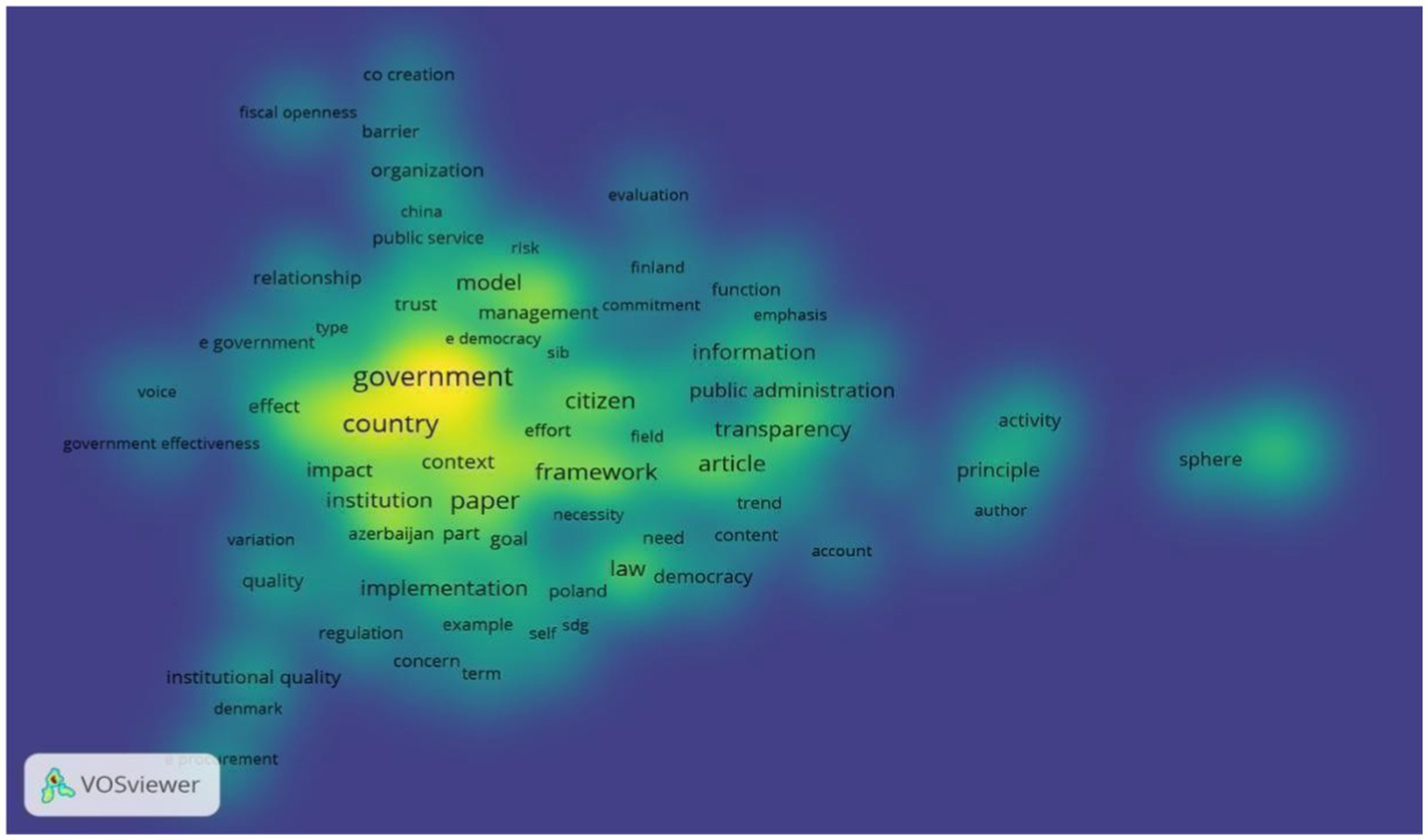
Density visualization of research. Visualization generated using VOSViewer (v1.6.20). Warmer colors indicate higher keyword density. Parameter settings identical to this figure.
3.4.1 Qualitative thematic interpretation
Bibliometric insights were complemented with qualitative content analysis of key documents identified through citation strength, thematic prominence, and network centrality. This step allowed the study to: interpret the meaning behind the clusters and connections observed in VOSViewer maps, explain conceptual relationships between open government and rule-of-law principles, contextualize findings using Philippine governance challenges as illustrative examples (without evaluating implementation). This dual approach ensures both empirical rigor and conceptual depth.
3.5 Limitations of the method
Because the study’s objective is conceptual mapping rather than policy evaluation, no institutional performance indicators, administrative datasets, or on-the-ground implementation assessments are used. Therefore, findings should be interpreted as reflections of scholarly debates rather than assessments of specific national reform outcomes.
4 Results and discussion
4.1 Results
4.1.1 Document publication by years
Figure 4 presents a timeline illustrating the publication of findings on implementing the Rule of Law Through Open Government from 2014 to 2023.
Figure 4
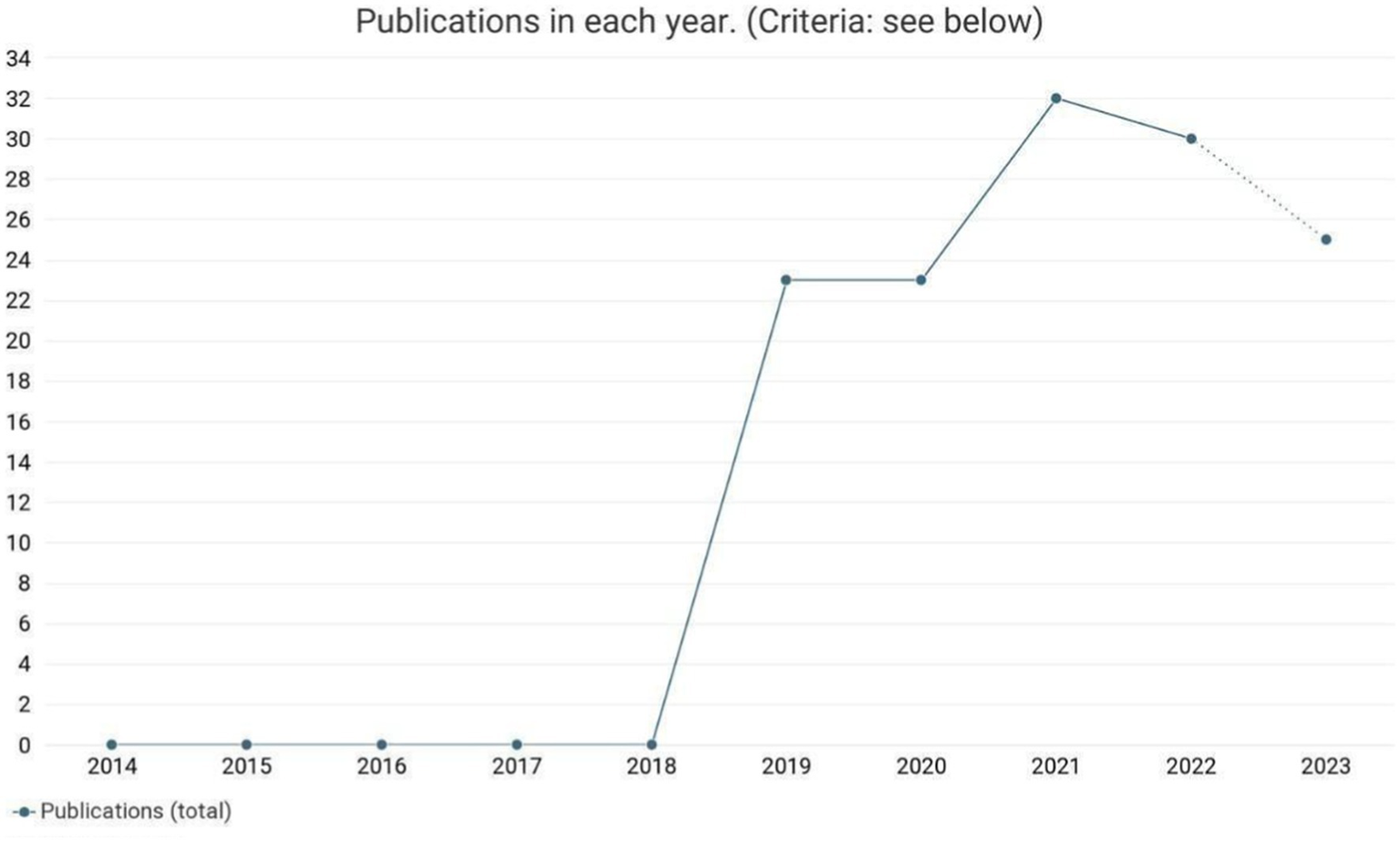
Publication of documents by years—source: dimension AI.
Between 2014 and 2018, no documents were added to the AI dimension database. However, there was a surge in publications in 2019 and 2020, with 23 documents published. In 2021, 32 publications were added, followed by 30 in 2022. Then, in 2023, the number declined to only 25 publications. It can be concluded that the years 2017–2023 are the starting point for achieving and continuing progress. The bibliometric analysis conducted through Dimension AI and VOSViewer revealed several key trends in scholarly engagement with the intersection of open government and rule of law from 2014 to 2023. Document publication trends indicate a notable surge beginning in 2019, peaking in 2021 with 32 publications, followed by a slight decline to 25 in 2023. This trajectory suggests growing academic interest in governance reform during periods of heightened political and civic discourse.
4.1.2 Document publication by subject area
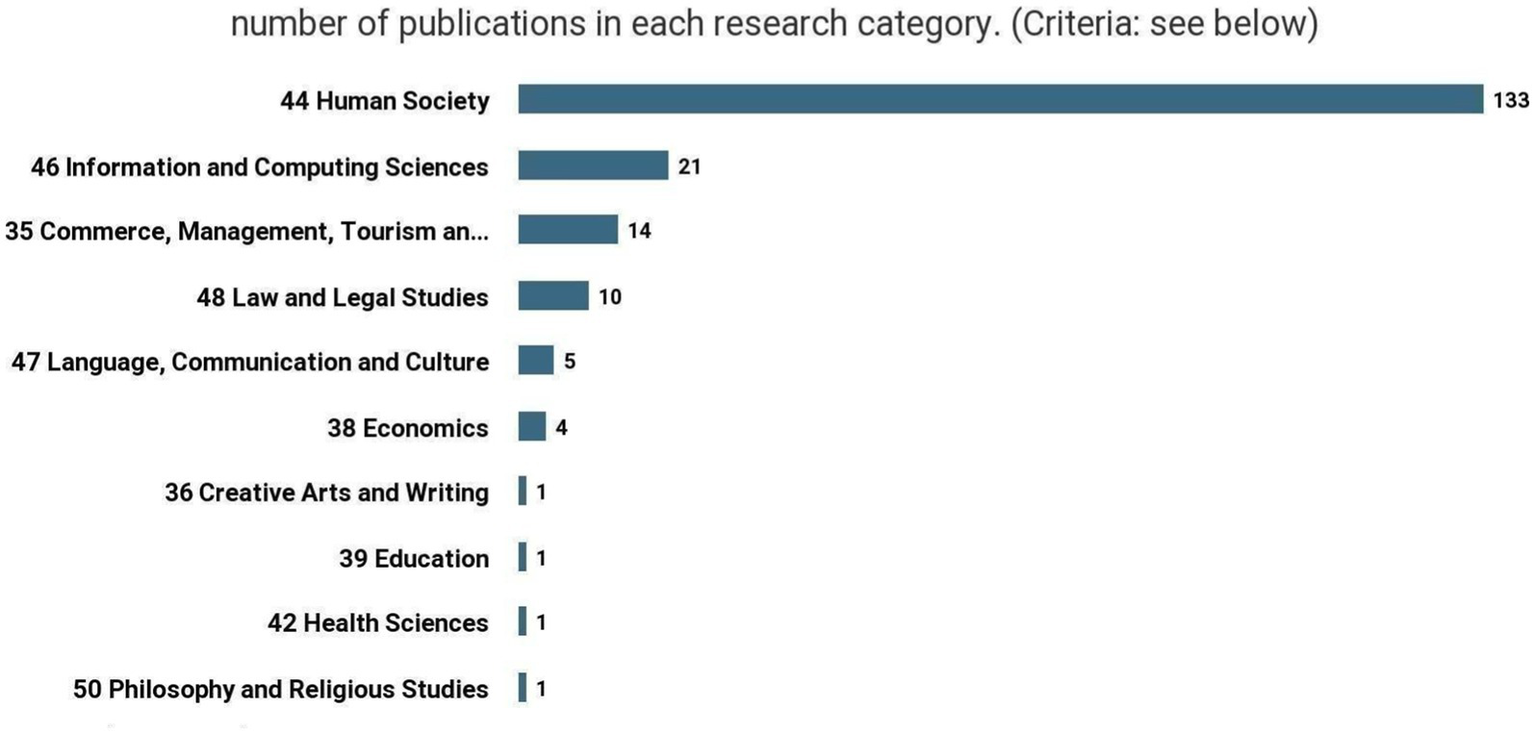
Figure 5 displays the percentage of publications categorized by research subject area. This database, which utilizes Dimension AI sources, displays the distribution of publications by research category. Human Society has the highest contribution with 133 publications, indicating a significant research focus in this area. Information and Computing Science follows with 21 publications, indicating considerable interest in the field of computing and information science. Commerce, Management, Tourism has 14 publications, signaling the diversity in business, management, and tourism studies. Meanwhile, Law and Legal Studies contributed with 10 publications, reflecting the importance of legal research in this context.
Figure 5
Publication by subject area—source: dimension AI.
The Language, Communication, and Culture field had five publications, while Economics contributed four publications, indicating an interest in linguistic, communication, and economic aspects. The categories with the lowest publication contributions involved Creative Arts and Writing, Education, Health Sciences, and Philosophy and Religious Studies, each with one publication. Although relatively few, this demonstrates the diversity of research across different fields of study, providing a balanced representation in the scientific spectrum. Subject area analysis shows that the majority of publications fall under the “Human Society” category, with 133 entries, followed by “Information and Computing Sciences” (21), “Commerce, Management, Tourism” (14), and “Law and Legal Studies” (10). This distribution reflects the interdisciplinary nature of open government research, bridging social science, legal theory, and digital innovation.
4.1.3 Document publication by author
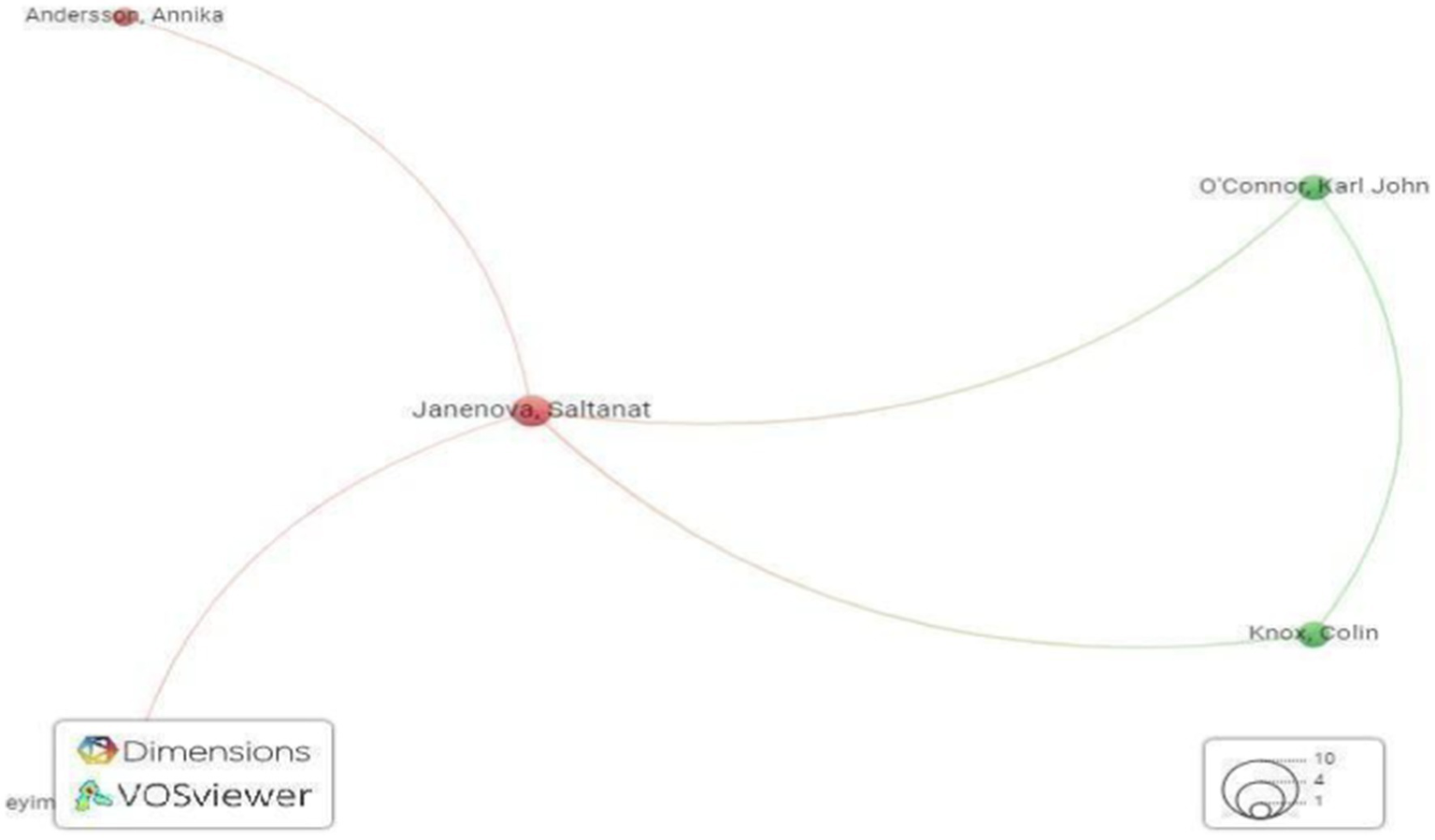
The association between one author and another may be seen in Figure 5. The University of Orebro, Sweden, is represented by Annika Andersson, who has 399 total citations and one publication, marked by red clusters. Saltanat Janevova, the researcher from the University of Birmingham, United Kingdom, has 31 total citations and three publications. Researchers Jean Damascene Twizeyimana from the University of Orebro, Sweden, is shown with red clusters containing 399 total citations and one publication. Karl John O’Connor from the University of Ulster, United Kingdom, is shown with green clusters containing 30 total citations and two publications; finally, Collin Knox from Nazarbayev University.
The University of Kazakhstan, with green clusters, has 30 total citations and two publications. The Figure 6 displays five researchers, a total of 1,378 citations, and 2 clusters. Author-level analysis identified key contributors, including Annika Andersson and Jean Damascene Twizeyimana from the University of Orebro, Sweden, and Karl John O’Connor from the University of Ulster, UK. These scholars formed distinct citation clusters, indicating influential nodes in the global discourse. The Philippine context, however, remains underrepresented in high-impact authorship, highlighting a gap in regional scholarly leadership.
Figure 6
Publication by author–source: dimension AI.
4.2 Discussion
4.2.1 Network visualization
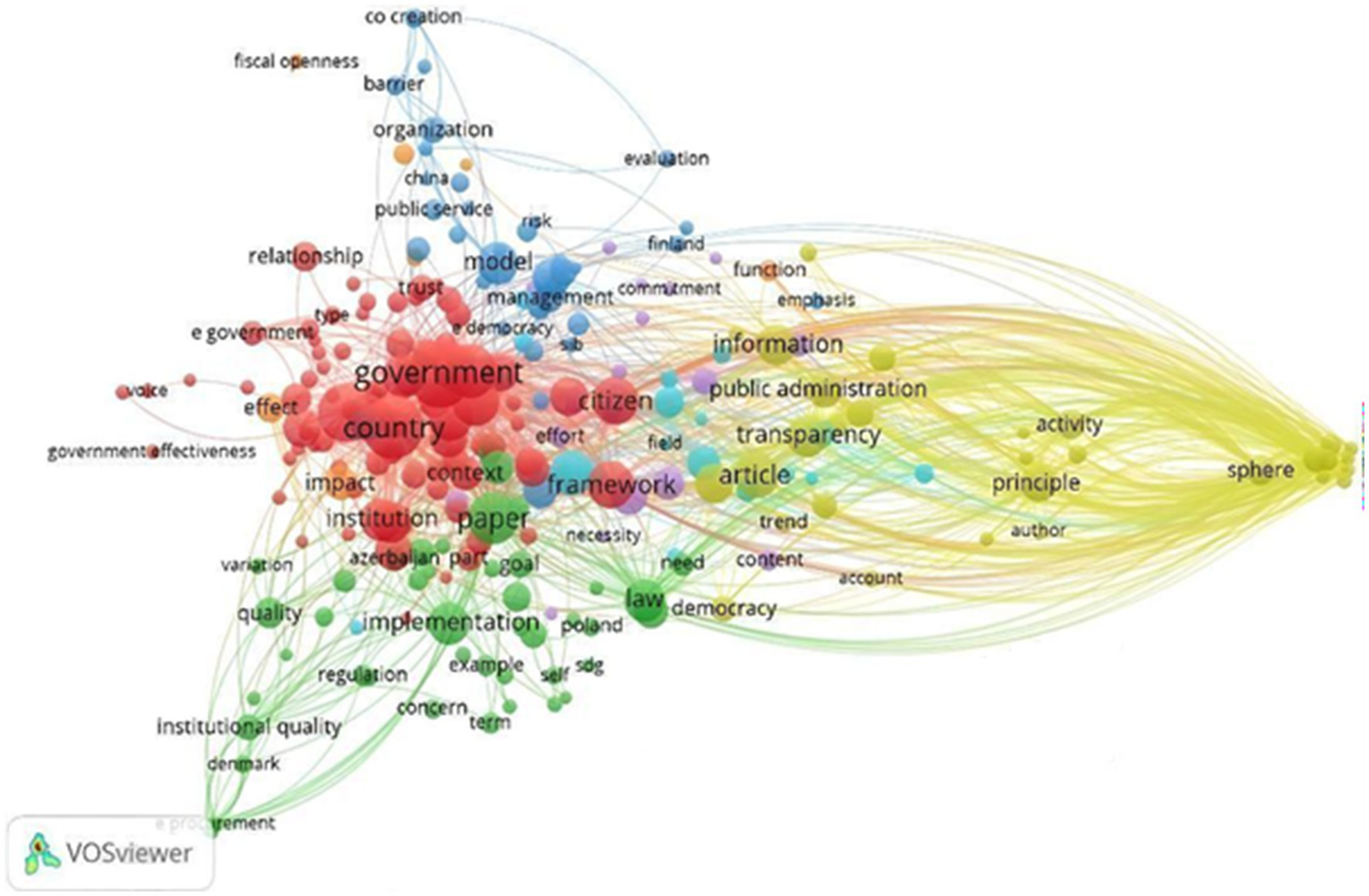
The network between topics, as represented in 241 documents obtained from the Dimension AI database, is analyzed using network visualization, overlay, and density in VOSViewer. A bibliometric network consists of nodes and edges. Nodes are represented by circles, which can be publications, journals, or keywords, while edges indicate the relationships between nodes. It shows the relationship between two nodes. The edge is also a measure of the strength of the relationship, represented by the distance between the two nodes. The closer the distance between nodes, the stronger the correlation between them.
The topic of Implementation of the Rule of Law Through Open Government cannot be separated from Government, public administration, and transparency. Encouraging openness, accountability, and public involvement in political processes are essential aspects of implementing the rule of law. In this regard, the government plays a crucial role in ensuring that public affairs are managed effectively. The government maintains the values of accountability and justice, promotes public participation, and provides residents with access to information through transparent and open government procedures. As public administration aligns with the rule of law, encouraging moral behavior and conformity to legal frameworks, it becomes more accountable. A crucial component is transparency, which enables people to closely examine the policies, decisions, and actions of their government. Overall, there is a connection between the principles of government, public administration, and openness, as well as the application of the Rule of Law through Open Government, which supports a governance paradigm that prioritizes accountability and citizen involvement. The network visualization of civil and criminal justice keywords is evident in the results of the VOS viewer analysis, as shown below.
Notes: Network visualization generated using VOSViewer (v1.6.20). Unit of analysis: author keywords. Counting method: complete counting. Minimum keyword occurrence: 5. Normalization method: association strength. Clustering: VOS clustering algorithm (default resolution). Node size represents keyword frequency; link thickness indicates co-occurrence strength.
Source: Authors’ bibliometric analysis.
4.2.1.1 Interpretation of results
The labels on Figure 7 indicate keywords or terms that appear frequently, while the colors indicate clusters. Image mapping is used to obtain a detailed picture of a bibliometric network, while clustering is employed to gain insight into or an overview of bibliometric clustering. Each circle represents a keyword or term that appears frequently. The size of the circle indicates the number of publications that have a term in their document title associated with that term. The larger the circle size, the larger the number of documents relevant to that keyword or term. To move beyond thematic description, the identified scientometric clusters are explicitly mapped onto the World Justice Project Rule of Law Index 2024 factors. This crosswalk provides an interpretive bridge between scholarly discourse and institutional rule-of-law outcomes.
-
Cluster 1: Transparency, Open Data, and Participation
This cluster encompasses keywords such as open government, transparency, open data, and citizen participation. Conceptually, it aligns most directly with Open Government and Constraints on Government Powers. The literature in this cluster emphasizes disclosure, oversight, and participatory mechanisms as tools for limiting arbitrary executive action. Scientometric prominence of this cluster indicates that openness is widely theorized as a structural constraint on power rather than a purely informational reform.
-
Cluster 2: Civic Technology and Administrative Capacity
Research clustered around e-government, digital platforms, public administration, and service delivery corresponds to Regulatory Enforcement and, indirectly, Civil Justice. These.
studies highlight how digital infrastructures and administrative capacity condition the effectiveness of transparency initiatives. Without capable enforcement institutions, openness risks becoming symbolic rather than transformative.
-
Cluster 3: Open Contracting and Anti-Corruption Governance
A distinct cluster centered on open contracting, public procurement, accountability, and corruption maps closely onto Absence of Corruption and Constraints on Government Powers. The rise of this cluster in recent years reflects a shift toward expenditure transparency and integrity systems as concrete pathways through which open government can produce rule-of-law dividends.
-
Cluster 4: Legal Institutions and Justice Systems
Figure 7
Network visualization.
Keywords such as law judicial independence civil justice and criminal justice form a smaller but analytically critical cluster. This cluster corresponds directly to civil justice and criminal justice underscoring that the rule-of-law impact of open government ultimately depends on courts remedies and enforcement institutions capable of acting on disclosed information
-
Implications for Governance and Rule-of-Law Reform
The integration of scientometric evidence with rule-of-law dimensions yields three governance insights. First, open government functions as a multi-dimensional governance mechanism, influencing constraints on power, corruption control, and justice systems simultaneously rather than in isolation. Second, the growing prominence of open contracting and enforcement-oriented research suggests that the field is moving beyond transparency as an end in itself toward accountability-producing openness. Third, the relatively weaker representation of justice-system-focused research highlights a persistent gap between openness initiatives and judicial effectiveness—an area requiring further scholarly and policy attention. In this sense, the scientometric patterns support a reconceptualization of open government not as a standalone reform agenda, but as an enabling infrastructure for rule-of-law consolidation, contingent on institutional capacity and legal enforcement.
4.2.2 Overlay visualization
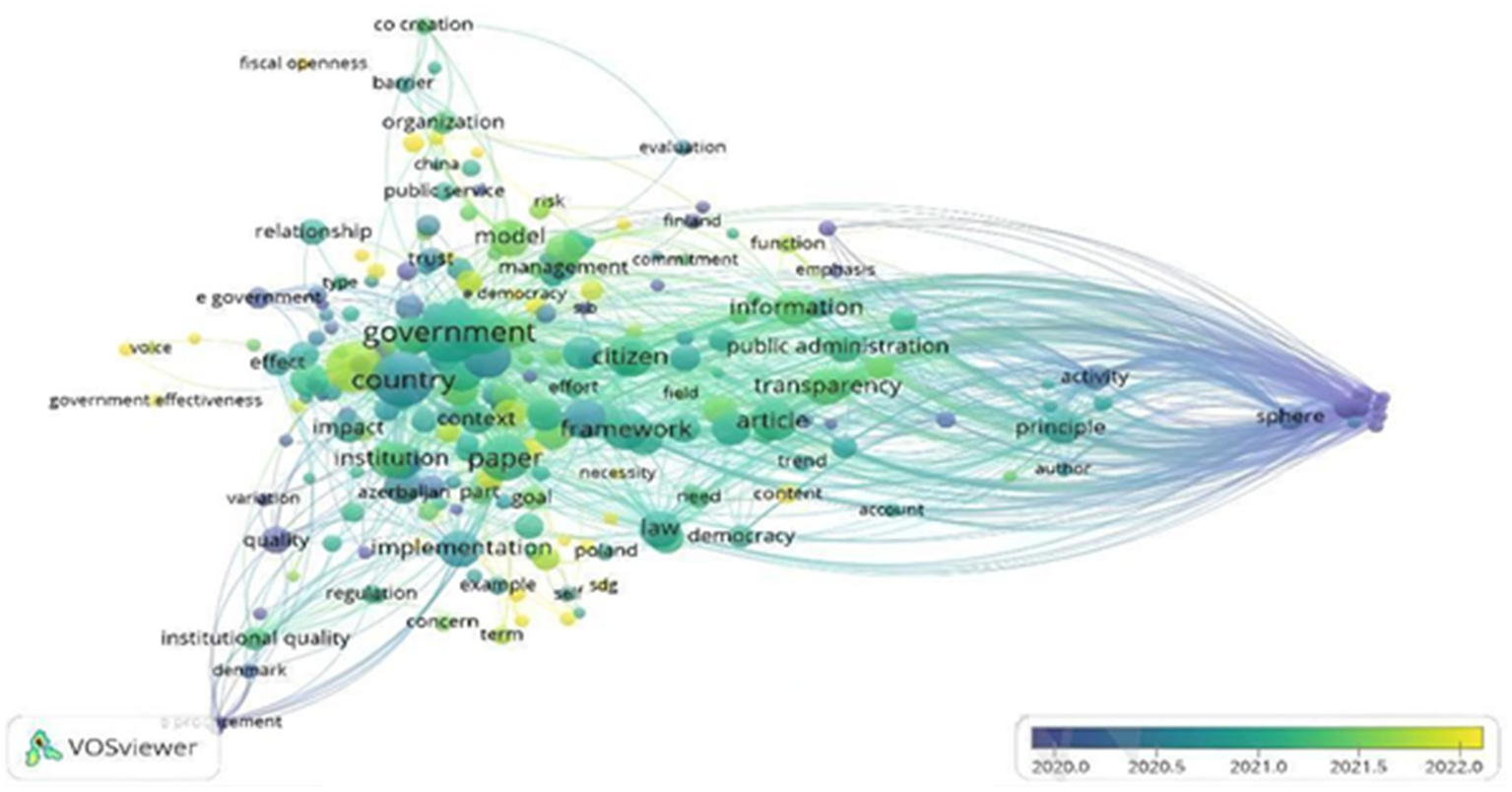
Figure 8 shows that the largest node size or keyword is government, public administration, and transparency. Additionally, other relevant keywords for implementing the rule of law through open government include government effectiveness, public service, information, and public participation. The different colors of the connecting lines in the figure above indicate the cluster relationships within the Implementing Rule of Law Through Open Government theme. Other keywords are divided into 7 clusters, where each keyword has a relationship in its visualization.
Figure 8
Overlay visualization.
Notes: Visualization generated using VOSViewer (v1.6.20). The color gradient represents the average publication year. Parameter settings identical to Figure 7.
Source: Authors’ bibliometric analysis.
The keyword government ranked first with a total of 123 occurrences and a total link strength of 204. Followed in second place was transparency, with 51 total occurrences and 184 total links. Then, public administration, with 35 and a total link strength of 185, came in third. The number of occurrences and total link strength indicate a strong relationship between keywords in Implementing Rule of Law Through Open Government. The order of keywords with the lowest order, including e-government, ranks first with 17 occurrences, followed by the second order, trust, with 18 occurrences, and in the third order, access, with 19 occurrences.
4.2.2.1 Interpretation of results
To deepen analytical integration, the thematic clusters identified through Scientometric analysis were conceptually cross-referenced with the World Justice Project Rule of Law Index 2024 factors. This crosswalk does not imply causal measurement equivalence but serves as an interpretive bridge between scholarly discourse and institutional rule-of-law dimensions.
-
Cluster 1: Transparency and Participation
→ Corresponds primarily to Open Government and Constraints on Government Powers, reflecting research on disclosure, oversight, and citizen engagement.
-
Cluster 2: Accountability and Anti-Corruption.
→ Aligns with Absence of Corruption and Regulatory Enforcement, emphasizing Enforcement capacity and integrity systems.
-
Cluster 3: Legal Institutions and Justice Systems.
→ Relates to Civil Justice and Criminal Justice, focusing on judicial independence, access to justice, and procedural fairness.
-
Cluster 4: Security and State Capacity.
→ Maps onto Order and Security, highlighting governance stability as an enabling condition for open government reforms.
This crosswalk illustrates how open government scholarship addresses multiple rule-of-law dimensions simultaneously, thereby reinforcing the study’s central argument that openness serves as a multidimensional governance mechanism rather than a single policy instrument.
4.3 Findings from the rule of law index
This study relies exclusively on the World Justice Project (WJP) Rule of Law Index 2024 to contextualize the Philippine case and ensure consistency across narrative, figures, and tables. According to the WJP Rule of Law Index 2024, the Philippines is ranked 99th out of 142 countries, with an overall rule-of-law score of 0.46. The index evaluates rule-of-law performance across eight factors: Constraints on Government Powers, Absence of Corruption, Open Government, Fundamental Rights, Order and Security, Regulatory Enforcement, Civil Justice, and Criminal Justice.
The Philippines records a relatively stronger performance in Order and Security, while exhibiting persistent weaknesses in Absence of Corruption, Civil Justice, and Criminal Justice. The Open Government factor reflects a moderate score, indicating partial progress in transparency and public participation alongside continued institutional and enforcement gaps. These factor-level outcomes underscore that while openness initiatives contribute to governance reform, their effectiveness in strengthening the rule of law depends on complementary improvements in judicial capacity, accountability mechanisms, and corruption control. As shown in Figure 9.
Figure 9
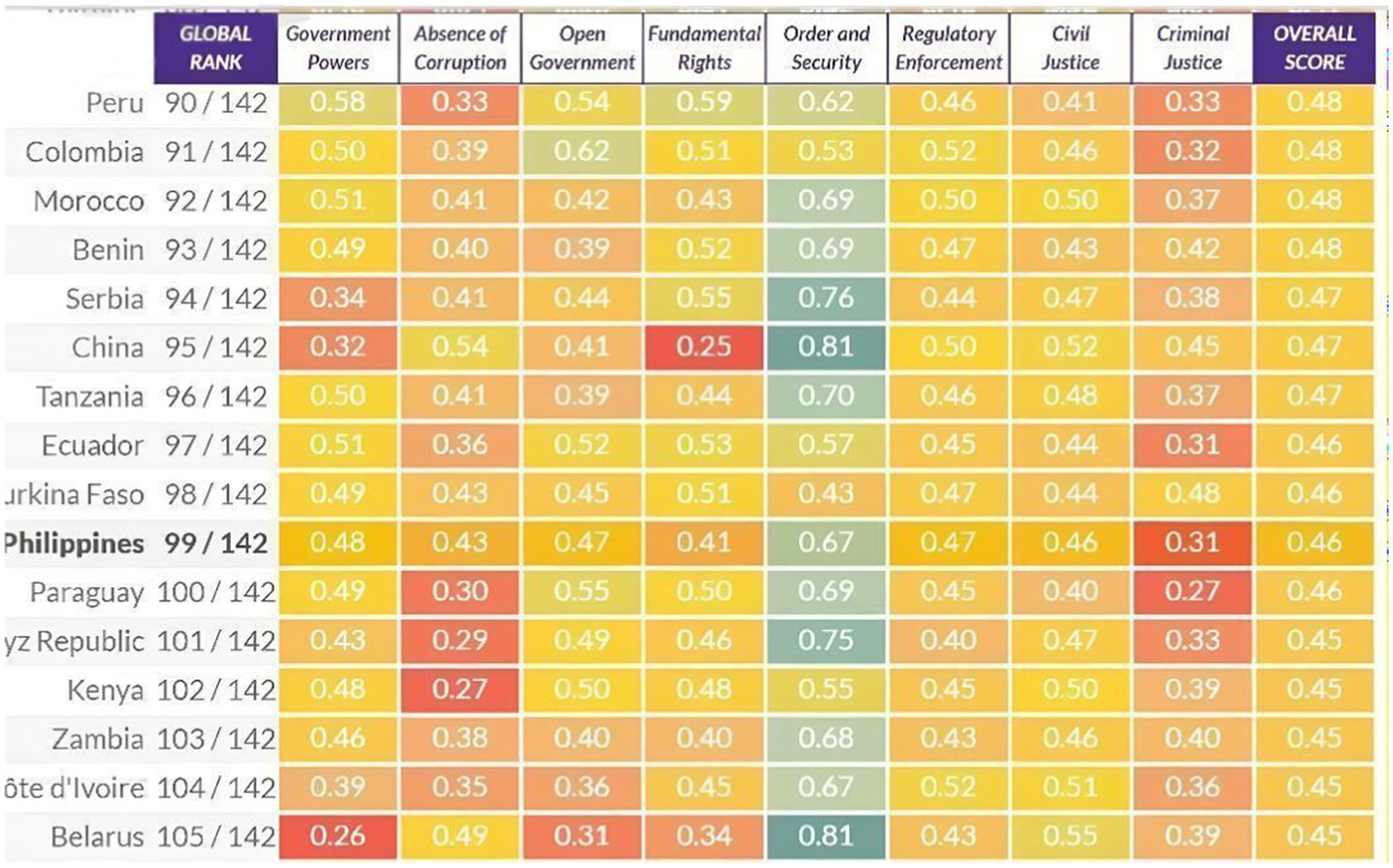
Rule of law index score table—source: WJP website.
According to Open Government data, the Philippines is ranked 99th out of 142 regions on the rule of law index. Based on this data, the Philippines falls into the moderate category, with an overall score of 0.46, as detailed below for each indicator.
-
Government Powers (0.48): This metric assesses how much the use of force by the government is compliant with democratic and legal norms. With a score of 0.48, the Philippine government authority is generally seen as just, democratic, and compliant with the rule of law.
-
Absence of Corruption (0.43): A considerable degree of corruption exists in the Philippines, as indicated by this indicator’s low score of 0.43. A score of 0.43 on the Absence of Corruption scale indicates that efforts to combat corruption require further strengthening. This metric measures the extent to which corruption is either out of control or widespread within the government system.
-
Open Government (0.47): The Open Government indicator calculates how accountable, transparent, and engaged governments are. The Philippines is ranked in the center with a score of 0.47, indicating that efforts have been made to promote public engagement and information access, but there is still room for improvement.
-
Fundamental Right (0.41): The recognition and protection of an individual’s fundamental rights by the legal system is gauged by this indicator. A score of 0.41 indicates that there is room for improvement in protecting individual rights and that challenges exist in ensuring the fulfillment of fundamental rights.
-
Order and Security (0.67): A high score on this indicator gives confidence about domestic stability because it shows that the Philippines’ order and security situation is regarded as rather satisfactory.
-
Regulatory Enforcement (0.47): This indicator assesses how well regulations are enforced and how well laws are followed. A score of 0.47 suggests that although efforts are being made to implement rules, efficiency and compliance might still be enhanced.
-
Civil Justice (0.46): A low score on this metric suggests that the Philippines’ civil justice system may have difficulties giving its residents fair and prompt access.
-
Criminal Justice (0.31): Comparable results on the Criminal Justice indicator suggest that there might be issues with the criminal justice system’s ability to deliver equitable and efficient justice to those entangled in the criminal justice system.
According to data from the Open Government, the Philippines faces challenges in the Rule of Law in several areas, most notably in the indicators of criminal justice, civil justice, and the prevalence of corruption. The government’s efficacy may be impacted by corruption-related issues, as indicated by the low Absence of Corruption score. Low scores on criminal and civil justice, however, indicate possible flaws in these systems and underscore the need for attention to increase public trust in the legal system and access to justice.
It is also noteworthy that Open Government may require additional reinforcement even though it received a higher score. The advancement of accountability, public involvement, and transparency in government is a crucial element that can enhance the Rule of Law as a whole. As a result, the research suggests that government policies and procedures be strengthened to support the Philippines’ Rule of Law, which will raise the nation’s standing in the index and increase public trust in the country’s judicial system and governance.
4.3.1 Comparative findings
ASEAN countries (e.g., Indonesia, Malaysia, Thailand, Vietnam) share regional proximity, similar administrative traditions, and comparable development trajectories. Examining them allows the Philippines’ open government and rule-of-law performance to be.
situated within a regional governance context. As shown in Table 2.
Table 2
| Dimension | Variables to compare | Purpose |
|---|---|---|
| Legal Framework | PHILIPPINE EO NO. 2 (2016) REGIME laws, procurement laws, anti-corruption laws, judicial independence |
Assess the robustness of rule-of-law systems |
| Open Government Implementation | Open Data Portals, e-participation tools, citizen engagement mechanisms | Compare institutional openness across ASEAN |
| Governance Performance Indicators | Rule of Law Index scores, Corruption Perceptions Index, Government Effectiveness (WGI) | Identify strengths and weaknesses relative to the region |
| Digital Governance Capacity | ICT infrastructure, digital literacy, and e-government development | Understand enabling conditions for open government |
| Administrative Culture & Public Trust | Citizen trust surveys, bureaucratic culture studies | Assess social and institutional support for openness |
Comparative view.
4.4 Discussion
The results underscore the growing relevance of open government as a strategic pathway for strengthening the rule of law, particularly in transitional democracies like the Philippines. The surge in publications post-2019 aligns with global movements advocating for transparency and civic engagement, suggesting that scholarly discourse is responsive to political developments and reform agendas. The dominance of “Human Society” as a subject area reflects the social embeddedness of governance reforms, where legal frameworks must be interpreted through cultural, institutional, and civic lenses. The relatively low representation of “Law and Legal Studies” suggests a need for deeper jurisprudential engagement with open government principles, particularly in Southeast Asian contexts where legal pluralism and administrative decentralization present unique challenges.
The underrepresentation of Philippine scholars in global citation networks points to a structural gap in research capacity and international visibility. Strengthening academic collaboration, investing in open-access publishing, and promoting regional research networks could help elevate local voices in the global governance conversation. The thematic clustering of keywords confirms that open government is not a siloed concept but rather a multidimensional framework that intersects with digital innovation, public administration, and legal accountability. This reinforces the study’s conceptual framework, which posits that open government mechanisms—when effectively implemented—can catalyze rule of law outcomes such as reduced corruption, enhanced public trust, and equitable access to justice.
Overall, the findings suggest that while the Philippines has made legislative and institutional strides toward open government, persistent barriers, such as digital literacy gaps, bureaucratic inertia, and limited civic awareness, continue to hinder its full realization. Addressing these challenges requires coordinated efforts across government, civil society, academia, and media to build a governance ecosystem rooted in transparency, participation, and justice. As shown in Table 3.
Table 3
| Factor | Score |
|---|---|
| Constraints on Government Powers | 0.48 |
| Absence of Corruption | 0.43 |
| Open Government | 0.47 |
| Fundamental Rights | 0.41 |
| Order and Security | 0.67 |
| Regulatory Enforcement | 0.47 |
| Civil Justice | 0.46 |
| Criminal Justice | 0.31 |
| Overall, Rule of Law Score | 0.46 |
| Global Rank | 99/142 |
Philippines—rule of law index scores—(World Justice Project, 2024).
4.5 Recommendations
This study recommends a multi-sectoral strategy to strengthen the implementation of open government as a pathway to reinforcing the rule of law in the Philippines. First, government institutions should prioritize the full operationalization of the Freedom of Information Law and the New Government Procurement Act by enhancing digital infrastructure and streamlining access to public data. Second, civil society organizations and media outlets must be empowered to act as watchdogs and facilitators of civic engagement, particularly in rural areas where digital literacy remains low. Third, academic institutions should play a more active role in translating research into policy briefs, developing open data literacy curricula, and fostering collaborative platforms for participatory governance. Finally,
Local governments should be incentivized to innovate through transparency initiatives and citizen feedback mechanisms, ensuring that open government principles are embedded at both national and subnational levels.
4.6 Implications
The findings of this study carry significant implications for governance reform, democratic resilience, and institutional accountability. By demonstrating the correlation between open government mechanisms and rule of law outcomes, the research underscores the importance of transparency, public participation, and legal empowerment in shaping responsive governance. The bibliometric analysis reveals that scholarly attention to these themes has grown in recent years, suggesting a maturing discourse that can inform policy design. Moreover, the Philippine case offers valuable lessons for other Southeast Asian nations grappling with similar challenges, particularly in striking a balance between centralized authority and decentralized innovation. The study also highlights the role of interdisciplinary collaboration— between legal scholars, technologists, and public administrators—in advancing governance models that are both inclusive and evidence-based.
5 Conclusion
To conclude, this study has yielded significant insights regarding the Rule of Law. We have expanded the existing corpus of information on the Rule of Law by conducting a thorough analysis of open government. The ramifications of our research encompass pertinent domains or uses of open government, emphasizing the advantages and difficulties associated with the Rule of Law. While many conclusions from our study have become clear, it is still essential to acknowledge potential drawbacks, including privacy concerns, information security risks, technological challenges, and accountability issues. Building on our foundation, future research should further investigate public involvement, innovation in the public sector, and open data to deepen our understanding of the Rule of Law. All things considered, this research underscores the importance of further research and careful deliberation in Open Government to foster developments that benefit relevant stakeholders and communities.
5.1 Limitations
While this study provides valuable insights, several limitations must be acknowledged. First, the bibliometric analysis is constrained by the availability and indexing of publications within selected databases, which may exclude relevant grey literature or non-English sources.
Second, the reliance on descriptive analysis limits the ability to establish causal relationships between open government initiatives and outcomes related to the rule of law. Third, the study primarily focuses on the Philippines, which may limit the generalizability of its findings to other geopolitical contexts. Additionally, the qualitative nature of the research, while rich in thematic depth, may benefit from triangulation with quantitative indicators such as corruption indices, legal case outcomes, or citizen satisfaction surveys.
5.2 Future work
Future research should expand the scope of analysis to include comparative studies across Southeast Asia, examining how different legal cultures and governance structures mediate the impact of open government reforms. Longitudinal studies could track the evolution of transparency and accountability mechanisms over time, offering more profound insights into institutional change. Moreover, integrating machine learning techniques with bibliometric tools, such as VOSViewer, could enhance the precision of thematic clustering and trend forecasting. Researchers may also explore the role of emerging technologies—such as blockchain, civic tech platforms, and AI-driven policy analytics—in strengthening the rule of law through digital governance. Finally, participatory action research involving stakeholders from government, civil society, and academia could help co-create solutions tailored to local needs and capacities.
Statements
Author contributions
IM: Conceptualization, Methodology, Software, Visualization, Writing – original draft, Writing – review & editing. MY: Methodology, Project administration, Software, Writing – original draft, Writing – review & editing. RL: Investigation, Methodology, Software, Validation, Writing – original draft. JT: Conceptualization, Investigation, Methodology, Resources, Supervision, Writing – original draft. HA: Conceptualization, Investigation, Methodology, Resources, Validation, Writing – review & editing. AA: Investigation, Methodology, Software, Validation, Visualization, Writing – review & editing. AP: Methodology, Resources, Software, Supervision, Validation, Visualization, Writing – review & editing. AR: Methodology, Software, Visualization, Writing – review & editing.
Funding
The author(s) declared that financial support was not received for this work and/or its publication.
Conflict of interest
The author(s) declared that this work was conducted in the absence of any commercial or financial relationships that could be construed as a potential conflict of interest.
Generative AI statement
The author(s) declared that Generative AI was not used in the creation of this manuscript.
Any alternative text (alt text) provided alongside figures in this article has been generated by Frontiers with the support of artificial intelligence and reasonable efforts have been made to ensure accuracy, including review by the authors wherever possible. If you identify any issues, please contact us.
Publisher’s note
All claims expressed in this article are solely those of the authors and do not necessarily represent those of their affiliated organizations, or those of the publisher, the editors and the reviewers. Any product that may be evaluated in this article, or claim that may be made by its manufacturer, is not guaranteed or endorsed by the publisher.
References
1
Alma A. (2023). Academia raja.
2
Chesterman S. (2008). An international rule of law?Am. J. Comp. Law56, 331–362. doi: 10.5131/ajcl.2007.0009,
3
Isaura G. (2007). Petanda: Jurnal Ilmu Komunikasidan Humaniora Kemitraan Globaluntuk Transparansi Pemerintah: Rencana Aksi Open Government Philippines. 58–66.
4
Kulsum U. Nurmandi A. Muallidin I. Loilatu M. J. C Kurniawan D. (2022). A bibliometric analysis of open government: study on the Philippines and the Philippines. J. Gov.7, 133–143. doi: 10.31506/jog.v7i1.13934
5
Luthfia A. R. Alkhajar E. N. S. CSofyan A. (2021). Tantangan Implementasi Pemerintahan Terbuka (Open Government) di Philippines. Wahana73, 1–12. doi: 10.36456/wahana.v73i2.4269
6
Mandasari N. (2023). Perbandingan Konsep Tata Kelola Pemerintah: sound governance, dynamic governance, dan open government. Econ. Bus. Manag. Account. J3, 46–62. doi: 10.61083/ebisma.v3i1.26
7
Nurdin A. H. M. (2018). Menuju Pemerintahan Terbuka (Open Government) Melalui Penerapan E Government. Jurnal MP (Manajemen Pemerintahan)5, 1–17.
8
O’Donnell G. (2004). Why the rule of law matters. J. Democ.15, 32–46. doi: 10.1353/jod.2004.0076
9
Premilasari P. Wasistiono S. Prabowo H. Rowa H. Calma’arif A. (2023). BAGAIMANAOPEN GOVERNMENT DITERAPKAN DALAM PERENCANAAN PEMBANGUNAN DAERAH? (Sebuah Analisisdengan Menggunakan Soft Systems Methodology). Jurnal Academia Praja1, 166–184. doi: 10.36859/jap.v6i1.1422
10
Purnomo R. S. (2001). Perkembangan Demografi di Philippines: Peluang dan Tantangan Menuju Philippines Emas. In Bunga Rampai.
11
Rights, U (1982). Law as interpretation ‡ Ronald Dworkin. Tex. Law Rev.17S:1982.
12
Romadhon T. A. Herdiansyah C. (2021). Pengembangan Konsep Open Goverment Untuk Meningkatkan Kualitas Layanan Kota Palembang (Studi Kasus: Kota Palembang). Gema Teknol.21, 86–90. doi: 10.14710/gt.v21i2.36650
13
Tamanaha B. Z. (2012). The history and elements of the rule of law. Singap. J. Leg. Stud.12, 232–247. doi: 10.2139/ssrn.2255262
14
Waldron J. (2016). “1. The rule of law and the importance of procedure” in Getting to the rule of law, 3–31. doi: 10.18574/nyu/9780814728437.003.0001
15
World Justice Project . (2024). Rule of law index 2024: Philippines country brief. Washington, DC: World Justice Project. (Accessed March 12,-2025).
Appendix
Appendix A: Keyword clusters identified in the bibliometric analysis
Cluster 1: Transparency and participation.
| Keyword | Occurrences | Total link strength |
|---|---|---|
| Open government | 45 | 312 |
| Transparency | 38 | 276 |
| Citizen participation | 29 | 221 |
Interpretive link to WJP factors: open government: constraints on government powers
Cluster 2: Accountability and anti-corruption.
| Keyword | Occurrences | Total link strength |
|---|---|---|
| Accountability | 34 | 254 |
| Corruption | 31 | 238 |
| Regulatory enforcement | 22 | 187 |
Summary
Keywords
bibliometric analysis, open government, rule of law, rule of law index, transparency in government
Citation
Miguel I, Younus M, Lallo R, Takdir J, Abdul Manaf H, Adawiah A, Reza Amri A and Prianto AL (2026) Implementing rule of law through open government: understanding concept with a scientometric analysis. Front. Polit. Sci. 7:1707342. doi: 10.3389/fpos.2025.1707342
Received
17 September 2025
Revised
19 December 2025
Accepted
22 December 2025
Published
16 January 2026
Volume
7 - 2025
Edited by
Nikos Papadakis, University of Crete, Greece
Reviewed by
Stylianos Ioannis Tzagkarakis, Hellenic Open University, Greece
Burim Mexhuani, University for Business and Technology, Albania
Updates
Copyright
© 2026 Miguel, Younus, Lallo, Takdir, Abdul Manaf, Adawiah, Reza Amri and Prianto.
This is an open-access article distributed under the terms of the Creative Commons Attribution License (CC BY). The use, distribution or reproduction in other forums is permitted, provided the original author(s) and the copyright owner(s) are credited and that the original publication in this journal is cited, in accordance with accepted academic practice. No use, distribution or reproduction is permitted which does not comply with these terms.
*Correspondence: Ibrahim Miguel, ibrahimmiguel@msutawi-tawi.edu.ph
Disclaimer
All claims expressed in this article are solely those of the authors and do not necessarily represent those of their affiliated organizations, or those of the publisher, the editors and the reviewers. Any product that may be evaluated in this article or claim that may be made by its manufacturer is not guaranteed or endorsed by the publisher.