 Stéphane Potvin1,2*
 Andràs Tikàsz1,2
 Laurence Lê-Anh Dinh-Williams3
 Josiane Bourque2,4Adrianna Mendrek1,5
- 1Centre de Recherche de l’Institut Universitaire en Santé Mentale de Montréal, Montreal, QC, Canada
- 2Department of Psychiatry, Faculty of Medicine, University of Montreal, Montreal, QC, Canada
- 3Department of Psychology, University of Toronto, Toronto, ON, Canada
- 4Centre de Recherche de l’Hôpital Sainte-Justine, Montreal, QC, Canada
- 5Department of Psychology, Bishop’s University, Lennoxville, QC, Canada
Craving is a core feature of tobacco use disorder as well as a significant predictor of smoking relapse. Studies have shown that appetitive smoking-related stimuli (e.g., someone smoking) trigger significant cravings in smokers impede their self-control capacities and promote drug seeking behavior. In this review, we begin by an overview of functional magnetic resonance imaging (fMRI) studies investigating the neural correlates of smokers to appetitive smoking cues. The literature reveals a complex and vastly distributed neuronal network underlying smokers’ craving response that recruits regions involved in self-referential processing, planning/regulatory processes, emotional responding, attentional biases, and automatic conducts. We then selectively review important factors contributing to the heterogeneity of results that significantly limit the implications of these findings, namely between- (abstinence, smoking expectancies, and self-regulation) and within-studies factors (severity of smoking dependence, sex-differences, motivation to quit, and genetic factors). Remarkably, we found that little to no attention has been devoted to examine the influence of personality traits on the neural correlates of cigarette cravings in fMRI studies. Impulsivity has been linked with craving and relapse in substance and tobacco use, which prompted our research team to examine the influence of impulsivity on cigarette cravings in an fMRI study. We found that the influence of impulsivity on cigarette cravings was mediated by fronto-cingulate mechanisms. Given the high prevalence of cigarette smoking in several psychiatric disorders that are characterized by significant levels of impulsivity, we conclude by identifying psychiatric patients as a target population whose tobacco-smoking habits deserve further behavioral and neuro-imaging investigation.
Introduction
According to recent estimates, there are currently over a billion smokers worldwide and another 300 million are foreseen for 2030 (1). The main issue with these numbers is that smoking harms nearly every organ in the body and is associated with significant disease and mortality (2). Among chronic cigarette smokers, it is estimated that about 50% will eventually be killed by tobacco-related diseases (3). Despite the growing recognition of the harmful health effects of cigarette, many smokers persist in their use and have great difficulty quitting. Although over 70% of smokers want to quit, only 5–17% of quit attempts are successful without proper support (4). For such reasons, tobacco is deemed as one of the most addictive drugs and significant research has been dedicated to the understanding of the psychobiological mechanisms underlying its addictive nature. As craving is a core feature of tobacco use disorder and a significant predictor of smoking relapse (5), several neuro-imaging studies have been performed to elucidate the neural mechanisms underlying smoking motivation. This literature has shown that the brain circuits involved in cigarette craving are not restricted to the classic brain reward system, but also encompass regions involved in self-referential processes and action planning, among others (6). Although we have gained valuable knowledge on the neurophysiology of cigarette cravings, the implications of this literature is limited by the heterogeneity of results. One of the overlooked sources of heterogeneity is impulsivity, a personality trait playing a key role in addiction (7). Recently, our team has published a paper in Frontiers in Psychiatry (8), examining the influence of impulsivity on brain activations triggered by cigarette cues in chronic smokers. Putting this work into context is the aim of the current “focused review”.
KEY CONCEPT 1. Cigarette cravings
Cravings are defined as persistent urges, thoughts or desires to smoke a cigarette. Considered a core feature of tobacco use disorder in the recent DSM-V, cravings are one of the most consistent predictors of relapse in previous smokers.
KEY CONCEPT 2. Impulsivity
Impulsivity is a predisposition toward rapid, unplanned reactions to internal or external stimuli without regard for the negative consequences of these reactions for the impulsive individuals and others.
Appetitive Smoking Cues
The Clinical Relevance of Cue Reactivity
For many smokers, the most worrying aspects of quitting are the relentless urges or desires to smoke a cigarette. Cravings tend to decrease in strength and frequency with longer abstinence period, yet a minority of ex-smokers still report strong urges 6 months after quitting (9). Empirical studies have shown that cravings – a core feature of tobacco use disorder in the DSM-V – are one of the most consistent predictors of relapse in ex-users (5), and accordingly their reduction is a primary objective of cessation treatment in smokers.
Craving is often defined as a subjective experience of wanting to use a drug, and thereby orienting oneself toward drug taking. Classical conditioning models stipulate that cravings are situation-specific and persistent, such that they can be triggered by stimuli previously associated with drug use, and reinstated years after abstinence (10). Tiffany and Conklin (11) have complemented this model by arguing that craving is a multifaceted construct that involves various cognitive processes, including memory recollection of past drug taking and expectancy of subsequent use. According to them, drug-taking behaviors may occur in the absence of craving because they become automatized in the transition phase to dependence. The role of craving would therefore consist of cognitive processes that can fuel or prevent the execution of automatized drug use habits.
Craving may be divided into tonic (background) and phasic urges for a drug, both of which have been associated with smoking relapse (5, 12, 13). They, respectively, reflect slowly changing states induced by abstinence, and a peak response with fast onset to appetitive drug cues. In experimental settings, exposure to appetitive smoking-related stimuli (e.g., videos, pictures, a lit cigarette) can trigger intense acute cravings (14) in abstinent smokers, even following a decline in tonic cravings. Likewise, a variety of laboratory stressors can elicit acute cravings in smokers (15). These experimental paradigms offer a clear opportunity to improve our understanding of relapse mechanisms and the inability to quit smoking.
Neural Correlates of Smokers’ Response to Appetitive Smoking Cues
Over the last decade, considerable efforts have been spent on elucidating the neurobiological bases of cigarette cravings. Most studies used functional magnetic resonance imaging (fMRI) and presented pictures or videos (85% of studies) to depict smoking situations likely to provoke cravings. Relative to neutral material, appetitive smoking-related stimuli have been shown to consistently elicit brain activations throughout cortical and sub-cortical regions in both abstinent and non-abstinent smokers (8, 16–25). A meta-analysis by Engelmann et al. (6) showed that during the viewing of appetitive cigarette-related cues, most significant clusters of activations were located within the extended visual cortex, followed by the anterior and posterior cingulate gyri, the medial and dorso-lateral prefrontal cortex, and the superior and middle temporal gyri. Smaller clusters were also observed in the insula and (dorsal) striatum. The widespread brain reactivity to drug cues validates the notion that craving is a multidimensional phenomenon implicating several cognitive processes. Contrary to the postulates of classic theories of drug addiction (10), these findings reveal that the brain craving response is not confined to the brain reward circuitry, and that other key brain regions need to be recruited in order to fully experience the complex craving response. The available results highlight a vastly distributed neuronal network underlying smokers’ cravings, which stresses the importance of attentional/visual processing (extended visual system) (16, 22, 24), self-referential processing [precuneus, posterior cingulate cortex (PCC)] (26–28), planning/regulatory processes [anterior cingulate cortex (ACC) and dorso-lateral prefrontal cortex (dlPFC)] (17, 29), emotional/interoceptive processes (insula) (18, 19, 29–31), and learning of automatic conducts (dorsal striatum) (28, 31, 32). Among these regions, frontal and limbic (insula) sub-regions seem to be the most directly related to the subjective experience of cigarette cravings (33).
In addition to the vast neuro-imaging literature examining brain responses of smokers to appetitive smoking-related material, a few authors have investigated the specific neural correlates of appetitive drug-related processing by comparing it to the processing of appetitive stimuli other than drugs. As hypothesized by Volkow et al. (34), drug addicts displayed a significant decrease in incentive salience toward natural compared to drug rewards, which helps explaining the heightened motivation for drug use observed in this population. Specifically in nicotine dependence, chronic cigarette smokers were found to be more reactive to cigarette cues relative to erotic pictures, whereas the opposite was observed in non-smokers. This difference in brain reactivity between smokers and non-smokers was found in the middle frontal gyrus (Brodmann area 6/8) (35), a region near the supplementary motor area thought to be involved in action planning and expectancy. This suggests a greater orientation, in smokers, toward the appetitive value of drugs than that of natural rewards. Finally, Versace et al. (36) found that smokers having decreased activity in the dorsal striatum while viewing erotic and romantic pictures compared to smoking cues were significantly more likely to have relapsed 6 months after quitting. This suggests that smokers with decreased dorsal striatum activity to pleasant stimuli have greater difficulty quitting. It also suggests that reinforced drug habits promote a biased sensitivity toward the appetitive value of smoking compared to that of other rewards.
Our team has further explored the specificity of the neural correlates of appetitive drug-related processing by contrasting the brain responses of smokers to appetitive and aversive smoking cues (37). The rationale of this study was based on evidence showing that smokers are roused by appetitive smoking stimuli, and that their consumption tends to be only mildly affected by anti-smoking stimuli depicting smoking’s negative value (38, 39). Using fMRI, 30 chronic smokers viewed appetitive smoking-related, aversive smoking-related, and neutral images. Appetitive smoking-related images elicited increased activations in the medial prefrontal cortex (mPFC), the PCC and the precuneus, compared to aversive smoking-related cues. This study demonstrated that smokers recruit brain regions involved in the processing of self-relevant material in response to appetitive smoking cues, compared to anti-smoking stimuli, highlighting a neurophysiologic bias toward the positive, rather than negative, value of smoking.
Sources of Heterogeneity
When looking at individual studies assessing the neural correlates of cigarette craving, one finds that several factors contribute to the heterogeneity of findings between studies, such as abstinence levels, smoking expectancy, and craving suppression. There is also high individual variability within studies in the brain activations associated with exposure to smoking cues. It is therefore crucial to further understand this variability in brain reactivity to appetitive cigarette stimuli. Smoking dependence severity, sex-differences, motivation to quit, and genetic factors have been studied as potential factors of inter-individual variability in cigarette craving-induced brain responses. Comparatively, little attention has been paid to anxiety, depression, and personality traits. Table 1 summarizes the list of factors influencing brain reactivity to appetitive smoking cues.
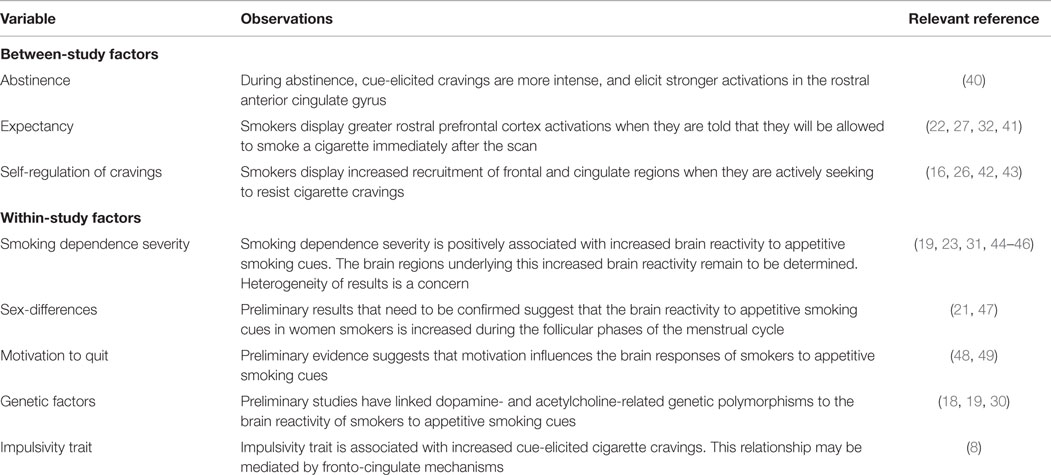
Table 1. Factors influencing brain reactivity to appetitive smoking cues.
Between-Study Heterogeneity
Of all the variables that may influence the neural correlates of cue-elicited cigarette cravings, abstinence has been the most studied. On theoretical grounds, Wilson and Sayette (40) proposed that moderate and uncontrollable cravings may trigger substantially different brain responses. Consistently with this idea, the meta-analysis from Engelmann et al. (6) found that studies performed in deprived smokers (who report more intense cravings) had increased activations in the right superior frontal and the left lingual gyrus, relative to studies performed in non-deprived smokers. However, this meta-analysis also showed sizeable overlap between both sets of studies, which produced activations in 44 widespread clusters (6). Recently, Wilson and Sayette (40) updated the meta-analysis of Engelmann et al. (6). By contrasting 24 functional imaging studies involving deprived and non-deprived smokers, this updated meta-analysis showed that deprived smokers elicit stronger activations of the rostral ACC than smokers allowed to smoke ad libitum before the scanning session. Interestingly, the rostral ACC is thought to play a critical role in the neurobiology of addiction, given that it receives dopaminergic inputs from the ventral tegmental area (10) and is involved in self-referential processes (50).
Smoking expectancy has also been shown to influence brain reactivity to appetitive smoking cues in chronic smokers. Wilson et al. (22) found that the expectation of being allowed to smoke a cigarette immediately after the scanning session was associated with increased activations in the ventro-medial PFC, the precentral gyrus, and the right middle temporal gyrus. The same research team subsequently confirmed the influence of smoking on rostral PFC activations, but only in smokers unmotivated to quit (32). Hayashi et al. (41) found that smoking expectancy is associated with increased activation in the dlPFC. Finally, McBride et al. (27) found an association between smoking expectancy and activations in several frontal regions (dlPFC, dACC, dmPFC, mOFC), the PCC, and the precuneus. Overall, these results suggest that smoking expectancy is associated with increased activations in regions involved in action planning and reward valuation.
Finally, the ability to resist cigarette cravings was studied in four fMRI studies. Brody et al. (16) found that the PCC was engaged when participants were actively trying to suppress their urges, but not when they craved without trying to resist. Hartwell et al. (26) found that the ability to resist cigarette cravings was associated with increased activations in the left ACC, the ventro-/mPFC and the dlPFC. Zhao et al. (42) found that the inhibition of cue-induced cigarette cravings (via re-appraisal) was associated with increased activations of the right dorsal ACC. Finally, Kober et al. (43) showed that cognitive down-regulation of cigarette cravings was associated with increased activations in regions involved in cognitive control [e.g., the dlPFC, dmPFC, and ventro-lateral prefrontal cortex (vlPFC)]. It is therefore possible that smokers with poor self-control abilities experience greater difficulty in controlling their urges, and this is (partially) mediated by lower activation of fronto-cingulate regions. Such results highlight the importance of self-regulation abilities in the subjective experience of cigarette cravings.
Within-Study Heterogeneity
Attention has also been paid to the severity of smoking dependence and how it may influence brain cue reactivity. Apart from Vollstadt-Klein et al.’s (23) study, which found that severe smoking dependence was associated with decreased activations in the amygdala, hippocampus, putamen, and thalamus, most studies have shown that smoking dependence is positively associated with smoking cue-elicited brain activations. Thus far, severe smoking dependence has been associated with increased activations in craving-related frontal and temporal regions (44, 45), the insula (19, 44), and the (superior) parietal cortex (31, 45, 46). As such, these results suggest that cigarette cues provoke a stronger brain craving response in smokers whose dependence is more severe.
KEY CONCEPT 3. Brain cue reactivity
Relative to neutral stimuli, appetitive smoking-related cues have been shown to elicit significant activations within the extended visual cortex, the (medial and dorsolateral) prefrontal cortex, the (anterior and posterior) cingulate, the temporal cortex, the insula, and the dorsal striatum. The widespread brain reactivity to cigarette cues suggests that craving is a multidimensional construct.
In view of the clinical evidence showing that women and girls take less time to become dependent after initial use and have more difficulties quitting the habit (51, 52), preliminary studies examined the influence of sex-differences on the neural correlates of cigarette cravings. One of the factors contributing to these differences may be that women crave cigarettes more than men and that their desire to smoke is influenced by hormonal fluctuations across the menstrual cycle. Therefore, we performed a study involving tobacco-smoking men (n = 15) and women (n = 19) who underwent an fMRI session, during which neutral and smoking-related images, known to elicit craving, were presented (47). Women were tested twice; once during early follicular and once during mid-luteal phase of their menstrual cycle. The analysis did not reveal any significant sex differences in the cerebral activations associated with craving. This result contrasts with the fMRI findings from McClernon et al. (21), who found that women smokers exhibited larger cue reactivity in the right putamen, bilateral cuneus, and left middle temporal gyrus, while men had greater responses in the left hippocampus and left orbitofrontal cortex. Nevertheless, our study showed that brain activations in women varied across their menstrual cycle. More precisely, we found that female smokers had increased activations in the right angular/middle temporal gyrus in the follicular phase compared to the luteal phase. This latter result echoed the clinical reports of fluctuations in tobacco intake, withdrawal symptoms, and relapse rates across the menstrual cycle in women smokers (53, 54), as well as the preclinical findings showing that higher levels of estrogen (follicular phase) are associated with more reinforcing effects of addictive drugs, whereas higher levels of progesterone (luteal phase) are associated with less reinforcing effects (55).
Some authors have shown that one’s intention to quit can impact prefrontal and limbic activity toward cigarette pictures (48) Furthermore, it was shown that smokers who are dissatisfied with their smoking behavior, relative to those more accepting of their tobacco use, were more reactive (e.g., orbitofrontal and limbic activations) to appetitive cigarette cues (49).
Finally, genetic factors have also been shown to modulate brain reactivity to smoking cues. An association has been found between the dopamine transporter gene SLC6A3 polymorphism and ventral striatal and medial orbitofrontal activations in response to smoking cues (18), a finding that was subsequently replicated in another independent sample (19). In addition, an association has been observed between the nicotinic receptor alpha-5 subunit gene (rs16969968) polymorphism and smoking cue-elicited activations in the hippocampus and dorsal striatum (30).
Impulsivity
Personality traits, such as impulsivity, have been largely overlooked as potential factors contributing to heterogeneity in the fMRI studies on cigarette cravings. Impulsivity constitutes a key diagnostic criterion for several mental disorders, most importantly for antisocial personality disorder, borderline personality disorder, impulse-control disorders, and attention deficit and hyperactivity disorder (ADHD) (56, 57). Yet, the definition and dimensions of impulsivity remain a source of debate. The most widely accepted definition of impulsivity is a predisposition toward rapid, unplanned reactions to internal or external stimuli without regard for the negative consequences of these reactions for the impulsive individuals and others (58). There are (at least) five dimensions of impulsivity, namely: (i) the difficulty in maintaining one’s attention toward stimuli; (ii) the initiation of actions without forethought or planification; (iii) sensation/novelty seeking; (iv) the indifference toward the long-term consequences of one’s choices and actions; and (v) the preference of immediate over larger delayed rewards, regardless of its disadvantages (59–63). Several scales have been developed to measure the different components of impulsivity (60, 63, 64). Research using these scales has shown that impulsivity has the characteristics of a personality trait: it is relatively stable in time and genetically transmitted (65, 66).
Impulsivity has been extensively studied using cognitive tasks. Bari and Robbins (67) have recently proposed a model that defines two dimensions of impulsivity largely studied in cognitive science: (1) a rapid action form, which refers to behaviors that are performed without consideration for their consequences and (2) a slower form involving the adoption of desired behaviors despite their negative consequences [Note: other researchers have proposed similar models (68–70)]. Whereas the rapid form involves cognitive control processes allowing the flexible adaptation of behaviors to meet current demands (71, 72), the slower form entails value-based decision-making processes, which enable the selection of a behavior based on predicted positive or negative outcomes (73). While the rapid action form of impulsivity is assessed using response inhibition paradigms, such as the Go/No-Go task, which require the suppression of a pre-potent motor response (71, 74, 75), the slower form of impulsivity is assessed using risky decision-making tasks that include rewards, such as the Iowa Gambling task (76, 77). Other components of impulsivity, such as the ability to delay rewards (78–82), have been studied in cognitive science, but to a lesser extent. Moreover, delay-discounting tasks have been used less frequently than response inhibition and decision-making tasks in the functional imaging studies performed on the neural bases of impulsivity.
The Neurobiology of Impulsivity
Response inhibition and risky decision-making tasks have been largely employed to examine the neural bases of impulsivity, using functional imaging. Although there may be a partial overlap between the neural mechanisms underlying cognitive control and risky decision-making, the available evidence suggests that response inhibition tasks recruit a fronto-lateral executive network (74, 75, 83–85), while risky decision-making tasks recruit reward-related structures (86–88). Response inhibition tasks require withholding an already selected or initiated motor response. A recent meta-analysis of 30 fMRI studies (89) has shown that the vlPFC, the dlPFC, and the (dorsal) ACC are critically involved in response inhibition, presumably exerting executive control over the motor response. On the other hand, risky decision-making relies on mental processes that are mostly driven by reward seeking. A large-scale meta-analysis of 206 fMRI studies (90) has shown that rewards activate a valuation system composed of the ventro-medial PFC, the ventral ACC, and the (ventral) striatum. This is consistent with recent fMRI studies, highlighting the crucial role of these regions in risky decision-making (77, 91, 92). Thus, mounting evidence suggests that cognitive control involves fronto-lateral mechanisms (83), while risky decision-making relies on reward-related structures (70, 93).
Impulsivity and Cigarette Smoking
Impulsivity plays a critical role in the etiology of substance use disorders (94). In adolescents, impulsivity has repeatedly been shown to predict the onset of substance use and subsequent escalation of use (95, 96). In the case of tobacco, longitudinal studies have shown that impulsivity/hyperactivity traits at 12 years old predicted cigarette smoking 2 years later (97). In adolescents, it has also been shown that the preference for immediate rewards over larger delayed rewards promoted smoking acquisition (96). Likewise, an epidemiological study from Norway showed that impulsivity, as measured with the Barratt Impulsiveness Scale (BIS), was significantly associated with cigarette smoking initiation, even after controlling for education level (98).
Increased impulsivity levels have repeatedly been highlighted in chronic cigarette smokers, relative to non-smokers, using various clinical and cognitive instruments. Using the BIS, several studies have reported high levels of impulsivity traits in chronic cigarette smokers, relative to non-smokers (78, 81, 99–101). In addition, it has been shown, using the Go–No-go task, that compared to healthy volunteers, cigarette smokers fail more frequently to inhibit pre-potent motor responses (82, 99). Finally, it has been repeatedly demonstrated that cigarette smokers are less likely than non-smokers to choose large delayed rewards over small immediate ones in delay-discounting tasks (78–82). On neurobiological grounds, preliminary fMRI studies have shown that chronic smoking is associated with decreased ventral striatal activations during reward-related tasks (102, 103), and abnormal lateral prefrontal activations during the Stroop task (104).
In abstinent smokers, impulsivity has been shown to be a significant predictor of smoking relapse. In both adolescent and adult smokers receiving treatment for smoking cessation, smokers with impulsivity traits were found to be less likely to remain abstinent compared to non-impulsive smokers (105–107). Importantly, smokers who remained abstinent and those who relapsed did not differ at baseline in terms of number of smoked cigarettes, motivation to quit, confidence in their own abilities to quit, age, and sex. Similarly, Doran et al. (108) have shown, among smokers who relapsed during a 1-month intervention for smoking cessation, an association between impulsivity and shorter time to relapse. In order to explain the nature of the association between impulsivity and relapse, VanderVeen et al. (109, 110) hypothesized that during abstinence, the rewarding value of tobacco may be increased in impulsive smokers; that is, impulsive smokers may crave more for cigarettes during abstinence than non-impulsive ones.
Impulsivity and Cigarette Cravings
A growing number of studies have evidenced an association between impulsivity trait and cravings for alcohol (111–113), cocaine (114, 115), methamphetamine (115), and tobacco (116–118). Although the link between impulsivity and craving is increasingly substantiated by evidence, the mechanisms underlying this association remain poorly understood. Surprisingly, the neural mechanisms mediating the influence of impulsivity on cigarette cravings had not been studied (to our knowledge) until our research team sought to do so.
Impulsivity and the Neural Correlates of Cigarette Cravings
Impulsivity plays a pivotal role in the substance use onset, substance use relapse, and craving for psycho-active substances, including tobacco. Recently, our team performed an fMRI study seeking to examine the influence of trait impulsivity on the neural correlates of cue-elicited cigarette cravings (8). Thirty to 40 min prior to the scanning session, participants smoked a cigarette. While in the scanner, 31 chronic smokers viewed appetitive smoking-related and neutral images and reported their subjective craving levels. They also completed the BIS. The processing of appetitive smoking cues elicited, in smokers, activations in midline brain regions (the mPFC, ACC, and PCC) that have been repeatedly found to be activated in fMRI studies on tobacco cravings (6), and to be involved in self-referential processing (119–121). In addition, we observed a significant positive relationship between the total BIS score and subjective craving levels (r = 0.624; p < 0.001). Among second-order factors of the BIS (attentional, motor, and non-planning), it was the non-planning subscale that was the most significantly correlated with craving ratings (r = 0.625; p < 0.001). A negative correlation (r = −0.449; p = 0.015) was also observed between the total BIS score and activations in the PCC. Among second-order factors, only the non-planning subscale was significantly correlated with PCC activations (r = −0.440; p = 0.017). Such results were consistent with previous findings showing that the PCC is involved in resisting cigarette cravings (16). Based on the observed associations between impulsivity and PCC activations, we conducted functional connectivity analyses with the psycho-physiological interaction (PPI) method, using the PCC as the seed region. PPI analyses revealed significant negative coupling between the PCC and the dorsal ACC, the right dlPFC, and a region in the vicinity of the left insula. Thus, lower activations of the PCC, found in impulsive smokers, were associated with higher activations of brain regions involved in emotional (insula) and attentional (dACC and dlPFC) responses to smoking cues. Our findings highlighted the need for further investigations on the role of the PCC in drug addiction, as it is one of the most consistently activated regions in fMRI studies examining the neural correlates of cue-induced alcohol, drug, and tobacco cravings (6, 122, 123). Besides its role in self-referential processing, the PCC may be involved in the ability to resist cravings for psycho-active substances, including tobacco. Theoretically, an impaired functioning of the PCC may (indirectly) result in a lack of self-control over substance (tobacco) cravings. Although the PCC is not assumed to be a core cognitive control region, a neuro-imaging meta-analysis of 24 fMRI studies using stop-signal tasks recently showed that the PCC is one of the main activated regions during response inhibition (124).
Contrary to our expectations, we did not observe any direct relationship between impulsivity and dysfunctional activations in the dlPFC or the vlPFC (though the dlPFC emerged as significantly coupled with the PCC). Critically involved in cognitive control (74, 75, 89), these frontal regions have been shown to be implicated in efforts to inhibit cigarette cravings (26, 43). Although the reasons for these negative findings remain elusive, it is possible that the impulsivity trait refers to more complex neural processes than those involved in decision-making and cognitive control. Highly impulsive individuals are stimulus-bound and focus on immediate rather than long-term events. They also tend to lack introspection and have impaired mentalization abilities (125). Such characteristics are very unlikely to be captured by risky decision-making or response inhibition tasks. Over and above the dlPFC and vlPFC, the PCC is critical for self-relevant processes, such as mindfulness, mentalizing, and self-reflection (119–121). Altogether, these results should encourage researchers who will pursue future studies on the neurobiology of impulsivity in the addiction field to pay attention to components of impulsivity other than cognitive control and risky decision-making.
Future Perspectives: Tobacco Smoking in Psychiatric Disorders
Several psychiatric disorders are characterized by high or moderate levels of impulsivity, namely ADHD, bipolar, cluster-B personality, psychotic, and substance use disorders (7, 58, 126–129). Moreover, the prevalence of cigarette smoking is increased in patients with psychiatric disorders. In the US, approximately 29% of the population has a psychiatric disorder, and these individuals consume approximately 41% of the production of tobacco in the country (130). Although the prevalence of tobacco smoking has declined in the general population during the last decades, the consumption of tobacco products remained strikingly elevated in patients with schizophrenia, bipolar disorder, major depressive disorder, post-traumatic stress disorder (PTSD), and ADHD, with prevalence estimates of 60–74, 66, 57, 40–86, and 40–42%, respectively (130–136). Elevated rates of tobacco smoking have also been observed in individuals with substance use disorders (137). It has been shown, indeed, that more than a third of patients with an alcohol use disorder and more than half of individuals who misuse (abuse/dependence) illicit drugs are also nicotine dependent (138). Therefore, psychiatric patients represent populations of interest for the study of the relationship between impulsivity and tobacco cravings, at both the behavioral and neural level.
Explanatory Models
Two major hypotheses have been advanced to account for the elevated prevalence of tobacco smoking in psychiatric patients. The self-medication hypothesis proposes that psychiatric patients smoke cigarettes to relieve their psychiatric symptoms (anxiety, depression) or cognitive deficits (139). In support of this hypothesis, numerous studies have shown that the acute administration of nicotine (the main psycho-active agent of tobacco) to schizophrenia patients improves some of their cognitive deficits (e.g., attention, speed of processing, and working memory), and their impaired ability to filter out irrelevant information (140–142). Preliminary studies have shown that nicotine administration (or tobacco smoking) also improves cognitive performance in patients with ADHD (143, 144), bipolar disorder (145), and depression (20, 145).
Despite these findings, the self-medication hypothesis has been criticized over the years for its implied justification of tobacco smoking in psychiatric patients. Alternatively, the addiction vulnerability hypothesis proposes that neurobiological dysfunctions of the brain reward system, common to psychiatric and substance use disorders, make psychiatric patients more vulnerable to the rewarding effects of various psycho-active substances, including tobacco (139, 146, 147). In support of the addiction vulnerability hypothesis, several studies have shown that tobacco is more reinforcing for schizophrenia patients than it is for non-psychiatric smokers. Schizophrenia patients are more prone to smoke high-tar cigarettes, and they tend to smoke more cigarettes per day, extract more nicotine per cigarette, and have higher serum nicotine and cotinine (nicotine metabolite) levels compared to control smokers (148, 149). Preliminary evidence also suggests that cravings for cigarette are increased in schizophrenia patients (150, 151), 15 min or 72 h after smoking their last cigarette. Preliminary studies have shown that cigarette cravings are also elevated in other psychiatric disorders, including ADHD and PTSD (152–155). Despite these evidences, the neural correlates of tobacco cravings have been scarcely examined in psychiatric patients or individuals with psychiatric vulnerabilities (156–158).
Future studies will need to replicate and extend the findings demonstrating that cigarette cravings are increased in psychiatric patients, and to clarify whether bottom-up (e.g., motivational salience) or top-down (e.g., self-regulation) neural mechanisms explain these findings. To explore this self-regulation hypothesis, impulsivity will need to be measured in these populations. Although most studies in the comorbidity field have not focused on tobacco smoking specifically, mounting evidence shows that impulsivity is a key mediator of the association between substance use and psychiatric disorders, including ADHD, bipolar disorder, cluster-B personality disorders, and schizophrenia (7, 126–128). Several fMRI studies have examined the neural correlates of impulsivity in psychiatric patients (mostly bipolar disorder and schizophrenia) having no comorbid substance use disorders. Using various response inhibition tasks, these studies have shown that psychiatric patients have abnormal brain activations in regions involved in cognitive control, such as the dlPFC, the vlPFC, and/or the cingulate gyrus (159–163). Despite the variability in results, such findings pave the way to future neuro-imaging studies on drug (cigarette) cravings in psychiatric patients examining the interactions between cognitive control brain regions and those involved in craving experience.
KEY CONCEPT 4. Comorbidity
The prevalence of cigarette smoking is elevated in several psychiatric disorders characterized by high or moderate levels of impulsivity, namely attention deficit hyperactivity disorder, bipolar disorder, cluster-B personality disorders, psychotic disorders, and substance use disorders.
Conclusion
Given that craving is a core feature of tobacco use disorder and a significant predictor of smoking relapse, several fMRI studies have examined the neural correlates of (cue-induced) cigarette urges. The available literature has demonstrated that cigarette cravings elicit activations in regions involved in self-referential processing, planning/regulatory processes, emotional responding, attentional biases, and automatic conducts. Unfortunately, the implications of this literature are limited by the heterogeneity of results. Sources of heterogeneity include both methodological (abstinence, smoking expectancies, self-regulation) and individual factors (severity of smoking dependence, sex-differences, motivation to quit, genetic factors). Surprisingly, the potential influence of impulsivity has been largely ignored, although impulsivity is positively associated with cigarette cravings and smoking relapse. The influence of impulsivity on cigarette cravings is possibly mediated by fronto-cingulate mechanisms, as recently demonstrated by our team. Future behavioral and neuro-imaging studies will need to pay attention to the high prevalence of cigarette smoking in several psychiatric disorders, as these disorders are characterized by significant impulsivity.
Conflict of Interest Statement
The authors declare that the research was conducted in the absence of any commercial or financial relationships that could be construed as a potential conflict of interest.
Acknowledgments
SP is holder of the Eli Lilly Chair on Schizophrenia Research.
Authors Biography

References
1. World Health Organization. Report on the Global Tobacco Epidemic 2008. (2008). Available from: http://www.annals.edu.sg/PDF/37VolNo5May2008/V37N5p363.pdf
2. World Health Organization. The Smoker’s Body. (2004). Available from: http://www.who.int/tobacco/publications/health_effects/smokers_body/en/
3. World Health Organization. Tobacco. (2014). Available from: http://www.who.int/mediacentre/factsheets/fs339/en/
4. Hughes JR, Peters EN, Naud S. Relapse to smoking after 1 year of abstinence: a meta-analysis. Addict Behav (2008) 33(12):1516–20. doi:10.1016/j.addbeh.2008.05.012
5. Killen JD, Fortmann SP. Craving is associated with smoking relapse: findings from three prospective studies. Exp Clin Psychopharmacol (1997) 5(2):137–42. doi:10.1037/1064-1297.5.2.137
6. Engelmann JM, Versace F, Robinson JD, Minnix JA, Lam CY, Cui Y, et al. Neural substrates of smoking cue reactivity: a meta-analysis of fMRI studies. Neuroimage (2012) 60(1):252–62. doi:10.1016/j.neuroimage.2011.12.024
7. Jentsch JD, Ashenhurst JR, Cervantes MC, Groman SM, James AS, Pennington ZT. Dissecting impulsivity and its relationships to drug addictions. Ann N Y Acad Sci (2014) 1327:1–26. doi:10.1111/nyas.12388
8. Bourque J, Mendrek A, Dinh-Williams L, Potvin S. Neural circuitry of impulsivity in a cigarette craving paradigm. Front Psychiatry (2013) 4:67. doi:10.3389/fpsyt.2013.00067
9. Ussher M, Beard E, Abikoye G, Hajek P, West R. Urge to smoke over 52 weeks of abstinence. Psychopharmacology (2013) 226(1):83–9. doi:10.1007/s00213-012-2886-7
10. Robinson TE, Berridge KC. The neural basis of drug craving: an incentive-sensitization theory of addiction. Brain Res Brain Res Rev (1993) 18(3):247–91. doi:10.1016/0165-0173(93)90013-P
11. Tiffany ST, Conklin CA. A cognitive processing model of alcohol craving and compulsive alcohol use. Addiction (2000) 95(Suppl 2):S145–53. doi:10.1046/j.1360-0443.95.8s2.3.x
12. Herd N, Borland R, Hyland A. Predictors of smoking relapse by duration of abstinence: findings from the international tobacco control (ITC) four country survey. Addiction (2009) 104(12):2088–99. doi:10.1111/j.1360-0443.2009.02732.x
13. Sweitzer MM, Denlinger RL, Donny EC. Dependence and withdrawal-induced craving predict abstinence in an incentive-based model of smoking relapse. Nicotine Tob Res (2013) 15(1):36–43. doi:10.1093/ntr/nts080
14. Bedi G, Preston KL, Epstein DH, Heishman SJ, Marrone GF, Shaham Y, et al. Incubation of cue-induced cigarette craving during abstinence in human smokers. Biol Psychiatry (2011) 69(7):708–11. doi:10.1016/j.biopsych.2010.07.014
15. Erblich J, Boyarsky Y, Spring B, Niaura R, Bovbjerg DH. A family history of smoking predicts heightened levels of stress-induced cigarette craving. Addiction (2003) 98(5):657–64. doi:10.1046/j.1360-0443.2003.00351.x
16. Brody AL, Mandelkern MA, Olmstead RE, Jou J, Tiongson E, Allen V, et al. Neural substrates of resisting craving during cigarette cue exposure. Biol Psychiatry (2007) 62(6):642–51. doi:10.1016/j.biopsych.2006.10.026
17. David SP, Munafo MR, Johansen-Berg H, Smith SM, Rogers RD, Matthews PM, et al. Ventral striatum/nucleus accumbens activation to smoking-related pictorial cues in smokers and nonsmokers: a functional magnetic resonance imaging study. Biol Psychiatry (2005) 58(6):488–94. doi:10.1016/j.biopsych.2005.04.028
18. Franklin TR, Lohoff FW, Wang Z, Sciortino N, Harper D, Li Y, et al. DAT genotype modulates brain and behavioral responses elicited by cigarette cues. Neuropsychopharmacology (2009) 34(3):717–28. doi:10.1038/npp.2008.124
19. Franklin TR, Wang Z, Li Y, Suh JJ, Goldman M, Lohoff FW, et al. Dopamine transporter genotype modulation of neural responses to smoking cues: confirmation in a new cohort. Addict Biol (2011) 16(2):308–22. doi:10.1111/j.1369-1600.2010.00277.x
20. McClernon FJ, Hiott FB, Westman EC, Rose JE, Levin ED. Transdermal nicotine attenuates depression symptoms in nonsmokers: a double-blind, placebo-controlled trial. Psychopharmacology (2006) 189(1):125–33. doi:10.1007/s00213-006-0516-y
21. McClernon FJ, Kozink RV, Rose JE. Individual differences in nicotine dependence, withdrawal symptoms, and sex predict transient fMRI-BOLD responses to smoking cues. Neuropsychopharmacology (2008) 33(9):2148–57. doi:10.1038/sj.npp.1301618
22. Wilson SJ, Sayette MA, Delgado MR, Fiez JA. Instructed smoking expectancy modulates cue-elicited neural activity: a preliminary study. Nicotine Tob Res (2005) 7(4):637–45. doi:10.1080/14622200500185520
23. Vollstadt-Klein S, Kobiella A, Buhler M, Graf C, Fehr C, Mann K, et al. Severity of dependence modulates smokers’ neuronal cue reactivity and cigarette craving elicited by tobacco advertisement. Addict Biol (2011) 16(1):166–75. doi:10.1111/j.1369-1600.2010.00207.x
24. Lee JH, Lim Y, Wiederhold BK, Graham SJ. A functional magnetic resonance imaging (FMRI) study of cue-induced smoking craving in virtual environments. Appl Psychophysiol Biofeedback (2005) 30(3):195–204. doi:10.1007/s10484-005-6377-z
25. Versace F, Engelmann JM, Jackson EF, Costa VD, Robinson JD, Lam CY, et al. Do brain responses to emotional images and cigarette cues differ? An fMRI study in smokers. Eur J Neurosci (2011) 34(12):2054–63. doi:10.1111/j.1460-9568.2011.07915.x
26. Hartwell KJ, Johnson KA, Li X, Myrick H, LeMatty T, George MS, et al. Neural correlates of craving and resisting craving for tobacco in nicotine dependent smokers. Addict Biol (2011) 16(4):654–66. doi:10.1111/j.1369-1600.2011.00340.x
27. McBride D, Barrett SP, Kelly JT, Aw A, Dagher A. Effects of expectancy and abstinence on the neural response to smoking cues in cigarette smokers: an fMRI study. Neuropsychopharmacology (2006) 31(12):2728–38. doi:10.1038/sj.npp.1301075
28. McClernon FJ, Kozink RV, Lutz AM, Rose JE. 24-h smoking abstinence potentiates fMRI-BOLD activation to smoking cues in cerebral cortex and dorsal striatum. Psychopharmacology (2009) 204(1):25–35. doi:10.1007/s00213-008-1436-9
29. Kang OS, Chang DS, Jahng GH, Kim SY, Kim H, Kim JW, et al. Individual differences in smoking-related cue reactivity in smokers: an eye-tracking and fMRI study. Prog Neuropsychopharmacol Biol Psychiatry (2012) 38(2):285–93. doi:10.1016/j.pnpbp.2012.04.013
30. Janes AC, Smoller JW, David SP, Frederick BD, Haddad S, Basu A, et al. Association between CHRNA5 genetic variation at rs16969968 and brain reactivity to smoking images in nicotine dependent women. Drug Alcohol Depend (2012) 120(1–3):7–13. doi:10.1016/j.drugalcdep.2011.06.009
31. Yalachkov Y, Kaiser J, Naumer MJ. Brain regions related to tool use and action knowledge reflect nicotine dependence. J Neurosci (2009) 29(15):4922–9. doi:10.1523/Jneurosci.4891-08.2009
32. Wilson SJ, Sayette MA, Fiez JA. Quitting-unmotivated and quitting-motivated cigarette smokers exhibit different patterns of cue-elicited brain activation when anticipating an opportunity to smoke. J Abnorm Psychol (2012) 121(1):198–211. doi:10.1037/a0025112
33. Tang DW, Fellows LK, Small DM, Dagher A. Food and drug cues activate similar brain regions: a meta-analysis of functional MRI studies. Physiol Behav (2012) 106(3):317–24. doi:10.1016/j.physbeh.2012.03.009
34. Volkow ND, Fowler JS, Wang GJ. The addicted human brain viewed in the light of imaging studies: brain circuits and treatment strategies. Neuropharmacology (2004) 47(Suppl 1):3–13. doi:10.1016/j.neuropharm.2004.07.019
35. Augustus Diggs H, Froeliger B, Carlson JM, Gilbert DG. Smoker-nonsmoker differences in neural response to smoking-related and affective cues: an fMRI investigation. Psychiatry Res (2013) 211(1):85–7. doi:10.1016/j.pscychresns.2012.06.009
36. Versace F, Engelmann JM, Robinson JD, Jackson EF, Green CE, Lam CY, et al. Prequit FMRI responses to pleasant cues and cigarette-related cues predict smoking cessation outcome. Nicotine Tob Res (2014) 16(6):697–708. doi:10.1093/ntr/ntt214
37. Dinh-Williams L, Mendrek A, Bourque J, Potvin S. Where there’s smoke, there’s fire: the brain reactivity of chronic smokers when exposed to the negative value of smoking. Prog Neuropsychopharmacol Biol Psychiatry (2014) 50:66–73. doi:10.1016/j.pnpbp.2013.12.009
38. Wakefield MA, Durkin S, Spittal MJ, Siahpush M, Scollo M, Simpson JA, et al. Impact of tobacco control policies and mass media campaigns on monthly adult smoking prevalence. Am J Public Health (2008) 98(8):1443–50. doi:10.2105/AJPH.2007.128991
39. Davis KC, Farrelly MC, Duke J, Kelly L, Willett J. Antismoking media campaign and smoking cessation outcomes, New York State, 2003-2009. Prev Chronic Dis (2012) 9:110102. doi:10.5888/pcd9.110102
40. Wilson SJ, Sayette MA. Neuroimaging craving: urge intensity matters. Addiction (2015) 110(2):195–203. doi:10.1111/add.12676
41. Hayashi T, Ko JH, Strafella AP, Dagher A. Dorsolateral prefrontal and orbitofrontal cortex interactions during self-control of cigarette craving. Proc Natl Acad Sci USA (2013) 110(11):4422–7. doi:10.1073/pnas.1212185110
42. Zhao LY, Tian J, Wang W, Qin W, Shi J, Li Q, et al. The role of dorsal anterior cingulate cortex in the regulation of craving by reappraisal in smokers. PLoS One (2012) 7(8):e43598. doi:10.1371/journal.pone.0043598
43. Kober H, Mende-Siedlecki P, Kross EF, Weber J, Mischel W, Hart CL, et al. Prefrontal-striatal pathway underlies cognitive regulation of craving. Proc Natl Acad Sci USA (2010) 107(33):14811–6. doi:10.1073/pnas.1007779107
44. Claus ED, Blaine SK, Filbey FM, Mayer AR, Hutchison KE. Association between nicotine dependence severity, BOLD response to smoking cues, and functional connectivity. Neuropsychopharmacology (2013) 38(12):2363–72. doi:10.1038/npp.2013.134
45. Goudriaan AE, de Ruiter MB, van den Brink W, Oosterlaan J, Veltman DJ. Brain activation patterns associated with cue reactivity and craving in abstinent problem gamblers, heavy smokers and healthy controls: an fMRI study. Addict Biol (2010) 15(4):491–503. doi:10.1111/j.1369-1600.2010.00242.x
46. Smolka MN, Buhler M, Klein S, Zimmermann U, Mann K, Heinz A, et al. Severity of nicotine dependence modulates cue-induced brain activity in regions involved in motor preparation and imagery. Psychopharmacology (2006) 184(3–4):577–88. doi:10.1007/s00213-005-0080-x
47. Mendrek A, Dinh-Williams L, Bourque J, Potvin S. Sex differences and menstrual cycle phase-dependent modulation of craving for cigarette: an FMRI pilot study. Psychiatry J (2014) 2014:723632. doi:10.1155/2014/723632
48. Wilson SJ, Sayette MA, Fiez JA. Prefrontal responses to drug cues: a neurocognitive analysis. Nat Neurosci (2004) 7(3):211–4. doi:10.1038/nn1200
49. Stippekohl B, Winkler MH, Walter B, Kagerer S, Mucha RF, Pauli P, et al. Neural responses to smoking stimuli are influenced by smokers’ attitudes towards their own smoking behaviour. PLoS One (2012) 7(11):e46782. doi:10.1371/journal.pone.0046782
50. Moeller SJ, Goldstein RZ. Impaired self-awareness in human addiction: deficient attribution of personal relevance. Trends Cogn Sci (2014) 18(12):635–41. doi:10.1016/j.tics.2014.09.003
51. Cepeda-Benito A, Reynoso JT, Erath S. Meta-analysis of the efficacy of nicotine replacement therapy for smoking cessation: differences between men and women. J Consult Clin Psychol (2004) 72(4):712–22. doi:10.1037/0022-006X.72.4.712
52. Sieminska A, Jassem E. The many faces of tobacco use among women. Med Sci Monit (2014) 20:153–62. doi:10.12659/MSM.889796
53. Snively TA, Ahijevych KL, Bernhard LA, Wewers ME. Smoking behavior, dysphoric states and the menstrual cycle: results from single smoking sessions and the natural environment. Psychoneuroendocrinology (2000) 25(7):677–91. doi:10.1016/S0306-4530(00)00018-4
54. Allen AM, Mooney M, Chakraborty R, Allen SS. Circadian patterns of ad libitum smoking by menstrual phase. Hum Psychopharmacol (2009) 24(6):503–6. doi:10.1002/hup.1039
55. Lynch WJ, Sofuoglu M. Role of progesterone in nicotine addiction: evidence from initiation to relapse. Exp Clin Psychopharmacol (2010) 18(6):451–61. doi:10.1037/a0021265
56. American Psychiatric Association. Diagnostic and Statistical Manual of Mental Disorders. 5th ed. Washington, DC: American Psychiatric Publishing (2013).
57. World Health Organization. International Statistical Classification of Diseases and Related Health Problems – 10th Revision. Geneva: World Health Organization (2010).
58. Moeller FG, Barratt ES, Dougherty DM, Schmitz JM, Swann AC. Psychiatric aspects of impulsivity. Am J Psychiatry (2001) 158(11):1783–93. doi:10.1176/appi.ajp.158.11.1783
59. Dalley JW, Everitt BJ, Robbins TW. Impulsivity, compulsivity, and top-down cognitive control. Neuron (2011) 69(4):680–94. doi:10.1016/j.neuron.2011.01.020
60. Patton JH, Stanford MS, Barratt ES. Factor structure of the Barratt impulsiveness scale. J Clin Psychol (1995) 51(6):768–74. doi:10.1002/1097-4679(199511)51:6<768::AID-JCLP2270510607>3.0.CO;2-1
61. Robbins TW, Gillan CM, Smith DG, de Wit S, Ersche KD. Neurocognitive endophenotypes of impulsivity and compulsivity: towards dimensional psychiatry. Trends Cogn Sci (2012) 16(1):81–91. doi:10.1016/j.tics.2011.11.009
62. Stahl C, Voss A, Schmitz F, Nuszbaum M, Tuscher O, Lieb K, et al. Behavioral components of impulsivity. J Exp Psychol Gen (2014) 143(2):850–86. doi:10.1037/a0033981
63. Whiteside SP, Lynam DR. The five factor model and impulsivity: using a structural model of personality to understand impulsivity. Pers Individ Dif (2001) 30(4):669–89. doi:10.1016/S0191-8869(00)00064-7
64. Eysenck SBG, Pearson PR, Easting G, Allsopp JF. Age norms for impulsiveness, venturesomeness and empathy in adults. Pers Individ Dif (1985) 6(5):613–9. doi:10.1016/0191-8869(85)90011-X
65. Eysenck HJ. The nature of impulsivity. In: McCown WG, Johnson JL, Shure MB editors. The Impulsive Client: Theory, Research, and Treatment. Washington, DC: American Psychological Association (1993). p. 57–69.
66. Cloninger CR, Przybeck TR, Svrakic DM. The tridimensional personality questionnaire: U.S. normative data. Psychol Rep (1991) 69(3 Pt 1):1047–57. doi:10.2466/PR0.69.7.1047-1057
67. Bari A, Robbins TW. Inhibition and impulsivity: behavioral and neural basis of response control. Prog Neurobiol (2013) 108:44–79. doi:10.1016/j.pneurobio.2013.06.005
68. Jupp B, Dalley JW. Convergent pharmacological mechanisms in impulsivity and addiction: insights from rodent models. Br J Pharmacol (2014) 171(20):4729–66. doi:10.1111/Bph.12787
69. Jupp B, Dalley JW. Behavioral endophenotypes of drug addiction: etiological insights from neuroimaging studies. Neuropharmacology (2014) 76(Pt B):487–97. doi:10.1016/j.neuropharm.2013.05.041
70. Glascher J, Adolphs R, Damasio H, Bechara A, Rudrauf D, Calamia M, et al. Lesion mapping of cognitive control and value-based decision making in the prefrontal cortex. Proc Natl Acad Sci USA (2012) 109(36):14681–6. doi:10.1073/pnas.1206608109
71. Barch DM, Braver TS, Carter CS, Poldrack RA, Robbins TW. CNTRICS final task selection: executive control. Schizophr Bull (2009) 35(1):115–35. doi:10.1093/schbul/sbn154
72. Botvinick MM, Braver TS, Barch DM, Carter CS, Cohen JD. Conflict monitoring and cognitive control. Psychol Rev (2001) 108(3):624–52. doi:10.1037/0033-295X.108.3.624
73. Gutnik LA, Hakimzada AF, Yoskowitz NA, Patel VL. The role of emotion in decision-making: a cognitive neuroeconomic approach towards understanding sexual risk behavior. J Biomed Inform (2006) 39(6):720–36. doi:10.1016/j.jbi.2006.03.002
74. Rubia K, Smith A, Taylor E. Performance of children with attention deficit hyperactivity disorder (ADHD) on a test battery of impulsiveness. Child Neuropsychol (2007) 13(3):276–304. doi:10.1080/09297040600770761
75. Rubia K, Smith AB, Woolley J, Nosarti C, Heyman I, Taylor E, et al. Progressive increase of frontostriatal brain activation from childhood to adulthood during event-related tasks of cognitive control. Hum Brain Mapp (2006) 27(12):973–93. doi:10.1002/hbm.20237
76. Bechara A, Damasio H, Damasio AR. Emotion, decision making and the orbitofrontal cortex. Cereb Cortex (2000) 10(3):295–307. doi:10.1093/cercor/10.3.295
77. Bogg T, Fukunaga R, Finn PR, Brown JW. Cognitive control links alcohol use, trait disinhibition, and reduced cognitive capacity: evidence for medial prefrontal cortex dysregulation during reward-seeking behavior. Drug Alcohol Depend (2012) 122(1–2):112–8. doi:10.1016/j.drugalcdep.2011.09.018
78. Fields S, Collins C, Leraas K, Reynolds B. Dimensions of impulsive behavior in adolescent smokers and nonsmokers. Exp Clin Psychopharmacol (2009) 17(5):302–11. doi:10.1037/a0017185
79. Reynolds B, Richards JB, Horn K, Karraker K. Delay discounting and probability discounting as related to cigarette smoking status in adults. Behav Processes (2004) 65(1):35–42. doi:10.1016/S0376-6357(03)00109-8
80. Peters J, Bromberg U, Schneider S, Brassen S, Menz M, Banaschewski T, et al. Lower ventral striatal activation during reward anticipation in adolescent smokers. Am J Psychiatry (2011) 168(5):540–9. doi:10.1176/appi.ajp.2010.10071024
81. Mitchell SH. Measures of impulsivity in cigarette smokers and non-smokers. Psychopharmacology (1999) 146(4):455–64. doi:10.1007/PL00005491
82. Mitchell SH. Measuring impulsivity and modeling its association with cigarette smoking. Behav Cogn Neurosci Rev (2004) 3(4):261–75. doi:10.1177/1534582305276838
83. Castellanos-Ryan N, Rubia K, Conrod PJ. Response inhibition and reward response bias mediate the predictive relationships between impulsivity and sensation seeking and common and unique variance in conduct disorder and substance misuse. Alcohol Clin Exp Res (2011) 35(1):140–55. doi:10.1111/j.1530-0277.2010.01331.x
84. Garavan H, Hester R, Murphy K, Fassbender C, Kelly C. Individual differences in the functional neuroanatomy of inhibitory control. Brain Res (2006) 1105(1):130–42. doi:10.1016/j.brainres.2006.03.029
85. Menon V, Adleman NE, White CD, Glover GH, Reiss AL. Error-related brain activation during a Go/NoGo response inhibition task. Hum Brain Mapp (2001) 12(3):131–43. doi:10.1002/1097-0193(200103)12:3<131::AID-HBM1010>3.0.CO;2-C
86. Cheng GL, Tang JC, Li FW, Lau EY, Lee TM. Schizophrenia and risk-taking: impaired reward but preserved punishment processing. Schizophr Res (2012) 136(1–3):122–7. doi:10.1016/j.schres.2012.01.002
87. Kringelbach ML, Rolls ET. The functional neuroanatomy of the human orbitofrontal cortex: evidence from neuroimaging and neuropsychology. Prog Neurobiol (2004) 72(5):341–72. doi:10.1016/j.pneurobio.2004.03.006
88. Van Leijenhorst L, Moor BG, Op de Macks ZA, Rombouts SARB, Westenberg PM, Crone EA. Adolescent risky decision-making: neurocognitive development of reward and control regions. Neuroimage (2010) 51(1):345–55. doi:10.1016/j.neuroimage.2010.02.038
89. Criaud M, Boulinguez P. Have we been asking the right questions when assessing response inhibition in go/no-go tasks with fMRI? A meta-analysis and critical review. Neurosci Biobehav Rev (2013) 37(1):11–23. doi:10.1016/j.neubiorev.2012.11.003
90. Bartra O, McGuire JT, Kable JW. The valuation system: a coordinate-based meta-analysis of BOLD fMRI experiments examining neural correlates of subjective value. Neuroimage (2013) 76:412–27. doi:10.1016/j.neuroimage.2013.02.063
91. Rao H, Mamikonyan E, Detre JA, Siderowf AD, Stern MB, Potenza MN, et al. Decreased ventral striatal activity with impulse control disorders in Parkinson’s disease. Mov Disord (2010) 25(11):1660–9. doi:10.1002/mds.23147
92. Schonberg T, Fox CR, Mumford JA, Congdon E, Trepel C, Poldrack RA. Decreasing ventromedial prefrontal cortex activity during sequential risk-taking: an fMRI investigation of the balloon analogue risk task. Front Neurosci (2012) 6:80. doi:10.3389/fnins.2012.00080
93. Noonan MP, Walton ME, Behrens TE, Sallet J, Buckley MJ, Rushworth MF. Separate value comparison and learning mechanisms in macaque medial and lateral orbitofrontal cortex. Proc Natl Acad Sci USA (2010) 107(47):20547–52. doi:10.1073/pnas.1012246107
94. Wills TA, Vaccaro D, McNamara G. Novelty seeking, risk taking, and related constructs as predictors of adolescent substance use: an application of Cloninger’s theory. J Subst Abuse (1994) 6(1):1–20. doi:10.1016/S0899-3289(94)90039-6
95. Ernst M, Luckenbaugh DA, Moolchan ET, Leff MK, Allen R, Eshel N, et al. Behavioral predictors of substance-use initiation in adolescents with and without attention-deficit/hyperactivity disorder. Pediatrics (2006) 117(6):2030–9. doi:10.1542/peds.2005-0704
96. Audrain-McGovern J, Rodriguez D, Epstein LH, Cuevas J, Rodgers K, Wileyto EP. Does delay discounting play an etiological role in smoking or is it a consequence of smoking? Drug Alcohol Depend (2009) 103(3):99–106. doi:10.1016/j.drugalcdep.2008.12.019
97. Korhonen T, Levalahti E, Dick DM, Pulkkinen L, Rose RJ, Kaprio J, et al. Externalizing behaviors and cigarette smoking as predictors for use of illicit drugs: a longitudinal study among Finnish adolescent twins. Twin Res Hum Genet (2010) 13(6):550–8. doi:10.1375/twin.13.6.550
98. Kvaavik E, Rise J. How do impulsivity and education relate to smoking initiation and cessation among young adults? J Stud Alcohol Drugs (2012) 73(5):804–10. doi:10.15288/jsad.2012.73.804
99. Spinella M. Correlations between orbitofrontal dysfunction and tobacco smoking. Addict Biol (2002) 7(4):381–4. doi:10.1080/1355621021000005964
100. Flory JD, Manuck SB. Impulsiveness and cigarette smoking. Psychosom Med (2009) 71(4):431–7. doi:10.1097/PSY.0b013e3181988c2d
101. Balevich EC, Wein ND, Flory JD. Cigarette smoking and measures of impulsivity in a college sample. Subst Abus (2013) 34(3):256–62. doi:10.1080/08897077.2012.763082
102. Kobiella A, Ripke S, Kroemer NB, Vollmert C, Vollstadt-Klein S, Ulshofer DE, et al. Acute and chronic nicotine effects on behaviour and brain activation during intertemporal decision making. Addict Biol (2014) 19(5):918–30. doi:10.1111/adb.12057
103. Luo S, Ainslie G, Giragosian L, Monterosso JR. Striatal hyposensitivity to delayed rewards among cigarette smokers. Drug Alcohol Depend (2011) 116(1–3):18–23. doi:10.1016/j.drugalcdep.2010.11.012
104. Xu J, Mendrek A, Cohen MS, Monterosso J, Simon S, Jarvik M, et al. Effect of cigarette smoking on prefrontal cortical function in nondeprived smokers performing the stroop task. Neuropsychopharmacology (2007) 32(6):1421–8. doi:10.1038/sj.npp.1301272
105. Wegmann L, Buhler A, Strunk M, Lang P, Nowak D. Smoking cessation with teenagers: the relationship between impulsivity, emotional problems, program retention and effectiveness. Addict Behav (2012) 37(4):463–8. doi:10.1016/j.addbeh.2011.12.008
106. Krishnan-Sarin S, Reynolds B, Duhig AM, Smith A, Liss T, McFetridge A, et al. Behavioral impulsivity predicts treatment outcome in a smoking cessation program for adolescent smokers. Drug Alcohol Depend (2007) 88(1):79–82. doi:10.1016/j.drugalcdep.2006.09.006
107. Sheffer C, Mackillop J, McGeary J, Landes R, Carter L, Yi R, et al. Delay discounting, locus of control, and cognitive impulsiveness independently predict tobacco dependence treatment outcomes in a highly dependent, lower socioeconomic group of smokers. Am J Addict (2012) 21(3):221–32. doi:10.1111/j.1521-0391.2012.00224.x
108. Doran N, Spring B, McChargue D, Pergadia M, Richmond M. Impulsivity and smoking relapse. Nicotine Tob Res (2004) 6(4):641–7. doi:10.1080/14622200410001727939
109. VanderVeen JW, Cohen LM, Cukrowicz KC, Trotter DR. The role of impulsivity on smoking maintenance. Nicotine Tob Res (2008) 10(8):1397–404. doi:10.1080/14622200802239330
110. VanderVeen JW, Cohen LM, Trotter DRM, Collins FL. Impulsivity and the role of smoking-related outcome expectancies among dependent college-aged cigarette smokers. Addict Behav (2008) 33(8):1006–11. doi:10.1016/j.addbeh.2008.03.007
111. Papachristou H, Nederkoorn C, Havermans R, van der Horst M, Jansen A. Can’t stop the craving: the effect of impulsivity on cue-elicited craving for alcohol in heavy and light social drinkers. Psychopharmacology (2012) 219(2):511–8. doi:10.1007/s00213-011-2240-5
112. Papachristou H, Nederkoorn C, Havermans R, Bongers P, Beunen S, Jansen A. Higher levels of trait impulsiveness and a less effective response inhibition are linked to more intense cue-elicited craving for alcohol in alcohol-dependent patients. Psychopharmacology (Berl) (2013) 228(4):641–9. doi:10.1007/s00213-013-3063-3
113. Joos L, Goudriaan AE, Schmaal L, De Witte NA, Van den Brink W, Sabbe BG, et al. The relationship between impulsivity and craving in alcohol dependent patients. Psychopharmacology (2013) 226(2):273–83. doi:10.1007/s00213-012-2905-8
114. Roozen HG, van der Kroft P, van Marle HJ, Franken IH. The impact of craving and impulsivity on aggression in detoxified cocaine-dependent patients. J Subst Abuse Treat (2011) 40(4):414–8. doi:10.1016/j.jsat.2010.12.003
115. Tziortzis D, Mahoney JJ III, Kalechstein AD, Newton TF, De la Garza R II. The relationship between impulsivity and craving in cocaine- and methamphetamine-dependent volunteers. Pharmacol Biochem Behav (2011) 98(2):196–202. doi:10.1016/j.pbb.2010.12.022
116. Doran N, Spring B, McChargue D. Effect of impulsivity on craving and behavioral reactivity to smoking cues. Psychopharmacology (2007) 194(2):279–88. doi:10.1007/s00213-007-0832-x
117. Doran N, Cook J, McChargue D, Spring B. Impulsivity and cigarette craving: differences across subtypes. Psychopharmacology (2009) 207(3):365–73. doi:10.1007/s00213-009-1661-x
118. Billieux J, Van der Linden M, Ceschi G. Which dimensions of impulsivity are related to cigarette craving? Addict Behav (2007) 32(6):1189–99. doi:10.1016/j.addbeh.2006.08.007
119. Fransson P, Marrelec G. The precuneus/posterior cingulate cortex plays a pivotal role in the default mode network: evidence from a partial correlation network analysis. Neuroimage (2008) 42(3):1178–84. doi:10.1016/j.neuroimage.2008.05.059
120. Qin P, Northoff G. How is our self related to midline regions and the default-mode network? Neuroimage (2011) 57(3):1221–33. doi:10.1016/j.neuroimage.2011.05.028
121. Shaurya Prakash R, De Leon AA, Klatt M, Malarkey W, Patterson B. Mindfulness disposition and default-mode network connectivity in older adults. Soc Cogn Affect Neurosci (2013) 8(1):112–7. doi:10.1093/scan/nss115
122. Potenza MN, Hong KI, Lacadie CM, Fulbright RK, Tuit KL, Sinha R. Neural correlates of stress-induced and cue-induced drug craving: influences of sex and cocaine dependence. Am J Psychiatry (2012) 169(4):406–14. doi:10.1176/appi.ajp.2011.11020289
123. Schacht JP, Anton RF, Myrick H. Functional neuroimaging studies of alcohol cue reactivity: a quantitative meta-analysis and systematic review. Addict Biol (2013) 18(1):121–33. doi:10.1111/j.1369-1600.2012.00464.x
124. Cieslik EC, Mueller VI, Eickhoff CR, Langner R, Eickhoff SB. Three key regions for supervisory attentional control: evidence from neuroimaging meta-analyses. Neurosci Biobehav Rev (2015) 48:22–34. doi:10.1016/j.neubiorev.2014.11.003
125. Bateman A, Fonagy P. Mentalization based treatment for borderline personality disorder. World Psychiatry (2010) 9(1):11–5. doi:10.1002/j.2051-5545.2010.tb00255.x
126. Bornovalova MA, Lejuez CW, Daughters SB, Rosenthal MZ, Lynch TR. Impulsivity as a common process across borderline personality and substance use disorders. Clin Psychol Rev (2005) 25(6):790–812. doi:10.1016/j.cpr.2005.05.005
127. Swann AC. The strong relationship between bipolar and substance-use disorder mechanisms and treatment implications. Ann N Y Acad Sci (2010) 1187:276–93. doi:10.1111/j.1749-6632.2009.05146.x
128. Zhornitsky S, Rizkallah E, Pampoulova T, Chiasson JP, Lipp O, Stip E, et al. Sensation-seeking, social anhedonia, and impulsivity in substance use disorder patients with and without schizophrenia and in non-abusing schizophrenia patients. Psychiatry Res (2012) 200(2–3):237–41. doi:10.1016/j.psychres.2012.07.046
129. Ouzir M. Impulsivity in schizophrenia: a comprehensive update. Aggress Violent Behav (2013) 18(2):247–54. doi:10.1016/j.avb.2012.11.014
130. Lasser K, Boyd JW, Woolhandler S, Himmelstein DU, McCormick D, Bor DH. Smoking and mental illness: a population-based prevalence study. JAMA (2000) 284(20):2606–10. doi:10.1001/jama.284.20.2606
131. Chapman S, Ragg M, McGeechan K. Citation bias in reported smoking prevalence in people with schizophrenia. Aust N Z J Psychiatry (2009) 43(3):277–82. doi:10.1080/00048670802653372
132. de Leon J, Diaz FJ. A meta-analysis of worldwide studies demonstrates an association between schizophrenia and tobacco smoking behaviors. Schizophr Res (2005) 76(2–3):135–57. doi:10.1016/j.schres.2005.02.010
133. Lambert NM, Hartsough CS. Prospective study of tobacco smoking and substance dependencies among samples of ADHD and non-ADHD participants. J Learn Disabil (1998) 31(6):533–44. doi:10.1177/002221949803100603
134. Pomerleau OF, Downey KK, Stelson FW, Pomerleau CS. Cigarette smoking in adult patients diagnosed with attention deficit hyperactivity disorder. J Subst Abuse (1995) 7(3):373–8. doi:10.1016/0899-3289(95)90030-6
135. Diaz FJ, James D, Botts S, Maw L, Susce MT, de Leon J. Tobacco smoking behaviors in bipolar disorder: a comparison of the general population, schizophrenia, and major depression. Bipolar Disord (2009) 11(2):154–65. doi:10.1111/j.1399-5618.2009.00664.x
136. Fu SS, McFall M, Saxon AJ, Beckham JC, Carmody TP, Baker DG, et al. Post-traumatic stress disorder and smoking: a systematic review. Nicotine Tob Res (2007) 9(11):1071–84. doi:10.1080/14622200701488418
137. Opaleye ES, Sanchez ZM, Moura YG, Galduroz JC, Locatelli DP, Noto AR. The Brazilian smoker: a survey in the largest cities of Brazil. Rev Bras Psiquiatr (2012) 34(1):43–51. doi:10.1016/S1516-4446(12)70009-0
138. Grant BF, Hasin DS, Chou SP, Stinson FS, Dawson DA. Nicotine dependence and psychiatric disorders in the United States: results from the national epidemiologic survey on alcohol and related conditions. Arch Gen Psychiatry (2004) 61(11):1107–15. doi:10.1001/archpsyc.61.12.1226
139. Wing VC, Moss TG, Rabin RA, George TP. Effects of cigarette smoking status on delay discounting in schizophrenia and healthy controls. Addict Behav (2012) 37(1):67–72. doi:10.1016/j.addbeh.2011.08.012
140. Mackowick KM, Barr MS, Wing VC, Rabin RA, Ouellet-Plamondon C, George TP. Neurocognitive endophenotypes in schizophrenia: modulation by nicotinic receptor systems. Prog Neuropsychopharmacol Biol Psychiatry (2014) 52:79–85. doi:10.1016/j.pnpbp.2013.07.010
141. Sacco KA, Termine A, Seyal A, Dudas MM, Vessicchio JC, Krishnan-Sarin S, et al. Effects of cigarette smoking on spatial working memory and attentional deficits in schizophrenia: involvement of nicotinic receptor mechanisms. Arch Gen Psychiatry (2005) 62(6):649–59. doi:10.1001/archpsyc.62.6.649
142. Smith RC, Warner-Cohen J, Matute M, Butler E, Kelly E, Vaidhyanathaswamy S, et al. Effects of nicotine nasal spray on cognitive function in schizophrenia. Neuropsychopharmacology (2006) 31(3):637–43. doi:10.1038/sj.npp.1300881
143. Potter AS, Newhouse PA. Acute nicotine improves cognitive deficits in young adults with attention-deficit/hyperactivity disorder. Pharmacol Biochem Behav (2008) 88(4):407–17. doi:10.1016/j.pbb.2007.09.014
144. Wilens TE, Decker MW. Neuronal nicotinic receptor agonists for the treatment of attention-deficit/hyperactivity disorder: focus on cognition. Biochem Pharmacol (2007) 74(8):1212–23. doi:10.1016/j.bcp.2007.07.002
145. Caldirola D, Dacco S, Grassi M, Citterio A, Menotti R, Cavedini P, et al. Effects of cigarette smoking on neuropsychological performance in mood disorders: a comparison between smoking and nonsmoking inpatients. J Clin Psychiatry (2013) 74(2):E130–6. doi:10.4088/Jcp.12m07985
146. Potvin S, Stip E, Roy JY. [Schizophrenia and addiction: an evaluation of the self-medication hypothesis]. Encephale (2003) 29(3 Pt 1):193–203.
147. Krystal JH, D’Souza DC, Gallinat J, Driesen N, Abi-Dargham A, Petrakis I, et al. The vulnerability to alcohol and substance abuse in individuals diagnosed with schizophrenia. Neurotox Res (2006) 10(3–4):235–52. doi:10.1007/BF03033360
148. Williams JM, Gandhi KK, Lu SE, Kumar S, Shen J, Foulds J, et al. Higher nicotine levels in schizophrenia compared with controls after smoking a single cigarette. Nicotine Tob Res (2010) 12(8):855–9. doi:10.1093/ntr/ntq102
149. Williams JM, Ziedonis DM, Abanyie F, Steinberg ML, Foulds J, Benowitz NL. Increased nicotine and cotinine levels in smokers with schizophrenia and schizoaffective disorder is not a metabolic effect. Schizophr Res (2005) 79(2–3):323–35. doi:10.1016/j.schres.2005.04.016
150. Lo S, Heishman SJ, Raley H, Wright K, Wehring HJ, Moolchan ET, et al. Tobacco craving in smokers with and without schizophrenia. Schizophr Res (2011) 127(1–3):241–5. doi:10.1016/j.schres.2010.06.017
151. Tidey JW, Colby SM, Xavier EMH. Effects of smoking abstinence on cigarette craving, nicotine withdrawal, and nicotine reinforcement in smokers with and without schizophrenia. Nicotine Tob Res (2014) 16(3):326–34. doi:10.1093/Ntr/Ntt152
152. Berlin I, Hu MC, Covey LS, Winhusen T. Attention-deficit/hyperactivity disorder (ADHD) symptoms, craving to smoke, and tobacco withdrawal symptoms in adult smokers with ADHD. Drug Alcohol Depend (2012) 124(3):268–73. doi:10.1016/j.drugalcdep.2012.01.019
153. Kollins SH, English JS, Roley ME, O’Brien B, Blair J, Lane SD, et al. Effects of smoking abstinence on smoking-reinforced responding, withdrawal, and cognition in adults with and without attention deficit hyperactivity disorder. Psychopharmacology (2013) 227(1):19–30. doi:10.1007/s00213-012-2937-0
154. Beckham JC, Dennis MF, McClernon FJ, Mozley SL, Collie CF, Vrana SR. The effects of cigarette smoking on script-driven imagery in smokers with and without posttraumatic stress disorder. Addict Behav (2007) 32(12):2900–15. doi:10.1016/j.addbeh.2007.04.026
155. Dedert EA, Calhoun PS, Harper LA, Dutton CE, McClernon FJ, Beckham JC. Smoking withdrawal in smokers with and without posttraumatic stress disorder. Nicotine Tob Res (2012) 14(3):372–6. doi:10.1093/Ntr/Ntr142
156. Potvin S, Lungu O, Lipp O, Lalonde P, Melun J, Mendrek A. Craving for irrelevant stimuli in schizophrenia smokers: an fMRI study. Biol Psychiatry (2015) 77(9): 356S–357S.
157. Courtney KE, Ghahremani DG, London ED, Ray LA. The association between cue-reactivity in the precuneus and level of dependence on nicotine and alcohol. Drug Alcohol Depend (2014) 141:21–6. doi:10.1016/j.drugalcdep.2014.04.026
158. King A, McNamara P, Angstadt M, Phan KL. Neural substrates of alcohol-induced smoking urge in heavy drinking nondaily smokers. Neuropsychopharmacology (2010) 35(3):692–701. doi:10.1038/npp.2009.177
159. Hajek T, Alda M, Hajek E, Ivanoff J. Functional neuroanatomy of response inhibition in bipolar disorders – combined voxel based and cognitive performance meta-analysis. J Psychiatr Res (2013) 47(12):1955–66. doi:10.1016/j.jpsychires.2013.08.015
160. Jacob GA, Zvonik K, Kamphausen S, Sebastian A, Maier S, Philipsen A, et al. Emotional modulation of motor response inhibition in women with borderline personality disorder: an fMRI study. J Psychiatry Neurosci (2013) 38(3):164–72. doi:10.1503/jpn.120029
161. Vollm B, Richardson P, McKie S, Reniers R, Elliott R, Anderson IM, et al. Neuronal correlates and serotonergic modulation of behavioural inhibition and reward in healthy and antisocial individuals. J Psychiatr Res (2010) 44(3):123–31. doi:10.1016/j.jpsychires.2009.07.005
162. Sambataro F, Mattay VS, Thurin K, Safrin M, Rasetti R, Blasi G, et al. Altered cerebral response during cognitive control: a potential indicator of genetic liability for schizophrenia. Neuropsychopharmacology (2013) 38(5):846–53. doi:10.1038/npp.2012.250
Keywords: cigarette, cravings, fMRI, individual differences, impulsivity
Citation: Potvin S, Tikàsz A, Dinh-Williams LL-A, Bourque J and Mendrek A (2015) Cigarette cravings, impulsivity, and the brain. Front. Psychiatry 6:125. doi: 10.3389/fpsyt.2015.00125
Received: 29 March 2015; Accepted: 26 August 2015;
Published: 08 September 2015
Edited by:
Alain Dervaux, Centre Hospitalier Sainte-Anne, FranceReviewed by:
Peter G. Enticott, Deakin University, AustraliaBrett Froeliger, Medical University of South Carolina, USA
Copyright: © 2015 Potvin, Tikàsz, Dinh-Williams, Bourque and Mendrek. This is an open-access article distributed under the terms of the Creative Commons Attribution License (CC BY). The use, distribution or reproduction in other forums is permitted, provided the original author(s) or licensor are credited and that the original publication in this journal is cited, in accordance with accepted academic practice. No use, distribution or reproduction is permitted which does not comply with these terms.
*Correspondence:c3RlcGhhbmUucG90dmluQHVtb250cmVhbC5jYQ==