 Amanda L. Bentley Brymer1,2*
 David Toledo3
 Sheri Spiegal4
 Fred Pierson2
 Patrick E. Clark2
 J. D. Wulfhorst1
- 1Environmental Science Program, University of Idaho, Moscow, ID, United States
- 2USDA-ARS Northwest Watershed Research Center, Boise, ID, United States
- 3USDA-ARS Northern Great Plains Research Laboratory, Mandan, ND, United States
- 4USDA-ARS Jornada Experimental Range, Las Cruces, NM, United States
To achieve agroecosystem conservation strategies while balancing the needs of people who live and work across rural landscapes, it is critical to understand what people need to improve and sustain their quality of life and well-being. Research that is designed to connect social-ecological dynamics, landscape change, and human impacts to human well-being and ecosystem health is well-suited to inform land management strategies and decision-making for agricultural production policies. We asked livestock producers, public land and resource managers, recreation users, conservationists, and wilderness advocates who live and work among rural communities in southwestern Idaho to describe social-ecological conditions that support and degrade their well-being. Using grounded theory methodology, we analyzed semi-structured interviews to discover meanings of well-being and to understand how people experience changes to their quality of life in an arid rangelands context. Our findings support previous research that suggests well-being is experienced at both individual and community scales, with sense of well-being influenced by ecological, economic, and socio-cultural processes. Specifically, our findings illuminate the role of social interactions as processes that support agroecosystem conditions and functions to the benefit or detriment of human well-being and ecosystem health. Community is not just a geographic territory; it is a process of social interactions through which people build, improve, or damage relationships that support or degrade well-being. By integrating scholarship on social change processes, ecosystem services, and impacts to human well-being, we contribute an integrated framework with a comprehensive set of social-ecological concepts to be used as a common language and synthesis guide for agroecosystem researchers and practitioners. We discuss our findings in the context of the USDA Agricultural Research Service's national network for Long-Term Agroecosystem Research (LTAR). The LTAR network is charged with identifying strategies for sustainable intensification that support agricultural productivity, environmental quality, and rural well-being. Our research sheds light on the functions of agroecosystem stakeholders and rural communities beyond their adoption (or not) of new technologies and management practices. Future assessments of environmental change and impacts must adequately address social processes that, alongside ecological processes, affect well-being for rural communities and landscapes.
Introduction
In a globalized food-energy system, rural landscapes comprise space and resources for agricultural production, while also providing place and purpose for rural communities and people whose livelihoods are directly or indirectly dependent upon healthy, functioning agroecosystems. While global demands for nutritious food and fiber are increasing, agricultural producers and land managers are challenged to promote sustainable, functional, and productive agroecosystems while adapting to stressors and rapid rural landscape change. Recent calls for sustainable intensification focus on agricultural management practices that meet demands while reducing negative impacts to agroecosystems and to rural communities amid multiple environmental stressors (Robertson et al., 2008; Rockström et al., 2017; Spiegal et al., 2018). This emphasis on sustainable food systems represents a paradigm shift from agricultural research that focused primarily on productivity, profitability, and ecosystem health. Now the challenge is to conserve agroecosystems while balancing the needs of people who live and work across rural landscapes.
Emerging research on sustainable intensification, beyond questions of productivity and profitability, is poised to investigate how human well-being changes in response to dynamic social-ecological processes and drivers of land-use change. Recent insights call for frameworks that guide analyses of trade-offs and synergies among ecosystem services and between production and conservation as outcomes of sustainable intensification (Lescourret et al., 2015; Rockström et al., 2017; Spiegal et al., 2018). However, conceptual frameworks commonly employed to guide assessments of interactions and feedbacks among ecosystems and people tend to imply—intentionally or not—that ecosystems provide services to people while people impact ecosystems (Fish, 2011; Reyers et al., 2013). “If we look after the services, the framework implies, well-being will take care of itself,” (Fish, 2011, p. 673). Indeed, people are beneficiaries of ecosystem services and often harness ecological processes to co-produce goods that are beneficial to human well-being, such as basic material needs (e.g., agricultural production of food and fiber). However, from a sociological perspective, the formation of benefits that support dimensions of well-being like “social relations” and “freedom of choice and action” does not emerge from ecological processes (Fish, 2011). While prominent ecosystem service frameworks acknowledge the influential relationships between institutions, anthropogenic drivers of change, and human well-being (e.g., Díaz et al., 2015, 2018), there remains a need to integrate social theory, concepts, and processes to better frame our investigations and to improve our interpretation and understanding of individuals' and communities' needs and responses to environmental changes. Vadrot et al. (2016, 2018) call for contributions from the social sciences and humanities to improve our understanding of social-ecological systems and how they relate to human well-being, human rights, equity, and justice. Specifically, there is room to improve our characterization of human well-being and the way ecosystems, people, and communities co-produce sustainable food systems (Huntsinger and Oviedo, 2014). Furthermore, there is a clear need for concepts and theory from disciplines within the social sciences, like rural sociology and social-psychology. Such scholarship will help frame and explain people and communities as functional parts of agroecosystems—not just as reactors to institutions and ecological processes, or impactors to nature.
To improve our collective understanding, we take a three-part approach. First, we review established frameworks for conceptualizing social and ecological processes, impacts, and human well-being that exist in related but separate literatures. Next, we present a qualitative, interdisciplinary methodology that integrates perspectives from ecology, agricultural productivity, and rural sociology to identify and clarify relationships among social-ecological processes and impacts to ecosystem health and individual and social well-being. We close with a discussion about research designed to assess feedbacks, trade-offs, and synergies among management practices, environmental changes, and well-being, and how such research is critical for agroecosystem management and conservation that sustains rural livelihoods and food security.
Human Well-Being and Existing Frameworks
The Millennium Ecosystem Assessment (Millennium Ecosystem Assessment, 2005) has numerous direct applications for questions related to environmental change and human well-being. The MA was designed, in part, to conceptualize and define well-being as a multivariate state comprising: (1) basic material for a good life, (2) health, (3) security, (4) social relations, and (5) freedom of choice and action. Similarly, quality of life is defined as a value-based, context-dependent state of material and non-material components that enable the achievement of a fulfilled human life (Díaz et al., 2015, 2018). The MA emphasized the need to think about ecosystem services in relation to human well-being to improve outcomes of planning for sustainable development. Arguably, an individual requires basic material needs, health, security, and the freedom and social relations to obtain and sustain those needs. Yet, society is more than an aggregation of individuals; it is communicative and interactive. What does it mean for groups, communities, or nations of people who communicate and interact to also live well? Turning to scholarship in rural sociology, social well-being is a concept made distinct from, and dependent upon, individual well-being to denote human pursuits of social interactions and solidarity (Wilkinson, 1991). An interactional theory of community and social well-being explains the role of community as an organization of social life through which social interactions enable the expression and achievement of common needs, and as a process for mobilization toward solving common problems and improving common life (Wilkinson, 1991), as well as what it means for people to feel connected to the places where they live (Brehm et al., 2009). Social well-being through social interaction, consequently, is not an aggregate of individual sustenance needs. As human bodies we need food and shelter; as social beings we also interact to express and negotiate dynamic interests and goals. Wilkinson (1991) characterized dimensions of social well-being in rural North America (Table 1).
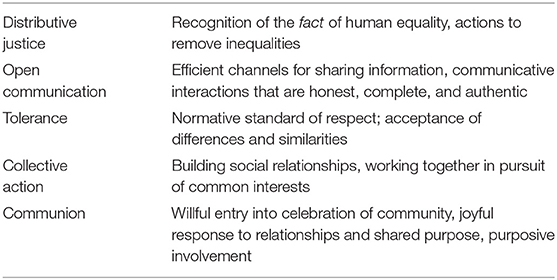
Table 1. Dimensions of social well-being adapted from Wilkinson (1991).
These dimensions of social well-being represent the proposition that the health of a rural community and thus its inhabitants depend (in part) on social interactions that—beyond meeting sustenance needs—support conditions that enable social cohesion and local solidarity (Wilkinson, 1991). In other words, community is more than an ecological unit or territory, and it is more than a network of people living in proximity and exchanging resources to meet daily needs. Taking the interactional view, community is a process of dynamic social interactions that support individual, social, and ecological well-being (Wilkinson, 1991). Moreover, understanding community as an interactional field of collective processes elaborates a framework to analyze a variety of “capitals” that may or may not exist within communities. Individual and social well-being comprise key components of social capital within the community capitals framework (Emery and Flora, 2006) and illustrate how individual experiences such as stress or anxiety can manifest as impacts to social well-being.
While recent contributions to systems scholarship conceptualize humans as co-producers and beneficiaries of ecosystem services, there is room to improve our understanding and characterization of social processes and their contributions to people and communities, like social interactions that generate and support social relations and social cohesion. Next, we review scholarship on social impacts and project appraisals that provide conceptualizations of social change processes and insights about the role of people and communities in pursuit of their own well-being.
Social Change Processes, Human Impacts, and Existing Frameworks
Social change processes are series of actions that trigger changes in the conditions and functions of a social system and may or may not cause social impacts, while a social impact is a physical or perceptual change experienced by humans as individuals and at higher levels of aggregation (Vanclay, 2002). To improve the assessment of proposed resource management projects and their impacts to people living and working in a project area, Slootweg et al. (2001) presented a function evaluation framework that is useful for identifying potential pathways of change from the project intervention to impacts. For example, severe restrictions of the sustainable use of biodiversity and ecosystems might result in the sell-off of agricultural lands, followed by rural-to-urban migration, leading to rural population decline and changed demographic structures (Vanclay, 2002). The impacts of such demographic changes might produce a negative experience for both migrating and remaining rural residents as community cohesion is disrupted, thus reducing social connections (Wulfhorst et al., 2006) and opportunities for bartering and market exchange (Toledo et al., 2018). Table 2 elaborates categories and examples of social change processes and potential impacts conceptualized by Vanclay (2002).
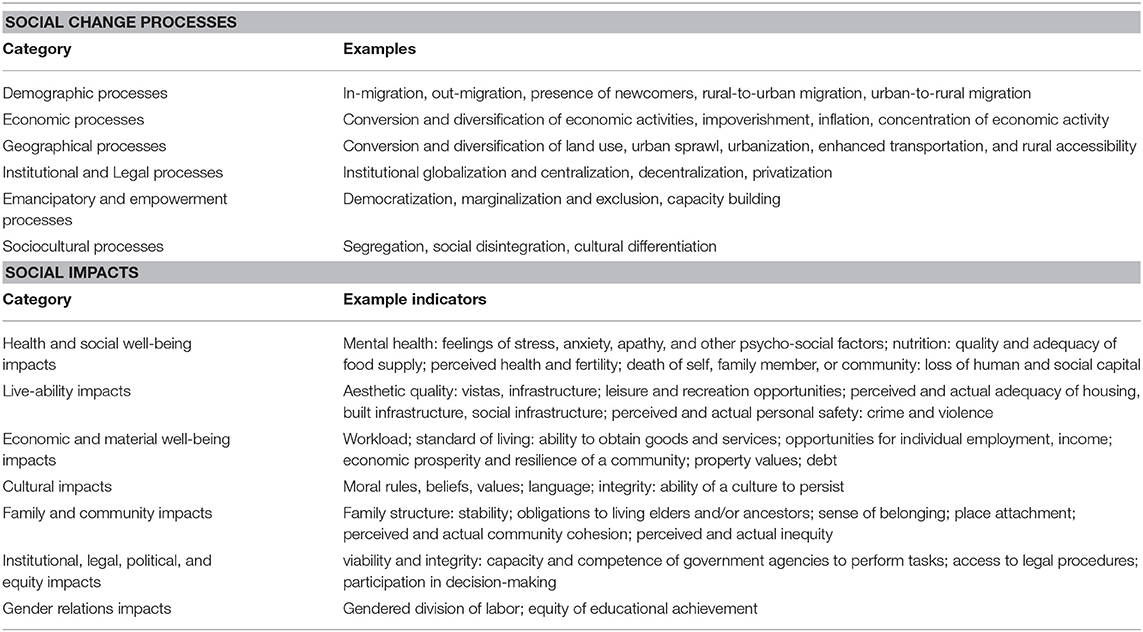
Table 2. Adapted from Vanclay (2002).
The function evaluation framework (Slootweg et al., 2001) is useful for identifying pathways of influence between a social change process and impacts to human well-being. The conceptualization of social change processes and their impacts (Vanclay, 2002) is useful for categorizing and describing social processes and drivers of change to human conditions that may be experienced as positive or negative impacts to well-being for an individual, family, or community.
Here, we respond to the call for a common approach to understand how well-being can be achieved and sustained while pursuing the conservation and sustainable use of biodiversity and ecosystems (Díaz et al., 2015, 2018). In our view, a common approach to assess processes and impacts that affect human well-being does not preclude quantitative indicators, but initially, if not primarily requires a qualitative approach to data collection and analyses (Sayre, 2004). Unlike quantitative research, qualitative approaches to data collection and analysis are typically inductive processes through which researchers iterate between literature review, data collection, and analysis to discover meanings and derive explanations about the data (Locke, 2002; Patton, 2015). An investigation that explores meanings of well-being in a local context enables findings on the conceptualized relationships between ecosystems, people, and their communities to be grounded in the data, thus offering salient variables and dynamics for consideration in future agroecosystem research. Turning to a case study of rural landscapes in southwestern Idaho, USA, we analyzed semi-structured interviews with rangeland agroecosystem stakeholders to discover meanings of well-being and to understand how the conditions that support their individual and social well-being are impacted by social-ecological processes and dynamic rural landscape change.
LTAR Network in The Great Basin—Exploring Framework Applications
Rangelands in the western United States comprise deserts, grasslands, shrublands, savannah, and a complex mosaic of municipalities, rural communities, privately-owned property, publicly administered lands, and multiple scales of governance. To guide research and impact assessments for conservation planning, rangelands have been conceptualized and analyzed as coupled human-natural systems, social-ecological systems, or complex adaptive systems (Walker and Janssen, 2002; Havstad et al., 2007; Brunson, 2012, 2014; Li and Li, 2012; Petursdottir et al., 2013). The sustainability or resilience of such systems can be explained by the co-evolutionary relationship between ecosystems, people, and management practices at multiple scales across time (Berkes and Folke, 1998). In the case of U.S. rangelands, relationships between ecosystems and people are commonly characterized by the biodiversity and ecological processes that contribute to cultural heritage, recreation, agricultural production, and livelihoods (e.g., forage production that supports grazing and livestock production; open space for recreational use). The sustainability of rangeland agroecosystems in the western U.S. is complicated by climate-vegetation dynamics (Bradley et al., 2016; Larson et al., 2017), wildland-urban interface dynamics (Liffmann et al., 2000; Li et al., 2019), local economy-community dynamics (Lewin et al., 2019), and federal grazing use policies on public lands that are perceived as inflexible in the face of dynamic environmental change (Brunson and Huntsinger, 2008; Kleinman et al., 2018).
Across the U.S., other agroecosystems in addition to rangelands face similar stressors and rapid transitions while attempting to satisfy demands for agricultural commodities, environmental quality, and rural prosperity and well-being. In a coordinated effort to assess and contrast conventional and aspirational strategies for sustainable intensification, the Agricultural Research Service (USDA-ARS) and collaborators are engaged in a Long-Term-Agroecosystem Research (LTAR) network with the goal of building a nationally-relevant knowledge base to ensure the sustainable provision of agricultural products and ecosystem services from agroecosystems, while acknowledging current and future effects of environmental trends, public policies, and emerging technologies (Bryant et al., 2015). By implementing multi- and inter-disciplinary investigations of agricultural production practices at 18 sites across the U.S. (Figure 1), the LTAR network provides a critical opportunity to understand rural prosperity and well-being in relation to ecosystem services and social change processes. We also expect that more empirical investigation of well-being will enable the overdue articulation of constructs like 'rural prosperity' in need of better definition.
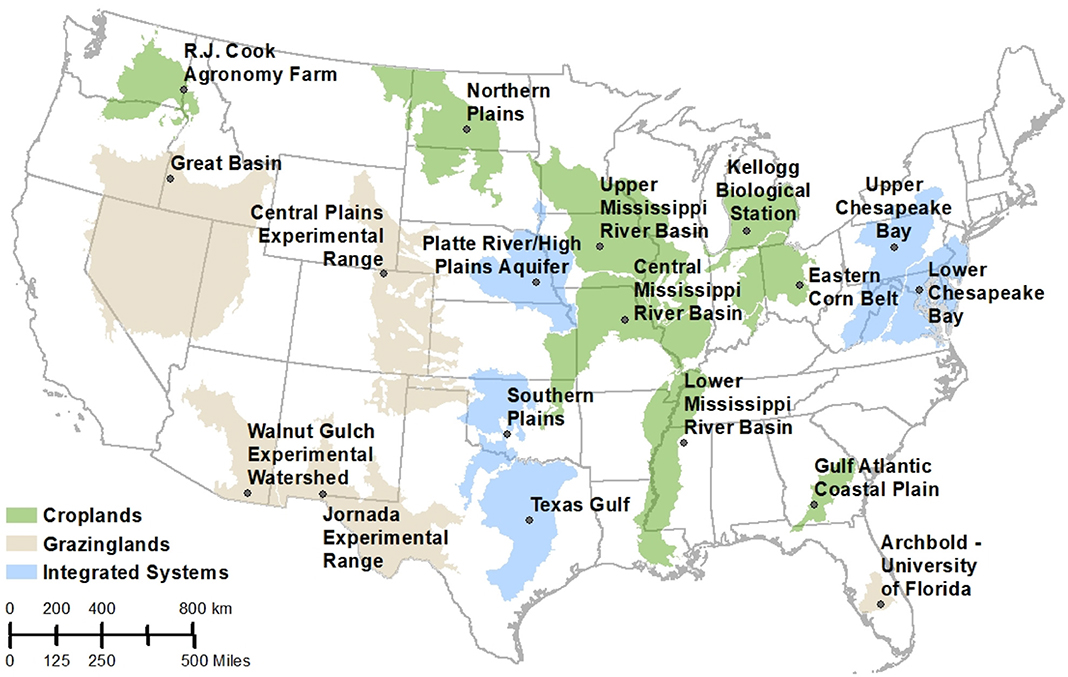
Figure 1. Map of continental United States with USDA-ARS sites participating in the Long-Term Agroecosystems (LTAR) Network. Source: USDA-ARS.
Our analysis uses the Great Basin ARS site within the LTAR network to investigate human well-being and the social-ecological processes and impacts that affect it. Our analysis examines the experiences of ex-urban and rural residents who live and work across a mosaic of public and privately-owned rangelands in the Owyhee Mountains area of southwestern Idaho, USA. This region is part of the historic and current range of the Greater Sage-Grouse (Centrocercus urophasianus), a candidate species for endangered listing at the time of our research from 2013-2014. At the same time, public lands grazing allotments were up for permit renewal in Owyhee County, Idaho. As the federal agency responsible for administrating these public grazing allotments, the Bureau of Land Management (BLM) decides whether to renew a livestock producer's permit to use an allotment. Given the multiple use mandate for the BLM, its land management decisions impact multiple stakeholder groups, and the agency is often litigated. Concerns about federal regulations ranged from impacts on agricultural practices, livelihoods, and economic activity to impacts on recreational use of public spaces. This southwestern Idaho case of complex social-ecological dynamics provides a rich context in which to explore meanings and experiences of human well-being on a landscape with multiple land uses that include agricultural production and recreation among others.
Methods
Data Collection
The sampling frame included people who depend on public lands for livelihoods (e.g., livestock producers, agency scientists, land managers), people whose livelihoods are related to public lands (e.g., attorneys, academics, county leadership) as well as those who engage in non-livelihood activities on public lands (e.g., non-governmental groups, hunters and other recreationists). Thirty three prospective interviewees were identified by key informants through snowball sampling, contacted via email, and asked to participate in one semi-structured interview in-person or by phone. Interviews were conducted between August 2013 and September 2014 with 29 people who live and work in the Owyhees and the metropolitan area surrounding Boise, Idaho, USA. The average interview length was 55 min. We followed ethical guidelines for working with people as research participants, and the University of Idaho Institutional Review Board approved our project #12-357.
Data Analysis
The purposes of this study were to understand how people living and working in a rangeland agroecosystem define their own well-being and to identify perceived drivers of change to well-being. We used a constructivist grounded theory building approach to analyze our data (Locke, 2002; Charmaz, 2006), following three key steps. First, using semi-structured interviews (Supplementary Material) and field notes, we coded with open and axial coding to denote interviewees' meanings of well-being, perceived social-ecological conditions that support well-being, and social-ecological drivers of change to the well-being of rangelands and rural communities in southwestern Idaho. We revised our codes while working through the data and the literature (Locke, 2002) and while comparing data across participants throughout the analysis (Charmaz, 2006). With this analytical technique we identified first-order categories of social and ecological conditions. We then deduced second-order themes that labeled commonalities among first-order codes, continuing to compare concepts in the data and the literature, which subsequently enabled us to convert the second-order themes to aggregate dimensions (Locke, 2002). In this way, we iteratively examined the data and literature to determine conditions, dimensions, and scales of well-being. Figure 2 outlines the first order categories, second order themes, and aggregate dimensions that represent the reported ecological and social conditions for individual and social well-being.
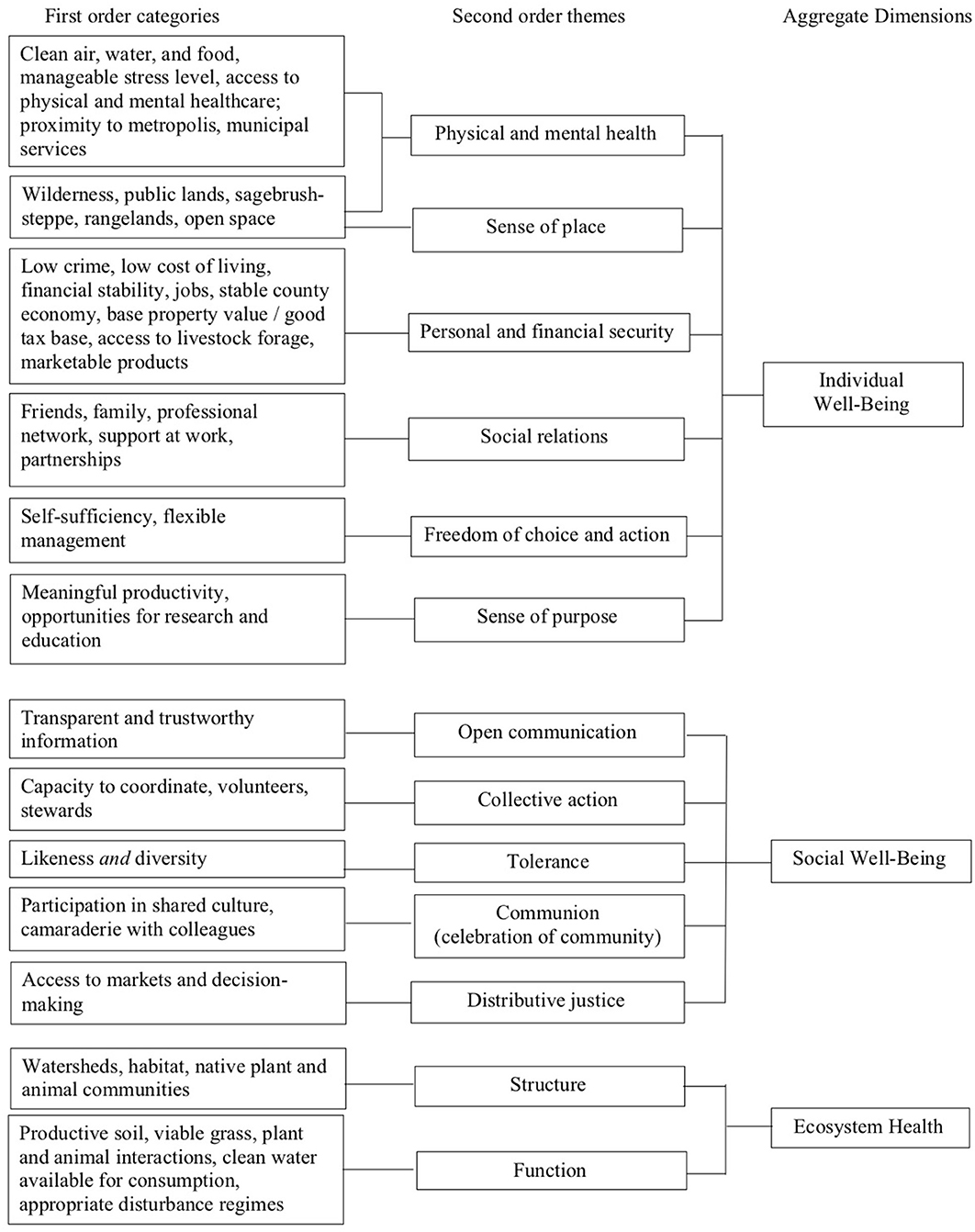
Figure 2. Data Structure formed by iterative analysis to identify conditions and dimensions of human well-being and ecosystem health.
We repeated these analytical techniques to categorize interviewees' perceived drivers of change to well-being. Figure 3 outlines the first order categories, second order themes, and aggregate dimensions that represent dynamic social change processes, including communal processes that are communicative and interactive.
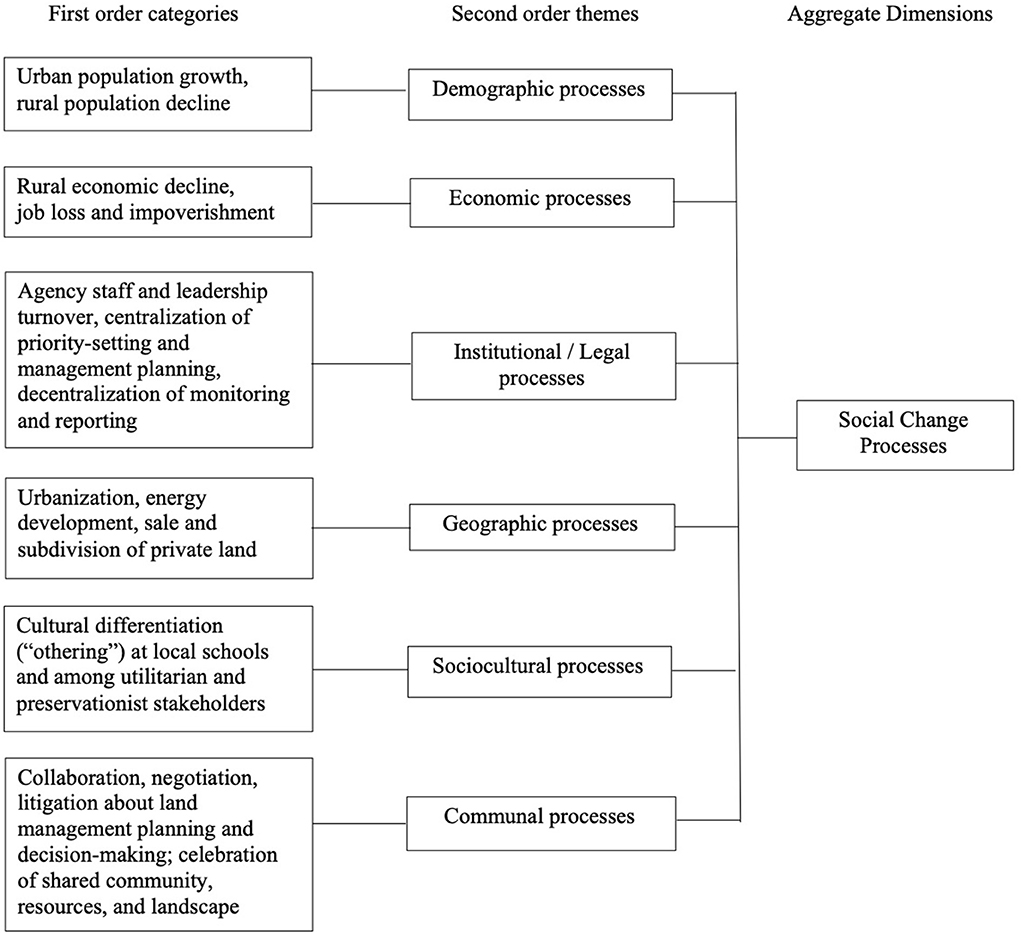
Figure 3. Data structure formed by iterative analysis to identify social change processes.
We repeated these analytical techniques once more to categorize the positive and negative changes that interviewees experienced or perceived to result from social-ecological processes and change. Figure 4 outlines the first order categories, second order themes, and aggregate dimensions that represent ecological and human impacts.
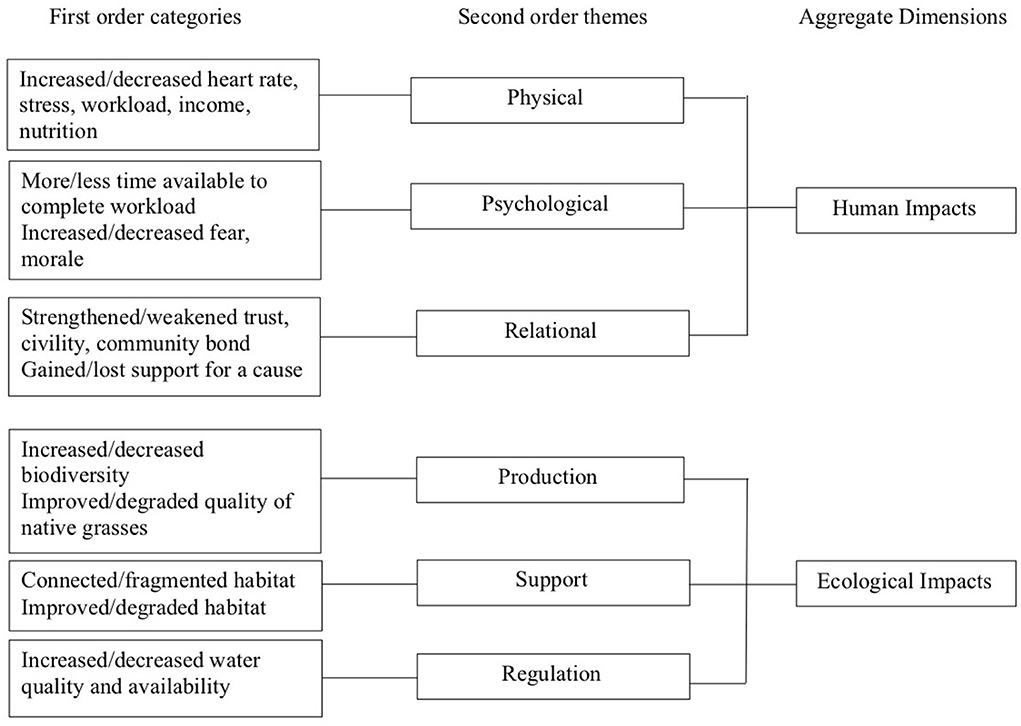
Figure 4. Data Structure formed by iterative analysis to identify positive and negative change that was perceived and tangibly experienced by people and observed in a rangeland agroecosystem.
Findings
Altogether, this iterative process of coding for categories and themes while comparing across interviews and previously established literature revealed six aggregate dimensions that represent social-ecological processes and impacts affecting human well-being. In particular, our findings illuminate the functions of communal processes with impacts to physical, psychological, and relational conditions, thus affecting individual and social well-being. Figure 5 illustrates the pathways between processes, impacts, and well-being by integrating our findings with a function evaluation heuristic that has demonstrated utility for assessment of social change processes and subsequent impacts to well-being (Slootweg et al., 2001). Our interviews revealed important dimensions of well-being that, while recognized in different domains of scholarship (Wilkinson, 1991; Millennium Ecosystem Assessment, 2005; Díaz et al., 2015, 2018), have yet to be integrated into standard frameworks for agroecosystem assessment and analysis. Additionally, our interviews revealed functions of communal processes of change that, coupled with previously conceptualized social processes and impacts (Vanclay, 2002), illuminate mechanisms through which people build or damage social relations upon which they partly depend for both individual and social well-being.
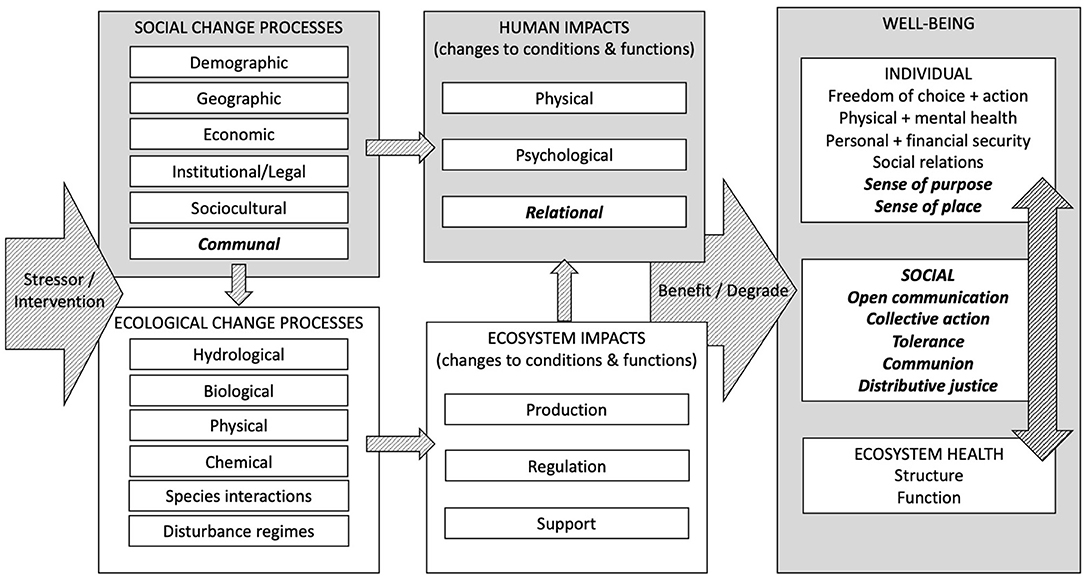
Figure 5. Integrated framework that synthesizes social change processes, human impacts, and well-being (gray boxes) with impact pathway heuristics (Slootweg et al., 2001), ecological processes, and ecosystem services (i.e., nature's contributions to well-being, Díaz et al., 2018) to show how human well-being and ecosystem health benefit from (or are degraded by) both nature's and society's contributons. Concepts in bold italics are key dimensions grounded in our data and analysis that expand established frameworks commonly used to illustrate human-nature relationships and pathways of influence.
We first present findings on dimensions and scales of human well-being and ecosystem health. We then present findings on social change processes and perceived impacts to human well-being and ecosystem health.
Individual Well-Being
Early in our analysis it became clear that the range of conditions described as supportive of well-being aligned with previously established dimensions of well-being, including physical and mental health, personal and financial security, social relations, and freedom of choice and action (Figure 2). For example, a sense of well-being can be derived from the freedom and capacity to provide for oneself and one's family, as explained by a state agency range specialist: “It is a very comforting feeling to know that we can grow our own meat, grow our own produce, and almost be self-sufficient.” It was common to hear descriptions of ecological and economic conditions in tight connection as people use their knowledge and skills to cultivate agroecosystems in the co-production of basic material needs that support physical and mental health and personal and financial security. Additionally, descriptions of social relations in terms of economic activity and exchange emerged as a pattern among interviewee responses. For example:
…(Well-being is) dependent on your schools, your local businesses, your markets, where you sell your products… say if you grow hay, you've got extra hay. You sell to other farmers or ranchers, or if you've got corn you can sell, or purchase from those. There is a lot of ties amongst those, even like in my business. Even though it's small, there is certain crops that I need that I don't grow that I can purchase locally… and that connection economically contributes to the social understanding of how everybody is dependent on each other.”—Rancher and public lands permittee, Owhyee County
Interestingly, interviewees reported conditions for their personal well-being that do not fit neatly within previously established dimensions of human well-being (Millennium Ecosystem Assessment, 2005). In our case, open landscapes and public lands managed for multiple uses were described as exemplary of social and ecological conditions requisite for well-being. In particular, a pattern of appreciation and attachment to open space emerged among many of our study participants. For example:
“I want my kids to know the way of life that I value—I want them to have a good work ethic. If they choose not to live in a small town, that's fine. At the least, I want them to have a choice and a sense of freedom in the openness—not when everything's paved.”—Field office assistant manager, federal land management agency
This attachment to open space was often coupled with a sense of belonging in publicly managed and accessible land and waterways. For example:
“So, my well-being, as far as what I think, is the outdoors and kind of a balance of being able to see all types of wildlife, not just having to go to a national park. I think you can balance things out with agricultural, with the cattle industry, and be able to (sic) everybody live together type of thing. And big horn sheep is kind of something that everybody wants to see. If you float a river, if you go to Hills Canyon, if you float the middle fork of the Salmon, I mean when big horn sheep were up above the river I mean everybody stops and you know, takes the pictures and stuff…it's just beautiful country, you see a lot of wildlife, and beautiful clean water.”—Retired outdoor guide
In addition to describing a sense of place as a condition of well-being, several interviewees described meaningful work and productivity as similarly important. For example:
“…just putting in a good day's work and feeling like I'd actually completed something toward either conserving—enhancing conditions for wildlife in the area that I work at. In general terms, that's kind of what I look for (to feel fulfilled). It doesn't happen every day, but that's what I strive for.”—Biologist, federal land management agency
Distinct from descriptions of basic material needs, health, and social relations, this desire for meaningful productivity aligns with the idea that a good quality of life can be assessed in terms of freedom of choice and action and a sense of purpose in action. A sense of purpose relates to one's own agency and action within a dynamic agroecosystem, and a sense of place relates to one's attachment and belonging to that system and the landscapes and communities within it.
Social Well-Being
As we continued to code and deduce second-order themes, we found that the previously established dimensions of well-being (Millennium Ecosystem Assessment, 2005) did not account for all well-being dimensions described by interviewees (Figure 2). These additional conditions for well-being reflect the communicative nature of society and the needs of people to interact toward common goals. The desire for access, transparency, and complete exchanges of trustworthy information emerged as a pattern among interviewees representing diverse stakeholder groups that are often in conflict over public lands planning and decision-making. For example:
“On paper, this sounds really good because it's a collaborative group – these folks that were sworn enemies before, and they came up with this plan. They agreed on this plan and got the (agency) to implement it. Now me, I thought it really stunk. For one, their plan did not consider our land management plans that we had worked on with the whole public using all our resources issues. Another issue is, even though they said they were representing everybody, they weren't.” – Environmental advocate, non-governmental organization
This quote exemplifies the common sentiment among our interviewees that barriers to open communication, like “back-door deal-making,” tend to degrade well-being. Additionally, we found that access to decision-making and fairness of outcomes matter to a sense of procedural justice for many in this case (Lauer et al., 2017). Related, access to markets for exchange of basic and fundamental services (e.g., health care) and social needs (e.g., attention) align with notions of distributive justice emphasized as a core dimension of social well-being (Wilkinson, 1991). When interviewees reflected on decision-making processes for which they did have access and representation, some described a willingness to trade-off efficient channels of information sharing for the positive outcomes of committed, though time-consuming, open communication. For example:
“… you've got to keep an open mind. I think in the long run cause - the meeting before - I was kind of down after it. I said, it don't look like it's going to go very good. But then after yesterday I could see a lot of positive movement. I think that's the way. It just takes time. You can't do it in four meetings….it takes time…to get everything looked at, analyzed so that everybody is comfortable that yes, we did discuss it. And I may not agree, but I can see the reasons why maybe some of these things should be.” – Rancher & public lands permittee, Owyhee County
This quote also exemplifies two additional dimensions of social well-being: collective action, through a long-term commitment to a collaborative process, and tolerance, with appreciation for diverse viewpoints. Given the public lands context of our study region, several interviewees described rich, nuanced experiences with collaborative processes. Some result in collective action toward a shared goal, while others may result in more conflict and polarization. For example:
“…it's about finding that balance and what you can live with, too. Because some of our projects- it's a tolerance level. You think, I could have gone into it thinking I will never ever be a part of that. Then when it gets explained to you, you say okay, I have this much tolerance level to that. I can do that because it's important to your group.” - Rancher and public lands permittee, Owhyee County
Our analysis also revealed interviewees' perceptions of opportunities to celebrate their shared culture as well as camaraderie with colleagues as necessary conditions for their sense of well-being. In particular, a sense of place in the back country of rural landscapes strongly aligned with ideas about communal celebration of shared space:
“…look at the broad community of Opening Day. Fishermen who rallied together to plant along the Boise River. It's why many people decide to raise their families here. It is not only a shared family value, it's a great part of our community. You can have some cases with an explicit spiritual aspect as well when you talk about wilderness values, or if you talk about family camping events. One of the aspects we try to create out there, one of the values is solitude, but another integral value is community…going out with a bunch of friends elk hunting… a mountain biking trip down to the Middle Fork River.” – Conservation specialist, non-governmental organization
This celebration of shared values among community members represents communion as a dimension of social well-being (Wilkinson, 1991). It also represents the distinction between rural landscapes as a functional space for recreation with benefits to individuals' physical and mental health, and rural landscapes as a functional space for celebration of shared values with benefits to community health and well-being. For example:
“There's a gentleman that sold his ranch and moved to all private ground because he just got tired of always wondering what was going to go on. I just talked to him a couple weeks ago, he's an older gentleman, and he says there's a lot of things he misses about public lands ranching and there's some things that he doesn't. One of the things he misses is community bonding. So that was an interesting concept. Actually, ran into him at a funeral service and we had this conversation. Cause I always ask him, do you miss running on BLM, and he says there's certain things he misses about it, and he misses the people.” - Rancher and public lands permittee, Owhyee County
By integrating social dimensions with individual dimensions, human well-being is conceptualized in a way that comprehensively represents how people experience changes to conditions and functions of their social-ecological system at multiple scales. Our analysis also revealed ecological conditions of rural landscapes that were perceived by interviewees to be necessary to sustain both human well-being and ecosystem health.
Ecosystem Health
Our analysis revealed descriptions of ecological conditions perceived to be necessary for ecological well-being (Wilkinson, 1991), i.e., ecosystem health in terms of structure (e.g., watersheds, habitat, native plant communities) and function (e.g., productive soil, water filtration). While such conditions were recognized for their importance to ecosystem health, several biophysical and ecological conditions were also described as beneficial for human well-being, including clean air, clean water, and open space for recreation:
“[To be well, we need] livability, sustainability, clean air, clean drinking water. When you turn on your tap water, when you open your window, do you have a nice quality of life? The public land is more about the source of our drinking water, and also the wildlife and recreation opportunities, and also the sustainable management of our public lands. So…whether you like to hunt or fish out there, to not only preserve those opportunities, but that they improve over time.” – Conservation specialist, non-governmental organization
Additionally, interviewees who self-identified as agricultural producers commonly described their dependence on ecological functions like forage production to support their livelihoods:
“..we're very dependent on (the) ecological… whether it's climate, weather, it impacts the grasses that we depend on to graze my cattle…” Rancher and public lands permittee, Owyhee County
As exemplified by the quotes above, our analysis revealed common perceptions of production, regulation, and support functions as ecosystem services that, when impacted by drivers of environmental and landscape change, result in altered delivery of benefits (or detriments) to people and communities. Similarly, our analysis demonstrated the salience of social change processes and their beneficial/detrimental influence to individual, social, and ecological well-being in this western U.S. rural landscape context.
Social Change Processes
As we began to code interview transcripts for perceived social change processes, it became clear that processes of demographic change are a salient issue in the urban-rural interface surrounding Boise, Idaho (Figure 3). For example:
“Recreation can be an issue, but it's generally in a smaller impact area, just primarily along the [Boise] Front, just because of the population explosion in the Treasure Valley. You talk to people who have been out here for a long time and you look at some graphs about OHV off-road vehicle use and things like that, and they've just gone off the charts in the last 20 years. So that has definitely been an issue that we're trying address both ecosystem-wise and wildlife-wise, and for the safety and well-being of the public, who are our customers, basically.” – Rangeland specialist, federal resource management agency
This quote highlights the perception among interviewees that an increasing population is perceived to lead to an increase in recreational use of nearby public lands with potentially negative impacts to the physical health and safety of “the public,” as well as potentially negative impacts to wildlife and ecosystem health. This finding also reveals a tension between the negative impacts perceived for some community members and the potentially positive impacts to physical, psychological, and relational conditions for those who engage in recreational activities like off-road vehicle use.
In addition to urban population growth, social change processes like urban sprawl, rural economic decline, and leadership turnover within public land management agencies were perceived to trigger human and ecosystem impacts. These and other reported phenomena represent geographic, economic, and institutional change processes, respectively, and align with previously conceptualized social change processes and their influence on biophysical change with subsequent impacts to ecosystems and to people (Vanclay, 2002). For example:
“…economically, a lot of them [producers] aren't surviving, so they're selling off their ranches…when they sell them they turn into – a lot of them – suburban neighborhoods or those little subdivided ratchetted. So, there goes your open space because, granted, they're ranches, they're privately owned, but wildlife still uses those areas. So, then you're losing that, too, and it's a pretty rapid rate.” – Biologist, federal land management agency
Our findings also reveal perceptions of vilification or “othering” as sociocultural change processes with negative impacts to well-being, as well as positive impacts from overcoming “othering.” For example:
“…we sat down with people who had been on the other side of lawsuits….we would meet twice a week the first year we met twice a week for all day, but we had lunch together every time. We didn't go our separate ways. We all went to the same place, and we had to sit by somebody we didn't know, and all of a sudden, your kids are reading the same books – right then Harry Potter was just out and so we get to talking, and I'll tell you the first day I had to sit by a guy…and we'd been on litigation and I was thinking, I don't want to sit by him. We got to talking, and all of the sudden we started talking about…camping things you can go look for different things to do…So, when you start having those conversations, all of the sudden you're not an organization. You're a person that has a wife, and kids, and feelings.” - Rancher and public lands permittee, Owyhee County
This quote represents a process through which the perceived negative impacts of cultural differentiation were mitigated through communal processes. While the sociocultural change process aligns with previously established conceptualizations (Vanclay, 2002), the functions of these conversations as social interactions in relation to open communication and tolerance are important to distinguish and clarify. We noticed a common perception about public lands collaboration as a process that can trigger physical, psychological, and relational impacts. For some interviewees, these impacts are beneficial to well-being; to others, they are detrimental to freedom of choice and action and personal and financial security. For example:
“I've heard of instances…where you go through the collaboration process, you feel that you've made compromises, addressed issues, and then once the decision's been issued, you still get appealed from those people who have been sitting across from you at the compromise table, the collaboration table. So that, I would think, would be extremely frustrating…that you spend all this time in collaboration, and then, because of these polarized viewpoints, if they still have not gotten exactly everything they want, then they are still going to appeal regardless.” – Biologist, federal land management agency
As described above, coordinated activity for conservation planning and decision-making represent social interactions through communal processes that may or may not support collective action and open communication in relation to social well-being. There was a sense among a few interviewees that the tone of social interactions is important with respect to its impact on psychological and relational conditions. For example:
“What bothers me is sometimes the lack of civility in public conversations about things…In our national conversation, which does then affect some of the other values we cherish, say ecological values, the lack of civility means we're not moving toward resolution. We're fighting, and that bothers me.” – Public lands researcher, academic institution
As we focused our analysis on communal processes, we found examples of human conditions and functions that were perceived and felt to change as a result of collaborative or litigious experiences. For example:
“We end up doing a lot of this reactive work because of litigation, then we end up not being able to get out to the field… It affects your work satisfaction… Some people… handle stress differently than others. I've seen some people about near have a meltdown.” – Public affairs specialist, federal land management agency
While this quote exemplifies perceived negative impacts to mental health from participating in litigation, our last example quote illustrates the view shared among most, though not all of our interviewees regarding social interactions through a communal process like collaboration for public lands management:
“Well you end up everybody having a voice, and then trying to figure out a solution. And it's a success when you do solve the problem, and everybody feels they were a part of it. And that gives kind of a personal attachment to the whole management even if you're just a small part of it.” – Range specialist, federal natural resource management agency
These findings inform our thinking about how dynamic social processes drive changes to ecosystem and human conditions with beneficial and/or detrimental effects to ecosystem health and individual and social well-being.
Discussion
Using a grounded theory methodology to explore meanings of well-being in a case of democratically governed public rangelands in the western U.S., our findings present evidence in support of a multi-scale characterization of human well-being. We asked people what they need to be well and what social-ecological processes threaten or support those needs. Our analysis revealed a similar theme among public rangelands stakeholders in southwestern Idaho, regardless of stakeholder group affiliation or self-reported identity: open space, clean air, clean water, productive soil, and resilient plants and animals are critical conditions of rangeland agroecosystems that contribute to human well-being. These findings align with scholarship that defines and categorizes ecosystem services (de Groot et al., 2002) and with scholarship on western U.S. rangelands-specific ecosystem services (Havstad et al., 2007; Brunson, 2014; Huntsinger and Oviedo, 2014; Bentley Brymer et al., 2016).
Individual and Social Well-Being
In addition to perceptions of ecosystem services and conditions necessary for ecosystem health, our interviewees described desirable conditions relating to several dimensions of individual well-being, including physical and mental health, personal and financial security, social relations, freedom of choice and action, sense of place, and sense of purpose. We highlight the latter two dimensions because, for rural people and communities in our case, sense of place and purpose are tightly wrapped up in resource-based livelihoods and management of agroecosystems and rural landscapes. Sense of place theory and tools for analysis provide fruitful directions for elaborating well-being and for understanding individuals' and communities' capacity to adapt to environmental change (Masterson et al., 2017). While a sense of place relates to one's attachment, meanings, and belonging to that system and the landscapes and communities within it, a sense of purpose relates to one's own agency and action within a place. Such meaningful productivity aligns with the idea that a good quality of life can be assessed in terms of freedom of choice and action and a sense of purpose in action. By integrating sense of place and sense of purpose, research that is designed to address questions about rural landscape change and impacts to quality of life will benefit from a more comprehensive conceptualization of individual well-being.
Our interviewees also described conditions relating to several dimensions of social well-being, including tolerance, open communication, distributive justice, collective action, and communion (i.e., celebration of community, purposive involvement). Interestingly, the interactional nature of social well-being was illuminated by rich descriptions of the positive and negative impacts to a community's opportunities for collective action, usually driven by social interactions through communal processes like collaborative resource management and public lands litigation. Collective, or coordinated actions play a critical role in building social capital. Social capital is important because it can provide access to other forms of capital such as financial capital, and it improves a community's ability to cope with change by providing access to innovative solutions and by mitigating perceived risk (Adger, 2003; Olsson et al., 2004; Wagner and Fernandez-Gimenez, 2008). As members of a community mobilize for collective action, social capital can be considered an interactional platform that supports improvements to well-being, especially during times of crisis (Woolcock and Narayan, 2000). In contrast, a breakdown in social capital and collective action has been shown to lead to ecological degradation and unregulated use of resources (Mallon, 1983; Wagner and Fernandez-Gimenez, 2008). As biophysical and social conditions change, landowners and managers must learn how to continually adapt to new conditions to sustain their well-being. Critically, learning is contingent on the development of trust among collaborators, suggesting the need for social processes that develop relationships and trust over time (Wilmer et al., 2018).
We gained nuanced descriptions of social relations as indicators of well-being, and their conceptualization in relation to collective action as a dimension of social well-being warrants further discussion. Social relations represent the connections or ties that a person has to others in her community for mutual benefit and cooperation (Coleman, 1990) and are important factors for individuals' physical and mental health (Thoits, 2011). Additionally, the strength or weakness of social ties influence the power dynamics within a community (Agrawal and Gibson, 2001). In the context of environmental governance and agroecosystem management, such power dynamics often manifest in decision-making settings that are increasingly designed as deliberative processes through which citizens can debate their concerns, improve their dialogue, and learn (Daniels and Walker, 1996, 2001). The outcome of such interactions for planning and decision-making are often driven by participants who have access, standing, and power in the process (Senecah, 2004; Dawson et al., 2017). Those who do not have access, standing, or power in the process are not fully well because they are cut-off from the mechanism through which they might influence their own well-being. With respect to social well-being, social relations are the building blocks of collective actions that build trust and social capital. In other words, collective action depends upon the strength of social relations. Our analysis also revealed processes that impact social relations and other dimensions of well-being; in particular, the role of communal processes is elaborated.
Social Interactions Through Communal Processes
Our findings align with scholarship on community as a process of social interactions that weave a social fabric comprising connectivity, cohesion, and cooperative opportunity with other people (e.g., Wilkinson, 1991; Wulfhorst et al., 2006; Toledo et al., 2018). The health of a rural community and its inhabitants depend (in part) on social interactions that - beyond meeting sustenance needs - support conditions that enable community cohesion and local solidarity (Wilkinson, 1991). In other words, community is more than an ecological unit or territory, and it is more than a network of people living in proximity and exchanging resources to meet daily needs. Taking the interactional view, community is a process of dynamic social interactions that support individual, social, and ecological well-being (Wilkinson, 1991). The nature and function of such communal processes appears to be distinct from economic, sociocultural, and other social change processes that have been conceptualized as impactful to a person's physical and psychological conditions (Vanclay, 2002). For example, while economic change processes represent shifts in local industry activity and opportunity that may impact an individual's employment, and while sociocultural change processes represent differentiation or concentration of culture and identity that may impact opportunities for communion (i.e., celebration of shared culture), communal processes represent the development or disruption of relationships, shared purpose, and community. Interviewee descriptions of collaborative and litigious interactions illuminate the influence of such communal processes on basic material needs, mental health, and open communication, to the benefit or degradation of human well-being and ecosystem health. Interestingly, even the fear of an adversarial interaction such as fighting in court over public lands management can indirectly impact ecosystem health. In the context of agroecosystems, a breakdown in communication and community may block the implementation of a new grazing or cropland management practice designed to balance and sustain productivity, ecosystem health, and rural well-being. In other words, social processes directly impact people and indirectly impact ecosystems (Slootweg et al., 2001). Therefore, agroecosystem research that aims to identify management practices that support rural well-being must adequately address the social change processes - including communal processes - that impact it.
Our findings illustrate the pathways of influence between social change processes, impacts to physical, psychological, and relational conditions and functions, and perceived benefit or degradation to dimensions of well-being. While methods for assessing impacts to local economies and social structures resulting from changes to public lands management practices in rangeland agroecosystems have been reviewed (Bentley Brymer et al., 2018) and implemented (Lewin et al., 2019), findings presented here highlight communal processes as a potentially new concept for social-ecological impact assessment.
Implications and Conclusion
As a newly formed network with a goal of maintaining productive landscapes, long-term environmental stewardship, and well-being, the LTAR network can learn from these findings. As the network evolves, there needs to be a clear understanding of what conditions of well-being are meaningful to partners and stakeholders within and across LTAR sites. Existing LTAR efforts to define, support, and achieve “rural prosperity” (see Kleinman et al., 2018) can reconcile with our finding that human well-being is experienced at individual and community scales. Also, there is a need to understand pathways to achieve and sustain a good quality of life for rural communities in different agroecosystems - including the role of communal processes - while sustaining ecosystem services in the co-production of food and fiber.
For instance, LTAR network scientists recently developed a conceptual model to represent regional-scale agroecosystems in terms of interactions among agriculture, the environment, the economy, and society, and used that model to synthesize the multiple dimensions of the LTAR Common Experiment across 18 network sites (Spiegal et al., 2018, Figure 3). The model centers on agricultural producers and their decision-making about selecting an agricultural production system suitable for a given agricultural region. In the model, feedback loops mediated by profitability, environmental effects, societal factors, and policy can reinforce “business as usual” or motivate producers to adopt an alternative production system. Comparing outcomes of the widespread adoption of alternative production systems is at the heart of the LTAR Common Experiment, and the explicit integration of communal processes and social well-being into current thinking - and into network conceptual models such as the one used to synthesize the LTAR Common Experiment - will help LTAR to implement the Common Experiment in a way that effectively addresses current and future challenges of coupled human and natural systems in agricultural regions.
As human agency and social dynamics are considered alongside ecological dynamics and ecosystem services, future research will be guided toward more effective interdisciplinary integration. Our research sheds light on the role of agroecosystem stakeholders and rural communities beyond their adoption of new technologies and management practices. Furthermore, we recognize that interdisciplinary approaches to human dimensions of agroecosystem research are more than a means to understand (barriers to) adoption and ecosystem impacts. Our findings illuminate human well-being beyond dimensions of health and financial security and across individual and community scales. By utilizing this expanded conceptual framework to guide interdisciplinary integration, LTAR collaborators will be better equipped to identify, describe, and understand social-ecological dynamics as directly impactful to rural communities and their well-being, and thus to the sustainable intensification and conservation of agroecosystems. Beyond LTAR, future assessments of human-nature relationships and environmental change will more adequately address social change processes and impacts that - along with ecosystem services – contribute to human well-being and to sustainable food systems.
Data Availability Statement
The qualitative data published here are protected by human assurances protocol at the University of Idaho and are not currently available. Please contact the corresponding author with inquires.
Ethics Statement
The studies involving human participants were reviewed and approved by University of Idaho Institutional Review Board. The participants provided their written informed consent to participate in this study. Written informed consent was obtained from the individual(s) for the publication of any potentially identifiable images or data included in this article.
Author Contributions
AB, DT, SS, FP, PC, and JW contributed to the conceptualization and drafting of this manuscript. AB and JW designed the interview protocol, AB collected the data, and AB, JW, and DT analyzed the data.
Funding
We thank the National Science Foundation IGERT program (Award0903479) for financial support in the early development of this research. The Northwest Watershed Research Center provided funds for open access publication fees through the Great Basin Annual Grass agreement with the University of Idaho, Fund 222989.
Conflict of Interest
The authors declare that the research was conducted in the absence of any commercial or financial relationships that could be construed as a potential conflict of interest.
Acknowledgments
This research was a contribution from the Long-Term Agroecosystem Research (LTAR) network. LTAR is supported by the United States Department of Agriculture.
Supplementary Material
The Supplementary Material for this article can be found online at: https://www.frontiersin.org/articles/10.3389/fsufs.2020.00038/full#supplementary-material
References
Adger, W. (2003). Social capital, collective action, and adaptation to climate change. Econo. Geograph. 79, 387–404. doi: 10.1111/j.1944-8287.2003.tb00220.x
Agrawal, A., and Gibson, C. C. (Eds.). (2001). Communities and the Environment: Ethnicity, Gender, and the State in Community-Based Conservation. Piscataway, NY: Rutgers University Press.
Bentley Brymer, A. L., Holbrook, J., Niemeyer, R., Suazo, A., Wulfhorst, J. D., Vierling, K. B., et al. (2016). A social-ecological impact assessment for public lands management: application of a conceptual and methodological framework. Ecol. Soc. 21:9. doi: 10.5751/ES-08569-210309
Bentley Brymer, A. L., Taylor, D. T., Wulfhorst, J. D., Torell, L. A., Rimbey, N. R., and Tanaka, J. A. (2018). Economic and social impact assessment of ranching on public lands: a guide to concepts, methods, and applications. J. Rangeland App. 4, 1–16.
Berkes, F., and Folke, C. (Eds.). (1998). Linking Social and Ecological Systems: Management Practices and Social Mechanisms for Building Resilience. Cambridge: Cambridge University Press.
Bradley, B. A., Curtis, C. A., and Chambers, J. C. (2016). “Bromus response to climate and projected changes with climate change,” in Exotic Brome-Grasses in Arid and Semiarid Ecosystems of the Western US, Springer Series on Environmental Management, eds M. J. Germino, et al. (Cham: Springer International Publishing, 257–274.
Brehm, J. M., Eisenhauer, B. W., and Krannich, R. S. (2009). Dimensions of community attachment and their relationship to well-being in the amenity-rich rural west. Rural Sociol. 69, 405–429. doi: 10.1526/0036011041730545
Brunson, M. W., and Huntsinger, L. (2008). Ranching as a conservation strategy: can old ranchers save the new West? Rangeland Ecol. Manag. 61, 137–147. doi: 10.2111/07-063.1
Brunson, W. M. (2012). The elusive promise of social-ecological approaches to rangeland management. Rangeland Ecol. Manag. 65, 632–637. doi: 10.2111/REM-D-11-00117.1
Brunson, W. M. (2014). Unwanted no more: land use, ecosystem services, and opportunities for resilience in human-influenced shrublands. Rangelands 36, 5–11. doi: 10.2111/RANGELANDS-D-13-00064.1
Bryant, R. B., Hapeman, C. J., Havstad, K. M., Heilman, P., Kleinman, J., McCarty, G. W., et al. (2015). Long-Term Agroecosystem Research Network Shared Research Strategy. Available online at: https://www.ars.usda.gov/ARSUserFiles/np211/LTAR_SRS_Final_29Sept2015.pdf (accessed March 7, 2019).
Charmaz, K. (2006). Constructing Grounded Theory: A Practical Guide Through Qualitative Analysis. Thousand Oaks, CA: Sage.
Daniels, S. E., and Walker, G. B. (1996). Collaborative learning: improving public deliberation in ecosystem-based management. Environ. Impact Assess. Rev. 16, 71–102. doi: 10.1016/0195-9255(96)00003-0
Daniels, S. E., and Walker, G. B. (2001). Working Through Environmental Policy Conflict: The Collaborative Learning Approach. Westport, CT: Praeger.
Dawson, N. M., Grogan, K., Martin, A., Mertz, O., Pasgaard, M., and Rasmussen, L. V. (2017). Environmental justice research shows the importance of social feedbacks in ecosystem service trade-offs. Ecol. Soc. 22:12. doi: 10.5751/ES-09481-220312
de Groot, R. S., Wilson, M. A., and Boumans, R. M. (2002). A typology for the classification, description and valuation of ecosystem functions, goods and services. Ecol. Econ. 41, 393–408. doi: 10.1016/S0921-8009(02)00089-7
Díaz, S., Demissew, S., Carabias, J., Joly, C., Lonsdale, M., Ash, N., et al. (2015). The IPBES conceptual framework—connecting nature and people. Curr. Opin. Environ. Sustain. 14, 1–16. doi: 10.1016/j.cosust.2014.11.002
Díaz, S., Pascual, U., Stenseke, M., Martín-López, B., Watson, R. T., Molnár, Z., et al. (2018). Assessing nature's contributions to people. Science 359, 270–272. doi: 10.1126/science.aap8826
Emery, M., and Flora, C. (2006). Spiraling-up: mapping community transformation with community capitals framework. J. Commun. Dev. Soc. 37, 19–35. doi: 10.1080/15575330609490152
Fish, D. R. (2011). Environmental decision making and an ecosystems approach: some challenges from the perspective of social science. Prog. Phys. Geograp. 35, 671–680. doi: 10.1177/0309133311420941
Havstad, K. M., Peters, D. P., Skaggs, R., Brown, J., Bestelmeyer, B., Fredrickson, E., et al. (2007). Ecological services to and from rangelands of the United States. Ecol. Econ. 64, 261–268. doi: 10.1016/j.ecolecon.2007.08.005
Huntsinger, L., and Oviedo, J. (2014). Ecosystem services are social-ecological services in a traditional pastoral system: the case of California's mediterranean rangelands Ecol. Soc. 19:8. doi: 10.5751/ES-06143-190108
Kleinman, P. J. A., Spiegal, S., Rigby, J. R., Goslee, S., Baker, J., Bestelmeyer, B. T., et al. (2018). Advancing sustainable intensification of U.S. agriculture through long-term research. J. Environ. Q. 47, 1412–1425. doi: 10.2134/jeq2018.05.0171
Larson, C. D., Lehnhoff, E. A., and Rew, L. J. (2017). A warmer and drier climate in the northern sagebrush biome does not promote cheatgrass invasion or change in its response to fire. Oecologia 185, 736–774. doi: 10.1007/s00442-017-3976-3
Lauer, F. I., Metcalf, A. L., Metcalf, E. C., and Mohr, J. J. (2017). Public engagement in social ecological systems management: an application of social justice theory. Soc. Nat. Res. 31, 4–20. doi: 10.1080/08941920.2017.1364456
Lescourret, F., Magda, D., Richard, G., Adam-Blondon, A. F., Bardy, M., Baudry, J., et al. (2015). A social–ecological approach to managing multiple agroecosystem services. Curr. Opin. Environ. Sustain. 14, 68–75 doi: 10.1016/j.cosust.2015.04.001
Lewin, P. A., Wulfhorst, J. D., Rimbey, N. R., and Jensen, K. S. (2019). Implications of declining animal unit permits on public land: an integrated social and economic impact analysis. West. Econ. Forum. 17, 82–93. doi: 10.22004/ag.econ.28731
Li, W., and Li, Y. (2012). Managing rangeland as a complex system: How government interventions decouple social systems from ecological systems. Ecol. Soc. 17:9. doi: 10.5751/ES-04531-170109
Li, Y., Westlund, H., and Liu, Y. (2019). Why some rural areas decline while some others not: an overview of rural evolution in the world. J. Rural Stud. 68, 135–143. doi: 10.1016/j.jrurstud.2019.03.003
Liffmann, R. H., Huntsinger, L., and Forero, C L. (2000). To ranch or not to ranch: home on the, urban range? J. Range Manag. 53, 362–370. doi: 10.2307/4003745
Locke, K. (2002). “The grounded theory approach to qualitative research,” in Measuring and Analyzing Behavior in Organizations: Advances in Measurement and Data Analysis, eds F. Drasgow and N. Schmitt (San Francisco, CA: Jossey-Bass, 17–43.
Mallon, F. (1983). The Defense of Community in Peru's Central Highlands: Peasant Struggle and Capitalist Transition 1860 – 1940. Princeton, NJ: Princeton University Press. doi: 10.1515/9781400856046
Masterson, V. A., Stedman, R. C., Enqvist, J., Tengo, M., Giusti, M., Wahl, D., et al. (2017). The contribution of sense of place to social-ecological systems research: a review and research agenda. Ecol. Soc. 22:49. doi: 10.5751/ES-08872-220149
Millennium Ecosystem Assessment (2005). Ecosystems and Human Well-Being: Biodiversity Synthesis. Washington, DC: Island Press.
Olsson, P., Folke, C., and Hahn, T. (2004). Social-ecological transformation for ecosystem management: the development of adaptive co-management of a wetland landscape in southern Sweden. Ecol. Soc. 9:2. doi: 10.5751/ES-00683-090402
Patton, Q. M. (2015). Qualitative Research & Evaluation Methods, 4th Edn. Thousand Oaks, CA: Sage Publications.
Petursdottir, T., Arnalds, O., Baker, S. C., Montanarella, L., and Aradottir, A. (2013). A social–ecological system approach to analyze stakeholders' interactions within a large-scale rangeland restoration program. Ecol. Soc. 18:29. doi: 10.5751/ES-05399-180229
Reyers, B., Biggs, R., Cumming, G. S., Elmqvist, T., Hejnowicz, A. P., and Polasky, S. (2013). Getting the measure of ecosystem services: a social-ecological approach. Front. Ecol. Environ. 11, 268–273. doi: 10.1890/120144
Robertson, G. P., Allen, V. G., Boody, G., Boose, E. R., Creamer, N. G., Drinkwater, L. E., et al. (2008). Long-term agricultural research: a research, education, extension imperative. BioScience 58, 640–645. doi: 10.1641/B580711
Rockström, J., Williams, J., Daily, G., Noble, A., Matthews, N., Gordon, L., et al. (2017). Sustainable intensification of agriculture for human prosperity and global sustainability. Ambio 46, 4–17. doi: 10.1007/s13280-016-0793-6
Sayre, F. N. (2004). The need for qualitative research to understand ranch management. J. Range Manag. 57, 668–674. doi: 10.2307/4004026
Senecah, L. S. (2004). “The trinity of voice: the role of practical theory in planning and evaluating the effectiveness of environmental participatory processes,” in Communication and Public Participation in Environmental Decision Making, eds S. Depoe, J. W. Delicath, and F. M. Aepli Eisenbeer (Albany, NY: SUNY Press, 13–33.
Slootweg, R., Vanclay, F., and van Schooten, M. (2001). Function evaluation as a framework for the integration of social and environmental impact assessment. Impact Assess. Project Apprai. 19, 19–28. doi: 10.3152/147154601781767186
Spiegal, S., Bestelmeyer, B. T., Archer, D. W., Augustine, D. J., Boughton, E. H., Boughton, R. K., et al. (2018). Evaluating strategies for sustainable intensification of US agriculture through the long-term agroecosystem research network. Environ. Res. Lett. 13:034031. doi: 10.1088/1748-9326/aaa779
Thoits, P. A. (2011). Mechanisms linking social ties and support to physical and mental health. J. Health Soc. Behav. 52, 145–161. doi: 10.1177/0022146510395592
Toledo, D., Briceño, T., and Ospina, G. (2018). Ecosystem service valuation framework applied to a legal case in the Anchicaya region of Colombia. Ecosyst. Serv. 29, 352–359. doi: 10.1016/j.ecoser.2017.02.022
Vadrot, A. B., Jetzkowitz, J., and Stringer, L. C. (2016). Social sciences: IPBES disciplinary gaps still gaping. Nature 530:160. doi: 10.1038/530160b
Vadrot, A. B., Rankovic, A., Lapeyre, R., Aubert, P. M., and Laurans, Y. (2018). Why are social sciences and humanities needed in the works of IPBES? A systematic review of the literature. Innovat. Eur. J. Soc. Sci. Res. 31, S78–S100. doi: 10.1080/13511610.2018.1443799
Vanclay, F. (2002). Conceptualising social impacts. Environ. Impact Assess. Rev. 22, 183–211. doi: 10.1016/S0195-9255(01)00105-6
Wagner, C. L., and Fernandez-Gimenez, M. E. (2008). Does community-based collaborative resource management increase social capital? Soci. Nat. Res. 21, 324–344. doi: 10.1080/08941920701864344
Walker, B. H., and Janssen, M. A. (2002). Rangelands, pastoralists and governments: interlinked systems of people and nature. Philos. Transact. R. Soc. B 357, 719–725. doi: 10.1098/rstb.2001.0984
Wilmer, H., Derner, J. D., Fernandez-Gimenez, M. E., Briske, D. D., Augustine, D. J., Porensky, L. M., et al. (2018). Collaborative adaptive rangeland management fosters management-science partnerships. Rangeland Ecol. Manag. 71, 646–657. doi: 10.1016/j.rama.2017.07.008
Woolcock, M., and Narayan, D. (2000). Social capital: implications for development theory, research, and policy. World Bank Res. Obser. 15, 225–249. doi: 10.1093/wbro/15.2.225
Keywords: individual well-being, social well-being, social change processes, ecosystem services, social impacts, agroecosystems, rangelands, rural landscapes
Citation: Bentley Brymer AL, Toledo D, Spiegal S, Pierson F, Clark PE and Wulfhorst JD (2020) Social-Ecological Processes and Impacts Affect Individual and Social Well-Being in a Rural Western U.S. Landscape. Front. Sustain. Food Syst. 4:38. doi: 10.3389/fsufs.2020.00038
Received: 04 October 2019; Accepted: 19 March 2020;
Published: 21 April 2020.
Edited by:
Mark A. Drummond, United States Geological Survey, United StatesReviewed by:
Benjamin Paul Bryant, Stanford University, United StatesAlisher Mirzabaev, Center for Development Research (ZEF), Germany
Copyright © 2020 Bentley Brymer, Toledo, Spiegal, Pierson, Clark and Wulfhorst. This is an open-access article distributed under the terms of the Creative Commons Attribution License (CC BY). The use, distribution or reproduction in other forums is permitted, provided the original author(s) and the copyright owner(s) are credited and that the original publication in this journal is cited, in accordance with accepted academic practice. No use, distribution or reproduction is permitted which does not comply with these terms.
*Correspondence: Amanda L. Bentley Brymer, YWJlbnRsZXlicnltZXJAdWlkYWhvLmVkdQ==