 Véronique De Herde
 Philippe V. Baret
 Kevin Maréchal2
- 1Sytra, Earth and Life Institute–Agronomy, Université Catholique de Louvain, Louvain-la-Neuve, Belgium
- 2Gembloux Agro-Bio Tech, Université de Liège, Gembloux, Belgium
Drawing on an analysis of the Walloon dairy sector, this paper aims at bringing novel insights on the coexistence issue in agrifood transition studies. Whereas most studies explore the coexistence of farm models, our study focuses on value chains, in particular on cooperatives. In the Walloon Region, new dairy cooperatives emerged, as substitute or as complement to the incumbent vertically integrated dairy cooperatives. This paper focuses on the coexistence of dairy cooperative models as enabler of transition toward product diversification. Dairy cooperatives are hybrid actors: economic agents on the market on the one hand, structure of collective agency on the other hand. Williamson's framework of New Institutional Economics acknowledges that the allocation of resources by cooperatives depends on governance processes and on the wider institutional context in which the cooperatives evolve. Within the broader frame of the Multi-Level Perspective, this approach allows to consider the socio-technical coherence in which the cooperatives evolve, the effects of this coherence on their pathways of development, and the complementarity of the cooperative models. This qualitative analysis builds on semi-directed interviews with actors of the Walloon dairy sector. The results outline distinctions between the new cooperative models and mainstream dairy cooperatives in market approach, definition of milk quality, distribution of added value, governance, and interactions with partners. Both models evolve within a distinct socio-technical coherence, holding, in the case of the mainstream dairy cooperatives, lock-ins to diversification related to the relationship with the farmer-members and the milk they produce in the industrial vertically integrated model. The new cooperative models circumvent these lock-ins through de-integration and externalization of initiatives, remuneration, and risk. They allow specific groups of actors—still related or unrelated to the mainstream dairy cooperative—to explore new market pathways in accordance with their potential, and to mutually agree on criteria qualifying milk. This research draws the picture of a possible reconfiguration of the dairy landscape toward a more diversified ecosystem of actors and invites to consider structures of governance in collective action as a cornerstone issue, because of their significant role in terms of enablement, coexistence, and complementarity throughout the transition process.
Introduction
A majority of European dairy cooperatives are vertically integrated (Demirbas et al., 2004). Many of these vertically integrated dairy cooperatives increased their investment and export capacity over the last 20 years through upscaling and the constitution of multinational dairy groups (Chaddad and Cook, 2004; Filippi et al., 2008; Mauget, 2008; Juliá-Igual et al., 2012). In this configuration, initial cooperative goals of social utility (Marcis et al., 2019; Ajates, 2020) may lose their significance at the local or national level in favor of larger-scale efficiency and profitability logics (Koulytchizky and Mauget, 2003). In the Walloon Region, new dairy cooperatives recently emerged and developed as substitute or as complement to the incumbent vertically integrated dairy cooperatives. Building on the presence of distinct cooperative models, this paper focuses on the issue of their coexistence. Through analyzing which possible reconfiguration of the dairy landscape their coexistence entails, this paper aims at stressing the importance of governance structures as enabler of transition pathways.
Coexistence is an increasingly investigated issue within transition studies on food production. However, most studies restrain their approach to analyzing how different agricultural models relate, with an emphasis on farms rather than on other value chains' actors (Cayre et al., 2018; Plumecocq et al., 2018; Polge et al., 2018; Saux-Nogues, 2018; Elzen and Bos, 2019; Dumont et al., 2020). The objective of studies on coexistence is to understand how dynamic and progressive interactions may define pathways of transition, as opposed to radical ruptures (Touzard and Fournier, 2014; Saux-Nogues, 2018). In that line of study, approaches emerging from Transition Management and Sustainable Niche Management (Ingram et al., 2015; Elzen and Bos, 2019) and recent studies on Agricultural Innovation Systems (Pigford et al., 2018; Turner et al., 2020) focus, for example, on interaction dynamics between agents. Their objective is to understand how agricultural innovations anchor themselves in the incumbent agricultural regime. This focus on interactions between agents necessarily implies an attention to the micro level of the enacted trajectories, at a scale that differs from the Multi-Level Perspective's global approach on transitions (Geels, 2020).
Agency, or the capacity to (inter)act, is multidimensional and can be approached through various theoretical lenses (Geels, 2020). Many authors, within and beyond agricultural studies, hence mobilized the Multi-level Perspective in combination with a series of theoretical approaches: discourse analysis (Rauschmayer et al., 2015; Upham et al., 2015; Rosenbloom et al., 2016; Buschmann and Oels, 2019); social practice theory (Hargreaves et al., 2013b); network studies (Grin et al., 2011; Elzen et al., 2012b; Diaz et al., 2013; Darrot et al., 2015; Ingram et al., 2015; Bui et al., 2016); institutional approaches (Fuenfschilling and Truffer, 2014; Smink et al., 2015; Geels et al., 2016); convention economics (Dumont et al., 2020); strategic management (Elzen et al., 2012a; Marsden, 2013; Berggren et al., 2015).
The combination of the Multi-Level Perspective with other theoretical frames has been theoretically discussed (Hargreaves et al., 2013b; Fuenfschilling and Truffer, 2014; Pesch, 2015; Rauschmayer et al., 2015; Geels, 2020) as a way to consider how interacting agents coevolve with shifting meanings and institutions in transition pathways. These combinations allow to refine the comprehension of the lock-ins hindering agency in a stabilized regime, and interactions between agents toward patterns of coexistence (Plumecocq et al., 2018; Buschmann and Oels, 2019; Malone and Gomez, 2019). Although some authors state that the Multi-Level Perspective alone falls short of conceptual tools to approach the interactions between agents as drivers of change (McMeekin and Southerton, 2012; Whitmarsh, 2012; Diaz et al., 2013; Hargreaves et al., 2013a; Hassink et al., 2013; Pesch, 2015; de Haan and Rotmans, 2018). Geels (2020) stresses how the underlying theories of the Multi-Level Perspective, namely, the Social Construction of Technology, evolutionary economics, and the Neoinstitutional Theory, encompass a focus on agency. These three theoretical fields are able to cover interactions between agents and coevolving institutions (the formal and informal structures and rules framing the actors' behaviors and actions) within a material context, and hence ground a unique multidimensional model of agency.
This conceptual complexity in portraying interactions between agents in a broader context may explain why there are but a few studies which have explored the issue of coexistence beyond farm level to focus on the level of value chains, and particularly the relations between firms (Markard et al., 2012; Magrini and Duru, 2015). At that level of analysis, coexistence results from a complex evolution drawing on multiple interactions between actors from the incumbent regime and from alternative regimes, and an ensuing coevolution of the institutional landscape (Magrini and Duru, 2015).
Bearing these considerations in mind, the recent evolutions of the Walloon dairy cooperatives constitutes a relevant object of analysis for bringing insights with respect to the institutional dimension of the coexistence issues at the level of the value chain. It can indeed show how a combination of different cooperative structures may support a transition process (i.e., toward the diversification of dairy productions in this case).
The Walloon Region is the Southern part of Belgium and spans over about 17,000 square kilometers. The territories of dairy production (about 1/3 of the territory) are mainly situated in the South-West and East of the Region. Pastures represent from 70 to 95% of the agricultural land in these territories (Fourrages Mieux ASBL, 2016; SPW Agriculture, Ressources Naturelles et Environnement, 2020). The 2,937 dairy farmers of the region produce a total amount of 1,280 million milk liters (Celagri, 2019; Collège des Producteurs, 2020). Five dairy cooperatives are historical players of milk collection in the region, of which four went through processes of consolidation (defined, drawing on Shields, 2010), as the shift to fewer and larger firms) (De Herde, 2020). They followed thereby a trend of structural adaptations to face the globalization of markets and the increasing concentration of the distribution sector (Filippi et al., 2008; Juliá-Igual et al., 2012). The historical cooperatives collect up to 97% of the milk produced (DGARNE, 2007; Petel et al., 2019). These historical dairy cooperatives process the milk collected in milk powder (41%), butter (27%), cream (19%), and UHT consumption milk (12%) (based on Maquet, 2012 and the conversion equivalents of Meyer and Duteurtre, 1998). Ten percent of the milk collected by the historical dairy cooperatives is sold to milk processors, of which 4% is processed in cheese.
In the two last decennias, the Walloon dairy landscape saw the emergence of three new cooperative models. These new cooperative models aimed at ensuring the farm a higher revenue through diversification toward high added value productions on the national market. We understand diversification here as the term is usually understood in agri-food studies, which is the extension of the range of commodities produced (Stefan and Imre, 2018; Heck et al., 2020), in particular by evolving toward more highly valued products (FAO, 2004; Memedovic and Shepherd, 2009). In contrast with other initiatives aimed at exploring short value chains for local milk processing initiatives, these three new cooperative models specifically target the same distribution channels as the historical dairy cooperatives. They thus offer a potential for diversification at another scale than the localized short-value chain initiatives. In addition, these new cooperative models do not necessarily act as substitutions but also as complement to the incumbent cooperatives. The presence of the new cooperative models in the Walloon Region thus raises questions related to their role in the future trajectories of the dairy sector, and in particular, in terms of coexistence of different cooperative models and processing pathways. Of particular relevance for the Walloon Region is the possible diversification of productions away from consumption milk, milk powder, and butter and toward a larger variety of dairy products. The region indeed holds a diversity of dairy farm models, from intensive maize and grass silage-based production to extensive pasture-based models (Lebacq, 2015; Petel et al., 2019; Riera et al., 2020). A variety of milk processing models based on different justification systems may act upon and further support this diversity of farm models (Touzard and Fournier, 2014; Perrot et al., 2017; Reviron and Python, 2018; De Herde et al., 2019).
In the recent literature on transitions in the dairy sector, attention has been devoted to the role of dairy cooperatives, and more broadly of dairy industries, in transition processes. The authors focused on their interactions with other stakeholders and the institutional changes needed to address issues of the environmental impact of farming systems (Farstad et al., 2020; Runhaar et al., 2020; Turner et al., 2020; Vermunt et al., 2020). The authors also approached how medium-sized dairy cooperatives may support a regional farming model through specialization in added value productions (Heidkamp and Morrissey, 2018). A lot of research articles focus on the evaluation of the sustainability of cooperative models, including on social aspects (Venn et al., 2006; Ortmann and King, 2007; Forney and Häberli, 2017; Bijman and Wijers, 2019; Marcis et al., 2019). Bijman and Wijers (2019) address the question of the inclusiveness of agricultural cooperatives toward smallholder farmers. Forney and Häberli (2017) analyze the enactment of cooperative values of democracy, solidarity, and autonomy, in the context of the above-described cooperative model shifts. Forney and Häberli (2017) partially hint at the possible coexistence of various cooperative models by stressing that interdependency between different cooperative models may be successfully grounded in balanced economic relations and a shared enactment of cooperative values. However, we only found one example (Alavoine-Mornas and Madelrieux, 2015) considering the coexistence of cooperatives of different nature as a pathway toward an increased sustainability of the agro-food landscape. The authors describe a mutually beneficial agreement of milk collection and allocation between a consolidated dairy cooperative oriented toward international markets and a cooperative of local scale, ensuring the survival of local transformers and of the extensive pasture-based farm models on which they rely.
This research aims at contributing to the study of coexistence at the level of the value chains. By comparing the socio-technical coherence of the cooperative models present in the Walloon Region, the goal is to analyze how the internal coherence of distinct but complementary forms of cooperative models may shape the transition pathways toward a more diversified set of dairy productions.
Theoretical Background
Our concern, regarding the contribution of cooperative models to transition pathways, is grounded in a systemic consideration of the sustainability of the agri-food sector. This systemic approach interrogates systems' functions as emerging from a complex network of mutual influences (Thompson, 2007), considers the contribution of all actors of the agri-food sector to future configurations of the agri-food systems, beyond innovative niches (Gaitán-Cremaschi et al., 2019), and focuses on the proactive construction of the future that the agri-food system may entail (Thompson, 2007; Bawden, 2012; Soosay and Hyland, 2015). Multi-tier approaches of value chains, in particular, like one analyzing the coexistence of different cooperative models in a given landscape, offer the added value of considering interconnected relationships and what these interconnections shape as development perspectives, including in terms of sustainability (Soosay and Hyland, 2015).
Dairy cooperatives are an element of the value chain. Drawing on Trienekens (2011), a value chain can be defined as the organization of the relationship between the farmer and other stakeholders leading to the creation and marketing of food products and the redistribution of the added value generated through this process. Much focus is set on the approach of value chains under the Global Value Chain approach, i.e., by considering value chain activities as an inter-organizational network built around a product, gathering consumers, firms, and a state (or a public authority) within the global economy (Gereffi et al., 2005; Bencharif and Rastoin, 2007; van Bers et al., 2019). Within that encompassing framework, it is possible to zoom on specific aspects characterizing this inter-organizational network: the mechanisms of coordination on product specifications and quality, the governance of interactions (the rules and enactment of decision and coordination processes on resource allocation), and the network features and issues linked to interdependencies between actors of the value chain (Trienekens, 2011).
Whereas governance is an issue that is increasingly considered at the level of the global value chain (van Bers et al., 2019), governance is also an issue that arises as soon as a dimension of collective action is present at any level of the value chain, with interactions between partners that go beyond spot market interactions (Hobbs, 2017). It is the case regarding cooperatives. On the one hand, dairy cooperatives are a value chain agent interacting on the markets with a requirement of economic profitability (Hansmann, 1996; Schneiberg et al., 2008; Chlebicka et al., 2017; Forney and Häberli, 2017). On the other hand, dairy cooperatives are a legally framed structure gathering individual agents, the farmers, and members of the cooperative, around a series of shared goals. The former means that the pathways of evolution are under the influence of the strategic choices made by the members of the cooperative in terms of resource allocation and investments (Burgelman, 2002). The latter means that the decision-making process within the cooperative and the way the farmer-members interact with the cooperative (Grandori, 2017) may influence these choices (Cook and Iliopoulos, 2000). As stressed by Grandori (2017), how farmers relate to the cooperative, interact as milk deliverer, and make decisions as cooperative member ties indeed more with the features of a democracy than those of a hierarchy.
Governance models within an organization or defining the interactions between organizations in a value chain can be characterized alongside a continuum ranging from coordinated networks of partners (qualified as “hybrids”) to hierarchies (the “classic” definition of firms where internal relations are coordinated by authority relations) (Grandori, 2017; Ménard, 2017). Predictive models define which type of governance model may prevail (Williamson, 1987; Gereffi et al., 2005; Ruzzier, 2009), from “arrangements in which parties interact mainly through the price mechanisms (spot markets)”; hybrids where partners interact on a long-term basis and develop “room for mutually negotiated adaptation” to “integrated organizations (hierarchies) within which adjustments are made in last resort through forms of command and subordination” (Ménard, 2017). These predictive models are “buyer-driven,” in the sense that they rely mainly on a prediction of how a buyer relates to its suppliers, based on the nature of the assets exchanged between parties, the complexity of specifying and codifying these assets, and the capability of suppliers to answer the needs of their partners. Let us notice, however, that agri-food cooperatives are typically also producer-driven models, where farmers gather to circumvent monopsony of buyers, increase their marketing strength, and benefit of possible advantageous tax and subsidy schemes for investment (Hansmann, 1996). It is often stressed, additionally, that no governance model develops and evolves outside of a given institutional context (formal and informal rules) and the influence of a given social and political environment (Hansmann, 1996; Trienekens, 2011; Ménard, 2017).
The perspective of this paper is to consider the studied dairy cooperatives as structures of collective governance but also as elements of the dairy value chain. We thus acknowledge that any of the above-described dimensions (product specification and quality, governance, and network aspects) do not develop in a vacuum and may face constraints (e.g., of access to the markets, access to infrastructures and resources). Drawing on the analytical framework proposed by Trienekens (2011), the results section hence provides first a characterization of the cooperative models present in the Walloon Region, highlighting the constraints they may encounter and the way they answer these constraints.
The aim of this paper is not only to characterize these cooperative models as elements of the value chain but also to draw from that micro level of analysis significant insights on macro-scale transition pathways. To this end, the results are discussed resorting to a crossover between the Multi-Level Perspective and a framework developed in the research school of New Institutional Economics (Williamson, 1998, 2000). This framework considers the embeddedness of the strategic decisions of economic agents within the realm of their governance mechanisms and in the wider context of formal and informal institutions in which the agents evolve. Regarding the studied cooperative models, this framework considers how strategic decisions and approaches of quality, as well as the generation and distribution of added value, may all be under the influence of governance mechanisms—which, in the case of the dairy cooperatives, entail interactions with the farmer-members, as exposed hereabove. Furthermore, this framework allows to consider how the wider context of formal and informal institutions [the “rules and rationalities guiding behavior” (Runhaar et al., 2020)]—that we may grasp through the analysis of the constraints the cooperatives face—influences and limit their strategic decision process. This framework hence ties the way the cooperatives evolve at their own micro level with the broader socio-technical coherence in which they evolve. From a Multi-Level Perspective, this gives room to consider, from lock-ins hindering macro-level value chain pathways of development. This broader socio-technical coherence, and the abovementioned appreciation of the broader networks with which the cooperatives interact, will ultimately reveal the extent of complementarity of the cooperative models for future pathways of development.
Materials and Methods
The above-described theoretical approach logically entails a research methodology grounded in a qualitative engagement with stakeholders cocreating research material “as to provide an opportunity to analyze supply chain phenomena in the context within which they are constructed” (Touboulic et al., 2020).
Our research is hence based on semi-directed interviews with people from the Walloon dairy sector involved or connected to the dairy cooperatives. By “connected,” we mean actors involved in common projects with the cooperatives (researchers, feed producing firms). We also mean the publicly funded organizations advising dairy farmers and actors of the dairy value chain in accordance with public policies. We did not include representatives of the retail sector, as the sector was not involved in any of the new cooperative models studied. We hence considered retail as an element of the landscape in which the historical dairy cooperatives and the new cooperative model evolved. We also considered the institutional frames to which the dairy cooperatives were confronted as an element of the landscape and hence did not extend our interviews to policymakers at the regional level, beyond the publicly funded organizations with whom the dairy cooperative members interact regarding the implementation of public policies (that may influence them). We based our investigation on 24 interviews with actors of the dairy sector (we further define as “interviewees”), between September and December 2017:
- Six actors from publicly funded organizations (sp1, sp2, sp3, sp4, sp5, sp6): national food security services (sp2), Walloon agricultural counseling services (sp1, sp4, sp6), regional support of value chain initiatives (sp3), local development funded on European funds (sp5).
- Three actors from the feed sector (f1, f2, f3), two of which in value chain projects with the historical cooperatives (f1) or with new cooperative models (f2).
- Two representatives (cdc1, cdc2) of the two historical dairy cooperatives collecting, respectively 62 and 25% of the milk produced in the Walloon region, namely, the Laiterie des Ardennes and Arla;
- Four actors active in the new cooperative models (ndc1, ndc2, ndc3) as members of the board or as cooperative member (ndc3bis);
- One researcher active in a value chain project with a historical dairy cooperative (ir1);
- One representative of the economic interest group of cheese processors working with raw milk (cp1);
- Four actors from the farmers' union (u1, u2, u3, u4), of which one from a union of organic farmers (u4), one from a representation of the dairy farmers at European level (u3);
- One manager of agricultural credits in a bank covering 50% of the market of agricultural loans in the Walloon region.
Some of the interviewees presented profiles crossing the different categories, which added to the interest of interviewing them. Interviewee u4 was active as a farmer in a project of specific value chain developed by a historical dairy cooperative in the past and is now a member of the Biomilk cooperative. One administrator of a new cooperative model (ndc1) is also active in the representation of the dairy farmers at the European level (alongside u3) and delivers its milk to another new cooperative model (Biomilk).
Additional research material consisted of talks and discussions at conferences in Belgium and abroad, involving a discussion with the CEO of the French dairy cooperative of the region of Arras, in France (cdc3), in the frame of a conference about cooperative models organized at the annual general assembly of the cooperative on the 5th of June 2018. Although not specifically created as research material for this research, the content of these discussions was relevant to approach our object of study and, in particular, the broader network with whom the dairy cooperatives interacted.
We transcribed the interviews and the recorded conference extracts in the software for qualitative management Nvivo. We defined codes to identify and compare the features in the different models, in terms of justifications, governance practices and institutional rules, sets of interactions, and market strategy.
Description of the Studied Cooperative Models
This section outlines the main features of the studied cooperative models. From the five historical cooperatives, we considered two historical cooperatives, which are the two main collectors of the region (respectively 20 and 70% of the dairy farmers), and account together for more than 85% of the milk collected. They both represent the vertically integrated cooperative model to which the historical cooperative models mainly correspond. We, from now on, refer to these cooperatives, and to the model, they represent, as the “mainstream cooperatives”.
Arla is a cooperative European scale collecting the milk of 10,300 farmers in the Netherlands, Belgium, Luxembourg, the UK, Germany, Denmark, and Sweden (Arla Foods, 2019a,c). The cooperative owns various processing plants, none of which in the Walloon Region. The Laiterie des Ardennes (2,000 farmers) currently collects 30% of its milk outside of the Walloon Region and owns one processing plant in the Walloon Region.
Figure 1 describes the configuration of the new cooperative models, compared to the mainstream cooperatives. All new cooperative models of the Walloon Region, targeting the same distribution channels as the historical dairy cooperatives, are represented and studied. As stressed in the introduction, this study purposely focuses on these initiatives because they offer a potential for diversification at another scale than the localized and shortened value chains.
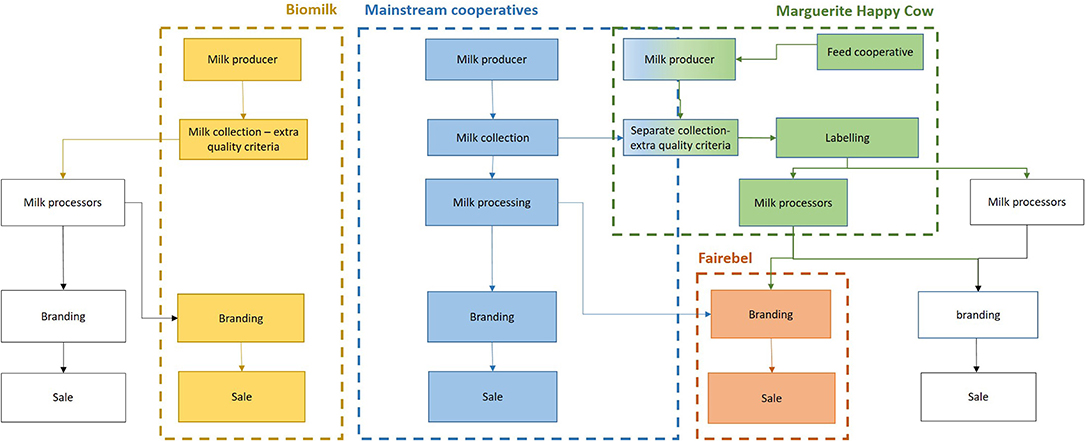
Figure 1. Graphical overview of the studied cooperative models—the arrows represent the product fluxes.
Biomilk is a cooperative of 39 organic dairy farmers and acts as a substitute to the mainstream cooperative model. The cooperative, however, does not own any milk processing plant. The cooperative negotiates contracts with milk processors, on the base of stricter requirements in milk quality than the organic norm (control of butyric acid spores, more frequent milk collection, and attention to the feeding of cows that influences the taste of the milk). The cooperative also owns its own brand, Bioterroir, for which some milk processors act as subcontractors.
The Marguerite Happy Cow and Fairebel act as complementary structure to the mainstream cooperative model: the farmers remain members of the mainstream cooperatives and are additionally members of the new cooperative models.
In the Marguerite Happy Cow cooperative model, the mainstream cooperative operates the separate milk collection of the farmer-members for the new cooperative model (10 so far), delivers to the processors of the new cooperative the quantities they need, and uses the surplus. The cooperative labels the milk of these farmers, based on specific criteria linked to the farm model and the cow feed (GMO-free—ration with 70% of grass or grass-based fodder. Feed complements have to originate from maximum 300 km distance). Processers use the labeled milk and label their products accordingly.
The Fairebel cooperative (500 members) acts as buyer of products from the mainstream cooperative or other processors, as would any other brandholder do. For instance, Fairebel is not a member of the Marguerite Happy Cow cooperative but also buys products from processors using that milk. Fairebel hence uses the Marguerite Happy Cow label on these products. The Fairebel members remain members of a mainstream dairy cooperative to which they deliver their milk.
So far, the new cooperative models are marginal in terms of quantity of milk collected. They are not active outside of the national market. None of these new cooperative models owns a milk processing plant. Table 1 summarizes the main descriptive features of each studied cooperative.
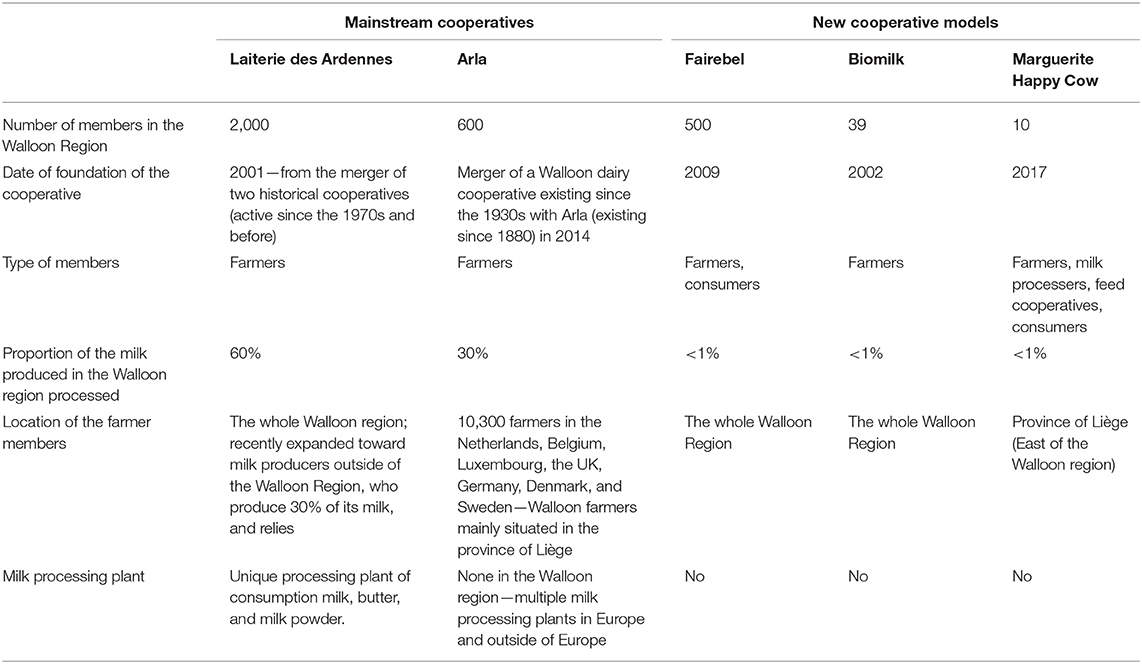
Table 1. Characterization of the studied cooperative models, in terms of membership and activities.
All three new cooperative models emerged from a will to broaden the scope of dairy products and offer higher revenue to their farmer-members through diversification toward high added value productions on the national market. Fairebel emerged after the so-called dairy crisis of 2009 where farm-gate milk price drops generated protests from farmers and made them question the strategic power they had in mainstream dairy cooperatives (see Feyereisen and Mélard, 2014 for more details about the negotiation process with the mainstream dairy cooperatives). Marguerite Happy Cow results from a publicly funded project aiming at developing new processed dairy products using pasture-based milk (Wagralim, 2019). Biomilk, similarly to Fairebel, was created to allow organic farmers who had distinctive pasture-based profiles and practices meeting cheese-processing requirements (see De Herde et al., 2019 for more details about these requirements), to market their milk separately from mainstream cooperatives.
Results
In order to characterize the above-described cooperative models within the Walloon dairy value chain, this section considers successively (1) the constraints they identify on the markets and the impact of these constraints on their market strategy; (2) the definition of quality, the related generation and distribution of added value (including in relation with institutional frames); (3) their governance features; and (4) how the cooperatives relate to the broader networks with which they interact.
Approach of the Market
Interviewees from the mainstream cooperatives (cdc1, cdc2), from one dairy industry (d1) and from the new cooperative models (ndc2, ndc3) tend to align on the analysis of the constraints they face on the markets. Mass retail is concentrated and hence uses its position to diminish the profit margins of processors (cdc1, cdc2, di1, ndc2, ndc3). The competitive mass retailers' brands (di1, ndc3) or cheaper imports (ndc3) dominate the markets. Branding hence requires investments in advertising (di1, cdc1, cdc2, ndc3), with limited perspectives if the national market is targeted only, given consumption habits (cdc2, cdc1, ndc3). Markets are barely open to other products than industrial standards of simplicity, standardized visual aspect and taste (ndc3, cdc1, di1). On the other hand, niches in specialized retail, for example, in cheese production, do not cover the demand of the consumers (ndc3, di1).
From this analysis, the mainstream cooperatives and the new cooperative models draw different market strategies. We summarized these strategies in Table 2.
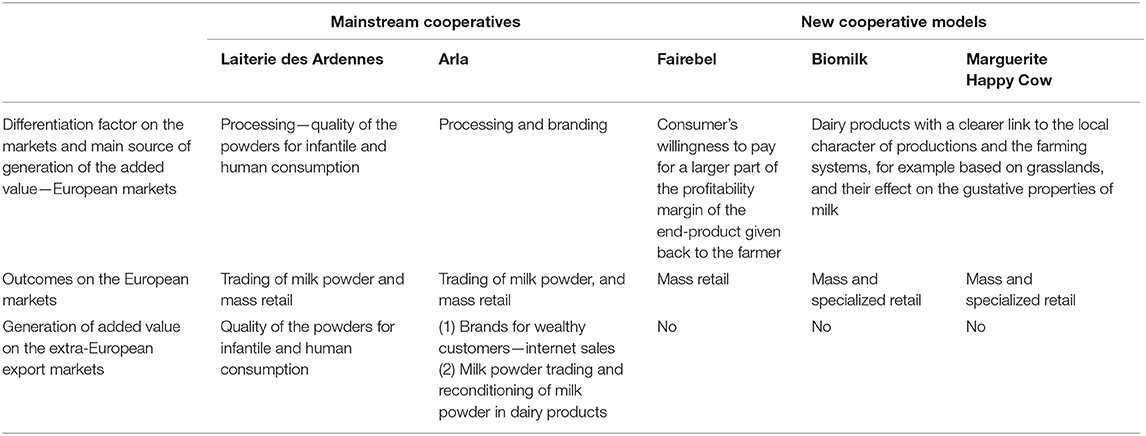
Table 2. Generation of added value on the markets and differentiation factors of the studied cooperatives.
Arla adopted the strategy of targeting the European and the extra-European export markets with a variety of high added value branded products (Arla Foods, 2019a). Currently, the European market represents 62% of its total revenue, of which 50% comes from brands (Arla Foods, 2019a). The cooperative identifies emerging markets in internet sale of dairy products in Asia and considers these more promising than a focus on local/regional productions in European countries (cdc2). The cooperative registers there a revenue growth of about 5%, of which 85% from brands (Arla Foods, 2019a). Besides brands, the company also holds assets in milk-derived food ingredients (Arla Foods Ingredients, 2017) and milk powder-based products through joint ventures on the Asian and African markets (Arla Foods, 2019a,b).
The Laiterie des Ardennes does not have the scale of Arla. The cooperative manages its industrial plant producing consumption milk, butter, and milk powders. The quality of its milk powders (infantile on extra-European export markets; intra-European delivery to industrial bakeries and chocolate makers) acts as a differentiation factor on the markets (cdc1, cdc2). In the European market, the cooperative does not hold brands and acts with its processing plant as subcontractor for brandholders and other dairy cooperatives. The cooperative runs on a cost-effective light structure in terms of workforces (cdc1, di1).
The focus of the mainstream dairy cooperatives on industrial milk processing and extra-European markets remains necessary, according to some interviewees, given the limited potential for niche productions on the Belgian market (f3, ndc3). The interviewees of the new cooperative models identify nevertheless a potential on the Belgian market to valorize dairy products with a clearer link to the farming system. The interviewees mention, for example, products based on grasslands, given their effect on the gustative properties of milk (ndc2, ndc3, f3).
Two of the three new cooperative models (Fairebel and Biomilk) are active on the segment of consumption milk. They target the consumer's willingness to pay for a product that guarantees a fair income to the farmers. The three new cooperative models (ndc1, ndc2, and ndc3) are also present on the segment of cheese production, as well in mass retail as in specialized stores. One new cooperative model also considers the export potential of niche cheese production for small volumes in the neighboring countries (ndc2).
Definition of Quality, Generation, and Distribution of Added Value
Definition of Quality
Depending on the interviewees, quality is a property related to milk as raw material or a feature built through to milk processing. Hence, the importance given to the milk as unprocessed raw material and the factors defining its qualities as raw material vary among the interviewees. We summarized in Table 3 the features attributed to milk as raw material by interviewees. Among the interviewees who answered the question “what defines a milk of quality?” or who spontaneously talked about how they defined milk (19 interviewees), we identify a clear difference between two groups:
1. The interviewees (Table 3, group 1) who define the quality of milk on the base of food security/sanitary criteria only (cell counts, amount of impurities in milk) (sp2, f1, di1, sp1, cdc1, cdc2, u1), to which some add criteria linked to the well-being of the cows (sp1, u1). We find in that category interviewees coming from the mainstream dairy cooperatives, the dairy industries, the feed sector, the public services and the farmers' unions;
2. The interviewees (Table 3, group 2) who define the quality of the milk as influenced by a broader scope of farm practices than the farm practices related to hygiene, food security, and animal well-being mentioned by the interviewees of the previous group (sp3, sp4, sp5, sp6, ndc2, ndc3, ndc3bis, f3, cp1, u4, ir1). We find in that category (Table 3, group 2) interviewees coming from the new cooperative models, the feed sector, the public services and the farmers' unions.
Some of the interviewees of the second group stressed that the definition made by actors about the quality of the milk was dependent upon the use made of the milk (sp3, sp4, sp6, ndc3, ndc3bis, f3, b1). On the one hand, milk used for the production of powder does not require other additional quality criteria than the sanitary requirements linked to hygiene on farm (f3). On the other hand, cheese producers, or producers of products (yogurts) with distinctive gustative features, tend to encompass in their evaluation of quality broader criteria than the ones related to hygiene on farm (sp5, ndc3, ndc3bis, cp1). The processing stage builds there on the qualitative properties of the milk (freshness, taste) to produce products with high-quality texture and taste (Murphy et al., 2016). Interviewees from the first group consider that milk used to produce consumption milk (cdc2) and industrial butter (f1) needs no additional characterization than the ones linked to general food security/sanitary requirements. The useful content of the milk (sugars, proteins, and fat) matters (f1, sp1, cdc2), as well as its physicochemical properties, so as to manage the transformation processes (di1). The processing and marketing stages create the final product's added value (di1, cdc2). These stages may require important Research and Development processes, for example for the extraction of derived ingredients (cdc2) (Arla Foods Ingredients, 2017). The marketing stage requires huge investments in advertisement (cdc2) that only large-scale stakeholders may afford (ncd3). The fact that milk may acquire gustative properties through cows' feeding is unclear to some (f1, sp1). That property is irrelevant on today's market (cdc2).
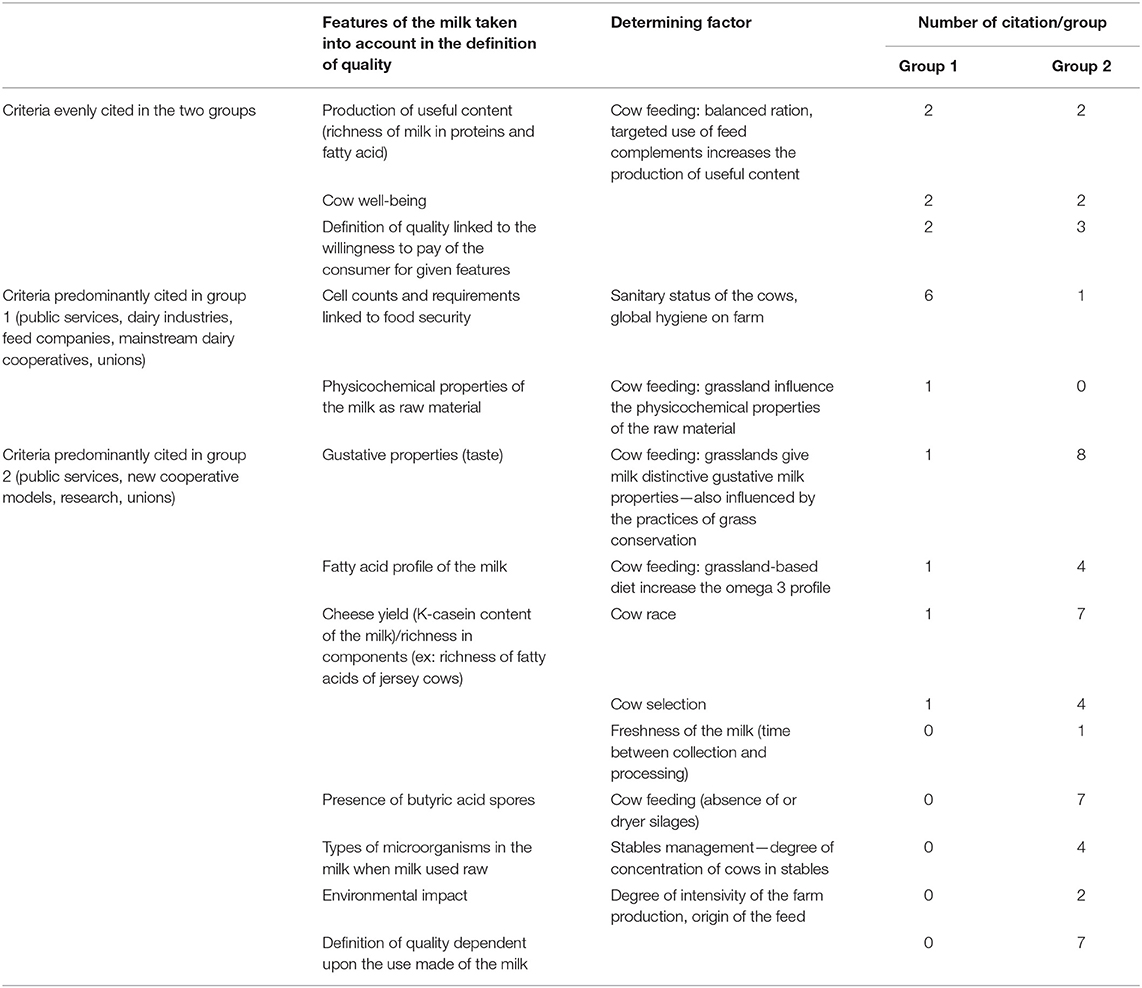
Table 3. Features contributing to the definition of the quality of milk—answers by the interviewees to the question “what defines a milk of quality (milk considered as raw material)?”
We find in both groups the awareness that a particular definition of quality may only generate added value as long as the consumer is willing to pay for it (u4, di1, ir1, f3, cdc2, cdc1). In this regard, the role played by marketing, packaging, and consumer's information is stressed (ndc2, di1, u4).
Distribution of the Added Value Along the Value Chain
The mainstream dairy cooperatives distribute evenly the added value to all members
In the mainstream dairy cooperatives, all farmers receive, by statutory requirement, the same farm-gate price for the milk they produce (cdc1, cdc 2, sp3) (Arla Foods, 2018). Criteria of food security defining quality premiums follow the federal law (legally defined thresholds on plate counts—representative of the amount of germs, somatic cell counts, residuals of antibiotics and visible impurities) (SPF Santé Publique, 2006; Gouvernement Wallon, 2009). The dairy cooperatives may also apply stricter thresholds on the quality requirements than the federal food security thresholds (cdc2), or any additional quality criteria, at the condition that those criteria are measurable in the milk samples (Gouvernement Wallon, 2009). The cooperative must grant the quality premium—capped to 2 eurocents/liter—to every member of the cooperative, in a non-discriminatory manner (Gouvernement Wallon, 2009).
The cooperative pays the farmers on the profitability margins generated within the vertically integrated model (Figure 2). Even when the dairy cooperative designs a project of separate milk collection to focus on certain properties of the milk produced by the farmers, for example geographical origin (cdc2), the profit margin is equally redistributed among all members. Part of the milk payment takes the form of benefit retrocession at the end of the accounting year.
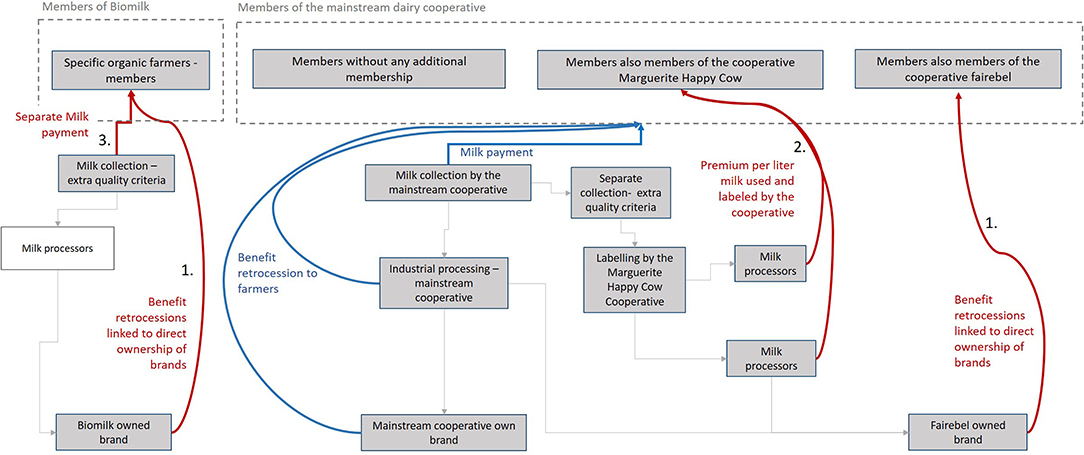
Figure 2. Graphical representation of the enlargement of the fluxes of redistribution of the added value to farmers through the new cooperative models.
New cooperative models diversify the channels of redistribution of the added value to the farmers
The new cooperative models enlarge the modes of redistribution of added value by generating additional fluxes of profit margins to specific groups of farmers.
Within the new cooperative models, distribution takes place through three mechanisms, illustrated in Figure 2:
1. Direct ownership of brands by farmers (the Fairebel brand and the Bioterroir brand);
2. Direct retrocession of the profit margin under the form of a fixed premium paid to a specific group of farmers whose milk answers additional quality criteria (the Marguerite Happy Cow model). On top of the remuneration they receive from their mainstream dairy cooperative, the farmers receive a premium from the milk processors for the use of their milk;
3. Separate milk collection through an alternative cooperative structure with additional quality criteria than the criteria of the mainstream dairy cooperatives (the Biomilk model); the farmers share the profits generated by the sale of their milk to a variety of milk processing operators, the cooperative centers its activities on milk collection and does not invest in any milk processing tool. The revenue of the cooperative, and consequently the profit margin distributed between members, is dependent upon the ability to negotiate a good price for the milk sold to processors.
The two first redistribution models (Fairebel and Marguerite Happy Cow) complement the remuneration of the mainstream cooperative. As the prices of the Fairebel products do not fluctuate much, the margin redistribution to the farmers is relatively constant (ndc1). Marguerite Happy Cow offers its farmer-members a fixed premium that may get higher when the milk price drops. These payments hence act as a form of insurance for the farmers.
Fairebel markets a quantity of milk equivalent to 4% of the production of the brandholders. Every farmer brandholder receives an annual retrocession of about 2,000 €, about 0.5 eurocent per liter milk they produce [calculated on the base of the amount of members, the annual retrocession (ndc1), and the average dairy production per farm in the Walloon region (Collège des Producteurs, 2017)]. Marguerite Happy Cow offers to the farmers a premium of about 3 cents per liter on 2/3 of the production of its farmers (Jacques et Associés, 2018), thus 2 cents/liter on the totality of their production.
Structural Organization of Governance and Relationships Between the Members of the Cooperative
The mainstream cooperatives and the new cooperative model present distinct features in terms of membership and management detailed hereunder and summarized in Table 4. We further explore how these features influence the relationship between the structure and its farmer-members.
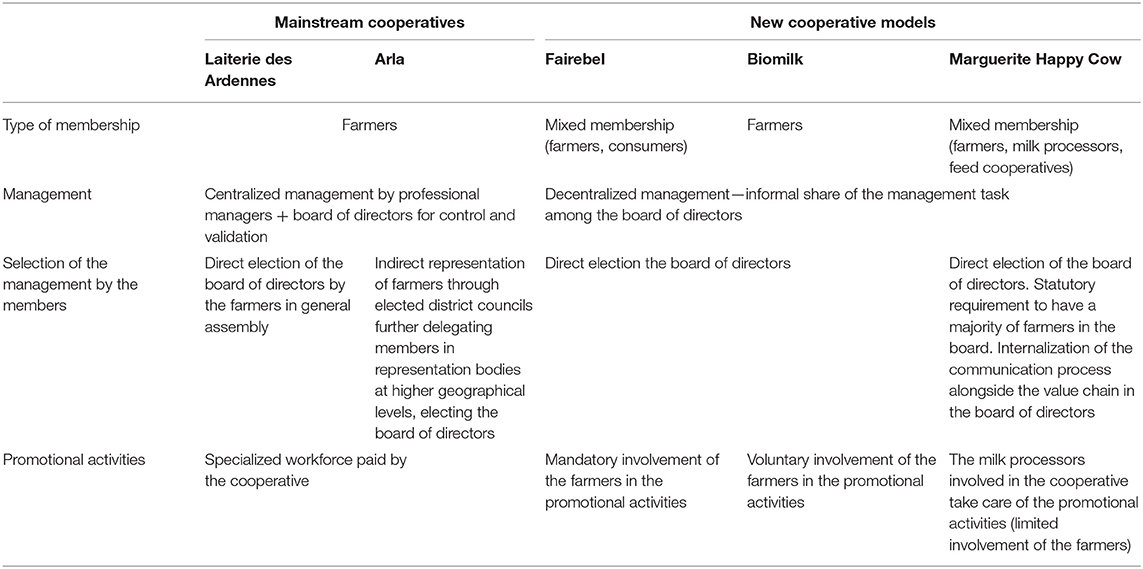
Table 4. Summary of the governance features of the studied cooperative models.
Membership
Two new cooperative models (Fairebel and Marguerite Happy Cow) present a mixed membership of farmers, milk processors, and consumers. The presence of other actors, beyond farmers, in the new cooperative models, offers structural opportunities of dialogue across the value chain (u2, sp3), and complementarity in strength and resources between actors (ndc3, ndc3bis, ndc2, sp3, ndc3bis, sp5). Cooperation works well between partners of similar scale (f1, f2, f3), and when processors do not act against each other on the same markets (ndc3bis, cp1).
Management
Mainstream cooperatives work with professional managers, controlled by farmers. The new cooperative models involve farmers directly in the management of the cooperative and/or in the marketing/promotional activities (ndc1, ndc2). The new cooperative models are grassroot initiatives by farmers/milk processors. These initiatives run on a management exerted by farmers/milk processors only, with few or no additional operational help (ndc1, ndc2, ndc3).
Relationship Between the Cooperative and the Farmer-Members
The scale of the mainstream cooperatives and their structural organization (professional management, processing plants managed as distinct entities from the cooperative to which they belong) (Filippi et al., 2008) does not help farmers have the feeling to hold a power of strategic decision-making (sp3). However, there are mechanisms of representation and control by dairy farmers in large-scale cooperatives (cdc2, sp3). Arla, for example, organizes elected district councils, further delegating members in representation bodies at higher geographical levels (Arla Foods, 2018). In other countries, farmers would tend to use these channels more actively to influence the strategic decisions than in the Walloon Region (sp3).
Interviewees mention distinct issues of dialogue with farmers on the strategic orientation of the mainstream cooperative, depending on their profile (cdc1, cdc2, sp3, sp6, ndc2). On the one hand, some farmers would like the cooperative to invest toward product diversification but lack consideration for the cost–benefit ratio of such investments at an industrial scale (cdc1, di, sp3). Concerning the Laiterie des Ardennes, these farmers also tend to overlook the costs of transitions linked to the change of business-model, requiring building up an expertise—for example in marketing—that is not present (cdc1). These farmers tend to be distrustful toward the management (cdc1, ndc2). On the other hand, new investments toward diversification could stir the dissatisfaction of large-scale intensive farmers whose farm model aligns with the requirements of the present business model and would not want to support other farming systems, let alone see them benefit from an extra remuneration (cdc1, cdc3). The dairy cooperative relies on the latter farmers for the profitability of its industrial plants (cdc1). Consequently, directors do not see it as the responsibility of the cooperative to cover investments toward product diversification (cdc1).
The new cooperative models focus on dialogue with the farmers on the issues faced in the management of the project, to inform them about the market situation, the constraints linked to competition (ndc3, u4). The expectations, in return, are that farmers develop a culture of initiative and responsibility about the processing of their milk (ndc3, b1, sp5, f1). The interviewees oppose such a logic to the situation prevailing until now in the frame of the European agricultural policies (ndc3, b1, sp3), where farmers are driven to produce quantities of raw materials (sp6, ndc2, ir1) and where public subsidies support farmers and market pathways (ndc3, b1, sp3, sp1, sp5bis). A change of culture requires the awareness that the generation of added value is ideally a proactive bottom-up process (sp3) generated by farmers and milk processers (ndc3) and requires attention to the market outcomes of one's activities (f1, sp5bis).
Interactions With External Business Partners
The mainstream dairy cooperatives may have agreements for separate collection and milk delivery to processors, but only on the base of features of geographical origin of the milk (cdc1). Two cheese processors, in particular, consider this as an issue, as they wish to know where the milk comes from and which practices the farmer producing the milk has adopted (ndc3bis, ndc3). According to these interviewees (ndc3bis, ndc3), it is the reason why they supported the development of the Marguerite Happy Cow new cooperative model: to develop an agreement with specific farmers about their milk production practices and receive that milk specifically. To be able to do this successfully, they rely on the fact that a mainstream dairy cooperative accepts to grant a service of separate milk collection. To reach such an agreement, they had to change their delivery agreement with a mainstream dairy cooperative who refused to grant such a service. The interviewees indicate that the management of the dairy cooperative was not receptive to their requirements and did not find it appropriate to disclose to the processors information about their milk producers. The dairy cooperative with whom these processors are now cooperating for separate milk collection has shares in one of the cheese processing plants of the processors involved in the new cooperative model. This shift of mainstream dairy cooperative also means that the farmers who want to participate in the new cooperative model also have to switch from one mainstream dairy cooperative to another, which may sometimes require a notice period of several years.
Let us note that one mainstream dairy cooperative is planning to monitor the farm practices of their members to accommodate in the future the wishes of brandholders or processors (cdc2). One interviewee (sp3) considers that there is little awareness as to how farming systems affect the quality of the milk. The mainstream cooperatives do not evaluate the effect of grassland feeding on the fatty acid composition of the milk (cdc2, cdc1) and sell pasture milk according to a shared norm (Campina, 2019) on the base of requirements of access to grasslands for cows without specific requirements on the proportion of grasslands in the feed ration (ir1, cdc2, cdc1). Connection with researchers or public services working on the effects of grasslands on the properties of milk are inexistent (sp6, ir1). So were contacts, between the mainstream cooperatives and the cheese processors on the by-products of cheese production (lactoserum), although the mainstream dairy cooperatives identify this resource as strategic in their ingredient branches (cdc2). Interviewees cite differences in scale as the main obstacles to cooperation (di1, f3, cdc1, cdc3).
The new cooperative models are not vertically integrated and work on principles of negotiation between the different levels of the value chain (between milk collectors, milk processors, brandholders). Let us note that Marguerite Happy Cow institutionalizes the negotiation process through the cooperative structure, between milk producers and milk processors. The new cooperative models answer, in their relation with the other stakeholders in the value chain, and within their own structure (in the case of Marguerite Happy Cow), to the definition of hybrids (a coordinated network of partners interacting on a long-term basis) (Ménard, 2017). Based on Gereffi's framework categorizing value chains (Gereffi et al., 2005), Fairebel presents, regarding its supplies in consumption milk, the features of a modular hybrid value chain (no additional criteria on the milk than the industrial food safety criteria). Biomilk and Marguerite Happy Cow present the features of a relational value chain, where a set of additional criteria on milk are guaranteed to the processors and brandholders through reputation ties. Both models offer to processors the guarantee, beyond written specifications on farm practices, that the providers will effectively provide a product answering distinctive requirements. The absence of vertical integration gives flexibility to seize market opportunities and answer specific requirements of brandholders or milk processors (ndc2). Milk collectors may accept small-scale contracts of delivery to brandholders and involve a milk processer as subcontractor. However, the negotiation process runs smoother in networks of partners having a shared understanding of market approaches and mutual interest in cooperation (ndc2).
Table 5 summarizes the main features of interactions of the studied cooperatives with the business partners.
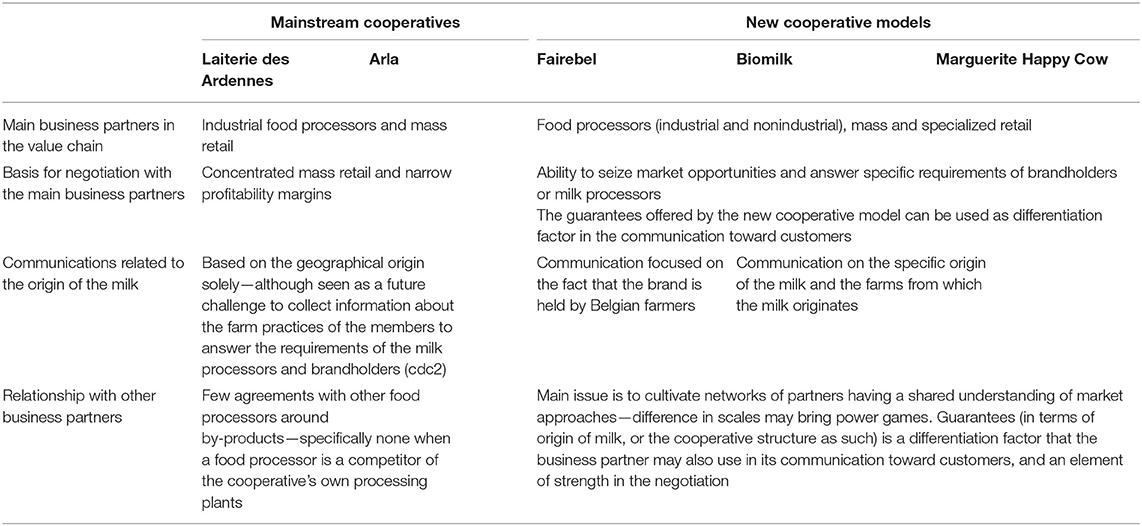
Table 5. Summary of the features of interactions with business partners.
Discussion
The results detailed in the previous section underlined a dichotomy between the mainstream cooperatives and the new cooperative models in terms of market approach, definition of the milk quality and distribution of the added value, governance practices, and relationship with members and with business partners. Replacing these features within Williamson's framework will help consider (1) the specificities of each model within a broader macro-scale socio-technical coherence and (2) the pathways this coherence enables and disables, namely, which lock-ins to diversification pathways our research uncovers. Finally, the coexistence of both models will be discussed in light of this analysis and of the interaction with partners uncovered in the last section of our results.
A Dichotomized Landscape Reveals the Coherence of Two Models of Development
Williamson (2000)'s framework considers the strategic choices of an organization as resulting from the interplay of various embedded dimensions, called levels. According to this framework (represented in Figure 3), firms allocate their resources (level 4) because their choices are embedded within and determined by their governance structure (level 3). The way this governance structure determines how some strategic choices are more efficient than others, and which governance structure is more adapted to achieve strategic goals, depends on the regulatory framework at hand (level 2) and on the effect of the broader informal rules guiding behavior (level 1). Levels 2 and 1 typically describe what recent studies on transitions in the dairy sector encompass under the concept of institutional logics (Runhaar et al., 2020).

Figure 3. Representation of the four levels of analysis of resource allocation in firms (Williamson, 2000).
We observe in our results a coherence linking strategic choices with governance structure, regulatory framework, and informal rules, which defines two distinct development models. These development models stem from a market analysis that is similar across the interviewees from both models (results, section Approach of the Market). On the one hand, the vertically integrated mainstream dairy cooperatives make strategic choices considering the pool of milk to valorize the existing sets of processing plants in which they invested and the means at hand given their scale and business structure. Their strategy to generate added value (results sections Approach of the Market and Definition of Quality) focuses on pathways valorizing large volumes of milk on the market: industrial processing and branding (see Figure 4 representing the coherence of the mainstream cooperative's model within Williamson's framework). In this configuration, milk is a raw material that has to answer food security requirements and offer useful content (results section Definition of Quality). Advertising concepts like “grassmilk” are marketing arguments disconnected from the intrinsic properties of milk (results, section Interactions With External Business Partners). There is little connection to the scientific evidence showing that milk can be something else than a standard product (results, section Interactions With External Business Partners). The non-discriminatory rule in terms of payment of the milk to farmers (results, section The Mainstream Dairy Cooperatives Distribute Evenly the Added Value to all Members) fits with that standardized approach (Lamine et al., 2012). This rule is a statutory requirement (level 3) supported by the legal frame of payments to farmers in cooperatives (level 2) (results section The Mainstream Dairy Cooperatives Distribute Evenly the Added Value to all Members). More globally, the informal rules (level 1) of farmers not involved—if only through representation—in the management and not trained on business matters aligns with a structural governance based on professional management (level 3) (results sections Management and Relationship Between the Cooperative and the Farmer-Members). Resorting to a Multi-Level Perspective lens, this coherence hints at the existence of a stabilized and incumbent socio-technical regime (Lachman, 2013).
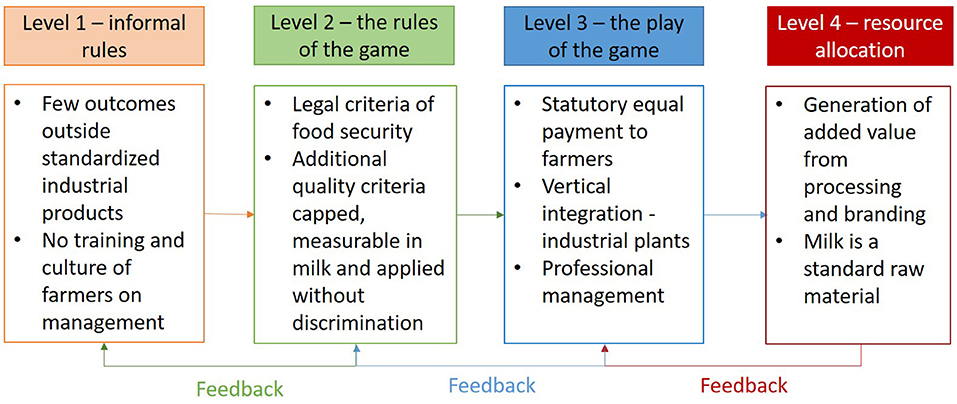
Figure 4. Representation of the coherence of the mainstream cooperative's model, within Williamson's framework.
On the other hand, the new cooperative models consider the market potential of products based on a differentiated gustative and nutritional value of milk and on the links between products and the farming system. They target the willingness of consumers to pay for these properties on the national market (results sections Approach of the Market and Definition of Quality). They remunerate selective farmers through the creation of new cooperative structures complementing the mainstream dairy cooperatives (results section New Cooperative Models Diversify the Channels of Redistribution of the Added Value to the Farmers). Through de-integration and structural dialogue across the value chain, they aim at supporting an entrepreneurial dynamic in milk processing that includes farmers and milk processors (results sections Membership, Relationship Between the Cooperative and the Farmer-Members, and Interactions With External Business Partners). The representation of their features in Williamson's framework in Figure 5 shows an uncompleted level of coherence, as the rules of the game covering the remuneration of milk are not specifically calibrated to the features of this new development model. This incomplete coherence is very well documented within the Multi-level Perspective: niches face well-structured incumbent socio-technical systems whose rules, encompassed in the concept of “socio-technical regime,” reinforce its coherence (Geels, 2004; Geels and Kemp, 2007). The new cooperative models face an incumbent dairy regime which seems driven by a coherent market-driven industrial institutional logics (Runhaar et al., 2020) and in which they manage to implement new institutional logics (at the level of informal rules). In this regard, the new cooperative models appear as a structural answer allowing to bypass the rules of the existing socio-technical regime, and act as protective spaces for innovation (Hans de Haan and Rotmans, 2011). These new cooperative models rely on a more direct involvement of the farmer in the management and more broadly on a culture of responsibility related to the processing of milk by farmers (results, section Relationship Between the Cooperative and the Farmer-Members). The coherence of this model hence relies on a feedback effect from level 3 (the play of the game—governance) on level 1 (informal rules) for what concerns the mentality of farmers. The impact of these changes on farmers, as well as on the definition of their identity, remains to be explored.
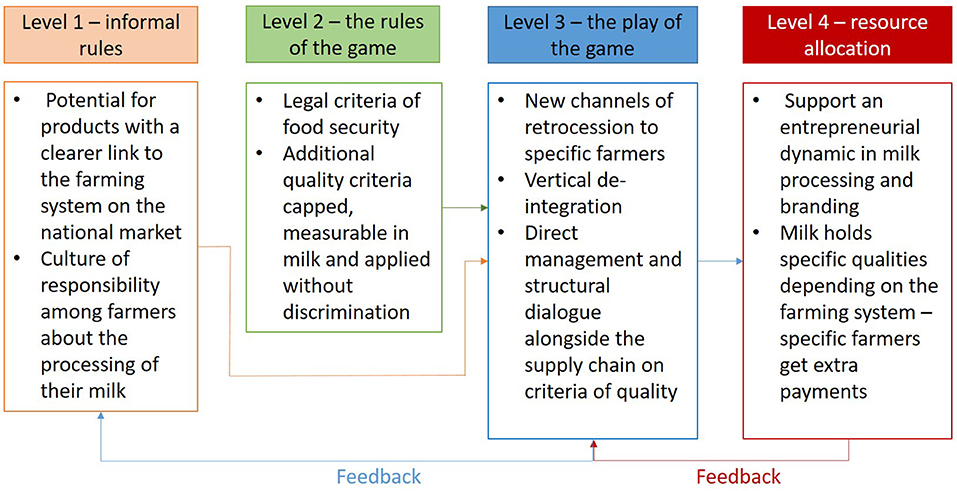
Figure 5. Representation of the coherence of the new cooperative models within Williamson's framework.
New Cooperative Models Act as Structural Answers to Lock-Ins Grounded in the Coherence of the Mainstream Dairy Model
In countries like Switzerland and France, studies (Perrot et al., 2017; Reviron and Python, 2018) link the generation of higher added value on the dairy markets to two strategies. The first strategy is based on branding and specialized industrial outcomes. Milk remains a standard raw material in this strategy (Reviron and Python, 2018), and the costly R&D investments at the processing and marketing stage generate the added value of the differentiated product (Perrot et al., 2017). The second strategy is based on the development of value chains relying on a milk holding specific features (geographical origin, modes of production, for example organic, GMO free, grassland-based) (Perrot et al., 2017). In the latter case, the contribution of the milk producer (the dairy farmer) to the added value of the product marketed is higher than in the former case. This may increase the share of added value retroceded to the farmer in these value chains (Reviron and Python, 2018).
The coherence of the mainstream cooperatives' development model, identified from the results in section A Dichotomized Landscape Reveals the Coherence of Two Models of Development, hints at the existence of a stabilized and coherent pattern of industrial milk processing in which these cooperatives evolve. The possibility to invest in pathways following the first strategy described here above seems linked to the means and resources the dairy cooperative may mobilize, with a strategic advantage linked to larger-scale models (results section Definition of Quality and Relationship Between the Cooperative and the Farmer-Members), like that of Arla, compared to that of the Laiterie des Ardennes (section Description of The Studied Cooperative Models).
Our analysis also shows that this coherence is a major source of lock-ins acting against pathways of diversification of the dairy productions that follow the second strategy described here above by Perrot et al. (2017) and Reviron and Python (2018). The concept of lock-in expresses the fact that dominant routines in production, use of technologies, transfers of knowledge, and institutional practices hinder pathways of development moving away from these routines (Geels, 2004; Maréchal, 2012; Sutherland et al., 2012; Lachman, 2013; Pesch, 2015).
The Laiterie des Ardennes has the scale of many regional dairy cooperatives present in countries like France (Filippi et al., 2008; Alavoine-Mornas and Madelrieux, 2015). These smaller-scale cooperative models often combines economic and social utility (Koulytchizky and Mauget, 2003) by linking the cooperative project with objectives of rural development and maintenance of a dairy activity in remote territories non-adapted to intensive farming (Alavoine-Mornas and Madelrieux, 2015). Yet, the development model of the Laiterie des Ardennes relies mainly on a set of non-diversified production of consumption milk, butter, and milk powder (see section Description of The Studied Cooperative Models and results section Approach of the Market). We identified from our results the following obstacles to a more diversified strategy:
1. The cooperative holds one milk processing plant, whose profitability depends on the maximization of its use and on cost sparing. The cooperative relies on the quantities produced by the members (results section Relationship Between the Cooperative and the Farmer-Members), and in particular on the milk collected outside of the Walloon Region (section Description of The Studied Cooperative Models), to maximize the profitability of the plant. It is in its interests to accommodate the larger-scale intensive milk producers whose farm model aligns with the requirements of the present business model, and who would not want to support other farming systems, let alone see them benefit from an extra remuneration (results section Relationship Between the Cooperative and the Farmer-Members);
2. Diversification entails a change of business-model and requires the development of a marketing expertise that is not present (results, sections Approach of the Market and Relationship Between the Cooperative and the Farmer-Members);
3. Dedicating existing industrial lines to processing pathways with limited market potential could induce a complexification of the management and an imbalance of profitability (of the cost/benefit ratio) (results section Relationship Between the Cooperative and the Farmer-Members);
4. The relative benefit per euro invested will be negligible at the scale of the dairy cooperative given the market perspectives (results, section Approach of the Market); directors do not see it as the responsibility of the cooperative to cover such investments (results section Relationship Between the Cooperative and the Farmer-Members).
One aspect of the lock-ins described here concerns the relationship between the farmers and the dairy cooperative. The profitability of the milk processing plant seems to make the management of the cooperative sensitive to the weight of the most intensive milk producers (results section Relationship Between the Cooperative and the Farmer-Members). This sensitivity to the voice of intensive milk producers can also relate to the weight of these producers in terms of shares and voting rights. More globally, this sensitivity ties with the question of the broader cultural conception shared among the cooperative members about what constitutes the responsibility and mission of the cooperative (results section Relationship Between the Cooperative and the Farmer-Members). This calls for more research in the direction of organizational identity, the consideration of the “organizational purpose and values as a whole” (Rijswijk et al., 2019), and the interactions between internal and external agents in the definition of the organizational identity—including in relation to governance aspects like voting rights.
The dairy cooperative Arla acts at a totally other scale than the Laiterie des Ardennes (section Description of The Studied Cooperative Models). The questions of collecting enough milk to maximize the use of its plants, the need to accommodate farmers, and the possible costs of transition of business-model or expertise are less stringent, due to its scale, broad anchoring, and the present diversity of its activities. However, the interests the cooperative might have in any regional/local development pathways based on the second strategy of diversification are even more negligible, given its scale and the division of the return of investment among all members.
The remuneration of milk quality must be based on measurable criteria and be non-discriminatory, according to legal requirements and statutory rules of the mainstream dairy cooperatives (results section The Mainstream Dairy Cooperatives Distribute Evenly the Added Value to all Members). In a model where milk remains a standard raw material and where the added value comes from processing and branding (results section Definition of Quality), the mainstream dairy cooperative meets easily the constraint of non-discriminatory remuneration.
Setting a rule of remuneration of the farmers based on the effects of feeding on the composition of milk may be risky for the mainstream cooperative, given the non-discriminatory rule (results, section The Mainstream Dairy Cooperatives Distribute Evenly the Added Value to all Members). Indeed, any farmer meeting the criteria could then pretend to the premium, regardless of the possibility for the dairy cooperative to valorize that milk on market pathways. The cooperative may decide to collect separately milk from given farming systems, without remunerating the farmers' extra quality premiums for this. Some mainstream dairy cooperatives anticipate that development pathway on the market (results, section Interactions With External Business Partners) but with a cost-effectiveness calculated at the level of the dairy cooperative and without considering incentives for farmers to maintain a given farming system through remuneration. Mainstream dairy cooperatives may also provide milk processors the service of a separate milk collection. However, the system of remuneration (results section The Mainstream Dairy Cooperatives Distribute Evenly the Added Value to all Members) does not provide to the concerned farmers any financial incentive to meeting the criteria required by the milk processors.
The lock-ins described here above relate:
1. to the model of industrial development, based on the maximization of use of the processing plant and of its production lines (results section Relationship Between the Cooperative and the Farmer-Members);
2. to the subsequent sensitivity to accommodate the larger-scale intensive milk producers (results section Relationship Between the Cooperative and the Farmer-Members);
3. to a broader shared conception, at the level of the farmers and at the level of the management, about what the goals and missions of the dairy cooperatives should be (results section Relationship Between the Cooperative and the Farmer-Members);
4. to the costs of transition related to a given business model (results, sections Approach of the Market and Relationship Between the Cooperative and the Farmer-Members);
5. to the lack of strategic interest of investing in diversification pathways, considering the negligible return on investment expected, especially when divided among all members (results, section Approach of the Market and The Mainstream Dairy Cooperatives Distribute Evenly the Added Value to all Members);
6. to the non-discriminatory rule of remuneration (results, section The Mainstream Dairy Cooperatives Distribute Evenly the Added Value to all Members), entailing a possible imbalance between costs–benefits in case the dairy cooperative introduces additional quality criteria;
7. to the associated cultural definition of what defines milk, as raw material (results section Definition of Quality), that does not favor dialogue with downward milk processors aiming at considering that aspect (results section Interactions With External Business Partners);
8. to the fact that the present remuneration (results section The Mainstream Dairy Cooperatives Distribute Evenly the Added Value to all Members) rule does not provide incentive to farmers to maintain a given farming system to support diversification pathways, even if the dairy cooperative decides to organize a separate milk collection for specific processors.
The new cooperative models propose structural answers to these lock-ins by following a logic of de-integration and externalization of the investment and the remuneration of the concerned farmers from the mainstream dairy cooperative (results section New Cooperative Models Diversify the Channels of Redistribution of the Added Value to the Farmers). This externalization of initiative, remuneration, and risk allows specific groups of actors to explore new development pathways in accordance with their current market potential and to mutually agree on broader criteria of definition of milk (results sections Definition of Quality and Relationship Between the Cooperative and the Farmer-Members). The de-integration allows considering the most profitable modes of cooperation between milk collection, milk processing and marketing, and a complementarity of strength.
The new cooperative models were created because the involved stakeholders felt that their initiatives could not be supported within the frames of the mainstream dairy cooperatives. Following Gereffi's framework (Gereffi et al., 2005) on value chain governance, de-integration toward a relational value chain does necessarily have to go paired with an increase of the capabilities of the suppliers to provide products answering complex specifications. It is the case regarding the Biomilk and Marguerite Happy Cow models, where feed processors, farmers, and processors provide a differentiated product answering specific requirements. Such a model hence relies on an increased responsibility of every involved actor to provide supplies answering given requirements. The model, in return, allows a supplementary channel of retrocession of the added value to the farmers involved (results section New Cooperative Models Diversify the Channels of Redistribution of the Added Value to the Farmers) that is not possible within the institutional logics and related governance rules of the mainstream cooperative model.
Table 6 describes the lock-ins identified and how structural elements of the new cooperative models help circumvent these lock-ins. We define as “organizational” the types of lock-ins that stem from the way the mainstream milk processing is organized, and the broader coherence of the rules coevolving with it.
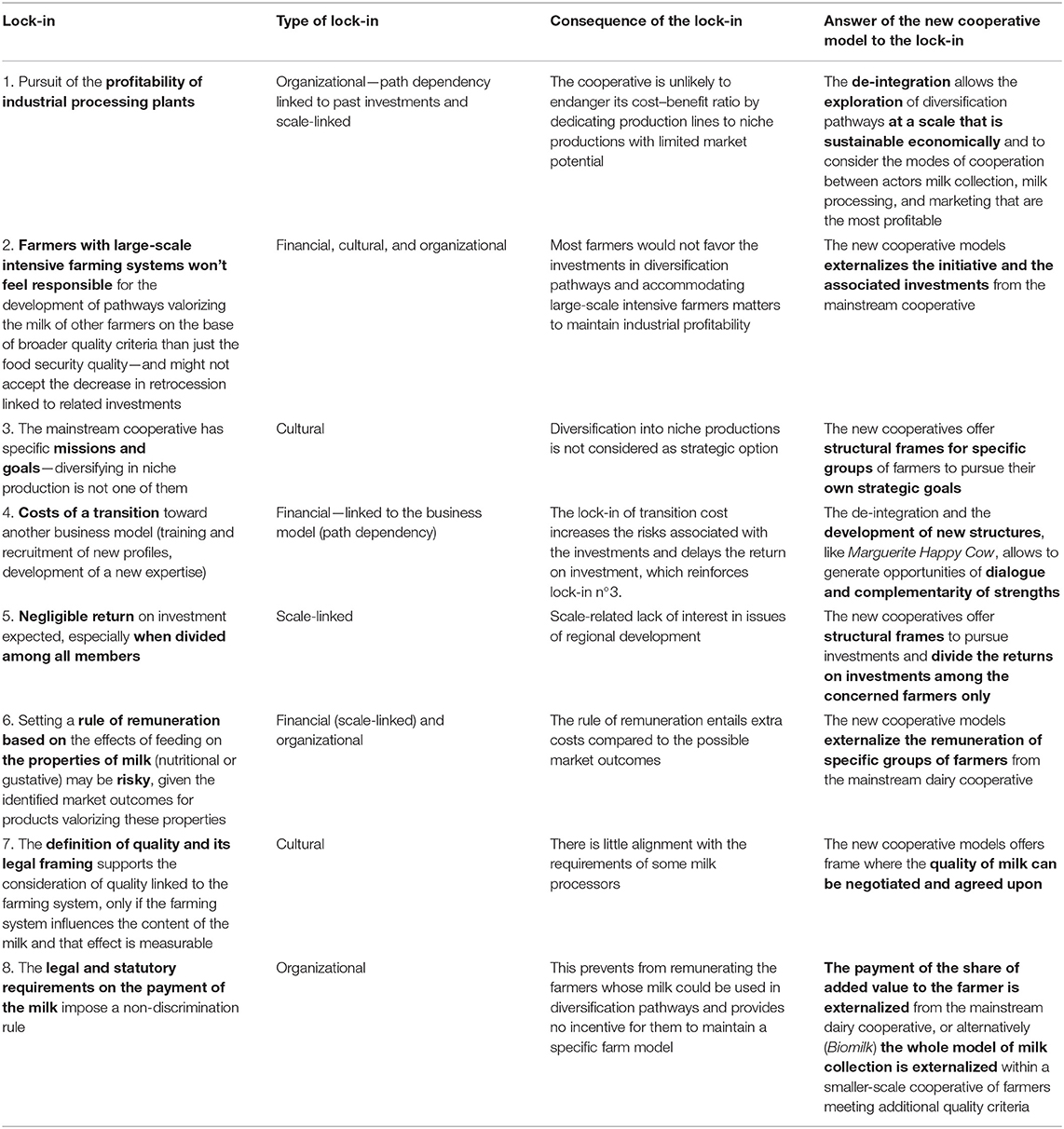
Table 6. Lock-ins preventing mainstream dairy cooperatives to explore diversification pathways and answers provided by the new cooperative models.
The model developed by the Marguerite Happy Cow cooperative appears to be the most thorough in circumventing the lock-ins of the mainstream cooperative models. It answers jointly the issue of control of quality of the raw material by milk processers, the issue of the incentive to invest in diversification pathways, the issue of separate remuneration to a selected group of farmers, and the issue of cooperation and complementarity of strength between the various parts of the value chain.
New Cooperative Models Define Pathways of Coexistence in the Future Dairy Sector
Two of the studied new cooperative models (Fairebel, Marguerite Happy Cow) act as complement to the mainstream dairy cooperatives (see section Description of The Studied Cooperative Models). The role of the mainstream dairy cooperative evolves and includes that of a service provider (for separate milk collection) to the new cooperative model, on top of its customary business activities. The mainstream dairy cooperative also uses the surplus of milk of the farmers not used in the new cooperative model. At this stage, these two new cooperative models cannot survive without the existence of the mainstream dairy cooperative using the surplus of milk produced by farmers.
The Biomilk new cooperative model develops as a substitution to the mainstream dairy cooperatives. It is, however, inexact to say that Biomilk develops only as a separate niche: our results illustrate that Biomilk develops a business connection with industrial milk processors and mass retail. As such, Biomilk, equally to Fairebel and Marguerite Happy Cow, also links to the channels of creation of added value of the incumbent regime, by answering needs emerging from the evolution of the broader consumption landscape. The new cooperative structures hence appear as structural answers to the issue of a broader definition of milk quality. They represent, as structures, a form of institutional anchoring that allows the development of new forms of network anchoring with the incumbent actors (processors, retailers, consumers) (Elzen et al., 2012b).
A further detachment, or insularization (Vankeerberghen and Stassart, 2016), from the mainstream cooperatives is unlikely in the short term, given the competitiveness of these mainstream cooperatives on markets allowing outcomes for large quantities of milk. However, by defining a new role for the mainstream dairy cooperative as a service provider for milk collection, and by de-integrating the relationships between the stages of milk collection, processing, and branding, we identify in the new cooperative models a potential for a reconfiguration of landscape on the long term. Economically and historically, the vertical integration of processing plants by farmers' cooperatives answers jointly the issues of monopsony of buyers (not favorable to farmers) and of investments in long-term risky ventures (not favorable to investors) (Williamson, 1987; Hansmann, 1996; Schneiberg et al., 2008). At the condition that the governance structures guarantee a balance in strategic power, there might be possible pathways of multiple participation in and collaboration of farmers with an ecosystem of processors. This is particularly significant at the scale of the Walloon Region where remaining traditions in milk processing and different farm systems still coexist. New cooperative models offer innovative pathways of value chain development on that account. They offer the potential for an economic tissue of processors to develop, between the two extremes of on-farm processing and industrial standardized large-scale production.
At their own scale, the new cooperative models illustrate what Ruzzier (2009) puts forward as contradicting the classical theory of transaction costs (Williamson, 1987): there is evidence of successful coordination of activities outside vertical integration, in the particular case of high asset specificity. When milk is not a standard good (and hence a specific asset), both partners of the bargain may have interest in maintaining cooperation, instead of putting the good to alternative use or resorting to an alternative source. This balance in interest “always generates a larger joint surplus than a contractual relation” (Ruzzier, 2009). As exposed in our results (section Interactions With External Business Partners) and in our discussion (section New Cooperative Models Act as Structural Answers to Lock-Ins Grounded in the Coherence of the Mainstream Dairy Model), the non-integrated model offers more flexibility to seize opportunities to explore niche markets and multiply the possible outcomes for the milk produced. It also allows cooperation with brandholders on a variety of quality patterns, including the ones related to consumers' concerns for a fair payment to farmers (results, section Definition of Quality). Farmers can hold the brand, but this cooperation may also take place with private brandholders—which means, however, that part of the added value goes into private interests. All parties involved can spare costs related to the governance of an integrated model and the costs of opportunities related to the allocation of the milk pool to the existing processing pathways of the integrated models.
The new cooperative models, however, are not without limits. A first limit concerns the effective development of the markets for differentiated milk products and the extent of farmers who could benefit from such development. The development of the new cooperative models remains dependent upon the market opportunities that could unfold. Additionally, models like Biomilk and Marguerite Happy Cow position themselves as relational networks toward their buyers. Their added value lies in providing a product with distinctive characteristics linked to the farming system. An important second limit is thus also whether this added value is sufficiently recognized by processors, brandholders, and consumers to support their development and see the amount of farmers concerned be significant at the regional scale. A third limit is, ultimately, whether the extra remuneration offered to the farmer (results section New Cooperative Models Diversify the Channels of Redistribution of the Added Value to the Farmers) is enough of an incentive to maintain/develop a differentiated farm model.
The impact of the development of these new models on the viability of the mainstream dairy cooperative on which they rely is also an issue. From the mainstream cooperative's perspective, a transition toward an economy of services supporting a diversity of products on the national market could constitute a diversification of interest in terms of resilience, given the vulnerabilities of the export-based development market, which the recent COVID-19 crisis illustrated (EPA Monitoring, 2020). This is particularly true for a cooperative of regional scale like the Laiterie des Ardennes, whose scale may limit its opportunities of investment in industrial diversification strategies (discussion section New Cooperative Models Act as structural answers to Lock-Ins Grounded in the coherence of the Mainstream Dairy Model). Nevertheless, is the conversion to an economy of services to external operators viable for this mainstream dairy cooperative, in particular? This question calls for further research in terms of economic evaluation and modeling, at the level of the farmer and of the cooperatives, but these questions also stress how crucially such possible developments should integrate the notion of dialogue. The relationship between Fairebel and the Belgian historical cooperatives (Feyereisen and Mélard, 2014), the account of some interviewees that they had issues making mainstream dairy cooperatives understand their needs (results section Interactions With External Business Partners), uncovers that the confrontation of different institutional logics is not easy and entails that the incumbent stakeholders consider cooperation—if only by developing new services of separate milk collection—with new unfolding institutional logics (Runhaar et al., 2020).
As stated by Turner et al. (2020), it is a challenge to include incumbent actors in possible partnerships with new cooperative models, to a point that the very same actors define “new role perceptions and power relations.” Dialogue may foster awareness about complementarity (results, sections Membership and Interactions With External Business Partners) and an alignment on definitions and goals (Forney and Häberli, 2017). It is, in a way, an integrative exercise for stakeholders to approach themselves as part of a multifunctional construct of a variety of innovation systems, whose combination may pave the way toward a more diverse and sustainable dairy sector (Pigford et al., 2018). Dialogue requires a culture of cooperation and a consciousness about the power dynamics that may unfold due to differences of scale (results, sections Membership and Interactions With External Business Partners) or that hamper the actors' empowerment to act in a certain direction (Avelino and Rotmans, 2011; Avelino and Wittmayer, 2016; Forney and Häberli, 2017; Turner et al., 2020). Finally yet importantly, dialogue may help consider common goals, for example in terms of research and development, consumers' information, and adapted structures of storage and distribution (results section Interactions With External Business Partners) mutually beneficial in terms of long-term economic development.
In terms of transitions in the dairy sector, and more generally in the agri-food sector, this study stresses the relevance of considering “niche” and “regime” conceptualizations of actors and initiatives from an analytical—more than a realistic—posture (Pigford et al., 2018), in order to account for the fact that transition de facto will happen because of contextualized (Vermunt et al., 2020) and sometimes messy processes (Feyereisen and Mélard, 2014) of interaction between actors across any conceptual dichotomy. More attention should thus be drawn on the mechanisms allowing actors to overcome obstacles to cooperation in transition pathways, from innovative governance structures to spaces for cross-sector and cross-scale dialogue (Pigford et al., 2018) on long-term development goals.
Conclusion
Our research started from the open question of the perspectives drawn by the presence of the new cooperative models in terms of pathways of coexistence in the dairy landscape. Combining the Multi-Level Perspective with insights from the institutional economics brought forward that the new models offer answers to lock-ins linked to the structural development of the vertically integrated cooperatives and that prevent those to consider diversification outside of industrial processing and branding. This research calls for more attention to the institutional aspects in “messy dynamics that occur within and between projects and networks of actors that are involved in innovation processes” (Elzen et al., 2012b). New cooperative models, in particular, enable new pathways of development by answering structural lock-ins linked to the vertically integrated cooperative models. The future evolution of these new cooperative models is not without challenges, in particular considering their relative viability at a larger scale and the issues of collective organization. However, they draw the picture of a possible reconfiguration of the dairy landscape toward a more diversified ecosystem of actors.
This paper invites to consider structures of governance in collective action as a cornerstone issue in terms of transition and to analyze the significance of these structures in terms of enablement, coexistence, and complementarity throughout the transition process.
Data Availability Statement
The raw data supporting the conclusions of this article will be made available by the authors, provided the content does not breach the privacy of the interviewees and of the organisations they are referring to.
Ethics Statement
Ethical review and approval was not required for the study on human participants in accordance with the local legislation and institutional requirements. Written informed consent for participation was not required for this study in accordance with the national legislation and the institutional requirements.
Author Contributions
VD: conceptualization, methodology, formal analysis, investigation, and writing—original draft preparation. VD, PB, and KM: writing—review and editing. PB and KM: supervision. All authors contributed to the article and approved the submitted version.
Funding
This research was conducted with the financial support of the Fonds de la Recherche Scientifique—FNRS—Fonds pour la Formation à la Recherche dans l'Industrie et dans l'Agriculture FRIA.
Conflict of Interest
The authors declare that the research was conducted in the absence of any commercial or financial relationships that could be construed as a potential conflict of interest.
Acknowledgments
The authors heartily thank all interviewees for giving their time and energy to share their insights on their situation in the sector. The authors also thank the two reviewers for the improvement brought to the manuscript by their comments.
References
Ajates, R. (2020). An integrated conceptual framework for the study of agricultural cooperatives: from repolitisation to cooperative sustainability. J. Rural Stud. 78, 467–479. doi: 10.1016/j.jrurstud.2020.06.019
Alavoine-Mornas, F., and Madelrieux, S. (2015). “Coopératives Laitières : Facteurs de Maintien de l'élevage Laitier En Montagne? Cas Du Bassin Laitier Des Quatre-Montagnes (Vercors, France),” in Structures d'exploitation et Exercice de l'activité Agricole : Continuités, Changements Ou Ruptures? (Rennes). Available online at: https://hal.archives-ouvertes.fr/hal-01118804/document
Arla Foods (2018). Arla Foods Amba (CVR-NO 25 31 37 63) Articles of Association. Arla. Available online at: https://www.arla.com/493b75/globalassets/arla-global/company---overview/investor/downloads/articles-of-association/articles-of-association-aoa_final_eng.pdf
Arla Foods (2019a). Consolidated Annual Report 2018. Transforming the Future. Arla. Available online at: https://www.arla.com/4927e1/contentassets/d968a7fbbad24880a14ada9e65e91f44/arla_consolidated_annual_report_2018.pdf
Arla Foods (2019b). Corporate Responsibility Report. Available online at: https://www.arla.com/492906/contentassets/133b70e4e42d4f9eb4e57eb53a7c2719/arlacsr2018_uk.pdf
Arla Foods (2019c). Parent Company Management Review. Annual Report 2018. Available online at: https://www.arla.com/4928af/contentassets/6b66d18a3ee642b5bcee0c35183ba1cc/parent_company_uk.pdf
Arla Foods Ingredients (2017). Discovering the Wonders of Whey. Corporate Brochure. Available online at: https://www.arlafoodsingredients.com/about/company/mission-vision/?downloadUrl=https%3a%2f%2f%2fglobalassets%2frestricted%2f2017%2fafi_corporat_brochure_2017_lowres.pdf
Avelino, F., and Rotmans, J. (2011). A dynamic conceptualization of power for sustainability research. J. Clean. Prod. 19, 796–804. doi: 10.1016/j.jclepro.2010.11.012
Avelino, F., and Wittmayer, J. M. (2016). Shifting power relations in sustainability transitions: a multi-actor perspective. J. Environ. Policy Plan. 18, 628–649. doi: 10.1080/1523908X.2015.1112259
Bawden, R. (2012). “How should we farm? The ethical dimension of farming systems,” in Farming Systems Research 119 Into the 21st Century: The New Dynamic, eds I. Darnhofer, D. Gibbon, and B. Dedieu (Dordrecht: Springer Science+Business Media), 119–139. doi: 10.1007/978-94-007-4503-2_6
Bencharif, A., and Rastoin, J. L. (2007). “Concepts et méthodes de l'analyse de filières agroalimentaires : application par la chaîne globale de valeur au cas des blés en Algérie,” in Working Papers MOISA 200707, UMR MOISA : Marchés, Organisations, Institutions et Stratégies d'Acteurs : CIHEAM-IAMM, CIRAD, INRA, Montpellier SupAgro - Montpellier, France.
Berggren, C., Magnusson, T., and Sushandoyo, D. (2015). Transition pathways revisited: established firms as multi-level actors in the heavy vehicle industry. Res. Policy 44, 1017–1028. doi: 10.1016/j.respol.2014.11.009
Bijman, J., and Wijers, G. (2019). Exploring the inclusiveness of producer cooperatives. Curr. Opin. Environ. Sustain. 41, 74–79. doi: 10.1016/j.cosust.2019.11.005
Bui, S., Cardona, A., Lamine, C., and Cerf, M. (2016). Sustainability transitions: insights on processes of niche-regime interaction and regime reconfiguration in agri-food systems. J. Rural Stud. 48, 92–103. doi: 10.1016/j.jrurstud.2016.10.003
Burgelman, R. A. (2002). Strategy Is Destiny: How Strategy-Making Shapes a Company's Future. New York, NY: Free Press.
Buschmann, P., and Oels, A. (2019). The overlooked role of discourse in breaking carbon lock-in: the case of the German energy transition. Wiley Interdiscipl. Rev. Clim. Change 10:e574. doi: 10.1002/wcc.574
Campina (2019). Lait de pâturage belge. Available online at: https://campina.be/fr/lait-de-paturage/lait-de-paturage-belge
Cayre, P., Michaud, A., Theau, J. P., and Rigolot, C. (2018). The coexistence of multiple worldviews in livestock farming drives agroecological transition. A case study in French protected designation of origin (PDO) Cheese mountain areas. Sustainability 10 :1097. doi: 10.3390/su10041097
Celagri (2019). Quels Sont Les Chiffres-Clés de l'élevage Laitier Wallon? Celagri.Be–Cellule d'information Agriculture. Available online at: http://www.celagri.be/quelles-sont-les-caracteristiques-de-lelevage-des-vaches-laitieres/
Chaddad, F. R., and Cook, M. L. (2004). Understanding new cooperative models: an ownership-control rights typology. Rev. Agric. Econ. 26, 348–360. doi: 10.1111/j.1467-9353.2004.00184.x
Chlebicka, A., Falkowski, J., and Lopaciuk-Gonczaryk, B. (2017). “Horizontal integration between farmers–governing cooperation through different enforcement mechanisms,” in It's a Jungle Out There–The Strange Animals of Economic Organization in Agri-Food Value Chains, eds G. Martino, K. Karantininis, S. Pascucci, L. K. E. Dries and J. M. Codron (Wageningen: Wageningen Academic Publishers), 85–104. doi: 10.3920/978-90-8686-844-5_4
Collège des Producteurs (2017). Caractéristiques Générales de La Production Laitière En Wallonie, 2017. Filagri–Toute l'actualité Des Filières Agricoles Wallonnes. Available online at: http://filagri.be/bovins-laitiers/chiffres-cles-bovins-laitiers/
Collège des Producteurs (2020). Caractéristiques Générales de La Production Laitière En Wallonie, 2018. Filagri–Toute l'actualité Des Filières Agricoles Wallonnes. Available online at: https://filagri.be/bovins-laitiers/chiffres-cles-bovins-laitiers/
Cook, M. L., and Iliopoulos, C. (2000). “Ill-defined property rights in collective action: the case of US agricultural cooperatives,” in Institutions, Contracts and Organizations. Perspectives from New Institutional Economics, ed C. Ménard (Cheltenham: Edward Elgar Publishing), 335–348.
Darrot, C., Diaz, M., Tsakalou, E., and Zagata, L. (2015). “‘The missing actor’: alternative agri-food networks and the resistance of key regime actors,” in Transition Pathways Towards Sustainability in Agriculture: Case Studies from Europe, eds L. Sutherland, I. Darnhofer, G. A. Wilson, and L. Zagata (Wallingford, CT: CABI), 143–155. doi: 10.1079/9781780642192.0143
de Haan, F. J., and Rotmans, J. (2018). A proposed theoretical framework for actors in transformative change. Technol. Forecast. Soc. Change 128, 275–286. doi: 10.1016/j.techfore.2017.12.017
De Herde, V. (2020). Narratif Historique: Évolution Des Laiteries Coopératives Wallonnes de 1948 à Nos Jours. Louvain-La-Neuve. Available online at: https://sytra.be/publication/evolution-laiteries-cooperatives-wallonnes
De Herde, V., Maréchal, K., and Baret, P. V. (2019). Lock-ins and agency: towards an embedded approach of individual pathways in the walloon dairy sector. Sustainability 11:4405. doi: 10.3390/su11164405
Demirbas, N., Kenanoglu, Z., Uysal, O. K., and Karagozlu, C. (2004). Integration in Dairy Industry in the European Union and Evaluation of the Present Situation in Turkey. New Medit. Available online at: https://newmedit.iamb.it/share/img_new_medit_articoli/155_53demirbas.pdf
DGARNE (2007). Etude Du Secteur Laitier Wallon. Synthèse et Annexes. Namur: Direction générale de l'Agriculture. Division de la Politique agricole.
Diaz, M., Darnhofer, I., Darrot, C., and Beuret, J. E. (2013). Green tides in Brittany: what can we learn about niche–regime interactions? Environ. Innov. Soc. Transit. 8, 62–75. doi: 10.1016/j.eist.2013.04.002
Dumont, A. M., Gasselin, P., and Baret, P. V. (2020). Transitions in agriculture: three frameworks highlighting coexistence between a new agroecological configuration and an old, organic and conventional configuration of vegetable production in Wallonia (Belgium). Geoforum 108, 98–109. doi: 10.1016/j.geoforum.2019.11.018
Elzen, B., Barbier, M., Cerf, M., and Grin, J. (2012a). “Stimulating transitions towards sustainable farming systems,” in Farming Systems Research into the 21st Century : The New Dynamic, eds I. Darnhofer, D. Gibbon, and B. Dedieu (Springer), 431–455. doi: 10.1007/978-94-007-4503-2_19
Elzen, B., and Bos, B. (2019). The RIO approach: design and anchoring of sustainable animal husbandry systems. Technol. Forecast. Soc. Change 145, 141–152. doi: 10.1016/j.techfore.2016.05.023
Elzen, B., van Mierlo, B., and Leeuwis, C. (2012b). Anchoring of innovations: assessing dutch efforts to harvest energy from glasshouses. Environ. Innov. Soc. Transit. 5, 1–18. doi: 10.1016/j.eist.2012.10.006
EPA Monitoring (2020). Dairy Price Recovery Likely to Be Reversed by Covid-19 Pandemic. Available online at: https://epamonitoring.net/dairy-price-recovery-likely-to-be-reversed-by-covid-19-pandemic/
FAO (2004). The State of Agricultural Commodity Markets 2004. Editorial Production and Design Group Publishing Management Service. Rome: Food and Agriculture Organization of the United Nations.
Farstad, M., Vinge, H., and Stræte, E. P. (2020). Locked-in or Ready for Climate Change Mitigation? Agri-Food Networks as Structures for Dairy-Beef Farming. Agric. Hum. Values. doi: 10.1007/s10460-020-10134-5
Feyereisen, M., and Mélard, F. (2014). From fair milk to fair enterprise: the consequences of an unexpected bricolage. Outlook Agric. 43, 207–211. doi: 10.5367/oa.2014.0176
Filippi, M., Frey, O., and Mauget, R. (2008). Les coopératives agricoles face à l'internationalisation et à la mondialisation des marchés. Rev. Int. Econ. Soc. 310:31. doi: 10.7202/1021102ar
Forney, J., and Häberli, I. (2017). Co-operative values beyond hybridity: the case of farmers' organisations in the Swiss dairy sector. J. Rural Stud. 53, 236–246. doi: 10.1016/j.jrurstud.2017.04.003
Fourrages Mieux ASBL (2016). Proportion des surfaces enherbées par rapport à la S.A.U. pour les régions agricoles de Wallonie (d'après Statbel, données 2013). Available online at: http://www.fourragesmieux.be/Modele/Carte_regions_agricoles_RW_gde.jpg
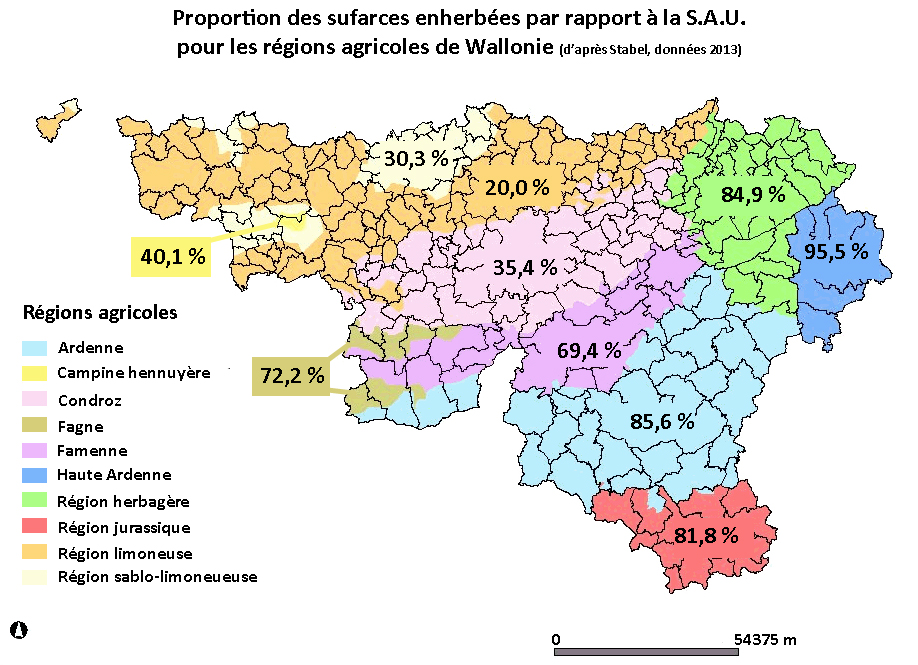
Fuenfschilling, L., and Truffer, B. (2014). The structuration of socio-technical regimes—conceptual foundations from institutional theory. Res. Policy 43, 772–791. doi: 10.1016/j.respol.2013.10.010
Gaitán-Cremaschi, D., Klerkx, L., Duncan, J., Trienekens, J. H., Huenchuleo, C., Dogliotti, S., et al. (2019). Characterizing diversity of food systems in view of sustainability transitions. A review. Agron. Sustain. Dev. 39:1. doi: 10.1007/s13593-018-0550-2
Geels, F. W. (2004). From sectoral systems of innovation to socio-technical systems. Res. Policy 33, 897–920. doi: 10.1016/j.respol.2004.01.015
Geels, F. W. (2020). Micro-foundations of the multi-level perspective on socio-technical transitions: developing a multi-dimensional model of agency through crossovers between social constructivism, evolutionary economics and neo-institutional theory. Technol. Forecast. Soc. Change 152:119894. doi: 10.1016/j.techfore.2019.119894
Geels, F. W., and Kemp, R. (2007). Dynamics in socio-technical systems: typology of change processes and contrasting case studies. Technol. Soc. 29, 441–455. doi: 10.1016/j.techsoc.2007.08.009
Geels, F. W., Kern, F., Fuchs, G., Hinderer, N., Kungl, G., Mylan, J., et al. (2016). The enactment of socio-technical transition pathways: a reformulated typology and a comparative multi-level analysis of the German and UK low-carbon electricity transitions (1990–2014). Res. Policy 45, 896–913. doi: 10.1016/j.respol.2016.01.015
Gereffi, G., Humphrey, J., and Sturgeon, T. (2005). The governance of global value chains. Rev. Int. Polit. Econ. 12, 78–104. doi: 10.1080/09692290500049805
Gouvernement Wallon (2009). Arrêté Du Gouvernement Wallon Relatif Au Contrôle de La Composition Du Lait, Au Paiement Du Lait Par Les Acheteurs Aux Producteurs et à l'agrément Des Organismes Interprofessionnels. Available online at: https://wallex.wallonie.be/sites/wallex/contents/acts/3/3747/5.html
Grandori, A. (2017). “Linnaeus in the jungle: configurational lenses for discerning forms of economic organization in agri-business,” in It's a Jungle Out There–The Strange Animals of Economic Organization in Agri-Food Value Chains, eds G. Martino, K. Karantininis, S. Pascucci, L. K. E. Dries and J. M. Codron (Wageningen: Wageningen Academic Publishers), 51–66. doi: 10.3920/978-90-8686-844-5_2
Grin, J., Rotmans, J., and Schot, J. (2011). On patterns and agency in transition dynamics: some key insights from the KSI programme. Environ. Innov. Soc. Transit. 1, 76–81. doi: 10.1016/j.eist.2011.04.008
Hans de Haan, J., and Rotmans, J. (2011). Patterns in transitions: understanding complex chains of change. Technol. Forecast. Soc. Change 78, 90–102. doi: 10.1016/j.techfore.2010.10.008
Hansmann, H. (1996). The Ownership of Enterprise. Cambridge, MA: The Belknap Press of Harvard University Press.
Hargreaves, T., Hielscher, S., Seyfang, G., and Smith, A. (2013a). Grassroots innovations in community energy: the role of intermediaries in niche development. Glob. Environ. Change 23, 868–880. doi: 10.1016/j.gloenvcha.2013.02.008
Hargreaves, T., Longhurst, N., and Seyfang, G. (2013b). Up, down, round and round: connecting regimes and practices in innovation for sustainability. Enviro. Plan. A 45, 402–420. doi: 10.1068/a45124
Hassink, J., Grin, J., and Hulsink, W. (2013). Multifunctional agriculture meets health care: applying the multi-level transition sciences perspective to care farming in the Netherlands. Sociol. Ruralis 53, 223–245. doi: 10.1111/j.1467-9523.2012.00579.x
Heck, S., Campos, H., Barker, I., Okello, J. J., Baral, A., Boy, E., et al. (2020). Resilient agri-food systems for nutrition amidst COVID-19: evidence and lessons from food-based approaches to overcome micronutrient deficiency and rebuild livelihoods after crises. Food Sec. 12, 823–830. doi: 10.1007/s12571-020-01067-2
Heidkamp, C. P., and Morrissey, J. (eds.). (2018). Towards Coastal Resilience and Sustainability. 1st Edn. London: Routledge. Available online at: https://www.taylorfrancis.com/books/e/9780429463723
Hobbs, J. E. (2017). “A three-tiered approach to the economics of hybrids: an application to the agricultural innovation sector,” in It's a Jungle Out There–The Strange Animals of Economic Organization in Agri-Food Value Chains, eds G. Martino, K. Karantininis, S. Pascucci, L. K. E. Dries and J. M. Codron (Wageningen: Wageningen Academic Publishers), 67–82. doi: 10.3920/978-90-8686-844-5_3
Ingram, J., Maye, D., Kirwan, J., Curry, N., and Kubinakova, K. (2015). Interactions between niche and regime: an analysis of learning and innovation networks for sustainable agriculture across Europe. J. Agric. Educ. Extens. 21, 55–71. doi: 10.1080/1389224X.2014.991114
Jacques et Associés (2018). Rapport Financier. Marguerite Happy Cow SCRL. 1er Septembre 2017–31 Décembre 2018. Verviers: Jacques et Associés.
Juliá-Igual, J. F., Meliá-Martí, E., and García-Martinez, G. (2012). Strategies developed by leading EU agrifood cooperatives in their growth models. Serv. Bus. 6, 27–46. doi: 10.1007/s11628-011-0129-3
Koulytchizky, S., and Mauget, R. (2003). Le développement des groupes coopératifs agricoles depuis un demi-siècle: À la recherche d'un nouveau paradigme. Rev. Int. Econ. Soc. 287:14. doi: 10.7202/1022208ar
Lachman, D.A. (2013). A survey and review of approaches to study transitions. Energy Policy 58, 269–276. doi: 10.1016/j.enpol.2013.03.013
Lamine, C., Renting, H., Rossi, A., Wiskerke, J.S.C., and Brunori, G. (2012). “Agri-food systems and territorial development: innovations, new dynamics and changing governance mechanisms,” in Farming Systems Research Into the 21st Century: The New Dynamic, eds I. Darnhofer, D. Gibbon and B. Dedieu (Springer), 229–256. doi: 10.1007/978-94-007-4503-2_11
Lebacq, T. (2015). La Durabilité Des Exploitations Laitières En Wallonie. Analyse de La Diversité et Voies de Transition (Thèse présentée en vue de l'obtention du grade de Docteur en sciences agronomiques et ingéniérie biologique), Université Catholique de Louvain, Louvain-la-Neuve, Belgium.
Magrini, M. B., and Duru, M. (2015). Trajectoire d'innovation Dans Les Systèmes Laitiers Français: Une Analyse Socio-Technique de La Démarche bleu-Blanc-Coeur. Innovations 48, 187–210. doi: 10.3917/inno.048.0187
Malone, T., and Gomez, K. (2019). Hemp in the United States: a case study of regulatory path dependence. Appl. Econ. Perspect. Policy 41, 199–214. doi: 10.1093/aepp/ppz001
Maquet, P. (2012). Analyse de La Filière Laitière Active En Wallonie. Etude Menée à La Demande de La Filière Lait et Produits Laitiers Wallonne. Namur: Filière Lait et Produits Laitiers Wallonne.
Marcis, J., Bortoluzzi, S. C., de Lima, E. P., and da Costa, S. E. G. (2019). Sustainability performance evaluation of agricultural cooperatives' operations: a systemic review of the literature. Environ. Dev. Sustain. 21, 1111–1126. doi: 10.1007/s10668-018-0095-1
Maréchal, K. (2012). The Economics of Climate Change and the Change of Climate in Economics. New York, NY: Routledge.
Markard, J., Raven, R., and Truffer, B. (2012). Sustainability transitions: an emerging field of research and its prospects. Res. Policy 41, 955–967. doi: 10.1016/j.respol.2012.02.013
Marsden, T. (2013). From post-productionism to reflexive governance: contested transitions in securing more sustainable food futures. J. Rural Stud. 29, 123–134. doi: 10.1016/j.jrurstud.2011.10.001
Mauget, R. (2008). Les coopératives agricoles: Un atout pour la pérennité de l'agriculture dans la mondialisation. Rev. Int. Econ. Soc. 307:46. doi: 10.7202/1021194ar
McMeekin, A., and Southerton, D. (2012). Sustainability transitions and final consumption: practices and socio-technical systems. Technol. Anal. Strat. Manage. 24, 345–361. doi: 10.1080/09537325.2012.663960
Memedovic, O., and Shepherd, A. (2009). AGri-Food Value Chains and Poverty Reduction: Overview of Main Issues, Trends and Experience. Working Paper 12/2008. Vienna: United Nations Industrial Development Organization.
Ménard, C. (2017). “Finding our way in the jungle : insights from organization theory,” in It's a Jungle Out There–The Strange Animals of Economic Organization in Agri-Food Value Chains, eds G. Martino, K. Karantininis, S. Pascucci, L. K. E. Dries and J. M. Codron (Wageningen: Wageningen Academic Publishers), 27–50. doi: 10.3920/978-90-8686-844-5_1
Meyer, C., and Duteurtre, G. (1998). Equivalents Lait et Rendements En Produits Laitiers: Modes de Calculs et Utilisation. Rev. Elev. Méd. Vét. Trop. 51, 247–257.
Murphy, S. C., Martin, N. H., Barbano, D. M., and Wiedmann, M. (2016). Influence of raw milk quality on processed dairy products: how do raw milk quality test results relate to product quality and yield? J. Dairy Sci. 99, 10128–10149. doi: 10.3168/jds.2016-11172
Ortmann, G. F., and King, R. P. (2007). Agricultural cooperatives I: history, theory and problems. Agrekon 46, 18–46. doi: 10.1080/03031853.2007.9523760
Perrot, C., Chatellier, V., Gouin, D. M., Richard, M., and You, G. (2017). Le Secteur Laitier Français Est-Il Compétitif Face à La Concurrence Européenne et Mondiale? Working Paper SMART-LERECO N°16-09, 2017. Available online at: https://hal.archives-ouvertes.fr/hal-01595011
Pesch, U. (2015). Tracing discursive space: agency and change in sustainability transitions. Technol. Forecast. Soc. Change 90, 379–388. doi: 10.1016/j.techfore.2014.05.009
Petel, T., Antier, C., and Baret, P. (2019). Etat Des Lieux et Scénarios à Horizon 2050 de La Filière Lait En Région Wallonne. Louvain-La-Neuve: Sytra - UCLouvain. Available online at: https://sytra.be/fr/publication/cinq-filieres-wallonie/
Pigford, A. A. E., Hickey, G. M., and Klerkx, L. (2018). Beyond agricultural innovation systems? Exploring an agricultural innovation ecosystems approach for niche design and development in sustainability transitions. Agric. Syst. 164, 116–121. doi: 10.1016/j.agsy.2018.04.007
Plumecocq, G., Debril, T., Duru, M., Magrini, M. B., Sarthou, J. P., and Therond, O. (2018). The plurality of values in sustainable agriculture models: diverse lock-in and coevolution patterns. Ecol. Soc. 23:21. doi: 10.5751/ES-09881-230121
Polge, É., Torre, A., and Wallet, F. (2018). Coexistence et Hybridation Des Modèles Agricoles En Amazonie Orientale. L'exemple La Production Laitière Dans Deux Villages de La “commune Verte” de Paragominas. Écon. Rurale 366, 41–60. doi: 10.4000/economierurale.6210
Rauschmayer, F., Bauler, T., and Schäpke, N. (2015). Towards a thick understanding of sustainability transitions—linking transition management, capabilities and social practices. Ecol. Econ. 109, 211–221. doi: 10.1016/j.ecolecon.2014.11.018
Reviron, S., and Python, P. (2018). Analyse de La Distribution de La Valeur Dans La Filière Laitière. Recherche Agronomique Suisse. Agroscope: Posieux. Available online at: https://www.agrarforschungschweiz.ch/fr/2018/04/analyse-de-la-distribution-de-valeur-dans-la-filiere-laitiere/
Riera, A., Antier, C., and Baret, P. (2020). Analyse Des Performances Environnementales et Économiques de Différents Systèmes de Production Bovins En Région Wallonne. Sytra–UCLouvain. Available online at: https://sytra.be/fr/publication/double-enjeu-bovins/
Rijswijk, K., Klerkx, L., and Turner, J. A. (2019). Digitalisation in the New Zealand Agricultural knowledge and innovation system: initial understandings and emerging organisational responses to digital agriculture. NJAS Wagenin. J. Life Sci. 90–91:100313. doi: 10.1016/j.njas.2019.100313
Rosenbloom, D., Berton, H., and Meadowcroft, J. (2016). Framing the sun: a discursive approach to understanding multi-dimensional interactions within socio-technical transitions through the case of solar electricity in Ontario, Canada. Res. Policy 45, 1275–1290. doi: 10.1016/j.respol.2016.03.012
Runhaar, H., Fünfschilling, L., van den Pol-Van Dasselaar, A., Moors, E. H. M., Temmink, R., and Hekkert, M. (2020). Endogenous regime change: lessons from transition pathways in Dutch dairy farming. Environ. Innov. Soc. Transit. 36, 137–150. doi: 10.1016/j.eist.2020.06.001
Ruzzier, C. A. (2009). Asset Specificity and Vertical Integration : Williamson's Hypothesis Reconsidered. Working Paper 09-119, 2009, Harvard Business School edition. Available online at: https://pdfs.semanticscholar.org/00bf/60637595f09b8d89b6fe12c35cde1cc3835f.pdf
Saux-Nogues, N. (2018). Coexistence Des Modèles Agricoles et Alimentaires. Appel à Contributions. Calenda. Available oinline at: https://calenda.org/516939
Schneiberg, M., King, M., and Smith, T. (2008). Social movements and organizational form: cooperative alternatives to coorporations in the American Insurance, Dairy, and Grain Industries. Am. Sociol. Rev. 73, 635–667. doi: 10.1177/000312240807300406
Shields, D. A. (2010). Consolidation and Concentration in the U.S. Dairy Industry. 7-5700. CRS Report for Congress. Congressional Research Service. Available online at: https://nationalaglawcenter.org/wp-content/uploads/assets/crs/R41224.pdf
Smink, M., Negro, S. O., Niesten, E., and Hekkert, M. P. (2015). How mismatching institutional logics hinder niche–regime interaction and how boundary spanners intervene. Technol. Forecast. Soc. Change 100, 225–237. doi: 10.1016/j.techfore.2015.07.004
Soosay, C. A., and Hyland, P. (2015). A decade of supply chain collaboration and directions for future research. Supply Chain Manage. 20, 613–630. doi: 10.1108/SCM-06-2015-0217
SPF Santé Publique (2006). Arrêté Royal Relatif Au Contrôle de La Qualité Du Lait Cru et à l'agrément Des Organismes Interprofessionnels. Available online at: http://www.ejustice.just.fgov.be/eli/arrete/2006/12/21/2007022028/moniteur
SPW Agriculture, Ressources Naturelles et Environnement (2020). L'agriculture wallonne en chiffres–2020. Bilans et perspectives–SPW Editions. SPW Agriculture, Ressources naturelles et Environnement. Available online at: https://agriculture.wallonie.be/documents/20182/21858/FR-2015.pdf/591e9fba-0df8-43a3-ac3a-042aeb83714c
Stefan, B., and Imre, F. (2018). Drivers of the duration of comparative advantage in the European Union's agri-food exports. Agric. Econ. 64, 51–60. doi: 10.17221/173/2016-AGRICECON
Sutherland, L. A., Burton, R. J. F., Ingram, J., Blackstock, K., Slee, B., and Gotts, N. (2012). Triggering change: towards a conceptualisation of major change processes in farm decision-making. J. Environ. Manage. 104, 142–151. doi: 10.1016/j.jenvman.2012.03.013
Thompson, P. B. (2007). Agricultural sustainability: what it is and what it is not. Int. J. Agric. Sustain. 5, 5–16. doi: 10.1080/14735903.2007.9684809
Touboulic, A., McCarthy, L., and Matthews, L. (2020). Re-imagining supply chain challenges through critical engaged research. J. Supply Chain Manage. 56, 36–51. doi: 10.1111/jscm.12226
Touzard, J. M., and Fournier, S. (2014). La Complexité Des Systèmes Alimentaires: Un Atout Pour La Sécurité Alimentaire? VertigO La Revue Électronique En Sciences de l'environnement, Des systèmes alimentaires articulés et transveraux pour une sécurité alimentaire. Available online at: https://id.erudit.org/iderudit/1027948ar
Trienekens, J. H. (2011). Agricultural value chains in developing countries. A framework for analysis. Int. Food Agribus. Manage. Rev. 14, 51–82.
Turner, J. A., Horita, A., Fielke, S., Klerkx, L., Blackett, P., Bewsell, D., et al. (2020). Revealing power dynamics and staging conflicts in agricultural system transitions: case studies of innovation platforms in New Zealand. J. Rural Stud. 76, 152–162. doi: 10.1016/j.jrurstud.2020.04.022
Upham, P., Lis, A., Riesch, H., and Stankiewicz, P. (2015). Addressing social representations in socio-technical transitions with the case of Shale gas. Environ. Innov. Soc. Transit. 16, 120–141. doi: 10.1016/j.eist.2015.01.004
van Bers, C., Delaney, A., Eakin, H., Cramer, L., Purdon, M., Oberlack, C., Evans, T., et al. (2019). Advancing the research agenda on food systems governance and transformation. Curr. Opin. Environ. Sustain. 39, 94–102. doi: 10.1016/j.cosust.2019.08.003
Vankeerberghen, A., and Stassart, P. M. (2016). The transition to conservation agriculture: an insularization process towards sustainability. Int. J. Agric. Sustain. 14, 392–407. doi: 10.1080/14735903.2016.1141561
Venn, L., Kneafsey, M., Holloway, L., Cox, R., Dowler, E., and Tuomainen, H. (2006). Researching European ‘alternative’ food networks: some methodological considerations. Area 38, 248–258. doi: 10.1111/j.1475-4762.2006.00694.x
Vermunt, D. A., Negro, S.O., Van Laerhoven, F.S.J., Verweij, P.A., and Hekkert, M.P. (2020). Sustainability transitions in the agri-food sector: how ecology affects transition dynamics. Environ. Innov. Soc. Transit. 36, 236–249. doi: 10.1016/j.eist.2020.06.003
Wagralim (2019). Valorisation Du Projet Lait-Herbe. Available online at: https://www.wagralim.be/valorisation-du-projet-laitherbe-creation-dune-cooperative/
Whitmarsh, L. (2012). How useful is the multi-level perspective for transport and sustainability research? J. Transport Geogr. 24, 483–487. doi: 10.1016/j.jtrangeo.2012.01.022
Williamson, O. E. (1987). The Economic Institutions of Capitalism: Firms, Markets, Relational Contracting. 1st Edn. New York, NY; London: Free Press; Collier Macmillan Publishers.
Williamson, O. E. (1998). Transaction cost economics: how it works; where it is headed. Economist 146, 23–58. doi: 10.1023/A:1003263908567
Keywords: dairy cooperatives, coexistence, value chains, lock-ins, pathways of diversification, structures of collective agency
Citation: De Herde V, Baret PV and Maréchal K (2020) Coexistence of Cooperative Models as Structural Answer to Lock-Ins in Diversification Pathways: The Case of the Walloon Dairy Sector. Front. Sustain. Food Syst. 4:584542. doi: 10.3389/fsufs.2020.584542
Received: 17 July 2020; Accepted: 19 October 2020;
Published: 04 December 2020.
Edited by:
Allison Marie Loconto, Institut National de la Recherche Agronomique (INRA), FranceReviewed by:
Michael Boland, University of Minnesota Twin Cities, United StatesHens Runhaar, Wageningen University and Research, Netherlands
Copyright © 2020 De Herde, Baret and Maréchal. This is an open-access article distributed under the terms of the Creative Commons Attribution License (CC BY). The use, distribution or reproduction in other forums is permitted, provided the original author(s) and the copyright owner(s) are credited and that the original publication in this journal is cited, in accordance with accepted academic practice. No use, distribution or reproduction is permitted which does not comply with these terms.
*Correspondence: Véronique De Herde, dmVyb25pcXVlLmRlaGVyZGVAdWNsb3V2YWluLmJl