 Rachel M. Pateman1*
 Annemarieke de Bruin1
 Evelin Piirsalu2
 Christian Reynolds3,4
 Emilie Stokeld1
 Sarah E. West1
- 1Stockholm Environment Institute, Department of Environment and Geography, University of York, York, United Kingdom
- 2Stockholm Environment Institute Tallinn Center, Tallinn, Estonia
- 3Department of Geography, University of Sheffield, Sheffield, United Kingdom
- 4Centre for Food Policy, City, University of London, London, United Kingdom
Food loss and food waste are urgent global problems relating to environmental and social challenges including biodiversity loss, climate change, health, and malnutrition. Reduction targets have been set, including Sustainable Development Goal (SDG) 12.3, which aims to halve per capita food waste at retail and consumer levels globally by 2030, as well as reduce food losses along production and supply chains. Citizen science, the engagement of members of the public in data collection and other elements of the scientific process, can play a role in tackling the problem of food waste and food loss. In this paper, we scope opportunities for using citizen science to answer 26 priority research questions identified by experts in the field of food waste and food loss as being critical to achieving SDG12.3. We describe how citizen science can be used to quantify and understand causes of food loss and waste. Crucially, we demonstrate the value of citizen science in being not just a data gathering tool but also a method of bringing about change through influencing action, from individual behavior to policy making. Furthermore, we argue the need to bring together all actors in the food system in citizen science projects in order to build shared understanding that will ultimately lead to reduced loss and waste across the food system.
Introduction
Since 2007, the problem of food waste and loss, defined as “any food, and inedible parts of food, removed from the food supply chain to be recovered or disposed” (Östergren et al., 2014), has risen rapidly up the social and political agenda to become a matter of international concern (Smith, 2020). Recent estimates suggest that, globally, one third of food never reaches a human stomach due to food waste and loss. Food waste and loss are associated with significant economic costs to producers, processors, retailers, and households. In addition, there are financial costs related to collecting, managing, treating, and/or valorizing waste. Food waste highlights the inequity of our food system, occurring at the same time as food insecurity (The Trussell Trust, 2019) and rising food demand (Lang and Barling, 2013). Likewise, there are many researchers who view overconsumption of food as a form of waste and inefficiency (Schmidt and Matthies, 2018; Horton et al., 2019; Parker et al., 2019; Toti et al., 2019). Food waste is also a major indirect cause of biodiversity loss (FAO, 2013; Feldstein, 2017), compounding unsustainable agriculture practices and agricultural expansion into wild areas (e.g., deforestation), as well as unsustainable fishing and aquaculture. Reducing global food waste and loss is also highlighted as a method of greenhouse gas emission reduction (FAO, 2011; Flanagan et al., 2019). Tackling the problem of food loss and waste is, therefore, critical to addressing these social and environmental challenges. It has been argued in fact that the food system needs a complete overhaul; that the challenges of food waste, health crises associated with inadequate diets, hunger, and famine, are symptoms of a system needing radical change (Lang and Heasman, 2015). While it could, therefore, be viewed as treating the symptom not the cause, tackling food loss and waste across the food system remains high on the agenda.
In this paper, we conceptualize the main food system stages (Figure 1) as pre-production (including research and development), primary production (agriculture, fishing, and aquaculture), the food supply chain (food processing, manufacturing, packaging, and distribution via wholesalers and retailers, media such as marketing and advertising), and consumption (either at restaurants or other catering institutions and households), with transport and storage occurring across the entire food system. Edible and inedible [also termed avoidable and unavoidable (Nicholes et al., 2019)] food loss and waste are generated at all these stages by all of the actors listed. Food loss primarily occurs at the production, post-harvest and processing stages of the food system, whilst food waste mainly occurs during retail or consumption stages (Parfitt et al., 2010; FAO, 2019). Food loss and waste are the result of a range of drivers including those that are environmental (e.g., flooding), technological (e.g., harvesting practices, packaging), political (e.g., production quotas), logistical (e.g., managing fresh produce), economic (e.g., food price wars), and cultural (e.g., consumer demand, storage practices, dealing with leftovers).
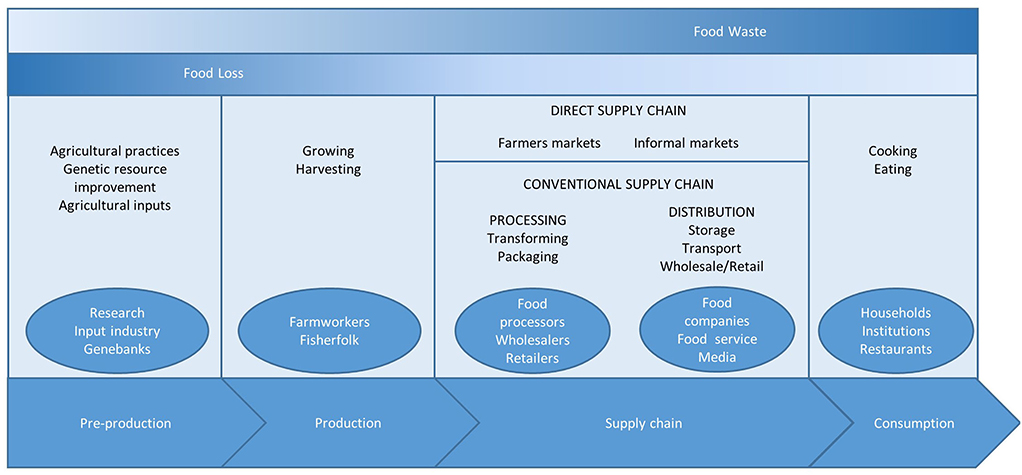
Figure 1. The food system. Actors (in blue circles), activities and stages of the food system where food loss and food waste are created (based on CIAT, 2017).
In recent years, initiatives and policies have emerged to encourage collaboration between stakeholders across the food system to tackle food waste and loss, from the global to the local scale. These initiatives often have two aims, first to better understand the scale of the issue through encouraging the quantification of food waste and loss across the system, and second to reduce waste and loss by designing and implementing interventions and monitoring the effects. Examples include international initiatives such as the “Food Waste Atlas” (WRAP WRI, 2018; Swannell et al., 2019) which encourages transparency in data collection and monitoring to encourage interventions to reduce food waste; regional platforms such as the “EU Platform on Food Losses and Food Waste” (EU Platform on Food Loses Food Waste, 2019) and “Refresh community of experts” (REFRESH, 2019) which shares best practice of interventions; and national commitments, including the UK “Courtald Commitment 2025” platform (WRAP, 2020a). Public-private partnerships have also been established such as the Dutch “Samen Tegen Voedselverspilling” (Samen Tegen, 2020) and the USA based “Further with food” (Center for Food Loss Waste Solutions, 2020); and humanitarian initiatives addressing the norms and values that allow food waste to coexist with Hunger, such as “Hands for Hunger” (Hands for Hunger, 2020) in the Bahamas. At the global scale, the Sustainable Development Goals (SDGs) have been a vehicle to policy change as they set a direct objective to “halve per capita global food waste at the retail and consumer level, and reduce food losses along production and supply chains by 2030” (Target 12.3). This call to reduce food waste and loss has offered further legitimacy to initiatives and platforms that are trying to tackle the issue. However, as Movilla-Pateiro et al. (2020) point out: “The extent of food sustainability challenges cannot be accurately perceived unless citizens capable of doing internal monitoring are engaged in the process.” Quantifying and understanding consumer waste without engaging members of the public is challenging. Furthermore, engagement of citizens is crucial as they are “agents of change” who can bring about the transformations needed for sustainable development (Hajer et al., 2015). In this paper, we explore the role citizen science can play in providing a platform for citizens to contribute not only to quantifying and understanding food loss and waste but also to addressing and finding solutions to problems in the food system. In doing so, we extend the notion of the “citizen” to all stakeholders across the multi-level and multi-sectoral food system, recognizing that each individual, household, business, and governance structure, from local government to global SDGs, has a role to play.
Citizen science is the production of new scientific knowledge outside of traditional scientific institutions (Strasser and Haklay, 2018). Through citizen science, people can directly engage with and monitor issues that affect them. In doing so, they can collectively generate scientific data, and bring new perspectives and knowledge into science and decision-making (Liu et al., 2014). Citizen science approaches are varied. Most commonly, people are involved in collecting data, known as contributory citizen science. In collaborative projects, however, people are involved in additional stages of the scientific process, including data analysis and dissemination of results, and in co-created projects non-scientists can be involved in all stages, including the setting of research questions (Shirk et al., 2012). Projects also vary in their subject focus, geographic scale, timeframe, and purpose, for example to collect monitoring data or answer a hypothesis. While citizen science approaches are varied, they also share common features, as outlined in the European Citizen Science Association's (ECSA) “10 Principles of citizen science” (Robinson et al., 2018; ECSA, 2020a) and expanded upon in ECSA's “Characteristics of citizen science” (ECSA, 2020b). Importantly, these principles highlight that citizen science actively and consensually involves people in data collection and/or other aspects of the scientific process in ways that are of mutual benefit to scientists and participants. While participants can be the subject of research in citizen science, the approach aims to move beyond more traditional, extractive methods of data collection, such as surveys or interviews, to actively involve people in the research process (ECSA, 2020b). Research has shown a multitude of potential benefits to this approach that are not achieved through more traditional scientific methods. For example, it can lead to novel areas of societally relevant research being identified based on participant perspectives and priorities, increased scientific capital, and changes in attitudes and behaviors of participants related to the topic of the research (Evans et al., 2005, Bonney et al., 2016, Ballard et al., 2017).
Many features of citizen science approaches mean they have the potential to be of value within the field of food waste and loss. Different approaches will be appropriate for projects with different aims but if projects are well-designed, numerous outcomes are possible. Citizen science can, for example, be used to produce data to monitor or quantify an issue. Contributory projects in particular can generate large volumes of data from wide geographic areas, including harder to reach areas (including inside people's homes) and, if supported by more community-based approaches, can be used to collect data from groups that are typically excluded or underrepresented in official datasets (Pandya, 2012; Fritz et al., 2019). This could reveal a more complete picture of problems such as food waste and loss than would be achieved using more traditional data collection methods (Liu et al., 2014). Citizen science can also generate data more rapidly and at finer temporal resolutions than would be possible without the support of citizen volunteers and so can be responsive to newly emerging research questions or data needs and generate up-to-date evidence (Dickinson et al., 2010).
Citizen science approaches can also be used to not only quantify but also understand particular issues. In many cases, for example, citizen science brings together researchers, community members, and a range of other stakeholders including policy-makers and non-governmental organizations. In this way, it can provide a space for building partnerships, developing a shared understanding of issues, and defining and addressing research questions (see West et al., 2020 for an example). Under an integrated food systems approach, each part of the food chain impacts other elements of the wider system (e.g., retailer behavior or government policies could change in response to consumer actions) and so bringing people from different parts of the food system together using a well-facilitated citizen science approach could lead to a better overall understanding of the factors that lead to food loss and waste and their interconnections.
Furthermore, many citizen science projects aim to both collect data and lead to action to address issues and it is these dual elements that make it particularly suitable for use in a food loss and waste context. Action is possible via numerous routes. For example, deep learning by participants has been shown to be possible in any type of citizen science project (Phillips et al., 2019). Through actively participating in data collection and/or other stages of the scientific process, participants can increase knowledge and awareness about environmental issues (Evans et al., 2005, Jordan et al., 2011), and this in turn can lead to changes in behavior (Evans et al., 2005), spreading of knowledge to others (Johnson et al., 2014), and campaigning on particular issues of concern (Danielsen et al., 2014). This may be particularly relevant to food waste where citizen science participants can make changes in their daily lives which will have an impact on the issue. Furthermore, co-created projects provide the space to move away from following the priorities of scientists and project leaders and allow citizens' voices, lived experiences and priorities to be heard and to develop solutions at a local scale (e.g., Ramirez-Andreotta et al., 2015). In addition, citizen science can also bring about change through engagement with policy makers and/or informing policy- and decision-making at wider scales (Turbé et al., 2019).
Citizen science, therefore, has the potential not only to improve our understanding of the problems of food loss and waste but also help to address these issues at a range of scales. However, its use in this sphere is, as yet, relatively limited. This is also true in the wider field of agriculture and food science. Ryan et al. (2018) found that fewer than 2% of studies on Web of Science which used the term “citizen science” also used the word “agriculture.” This is despite the fact that farmers have been reporting observations, for example of pest outbreaks, for millennia (Ryan et al., 2018). Indeed, part of the apparent absence of citizen science in the field of agriculture may be due to this term not being applied to activities that would in other disciplines be called citizen science (Ryan et al., 2018). Furthermore, many participatory research practices pre-date “citizen science,” which has arisen largely in high income countries in contrast to participatory agricultural research, for example, which has a strong history in poor rural areas (van de Gevel et al., 2020). Additionally, while we have introduced some of the potential benefits of citizen science here, the evidence for some of these is still relatively limited and the approach is not without other challenges which may have limited its use in this field so far. For example, while it has been demonstrated that citizen science can produce high quality and reliable data in many fields (Cooper et al., 2015), concern about data quality is still seen as a barrier to the use of citizen science methods by many (Kosmala et al., 2016). While citizen science has the potential to be a more cost effective option than traditional scientific approaches (e.g., Palmer et al., 2017), it can also be expensive and time-consuming to conduct, with costs associated with coordinating research, recruiting, training and retaining volunteers, processing data etc. (West and Pateman, 2016) and capturing all outcomes in cost-benefit analyses is challenging (van de Gevel et al., 2020). There are also challenges around who is and who is not participating in citizen science and what this means for the outcomes for participants (National Academies of Sciences, 2018) and conclusions that can be drawn from the data collected (Purcell et al., 2012). Indeed, there are complexities hidden in the term “citizen science” itself, for example, who counts as a citizen and who is excluded, and the blurred lines between “citizen” and “scientist” (Eitzel et al., 2017). There are also debates about who benefits from citizen science, with scientist-led, data-driven approaches in particular still being dominant (Geoghegan et al., 2016) and seen by some as extractive and not offering the mutual benefits for citizens and democratization of science that the approach has promised (Sauermann et al., 2020). Finally, ethical issues, for example around the payment of participants, and data privacy and access (Evans, 2020) have just begun to be discussed and need further exploration (Rasmussen and Cooper, 2019). Citizen science is not appropriate in all contexts and consideration needs to be given as to whether other methodological approaches (for example, surveys) would achieve the same goals. It could be considered unethical to use this approach which can take up considerable amounts of participants' time (usually unpaid), if the same data could be gathered using more traditional research approaches such as surveys.
While keeping these challenges in mind, we see many opportunities for citizen science approaches to contribute to tackling the problems of food loss and food waste, which we explore in the remainder of this paper. We take a set of 26 priority questions identified by experts in the field of food loss and waste as critical for addressing these problems. We use these questions as a basis for scoping where opportunities for using citizen science lie, including by identifying past and current citizen science projects related to these questions. We set out to demonstrate how a range of citizen science methods can be used to help quantify and address food loss and waste, both with more traditional citizen science participants (e.g., consumers at the household level) as well as with people in other sectors of the food system (e.g., farmers, hauliers, retailers, researchers). We also further explore challenges related to the use of citizen science in the context of these questions which need to be addressed before these opportunities can be fully realized. We conclude the paper by suggesting some ways forward for achieving the opportunities identified.
Methods
Generating Food Waste Questions
The 26 priority research questions (shown in Table 1) for food waste, loss, surplus, valorization and overconsumption were developed using a priority research question iterative development methodology originally described by Sutherland et al. (2011). A total of 395 questions were submitted by 92 people via an online questionnaire. Participants represented government departments, consultants, third sector operatives, and researchers from 26 countries. Each participant was given the option to submit up to 5 questions and code them according to their relevance to food waste, food loss, food surplus, food valorization, and food overconsumption. A 1-day iterative workshop was held at the University of Sheffield on 17th July 2018, facilitated by one of the authors (CR) and attended by 18 participants, again representing various interests (industry, government, academic and third sector), countries, regions, and parts of the food supply system. Prior to the workshop, the questions were coded and grouped into 48 sub-coded classification areas, allowing the attendees to iteratively exclude, merge, edit, select, and rank the questions. The aim was to narrow down the initial list to a top 25, though 26 were finally settled upon due to a long discussion for last place.
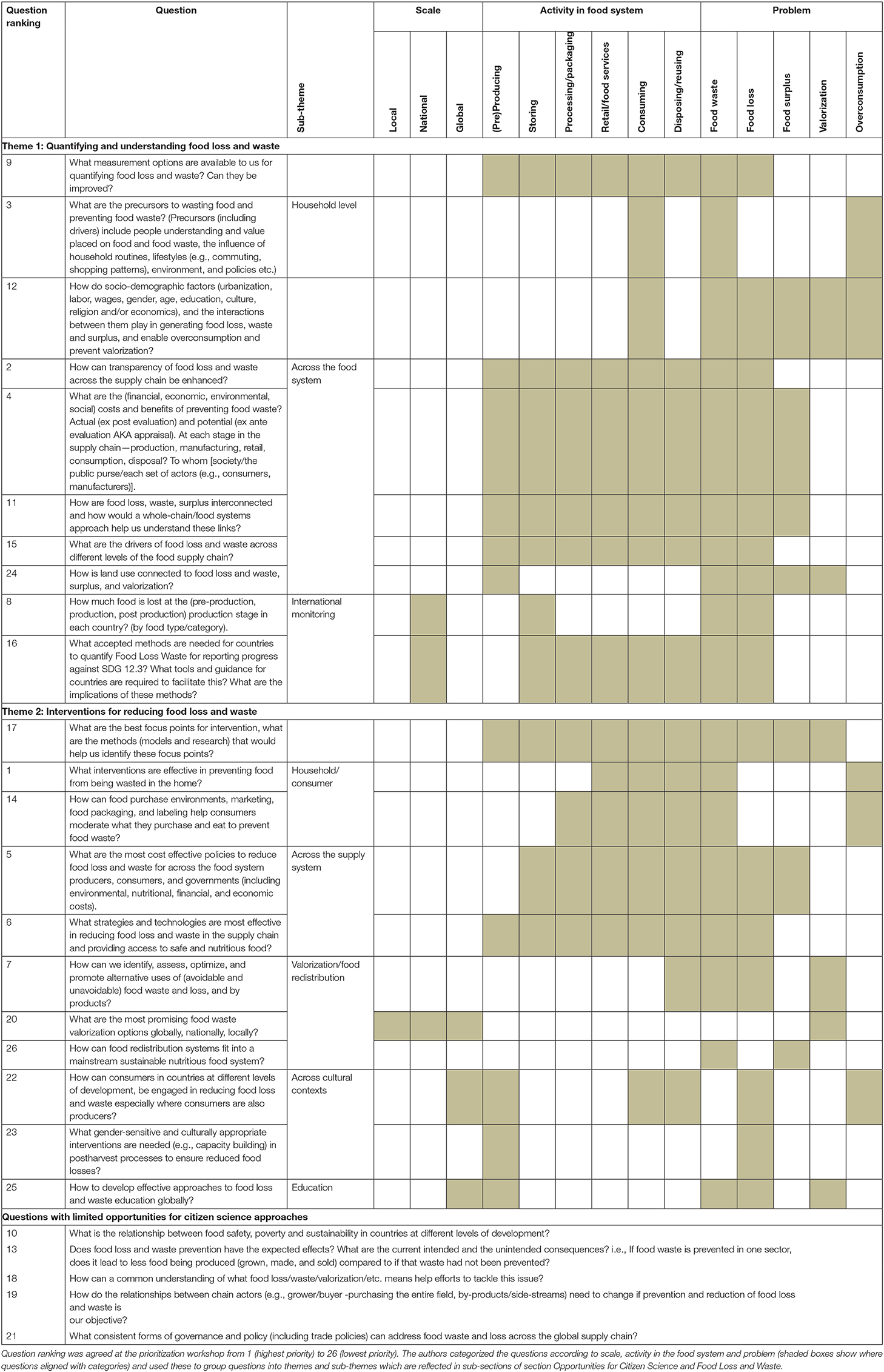
Table 1. Categorization of priority research questions.
Generating Themes From These Questions
The authors coded the priority 26 questions according to (1) the activities in the supply system they relate to; (2) their geographic scale; and (3) the type of food problem they relate to Table 1. We then used these codes as a basis for iteratively clustering the questions into groups relating to citizen science opportunities, finally consolidating them into two broad themes, the first around using citizen science for quantifying and understanding food loss and waste, and the second around using citizen science to reduce food loss and waste, with citizen science as a method for identifying effective interventions to reduce food loss and waste and as an intervention in itself. We then identified subthemes within these according to the main actors likely to be involved. We have used these themes and subthemes to structure our suggestions for opportunities for citizen science, as well as discussions of potential challenges. When thinking about opportunities for the use of citizen science, we referred to ECSA's “10 Principles of Citizen Science” to define the scope of citizen science projects (ECSA, 2020a).
Literature Review
We also conducted a literature review to understand the current use of citizen science in the context of food waste and food loss. Using Google Scholar, we combined one food waste or loss phrase (“food waste,” “food loss,” “unavoidable food waste,” “avoidable food waste,” “food spill”) with one citizen science phrase (“citizen science,” “community science,” “community monitoring,” “volunteer monitoring,” “crowdsourcing,” “participatory monitoring”) as search terms, and included results published up to 18th June 2020. In addition, we conducted a gray (i.e., non-academic) literature search using the search term combinations which yielded the most results from the Google Scholar search (“food waste” “citizen science;” “food waste” “community science;” “food waste” “crowdsourcing”). Searches were conducted in Google for the same time period as the academic literature search, with the top 100 results for each search term combination examined. Results were then filtered for (1) online accessible resources in English language; (2) relevance to both food waste or loss and citizen science; and (3) for resources that were peer-reviewed, conference papers, or from reputable sources (e.g., NGOs) only. Given the purpose of the literature review, we also filtered results for concrete examples of projects, rather than hypothetical discussion of the use of citizen science in food waste or loss research. In Google Scholar, a total of 23 projects were identified from an initial list of 1,185 search results. From the gray literature search, a total of 17 projects were identified from an initial list of 300 (see full list of projects identified from academic and gray literature in the Supplementary Material). We discuss these projects in the context of the subthemes identified in section Generating Themes From These Questions. It should be noted that a limitation of the literature review is that many projects which could be categorized as citizen science may not use this terminology to describe themselves. To some extent we have allowed for this by using multiple alternative terms (detailed above), but a number of projects have inevitably been missed. It is possible that these missed projects are concentrated in certain parts of the food system, where the term “citizen science” may be less frequently used. The resulting projects identified and described in section Opportunities for Citizen Science and Food Loss and Waste should, therefore, be understood as illustrative examples of citizen science being used to answer food waste and loss questions, rather than a comprehensive review.
Opportunities for Citizen Science and Food Loss and Waste
Citizen Science for Quantifying and Understanding Food Loss and Waste
Q9 (What methods are available for us to quantify food loss and waste?) highlights the perceived lack of data available on food loss and waste and the need to develop new methods in order to gather these missing data. Quantification, as well as understanding drivers of loss and waste, are needed if appropriate solutions to these problems are to be identified. The sections below give some specific examples of how citizen science methods could be used in different parts of the food system, with different actors and in different contexts to quantify and understand food loss and waste.
Household Food Waste
Quantification of household food waste has been identified as a key knowledge gap (Movilla-Pateiro et al., 2020) and is also a topic that aligns with contributory citizen science approaches commonly used in other fields, in that members of the public could contribute data from their daily lives to generate a large dataset to quantify household food waste and track trends over time. Despite this, it appears to be a relatively underutilized approach, with only one project found in the literature review where quantifying household food waste was a primary objective (Great New South Wales Food Waste study, The Young Witness, 2017). While similar approaches have been used elsewhere [e.g., in Estonia (Moora and Piirsalu, 2018) and Germany (Richter and Bokelmann, 2017)], where participants have been asked to document and weigh food waste, these have not been termed citizen science but have rather been run as traditional research projects, with participants as subjects rather than engaging more deeply with the issue, and have been conducted at a fairly small scale (up to 100 households). Taking a citizen science approach where anyone could upload data to an online platform (potentially integrated with existing food waste platforms such as the Food Waste Atlas) could widen participation, gather more data and better quantify household food waste.
Such methods are not without their challenges, which may be linked to their limited adoption in relation to food waste so far, but these can often be overcome. Data quality requirements and how these can be assured need to be considered. In the Great NSW food waste study, for example, the authors acknowledged that participants' inconsistent definitions of food waste had impacted overall food waste estimates (State of NSW Environment Protection Authority, 2018). Weighing and documenting food waste is also a fairly time consuming and potentially unappealing task, which may limit participation. Both of these, however, could be addressed with a simplification of methods, for example focusing on one type of product or not requiring data collection every day. While this may come at the expense of the richness of data generated, this trade-off between the number of participants engaged and the complexity of the task is common in the design of citizen science and needs to be balanced according to the aims of the project (e.g., Li et al., 2018). The use of well-designed apps could also be used to simplify data collection (Newman et al., 2012) and data quality can also be improved during project development (e.g., piloting methods) and implementation (e.g., through clear instruction manuals or online training videos) and some problems can be addressed when analyzing data (e.g., using statistical tools to account for gaps) (Wiggins et al., 2011).
A further challenge is that the process of documentation can itself alter peoples' behavior in relation to food waste (Leverenz et al., 2019; Quested et al., 2020). Although this is a benefit of the citizen science process (see section Household/Consumer Level Interventions), it means that data may not provide a “true” picture of food waste. In addition, data representativeness will be challenged if participants recruited are not representative of the wider population. This is a challenge for citizen science in general as it tends to exclude already marginalized groups (National Academies of Sciences, 2018). Unless addressed, scaling up data and understanding how behaviors differ between socio-demographic groups, the focus of Q12 [What role do socio-demographic factors (urbanization, labor, wages, gender, age, education, culture, religion, and/or economics), and the interactions between them play in generating food loss, waste and surplus, and enable overconsumption and prevent valorization?], will be problematic. To overcome this challenge, The Great NSW food waste study used minimum quotas for different demographic groups to ensure a balanced sample across people of different ages, employment status, income bracket, language group, and household composition (State of NSW Environment Protection Authority, 2018). Guidance also exists for how to recruit and engage traditionally under-represented groups (e.g., Pandya, 2012; Brouwer and Hessels, 2019) but these methods tend to be more time consuming and expensive to implement and so would need to be factored into project design (West and Pateman, 2016).
Citizen science projects also tend to attract people with an existing interest in or affinity to the topic area (Geoghegan et al., 2016), which could be problematic if those with an interest in or awareness of food waste and related issues are also more likely to be doing something to address these problems in their own households [although this relationship is not always straightforward (McCarthy and Liu, 2017)] as their data will not be typical of the wider population. Tailored methods of recruitment will be required to access those without an interest in food waste. Linking projects into something peripheral to food waste that participants are interested in, such as reducing household bills, could widen their reach. Consideration will also need to be given to retaining participants in projects if repeat participation is desirable. Incentives for participation could be considered and understanding motivations and providing feedback related to these is known to be an important way to keep people engaged with projects (Singh et al., 2014).
In addition to increasing the scale of data collection, the value of citizen science can also come from gaining a deeper understanding of citizens' perspectives and behaviors. A greater understanding of the norms and values that underlie food waste and make it acceptable in our societies is needed in order to bring about the transformational change that is needed to address the food waste problem. This is highlighted in Q3 {What are the precursors to wasting food and preventing food waste? [Precursors (including drivers) include people's understanding of and value placed on food and food waste, the influence of household routines, lifestyles (e.g., commuting, shopping patterns), environment, and policies etc.]}. Several projects in the literature review aimed to encourage consumers to reflect on drivers, behaviors and values associated with food waste using tools such as diaries (Ganglbauer et al., 2013, 2015; Williams et al., 2020), wearable cameras (Ng et al., 2015), and “FridgeCams” to capture time-lapse films of participants' fridges (Ganglbauer et al., 2013). Other projects have done this through the use of cultural probes (de Bruin et al., 2019), a way of gathering data about people's lives through the use of artifacts (e.g., postcards, diaries, cameras) and tasks. In all cases, these methods were followed up with interviews and contextual inquiries with participants for researchers to gain further insights. As well as being well-received by participants, cultural probes and creative approaches were found to offer a richer understanding of the activities, motivations, and barriers along the food journey, prompting “stream of consciousness” responses and enabling participants to deeply engage with the topic (de Bruin et al., 2019). These projects, again, often see participants as the subjects of research rather than including them in other aspects of the research process. Using collaborative and co-created citizen science approaches could extend these projects and explore drivers of food waste in more detail, for example, by working with groups of citizens to identify research questions of relevance to them rather than those pre-determined by researchers. Such in depth projects are more resource intensive than contributory style projects and so often take place on smaller geographic scales with fewer participants and so there are challenges with the scalability of any data generated. However, they could add valuable insights and richness to complement contributory projects which aim to collect smaller amounts of information from large numbers of people.
Food Loss and Waste Across the Supply Chain
In addition to quantifying food waste in the household, there is also a need to quantify food loss and waste in other parts of the food system, as reflected in several priority questions relating to the need to increase transparency (Q2 How can transparency of food loss and waste across the supply chain be enhanced?), understand drivers of food loss and waste (Q15 What are the drivers of food loss and waste across different levels of the food supply chain? and Q24 How is land use connected to food loss and waste, surplus, and valorization?), understand costs and benefits [Q4 What are the (financial, economic, environmental, social) costs and benefits of preventing food waste? Actual (ex post evaluation) and potential (ex ante evaluation AKA appraisal)]. At each stage in the supply chain—production, manufacturing, retail, consumption, disposal? To whom [society/the public purse/each set of actors (e.g., consumers, manufacturers)?], and understand interconnections (Q11 How are food loss, waste, surplus interconnected and how would a whole-chain/food systems approach help us understand these links?) at and across different stages of the supply chain.
The clearest opportunities may lie in the retail sector which citizens directly interact with and so where they could be easily engaged in data collection. The literature review, for example, revealed a project which plans to engage citizens in New York City in collecting and analyzing data on retailers' use of date labels and its effect on unpurchased, safe-to-eat food being wasted (Open Trash Lab, 2020). This could be extended to documenting other practices that influence food loss and waste in shops, restaurants, and other retailers, such as stock rotation or portion sizes. Data collected by citizens could feed into existing initiatives which seek to collect data on retailer performance such as “Scorecards for Supermarkets” (Feedback Global, 2020).
Opportunities for quantifying food loss and waste abound in the primary production stage, as “Food loss and waste in primary production is probably the least well-understood and measured of all stages of the food supply chain” (WRAP, 2020b). Traditionally, extension workers have facilitated two-way communication between researchers and farmers and via this farmers have informed the direction of research by highlighting concerns or observations related to food loss, such as pests and pathogens and climatic conditions (Ryan et al., 2018). It is straightforward to see how such an approach could be extended to engaging food producers in collecting more detailed information about food losses due to storage systems, inadequate varieties, and policy drivers, for example. Such information could be fed into a central repository, such as that created by WRAP (WRAP, 2020b), in order to better quantify food losses and understand the drivers of these across a large scale. Indeed, there are already examples of the use of citizen science approaches with farmers (e.g., Van Etten et al., 2019) and interest from farmers in extending the use of citizen science approaches has been demonstrated (Dehnen-Schmutz et al., 2016). Research has also been done to explore how smartphone and other technologies could facilitate farmer participation in citizen science (Dehnen-Schmutz et al., 2016; Beza et al., 2017). Other approaches to increase and maintain participation include the co-design of projects with farmworkers such that data collection does not place additional demands on their time, aligns with their existing activities and motivates them by generating data which is of use to them. Working closely in partnership will also help to build trust between scientists and farmers and increase the chance of project success as well as the quality of outcomes for scientists and farmers, as demonstrated through initiatives such as Innovative Farmers (Soil Association, 2020). Consideration may also need to be given to compensating participants if recruitment and retention is to be successful enough to collect the required data. This is particularly the case when working with the resource poor. While some studies have shown these groups can be motivated by non-financial outcomes (Beza et al., 2017), in other cases, offering remuneration may be the feasible, culturally appropriate and ethical way to engage with these typically marginalized groups (West et al., 2020).
An alternative approach is to bring citizens into primary production settings to do the data collection, as in one project identified in the literature review. Described in a review by Ostermann-Miyashita et al. (2019), “Wie isst man 2,000 Watt?” [translated from German to English as “How do you eat 2,000 watts?” via Google translate] was a project where students and other citizens took part in the production process on farms and investigated food loss of farm products being discharged due to color and shape. Through multiple workshops with different groups, large datasets were collected and evaluated, leading to practical recommendations to reduce food loss. While bringing outsiders in could help increase transparency and potentially reduce the time burden associated with data collection for farmworkers, consideration should be given to the ethics of such as approach. For example, what would the participants gain from taking part to ensure mutual benefit for “science” and citizens (ECSA, 2020a,b)? The “Wie isst man 2000 Watt?” project, for example, enabled the mixing of previously alienated rural and urban populations and gave consumers the experience of being “co-producers” (Alexander, 2015).
Engaging other actors in the food systems, such as food processors, wholesalers, packaging, and transport companies, may be more challenging. While citizen science is not traditionally conducted with businesses, taking some of the principles of citizen science and applying it in these settings could help to increase understanding and transparency of food loss and waste across the supply system. Building communities of businesses across the supply system to co-design projects could build trust and willingness to participate and share data on agreed terms. Co-designing projects such that businesses are gaining information that is of interest or use to them will encourage continued participation whilst ensuring common methodologies are followed so data can be combined and compared. Bringing together different stakeholders in designing and implementing projects could also help to generate shared understanding across different parts of the supply system and so help to generate bottom-up solutions needed to tackle problems of food loss and waste.
Citizen Science Data for National and International Monitoring
Data are required for international reporting in order to track progress in reducing food loss and waste. Q16 relates to the need to generate data for official international reporting (What accepted methods are needed for countries to quantify Food Loss and Waste for reporting progress against SDG 12.3? What tools and guidance for countries are required to facilitate this? What are the implications of these methods?). Several international measurement frameworks have been proposed, including the 2012 Food Loss and Waste Accounting and Reporting Standard (World Resources Institute, 2016), the 2020 Post-harvest food loss and waste monitoring protocol (Consortium for Innovation in Post-Harvest Loss Food Waste Reduction, 2020), and two indices which have been proposed to measure progress toward SDG12.3: the Food Waste Index which will measure tons of food per capita annually at the national level [currently in development at UN Environment with measurement pilots held in Mexico and Kenya in 2019 (FAO, 2018; Global Innovation Exchange, 2018)] and the Food Loss Index which has already been created by FAO (Fabi and English, 2018; Gennari, 2020) to examine food loss along supply activities such as production, handling and storage, and processing. Citizen science has been identified as a way to fill some of the data gaps that exist for SDG monitoring as it can help to address the demand for high resolution spatial and temporal data needed as well as engage hard to reach groups (Fritz et al., 2019). In the EU, Member States are also required to record and report their levels of food waste at each stage of the supply chain to the Commission each year in line with the Delegated Act C(2019)3211/F1 (European Commission, 2019), as part of their reporting of SDG12.3. This Delegated Act lays down a common food waste measurement methodology to support Member States, including direct measurement (weighing or volumetric assessment), scanning or counting, waste composition analysis, and diaries (Quested et al., 2020), all of which could be used in citizen science projects. However, common approaches and data standards are needed to be able to combine and compare datasets. Challenges related to doing citizen science in different settings is also of relevance to Q8 [How much food is lost at the (pre-production, production, post production) production stage in each country? (by food type/category)]. Contributory style environmental citizen science projects are more common in high income countries (Chandler et al., 2017) whereas community-based monitoring projects have a stronger history in low and middle income countries (LMICs), where people are less likely to participate as a hobby, and more to collect data relevant to their livelihoods (Pocock et al., 2018). Again, this highlights the tension between designing projects which meet the needs of participants, whilst also fulfilling data quality and processing standards for inclusion in formal reporting, which typically follow top-down protocols and engage citizens in more extractive data collection. Integrating both elements into project design could be a solution; tailoring projects around local needs but including additional data collection relevant to official reporting requirements. However, this will not be possible or desirable in all cases and many projects are only ever intended to be (co-)designed and implemented at a very local scale or to allow citizens rather than scientists to set the research agenda and methodology (Sauermann et al., 2020). There is also less awareness of citizen science methodologies in LMICs and some of these countries are also lacking many of the supporting structures available in high income countries, such as Citizen Science Associations, which have played a pivotal role in advocating for the use of citizen science in policy making (Hecker et al., 2019). Further consideration is therefore needed of how to support the implementation of citizen science initiatives in these countries in order to gain a global understanding of food loss and waste.
Citizen Science for Interventions to Reduce Food Loss and Waste
The power of citizen science is that, as well as contributing to quantifying and understanding a problem, it can also bring about change. Q17 asks “What are the best focus points for intervention, what are the methods (models and research) that would help us identify these focus points?” Interventions can be defined as activities intended to lead to change (Sharp et al., 2010) and more work is needed to understand which existing interventions are the most effective and to develop new interventions for reducing food waste and loss (Stöckli et al., 2018; Reynolds et al., 2019). Citizen science can provide a framework for this as well as be an intervention in itself, as it can improve participants' understanding of a topic and their own behaviors, sometimes leading to change.
Household/Consumer Level Interventions
Moving participants beyond being the subjects of research to them shaping the research, as is the case in more co-created forms of citizen science, is important for addressing Q1 (What interventions are effective in preventing food from being wasted in the home?) and Q14 (How can food purchase environments, marketing, food packaging, and labeling help consumers moderate what they purchase and eat to prevent food waste?). While participating in a relatively simple food waste monitoring exercise as outlined in section Household Food Waste, for example, householders could also be encouraged to reflect on and change their food waste habits, a strategy used by some of the projects identified in the literature review. BinCam, for example, automatically captured images of kitchen waste and uploaded these to social media to increase users' awareness of their waste habits and provide a motivation to improve them (Thieme et al., 2012); and The Love Food Champions campaign (by WRAP, Love Food Hate Waste campaigns) provided participants with tools to measure their food waste and found self-weighing helped participants connect to their consumption practices (Sharp et al., 2010), as did Leverenz et al. (2019) who found that self-reporting encouraged behavioral change. The outcomes of reflective interventions can be difficult to quantify, and the authors of the BinCam project acknowledge that in their study the attitudes or intentions of the participants did not change significantly (this could be due to the sample of participants being small and motivated to prevent food waste prior to the study). However, they did also find that the reflections enabled behavioral change by helping participants to identify barriers, motivate self-education around recycling and improve planning and sharing of food (Thieme et al., 2012).
Existing intervention projects such as those described above tend to be rather extractive, with consumers following instructions from scientists. Incorporating collaborative or co-created methods into projects and involving citizens in intervention design could increase the success of interventions. Such approaches were found in the literature review; Ahmed et al. (2018), for example, describe how students were trained to design, implement, and evaluate a multi-component food waste intervention, and Mara (2019) reports how student food waste diaries revealed food insecurity as a framework through which to discuss potential sustainability interventions (including around food waste). Listening to and understanding the views and experiences of consumers and integrating these into the (co-)design and testing of interventions to ensure they are relevant to people's lives, could increase the success and longevity of interventions, which may not be achieved through the more scientist-led methods described above in which participants are less invested. Using these methods, participants could help to develop wider scale interventions to reduce food waste through buying, storage, or cooking habits. Participants could also monitor their reactions to food labeling/packaging, documenting their thought processes on what they purchase and why, how the packaging impacts their storage, use and any waste of the product. These ideas and reflections could be shared with researchers and (co-)developed into trials and standardized interventions in order to scale up impacts.
Across the Food System
Citizen science could also be used with other actors in the food system to develop food loss and waste interventions to address Q5 [What are the most cost effective policies to reduce food loss and waste for across the food system (producers, consumers, and governments (including environmental, nutritional, financial, and economic costs)] and Q6 (What strategies and technologies are most effective in reducing food loss and waste in the supply chain and providing access to safe and nutritious food?). There are already well-established farmer research programmes, for example, Innovative Farmers field labs where farmers design their own interventions (Soil Association, 2020), as well as farm extension programmes (as described in section Food Loss and Waste Across the Supply Chain), and research shows that involving farmers early in on-farm trial processes leads to greater uptake of findings (Ashby, 1987). While these projects may not call themselves citizen science, many of the same principles of active engagement and co-production of research apply (Ryan et al., 2018), and they meet many of ECSAs 10 principles of citizen science, including generating new knowledge and giving mutual benefit for participants and scientists. Citizen science initiatives could bring more actors into these discussions, such as those involved in storage, transport and retail, exploring the efficacy of different interventions. Different groups of participants (for example, farmers and other producers, transport actors, caterers, and retailers) could be provided with different incentives or nudges (which they may have co-designed) and asked to track food loss and/or waste before and after.
The literature review also identified projects using online methods to address food loss and waste across the food system. Some projects were very open-ended, such as Open Food Data Hackdays or hackathons, open events which brought together businesses and technologically literate people to crowdsource ideas for business innovation, using various datasets including Swiss food waste data (Tucci et al., 2018). OpenIDEO crowdsourced ideas for interventions to combat food waste, with “Top Ideas” given on-going support to become a reality (Van Der Hoek, 2020). Another project used a crowd-based research method with around 100 online participants to give insights into food packaging design, consumer behavior, and user experiences, with the aim of improving packaging to reduce food waste (Joutsela and Korhonen, 2015). Ideas for interventions have also been crowd-sourced from social media sites such as Twitter, revealing proposed solutions in different spheres of the food system (Specht and Buck, 2019). Crowdsourcing activities such as these can be a very efficient way of generating ideas and information from participants, but it is important to consider whose voices are being heard, and whose are missing from the dialogue. Specht and Buck (2019) recommend surveying members of the target communities to avoid extrapolating real-world outcomes based only on data obtained via social media, as well as using multiple social media platforms instead of only one. As outlined above, minority groups in society tend to be under-represented in citizen science projects and online-only projects exclude those with limited or no access to technology. Hackathons, such as that described in Tucci et al. (2018), tend to be dominated by young to middle aged men, and so intervention ideas generated through such approaches need to be tested with a more representative population before wider implementation.
Other projects found in the literature review focused on specific aspects of the food system, for example, Arrington et al. (2017) described how user-generated urban harvest data can avoid production losses in fruit foraging, and demonstrated the importance of foraging for a wide range of demographic groups, including people from ethnic minority groups and low income households. The Muundraub website is also reducing food waste in public spaces by showing citizens where to find fruit and vegetables (project described in a review by Meijer and Potjer, 2018). Finally, the Cheetah app has been shown to reduce crop loss in transportation by providing farmers and traders with relevant information (validated and updated by drivers) to help them find the best route to market (Cheetah smartphone app, University of Twente, Science X, 2013—see Phys.org., 2013). In this project, researchers were able to better understand the different causes of food loss, whilst users obtained a clear benefit in reduced costs, providing a clear motive for continually updating the app and improving the quality of information.
Valorization and Food Redistribution
There is also a role for citizen science in helping develop and test interventions around valorization and food redistribution, linked to Q7 [How can we identify, assess, optimize, and promote alternative uses of (avoidable and unavoidable) food waste and loss, and by products?], Q20 (What are the most promising food waste valorization options globally, nationally, locally?) and Q26 (How can food redistribution systems fit into a mainstream sustainable nutritious food system?). Various approaches which fall under the umbrella of citizen science could be used to map valorization and redistribution initiatives, which could then be used to develop interventions. Crowdsourcing approaches can be used to collect information on existing valorization initiatives which could then be mapped to provide a visual record of where these take place. Data scraping (computer programs extracting information from different sources and collating in a readable format) could also be used to harvest information about companies, social enterprises, and others getting value out of food waste. This information could then be ground-truthed and verified using community members in a crowd-mapping process. Crowd-mapping of food redistribution systems could inspire others to redistribute or repurpose food, consequently leading to change. The literature review found several projects about food redistribution. These included SavingFood which is a collective awareness platform connecting food donors, charities, and citizens (Veeckman et al., 2018), eFeed-Hungers.com which serves as a bridge between food waste and those in food poverty (Sharma et al., 2018), and a community science project where a scientist went on a 2 week exchange with institutional, business and community stakeholders themed around recycling food and animal waste (Lue and Adewunmi, 2018). In the case of SavingFood, using a citizen science method allowed the platform to simultaneously extend its network and raise awareness of food waste whilst gaining a deeper understanding of motivations and barriers for donors and volunteers. Sharing their findings within the research community enabled other food redistribution platforms to learn from the project, and involve as many citizens as possible with food surplus redistribution (Veeckman et al., 2018).
We also found multiple valorization projects in the literature: a project linking ecologists and prisoners who developed a composting system (Ulrich and Nadkarni, 2009); the UK-based Big Compost Experiment which invites participants to complete a survey and a home composting experiment (UCL, 2017); a fermentation composting program developed from a grassroots environmental group (EPA, 2018); and another project where participants were invited to build a black soldier fly rearing system to run on household bio-waste (Klammsteiner et al., 2020). Many of these projects both improve the food valorization skills of the participants, whilst producing actionable data to help improve wider food valorization processes. For example the Big Compost Experiment has so far gathered data from 1,500 home compost experiments from across the UK to help understand how compostable plastics degrade (UCL, 2020). Again, project designers need to carefully consider who their participants are to ensure they are not missing key demographic groups or sectors in the supply chain. WRAP's Food Surplus Network which lists organizations in the UK wanting to work with surplus food could be useful in this regard (WRAP, 2020c).
Citizen Science Across Cultural Contexts
While challenges exist in relation to conducting citizen science across different countries (section Citizen Science Data for National and International Monitoring), projects which are co-created, i.e., work closely with community members to develop the research questions, methods for data collection, and interpret the findings, are particularly useful for gaining in-depth understanding of complex systems and the cultural contexts in which they exist and to develop locally-appropriate solutions. For example, co-created citizen science projects could be developed to address questions around consumers and producers in different cultural contexts [Q22 How can consumers in countries at different levels of development, be engaged in reducing food loss and waste especially where consumers are also producers? and Q23 What gender-sensitive and culturally appropriate interventions are needed (e.g., capacity building) in postharvest processes to ensure reduced food losses?]. By working closely with community members, complexities around interventions could be explored, for example, their feasibility, the impacts they may have on different sectors of societies, cultural sensitivities to be aware of, and their gender and social equity implications. It is critical for such issues to be considered if solutions are to be successful, and citizen science approaches are well-suited to achieving this as they can be used to identify priorities, facilitate learning about problems and their solutions, produce solutions that address technical as well as social and political aspects of sustainability challenges and bring about behavioral change (Sauermann et al., 2020). However, such approaches are not without their challenges; for example, projects will need to work hard to ensure that all citizens are given a voice in discussions, in particular those who are typically marginalized or excluded. Citizen science researchers and practitioners should look to related participatory approaches, such as participatory action research, to explore the lessons that can be learnt from these related practices.
Citizen Science and Education
Finally, participation in citizen science is well-known to have educational benefits (Phillips et al., 2019), both around the topic of the projects and the scientific process (Bonney et al., 2016). This is particularly the case with collaborative or co-created citizen science projects, through which participants can learn about the process of question development, design of methodologies, data collection, analysis, and dissemination. Many citizen science projects found in the literature review take place in schools or universities and rely on student participation. Some of these projects specifically outline the educational benefits of the project, rather than simply being a scientific exercise. “Super Scientist Soup” by the social enterprise Bubble and Squeak, for example, invites 5–12 years olds to explore STEM whilst learning to code and build a food calculator to measure food waste (ICL, 2019). Mills et al. (2014) also describe how a collaborative inquiry approach supported 8–9 year olds to quantify and reduce food waste in a school canteen, helping them to learn about collecting, organizing, interpreting, and sharing quantitative data. Finally, Cook and Quigley (2013) describe a science education project utilizing “photovoice” (where participants document a chosen environmental issue, including food waste, using photographs) as a pedagogical tool. In the latter project, the authors highlight the risk of biases that researchers may have if their role is both teacher and researcher, and to combat this they used multiple data sources, peer de-briefers to look for potential biases and checked transcriptions with participants. Even with these steps in place, it may be difficult to entirely eliminate biases in educational citizen science projects, so researchers must remain aware of the impacts this may have on their results. Nevertheless, these examples demonstrate that if well-designed, citizen science projects can have both educational and scientific outcomes (Lakeman-Fraser et al., 2016).
Ways Forward for Citizen Science and Food Loss and Waste
This paper has shown the current use and future potential of citizen science methods to help measure, reduce, and recycle food loss and waste throughout the food system. To fully realize the potential of citizen science methods to contribute to the reduction of food loss and waste the following points should be considered.
Firstly, to adopt an integrated food systems approach to tackle food loss and waste, the governance context needs to be fully considered when designing and implementing citizen science initiatives. The governance context in this case relates to institutions, rules, and regulations that have power and legitimacy to influence food waste. As outlined above, at the project level, careful consideration is needed at inception of who these key stakeholders are, including those who will ultimately use the data and findings of projects to take action and bring about change. This will differ depending on the aims of the project but could include policy makers, local authorities, farmers' unions, industry representatives, non-governmental organizations etc. Engaging key stakeholders from the start will help identify the needs of different stakeholders and can generate a shared understanding of how any data collected can best contribute to decision-making to bring about change across the food system. One key part of project design will be to ensure not only that the relevant data are being collected to address the gaps or questions that have been identified but that data is collected and processed according to agreed standards. While citizen science can produce data of the same quality as that collected by professional scientists, concerns about data quality are still a major barrier to its use, in particular in policy making (Hecker et al., 2019). Ensuring that data is collected in line with agreed standards and showing key stakeholders the measures that exist to achieve this (e.g., training participants, data validation processes, etc.), will help build trust in citizen science data and increase the likelihood it will be used.
Beyond individual projects considering these measures to achieve desired outcomes of projects, there is also a need to obtain buy-in to citizen science across the food system. As we have described, the use of citizen science in the field of food loss and waste is in its infancy. Lack of awareness of the approach could lead to skepticism amongst those who could potentially make use of the data. Umbrella citizen science organizations (e.g., the European and Australian Citizen Science Associations, CitizenScience.Asia and the Citizen Science Association) could play a role in identifying key stakeholders and then working with them so they see the value of the approach and endorse or even invest in its use.
In addition, while citizen science is often seen as (and can be) a more cost effective approach to data collection than traditional methods, it is not without its costs and needs appropriate funding. Projects which seek to have high levels of engagement between scientists and citizens require significant funding to cover staff time for engagement while those with a wide geographic scope need staff to coordinate participants and analyze data. Furthermore, in some situations, remuneration of participants should be considered in order to reach target groups or ensure a diversity of participants. Continuity of funding is seen as a key driver of success for projects by citizen science practitioners (Cunha et al., 2017). Longer term funding is particularly important for projects which aim to collect monitoring data or bring about change over time and interruptions in funding are seen as barriers to achieving the objectives of projects. As citizen science is a relatively new method in the field of food loss and waste, it may be harder to win certain pools of funding as its efficacy has not been demonstrated or because funding calls are not broad enough. Establishing appropriate funding mechanisms is, therefore, needed to realize the opportunities outlined above.
Finally, as outlined above, numerous challenges have and continue to be identified in the field of citizen science. We encourage those seeking to use citizen science approaches to tackle food loss and waste to learn from these when designing projects as well as fully evaluate and document not only successes but also challenges and lessons learnt in the literature. This will enable others to learn from these experiences and for the field to progress positively and avoid pitfalls encountered by other participatory approaches (van de Gevel et al., 2020).
Now could be the right time to embark on these initiatives. Current increases in civil society action and awareness of environmental issues (e.g., Extinction Rebellion, Fridays for Future) suggest a willingness of citizens to participate in action research around environmental causes. Furthermore, the Covid-19 pandemic has seen a surge in food sharing and redistribution schemes and changes to supply chains (Aday and Aday, 2020). Disruption in the food system could provide an opportunity to engage with stakeholders to think about how the food system could be improved rather than going back to the status quo. This paper illustrates how citizen science is able to respond to this opportunity by bringing together stakeholders from across the food system to help measure and ultimately reduce and recycle food loss and waste throughout the food system.
Data Availability Statement
The original contributions presented in the study are included in the article/Supplementary Materials, further inquiries can be directed to the corresponding author.
Author Contributions
All authors were involved in the conceptual development of the article. RP led the drafting of the manuscript. All other authors contributed sections and reviewed other sections of the manuscript.
Funding
RP, SW, EP, AdB, and ES all received funding from the project Exploring opportunities for citizen science approaches within producer to consumer research under Stockholm Environment Institute's Initiative on Producer to Consumer Sustainability (P2CS), originally funded by Swedish International Development Cooperation Agency (SIDA). CR was funded by STFC Food Network+ pilot funding (ST/P003079/1), and STFC twenty-first century challenge funding (ST/T001410/1) Piloting Zooniverse for food, health, and sustainability citizen science, with additional support from (1) the HEFCE Catalyst-funded N8 AgriFood Resilience Programme and matched funding from the N8 group of Universities (this includes funding for development of the priority Research Questions), and (2) Research England via the University of Sheffield QR project Food based citizen science in UK as a policy tool. ES and AdB were supported through the Integrating Knowledge for Food Systems Resilience (IKnowFood) research programme, which was funded through the Global Food Security's Resilience of the UK Food System Programme (Project BB/N02060X/1), with support from BBSRC, ESRC, NERC, and Scottish Government.
Conflict of Interest
The authors declare that the research was conducted in the absence of any commercial or financial relationships that could be construed as a potential conflict of interest.
Acknowledgments
Thanks go to Steve Cinderby for reviewing an earlier draft of this manuscript.
Supplementary Material
The Supplementary Material for this article can be found online at: https://www.frontiersin.org/articles/10.3389/fsufs.2020.589089/full#supplementary-material
References
Aday, S., and Aday, M. S. (2020). Impacts of COVID-19 on food supply chain. Food Qual. Safety. doi: 10.1093/fqsafe/fyaa024
Ahmed, S., Byker Shanks, C., Lewis, M., Leitch, A., Spencer, C., Smith, E. M., et al. (2018). Meeting the food waste challenge in higher education. Int. J. Sus. High. Ed. 19, 1075–1094. doi: 10.1108/IJSHE-08-2017-0127
Alexander, S. (2015). How Do You Eat 2000 Watts? Burger Schaffen Wissen: Die Citizen Science Plattform. Available online at: https://www.buergerschaffenwissen.de/projekt/wie-isst-man-2000-watt (accessed October 2, 2020).
Arrington, A. B., Diemont, S. A. W., Phillips, C. T., and Welty, E. Z. (2017). Demographic and landscape-level urban foraging trends in the USA derived from web and mobile app usage. J. Urban Ecol. 3:jux006. doi: 10.1093/jue/jux006
Ashby, J. A. (1987). The effects of different types of farmer participation on the management of on-farm trials. Agric. Adm. Extens. 25, 235–252. doi: 10.1016/0269-7475(87)90079-1
Ballard, H. L., Dixon, C. G. H., and Harris, E. M. (2017). Youth-focused citizen science: examining the role of environmental science learning and agency for conservation. Biol. Conserv. 208, 65–75. doi: 10.1016/j.biocon.2016.05.024
Beza, E., Steinke, J., van Etten, J., Reidsma, P., Fadda, C., Mittra, S., et al. (2017). What are the prospects for citizen science in agriculture? Evidence from three continents on motivation and mobile telephone use of resource-poor farmers. PLoS ONE 12:e0175700. doi: 10.1371/journal.pone.0175700
Bonney, R., Phillips, T. B., Ballard, H. L., and Enck, J. W. (2016). Can citizen science enhance public understanding of science? Public Understand. Sci. 25, 2–16. doi: 10.1177/0963662515607406
Brouwer, S., and Hessels, L. K. (2019). Increasing research impact with citizen science: the influence of recruitment strategies on sample diversity. Public Underst. Sci. 28, 606–621. doi: 10.1177/0963662519840934
Center for Food Loss and Waste Solutions (2020). Further With Food: Center for Food Loss and Waste Solutions. Available online at: https://furtherwithfood.org/ (accessed July 17, 2020).
Chandler, M., See, L., Copas, K., Bonde, A. M. Z., López, B. C., Danielsen, F., et al. (2017). Contribution of citizen science towards international biodiversity monitoring. Biol. Conserv. 213, 280–294. doi: 10.1016/j.biocon.2016.09.004
CIAT (2017). The Food System (Diagram). International Center for Tropical Agriculture. Available online at: https://ciat.cgiar.org/about/strategy/sustainable-food-systems/
Consortium for Innovation in Post-Harvest Loss and Food Waste Reduction (2020). Post-Harvest food Loss and Waste Monitoring Protocol - Protocol Training. Available online at: https://sites.google.com/iastate.edu/phlfwreduction/home/protocol-training?authuser=0 (accessed July 23, 2020).
Cook, K., and Quigley, C. (2013). Connecting to our community: utilizing photovoice as a pedagogical tool to connect college students to science. Int. J. Environ. Sci. Educ. 8, 339–357. doi: 10.12973/ijese.2013.205a
Cooper, C. B., Bailey, R. L., and Leech, D. I. (2015). “The role of citizen science in studies of avian reproduction,” in Nests, Eggs, and Incubation: New Ideas About Avian Reproduction, eds A. C. Deeming and J. Reynolds (Oxford; New York, NY: Oxford University Press), 208–220.
Cunha, D. G. F., Marques, J. F., Resende, J. C. D., Falco, P. B. D., Souza, C. M. D., and Loiselle, S. A. (2017). Citizen science participation in research in the environmental sciences: key factors related to projects' success and longevity. Ann. Acad. Bras. Cienc. 89, 2229–2245. doi: 10.1590/0001-3765201720160548
Danielsen, F., Pirhofer-Walzl, K., Adrian, T. P., Kapijimpanga, D. R., Burgess, N. D., Jensen, P. M., et al. (2014). Linking public participation in scientific research to the indicators and needs of international environmental agreements. Conserv. Lett. 7, 12–24. doi: 10.1111/conl.12024
de Bruin, A., Cinderby, S., and Cambridge, H. (2019). Examining the “Food Journey” to Gain Insight into How to Change Food-Wasting Behaviours. Stockholm: Stockholm Environment Institute. Available online at: https://www.sei.org/wp-content/uploads/2019/02/understanding-why-people-waste-food.pdf (accessed July 23, 2020).
Dehnen-Schmutz, K., Foster, G. L., Owen, L., and Persello, S. (2016). Exploring the role of smartphone technology for citizen science in agriculture. Agronomy Sust. Develop. 36:25. doi: 10.1007/s13593-016-0359-9
Dickinson, J. L., Zuckerberg, B., and Bonter, D. N. (2010). Citizen science as an ecological research tool: challenges and benefits. Annu. Rev. Ecol. Evol. Syst. 41, 149–172. doi: 10.1146/annurev-ecolsys-102209-144636
ECSA (2020a). 10 Principles of Citizen Science. European Citizen Science Association (ECSA). Available online at: https://ecsa.citizen-science.net/engage-us/10-principles-citizen-science (accessed July 21, 2020).
ECSA (2020b). The Characteristics of Citizen Science. European Citizen Science Association (ECSA). Available online at: https://ecsa.citizen-science.net/blog/characteristics-citizen-science (accessed July 21, 2020).
Eitzel, M. V., Cappadonna, J. L., Santos-Lang, C., Duerr, R. E., Virapongse, A., West, S. E., et al. (2017). Citizen science terminology matters: exploring key terms. Citizen Sci. Theory and Pract. 2. doi: 10.5334/cstp.96
EPA (2018). Environmental Protection Belongs to the Public - A Vision for Citizen Science at EPA. National Advisory Council for Environmental Policy and Technology (NACEPT). Available online at: https://www.epa.gov/sites/production/files/2018-04/documents/nacept_citizen_science_publication_eng_022318_rf508_508.pdf (accessed July 23, 2020).
EU Platform on Food Loses and Food Waste (2019). Key Recommendations for Action. EU Platform on Food Losses and Food Waste. Available online at: https://ec.europa.eu/food/sites/food/files/safety/docs/fs_eu-actions_action_implementation_platform_key_recommendations.pdf (accessed July 20, 2020).
European Commission (2019). Commission Delegated Decision (EU) of 3.5.2019 Supplementing Directive 2008/98/EC of the European Parliament and of the Council as Regards a Common Methodology and Minimum Quality Requirements for the Uniform Measurement of Levels of Food Waste. Available online at: https://ec.europa.eu/transparency/regdoc/rep/3/2019/EN/C-2019-3211-F1-EN-MAIN-PART-1.PDF (accessed July 23, 2020).
Evans, B. (2020). The perils of parity: should citizen science and traditional research follow the same ethical and privacy principles? J. Law Med. Ethics 48, 74–81. doi: 10.1177/1073110520917031
Evans, C., Abrams, E., Reitsma, R., Roux, K., Salmonsen, L., and Marra, P. P. (2005). The neighborhood nestwatch program: participant outcomes of a citizen-science ecological research project. Conserv. Biol. 19, 589–594. doi: 10.1111/j.1523-1739.2005.00s01.x
Fabi, C., and English, A. (2018). Methodological Proposal for Monitoring SDG Target 12.3. The Global Food Loss Index Design, Data Collection Methods and Challenges. Rome: FAO. Available online at: http://www.fao.org/3/CA2640EN/ca2640en.pdf.
FAO (2013). Food Wastage Footprint. Impacts on Natural Resources. Summary Report 63. Available online at: http://www.fao.org/3/i3347e/i3347e.pdf
FAO (2018). 12.3.1 Global Food Losses | Sustainable Development Goals. Food and Agriculture Organization of the United Nations. Available online at: http://www.fao.org/sustainable-development-goals/indicators/1231/en/ (accessed July 23, 2020).
FAO (2019). The State of Food and Agriculture 2019. Moving Forward on Food Loss and Waste Reduction. (Rome: FAO). Available online at: http://www.fao.org/state-of-food-agriculture/en/ (accessed October 16, 2019).
Feedback Global (2020). Supermarket Food Waste Scorecard - Feedback. Available online at: https://feedbackglobal.org/campaigns/supermarket-food-waste-scorecard/ (accessed July 23, 2020).
Feldstein, S. (2017). Wasting biodiversity: why food waste needs to be a conservation priority. Biodiversity 18, 75–77. doi: 10.1080/14888386.2017.1351891
Flanagan, K., Robertson, K., Hanson, C., and Timmermans, A. J. (2019). Reducing Food Loss and Waste: Setting a Global Action Agenda. Washington DC: World Resources Institute.
Fritz, S., See, L., Carlson, T., Haklay, M., Oliver, J. L., Fraisl, D., et al. (2019). Citizen science and the United Nations sustainable development goals. Nat. Sustain. 2, 922–930. doi: 10.1038/s41893-019-0390-3
Ganglbauer, E., Fitzpatrick, G., and Güldenpfennig, F. (2015). “Why and what did we throw out? probing on reflection through the food waste diary,” in Proceedings of the 33rd Annual ACM Conference on Human Factors in Computing Systems - CHI'15 (New York, NY: ACM Press), 1105–1114. doi: 10.1145/2702123.2702284
Ganglbauer, E. V. A., Fitzpatrick, G., and Comber, R. O. B. (2013). Negotiating food waste: using a practice lens to inform design. ACM Trans. Comput. Hum. Interact. 20:2. doi: 10.1145/2463579.2463582
Gennari, P. (2020). SDG Target 12.3 Indicator 12.3.1 - Global Food Loss Index. Available online at: https://unstats.un.org/sdgs/files/meetings/iaeg-sdgs-meeting-03/3rd-IAEG-SDGs-presentation-FAO--12.3.1.pdf (accessed July 23, 2020).
Geoghegan, H., Dyke, A., Pateman, R., West, S., and Everett, G. (2016). Understanding Motivations for Citizen Science. Final Report on behalf of UKEOF: University of Reading, Stockholm Environment Institute (University of York) and University of the West of England. Available online at: http://www.ukeof.org.uk/resources/citizen-science-resources/MotivationsforCSREPORTFINALMay2016.pdf
Global Innovation Exchange (2018). Food Waste Index. Available online at: https://www.globalinnovationexchange.org/innovation/food-waste-index (accessed January 29, 2020).
Hajer, M., Nilsson, M., Raworth, K., Bakker, P., Berkhout, F., de Boer, Y., et al. (2015). Beyond cockpit-ism: four insights to enhance the transformative potential of the sustainable development goals. Sustainability 7, 1651–1660. doi: 10.3390/su7021651
Hands for Hunger (2020). No One Goes Hungry. Available online at: https://handsforhunger.org/ (accessed July 17, 2020).
Hecker, S., Wicke, N., Haklay, M., and Bonn, A. (2019). How does policy conceptualise citizen science? a qualitative content analysis of international policy documents. CSTP 4:32. doi: 10.5334/cstp.230
Horton, P., Bruce, R., Reynolds, C., and Milligan, G. (2019). Food Chain Inefficiency (FCI): accounting conversion efficiencies across entire food supply chains to re-define food loss and waste. Front. Sustain. Food Syst. 3:79. doi: 10.3389/fsufs.2019.00079
ICL (2019). Seed Fund Projects 2019. Imperial College London. Available online at: https://www.imperial.ac.uk/white-city-campus/community/programmes/research/seed-fund/seed-fund-projects/ (accessed July 23, 2020).
Johnson, M. F., Hannah, C., Acton, L., Popovici, R., Karanth, K. K., and Weinthal, E. (2014). Network environmentalism: citizen scientists as agents for environmental advocacy. Glob. Environ. Change 29, 235–245. doi: 10.1016/j.gloenvcha.2014.10.006
Jordan, R. C., Gray, S. A., Howe, D. V., Brooks, W. R., and Ehrenfeld, J. G. (2011). Knowledge gain and behavioral change in citizen-science programs. Conserv. Biol. 25, 1148–1154. doi: 10.1111/j.1523-1739.2011.01745.x
Joutsela, M., and Korhonen, V. (2015). Capturing the user mindset - using the online research community method in packaging research. Packag. Technol. Sci. 28, 325–340. doi: 10.1002/pts.2106
Klammsteiner, T., Walter, A., Pan, H., Gassner, M., Heussler, C. D., Schermer, M., et al. (2020). “On everyone's lips: insects for food and feed,” in Proceedings of 5th Austrian Citizen Science Conference 2019 — PoS(ACSC2019) (Trieste: Sissa Medialab), 006.
Kosmala, M., Wiggins, A., Swanson, A., and Simmons, B. (2016). Assessing data quality in citizen science. Front. Ecol. Environ. 14, 551–560. doi: 10.1002/fee.1436
Lakeman-Fraser, P., Gosling, L., Moffat, A. J., West, S. E., Fradera, R., Davies, L., et al. (2016). To have your citizen science cake and eat it? Delivering research and outreach through Open Air Laboratories (OPAL). BMC Ecol. 16(Suppl. 1):16. doi: 10.1186/s12898-016-0065-0
Lang, T., and Barling, D. (2013). Nutrition and sustainability: an emerging food policy discourse. Proc. Nutr. Soc. 72, 1–12. doi: 10.1017/S002966511200290X
Lang, T., and Heasman, M. (2015). Food Wars: The Global Battle for Mouths, Minds and Markets. 2nd Edn. London: Routledge Earthscan.
Leverenz, D., Moussawel, S., Maurer, C., Hafner, G., Schneider, F., Schmidt, T., et al. (2019). Quantifying the prevention potential of avoidable food waste in households using a self-reporting approach. Resour. Conserv. Recycl. 150:104417. doi: 10.1016/j.resconrec.2019.104417
Li, C., Liu, Y., and Haklay, M. (2018). Participatory soundscape sensing. Landscape Urban Plann. 173, 64–69. doi: 10.1016/j.landurbplan.2018.02.002
Liu, H.-Y., Kobernus, M., Broday, D., and Bartonova, A. (2014). A conceptual approach to a citizens' observatory–supporting community-based environmental governance. Environ. Health 13:107. doi: 10.1186/1476-069X-13-107
Lue, C., and Adewunmi, W. (2018). “Recycling food and animal waste for social good in Jamaica: a thriving earth exchange community science partnership,” in AGU Fall Meeting Abstracts. Available online at: https://ui.adsabs.harvard.edu/abs/2018AGUFMPA41C1324L
Mara, A. (2019). “Improving student food insecurity interfaces,” in Proceedings of the 37th ACM International Conference on the Design of Communication (New York, NY: ACM), 1–6.
McCarthy, B., and Liu, H. B. (2017). Food waste and the ‘green’ consumer. Aust. Market. J. 25, 126–132. doi: 10.1016/j.ausmj.2017.04.007
Meijer, A., and Potjer, S. (2018). Citizen-generated open data: an explorative analysis of 25 cases. Gov. Inf. Q. 35, 613–621. doi: 10.1016/j.giq.2018.10.004
Mills, H., O'Keefe, T., Hass, C., and Johnson, S. (2014). Changing hearts, minds, and actions through collaborative inquiry. Language Arts 1, 36–51. Available online at: https://www.jstor.org/stable/24575556
Moora, H., and Piirsalu, E. (2018). “Food waste in the Estonian food consumption-production chain,” in (Food) Waste Not Want Not Why Food Waste Is a Big Deal and How to Scale-Up Preventive Action, eds J. Simanovska and C. Billingham [Belgium: Foundation for European Progressive Studies (FEPS) and Freedom and Solidarity Foundation (BSF)], 83–98. Available online at: https://www.feps-europe.eu/attachments/publications/food_web.pdf (accessed July 21, 2020).
Movilla-Pateiro, L., Mahou-Lago, X. M., Doval, M. I., and Simal-Gandara, J. (2020). Toward a sustainable metric and indicators for the goal of sustainability in agricultural and food production. Crit. Rev. Food Sci. Nutr. doi: 10.1080/10408398.2020.1754161. [Epub ahead of print].
National Academies of Sciences, Engineering, and Medicine (2018). Learning Through Citizen Science: Enhancing Opportunities by Design. Washington, DC: The National Academies Press.
Newman, G., Wiggins, A., Crall, A., Graham, E., Newman, S., and Crowston, K. (2012). The future of citizen science: emerging technologies and shifting paradigms. Front. Ecol. Environ. 10, 298–304. doi: 10.1890/110294
Ng, K. H., Shipp, V., Mortier, R., Benford, S., Flintham, M., and Rodden, T. (2015). Understanding food consumption lifecycles using wearable cameras. Pers. Ubiquit. Comput. 19, 1183–1195. doi: 10.1007/s00779-015-0871-y
Nicholes, M. J., Quested, T. E., Reynolds, C., Gillick, S., and Parry, A. D. (2019). Surely you don't eat parsnip skins? Categorising the edibility of food waste. Resour. Conserv. Recycl. 147, 179–188. doi: 10.1016/j.resconrec.2019.03.004
Open Trash Lab (2020). Best if Labeled by: Understanding the Role of Labels in Food Waste. ioby. Available online at: https://ioby.org/project/best-if-labeled-understanding-role-labels-food-waste (accessed July 23, 2020).
Östergren, K., Gustavsson, J., Bos-Brouwers, H., Timmermans, T., Hansen, O.-J., Møller, H., et al. (2014). FUSIONS Definitional Framework for Food Waste Full Report. European Commission (FP7), Coordination and Support Action ? CSA (Göteborg) Contract number: 311972.
Ostermann-Miyashita, E. F., Bellingrath-Kimura, S. D., Pernat, N., Watanabe, I., Ozaki, H., and Kampen, H.. (2019). Analysis of the Current State of Citizen Science in Germany, Based on 96 Projects Registered on the Official Website of the Federal Ministry for Education and Research. Munster: Forum Citizen Science. doi: 10.17605/OSF.IO/8P96M
Palmer, J. R. B., Oltra, A., Collantes, F., Delgado, J. A., Lucientes, J., Delacour, S., et al. (2017). Citizen science provides a reliable and scalable tool to track disease-carrying mosquitoes. Nat. Commun. 8:916. doi: 10.1038/s41467-017-00914-9
Pandya, R. E. (2012). A framework for engaging diverse communities in citizen science in the US. Front. Ecol. Environ. 10, 314–317. doi: 10.1890/120007
Parfitt, J., Barthel, M., and Macnaughton, S. (2010). Food waste within food supply chains: quantification and potential for change to 2050. Philos. Trans. R. Soc. Lond. B Biol. Sci. 365, 3065–3081. doi: 10.1098/rstb.2010.0126
Parker, J. R., Umashankar, N., and Schleicher, M. G. (2019). How and why the collaborative consumption of food leads to overpurchasing, overconsumption, and waste. J. Public Policy Market. 38, 154–171. doi: 10.1177/0743915618823783
Phillips, T. B., Ballard, H. L., Lewenstein, B. V., and Bonney, R. (2019). Engagement in science through citizen science: moving beyond data collection. Sci. Educ. 103, 665–690. doi: 10.1002/sce.21501
Phys.org. (2013). Crowdsourcing App Fights Food Loss in Africa. Available online at: https://phys.org/news/2013-11-crowdsourcing-app-food-loss-africa.html (accessed July 23, 2020).
Pocock, M. J. O., Chandler, M., Bonney, R., Thornhill, I., Albin, A., August, T., et al. (2018). A vision for global biodiversity monitoring with citizen science. Adv. Ecol. Res. 59, 169–223. doi: 10.1016/bs.aecr.2018.06.003
Purcell, K., Garibay, C., and Dickinson, J. L. (2012). “A gateway to science for all: celebrate urban birds: public participation in environmental research,” in Citizen Science, eds J. L. Dickinson and R. Bonney (Cornell University Press Comstock Publishing Associates), 191–200.
Quested, T. E., Palmer, G., Moreno, L. C., McDermott, C., and Schumacher, K. (2020). Comparing diaries and waste compositional analysis for measuring food waste in the home. J. Clean. Prod. 262:121263. doi: 10.1016/j.jclepro.2020.121263
Ramirez-Andreotta, M., Brusseau, M. L. L., Artiola, J. F., Maier, R. M., and Gandolfi, A. J. (2015). Building a co-created citizen science program with gardeners neighboring a superfund site: the Gardenroots case study. Int. Public Health J. 7:13.
Rasmussen, L. M., and Cooper, C. (2019). Citizen science ethics. Citizen Sci. Theory Pract. 4:5. doi: 10.5334/cstp.235
REFRESH (2019). Homepage - REFRESH: Community of Experts. Available online at: http://www.refreshcoe.eu/ (accessed July 17, 2020).
Reynolds, C., Goucher, L., Quested, T., Bromley, S., Gillick, S., Wells, V. K., et al. (2019). Review: consumption-stage food waste reduction interventions – what works and how to design better interventions. Food Policy 83, 7–27. doi: 10.1016/j.foodpol.2019.01.009
Richter, B., and Bokelmann, W. (2017). Explorative study about the analysis of storing, purchasing and wasting food by using household diaries. Resour. Conserv. Recycl. 125, 181–187. doi: 10.1016/j.resconrec.2017.06.006
Robinson, L. D., Cawthray, J. L., West, S. E., Bonn, A., and Ansine, J. (2018). “Ten principles of citizen science,” in Citizen Science: Innovation in Open Science, Society and Policy, eds S. Hecker, M. Haklay, A. Bowser, Z. Makuch, J. Vogel, and A. Bonn (London: UCL Press), 27–40.
Ryan, S. F., Adamson, N. L., Aktipis, A., Andersen, L. K., Austin, R., Barnes, L., et al. (2018). The role of citizen science in addressing grand challenges in food and agriculture research. Proc. Biol. Sci. 285:20181977. doi: 10.1098/rspb.2018.1977
Samen Tegen, V. (2020). Samen Tegen Voedselverspilling | Home. Available online at: https://samentegenvoedselverspilling.nl/ (accessed July 17, 2020).
Sauermann, H., Vohland, K., Antoniou, V., Balázse, B., Göbel, C., Karatzas, K., et al. (2020). Citizen science and sustainability transitions. Res. Policy 49:103978. doi: 10.1016/j.respol.2020.103978
Schmidt, K., and Matthies, E. (2018). Where to start fighting the food waste problem? Identifying most promising entry points for intervention programs to reduce household food waste and overconsumption of food. Resourc. Conserv. Recycl. 139, 1–14. doi: 10.1016/j.resconrec.2018.07.023
Sharma, S., Shandilya, R., Tim, U. S., and Wong, J. (2018). eFeed-Hungers.com: mitigating global hunger crisis using next generation technologies. Telemat. Informat. 35, 446–456. doi: 10.1016/j.tele.2018.01.003
Sharp, V., Giorgi, S., and Wilson, D. C. (2010). Delivery and impact of household waste prevention intervention campaigns (at the local level). Waste Manag. Res. 28, 256–268. doi: 10.1177/0734242X10361507
Shirk, J. L., Ballard, H. L., Wilderman, C. C., Phillips, T., Wiggins, A., Jordan, R., et al. (2012). Public participation in scientific research: a framework for deliberate design. Ecol. Soc. 17:29. doi: 10.5751/ES-04705-170229
Singh, N. J., Danell, K., Edenius, L., and Ericsson, G. (2014). Tackling the motivation to monitor: success and sustainability of a participatory monitoring program. Ecol. Soc 19:7. doi: 10.5751/ES-06665-190407
Smith, A. F. (2020). “The perfect storm,” in Routledge Handbook of Food Waste, eds C. Reynolds, T. Soma, C. Spring, and J. Lazell (London: Routledge), 37–54.
Soil Association (2020). Innovative Farmers Field Labs. Available online at: https://innovativefarmers.org/ (accessed July 23, 2020).
Specht, A. R., and Buck, E. B. (2019). Crowdsourcing change: an analysis of twitter discourse on food waste and reduction strategies. J. Appl. Commun. 103:8. doi: 10.4148/1051-0834.2240
State of NSW and Environment Protection Authority (2018). Love Food Hate Waste Tracking Survey 2017. Available online at: https://www.epa.nsw.gov.au/-/media/epa/corporate-site/resources/managewaste/18727love-food-hate-waste-tracking-survey-2017.pdf (accessed October 2, 2020).
Stöckli, S., Niklaus, E., and Dorn, M. (2018). Call for testing interventions to prevent consumer food waste. Resourc. Conserv. Recycl. 136, 445–462. doi: 10.1016/j.resconrec.2018.03.029
Strasser, B., and Haklay, M. E. (2018). Citizen Science: Expertise, Democracy, and Public Participation. Swiss Science Council Policy Analysis 1/2018.
Sutherland, W. J., Fleishman, E., Mascia, M. B., Pretty, J., and Rudd, M. A. (2011). Methods for collaboratively identifying research priorities and emerging issues in science and policy. Methods Ecol. Evol. 2, 238–247. doi: 10.1111/j.2041-210X.2010.00083.x
Swannell, R., Falconer Hall, M., Tay, R., and Quested, T. (2019). The Food Waste Atlas: an important tool to track food loss and waste and support the creation of a sustainable global food system. Resourc. Conserv. Recycl. 146, 534–535. doi: 10.1016/j.resconrec.2019.02.006
The Trussell Trust (2019). The State of Hunger: Introduction to a Study of Poverty and Food Insecurity in the UK. The Trussell Trust. Available online at: https://www.trusselltrust.org/wp-content/uploads/sites/2/2019/06/SoH-Interim-Report-Final-2.pdf (accessed July 16, 2020).
The Young Witness (2017). A Handle on Food Waste. The Young Witness. Young, NSW. Available online at: https://www.youngwitness.com.au/story/4633004/getting-a-handle-on-food-waste/ (accessed July 21, 2020).
Thieme, A., Comber, R., Miebach, J., Weeden, J., Kraemer, N., Lawson, S., et al. (2012). “We've bin watching you.” in Proceedings of the 2012 ACM Annual Conference on Human Factors in Computing Systems - CHI'12 (New York, NY: ACM Press), 2337.
Toti, E., Di Mattia, C., and Serafini, M. (2019). Metabolic food waste and ecological impact of obesity in FAO world's region. Front. Nutr. 6:126. doi: 10.3389/fnut.2019.00126
Tucci, C., Viscusi, G., and Gautschi, H. (2018). Translating science into business innovation: the case of open food and nutrition data hackathons. Front. Nutr. 5:96. doi: 10.3389/fnut.2018.00096
Turbé, A., Barba, J., Pelacho, M., Mugdal, S., Robinson, L. D., Serrano-Sanz, F., et al. (2019). Understanding the citizen science landscape for european environmental policy: an assessment and recommendations. CSTP 4:34. doi: 10.5334/cstp.239
UCL (2017). Big Compost Experiment. Available online at: https://www.bigcompostexperiment.org.uk/ (accessed July 23, 2020).
UCL (2020). 9 Month Report. Big Compost Experiment. Available online at: https://www.bigcompostexperiment.org.uk/blog/9-month (accessed October 2, 2020).
Ulrich, C., and Nadkarni, N. M. (2009). Sustainability research and practices in enforced residential institutions: collaborations of ecologists and prisoners. Environ. Dev. Sustain. 11, 815–832. doi: 10.1007/s10668-008-9145-4
van de Gevel, J., van Etten, J., and Deterding, S. (2020). Citizen science breathes new life into participatory agricultural research. A review. Agronomy Sust. Dev. 40:35. doi: 10.1007/s13593-020-00636-1
Van Der Hoek, J. (2020). OpenIDEO Challenge: Crowdsourcing for Food Waste Solutions. Finch & Beak Consulting. Available online at: https://www.finchandbeak.com/1238/openideo-challenge-crowdsourcing-for.htm (accessed July 23, 2020).
Van Etten, J., Beza, E., Calderer, L., Van Duijvendijk, K., Fadda, C., Fantahun, B., et al. (2019). First experiences with a novel farmer citizen science approach: crowdsourcing participatory variety selection through on-farm triadic comparisons of technologies (tricot). Ex. Agric. 55, 275–296. doi: 10.1017/S0014479716000739
Veeckman, C., Vanobberghen, W., Kalemaki, E., Madesi, V., and Theodoridis, A. (2018). “An engagement-related behaviour change approach for savingfood in Greece,” in Internet Science Lecture Notes in Computer Science, eds S. Diplaris, A. Satsiou, A. Følstad, M. Vafopoulos, and T. Vilarinho (Cham: Springer International Publishing), 153–167.
West, S., and Pateman, R. (2016). Recruiting and retaining participants in citizen science: what can be learned from the volunteering literature? Citizen Sci. Theory Pract. 1:15. doi: 10.5334/cstp.8
West, S. E., Büker, P., Ashmore, M., Njoroge, G., Welden, N., Muhoza, C., et al. (2020). Particulate matter pollution in an informal settlement in Nairobi: using citizen science to make the invisible visible. Appl. Geogr. 114:102133. doi: 10.1016/j.apgeog.2019.102133
Wiggins, A., Newman, G., Stevenson, R. D., and Crowston, K. (2011). “Mechanisms for data quality and validation in citizen science,” in 2011 IEEE Seventh International Conference on e-Science Workshops (Stockholm: IEEE), 14–19.
Williams, H., Lindström, A., Trischler, J., Wikström, F., and Rowe, Z. (2020). Avoiding food becoming waste in households – the role of packaging in consumers' practices across different food categories. J. Clean. Prod. 265:121775. doi: 10.1016/j.jclepro.2020.121775
World Resources Institute (2016). Food Loss and Waste Accounting and Reporting Standard. Washington, DC: WRI
WRAP (2020a). Courtauld 2025. WRAP UK. Available online at: https://wrap.org.uk/food-drink/business-food-waste/courtauld-2025 (accessed July 17, 2020).
WRAP (2020b). Food Waste in Primary Production: Data Sharing Platform. WRAP UK. Available online at: https://wrap.org.uk/content/food-waste-primary-production-data-sharing-platform (accessed July 23, 2020).
WRAP (2020c). Home | Food Surplus Network. Available online at: https://foodsurplusnetwork.wrap.org.uk/ (accessed July 23, 2020).
WRAP and WRI (2018). The Food Waste Atlas. Available online at: https://www.thefoodwasteatlas.org/ (accessed July 16, 2020).
Keywords: public participation, co-creation, crowdsourcing, farmers, interventions, community science, food system
Citation: Pateman RM, de Bruin A, Piirsalu E, Reynolds C, Stokeld E and West SE (2020) Citizen Science for Quantifying and Reducing Food Loss and Food Waste. Front. Sustain. Food Syst. 4:589089. doi: 10.3389/fsufs.2020.589089
Received: 30 July 2020; Accepted: 04 November 2020;
Published: 08 December 2020.
Edited by:
Minna Kaljonen, Finnish Environment Institute (SYKE), FinlandReviewed by:
Chris J. Maughan, Coventry University, United KingdomTaiyang Zhong, Nanjing University, China
Copyright © 2020 Pateman, de Bruin, Piirsalu, Reynolds, Stokeld and West. This is an open-access article distributed under the terms of the Creative Commons Attribution License (CC BY). The use, distribution or reproduction in other forums is permitted, provided the original author(s) and the copyright owner(s) are credited and that the original publication in this journal is cited, in accordance with accepted academic practice. No use, distribution or reproduction is permitted which does not comply with these terms.
*Correspondence: Rachel M. Pateman, cmFjaGVsLnBhdGVtYW5AeW9yay5hYy51aw==