 Marney E. Isaac1,2*
 Victoria Nimmo2
 Amélie C. M. Gaudin3
 Andrea Leptin3
 Jennifer Elise Schmidt3
 Cynthia M. Kallenbach4
 Adam Martin1
 Martin Entz5
 Michelle Carkner5
 Istvan Rajcan6
 T. D. Boyle6Xin Lu6
- 1Department of Physical and Environmental Sciences, University of Toronto, Toronto, ON, Canada
- 2Department of Geography, University of Toronto, Toronto, ON, Canada
- 3Department of Plant Sciences, University of California, Davis, Davis, CA, United States
- 4Department of Natural Resource Sciences, McGill University, Montreal, QC, Canada
- 5Department of Plant Science, University of Manitoba, Winnipeg, MB, Canada
- 6Department of Plant Agriculture, University of Guelph, Guelph, ON, Canada
Selecting crops that express certain reproductive, leaf, and root traits has formed detectable, albeit diverse, crop domestication syndromes. However, scientific and informal on-farm research has primarily focused on understanding and managing linkages between only certain domestication traits and yield. There is strong evidence suggesting that functional traits can be used to hypothesize and detect trade-offs, constraints, and synergies among crop yield and other aspects of crop biology and agroecosystem function. Comparisons in the functional traits of crops vs. wild plants has emerged as a critical avenue that has helped inform a better understanding of how plant domestication has reshaped relationships among yield and traits. For instance, recent research has shown domestication has led important economic crops to express extreme functional trait values among plants globally, with potentially major implications for yield stability, nutrient acquisition strategies, and the success of ecological nutrient management. Here, we present an evidence synthesis of domestication effects on crop root functional traits, and their hypothesized impact on nutrient acquisition strategies in organic and low input agroecosystems. Drawing on global trait databases and published datasets, we show detectable shifts in root trait strategies with domestication. Relationships between domestication syndromes in root traits and nutrient acquisition strategies in low input systems underscores the need for a shift in breeding paradigms for organic agriculture. This is increasingly important given efforts to achieve Sustainable Development Goal (SDG) targets of Zero Hunger via resilient agriculture practices such as ecological nutrient management and maintenance of genetic diversity.
Introduction
Transformations Toward Resilient Agroecosystems
There has been considerable expansion in research focused on better understanding viable pathways toward sustainable agricultural systems, from ecological intensification to diversified farming systems and agroecological practices (DeLonge et al., 2016). Many scholars and scientists believe we are currently in a watershed moment for transformation in agricultural practices, which are paralleled by efforts to achieve Sustainable Development Goal (SDG) targets of Zero Hunger through resilient agriculture practices, enhanced on-farm diversity, and maintenance of genetic diversity (Blesh et al., 2019). Within this context, a shift from inorganic inputs to organic amendments has been a central focus for addressing many of our pressing agricultural issues (Chen et al., 2018; Isaac et al., 2018). While organic transformations are key for ensuring sustainable food production landscapes into the future, such transitions require (1) well-developed diagnostics of the plant-soil continuum under organic amendments, and (2) a better understanding of the role crop genetic resources play in governing soil nutrient management and crop acquisition strategies.
Soil Amendments, Nutrient Availability, and Crop Performance
Most modern crop species and genotypes are adapted to exploit nutrient-rich habitats through traits that confer fast growth and rapid rates of nutrient uptake (Lambers and Poorter, 1992). However, as most artificial selection occurs, with some exceptions, under conditions of high resource availability, the transfer of modern crops into low input agricultural systems is often impeded or challenging (Warschefsky et al., 2014). Many growth-supporting soil physical and chemical characteristics can change significantly when shifting from conventional to organic production, where mineral fertilizer and pesticide inputs are minimized (Mäder et al., 2002; Chen et al., 2018). As an integrated approach, organic farming seeks to manage soil fertility using ecological approaches by enhancing crop production through a greater reliance on biotic interactions and the mineralization of organic inputs, rather than relying on off-farm chemical inputs (Drinkwater and Snapp, 2007; Heckman et al., 2009). In turn, soil environments in organic systems are characterized by slow release of nutrients derived from organic sources which are supported by, or a direct consequence of, (1) longer and more complex crop rotations, (2) coupled carbon and nutrient cycles, (3) holistic farm management, and (4) ecological approaches to pest management.
In organic systems amendments such as composts, manures, and cover crops are a primary source of crop nutrients, with rates of nutrient availability and transfer supported by soil biological mineralization and microbial community interactions. Indeed, in many cases even inorganically fertilized crops obtain 50% of their nitrogen (N) from biologically mineralized organic N pools (Gardner and Drinkwater, 2009; Yan et al., 2020). But while inorganic fertilizers tend to reduce soil organic carbon (C) and microbial biomass, organic amendments generally enhance soil physiochemical properties including soil organic matter (SOM) and microbial biomass (Drinkwater and Snapp, 2007). In turn, enhanced SOM from organic amendments contributes to the retention of plant-available nutrients and water, maintenance of soil structure, and sources of soil phosphorus (P) and total N contents, but these contributions tend to be highest in soils with initially low fertility (Chen et al., 2018). Importantly, the positive effects of organic amendments on microbial biomass -the agent of nutrient mineralization (Cayuela et al., 2009)–do not consistently and predictably increase crop nutrient uptake, in part because of the complex three-way interactions between crops, soil nutrient pools, and soil microbial communities. For example, crops can vary in their ability to compete with soil biota for nutrients, or modify their root environment and associated soil biota to be favorable for organic mineralization.
Crop Trait Variation and Organic Management
Due to relatively limited efforts in breeding crops explicitly for organic systems, most organic farmers in North America currently use modern cultivars that were bred for use in conventional high-input production systems (Murphy et al., 2007). As a result, organic breeding represents an unexplored frontier in crop breeding and ecophysiology. Indeed, understanding and managing the plant-soil-microbial interactions in organic systems with greater precision could contribute to the development of crop cultivars that respond preferentially to organic soil environments. However, due to unique soil systems present in organic vs. conventional systems, plant traits that are of interest to organic crop breeding may differ widely from those favored by conventional crop breeding. Undoubtedly, plant traits selected over the course of long domestication histories can have significant legacies for nutrient acquisition strategies (Figure 1).
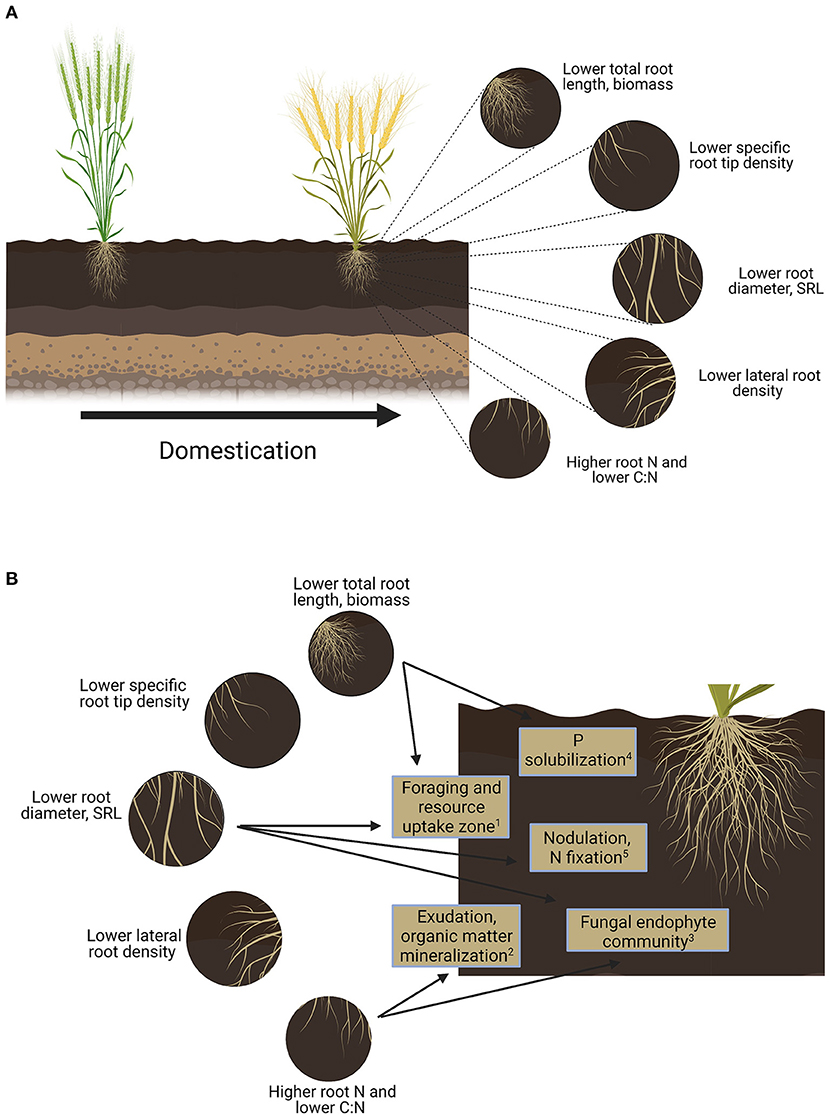
Figure 1. Hypothesized root functional trait syndromes via selection through domestication (A) and hypothesized effects of selected root traits on rhizosphere functions (B). This figure was created with BioRender [1Cahill et al., 2010; 2Herz et al., 2018; 3Fulthorpe et al., 2020; 4Bargaz et al., 2017; 5Martin et al., 2019].
Selection for crops that express certain reproductive, leaf, and root traits has formed detectable, albeit diverse, domestication syndromes: suites of plant traits which differ between crops and their wild progenitors. However, scientific and informal on-farm research has primarily focused on understanding and managing linkages between only certain domestication traits and yield, particularly under conventional agricultural management systems (Meyer et al., 2012). There is strong evidence suggesting that functional traits—i.e., the morphological (e.g., leaf area), physiological (e.g., photosynthesis), and chemical (e.g., N concentrations) traits of plants—can be used to hypothesize and detect trade-offs, constraints, and synergies among crop yield, other aspects of crop biology, and agroecosystem function (Martin and Isaac, 2015). Functional trait-based studies have also been instrumental in advancing our understanding of observable ecological patterns, e.g., relationships between on-farm diversity and agroecosystem processes, while providing a framework for predicting future agroecosystem responses to environmental change (Lavorel and Garnier, 2002; Damour et al., 2018). Yet while the literature exploring trait-based agroecology is growing (Martin and Isaac, 2018), to date no studies have explicitly summarized existing literature and data, in order to propose hypotheses on (1) how and why traits are expected to shift within and among crops in organic vs. conventional system; and (2) how changes in traits and trait syndromes may influence crop nutrient acquisition strategies in organic systems.
Crop Trait Variation and Domestication Syndromes
In agricultural systems, studies have evaluated how interspecific (Buchanan et al., 2020; Gagliardi et al., 2020) and intraspecific (Isaac and Martin, 2019; Coleman et al., 2020; Sauvadet et al., 2021) trait variation are mechanistically linked with agroecosystem functioning. Others have also applied a functional traits lens to understand the impacts and outcomes of crop domestication. For example, through domestication crops tend to express traits associated with higher rates of resource capture—namely greater aboveground biomass, higher whole-plant photosynthetic rates, greater leaf area, and higher specific leaf area (SLA)—as compared to their wild progenitors (Milla et al., 2014). Milla and Matesanz (2017) showed that crop domestication was associated with a general increase in certain crop physiological and chemical traits, including leaf-level photosynthesis and leaf N concentrations, but there were mixed results among crop species. The lack of evidence for systemic shifts in leaf photosynthesis and N concentrations through domestication may owe to multiple factors, such as total N uptake being diluted by a greater plant biomass (Wacker et al., 2002), or crop progenitors already exhibiting leaf traits on the acquisitive end of trait strategies (Milla et al., 2015).
In comparison, shifts in root functional traits throughout domestication have largely been overlooked. It appears that relationships between root functional traits, including specific root length (SRL), specific root area (SRA), root N, and root diameter (D), and plant resource acquisition strategies are arguably more complex than leaf trait trade-offs (Isaac and Borden, 2019). For instance, root trait responses to resource gradients are often confounded by collaboration gradients with soil microbial populations and diversity (Bergmann et al., 2020). Broadly though, it is often hypothesized that compared to wild relatives, crops allocate less biomass to below- vs. aboveground biomass as a result of (1) abundant soil resources, and (2) reduced herbivory pressures in agricultural systems. Importantly, some studies show that semi-dwarf cultivars, which have been a large part of cereal domestication, have shown little effects on root growth but some effects on root activity (Gentile et al., 2005). However, one may hypothesize that consistent shifts in root trait values have occurred in crops with domestication (Figure 1). Specifically, owing to domestication in high resource environments, crops may have greater investment to individual roots. This general pattern is expressed by the following morphological trait syndromes in crops: (1) lower root D, paired with (2) low SRL, lateral root density, and specific root tip density. These morphological traits can also be associated with crops expressing certain root chemical traits including (1) higher root N concentrations, and (2) lower root C:N ratios. Each of these shifts in root trait expression can be linked to multiple spatial, biochemical, and microbial factors within soil environments, with well-established links to nutrient acquisition success.
Domestication Syndromes, Root Functional Traits, and Organic Agriculture
While literature supports hypotheses surrounding (1) how root traits have changed through the course of crop domestication, and (2) how those root trait syndromes might be expected to influence nutrient acquisition with ecological management, there are few studies that have integrated these two themes. Therefore, here, we seek to chart new territory in the areas of crop breeding and organic management, by synthesizing knowledge on the following questions: (1) has domestication systematically influenced root functional traits in crops vs. wild progenitors?; and if so (2) do root traits have a hypothesized influence on nutrient acquisition in low input systems? Assessing these questions then informs our final question: (3) have transformations toward low input organic systems reframed questions of domestication syndromes in crops?
Methods
To assess our first question, we extracted and analyzed bivariate correlations among three root traits including SRL, root N, and root D, by consolidating data on four crops and their wild progenitors. Data were extracted from the Global root traits (GRooT) database (Guerrero-Ramirez et al., 2021) and included: (1) rice (Oryza sativa) and its wild relative O. rufipogon; (2) durum wheat (Triticum durum) and its wild relative T. dicoccoides; (3) maize (Zea mays) and wild relative Z. mays mexicana; and (4) grass species Panicum virgatum (crop) and P. capillare (wild). We compared patterns of root trait trade-offs with patterns observed in all species in the GRooT database in bivariate figures depicting SRL as a function of root D (n = 1,460) and root N (n = 1,247). This root trait data was pooled into figures depicting root trait trade-offs.
We also consolidated data from peer-reviewed papers that quantified root traits in both wild progenitors and domesticated crops. In these papers, plants were grown in the same conditions and traits measured in the same way, thus providing a case by case comparison of effects of domestication on root traits. This systematic review uses a PICO formula: population (crop functional traits), intervention (domestication), comparison (wild plants to artificially selected plants) and outcome (nutrient acquisition). We searched the Web of Science database for terms included in our PICO formula [root trait* AND domestication], which resulted in 200 papers published over the past 20 years. Of these 200 papers, 11 met the following inclusion criteria: papers had to present paired data on wild relatives and domesticated crops grown in similar conditions, and include at least one measure of SLA, root N, root D, or total root length (TRL). We then conducted citation mining on all 11 papers, and with this approach included another three papers. This resulted in a total of 14 papers used in our analysis here (Table 1). Data was compiled from tables and figures in manuscripts and supplementary files, and consolidated and analyzed to depict the percent change (positive or negative) in root trait values (SLA, TRL, root D, root N) between wild relatives and paired domesticated crop. Finally, we used outcomes from our systematic review to inform hypotheses on how domestication syndromes of root traits may impact nutrient acquisition in low input and organic systems, which rely on ecological processes for crop nutrient supply.
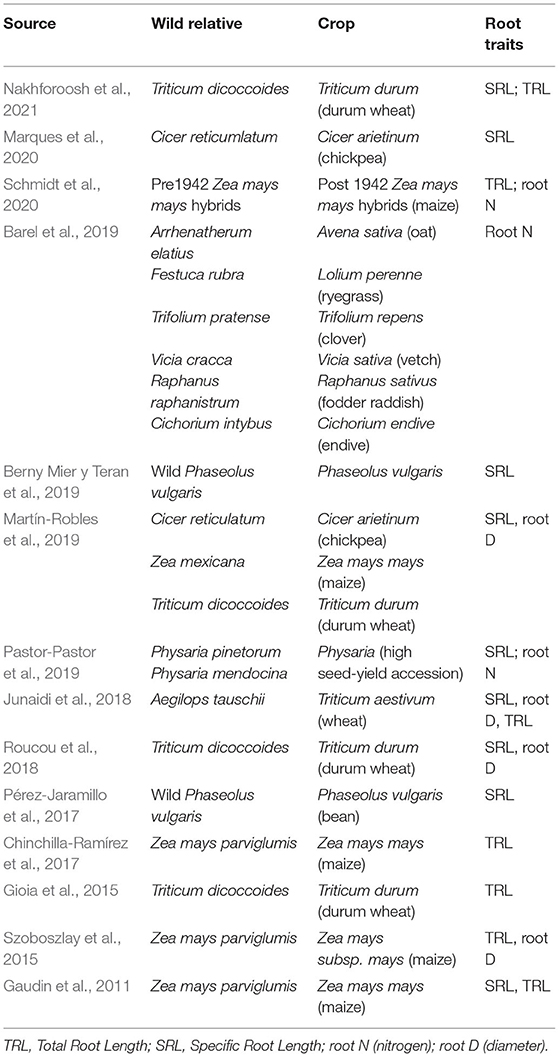
Table 1. Sources identified through a systematic literature review, with associated wild relative, crop and suite of root traits in each source.
Results and Discussion
Root Trait Patterns Globally
Crop root traits co-vary in patterns consistent with established trait trade-offs in wild plants globally (Figure 2). In bivariate space, root D and SRL are negatively correlated, such that species expressing large root D and low SRL fall on the resource conservative end of the relationship, and species expressing high SRL and constrained root D fall on the resource acquisitive end of the relationship. Broadly, wild relatives express more resource acquisitive root traits compared to their domesticated counterparts, with systematic shifts toward resource conservation in crops, especially for rice and maize.
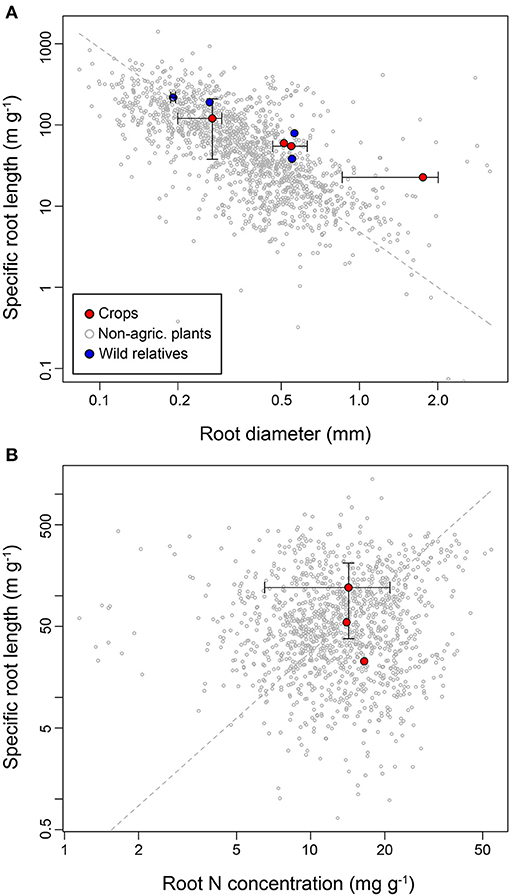
Figure 2. Bivariate relationships among root traits [root diameter and specific root length (A) and root N and specific root length (B)] of crops. In order to visualize the extent of root trait trade-offs, crops and their wild relatives are included, as well as trait relationships observed across the whole GRooT dataset (Guerrero-Ramirez et al., 2021).
Root trait variation between wild relatives and domesticated crops is a function of conscious and unconscious artificial selection and in response to soil environments (Zohary, 2004). The wild progenitors of many crops already existed in the acquisitive end of the root economic spectrum (Milla et al., 2015), but here we show a shift toward resource conservation in root trait expression with domestication. This finding is (1) counter to evidence from studies on leaf traits, which are shown to express leaf-level trait values that reflect highly resource acquisitive strategies with domestication (Cunniff et al., 2014; Milla et al., 2015); but (2) supports the meta-analysis of Martín-Robles et al. (2019) which illustrated diverse directions of change in root traits with domestication, with no systematic pattern among plant functional groups. Complicating factors include the nature and relative recency of shifts in soil environments, primarily increased use of N and P fertilizers in the last ~100 years, compared to the effects of millennia of selection on other traits such as seed size (Meyer et al., 2012; Abbo et al., 2014). Disentangling and isolating the effects of domestication per se on root traits is further complicated due to the impacts of farm management techniques such as tilling (Fiorini et al., 2018), and soil physical properties (Borden et al., 2020), on root traits.
Changes in Crop Root Functional Traits With Domestication–Data Comparison
We compared trait values of domesticated crops and their wild relatives, covering a range of crop-wild relative complexes including wheat (Aegilops tauschii), durum wheat (Triticum durum ssp. dicoccoides), maize (Z. mays mexicana), Chickpea (Cicer reticulatum). Figure 3 illustrates the percent change in root trait values through domestication, ordered by phylogenetic relatedness. Results from published literature are mixed. In some instances, SRL, TRL, root D, and root N values are higher in wild relatives vs. crops, while the opposite pattern is true for other crop-wild relative combinations. However, root D is generally larger in wild relatives vs. crops, expressing a negative percent change in trait values with domestication. Interestingly, SRL tends to have positive percent change in trait values with domestication, indicating a shift toward higher SRL in domesticated crops as compared to wild relatives (Figure 3). However, this trend is opposite for leguminous species Phaseolus: the percent change in trait values through domestication for beans is consistently negative.
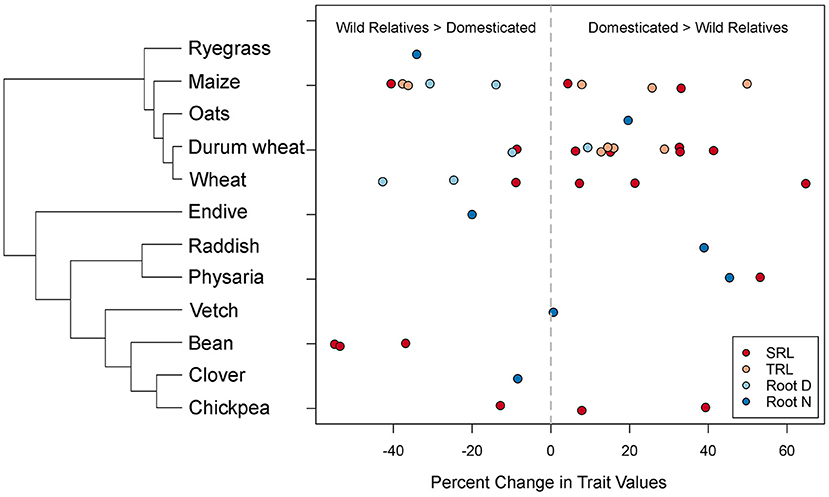
Figure 3. Percent change in trait values for 12 crops, organized according to their phylogenic relationships, and their paired wild relatives. Specific root length (SRL), total root length (TRL), root diameter (root D), and root nitrogen (root N) are depicted.
These shifts in root trait values reported between paired domesticated crop traits with wild relatives, are not consistent with trends reported from global datasets as shown in Figure 2. While these trends of crops and wild relatives fall into established trait trade-off patterns, they do not reflect the nuances of pairing crops and wild relatives in the same growing conditions with the same measurements. In doing so here, we show a clearer trend of domesticated crops expressing acquisitive traits (higher SRL and lower root D) than those compiled from unpaired global datasets; a finding that is more consistent with leaf trait changes that occur through domestication. Our paired data highlights another critical area of root trait shifts as a result of domestication: the strength of relationships between root traits and arbuscular mycorrhiza. Older crop varietals may be more able to form these symbiotic relationships regardless of nutrient availability, while modern varietals only benefit from the symbiosis when under nutrient stress (Martín-Robles et al., 2018). Plant-microbial symbiosis that destabilize systematic trait trades-offs (Bergmann et al., 2020), are not consistently accounted for in trait databases when pairing data from unrelated studies, though these relationships are key factors underpinning root trait expression and covariation.
Hypothesized Outcomes for Nutrient Acquisition
Variation in root traits may either facilitate or inhibit organic nutrient mineralization and nutrient acquisition. Plants exhibit diverse root acquisition strategies to enable nutrient uptake, including mechanisms that regulate nutrient bioavailability (Hinsinger, 2001), supply rates (Isaac and Kimaro, 2011), and foraging and absorption (Borden et al., 2020). Some of these mechanisms are complementary in order to enable acquisition of nutrients with different mobility and availability through time and space (Lambers et al., 2008; Lynch, 2019). Shifts in root traits with domestication will have explicit effects on the success of nutrient acquisition in low input organic systems (Figure 1).
Specifically, higher SRL and TRL are linked with foraging and higher resource uptake zones (Cahill et al., 2010), which could complicate soil nutrient acquisition in organic systems. In contrast, overall higher root biomass is associated with higher phosphate-solubilizing enzyme activity (Bargaz et al., 2017), which benefits plant P acquisition in low-input organic systems. How root exudation varies among root traits is not yet resolved, though several studies suggest an increase in exudation and SOM mineralization, with smaller root D, higher root N concentrations, and higher SRL (Guyonnet et al., 2018; Poirier et al., 2018; Han et al., 2020; Henneron et al., 2020). Although root traits associated with rapid nutrient acquisition are more likely to dominate when inorganic nutrient supply is high, root exudation is expected to increase under low nutrient supply as more biomass is allocated to roots (Herz et al., 2018). Chemically, root exudate composition has been shown to co-vary with root traits, with lower C:N exudates associated with high resource acquisitive traits (Herz et al., 2018). Root exudation is a significant mechanism regulating nutrient mobilization and mineralization by providing soluble C and nutrients that can stimulate soil microbial activity (Meier et al., 2017). Root exudates can also stimulate the release of N from mineral-associated organic matter into soil solution, further accelerating microbial activity that drives nutrient mineralization (Jilling et al., 2018). This is of particular interest for organic and low-input agricultural systems, because lower C:N exudates may cause a stronger stimulatory effect on nutrient mineralization when available N is more limited in organic systems, compared to conventional high-input cropping systems.
Systematic shifts in crop root traits can also indirectly affect nutrient availability and acquisition by altering soil microbial community composition (Cantarel et al., 2015). For example, SRL and root D have been shown to predict total arbuscular mycorrhizal fungi (AMF) colonization, which can greatly enhance nutrient supply to the host plant (Wen et al., 2019; Sweeney et al., 2021). In diversified agricultural systems, higher root D and root C:N, as well as low root N concentrations, were strong predictors for fungal endophyte community composition (Fulthorpe et al., 2020), while higher SRL and lower root D of legumes were associated with higher counts of root nodules formed in symbiosis with diazotrophic microorganisms (Martin et al., 2019). Undoubtedly, domestication effects on root trait values, trade-offs, and their relationships with microbial communities, are essential in understanding crop success when transferred to organic production. Under ecological nutrient management, coupling microbial activity and mineralization with plant nutrient uptake tends to decrease potential for nutrient losses (compared to inorganic fertilizers), thus, contributing another important factor in achieving environmental sustainability of agriculture.
Acquisition strategies emerging through domestication may be confounded by nutrient allocation patterns within crops (Løes et al., 2020). For instance, there is a well-known dilution effect of minerals in modern wheat grains conferred from higher yields (Zhao et al., 2009), and studies have recently shown that nutritional quality is lower in crops compared to wild relatives (Fernandez et al., 2021). Although acquisition strategies may change with domestication and translate to highly variable nutrient uptake across conventional vs. organic systems, the resulting effects on yield are not as systematic. Additionally, wild plants are adapted to grow under more stressful environmental conditions, and thus are likely to allocate greater resources to constitutive or inducible defenses: Fernandez et al. (2021) showed that higher herbivory and lower investment in defense was a common feature of crop domestication. Given controls from nutrient allocation patterns within crops from wild progenitor to modern cultivars, and stronger resource allocation toward plant defense in wild progenitors, one would hypothesize uneven relationships between root traits and yield, and between defense and yield, in crops vs. wild plants.
Implications of Root Trait Variation for Breeding Programs for Ecological and Organic Nutrient Management
Due to the inherent and multi-faceted differences in growing environment between organic and conventional production systems (see Box 1 for a long-term research case study on soil biochemistry in organic vs. conventional systems), increased efforts in organic breeding have the potential to reduce the yield gap by developing crop cultivars that respond well to organic environments. For instance, the spatial and temporal heterogeneity in organic agricultural soils requires crops with high root plasticity, which in turn confers an advantage for successful nutrient acquisition in low-input systems. Conventional seeds often perform poorly in organic agricultural systems (Boyle, 2016), in terms of leaf area and root mass development, root branching, nutrient use efficiency, and, in the case of legumes, nodulation. Such factors makes crop breeding for organic production difficult but essential.
Box 1. Three decades of organic agriculture research at Glenlea, Manitoba, Canada.
Factors affecting plant nutrient acquisition in organic production have been studied in the Canadian context at the Glenlea study for three decades. Within the first 15 years of organic production, researchers observed a shift in the soil P pools, with less plant available P (Welsh et al., 2009) and more organic P (Braman et al., 2016). This could either suggest relatively higher plant P uptake thus reducing the soil available P pool, or alternatively slower cycling of organic P into the plant availability P pool. Root traits (through their exudation, associations with mycorrhizae, and architecture) can significantly increase rates of P cycling along with P acquisition. However, to optimize this in organic and low-input systems, breeding should consider targeting root traits that will support these interactions. At Glenlea, the soil biological community appears to be mineralizing organic P faster, suggesting that the lower plant P availability in the organic systems is likely related to more rapid P mineralization coinciding with rapid plant P uptake. Indeed, microbial P was more responsive to soil wetting after drought in organic than in conventional production (Braman et al., 2016). The increase in mycorrhizal colonization in organic crops (Entz et al., 2004), and the decline in abundance of non-mycorrhizal weeds (Carkner et al., 2020) were both attributed to less available P. Greater mycorrhizal colonization may have been one reason for greater zinc uptake in organic compared with conventional wheat at Glenlea (Turmel et al., 2009). Enzymes play an important role in plant nutrient acquisition. Fraser et al. (2015a,b) observed greater alkaline phosphatase activity in the low available P conditions at Glenlea, and linked greater alkaline phosphatase activity with bacterial phoD gene abundance in soil. Organic systems also had higher levels of dissolved carbon (Xu et al., 2012) and carbon mineralizing enzyme activities (unpublished). Organic systems at Glenlea maintained a more neutral pH (Welsh et al., 2009) which was linked to changes in the soil bacterial community (Li et al., 2012). These chemical and biological factors can strongly affect plants' ability to acquire nutrients through the management of ecological processes.
Cultivar selection is a critical aspect for organic farmers to consider in relation to soil fertility, as well as pest and weed management (Bond and Grundy, 2001; Watson et al., 2002; Zehnder et al., 2007; Lammerts van Bueren and Myers, 2012; Entz et al., 2018). Building on approaches suggested by Crespo-Herrera and Ortiz (2015) for developing new cultivars for organic systems, such as (i) multi-location testing to exploit Genotype × Environment interactions, (ii) shuttle breeding between organic and conventional production systems to develop cultivars adapted to both conditions, and (iii) comprehensive screening of plant materials deposited in gene-banks to identify promising genetic resources for organic plant breeding, we highlight the need for increased understanding of the variation and genetic architecture of root traits important for crop success under organic conditions. In particular, there remains a critical need for breeding programs that explicitly focus on organic agriculture by better understanding relationships between domestication syndromes, root trait expression, and nutrient acquisition strategies in low input systems.
Drawing on global datasets and published data, we show detectable shifts in root trait strategies with domestication. Relationships between domestication syndromes in root traits, and the subsequent impact on acquisition strategies in low input systems, underscores the need for a shift in breeding paradigms for organic agriculture. Such efforts are under way in many different field and horticultural crops, for instance in Canada for wheat (Wiebe et al., 2016; Entz et al., 2018), oats (Mitchell Fetch et al., 2021) and soybean (Boyle, 2016). As the call for transformations in agricultural management reaches a watershed moment, in order to achieve SDG targets of Zero Hunger via resilient agriculture practices, these efforts will not only enhance multiple ecosystem services in organic agriculture, but also amplify the success of ecological nutrient management.
Data Availability Statement
The original contributions presented in the study are included in the article/supplementary material, further inquiries can be directed to the corresponding author.
Author Contributions
MI conceived and coordinated the study. JS generated the illustration. AM generated the figures. All authors contributed to the formulation of ideas, manuscript writing, and final approval for publication.
Funding
This research was partially funded by the Canada Research Chairs program to MI.
Conflict of Interest
The authors declare that the research was conducted in the absence of any commercial or financial relationships that could be construed as a potential conflict of interest.
Publisher's Note
All claims expressed in this article are solely those of the authors and do not necessarily represent those of their affiliated organizations, or those of the publisher, the editors and the reviewers. Any product that may be evaluated in this article, or claim that may be made by its manufacturer, is not guaranteed or endorsed by the publisher.
Acknowledgments
We thank two reviewers for insightful comments. We thank Thanuka Sivanathan and Rachel Mariani for assistance with literature review and data compilation.
References
Abbo, S., Pinhasi van-Oss, R., Gopher, A., Saranga, Y., Ofner, I., and Peleg, Z. (2014). Plant domestication versus crop evolution: a conceptual framework for cereals and grain legumes. Trends Plant Sci. 19, 351–360. doi: 10.1016/j.tplants.2013.12.002
Barel, J. M., Kuyper, T. W., Boer, W. D., and Deyn, G. B. D. (2019). Plant presence reduces root and shoot litter decomposition rates of crops and wild relatives. Plant Soil. 438. 313–327. doi: 10.1007/s11104-019-03981-7
Bargaz, A., Noyce, G. L., Fulthorpe, R., Carlsson, G., Furze, J. R., Jensen, E. S., et al. (2017). Species interactions enhance root allocation, microbial diversity and P acquisition in intercropped wheat and soybean. Appl. Soil Ecol. 120, 179–188. doi: 10.1016/j.apsoil.2017.08.011
Bergmann, J., Weigelt, A., Plas, F. V. D., Laughlin, D. C., Kuyper, T. W., Guerrero-Ramirez, N., et al. (2020). The fungal collaboration gradient dominates the root economics space in plants. Sci. Advan. 6:eaba3756. doi: 10.1126/sciadv.aba3756
Berny Mier y Teran, J. C., Konzen, E. R., Medina, V., Palkovic, A., Ariani, A., Tsai, S. M., et al. (2019). Root and shoot variation in relation to potential intermittent drought adaptation of Mesoamerican wild common bean (Phaseolus vulgaris L.). Ann. Bot. London 124, 917–932. doi: 10.1093/aob/mcy221
Blesh, J., Hoey, L., Jones, A. D., Friedmann, H., and Perfecto, I. (2019). Development pathways toward “zero hunger.” World Dev. 118, 1–14. doi: 10.1016/j.worlddev.2019.02.004
Bond, W., and Grundy, A. C. (2001). Non-chemical weed management in organic farming systems. Weed Res. 41, 383–405. doi: 10.1046/j.1365-3180.2001.00246.x
Borden, K. A., Anglaaere, L. C. N., Owusu, S., Martin, A. R., Buchanan, S. W., Addo-Danso, S. D., et al. (2020). Soil texture moderates root functional traits in agroforestry systems across a climatic gradient. Agric. Ecosyst. Environ. 295:106915. doi: 10.1016/j.agee.2020.106915
Boyle, T. D. (2016). Relative performance of Ontario soybean cultivars and differential selection of early soybean breeding lines in organic versus conventional production systems (M.Sc. thesis). University of Guelph, Guelph, ON, Canada.
Braman, S., Tenuta, M., and Entz, M. H. (2016). Selected soil biological parameters measured in the 19th year of a long term organic-conventional comparison study in Canada. Agric. Ecosyst. Environ. 233, 343–351. doi: 10.1016/j.agee.2016.09.035
Buchanan, S. W., Baskerville, M., Oelbermann, M., Gordon, A. M., Thevathasan, N. V., and Isaac, M. E. (2020). Plant diversity and agroecosystem function in riparian agroforests: providing ecosystem services and land-use transition. Sustainability 12:568. doi: 10.3390/su12020568
Cahill, J. F., McNickle, G. G., Haag, J. J., Lamb, E. G., Nyanumba, S. M., and St. Clair, C. C. (2010). Plants integrate information about nutrients and neighbors. Science 328:1657. doi: 10.1126/science.1189736
Cantarel, A. A. M., Pommier, T., Desclos-Theveniau, M., Diquélou, S., Dumont, M., Grassein, F., et al. (2015). Using plants traits to explain plant-microbe relationships involved in nitrogen acquisition. Ecology 96, 788–799. doi: 10.1890/13-2107.1
Carkner, M., Bamford, K., Martens, J. T., Wilcott, S., Stainsby, A., Stanley, K., et al. (2020). Building capacity from Glenlea, Canada's oldest organic rotation study. Long Term Farm. Syst. Res. 2020, 103–122. doi: 10.1016/B978-0-12-818186-7.00007-2
Cayuela, M. L., Sinicco, T., and Mondini, C. (2009). Mineralization dynamics and biochemical properties during initial decom- position of plant and animal residues in soil. Appl. Soil. Ecol. 41, 118–127. doi: 10.1016/j.apsoil.2008.10.001
Chen, Y., Camps-Arbestain, M., Shen, Q., Singh, B., and Cayuela, M. L. (2018). The long-term role of organic amendments in building soil nutrient fertility: a meta-analysis and review. Nutr. Cycl. Agroecosyst. 111, 103–125. doi: 10.1007/s10705-017-9903-5
Chinchilla-Ramírez, M., Borrego, E. J., DeWitt, T. J., Kolomiets, M. V., and Bernal, J. S. (2017). Maize seedling morphology and defence hormone profiles, but not herbivory tolerance, were mediated by domestication and modern breeding. Ann. Appl. Biol. 170, 315–332. doi: 10.1111/aab.12331
Coleman, B., Martin, A. R., Thevathasan, N. V., Gordon, A. M., and Isaac, M. E. (2020). Leaf trait variation and decomposition in short-rotation woody biomass crops under agroforestry management. Agric. Ecosyst. Environ. 298:106971. doi: 10.1016/j.agee.2020.106971
Crespo-Herrera, L. A., and Ortiz, R. (2015). Plant breeding for organic agriculture: something new? Agric. Food Secur. 4:25. doi: 10.1186/s40066-015-0045-1
Cunniff, J., Wilkinson, S., Charles, M., Jones, G., Rees, M., and Osborne, C. P. (2014). Functional traits differ between cereal crop progenitors and other wild grasses gathered in the Neolithic Fertile Crescent. PLoS ONE 9:e87586. doi: 10.1371/journal.pone.0087586
Damour, G., Navas, M. L., and Garnier, E. (2018). A revised trait-based Framework for agroecosystems including decision rules. J. Appl. Ecol. 55, 12–24. doi: 10.1111/1365-2664.12986
DeLonge, M. S., Miles, A., and Carlisle, L. (2016). Investing in the transition to sustainable agriculture. Environ. Sci. Policy 55, 266–273. doi: 10.1016/j.envsci.2015.09.013
Drinkwater, L. E., and Snapp, S. (2007). Nutrients in agroecosystems: rethinking the management paradigm. Adv. Agron. 92, 163–186. doi: 10.1016/S0065-2113(04)92003-2
Entz, M. E., Kirk, A. P., Carkner, M., Vaisman, I., and Fox, S. L. (2018). Evaluation of lines from a farmer participatory organic wheat breeding program. Crop Sci. 58, 2433–2443. doi: 10.2135/cropsci2018.04.0241
Entz, M. H., Penner, K. R., Vessey, J. K., Zelmer, C. D., and Thiessen Martens, J. R. (2004). Mycorrhizal colonization of flax under long-term organic and conventional management. Can. J. Plant Sci. 84, 1097–1099. doi: 10.4141/P04-055
Fernandez, A. R., Saez, A., Quintero, C., Gleiser, G., and Aizen, M. A. (2021). Intentional and unintentional selection during plant domestication: herbivore damage, plant defensive traits and nutritional quality of fruit and seed crops. New Phytol. 231, 1586–1598. doi: 10.1111/nph.17452
Fiorini, A., Boselli, R., Amaducci, S., and Tabaglio, V. (2018). Effects of no-till on root architecture and root-soil interactions in a three-year crop rotation. Eur. J. Agron. 99, 156–166. doi: 10.1016/j.eja.2018.07.009
Fraser, T. D., Lynch, D. H., Bent, E., Entz, M. H., and Dunfield, K. E. (2015a). Soil bacterial phoD gene abundance and expression in response to applied phosphorus and long-term management. Soil Biol. Biochem. 88, 137–147. doi: 10.1016/j.soilbio.2015.04.014
Fraser, T. D., Lynch, D. H., Entz, M. H., and Dunfield, K. E. (2015b). Linking alkaline phosphatase activity with bacterial phoD gene abundance in soil from a long-term management trial. Geoderma. 257–258, 115–122. doi: 10.1016/j.geoderma.2014.10.016
Fulthorpe, R., Martin, A. R., and Isaac, M. E. (2020). Root endophytes of coffee (Coffea arabica): variation across climatic gradients and relationships with functional traits. Phytobiomes J. 4, 27–39. doi: 10.1094/PBIOMES-04-19-0021-R
Gagliardi, S., Avelino, J., Beilhe, L. B., and Isaac, M. E. (2020). Contribution of shade trees to wind dynamics and pathogen dispersal on the edge of coffee agroforestry systems: a functional traits approach. Crop Prot. 130:105071. doi: 10.1016/j.cropro.2019.105071
Gardner, J. B., and Drinkwater, L. E. (2009). The fate of nitrogen in grain cropping systems: a meta-analysis of 15N field experiments. Ecol. Appl. 19, 2167–2184. doi: 10.1890/08-1122.1
Gaudin, A. C. M., McClymont, S. A., and Raizada, M. N. (2011). The Nitrogen Adaptation Strategy of the Wild Teosinte Ancestor of Modern Maize, Zea mays subsp. parviglumis. Crop Sci. 51, 2780–2795. doi: 10.2135/cropsci2010.12.0686
Gentile, R. M., de Rocquigny, P. J., and Entz, M. H. (2005). Soil water depletion by tall and semidwarf oat and wheat cultivars. Can. J. Plant Sci. 85, 385–388. doi: 10.4141/P04-023
Gioia, T., Nagel, K. A., Beleggia, R., Fragasso, M., Ficco, D. B. M., Pieruschka, R., et al. (2015). Impact of domestication on the phenotypic architecture of durum wheat under contrasting nitrogen fertilization. J. Exp. Bot. 66, 5519–5530. doi: 10.1093/jxb/erv289
Guerrero-Ramirez, N. R., Mommer, L., Freschet, G. T., Iversen, C. M., McCormack, M. L., Kattge, J., et al. (2021). Global root traits (GRoot) database. Global Ecol. Biogeogr. 30, 25–37. doi: 10.1111/geb.13179
Guyonnet, J. P., Cantarel, A. A., Simon, L., and Haichar, F. E. Z. (2018). Root exudation rate as functional trait involved in plant nutrient-use strategy classification. Ecol. Evol. 8, 8573–8581. doi: 10.1002/ece3.4383
Han, M., Sun, L., Gan, D., Fu, L., and Zhu, B. (2020). Root functional traits are key determinants of the rhizosphere effect on soil organic matter decomposition across 14 temperate hardwood species. Soil Biol. Biochem. 151, 8573–8581. doi: 10.1016/j.soilbio.2020.108019
Heckman, J., Weil, R., and Magdoff, F. (2009). “Crop rotations in organic production systems,” in Organic Farming: The Ecological System, 1st Edn, ed C. Francis (Madison, WI: American Society of Agronomy), 51–69.
Henneron, L., Cros, C., Picon-Cochard, C., Rahimian, V., and Fontaine, S. (2020). Plant economic strategies of grassland species control soil carbon dynamics through rhizodeposition. J. Ecol. 108, 528–545. doi: 10.1111/1365-2745.13276
Herz, K., Dietz, S., Gorzolka, K., Haider, S., Jandt, U., Scheel, D., et al. (2018). Linking root exudates to functional plant traits. PLoS ONE 13:e0204128. doi: 10.1371/journal.pone.0204128
Hinsinger, P. (2001). Bioavailability of soil inorganic P in the rhizosphere as affected by root induced chemical changes: a review. Plant Soil. 237, 173–195. doi: 10.1023/A:1013351617532
Isaac, M. E., and Borden, K. A. (2019). Nutrient acquisition strategies in agroforestry systems. Plant Soil 444, 1–19. doi: 10.1007/s11104-019-04232-5
Isaac, M. E., Isakson, S. R., Dale, B., Levkoe, C. Z., Hargreaves, S. K., Méndez, V. E., et al. (2018). Agroecology in Canada: towards an integration of agroecological practice, movement, and science. Sustainability 10:3299. doi: 10.3390/su10093299
Isaac, M. E., and Kimaro, A. A. (2011). Diagnosis of nutrient imbalances with vector analysis in agroforestry systems. J. Environ. Qual. 40, 860–866. doi: 10.2134/jeq2010.0144
Isaac, M. E., and Martin, A. R. (2019). Accumulating crop functional traits with citizen science. Sci. Rep. 9:15715. doi: 10.1038/s41598-019-51927-x
Jilling, A., Keiluweit, M., Contosta, A. R., Frey, S., Schimel, J., Schnecker, J., et al. (2018). Minerals in the rhizosphere: overlooked mediators of soil nitrogen availability to plants and microbes. Biogeochemistry 139, 103–122. doi: 10.1007/s10533-018-0459-5
Junaidi, J., Kallenbach, C. M., Byrne, P. F., and Fonte, S. J. (2018). Root traits and root biomass allocation impact how wheat genotypes respond to organic amendments and earthworms. PLoS ONE 13:e0200646. doi: 10.1371/journal.pone.0200646
Lambers, H., and Poorter, H. (1992). Inherent variation in growth rate beterrn higher plants: a search for physiological causes and ecological consequences. Adv. Ecol. Res. 187:26.
Lambers, H., Raven, J. A., Shaver, G. R., and Smith, S. E. (2008). Plant nutrient-acquisition strategies change with soil age. Trends Ecol. Evol. 23, 95–103. doi: 10.1016/j.tree.2007.10.008
Lammerts van Bueren, E. T., and Myers, J. R. (2012). “Organic crop breeding: integrating organic modern plant breeding methods,” in Organic Crop Breeding. 1st Edn, eds E. T. Lammerts van Bueren and J. R. Myers (John Wiley & Sons: Chichester), 3–13.
Lavorel, S., and Garnier, E. (2002). Predicting changes in community composition and ecosystem functioning from plant traits: revisiting the Holy Grail. Funct. Ecol. 16, 545–556. doi: 10.1046/j.1365-2435.2002.00664.x
Li, R., Khafipour, E., Krause, D. O., Entz, M. H., de Kievit, T. R., and Fernando, W. D. (2012). Pyrosequencing reveals the influence of organic and conventional farming systems on bacterial communities. PLoS ONE 7:e51897. doi: 10.1371/journal.pone.0051897
Løes, A.-K., Frøseth, R. B., Dieseth, J. A., Skaret, J., and Lindo, C. (2020). What should organic farmers grow: heritage or modern spring wheat cultivars? Org. Agric. 10, S93–S108. doi: 10.1007/s13165-020-00301-7
Lynch, J. P. (2019). Root phenotypes for improved nutrient capture: an under exploited opportunity for global agriculture. New Phytol. 223, 548–564. doi: 10.1111/nph.15738
Mäder, P., Fliessbach, A., Dubois, D., Gunst, L., Fried, P., and Niggli, U. (2002). Soil fertility and biodiversity in organic farming. Science 296, 1694–1697. doi: 10.1126/science.1071148
Marques, E., Krieg, C. P., Dacosta-Calheiros, E., Bueno, E., Sessa, E., Penmesta, R. V., et al. (2020). The impact of domestication on aboveground and belowground trait responses to nitrogen fertilization in wild and cultivated genotypes of chickpea (Cicer sp.). Front. Genet. 11:1506. doi: 10.3389/fgene.2020.576338
Martin, A. R., Hayes, F. J., Borden, K. A., Buchanan, S. W., Gordon, A. M., Isaac, M. E., et al. (2019). Integrating nitrogen fixing structures into above- and below-ground functional trait spectra in soy (Glycine max). Plant Soil 440, 53–69. doi: 10.1007/s11104-019-04058-1
Martin, A. R., and Isaac, M. E. (2015). Plant functional traits in agroecosystems: a blueprint for research. J. Appl. Ecol. 52, 1425–1435. doi: 10.1111/1365-2664.12526
Martin, A. R., and Isaac, M. E. (2018). Functional traits in agroecology: advancing description and prediction in agroecosystems. J. Appl. Ecol. 55, 5–11. doi: 10.1111/1365-2664.13039
Martín-Robles, N., Lehmann, A., Seco, E., Aroca, R., Rillig, M. C., and Milla, R. (2018). Impacts of domestication on the arbuscular mycorrhizal symbiosis of 27 crop species. New Phytol. 218, 322–334. doi: 10.1111/nph.14962
Martín-Robles, N., Morente-López, J., Freschet, G. T., Poorter, H., Roumet, C., and Milla, R. (2019). Root traits of herbaceous crops: Pre-adaptation to cultivation or evolution under domestication? Funct. Ecol. 33, 273–285. doi: 10.1111/1365-2435.13231
Meier, I. C., Finzi, A. C., and Phillips, R. P. (2017). Root exudates increase N availability by stimulating microbial turnover of fast-cycling N pools. Soil Biol. Biochem. 106, 119–128. doi: 10.1016/j.soilbio.2016.12.004
Meyer, R. S., DuVal, A. E., and Jensen, H. R. (2012). Patterns and processes in crop domestication: an historical review and quantitative analysis of 203 global food crops. New Phytol. 196, 29–48. doi: 10.1111/j.1469-8137.2012.04253.x
Milla, R., and Matesanz, S. (2017). Growing larger with domestication: a matter of physiology, morphology or allocation? Plant Biol. 19, 475–483. doi: 10.1111/plb.12545
Milla, R., Morente-López, J., Alonso-Rodrigo, J. M., Martín-Robles, N., and Chapin, F. S. 3rd (2014). Shifts and disruptions in resource-use trait syndromes during the evolution of herbaceous crops. Proc. R. Soc. B Biol. Sci. 281:20141429. doi: 10.1098/rspb.2014.1429
Milla, R., Osborne, C. P., Turcotte, M. M., and Violle, C. (2015). Plant domestication through an ecological lens. Trends Ecol. Evol. 30, 463–469. doi: 10.1016/j.tree.2015.06.006
Mitchell Fetch, J. M., Stanley, K., Entz, M., Fox, S. L., Spaner, D., Kirk, A., et al. (2021). AAC Oravena oat. Can. J. Plant Sci. doi: 10.1139/CJPS-2021-0036
Murphy, K. M., Campbell, K. G., Lyon, S. R., and Jones, S. S. (2007). Evidence of varietal adaptation to organic farming systems. Field Crop. Res. 102, 172–177. doi: 10.1016/j.fcr.2007.03.011
Nakhforoosh, A., Nagel, K. A., Fiorani, F., and Bodner, G. (2021). Deep soil exploration vs. topsoil exploitation: distinctive rooting strategies between wheat landraces and wild relatives. Plant Soil. 459, 397–421. doi: 10.1007/s11104-020-04794-9
Pastor-Pastor, A., Vilela, A. E., and González-Paleo, L. (2019). The root of the problem of perennials domestication: is selection for yield changing key root system traits required for ecological sustainability? Plant Soil. 435, 161–174. doi: 10.1007/s11104-018-3885-1
Pérez-Jaramillo, J., Carrión, V. J., Bose, M., Ferrão, L. F. V., Hollander, M. D., Garcia, A. A. F., et al. (2017). Linking rhizosphere microbe composition of wild and domesticated Phaseolus vulgaris to genotypic and root phenotypic traits. ISME J. 11, 2244–2257. doi: 10.1038/ismej.2017.85
Poirier, V., Roumet, C., and Munson, A. D. (2018). The root of the matter: linking root traits and soil organic matter stabilization processes. Soil Biol. Biochem. 120, 246–259. doi: 10.1016/j.soilbio.2018.02.016
Roucou, A., Violle, C., Fort, F., Roumet, P., Ecarnot, M., and Vile, D. (2018). Shifts in plant functional strategies over the course of wheat domestication. J. Appl. Ecol. 55, 25–37. doi: 10.1111/1365-2664.13029
Sauvadet, M., Dickinson, A. K., Somarriba, E., Phillips-Mora, W., Cerda, R. H., Martin, A. R., et al. (2021). Genotype-environment interactions shape leaf functional traits of cacao in agroforests. Agron. Sustain. Dev. 41, 1–12. doi: 10.1007/s13593-021-00690-3
Schmidt, J. E., Poret-Peterson, A., Lowry, C. J., and Gaudin, A. C. M. (2020). Has agricultural intensification impacted maize root traits and rhizosphere interactions related to organic N acquisition? AoB Plants. 12:plaa026. doi: 10.1093/aobpla/plaa026
Sweeney, C. J., de Vries, F. T., van Dongen, B. E., and Bardgett, R. D. (2021). Root traits explain rhizosphere fungal community composition among temperate grassland plant species. New Phytol. 229, 1492–1507. doi: 10.1111/nph.16976
Szoboszlay, M., Lambers, J., Chappell, J., Kupper, J. V., Moe, L. A., and McNear Jr, D. H. (2015). Comparison of root system architecture and rhizosphere microbial communities of Balsas teosinte and domesticated corn cultivars. Soil Biol. Biochem. 80, 34–44. doi: 10.1016/j.soilbio.2014.09.001
Turmel, M. S., Entz, M. H., Bamford, K., and Martens, J. R. T. (2009). The influence of crop rotation on the mineral nutrient content of organic vs. conventionally produced wheat grain: preliminary results from a long-term field study. Can. J. Plant Sci. 89, 915–919. doi: 10.4141/CJPS09006
Wacker, L., Jacomet, S., and Körner, C. (2002). Trends in biomass fractionation in wheat and barley from wild ancestors to modern cultivars. Plant Biol. 4, 258–265. doi: 10.1055/s-2002-25735
Warschefsky, E., Penmetsa, R. V., Cook, D. R., and Von Wettberg, E. J. (2014). Back to the wilds: tapping evolutionary adaptations for resilient crops through systematic hybridization with crop wild relatives. Am. J. Bot. 101, 1791–1800. doi: 10.3732/ajb.1400116
Watson, C. A., Atkinson, D., Gosling, P., Jackson, L. R., and Rayns, F. W. (2002). Managing soil fertility in organic farming systems. Soil Use Manage. 18, 239–247. doi: 10.1111/j.1475-2743.2002.tb00265.x
Welsh, C., Tenuta, M., Flaten, D. N., Thiessen-Martens, J. R., and Entz, M. H. (2009). High yielding organic crop management decreases plant-available but not recalcitrant soil phosphorus. Agron. J. 101, 1027–1035. doi: 10.2134/agronj2009.0043
Wen, Z., Li, H., Shen, Q., Tang, X., Xiong, C., Li, H., et al. (2019). Tradeoffs among root morphology, exudation and mycorrhizal symbioses for phosphorus-acquisition strategies of 16 crop species. New Phytol. 223, 882–895. doi: 10.1111/nph.15833
Wiebe, L., Fox, S. L., and Entz, M. H. (2016). Organic selection may improve yield efficiency in spring wheat: a preliminary analysis. Can. J. Plant Sci. 97, 298–307. doi: 10.1139/cjps-2016-0141
Xu, N., Wilson, H. F., Saiers, J. E., and Entz, M. H. (2012). Effects of crop rotation and management system on water extractable organic matter concentration, structure, and bioavailability in a chernozemic agricultural soil. J. Environ. Qual. 42, 179–190. doi: 10.2134/jeq2012.0126
Yan, M., Pan, G., Lavallee, J. M., and Conant, R. T. (2020). Rethinking sources of nitrogen to cereal crops. Glob Change Biol. 26, 191–199. doi: 10.1111/gcb.14908
Zehnder, G., Gurr, G. M., Kühne, S., Wade, M. R., Wratten, S. D., and Wyss, E. (2007). Arthropod pest management in organic crops. Annu. Rev. Entomol. 52, 57–80. doi: 10.1146/annurev.ento.52.110405.091337
Zhao, F. J., Su, Y. H., Dunham, S. J., Rakszegi, M., Bedo, Z., and McGrath, S. P. (2009). Variation in mineral micronutrient concentrations in grain of wheat lines of diverse origin. J. Cereal Sci. 49, 290–295. doi: 10.1016/j.jcs.2008.11.007
Keywords: agroecology, breeding, ecological nutrient management, food security, functional traits, wild relatives, sustainable development goals
Citation: Isaac ME, Nimmo V, Gaudin ACM, Leptin A, Schmidt JE, Kallenbach CM, Martin A, Entz M, Carkner M, Rajcan I, Boyle TD and Lu X (2021) Crop Domestication, Root Trait Syndromes, and Soil Nutrient Acquisition in Organic Agroecosystems: A Systematic Review. Front. Sustain. Food Syst. 5:716480. doi: 10.3389/fsufs.2021.716480
Received: 28 May 2021; Accepted: 11 August 2021;
Published: 14 September 2021.
Edited by:
Sudhakar Srivastava, Banaras Hindu University, IndiaReviewed by:
Ana Aurora Fontes-Puebla, Instituto Nacional de Investigaciones Forestales, Agrícolas y Pecuarias (INIFAP), MexicoJohnattan Hernández Cumplido, National Autonomous University of Mexico, Mexico
Copyright © 2021 Isaac, Nimmo, Gaudin, Leptin, Schmidt, Kallenbach, Martin, Entz, Carkner, Rajcan, Boyle and Lu. This is an open-access article distributed under the terms of the Creative Commons Attribution License (CC BY). The use, distribution or reproduction in other forums is permitted, provided the original author(s) and the copyright owner(s) are credited and that the original publication in this journal is cited, in accordance with accepted academic practice. No use, distribution or reproduction is permitted which does not comply with these terms.
*Correspondence: Marney E. Isaac, bWFybmV5LmlzYWFjQHV0b3JvbnRvLmNh