 Jaroslav Cerveny1
 Petr Prochazka1*Jana Soukupova2,3Roman Svoboda4Lucie Severova4Lubos Smutka2Inna Cabelkova2Marek Dvorak2
- 1Department of Economics, Faculty of Economics and Management, Czech University of Life Science, Prague, Czechia
- 2Department of Trade and Finance, Faculty of Economics and Management, Czech University of Life Science, Prague, Czechia
- 3Department of Water Resources and Environmental Modeling, Faculty of Environmental Sciences, Czech University of Life Sciences, Prague, Czechia
- 4Department of Economic Theories, Faculty of Economics and Management, Czech University of Life Science, Prague, Czechia
Introduction: This study deals with agricultural practices and their implications on soil health and crop yield using economic optimization. Specifically, the research focuses on the impact of different crops, such as canola, wheat, and meadow clover, on soil nitrogen levels and the subsequent effects on crop health.
Methods: A model of nitrogen flow is utilized while economic optimization is done using dynamic methods.
Results: The paper highlights the significance of the root system in crops like wheat and canola in determining the amount of organic residue left in the soil. Even though meadow clover stands out as a unique crop in the study, given its ability to fix atmospheric nitrogen without the need for fertilization given the economic variables, it is not selected in the mix.
Discussion: The findings of this research have implications for sustainable farming practices, emphasizing the balance between environmental protection and economic development. Our study shows in accordance with other studies that the use of canola leads to higher profits with consequent benefits for the next cereal crops.
Introduction
By crop rotation we mean the rotation of crops on a certain agricultural plot. Crop rotation is one of the oldest agronomic practices and is a sequence of crops grown in succession on a certain field. Crop rotation has been around for centuries. The nitrogen-fixing ability of legumes, which have always been part of the crop rotation, helped preserve the practice of crop rotation in most cropping systems until the 20th century. However, in the 2nd half of the 20th century, the availability of nitrogen from industrial sources increased and the use of pesticides to control pests, diseases and weeds thus shortened rotations. The use of mineral fertilizers and chemical sprays to maximize crop yields and the widespread adoption of short rotations or monocultures allowed farmers to specialize. It increased productivity and crop yields and improved marketing, however it led to land degradation (Bullock, 1992; Ball et al., 2005; Castellazzi et al., 2008). In the mid-20th century, there was a feeling that synthetic fertilizers and pesticides could forever replace crop rotation without loss of yield. Experience over several decades shows that crop rotation increases yield and profit and enables permanent and sustainable production. It promotes improvement of soil physical properties and soil organic matter (Bullock, 1992). Decisions about which crops to grow are based on environmental goals, maximizing yield and profit. Optimizing all objectives simultaneously is not entirely possible, in practice it is limited by government regulations, agro-ecological conditions (such as climate, topography and soil type), the occurrence of diseases and weeds, and available technologies. The first step in crop allocation is then the crop most preferred by the grower based on yields in a commercial system or a staple food crop in a subsistence system (Castellazzi et al., 2008). Crops preferred in the commercial system include rapeseed, and wheat can be classified as a very important food crop. In the Czech Republic, an inappropriate structure of cultivated crops can be identified (decrease in areas of perennial fodder, increase in subsidized crops - especially corn and rapeseed (CSÚ, 2022). The area sown with rapeseed constitutes 17% of arable land, wheat 30% of arable land, corn around 10% (Šálek, 2023). In recent decades, the traditional method of sowing has completely disappeared, the rotation of three cash crops according to the European pattern is mainly used—rapeseed, wheat and corn (Skoupá, 2019). Wheat and rape also form a fairly frequent rotation in the world. Canola acts as an interruption to wheat cultivation, thus helping to get rid of many soil-borne pathogens and helping farmers with weed control. Nitrogen applied in large quantities to canola, maize and wheat is a good overall environmental indicator (La Notte et al., 2015). Rapeseed is a traditional crop in the Czech Republic that improves soil quality. It is mainly due to its action during the winter, because it is grown as a winter plant. The green cover protects the soil from freezing, evaporation, water and wind erosion. Growing rapeseed represents economic security. The use is multi-layered, from fuel production to food use. But its lucrative cultivation is often abused, it is in the sowing process more often than it is bearable. Then pests and diseases occur more often and it leads to overuse of pesticides and herbicides. It is not only in the Czech Republic, in some areas of Germany it has stopped being cultivated due to the proliferation of pests. Non-binding rules for cropping practices advise to rotate crops so that the same crop is not returned to the plots after four years. This then leads to a reduction in the risk of weeding, pest and disease attacks (Rathke and Diepenbrock, 2006; Šálek, 2023). Wheat has been grown in the Czech Republic since the Neolithic. It provides grain that is used as food, feed and as a raw material for the production of starch, alcohol or beer. Straw is also processed if it is not used as fertilizer. Like any cereal, wheat is demanding on soil cultivation and fertilization with mineral fertilizers (Shewry, 2009; Pulkrábek, 2010). The predominance of these crops in the rotation is evident from Figure 1, where the share of the sown areas of these three crops in the total sown area of the Czech Republic can be seen.
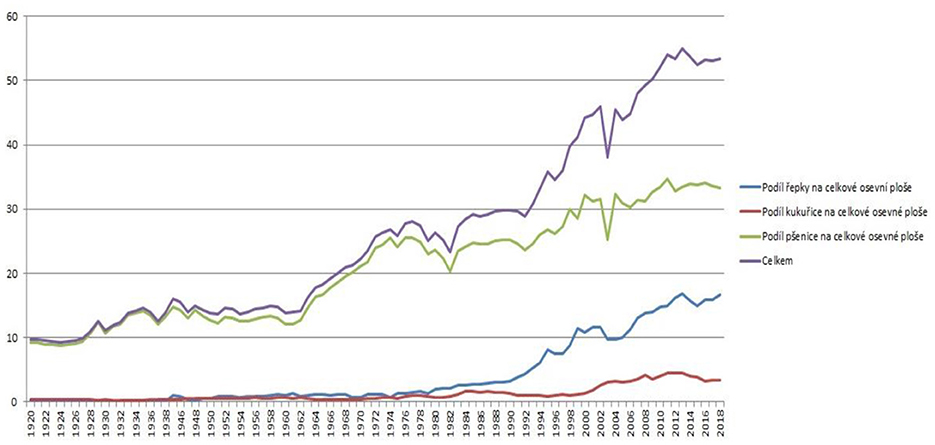
Figure 1. Sown area in the Czech Republic. Source: own processing from CZSO (2022).
Based on the sown areas, it is clear that the share of these three plants in the total sown area in the Czech Republic reaches approximately 55 percent. Both canola and wheat are large consumers of nitrogen as crops (Mousavian et al., 2013; Heard, 2019). As a conservation crop, clover has been selected to save nitrogen in the soil. Clover has admirable properties to improve the soil. The benefits of leguminous cover crops have been known for decades, and meadow clover (Trifolium pratense) is one of the most common and beneficial as an underseed for wheat before canola or corn in a rotation. Clover has the potential to mitigate the effects of soil degradation in a changing climate, and its integration into sustainable food production systems is desirable (Kristan and Skala, 1984; Gaudin et al., 2013). Thus, three crops were selected for analysis in this paper. They are canola, wheat and clover. Wheat was chosen due to its dominant representation in the sowing practices of the Czech Republic. Wheat leaves and relatively high organic residue, but less than canola. For modeling purposes, it was determined that straw is plowed in the field, not harvested. This seems to be a realistic assumption for a good farmer to make for land, even though the price of straw has quadrupled in 2019. Rapeseed was chosen for a reason that is already presented in the theoretical part of the work. It is a crop that leaves relatively more organic residue than wheat. It has a stronger root system and a more optimal distribution of N:C in organic residues than wheat. In the rotation, therefore, it has relatively better results in terms of preserving organic material in the soil than wheat.
Methodology and data
Nitrogen cycle
The nitrogen cycle was modeled according to the bio-economic model presented in (Prochazka, 2016). In the model, nitrogen moves moves in the system, both in the form of fertilizer and in the form of nitrogen captured in humus through organic residues in the soil. Nitrogen is modeled as entering plants from two sources, namely nitrogen bound in the soil Nl (t), which releases one part available to plants, and further from fertilizer F(t). Furthermore, it is shown in the model that part of the nitrogen from the plants returns to the soil in the form of plant residues. Fertilizer F(t) gets both into the soil and directly into the plants. Nitrogen then travels from the soil to the active component, or from two inactive folders it gets into the active folder. Furthermore, nitrogen travels as an external component into the environment, which causes surface and underground water pollution.
For a detailed presentation of the model, the reader is referred to (Prochazka, 2016). This model was subsequently used as a part of the economic model by deriving it from its continuous and discrete functional form. From these theoretical models, a simulation model is built, which can be programmed to simulate the optimal rotation of three crops in the environment of the Czech Republic.
The simulation model can be represented in its discrete functional form as
where N denotes the nitrogen released from the nitrogen pool available to the plant. Gamma is a parameter that affects the rate at which the nitrogen supply is released. Beta is the rate at which nitrogen is returned to the soil through crop residues into nitrogen stores. Nlo is the initial nitrogen supply. With this model, we can simulate that part of the nitrogen from the Fi fertilizer and the nitrogen released from the humus is added back to the nitrogen reserves in the soil.
How much nitrogen is available to the plant is modeled as a multiple of the nitrogen supply, which is determined by the Gamma release rate.
After substituting (2) into (1) and deriving the expression, the following equations (3–5) arise:
where VMPFit is the value of the marginal product of fertilizer at time t, c is the input price of nitrogen as fertilizer, λ is the discounted present value of all future benefits associated with soil in the form of nitrogen, s is time and r is the discount rate, and finally Fi represents the influence of the equation of motion of nitrogen in system equation (6):
The simulation is then based on the selection of the best crop in a given year, using the selection of the best (most profitable) crop as follows according to equation (7), where three crops are presented: rapeseed, wheat and fodder in the form of meadow clover.
The profitability of crops (wheat, rapeseed or fodder) depends on its static profit, i.e., on the difference between marginal revenue and marginal costs, but also on the future benefit in generating profit, as measured by lambda from equation (4), i.e., based on the parameters identified in equation (2).
The discount rate in the previous equations is determined as a risk-free rate and a risk premium. For the purposes of this work, the risk-free rate was determined as the average yield of government bonds in Europe with the least possible risk, namely Germany and the USA. The German bond yield was found to be 0.45% and the US bond yield was 2.93% for the most recent period (wsj.com). The same representation of German and US bonds was assumed in the portfolio, ie the risk-free rate was set as a weighted average of 0.45% and 2.93%, i.e., 1.69%. Furthermore, a risk premium must be determined. The risk premium is determined as the coefficient β of the investment multiplied by the difference between the expected market return and the risk-free rate equation (8):
where rf is the risk-free rate, βa is the coefficient of riskiness (volatility) of the investment, i.e., the systematic risk factor, rm is the expected market return, which was determined on the basis of the average value of the return of the 5 largest companies in the agricultural sector on the American stock exchange. The result is the determination of a discount rate of 4.93%, which has been rounded to 5%.
Economic variables—Inputs
Economic variables for the simulation model based on the presented theoretical model of optimal control, or of the dynamic program in the relevant methodological section are presented in Table 1.
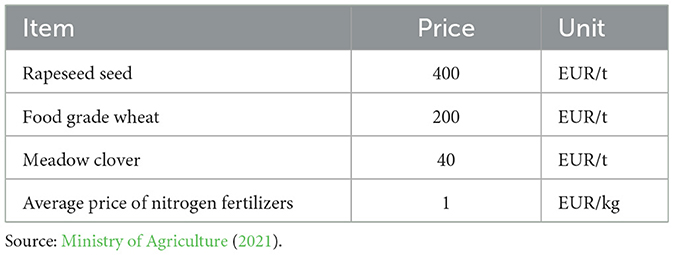
Table 1. Initial economic variables and their values for simulation.
Nitrogen fertilizers are available on the market at a price of around 1 EUR per kilogram of nitrogen and were calculated on the basis of a study with regard to the nitrogen content of individual fertilizers (Aktualni-cenik-zemedelskych-hnojiv, 2021). The price of agricultural crops is variable. For winter rapeseed, it was set at 400 EURper ton For winter food wheat, the average price is set at 200 EUR per ton. The price for clover hay is 40 EUR per ton (Hejduk, 2020). For the purposes of modeling the optimal rotation, it is necessary to estimate the production functions of canola and wheat. Wheat production, or rapeseed expressed in kilograms per hectare was the dependent variable and soil quality, respectively. the volume of soil nitrogen and the level of applied fertilizer were the independent variables. Production functions were estimated as quadratic so that the interaction between soil nitrogen and nitrogen applied to the plant was evident. The explanation is given in the methodology.
The production function was estimated using regression, or the method of least squares, which is described in the methodology. The resulting function should have properties of diminishing marginal product to reflect the diminishing volume of harvest with excessive plant fertilization, which has been tested with positive results (Kätterer et al., 1993; Heard, 2019). For clover, only constant production was considered, as no fertilizer is applied to clovers. This value was considered to be 9 tons of hay per hectare (Ministry of Agriculture, 2021).
Parameters of the equation of motion in the model
The nitrogen cycle described in the methodology is described again in equation (9) below.
where N denotes the nitrogen released from the Nl pool available to the plant. Gamma is a parameter that affects the rate at which the nitrogen supply is released, Beta is the rate at which nitrogen is returned to the soil through plant residues to the nitrogen supply. Nlo is the initial nitrogen supply.
Based on a study by Cooperband (2019), soils with 1% soil organic matter (humus) are predicted to have approximately 22 tons of organic material per hectare. In extreme cases, soils can have up to 30% humus. Cooperband (2019) explains that there is a relationship between humus and organic nitrogen. Organic nitrogen makes up approximately 10% of soil organic matter (humus). Based on Mahler and McDole (1985), we can assume that humus will release approximately 1% of available organic nitrogen to the plant. The Gamma parameter is therefore set to 0.01. To give an idea, the maximum value of humus in Czech soils is 4% (Sáňka and Materna, 2004). To determine the beta value, the straw/grain ratio of crops must be examined. Both plants have a different grain to straw ratio, which is specified in Table 2.
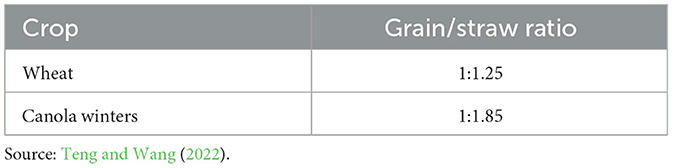
Table 2. Share of grain and straw in common types of cereals and oilseeds.
The quality of straw is primarily determined by the ratio of nitrogen to carbon content. Cereal straw has a wide ratio (in the range of 1:80–90), rapeseed straw is of better quality (1:60–80) and legume straw is of the highest quality (1:20–30). For organic fertilization, nitrogen is the optimal ratio: carbon considered ratio (1:30) (Wang et al., 2015; Winkler, 2016). The third conservation crop is meadow clover, which has soil-improving properties (fixes nitrogen). We assume that it is harvested, but most of the nitrogen remains in the soil in the root system. The determination of the Beta value for rapeseed is based on a study (CFI, 1998), from which it is clear that rapeseed leaves a greater amount of organic residues on the field, namely 39%. Of this, 25% remains in the root system. This would be applied in the case of no-tillage of straw (CFI, 1998, canolacouncil.org, Arcand et al., 2013). Because the use of the root part is more important for the formation of humus, the Beta parameter was set to a value of 51%. The determination of the Beta value for wheat is based on a study (CFI, 1998) from which it is clear that wheat leaves a smaller amount of organic residues, specifically 23%, of which much less remains in the root system in wheat than in canola, specifically 3% (Kätterer et al., 1993; CFI, 1998; Boaretto et al., 2004). As for meadow clover, it is the only crop in the model that does not need fertilization and at the same time can fix atmospheric nitrogen, so that the beta coefficient is higher than 1. Specifically, the coefficient is set to 4.8 in the model.
Results
Crop production functions estimation
For the purposes of modeling the optimal rotation, it is necessary to estimate the production functions of canola and wheat. Wheat production, or rape expressed in kilograms per hectare was the dependent variable and soil quality, respectively. The volume of soil nitrogen and the level of applied fertilizer were the independent variables. Production functions were estimated as quadratic so that the interaction between soil nitrogen and nitrogen applied to the plant was evident. The explanation is given in the methodology. The production function was estimated using regression, or the method of least squares, which is described in the methodology. The resulting function should have properties of diminishing marginal product to reflect the diminishing volume of harvest with excessive plant fertilization, which has been tested with positive results (Kätterer et al., 1993; agri.idaho, CFI, 1998; Heard, 2019). For clover, only constant production was considered, as no fertilizer is applied to clovers. This value was considered to be 9 tons of hay per hectare (Ministry of Agriculture, 2021). The results of the regressions for both wheat and rapeseed are shown in Table 3. All coefficients are significant at the 95% confidence level.

Table 3. Estimated parameters of the variables for wheat and canola.
Optimization scenarios results
After setting the model parameters, the model was simulated with a change in several key parameters. Crop rotation was limited so that it could not follow the same crop more than three times in a row. First, a simulation was performed with different levels of primary nitrogen in the soil. Secondly, a scenario where the discount rate is different was simulated. The economic results of the model for the above-specified scenarios are shown below in Table 4.
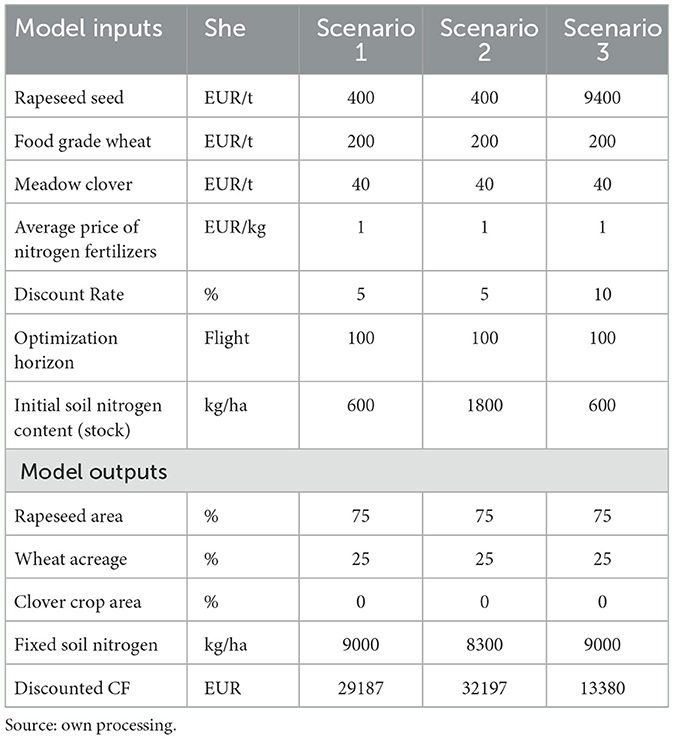
Table 4. Economic results of the model for the scenarios specified above.
The simulation results show interesting details regarding the introduced crop rotation. Given that in the model presented, canola is set as a crop with a greater financial return and at the same time as a crop that contributes more to the recovery of soil nitrogen, it is not surprising that the result of the model is a dominant position of canola in the rotation. It should be noted that the model does not include other restrictive conditions such as the inclusion of pesticides that are applied to rapeseed and may contribute to environmental degradation. However, pesticides are not the subject of research in this work. Last but not least, rapeseed is cultivated very intensively and therefore the soil on the plot is excessively compacted, which as a result leads to greater erosion of the upper part of the soil. The dominance of canola followed by wheat in the simulation model (recall that a mandatory rotation of a maximum of 3 years of canola at a time was set, so as to reflect the problems of soil pests, etc.) was never disturbed. It is important to mention that other aspects related to soil quality or prices of inputs could potentially shift the results toward clover. Typically, if nitrogen price goes up, it is probable that clover will be selected as an optimal crop.
Discussion
Khakbazan et al. (2016) state that the average annual net yield of canola compared to other previous seed crops in seven locations in Canada was highest for beans. However, this positive contribution was not enough to compensate for the loss of income that stemmed from not growing another more profitable crop (or the repetition of rapeseed) (Khakbazan et al., 2016). Haas et al. (2017) found in their study that nitrate reduction in rivers can be achieved by reducing fertilizer rates, introducing green belts along streams and rotating with non-erosive plants (Haas et al., 2017). From the study by Harker et al., it follows that long-term sustainable and high production of canola can only be expected if the diversity of the sowing procedure, crop rotation is maintained. A good pre-crop for canola is wheat. Short rotation canola can be more profitable, but there is a risk of weeding and pest and disease problems in the future (Harker et al., 2015). The sustainability of the sowing procedure with frequent repetition of rapeseed sowing can be possible thanks to agrotechnical measures and fertilization with farmyard manure and plant residues, and by minimizing the use of mineral fertilizers, herbicides and pesticides (Šálek, 2023). The importance of plant residues is also mentioned by Singh et al. (2005). The authors claim that plant residues, if handled well, contribute to better soil dynamics of humus. A limit of the model may be that we assume that all organic residues eventually become part of the humus. This is limiting, as evidenced by e.g., Ward (2003). The author claims that this can only be said about the underground parts of the plants, which was reflected by the increase in the Beta coefficient in rapeseed. In their study, the authors of Schillinger and Paulitz (2018) confirm the conclusions that canola is an excellent pre-crop for wheat, especially for winter wheat. Canola serves as a barrier or non-host crop for many soil-borne pathogens of wheat and helps farmers control weeds and thereby reduce herbicide use. Most studies in the literature report that canola has a positive effect on the yield of wheat, coming in the rotation behind it (Schillinger and Paulitz, 2018). Authors examining cropping practices in Oklahoma where wheat was infested with monocotyledonous weeds also reported an increase in wheat yields following canola in the cropping sequence (Bushong et al., 2012). Norton et al. (1999) similarly investigated canola cultivation in Australia. Canola is one of the most profitable crops available to farmers in South and Western Australia, providing high yields and the bonus of its positive effect on subsequent cereal crops, providing disease protection (Norton et al., 1999). Crop rotations are also studied for Asia - the areas of China and India (Kumar et al., 2020; Shah et al., 2021; Yu et al., 2022). Economic and environmental impacts are subject to study also in the United States (Tariq et al., 2019; Wieme et al., 2020). Kumar et al. (2020) finds out that integrating winter crops like chickpea, lentil, and safflower using conservation tillage in rice-fallows can boost productivity, profitability, and environmental sustainability. Shah et al. (2021) studies diversified crop rotations and concludes in accordance with our research that it contributes to development of long-term soil health as well as brings economic benefits to farmers. Wieme et al. (2020) argues that different grain sequences showed varied productivity, quality, and profitability, largely influenced by weather. Sequences starting with chickpea generally outperformed those with grain. Tariq et al. (2019) find that crop rotation that can be traced back to ancient Roman and Greek times, manages pests and improves yields. Its benefits vary among crops. Despite being sidelined for synthetic inputs in the 20th century, its' role today is to address yield stagnation and reliance on synthetic fertilizers.
Conclusions
The relationship between economic viability and ecological sustainability in agriculture has long been a subject of debate and research. This study deals with crop rotation and tries to shed light on its profound implications for both soil health and economic returns. Our findings underscore the undeniable benefits of strategic crop rotation, not just as a tool for soil conservation, but also as a mechanism to bolster economic gains for farmers. By fostering a richer, more balanced microbial community, crop rotations act as natural soil enhancers, reducing the need for external inputs and thereby cutting costs. Furthermore, the improved soil structure and nutrient content directly translate to better crop yields, ensuring a steady and often increased income for farmers. However, the economic advantages of crop rotation go beyond immediate cost savings and increased yields. In the long run, healthier soils mean reduced susceptibility to diseases and pests, leading to decreased reliance on chemical interventions. This not only results in further cost savings but also positions the farm as a more sustainable and environmentally-friendly entity, potentially opening doors to niche markets and premium pricing. It's also worth noting that the benefits of crop rotation extend beyond the individual farm. On a macro scale, widespread adoption of diverse crop rotation practices can lead to more resilient agricultural systems, capable of withstanding the challenges posed by climate change and increasing global food demand. Analyzed crop showed that there was no need for conservation crop (clover) which means that sufficient amount of nitrogen is delivered to the plants and maintained in the soil. This results may change when different settings are introduced such as higher cost of inputs or when other aspects of soil conservation are introduced such as erosion. The practical implications of the study on crop rotation in the context of the Czech Republic are significant for both farmers and policymakers. The research underscores the benefits of strategic crop rotation, highlighting its role not just in soil conservation but also in enhancing economic returns for farmers. By promoting a richer microbial community in the soil, crop rotations act as natural soil enhancers, which can reduce the need for external inputs, leading to cost savings. The improved soil structure and nutrient content can result in better crop yields, ensuring a consistent and in some cases increased income for farmers. Beyond immediate cost savings and yield improvements, healthier soils can reduce susceptibility to diseases and pests, decreasing the reliance on chemical interventions. This positions farms as more sustainable and environmentally-friendly, potentially accessing niche markets and premium pricing. On a broader scale, the widespread adoption of diverse crop rotation practices can lead to more resilient agricultural systems, better equipped to face challenges posed by climate change which is changing the weather patterns in Central Europe. There are also limitations to the research. The research acknowledges that crop allocation in practice is influenced by various factors such as government regulations, agro-ecological conditions (including climate, topography, and soil type), the prevalence of diseases and weeds, and the technologies available. Also, while the model assumes that all organic residues eventually become part of the humus, this assumption is recognized as a limitation. This is because not all organic residues necessarily contribute to the humus, as indicated by other studies. Also, the research highlights the potential risks associated with short crop rotations, such as increased susceptibility to weeding, pests, and diseases in the future. There is also a limit since the sustainability of frequent rapeseed sowing, for instance, is contingent upon specific agrotechnical measures and the minimized use of certain agricultural inputs.
Data availability statement
The raw data supporting the conclusions of this article will be made available by the authors, without undue reservation.
Author contributions
PP: Conceptualization, Data curation, Formal analysis, Investigation, Methodology, Writing—original draft, Writing—review & editing. JS: Visualization, Writing—review & editing. LSe: Writing—review & editing, Resources, Validation, Visualization. RS: Writing—review & editing, Resources, Validation, Visualization. JC: Writing—review & editing, Resources, Validation, Visualization. MD: Writing—review & editing, Resources, Validation, Visualization. IC: Writing—review & editing, Resources, Validation, Visualization. LSm: Writing—review & editing, Resources, Validation, Visualization.
Funding
The author(s) declare financial support was received for the research, authorship, and/or publication of this article. This work was supported by Czech University of Life Sciences, FEM, Internal Grant Agency (grant number: 2022B0005).
Conflict of interest
The authors declare that the research was conducted in the absence of any commercial or financial relationships that could be construed as a potential conflict of interest.
Publisher's note
All claims expressed in this article are solely those of the authors and do not necessarily represent those of their affiliated organizations, or those of the publisher, the editors and the reviewers. Any product that may be evaluated in this article, or claim that may be made by its manufacturer, is not guaranteed or endorsed by the publisher.
References
Aktualni-cenik-zemedelskych-hnojiv (2021). Agrozetaservis.cz [online]. Available online at: http://www.agrozetaservis.cz/aktualni-cenik-zemedelskych-hnojiv
Arcand, M. M., Knight, J. D., and Farrell, R. E. (2013). Estimating belowground nitrogen inputs of pea and canola and their contribution to soil inorganic N pools using 15N labeling. Plant Soil 371, 67–80. doi: 10.1007/s11104-013-1626-z
Ball, B. C., Bingham, I., Rees, R. M., Watson, C. A., and Litterick, A. (2005). The role of crop rotations in determining soil structure and crop growth conditions. Canad. J. Soil Sci. 85, 557–577. doi: 10.4141/S04-078
Boaretto, A., Spolidorio, E., Freitas, J., Trivelin, P., Muraoka, T., and Cantarella, H. (2004). Fate of 15N-urea applied to wheat-soybean succession crop. Bragantia 63, 265–274. doi: 10.1590/S0006-87052004000200011
Bullock, D. G. (1992). Crop rotation. Crit. Rev. Plant Sci. 11, 309–326. doi: 10.1080/07352689209382349
Bushong, J. A., Griffith, A. P., Peeper, T. F., and Epplin, F. M. (2012). Continuous winter wheat versus a winter canola–winter wheat rotation. Agronomy J. 104, 324–330. doi: 10.2134/agronj2011.0244
Castellazzi, M. S., Wood, G. A., Burgess, P. J., Morris, J., Conrad, K. F., and Perry, J. N. (2008). A systematic representation of crop rotations. Agricult. Syst. 97, 26–33. doi: 10.1016/j.agsy.2007.10.006
CFI (1998). Available online at: https://www.canolawatch.org/wp-content/uploads/2012/02/CFI_nutrient_uptake_for_wcanada_2001.pdf
Cooperband, L. (2019). The Art and Science of Composting: A Resource for Farmers and Compost Producers. Madison: University of Wisconsin-Madison.
CSÚ (2022). Ceský statistický úrad. Available online at: https://www.czso.cz/
CZSO (2022). Area of crops sown in the Czech Republic. Available online at: https://www.czso.cz/csu/czso/soupis-ploch-osevu-k-31-5-2022 (accessed September 1, 2023).
Gaudin, A. C. M., Westra, S., Loucks, C., Janovicek, K., Martin, R., and Deen, W. (2013). Improving resilience of northern field crop systems using inter-seeded red clover: a review. Agronomy 3, 148–180. doi: 10.3390/agronomy3010148
Haas, M. B., Guse, B., and Fohrer, N. (2017). Assessing the impacts of best management practices on nitrate pollution in an agricultural dominated lowland catchment considering environmental protection versus economic development. J. Environm. Manage. 196, 347–364. doi: 10.1016/j.jenvman.2017.02.060
Harker, K. N., O'Donovan, J. T., Turkington, T. K., Blackshaw, R. E., Lupwayi, N. Z., Smith, E. G., et al. (2015). Canola rotation frequency impacts canola yield and associated pest species. Canad. J. Plant Sci. 95, 9–20. doi: 10.4141/cjps-2014-289
Heard, J. (2019). Revised Nitrogen Fertilizer Guidelines for Wheat, Barley, and Canola in Manitoba. Available online at: Gov.mb.ca (accessed September 1, 2023).
Kätterer, T., Hansson, A. C., and Andrén, O. (1993). Wheat root biomass and nitrogen dynamics—effects of daily irrigation and fertilization. Plant Soil 151, 21–30. doi: 10.1007/BF00010782
Khakbazan, M., Grant, C., Huang, E., Smith, E., and O'Donovan, J. (2016). Contribution of Legume Preceding Crops to Improve Economic and Nonrenewable Energy Use Efficiency of Canola Production [online]. Available online at: https://harvest.usask.ca/bitstream/handle/10388/8823/M.%20Khakbazan%20et%20al.,%202016.pdf?sequence=1
Kristan, F., and Skala, J. (1984). Changes in agrochemical soil properties through inclusion of red-clover. Plant Prod. 30, 301–307.
Kumar, R., Mishra, J. S., Rao, K. K., Mondal, S., Hazra, K. K., Choudhary, J. S., and Bhatt, B. P. (2020). Crop rotation and tillage management options for sustainable intensification of rice-fallow agro-ecosystem in eastern India. Sci. Rep. 10, 11146. doi: 10.1038/s41598-020-67973-9
La Notte, A., Camino, L., Grizzetti, B., Maes, J., Egoh, B., and Paracchini, M. (2015). An ecological-economic approach to the valuation of ecosystem services to support biodiversity policy: a case study for nitrogen retention by mediterranean rivers and lakes. Ecol. Indicat. 48, 292–302. doi: 10.1016/j.ecolind.2014.08.006
Mahler, R. L., and McDole, R. E. (1985). The influence of lime and phosphorus on crop production in Northern Idaho. Commun. Soil Sci. Plant Analy. 16, 485–499. doi: 10.1080/00103628509367621
Ministry of Agriculture (2021). Available online at: https://eagri.cz/public/portal/en (accessed July 1, 2023).
Mousavian, S. N., Siadat, S. A., Telavat, M. M., and Mousavi, S. H. (2013). Yields reaction, nitrogen uptake, and canola qualitative attributes to nitrogen levels and previous plants. Int. J. Farm. Allied Sci. 2, 698−703.
Norton, R., Kirkegaard, J., Angus, J., and Potter, T. (1999). “Canola in rotations,” in Canola in Australia: The First Thirty Years, 23–28.
Prochazka, P. (2016). Economic Analysis of Land Use Policy in Prince Edward Island (Dissertation Thesis). Halifax: Dalhousie University.
Pulkrábek, C. Agrobiologie. skripta ČZU. (2010). Available online at: https://agrobiologie.cz/SMEP3/Fytotechnika/fyto/php/skripta/kapitola2a2c.html?titul_key=4&idkapitola=95
Rathke, G.-W., and Diepenbrock, W. (2006). Energy balance of winter oilseed rape (Brassica napus L.) cropping as related to nitrogen supply and preceding crop. Eur. J. Agron. 24, 35–44. doi: 10.1016/j.eja.2005.04.003
Šálek, M. (2023). Žlutý sajrajt i symbol babišizace zeme. Repka má nespravedlivý cejch. Asociace soukromého zemedelství CR. Available online at: https://www.asz.cz/clanek/10753/zluty-sajrajt-i-symbol-babisizace-zeme-repka-ma-nespravedlivy-cejch/
Shah, K. K., Modi, B., Pandey, H. P., Subedi, A., Aryal, G., Pandey, M., and Shrestha, J. (2021). Diversified crop rotation: an approach for sustainable agriculture production. Adv. Agricult. (2021) 2019, 1–9. doi: 10.1155/2021/8924087
Singh, Y., Singh, B., and Timsina, J. (2005). Crop residue management for nutrient cycling and improving soil productivity in rice-based cropping systems in the tropics. Adv. Agron. 85, 269–407. doi: 10.1016/S0065-2113(04)85006-5
Skoupá, A. (2019). Nevážíme si pudy, proto je sucho, ríká expert na zemedelství. Zpravy.aktualne.cz [online]. Available online at: https://zpravy.aktualne.cz/domaci/za-sucho-muze-i-devastace-pudy-rikaodbornik-nazemedelstvi/r~f9cad4723f4611e5adcb0025900fea04/?redirected=1555375823
Tariq, M., Ali, H., Hussain, N., Nasim, W., Mubeen, M., Ahmad, S., and Hasanuzzaman, M. (2019). Fundamentals of crop rotation in agronomic management. Agronomic Crops 24, 545–559. doi: 10.1007/978-981-32-9151-5_24
Teng, J., and Wang, P. (2022). Study on the calculating methodology of the collectible straw resources for biomass power plants based on the indirect measurement. Sustain. Energy Technol. Assess. 52, 102259. doi: 10.1016/j.seta.2022.102259
Wang, J., Wang, X., Xu, M., Feng, G., Zhang, W., Yang, X., et al. (2015). Contributions of wheat and maize residues to soil organic carbon under long-term rotation in north China. Sci. Rep. 5, 11409. doi: 10.1038/srep11409
Ward, R. (2003). Soil Organic Matter and N Cycling. Leading Edge. Available online at: www.notill.org
Wieme, R. A., Carpenter-Boggs, L. A., Crowder, D. W., Murphy, K. M., and Reganold, J. P. (2020). Agronomic and economic performance of organic forage, quinoa, and grain crop rotations in the Palouse region of the Pacific Northwest, USA. Agricultural Syst. 177, 102709. doi: 10.1016/j.agsy.2019.102709
Winkler, J. (2016). Plevele a hospodaření se slámou. Agromanual.cz [online]. Available online at: https://www.agromanual.cz/cz/clanky/ochrana-rostlin-a-pestovani/plevele/plevele-a-hospodareni-se-slamou
Keywords: crop rotation, economic optimization, optimal crop mix, nitrogen cycle, fertilization
Citation: Cerveny J, Prochazka P, Soukupova J, Svoboda R, Severova L, Smutka L, Cabelkova I and Dvorak M (2023) Rooted in richness: unearthing the economic and ecological synergy of crop rotation. Front. Sustain. Food Syst. 7:1298897. doi: 10.3389/fsufs.2023.1298897
Received: 22 September 2023; Accepted: 06 November 2023;
Published: 15 December 2023.
Edited by:
Athula Naranpanawa, Griffith University, AustraliaReviewed by:
Filip Rubáček, Metropolitan University Prague, CzechiaPeter Čajka, Matej Bel University, Slovakia
Copyright © 2023 Cerveny, Prochazka, Soukupova, Svoboda, Severova, Smutka, Cabelkova and Dvorak. This is an open-access article distributed under the terms of the Creative Commons Attribution License (CC BY). The use, distribution or reproduction in other forums is permitted, provided the original author(s) and the copyright owner(s) are credited and that the original publication in this journal is cited, in accordance with accepted academic practice. No use, distribution or reproduction is permitted which does not comply with these terms.
*Correspondence: Petr Prochazka, cHByb2NoYXprYUBwZWYuY3p1LmN6