MH
martin h. müser
Saarland University
Saarbrücken, Germany
6,387
Total downloads
52k
Total views and downloads
Adhesion is a well-known phenomenon, whose principles are well understood qualitatively. It arises mostly due to weak van-der-Waals interactions between atoms, which motivates a theoretical upper bound of adhesive stresses in the order of 1 GPa. However, adhesion is counteracted by several parameters such as the ubiquitous surface roughness so that the probed adhesive stresses are orders of magnitude smaller than this theoretical limit. However, we still cannot predict by simple means by how much adhesion is reduced.
When modeling contacts, or, more generally, when designing adhesive systems, we are constantly confronted with the question: At what stress does a local contact start to fail? At what normal force does an adhesive device no longer carry its load? How can we control or even switch adhesion with high efficiency? How do system or environmental parameters affect adhesion?
In this Research Topic, we solicit contributions advancing our fundamental understanding of adhesion across the length scales, but also adding to existing engineering principles of adhesive structures from the mesoscopic to the macroscopic scale.
Of particular interest will be:
- Visualization of adhesive failure at the small scale
- Adhesive hysteresis beyond viscoelasticity
- Modeling adhesive processes across the scales
- Systematic bottom-up construction of cohesive-zone models
- Interplay of microscopic roughness and macroscopic design principles
- Pick-up and place strategies for small objects
- Designs for adhesion control
- Concepts for switching adhesive states
- Adhesive contact mechanics
- Adhesion during sliding
- Fracture mechanics in soft and hard solids
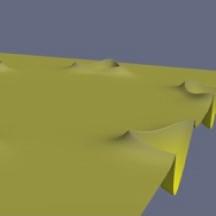
Keywords: adhesion, contact visualization, contact mechanics, multiscale modeling, roughness, adhesion design
Important note: All contributions to this Research Topic must be within the scope of the section and journal to which they are submitted, as defined in their mission statements. Frontiers reserves the right to guide an out-of-scope manuscript to a more suitable section or journal at any stage of peer review.
