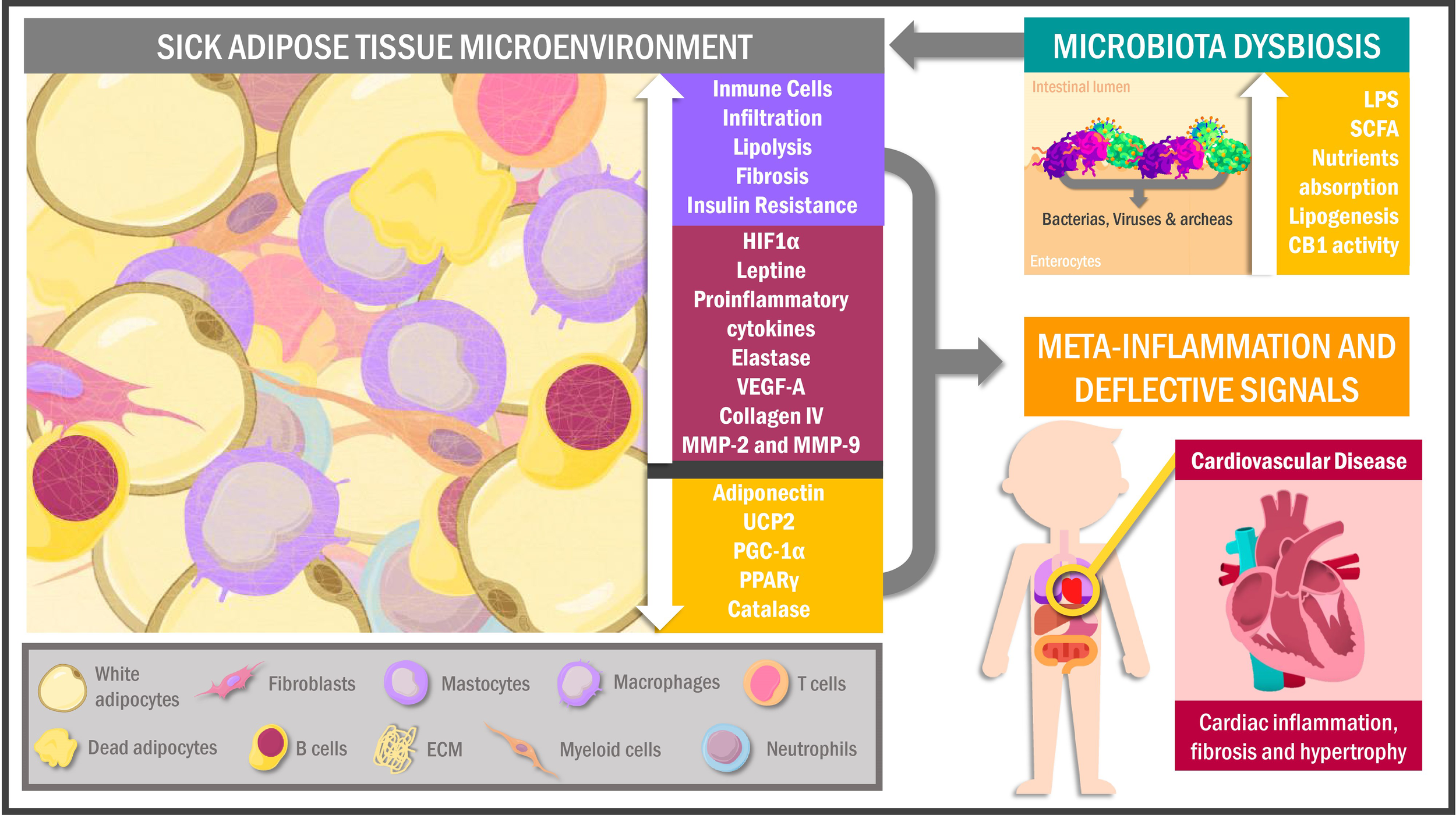
The Impact of Adipose Tissue Dysfunction on Cardiovascular and Renal Disease Obesity is considered an adverse metabolic disease with high risk of vascular complications, including cardiovascular disease (CVD) and chronic kidney disease (CKD). These obesity-related complications are strongly related to excess adipose tissue accumulation, with earlier studies centered on the impact of typical visceral versus subcutaneous adipose tissue accumulation. However, the adipose tissues around blood vessels and organs, including perivascular adipose tissue (PVAT), pericardial adipose tissue (PAT), epicardial adipose tissue (EAT) and perirenal adipose tissue (PRAT), have attracted a great deal of attention recently. Dysfunction in these "novel" adipose tissues have been associated with greater risk of CVD and CKD in obesity than in traditional visceral adipose tissue. Therefore, studies on the interactions of various adipose tissue malfunctions to metabolic-related diseases are vital for improved prevention and treatment of cardiometabolic and renal diseases. This Research Topic aimed to provide a platform for novel advances in dysfunction of various adipose tissues to identify significant contributors to metabolism-related vascular complications, especially CVD and CKD. The special issue represents a collection of 7 review articles and 3 original research articles ranging from basic studies to clinical trials, which provide insights into better understanding of the pathophysiology of adipose dysfunction in CVD and CKD.PVAT, a fat pad surrounding the blood vessels, maintains normal vascular function. Overall, the articles outlined above in this Research Topic underscore the critical role of various adipose tissues dysfunction in CVD and CKD progression, and poses a timely question of whether targeting specific adipose tissue depots may become an important target for better, more efficacious approaches to prevent and/or treat CVD and CKD.
Editorial04 January 2022
Editorial: The Impact of Adipose Tissue Dysfunction on Cardiovascular and Renal Disease


Abdominal aortic aneurysms (AAAs) are typically asymptomatic, and there is a high mortality rate associated with aneurysm rupture. AAA pathogenesis involves extracellular matrix degradation, vascular smooth muscle cell phenotype switching, inflammation, and oxidative stress. There is increasing evidence of excessive adipocyte accumulation in ruptured AAA walls. These excessive numbers of adipocytes in the vascular wall have been closely linked with AAA progression. Perivascular adipose tissue (PVAT), a unique type of adipose tissue, can be involved in adipocyte accumulation in the AAA wall. PVAT produces various chemokines and adipocytokines around vessels to maintain vascular homeostasis through paracrine and autocrine mechanisms in normal physiological conditions. Nevertheless, PVAT loses its normal function and promotes the progression of vascular diseases in pathological conditions. There is evidence of significantly reduced AAA diameter in vessel walls of removed PVAT. There is a need to highlight the critical roles of cytokines, cells, and microRNA derived from PVAT in the regulation of AAA development. PVAT may constitute an important therapeutic target for the prevention and treatment of AAAs. In this review, we discuss the relationship between PVAT and AAA development; we also highlight the potential for PVAT-derived factors to serve as a therapeutic target in the treatment of AAAs.