GA
giuseppe anastasi
University of Messina
Messina, Italy
6,873
Total downloads
29k
Total views and downloads
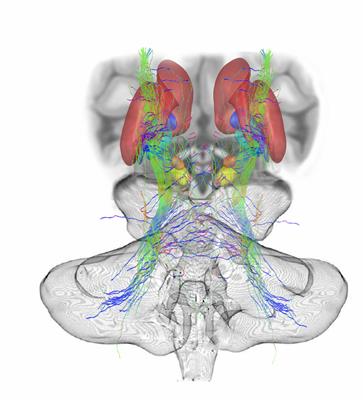
Despite major progress in the field, the existing knowledge about the structural and functional organization of cortico-basal ganglia-cerebellar circuits at the systems level is based on invasive methods and animal models. Although these approaches represent the gold standard for understanding the anatomical connectivity, they are limited to selected species or populations. Similarly, existing theoretical models are rarely supported by empirical evidence across different conditions affecting cortico-basal ganglia-cerebellar circuits. Recent advances in the field of in vivo magnetic resonance imaging (MRI), particularly water diffusion-based techniques allow for reconstructing in a non-invasive way white matter fiber pathways across the entire brain. Given that diffusion tractography gains recognition as an “in vivo dissection” approach for mapping major fiber bundles in the human brain, we recognize the pressing need to link the obtained results with behavior and physiological data in the framework of generative models explaining both normal function and disease. In the present Research Topic, we wish to include a collection of original manuscripts that highlight the main achievements of ongoing research on cortico-basal ganglia-cerebellar connectivity in healthy humans but also in basal ganglia-related disorders such as Parkinson’s disease, dystonia, Tourette's syndrome, obsessive-compulsive disorder and Huntington's disease. A better comprehension of the anatomical and functional connectivity in basal ganglia disorders is an important step to better clarify their pathophysiology and to obtain useful information for basal ganglia targeted treatment using deep brain stimulation (DBS) or focused ultrasound (FUS).
Keywords: Basal ganglia, brain connectivity, Parkinson’s disease, dystonia, neuroplasticity
Important note: All contributions to this Research Topic must be within the scope of the section and journal to which they are submitted, as defined in their mission statements. Frontiers reserves the right to guide an out-of-scope manuscript to a more suitable section or journal at any stage of peer review.