KG
klaus gramann
Technical University of Berlin
Berlin, Germany
3,758
Total downloads
19k
Total views and downloads
Cognitive Neuroergonomics investigates mental processes at work or during everyday interactions with technical systems through neuroscientific methods. The goal is to improve interactions between the person and other elements of a system like a working environment through a user-centered design. Among these processes, the integration of artificial extensions into the users’ body scheme, i.e., embodiment, is especially useful for improving user experience and system control. In the literature, embodiment is related to phenomena like the feeling that non-bodily objects are integrated to become part of one’s own body, the adjustment of a person’s behavior to the characteristics of external items, and, more generally, to the activation of the individual motor system during the execution of cognitive tasks. In particular, the embodiment of avatars or robots constitutes a premise for successfully mediated interactions between the user and a comprehensive set of items such as environments, tools, and (natural and artificial) agents.
This Research Topic investigates embodiment phenomena through interdisciplinary methodologies across heterogeneous fields, ranging from cognitive neuroscience to mechatronic engineering, from computer science to philosophy. Such an effort will set the foundations for solid scientific paradigms to assess and enhance embodiment in virtual and robotic contexts. For instance, the methods adopted in Virtual and Robotic Hand Illusion studies are the most used to estimate and elicit embodiment phenomena, although recent studies using these approaches generated contradicting results and sparked active debates.
This Research Topic seeks for methodologies in the field of cognitive neuroergonomics, considering ecologically valid experimental scenarios where embodiment should manifest upon extensive practice and complex multimodal experience of virtual and robotic solutions. The expected contributions will advance the knowledge of the embodiment processes in unexplored human-environment, human-tool, and human-agent interactions. Such contributions can highlight the impact of embodiment research on the user-centered design of interactive systems: from immersive and engaging video games to assistive neurointerfaces for telepresence or prosthetics. These solutions can be explored in heterogeneous domains: e.g., education, work, healthcare, entertainment. The resulting findings will reveal novel virtual and robotic scenarios that can generate embodiment processes fostering optimal interactions in applied contexts.
This Research Topic aims to gather novel and systematic contributions to cognitive neuroergonomics studies advancing virtual and robotic embodiment processes. The following topics will be discussed.
• Cognitive neuroergonomics and embodiment in interactions between humans and environments, tools, agents in laboratory and in the wild.
• Neurocognitive processes of embodiment and presence in interactive settings for activities like learning, working, clinical procedures, gaming.
• Neurocognitive processes in embodying telerobotic, prosthetic, and wearable technologies.
• Brain-computer interfaces controlling avatars and robots, biomarkers of virtual and robotic embodiment, and related neural plasticity changes.
• Embodiment assessment, enhancement, and training through methods of cognitive neuroergonomics (from physiological recordings to neuromodulation and neurofeedback).
• Cognitive neuroergonomics, embodiment, and human-centered design: from technology acceptance to ethical issues in human-technology integration.
• Embodied interaction, embodied cognition, and embodied artificial intelligence. Relationships with embedded, enactive, and extended cognition.
The proposed Research Topic accepts all types of manuscripts, embracing a list of research areas not limited to the ones listed above.
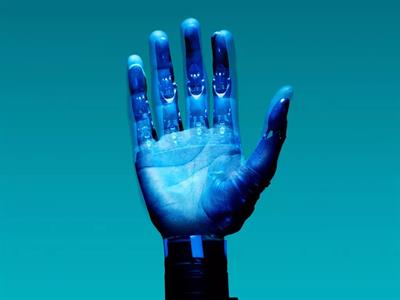
Keywords: Embodiment, Illusions, Affordance, Body Perception, Body Representations, Ownership, Agency, Presence, Virtual Reality, Augmented Reality, Mixed Reality, Extended Reality, Robotics, Prosthetics, Teleoperation, Human-Computer Interaction, Neuroergonomics
Important note: All contributions to this Research Topic must be within the scope of the section and journal to which they are submitted, as defined in their mission statements. Frontiers reserves the right to guide an out-of-scope manuscript to a more suitable section or journal at any stage of peer review.
Technical University of Berlin
Berlin, Germany
Bristol Robotics Laboratory, Faculty of Environment and Technology, University of the West of England
Bristol, United Kingdom
Unitelma Sapienza University
Rome, Italy
Institute of Neuroscience, National Research Council of Italy
Parma, Italy
University of Erlangen Nuremberg
Erlangen, Germany
