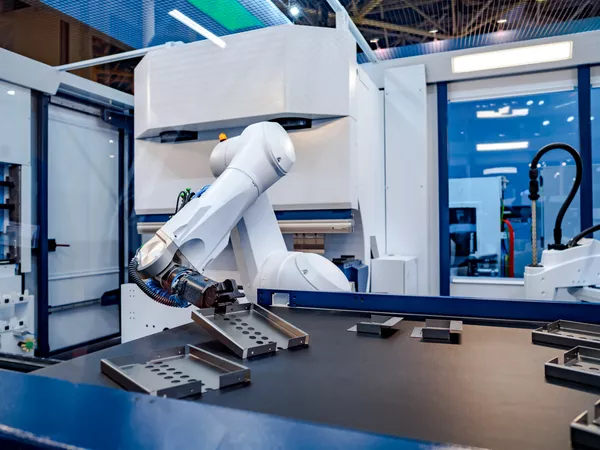
What lies at the forefront of robotics in clinical practice? Medicine has always leveraged technological evolution to enhance clinical performance, improve safety, and optimize patient outcomes. This evolution has driven the integration of advanced technologies into clinical environments. Robots have already transformed many aspects of clinical care, from assisting surgeons in precise lesion removal to aiding rehabilitation through tailored therapy programs. Yet, their current role remains primarily supportive, designed to minimize disruption to established workflows and to account for cost considerations. Could we envision a paradigm shift, where robotics and clinicians exist in a seamless partnership, enabling not only enhanced support but also a degree of expertise? Whether in diagnostics, surgery, rehabilitation, or beyond, can robotics evolve into indispensable collaborators, rather than adjuncts?
Robotic systems have made significant inroads into clinical practice over the last five decades, from surgery to rehabilitation, with some technologies achieving widespread commercial adoption. However, resistance to routine integration persists due to technical, financial, and cultural barriers. Industry often focuses on developing simpler, less disruptive systems rather than pursuing robotics that could fully emulate human expertise. As the world advances in software, hardware, electronics, and analytics—heralding Industry 4.0—we must ask whether these barriers can finally be overcome.
It is increasingly feasible to hypothesize the creation of comprehensive robotic systems with capabilities akin to human intelligence, dexterity, and sensory perception. These systems could ensure safety, elevate clinical performance, and improve patient care across a spectrum of medical fields. Instead of causing hesitancy, such robotics would become an indispensable and integral component of healthcare worldwide, driving new standards in performance, safety, and learning in diagnostics, surgery, rehabilitation, and other areas.
Submissions may include original research, pre-clinical studies, clinical trials, reviews, or letters that focus on robotics in clinical practice. Contributions should highlight aspects such as:
• Strategies for integrating machine learning and artificial intelligence in clinical robotics.
• Applications enhancing effectiveness, safety, clinician experience, and patient outcomes.
• Roles in diagnostics, surgery, rehabilitation, and beyond, including real-time feedback and adaptation.
Discussions on software intelligence, including large language models and their potential to reshape clinical workflows, are also encouraged. Submissions should reflect how robotics are addressing current challenges while shaping the future of safe, efficient, and patient-centered care across diverse clinical disciplines.
Keywords: intelligent surgical robotics, artificial intelligence, surgical performance, surgical training, automated robotics, cloud computing, data science, surgical standardization, cost
Important note: All contributions to this Research Topic must be within the scope of the section and journal to which they are submitted, as defined in their mission statements. Frontiers reserves the right to guide an out-of-scope manuscript to a more suitable section or journal at any stage of peer review.