LP
lokeswar patnaik
National Institute of Advanced Manufacturing Technology (Formerly NIFFT)
Ranchi, India
3,237
Total downloads
19k
Total views and downloads
Advancements in thin film technologies have propelled numerous industries forward. Atomic Layer Deposition (ALD) enables precise atomic-level control for uniform coatings in semiconductors and catalysis. Chemical Vapor Deposition (CVD) variants like Plasma-Enhanced CVD and Metal-Organic CVD facilitate low-temperature depositions for solar cells and optoelectronics. Solution-based methods like Spin-Coating and Inkjet Printing offer cost-effective large-area thin film fabrication for flexible electronics. Magnetron Sputtering enhances adhesion and uniformity in semiconductor devices and protective coatings. Incorporating nanomaterials and 2D materials has led to improved properties and novel applications. These advancements continue to drive innovation in electronics, optics, energy storage and beyond.
The goal of a special issue in a journal on advancements in thin film technologies is to provide a comprehensive and up-to-date platform for researchers and experts to showcase their latest findings, innovations, and breakthroughs in the field. This special issue aims to highlight the significant progress and cutting-edge developments in thin film deposition techniques, materials, and applications.
By bringing together diverse contributions from the scientific community, the special issue aims to foster collaboration and exchange of ideas, promoting a deeper understanding of the challenges and opportunities in thin-film technologies. It seeks to address various aspects, including novel deposition methods (e.g., ALD, CVD variants, and solution-based techniques), advancements in material science (nanomaterials, 2D materials), and emerging applications (electronics, optics, energy storage, etc.).
Moreover, the special issue intends to identify potential future directions for thin film research, exploring the potential for commercialization and industrial adoption. By disseminating the latest advancements and discoveries, this special issue aims to inspire researchers, engineers, and policymakers to push the boundaries of thin film technologies, ultimately contributing to advancements in various technological domains and positively impacting society as a whole.
The special issue on “Advancements in Thin Film Technologies” seeks to include original research papers and reviews that contribute to the understanding and advancement of thin-film technologies.
The scope encompasses, but is not limited to:
i) Novel Thin Film Deposition Techniques: Such as ALD, CVD, PVD techniques, and solution-based methods, along with process optimization and equipment developments.
ii) Emerging Thin Film Materials: Research on the synthesis and characterization of nanomaterials, 2D materials, and nanocomposites for thin film applications.
iii) Thin Films for Electronics, Optoelectronics, energy storage and conversion: Exploration of thin film applications in semiconductors, integrated circuits, sensors, photovoltaics, displays, thin film batteries etc
iv) Thin Films for Functional Coatings: Investigations into protective, anti-reflective, anti-corrosion, and self-cleaning coatings.
v) Thin Films in Biomedical Applications: Research on thin film materials for drug delivery, tissue engineering, and biosensors.
vi) Characterization Techniques: Papers focusing on novel characterization methods for thin films.
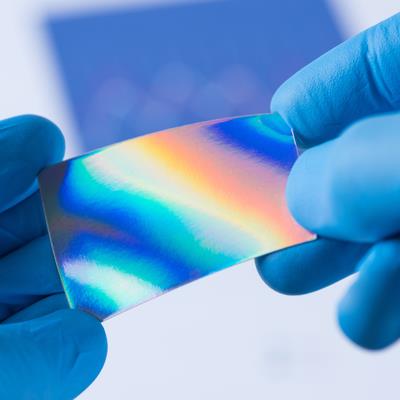
Keywords: Thin film, Deposition techniques, Nanomaterials, Structure, Wear, Mechanical
Important note: All contributions to this Research Topic must be within the scope of the section and journal to which they are submitted, as defined in their mission statements. Frontiers reserves the right to guide an out-of-scope manuscript to a more suitable section or journal at any stage of peer review.
