DD
dawood desai
Tshwane University of Technology
Pretoria, South Africa
3,408
Total downloads
15k
Total views and downloads
Manufacturing involves several physical phenomena, including mechanisms for burr formation, plastic deformation, frictional contact, and thermo- mechanical coupling, amongst others. Undoubtedly, the most common tool for simulating manufacturing processes is the finite element method (FEM). The FEM, which itself has been evolving, can take the place of experimental methodologies to analyze manufacturing processes, particularly when a large range of complex characteristics are involved, such as process parameters, non-linearity, complex workpiece materials, and geometries, composite/multi-layered materials, shape memory alloys, and tool types. Hence, “Advances of FEM in Precision Machining Processes” offers a succinct analysis of the FEM's application to manufacturing processes. Existing experimental data can be used to design and calibrate a FE study. The challenge to acquire information near the cutting tool that cannot be easily measured through experiments (many of which are extensive and costly), such as strain, strain rate, the cutting force, and temperature, has motivated researchers to better understand the metal cutting mechanism using FEM.
Moreover, the material constitutive law for flow stresses, and friction type at the tool-chip interface, and fracture control are all of great interest to FEM of machining problems. Constitutive models used in manufacturing processes and subsequent FE simulations to understand the attributes (surface roughness, residual stresses, micro-hardness, plastic deformation, phase transitions, elastic recovery effect, ball indentation, and thermal behavior… etc.) are of increasing interest in research and industry to improve the surface integrity of manufactured components.
Furthermore, the development of manufacturing methods for blazed gratings structures is crucial for optical communication, structural coloration, precision measurement, and digital display. Hence, the need for robust and reliable FE techniques specializing in various manufacturing processes such as 3D/additive manufacturing (AM), laser peening and ultrashort pulse laser ablation, machining, turning, milling, and grating structure simulation need to be developed, and subsequently integrated into artificial intelligence algorithms and digital production chains. Regarding laser processes, the complexity and temporal sequence of the various phenomena that occur when a laser beam interacts with matter makes the FEM method even more interesting and challenging. The speed of the processes involved, their intricate interactions, and the small regions affected make experimental measurements extremely difficult. In these cases, FEM can greatly help in understanding the processes and optimizing the results.
This topic is intriguing since it could facilitate new FEM applications in manufacturing. Optimal cutting parameters in machining, turning, milling, and sections on high-speed machining, a huge range of laser applications sheet metal forming, experimental and FEM of tube end-forming processes, micro-manufacturing processes, ball-burnishing processes numerical simulation, welding / EB welding, and joining of various materials (high-strength steels, aluminum, titanium, and nickel-base steel) for aerospace applications, optimization of manufacturing processes using AI and ML with FEM, additive manufacturing (AM), metallic powder bed AM processes, product development such as composite/multi-layered structures/products, waveguides, acoustic metamaterials / phononic crystals for vibration reduction, spacecraft and antenna structure using 3D printing / AM, development of manufacturing method for blazed gratings structure, among others, are all studied using numerical and experimental methods. This indicates the most recent developments in these fields and the expanding popularity of both academic and practical research.
We welcome articles, reviews, and mini-reviews on topics related to the ''Advances of Finite Element Method in Precision Manufacturing Processes''; that investigate/demonstrate/showcase potential, recent, original research trends, and advances in FEM and how FEM facilitates further improvement in the precision of the manufacturing process, including but not limited to the following:
1. Manufacturing and characterization of highly effective stress-strain dependent smart antenna using 3D printing and a numerical technique.
2. Simulations of additive manufacturing processes including Particle FEM.
3. AI-assisted manufacturing modeling/ ML-based optimization is combined with the finite element method.
4. A novel approach to numerical manufacturing modeling composite / multi-layered material products and associated experimental verification methods.
5. FE modeling and simulation of manufacturing processes, including machining, bulk deformation, sheet metal forming (to predict the behavior of sheet material components, such as thinning, spring back, final geometry, temperature, etc.), Ball-Burnishing processes for surface treatments, micro-manufacturing processes, machining on turning, investigation of the best cutting (orthogonal cutting, oblique cutting) parameters in machining/cutting mechanics, hard turning and micromachining, rolling processes, continuous or pulsed laser applications, milling, welding, and casting processes, etc. of engineering materials for industrial and aerospace applications.
6. FEA or simulation of metal forming to determine whether a proposed design will produce parts free of fracturing and/or wrinkling.
7. Fabrication of micro-structured waveguides, acoustic metamaterials / phononic crystals using finite element model.
8. A coupling of the FEM machining simulation (Mechanical Threshold Stress/ Johnson-Cook/ modified Johnson-Cook constitutive equation models or other models) and CFD to analyze the temperature distribution at the cutting insert, precision simulation of workpiece material`s flow stress, heat transfer situations, and frictional rule at tool chip interface under a thermal environment.
9. New material constitutive FE models that include the effects of flow softening, pressure hardening, and thermal softening effects during product manufacture.
10. Finite element simulation of the manufacturing process chain of a sheet metal assembly.
11. Advancements in the development of high-precision, high-efficiency, and low-cost manufacturing methods for blazed gratings structures using FEM.
12. Modelling energy-efficient manufacturing techniques.
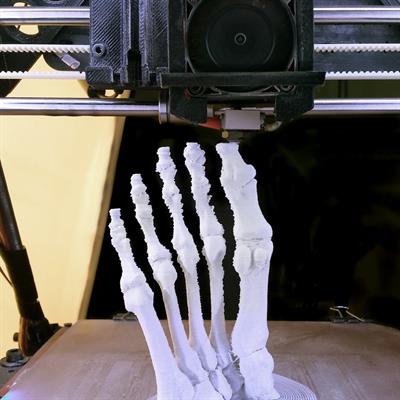
Keywords: Manufacturing, FE Modeling, Micromachining, Machining, Rolling, Welding, Cutting, Sheet Metal, Forming, Thermo-Mechanical, Shot and Laser Peening, laser processes, Sheet Material, Thinning, Spring Back, Thermo-Elasticity, Ball-Burnishing, Surface Treatments, Residual Stress, Plastic Deformations, Tube End-Forming Processes, FEM, Artificial Intelligence, Optimization, composite/ multi- layered product, Additive Manufacturing FEM, Phononic Materials, Elastic/Acoustic, Metamaterials, grating structures.
Important note: All contributions to this Research Topic must be within the scope of the section and journal to which they are submitted, as defined in their mission statements. Frontiers reserves the right to guide an out-of-scope manuscript to a more suitable section or journal at any stage of peer review.
