MY
maria yelshanskaya
Columbia College, Columbia University
New York City, United States
1,939
Total downloads
13k
Total views and downloads
Submit your idea
You will be redirected to our submission process.
The chemical messenger glutamate (Glu) mediates most excitatory neurotransmission in the mammalian central nervous system (CNS) and is essential for normal brain function. While the concentration of glutamate is strictly regulated in physiological conditions, its elevated level in the synaptic cleft is the principal cause of neuronal death upon stroke or traumatic brain injury, as well as in various neurodegenerative conditions.
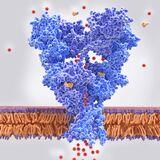
Ionotropic glutamate receptors (iGluRs) are responsible for fast excitatory neurotransmission. They bind Glu and allow positively charged ions to enter the post-synaptic neuron, enabling signaling to be transduced to other neurons through excitation. iGluRs are involved in synaptic plasticity processes underlying learning and memory and regulating growth cones and synaptogenesis during brain development. iGluR's family includes AMPA, NMDA, KA, and delta – all representing excellent targets for drug discovery.
A very important pathology for iGluRs is elevated excitability in seizures; it underlies the remodeling of synaptic networks as seizures cause neuroexcitotoxicity and death of neurons. Uncontrolled seizures lead to cognitive decline.
We aim to compose a collection of multidisciplinary research and review papers embracing various fields of science to deepen our understanding of iGluR involvement in various physiological and pathophysiological processes.
We welcome submissions that focus on increasing understanding of the role of iGluR channels in physiological and pathophysiological processes in the CNS. This Research Topic aims to provide new insights and multidisciplinary exploration of iGluRs, which include but are not limited to topics such as structural characterization, molecular modelling, biophysics of ion channel gating and permeation, trafficking and synaptic localization, cellular excitability, pharmacology, iGluR regulation in disease conditions, investigation of iGluR channelopathies using new model systems, such as stem cell-derived cells, and interaction of iGluRs with other proteins.
We welcome a variety of article types, including under the following categories: Original Research, Review, Mini Review, Brief Research Report, and Perspective.
This Research Topic accepts the following article types, unless otherwise specified in the Research Topic description:
Articles that are accepted for publication by our external editors following rigorous peer review incur a publishing fee charged to Authors, institutions, or funders.
Keywords: iGluR, Glutamate, Structure and Function, Synaptic Plasticity, Neurodegeneration
Important note: All contributions to this Research Topic must be within the scope of the section and journal to which they are submitted, as defined in their mission statements. Frontiers reserves the right to guide an out-of-scope manuscript to a more suitable section or journal at any stage of peer review.
Columbia College, Columbia University
New York City, United States
Carnegie Mellon University
Pittsburgh, United States
Department of Molecular Medicine, College of Veterinary Medicine, Cornell University
Ithaca, United States
Hebrew University of Jerusalem
Jerusalem, Israel
Manuscripts can be submitted to this Research Topic via the main journal or any other participating journal.
Submit your idea
You will be redirected to our submission process.
