MT
mohanraj thangamuthu
Amrita School of Engineering, Amrita Vishwa Vidyapeetham
Coimbatore, India
1,193
Total downloads
11k
Total views and downloads
Submit your idea
Select the journal/section where you want your idea to be submitted:
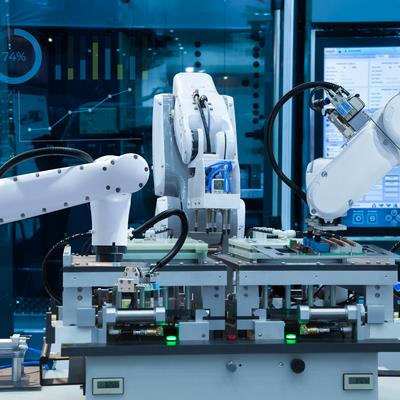
The integration of Artificial Intelligence (AI) and Machine Learning (ML) into manufacturing processes marks a significant evolution in the industrial sector. Traditionally, manufacturing has relied on established procedures that, while effective, often lack the flexibility and adaptability required in today's fast-paced market. The current problem lies in the need for enhanced efficiency, output, and quality, which conventional methods struggle to deliver. Recent studies have demonstrated that AI and ML can significantly optimize manufacturing processes, leading to improved predictive maintenance, quality control, and real-time analytics. However, despite these promising results, there remains a gap in understanding the full potential and limitations of these technologies in manufacturing. Ongoing debates focus on the scalability of AI and ML solutions, the integration of cyber-physical systems, and the ethical implications of increased automation. There is a pressing need for comprehensive research to address these challenges and explore innovative applications of AI and ML in manufacturing.
This research topic aims to explore the transformative role of AI and ML in manufacturing processes. The main objectives include investigating the latest advancements, implementations, and challenges associated with these technologies. Key questions to be addressed include how AI and ML can further enhance manufacturing efficiency, the potential for mass customization, and the development of intelligent systems for real-time decision-making. Hypotheses to be tested involve the effectiveness of AI-driven predictive maintenance and the impact of human-robot collaboration on production quality.
To gather further insights in the transformative role of AI and ML in manufacturing, we welcome articles addressing, but not limited to, the following themes:
"The integration of Artificial Intelligence (AI) and Machine Learning (ML) into manufacturing processes marks a significant evolution in the industrial sector. Traditionally, manufacturing has relied on established procedures that, while effective, often lack the flexibility and adaptability required in today's fast-paced market. The current problem lies in the need for enhanced efficiency, output, and quality, which conventional methods struggle to deliver. Recent studies have demonstrated that AI and ML can significantly optimize manufacturing processes, leading to improved predictive maintenance, quality control, and real-time analytics. However, despite these promising results, there remains a gap in understanding the full potential and limitations of these technologies in manufacturing. Ongoing debates focus on the scalability of AI and ML solutions, the integration of cyber-physical systems, and the ethical implications of increased automation. There is a pressing need for comprehensive research to address these challenges and explore innovative applications of AI and ML in manufacturing.
This research topic aims to explore the transformative role of AI and ML in manufacturing processes. The main objectives include investigating the latest advancements, implementations, and challenges associated with these technologies. Key questions to be addressed include how AI and ML can further enhance manufacturing efficiency, the potential for mass customization, and the development of intelligent systems for real-time decision-making. Hypotheses to be tested involve the effectiveness of AI-driven predictive maintenance and the impact of human-robot collaboration on production quality.
To gather further insights in the transformative role of AI and ML in manufacturing, we welcome articles addressing, but not limited to, the following themes:
The integration of Artificial Intelligence (AI) and Machine Learning (ML) into manufacturing processes marks a significant evolution in the industrial sector. Traditionally, manufacturing has relied on established procedures that, while effective, often lack the flexibility and adaptability required in today's fast-paced market. The current problem lies in the need for enhanced efficiency, output, and quality, which conventional methods struggle to deliver. Recent studies have demonstrated that AI and ML can significantly optimize manufacturing processes, leading to improved predictive maintenance, quality control, and real-time analytics. However, despite these promising results, there remains a gap in understanding the full potential and limitations of these technologies in manufacturing. Ongoing debates focus on the scalability of AI and ML solutions, the integration of cyber-physical systems, and the ethical implications of increased automation. There is a pressing need for comprehensive research to address these challenges and explore innovative applications of AI and ML in manufacturing.
This research topic aims to explore the transformative role of AI and ML in manufacturing processes. The main objectives include investigating the latest advancements, implementations, and challenges associated with these technologies. Key questions to be addressed include how AI and ML can further enhance manufacturing efficiency, the potential for mass customization, and the development of intelligent systems for real-time decision-making. Hypotheses to be tested involve the effectiveness of AI-driven predictive maintenance and the impact of human-robot collaboration on production quality.
To gather further insights in the transformative role of AI and ML in manufacturing, we welcome articles addressing, but not limited to, the following themes:
• Automation and optimization of manufacturing processes through AI;
• Predictive maintenance and quality control via machine learning algorithms;
• Real-time monitoring and analytics for intelligent manufacturing;
• Adaptive manufacturing systems to facilitate mass customization and personalization;
• AI-assisted decision support systems and human-robot collaboration;
• Cyber-physical systems and digital twins in manufacturing;
• Practical applications and case studies of AI and ML in the manufacturing sector;
• Challenges and prospective developments in the adoption of AI and ML in manufacturing" Automation and optimization of manufacturing processes through AI;
• Predictive maintenance and quality control via machine learning algorithms;
• Real-time monitoring and analytics for intelligent manufacturing
• Adaptive manufacturing systems to facilitate mass customization and personalization;
• AI-assisted decision support systems and human-robot collaboration;
• Cyber-physical systems and digital twins in manufacturing;
• Practical applications and case studies of AI and ML in the manufacturing sector;
• Challenges and prospective developments in the adoption of AI and ML in manufacturing "Automation and optimization of manufacturing processes through AI"
• Predictive maintenance and quality control via machine learning algorithms;
• Real-time monitoring and analytics for intelligent manufacturing;
• Adaptive manufacturing systems to facilitate mass customization and personalization;
• AI-assisted decision support systems and human-robot collaboration;
• Cyber-physical systems and digital twins in manufacturing
- Practical applications and case studies of AI and ML in the manufacturing sector;
• Challenges and prospective developments in the adoption of AI and ML in manufacturing".
This Research Topic accepts the following article types, unless otherwise specified in the Research Topic description:
Articles that are accepted for publication by our external editors following rigorous peer review incur a publishing fee charged to Authors, institutions, or funders.
Keywords: Machining, Smart manufacturing, IIOT, Machine Learning, Deep learning, Condition Monitoring, Maintenance, Collaborative Robots
Important note: All contributions to this Research Topic must be within the scope of the section and journal to which they are submitted, as defined in their mission statements. Frontiers reserves the right to guide an out-of-scope manuscript to a more suitable section or journal at any stage of peer review.

Manuscripts can be submitted to this Research Topic via the main journal or any other participating journal.
Submit your idea
Select the journal/section where you want your idea to be submitted: