NT
nancy trun
Bayer School of Natural and Environmental Sciences, Duquesne University
Pittsburgh, United States
2,052
Total downloads
15k
Total views and downloads
Submit your idea
Select the journal/section where you want your idea to be submitted:
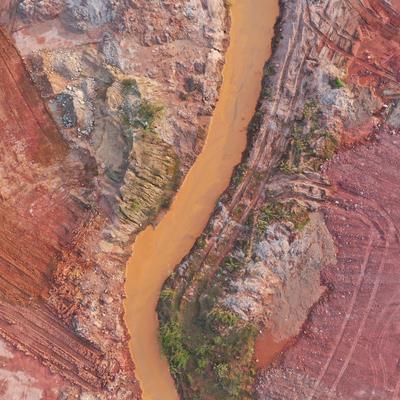
Mine drainage occurs due to the disruption of the earth exposing pyrite and other ores, followed by subsequent exposure to oxygen and water. This results in the formation of sulfuric acid and leaching of metals, rare earth elements, and other critical material from the environment. Depending on the type of mining, the depth of the mine, and the geochemistry of the soil present, mine discharge varies from extremely low pH, typically with high levels of arsenic, copper, and zinc, to circumneutral mines typically with elevated levels of sulfate, iron, and manganese. The microorganisms growing in these environments have evolved to survive in extreme environments, up-regulating many different types of genes such as efflux pumps and selecting for lithotrophic microbes that can harvest energy from the contaminated environment.
While a significant amount of research has gone into understanding the microorganisms that drive acid mine drainage and the spatiotemporal changes that occur within in these systems, the specific microbial interactions that occur within mine drainage systems are less understood, especially in more circumneutral mine drainage. This Research Topic seeks to present a deeper understanding of the microbial interactions and biogeochemical cycling occurring within these systems and the molecular adaptions made to thrive within these environments.
In addition, the potential to utilize microbes to harvest precious metals has more recently gained attention. Mine drainage systems are an optimal source for isolating potential organisms capable of this process, as well as serving as reservoir of untapped potential. This Research Topic also seeks to present a broader understanding of the current advances in biomining.
We welcome Original Research articles, Reviews, Mini-Reviews, Methods, Opinions, and Perspectives that contribute to microbial diversity in mine drainage. Topics of interest include, but are not limited to:
- Articles reporting biogeochemical cycling in mine drainage
- Sequencing studies reporting spatiotemporal dynamics in mine drainage that are relevant to biogeochemical processes
- Investigations reporting microbe interactions on the species and molecular level in mine drainage
- Articles investigating biomining
- Advances in bioremediation and biomarkers
This Research Topic accepts the following article types, unless otherwise specified in the Research Topic description:
Articles that are accepted for publication by our external editors following rigorous peer review incur a publishing fee charged to Authors, institutions, or funders.
Keywords: mine drainage, sulfur cycling, iron cycling, microbial diversity, geomicrobiology, bioremediation, sulfate reduction, sulfur oxidation, manganese reduction, manganese oxidation, arsenic oxidation, microbial interactions
Important note: All contributions to this Research Topic must be within the scope of the section and journal to which they are submitted, as defined in their mission statements. Frontiers reserves the right to guide an out-of-scope manuscript to a more suitable section or journal at any stage of peer review.
Bayer School of Natural and Environmental Sciences, Duquesne University
Pittsburgh, United States
Institute of Oceanology, Chinese Academy of Sciences (CAS)
Qingdao, China
Department of Chemical and Materials Engineering, Complutense University of Madrid
Madrid, Spain
Huazhong Agricultural University
Wuhan, China

Manuscripts can be submitted to this Research Topic via the main journal or any other participating journal.
Submit your idea
Select the journal/section where you want your idea to be submitted: