AW
alicja wegrzyn
University of Gdansk
Gdansk, Poland
683
Total views and downloads
Submit your idea
Select the journal/section where you want your idea to be submitted:
Manuscript Summary Submission Deadline 28 February 2026 | Manuscript Submission Deadline 31 July 2026
This Research Topic is currently accepting articles.
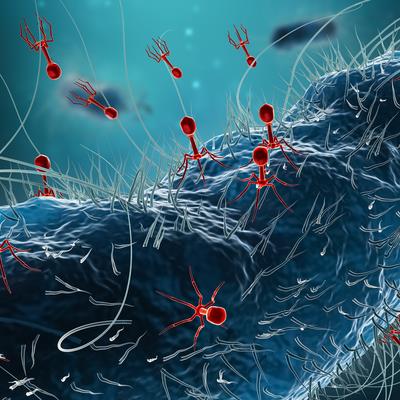
In the realm of food safety, the escalation of antibiotic resistance and the adverse effects of chemical preservatives have driven the search for novel biocontrol methods. Bacteriophages, or phages, are being increasingly recognized for their potential to specifically target and neutralize foodborne pathogens without harming beneficial microorganisms or altering the food's nutritional and sensory properties. Recent advancements in biotechnology have enabled the isolation and characterization of phages capable of lysing bacteria that commonly contaminate foods such as meats, dairy products, and fresh produce.
This Research Topic aims to advance the application of phages in enhancing food safety, targeting a reduction in the incidence of foodborne illnesses while maintaining food quality and compliance with safety standards. The focus will be on isolating specific phages that are effective against pathogens like Salmonella, Listeria, and E. coli, determining their efficacy and safety in food matrices, and developing phage-based formulations that can be practically implemented in food production settings. We especially welcome studies that explore precision phage engineering (e.g., tail fiber swapping and CRISPR-enabled virulence attenuation), smart delivery systems (encapsulation, edible coatings, and packaging-integrated release), process integration with automated dosing and biosensing at HACCP points, and data-driven approaches (AI-guided phage–host prediction and digital twins for application optimization). Attention to resistance management, regulatory pathways, and real-world validation in diverse processing environments is strongly encouraged.
To gather new insights in this innovative biocontrol technique, we welcome different types of articles addressing, but not limited to, the following themes:
• Identification and characterization of new bacteriophages active against foodborne pathogens;
• Development of phage cocktails and their synergistic effects with existing food preservation methods;
• Safety assessments and regulatory challenges of using phages in food products;
• Long-term stability and effectiveness of phage preparations in various food processing environments;
• Precision phage engineering to broaden host range and reduce virulence/AMR carriage (e.g., tail fiber modifications, CRISPR-armed or de-immunized phages);
• Smart delivery and formulation, including encapsulation, dry powders, aerosols, and bioactive packaging coatings for controlled release;
• Resistance mitigation strategies such as adaptive or rotational cocktails guided by real-time pathogen genotyping and phage evolution pipelines;
• Risk evaluation tailored to sensitive products (allergenicity, endotoxin, and off-target effects) and clear paths-to-market aligned with FDA/USDA/EFSA expectations;
• Data, AI, and digital twin models to predict phage–host interactions, optimize dose and contact time, and link genomic surveillance to cocktail management;
• Novel targets and use-cases, including depolymerase-rich phages for biofilm disruption on equipment surfaces, aquaculture and produce-wash applications, and co-formulation with protective cultures in fermented products.
Join us in shaping the next wave of safe, smart, and scalable phage-enabled food protection—submit your work and help translate innovation into impact across real-world food systems.
This Research Topic accepts the following article types, unless otherwise specified in the Research Topic description:
Articles that are accepted for publication by our external editors following rigorous peer review incur a publishing fee charged to Authors, institutions, or funders.
Keywords: Bacteriophage Therapy, Biocontrol Agents, Foodborne Pathogens, Food Production, Food Industry Applications, Phage Efficacy, Microbial Food Contamination, Pathogen Neutralization
Important note: All contributions to this Research Topic must be within the scope of the section and journal to which they are submitted, as defined in their mission statements. Frontiers reserves the right to guide an out-of-scope manuscript to a more suitable section or journal at any stage of peer review.
Manuscripts can be submitted to this Research Topic via the main journal or any other participating journal.
Submit your idea
Select the journal/section where you want your idea to be submitted:
