MN
marta natalia lukacovic
Angelo State University
San Angelo, United States
1,580
Total views and downloads
Submit your idea
You will be redirected to our submission process.
Manuscript Submission Deadline 30 April 2026
This Research Topic is currently accepting articles.
This Research Topic aims to explore the complex role of mis-, dis-, and mal-information within the contemporary mega-crises that plague global societies. Mega-crises are wicked-problem-type crises, characterized by multiple, interconnected, and pervasive issues.
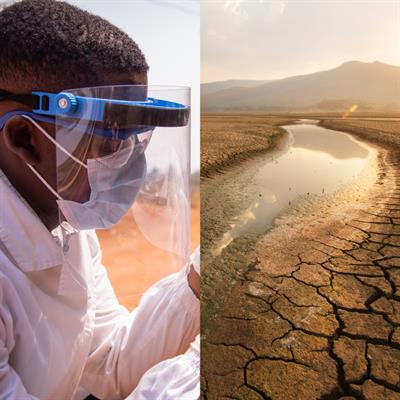
Illustrative examples of mega-crises include the COVID-19 pandemic and climate change. The former was a public health crisis that also demonstrated the disruptive nature of mega-crises across sectors. It had significant implications for the economic sector, as businesses were forced to shutter or limit interaction, and for the education sector, which shifted to online delivery, resulting in severe implications for outcomes depending on socio-economic status (e.g., Sellnow-Richmond & Lukacovic, 2024). Climate change, on the other hand, is a mega-crisis impacting the entire globe. It is rooted in capitalism’s disregard for environmental sustainability in favor of profitability, resulting in increased instances of extreme weather that impact many of the most marginalized populations across the world and perpetuate climate-related resettlement (e.g., Wall Kimmerer, 2013; Whyte, 2021).
Consider also the tangled links between climate change, environmental degradation, poverty, health disparities, educational disparities, violent conflict, extremism, and mass migration. This cluster of mutually exacerbating wicked problems forms one of the global mega-crises of our time.
A key defining trait of mega-crises is their transnational, frequently global reach. Hence, culture and cultural differences must be carefully considered if scholars are to shed greater light on the phenomenon of mega-crises.
Today's mega-crises are significantly worsened by the spread of mis-, dis-, and mal-information. This phenomenon encompasses everything from innocently misleading news with unintentional errors to maliciously fabricated information designed to undermine security. For instance, disinformation regarding vaccine efficacy and even masking weakened mitigation efforts during the COVID-19 pandemic, with conspiracy theories thriving across the globe, often stemming from a handful of select bots. Currently, the varieties of mis-, dis-, and mal-information are rapidly multiplying as technological advancements provide global-reaching digital networks and powerful tools like generative AI. AI-generated deepfakes, for example, are already widely used to fuel deliberate disinformation campaigns (e.g., Lukacovic & Sellnow-Richmond, 2025). Therefore, the phenomenon of mis-, dis-, and mal-information must be explored as a substantial factor contributing to global mega-crises.
This Research Topic aims to explore the intersection of:
1. mega-crises
2. mis-, dis-, and mal-information
3. and broadly defined cultural communication.
Galtung’s ‘triangle of violence’ framework—encompassing cultural, structural, and direct violence—offers a lens through which to make sense of the complicated concern at hand (Galtung, 1969).
Possible research questions include, but are not limited to:
• What role do local knowledge systems and indigenous communication practices play in combating disinformation during mega-crises, and how can these be integrated into global responses?
• How does the spread of misinformation impact trust in transnational institutions (e.g., WHO and UN) working to address mega-crises, and what cultural factors influence this relationship?
• How do transnational activist networks utilize cultural communication strategies to counteract mis-, dis-, and mal-information in their advocacy efforts during mega-crises?
• In what ways do historical cultural contexts shape contemporary responses to misinformation related to issues like climate change, migration, and health disparities?
• In what ways do cultural values and norms affect the susceptibility of societies to disinformation about transnational issues, such as climate change, mass migration, or health emergencies?
• How can interdisciplinary approaches—integrating communication studies, cultural studies, and technology studies—enhance our understanding of the dynamics between mis-, dis-, and mal-information and mega-crises?
• What frameworks can be developed to better understand the interplay between cultural communication, misinformation, and the multi-layered dynamics of global mega-crises?
This Research Topic accepts the following article types, unless otherwise specified in the Research Topic description:
Articles that are accepted for publication by our external editors following rigorous peer review incur a publishing fee charged to Authors, institutions, or funders.
Keywords: mega-crises, culture, communication, misinformation, communities
Important note: All contributions to this Research Topic must be within the scope of the section and journal to which they are submitted, as defined in their mission statements. Frontiers reserves the right to guide an out-of-scope manuscript to a more suitable section or journal at any stage of peer review.
Manuscripts can be submitted to this Research Topic via the main journal or any other participating journal.
Submit your idea
You will be redirected to our submission process.
