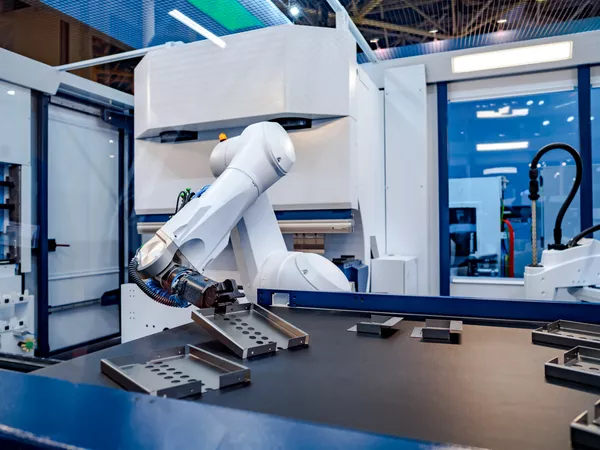
The design, sensing, and control of bio-inspired robotics have reached new heights, catalyzed by a deeper understanding of biological systems. These bio-robots, exemplified by their real-time intelligent operations, draw heavily from the innate efficiency of animal mechanisms. Fundamental features like path generation, motion planning, and navigation are integral, allowing these robots to adapt to environmental changes and execute dynamic, flexible behaviors in real settings. Despite substantial progress, bridging the gap between simulated modeling and practical deployment remains an area ripe for exploration to further enhance robotic adaptability and performance.
This Research Topic is dedicated to the confluence of bionics, cybernetics, and biorobotics—three intertwined fields that leverage biological paradigms to push the boundaries of robotic technology. The fusion of bionics’ structural emulation of biological entities, cybernetics’ feedback and control systems, and biorobotics’ application of these principles to achieve autonomous, adaptive locomotion forms the cornerstone of this research initiative. The aim is to advance the functional integration of these disciplines to create innovative robotic systems resembling biological locomotion and functionality.
To advance this field, contributions are sought that cover a broad spectrum of topics within bio-inspired locomotion and mobility, with emphasis on novel designs, control strategies, and broader applications. Articles of interest include, but are not limited to: o Design innovations in soft artificial muscles and morphing mechanisms for enhanced locomotion. o Kinematic and dynamic analysis of muscle-driven movements and artificial musculoskeletal architectures. o Advanced motion control methodologies, including model-based, model-free, and morphological approaches. o Development of bio-mimetic motion patterns and actuation systems. o Exploration of neuro-cybernetic behaviors, sensory-motor integrations, and AI applications for biorobotics. o Energy-efficient actuation and control solutions tailored for bio-inspired designs. o Cross-domain applications of bio-robots. o Multimodal locomotion strategies for terrain-adaptive movement. o Studies in aerodynamics, hydrodynamics, and terradynamics relevant to bio-inspired robotics. o Structural and biomechanical modeling to enhance the functionality of robotic systems mimicking flying, swimming, crawling, walking and other biomimetic motions.
This comprehensive exploration will not only deepen understanding but also expand the practical applications of robotics inspired by the intricacies of biological systems.
Article types and fees
This Research Topic accepts the following article types, unless otherwise specified in the Research Topic description:
Brief Research Report
Data Report
Editorial
FAIR² Data
FAIR² DATA Direct Submission
General Commentary
Hypothesis and Theory
Methods
Mini Review
Articles that are accepted for publication by our external editors following rigorous peer review incur a publishing fee charged to Authors, institutions, or funders.
Article types
This Research Topic accepts the following article types, unless otherwise specified in the Research Topic description:
Important note: All contributions to this Research Topic must be within the scope of the section and journal to which they are submitted, as defined in their mission statements. Frontiers reserves the right to guide an out-of-scope manuscript to a more suitable section or journal at any stage of peer review.