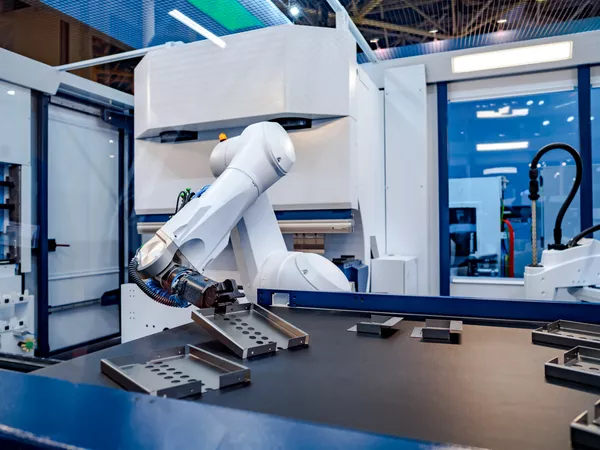
Large AI Models for Robotics and Interactive Systems

  • 699

    Total views and downloads

About this Research Topic

This Research Topic is still accepting articles.

Background

Recently, Large Language Models (LLMs) have demonstrated impressive reasoning capabilities across various domains. However, their effectiveness in real-world situations is limited due to the challenge of connecting their representations to the visual and physical aspects of the real world. This connection is crucial for addressing a broader range of real-world problems in computer vision and robotics. Previous efforts have combined LLM outputs with robotic policies and affordance functions for decision-making, but these approaches are limited because the LLMs only process textual input, which is insufficient for tasks that require understanding the geometric layout of a scene. Moreover, even advanced Vision-Language Models (VLMs) or Vision-Language Action Models (VLAMs) trained on tasks like visual question answering struggle with robotic reasoning tasks.

This Research Topic aims to explore the integration of large AI models in robotics and interactive systems, focusing on innovative solutions that bridge the gap between textual knowledge and physical execution. Moreover, it will present recent advancements on vision-language models tailored for robotic reasoning tasks, as well as case studies demonstrating their successful integration in real-world robotic systems for enhancing human-robot interaction and collaboration. The Research Topic will also focus on interactive systems that leverage large AI models for improved user experience and task efficiency and novel frameworks for adaptive learning that update models based on the interactions and the dynamics of the real-world environment. Strategies for balancing the trade-off between model complexity and real-time performance in robotic applications are also welcome.

We invite original research papers, review articles and case studies that address the following topics, among others:
1. Adaptive Learning for Robotics:
- Efficient and scalable methods for adapting large AI models to specific robotic tasks.
2. Real-World Inference:
- Methods for connecting AI model representations to visual and physical sensory modalities.
- Techniques for anchoring model outputs in real-world constraints ensuring reliable and contextually appropriate actions.
3. Integration of AI Models with Robotic Systems:
- Innovative approaches combining AI model outputs with robotic policies and affordance functions.
- Techniques for enhancing the geometric understanding of scenes through AI models.
4. Vision-Language Models (VLMs) in Robotics:
- Advancements in Vision-Language Action Models tailored for robotic reasoning tasks.
5. Interactive Systems and Human-Robot Interaction:
- AI models and interactive systems for enhancing human-robot interaction and collaboration.
- Studies on the impact of large AI models on the usability and acceptability of interactive systems.

Article types and fees

This Research Topic accepts the following article types, unless otherwise specified in the Research Topic description:

  • Brief Research Report
  • Data Report
  • Editorial
  • FAIR² Data
  • General Commentary
  • Hypothesis and Theory
  • Methods
  • Mini Review
  • Opinion

Articles that are accepted for publication by our external editors following rigorous peer review incur a publishing fee charged to Authors, institutions, or funders.

Keywords: Vision-Language Models, Real-World Inference, Interactive Systems, Human-Robot Interaction, Adaptive Learning for Robotics

Important note: All contributions to this Research Topic must be within the scope of the section and journal to which they are submitted, as defined in their mission statements. Frontiers reserves the right to guide an out-of-scope manuscript to a more suitable section or journal at any stage of peer review.

Topic editors

Manuscripts can be submitted to this Research Topic via the main journal or any other participating journal.

Impact

  • 699Topic views
View impact