AB
arpan banerjee
National Brain Research Centre (NBRC)
Gurgaon, India
1,147
Total views and downloads
Submit your idea
Select the journal/section where you want your idea to be submitted:
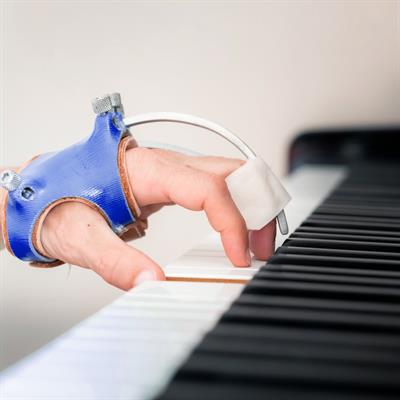
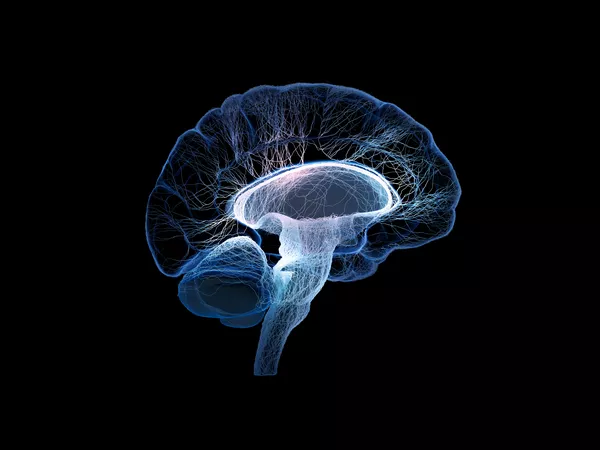
Multisensory integration helps the brain to synthesize sensory data from different modalities, such as visual, auditory, and tactile, into a coherent perception. This process is fundamental for interacting with the environment effectively. Recent advances in computational neuroscience have shed light on the brain's strategies for multisensory integration and different organizational scales - spiking activity, local fields, large-scale electromagnetic signals, and brain metabolism. Studies have made considerable progress in illustrating the integrative nature of multisensory processes primarily from two perspectives - as a statistical inference engine that combines optimal information from different modalities to build a coherent perception and as a complex nonlinear dynamic system that displays attractor-like behavior to facilitate stable perceptual states. However, there also remains a gap in understanding the specific computational frameworks and neuronal pathways at play. Deeper insights into these areas are crucial for both theoretical and practical applications to various domains such as brain-computer interfaces, mental health, etc.
This Research Topic aims to enrich our understanding of the computational foundations of multisensory integration. The central challenge is determining the neural circuit mechanisms that allow for the efficient and accurate combination of sensory inputs. This encompasses the exploration of computational models and experimental approaches at various scales, from microscopic neural processes to broader network functionalities. By mapping these models, we aim to delineate how the brain manages sensory uncertainty and redundancy, yielding potential applications in areas such as sensory prosthetics, machine perception enhancements, and treatments for integration disorders. We are particularly interested in contributions that provide new theoretical perspectives, experimental results, and comprehensive reviews in this domain.
To refine our understanding of multisensory integration, we seek contributions that approach this phenomenon through computational methods and experimental insights. This Research Topic covers, but is not limited to, the following areas:
• Computational strategies for integrating sensory modalities at multiple scales- single neurons to macroscopic brain activity.
• Empirical demonstrations of multisensory integration mechanisms using behavior/ psychophysics
• The influence of cognitive factors like attention, learning, and memory on sensory fusion.
• Innovative algorithms to boost multisensory processing via leveraging next-generation AI tools.
We invite a diverse range of manuscript types, including original research, in-depth reviews, meta-analyses, and theoretical explorations. Authors are encouraged to submit pioneering research that explores new horizons and challenges existing paradigms within this vibrant field.
This Research Topic accepts the following article types, unless otherwise specified in the Research Topic description:
Articles that are accepted for publication by our external editors following rigorous peer review incur a publishing fee charged to Authors, institutions, or funders.
Keywords: multisensory integration, sensory fusion, neural circuits, neuronal pathways, multisensory processes, Computational neuroscience, brain-computer interfaces, artificial intelligence, AI
Important note: All contributions to this Research Topic must be within the scope of the section and journal to which they are submitted, as defined in their mission statements. Frontiers reserves the right to guide an out-of-scope manuscript to a more suitable section or journal at any stage of peer review.
Manuscripts can be submitted to this Research Topic via the main journal or any other participating journal.
Submit your idea
Select the journal/section where you want your idea to be submitted: