JZ
jinghua zhang
Hohai University
Nanjing, China
1,653
Total downloads
15k
Total views and downloads
Advances in artificial intelligence (AI) are revolutionizing the way we observe, quantify, and interpret the microscopic world—from single-cell microbes to complex tissue specimens. AI-driven algorithms can automatically and objectively extract high-dimensional features from both imaging and multi-omics data, overcoming the subjective biases and throughput limitations of traditional manual analyses. This convergence of AI with microbiology, bioinformatics, and medical microscopy opens new avenues for discovery across life sciences and clinical research.
This Research Topic aims to showcase cutting-edge AI methodologies and applications that push the boundaries of microbial and microscopic analysis. We seek original research and in-depth reviews that (1) introduce novel computational techniques, (2) demonstrate rigorous validation on biological or clinical datasets, and/or (3) offer transferable workflows and software tools for the broader community.
We strongly encourage cross-disciplinary submissions that represent joint efforts between computational experts and experimental/clinical scientists. Submissions describing new tools or algorithms should ideally include benchmarking against existing standards and offer publicly accessible code or datasets.
We especially encourage submissions in, but not limited to, the following areas:
1. AI + Microbial Image Analysis
– Classification, segmentation, and quantification of bacteria, fungi, viruses, and microbial communities
– Automated colony counting, morphological profiling, and single-cell tracking
2. AI + Bioinformatics & Computational Microbiology
– Machine-learning approaches for genomics, metagenomics, transcriptomics, and proteomics
– Deep learning for microbial community profiling, antimicrobial-resistance prediction, and functional annotation
3. AI + Medical Microscopic Image Analysis
– End-to-end workflows for histopathology, cytology, and digital pathology
– Virtual staining, super-resolution reconstruction, and anomaly detection in clinical specimens
4. AI + Multi-modal & Multi-omics Integration
– Fusion of microscopy, sequencing, and spectroscopy data
– Spatial-omics and image-guided single-cell analyses
5. Computational Pathology & Digital Histology
– End-to-end deep-learning frameworks for tissue segmentation, grading, and biomarker discovery
– Explainable AI in clinical diagnostics
Please note that Systems Microbiology does not consider descriptive studies that are solely based on amplicon (e.g., 16S rRNA) profiles, unless they are accompanied by a clear hypothesis and experimentation, and provide insight into the microbiological system or process being studied.
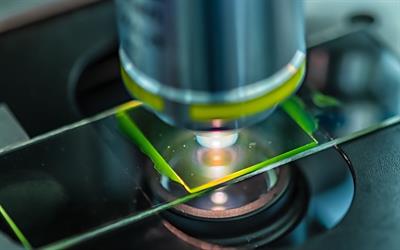
Keywords: artificial intelligence, deep learning; microbial image analysis, digital pathology, bioinformatics.
Important note: All contributions to this Research Topic must be within the scope of the section and journal to which they are submitted, as defined in their mission statements. Frontiers reserves the right to guide an out-of-scope manuscript to a more suitable section or journal at any stage of peer review.
