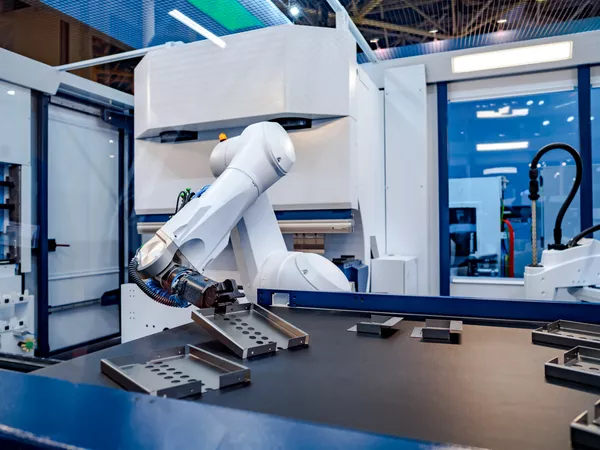
In recent years, healthcare has been witnessing an increasing integration of robotic systems, underscoring their growing potential to carry out complex medical tasks with unprecedented precision, safety, and adaptability. Medical robots are now increasingly utilized in various applications, such as assistant robots for tasks like sterilization, patient monitoring, and medical imaging; rehabilitation systems, including exoskeletons and smart prosthetics; as well as procedural robots deployed in surgeries and minimally invasive interventions. While these technologies often offer redundant degrees of freedom, enhancing their flexibility and dexterity in constrained environments, they also present notable challenges in kinematics, control, and real-time decision-making. Addressing these challenges is crucial, as higher precision is essential to inspire confidence among patients and medical staff alike.
This Research Topic aims to explore the development and implementation of AI-enhanced algorithms, innovative robotic morphologies, and clinical applications of medical robots. The main objectives include the investigation of intelligent control systems, the advancement of human–robot interaction, validation methodologies, and the exploration of new use cases within hospital and rehabilitation settings. These research endeavors are essential to bridging existing gaps and enhancing the effectiveness of medical robots.
To gather further insights into the advances in medical robotics, we invite contributions that address but are not limited to the following themes:
Assistant robots for sterilization, patient monitoring, and medical imaging, emphasizing implementation strategies and decision-making algorithms.
Rehabilitation robots, including upper- and lower-limb exoskeletons, prostheses, and robotic systems for physical or neurological therapy, with a focus on hardware innovations and adaptive therapy algorithms.
Procedure-oriented robotics, covering surgical systems, robotic platforms for sample collection, minimally invasive tools, and highly redundant manipulators designed for precision tasks.
Intelligent control systems and algorithms for optimizing robot performance in healthcare settings.
Human-robot interaction design and its impact on patient and practitioner trust and safety.
Article types and fees
This Research Topic accepts the following article types, unless otherwise specified in the Research Topic description:
Brief Research Report
Clinical Trial
Data Report
Editorial
FAIR² Data
FAIR² DATA Direct Submission
General Commentary
Hypothesis and Theory
Methods
Articles that are accepted for publication by our external editors following rigorous peer review incur a publishing fee charged to Authors, institutions, or funders.
Article types
This Research Topic accepts the following article types, unless otherwise specified in the Research Topic description:
Brief Research Report
Clinical Trial
Data Report
Editorial
FAIR² Data
FAIR² DATA Direct Submission
General Commentary
Hypothesis and Theory
Methods
Mini Review
Opinion
Original Research
Perspective
Policy and Practice Reviews
Review
Systematic Review
Technology and Code
Keywords: Assistant robots, Rehabilitation robots, Medical procedure robots, Medical redundant robots, Medical framework robots
Important note: All contributions to this Research Topic must be within the scope of the section and journal to which they are submitted, as defined in their mission statements. Frontiers reserves the right to guide an out-of-scope manuscript to a more suitable section or journal at any stage of peer review.