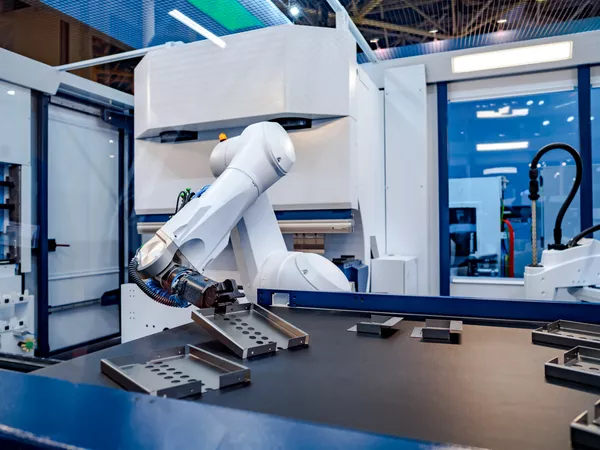
Autonomous robotic systems are increasingly evolving across diverse domains, including manufacturing, healthcare, autonomous vehicles, and space exploration. These systems' growth in autonomy and deployment in intricate and sometimes hazardous settings highlights the pressing need for their safety, security, robustness, and reliability. Historically, robotics heavily relied on deterministic control and pre-set behaviors, but the integration of machine learning, particularly deep learning, has ushered in more adaptable decision-making capabilities. Despite these advancements, new challenges emerge concerning unpredictability, explainability, and vulnerability to faults and cyber threats.
Recent breakthroughs incorporate large language models (LLMs) and data-driven strategies to enhance system monitoring, risk assessment, and planning. Concurrently, fault detection, diagnosis, and reconfiguration research strives to enable systems to adapt in real time to internal and external disruptions. These advancements accentuate the crucial demand for comprehensive safety and security frameworks that amalgamate classical control theory with modern AI techniques and cybersecurity measures—especially in domains where system failures could lead to severe repercussions.
This Research Topic aims to address the complex landscape faced by autonomous robotic systems in ensuring safety, security, robustness, and reliability, particularly in unpredictable, dynamic, and potentially adversarial environments. It intends to answer pivotal questions and test hypotheses related to risk assessment, integrated safety frameworks, and holistic approaches to fault tolerance in robotic systems.
To gather further insights in this domain, we welcome articles addressing, but not limited to, the following themes:
Safe machine learning applications within robotic systems
Utilization of LLMs for risk and hazard analysis in robotic deployments
Cybersecurity threats and their implications for robotic system safety
Advanced control algorithms ensuring safe guidance and navigation of robots
Coordination and control strategies for multiagent robotic systems
Algorithms for robust navigation and safe control in dynamic environments
Methods for real-time fault detection, diagnosis, and system reconfiguration
We further encourage submissions that explore novel methodologies and multidisciplinary approaches contributing to the reliable and secure operation of autonomous robotic systems. Articles types can include original research, review, methods, and technology reports.
Article types and fees
This Research Topic accepts the following article types, unless otherwise specified in the Research Topic description:
Brief Research Report
Data Report
Editorial
FAIR² Data
FAIR² DATA Direct Submission
General Commentary
Hypothesis and Theory
Methods
Mini Review
Articles that are accepted for publication by our external editors following rigorous peer review incur a publishing fee charged to Authors, institutions, or funders.
Article types
This Research Topic accepts the following article types, unless otherwise specified in the Research Topic description:
Important note: All contributions to this Research Topic must be within the scope of the section and journal to which they are submitted, as defined in their mission statements. Frontiers reserves the right to guide an out-of-scope manuscript to a more suitable section or journal at any stage of peer review.