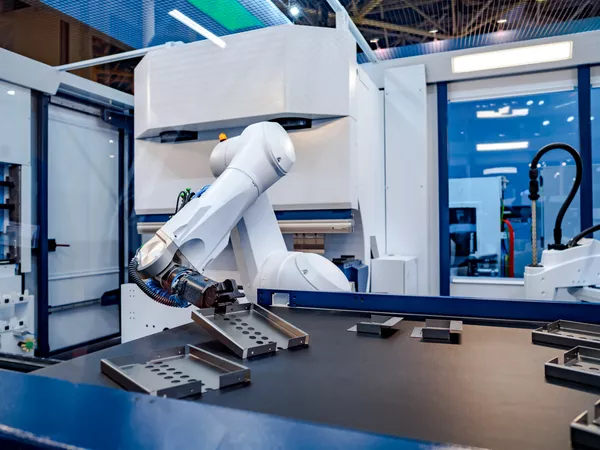
Energy principles have long played a central role in physics and engineering, offering powerful tools for modeling and controlling dynamical systems. In robotics, they enable stable and robust interactions in uncertain environments and support the analysis and interpretability of control actions. However, energy also provides a natural interface between control theory and AI, unifying physical structure with data-driven flexibility. As robots increasingly operate in complex, unstructured settings, learning-based control methods have gained traction for their adaptability, but they often lack formal safety guarantees, require large datasets, and are difficult to interpret. Energy-based methods offer a promising alternative by embedding physical structure into control and learning architectures. They provide a modular, interpretable way to model and regulate energy flow across subsystems, which is particularly valuable for physical interactions. Their compatibility with learning and optimization techniques makes them a compelling foundation for building safer, more efficient, and more generalizable robotic systems.
This Research Topic aims to encourage papers that explore or advance the integration of energy-based principles into robotic learning and control, creating energy-informed robotic systems. The goal is to bring together in a single special issue the most novel works that combine the robustness and formal guarantees of energy-based control with the adaptability of learning-based approaches. By leveraging the strengths of both paradigms, this integration can lead to a new generation of controllers that are more efficient and generalizable, while still ensuring safety. For this reason, we welcome submissions addressing current challenges, presenting novel methodologies, and demonstrating real-world applications of energy-based approaches. We also aim to highlight future research directions and technologies that can leverage energy concepts to improve robustness, efficiency, interpretability, and safety in autonomous robotics. This Research Topic will serve as a starting point for anyone interested in applying AI techniques within energy-based control frameworks.
We encourage submissions of any article type that address the role of energy principles in robotic control and learning, including but not limited to the following topics: - Passivity-Based Control for AI - Virtual Energy Tanks - Time-Domain Passivity Control - Port-Based Modeling and Port-Hamiltonian Theory - Mechanical Energy and Power Flow Analysis and Regulation - Passivity Analysis and Passivization of Robot Control Schemes - Energy and Power-based Metrics for Safe Robot Interaction - Physics-Informed Machine Learning with Energy Priors - Lagrangian, Hamiltonian and Port-Hamiltonian Neural Networks - Integration of Machine Learning and Port-Hamiltonian Theory - Reinforcement Learning with Energy-Based Policies
This Research Topic accepts the following article types, unless otherwise specified in the Research Topic description:
Brief Research Report
Data Report
Editorial
FAIR² Data
General Commentary
Hypothesis and Theory
Methods
Mini Review
Opinion
Articles that are accepted for publication by our external editors following rigorous peer review incur a publishing fee charged to Authors, institutions, or funders.
Article types
This Research Topic accepts the following article types, unless otherwise specified in the Research Topic description:
Important note: All contributions to this Research Topic must be within the scope of the section and journal to which they are submitted, as defined in their mission statements. Frontiers reserves the right to guide an out-of-scope manuscript to a more suitable section or journal at any stage of peer review.