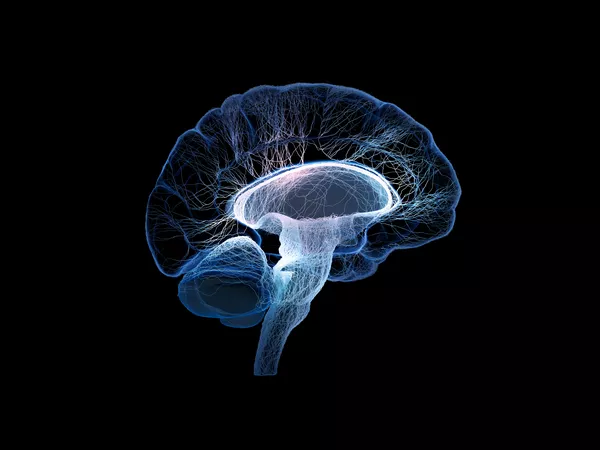
The brain’s function and integrity emerge not only from properties of individual regions, but, more fundamentally, from the intricate web of connections linking them into complex networks. In recent years, network science and topological approaches have provided powerful new perspectives for understanding how these connections—and the patterns they form—relate to both healthy brain function and neurological disorders.
Structural and functional network analysis, which includes methods such as graph theory, network mapping, and topological data analysis, is enabling researchers to identify how the organization and disruptions of connectivity relate to conditions including Alzheimer’s disease, epilepsy, and autism spectrum disorder. These approaches can help uncover subtle changes in the brain organization that might not be detectable using more traditional, localized techniques.
Despite significant advances, important questions remain about how best to translate network and topological insights into clinical practice, and how these frameworks can provide reliable biomarkers or predictive models for disease progression. There is also a growing interest in integrating these approaches across disciplines—including mathematics, neuroscience, data science, and engineering—to further our understanding of the brain architecture and its alterations in diseases.
This Research Topic aims to bring together contributions that advance our understanding of brain disorders by focusing on networks structure, organization, and topology.
Central questions include:
o How can mapping changes in structural and functional connectivity enhance our ability to diagnose or monitor neurological disorders?
o What new insights do network and topological approaches provide, compared to standard analytic techniques?
o How can network-based metrics and organizational patterns be translated into clinically meaningful biomarkers?
o What are the current challenges and future directions in the application of network science to neuroscience and neurology?
We welcome original research, reviews, methodological articles, case studies, and theoretical contributions addressing (but not limited to):
o Identification and interpretation of network and topological biomarkers for brain disorders
o Comparative studies of network-based approaches versus conventional neuroscience methods
o Case studies demonstrating the impact of network perspectives in clinical and research settings
o Cross-disciplinary or integrative work linking mathematics, neuroscience, engineering, and computer science in the study of brain connectivity
o Advances in visualization, quantification, and mapping of brain networks in health and disease
o Perspectives on future methodological innovations in network neuroscience
Article types and fees
This Research Topic accepts the following article types, unless otherwise specified in the Research Topic description:
Brief Research Report
Case Report
Clinical Trial
Community Case Study
Curriculum, Instruction, and Pedagogy
Data Report
Editorial
FAIR² Data
FAIR² DATA Direct Submission
Articles that are accepted for publication by our external editors following rigorous peer review incur a publishing fee charged to Authors, institutions, or funders.
Article types
This Research Topic accepts the following article types, unless otherwise specified in the Research Topic description:
Important note: All contributions to this Research Topic must be within the scope of the section and journal to which they are submitted, as defined in their mission statements. Frontiers reserves the right to guide an out-of-scope manuscript to a more suitable section or journal at any stage of peer review.