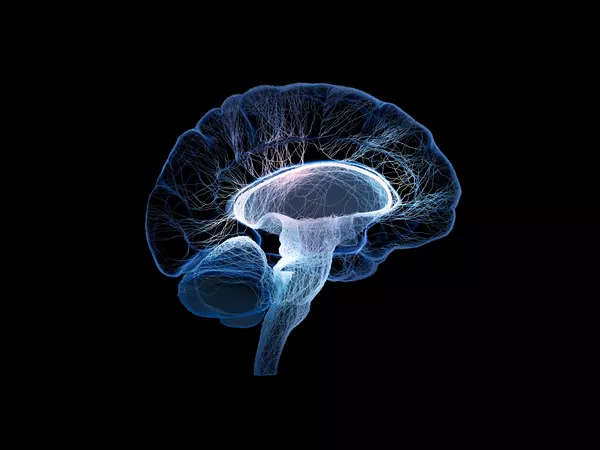
Positron Emission Tomography (PET) has become an indispensable tool in medical imaging, providing unique insights into the physiological processes of the brain. Advancements in brain PET imaging have focused on overcoming limitations related to quantification accuracy, resolution, and the interpretation of dynamic biological processes. A key area of development involves kinetic modeling techniques, which have undergone significant refinement to increase the amount of information that can be extracted from PET scans. Meanwhile, novel PET tracers and targets are constantly being characterized to provide more specific and insightful data about various brain functions and pathologies. Despite these advancements, challenges remain, including the need for improved computational methods and the integration of new discoveries and quantification methods into clinical practice.
This Research Topic aims to explore advancements in Brain PET imaging that enhance quantification capabilities, focusing on new kinetic modeling techniques, the development of novel PET tracers and targets, and the implementation of advanced computational methods. By addressing these areas, the topic seeks to answer critical questions such as how modeling techniques can be optimized, which novel tracers provide the most accurate readings of physiological processes, and how artificial intelligence can aid in improving quantification. Additionally, the research will explore how emerging high-performance scanners can be utilized to enhance quantitative accuracy.
To gather further insights within the domain of brain PET imaging, we welcome articles addressing, but not limited to, the following themes:
- Emerging kinetic modeling techniques for improved data interpretation - Development and application of novel PET tracers and targets - AI-enabled methods for enhanced quantification accuracy - Advances in parametric imaging for detailed physiological mapping - Innovations in new high-performance PET scanners and their applications
Article types that would be suitable for this research topic include original research, reviews, and methodological papers.
Article types and fees
This Research Topic accepts the following article types, unless otherwise specified in the Research Topic description:
Brief Research Report
Case Report
Clinical Trial
Community Case Study
Curriculum, Instruction, and Pedagogy
Data Report
Editorial
FAIR² Data
General Commentary
Articles that are accepted for publication by our external editors following rigorous peer review incur a publishing fee charged to Authors, institutions, or funders.
Article types
This Research Topic accepts the following article types, unless otherwise specified in the Research Topic description:
Important note: All contributions to this Research Topic must be within the scope of the section and journal to which they are submitted, as defined in their mission statements. Frontiers reserves the right to guide an out-of-scope manuscript to a more suitable section or journal at any stage of peer review.