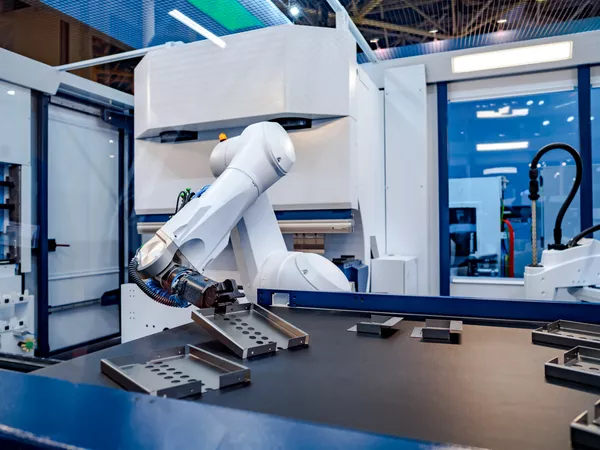
Generative AI has emerged as a transformative technology in robotics, offering powerful capabilities for synthesizing data that supports learning, planning, and decision-making. Traditional approaches to robotic datasets often rely on costly data collection, limited real-world availability, or task-specific engineering that lacks scalability. Generative models, by contrast, provide opportunities to create diverse, multimodal, and task-aligned datasets at scale. When integrated with simulation and digital twinning, these models can produce realistic physical, spatial, and geometric representations of the world, bridging the gap between synthetic and real data. This development is particularly critical as robotics moves toward deployment in unstructured environments, where robustness and adaptability are key. Establishing a systematic framework for data generation, simulation fidelity, and evaluation is therefore essential to accelerate progress in data-driven robotic intelligence.
The primary goal of this Research Topic is to address the challenge of generating scalable and realistic data for robotics while ensuring alignment with real-world requirements. Robotics demands training data that is physically consistent, spatially accurate, and representative of diverse tasks and environments. Recent advances in generative AI—spanning diffusion models, foundation models, and multimodal synthesis—have shown promise for creating such data. However, three critical issues remain: (1) aligning generated data with specific robotic tasks and capabilities; (2) achieving physical and geometric realism that faithfully reflects digital twins of robots, objects, and environments; and (3) developing fair, cloud-accessible benchmarking platforms that enable consistent comparison across methods. This Research Topic aims to unify these advances by fostering interdisciplinary collaboration between generative modeling, physics-based simulation, and robotics. By doing so, it seeks to accelerate the creation of robust training data, bridge synthetic-to-real gaps, and establish new standards for reproducibility and benchmarking in robotic research.
This Research Topic welcomes contributions that explore the intersection of generative AI, digital twinning, and robotics. We seek work that advances methods for scalable and realistic data generation, particularly those integrating physics-informed or simulation-based realism. Topics of interest include generative models for robotic perception and control, simulation-to-reality transfer, digital twin development, benchmarking datasets and protocols, and frameworks for cloud-based evaluation. We encourage submissions spanning theory, methodology, and applied case studies, as well as interdisciplinary perspectives from AI, robotics, and simulation communities. Manuscript types may include original research articles, methodological advances, reviews, and benchmark reports. By curating diverse contributions, this Collection aims to establish a foundation for scalable, realism-informed, and reproducible research at the frontier of generative AI and robotics.
Article types and fees
This Research Topic accepts the following article types, unless otherwise specified in the Research Topic description:
Brief Research Report
Data Report
Editorial
FAIR² Data
FAIR² DATA Direct Submission
General Commentary
Hypothesis and Theory
Methods
Mini Review
Articles that are accepted for publication by our external editors following rigorous peer review incur a publishing fee charged to Authors, institutions, or funders.
Article types
This Research Topic accepts the following article types, unless otherwise specified in the Research Topic description:
Brief Research Report
Data Report
Editorial
FAIR² Data
FAIR² DATA Direct Submission
General Commentary
Hypothesis and Theory
Methods
Mini Review
Opinion
Original Research
Perspective
Policy and Practice Reviews
Review
Systematic Review
Technology and Code
Keywords: Generative AI, Robotics, Digital Twin, 3D Reconstruction, Data Generation, Scalable AI
Important note: All contributions to this Research Topic must be within the scope of the section and journal to which they are submitted, as defined in their mission statements. Frontiers reserves the right to guide an out-of-scope manuscript to a more suitable section or journal at any stage of peer review.