HD
h. douglas (doug) morris
Uniformed Services University of the Health Sciences
Bethesda, United States
629
Total views and downloads
Submit your idea
Select the journal/section where you want your idea to be submitted:
Manuscript Submission Deadline 10 May 2026
This Research Topic is currently accepting articles.
In the field of cognitive neuroscience, neuroimaging has become a valuable tool for investigating the complex relationships between brain connectivity and cognitive functions. Over the past decade, significant advancements have been made in imaging technologies, allowing researchers to delve deeper into the mysterious structures of white matter connectivity. Despite these advancements, key questions remain regarding the details of neural pathways and how they influence cognitive processes. Current research reveals gaps in our understanding, particularly in how microstructural changes in white matter correspond to functional impairments or cognitive enhancements.
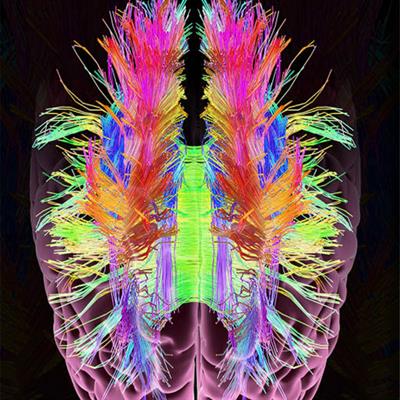
Recent studies have utilized innovative neuroimaging techniques, such as diffusion MRI (dMRI) and functional MRI (fMRI), to map brain connectivity with unprecedented precision. These studies provide a visualization of white matter fibers and their role in cognitive functions. For instance, new evidence suggests that disruptions in white matter pathways are linked to cognitive decline in aging or neurological disorders. However, discrepancies in findings have fueled discussions on the consistency of imaging methods and their interpretations. Moreover, there is a growing need for longitudinal studies that could provide insights into the dynamic nature of white matter throughout different life stages and conditions, including short-term dynamics and emerging evidence of functional connectivity within white matter.
This Research Topic aims to consolidate current knowledge and explore new horizons in understanding how neuroimaging can illuminate aspects of white matter and its contribution to cognitive functions. By integrating diverse methodologies and perspectives, the topic seeks to address crucial questions: How do changes in white matter connectivity correlate with cognitive variations? What novel neuroimaging methods can enhance our understanding of these structures? In particular, we emphasize submissions that focus on either novel methods or new applications of existing methods to study white matter dynamics. This endeavor strives to provide a comprehensive outlook on the field, fostering the development of improved diagnostic and therapeutic approaches in clinical settings.
To gather further insights into neuroimaging and cognition, we welcome articles addressing, but not limited to, the following themes:
o Innovations in neuroimaging techniques for analyzing brain connectivity and white matter dynamics.
o Correlations between white matter integrity and cognitive performance.
o Longitudinal studies on aging and white matter changes.
o Cross-disciplinary approaches combining neuroimaging and cognitive psychology.
o The impact of neurological disorders on white matter dynamics.
We accept a variety of article types, including original research, review, mini review, opinion, and case studies.
This Research Topic accepts the following article types, unless otherwise specified in the Research Topic description:
Articles that are accepted for publication by our external editors following rigorous peer review incur a publishing fee charged to Authors, institutions, or funders.
Keywords: cognitive neuroscience, neuroimaging, brain connectivity, white matter, diffusion tensor imaging, DTI, functional MRI, fMRI, microstructural changes, cognitive functions, cognitive performance, cognitive decline, aging, neurological disorders
Important note: All contributions to this Research Topic must be within the scope of the section and journal to which they are submitted, as defined in their mission statements. Frontiers reserves the right to guide an out-of-scope manuscript to a more suitable section or journal at any stage of peer review.
Manuscripts can be submitted to this Research Topic via the main journal or any other participating journal.
Submit your idea
Select the journal/section where you want your idea to be submitted: