CH
chenshen huang
Fuzhou University
Fuzhou, China
1,025
Total views and downloads
Submit your idea
Select the journal/section where you want your idea to be submitted:
Manuscript Submission Deadline 2 June 2026
This Research Topic is currently accepting articles.
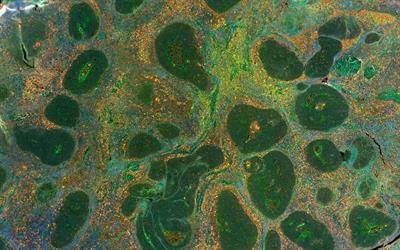
The 2025 Nobel Prize in Physiology or Medicine highlighted regulatory T cells (Tregs) as central to peripheral immune tolerance. In solid tumors, analogous tolerance programs are co‑opted to create an immunosuppressive microenvironment, where Tregs, M2 macrophages, and cancer‑associated fibroblasts (CAFs) cooperate to drive tumor progression and immune escape. Crucially, their net impact is not uniform and remains incompletely defined: depending on spatial niches and metabolic pressures—hypoxia, lactate‑driven acidity, and nutrient competition—as well as stromal and neural cues, these populations can either potentiate tumor growth or help restrain harmful inflammation and support antitumor control. Their effects are therefore best viewed as a double‑edged sword governed by spatial and metabolic dependencies. Defining when and where these states arise is essential to rebalance immunity and advance more precise cancer immunotherapies.
This Research Topic aims to define how spatial organization and metabolic reprogramming govern the differentiation, plasticity, and net impact of immunosuppressive cells in solid tumors. We focus on regulatory T cells (Tregs), tumor-associated macrophages (M2‑polarized), cancer-associated fibroblasts (CAFs), and related regulatory populations, asking when they potentiate tumor progression, immune escape, and therapy resistance, and when they instead help restrain harmful inflammation and support antitumor control. A key objective is to map the crosstalk between these suppressive cells and immunostimulatory compartments—including tertiary lymphoid structures (TLSs), dendritic-cell networks, and cytotoxic lymphocytes—across defined spatial niches and metabolic gradients (hypoxia, acidity, nutrient competition). To achieve this, we encourage integrative multi-omics that combine single-cell and spatial transcriptomics/proteomics, imaging mass cytometry, metabolomics, advanced microscopy, and computational modeling to build spatially resolved, cross-scale maps of tumor–immune ecosystems. By linking mechanism to translation, we aim to deliver actionable biomarkers and neighborhood signatures, nominate targets to reprogram suppressive states, and propose rational combinations that exploit metabolic vulnerabilities and spatial dependencies for precision immuno-oncology.
This Research Topic welcomes Original Research, Reviews, Mini Reviews, Perspectives, Hypothesis & Theory, and Brief Research Reports. We welcome studies that dissect the spatial and metabolic determinants of immunosuppression in solid tumors and their impact on progression, immune escape, therapy resistance, and clinical outcomes. Mechanistic, computational, and translational submissions are equally encouraged. Potential subtopics include, but are not limited to:
1. Spatial architecture and neighborhood ecology of Tregs, M2 macrophages, and CAFs in tumor niches
2. Double-edged, context-dependent functions; interplay with immunostimulatory compartments (TLSs, dendritic cells, cytotoxic lymphocytes)
3. Multi-omics and spatial methods—single-cell/spatial transcriptomics or proteomics, imaging mass cytometry, metabolomics; computational integration
4. Biomarkers and patient stratification; therapeutic reprogramming and combinations exploiting metabolic and spatial dependencies
5. Prognostic and therapeutic implications of immunosuppressive networks in cancer
This Research Topic accepts the following article types, unless otherwise specified in the Research Topic description:
Articles that are accepted for publication by our external editors following rigorous peer review incur a publishing fee charged to Authors, institutions, or funders.
Keywords: Tumor microenvironment, immunosuppression, regulatory T cells, M2 macrophages, cancer-associated fibroblasts, multi-omics, spatial transcriptomics, immune regulation, solid tumors, Metabolic reprogramming
Important note: All contributions to this Research Topic must be within the scope of the section and journal to which they are submitted, as defined in their mission statements. Frontiers reserves the right to guide an out-of-scope manuscript to a more suitable section or journal at any stage of peer review.
Manuscripts can be submitted to this Research Topic via the main journal or any other participating journal.
Submit your idea
Select the journal/section where you want your idea to be submitted: