EB
edith botek
The Royal Belgian Institute for Space Aeronomy (BIRA-IASB)
Brussels, Belgium
757
Total views and downloads
Submit your idea
Select the journal/section where you want your idea to be submitted:
Manuscript Summary Submission Deadline 22 May 2026 | Manuscript Submission Deadline 10 September 2026
This Research Topic is currently accepting articles.
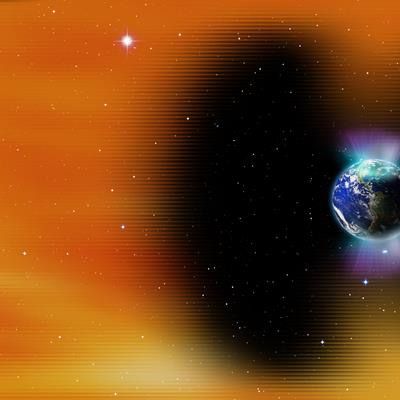
The radiation environment near Earth remains a challenging topic of study due to its complex dynamics, spanning multiple energy and temporal scales. During periods of enhanced solar activity, charged particles trapped in the inner magnetosphere can precipitate into the atmosphere, while outer regions simultaneously act as sources and sinks of radiation. Interactions between energetic particles and specific plasma wave modes, generated both locally and remotely within the magnetosphere, regulate particle acceleration, transport, and loss processes that shape the radiation environment. Consequently, this environment exhibits pronounced spatial and temporal variability, requiring continuous monitoring and advanced modeling to accurately capture its evolution. Understanding these processes is essential not only for fundamental space physics but also for mitigating risks to human health, technological infrastructure, and space-based operations.
Monitoring the near-Earth radiation environment is critically important because its potentially harmful effects bridge large-scale space dynamics and microscopic radiation interactions that impact materials and living systems. Variations in electromagnetic fields and energetic particle populations, driven by solar wind forcing and internal magnetospheric processes, directly influence radiation exposure levels experienced by satellites, astronauts, aviation systems, and ground-based infrastructure. This multidisciplinary domain encompasses both the global dynamics of electromagnetic waves and energetic particles, including their origin, propagation, and coupling, as well as the foundational processes governing energy deposition, material degradation, and biological impacts. The availability of vast and heterogeneous datasets from satellite missions, ground-based observations, laboratory experiments, and simulations, combined with recent advances in modeling, data management, and high-performance computing has established a robust basis for deploying Artificial Intelligence (AI). AI methods have the potential to synthesize diverse data, detect concealed correlations, and expand scientific knowledge to previous inaccessible frontiers, empowering more accurate risk assessments and mitigation strategies for both space and terrestrial environments.
This Research Topic aims to foster the development and use of AI-assisted modeling and predictive tools, such as machine learning, deep learning, ensemble methods, support vector machines, Gaussian processes, graph neural networks, and Physics-Informed Neural Networks (PINNs), to significantly improve our understanding and forecasting of radiation processes near Earth. The goal is to bridge insights from physics, chemistry, and the life sciences with state-of-the-art computational approaches to advance prediction capabilities and develop innovative mitigation measures. To gather further insights into this interdisciplinary field, we welcome original research articles addressing, but not limited to, the following themes:
• Ionosphere–plasmasphere dynamics.
• Radiation belt modeling and forecasting.
• Wave–particle interactions.
• Atmosphere–radiation interactions.
• Aurora phenomena.
• Impacts on technological systems and human health.
We particularly encourage contributions that leverage AI methodologies to advance understanding, prediction, and mitigation strategies in these domains.
This Research Topic accepts the following article types, unless otherwise specified in the Research Topic description:
Articles that are accepted for publication by our external editors following rigorous peer review incur a publishing fee charged to Authors, institutions, or funders.
Keywords: Artificial Intelligence, Space Physics, Space Radiation, Radiation Effects, Inner Magnetosphere
Important note: All contributions to this Research Topic must be within the scope of the section and journal to which they are submitted, as defined in their mission statements. Frontiers reserves the right to guide an out-of-scope manuscript to a more suitable section or journal at any stage of peer review.
The Royal Belgian Institute for Space Aeronomy (BIRA-IASB)
Brussels, Belgium
Northumbria University
Newcastle upon Tyne, United Kingdom
ONERA / DPHY, Université de Toulouse
Toulouse, France
Goddard Space Flight Center, National Aeronautics and Space Administration
Greenbelt, United States

Manuscripts can be submitted to this Research Topic via the main journal or any other participating journal.
Submit your idea
Select the journal/section where you want your idea to be submitted: