Male fertility is profoundly impacted by environmental factors from lifestyle, diseases, and toxicants. However, the specific molecular mechanisms of these external influences on male reproductive health remain unclear. This research topic aimed to gain insights into how elements like toxicants, diseases, medications, and nutrition modulate male fertility at the cellular and molecular levels. Better characterizing pathways linking diverse external stimuli to outcomes could inform improving diagnostic and therapeutic approaches for infertility. Identifying shared regulatory mechanisms across conditions may highlight targets for non-invasive strategies or restoring function. Ultimately, a deeper understanding of resilience and vulnerability could accelerate enhancing diagnosis and treatment impacted by environment and health. This editorial overviews key contributions advancing the understanding of male fertility regulation against stressors.
Several studies featured in this research topic provided important new understandings of the dynamic cellular processes governing normal spermatogenesis and their disruption.
Reproductive Medicine Center, National Health Commission (NHC) Key Laboratory of Male Reproduction and Genetics, Guangdong Provincial Reproductive Science Institute (Guangdong Provincial Fertility Hospital), Human Sperm Bank of Guangdong Province, China
ZL
Zefang Luo
Department of Andrology, National Health Commission (NHC) Key Laboratory of Male Reproduction and Genetics, Guangdong Provincial Reproductive Science Institute (Guangdong Provincial Fertility Hospital), Human Sperm Bank of Guangdong Province, China
ZQ
Zhaohui Qing
Department of Anesthesiology, National Health Commission (NHC) Key Laboratory of Male Reproduction and Genetics, Guangdong Provincial Reproductive Science Institute (Guangdong Provincial Fertility Hospital), Human Sperm Bank of Guangdong Province, China
XX
Xiaolan Xiao
Department of Anesthesiology, National Health Commission (NHC) Key Laboratory of Male Reproduction and Genetics, Guangdong Provincial Reproductive Science Institute (Guangdong Provincial Fertility Hospital), Human Sperm Bank of Guangdong Province, China
LH
Lei Hu
Department of Andrology, National Health Commission (NHC) Key Laboratory of Male Reproduction and Genetics, Guangdong Provincial Reproductive Science Institute (Guangdong Provincial Fertility Hospital), Human Sperm Bank of Guangdong Province, China
YZ
Yu Zhou
Department of Andrology, National Health Commission (NHC) Key Laboratory of Male Reproduction and Genetics, Guangdong Provincial Reproductive Science Institute (Guangdong Provincial Fertility Hospital), Human Sperm Bank of Guangdong Province, China
XZ
Xinzong Zhang
Department of Andrology, National Health Commission (NHC) Key Laboratory of Male Reproduction and Genetics, Guangdong Provincial Reproductive Science Institute (Guangdong Provincial Fertility Hospital), Human Sperm Bank of Guangdong Province, China
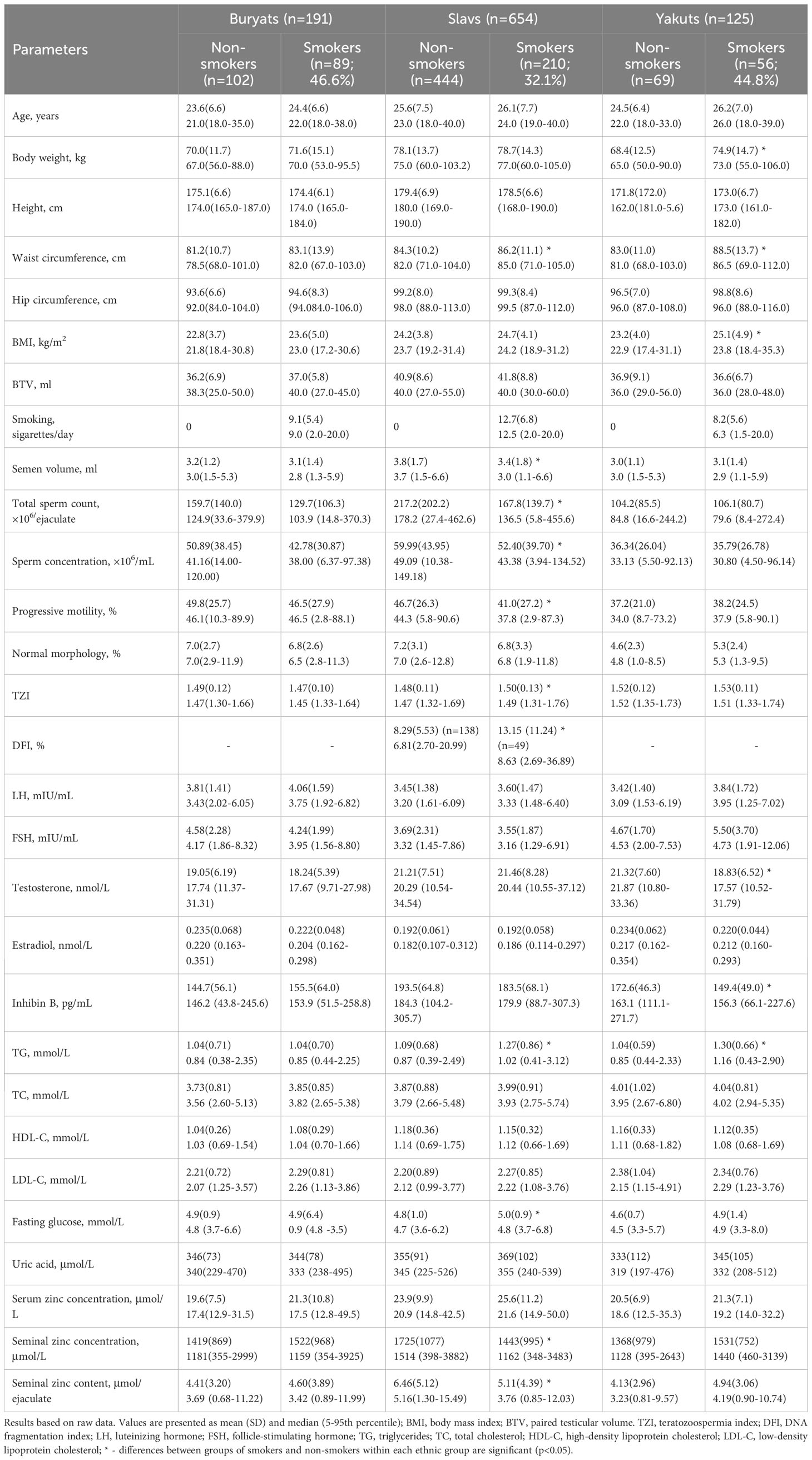
Background: Cigarette smoking seems to have a negative impact on men's reproductive health, but our knowledge of its effects on the reproductive function of Russian men is still very limited. The purpose of this study was to evaluate the effect of cigarette smoking on semen quality, including sperm DNA fragmentation, hormonal, zinc and metabolic status in young men from the general multi-ethnic Russian population (n=1,222, median age 23 years) and to find out the ethno-specific effects of smoking by comparing male groups of different ethnicity.Methods: Each participant filled out a standardized questionnaire, provided one blood and semen sample.Semen parameters, serum reproductive hormones, lipids, glucose, uric acid and seminal zinc were analyzed.Participants were classified as smokers (n=450) and non-smokers (n=772), and smokers were stratified into moderate (≤10 cigarettes/day) and heavy (>10 cigarettes/day) smokers.Results: In the entire study population, heavy smokers were characterized by a decrease in semen volume, total sperm count, sperm concentration and motility, and an increase in sperm DNA fragmentation and teratozoospermia compared with non-smokers (p<0.05). There was also a reduction in the serum and seminal zinc level as well as an impairment in metabolic health in smokers compared with non-smokers (p<0.05). No significant differences between smokers and non-smokers were found for serum levels of LH, FSH, inhibin B, testosterone and estradiol. In the second part of our study, the most numerous ethnic groups of Slavs (n=654), Buryats (n=191), and Yakuts (n=125) were selected from the entire study population. Among three ethnic groups, the smoking intensity was higher in Slavs than in Buryats or Yakuts suggesting a greater tobacco addiction in Slavs than in Asians. A decrease in semen parameters and seminal zinc levels, and an increase in sperm DNA fragmentation and teratozoospermia was observed only in smoking Slavs (p<0.05); moderate decrease in testosterone and increase in triglyceride levels were revealed in smoking Yakuts (p<0.05), but no significant changes were detected in smoking Buryats.We concluded that cigarette smoking has an ethno-specific effect on male reproductive function, probably due to the different activity of the seminal antioxidant system, which is yet to be elucidated.