Abstract
Scientific information is a key ingredient needed to tackle global challenges like climate change, but to do this it must be communicated in ways that are accessible to diverse groups, and that go beyond traditional methods (peer-reviewed publications). For decades there have been calls for scientists to improve their communication skills—with each other and the public—but, this problem persists. During this time there have been astonishing changes in the visual communication tools available to scientists. I see video as the next step in this evolution. In this paper I highlight three major changes in the visual communication tools over the past 100 years, and use three memorable items—bamboo, oil and ice cream—and analogies and metaphors to explain why and how Do-it-Yourself (DIY) videos made by scientists, and shared on YouTube, can radically improve science communication and engagement. I also address practical questions for scientists to consider as they learn to make videos, and organize and manage them on YouTube. DIY videos are not a silver bullet that will automatically improve science communication, but they can help scientists to 1) reflect on and improve their communications skills, 2) tell stories about their research with interesting visuals that augment their peer-reviewed papers, 3) efficiently connect with and inspire broad audiences including future scientists, 4) increase scientific literacy, and 5) reduce misinformation. Becoming a scientist videographer or scientist DIY YouTuber can be an enjoyable, creative, worthwhile and fulfilling activity that can enhance many aspects of a scientist’s career.
Introduction
“Science is guided by its metaphors” (Phillips, 2009).
“Analogy is the motor of the car of thought” (Hofstadter, 2001).
“Video is the next wave, and scientist must be prepared for it” (McKee, 2013).
Scientific information is a key ingredient needed to tackle global challenges like climate change, health care for all, environmental conservation, and sustainable agriculture. But to do this it must be communicated broadly and in ways that are accessible to diverse groups (Nisbet and Scheufele, 2009; Canfield et al., 2020), and that go beyond the traditional methods such as peer-reviewed publications (Wilcox, 2012; Brossard, 2013; Eagleman, 2013; Liang et al., 2014; National Academies of Sciences, 2017). This is perhaps most urgent in the applied environmental sciences where research results can be readily adopted by stakeholders and appreciated by the general public. In this paper I use three memorable items (Figure 1A), analogies and metaphors to explain why I think that Do-it-Yourself (DIY) videos made by scientists and shared on YouTube can help in these efforts. I hope this will convince more scientists like me, with no formal video training, to start making videos.
FIGURE 1
This paper expands on a presentation I gave at a large agricultural science conference (Brennan, 2019a) in a symposium titled ‘Science Communication Hacks to Increase Public Engagement - Accessible Tools for Time-Limited Professionals’. When I received the invitation, I had to look up the definition of “hack”, and the ones I like best are from the online Urban Dictionary: “a clever solution to a tricky problem”, and “to modify or change something in an extraordinary way.” The invitation was a perfect venue for me to share ideas that I had been mulling over for years as I learned to make science videos, and navigate the “brave new world of science communication” (Dudo, 2015).
My Journey to YouTube
YouTube was created in 2005. But I believe that my journey to use videos to share my science on YouTube began in the 1960s–80s when I was growing up in Papua New Guinea, thanks in large part to my father who worked in linguistics and anthropology. He was an avid photographer who worked to document and preserve the rich traditions of the Enga people (Wiessner and Tumu, 2013) whom we lived among, and I always enjoyed listening to him tell stories of our experiences there using 2 × 2 inch slides. That inspired me to begin my own slide collection as a U.S. Peace Corps volunteer in Thailand (Brennan, 1990). I was soon using those slides along with my hand drawings on overhead projector sheets for agroforestry presentations I gave in Thailand, and in other parts of Asia and Africa where I worked before graduate school. My slides were essential in the lectures that I gave as a teaching assistant in graduate school. Many of my students had not been to the tropics and my slides allowed me to “take” them there and “meet” the farmers whom I worked with. In 2000 near the end of my PhD, my wife and I purchased a video camera when our first child was born. And soon, in addition to filming our son learning to walk, I was using the camera to record how leaf waxes affected insect walking (Brennan and Weinbaum, 2001). That inspired my first science video that I showed during my final presentation for my PhD.
My efforts and interest to share my science on YouTube began with a video (Brennan, 2014) on my research on interplanting flowers with organic lettuce to control insect pests (Brennan, 2013). I made the video for the 2013 annual meeting of the American Society of Horticultural Science that I could not attend. A friend at the meeting ensured that my video was shown in the session where I was scheduled to speak. A farmer was one of about 20 people in that session and emailed to ask if it was on YouTube. This motivated me to upload it to YouTube. Since 2014, this video has received an average of about 3,500 views annually, and has been joined by 25 other videos which I made that have received more than 328,000 combined views (Supplementary Table S1). For comparison, the paper (Brennan, 2013) that my first YouTube video was based on has only been cited 28 times.
I share this history of my journey to YouTube for two reasons. First, to illustrate that my passion and motivation for using effective, modern, visual tools for science communication comes from years of working with diverse groups—students, farmers, volunteers, extension agents, university faculty—in many countries. During this time, I strived to learn how to best communicate complex ideas about sustainable agriculture—often in more than one language—to people with very different educational and cultural backgrounds. And second, to illustrate how DIY science videos on YouTube can substantially increase the reach of scientific research. These visual tools have evolved in radical ways over the past 100 years (Figure 1B) (Myers, 1948; Burger, 1958; Shepard, 1987; Ervin, 2003; Velarde, 2019). The necessary transition from one communication tool to the next has often been resisted or viewed skeptically by scientists (DrDoyenne, 2010; Bik and Goldstein, 2013; McKee, 2013, Chapter 2). However, I consider DIY science videos as a natural step in this evolution of visual communication tools, and below I explain this with bamboo, oil and ice cream.
Bamboo Connections to Youtube
Efficient
Tubes are ubiquitous structures in biology because they are an efficient way to get things done, whether it is moving water via the tubular xylem in the plants that provide our food, or air to your lungs via your windpipe and oxygenated blood through your arteries. Similarly, YouTube is one of the fastest and most efficient ways to communicate ideas visually. For example, my first video on YouTube has been viewed over 20,000 times compared to the 20 views that it received at the conference described above. Bamboo is one of the fastest growing plants in the world (Kleinhenz and Midmore, 2001) in large part because of its hollow tubular stems. The visually attractive, jointed stems of bamboo can remind us of the efficiency of YouTube as a science communication tool, in addition to it helping us to learn to do other important things like how to fix a leaky faucet.
Accessible
Bamboo is often called the “poor man’s timber” because it is an inexpensive and accessible building material for people with limited financial resources in many countries (Perez et al., 1999; Lobovikov et al., 2012; Kumar, 2015). This reminds me of how YouTube can act as an open-access university where people worldwide can learn interesting and useful things that otherwise would be restricted to the few fortunate groups who had an opportunity to attend university. Even if a scientist’s papers are not open-access—which unfortunately remains a problem with publicly funded research—DIY videos can essentially make the research open-access but in more visually interesting and personal ways. I believe this will promote inclusive science communication (Canfield et al., 2020). These videos can also help scientists connect with and inspire diverse groups of students to become the next generation of scientists, and help to break down stereotypes of scientists (i.e., “competent but cold” (Fiske and Dupree, 2014); “white, old men” (Reif et al., 2020); women “lack the qualities to be successful scientists” (Carli et al., 2016).
Versatile and Flexible
Of the world’s economically important grasses, none rivals bamboo in its versatility (Soderstrom and Calderon, 1979). For example, during my childhood in Papua New Guinea, I saw bamboo used to carry water and to make woven walls, bow strings, arrow shafts, smoking pipes, knives, mouth harps, toys, and even start friction fires. Bamboo’s versatility comes from the unique shape and structure of its light-weight stems and the extraordinary physical and mechanical properties of its fibers that were even used for the filament in Thomas Edison’s incandescent light bulb (Levy, 2002, p. 124). Porterfield (1933) wrote that “bamboo is one of those providential developments in nature which, like the horse, the cow, wheat and cotton, have been indirectly responsible for man’s own evolution.” Likewise, YouTube provides scientists with the most versatile and flexible communication tool ever developed that is only limited by our creativity. For example, DIY science videos can vary from a basic screen capture recording of a live conference presentation, up to a more complex video where a scientist uses a green screen to place themself in front of visuals (Brennan, 2019d). Moreover, these can be made with relatively simple and inexpensive equipment and software (Brennan, 2019c) that is often less than half the price to attend a professional scientific conference.
Oil Connections to YouTube
Energy & Lubrication
DIY science videos can “energize” the information in our peer-reviewed publications, and “lubricate” it so that it moves out to the broader world where it can have far more impact than if it remains stuck or fused to the library shelves of academia that are accessible to relatively few. Consider for example the paper (Brennan, 2013) that my first YouTube video was based on which has only been cited 28 times. From this record, one might erroneously conclude that this research has had little impact, however, the 20,000 plus views and more than 300 “likes” that the video received tells the opposite story.
Flavor
The science literature where we share our “exciting” research with the world is unfortunately often boring and difficult to read even by scientists (Sand-Jensen, 2007; Doubleday and Connell, 2017b). In other words, this literature is often “bloated, dense and so dry that no amount of chewing can make it tasty” (Doubleday and Connell, 2017a). However, I like to think of this literature like overly pungent raw onions that can be transformed into delicious and inviting food when they are gently fried in cooking oil.
Shine
I have always enjoyed working with my hands to create something of beauty from rough pieces of wood. One of the most satisfying parts of this process comes at the end, after sanding, when oil is rubbed into the wood to bring out the grain, colors and patterns that are often hidden below the surface. This is much like how DIY science videos can make our hard-earned research shine and sparkle in visual ways that go far beyond what is often seen in our papers.
Ice Cream Connections to Youtube
Tell your Stories
I’ve often wondered when I “became a scientist.” If I had to choose a milestone it would be somewhere during the process of writing and successfully publishing my first, lead authored paper on research that I initiated during my M.S. degree (Brennan and Mudge, 1998). I call that first paper my “ice cream paper” because the topic of my paper was a tropical tree that is commonly called the ice cream bean. Now regardless of whether your first, lead authored science paper was on dung beetles or intestinal parasites, I will still call it your “ice cream paper.” I hope that the ice cream connection to YouTube will also be memorable simply because ice cream is such a delicious dessert—although I suggest you serve it to your viewers throughout your videos. In any case, what has always concerned me about my “ice cream paper” is that it did not allow me to share the interesting and somewhat serendipitous story that inspired me to study that amazing tree. This is a common issue with much of the peer-reviewed literature, not just our “ice cream papers”. And that is where video can help.
DIY videos provide scientists with an opportunity to tell the stories behind their research. This can add valuable artistic and human touches to the work that make it and the scientist more accessible. This is in keeping with the compelling title and message of the first book I read on science communication “Don’t be such a Scientist” (Olson, 2009). Perhaps after people learn about the stories and serendipity (Meyers, 1995) in our research, they’ll muster up the courage to wade, or dive into the gory details in our papers and find the valuable nuggets that are often hidden so well in our statistical analyses and dry language. One of my lofty goals is to produce at least one video that describes some broadly interesting aspect or story behind each of my papers. Perhaps the video on my “ice cream paper” will start like this: “You’ve probably heard of the story of Jack and the Bean Stalk, right? Although I didn’t like reading as a kid, that story was one of my favorites because I loved to climb trees and garden. But, I want to tell another story that I call “Eric and the Ice Cream Bean”. It started on a warm summer day on the North Shore of Oahu, Hawaii, about 30 years ago when I looked in a garbage can….” My gut feeling is that this video will radically increase the potential impact of the research in my “ice cream paper” that has only been cited seven times in the peer-reviewed literature even though I’m arguably one of the world’s “experts” on the science of clonal propagation of ice cream bean trees.
Conclusion
I hope that the metaphors and analogies I used will help you understand and remember why and how scientists can radically improve science communication by making DIY videos that are shared on YouTube. While there have been many calls for better science communication (Bragg, 1966; Janzen, 1980; Royal Society, 1985; Baron, 2010; Brigham, 2010; Kahan, 2010; Wilcox, 2012; Wheelwright, 2014; Baron, 2016; Langin, 2017; Olson, 2018), unfortunately, the problem persists. This is partly because most scientists lack training in effective science communication (Brownell et al., 2013; Simis et al., 2016) and often see it as a one-way transfer of information (Davies, 2008) not a dialogue. The problem is exacerbated by myths (Burke, 2015) and misunderstandings (Varner, 2014; Simis et al., 2016) among scientists about public understanding of science, such as the knowledge deficit model of science communication. This alluring model assumes that people are skeptical about scientific issues (i.e., vaccines, climate change, GMOs) because they lack knowledge or understanding, and that providing them with knowledge will change their thinking, or simply put “To know science is to love science” (Turney, 1998). DIY science videos are not a silver bullet that will automatically solve these communication problems, but perhaps they will help us to focus and reflect more on our science communication skills and approaches as we watch our videos and work to improve. Self-reflection is an often overlooked yet primary benefit of DIY video making (McCammon, 2014).
Are you ready to take the bold step of making DIY science videos for YouTube? I hope so, but I also understand why you might be reluctant (i.e., lack of time and equipment, lack of interest, institutional barriers, fear of failure, etc.). To help you understand these and potentially become a scientist videographer (McKee, 2013) – or scientist DIY YouTuber – I addressed several important questions and concerns that you might have (Table 1). I also created a growing series of videos (Brennan, 2020a) that explain the basic tools that I use, different types of videos that you can make from simple to more complex, resources that have inspired me, and my video making process.
TABLE 1
| Question | My suggestions and thoughts |
|---|---|
1. Who should make videos for the scientist? | The scientist. This will make the videos more personal, interesting, believable, cost-effective and sustainable. I am far more relaxed and willing to have fun experimenting with my communication when I record myself alone rather than if somebody else is doing this for me. There are not enough professional video makers to make all the science videos that need to be made, furthermore there is encouraging evidence that user-generated science videos are far more popular than those made by professionals (Welbourne and Grant, 2016). Basic DIY video making skills are good to learn just like making PowerPoint slides was 20 years ago. |
2. Who is the target audience for your science videos? | This depends on the video. My audience is usually quite broad (the general public, policy makers, stakeholder groups like farmers, fellow scientists in my field and in other fields, neighbors, etc.). To put it bluntly, I want my research to change the world and for my communication to build public trust and support for the work (Baron, 2016), and that means I need to reach people other than just fellow scientists. One way to provide more technical details for interested viewers is to mention your peer-reviewed papers during your video and provide hyperlinks to PDFs of these in the video description. Olson (2018, Chapter 6) has a good discussion on the need for scientists to become “bilingual” (i.e., able to communicate to both broad and academic audiences). |
3. What basic features should all DIY science videos include? | Descriptive title. Employer logo at the beginning if applicable. Required disclosures (i.e. equal employment statement). Manually edited closed captions. Keyword tags, and a detailed description to increase searchability. A visually interesting thumbnail that augments the video title and catches the attention of potential viewers. Hyperlinks to the scientist’s relevant peer-review publications. |
4. How long should science videos be? | Short videos (3–6 min) are ideal (TechSmith, 2020) but not always possible. I try to keep my videos below 10 min, but for longer videos, I add a clickable table of contents in the video description to help viewers navigate as needed. |
5. Where can I get background music for my videos? | YT audio library has sound effects and songs that are royalty free and are often adequate. If a copyrighted song is used, YT has the right to place an advertisement in front of the video to monetize the video. If you choose to use background music, make sure that it doesn’t distract from your voice narration. |
6. What basic equipment is needed to make a DIY video? | It depends on the complexity of the video. A basic screen capture/video editor software (i.e., Camtasia) on a basic computer with a webcam is all that’s needed to make what I refer to as the “1 Take”, “2 Take” and “Hey-Roll P-Roll” videos (Brennan, 2019c; Brennan, 2019d; Brennan, 2020b). For more complicated videos where the scientist is on screen more, a DSLR camera on a tripod, digital audio recorder, and green screen can be helpful, along with some basic lights. |
7. What are some key ingredients and ways to help your science videos succeed? (i.e., be viewed, liked, shared, commented on, etc.)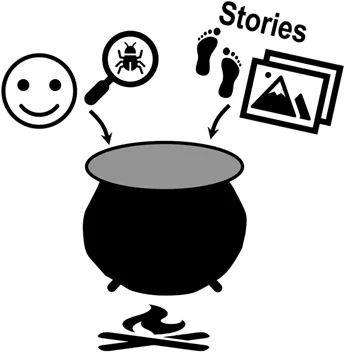 | Smile if you are on screen; this will help you relax, be more likable and trustworthy (Jarreau et al., 2019), and make your audience smile. Use some humor. Avoid jargon and speaking in a monotone voice. If you use a script, practice it so that is sounds natural and not like you’re reading. Try to sound enthusiastic; I find that one of the best ways to practice this is to get used to talking to yourself. Use interesting visuals (photographs, video footage, colorful and simple figures, hand drawings, demonstrations, etc.), and try this simple method to be on screen during parts of your video (Brennan, 2020b). Minimize the use of text in figures and make sure that any text in the video is large enough to read on a small screen like a cell phone (see question 22). Use analogies and metaphors to explain complex ideas. Ice cream (i.e., storytelling) always helps (see paper for more details). Describe your science in personal ways. Encourage comments and questions, and respond to them. Share your videos with people and groups that might find them interesting and useful. Twitter is an effective way to increase the impact of peer-reviewed publications (Luc et al., 2020), and may be a good way to share and promote your science videos. Experiment with making different types of science videos and learn from the feedback you get from viewers. Hopefully these ideas will help potential viewers Find your videos, Click to start watching them, and Stick with them (Foot, 2019). See also question 3 and 4. Maynard (2021) has other good suggestions to help academic video makers succeed. |
8. Are DIY science videos suitable for all fields of science? | Yes, but remember that video is a visual medium, and therefore effective DIY science videos need interesting visuals that are easily understood by the target audience; these visuals will obviously differ in an agricultural science video vs. an astronomy video. Scientists in some fields may have advantages over those in other fields due to audience familiarity and interest in the subject matter, and whether the video provides information that can be applied in the viewer’s life. Scientists can use this information to help prioritize which aspects of their research to describe in their videos and how to best engage with their target audience. (McKee (2013; Chapter 3) and Foot (2019) provide helpful discussion on issues to consider for your target audience. |
9. Should DIY science videos be peer-reviewed? | No. Science videos should be thought of as recorded presentations that aren’t peer reviewed. However, it may be helpful to get feedback from trusted peers who are good communicators, fellow science videographers, family members and friends before the video is made public. I often show a new video at a conference before it goes public, and make changes based on informal feedback from the audience, and my observations of the audience’s response (i.e., Are they bored? Do they ask questions that show they understood my message?). |
10. Should scientists only make videos of their peer-reviewed research publications? | No. Scientists often develop novel methods, tools, and ideas that may not be suitable for publication in peer-reviewed journals. A DIY video can be a cost-effective, engaging and simple way to share these with the world. For example, my most popular video that has received over 203,000 views describes a novel hoe design that I developed for weed control (Brennan, 2015). Some of my other videos present novel concepts on my current research (Brennan, 2018a), and reenacted discussions with another scientist on interesting topics (Brennan and Cavigelli, 2014; Cavigelli et al., 2016). |
11. How long does it take to make a DIY science video? | This depends on the complexity of your video (i.e., does it just show still images, or also include parts where you are on screen? Does it have lots of animations?). It also depends on your experience with the tools, your creative process, the length of the video, and your tolerance for imperfection. Learning to make videos takes time, but with practice you’ll become more time-efficient and hopefully you won’t let ‘the perfect be the enemy of the good’ (I still struggle with this issue).The time-investment to learn to make videos is perhaps the greatest drawback of making science videos. In general, making a video will take at least as long as the time required to prepare to present the same content in a live presentation. Part of the increased time is because your video should include features that are not present in live presentations (e.g., closed captions). |
12. How many views can I expect on my DIY science videos? | This depends on factors such as the video topic and length, how engaging and interesting it is to a broad audience, and how effectively it is shared with potential viewers. The views on a video is one way to measure if the time investment to make it was worthwhile, but YT provides video makers with many other analytics (e.g. average view time, average percentage viewed, etc.) that may be more meaningful than the number of views. I think it is reasonable for scientists to expect their videos to get several hundred to several thousand views over time; this has been the case for most of my videos (Suppl. Table); however, videos with practical information or those that describe how to make something useful to the viewer – such as the video on the hoe I developed for weed control (Brennan, 2015) – may get more views, although there are many examples of interesting science videos with little or no practical application (e.g., Kurzgesagt, 2015) with millions of views. Cooper (2020) provides more information on ways to increase YT views. In any case, it is difficult to predict a video’s success, so try not to obsess about the number of views your videos get or the number of subscribers to your channel, but rather focus on producing visually interesting and engaging videos that enhance the communication of your research and your scientific ideas. See also question 7. |
13. What type of content is appropriate in a science video? | Any content that is appropriate for a general audience and that will help you to effectively communicate your science as if you were presenting it via a live public presentation. However, because the video is available online there may be restrictions on your ability to use certain types of content that is copyrighted (e.g., photographs, cartoons, songs, etc). To avoid copyright issues, I try to only use content that I create (e.g., photographs, hand drawings, animations, etc.) or that comes from freely usable media (Wikimedia commons, USDA’s Image Gallery, etc.). |
14. Can I edit the content of a completed video after it is uploaded to YT? | Once a video is on YT there are relatively few things in it that you can edit. For example, if you have a typographical error in a video you cannot correct this, unless you delete it (and loose all the views, likes and comments) and replace it with a new corrected version. However, you can use the basic editor in YT to cut out or trim sections and add background music from the YT audio library. Furthermore, there are many types of information associated with the video that can be edited including the following: the video title, description, keywords, thumbnail and closed captions. |
15. How can I make my videos more accessible to people that speak languages other than English? | Closed captions can be uploaded for multiple languages in YT. This video (Louie's Tutorials, 2018) describes how to create a draft translation that can then be edited manually. Keep in mind that automatic translations are often not accurate. When my videos are shown in trainings where live translation is provided, I give the English transcript of the video to the translator in advance to help them prepare to translate it during the training. |
16. What are some resources to inspire scientists to make engaging and visually interesting videos and presentations? | Articles (Janzen, 1980; Burns et al., 2003; Brigham, 2010; Wheelwright, 2014; Langin, 2017; Smith, 2018; Finkler and Leon, 2019; Smith, 2020; Maynard, 2021) books (Reynolds, 2008; Baron, 2010; Roam, 2011; McKee, 2013; Olson, 2018) blogs (Godin, 2007; Godin, 2019) and science video tutorial playlists (Brennan, 2020a; Foot, 2020; McKee, 2020). The description for this video (Brennan, 2019b) has a hyperlinked document that is updated regularly where you can download many helpful articles and links to other resources. Fellow scientist DIY YouTubers (i.e., those who do research, publish it in peer-reviewed journals, and share it on YouTube) are a relatively small but growing group that are a great resource to learn from and share ideas with; Maynard (2021) highlighted the importance of sharing and promoting the YouTube videos of fellow academics to help ensure that they are seen by others and to grow this important community of practice. |
17. Where should DIY science videos be located on YT? | On a YT channel managed by the scientist who made the video and who is responsible for adding the basic features in #3, moderating and responding to comments, and creating playlists of related videos. This will save time, maximize viewer engagement, and increase channel security. This channel should contain all the scientist’s videos during their career regardless of where they work. The institution where the scientist works could create playlists for individual scientists that hyperlink to specific videos from their work at that institution. Alternatively, the institution could have a web page with hyperlinks to all the individual scientist YT channels. |
18. Where should multi-authored videos be located? | Only at the channel managed by the primary scientist who made the video. This video can be part of a playlist that is created on the channel of other scientists that helped make the video. |
19. Is there a charge to put videos on YT? | No. YT is a free online video sharing platform that has been owned by Google since 2006. |
20. Should viewers be allowed to post comments on DIY science videos? | Yes. Viewers appreciate the opportunity to comment and ask questions (YouTube Creators, 2017). This increases public engagement and provides valuable feedback to the scientist. However, the scientist responsible for the video should moderate and approve appropriate comments in a timely manner before they are made public to screen out comments that have inappropriate language or content (YouTube Creators, 2019). |
21. Does it take longer to present the same information in a live presentation or in a video? | Live presentations are usually a much less time-efficient way to deliver content than would occur with a video. This is because with video you have more control of your time, narrative and visuals, and can carefully make it in a more relaxed setting than if you are presenting live. This is why I usually use a video to deliver my content for my conference presentations. This leaves about half of the presentation time for Q&A and interaction with the audience after I show the video. |
22. Can I post videos on my YT channel that are not publicly viewable? | Yes. When you upload a video to YT you can choose if it will be public or not and modify this at any time. This is helpful if you want to send a colleague a private hyperlink to review a draft video. Then after you make changes you can upload the corrected version and make it public. Uploading a draft video is a great way to check that all the visuals in it (including any text) are legible on small screens like cell phones. |
23. When should scientists begin making DIY videos for YT? | Ideally, soon after they start publishing their research. Learning to make science videos during graduate school would be a great way to highlight your science communication and teaching skills as you enter the job market. As noted in question 17, the channel you create and manage that hosts your videos will then remain with you as you progress through various positions in your career. Fortunately the Sagan Effect – “the perception that popular, visible scientists are worse academics than those scientists who do not engage in public discourse” (Martinez-Conde, 2016) – appears to be waning. |
24. What type of analytics can I get for my YT videos? | YT provides many different types of analytics on the channel and specific videos that can help the channel manager learn about their videos and viewers, and that go far beyond the publicly available analytics (total views and likes) (Suppl. Table). For example, the channel manager can see the video watch time, the average percentage viewed, who is watching the videos (age, gender, geography), what type of device they were viewed on, etc. |
25. Should recorded presentations from science conferences be placed on YT? | Yes. This will allow the presentations to be closed captioned so that they are accessible to people who are deaf or hard of hearing. Keywords and a description can also be added that will increase the ability of the video to show up in online searches. This type of video is what I refer to as a “1 Take video” and is the simplest type of video for scientists to create for YT because the video is simply a recording of the slides and the audio track that was done live at the conference (Brennan, 2019d). |
26. How can DIY videos on YT affect a scientist’s engagement with journalists? | DIY videos can improve scientist-journalist relationships by providing more interesting and accessible information than is available in peer-reviewed papers. For example, when I get inquiries from a journalist I often suggest that they watch some of my YT videos before we talk. This saves me time and allows us to have a more meaningful conversation. Several of the stories that journalists have done on my research are based on information in one of my videos (Johnson, 2016; Isaacs, 2020). In other cases journalists have invited and worked with me to modify the narrative in a video for a story in their publication (Brennan, 2018b). |
| 27. Is YT a “silver bullet” that will automatically improve science communication? | No. Poorly done videos can be as worthless as “death by PowerPoint” presentations that unfortunately are common in science conferences. However, making DIY science videos and posting them on YT will often lead to better communication because 1) the viewer can replay parts of the video as needed, 2) the scientist can watch and reflect on their communication skills and learn to improve, 3) the scientist will likely put more effort into science communication if they know it will be accessible worldwide on YT, and 4) viewers and the scientist can engage with each other through comments on the video. |
Important questions to consider when producing Do-It-Yourself (DIY) science videos, and organizing and managing them on YouTube (YT). Please email me if you have other questions that I have not addressed.
Making interesting and engaging DIY videos is a worthwhile time investment if you consider how it can radically increase the impact of your research. Furthermore, these videos are an excellent way for scientists to have a voice online to increase scientific literacy, meaningful engagement and help to reduce misinformation that is increasingly prevalent (Menezes, 2018) and often propagated on YouTube (Basch et al., 2015; Allgaier, 2019; D'Souza et al., 2020; Tokojima Machado et al., 2020) and other social media platforms (Thaler and Shiffman, 2015). Online videos may make you vulnerable to more criticism (and praise) than typically occurs with other forms of science communication. This will challenge you to improve in surprising ways, and develop new persuasion skills (Hornsey and Fielding, 2017) that could benefit other aspects of your career (writing, teaching, live presentations, grant writing, etc.). Keep in mind that making science communication videos is a journey, not a destination. So have fun experimenting and being yourself as you find your voice on YouTube.
Speaking of fun, I believe that DIY science video making should be enjoyable, as you can see in some of the unorthodox approaches I use in my videos. In a recent study, Besley et al. (2018) investigated what motivates scientists to engage with the public, in other words “what gets scientists out from behind their computer screens and lab benches.” What they found made me smile because it agrees with what motivates my DIY video making efforts. The most consistent predictors of engagement in the study were the beliefs that the scientist would enjoy the experience and that it would have a positive impact. This type of research is critical to improve science communication engagement, and address barriers to participation (Poliakoff and Webb, 2007; Ho et al., 2020).
Learning to make science videos has been one of the most rewarding, creative, and satisfying activities that I have done as a scientist because it makes me feel that the science I love doing is worthwhile and is having a much greater impact than my peer-reviewed papers alone could achieve. I admit that my advocacy for YouTube as a science communication tool is somewhat surprising given that I grew up in a country without television. But it makes sense because this format has allowed me to share my passion for science, and make connections and engage with diverse groups of people around the world from elderly neighbors and local farmers, to students from elementary school to university, and childhood friends from the other side of our planet. I hope it has similar benefits for you. If these thoughts help nudge you to make science videos, please contact me so that I can be one of the first to subscribe to your YouTube channel.
Statements
Author contributions
The author confirms being the sole contributor of this work and has approved it for publication.
Acknowledgments
I am grateful to Richard Rosecrance, Paul Brennan, Jason Brennan and James McCreight who provided input to improve this article. I also appreciate the constructive comments by the reviewers.
Conflict of interest
The author declares that the research was conducted in the absence of any commercial or financial relationships that could be construed as a potential conflict of interest.
Supplementary material
The Supplementary Material for this article can be found online at: https://www.frontiersin.org/articles/10.3389/fcomm.2021.586297/full#supplementary-material.
References
1
AllgaierJ. (2019). Science and environmental communication on YouTube: strategically distorted communications in online videos on climate change and climate engineering. Front. Commun.4 (36). 10.3389/fcomm.2019.00036
2
BaronN. (2016). So you want to change the world?. Nature540 (7634), 517–519. 10.1038/540517a
3
BaronN. (2010). Escape from the ivory tower: a guide to making your science matter. Washington, DC: Island Press.
4
BaschC. H.BaschC. E.RugglesK. V.HammondR. (2015). Coverage of the ebola virus disease epidemic on YouTube. Disaster Med. Public Health Prep.9 (5), 531–535. 10.1017/dmp.2015.77
5
BesleyJ. C.DudoA.YuanS.LawrenceF. (2018). Understanding scientists' willingness to engage. Sci. Commun.40 (5), 559–590. 10.1177/1075547018786561
6
BikH. M.GoldsteinM. C. (2013). An introduction to social media for scientists. Plos Biol.11 (4), e1001535. 10.1371/journal.pbio.1001535
7
BraggL. (1966). The art of talking about science. Science154, 1613–1616. 10.1126/science.154.3757.1613
8
BrennanE. B. (1990). “Using farmers and their ideas for effective extension work,” in Proceedings of strategies and methods for orienting multipurpose tree system research for small scale farm use. Editors HaugenC.MedemaM.LanticanC. B., Jakarta, Indonesia: Forestry/Fuelwood Research and Development Project (F/FRED), International Development Research Centre of Canada). 94–97.
9
BrennanE. B. (2013). Agronomic aspects of strip intercropping lettuce with alyssum for biological control of aphids. Biol. Control.65 (3), 302–311. 10.1016/j.biocontrol.2013.03.017
10
BrennanE. B. (2014). Efficient intercropping for biological control of aphids in transplanted organic lettuce. Available at: www.youtube.com/watch?v=KVLgt2_J1Wk (Accessed October 21, 2020). 10.4324/9781315756257
11
BrennanE. B. (2015). How to make an inexpensive hoe for efficient weeding, “Recycle Strap Hoe”. Available at: www.youtube.com/watch?v=woHNgHkbWzA (Accessed October 21, 2020).
12
BrennanE. B. (2018a). Juicing cover crops.... Are you Nuts? Maybe but hear me out!. Available at: https://www.youtube.com/watch?v=H1GfRurgqKI (Accessed October 21, 2020).
13
BrennanE. B. (2018b). Novel equipment and ideas for using cover crops on vegetable beds. Am. Vegetable Grower66 (1), 36–42. 10.1023/A:1006594207046
14
BrennanE. B. (2019a). “Why should scientists be on YouTube? Bamboo, oil & ice cream,” in Embracing the digital age. (San Antonio, TX: American Society of Agronomy, Crop Science Society of America, Soil Science Society of America). Available at: https://youtu.be/Ldf_6gbYJn0 (Accessed July 18, 2020).
15
BrennanE. B. (2019b). Resources to inspire interesting diy science videos and presentations. Available at: https://www.youtube.com/watch?v=4HITsoOqkPg (Accessed October 21, 2020).
16
BrennanE. B. (2019c). Three tools to make science videos for YouTube. Available at: https://youtu.be/LvJPBgZPHuc (Accessed October 21, 2020).
17
BrennanE. B. (2019d). Three types of DIY videos that scientists can make. Available at: https://youtu.be/KOUrERx0uPk (Accessed October 21, 2020).
18
BrennanE. B. (2020a). DIY video making tips/tutorials for scientists, teachers & other educators. Available at: https://www.youtube.com/playlist?list=PLn2iLaALBpErQ5DAY7Mmonb6b9NzVqyMX (Accessed September 23, 2020).
19
BrennanE. B. (2020b). A novel DIY video making method for busy teachers, professors & scientists. Available at: https://youtu.be/2UHfaRF0TEY (Accessed October 21, 2020).
20
BrennanE. B. (2020c). Using Camtasia to make visually-interesting, engaging, educational videos during COVID-19 & beyond. Available at: https://youtu.be/EK71QW4vSzA (Accessed October 21, 2020).
21
BrennanE. B.MudgeK. W. (1998). Vegetative propagation of Inga feuillei from shoot cuttings and air layering. New Forests15 (1), 37–51. 10.1023/a:1006594207046
22
BrennanE. B.CavigelliM. A. (2014). Organic versus conventional comparison - a devil without details. Available at: https://www.youtube.com/watch?v=os-aM4FqPUA (Accessed October 21, 2020). 10.4324/9781315756257
23
BrennanE. B.WeinbaumS. A. (2001). Effect of epicuticular wax on adhesion of psyllids to glaucous juvenile and glossy adult leaves of Eucalyptus globulus Labillardiere. Aust. J. Entomol.40, 270–277. 10.1046/j.1440-6055.2001.00229.x
24
BrighamR. M. (2010). Talking the talk: giving oral presentations about mammals for colleagues and general audiences. J. Mammalogy91 (2), 285–292. 10.1644/09-mamm-a-271.1
25
BrossardD. (2013). New media landscapes and the science information consumer. Proc. Natl. Acad. Sci. USA110 (Suppl 3), 14096–14101. 10.1073/pnas.1212744110
26
BrownellS. E.PriceJ. V.SteinmanL. (2013). Science communication to the general public: why we need to teach undergraduate and graduate students this skill as part of their formal scientific training. J. Undergrad Neurosci. Educ.12 (1), E6–E10.
27
BurgerA. W. (1958). Preparation of transparencies (slides) for use with overhead projectors in agronomic education 1. Agron. J.50 (8), 495. 10.2134/agronj1958.00021962005000080029x
28
BurkeK. L. (2015). 8 Myths about public understanding of science. American Scientist [Online], Available at: http://www.americanscientist.org/blog/pub/8-myths-about-public-understanding-of-science (Accessed July 18, 2020) .
29
BurnsT. W.O'ConnorD. J.StocklmayerS. M. (2003). Science communication: a contemporary definition. Public Underst Sci.12 (2), 183–202. 10.1177/09636625030122004
30
CanfieldK. N.MenezesS.MatsudaS. B.MooreA.Mosley AustinA. N.DewsburyB. M.et al (2020). Science communication demands a critical approach that centers inclusion, equity, and intersectionality. Front. Commun.5 (2). 10.3389/fcomm.2020.00002
31
CarliL. L.AlawaL.LeeY.ZhaoB.KimE. (2016). Stereotypes about gender and science. Psychol. Women Q.40 (2), 244–260. 10.1177/0361684315622645
32
CavigelliM.TomeckM. B.BrennanE. B. (2016). What our organic gardens taught us about the challenges of organic regulations. Available at: https://www.youtube.com/watch?v=gOhXMYfgLoI (Accessed October 21, 2020).
33
CooperP. (2020). How does the YouTube Algorithm work? A guide to getting more views. Available at: https://blog.hootsuite.com/how-the-youtube-algorithm-works/ (Accessed September 21, 2020).
34
D'SouzaR. S.D'SouzaS.StrandN.AndersonA.VogtM. N. P.OlatoyeO. (2020). YouTube as a source of medical information on the novel coronavirus 2019 disease (COVID-19) pandemic. Glob. Public Health15 (7), 935–942. 10.1080/17441692.2020.1761426
35
DaviesS. R. (2008). Constructing communication. Sci. Commun.29 (4), 413–434. 10.1177/1075547008316222
36
DoubledayZ. A.ConnellS. D. (2017b). Publishing with objective charisma: breaking science's paradox. Trends Ecol. Evol. (Amst)32 (11), 803–805. 10.1016/j.tree.2017.06.011
37
DoubledayZ.ConnellS. (2017a). Bored reading science? Let’s change how scientists write. The Conversation (Online). Available at: https://theconversation.com/bored-reading-science-lets-change-how-scientists-write-81688 (Accessed July 18, 2020).
38
DrDoyenne (2010). The future of science communication. Available at: http://womeninwetlands.blogspot.com/2010/02/future-of-science-communication.html (Accessed June 23, 2020).
39
DudoA. (2015). Scientists, the media, and the public communication of science. Sociol. Compass9 (9), 761–775. 10.1111/soc4.12298
40
EaglemanD. M. (2013). Why public dissemination of science matters: a manifesto. J. Neurosci.33 (30), 12147–12149. 10.1523/jneurosci.2556-13.2013
41
ErvinJ. D. (2003). In praise of an old warhorse - despite impending changes, the overhead projector lives on. Entertainment Des.37 (12), 22.
42
FinklerW.LeonB. (2019). The power of storytelling and video: a visual rhetoric for science communication. Jcom18, A02. 10.22323/2.18050202
43
FiskeS. T.DupreeC. (2014). Gaining trust as well as respect in communicating to motivated audiences about science topics. Proc. Natl. Acad. Sci. USA111 (Suppl 4), 13593–13597. 10.1073/pnas.1317505111
44
FootG. (2019). How to make a YouTube video about science | ‘Talking science’ course #10.
45
FootG. (2020). Talking science: an introduction to science communication. YouTube course. Available at: https://www.youtube.com/playlist?list=PLD160RWuGai9oUnAVRq-GD2njEo1XHadF (Accessed September 23, 2020).
46
GodinS. (2007). Really bad powerpoint. Available at: https://seths.blog/2007/01/really_bad_powe/ (Accessed July 14, 2020).
47
GodinS. (2019). “Scrappy” is not the same as “crappy”. Available at: https://seths.blog/2019/07/scrappy-is-not-the-same-as-crappy/ (Accessed July 14, 2020).
48
HoS. S.LooiJ.GohT. J. (2020). Scientists as public communicators: individual- and institutional-level motivations and barriers for public communication in Singapore. Asian J. Commun.30, 155–178. 10.1080/01292986.2020.1748072
49
HofstadterD. R. (2001). “Analogy as the core of cognition,” in The analogical mind: perspectives from cognitive science. Editors Dedre GentnerK. J. H.KokinovB. N.Cambridge, MA: The MIT Pres/Bradford BookAvailable at: https://prelectur.stanford.edu/lecturers/hofstadter/analogy.html (Accessed July 18, 2020).
50
HornseyM. J.FieldingK. S. (2017). Attitude roots and jiu jitsu persuasion: understanding and overcoming the motivated rejection of science. Am. Psychol.72 (5), 459–473. 10.1037/a0040437
51
IsaacsJ. (2020). Juicy new approaches in cover cropping. Fruit & Vegetable [Online]. Available at: https://www.fruitandveggie.com/juicy-new-approaches-in-cover-cropping/ (Accessed July 17, 2020).
52
JanzenD. H. (1980). Pleas from a symposium goer. Bull. Ecol. Soc. America61, 170–171.
53
JarreauP. B.CancellareI. A.CarmichaelB. J.PorterL.TokerD.YammineS. Z. (2019). Using selfies to challenge public stereotypes of scientists. Plos One14 (5), e0216625. 10.1371/journal.pone.0216625
54
JohnsonB. (2016). Hoe made of recycled parts works well near mulch. AgAlert March16, 2016.
55
KahanD. (2010). Fixing the communications failure. Nature463 (7279), 296–297. 10.1038/463296a
56
KleinhenzV.MidmoreD. J. (2001). Aspects of bamboo agronomy. Adv. Agron.74, 99–153. 10.1016/s0065-2113(01)74032-1
57
KumarT. M. (2015). Bamboo “poor men timber”: a review study for its potential & market scenario in India. IOSR J. Agric. Vet. Sci.8, 80–83. 10.9790/2380-08218083
58
Kurzgesagt (2015). The fermi paradox — where are all the aliens?Available at: https://youtu.be/8ELpzmNeS4M (Accessed October 5, 2020).
59
LanginK. M. (2017). Tell me a story! A plea for more compelling conference presentations. The Condor119, 321–326. 10.1650/CONDOR-16-209.1
60
LevyJ. (2002). Really Useful: the origins of everyday things. New York, NY: Firefly Books.
61
LiangX.SuL. Y.-F.YeoS. K.ScheufeleD. A.BrossardD.XenosM.et al (2014). Building buzz. Journalism Mass Commun. Q.91 (4), 772–791. 10.1177/1077699014550092
62
LobovikovM.SchoeneD.YpingL. (2012). Bamboo in climate change and rural livelihoods. Mitig Adapt Strateg. Glob. Change17 (3), 261–276. 10.1007/s11027-011-9324-8
63
Louie’s Tutorials (2018). How to create youtube subtitles in multiple languages for free! : YouTubeAvailable at: https://www.youtube.com/watch?v=nITNC9TDLUI (Accessed July 11, 2020).
64
LucJ. G. Y.ArcherM. A.AroraR. C.BenderE. M.BlitzA.CookeD. T.et al (2020). Does tweeting improve citations? One-year results from the TSSMN prospective randomized trial. Ann. Thorac. Surg.111 (1), 296–300. Available at: https://doi.org/10.1016/j.athoracsur.2020.04.065.
65
Martinez-CondeS. (2016). Has contemporary academia outgrown the carl sagan effect?. J. Neurosci.36 (7), 2077–2082. 10.1523/jneurosci.0086-16.2016
66
MaynardA. D. (2021). How to succeed as an academic on YouTube. Front. Commun.5 (130). 10.3389/fcomm.2020.572181
67
McCammonL. (2014). Rethinking the flipped classroom pitch. YouTubeAvailable at: https://www.youtube.com/watch?v=s0ECkz8z2pU (Accessed July 7, 2020).
68
McKeeC. L. (2013). The scientist videographer. eBook.
69
McKeeK. (2020). Science video tutorials: editing essentials. Available at: https://www.youtube.com/playlist?list=PLZWbXKooxgLB4CL0yV3dz8YOKFrCCRstC (Accessed September 23, 2020).
70
MenezesS. (2018). Science training for journalists: an essential tool in the post-specialist era of journalism. Front. Commun.3 (4). 10.3389/fcomm.2018.00004
71
MeyersM. A. (1995). Glen W. Hartman Lecture. Science, creativity, and serendipity. AJR Am. J. Roentgenol165 (4), 755–764. 10.2214/ajr.165.4.7676963
72
MyersH. E. (1948). Guide for the preparation of slides and the use of projection equipment for the annual meetings of the society. Agron.j.40 (12), 1141–1142. 10.2134/agronj1948.00021962004000120013x
73
National Academies of Sciences (2017). Communicating science effectively: a research agenda. Washington, DC: The National Academies Press, National Academies of Sciences, Engineering, and medicine.
74
NisbetM. C.ScheufeleD. A. (2009). What's next for science communication? Promising directions and lingering distractions. Am. J. Bot.96 (10), 1767–1778. 10.3732/ajb.0900041
75
OlsonR. (2009). Don’t be such A scientist. Washington, DC: Island Press.
76
OlsonR. (2018). Don’t be such A scientist. Washington, DC: Island Press.
77
PérezM. R.MaogongZ.BelcherB.ChenX.MaoyiF.JinzhongX. (1999). The role of bamboo plantations in rural development: the case of Anji County, Zhejiang, China. World Development27 (1), 101–114. 10.1016/s0305-750x(98)00119-3
78
PhillipsJ. D. (2009). Soils as extended composite phenotypes. Geoderma149 (1-2), 143–151. 10.1016/j.geoderma.2008.11.028
79
PoliakoffE.WebbT. L. (2007). What factors predict scientists' intentions to participate in public engagement of science activities?. Sci. Commun.29 (2), 242. 10.1177/1075547007308009
80
PorterfieldW. M. (1933). Bamboo, the universal provider. The Scientific Monthly36, 176–183.
81
ReifA.KneiselT.SchäferM.TaddickenM. (2020). Why are scientific experts perceived as trustworthy? Emotional assessment within TV and YouTube videos. MaC8 (1), 191–205. 10.17645/mac.v8i1.2536
82
ReynoldsG. (2008). Presentation Zen: simple ideas on presentation design and delivery. Berkeley, CA: New Rider.
83
RoamD. (2011). Blah blah blah: what to do when words don’t work. New York, NY: Portfolia/Penguin.
84
Royal Society (1985). The public understanding of science. The bodmer report. London, United Kingdom: Royal Society. Available at: https://royalsociety.org/∼/media/Royal_Society_Content/policy/publications/1985/10700.pdf (Accessed July 17, 2020).
85
Sand-JensenK. (2007). How to write consistently boring scientific literature. Oikos116 (5), 723–727. 10.1111/j.2007.0030-1299.15674.x10.1111/j.0030-1299.2007.15674.x
86
ShepardE. (1987). The magic lantern slide in entertainment and education, 1860-1920. Hist. Photography11, 91–108. 10.1080/03087298.1987.10443777
87
SimisM. J.MaddenH.CacciatoreM. A.YeoS. K. (2016). The lure of rationality: why does the deficit model persist in science communication?. Public Underst Sci.25 (4), 400–414. 10.1177/0963662516629749
88
SmithA. A. (2020). Broadcasting ourselves: opportunities for researchers to share their work through online video. Front. Environ. Sci.8 (150). 10.3389/fenvs.2020.00150
89
SmithA. A. (2018). YouTube your science. Nature556 (7701), 397–398. Available at: http://dx.doi.org/10.1038/d41586-018-04606-2. 10.1038/d41586-018-04606-2
90
SoderstromT. R.CalderonC. E. (1979). A commentary on the bamboos (poaceae: bambusoideae). Biotropica11, 161–172. 10.2307/2388036
91
TechSmith (2020). Video viewer habits, trends, and statistics you need to know. How to create instructional and informational videos that get watched. Available at: https://assets.techsmith.com/Docs/TechSmith-Video-Viewer-Habits-Trends-Stats.pdf (Accessed September 23, 2020).
92
ThalerA. D.ShiffmanD. (2015). Fish tales: combating fake science in popular media. Ocean Coastal Management115, 88–91. 10.1016/j.ocecoaman.2015.04.005
93
Tokojima MachadoD. F.de SiqueiraA. F.GitahyL. (2020). Natural stings: selling distrust about vaccines on Brazilian YouTube. Front. Commun.5 (91). 10.3389/fcomm.2020.577941
94
TurneyJ. (1998). To know science is to love it? Observations from public understanding of science research. Available at: https://communicatingastronomy.org/old/repository/guides/toknowscience.pdf (Accessed July 15, 2020).
95
VarnerJ. (2014). Scientific outreach: toward effective public engagement with biological science. Bioscience64 (4), 333–340. 10.1093/biosci/biu021
96
VelardeO. (2019). Before PowerPoint: the evolution of presentations. Available at: https://visme.co/blog/evolution-of-presentations/ (Accessed July 5, 2020).
97
WelbourneD. J.GrantW. J. (2016). Science communication on YouTube: factors that affect channel and video popularity. Public Underst Sci.25 (6), 706–718. 10.1177/0963662515572068
98
WheelwrightN. T. (2014). Plea from another symposium goer. Front. Ecol. Environ.12 (2), 98–99. 10.1890/14.Wb.002
99
WiessnerP.TumuA. (2013). BeyondBilas: the Enga take anda. Oceania83 (3), 265–280. 10.1002/ocea.5031
100
WilcoxC. (2012). Guest editorial. It’s time to e-volve: taking responsibility for science communication in a digital age. Biol. Bull222 (2), 85–87. 10.1086/BBLv222n2p85
101
You Tube Creators (2017). Connect with your audience - featuring nick uhas. YouTube. Available at: https://www.youtube.com/watch?v=zBWGznmxwTg (Accessed July 15, 2020).
102
You Tube Creators (2019). YouTube comments: replying, filtering and moderating. Available at: https://www.youtube.com/watch?v=T8iFv4oo8Vw (Accessed July 15, 2020).
Summary
Keywords
science communication, public understanding of science, YouTube, science engagement, visual communication, story telling, knowledge deficit model, do-it-yourself video making, social media
Citation
Brennan EB (2021) Why Should Scientists be on YouTube? It’s all About Bamboo, Oil and Ice Cream. Front. Commun. 6:586297. doi: 10.3389/fcomm.2021.586297
Received
22 July 2020
Accepted
08 February 2021
Published
29 April 2021
Volume
6 - 2021
Edited by
Asheley R. Landrum, Texas Tech University, Lubbock, TX, United States
Reviewed by
Lê Nguyên Hoang, École Polytechnique Fédérale de Lausanne, Switzerland
Susan Heavey, University College London, United Kingdom
Updates
Copyright
© 2021 Brennan.
This is an open-access article distributed under the terms of the Creative Commons Attribution License (CC BY). The use, distribution or reproduction in other forums is permitted, provided the original author(s) and the copyright owner(s) are credited and that the original publication in this journal is cited, in accordance with accepted academic practice. No use, distribution or reproduction is permitted which does not comply with these terms.
*Correspondence: Eric B. Brennan, eric.brennan@usda.gov
This article was submitted to Science and Environmental Communication, a section of the journal Frontiers in Communication
Disclaimer
All claims expressed in this article are solely those of the authors and do not necessarily represent those of their affiliated organizations, or those of the publisher, the editors and the reviewers. Any product that may be evaluated in this article or claim that may be made by its manufacturer is not guaranteed or endorsed by the publisher.