Abstract
This systematic review examines the influence of teacher professional development (TPD) programs on teachers’ attitudes toward digital instructional integration (DII). By analyzing 23 peer-reviewed studies published between 2020 and 2024, this study explores the key components of effective TPD programs and their impact on digital instructional practices. The review follows the PRISMA framework, detailing a structured selection process, including database searches, inclusion and exclusion criteria, and a rigorous qualitative synthesis of findings. Results indicate that effective TPD programs share key characteristics, including collaborative learning environments, hands-on digital training, ongoing mentorship, and institutional support. These elements foster positive shifts in teachers’ attitudes, confidence, and competencies regarding DII. The study highlights the need for sustained and context-specific professional development initiatives beyond one-time training sessions to ensure meaningful and long-term integration of digital tools in education. This review contributes to the field by providing evidence-based insights into designing and implementing impactful TPD programs. Its findings inform policymakers, educators, and professional development providers on structuring TPD to maximize digital instructional integration. Future research should explore the longitudinal impacts of TPD on teaching efficacy and student outcomes in technology-enhanced learning environments.
1 Introduction
In today’s rapidly evolving educational landscape, digital instructional integration (DII) has become a global priority, driven by the increasing reliance on digital tools and platforms to enhance teaching and learning (Caviglia et al., 2024; Marks and Thomas, 2022). DII encompasses the use of various digital technologies, including computers, interactive whiteboards, tablets, and educational applications, as well as online and hybrid learning environments, to create more dynamic and student-centered learning experiences (Long and Bouck, 2023; Thoma et al., 2017). Studies show that effective digital integration can transform traditional teaching approaches, shifting from teacher-centered instruction to interactive and student-driven pedagogies that foster engagement, critical thinking, and knowledge application (Cahyono et al., 2023; Joshi et al., 2023). Furthermore, research highlights that digitally enriched classrooms promote innovative instructional strategies, aligning learning with contemporary educational demands and fostering the development of 21st-century skills (Konstantinidou and Scherer, 2022; Mishra et al., 2022; Örnek et al., 2023).
Despite the clear benefits of DII, there is a persistent gap between the increasing demand for digital instructional practices and teachers’ preparedness to implement them effectively. Recent global assessments indicate that many educators lack the necessary digital skills, confidence, and pedagogical strategies to meaningfully integrate technology into their teaching (UNESCO, 2023; Organisation for Economic Co-operation and Development (OECD), 2022). A report by the International Society for Technology in Education (ISTE, 2023) found that over 40% of teachers worldwide feel inadequately trained in digital pedagogy, while only 30% report frequent use of digital tools for instructional purposes. Additionally, disparities in access to professional development opportunities, institutional support, and digital infrastructure further hinder the effective implementation of digital integration in classrooms (Al Aamri et al., 2023; Cattaneo et al., 2022; Jocius et al., 2022). These challenges highlight the urgent need for structured and sustained teacher professional development (TPD) programs that equip educators with the competencies required for effective DII.
Teacher professional development (TPD) has been widely recognized as a key mechanism for fostering digital literacy and pedagogical innovation among educators (Darling-Hammond, 2010). Well-designed TPD programs provide teachers with technical skills, pedagogical strategies, and ongoing support to effectively integrate digital tools into their instructional practices. Approaches such as hands-on training, collaborative learning, mentorship, and online professional development courses have proven to be effective in enhancing teachers’ digital competencies and fostering a culture of continuous learning (Moran et al., 2023; Seaton et al., 2024). Research further indicates that TPD programs that are sustained, contextually relevant, and aligned with teachers’ specific classroom needs result in greater engagement, higher implementation rates, and more meaningful instructional transformation (Dilling et al., 2024; Garone et al., 2022).
However, while previous studies acknowledge the importance of TPD in advancing digital instructional integration, several key research gaps remain underexplored. First, much of the existing literature focuses on the technical aspects of digital training, with limited examination of how TPD influences teachers’ attitudes, motivation, and long-term adoption of digital tools (Garone et al., 2022). Second, there is insufficient empirical evidence on the most effective models of TPD that support sustained digital integration, particularly in diverse educational settings. While some studies suggest that collaborative learning and peer mentoring contribute to successful TPD outcomes, a comprehensive synthesis of these approaches is lacking (Hammack et al., 2020; Helleve et al., 2020; Huang, 2023). Finally, research has not adequately explored the institutional and policy-level factors that impact the effectiveness of TPD programs, such as school leadership, access to digital resources, and policy alignment with professional development initiatives (Garzón Artacho et al., 2020).
This systematic review seeks to address these gaps by analyzing 23 peer-reviewed studies published between 2020 and 2024 to examine the influence of TPD programs on teachers’ attitudes toward digital instructional integration. By synthesizing findings from diverse educational contexts, this review identifies the key components of effective TPD models, including collaborative learning environments, hands-on digital training, ongoing mentorship, and institutional support. Moreover, it provides evidence-based recommendations for policymakers, educators, and professional development providers to enhance the structure and delivery of TPD programs, ensuring their effectiveness in fostering digital integration.
To guide this investigation, the study addresses the following research questions:
What are the key characteristics of effective teacher professional development programs that promote a shift in teachers’ beliefs and attitudes toward digital integration?
How do teacher attitudes and perceptions toward digital tools change following participation in professional development programs?
By addressing these research questions, this review advances the current understanding of how TPD programs shape teachers’ attitudes and practices in digital integration. Additionally, it highlights the practical implications for teacher training programs and educational policymaking, emphasizing the need for contextualized, sustained, and collaborative professional development models that drive meaningful and lasting digital transformation in education.
2 Previous reviews
Previous reviews on the relationship between teacher professional development and digital instructional integration in schools provide valuable insights into the effectiveness of TPD strategies in fostering teachers’ digital competencies and improving teaching practices. For instance, Kraft et al. (2018) conducted a meta-analysis examining the impact of various TPD models on teachers’ technology integration. Their findings highlighted that sustained, collaborative, and practice-oriented TPD significantly enhances teachers’ ability to integrate technology effectively into their classrooms. Similarly, Huang et al. (2022) reviewed literature on TPD programs and underscored the importance of job-embedded, ongoing, and context-specific TPD in promoting meaningful digital integration. They emphasized that TPD which includes active learning, peer collaboration, and continuous support is more effective than traditional one-time workshops. Moreover, a systematic review by Piper et al. (2021) focused on TPD in developing countries and found that when TPD is tailored around addressing local challenges and resources, they significantly contribute to successful digital integration. These reviews collectively underscore the need for TPD that is continuous, contextually relevant, and embedded in the teachers’ work environment to effectively support digital integration in educational settings.
While various studies have explored the effects of TPD on DII, only a limited number of systematic reviews have been done to assess research perspectives on the role of TPD in improving DII between 2020 and 2024. To address the scarcity of reviews on the topic, the present systematic review aims to qualitatively examine empirical studies conducted between 2020 and 2024 on the impact of TPD on DII by teachers. This systematic review includes articles published between 2020 and 2024, to identify the latest and most relevant achievements in TPD related to digital integration. Teacher professional development in this review refers to any in-service training program organized for teachers to promote digital integration in instruction. The review focuses on this specific era to guarantee that it accurately represents the latest trends and innovations of TPD on DII by teachers. This approach also allows for a thorough grasp of the current difficulties and opportunities in teacher professional development. This ensures that the evaluation includes the most recent viewpoints and hands-on encounters, rendering the conclusions very pertinent to the current educational environment. The objective of this review was to examine the impact of teacher professional development programs on digital instructional integration by teachers. The systematic review was driven by the following research questions:
RQ1: What are the key characteristics of effective teacher professional development programs that promote a shift in teachers’ beliefs and attitudes toward digital integration?
RQ2: How do teacher attitudes and perceptions toward digital tools change following participation in professional development programs?
3 Method
To ensure the inclusion of high-quality and reliable studies, this systematic review adhered to a rigorous and structured approach, guided by the Preferred Reporting Items for Systematic Reviews and Meta-Analyses (PRISMA) framework (Haddaway et al., 2022). The review process comprised four distinct phases: defining inclusion and exclusion criteria, conducting a systematic literature search, screening and extracting data, and synthesizing findings from the selected studies. These methodological steps were undertaken to maintain transparency, minimize bias, and enhance the reproducibility of the review.
The literature search was conducted primarily in Web of Science (WoS) and Scopus, two of the most authoritative and comprehensive academic databases. To ensure broader coverage and minimize the risk of omitting relevant studies, the snowballing technique was employed, allowing for the identification of additional studies from sources such as Google Scholar. This technique involved systematically tracing references from key publications and examining the citations of relevant works to maximize the comprehensiveness of the review. A well-defined search strategy was implemented, incorporating Boolean operators (AND, OR) and specific keyword combinations to enhance precision and retrieval of relevant literature. The primary search terms included “professional development” and “digital integration,” “teacher training” and “digital integration,” “teacher professional development” and “digital,” “teacher professional development” and “ICT,” “teacher professional development” and “technology,” and “in-service training” and “ICT.”
To refine the search results, predefined filters were applied. Studies published between 2020 and 2024 were included to ensure that only recent and relevant research was analyzed, reflecting contemporary trends and advancements in digital instructional integration. Only studies published in English were considered to maintain consistency in interpretation and analysis. The review included only peer-reviewed journal articles, conference papers, and book chapters that provided empirical evidence related to teacher professional development (TPD) and digital instructional integration (DII).
To ensure the inclusion of only studies that directly aligned with the research objectives, a set of inclusion and exclusion criteria was established. The inclusion criteria encompassed studies that empirically examined the relationship between TPD and digital instructional integration, focused on pre-service or in-service teachers across various educational levels, employed a quantitative approach to assess the effectiveness of TPD in digital integration, and provided specific insights into teacher attitudes, digital competencies, challenges, and facilitators of DII. Conversely, studies were excluded if they focused primarily on student outcomes without directly assessing TPD’s role, were theoretical papers, editorials, book reviews, or opinion pieces that lacked empirical data, discussed technology in education broadly without evaluating the influence of TPD programs, or lacked sufficient methodological details or failed to meet rigorous academic research standards. These criteria were deliberately established to align with the study’s objectives, ensuring that only research that explicitly examined the impact of TPD on teachers’ digital competencies and instructional practices was included. By systematically filtering studies in this manner, the review remained focused on synthesizing findings that could contribute meaningfully to educational policy and practice.
Following study selection, data extraction and synthesis were conducted using a structured framework to ensure consistency and reliability in the analysis. A coding matrix was developed to systematically extract key details from each study, including study characteristics such as author(s), year of publication, and type of study; research methodology, whether qualitative, quantitative, or mixed-methods; participant demographics, such as teaching level, years of experience, and geographical context; key findings on TPD’s effectiveness, particularly its impact on teacher attitudes, skills, and pedagogical practices; challenges and barriers encountered in digital instructional integration; and recommendations for enhancing TPD effectiveness.
To integrate and interpret the extracted data, a thematic analysis approach was employed, identifying common themes and patterns across studies. Key themes included collaborative learning, hands-on digital training, ongoing mentorship, institutional support, and teacher attitudes toward digital technologies. Where applicable, descriptive synthesis was utilized for quantitative data to compare trends across studies, while qualitative findings were narratively synthesized to provide a more holistic understanding of the relationship between TPD and DII.
By adopting this systematic and rigorous methodological approach, this review ensures the validity, reliability, and comprehensiveness of its findings. The combination of methodical study selection, structured data extraction, and thematic synthesis contributes to a nuanced understanding of how TPD programs influence teachers’ adoption and integration of digital instructional practices, thereby offering valuable insights for educational policymakers, curriculum developers, and professional training institutions.
3.1 Inclusion and exclusion criteria
Before conducting systematic searches, criteria were established to ensure that the articles found were relevant to the defined objectives. Initially, the requirement was for the journal papers to have been empirical and published within the time frame of 2020–2024. This era comprises significant transformation driven by the digital revolution of education during and following the COVID-19 pandemic, which hastened the integration of technology in instruction. The research conducted throughout these years provides unique insights into the changing field of educational technology, including the most recent approaches, tools, and practices that have evolved to facilitate successful DII. Furthermore, the chosen study topic must be directly related to the ‘teacher professional development and digital integration’ concept or incorporate dimensions of TPD and DII. Also, the participants of the included studies must be either in-service or pre-service teachers. Finally, the articles must be published in peer-reviewed journals as gray literature, such as reports, theses, and conference papers, often lack a high level of scrutiny, which could affect the reliability and credibility of the findings.
The exclusion criteria were also established to help with the selection process first exclusion criteria was for articles whose objectives did not explicitly examine or include the concept of TPD and DII. Papers that only involved TPD or/and DII at a marginal level as well as those that did not include teachers as participants were excluded. Also, publications that had names, abstracts, and keywords in English, but had full text written in another language were excluded. Finally, other forms of research publishing, including book chapters, books, letters, notes, editorials, conference papers, and conference reviews were excluded. The inclusion and exclusion criteria are presented in Table 1.
Table 1
| Criterion | Description | Example |
|---|---|---|
| Inclusion | ||
| Empirical | Results from these studies were based on empirical analysis (observation, interview measurements and experiment) | Fütterer et al. (2023) and Pongsakdi et al. (2021) |
| Topic | The topic captures TPD and DII well. | Al Aamri et al. (2023) and Pareigis et al. (2024) |
| Major focus | The main focus of the paper is TPD and DII. | Alekseeva et al. (2020) and Charania et al. (2023) |
| Exclusion | ||
| Non-empirical | Results from these studies were not based on empirical studies | Gallardo-Montes et al. (2024) and Sullivan (2021) |
| Topic/abstract/full text | The topics or abstract or full-text work did not focus on the influence of TPD on DII. | Cusi and Morselli (2024) and Yurinova et al. (2022) |
| Full-text language | Full text not in English | Schulze-Vorberg et al. (2021) |
| Review | These studies were either systematic reviews or meta-analyses. | Consoli et al. (2023) and Kraft et al. (2018) |
The inclusion and exclusion criteria.
3.2 Data screening and extraction
To assess the credibility and suitability of articles after they met the specific criteria for inclusion or exclusion, four procedures were implemented to evaluate and choose the articles. The steps involved in the process were identification, screening, eligibility assessment, and inclusion. The first stage was identification. By utilizing the WoS and Scopus databases as the primary sources and Google Scholar as a supplemental resource, a total of 2,140 articles were found by searching with a combination of keywords including “professional development,” “digital integration,” “teacher training,” “teacher professional development,” “digital,” “ICT,” “technology,” and “in-service training.” Special attention was paid to the suitability of the topic, the inclusion of book chapters or commentaries, and the requirement for the entire text to be written in English. When the abstract provided insufficient material to adequately determine its eligibility, the entire document was later examined. A total of 1,588 articles were eliminated at the end of this stage leaving 552 papers for the next stage. The next stage involved screening. The researchers thoroughly examined the abstracts and topics to ascertain the suitability of the papers based on their topic relevancy, participants, study type, and language. For instance, any papers that managed to bypass the database filters but merely addressed TPD in the suggestions section were eliminated during this stage. If the abstracts lacked sufficient information, the entire articles were downloaded and scanned for additional information. A total of 486 publications were excluded at this stage and 66 were selected for further analysis. The final stage entailed determining eligibility. At this stage, complete articles were downloaded and thoroughly read for a more comprehensive analysis. Special emphasis was placed on determining whether TPD and digital integration were assigned a central or peripheral role in the process. Eight articles could not be retrieved resulting in a dataset of 58 articles. During this stage, a citation search was also adopted to include some articles that were mentioned in the previously retrieved papers leading to an addition of 6 papers bringing the total number of papers to 64. Careful consideration was then given to article quality concerns, such as insufficiently detailed writing, lack of clarity on research objectives, absence of information about samples and research methodologies, incomplete reporting of results, and other significant content-related issues. At this stage, 31 papers were excluded after evaluation, while 33 articles were kept for further analysis. The fourth stage was the inclusion. The researchers conducted a thorough examination of the entire dataset to verify the accuracy and rigor of the methodologies previously used in the selection process. This step involved re-evaluating each article to ensure that it met the established criteria for inclusion, focusing on whether the articles accurately aligned with the review’s objectives, and whether they addressed the key themes of teacher professional development (TPD) and digital integration. After a careful review of all the articles, 10 studies were excluded due to various reasons. These reasons included methodological issues such as insufficiently detailed research designs, unclear research objectives, or the lack of clear reporting on results. Other studies were excluded because they did not focus on the core aspects of the review, such as TPD’s role in digital instructional integration, or because they were deemed of lower quality based on the criteria established for inclusion. As a result, 10 studies were removed, leaving a total of 23 articles for further in-depth analysis, as shown in Figure 1 The search terms were carefully selected to capture a broad range of relevant literature on the topic of teacher professional development (TPD) and digital integration in education. The combination of terms such as “professional development,” “digital integration,” “teacher training,” “teacher professional development,” “digital,” “ICT,” “technology,” and “in-service training” was intended to encompass various aspects of teacher training and technology use in educational settings. These terms reflect key concepts of the review, which are centered around teacher professional development and its integration of digital tools and instructional technologies. The inclusion of various related terms, like “ICT” (Information and Communication Technology) and “in-service training,” was to ensure that the search captured studies with different perspectives and terminologies related to teacher training and digital integration.
Figure 1
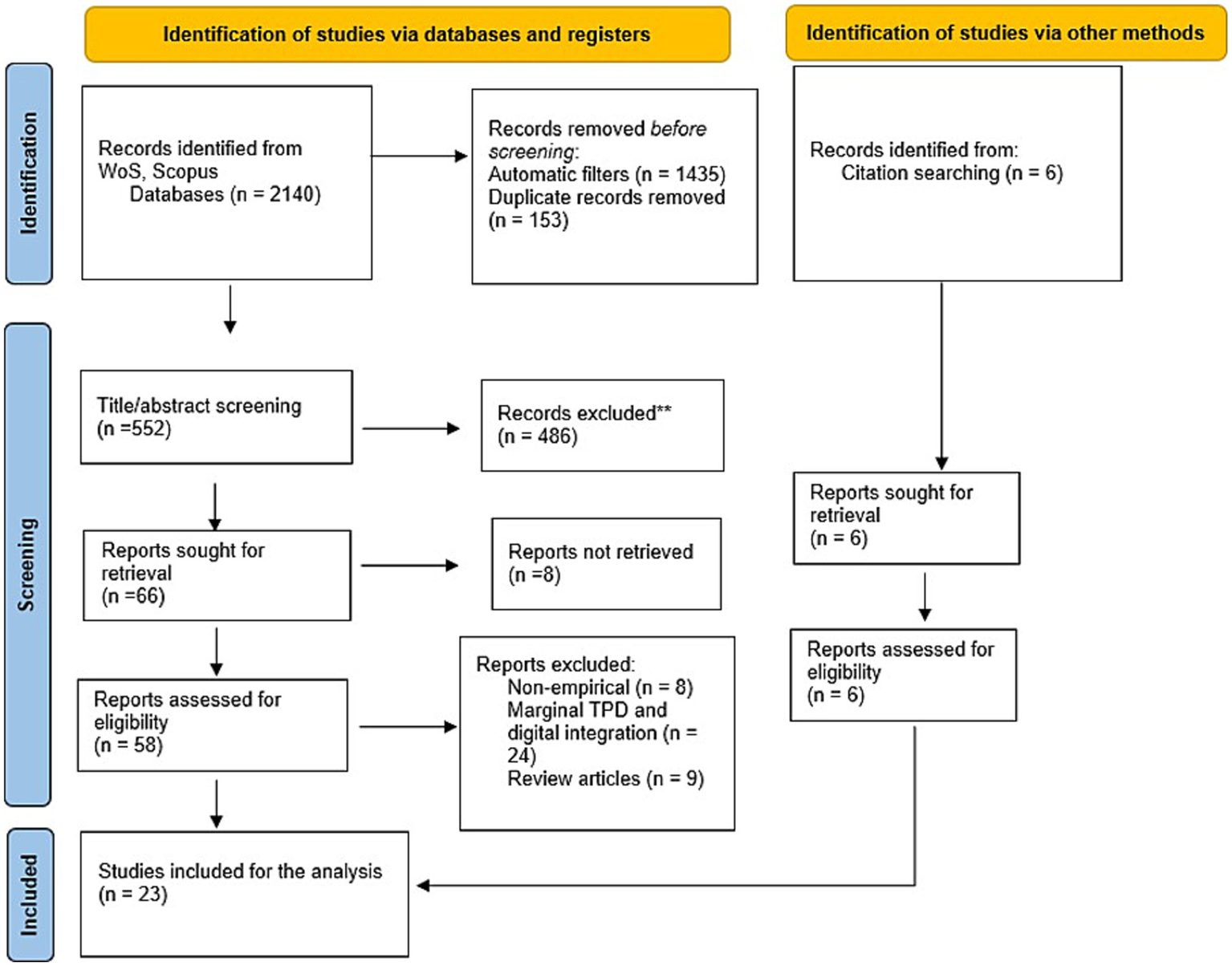
PRISMA flow diagram of inclusion and exclusion of studies.
Other potential search terms may have been excluded to maintain a focus on specific aspects of the topic. For example, terms like “student training” or “curriculum development” may have been excluded because they do not directly address the impact of teacher professional development programs on digital instructional integration. Similarly, terms related to broader educational topics or unrelated technologies might have been avoided to narrow the scope and ensure the search remained relevant to the central research questions of the review. The chosen terms allowed the researchers to filter out studies that were tangential or not aligned with the key themes of the review.
The goal was to strike a balance between comprehensiveness and focus, ensuring that the results provided relevant and high-quality studies without including a large volume of irrelevant or peripheral literature. All authors contributed to the screening and review of the literature, with each playing a role at various stages of the process to ensure the validity and scrutiny of the systematic review. Initially, the authors collectively participated in the selection of search terms and the identification of relevant articles from databases such as WoS, Scopus, and Google Scholar. This collaborative effort ensured that the chosen search terms were comprehensive and aligned with the objectives of the review.
During the screening and eligibility assessment stages, all authors were involved in evaluating the articles. This involved reviewing the abstracts and determining their relevance to the research questions. When necessary, full-text articles were downloaded for further assessment. To ensure consistency and minimize bias, multiple authors independently reviewed each article, and any disagreements were resolved through discussion or consultation. In the in-depth review and coding phase, all contributing authors read and coded the final 23 articles. Each author was likely assigned a subset of articles or contributed to coding across the entire dataset. The coding process involved extracting relevant data related to key themes such as “digital integration,” “teacher professional development,” and specific instructional practices. This phase allowed for a detailed and thorough analysis of each article’s content. Finally, the authors met to discuss their findings, reconcile any differences in interpretation, and ensure a consensus on the results. This collaborative approach was crucial in verifying the accuracy of the data and ensuring that the conclusions drawn were consistent and well-supported by the literature. Therefore, all authors played a significant role in reading, coding, and finalizing the analysis of the selected articles, contributing to the overall quality and comprehensiveness of the systematic review.
3.3 Data extraction and coding
The review adopted a qualitative technique to report the research on TPD about DII over the selected period. To ensure a rigorous evaluation of methodological quality, the researchers carefully coded each study using predetermined key data points (Chinh et al., 2019). This was done utilizing a data analysis technique developed by the authors to analyze the publications that met the inclusion criteria as shown in Table 2. To ensure the reliability of data, the researchers sorted each study depending on the level of consistency with the study’s aim before making a final decision (Whiting et al., 2003).
Table 2
| No. | Authors (Year) | Title | Key features of effective TPD | Change in attitudes/perceptions |
|---|---|---|---|---|
| 1 | Al Aamri et al. (2023) | Padlet Mobile Training Model for Novice Omani EFL In-service Teachers | Focused on mobile learning tools, customized for novice teachers. | Increased comfort and enthusiasm for using digital tools in language instruction. |
| 2 | Alekseeva et al. (2020) | Digital Transformation of Additional Professional Education: Features of the LK-14 Educational Platform | Platform-based TPD emphasizes self-paced learning and practical application. | The positive shift toward the acceptance and integration of digital tools in professional education settings. |
| 3 | Amir (2023) | A Holistic Model for Disciplinary Professional Development—Overcoming Disciplinary Barriers to ICT | Interdisciplinary approach with collaborative learning and hands-on practice. | Enhanced willingness to incorporate ICT in various disciplinary contexts. |
| 4 | Baser et al. (2021) | Training in-service teachers through individualized technology-related mentorship | Mentorship model that offers personalized support and continuous feedback. | Significant improvement in attitudes toward using technology, leading to more frequent and confident use in classrooms. |
| 5 | Çakır et al. (2021) | The effect of basic robotic Coding in-service training on teachers’ Acceptance of technology | Practical, hands-on workshops focused on robotic coding and computational thinking skills. | Increased acceptance of and proficiency in using technology for educational purposes. |
| 6 | Charania et al. (2023) | Leading Edge Use of Technology for Teacher Professional Development in Indian Schools | Utilizes a blend of online and face-to-face sessions, integrating local and global technological resources. | Greater confidence and interest in applying new technologies in teaching practices. |
| 7 | Dilling et al. (2024) | Describing the digital competencies of mathematics teachers | Emphasizes reflection and experience in developing digital competencies. | Enhanced digital competencies and more reflective practice regarding technology use. |
| 8 | Çuhadar and Durmuşoğlu (2021) | Evaluation of In-Service Training on Information and Communication Technologies | A feedback-driven approach that incorporates participant evaluations to refine the training process. | Positive changes in attitudes toward ICT integration, with teachers reporting increased confidence. |
| 9 | Esfijani and Zamani (2020) | Factors influencing teachers’ utilization of ICT: The role of in-service training courses and access | Training coupled with improved access to technology tools and resources. | More frequent use of ICT in teaching, with a reported increase in comfort and competence. |
| 10 | Fütterer et al. (2023) | Will, skills, or conscientiousness: What predicts teachers’ intentions to participate in technology-related PD | Analyses motivational factors affecting participation in TPD, emphasizing personal willingness and skill development. | Teachers’ intentions to participate are closely linked to the perceived value and personal relevance of the PD content. |
| 11 | Garzón Artacho et al. (2020) | Teacher Training in Lifelong Learning—The Importance of Digital Competence in the Encouragement of Teaching Innovation | Focus on lifelong learning and continuous skill development. | Increased perception of digital competence as essential for teaching innovation. |
| 12 | Giavrimis (2020) | Social Inequalities and ICT Teacher’s In-Service Training | Addresses social inequalities in access to ICT training, providing tailored support to under-resourced teachers. | Enhanced attitudes toward ICT among teachers from diverse backgrounds, recognizing the importance of equitable access to technology training. |
| 13 | Kohnke et al. (2024) | Microlearning: A new normal for flexible teacher professional development in online and blended learning | Utilizes micro-learning for flexible, on-demand professional development. | Positive changes in attitudes toward self-directed, flexible learning using digital resources. |
| 14 | Koomson et al. (2022) | Impact of In-Service Training Programme on the TPACK of Science Teachers | TPD focuses on enhancing Technological Pedagogical Content Knowledge (TPACK) for science teachers. | Significant improvement in TPACK, leading to more integrated use of technology in science teaching. |
| 15 | Mailizar et al. (2022) | The Impact of Digital Literacy and Social Presence on Teachers’ Acceptance of Online Professional Development | Emphasizes digital literacy and the importance of social presence in online PD. | Teachers show greater acceptance and engagement with online PD platforms, reporting increased digital literacy. |
| 16 | Mirete et al. (2020) | Digital Competence and University Teachers’ Conceptions About Teaching | Examines university teachers’ digital competence and its impact on their teaching conceptions. | Enhanced digital competence is linked to more positive conceptions of technology-supported teaching. |
| 17 | Ogochukwu et al. (2021) | Information and Communication Technology Word processing skills’ In-Service Training | Practical training focused on word processing skills. | Improved skills and attitudes toward ICT integration in secondary education. |
| 19 | Pareigis et al. (2024) | Open networked learning—a course, a community, an approach | Community-based approach to TPD, emphasizing open and networked learning environments. | Teachers report positive shifts in attitudes toward collaborative and networked learning. |
| 20 | Pedersen et al. (2024) | Profiling teacher educators’ strategies for professional digital competence development | Focus on strategies for developing digital competencies among teacher educators. | Improved digital competencies among teacher educators, influencing their training practices. |
| 20 | Pongsakdi et al. (2021) | The impact of digital pedagogy training on in-service teachers’ attitudes toward digital technologies | Emphasizes pedagogy-focused digital training for in-service teachers. | Positive changes in attitudes toward digital pedagogy and its application in teaching. |
| 21 | Rasdiana et al. (2024) | Elevating Teachers’ Professional Digital Competence | Integrates principals’ e-supervision, technology leadership, and digital culture in PD. | Positive shift in teachers’ digital competence and integration practices. |
| 22 | Valverde-Berrocoso et al. (2021) | The educational integration of digital technologies pre-COVID-19: Lessons for teacher education | Examines the integration of digital technologies in pre-Covid teacher education. | Insights on how pre-Covid PD influenced attitudes toward digital technology, informing future PD design. |
| 23 | Xie et al. (2021) | Examining changes in teachers’ perceptions of external and internal barriers | Studies changes in teachers’ perceptions of barriers to integrating educational digital resources. | Identification of shifts in perceptions regarding barriers and facilitators of digital resource integration in K-12 education. |
Characteristics of studies included in the review.
4 Results
This qualitative systematic review analyzed 23 peer-reviewed studies to identify the defining characteristics of effective teacher professional development (TPD) programs and their influence on teachers’ attitudes and perceptions regarding digital instructional integration (DII). The selected studies spanned diverse educational contexts, subject areas, and professional development models, providing a comprehensive understanding of the factors that contribute to successful digital integration in teaching practices. The findings reveal critical elements that enhance TPD effectiveness, including program customization, blended learning approaches, ongoing mentorship, and institutional support. A key theme that emerged from the analysis is the importance of tailored TPD programs that address teachers’ specific needs. Studies indicate that customized training, particularly for novice teachers or those focusing on specialized digital skills such as coding or artificial intelligence, results in higher engagement and improved confidence in digital instructional integration. Programs designed with clear objectives and direct applicability to classroom settings were found to be more effective in fostering positive attitudes toward digital technology use.
Blended learning models also emerged as a significant factor in TPD effectiveness. Studies highlight that combining online and face-to-face learning provides teachers with flexibility while maintaining interactive and collaborative learning opportunities. Teachers who participated in TPD programs that incorporated hands-on digital training and practical application reported higher levels of confidence in integrating digital tools into their teaching. Additionally, programs that emphasized continuous skill development and iterative feedback mechanisms were more successful in ensuring the long-term adoption of digital instructional practices.
Another key finding is the role of collaboration and mentorship in TPD effectiveness. The review underscores that community-based and interdisciplinary learning environments create supportive spaces where teachers can exchange experiences, collaborate on digital pedagogical strategies, and gain insights from their peers. Structured mentorship programs, where experienced educators guide less-experienced teachers, were found to significantly enhance teachers’ willingness to experiment with and integrate digital tools into their instructional practices. Continuous feedback and follow-up support further reinforced teachers’ confidence and motivation to sustain digital integration efforts. Institutional support also plays a crucial role in the success of TPD programs. Studies highlight that teachers are more likely to adopt digital instructional strategies when they receive adequate technical support, administrative encouragement, and access to necessary resources such as reliable internet, digital devices, and educational software. Schools and educational institutions that prioritize digital transformation by integrating DII policies and fostering a culture of innovation create environments where teachers feel empowered to engage in digital integration.
While the narrative discussion provides insights into observed patterns, summarizing key findings in a structured format would enhance clarity and comprehension. Table 3 presents a synthesized summary of the reviewed studies, categorizing them based on research methodology, key findings, and geographic context.
Table 3
| Study (Author, Year) | Methodology | Key findings | Geographic context |
|---|---|---|---|
| Padlet Mobile Training Model for Novice Omani EFL In-Service Teachers (Al Aamri et al., 2023) | Qualitative | Mobile-based TPD enhances confidence in digital integration | Oman |
| Digital Transformation of Additional Professional Education: Features of the LK-14 Educational Platform (Alekseeva et al., 2020) | Mixed Methods | Digital platforms improve access to professional development | Russia |
| A Holistic Model for Disciplinary Professional Development Overcoming Disciplinary Barriers to ICT (Amir, 2023) | Qualitative | Overcoming subject-specific barriers enhances digital integration | Sweden |
| Training In-Service Teachers Through Individualized Technology-Related Mentorship (Baser et al., 2021) | Quantitative | Mentorship significantly improves teachers’ digital adoption | USA |
| The Effect of Basic Robotic Coding In-Service Training on Teachers’ Acceptance of Technology (Çakır et al., 2021) | Mixed Methods | Hands-on training enhances teachers’ attitudes toward digital tools | Turkey |
| Leading Edge Use of Technology for Teacher Professional Development in Indian Schools (Charania et al., 2023) | Qualitative | Strategic TPD improves digital instructional practices | India |
| Describing the Digital Competencies of Mathematics Teachers (Dilling et al., 2024) | Quantitative | Subject-specific training enhances digital competence | Germany |
| Evaluation of In-Service Training on Information and Communication Technologies (Çuhadar and Durmuşoğlu, 2021) | Mixed Methods | In-service training increases digital proficiency | Brazil |
| Factors Influencing Teachers’ Utilisation of ICT: The Role of In-Service Training Courses and Access (Esfijani and Zamani, 2020) | Qualitative | Institutional access determines ICT adoption success | South Africa |
| Will, Skills, or Conscientiousness: What Predicts Teachers’ Intentions to Participate in Technology-Related PD (Fütterer et al., 2023) | Quantitative | Motivation and digital self-efficacy influence TPD participation | USA |
| Teacher Training in Lifelong Learning—The Importance of Digital Competence in the Encouragement of Teaching Innovation (Garzón Artacho et al., 2020) | Mixed Methods | Lifelong learning TPD fosters innovation | Spain |
| Social Inequalities and ICT Teacher’s In-Service Training (Giavrimis, 2020) | Qualitative | Socioeconomic factors impact digital training participation | France |
| Microlearning: A New Normal for Flexible Teacher Professional Development in Online and Blended Learning (Kohnke et al., 2024) | Mixed Methods | Short, focused learning modules enhance accessibility | UK |
| Impact of In-Service Training Programme on the TPACK of Science Teachers (Koomson et al., 2022) | Quantitative | Training improves technological pedagogical content knowledge | China |
| The Impact of Digital Literacy and Social Presence on Teachers’ Acceptance of Online Professional Development (Mailizar et al., 2022) | Qualitative | Digital literacy correlates with TPD effectiveness | Canada |
| Digital Competence and University Teachers’ Conceptions About Teaching (Mirete et al., 2020) | Mixed Methods | University-level TPD influences instructional strategies | Norway |
| Information and Communication Technology Word Processing Skills’ In-Service Training (Ogochukwu et al., 2021) | Quantitative | Focused ICT training enhances digital capabilities | Nigeria |
| Open Networked Learning—A Course, a Community, an Approach (Pareigis et al., 2024) | Qualitative | Community-based learning strengthens digital integration | Sweden |
| Profiling Teacher Educators’ Strategies for Professional Digital Competence Development (Pedersen et al., 2024) | Mixed Methods | Differentiated strategies improve professional digital competence | Netherlands |
| The Impact of Digital Pedagogy Training on In-Service Teachers’ Attitudes Towards Digital Technologies (Pongsakdi et al., 2021) | Quantitative | Digital pedagogy training fosters positive attitudes | Australia |
| Elevating Teachers’ Professional Digital Competence (Rasdiana et al., 2024) | Qualitative | Institutional support enhances professional digital skills | Finland |
| The Educational Integration of Digital Technologies Pre-COVID-19: Lessons for Teacher Education (Valverde-Berrocoso et al., 2021) | Mixed Methods | Digital policy implementation supports teacher readiness | UK |
| Examining Changes in Teachers’ Perceptions of External and Internal Barriers (Xie et al., 2023) | Qualitative | Institutional and personal factors shape digital adoption | USA |
Synthesized summary of reviewed studies.
The results of this qualitative systematic review were directly aligned with the research questions, which sought to explore the effects of teacher professional development (TPD) programs on digital instructional integration. The analysis of the final 23 articles provided a comprehensive understanding of how TPD programs contribute to the integration of digital tools in teaching practices, the types of programs that are most effective, and the challenges teachers face during and after the implementation of these programs. While the majority of studies reported positive outcomes, it is important to recognize that some articles raised questions and identified limitations to the positive effects of TPD. One of the key concerns noted in several studies was the sustainability of the impact of TPD on digital integration. While teachers showed initial enthusiasm and confidence in using digital tools immediately following the training, the long-term effectiveness of these programs was often questioned. Without ongoing support, many teachers reverted to traditional teaching methods after the program ended. This suggests that TPD programs, while effective in the short term, may require continued professional development and follow-up support to maintain the momentum of digital integration.
Furthermore, some studies identified significant barriers that persisted even after TPD, including issues such as inadequate infrastructure, a lack of access to necessary technology, and teachers’ resistance to change. Teachers in schools with limited access to technology reported difficulties in implementing what they had learned in TPD sessions. Additionally, some teachers expressed reluctance to integrate digital tools, either due to a lack of confidence or a preference for traditional teaching methods. These factors pointed to the importance of addressing both external barriers, such as infrastructure, and internal barriers, such as teacher attitudes and beliefs, to ensure the successful integration of technology. Another issue raised in the literature was the variability in teacher readiness. Teachers with varying levels of prior knowledge and comfort with technology experienced different outcomes from TPD programs. Teachers with a strong background in technology were more likely to effectively integrate digital tools, while those with less experience often struggled. This variability highlights the need for TPD programs to be differentiated and tailored to meet the diverse needs of teachers at different stages of technological proficiency.
In conclusion, while the systematic review predominantly highlighted the positive effects of TPD programs on digital instructional integration, it also revealed several important challenges and limitations. The literature pointed to the need for continued support and resources after the initial training, the importance of addressing barriers such as access to technology, and the role of teacher attitudes in determining the success of TPD programs. Moreover, the sustainability of the impact of TPD on digital integration remains a critical area of concern, suggesting that long-term success requires a comprehensive, ongoing approach to professional development. Therefore, while TPD has demonstrated significant potential in supporting the integration of digital tools in teaching, the success of such programs is highly dependent on the broader context in which they are implemented, including infrastructure, teacher readiness, and sustained support.
RQ1: What are the key characteristics of effective teacher professional development programs that promote a shift in teachers’ beliefs and attitudes toward digital integration?
The results indicate that effective TPD programs, which encourage changes in teachers’ mindsets and attitudes toward digital integration, exhibit many important characteristics. Foremost, the results show that several TPDs prioritize customization according to the specific demands of the teacher. For instance, Aamri et al. (2023) Created a specialized mobile training model for inexperienced teachers, with a specific emphasis on mobile learning technologies. It was found that the model effectively enhanced teachers’ confidence and eagerness to utilize digital resources. In a similar manner, Çakır et al. (2021) Conducted workshops that offered practical, hands-on training in robotic coding and computational thinking. These workshops specifically targeted the needs of teachers who wanted to incorporate these abilities into their teaching. Furthermore, the incorporation of blended and flexible learning methods is also another key characteristic that improves the efficiency of TPD. Charania et al. (2023) Employed a combination of online and in-person workshops, incorporating both local and global technical resources. The efficacy of micro-learning in facilitating adaptable and readily available professional growth results in favorable views toward self-directed and flexible learning (Kohnke et al., 2024).
Highlighting digital proficiency is another crucial aspect of TPD programs (Dilling et al., 2024; Pedersen et al., 2024). This emphasis resulted in improved digital abilities and had a beneficial impact on teaching and training methods. In addition, other studies explained the importance of ongoing skill enhancement and the incorporation of digital competencies into teacher professional development, to promote a culture that values digital competence and integration. Collaborative and community-based learning are also highly influential. Amir (2023) and Pareigis et al. (2024), respectively utilized interdisciplinary and community-based methodologies. The results indicate that the effective implementation of TPD relies on the practical application and ongoing support provided. Baser et al. (2021) employed a mentorship framework that offered individualized assistance and ongoing evaluation, resulting in a notable change in attitudes toward digital technologies, and increased frequency and self-assurance of DII. In addition, Esfijani and Zamani (2020) implemented a training program that provided teachers with enhanced access to technological tools and resources.
RQ2: How do teacher attitudes and perceptions toward digital tools change following participation in professional development programs?
The findings from the broad literature indicate that effective TPD programs lead to several notable changes in teachers’ attitudes and perceptions toward digital tools. For instance, studies show that participation in customized, practical training programs, such as those supported by AI increased teachers’ confidence and enthusiasm for DII (Aamri et al., 2023; Çuhadar and Durmuşoğlu, 2021). In many cases, TPD programs lead to positive shifts toward the acceptance and integration of digital tools that teachers were not first comfortable with. Studies reported a positive shift in acceptance and integration of digital tools following platform-based and online professional development. Factors such as improved digital literacy and the importance of social presence in online TPD contributed significantly to efficient DII (Alekseeva et al., 2020; Amir, 2023; Charania et al., 2023; Mailizar et al., 2022).
Moreover, the review found that effective TPD programs contribute to improved digital competencies (Dilling et al., 2024; Pedersen et al., 2024; Rasdiana et al., 2024). These improvements in digital skills positively influenced teaching practices and integration strategies, leading to a more effective use of digital tools in classroom instruction. Recognition of the importance of equitable access to technology training emerged as another significant change in attitudes. It addressed social inequalities and provided tailored support to under-resourced teachers, leading to enhanced attitudes toward DII and a recognition of the importance of equitable access to technology training (Esfijani and Zamani, 2020; Giavrimis, 2020). In other studies, scholars identified that effective TPD programs led to more frequent and consistent DII (Baser et al., 2021; Ogochukwu et al., 2021).
4.1 Discussion
The results of this systematic review underscore the multifaceted nature of effective teacher-professional development (TPD) programs aimed at promoting digital instructional integration (DII). The increasing reliance on digital technologies in educational settings necessitates that teachers not only acquire technical proficiency but also develop the pedagogical competencies and confidence required for meaningful and sustainable digital integration. Consequently, effective TPD programs must be designed with a holistic perspective, ensuring that they address the diverse and evolving needs of educators while fostering long-term professional growth. This review identifies several key components that contribute to the efficacy of TPD programs, including customization to teacher needs, the implementation of blended and flexible learning approaches, an emphasis on continuous digital competency development, the incorporation of collaborative learning structures, and the provision of sustained mentorship and feedback mechanisms (Amir, 2023; Dilling et al., 2024; Tondeur et al., 2018).
A fundamental principle of effective TPD is customization, which ensures that professional development initiatives are relevant, meaningful, and responsive to the specific contexts in which teachers operate. Standardized training programs often fail to accommodate the diverse levels of experience, subject specializations, and instructional needs of teachers. By contrast, customized TPD programs, such as those designed for novice teachers or those focusing on specialized skills like robotics coding, artificial intelligence integration, or digital classroom management, provide targeted support that enhances the applicability and effectiveness of training. Tailored learning experiences empower teachers by addressing their challenges, reinforcing their existing competencies, and fostering a sense of ownership over their professional growth. Moreover, when TPD programs align with teachers’ day-to-day instructional demands, they are more likely to result in increased confidence, motivation, and a willingness to integrate digital tools into teaching practices effectively.
Another essential component of impactful TPD programs is the incorporation of blended and flexible learning approaches, which provide educators with opportunities for self-paced learning while maintaining access to structured guidance and peer collaboration. Blended learning models, which integrate online asynchronous modules with synchronous face-to-face training sessions, have been found to significantly enhance the depth and effectiveness of professional development (Dilling et al., 2024; Tondeur et al., 2018). This hybrid approach allows teachers to engage with digital instructional content at their own pace while also benefiting from interactive, discussion-based, and hands-on learning experiences. Additionally, blended TPD fosters the development of digital literacy by immersing teachers in technology-enhanced learning environments, thus enabling them to experience firsthand the pedagogical potential of digital tools. Flexible learning structures, including micro-credentialing, modular coursework, and just-in-time training sessions, further support teachers by accommodating their schedules and diverse learning preferences.
Beyond initial training, continuous digital competency development is critical to ensuring the long-term success of digital instructional integration. The rapid pace of technological advancements requires that teachers engage in ongoing professional learning to keep pace with emerging digital tools, platforms, and pedagogical strategies. One-time workshops and sporadic training sessions are insufficient in fostering sustained digital literacy and instructional innovation. Instead, TPD programs should emphasize lifelong learning and encourage teachers to engage in continuous skill enhancement through webinars, self-directed learning pathways, action research projects, and digital learning communities (Amir, 2023). By embedding digital competency development within a long-term professional learning framework, educators develop not only the technical skills required to utilize digital tools but also the critical and reflective capacities necessary to assess and adapt technology for effective teaching and learning.
Equally important in TPD programs is the emphasis on collaborative and practical learning approaches, which facilitate knowledge-sharing, peer-to-peer support, and collective problem-solving. Research indicates that teachers are more likely to adopt and sustain new instructional strategies when they engage in professional learning communities (PLCs), peer coaching, and interdisciplinary collaboration (Esfijani and Zamani, 2020; Rasdiana et al., 2024). Community-based learning environments foster a culture of shared expertise and mutual support, enabling educators to exchange best practices, reflect on their experiences, and collaboratively develop innovative digital instructional strategies. Furthermore, interdisciplinary learning opportunities, in which teachers from different subject areas co-develop and implement technology-enhanced instructional approaches, promote cross-disciplinary thinking and pedagogical creativity. Such collaborative engagements not only strengthen teachers’ confidence in using digital tools but also encourage the adoption of contextually relevant and student-centered instructional methodologies.
Moreover, the provision of sustained mentorship and feedback mechanisms has been identified as a crucial factor in enhancing teachers’ digital instructional integration. Teachers often encounter various challenges when attempting to implement new technologies in their classrooms, including technical difficulties, pedagogical uncertainties, and resistance to change. Structured mentorship programs, in which experienced teachers or technology integration specialists provide guidance and support, play a vital role in addressing these challenges. Regular feedback loops, including classroom observations, peer evaluations, and reflective discussions, enable teachers to refine their instructional practices and develop a deeper understanding of how digital tools can be effectively leveraged to enhance student learning outcomes. Mentorship and continuous feedback not only build teachers’ confidence but also reinforce a culture of professional reflection and growth (Esfijani and Zamani, 2020; Rasdiana et al., 2024).
The findings of this review suggest that for TPD programs to be truly effective in fostering digital instructional integration, they must extend beyond traditional, content-focused training models. Instead, TPD initiatives should adopt a holistic and systemic approach that integrates personalization, flexibility, collaboration, and continuous support. By prioritizing the alignment of training with teachers’ specific needs, offering blended and adaptable learning experiences, embedding digital competency development within an ongoing professional learning framework, promoting collaborative engagement, and ensuring the availability of sustained mentorship, TPD programs can drive meaningful and enduring transformations in digital instructional practices. Such an approach not only equips teachers with the necessary technical skills but also empowers them with the pedagogical knowledge, adaptability, and confidence required to navigate the evolving digital landscape. Ultimately, when professional development is structured in a way that fosters reflective, context-sensitive and sustained learning, it leads to improved teacher efficacy, enhanced student engagement, and more seamless integration of digital technologies in educational practice.
4.2 Practical implication
The findings from this review suggest several practical implications for the design and implementation of teacher professional development programs that should aim at enhancing digital instructional integration. First, training models must be tailored to the specific needs and contexts of the teachers, whether they are novices or experienced teachers. Customizing programs to focus on specific digital skills or tools that align with teachers’ immediate instructional goals can enhance the practical utility of the training. In this regard, there is an assessment of the specific needs of teachers which can lead to more effective and engaging professional development experiences.
Second, the integration of blended and flexible learning approaches can significantly enhance the accessibility and effectiveness of TPD programs. Blended learning models, which combine online and face-to-face sessions, provide a versatile platform that caters for various learning preferences and schedules. This flexibility is crucial for accommodating teachers who may have different time constraints and learning styles. Moreover, incorporating micro-learning elements allows for on-demand learning that allows teachers to engage at their own pace. This approach not only fosters continuous teacher professional development but also ensures that teachers can immediately apply new skills and knowledge to their teaching practices. Educational leaders and policymakers should consider adopting such flexible and blended learning models to enhance the impact of TPD initiatives.
Finally, fostering a collaborative and reflective learning environment in the form of a professional learning community is essential for the long-term success of TPD programs. The review underscores the value of creating community-based learning opportunities where teachers can collaborate, share best practices, and provide mutual support. Programs that emphasize mentorship, continuous feedback, and collaborative learning, result in significant improvements in teachers’ confidence and proficiency in using digital tools. Furthermore, encouraging reflective practices helps teachers critically evaluate their digital instructional integration and develop more effective instructional strategies. Therefore, TPD programs need to integrate collaborative projects, peer mentoring, and reflective exercises to build a supportive network that facilitates ongoing teacher professional development and adaptation to technological advancements in education.
5 Conclusion
This systematic review critically examined the essential characteristics of effective teacher-professional development (TPD) programs aimed at fostering digital instructional integration (DII). The findings underscore the significance of well-structured TPD initiatives that prioritize customization, blended and flexible learning models, structured mentorship, and sustained institutional support. Collectively, these elements contribute to enhanced teacher confidence, engagement, and long-term adoption of digital instructional strategies.
A fundamental conclusion drawn from this study is that TPD programs must transcend generic training models and instead adopt a more tailored approach to professional development. Programs that address teachers’ specific digital competency needs such as the integration of artificial intelligence, coding, or subject-specific digital tools are more effective in fostering digital proficiency and positive attitudes toward technology use in the classroom. Furthermore, blended learning models, which incorporate both online and in-person components, offer a more flexible and engaging framework for professional development, ensuring accessibility and adaptability to diverse teaching schedules and learning preferences. The role of structured mentorship and collaborative learning communities is also critical, as these approaches provide sustained support, foster peer collaboration, and create environments conducive to continuous learning and knowledge sharing.
The implications of these findings are particularly relevant for policymakers, educational administrators, and teacher training institutions. To maximize the impact of TPD programs, policymakers should prioritize the integration of hands-on training, iterative feedback mechanisms, and mentorship structures into professional development frameworks. Additionally, education systems must invest in the necessary digital infrastructure, ensuring that teachers have access to reliable technological tools, connectivity, and pedagogical support to effectively implement digital instructional strategies. Furthermore, professional development initiatives should incorporate mechanisms for long-term follow-up and impact assessment, allowing for continuous improvement and adaptation of training programs based on evolving technological and educational needs.
Despite the valuable insights generated by this review, certain limitations warrant further investigation. Notably, there is a need for longitudinal research to assess the sustained impact of TPD programs on teacher performance and student learning outcomes. Future studies should explore the comparative effectiveness of different training delivery models such as fully online, blended, or in-person modalities to determine the most impactful approaches for diverse educational settings. Additionally, further research should examine the systemic challenges that impede the adoption of digital instructional strategies, particularly in under-resourced educational environments, and propose targeted interventions to mitigate these barriers.
In conclusion, this review highlights the multifaceted nature of effective TPD programs and their critical role in advancing digital instructional integration. By implementing evidence-based, customized, and collaborative professional development initiatives, educational institutions and policymakers can enhance teacher preparedness for digital transformation and foster a culture of continuous innovation in education. Ensuring that teachers are adequately equipped with the skills, confidence, and institutional support necessary for effective digital integration will be instrumental in shaping the future of technology-enhanced teaching and learning.
6 Limitations
While this systematic review provides valuable insights into the role of TPD in promoting DII, there are also some limitations. First, the review is restricted to studies published between 2020 and 2024. Although this period reflects recent trends and advancements in digital integration, it may not capture long-term developments or historical perspectives in TPD and DII, potentially missing broader contextual factors influencing digital integration over time. Additionally, the geographic and contextual diversity of the studies included may not fully represent global educational contexts. Variations in educational policies, technological infrastructure, and socio-economic factors across different regions can influence the effectiveness and implementation of TPD programs, limiting the generalisability of the findings, especially in underrepresented areas. However, the study adds, a significant contribution to research in the field of education by showing how the TPD program is leveraged to promote DII among teachers. Addressing these limitations in future research should enhance the understanding of TPD’s role in digital instructional integration and contribute to developing more effective and contextually relevant professional development programs for teachers.
Statements
Data availability statement
The original contributions presented in the study are included in the article/supplementary material, further inquiries can be directed to the corresponding author.
Author contributions
SA: Writing – original draft. SO: Supervision, Writing – original draft. BG: Writing – review & editing. B-BB: Writing – review & editing. DE: Validation, Writing – review & editing.
Funding
The author(s) declare that no financial support was received for the research and/or publication of this article.
Conflict of interest
The authors declare that the research was conducted in the absence of any commercial or financial relationships that could be construed as a potential conflict of interest.
Generative AI statement
The authors declare that no Gen AI was used in the creation of this manuscript.
Publisher’s note
All claims expressed in this article are solely those of the authors and do not necessarily represent those of their affiliated organizations, or those of the publisher, the editors and the reviewers. Any product that may be evaluated in this article, or claim that may be made by its manufacturer, is not guaranteed or endorsed by the publisher.
References
1
Al AamriS.GabarreC.GabarreS.Al AnqoudiS. (2023). Padlet mobile training model for novice Omani EFL in-service teachers. Arab World English J.9, 29–48. doi: 10.24093/Awej/Call9.3
2
AlekseevaG. I.MikhalevaO. I.BarakhsanovV. P.AbramovaD. G.PavlovN. M. (2020). Digital transformation of additional professional education: features of the LK-14 educational platform. Propositos Y Representaciones8:e699. doi: 10.20511/Pyr2020.V8nspe3.699
3
AmirA. (2023). A holistic model for disciplinary professional development—overcoming the disciplinary barriers to implementing ICT in teaching. Educ. Sci.13:1093. doi: 10.3390/Educsci13111093
4
BaserD.AkkusR.AkayogluS.TopE.GurerM. D. (2021). Training in-service teachers through individualized technology-related mentorship. Educ. Technol. Res. Dev.69, 3131–3151. doi: 10.1007/S11423-021-10065-W
5
CahyonoB.ArdiP.SiwaY.SariR.GestantiR. (2023). EFL teachers technological pedagogical knowledge (TPK) and ecological agency in responding to the differentiated learning policy in Indonesia. J. Res. Appl. Ling.14, 84–100. doi: 10.22055/Rals.2023.44055.3081
6
ÇakırR.ŞahinH.BalciH.VergiliM. (2021). The effect of basic robotic coding in-service training on teachers’ acceptance of technology, self-development, and computational thinking skills in technology use. J. Comput. Educ.8, 237–265. doi: 10.1007/S40692-020-00178-1
7
CattaneoA. A. P.AntoniettiC.RauseoM. (2022). How digitalised are vocational teachers? Assessing digital competence in vocational education and looking at its underlying factors. Comput. Educ.176:104358. doi: 10.1016/J.Compedu.2021.104358
8
CavigliaF.BoieM. A. K.DalsgaardC.PedersenA. Y. (2024). Bringing digital competence to the disciplines. Educ. Inq.1–29. doi: 10.1080/20004508.2024.2318842
9
CharaniaA.PaltiwaleS.SenS.SarkarD.BakshaniU. (2023). Leading edge use of technology for teacher professional development in Indian schools. Educ. Sci.13:386. doi: 10.3390/Educsci13040386
10
ChinhB.ZadeH.GanjiA.AragonC. (2019). Ways of qualitative coding: a case study of four strategies for resolving disagreements. Extended abstracts of the 2019 CHI conference on human factors in computing systems, 1–6.
11
ConsoliT.DésironJ.CattaneoA. (2023). What is “technology integration” and how is it measured in K-12 education? A systematic review of survey instruments from 2010 to 2021. Comput. Educ.197:104742. doi: 10.1016/J.Compedu.2023.104742
12
CusiA.MorselliF. (2024). The key roles of the expert during classroom discussions aimed at fostering formative assessment processes through the use of digital technologies. ZDM56, 741–755. doi: 10.1007/S11858-024-01572-0
13
ÇuhadarC.DurmuşoğluZ. (2021). Evaluation of In-Service Training on Information and Communication Technologies According to Stakeholder Opinions. MSGSÜ Sosyal Bilimler. 1, 143–159.
14
Darling-HammondL. (2010). Evaluating teacher effectiveness: how teacher performance assessments can measure and improve teaching. Washington, DC: Center for American Progress.
15
DillingF.SchneiderR.WeigandH.-G.WitzkeI. (2024). Describing the digital competencies of mathematics teachers: theoretical and empirical considerations on the importance of experience and reflection. ZDM – Math. Educ.56, 639–650. doi: 10.1007/S11858-024-01560-4
16
EsfijaniA.ZamaniB. E. (2020). Factors influencing teachers’ utilisation of ICT: the role of in-service training courses and access. Res. Learn. Technol.28, 1–16. doi: 10.25304/Rlt.V28.2313
17
FüttererT.SchererR.ScheiterK.StürmerK.LachnerA. (2023). Will, skills, or conscientiousness: what predicts teachers’ intentions to participate in technology-related professional development?Comput. Educ.198:104756. doi: 10.1016/J.Compedu.2023.104756
18
Gallardo-MontesC. D. P.Caurcel CaraM. J.Rodríguez FuentesA.CapperucciD. (2024). Opinions, training and requirements regarding ICT of educators in Florence and Granada for students with functional diversity. Univ. Access Inf. Soc.23, 889–899. doi: 10.1007/S10209-023-00977-0
19
GaroneA.BruggemanB.PhilipsenB.PynooB.TondeurJ.StruyvenK. (2022). Evaluating professional development for blended learning in higher education: a synthesis of qualitative evidence. Educ. Inf. Technol.27, 7599–7628. doi: 10.1007/S10639-022-10928-6
20
Garzón ArtachoE.MartínezT. S.Ortega MartínJ. L.Marín MarínJ. A.Gómez GarcíaG. (2020). Teacher training in lifelong learning—the importance of digital competence in the encouragement of teaching innovation. Sustain. For.12:2852. doi: 10.3390/Su12072852
21
GiavrimisP. (2020). Social inequalities and ICT teacher’s in-service training. Open J. Inf. Technol.3, 11–20. doi: 10.32591/Coas.Ojit.0301.02011g
22
HaddawayN. R.PageM. J.PritchardC. C.McguinnessL. A. (2022). PRISMA2020: an R package and shiny app for producing PRISMA 2020-compliant flow diagrams, with interactivity for optimised digital transparency and open synthesis. Campbell Syst. Rev.18:E1230. doi: 10.1002/Cl2.1230
23
HammackR.GannonP.ForemanC.MeyerE. (2020). Impacts of professional development focused on teaching engineering applications of mathematics and science. Sch. Sci. Math.120, 413–424. doi: 10.1111/Ssm.12430
24
HelleveI.Grov AlmåsA.BjørkeloB. (2020). Becoming a professional digital competent teacher. Prof. Dev. Educ.46, 324–336. doi: 10.1080/19415257.2019.1585381
25
HuangC.-K. (2023). Coaching for change: preparing mathematics teachers for technology integration in differentiated classrooms. Educ. Inf. Technol.28, 13913–13941. doi: 10.1007/S10639-023-11684-X
26
HuangB.Siu-Yung JongM.TuY.-F.HwangG.-J.ChaiC. S.Yi-Chao JiangM. (2022). Trends and exemplary practices of STEM teacher professional development programs in K-12 contexts: a systematic review of empirical studies. Comput. Educ.189:104577. doi: 10.1016/J.Compedu.2022.104577
27
JociusR.O’ByrneW. I.AlbertJ.JoshiD.BlantonM.RobinsonR.et al. (2022). Building a virtual community of practice: teacher learning for computational thinking infusion. TechTrends66, 547–559. doi: 10.1007/S11528-022-00729-6
28
JoshiD. R.AdhikariK. P.KhanalJ.BelbaseS.KhanalB. (2023). Developing and integrating digital resources in online mathematics instruction and assessment during Covid-19. Cogent Educ.10:2230394. doi: 10.1080/2331186X.2023.2230394
29
KohnkeL.FoungD.ZouD. (2024). Microlearning: a new normal for flexible teacher professional development in online and blended learning. Educ. Inf. Technol.29, 4457–4480. doi: 10.1007/S10639-023-11964-6
30
KonstantinidouE.SchererR. (2022). Teaching with technology: a large-scale, international, and multilevel study of the roles of teacher and school characteristics. Comput. Educ.179:104424. doi: 10.1016/J.Compedu.2021.104424
31
KraftM. A.BlazarD.HoganD. (2018). The effect of teacher coaching on instruction and achievement: a meta-analysis of the causal evidence. Rev. Educ. Res.88, 547–588. doi: 10.3102/0034654318759268
32
KoomsonC. K.PattersonV.DarkuA., and Owusu-FordjourC. (2022). Impact of in-service training programme on the TPACK of science teachers: A case of New Juaben-North Municipality in the Eastern Region of Ghana. Educatio: J. Educ. 7:2. doi: 10.29138/educatio.v7i2.783
33
LongH. M.BouckE. C. (2023). Calculators and online games: supporting students with learning disabilities in mathematics. Interv. Sch. Clin.58, 280–286. doi: 10.1177/10534512221093787
34
MailizarM.UmamK.ElisaE. (2022). The impact of digital literacy and social presence on teachers’ acceptance of online professional development. Contemp. Educ. Technol.14:Ep384. doi: 10.30935/Cedtech/12329
35
MarksB.ThomasJ. (2022). Adoption of virtual reality technology in higher education: an evaluation of five teaching semesters in a purpose-designed laboratory. Educ. Inf. Technol.27, 1287–1305. doi: 10.1007/S10639-021-10653-6
36
MireteA. B.MaquilónJ. J.MireteL.RodríguezR. A. (2020). Digital competence and university teachers’ conceptions about teaching: A structural causal model. Sustainability. 12, 4842. doi: 10.3390/su12124842
37
MishraM.GorakhnathI.LataP.RaniR.ChopraP. (2022). Integration of technological pedagogical content knowledge (TPACK) in classrooms through a teacher’s lens. Int. J. Health Sci.6, 12505–12512. doi: 10.53730/Ijhs.V6ns3.9536
38
MoranR. M. R.RobertsonL.TaiC.WardN. A.PriceJ. (2023). Developing pre-service teachers’ adaptive expertise through STEM-CT integration in professional development and residency placements. Front. Educ.8:1267459. doi: 10.3389/Feduc.2023.1267459
39
OgochukwuF. N.Stella IfeomaE. O.Nwanze MaureenN. (2021). Information and communication technology word processing skills’ in-service training for computer teachers in secondary schools in Nsukka education zone. Scholars J. Eng. Technol.9, 46–50. doi: 10.36347/Sjet.2021.V09i04.002
40
Organisation for Economic Co-operation and Development (OECD). (2022). Education at a glance 2022: OECD indicators. OECD Publishing. doi: 10.1787/3197152b-en
41
ÖrnekF.AfariE.AlaamS. A. (2023). Relationship between students’ ICT interactions and science achievement in PISA 2018: the case of Türkiye. Educ. Inf. Technol.29, 13413–13435. doi: 10.1007/S10639-023-12388-Y
42
PareigisJ.KvarnströmM.CefaB.BaiJ. Y. H.Zawacki-RichterO.UhlinL.et al. (2024). Open networked learning – a course, a community, an approach. Int. J. Acad. Dev.29, 169–184. doi: 10.1080/1360144X.2024.2350652
43
PedersenC.AagaardT.DausS.NagelI.AmdamS. H.VikaK. S.et al. (2024). Profiling teacher educators’ strategies for professional digital competence development. Teach. Teach.30, 417–436. doi: 10.1080/13540602.2024.2336612
44
PiperB.DestefanoJ.KinyanjuiE. M.Ong’eleS. (2021). Estimating learning loss from COVID-19 school shutdowns in Africa: A structured approach to building back better. Int. J. Educ. Dev.84:102397. doi: 10.1016/j.ijedudev.2021.102397
45
PongsakdiN.KortelainenA.VeermansM. (2021). The impact of digital pedagogy training on in-service teachers’ attitudes towards digital technologies. Educ. Inf. Technol.26, 5041–5054. doi: 10.1007/S10639-021-10439-W
46
RasdianaWiyonoB. B.ImronA.RahmaL.ArifahN.AzhariR.et al. (2024). Elevating teachers’ professional digital competence: synergies of principals’ instructional E-supervision, technology leadership and digital culture for educational excellence in digital-savvy era. Educ. Sci.14:266. doi: 10.3390/Educsci14030266
47
Schulze-VorbergL.KrilleC.FabrizS.HorzH. (2021). Hinweise Und Empfehlungen Für Die Konzeption Von Lehrkräftefortbildungen Zu Digitalen Medien. Z. Erzieh.24, 1113–1142. doi: 10.1007/S11618-021-01046-Z
48
SeatonJ.JonesA.JohnstonC.FrancisK. (2024). Promoting effective interprofessional collaborative practice in the primary care setting: recommendations from Queensland physiotherapy private practitioners. Aust. J. Prim. Health30, 1–10. doi: 10.1071/PY23175
49
SullivanF. R. (2021). Critical pedagogy and teacher professional development for online and blended learning: the equity imperative in the shift to digital. Educ. Technol. Res. Dev.69, 21–24. doi: 10.1007/S11423-020-09864-4
50
ThomaJ.HutchisonA.JohnsonD.JohnsonK.StromerE. (2017). Planning for technology integration in a professional learning community. Read. Teach.71, 167–175. doi: 10.1002/Trtr.1604
51
TondeurJ.AesaertK.PrestridgeS.ConsuegraE. (2018). A multilevel analysis of what matters in the training of pre-service teachers’s ICT competencies. Comput. Educ.122, 32–42. doi: 10.1016/J.Compedu.2018.03.002
52
UNESCO. (2023). Global education monitoring report 2023: Technology in education: A tool on whose terms?UNESCO Publishing. doi: 10.54675/PKZQ7462
53
Valverde-BerrocosoJ.Fernández-SánchezM. R.Revuelta DomínguezF. I.Sosa-DíazM. J. (2021). The educational integration of digital technologies preCovid-19: Lessons for teacher education. PLOS ONE. 16:e0256283. doi: 10.1371/journal.pone.0256283
54
WhitingP.RutjesA. W.ReitsmaJ. B.BossuytP. M.KleijnenJ. (2003). The development of QUADAS: a tool for the quality assessment of studies of diagnostic accuracy included in systematic reviews. BMC Med. Res. Methodol.3:25. doi: 10.1186/1471-2288-3-25
55
XieK.NelsonM. J.ChengS.-L.JiangZ. (2021). Examining changes in teachers’ perceptions of external and internal barriers in their integration of educational digital resources in K–12 classrooms. JRTE. 55, 491–507. doi: 10.1080/15391523.2021.1951404
56
YurinovaE. A.ByrdinaO. G.DolzhenkoS. G. (2022). Transprofessional competences of school teachers in the digital environment: education employers’ perspective. Educ. Inf. Technol.27, 1841–1863. doi: 10.1007/s10639-021-10687-w
Summary
Keywords
teacher professional development, digital instructional integration, in-service training, systematic review, digital technology
Citation
Amemasor SK, Oppong SO, Ghansah B, Benuwa B-B and Essel DD (2025) A systematic review on the impact of teacher professional development on digital instructional integration and teaching practices. Front. Educ. 10:1541031. doi: 10.3389/feduc.2025.1541031
Received
13 January 2025
Accepted
25 April 2025
Published
12 May 2025
Volume
10 - 2025
Edited by
Yudhi Arifani, Universitas Muhammadiyah Gresik, Indonesia
Reviewed by
Widodo Winarso, Universitas Islam Negeri Siber Syekh Nurjati Cirebon, Indonesia
Valerie Harlow Shinas, Lesley University, United States
Updates
Copyright
© 2025 Amemasor, Oppong, Ghansah, Benuwa and Essel.
This is an open-access article distributed under the terms of the Creative Commons Attribution License (CC BY). The use, distribution or reproduction in other forums is permitted, provided the original author(s) and the copyright owner(s) are credited and that the original publication in this journal is cited, in accordance with accepted academic practice. No use, distribution or reproduction is permitted which does not comply with these terms.
*Correspondence: Stephen Opoku Oppong, sooppong@uew.edu.gh
Disclaimer
All claims expressed in this article are solely those of the authors and do not necessarily represent those of their affiliated organizations, or those of the publisher, the editors and the reviewers. Any product that may be evaluated in this article or claim that may be made by its manufacturer is not guaranteed or endorsed by the publisher.