Abstract
Anecdotal good practice in group projects is widely available. In the academic context group project work offers potential for real world experience development along with enabling activities to be undertaken within limited resources. Nevertheless, concerns exist regarding aspects such as fairness, burden and unpopularity. This paper provides a review of commonly cited best practice for group projects, supplemented by a cross-university review undertaken by students of group projects at Imperial in combination with guidance from three other universities. Arising highlighted good practice principles include prioritization, holding a kick-off meeting, establishment of project scope and objectives, attention to group composition, resource planning, change management, project planning, risk management, documentation, communication, cooperation, culture and psychological safety, dependability, sense of purpose, conflict management and feedback. From the extensive body of guidance available it is evident that we could learn more from industrial approaches to project management. However, it is also acknowledged that maximizing outcomes may not maximize learning, especially for academically weaker and stronger students. A recommendation arising from practice in some modules and industry includes ongoing attention to project management training and role development during a project so that practitioners can continue to learn and upskill within a project and specific role, rather than relying on training sessions before a project.
Introduction
Group projects are widely undertaken in education, professional and informal practice (Yixin Zou et al., 2023; Triantafyllou et al., 2018; Volkov and Volkov, 2015). Many organizations have found that it is convenient to define and organize a set of related tasks as belonging to a specific project. Associating a set of tasks with a project can aid in allocating resources and in assessing progress. In education, they are regarded as an effective method for developing transversal competencies (UNESCO, 2016), broad-based abilities that are applicable to various contexts, potentially providing participants with a number of opportunities including experience of collaboration, benchmarking of capability, real-world experience, the benefits of collective activity and opportunities to tackle large problems. However, a series of common challenges arise (Koh and Hill, 2009) including concerns with assessment, fairness, management, resourcing and bias (see Davies, 2009; LaBeouf et al., 2016; Lee et al., 2016) as well as anxieties relating to having to interact with others. The aim of this paper is to explore common issues from both educator and student perspectives and provide insights on perceived good practice from across sectors including what we can learn from industry on managing teamwork.
A group or team or is where people come together to deliver a task. The terms group and team are often used synonymously in educational and professional contexts as are groupwork and teamwork. The terms “group” and “groupwork” will be predominantly used in this paper with the exception where the term “team” or “teamwork” is associated with a particular connotation or context. A group may be temporary or more permanent as in some workplace contexts where the group is responsible for delivering a specific function of an organization. The term “project group” is sometimes used to designate a group formed for delivering a specific project and that the group is temporary and will likely be disbanded at the end of the project. Care et al., 2019, define teamwork (groupwork) as referring to “the skills necessary to be able to work with others toward a common goal including the ability to negotiate, follow an agenda, and make group decisions” although perceptions of what constitutes teamwork vary widely (Ediger et al., 2022). Teamwork may not happen naturally. Effective and high-performing groups benefit from cultivation. Understanding what facilitations and interventions can be made and their impact can aid group function and performance.
Projects tend to have a defined scope, be associated with a start date, involve communication and feedback, require resources, involve risks and changes to the original intent, and need regular reviews. Many projects are led by a project manager who is responsible for ensuring the day-to-day progress and ultimate delivery of the project. Conversely in the agile framework a product owner has responsibility for bridging the gap between the customer, business stakeholders, and the development group, and the group will be self-organized. There are many parameters associated with groupwork (Doel and Sawdon, 1999). These include the task or project being undertaken, how the group is formed and work together, assessment and expected outcomes. Some parameters associated with a project include: domain, level, nature (exploratory, experimental, problem solving, creative), the brief (constrained, open), whether the project is being undertaken solo, by a small or a larger group, whether the participants are co-located or distributed, participant experience level (novice, student, number of years of professional practice), whether the specific project is allocated or whether there is choice.
A further characteristic of project and groupwork is the type of learning being explicitly or implicitly implemented (De Houwer et al., 2013; Vohra and Childs, 2025). Conventional monological learning (Hakkarainen and Paavola, 2009) is associated with individual efforts, while the dialogical learning model (Hintikka, 1982; Mau and Harkness, 2020) is associated with community participation. In the trialogical learning model (Hakkarainen and Paavola, 2009) the traditional mono and dialogical leaning models are combined with a third element where students commit to produce a concrete outcome. There-in arises a key distinction between teamwork as understood by employees in industry or members of sports teams (where the focus is on maximizing group and collective success) and that of education where there is a perceived conflict in maximizing learning and achieving grades. Students and educators must navigate the conflict of exploiting the skill-sets of individuals to achieve the best outcome, where perspectives of what this entails may vary, whilst also ensuring some knowledge and skill sharing between students to result in the best learning for all.
Some key attributes of working in a group that have been identified are as follow.
Enhanced learning. Groupwork can provide an opportunity for active learning (Hickman and Alexander, 1998; Kolb, 1975) and promote a deeper understanding of subject matter. Through discussions, explanations, and sharing of ideas, group members can gain different perspectives, challenge their assumptions, and expand their knowledge. Diversity can expose members of a group to different viewpoints which can encourage critical thinking and creative problem-solving (Childs et al., 2022; Isaksen and DrShryver, 2000) but too much diversity can lead to fragmentation (Hall et al., 2018).
Collaboration and teamwork (groupwork) skills. Working in a group can aid development of collaboration and teamwork skills that are valuable in academic and professional settings going beyond subject-specific knowledge (Burke, 2011). Such skills may include leadership, time management, organization, decision-making, conflict resolution, and effective communication, listening to and empathizing with others, negotiating, and compromise.
Improved creativity. Groupwork can foster creativity by encouraging brainstorming (Childs et al., 2022) and the generation of diverse ideas.
Increased engagement and motivation. Working in a group can increase motivation and engagement (Wu et al., 2013). The presence of peers can provide support, encouragement, accountability, and inspire each other to excel, leading to higher levels of productivity and achievement.
Efficient distribution of workload. When a task is divided among group members, it can be completed more efficiently and more quickly than by a single individual (Urban et al., 1996; Funke et al., 2012). This can provide an opportunity to tackle larger challenges that could not be addressed by an individual working alone and access to or sharing of resources that could not otherwise be obtained.
Social and interpersonal development. Groupwork can promote social interaction and help individuals develop stronger interpersonal skills. This tends to provide opportunities for building relationships, networking, and creating a sense of belonging and lead to a more positive and enjoyable learning or working environment (Tonso, 2006; Driskell et al., 2018).
Preparation for real-world situations. In many professional settings, individuals are required to collaborate and work in groups (Fearon et al., 2012; Beal et al., 2020). Groupwork in an educational context has potential to prepare students for such real-world scenarios, equipping them with skills and experience to effectively contribute and operate in collaborative environments (Aveling et al., 2018; Tanco et al., 2011) and engage with industry driven know how, industry led design briefs, enterprise thinking and corporate level dialogue.
Diverse transversal competencies. Development of capabilities in critical and innovative thinking, inter-personal skills (such as communication and organizational skills, teamwork), intra-personal skills (such as self-discipline, enthusiasm, perseverance, self-motivation), global citizenship (such as tolerance, openness, respect for diversity, intercultural understanding), media and information literacy such as locating and accessing information, as well as analyzing and evaluating media content (UNESCO, 2016, Care et al., 2019).
Commonly acclaimed attributes arising from groupwork are illustrated in Figure 1.
Figure 1
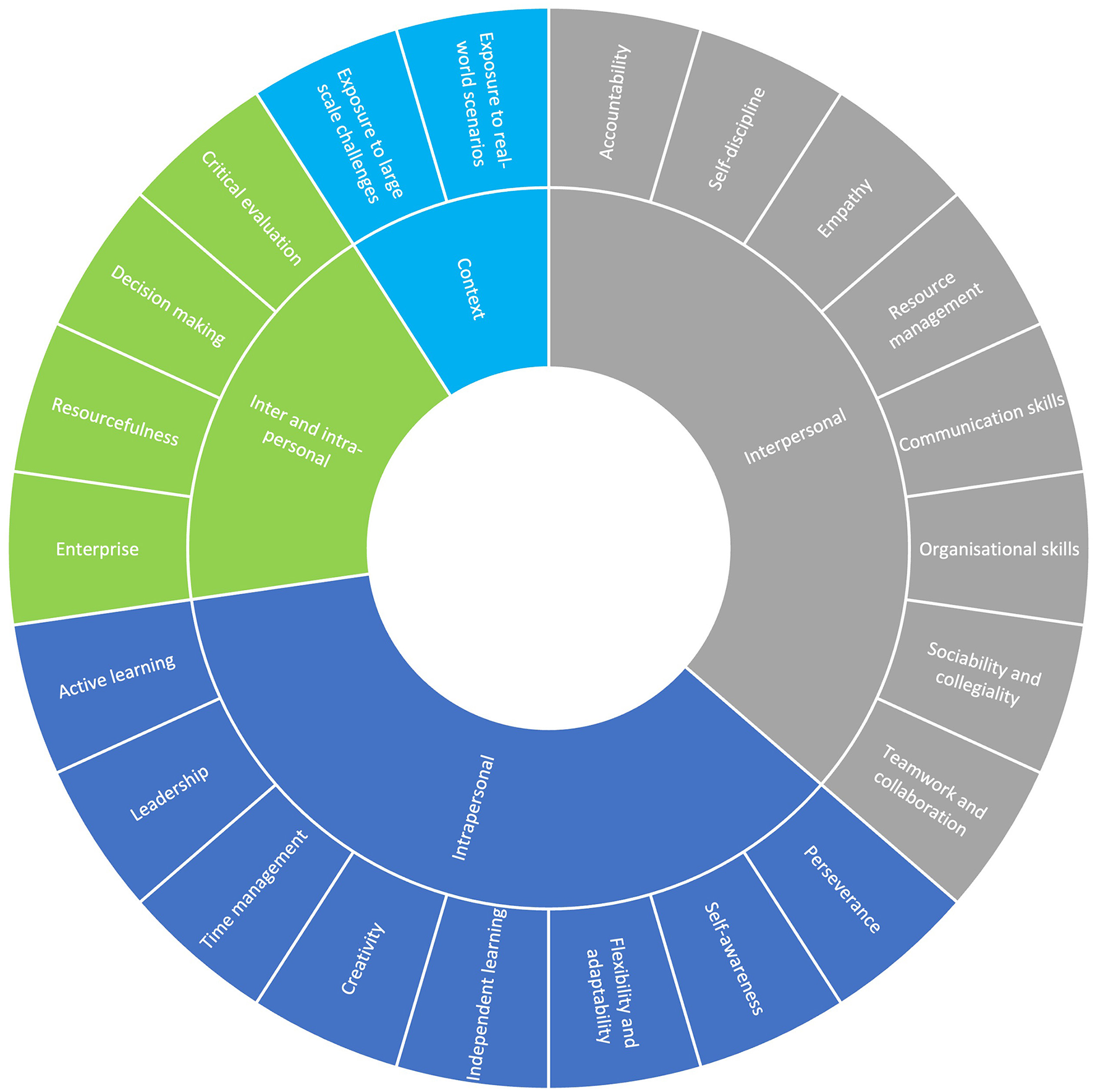
Some commonly acclaimed benefits of groupwork.
Although there are many benefits that are commonly claimed and associated with groupwork, (see, for example, Firth-Cozens, 2001; Guise and Segel, 2008; Vermette and Kline, 2017), it may not always be the most effective approach (Proctor-Childs et al., 1998) and an individual working on their own may be more appropriate in certain situations (see Han et al., 2021). The anecdote “if you want to go fast, go alone, if you want to go far, go together,” sometimes ascribed to as an African proverb, or from US preachers, politicians and businessmen, provides an indication of a commonly held view on the pros and cons of group activity. Scenarios commonly cited for when individual working is more effective than group operation include focus, control of direction and process, avoiding misunderstanding and conflicts, and credit being associated with just one person for achievements. Nevertheless, the advantages of groupwork such as enabling addressing of organizational requirements, problem-solving, simultaneous contributions, collaboration, sharing and development of skills make it a valuable and widely used method in organizations and in learning (Oakley et al., 2007; Tanco et al., 2011; Earnest et al., 2017; Hodges, 2018; Han et al., 2021).
The overall methodology for this study is presented in Section 2 along with an introduction to the associated student led research project. A significant body of knowledge relating to management of projects is available from practice and is introduced in Section 3, effectiveness in group operation is reviewed in section 4, and the outcome of a student led review of practices in group projects at Imperial is presented in Section 5. Discussion of the arising findings and best practice guidance is presented in Section 6 and conclusions given in Section 7.
Methodology
The paper methodology takes a mixed methodology approach leveraging a review of existing information and research in the literature, augmented by consultation across four universities, as well as a student-led research known as a StudentShaper project (StudentShapers, 2024) that in this case was based on a cross-university review of group project practice at Imperial. This cross-university review used semi-structured interviews, that were designed and managed by the students, of both academics running group projects and students who had taken these, followed by analysis and review of the arising data. The research design was predicated on providing a student voice and perspective on groupwork in addition to that of the project advocate. The sample included group projects run across a range of STEM (Science, Technology, Engineering, Mathematics) subjects including Chemistry; Design Engineering; Chemical Engineering; Civil Engineering; Mathematics; Material Science and Engineering; Management; Strategic Marketing; Economics; Economics and Strategy for Business. In addition, the sample included modules such as the multidisciplinary group project that is open to all undergraduate degree programmes. The sample was a convenience sample based on those who responded in a timely manner to the student-led approach.
Supervision of the student-led research project was deliberately light-touch. Briefings were given on research methods, particularly semi-structured interviews, coding, interview design, data protocols and ethics. However, in the spirit of enabling student autonomy and the student voice, meetings were kept to check-ins, while the research design, interview approaches, interviews, data analysis and management was undertaken by the student researchers. This approach was deemed critical by the student researchers in order to preserve trust and ensure that perceptions that anonymity of interviewee data and identity would actually be maintained. The results from the student-led research study are presented in Section 5.
Project management
A significant body of knowledge has been developed arising from the management of projects in industry. The scale of a project is highly variable in terms of time, resource and intent, with some short term and involve little interaction with other actors, and others more substantial in scope can involve thousands of people and associated interactions. Guidance on project management is widely available in literature, standards and from professional associations (International Project Management Association, 2025), such as the International Project Management Association and Project Management Institute, along with both free access and commercial tools and processes that can be leveraged readily (see, for example, Pinto, 1998; Burke, 2013; Lester, 2017; Vukomanovic et al., 2016). Access to this body of knowledge and experience can be highly useful saving effort and avoiding common pitfalls. However, as with any substantive body of knowledge guidance on starting points and relevant information is invaluable.
Project management is fundamentally concerned with getting significant activities achieved with a specified set of resources and constraints. The principles of project management can be considered through the commonly asked 5W/H questions, who is doing what, with whom, where, when, and how. More formally, project management involves the application of processes, methods, knowledge, skills and experience to achieve pre-defined objectives. A project is generally a unique endeavor undertaken over a specific time period in to achieve the planned objective. A project is usually deemed successful if it achieves the objectives according to relevant defined acceptance criteria, such as outputs, outcomes and benefits within an agreed timescale and budget. The scope of a generic project at the core, and its links to time, quality and cost are interlinked. For example, it may be possible to deliver a project sooner, but to the detriment of quality and cost (Childs and Masen, 2025).
Projects tend to be distinct from business-as-usual activities, requiring a group to work together temporarily, to focus on a specific project or sub-task within a project and its objectives (Association for Project Management, 2017). Projects can be established to address and find solutions to long-standing organizational challenges with a project lead tasked to lead a team/group to make a proposal. Teamwork is often an essential component of project management with the need to leverage diverse resources to achieve the intended outcomes. A wide range of approaches for project management have been codified including the traditional approach, PRINCE (Projects IN Controlled Environments), Waterfall, the V model, gateways and Agile. The V model has recently been revised (Childs and Masen, 2025) highlighting time and resource allocation. Project management is a skill in its own right and students and academics cannot necessarily be expected to have prior knowledge or be able to instantaneously be capable of implementing the principles and processes without appropriate guidance. Supplementing information available from organizations such as the International Project Management Association and Project Management Institute (Project Management Institute, 2025) and in standards, an introduction to project management is presented in Childs and Masen (2025), a project training programme for STEM PhD students is presented by Salm and McKinney (2024), and core competencies for project management education in Bartoška et al. (2012). Some key principles for the effectiveness of a group working together on a project are considered in the subsequent section.
Group effectiveness
To ensure that a group is effective, can work cohesively, and can achieve its objectives, it is important to establish guidelines and facilitate a collaborative environment (Aveling et al., 2018). Common factors and principles that can contribute toward group effectiveness are indicated in the following list.
Establish clear goals and objectives for the group. Ensure each member understands the purpose and expectations of the group's work and shares a common vision. Clearly defined goals help focus the efforts and provide a direction so that everyone can work toward these collectively (Snyder, 2008). Performance criteria or, in an educational context assessment rubrics, shared early can facilitate this focus on outcomes so that groups can establish their own target performance and objectives against the overall assessment goals.
Communication is vital for the success of a group. Encourage open respectful and inclusive communication among all members. Cultural factors in communication such as directness, high-context vs low-context communication and feedback orientation are important. Respectful communication fosters trust (Moxie et al., 2025), collaboration and sharing of diverse perspectives. Active listening, clear articulation of ideas, and constructive feedback are important. Communication channels such as face-to-face meetings, email, online platforms and collaboration tools can help to ensure effective information exchange.
Assign specific roles and responsibilities to each group member based on their strengths and expertise (N.B. such an approach can be contentious in terms of who is making the judgement and in terms of opportunity to enrich skills). Define tasks, ensuring that everyone understands their individual contributions to the objectives. Having well-defined roles helps avoid confusion, ensures accountability and fair workload distribution (Theobald et al., 2017). Role or job descriptions that define the knowledge required, and also behavior and type of person, can aid this.
Establish/codesign deadlines and milestones to ensure progress is being made. Regularly assess the group's progress and address arising challenges or obstacles (Soderlund, 2005). Monitor individual and group performance to ensure accountability and take corrective measures.
Groups need to make decisions collectively. Encourage open discussions and consider all perspectives before reaching decisions. Utilize decision-making techniques such as brainstorming, SWOT (strengths, weaknesses, opportunities, and threats) analysis, or consensus building to ensure that decisions are well-informed and representative.
Develop or codesign a set of norms (Kolb, 1975; Oakley et al., 2007) or ground rules that outline expectations for group behavior and interaction. These can include guidelines for participation, decision-making processes, meeting schedules, and conflict resolution mechanisms (Robey et al., 1989; Jones and Deckro, 1993; Sudhakar, 2015; Salas et al., 2015). Establishing norms tends to promote positive group dynamics (Willis et al., 2002) and help maintain focus and productivity (Fatema and Sakib, 2017). If rules are defined, stick to them. Doing what you say you are going to do is important for credibility and builds trust. Rules can aid clarity and avoid confusion.
Building trust among group members is crucial for effective collaboration (Cheruvelil et al., 2014; Krawczyk-Bryłka et al., 2020; Nguyen and Mougenot, 2022). Encourage a collaborative environment where members feel comfortable sharing their ideas and opinions (O'Daniel and Rosenstein, 2008). Emphasize the value of teamwork and create opportunities for brainstorming, discussion, and collective problem-solving (Lemieux-Charles and McGuire, 2006). Group members should trust one another's competence, integrity, and commitment to the group's goals. Collaboration involves sharing information, resources, and ideas to foster synergy and achieve better outcomes together (Hill and Bartol, 2016). Groups need to establish sub-cultures early on. Trust can also be destroyed by peer review even though this builds accountability.
Conflict can occur in group settings and it is important to address it constructively (Robey et al., 1989; Jones and Deckro, 1993; Barnes et al., 2008; Sudhakar, 2015). Challenges include access to resource, differences in goals/objectives, culture, values, technical opinions and approaches, perceptions and preference, personality issues, schedules, costs and administrative procedures (Sudhakar, 2015). Encourage open dialogue and communication and provide a platform for expressing concerns. Implement conflict resolution/arbitration strategies that focus on finding common ground and reaching agreeable solutions (Gobeli et al., 1998; Sudhakar, 2015). This can be a challenge in an academic setting where resources are limited and timetables constraints exist.
Encourage a culture of feedback and reflection, where group members can share lessons learned, suggest improvements, and adapt their approaches based on feedback. Lessons learned are a key feature in many industrial cultures. Regularly evaluate the group's performance and provide constructive feedback to help members improve. Celebrate achievements and successes and identify areas for growth. Continuous improvement through feedback ensures that a group remains effective and adaptable.
Consider implementation of an AI (artificial intelligence) group member to augment and supplement the group (Mollick, 2025). Such an approach can leverage the knowledge base of the associated large language model and provide significant additional access to expertise as well as providing tireless and on-demand group input.
Remain flexible and adaptable to changing circumstances and information. Encourage members to be open to ideas and perspectives and adjust its approach to find innovative solutions when needed.
An extensive study on team/group effectiveness was reported by Google (2016). The project identified 180 groups to study (115 project groups in engineering and 65 pods in sales) which included a mix of high- and low performing groups. They sought to identify factors that impacted multiple outcome metrics, both qualitative and quantitative, arose for different kinds of groups across the organization and showed consistent, robust statistical significance. The Google report characterized the difference between groups and teams as follows: Work groups are characterized by the least amount of interdependence. They are based on organizational or managerial hierarchy. Work groups may meet periodically to hear and share information; Teams are highly interdependent - they plan work, solve problems, make decisions, and review progress in service of a specific project. Team members need one another to get work done. To avoid the more work done (e.g. lines of code) the more mistakes are made trap, the researchers measured team effectiveness in four different ways: Executive evaluation of the team; Team leader evaluation of the team; Team member evaluation of the team; Sales performance against quarterly quota. The researchers found that what really mattered was less about who is on the team, and more about how the team worked together. In order of importance the factors identified were as follow: psychological safety; dependability; structure and clarity; meaning; impact. The researchers also discovered which variables were not significantly connected with team effectiveness at Google: colocation of teammates (sitting together in the same space); consensus-driven decision making; extroversion of team members; individual performance of team members; workload size; seniority; team size; tenure. While team size did not show as significant in the Google analysis, there is research showing the importance of it. Many researchers have identified that smaller groups—containing less than 10 members—to be more beneficial for group success than larger groups (Katzenbach and Smith, 1993). The review of good practice for teams in industry might be assumed to correlate or carry over to student projects within an academic context. What appears to be missing from the literature so far is a student-led view of group-project practice and how students themselves can overcome challenges and an area where this paper therefore makes a contribution.
Review of group project practice across STEM modules
An undergraduate student led project known locally as a StudentShaper project was offered at Imperial (StudentShapers, 2024) and taken up by two students and co-authors of this paper. The project focussed on interviewing academics leading group projects and students taking these, and reviewing the arising outcomes. This student led activity leverages prior work to provide student voice and perspective on groupwork and learning (Hammar Chiriac, 2014). Modules where a review of group project practice and arising experience was undertaken included: Civil Engineering Design modules; Chemical Engineering Practices; Multidisciplinary Group Project (available to all degrees); Human-Centered Design Engineering; Industrial Design Engineering; Chemistry of Molecular System; Sustainable Design Engineering; Process Dynamic and Control; Construction Week Exercise & Professional Engineering Practice; Math Group Research Project & Entrepreneurship Online; Engineering Practice 2; Innovation Management; Entrepreneurial Strategy; Global Business; Sustainable Finance; Business Sustainability. Degree programmes addressed included: Chemistry; Design Engineering; Chemical Engineering; Civil Engineering; Mathematics; Material Science and Engineering; Management; Strategic Marketing; Economics; Economics and Strategy for Business.
The studies involving human participants were reviewed and approved by the Science Engineering Technology Research Ethics Committee in accordance with the StudentShaper project protocols. Written informed consent to participate in this study was provided by the participants. The interviews were recorded, and coding of the arising transcripts undertaken by the two students. Coding was undertaken manually, independently reading the scripts a few times, followed by initial, axial and thematic coding, prior to subsequent checking by the other coder. Outcomes were anonymized so that individual students could not be readily identified, prior to sharing of the anonymized outcomes with the supervisor.
A summary for each module was generated as mini case studies for practitioners considering running a module with groupwork including an introduction to the module, module overview, the mode of group formation and expected dynamics, workflow and task division, arising challenges faced, problem solving approaches, suggestions for improvement and arising conclusions.
A range of group formation approaches were adopted across the institution including:
Instructor led with consideration of various factors such as gender balance, cultural diversity, and students' previous interactions.
Students proposing their project ideas, after which the entire class votes to identify the top ideas. These become the projects that students can choose to work on. An algorithm is used taking into account preference, skills and shared interests. Students are asked to rank their preferred projects, and the algorithm attempts to match them with their top choices.
Students empowered to choose one partner to form a pair, after which two pairs were randomly combined to form a group of four.
Randomly assigned.
Large groups, mimicking real-life construction settings, with each group comprising ~11–50 people. Super-grouping with many group projects contributing toward a major project.
Students' interest preferences.
Mutual selection with members choosing to work together based on prior interactions and familiarity.
Samples of data from the student interviews are presented in Table 1 providing an indication of arising challenges perceived and associated recommendations as offered by students during the semi-structured interviews. A wide range of challenges were apparent including contribution imbalance, peer pressure, cultural and personal conflicts, mismatched abilities and work ethics, expectation misalignment, concerns on assessment fairness, poor conflict management, perceptions of poor instructor support, communication and coordination difficulties, scheduling conflicts, absences and health issues, lack of clarity of tasks, lack of expertise. Approaches adopted by instructors to aid effective groupwork included attendance monitoring, use of graduate and undergraduate teaching assistants to monitor and guide work, reflective reporting, incremental submissions, individual accountability, peer review, group size limits, ice-breaking, sprints, group selection flexibility, instructor intervention, communication encouragement, adaptive planning, skill support, schedule adjustment to accommodate workload conflicts, meeting guidance.
Table 1
| Challenges faced | Recommendations |
|---|---|
| The … challenge provided was ambiguous, making it difficult for the group to develop a coherent solution. The lack of clear expectations exacerbated the confusion and led to ineffective problem-solving. … One of the major issues was the non-performance of certain group members. Despite repeated efforts to involve them, [their] contributions were subpar, which placed additional pressure on the remaining members. … Due to the inefficiency of the initial task division, the group had to rework the entire assignment just two days before the submission deadline, leading to stress and potential compromises in the quality of work. | Before assigning challenges to students, the module team should conduct a feasibility assessment to ensure that the problems are solvable within the given constraints. This would prevent students from facing insurmountable tasks. Rather than waiting until the end of the term, there should be interim feedback sessions where group dynamics and individual contributions are assessed. This would allow for timely interventions to resolve issues before they escalate. While diverse groups are beneficial, there should be some flexibility to allow students to self-select or at least have input in the formation of groups. This could help in creating teams with better synergy and more effective collaboration. |
| The chosen [subject specific] idea came from a niche industry that was unfamiliar to most of the group members, which led to difficulties in comprehending the industry's intricacies. As … students, the group lacked a strong background in finance, which became evident during the pitch to the VCs. The panel's questions highlighted their weaknesses in this area. … varying schedules among group members made it difficult to coordinate meetings | Involving students from other programs, such as …, who have more exposure to entrepreneurial concepts, could have added value to the project. … the module's content was heavily focused on the … industry, given the professor's background. … incorporating case studies and references from a broader range of industries, such as … … [to] cater to diverse student interests. … more in-class material, especially in finance, would have been beneficial given the … students' background. Additionally, extending the module's timeline would allow [us] to delve deeper into their projects and produce more comprehensive outputs. |
| … some members were active and regularly attended classes, others were more distant, rarely showing up, which created challenges in communication and coordination. [I] found myself assuming the role of the de facto group leader for both assignments. The group dynamics were strained due to inconsistent attendance and participation. For example, one group member, … was unable to contribute to the first assignment because of a personal injury, which further complicated the situation A major issue was the lack of effective communication among group members. Messages in the group's WhatsApp chat often went unanswered, which not only affected the workflow but also lowered team morale. This led to confusion and duplicated efforts, such as when group members created separate scripts without sharing them … …The attendance and participation of some group members were inconsistent. This inconsistency was particularly challenging during the first assignment, where one member was absent due to an injury, forcing the others to complete the work without him. …The group's inability to effectively coordinate their efforts resulted in a disjointed approach to completing the assignments. For example, scripts were created independently and not shared with others for review, leading to challenges in ensuring a unified presentation. | Implementing a more structured approach to communication could have alleviated many of the issues faced by the group. Regular check-ins and mandatory updates through a shared platform would ensure that everyone remained on the same page. … Clearly defining roles and responsibilities at the outset could help in better task allocation and accountability. This would also prevent duplication of efforts and ensure that all members contribute effectively. … Making better use of collaboration tools, such as shared online documents, and ensuring that all members are engaged with these tools would improve the overall workflow and coordination. |
| The assignment required balancing academic rigor with real-world application, … which created confusion over the depth of analysis required. … overlap in assignments between the … module and another … course led to ambiguity in expectations | … recommend that group members be more committed to the tasks at hand and better manage their time to avoid last-minute pressure. [I suggest] a more democratic approach to task division, where multiple members contribute to critical aspects such as the presentation design, ensuring that everyone feels involved and valued. …[I] propose a more focused and structured approach to the module itself, with a greater emphasis on case studies and specific companies, which could enhance the learning experience by providing deeper insights into real-world sustainability challenges. |
| … the group struggled to meet deadlines, often finalizing their presentation minutes before submission. This last-minute rush negatively impacted the quality of their output, as there was little time for thorough review and refinement. The pressure to deliver under tight timelines also affected the group's ability to produce [our] best work. | … recommend[] that group members be more committed to the tasks at hand and better manage their time to avoid last-minute pressure. … suggest[] a more democratic approach to task division, where multiple members contribute to critical aspects such as the presentation design, ensuring that everyone feels involved and valued. …propose[] a more focused and structured approach to the module itself, with … greater emphasis on case studies and specific companies, which could enhance the learning experience by providing deeper insights into real-world sustainability challenges |
| [I] ended up handling most of the group's responsibilities, as several teammates were frequently absent from crucial meetings and contributed minimally to the project outcomes. This issue was especially apparent during tutor sessions, where … lack of active participation from some members was conspicuous. Efforts to manage this by increasing their workload often went unacknowledged in the assessments, complicating both the workflow and … grading. The peer review system failed to accurately represent individual efforts, often to the detriment of the more proactive members. Faculty interventions were inadequate in addressing the discrepancies within groups or in motivating all members to participate. The compulsory group formation led to significant coordination challenges, not taking into account the compatibility or work ethic of students. | … enhanc[e] the transparency of the peer review process by requiring justifications for assigned grades could improve fairness. … assigning below-average grades should be backed by substantial evidence to prevent bias. …Allowing students to choose their own groups could foster greater engagement and more equitable workload distribution. … Faculty should actively monitor group interactions and intervene early to address any emerging issues, [and] promoting a more constructive group work environment. |
| … random assignment of group members often results in teams with uneven skill sets and work ethics. Projects heavily reliant on [subject secific skill] create challenges for groups where few or none of the members are proficient, leading to … anxiety and reliance on a single group member. The module's timing during a busy term complicates time management, particularly when students are handling multiple concurrent projects. | [Use] group chats for efficient information exchange and supporting each other through collaborative efforts. … allocate specific times for project work to manage the intensive demands of the module effectively. Implement a system that considers students' skills and preferences when forming groups could lead to more balanced teams and improve overall dynamics. Provide additional resources or workshops on [subject specific skill] to better prepare students for the technical demands of the projects. … consider the relocation of the module to a less hectic term or increasing the duration of project phases to alleviate timing pressures and improve work quality. |
| … lack of in-person meetings, [led] to poor communication and misunderstandings. …difficult[ies] in assessing the contribution of group members due to the absence of peer assessments. … unequal workload distribution, with some members failing to complete their sections on time. … lack of engagement from group members, who did not respond to messages or contribute until the last minute. … the absence of peer assessments, [allowing] some members to benefit from the work of others without contributing equally. … the module's structure, … did not integrate the project into the overall grade, leading to a lack of motivation among students. | For modules like … compulsory in-person meetings should be implemented to ensure better communication and collaboration. These meetings could be scheduled weekly to keep the project on track. Introduc[e]a peer assessment component, accounting for a small percentage of the final grade, could help address issues of unequal contribution and free-riding. Establishing a more structured workflow with clear deadlines and responsibilities for each group member would help improve efficiency and ensure that all sections of the project are completed on time. For online modules like …, increasing the weight of the group project in the overall course grade could incentivize better participation and effort from all group members. |
| The absence of a project handbook until just days before the deadline created significant uncertainty and difficulty in planning and executing tasks. … transition from small to large groups exacerbated coordination challenges, leading to unequal participation and difficulties in communication. Scheduling lab work was problematic, with some students attending multiple sessions while others failed to participate, resulting in an uneven distribution of workload and knowledge. … peer assessment, … only accounted for …% of the final grade, did not adequately reflect individual contributions, particularly in the larger group setting. Supervisors… were often unclear due to the delayed availability of the project handbook. … some students took on additional tasks to ensure the project's completion, though this … led to further imbalances | Ensuring the project handbook is available from the outset would allow …[us] to plan work more effectively and reduce confusion. The transition to large groups should be reconsidered, as it complicates communication and coordination. If large groups are necessary, more structured guidance and support should be provided. The peer assessment component should be more significant and reflective of individual contributions, particularly in large groups, to ensure fairness and accountability. |
Samples of the semi-structured interview comments from students undertaking group projects in higher education and arising recommendations.
Discussion
As indicated in the considerations to teamwork (groupwork) and project work presented, a substantive number of factors are involved in a group project. Some principal factors are presented in Figure 2. A wide range of good practice guidance is available in relation to project management. This tends to be provided through online articles and blogs, books and papers. Much of this advice is presented as anecdotal without association with data to show the validation of the guidance concerned. As a result, it is difficult for the novice project manager to know which aspects to focus attention on and what is the relative importance of a specific item of guidance. Common examples of such guidance are presented in the following list which is also summarized schematically in Figure 3 within a standard project management context. Although much of this guidance is anecdotal there is some consistency across the sources, and much it is regarded by seasoned project managers as good common-sense guidance.
Prioritization. To decide which project or projects are the priority for an organization or person. Before commencing a project or activity ensure you know how important the task is to the relevant stakeholders.
Kick-off meeting. The purpose of a project kick-off meeting can vary according to the type of project involved. In some organizations it can initiate the principal phases of a project, or it may be to meet the principal stakeholders and share the project plan that you have developed. The kick-off meeting is a chance to explain to the relevant stakeholders, for example the customer, how you will run the project.
Establish project scope and objectives. Definition of the goal and expected outcomes or deliverables of the project and the success criteria. Establish clear goals and objectives for the group. Ensure that each member understands the purpose and expectations of the work and shares a common vision.
Composition. Select for a strong group orientation. Compose groups based upon both the teamwork and taskwork demands.
Formalize roles within the group. Establish a clear definition of who is doing what and their role or roles within a group. While project delivery is the responsibility of the project manager, the project manager is not the only person involved in managing and delivery the aspects of a project. Identify what roles need to be undertaken and who is going to be responsible for the role and associated activities.
Resource plan. To define the available and necessary resources for a project. Establish what budget, human resource, space and any other relevant resources are available for the specific project concerned.
Change management. To accommodate adjustments to the project scope and aim. This may arise from new information or new requirements. It is important to have a mechanism to manage change requests, their acceptance and resourcing. If there is a change in a project's scope, budget, resource and deadline it is important to keep the project group and relevant stakeholders informed.
Project plan. Break the project into stages. Establish deliverables for each phase and objective criteria to assess when a deliverable has been achieved to the required standard. Projects can fail due to inadequate consideration of process or due to people mistakes. If dealing with technology related projects, involve people with relevant technical expertise in the estimations of the time and resource required. This can help avoid scope creep and delays.
Risk management. To consider what could go wrong and to mitigate against such circumstances. Generate a risk register which lists the risks, their likelihood, and defines a contingency plan to mitigate the risk from occurring or defines actions to be taken if the risk occurs.
Documentation. Collect information and documentation that supports the project. Information can include the strategic plan for the organization, annual reviews, aspects of a company mission and vision statements, any key performance indicators (KPIs) for the organization that relate to the project.
Communication. To ensure that information flows occur in a timely fashion with relevant people and that items that need to be resolved are identified. Speak to the group members regularly and discuss real issues on a one-to-one basis and within whole group and sub-group meetings. Select appropriate communication channels for the project. A project management dashboard can provide more accessible information flagging issues and identifying whether they have been resolved.
Cooperation. This motivates effective teamwork. Build collective efficacy through promoting ‘early wins.' Build trust through the discussion of past experiences relevant to group goals.
Culture. Cultivation and establishment of group member values, norms, and behavior. Create a hybrid culture that leverages pro-team/group values and creates a safe environment for voicing ideas and concerns. Create a group culture that embraces similarities and respects differences.
Psychological safety. Establishment of perceptions that the group is a safe environment for risk taking in contrast to being seen as ignorant, incompetent, negative or disruptive.
Dependability. To reliably complete quality work on time. Clarify roles and responsibilities of group members. Develop concrete project plans to provide transparency into every individual's work.
Meaning. Finding a sense of purpose in either the work itself or the output. Give group members positive feedback on something outstanding they are doing and offer to help them with something they struggle with. Publicly express your gratitude for someone who helped you out.
Coaching. Enactment of leadership behaviors to establish goals and set direction that leads to successful accomplishment of the project goals.
Conflict management. To proactively address issues arising from perceived incompatibilities in the interests, beliefs, or views held by one or more group members.
Feedback. Regularly evaluate group performance providing constructive feedback to help members improve. Celebrate achievements and identify areas for growth.
Solo route. Design options for an individual to be able to leave a group or undertake an activity with equivalent learning outcomes from the outset. Provision of a solo option route for project work from the outset is necessary to accommodate a range of eventualities from illness and unavailability to participate as well as personal circumstances and academic dispensations.
Figure 2
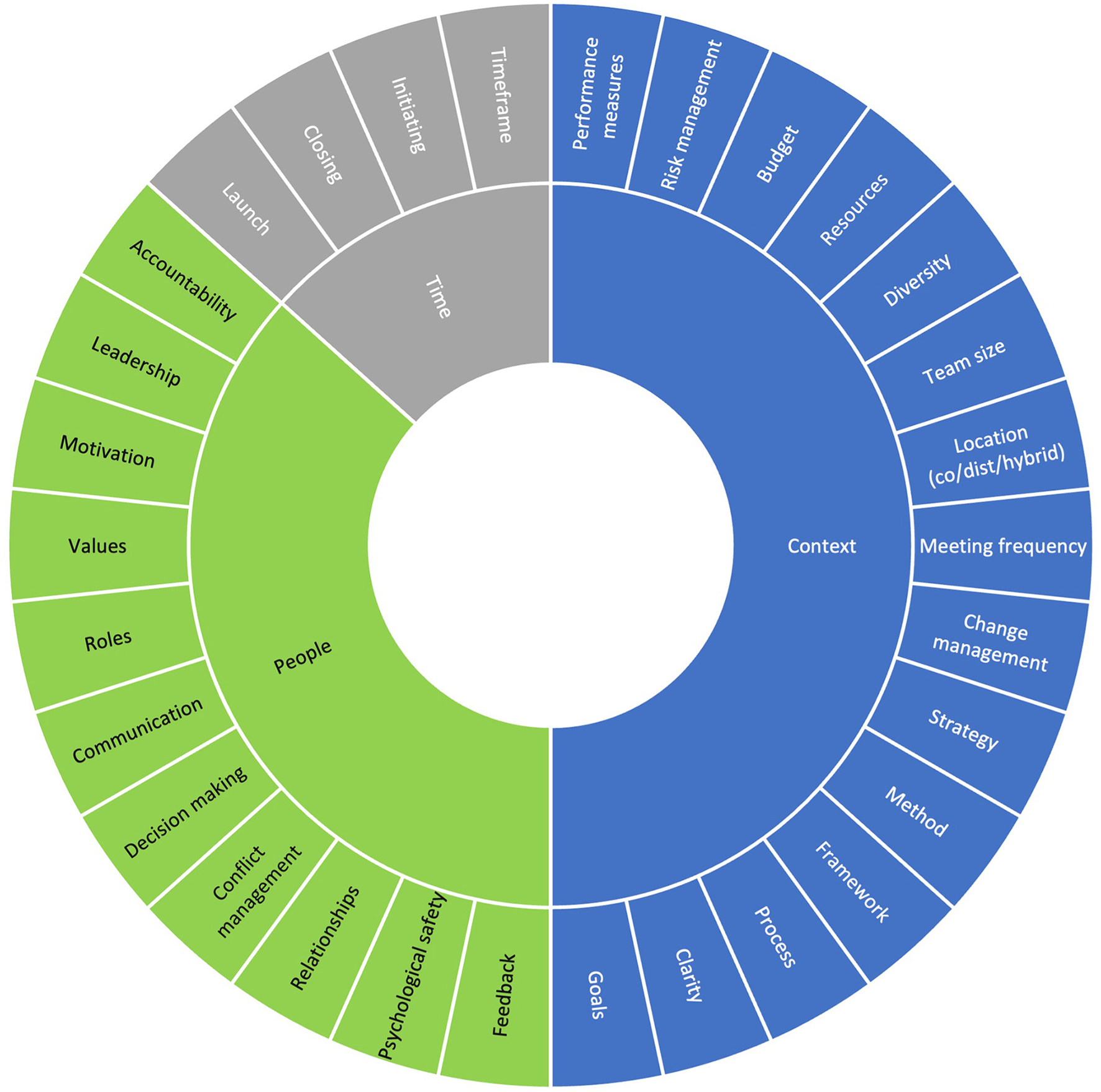
Principal considerations in group project framing and process.
Figure 3
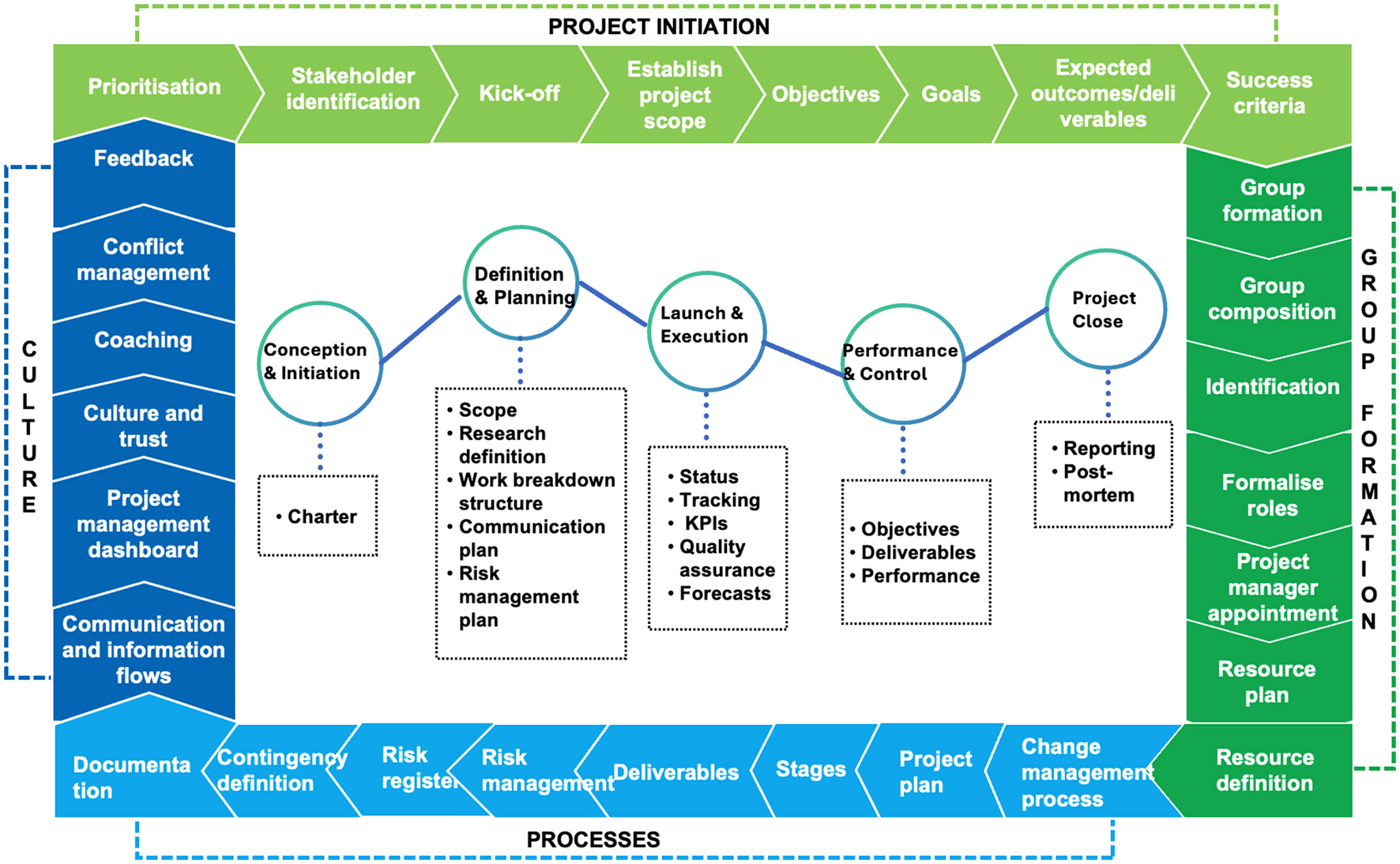
Group project good practice considerations shown with the context of a standard project management context.
We have identified in the preceding list several aspects which arise from and must be managed by the students themselves including cooperation, safety, culture, dependability and conflict management. These factors can be considered as the 4Cs of student controllable factors: Culture, Collaboration, Co-dependence and psyChological safety. Even when all other factors are present and successfully managed by teachers or facilitators, these final aspects may be missing and lead to unsuccessful outcomes. In the UK we do not typically recruit students for teamwork behavior as might be done in industry (e.g., with groupwork a prevalent aspect of assessment centers for graduate roles). Therefore, we must acknowledge the variability within our students as a source of noise in our groupwork design. The quantity of variables is significant ranging from traits, skills, levels, motivations, hierarchies, resources and timescales, to culture, intrinsic and extrinsic expectations and scale. Prior experience, be it a person's own or from the practice of others, can provide a starting point in the design and subsequent implementation of a group, its modes of interaction and work.
Group projects are deployed in higher education in order to facilitate learning. By their nature they transcend monological and dialogical learning as the context for a group project is situated between the individual or learner concerned, the arising temporary community or group and the various structures and processes adopted, such as use of digital tools. This context is well-aligned with trialogical learning theory (Hakkarainen and Paavola, 2009) with learning supported by means of tangible outputs, the practical use of tools to facilitate knowledge creation, iterative improvement through cycles of feedback and cross-boundary collaboration. A consequence of the multifaceted nature of a group project is an arising tension between maximizing learning and maximizing achievement of defined project goals. This review highlights this tension but has not addressed how to practically address the challenge where learning and project goals may not coincide, for example, where a group member may wish to develop their skills in an area where they weak and not contribute in an area where they are already strong. Such considerations do nevertheless warrant attention in future research.
Prior good-practice guidance can be leveraged to provide a framework for subsequent activity but will not be a guarantee of “successful” world-changing outcome without student willingness to commit to the 4Cs of student controllable factors, culture, cooperation, psyChological safety and co-dependence. Projects may be halted for good reasons such as non-viability, non-desirability and non-feasibility and long-term negative outcomes for specific students beyond the classroom. Indeed, such a decision can be deemed positive as this would prevent otherwise wasted resource that can be applied otherwise. Indeed, instructors should also consider when projects must be halted due to a negative culture created within a specific team, a lack of psychological safety or co-dependence which can result in a lack of cooperation. It should also be noted that the extensive guidance available represents living knowledge that takes on nuance according to the particular context concerned. Each time a person is in a group their knowledge will be different and the set of variables and context will vary and as a result interpretation and implementation of good-practice guidance needs to be undertaken with appropriate selectivity.
Conclusions
Group projects are widely used in higher education contexts and offer students opportunities to experience real world scenarios and projects that go beyond the scale that can be tackled by an individual. Although substantive guidance is available on good practice in setting up and running group projects in higher education, a wide range of concerns and challenges exist including issues such as fairness, burden and popularity. This student led research project reports findings from a mixed methodology approach at Imperial College London on group project practice across STEM subjects using interviews, identification of insights, literature review and further cycles of interviews, in combination with guidance and insights from practice in three other universities. Although opportunities for formal and informal project management training are widely provided at universities it is apparent from the arising insights that students commonly feel abandoned and left exposed to challenging interpersonal issues, while not uncommon in real world scenarios, nevertheless present uncomfortable experiences for those concerned and raise questions for providers on the risks to individual students when exposed to uncontrolled team environments.
The review highlights good practice principles including prioritization, holding a kick-off meeting, establishment of project scope and objectives, attention to group composition, resource planning, change management, project planning, risk management, documentation, communication, cooperation, culture and psychological safety, dependability, sense of purpose, conflict management and feedback. Several aspects that must be managed by the students themselves including cooperation, safety, culture, dependability and conflict management. These factors can be considered as representing 4Cs of student controllable factors: Culture, Collaboration, Co-dependence and psyChological safety. A particular insight concerns the tension between maximizing outcomes and attainment in a project may not be compatible with maximizing learning, particularly for students at the weaker and stronger ends of academic standards. A recommendation from this review is ongoing attention to project management training within a group project so that participants can learn and upskill within their project and associated roles.
A number of broader observations and indications for future work arise from this study. A group project in an educational context will involve the individual learners concerned, the arising temporary community or group and the various structures and processes adopted and is well-aligned with trialogical learning theory with learning supported by means of tangible outputs, the practical use of tools to facilitate knowledge creation, and iterative improvement through cycles of feedback and cross-boundary collaboration. The advent of widespread use of AI offers many opportunities for development of group projects, such as provision of virtual group members, use of AI agents for aspects of project management and contributions to assessment and feedback. Each of these examples warrant attention in future research on group project for higher education practice as well as in industry with significant potential to address, for example, issues such as fairness and timeliness of response, feedback and alternative provision in cases where students have had to take a leave of absence from a project.
Statements
Data availability statement
The raw data supporting the conclusions of this article will be made available by the authors, without undue reservation.
Ethics statement
The studies involving human participants were reviewed and approved by the Science Engineering Technology Research Ethics Committee in accordance with the StudentShaper project protocols. Written informed consent to participate in this study was provided by the participants.
Author contributions
ZW: Data curation, Investigation, Formal analysis, Writing – original draft, Writing – review & editing. SG: Data curation, Formal analysis, Investigation, Writing – review & editing, Writing – original draft. FP: Supervision, Writing – review & editing. CA: Formal analysis, Writing – original draft, Writing – review & editing, Investigation. AS: Writing – original draft, Conceptualization, Writing – review & editing, Methodology. KH: Writing – review & editing, Conceptualization, Investigation, Software, Visualization. YZ: Writing – review & editing, Investigation, Writing – original draft. CZ: Writing – original draft, Writing – review & editing, Investigation. CL: Writing – original draft, Writing – review & editing, Methodology, Investigation. PC: Formal analysis, Supervision, Data curation, Writing – review & editing, Methodology, Project administration, Investigation, Writing – original draft, Conceptualization, Visualization.
Funding
The author(s) declare that financial support was received for the research and/or publication of this article. We gratefully acknowledge funding support from the StudentShaper scheme at Imperial for the first two student authors, Zhahan Wang and Sejal Gupta. The StudentShaper scheme provides funding to students to undertake an extended period of learning and teaching related research and development.
Acknowledgments
The authors would like to thank the many academics who engaged with the survey and associated surveys. The sharing of their experiences was invaluable in the arising insights presented in this article. In addition, we would like to acknowledge the support of the StudentShaper scheme for the students undertaking some of the primary research.
Conflict of interest
The authors declare that the research was conducted in the absence of any commercial or financial relationships that could be construed as a potential conflict of interest.
Generative AI statement
The author(s) declare that no Gen AI was used in the creation of this manuscript.
Publisher’s note
All claims expressed in this article are solely those of the authors and do not necessarily represent those of their affiliated organizations, or those of the publisher, the editors and the reviewers. Any product that may be evaluated in this article, or claim that may be made by its manufacturer, is not guaranteed or endorsed by the publisher.
References
1
Association for Project Management (2017). Available online at: www.apm.org.uk/resources/what-is-project-management/ (Accessed 22 September, 2017).
2
AvelingE. L.StoneJ.SundtT.WrightC.GinoF.SingerS. (2018). Factors influencing team behaviors in surgery: a qualitative study to inform teamwork interventions. Ann. Thorac. Surg.106, 115–120. 10.1016/j.athoracsur.2017.12.045
3
BarnesC. M.HollenbeckJ. R.WagnerD. T.DeRueD. S.NahrgangJ. D.SchwindK. M. (2008). Harmful help: the costs of backing-up behavior in teams. J. Appl. Psychol.93:529. 10.1037/0021-9010.93.3.529
4
BartoškaJ.FléglM.JarkovskáM. (2012). IPMA standard competence scope in project management education. Int. Educ. Stud.5:6. 10.5539/ies.v5n6p167
5
BealR.ChangderN.NormanT.RamchurnS. (2020). “Learning the value of teamwork to form efficient teams. Proc. AAAI Conf. Artif. Intellig.34, 7063–7070. 10.1609/aaai.v34i05.6192
6
BurkeA. (2011). Group work: How to use groups effectively. J. Effective Teach.11, 87–95. Available online at: https://files.eric.ed.gov/fulltext/EJ1092109.pdf
7
BurkeR. (2013). Project Management Planning and Control Techniques, 5th Edition. Hoboken, NJ: Wiley.
8
CareE.VistaA.KimH. (2019). Assessment of Transversal Competencies: Current Tools in the Asian Region. UNESCO.
9
CheruvelilK. S.SorannoP. A.WeathersK. C.HansonP. C.GoringS. J.FilstrupC. T.et al. (2014). Creating and maintaining high-performing collaborative research teams: the importance of diversity and interpersonal skills. Front. Ecol. Environ., 12, 31–38. 10.1890/130001
10
ChildsP.HanJ.ChenL.JiangP.WangP.ParkD.et al. (2022). The creativity diamond—a framework to aid creativity. J. Intellig.10:73. 10.3390/jintelligence10040073
11
ChildsP. R. N.MasenM. (2025). Mechanical Design Engineering Handbook, 3rd edition. London: Elsevier.
12
DaviesW. M. (2009). Groupwork as a form of assessment: common problems and recommended solutions. Higher Educ.58, 563–584. 10.1007/s10734-009-9216-y
13
De HouwerJ.Barnes-HolmesD.MoorsA. (2013). What is learning? On the nature and merits of a functional definition of learning. Psychon. Bull. Rev., 20, 631–642. 10.3758/s13423-013-0386-3
14
DoelM.SawdonC. (1999). The Essential Groupworker: Teaching and Learning Creative Groupwork. Jessica Kingsley Publishers.
15
DriskellJ. E.SalasE.DriskellT. (2018). Foundations of teamwork and collaboration. American Psychologist, 73:334. 10.1037/amp0000241
16
EarnestM. A.WilliamsJ.AagaardE. M. (2017). Toward an optimal pedagogy for teamwork. Acad. Med.92, 1378–1381. 10.1097/ACM.0000000000001670
17
EdigerK.RashidM.LawB. H. Y. (2022). What is teamwork? A mixed methods study on the perception of teamwork in a specialized neonatal resuscitation team. Front. Pediat.10:845671. 10.3389/fped.2022.845671
18
FatemaI.SakibK. (2017). Factors influencing productivity of agile software development teamwork: A qualitative system dynamics approach. In: 2017 24th Asia-Pacific Software Engineering Conference (APSEC) (Nanjing: IEEE), 737–742.
19
FearonC.McLaughlinH.EngT. Y. (2012). Using student group work in higher education to emulate professional communities of practice. Educ. Train. 54, 114–125. 10.1108/00400911211210233
20
Firth-CozensJ. (2001). Multidisciplinary teamwork: the good, bad, and everything in between. BMJ Qual. Saf.10, 65–66. 10.1136/qhc.10.2.65
21
FunkeG. J.KnottB. A.SalasE.PavlasD.StrangA. J. (2012). Conceptualization and measurement of team workload: a critical need. Hum. Factors, 54, 36–51. 10.1177/0018720811427901
22
GobeliD. H.KoenigH. F.BechingerI. (1998). Managing conflict in software development teams: a multilevel analysis. J. Product Innovat. Managem.15, 423–435. 10.1111/1540-5885.1550423
23
Google. (2016). Guide: Understand team Effectiveness. Available online at: https://rework.withgoogle.com/en/guides/understanding-team-effectiveness#introduction (Accessed 15 June, 2023).
24
GuiseJ. M.SegelS. (2008). Teamwork in obstetric critical care. Best Pract. Res. Clini. Obstet. Gynaecol.22, 937–951. 10.1016/j.bpobgyn.2008.06.010
25
HakkarainenK.PaavolaS. (2009). “Toward a trialogical approach to learning,” in Transformation of Knowledge Through Classroom Interaction (London: Routledge), 73–88.
26
HallK. L.VogelA. L.HuangG. C.SerranoK. J.RiceE. L.TsakraklidesS. P.et al. (2018). The science of team science: a review of the empirical evidence and research gaps on collaboration in science. Am. Psychol.73:532. 10.1037/amp0000319
27
Hammar ChiriacE. (2014). Group work as an incentive for learning–students' experiences of group work. Front. Psychol.5:558. 10.3389/fpsyg.2014.00558
28
HanJ.ParkD.HuaM.ChildsP. R. (2021). Is group work beneficial for producing creative designs in STEM design education? Int. J. of Technology and Design Education, 1–26.
29
HickmanL.AlexanderT. M. (1998). The Essential Dewey. Bloomington, IN: Indiana University Press.
30
HillN. S.BartolK. M. (2016). Empowering leadership and effective collaboration in geographically dispersed teams. Pers. Psychol.69, 159–198. 10.1111/peps.12108
31
HintikkaJ. (1982). A dialogical model of teaching. Synthese39–59. 10.1007/BF00413848
32
HodgesL. C. (2018). Contemporary issues in group learning in undergraduate science classrooms: A perspective from student engagement. CBE—Life Sci. Educ.17:es3. 10.1187/cbe.17-11-0239
33
International Project Management Association (2025). Available online at: https://ipma.world/ (Accessed July 1, 2025).
34
IsaksenS. G.DrShryverL. (2000). “Making a difference with CPS: A summary of the evidence,” in Facilitative Leadership: Making a Difference With CPS, eds. S. G. Isaksen (Dubuque, IA: Kendall-Hunt), 187–248.
35
JonesR. E.DeckroR. F. (1993). The social psychology of project management conflict. Eur. J. Oper. Res., 64, 216–228. 10.1016/0377-2217(93)90178-P
36
KatzenbachJ. R.SmithD. K. (1993). The discipline of teams. Harv. Bus. Rev., 111–120.
37
KohM. H.HillJ. R. (2009). Student perceptions of groupwork in an online course: Benefits and challenges. Int. J. E-Learn. Dist. Educ.23, 69–92.
38
KolbD. (1975). “Towards an applied theory of experiential learning. Theor. Group Proc.1975, 33–56.
39
Krawczyk-BryłkaB.StankiewiczK.ZiemiańskiP.TomczakM. T. (2020). Effective collaboration of entrepreneurial teams—implications for entrepreneurial education. Educ. Sci.10:364. 10.3390/educsci10120364
40
LaBeoufJ. P.GriffithJ. C.RobertsD. L. (2016). Faculty and student issues with group work: What is problematic with college group assignments and why?J. Educ. Human Dev.5:13. 10.15640/jehd.v5n1a2
41
LeeS. H.SmithD.SergueevaK. (2016). What do students think about group work in business education? An investigation into the benefits, challenges, and student-suggested solutions. J. Educ. Busin.91, 380–386. 10.1080/08832323.2016.1237933
42
Lemieux-CharlesL.McGuireW. L. (2006). What do we know about health care team effectiveness? A review of the literature. Med. Care Res. Rev.63, 263–300. 10.1177/1077558706287003
43
LesterA. (2017). Project Management Planning and Control: Managing Engineering, Construction and Manufacturing Projects to PMI, APM and BSI Standards, 7th Edition. Oxford: Butterworth Heinemann.
44
MauS. T.HarknessS. S. (2020). The role of teacher educators and university supervisors to help student teachers reflect: from monological reflection toward dialogical conversation. Reflect. Pract.21, 171–182. 10.1080/14623943.2020.1716710
45
MollickE. (2025). The Cybernetic Teammate. Available online at: https://www.oneusefulthing.org/p/the-cybernetic-teammate (Accessed April 4, 2025).
46
MoxieJ.DahlA. A.Fernandez-BorundaA.PartridgeH. (2025). Teamwork makes the dream work: group effectiveness in a “Paper Chase” collaborative writing exercise for higher education. Front. Educ. 10:1405449. 10.3389/feduc.2025.1405449
47
NguyenM.MougenotC. (2022). A systematic review of empirical studies on multidisciplinary design collaboration: findings, methods, and challenges. Design Stud.81:101120. 10.1016/j.destud.2022.101120
48
OakleyB. A.HannaD. M.KuzmynZ.FelderR. M. (2007). Best practices involving teamwork in the classroom: results from a survey of 6435 engineering student respondents. IEEE Trans. Educ.50, 266–272. 10.1109/TE.2007.901982
49
O'DanielM.RosensteinA. H. (2008). “Professional communication and team collaboration,” in Patient Safety and Quality: An Evidence-Based Handbook for Nurses (Rockville (MD): Agency for Healthcare Research and Quality), 271–284.
50
PintoJ. K. (1998). The Project Management Institute Project Management Handbook. Hoboken, NJ: John Wiley and Sons.
51
Proctor-ChildsT.MillerC.FreemanM. (1998). Visions of teamwork: the realities of an interdisciplinary approach. Br. J. Therapy Rehabilit.5, 616–619. 10.12968/bjtr.1998.5.12.14025
52
Project Management Institute (2025). https://pmi.org
53
RobeyD.FarrowD. L.FranzC. R. (1989). Group process and conflict in system development. Manage. Sci.35, 1172–1191. 10.1287/mnsc.35.10.1172
54
SalasE.ShufflerM. L.ThayerA. L.BedwellW. L.LazzaraE. H. (2015). Understanding and improving teamwork in organizations: a scientifically based practical guide. Hum. Resour. Manage.54, 599–622. 10.1002/hrm.21628
55
SalmE. J.McKinneyC. C. (2024). Design and implementation of a project management training program to develop workforce ready skills and career readiness in STEM PhD students and postdoctoral trainees. Front. Educ. 9:147377410.3389/feduc.2024.1473774
56
SnyderL. G. (2008). “The use of pre-group instruction to improve student collaboration,” in Proceedings of the Delta Pi Epsilon Conference, 65–69.
57
SoderlundJ. (2005). What project management really is about: alternative perspectives on the role and practice of project management. Int. J. Technol. Managem.32, 371–387. 10.1504/IJTM.2005.007340
58
StudentShapers. (2024). https://www.imperial.ac.uk/students/studentshapers/ (Accessed September 21, 2024).
59
SudhakarG. (2015). A review of conflict management techniques in projects. Brazil. J. Operat. Prod. Managem.12, 214–232. 10.14488/BJOPM.2015.v12.n2.a3
60
TancoM.JacaC.VilesE.MateoR.SantosJ. (2011). Healthcare teamwork best practices: lessons for industry. TQM J.23, 598–610. 10.1108/17542731111175220
61
TheobaldE. J.EddyS. L.GrunspanD. Z.WigginsB. L.CroweA. J. (2017). Student perception of group dynamics predicts individual performance: Comfort and equity matter. PLoS ONE. 12:e0181336. 10.1371/journal.pone.0181336
62
TonsoK. L. (2006). Teams that work: Campus culture, engineer identity, and social interactions. J. Eng. Educ.95, 25–37. 10.1002/j.2168-9830.2006.tb00875.x
63
TriantafyllouE.XylakisE.NilssonN. C.TimcenkoO. (2018). “Employing learning analytics for monitoring student learning pathways during Problem-Based Learning group-based group work: a novel approach,” in 7th Int. Research Sym. on PBL: Innovation, PBL and Competences in Engineering Education (Aalborg: Aalborg Universitetsforlag), 542–551.
64
UNESCO. (2016). 2014 Asia-Pacific Education Research Institutes Network (ERI-Net) Regional study on Transversal Competencies in Education Policy and Practice (Phase II): School and Teaching Practices for Twenty-First Century Challenges: Lessons from the Asia-Pacific Region. Bangkok: UNESCO.
65
UrbanJ. M.WeaverJ. L.BowersC. A.RhodenizerL. (1996). Effects of workload and structure on team processes and performance: implications for complex team decision making. Hum. Factors, 38, 300–310. 10.1177/001872089606380210
66
VermetteP. J.KlineC. L. (2017). Group Work that Works: Student Collaboration for 21st Century Success. London: Routledge.
67
VohraS.ChildsP. R. N. (2025). “Interplays between learning theories,” in The Future of Design Education. InFuSED 2023. Design Science and Innovation, eds. A. Chakrabarti, V. Singh, and S. Acharya (Singapore: Springer).
68
VolkovA.VolkovM. (2015). Teamwork benefits in tertiary education. Educ. Train57, 262–278. 10.1108/ET-02-2013-0025
69
VukomanovicM.YoungM.HuyninkS. (2016). IPMA ICB 4.0 – A global standard for project, programme and portfolio management competencies. Int. J. Project Managem.34, 1703–1705. 10.1016/j.ijproman.2016.09.011
70
WillisS. C.JonesA.BundyC.BurdettK.WhitehouseC. R.O'NeillP. A. (2002). Small-group work and assessment in a PBL curriculum: a qualitative and quantitative evaluation of student perceptions of the process of working in small groups and its assessment. Med. Teach., 24, 495–501. 10.1080/0142159021000012531
71
WuX.AndersonR. C.Nguyen-JahielK.MillerB. (2013). Enhancing motivation and engagement through collaborative discussion. J. Educ. Psychol., 105, p.622. 10.1037/a0032792
72
Yixin ZouDing-Bang Luh Sarawuth Pintong. (2023). Exploration on the teaching method of professional fashion performance based on the model of capstone courses. Fibres Textiles in East. Europe31, 66–77. 10.2478/ftee-2023-0007
Summary
Keywords
group, project, team, work, education, management, training
Citation
Wang Z, Gupta S, Page F, Agg C, Spivey AC, Hazeri K, Zou Y, Zhao C, Lucas C and Childs PRN (2025) Group project practices and guidance in higher education contexts. Front. Educ. 10:1614627. doi: 10.3389/feduc.2025.1614627
Received
19 April 2025
Accepted
23 June 2025
Published
18 July 2025
Volume
10 - 2025
Edited by
Sergio A. Silverio, University of Liverpool, United Kingdom
Reviewed by
Anabela Carvalho Alves, University of Minho, Portugal
Ieva Margevica Grinberga, University of Latvia, Latvia
Updates
Copyright
© 2025 Wang, Gupta, Page, Agg, Spivey, Hazeri, Zou, Zhao, Lucas and Childs.
This is an open-access article distributed under the terms of the Creative Commons Attribution License (CC BY). The use, distribution or reproduction in other forums is permitted, provided the original author(s) and the copyright owner(s) are credited and that the original publication in this journal is cited, in accordance with accepted academic practice. No use, distribution or reproduction is permitted which does not comply with these terms.
*Correspondence: Peter R. N. Childs p.childs@imperial.ac.uk
Disclaimer
All claims expressed in this article are solely those of the authors and do not necessarily represent those of their affiliated organizations, or those of the publisher, the editors and the reviewers. Any product that may be evaluated in this article or claim that may be made by its manufacturer is not guaranteed or endorsed by the publisher.