 Lian Liang1†
 Hongyang Li1†
 Hirokazu Doi2
 Yaxuan Jiang1Satoshi Tashiro3Jiying Sun3Akihiro Kawahara1Shiro Oka4Masanori Ito5
 Keiko Ogawa-Ochiai1*
- 1Department of Kampo Clinical Center, Hiroshima University Hospital, Hiroshima, Japan
- 2Department of Information and Management Systems, Nagaoka University of Technology, Niigata, Japan
- 3Department of Cellular Biology, Research Institute for Radiation Biology and Medicine, Hiroshima University, Hiroshima, Japan
- 4Department of Gastroenterology, Graduate School of Biomedical and Health Sciences, Hiroshima University, Hiroshima, Japan
- 5Department of General Internal Medicine, Hiroshima University Hospital, Hiroshima, Japan
Aim: This preliminary, single-center prospective observational study aimed to investigate the effects of Kampo treatment on improving gastrointestinal symptoms and reducing stress levels in patients with Functional Dyspepsia (FD).
Methods: Adult patients diagnosed with FD were included and their background characteristics were collected using a Fundamental State Questionnaire. The Gastrointestinal Symptom Rating Scale (GSRS) was used to assess gastrointestinal symptom improvement, and the Profile of Mood States Second Edition-Adult Short Form (POMS-2A) was used to evaluate stress relief both before and after treatment. Paired t-tests were used to compare the GSRS and POMS-2A scores before and after treatment. One-way ANOVA was applied to explore whether there were differences in efficacy among the three Kampo formulas, while Multiple linear regression was used to analyze the associations between patient characteristics and treatment outcomes.
Results: Forty-one patients with FD were included, and thirty-three were included in the final analysis (N = 41, n = 33 analyzed). Following an average of 52 days of Kampo treatment (bukuryoin, heiisan, rikkunshito), there was a significant improvement in gastrointestinal symptoms, such as hunger, pain, constipation, and gastrectasia, as well as overall symptoms. Additionally, there was a significant decrease in negative mood components (anger and depression) and total mood disturbance. Marital status, smoking habits and sleep quality may serve as significant factors influencing the outcomes of Kampo treatment.
Conclusion: In this exploratory and preliminary study, following Kampo treatment (bukuryoin, heiisan, rikkunshito), the trend of improvements in gastrointestinal symptoms and stress levels were observed in patients with FD. Additionally, marital status, smoking habits and sleep quality may serve as significant factors influencing treatment outcomes.
1 Introduction
Functional Dyspepsia (FD) is widely acknowledged as one of the most prevalent gastrointestinal disorders. The worldwide prevalence of FD ranges from 11% to 30% (Mahadeva and Goh, 2006). FD is characterized by chronic symptoms originating in the gastroduodenal region, without any underlying systemic, organic, or metabolic disease (Tack et al., 2006). FD significantly impacts health-related quality of life across the physical, psychological, and social domains. Economic development has accelerated the pace of life, accompanied by numerous pressures and negative emotions. Studies suggest an intricate connection between FD and anxiety as well as depression (Carpinelli et al., 2023). Both basic research and clinical studies have provided insights into the complex pathogenesis of FD, which includes gastric sensorimotor dysfunction and psychiatric instability (Carbone and Tack, 2014).
Pharmacological treatments, such as Helicobacter pylori eradication, H2 receptor antagonists, proton pump inhibitors, prokinetics, and antidepressants, have been developed to address FD symptoms (Lacy et al., 2012). However, their effectiveness remains limited, as they do not fully address the complex and heterogeneous pathophysiology of FD. Despite active drug use, many patients experience persistent symptoms, reflecting the need for more holistic and individualized treatment approaches (Miwa et al., 2022).
Kampo formulas (traditional Japanese medicinal formulas) provide a holistic and safe approach to healthcare and are commonly used in the clinical management of FD in Japan. The effectiveness and safety of commonly used Kampo formulas for alleviating FD has been demonstrated (Tan et al., 2020). Enteric nervous system, known as the “second brain,” operates independently via the enteric nervous system, influencing digestion, mood, and health through the gut-brain axis (Cheng et al., 2024). There is a robust correlation between FD and psychological factors (Jiang et al., 2015). The prescriptions of Kampo formulas are guided by the principle of “harmony between mind and body,” targeting both physical and mental symptoms simultaneously (Mayer et al., 2022). However, few studies have substantiated the effectiveness of Kampo treatment in alleviating specific symptoms and relieving stress conditions of FD.
Rikkunshito and heiisan derived from Prescriptions of the Bureau of Taiping People’s Welfare Pharmacy during the Song Dynasty. They are widely used to alleviate gastrointestinal symptoms and improve upper gastrointestinal symptoms in patients with FD. A study showed that rikkunshito significantly reduced dyspepsia and alleviated epigastric pain and postprandial fullness (Suzuki et al., 2014). A previous randomized controlled trial also showed that rikkunshito may offer simultaneous relief from both gastrointestinal and psychological symptoms in FD patients (Tominaga et al., 2018). Heiisan improved gastrointestinal motor function in FD rats by decreasing the leptin concentration in serum and the brain-gut axis, and by increasing the CCK concentration in gastrointestinal tissue (Liang et al., 2018). In addition, a pharmacodynamic study showed that heiisan significantly improved anti-fatigue capacity in mice (Zhang et al., 2016). Bukuryoin, a classical Kampo formula documented in the Synopsis of Prescriptions of the Golden Chamber, has traditionally been used to treat phlegm-fluid retention and associated gastrointestinal disorders. Previous studies have indicated that Wai Tai Fuling Yin, a related formulation, is primarily utilized in the treatment of digestive diseases, with notable efficacy in enhancing gastrointestinal function (Jeffri, 2024). However, the underlying mechanisms of bukuryoin remain poorly understood. These prior experiments indicate, rikkunshito, bukuryoin, and heiisan possibly by enhancing gastrointestinal motility and modulating the brain-gut axis and neuroendocrine responses, thereby contributing to both gastrointestinal and stress-related symptom relief.
Rikkunshito efficacy has been validated by randomized controlled trials (Tominaga et al., 2018) — yet two other formulas, bukuryoin and heiisan, lack sufficient empirical evidence supporting their efficacy. Additionally, in clinical settings, physicians prescribe Kampo formulas based on individualized syndrome differentiation and treatment rather than fixed indications, meaning these three formulas are frequently applied interchangeably according to patient-specific syndromes. Given the clinical relevance of these formulas and the existing evidence gaps, this study included rikkunshito, bukuryoin, and heiisan as the target interventions.
Nevertheless, there remains a lack of empirical evidence assessing the integrated effects of Kampo on both digestive symptoms and psychological stress using standardized clinical measures. Therefore, this preliminary, single-center, prospective observational study aimed to explore the extent to which Kampo formulas are associated with improvements in gastrointestinal symptoms and reductions in stress-related mood disturbances in patients with FD, while accounting for lifestyle and demographic factors that may influence treatment response.
2 Materials and methods
2.1 Medication
The compositions of the Kampo formulas (rikkunshito, bukuryoin, nichinto, heiisan, or anchusan) used in this study are listed in Table 1. All Kampo formulas used in this study were manufactured by Tsumura and Co. (Tokyo, Japan) and approved for ethical use by The Ministry of Health, Labour and Welfare (2021). Their manufacturing methods, components, and quantities comply with the standards of the Japanese Pharmacopoeia (The Ministry of Health, Labour and Welfare, 2021). The Japanese Pharmacopoeia is the official compendium issued by the MHLW, which defines the origins and characteristics of listed botanical drugs and Kampo formulas, and specifies their permissible limits, purity tests, and analytical methods to ensure quality, safety, and consistency. Detailed information on each formula can be accessed through the STORK database (http://.mpdb.nibiohn.go.jp/stork/), managed by the National Institutes of Biomedical Innovation, Health and Nutrition (NIBN). Although this was an observational study, a brief a priori safety review was performed based on pharmacopoeial and post-marketing information to ensure appropriate monitoring of known risks. The Kampo formulas used in this study are prescription medicines that can only be provided to patients with a doctor’s prescription. These medicines are covered under Japan’s National Health Insurance system.

Table 1. The components of Kampo Formulas for patients.
2.2 Patients
This study was designed as a preliminary prospective observational study conducted at Hiroshima University Hospital from 2 September 2021, to 27 December 2023. No formal sample size calculation was performed because this was an exploratory study. Based on clinical feasibility and the number of eligible patients with FD treated annually at Hiroshima University Hospital, a target of approximately 40 participants was set. Meanwhile, similar prospective studies (Gerson and Triadafilopoulos, 2005) on FD typically enroll 40 participants. We recruited adult patients diagnosed with FD based on Rome IV criteria (Aziz et al., 2020), who had been prescribed one of the following Kampo formulations as part of their standard clinical care: rikkunshito, bukuryoin, nichinto, heiisan, or anchusan, for an average of 52 days. The exclusion criteria were as follows: pregnancy, possibility of pregnancy, a history of abdominal surgery, diabetes mellitus, celiac disease or inflammatory bowel disease, active psychiatric conditions; current participation in another interventional clinical study; and inability to provide informed consent or complete study procedures. This study was approved by the Ethical Committee for Epidemiology of Hiroshima University (Approval No. E2021-2483). Prior to enrollment, all participants were fully informed of the study procedures and potential risks, and written informed consent was obtained in accordance with the Declaration of Helsinki.
The Kampo formulas were prescribed according to routine clinical practice, with no modifications to dosage or duration for the purpose of this study. Patients were managed under the supervision of experienced Kampo physicians. The post-treatment assessment was conducted immediately after the end of treatment. Clinical data were collected in an observational manner, without influencing therapeutic decision-making.
2.3 Outcomes
Primary outcomes are changes in Gastrointestinal Symptom Rating Scale (GSRS). The secondary outcomes are changes in the Profile of Mood States Second Edition-Adult Short Form (POMS-2A) and the influence of lifestyle and demographic factors on treatment response in FD patients.
2.3.1 Fundamental State Questionnaire survey
Before Kampo treatment, patients with FD completed the Fundamental State Questionnaire to gather background information, including marital status, occupation, sleep quality, appetite, smoking, drinking, Kampo formulas, and symptoms such as cold feet and stiff shoulders.
2.3.2 Gastrointestinal symptom rating scale (GSRS)
The GSRS is a validated questionnaire (Tominaga et al., 2007; Jindal et al., 2024; Wardenaar et al., 2025) used to assess gastrointestinal (GI) symptoms. The patients completed the procedure before and after the Kampo treatment. It includes 16 items, including stomachache, heartburn, acid reflux, hunger pains, nausea, rumbling, gastrectasia, burp, fart, constipation, diarrhea, loose stools, hard stools, urgent need for defecation, incomplete evacuation feeling and total, scored on a 7-point Likert scale (1–7) to evaluate symptom frequency and severity over the past week. Higher scores indicated more severe GI symptoms.
2.3.3 Profile of mood states second edition-adult short form (POMS 2-A)
The POMS 2-A questionnaire (Trask et al., 2001; Li et al., 2023) was used to assess the stress-relief effects of the Kampo treatment. Patients completed the POMS 2-A questionnaire during these two phases, enabling the measurement of changes in negative mood (including anger, confusion, depression, fatigue, and tension), positive mood (vigor and friendliness), and overall mood disturbance (TMD). Higher scores indicated a greater severity of mood symptoms reported by patients with FD.
2.4 Statistical analyses
Statistical analyses were performed using SPSS version 28, which was categorized into three main components and visualized with Prism 8 for OS X (Version 8.4.3). Initially, the effectiveness of the Kampo treatment was assessed by comparing the POMS 2-A and GSRS scores before and after treatment using paired t-tests. We also calculated the responder rate, defined as the proportion of patients who showed continuous improvement in self-reported symptom scores. The second component examined whether there are differences in efficacy among the three Kampo formulas, which were tested using one-way ANOVA. The third component involved multiple linear regression analyses to examine associations between patient characteristics and treatment outcomes—changes in GSRS and POMS 2-A scores, both calculated as pre-treatment minus post-treatment values. For GSRS, the independent variables included age, BMI, gender (female/male), occupation (employed/unemployed), marital status (married/spinsterhood), sleep quality (good/bad), appetite (good/bad), smoking (yes/no), drinking habits (yes/no), and specific Kampo formulas (bukuryoin, rikkunshito, heiisan). For POMS 2-A, age and gender were excluded because they were already adjusted in the scoring. Included only patients with complete data and excluded those with missing covariates. To account for multiple comparisons, p-values were adjusted using the Benjamini-Hochberg procedure to control the false discovery rate (FDR). Both unadjusted and FDR-adjusted p-values (q-values) were reported to ensure transparency and maintain statistical rigor. Significant effects of background characteristics were further investigated using independent-sample t-tests. Statistical significance was defined as p < 0.05.
3 Results
3.1 Safety results
Adverse events (AEs) and adverse drug reactions (ADRs) were assessed within the observation period for FD. No serious or non-serious AEs/ADRs occurred, and no participants withdrew due to these events. No clinically significant laboratory abnormalities were observed.
3.2 Fundamental State Questionnaire survey
Among the 41 patients enrolled, 33 completed the study and were included in the final analysis. The patient disposition is illustrated in Figure 1. Patients received Kampo formulas for an average of 52 days, administered 2–3 times daily before meals. Table 2; Supplementary Table S1 presents the patients’ demographic characteristics. Among the five Kampo formulas specified in the eligibility criteria, only rikkunshito, bukuryoin, and heiisan were prescribed to enrolled patients. One-way ANOVA and Multiple linear regression analysis showed no significant differences in efficacy among the Kampo formulas (Supplementary Table S2-S5). The prescription features were as follows: bukuryoin for cold feet, stiff shoulders, and tired eyes; rikkunshito for frequent urination, cold sensitivity, and cold hands; and heiisan for lumbago and cold feet (Table 3).

Figure 1. Patient disposition per Consolidated Standards of Reporting Trials guidelines.

Table 2. Patient demographic characteristics.

Table 3. Result of fundamental state questionnaire survey.
3.3 Gastrointestinal symptom rating scale (GSRS)
We conducted a paired t-test to compare the GSRS scores before and after Kampo treatment (Table 4; Supplementary Table S6). Significant reductions were observed in hunger pains, gastrectasia, constipation and total scores before and after Kampo treatment. Hunger pains decreased by 0.77 points (95% CI [-1.010, −0.059]; Cohen’s d = −0.53, p = 0.020, q = 0.033). Gastrectasia decreased by 1.00 points (95% CI [-1.296, −0.276]; Cohen’s d = −0.79, p = 0.001, q = 0.005). Constipation decreased by 0.82 points (95% CI [-1.035, −0.079]; Cohen’s d = -0.56, p = 0.016, q = 0.112). Total scores decreased by 6.41 points (95% CI [-1.126, −0.150]; Cohen’s d = −0.64, p = 0.007, q = 0.018) (Figure 2). The overall responder rate for gastrointestinal symptoms under Kampo treatment was 63.6% (95% CI [40.9–81.8]). Among the specific Kampo formulas, the responder rate of bukuryoin was 77.8% (95% CI [44.4–100.0]), that of heiisan was 62.5% (95% CI [25.0–87.5]), and that of rikkunshito was 40.0% (95% CI [0.0–80.0]).

Table 4. Paired t-test results of the Gastrointestinal Symptom Rating Scale (GSRS).

Figure 2. Kampo treatment–induced changes in (A) hunger pains, (B) gastrectasia, (C) constipation, and (D) total gastrointestinal symptoms. *p < 0.05.
Subsequently, we conducted a Multiple Linear Regression to assess how background characteristics influenced the effects of the Kampo formulas on the 16 gastrointestinal symptoms measured by the GSRS. Multiple linear regression revealed that the overall regression model for burping did not reach statistical significance (F (10,11) = 1.23, p = 0.374). However, smoking habits remained a significant predictor of the burping score (R2 = 0.576, β = −0.768, p = 0.027). The overall regression model for diarrhea did not reach statistical significance (F (10,11) = 1.14, p = 0.424). However, marital status remained a significant predictor of the diarrhea score (R2 = 0.555, β = −0.619, p = 0.033). The overall regression model for loose stools did not reach statistical significance (F (10,11) = 2.28, p = 0.103). However, marital status remained a significant predictor of the loose stools score (R2 = 0.715, β = −0.562, p = 0.018). The overall regression model for hard stools did not reach statistical significance (F (10,11) = 2.28, p = 0.102). However, sleep quality remained a significant predictor of the hard stools score (R2 = 0.715, β = −0.615, p = 0.032). All the Multiple linear regression results are presented in Table 5; Supplementary Table S3.
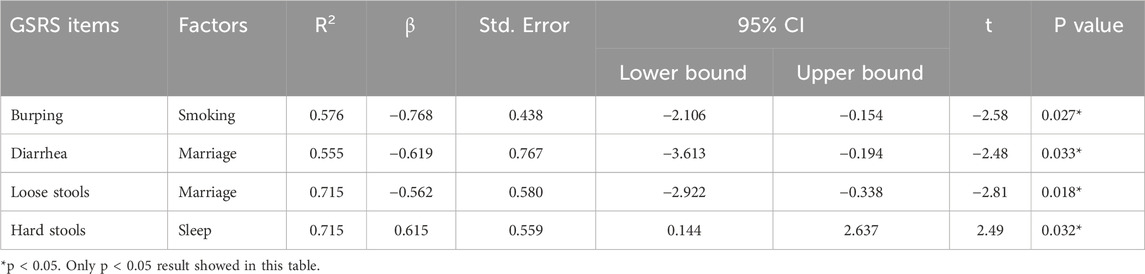
Table 5. Multiple linear regression analysis results of the Gastrointestinal Symptom Rating Scale (GSRS).
Following this, two independent-sample t-tests were conducted to evaluate changes in diarrhea, and loose stools (married vs. spinsterhood), Burping (smokers vs. nonsmokers), and hard stool (good vs. poor sleep quality). Significant differences were found in diarrhea difference by 1.63 points (95% CI [-2.423, −0.241]; Cohen’s d = −1.33, p = 0.011), and loose stools difference by 1.36 points (95% CI [-2.195, −0.063]; Cohen’s d = −1.13, p = 0.029) between married and spinsterhood. Hard stools difference by 1.18 points (95% CI [-2.219, −0.204]; Cohen’s d = −1.21, p = 0.013) between those with good and poor sleep quality, respectively. However, no significant difference was found in the Burping difference by 0.61 points (95% CI [-0.075, 2.156]; Cohen’s d = 1.04, p = 0.054) between smokers and non-smokers, and two independent-sample t-test results are provided in Table 6; Figure 3.

Table 6. Two independent sample T-tests Result of the Gastrointestinal Symptom Rating Scale (GSRS).

Figure 3. Effect of marital status on Kampo treatment–induced changes (After-Before scores) in (A) diarrhea, (B) loose stools. (C) Effect of sleep quality on Kampo treatment–induced changes (After-Before scores) in hard stools. (D) Effect of smoking habits on Kampo treatment–induced changes (After-Before scores) in Burping. *p < 0.05.
3.4 Profile of mood states second edition-adult short form (POMS 2-A)
We conducted a paired t-test to compare POMS 2-A scores before and after Kampo treatment (Table 7; Supplementary Table S7). Significant reductions were found in anger, depression and TMD scores before and after Kampo treatment. Anger decreased by 4.25 points (95% CI [-0.803, −0.049]; Cohen’s d = −0.43, p = 0.022, q = 0.070). Depression decreased by 4.25 points (95% CI [-0.764, −0.015]; Cohen’s d = −0.39, p = 0.035, q = 0.070). TMD scores decreased by 4.50 points (95% CI [-0.785, −0.033]; Cohen’s d = −0.41, p = 0.027, q = 0.070) (Figure 4). The overall responder rate for stress-relief effects under Kampo treatment was 59.4% (95% CI [43.8–75.0]). Among the specific Kampo formulas, the responder rate of bukuryoin was 58.8% (95% CI [35.3–82.4]), that of heiisan was 60.0% (95% CI [30.0–90.0]), and that of rikkunshito was 60.0% (95% CI [20.0–100.0]).

Table 7. Paired t-test Result of Profile of Mood States Second Edition-Adult Short Form (POMS 2-A).

Figure 4. Kampo treatment–induced changes in (A) fatigue, (B) anger, (C) depression, (D) total mood disturbance. *p < 0.05.
Subsequently, we used Multiple linear regression to assess how background characteristics influenced the effects of the Kampo formulas on POMS 2-A scores, with mood change scores for anger, confusion, depression, fatigue, tension, vigor, friendliness, and TMD as dependent variables. However, the analysis showed that background characteristics did not significantly influence the POMS 2-A scores. All the Multiple linear regression results are presented in Supplementary Table S5.
4 Discussion
4.1 Pharmacological effect of Kampo formulas
Our findings highlight two key points: (1) GSRS scores indicated a possible improvement trend in gastrointestinal symptoms among FD patients following treatment, with lifestyle factors potentially influencing these outcomes; (2) POMS 2-A results showed improvement in stress-related symptoms, including anger, depression, and total mood disturbance. Since this was an observational study, no placebo group was included. However, we compared our findings with placebo response rates derived from a systematic review and meta-analysis on FD (Bosman et al., 2023), which incorporated 26 randomized controlled trials. This analysis showed that the pooled placebo response rate was 39.6%—a value lower than both our overall responder rate and the responder rates of each specific Kampo formula. These results suggest that Kampo treatment may have potential benefits for gastrointestinal symptoms, though differences in study design preclude firm conclusions. An expanding body of evidence underscores the intricate relationship among FD, anxiety and depression (Wang, Q.Q. et al., 2022; Carpinelli et al., 2023; Chen et al., 2023). Although several pharmacological treatments are available for FD, their efficacy, particularly for comorbid anxiety and depression, remains limited (Miwa et al., 2022). Therefore, our findings may help to inform us of more effective therapeutic strategies.
Our analysis revealed no significant differences in gastrointestinal or stress-related symptom improvement among patients treated with different Kampo formulas, possibly reflecting both the personalized selection of formulas by attending physicians based on individual symptom profiles and the substantial overlap in botanical drugs among these Kampo formulas. The common botanical drugs in the three Kampo formulas included Wolfiporia cocos Ryvarden et Gilbertson [Polyporaceae; Poria Sclerotium], Atractylodes lancea De Candolle; [Asteraceae; Atractylodes Lancea Rhizome], Citrus reticulata Blanco [Rutaceae; Citri Unshiu Pericarpium], Panax ginseng C. A. Meyer [Araliaceae; Ginseng Radix et Rhizoma], Zingiber officinale Roscoe [Zingiberaceae; Zingiberis Rhizoma], Glycyrrhiza uralensis Fischer [Fabaceae; Glycyrrhizae Radix et Rhizoma], Ziziphus jujuba Miller var. inermis Rehder [Rhamnaceae; Ziziphi Fructus].
Polysaccharides derived from Poria Sclerotium and Atractylodes Lancea Rhizome modulate the gut microbiota by enhancing intestinal barrier integrity and attenuating intestinal inflammation, potentially through the increased production of short-chain fatty acids (SCFAs) (Wang, D. et al., 2023; Lai et al., 2025). Naringenin, a major flavanone derived from Citri Unshiu Pericarpium, has been shown to regulate the NF-κB signaling pathway in Caco-2 cells (human colorectal adenocarcinoma cell line), potentially by enhancing intestinal barrier integrity and modulating gut commensal bacteria (Lee et al., 2023). Ginseng Radix et Rhizoma has been shown to effectively alleviate stress-related depression and anxiety by modulating the hypothalamic–pituitary–adrenal (HPA) axis, thereby improving the physiological response to stressful environments (Lee and Rhee, 2017). Ginseng polysaccharides have also been shown to exhibit anti-fatigue activity (Wang, J. et al., 2010). Clinical studies have demonstrated that Zingiberis Rhizoma consumption promotes relaxation of the lower esophageal sphincter and reduces esophageal contraction velocity, which may underlie its anti-flatulent effects (Haniadka et al., 2013). Gingerol has been shown to alleviate cisplatin-induced emesis in animal models, potentially via coordinated modulation of the 5-HT, SP, and dopamine pathways (Tian et al., 2020). Liquiritin is a flavonoid compound and one of the key bioactive metabolites naturally occurring in Glycyrrhizae Radix et Rhizoma. Previous studies have demonstrated that liquiritin exhibits antidepressant-like effects in a rat model of depression induced by chronic variable stress, possibly through its antioxidant properties and protective effects against oxidative stress (Zhao et al., 2008). Ziziphi Fructus fruit extract has demonstrated gastroprotective effects against ethanol-induced gastric ulcers in rats. These effects are likely attributed to the biological activity of its rich polyphenolic content (Tanyeli et al., 2023).
Based on the above, botanical drugs used in Kampo formulas may contribute to symptom relief through distinct yet complementary mechanisms. For gastrointestinal symptoms, Poria Sclerotium, Atractylodes Lancea Rhizome, Citri Unshiu Pericarpium, Zingiberis Rhizoma and Ziziphi Fructus demonstrate prokinetic, antiemetic, mucosal-protective, and anti-inflammatory effects, which correspond to the improvements in dyspeptic symptoms observed in this study. Meanwhile, Ginseng Radix et Rhizoma and Glycyrrhizae Radix et Rhizoma show antidepressant, anxiolytic, and stress-attenuating effects, likely mediated through modulation of the hypothalamic–pituitary–adrenal (HPA) axis, supporting the observed psychological improvements. Collectively, the multi-targeted pharmacological effects of botanical drugs may act synergistically to influence both gastrointestinal function and mental health in patients with FD.
4.2 Factors that influence kampo treatment
Our study found preliminary associations between lifestyle factors (marital status, smoking, sleep) and treatment responses; however, due to the lack of statistical significance in the regression model, these findings remain exploratory.
4.2.1 Marital status
A survey conducted in southern Iran revealed that married women under the age of 35 years had a higher likelihood of experiencing FD (Masoumi et al., 2015). Marital satisfaction is a potential moderator in the relationship between stress and depression (Shi and Whisman, 2023; Han et al., 2024). In our study, we observed that single patients presented with more severe symptoms of acid reflux, diarrhea, and loose stools before Kampo treatment. However, they exhibited better therapeutic responses than married individuals. After Kampo treatment, those in spinsterhood showed lighter symptoms than married individuals. This difference may have resulted from reduced family related stress among spinsterhoods, affording them greater dietary flexibility and enhancing the efficacy of treatment.
4.2.2 Sleep quality
The relationship between stress levels and sleep quality among doctors during on-call shifts is correlated with the occurrence of functional gastrointestinal disorders (Lim et al., 2017). Our results revealed that individuals with good sleep patterns displayed milder hard-stool symptoms after Kampo treatment. This difference may result from good sleep-enhancing immune function, reducing stress (Kalmbach et al., 2018) and regulating the sympathetic nervous system (Trinder et al., 2001), improving digestion, and boosting the outcomes of treatment.
4.2.3 Smoking habits
In our study, nonsmokers had more severe burping symptoms before treatment but responded better to Kampo therapy. Previous studies suggested that smoking is a risk factor for a broad range of gastrointestinal diseases (Yuan et al., 2023). This difference may be explained by the fact that nonsmokers have lower exposure to smoking-related risks, whereas smokers are subject to such risks. Additionally, Multiple linear regression analysis showed a significant relationship between smoking habits and differences in Burping scores. However, subsequent independent sample t-tests showed no significant differences in the Burping scores among individuals with different smoking habits. This inconsistency may be attributed to the small sample size.
4.3 Limitations and future plan
Our study has several limitations. First, since this is a single-arm, exploratory observation without a concurrent placebo group, the observational design limits interpretation of the effects of Kampo treatment and their comparison with standard care. FD is characterized by a high placebo response rate. Although we compared the response rates in our study with those of placebo groups in previously published FD randomized controlled trials, differences in assessment tools and study populations cannot be ignored. As an exploratory observational study, we did not predefine effect size thresholds, so no non-inferiority/superiority analyses were performed among the formulas. This design cannot rule out a type II error, and the results should be interpreted as hypothesis-generating, particularly with respect to relative and subtype-specific efficacy. Future randomized controlled trials are warranted to establish the definitive efficacy of Kampo treatment. Second, the small sample size and incomplete background information (e.g., H. pylori status and FD subtype) constrain causal inference and reduce the interpretability of inter-formula comparisons. Third, Kampo prescriptions from a single manufacturer (Tsumura) may limit generalizability. In addition, this study was conducted during the COVID-19 pandemic, all patients were outpatient, resulting in follow-up challenges and a high dropout rate. Moreover, some older patients failed to return complete questionnaires, contributing to missing data. Finally, this study relied only on two subjective evaluation items. Future studies should incorporate objective evaluation measures, such as gastric motility tests, autonomic function indices, or stress-related biomarkers, to enhance the credibility of the findings.
In summary, future studies should be designed to address these limitations by conducting larger, multicenter randomized controlled trials with predefined statistical power, incorporating important covariates such as H. pylori infection status and psychological factors, and implementing comprehensive safety monitoring to confirm and extend the present findings.
5 Conclusion
This exploratory observational study suggests potential improvements in gastrointestinal symptoms and stress levels in FD patients following Kampo treatment. No statistically significant differences were observed among the formulas; however, the study was not powered to determine equivalence or non-inferiority. Additionally, marital status, smoking habits, and sleep quality may be associated with the outcomes of Kampo treatment, which could serve as avenues for further investigation.
Data availability statement
The raw data supporting the conclusions of this article will be made available by the authors, without undue reservation.
Ethics statement
This study was approved by the Ethical Committee for Epidemiology of Hiroshima University (Approval No. E2021-2483). The studies were conducted in accordance with the local legislation and institutional requirements. The participants provided their written informed consent to participate in this study.
Author contributions
LL: Formal Analysis, Visualization, Project administration, Data curation, Software, Writing – original draft, Investigation. HL: Formal Analysis, Project administration, Methodology, Supervision, Conceptualization, Writing – review and editing. HD: Writing – review and editing, Data curation, Supervision, Formal Analysis. YJ: Data curation, Investigation, Writing – review and editing. ST: Writing – review and editing, Supervision, Conceptualization, Funding acquisition, Resources. JS: Resources, Conceptualization, Supervision, Funding acquisition, Writing – review and editing. AK: Writing – review and editing, Conceptualization, Supervision, Resources, Funding acquisition. SO: Methodology, Writing – review and editing, Supervision, Conceptualization. MI: Conceptualization, Supervision, Resources, Writing – review and editing. KO-O: Conceptualization, Resources, Funding acquisition, Methodology, Supervision, Writing – review and editing.
Funding
The authors declare that financial support was received for the research and/or publication of this article. This study was supported by JST SPRING (grant number JPMJSP2132) and Tsumura and Co., KO has received research funding from Tsumura and Co. The funder was not involved in the study design, collection, analysis, interpretation of data, the writing of this article, or the decision to submit it for publication.
Conflict of interest
The authors declare that the research was conducted in the absence of any commercial or financial relationships that could be construed as a potential conflict of interest.
The authors declared that they were an editorial board member of Frontiers, at the time of submission. This had no impact on the peer review process and the final decision.
Generative AI statement
The authors declare that Generative AI was used in the creation of this manuscript. The authors used generative AI (ChatGPT, OpenAI) solely for language polishing and grammar refinement of the manuscript and take full responsibility for its content. No AI-generated data, results, or analysis were included in this study.
Any alternative text (alt text) provided alongside figures in this article has been generated by Frontiers with the support of artificial intelligence and reasonable efforts have been made to ensure accuracy, including review by the authors wherever possible. If you identify any issues, please contact us.
Publisher’s note
All claims expressed in this article are solely those of the authors and do not necessarily represent those of their affiliated organizations, or those of the publisher, the editors and the reviewers. Any product that may be evaluated in this article, or claim that may be made by its manufacturer, is not guaranteed or endorsed by the publisher.
Supplementary material
The Supplementary Material for this article can be found online at: https://www.frontiersin.org/articles/10.3389/fphar.2025.1685656/full#supplementary-material
Abbreviations
FD, Functional Dyspepsia; GSRS, Gastrointestinal Symptom Rating Scale; POMS-2A, Profile of Mood States Second Edition-Adult Short Form.
References
Aziz, I., Whitehead, W. E., Palsson, O. S., Törnblom, H., and Simrén, M. (2020). An approach to the diagnosis and management of rome IV functional disorders of chronic constipation. Expert Rev. Gastroenterol. Hepatol. 14, 39–46. doi:10.1080/17474124.2020.1708718
Bosman, M., Smeets, F., Elsenbruch, S., Tack, J., Simrén, M., Talley, N., et al. (2023). Placebo response in pharmacological trials in patients with functional dyspepsia-A systematic review and meta-analysis. Neurogastroenterol. Motil. 35 (2), e14474. doi:10.1111/nmo.14474
Carbone, F., and Tack, J. (2014). Gastroduodenal mechanisms underlying functional gastric disorders. Dig. Dis. 32, 222–229. doi:10.1159/000357854
Carpinelli, L., Savarese, G., Pascale, B., Milano, W. D., and Iovino, P. (2023). Gut–Brain interaction disorders and Anorexia nervosa: psychopathological asset, disgust, and gastrointestinal symptoms. Nutrients 15, 2501. doi:10.3390/nu15112501
Chen, Y., Yu, R., DeSouza, J. F. X., Shen, Y., Zhang, H., Zhu, C., et al. (2023). Differential responses from the left postcentral gyrus, right middle frontal gyrus, and precuneus to meal ingestion in patients with functional dyspepsia. Front. Psychiatry 14, 1184797. doi:10.3389/fpsyt.2023.1184797
Cheng, J., Hu, H., Ju, Y., Liu, J., Wang, M., Liu, B., et al. (2024). Gut microbiota-derived short-chain fatty acids and depression: deep insight into biological mechanisms and potential applications. General Psychiatry 37 (1), e101374. doi:10.1136/gpsych-2023-101374
Gerson, L. B., and Triadafilopoulos, G. (2005). A prospective study of oesophageal 24-h ambulatory pH monitoring in patients with functional dyspepsia. Official J. Italian Soc. Gastroenterology Italian Assoc. Study Liver 37 (2), 87–91. doi:10.1016/j.dld.2004.09.021
Han, R.-R., Sun, K., Zheng, J., and Gao, L.-L. (2024). Perceived stress, marital satisfaction, and prenatal depression among couples with gestational diabetes mellitus. J. Reprod. Infant Psychol. 42, 606–619. doi:10.1080/02646838.2022.2135175
Haniadka, R., Saldanha, E., Sunita, V., Palatty, P. L., Fayad, R., and Baliga, M. S. (2013). A review of the gastroprotective effects of ginger (Zingiber officinale Roscoe). Food Funct. 4, 845–855. doi:10.1039/c3fo30337c
Jeffri, T. K. W. (2024). Research on the formula and diagnosis of Wai Tai Fu ling Yin (Poria decoction). Jiangsu, China: Nanjing University of Chinese Medicine.
Jiang, S. M., Jia, L., Lei, X. G., Xu, M., Wang, S. B., Liu, J., et al. (2015). Incidence and psychological-behavioral characteristics of refractory functional dyspepsia: a large, multi-center, prospective investigation from China. World J. Gastroenterology 21 (6), 1932–1937. doi:10.3748/wjg.v21.i6.1932
Jindal, N., Jena, A., Kumar, K., Padhi, B. K., Sharma, R., Jearth, V., et al. (2024). Hindi translation and validation of the English version of the gastrointestinal symptom rating scale questionnaire: an observational study. World J. Gastrointest. Pharmacol. Ther. 15 (5), 97261. doi:10.4292/wjgpt.v15.i5.97261
Kalmbach, D. A., Anderson, J. R., and Drake, C. L. (2018). The impact of stress on sleep: pathogenic sleep reactivity as a vulnerability to insomnia and circadian disorders. J. Sleep. Res. 27, e12710. doi:10.1111/jsr.12710
Lacy, B. E., Talley, N. J., Locke, G. R., Bouras, E. P., DiBaise, J. K., El-Serag, H. B., et al. (2012). Review article: current treatment options and management of functional dyspepsia. Alimentary Pharmacol. and Ther. 36 (1), 3–15. doi:10.1111/j.1365-2036.2012.05128.x
Lai, Y., Lan, X., Chen, Z., Lou, G., Li, Y., Liu, C., et al. (2025). The role of Wolfiporia cocos (F. A. Wolf) ryvarden and Gilb. Polysaccharides in regulating the gut Microbiota and its health benefits. Mol. Basel, Switz. 30 (6), 1193. doi:10.3390/molecules30061193
Lee, S., and Rhee, D.-K. (2017). Effects of ginseng on stress-related depression, anxiety, and the hypothalamic–pituitary–adrenal axis. J. Ginseng Res. 41, 589–594. doi:10.1016/j.jgr.2017.01.010
Lee, S. H., Seo, D., Lee, K. H., Park, S. J., Park, S., Kim, H., et al. (2023). Biometabolites of citrus unshiu peel enhance intestinal permeability and alter gut commensal bacteria. Nutrients 15 (2), 319. doi:10.3390/nu15020319
Li, H., Tomita, N., Doi, H., Nakata, K., and Ogawa-Ochiai, K. (2023). Preliminary research of the effectiveness of acupuncture (spoon needle) on stress relief of Japanese expatriates in a developing country Myanmar: a retrospective study. Medicine 102 (38), e35085. doi:10.1097/MD.0000000000035085
Liang, Q., Li, Y., Yan, Y., Liang, J., Mao, L., Liu, J., et al. (2018). Pingwei capsules improve gastrointestinal motility in rats with functional dyspepsia. J. Traditional Chin. Med. = Chung i tsa chih ying wen pan 38 (1), 43–53. doi:10.1016/j.jtcm.2018.01.008
Lim, S. K., Yoo, S. J., Koo, D. L., Park, C. A., Ryu, H. J., Jung, Y. J., et al. (2017). Stress and sleep quality in doctors working on-call shifts are associated with functional gastrointestinal disorders. World J. Gastroenterology 23 (18), 3330–3337. doi:10.3748/wjg.v23.i18.3330
Mahadeva, S., and Goh, K.-L. (2006). Epidemiology of functional dyspepsia: a global perspective. World J. Gastroenterol. 12, 2661–2666. doi:10.3748/wjg.v12.i17.2661
Masoumi, S. J., Mehrabani, D., Moradi, F., Zare, N., Saberi-Firouzi, M., and Mazloom, Z. (2015). The prevalence of dyspepsia symptoms and its correlation with the quality of life among Qashqai Turkish migrating nomads in Fars Province, Southern Iran. Pak J. Med. Sci. 31, 325–330. doi:10.12669/pjms.312.6956
Mayer, E. A., Nance, K., and Chen, S. (2022). The gut-brain axis. Annu. Rev. Med. 73, 439–453. doi:10.1146/annurev-med-042320-014032
Miwa, H., Nagahara, A., Asakawa, A., Arai, M., Oshima, T., Kasugai, K., et al. (2022). Evidence-based clinical practice guidelines for functional dyspepsia 2021. J. Gastroenterology 57 (2), 47–61. doi:10.1007/s00535-021-01843-7
Nam, Y., Kwon, S.-C., Lee, Y.-J., Jang, E.-C., and Ahn, S. (2018). Relationship between job stress and functional dyspepsia in display manufacturing sector workers: a cross-sectional study. Ann. Occup. Environ. Med. 30, 62. doi:10.1186/s40557-018-0274-4
Shi, Y., and Whisman, M. A. (2023). Marital satisfaction as a potential moderator of the association between stress and depression. J. Affect Disord. 327, 155–158. doi:10.1016/j.jad.2023.01.093
Suzuki, H., Matsuzaki, J., Fukushima, Y., Suzaki, F., Kasugai, K., Nishizawa, T., et al. (2014). Randomized clinical trial: rikkunshito in the treatment of functional dyspepsia--a multicenter, double-blind, randomized, placebo-controlled study. Neurogastroenterol. Motil. 26 (7), 950–961. doi:10.1111/nmo.12348
Tack, J., Talley, N. J., Camilleri, M., Holtmann, G., Hu, P., Malagelada, J. R., et al. (2006). Functional gastroduodenal disorders. Gastroenterology 130 (5), 1466–1479. doi:10.1053/j.gastro.2005.11.059
Tan, N., Gwee, K. A., Tack, J., Zhang, M., Li, Y., Chen, M., et al. (2020). Herbal medicine in the treatment of functional gastrointestinal disorders: a systematic review with meta-analysis. J. Gastroenterol. Hepatol. 35, 544–556. doi:10.1111/jgh.14905
Tanyeli, A., Güler, M. C., Eraslan, E., Bozhüyük, M. R., Akdemir, F. N. E., Toktay, E., et al. (2023). Gastroprotective effects of Jujuba (Ziziphus jujuba) fruit extract against the ethanol-related gastric ulcer in rats. J. Contemp. Med. 13, 1046–1052. doi:10.16899/jcm.1317273
The Ministry of Health, Labour, and Welfare (2021). The Japanese Pharmacopoeia 18th Edition English Version. Tokyo: Health Laboratory Welf. Available online at: https://www.pmda.go.jp/english/rs-sb-std/standards-development/jp/0029.html (Accessed December 31, 2021).
Tian, L., Qian, W., Qian, Q., Zhang, W., and Cai, X. (2020). Gingerol inhibits cisplatin-induced acute and delayed emesis in rats and minks by regulating the central and peripheral 5-HT, SP, and DA systems. J. Nat. Med. 74, 353–370. doi:10.1007/s11418-019-01372-x
Tominaga, K., Higuchi, K., Iketani, T., Ochi, M., Kadouchi, K., Tanigawa, T., et al. (2007). Comparison of gastrointestinal symptoms and psychological factors of functional dyspepsia to peptic ulcer or panic disorder patients. Inflammopharmacology 15 (2), 84–89. doi:10.1007/s10787-006-0011-4
Tominaga, K., Sakata, Y., Kusunoki, H., Odaka, T., Sakurai, K., Kawamura, O., et al. (2018). Rikkunshito simultaneously improves dyspepsia correlated with anxiety in patients with functional dyspepsia: a randomized clinical trial (the DREAM study). Neurogastroenterol. Motil. 30 (7), e13319. doi:10.1111/nmo.13319
Trask, P. C., Paterson, A. G., Wang, C., Hayasaka, S., Milliron, K. J., Blumberg, L. R., et al. (2001). Cancer-specific worry interference in women attending a breast and ovarian cancer risk evaluation program: impact on emotional distress and health functioning. Psycho-oncology 10 (5), 349–360. doi:10.1002/pon.510
Trinder, J., Kleiman, J., Carrington, M., Smith, S., Breen, S., Tan, N., et al. (2001). Autonomic activity during human sleep as a function of time and sleep stage. J. Sleep Res. 10 (4), 253–264. doi:10.1046/j.1365-2869.2001.00263.x
Wang, J., Li, S., Fan, Y., Chen, Y., Liu, D., Cheng, H., et al. (2010). Anti-fatigue activity of the water-soluble polysaccharides isolated from Panax ginseng C. A. Meyer. J. Ethnopharmacol. 130 (2), 421–423. doi:10.1016/j.jep.2010.05.027
Wang, Q. Q., Cheng, L., Wu, B. Y., Xu, P., Qiu, H. Y., Wang, B., et al. (2022). Short-course antidepressant therapy reduces discontinuation syndrome while maintaining treatment efficacy in patients with refractory functional dyspepsia: a randomized controlled trial. Front. Psychiatry 13, 1063722. doi:10.3389/fpsyt.2022.1063722
Wang, D., Dong, Y., Xie, Y., Xiao, Y., Ke, C., Shi, K., et al. (2023). Atractylodes lancea rhizome polysaccharide alleviates immunosuppression and intestinal mucosal injury in mice treated with cyclophosphamide. J. Agric. Food Chem. doi:10.1021/acs.jafc.3c05173
Wardenaar, F. C., Chan, Y., Clear, A. M., Schott, K., Mohr, A. E., Ortega-Santos, C. P., et al. (2025). The gastrointestinal symptom rating Scale has a good test-retest reliability in well-trained athletes with and without previously self-identified gastrointestinal complaints. Sports Med. Auckl. N.Z. 55 (2), 513–524. doi:10.1007/s40279-024-02122-0
Yuan, S., Chen, J., Ruan, X., Sun, Y., Zhang, K., Wang, X., et al. (2023). Smoking, alcohol consumption, and 24 gastrointestinal diseases: mendelian randomization analysis. eLife 12, e84051. doi:10.7554/eLife.84051
Zhang, M., Gong, X. M., Xiong, R., Cui, Y. Y., Chen, Z. M., Li, W. B., et al. (2016). Comparative Study on pharmacodynamics of pingwei San with different raw material. Chin. J. Exp. Traditional Med. Formulae 22. doi:10.13422/j.cnki.syfjx.2016020017
Keywords: traditional Japanese medicine, Kampo formulas, Kampo, functional dyspepsia, dyspepsia, stress
Citation: Liang L, Li H, Doi H, Jiang Y, Tashiro S, Sun J, Kawahara A, Oka S, Ito M and Ogawa-Ochiai K (2025) Integrated effects of Kampo treatment on gastrointestinal symptoms and stress in patients with functional dyspepsia: a preliminary prospective observational study. Front. Pharmacol. 16:1685656. doi: 10.3389/fphar.2025.1685656
Received: 14 August 2025; Accepted: 07 November 2025;
Published: 21 November 2025.
Edited by:
Javier Echeverria, University of Santiago, ChileReviewed by:
Hiroshi Mihara, Sapporo Medical University, JapanErsin Demirer, Istanbul Kartal Dr. Lutfi Kirdar Education and Research Hospital, Türkiye
Xuefeng Wu, Keio University, Japan
Laura Ombasa, University of Otago, New Zealand
Copyright © 2025 Liang, Li, Doi, Jiang, Tashiro, Sun, Kawahara, Oka, Ito and Ogawa-Ochiai. This is an open-access article distributed under the terms of the Creative Commons Attribution License (CC BY). The use, distribution or reproduction in other forums is permitted, provided the original author(s) and the copyright owner(s) are credited and that the original publication in this journal is cited, in accordance with accepted academic practice. No use, distribution or reproduction is permitted which does not comply with these terms.
*Correspondence: Keiko Ogawa-Ochiai, b2tlaWtvMjJAaGlyb3NoaW1hLXUuYWMuanA=
†These authors have contributed equally to this work and share first authorship