Abstract
An increasing body of literature has demonstrated COVID-19's harmful impact on agri-food systems, which are a major source of livelihood for millions of people worldwide. Information and communication technology (ICT) has been playing an increasing role in enhancing agri-food systems' resilience amid COVID-19. In this study, the PRISMA approach was employed to perform a systematic review of the literature from January 2020 to December 2021 on the overall impact of COVID-19 on agri-food system networks and ICT's role in enhancing agri-food system resilience in developing countries. This study reveals that COVID-19 has posed abundant obstacles to agri-food systems actors, including a lack of inputs, technical support, challenges to selling the product, transportation barriers, and low pricing. These impediments result in insufficient output, unforeseen stock, and revenue loss. COVID-19's restrictions have caused a significant food deficit by disrupting the demand and supply sides of the agri-food system networks. A high number of small-scale farmers have had to deal with food insecurity. As a result of the cumulative effects, actors in the agri-food system are getting less motivated to continue producing. This study also argues that many challenges in the agri-food systems can be overcome using ICTs, including maintaining precise farm management, product marketing, and access to production inputs. To assist stakeholders in coping with, adapting to, and building resilience in the agri-food system networks, this article emphasizes the critical need to turn to and expand the application of advanced agricultural ICTs to meet the world's growing needs for food production and to ensure the resilience and sustainability of farming systems, particularly in the face of a pandemic like COVID-19.
1. Introduction
COVID-19 has spread worldwide since its discovery in December 2019. Developing countries, however, are more vulnerable to the pandemic's detrimental effects than developed countries owing to their scarce resources, experience, and technologies (Nemes et al., 2021). COVID-19 has impacted many sectors of the economy, but agri-food systems (AFS) have been hit particularly badly because many agri-food commodities are perishable (Heck et al., 2020). In fact, AFS have been under growing pressure in recent decades due to complex interactions of many stresses and disturbances, making it challenging to sustain high-quality and inexpensive food production while simultaneously providing a living wage for field workers (Priyadarshini and Abhilash, 2021). On top of these already-existing problems, the COVID-19 pandemic wreaked havoc on a wide range of agri-food actors, posing a new challenge (Paparella et al., 2022). Lockdowns imposed to mitigate COVID-19 had a wide-ranging impact on society globally (Sarker et al., 2021). Among other things, the COVID-19 measure to stop restaurant business and food markets in many nations altered consumer need for food items and had other unintended consequences, severely disrupting global AFS (Barrett et al., 2021).
While much about the consequences of COVID-19 remains unclear, we know only several mechanisms are driving them (Fan et al., 2021). COVID-19 has a great, unequal, impact on the food system and its users. Worldwide disruptions in agri-food supply networks have exacerbated the consequences on food systems, poverty, and nutrition (Rasul, 2021). Because of the harsh tool of social distance, which was utilized in varying degrees across nations to halt the spread of the new coronavirus and contain its long-term human and economic effects, the COVID-19-induced worldwide recession was more severe than the 2008–2009 global financial crisis (Amjath-Babu et al., 2020). As a result of containment efforts, businesses deemed “non-essential” were frequently compelled to close, and employees were forced to stay at home. Hundreds of millions of workers have been laid off worldwide, and those without access to social security have also lost a sizable percentage of their income (Hossain, 2020).
AFS are concerned with the complete network of actors engaged in food production, distribution, and consumption, their relationships (Coluccia et al., 2021; Joshi and Sharma, 2022), and the legal framework that governs these arrangements (Heck et al., 2020). The AFS encompass all operations associated with food production, processing, distribution, trade, and consumption (Agnusdei and Coluccia, 2022). Disruptions in AFS have been highly variable—both within and across chains and countries (Gamache et al., 2020). Food services have been disproportionately impacted, while other food system sectors such as farming, food trade, and retailing have been mostly deemed “essential.” Nonetheless, being labeled “essential” did not guarantee pandemic resistance, and supply chain disruptions along the food value chains, varying greatly in severity depending on product and country characteristics (Bechtsis et al., 2022). They have encountered serious disruptions in certain sectors due to labor market shocks and trade constraints (Kumar et al., 2022). Initial measures such as export bans on basic foods or restrictions on seasonal migrant agricultural labor mobility have been eliminated or minimized. Market disruptions have been addressed by adjusting business models or reestablishing supply toward specific market segments (Rejeb et al., 2021), such as a significant increase in digital technology to enable home delivery or a shift toward retail in response to a restaurant's other food service closures (Apostolopoulos et al., 2021). Building agri-food system resilience through ICT can be a better solution to deal with the adverse effects of the pandemic (Zhan and Chen, 2021).
Agricultural digitalization which uses the digital tools along the agri-food value chain may address an effective solution to the existing production challenges (Puram et al., 2022). Many digital vehicles are now undergoing a revolution in agricultural ICTs (Zhang et al., 2016). The fourth agricultural revolution, dubbed the “digital agricultural revolution,” began in the twenty-first century and was linked to the development of digital technology and artificial intelligence (Miranda et al., 2019). In 2019, the FAO emphasized the importance of the latest agricultural revolution, based on ICTs, as a potent instrument for ensuring that agriculture fulfills the demands of the global population in the future (Trendov et al., 2019). Agricultural ICTs have a continually rising market size in developed and developing nations (Hashem et al., 2021).
The COVID-19 epidemic and its allied consequences took a huge toll on the resilience of numerous agri-food systems globally. Extreme stress and disruption provide an opportunity to identify and validate critical contributors to the resilience of the agri-food system (Heck et al., 2020). Resilience has applicability in various areas, including psychology and ecology, and academics have used a variety of concepts to construct their resilience-investigative framework (Alam et al., 2018). This study relies on existing definitions of resilience in the social-ecological systems (SES) literature, which generally refer to a system's capacity to properly tolerate, absorb, or adapt to shocks (Mussell et al., 2020). Despite strong theoretical underpinnings, the literature often lacks evidence indicating how agri-food system resilience might be enhanced. There is a need for evidence-based insights into how agricultural ICTs truly contribute to agri-food system resilience, and times of high stress and disruption provide an opportunity to know in-depth information about the pandemic situation. The positive dynamic in market growth might be explained by the fact that agricultural ICTs are vital instruments for increasing production and interactions between governments, company owners, buyers, policymakers, and farmers (Hashem et al., 2021). To enhance the agri-food system resilience, these linkages amongst the stakeholders involved might assist in raising total food production and improve food security (Hashem et al., 2021).
There are several studies focused on the impact of COVID-19 on agricultural production (Boughton et al., 2021; Jaacks et al., 2021), agri-food systems (Coopmans et al., 2021; Priyadarshini and Abhilash, 2021; Talukder et al., 2021), supply chain (Deconinck et al., 2020; Coopmans et al., 2021; Sid et al., 2021; Mahroof et al., 2022; Mishra et al., 2022), and farming systems (Azeda et al., 2021; Lopez-Ridaura et al., 2021; Meuwissen et al., 2021). Few studies already focused on the global context (Rivera-Ferre et al., 2021; Khan et al., 2022) and local contexts (Ben Hassen et al., 2020; Fei et al., 2020; Boughton et al., 2021; Gras and Hernández, 2021; Martínez-Azúa et al., 2021; Nemes et al., 2021; Priyadarshini and Abhilash, 2021; Snow et al., 2021; Weersink et al., 2021). However, there is no explicit attention to the influence of COVID-19 on agri-food systems in developing countries, which are thought to be the most affected by the pandemic due to a lack of resources, limited job prospects, low literacy, lack of knowledge, and high reliance on agriculture. Understanding the negative effects of COVID-19 on the agri-food system, on the other hand, can aid in tackling existing problems and planning better for the future. Considering the importance, this study attempts to fill the research gap by addressing two research questions, (a) how does COVID-19 affect on agri-food system? And (b) what are ICT's roles in enhancing agri-food systems' activities amid COVID-19? Therefore, this study intends to expand the understanding of the COVID-19 impact on the agri-food system network in developing countries, employing a systematic review of the literature. This can assist communities dependent on agri-food systems in coping, adapting, and building resilience in developing countries.
2. Methodology
2.1. Research design
This study used a systematic review methodology, including developing a protocol and conducting a literature search for the most pertinent material (Sott et al., 2021). According to Fink (2005), a systematic literature review is a strategy for discovering, analyzing, and synthesizing the existing body of knowledge by scholars, academics, and practitioners, which is systematic, explicit, thorough, and reproducible. The suggestions for data collection are based on the PRISMA (Principles for Reporting Systematic Reviews and Meta-Analyses) framework (Moher et al., 2009). PRISMA is a commonly used tool for conducting systematic reviews of the literature. It consists of four key steps: identification, screening, eligibility, and inclusion. These four steps were completed using a variety of checklists.
2.2. Eligibility criteria
The studies related to the agri-food system, the language of the published paper, the influence of COVID-19, agri-food system, developing countries and the date of publication were all used as inclusion criteria. The analysis considered only peer-reviewed journal publications produced in the English language. This study covers the period from January 2020 to December 2021. This study analyzed articles that discussed the impact of COVID-19 on the agri-food system and allied sectors, as well as the supply chain for agri-food.
2.3. Search strategy
After consulting various widely used databases, the primary search string was created to conform to the database's criteria. It contains phrases such as COVID-19's impact on agri-food system, agri-food supply chain, agricultural vulnerability, food system, food supply chain, ICT, and food system resilience. Scopus was the main database for information retrieval and gathering documents for qualitative analysis. Table 1 summarizes the research protocol employed in this investigation.
Table 1
| Items | Description |
|---|---|
| Selected databases | Scopus |
| Publication criteria | Published in peer-reviewed journals |
| Language | Documents in English |
| Time duration | From January 2020 to December 2021 |
| Search terms | Impact, COVID-19, agri-food, agricultural vulnerability, food system, food supply chain, ICT, and food system resilience |
| Search fields | Title, abstract, and keywords |
| Inclusion criteria | Documents present the effect of COVID-19 on agri-food, ICT, and food system resilience |
| Regional focus | Developing countries |
Research protocol details.
Source: Author's contribution.
The research protocol was followed during every step of the research process. It shows database selection, publication criteria, language selection, duration of the published documents, search terms, search fields, inclusion criteria, and regional focus.
2.4. Data extraction
Consistent data collection was conducted on all selected documents. Each study's data includes the author, publication year, investigation type, sample size, the location of the study, the methodology, and the findings.
2.5. Document selection
Our study obtained 112 documents from the core database and 9 articles from reference sources during the identification step. Screening processes were followed, with 47 documents removed owing to a lack of desired details or relevance to the subject matter. The third step of the PRISMA approach, eligibility, resulted in the exclusion of 43 articles owing to a lack of complete text, non-relevancy, and a lack of COVID-19 effect on agri-food and food system issues. The remaining 23 documents focused on the detailed analysis (Figure 1).
Figure 1

Document selection by PRISMA. A qualitative analysis was done on the selected 23 documents following the research questions. This study extracted the key information from the selected documents according to the study objective for showing a comprehensive understanding on the agri-food system resilience amid COVID-19.
3. Results
3.1. Impacts of COVID-19 on agriculture sector
COVID-19's impact on agriculture is multidimensional (Table 2). The analysis highlighted the agriculture sector's major impacts, such as input unavailability, labor shortage, distribution limitation, limited processing and low market demand.
Table 2
| Major impacts on agriculture | Specific impacts | References |
|---|---|---|
| Input unavailability | • Scarcity of crop seeds •Unavailability of agrochemicals •Lack of agricultural machinery equipment •Less access to technical know-how and extension services •Unavailability of fish seed and fingerling | Jaacks et al., 2021 Priyadarshini and Abhilash, 2021 Hossain, 2020 Snow et al., 2021 Yadav et al., 2022 Alam et al., 2022 |
| Shortage of labor | • Unavailability of an agricultural laborer •High cost of labor •Labor afraid to do daily work •Lack of transportation laborers •Scarcity of skilled and technical labor for agricultural nursery. | Zhan and Chen, 2021 Khan et al., 2022 Apostolopoulos et al., 2021 Liu et al., 2021 Heck et al., 2020 |
| Distribution limitation | • Limited access to transportation •High transportation cost •Legal restriction for transportation | Amjath-Babu et al., 2020 Heck et al., 2020 Priyadarshini and Abhilash, 2021 |
| Limited processing | • Limited access to a processing unit •Less capacity at an individual level •High processing cost •Limited access to the milk processing unit. | Middendorf et al., 2022 Puram et al., 2022 Mishra et al., 2022 Jaacks et al., 2021 |
| Low market demand | • Restriction of movement •Physical distancing •Shutdown of schools/restaurants/ hotels •Limited access to grocery shop •Limited access to a farmers' market •Limited access to financial capital •Milk producers could not sell milk. •Low price of cattle, goats and sheep | Priyadarshini and Abhilash, 2021 Coopmans et al., 2021 Heck et al., 2020 Nemes et al., 2021; Priyadarshini and Abhilash, 2021 Benedek et al., 2020; Rowan and Galanakis, 2020 Kumar et al., 2020; Mishra et al., 2022 Hossain, 2020; Rivera-Ferre et al., 2021 Kumari et al., 2021; Nordhagen et al., 2021 |
COVID-19's impact on agricultural sector.
Source: Author's compilation.
The existing literature covers the impact on COVID-19 on the whole supply chains of agriculture, from input supply to marketing of the product. It has been observed that every step of agricultural supply chain was affected by COVID-19.
3.2. COVID-19's impacts on agri-food system
Food supply chains in developing countries are likely to be damaged, particularly in areas where the pandemic is severe. COVID-19 simultaneously impacts farm input, production, output, processing, trade, and end demand. It's not like all sectors and items were affected equally, and interruptions occurred throughout the supply chain (Rejeb et al., 2022). Given that food security is the ultimate goal of the agri-food system, the findings are presented in terms of the primary components of food security: food availability, access, and utilization (Heck et al., 2020). The disputed components are production level, food processing, storage facilities, retailers and wholesalers, restaurants, overall food trade, food consumption, and nutritional requirements (Table 3).
Table 3
| Disrupted domain | System's level | Major impacts | References |
|---|---|---|---|
| Food availability | Production level | Due to the limited access to input, the production rate is reduced | Heck et al., 2020; Coopmans et al., 2021 |
| Food processing | Agri-food processing is also hampered due to various restriction measures | Galanakis et al., 2021; Priyadarshini and Abhilash, 2021 | |
| Storage facilities | The pandemic limits access to storage facilities, and it causes an unexpected loss of perishable products | Coopmans et al., 2021; Middendorf et al., 2022 | |
| Food access | Retailers and wholesalers | Due to restrictions on movement and transportation, the retail and wholesale business was disrupted | Kumari et al., 2021; Mishra et al., 2022 |
| Restaurants | Due to the shutdown of restaurants, a considerable amount of food demand has been decreased | Barrett et al., 2021; Coopmans et al., 2021 | |
| Overall food trade | The pandemic harmed the overall local and global trade | Boughton et al., 2021; van Berkum, 2021 | |
| Food utilization | Food consumption | The ultimate impact of the COVID-19 pandemic is less food consumption by the poor people of developing countries | Nemes et al., 2021; Ben Hassen et al., 2022 |
| Nutritional requirement | Less access to food enhances the malnutrition of poor people | Heck et al., 2020; Nemes et al., 2021 |
COVID-19's impact on AFS.
Source: Author's compilation.
Agri-food system resilience cannot be achieved without ensuring the food availability, food access and food utilization. Literature shows that every step of agri-food system was affected by COVID-19.
3.3. Common challenges confronted by small farmers
The agri-food industry is one of the major industrial businesses in the world, with a dynamic societal-technical innovation ecosystem. Diversifying the food supply chain and identifying sustainable technologies are urgently needed to fulfill COVID-19's evolving demands in food systems. The study has identified several common challenges of various stakeholders of agri-food systems (Table 4).
Table 4
| Common challenges | References |
|---|---|
| Delays in planting time | Amjath-Babu et al., 2020; Kumar and Kumar Singh, 2022 |
| Challenges in the input collection | Jaacks et al., 2021; Priyadarshini and Abhilash, 2021 |
| High-cost input | Fan et al., 2021; Jaacks et al., 2021 |
| Undesirable crop stock | Ben Hassen et al., 2020, 2022 |
| Disease/ pest attack | Heck et al., 2020; Sharma et al., 2021a |
| Challenges to manage daily expenses | Ben Hassen et al., 2020; Heck et al., 2020 |
| Lack of labor | Hashem et al., 2021; Zhan and Chen, 2021 |
| Migration of labor | Aday and Aday, 2020; Sid et al., 2021 |
| Infection fairness of labor | Sid et al., 2021; Talukder et al., 2021 |
| Lack of necessary capital | Amjath-Babu et al., 2020; Sid et al., 2021 |
| Lack of technical support from extension agents | Zielińska-Chmielewska et al., 2021; Yadav et al., 2022 |
| Scarce demand for processed food | Deconinck et al., 2020; Coopmans et al., 2021 |
| The unwillingness of service providers to support during a pandemic | Heck et al., 2020; Boughton et al., 2021 |
| Low demand of consumer | Deconinck et al., 2020; Coopmans et al., 2021 |
| Consumers fear contamination through cereals, vegetables, fruits and fish. | Benyam et al., 2021; Sid et al., 2021 |
| Agri-product's low price | Boughton et al., 2021; Coopmans et al., 2021 |
| High transportation costs and restrictions | Heck et al., 2020; Kumari et al., 2021 |
Common challenges confronted by small farmers.
Source: Author's compilation.
Literature shows that COVID-19 disrupts the agri-food system through creating several challenges. The major challenges are delays in planting, input unavailability, and high cost, undesirable crop stock, pest attack, low sell and lower price, unavailability of technical supports, and limited transportation.
4. Discussion
4.1. Impacts on agriculture sector
4.1.1. Disrupted agri-food production
Agriculture employs over a billion people worldwide and is the lifeblood of survival in many developing countries. The epidemic have harmed their agricultural productivity and distribution (Boughton et al., 2021). Agriculture is a long process that necessities effort at various stages, from planting to fostering and harvesting to selling commodities. The agri-food sector is less resilient due to its reliance on market value chains. Travel limitations imposed by governments globally to encompass the transmission of COVID-19 are contributing to reducing the sector's resilience (Zielińska-Chmielewska et al., 2021). Agriculture is a highly input-intensive sector. Farmers are exposed to input cost spikes due to the lockdown and other restriction measures of COVID-19. Various factors, such as congested ports or highways, customs clearance delays, transportation interruptions, a lack of credit, and high-interest rates and capital prices, can result in higher input costs (Sid et al., 2021). These extra costs reduce the profitability of agricultural production and may result in significant losses for farmers.
4.1.2. Disrupted farming system
In the earlier stages of the crisis, insufficient pesticides were impeding efforts to safeguard crops of the affected countries. It would imply lower yields in developing countries. Pesticide transportation costs have increased in developing nations, exacerbating the threat to food security (Priyadarshini and Abhilash, 2021). Farmers have been impacted greatly due to movement restrictions and import delays (Fan et al., 2021). For example, the shutdown has severely impacted the agri-food business in many developing countries.
Additionally, the reverse migration of laborers across the developing world has badly impacted winter crop harvesting and summer crop planting (Alam and Khatun, 2021). This has resulted in delays in planting and a few traditional practices in agriculture due to a shortage of agricultural laborers like direct seed sowing, less intercultural operations, less use of agro-chemicals, etc. Most developing countries have seen disruption, particularly in logistics and marketing. Distress sales were also reported in various parts of the developing world (Workie et al., 2020).
Informal sector workers represent another critical area where insecure food and livelihood security concerns have become more acute (Kumari et al., 2021). They are at risk of infection with COVID-19 because of crowded environments where taking preventative measures is almost impossible. However, staying at home is not an option for these people because of daily sustenance requirements. Thus, an all-inclusive and coordinated plan is critical to mitigating the impacts of such unforeseen catastrophes, particularly for the vulnerable sections of developing nations (Puram et al., 2022), which advocates for increased capacity for prediction, risk reduction, and health risk management. The transmission of COVID-19 in rural areas has far-reaching negative consequences, impairing production, marketing, and harvesting. The infection rate in rural areas has remained low compared to urban infections. However, if transmission to rural areas or containment measures harm productivity, serious problems may arise (Priyadarshini and Abhilash, 2021). As a result, if the epidemic spreads to rural areas, food scarcity may be exacerbated.
4.1.3. Challenges faced by small farmers
COVID-19 has significantly impacted agri-food systems in many developing nations (Table 4). Marginal farmers frequently cultivate crops for their own consumption, and then they sell their surplus agri-products to supplement household income. Farmers could not be able to collect input on time and did not receive the usual level of technical expert support during lockdown. The primary issue for farmers and agri-business people was the transportation of seeds, agricultural machinery, agro-chemicals, and other inputs (Aday and Aday, 2020). During the lockdown, local vehicle drivers, such as lorries and pickup trucks, were afraid to deliver agricultural inputs, crops, vegetables, fish, livestock and other products, resulting in disruption of the supply chain (Rowan and Galanakis, 2020).
Additionally, many empty vehicles were fined on their way back after delivering agri-products, negatively impacting the landing center for cereals, vegetables, spices, wholesale, and retail (Puram et al., 2022). Many workers refused to work or sought high wages due to the pandemic's spread. Some people in the agri-food supply chain cannot conduct their jobs properly due to a lack of working capital. Farmers, laborers, and other connected individuals incurred losses due to these concerns, which could long-term impact the agri-food system network.
4.2. Disruption of agri-food system network
COVID-19 has wreaked havoc on the food system's components and operations, impairing the system's functionality and operation from farm to fork. All kinds of markets are parts of the value chain, and the transportation of agri-food products from supplier to customer is a lengthy process. Across the globe, various traditional and highly industrial methods were used to achieve this goal. COVID-19's economic consequences have impacted all activities in the supply chain (Figure 2).
Figure 2
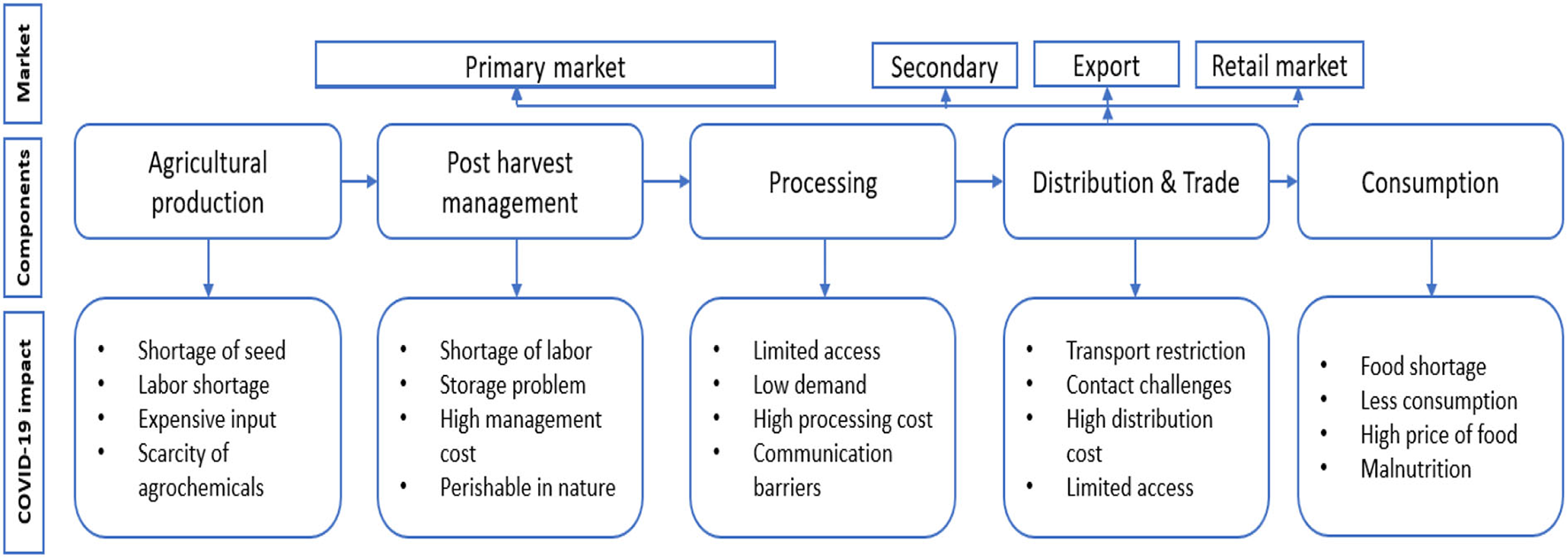
Disruption of the agri-food system.
4.2.1. Agricultural production
At the production level, travel constraints in the developing countries have limited farmers' access to inputs such as crop seeds, fertilizers, machinery, and agro-chemicals, hence boosting their prices (Priyadarshini and Abhilash, 2021). For example, with China's lockdown, a significant manufacturer of synthetic agricultural inputs has been unable to operate (Zhan and Chen, 2021). Additionally, movement restrictions have reduced the available labor force for harvesting and collection, resulting in a seasonal labor shortage and significant consequences on globalized food systems that rely heavily on seasonal migrant labor. This occurrence exemplified the inconsistencies inherent in worldwide agri-food systems. Bringing the product to market has been difficult due to various issues, including lockdown that barred rural marginal farmers from selling their agricultural products in city markets, decreases in government procurement, and the closure of restaurants and catering services (Zollet et al., 2021). It has been especially severe in livestock systems, where producers have been forced to abandon their goods due to low market demand (Zielińska-Chmielewska et al., 2021). Therefore, many production-related challenges come from food losses caused by a workforce shortage. Farmers were exposed to a high risk throughout the pandemic because of over rely on other related actors for inputs and sales. Fisheries have also been harmed substantially (Alam et al., 2022).
4.2.2. Post-harvest management
COVID-19 has increased the post-harvest management crises by adding a restriction on movement, labor shortage, high cost of instruments and labor, and contamination fears (Amjath-Babu et al., 2020). Proper storage conditions and food processing, which involves converting raw food ingredients into processed foods or altering perishable food via physical or chemical techniques, can be critical during the COVID-19 pandemic (Teng, 2020). This can result in considerable reductions in food loss and waste. Postharvest adaptation measures to COVID-19 should be implemented at the local level. To prevent post-harvest losses, farmers can enhance their storage capacity by utilizing hermetic packaging and triple bagging technologies to protect against post-harvest losses caused by insect and rodent infection (Kumari et al., 2021). Local food processing and preservation will be critical for food supply during a pandemic. Food preservation is concerned with extending food's shelf life while ensuring its safety (Sharma et al., 2021a). While lockdowns and border closures are used to combat COVID-19, locally produced and stored food can be used to fill the hole caused by the lockout limitations.
Increased village-level food stockpiling via community cereal banks is one method for preparing for and mitigating the negative impact of COVID-19 or other crises that could result in lockdown and mobility restrictions. Farmers' organizations can operate village-level communal storages to assure food security and availability for village residents and support farmers by providing a market for crop surpluses. Food supply and price coordination are necessary during and after pandemics such as COVID-19, and post-harvest interventions can help in this regard. However, these solutions must be effectively regulated to assure compliance and the desired benefits. Post-harvest interventions, such as adequate storage and agricultural processing, can help ensure a robust and equitable food supply during and after a pandemic crisis.
4.2.3. Processing
Agri-products are highly dependent on the ever-changing foodservice business. Restaurants, hotels, and canteens are closed worldwide due to lockdown, resulting in a drop in the activity of wholesalers for fish and other perishable products. Due to logistical constraints, raw material for frozen, pre-packaged, and packed products is unavailable. Due to transportation bottlenecks or delays, products are at risk of loss, quality degradation, and increased costs for related stakeholders. The virus's survival is facilitated by several factors, including terrible working conditions: crowded workplaces, and no social distance. The industry has restricted activity because of the labor shortage, with many workers becoming infected with the virus. Food processing business closures also knock on production since farmers cannot transport their produce for processing.
4.2.4. Distribution and trade
The main effects on the distribution sector have been mobility restrictions established to prevent the virus from spreading, such as export prohibitions enforced by numerous countries. Pandemics have disproportionately affected long supply chains, with logistical challenges and limited market access creating significant disruptions across the AFS. Limited logistics supply and distribution chain failures have also been documented in many locales, industries, and means of transportation, with diverse effects. For example, rail and truck transit in developing countries have not been dramatically reduced compared to before COVID-19 (van Berkum, 2021). Food chain interruptions frequently lead to unsold items and enhance food loss, particularly for perishable goods.
COVID-19 has had an effect on where and how customers purchase food. Food purchases shifted to supermarkets as restaurants, cafes, and other culinary establishments closed. As demand has grown, the retail sector has been put under severe strain, necessitating the need to secure appropriate supply levels. However, COVID-19 has benefited the retailing industry economically by significantly increasing demand and creating new job opportunities to meet the increased demand for shelf replenishment (Boughton et al., 2021). Small farmers who previously sold their products at open marketplaces could not do so, whereas the retailing business increased its sales due to the temporary closure of all other outlets.
Nonetheless, several products experienced shortages due to delivery interruptions, a lack of capacity to adjust to the system or a significant rise in demand (Hashem et al., 2021). Due to the risk associated with physically shopping at a grocery store, consumer purchasing patterns switched to online shopping. E-commerce and online deliveries have increased in popularity dramatically during pandemics.
4.2.5. Consumption
Food consumption patterns were observed to shift swiftly and unusually during pandemics. Buying non-perishable items recorded worldwide due to panic during the outbreak (Mishra et al., 2022). Consumer faith in local food has increased, especially in organic production and local food movements. People have increased their reliance on home cooking due to the lockdown and shutdown of online food delivery (Deconinck et al., 2020). After some panic buying during the pandemic, which resulted in shortages and higher prices for certain products, consumer behavior eventually stabilized. Nonetheless, most of the impact on food consumption is likely from the pandemic's socio-economic crisis, resulting in losing people's purchasing power. Indeed, food insecurity is predicted to worsen in the future (Puram et al., 2022).
4.3. Enhancing food insecurity
COVID-19 has greatly affected critical food security dimensions (availability, utilization, and stability), particularly a large impact on vulnerable populations (Xu et al., 2021). A COVID-19 pandemic might add 83 and 132 million individuals to the world's undernourished population in 2021, relying on the economic development scenario, mostly through effects on food availability and access (Amjath-Babu et al., 2020). COVID-19 concerns global food security, not only in impoverished nations. COVID-19 has a harmful influence on the supply and demand sides of AFS. If this is the case, demand and supply-side shocks are likely to occur concurrently. The consequences of a pandemic on food security vary by socioeconomic status and age group. Children and adolescents lost access to food due to school closures (Rivera-Ferre et al., 2021).
4.3.1. Food availability
The availability of food is known by the amount of food produced. It is frequently impacted when food production is reduced and food processing, distribution, and exchange are interrupted (Hossain, 2020). Worker infection directly affects food availability because it reduces labor availability across the food system, from farming to processing and retailing, and limited transportation (Ruben et al., 2021). Trade in seasonal and perishable items (such as vegetables, meat, milk, etc.) is particularly affected by restrictions on travel, quarantines, and self-isolation. The COVID-19 epidemic disrupted meat processing and marketing because of the market's strong concentration in a few companies, which resulted in major short-term difficulties (Teng, 2020). Fruits and milk are dumped by farmers in many countries because of decreased demand and/or supply chain problems.
4.3.2. Food access
The primary consequences stemmed from the closing of food markets, which severely curtailed consumers' alternatives, forcing them to rely mostly on supermarkets. Price changes in fresh produce also impacted food access (Ruben et al., 2021). However, there is no information to what extent the food retailers, who gained more leverage in the supply chain since they were often consumers' sole alternatives during the lock-down, took advantage of the epidemic by either boosting prices for consumers or cutting prices paid to suppliers. In some countries, such as India, food system inefficiencies and the contraction of food outlets into the major supermarkets led to substantial spikes in vegetable prices (Priyadarshini and Abhilash, 2021). In Lebanon, the financial crisis and COVID-19 increased the prices of all food products (Hebinck et al., 2021). Another indirect effect of the pandemic's socio-economic effects is food poverty, with thousands of individuals losing employment and income sources and, as a result, affecting their purchasing power to purchase food. The required number of persons needing food bank assistance increased, and the amount given to food aid increased proportionately (Teng, 2020). However, it is critical to analyze whether the growth in the number of people requesting food bank's assistance is also a result of government policies that fail to build social safety nets.
4.3.3. Food utilization
Throughout the epidemic, notably at the onset, customers' short-term panic behavior resulted in an upsurge in purchases of non-perishable goods. This could lead to dietary changes affecting food security (Teng, 2020). Thus, the effects on food intake were primarily due to increased consumption of processed, low-calorie foods. Besides dietary changes, weight gain may result from decreased possibilities for physical activity for adults and teens/children, resulting from lockdowns and mobility limitations measures (Verdouw et al., 2019). During the lockdown, adults consumed more food (particularly ‘comfort foods' like pastries, chocolate, and ice cream) and gained weight. The confinement assesses changes in physical activity and food behaviors that are detrimental to health. School closures, in particular, may have exacerbated childhood obesity and raised inequities in obesity risk, as children may have been exposed to more shelf-stable food and less physical exercise.
4.4. Enhancing agri-food system resilience through ICT
Individuals, communities, and governments all require the ability to respond to and recover from risks like COVID-19. A well-developed AFS can help solve conflicts like those in the Middle East and Africa (Heck et al., 2020). Agriculture research and development investments are crucial for attaining breakthroughs in nutrition and resistance to systemic shocks, particularly those generated by climate change. Social protection can help safeguard essential livelihoods, reduce risk and vulnerability, and promote growth, establishing the framework for a COVID-19 recovery. Since trade restrictions result in tighter markets and potentially exacerbate the current crisis, it is vital to maintain free, transparent, and fair trade in areas that benefit the poor and hungry. Women's empowerment is also vital for food and nutrition security globally. They contribute to responding to COVID-19-related shocks and connecting marginal farmers to customers and people's health and nutrition (Fan et al., 2021).
Scholars argue that digital technologies like mobile phones and the internet can be a potential solution to promote agri-food system resilience (Zhang et al., 2020). Because, in reality, traders are using technology more than farmers (Kabbiri et al., 2018). Unlike business people who use their phones to look up price information in various agri-food marketplaces, most farmers use their phones for everyday communication, such as keeping in touch with family and friends. According to research, farmers in underdeveloped countries seldom use mobile phones to keep track of pricing for various produce/commodities in various markets (Sharma et al., 2021b; Agnusdei et al., 2022). All stakeholders in the value chain may be connected due to the ubiquity of mobile phones in emerging countries (Alam and Khatun, 2021). Despite the obstacles to using agricultural ICTs, an increasing amount of data demonstrates that agricultural ICT access is a critical facilitator of agricultural sector reform (Gyenge et al., 2021; Yadav et al., 2022). Hashem et al. (2021) mentioned that social media and online platforms (26.3%) were the most often utilized agricultural ICTs, whereas robotic vehicles (6.6%) were less frequently employed. Farmers, as upstream agents, are vulnerable to exploitation by other chain participants, particularly intermediaries. They have no understanding of how markets work. So, they accept the price offered by the intermediaries. Farmers, like intermediaries, will be secure from exploitation provided they can maintain themselves connected to several markets (Delmuè et al., 2020). Furthermore, research has shown that mobile phones may boost the impact of developing country farmers in the value chain if properly exploited. They have the potential to become chain partners.
Consumers are expected to reduce discretionary spending throughout the recession. E-commerce can be enhanced by eliminating intermediaries, as has been extensively observed in numerous Asian countries. Digital technology adoption can effectively develop agri-food supply chain, enabling farmers to connect more efficiently with input suppliers and customers (Amjath-Babu et al., 2020). The epidemic's turmoil and transformation are projected to consolidate a large number of small farmers and businesses. The major financial services corporations will almost certainly extend their market share and ecosystem. A resilient supply chain can emerge as a result of digitalization, automation, robotization, artificial intelligence (Nayal et al., 2021), blockchain technology (Saurabh and Dey, 2021), and big data (Yadav et al., 2021), all of which will contribute to increased supply chain security, industrial efficiency, and transparency (Zhao et al., 2019). Supply chain is currently being evaluated to boost resilience. ICT- enabled agriculture information service system that possesses five key characteristics, including government-led, market-driven, community support, emergency and automated service systems, all of which contribute to enhancing agri-food system resilience in case of any emergency like COVID-19 pandemic. In Figure 3, we have presented how COVID-19 impacted on the agri-food system network among farmers—processing companies—traders—consumers. Agricultural ICTs remove challenges through information sharing, activity tracking, e-communication, intelligent production, quality control, and smart services.
Figure 3
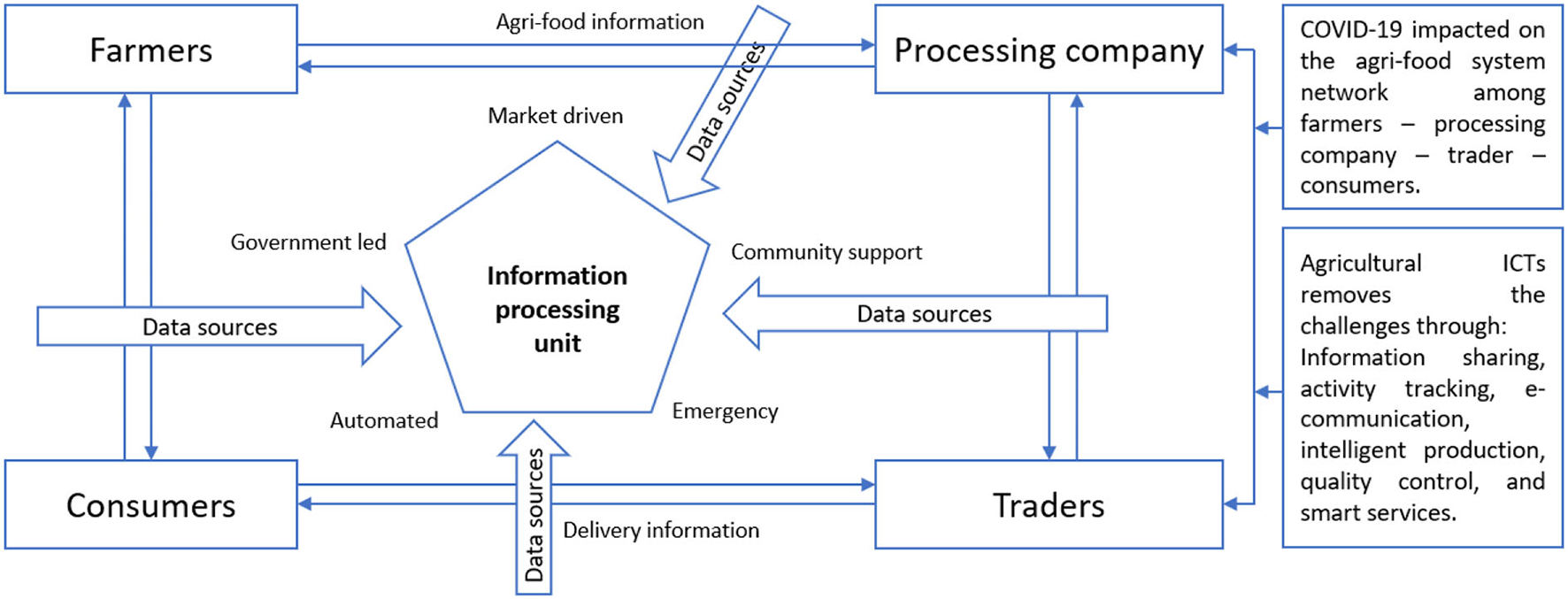
ICT-enabled agriculture information service system for agri-food resilience.
The coronavirus promotes digitized supply chains through resilience. By increasing the computerization of the agri-food system, buyers and sellers can communicate more swiftly when unforeseen events disrupt economic operations. Both reducing food waste and immediate direct hunger alleviation are commendable causes. However, such feats may be impossible to achieve unless and until track and trace technology is retooled with food safety and contract compliance in mind. Businesses seek to hide their data from any unexpected external visibility due to the public relations risk connected with food safety data and concerns about competitive advantage (Benyam et al., 2021). Certain track and trace technologies are well-known for their capacity to safeguard the privacy of sensitive data. Unless deliberate efforts are made to collect data and build intelligent collaboration across industry competitors, there is no assurance that digitized systems will be accessible or interoperable across enterprises to solve food redistribution during a crisis like COVID-19.
Efforts to digitize the supply chain are being led and implemented by industry titans such as Walmart and Cargill, which benefit from automated processes. Small farms and food enterprises may eventually suffer the expenses of digitalization, including complying with increased documentation needs imposed by buyers, distributors, and retailers, while reaping fewer benefits. Additionally, they may be subjected to increased surveillance. While the strength and originality of Blockchain technologies originate from their rejection of centralized (and thus susceptible) data storage, their adoption may increase power absorption in the agri-food industry. Due to overdependence on input, the agri-food system can easily disrupt with the interruption of the input supply. The pandemic shows the rigors of an agri-food system built on simplified supply chains and reducing larger processing and distribution facilities, such as meatpacking plants. Supply chain digitization can minimize food waste, redirect food to needy people, and even creatively provision smaller, more broadly distributed agri-food enterprises.
5. Conclusion
This study focused on the overall COVID-19's impact on agri-food system and ICT's role in enhancing agri-food system resilience in developing countries. This study has extracted the specific impacts on agricultural production in terms of input unavailability, shortage of labor, distribution limitation, limited processing and low market demands. Similarly, the impact of COVID-19 on the agri-food system network has been presented in terms of food availability, access and utilization. COVID-19 has presented agri-food system players with various challenges, including a scarcity of inputs, technical help, difficulty in marketing the product, transportation impediments, and low prices. Low output, unanticipated stock, and revenue loss are all consequences of these barriers. By disrupting both the demand and supply sides of the agri-food system networks, COVID-19's limitations have resulted in a major food shortfall. Food insecurity has afflicted a large number of small-scale farmers. Actors in the agri-food system are becoming less motivated to continue producing due to the cumulative effects. This article gives several proposals for tackling the issues posed by COVID-19 to enable stakeholders to deal with, adapting to, and creating resilience in agri-food system networks.
Policymakers should assess the long-term consequences of export controls and foreign trade restrictions. Farmers need regular access to seeds and inputs in the short term to produce food, feed their families, and sell surplus. Generally, crises appear to spur technical and system changes that stimulate innovation and, ideally, continue to increase resilience to future shocks. Overall, the findings of several studies undertaken following the pandemic outbreak indicate the urgent need to increase the use of modern agricultural ICTs on various production and social scales to fulfill the world's expanding need for agri-food system network.
Managerial implications
This study may assist all stakeholders in the agri-food system network (AFSN) in improving food system resilience. Successful strategy design can increase the accessibility and availability of products and services through effective information management, coordination, and collaboration. Businesses will be compelled to use various innovative technology to digitize processes. Additionally, the findings may help improve safety measures and alleviate labor constraints associated with the COVID-19 outbreak, which has created uncertain business conditions. This study's findings may aid in managing various sorts of interruptions in the AFSN, thereby minimizing losses to farmers, consumers, and other stakeholders.
Theoretical implications
This study may aid concerned stakeholders in identifying new potential disruptions and solutions to address growing corporate concerns. Additionally, this analysis demonstrates a mechanism for linking COVID-19 impacts with prospective ICT-based mitigation strategies. A similar method can also deal with supply chain disruptions in a different context.
Limitations and future research direction
This study relied on the existing literature's findings and insights to prioritize the consequences of COVID-19 on agri-food system. Similarly, to develop the framework, all relevant studies were carefully consulted to present key impacts properly. This study mainly focused on developing countries, limiting its generalization to developed countries. The proposed framework could be validated empirically. As part of this study's future scope, an empirical study can be conducted for an in-depth strategic analysis of important emergent concerns of post-pandemic in developing countries. Additionally, researchers may examine the effect of COVID-19 on the long-term viability of agri-food systems. The study could be expanded to examine the impact of COVID-19 on the long-term viability of operations. As a result, researchers may potentially suggest a pandemic decision-making framework. Measuring supply chain performance during a pandemic is another mostly unexplored topic. As such, it may be investigated further in future research.
Statements
Data availability statement
The original contributions presented in the study are included in the article/supplementary material, further inquiries can be directed to the corresponding author.
Author contributions
GA, MS, and HB initiated the study. GA, MK, and MS collected the data, processed the data, and performed analysis. GA, MK, MS, NJ, and HB wrote and revised the manuscript. All authors have read and agreed to the published version of the manuscript. All authors contributed to the article and approved the submitted version.
Funding
This study was conducted under the CGIAR COVID-19 Hub, which was supported by contributors to the CGIAR Trust Fund, and Grants-in-Aid for Scientific Research (KAKENHI) Scientific Research (C) 22K05851.
Conflict of interest
The authors declare that the research was conducted in the absence of any commercial or financial relationships that could be construed as a potential conflict of interest.
Publisher’s note
All claims expressed in this article are solely those of the authors and do not necessarily represent those of their affiliated organizations, or those of the publisher, the editors and the reviewers. Any product that may be evaluated in this article, or claim that may be made by its manufacturer, is not guaranteed or endorsed by the publisher.
References
1
AdayS.AdayM. S. (2020). Impact of COVID-19 on the food supply chain. Food Qual. Saf. 4, 167–180. 10.1093/fqsafe/fyaa024
2
AgnusdeiG. P.ColucciaB. (2022). Sustainable agrifood supply chains: bibliometric, network and content analyses. Sci. Total Environ. 824, 153704. 10.1016/j.scitotenv.2022.153704
3
AgnusdeiG. P.ColucciaB.PacificoA. M.MigliettaP. P. (2022). Towards circular economy in the agrifood sector: water footprint assessment of food loss in the Italian fruit and vegetable supply chains. Ecol. Indic. 137, 108781. 10.1016/j.ecolind.2022.108781
4
AlamG. M. M.AlamK.MushtaqS.FilhoW. L. (2018). How do climate change and associated hazards impact on the resilience of riparian rural communities in Bangladesh? Policy implications for livelihood development. Environ. Sci. Policy84, 7–18. 10.1016/j.envsci.2018.02.012
5
AlamG. M. M.KhatunM. N. (2021). Impact of COVID-19 on vegetable supply chain and food security: Empirical evidence from Bangladesh. PLoS ONE16, e0248120. 10.1371/journal.pone.0248120
6
AlamG. M. M.SarkerN. I.GattoM.BhandariH.NaziriD. (2022). Impacts of COVID-19 on the fisheries and aquaculture sector in developing countries and ways forward. Sustainability14, 1–13. 10.3390/su14031071
7
Amjath-BabuT. S.KrupnikT. J.ThilstedS. H.McDonaldA. J. (2020). Key indicators for monitoring food system disruptions caused by the COVID-19 pandemic: Insights from Bangladesh towards effective response. Food Secur. 12, 761–768. 10.1007/s12571-020-01083-2
8
ApostolopoulosN.RattenV.PetropoulosD.LiargovasP.AnastasopoulouE. (2021). Agri-food sector and entrepreneurship during the COVID-19 crisis: a systematic literature review and research agenda. Strateg. Chang. 30, 159–167. 10.1002/jsc.2400
9
AzedaC.GuiomarN.GodinhoS.MedeirosJ. P.Pinto-CorreiaT. (2021). The ambiguous role of agri-environment-climate measures in the safeguarding of High Nature Value Farming Systems: the case of the Montado in Portugal. Agric. Ecosyst. Environ. 319, 107562. 10.1016/j.agee.2021.107562
10
BarrettC. B.FanzoJ.HerreroM.Mason-D'CrozD.MathysA.ThorntonP.et al. (2021). COVID-19 pandemic lessons for agri-food systems innovation. Environ. Res. Lett. 16, 101001. 10.1088/1748-9326/ac25b9
11
BechtsisD.TsolakisN.IakovouE.VlachosD. (2022). Data-driven secure, resilient and sustainable supply chains: gaps, opportunities, and a new generalised data sharing and data monetisation framework. Int. J. Prod. Res. 60, 4397–4417. 10.1080/00207543.2021.1957506
12
Ben HassenT.El BilaliH.AllahyariM. S. (2020). Impact of COVID-19 on food behavior and consumption in Qatar. Sustainability12, 6973. 10.29117/quarfe.2020.0296
13
Ben HassenT.El BilaliH.AllahyariM. S.CharbelL. (2022). Food shopping, preparation and consumption practices in times of COVID-19: case of Lebanon. J. Agribus. Dev. Emerg. Econ. 12, 281–303. 10.1108/JADEE-01-2021-0022
14
BenedekZ.BaloghP. G.BaráthL.FertoI.LajosV.OrbánÉ.et al. (2020). The kings of the corona crisis: the impact of the outbreak of COVID-19 on small-scale producers in Hungary. EuroChoices19, 53–59. 10.1111/1746-692X.12292
15
BenyamA. (Addis)SomaT.FraserE. (2021). Digital agricultural technologies for food loss and waste prevention and reduction: global trends, adoption opportunities and barriers. J. Clean. Prod.323, 129099. 10.1016/j.jclepro.2021.129099
16
BoughtonD.GoebJ.LambrechtI.HeadeyD.TakeshimaH.MahrtK.et al. (2021). Impacts of COVID-19 on agricultural production and food systems in late transforming Southeast Asia: the case of Myanmar. Agric. Syst. 188, 103026. 10.1016/j.agsy.2020.103026
17
ColucciaB.AgnusdeiG. P.MigliettaP. P.De LeoF. (2021). Effects of COVID-19 on the Italian agri-food supply and value chains. Food Control123, 107839. 10.1016/j.foodcont.2020.107839
18
CoopmansI.BijttebierJ.MarchandF.MathijsE.MesselyL.RoggeE.et al. (2021). COVID-19 impacts on Flemish food supply chains and lessons for agri-food system resilience. Agric. Syst. 190, 103136. 10.1016/j.agsy.2021.103136
19
DeconinckK.AveryE.JacksonL. A. (2020). Food supply chains and COVID-19: impacts and policy lessons. EuroChoices19, 34–39. 10.1111/1746-692X.12297
20
DelmuèD. C. C.GranheimS. I. de O.OenemaS. (2020). Nutrition in a Digital World. United Nations System Standing Committee on Nutrition. Available online at: https://www.unscn.org/uploads/web/news/UNSCN-Nutrition-45-WEB.pdf (accessed September 3, 2022).
21
FanS.TengP.ChewP.SmithG.CopelandL. (2021). Food system resilience and COVID-19 - lessons from the Asian experience. Glob. Food Sec. 28, 100501. 10.1016/j.gfs.2021.100501
22
FeiS.NiJ.SantiniG. (2020). Local food systems and COVID-19: an insight from China. Resour. Conserv. Recycl. 162, 105022. 10.1016/j.resconrec.2020.105022
23
FinkA. (2005). Conducting Research Literature Reviews: From the Internet to Paper, 2nd Edn. Thousand Oaks, CA: Sage.
24
GalanakisC. M.RizouM.AldawoudT. M. S.UcakI.RowanN. J. (2021). Innovations and technology disruptions in the food sector within the COVID-19 pandemic and post-lockdown era. Trends Food Sci. Technol. 110, 193–200. 10.1016/j.tifs.2021.02.002
25
GamacheG.AngladeJ.FecheR.BarataudF.MignoletC.CoquilX. (2020). Can living labs offer a pathway to support local agri-food sustainability transitions?Environ. Innov. Soc. Transitions37, 93–107. 10.1016/j.eist.2020.08.002
26
GrasC.HernándezV. (2021). Global agri-food chains in times of COVID-19: the state, agribusiness, and agroecology in Argentina. J. Agrar. Chang. 21, 629–637. 10.1111/joac.12418
27
GyengeB.MátéZ.VidaI.BilanY.VasaL. (2021). A new strategic marketing management model for the specificities of E-commerce in the supply chain. J. Theor. Appl. Electron. Commer. Res. 16, 1136–1149. 10.3390/jtaer16040064
28
HashemN. M.HassaneinE. M.HocquetteJ.-F.Gonzalez-BulnesA.AhmedF. A.AttiaY. A.et al. (2021). Agro-livestock farming system sustainability during the COVID-19 era: a cross-sectional study on the role of information and communication technologies. Sustainability13, 6521. 10.3390/su13126521
29
HebinckA.KlerkxL.ElzenB.KokK. P. W.KönigB.SchillerK.et al. (2021). Beyond food for thought - directing sustainability transitions research to address fundamental change in agri-food systems. Environ. Innov. Soc. Transitions. 41, 81–85. 10.1016/j.eist.2021.10.003
30
HeckS.CamposH.BarkerI.OkelloJ. J.BaralA.BoyE.et al. (2020). Resilient agri-food systems for nutrition amidst COVID-19: evidence and lessons from food-based approaches to overcome micronutrient deficiency and rebuild livelihoods after crises. Food Secur. 12, 823–830. 10.1007/s12571-020-01067-2
31
HossainS. T. (2020). Impacts of COVID-19 on the agri-food sector: food security policies of Asian productivity organization members. J. Agric. Sci. Sri Lanka15, 116–132. 10.4038/jas.v15i2.8794
32
JaacksL. M.VeluguriD.SerupallyR.RoyA.PrabhakaranP.RamanjaneyuluG. (2021). Impact of the COVID-19 pandemic on agricultural production, livelihoods, and food security in India: baseline results of a phone survey. Food Secur.13, 1323–1339. 10.1007/s12571-021-01164-w
33
JoshiS.SharmaM. (2022). Digital technologies (DT) adoption in agri-food supply chains amidst COVID-19: an approach towards food security concerns in developing countries. J. Glob. Oper. Strateg. Sourc. 15, 262–282. 10.1108/JGOSS-02-2021-0014
34
KabbiriR.DoraM.KumarV.ElepuG.GellynckX. (2018). Mobile phone adoption in agri-food sector: Are farmers in Sub-Saharan Africa connected?Technol. Forecast. Soc. Change131, 253–261. 10.1016/j.techfore.2017.12.010
35
KhanS. A. R.RazzaqA.YuZ.ShahA.SharifA.JanjuaL. (2022). Disruption in food supply chain and undernourishment challenges: an empirical study in the context of Asian countries. Socioecon. Plann. Sci.82, 101033. 10.1016/j.seps.2021.101033
36
KumarA.PadheeA. K.KumarS. (2020). How Indian agriculture should change after COVID-19. Food Secur. 12, 837–840. 10.1007/s12571-020-01063-6
37
KumarP.Kumar SinghR. (2022). Strategic framework for developing resilience in Agri-Food Supply Chains during COVID-19 pandemic. Int. J. Logist. Res. Appl. 25, 1401–1424. 10.1080/13675567.2021.1908524
38
KumarV.Yetkin EkrenB.WangJ.ShahB.FredericoG. F. (2022). Investigating the impact of COVID-19 on sustainable food supply chains. J. Model. Manag.9–10. 10.1108/JM2-03-2022-0072
39
KumariS.VenkateshV. G.DeakinsE.ManiV.KambleS. (2021). Agriculture value chain sustainability during COVID-19: an emerging economy perspective. Int. J. Logist. Manag. 10.1108/IJLM-04-2021-0247
40
LiuW.ShaoX. F.WuC. H.QiaoP. (2021). A systematic literature review on applications of information and communication technologies and blockchain technologies for precision agriculture development. J. Clean. Prod. 298, 126763. 10.1016/j.jclepro.2021.126763
41
Lopez-RidauraS.SandersA.Barba-EscotoL.WiegelJ.Mayorga-CortesM.Gonzalez-EsquivelC.et al. (2021). Immediate impact of COVID-19 pandemic on farming systems in Central America and Mexico. Agric. Syst. 192, 103178. 10.1016/j.agsy.2021.103178
42
MahroofK.OmarA.KucukaltanB. (2022). Sustainable food supply chains: overcoming key challenges through digital technologies. Int. J. Product. Perform. Manag. 71, 981–1003. 10.1108/IJPPM-12-2020-0687
43
Martínez-AzúaB. C.López-SalazarP. E.Sama-BerrocalC. (2021). Impact of the covid-19 pandemic on agri-food companies in the region of extremadura (Spain). Agronomy11, 1–30. 10.3390/agronomy11050971
44
MeuwissenM. P. M.FeindtP. H.SlijperT.SpiegelA.FingerR.de MeyY.et al. (2021). Impact of COVID-19 on farming systems in Europe through the lens of resilience thinking. Agric. Syst. 191, 103152. 10.1016/j.agsy.2021.103152
45
MiddendorfB. J.TraoréH.MiddendorfG.JhaP. K.YonliD.PaléS.et al. (2022). Impacts of the COVID-19 pandemic on vegetable production systems and livelihoods: smallholder farmer experiences in Burkina Faso. Food Energy Secur. 11, 1–15. 10.1002/fes3.337
46
MirandaJ.PonceP.MolinaA.WrightP. (2019). Sensing, smart and sustainable technologies for Agri-Food 4.0. Comput. Ind. 108, 21–36. 10.1016/j.compind.2019.02.002
47
MishraR.SinghR. K.SubramanianN. (2022). Impact of disruptions in agri-food supply chain due to COVID-19 pandemic: contextualised resilience framework to achieve operational excellence. Int. J. Logist. Manag.33, 926–954. 10.1108/IJLM-01-2021-0043
48
MoherD.LiberatiA.TetzlaffJ.AltmanD. G. (2009). Preferred Reporting Items for Systematic Reviews and Meta-Analyses: The PRISMA Statement. PLoS Med. 6, e1000097. 10.1371/journal.pmed.1000097
49
MussellA.BilyeaT.HedleyD. (2020). Agri-Food Supply Chains and COVID-19: Balancing Resilience and Vulnerability. Available at: http://www.ufcw.ca/index.php?option=com_content&view=art
50
NayalK.RautR. D.QueirozM. M.YadavV. S.NarkhedeB. E. (2021). Are artificial intelligence and machine learning suitable to tackle the COVID-19 impacts? An agriculture supply chain perspective. Int. J. Logist. Manag.1–32. 10.1108/IJLM-01-2021-0002
51
NemesG.ChiffoleauY.ZolletS.CollisonM.BenedekZ.ColantuonoF.et al. (2021). The impact of COVID-19 on alternative and local food systems and the potential for the sustainability transition: Insights from 13 countries. Sustain. Prod. Consum. 28, 591–599. 10.1016/j.spc.2021.06.022
52
NordhagenS.IgbekaU.RowlandsH.ShineR. S.HeneghanE.TenchJ. (2021). COVID-19 and small enterprises in the food supply chain: early impacts and implications for longer-term food system resilience in low- and middle-income countries. World Dev. 141, 105405. 10.1016/j.worlddev.2021.105405
53
PaparellaA.PurgatorioC.Chaves-LópezC.RossiC.SerioA. (2022). The multifaceted relationship between the COVID-19 pandemic and the food system. Foods11, 2816. 10.3390/foods11182816
54
PriyadarshiniP.AbhilashP. C. (2021). Agri-food systems in India: Concerns and policy recommendations for building resilience in post COVID-19 pandemic times. Glob. Food Sec. 29, 100537. 10.1016/j.gfs.2021.100537
55
PuramP.GurumurthyA.NarmettaM.MorR. S. (2022). Last-mile challenges in on-demand food delivery during COVID-19: understanding the riders' perspective using a grounded theory approach. Int. J. Logist. Manag. 33, 901–925. 10.1108/IJLM-01-2021-0024
56
RasulG. (2021). A framework for addressing the twin challenges of COVID-19 and climate change for sustainable agriculture and food security in South Asia. Front. Sustain. Food Syst. 5, 1–16. 10.3389/fsufs.2021.679037
57
RejebA.RejebK.AbdollahiA.ZailaniS.IranmaneshM.GhobakhlooM. (2021). Digitalization in food supply chains: a bibliometric review and key-route main path analysis. Sustainability14, 83. 10.3390/su14010083
58
RejebA.RejebK.AppolloniA.IranmaneshM.TreiblmaierH.JagtapS. (2022). Exploring food supply chain trends in the COVID-19 era: a bibliometric review. Sustainability14, 12437. 10.3390/su141912437
59
Rivera-FerreM. G.López-i-GelatsF.RaveraF.Oteros-RozasE.di MassoM.BinimelisR.et al. (2021). The two-way relationship between food systems and the COVID19 pandemic: causes and consequences. Agric. Syst. 191, 103134. 10.1016/j.agsy.2021.103134
60
RowanN. J.GalanakisC. M. (2020). Unlocking challenges and opportunities presented by COVID-19 pandemic for cross-cutting disruption in agri-food and green deal innovations: Quo Vadis?Sci. Total Environ. 748, 141362. 10.1016/j.scitotenv.2020.141362
61
RubenR.CavatassiR.LipperL.SmalingE.WintersP. (2021). Towards food systems transformation-five paradigm shifts for healthy, inclusive and sustainable food systems. Food Secur. 13, 1423–1430. 10.1007/s12571-021-01221-4
62
SarkerM. N. I.RaihanM. L.PengY.ChumkyT.KamruzzamanM. M.ShouseR. C.et al. (2021). COVID-19: access to information, health service, daily life facility and risk perception of foreigners during coronavirus pandemic in South Korea. Arch. Med. Sci. 10.5114/aoms/141164
63
SaurabhS.DeyK. (2021). Blockchain technology adoption, architecture, and sustainable agri-food supply chains. J. Clean. Prod. 284, 124731. 10.1016/j.jclepro.2020.124731
64
SharmaR.SamadT. A.Chiappetta JabbourC. J.de QueirozM. J. (2021a). Leveraging blockchain technology for circularity in agricultural supply chains: evidence from a fast-growing economy. J. Enterp. Inf. Manag. 10.1108/JEIM-02-2021-0094
65
SharmaU.ChetriP.MinochaS.RoyA.HolkerT.PattA.et al. (2021b). Do phone-based short message services improve the uptake of agri-met advice by farmers? A case study in Haryana, India. Clim. Risk Manag. 33, 100321. 10.1016/j.crm.2021.100321
66
SidS.MorR. S.PanghalA.KumarD.GahlawatV. K. (2021). Agri-food supply chain and disruptions due to COVID-19: effects and strategies. Brazil. J. Oper. Prod. Manag. 18, 1–14. 10.14488/BJOPM.2021.031
67
SnowV.RodriguezD.DynesR.Kaye-BlakeW.MallawaarachchiT.ZydenbosS.et al. (2021). Resilience achieved via multiple compensating subsystems: the immediate impacts of COVID-19 control measures on the agri-food systems of Australia and New Zealand. Agric. Syst. 187, 103025. 10.1016/j.agsy.2020.103025
68
SottM. K.NascimentoL. da S.FoguesattoC. R.FurstenauL. B.FaccinK.ZawislakP. A.et al. (2021). A bibliometric network analysis of recent publications on digital agriculture to depict strategic themes and evolution structure. Sensors21, 7889. 10.3390/s21237889
69
TalukderB.VanLoonG. W.HipelK. W.OrbinskiJ. (2021). COVID-19's implications on agri-food systems and human health in Bangladesh. Curr. Res. Environ. Sustain. 3, 100033. 10.1016/j.crsust.2021.100033
70
TengP. (2020). Assuring food security in Singapore, a small island state facing COVID-19. Food Secur. 12, 801–804. 10.1007/s12571-020-01077-0
71
TrendovN.VarasS.ZengM. (2019). Digital Technologies in Agriculture and Rural Areas. FAO: Rome.
72
van BerkumS. (2021). How trade can drive inclusive and sustainable food system outcomes in food deficit low-income countries. Food Secur. 13, 1541–1554. 10.1007/s12571-021-01218-z
73
VerdouwC.SundmaekerH.TekinerdoganB.ConzonD.MontanaroT. (2019). Architecture framework of IoT-based food and farm systems: a multiple case study. Comput. Electron. Agric. 165, 104939. 10.1016/j.compag.2019.104939
74
WeersinkA.von MassowM.BannonN.IfftJ.MaplesJ.McEwanK.et al. (2021). COVID-19 and the agri-food system in the United States and Canada. Agric. Syst. 188, 103039. 10.1016/j.agsy.2020.103039
75
WorkieE.MackolilJ.NyikaJ.RamadasS. (2020). Deciphering the impact of COVID-19 pandemic on food security, agriculture, and livelihoods: a review of the evidence from developing countries. Curr. Res. Environ. Sustain. 2, 100014. 10.1016/j.crsust.2020.100014
76
XuZ.ElomriA.El OmriA.KerbacheL.LiuH. (2021). The compounded effects of COVID-19 pandemic and desert locust outbreak on food security and food supply chain. Sustain. 13, 1–17. 10.3390/su13031063
77
YadavS.LuthraS.GargD. (2021). Modelling Internet of things (IoT)-driven global sustainability in multi-tier agri-food supply chain under natural epidemic outbreaks. Environ. Sci. Pollut. Res. 28, 16633–16654. 10.1007/s11356-020-11676-1
78
YadavS.LuthraS.GargD. (2022). Internet of things (IoT) based coordination system in agri-food supply chain: development of an efficient framework using DEMATEL-ISM. Oper. Manag. Res. 15, 1–27. 10.1007/s12063-020-00164-x
79
ZhanY.ChenK. Z. (2021). Building resilient food system amidst COVID-19: responses and lessons from China. Agric. Syst. 190, 103102. 10.1016/j.agsy.2021.103102
80
ZhangY.DiaoX.ChenK. Z.RobinsonS.FanS. (2020). Impact of COVID-19 on China's macroeconomy and agri-food system - an economy-wide multiplier model analysis. China Agric. Econ. Rev. 12, 387–407. 10.1108/CAER-04-2020-0063
81
ZhangY.WangL.DuanY. (2016). Agricultural information dissemination using ICTs: a review and analysis of information dissemination models in China. Inf. Process. Agric. 3, 17–29. 10.1016/j.inpa.2015.11.002
82
ZhaoG.LiuS.LopezC.LuH.ElguetaS.ChenH.et al. (2019). Blockchain technology in agri-food value chain management: a synthesis of applications, challenges and future research directions. Comput. Ind. 109, 83–99. 10.1016/j.compind.2019.04.002
83
Zielińska-ChmielewskaA.Mruk-TomczakD.Wielicka-RegulskaA. (2021). Qualitative research on solving difficulties in maintaining continuity of food supply chain on the meat market during the COVID-19 pandemic. Energies14, 5634. 10.3390/en14185634
84
ZolletS.ColomboL.De MeoP.MarinoD.McGreevyS. R.McKeonN.et al. (2021). Towards territorially embedded, equitable and resilient food systems? Insights from grassroots responses to covid-19 in italy and the city region of rome. Sustainability13, 1–25. 10.3390/su13052425
Summary
Keywords
food system, vulnerability, resilience, food supply chain, value chain disruption
Citation
Alam GMM, Khatun MN, Sarker MNI, Joshi NP and Bhandari H (2023) Promoting agri-food systems resilience through ICT in developing countries amid COVID-19. Front. Sustain. Food Syst. 6:972667. doi: 10.3389/fsufs.2022.972667
Received
18 June 2022
Accepted
15 December 2022
Published
27 January 2023
Volume
6 - 2022
Edited by
Anne Namatsi Lutomia, Purdue University, United States
Reviewed by
László Vasa, Széchenyi István University, Hungary; Mirela Panait, Petroleum & Gas University of Ploieşti, Romania; Md. Sujahangir Kabir Sarkar, Patuakhali Science and Technology University, Bangladesh
Updates
Copyright
© 2023 Alam, Khatun, Sarker, Joshi and Bhandari.
This is an open-access article distributed under the terms of the Creative Commons Attribution License (CC BY). The use, distribution or reproduction in other forums is permitted, provided the original author(s) and the copyright owner(s) are credited and that the original publication in this journal is cited, in accordance with accepted academic practice. No use, distribution or reproduction is permitted which does not comply with these terms.
*Correspondence: Md Nazirul Islam Sarker ✉ sarker.usm@yahoo.com
This article was submitted to Social Movements, Institutions and Governance, a section of the journal Frontiers in Sustainable Food Systems
Disclaimer
All claims expressed in this article are solely those of the authors and do not necessarily represent those of their affiliated organizations, or those of the publisher, the editors and the reviewers. Any product that may be evaluated in this article or claim that may be made by its manufacturer is not guaranteed or endorsed by the publisher.