Abstract
Nature-based solutions (NbS) are currently being developed in various coffee agro-ecosystems. However, not all actions can and should be considered NbS. For this reason, the objective of this study was to answer two research questions: What are the challenges (problems) and criteria (prerequisites for defining NbS) that NbS must meet in order to be considered in traditional coffee agroecosystems in Mexico? What indicators (measurable elements) can be used to evaluate the effectiveness of NbS? The method consisted of a rapid systematic review in three search stages. The first stage identified the global challenges and criteria established to date for an action to be considered NbS. The second stage focused on identifying the main NbS challenges and criteria that address the different coffee agroecosystems in Mexico. The third stage focused on identifying useful indicators to assess the effectiveness of nature-based solutions (NbS) in the Mexican coffee sector. Articles obtained at each stage were systematized using the Preferred Reporting Items for Systematic Reviews and Meta-Analyses (PRISMA) statement and analyzed using the Systematic Review Accelerator software, following Creswell’s framework. We found that shade coffee agroecosystems in Mexico currently address 12 NbS challenges (including integrated water management, climate resilience, environmental degradation or biodiversity loss) and meet 14 of the 18 NbS criteria. The type of agroecosystem management influenced the degree of compliance with the established criteria, so it is necessary to assess their effectiveness. This research proposes 48 indicators to evaluate the effectiveness of NbS in the Mexican coffee sector. The selection and adjustment of indicators made in this study can help to fill the information gap that currently exists in Mexico. NbS can contribute to mitigate the challenges facing Latin America and promote sustainable development. However, they require rigorous planning and management to ensure their effectiveness and durability, and policy makers are invited to look more closely at this issue.
1 Introduction
Globally, there is an increasing interest in the design and use of nature-based solutions (NbS) due to their high potential for biodiversity conservation and the generation of multiple benefits that help communities build resilience in a way that provides “the greatest benefit for the least cost” (Boyle and Kuhl, 2021; Cohen-Shacham et al., 2019). Recently, the United Nations Environment Assembly, in its Fifth Session (UNEA-5), defined NbS as “actions to protect, conserve, restore, use, and sustainably manage natural or modified resources, such as terrestrial ecosystems, freshwater, coastal and marine environments that address social, economic and environmental challenges effectively and adaptively, while providing human well-being, multiple ecosystem services and resilience and biodiversity benefits” (United Nations Environment Programme, 2022).
These NbS actions (e.g., protection, conservation, restoration, and productive management) must respond to and meet several challenges and criteria (Sowińska-Świerkosz and García, 2022). Challenges refer to critical problems (environmental, social, or economic) that need to be addressed at both local and global levels (Del Pino and Marquez, 2023). The criteria are defined as a condition that an action must be met to be considered as NbS (International Union for Conservation of Nature, 2020).
In Mexico, the use of NbS has been promoted in recent years, particularly in addressing hydrometeorological hazards in the urban sector (Debele et al., 2023; Del Pino and Marquez, 2023). However, the adoption of NbS in the productive sector is still under development, and further efforts are needed to detect which management actions in the productive sectors can be considered NbS (Del Pino and Marquez, 2023). Such is the case of the different traditional coffee agroecosystems, which are considered a fundamental strategic activity for rural producers and at least 30 indigenous groups in Mexico (Centro de Estudios para el Desarrollo Rural Sustentable y la Soberanía Alimentaria, 2020).
Despite the growing interest in the adoption of NbS (Key et al., 2022), there is still no entirely accepted global standard on the challenges to be addressed, the criteria to be met, and the assessment of their effectiveness, both socio-ecological and socio-economic in responding to an impact, including human and financial capital, as well as the cost/benefit ratio that could be obtained in different production systems, including coffee agroecosystems (Palomo et al., 2021; Nelson et al., 2020; Chausson et al., 2020). The above conditions have limited their adoption in national and international policies and consistent implementation and have received little funding (Reid et al., 2019).
Traditional coffee agroecosystems in Mexico need to be evaluated to prove their effectiveness. However, adopting a methodology and identifying appropriate indicators for an adequate evaluation has been challenging (Dumitru and Wendling, 2021). The term ‘indicator’ in this context is defined as a measurable element for assessing the effectiveness of NbS (Heink and Kowarik, 2010). The lack of globally standardized methodologies and indicators can lead to a certain level of mistrust in the effectiveness of NbS in achieving the objectives for both nature and people and in the clarity of the concept (Kumar et al., 2020). This lack of standardization may be due to the complexity of coffee production systems, implementation scales, stakeholder interests, conflicting objectives, or lack of data (Rödl and Arlati, 2022).
The analysis of which coffee agroecosystems can be considered as NbS, as well as clarity on the challenges and criteria that they must address and meet, can help in the identification and construction of indicators that allow for the implementation and evaluation of the effectiveness of NbS in different coffee agroecosystems in Mexico for their improvement, maintenance, and replication (Sowińska-Świerkosz and García, 2021; Dumitru and Wendling, 2021). It also gives producers access to economic resources and international markets, which can translate into improved incomes. Therefore, further research on the subject is needed (Escamilla-Prado et al., 2021).
This rapid systematic review aimed to contribute to the analysis of NbS in different coffee agroecosystems in Mexico by answering the following research questions: (1) What are the main challenges and criteria that should be considered in different traditional coffee agroecosystems in Mexico?; and (2) What are the main indicators that can be used to evaluate the effectiveness of NbS in coffee agroecosystems in Mexico? The purpose of this study is to demonstrate that strategies that can be considered NbS in coffee farming address various global challenges.
2 Methods
2.1 Search approach and strategies
A rapid systematic review approach was used based on a synthesis and review of the main findings of articles published in recent years (Tricco et al., 2015). A rapid systematic review was chosen over a comprehensive systematic review because NbS has been studied more extensively in the last decade, and its effectiveness needs to be assessed to provide timely guidance for decision-makers to respond promptly to the current challenges facing coffee farming. This review consisted of three search stages in the Scopus, SciELO, and Web of Science repositories. The articles obtained at each stage were systematized according to the Preferred Reporting Items for Systematic Reviews and Meta-Analyses (PRISMA) statement, which involved transparently selecting relevant articles and minimizing bias. Scientific articles in Spanish and English from indexed journals were included, as well as articles published within the time period determined in each search stage and related to the topic of interest. Articles were excluded if they were not in English or Spanish, if they were published in years other than the time period selected in each search stage, and if they did not fit the topic of interest. The topic of interest, time period, keywords, and expressions used for each search stage are listed below:
Stage 1: Identify the global challenges and criteria that have been established so far for an action to be considered as NbS. The key search words for this stage were: “Nature-based Solutions,” “Challenges,” and “Criteria.” The time period was from 2015 to 2024. The expression used for the search was: ((TITLE-ABS-KEY (“nature-based solutions”) AND TITLE-ABS-KEY (Challenges) AND TITLE-ABS KEY (criteria)) AND PUBYEAR > 2015 AND PUBYEAR < 2024). This first stage of the search was the basis for identifying the keywords for the second stage.
Stage 2: Detect the main challenges and criteria that address the different coffee agroecosystems in Mexico and carry out a qualitative analysis on compliance with NbS criteria. The search period was extended from 2005 to 2024 due to the scarce information found in the last 10 years. The key words were: “Shade coffee,” “Mexico,” “biodiversity,” “adaptation,” “mitigation,” “risk reduction,” “ecosystem services,” “water management,” “resilience,” “food security,” “governance,” “sustainability,” “human wellness,” “social organization,” “economy.” The expression used for the search was: ((TITLE-ABS-KEY (Shade coffee) AND TITLE-ABS-KEY (coffee in full sun) AND TITLE-ABS-KEY(Mexico) OR TITLE-ABS-KEY(biodiversity)) OR TITLE-ABS-KEY (adaptation)) OR TITLE-ABS-KEY(mitigation)) OR TITLE-ABS-KEY(risk reduction)) OR TITLE-ABS-KEY(ecosystem services)) OR TITLE-ABS-KEY(water management)) OR TITLE-ABS-KEY(resilience)) OR TITLE-ABS-KEY(food security)) OR TITLE-ABS-KEY(governance)) OR TITLE-ABS-KEY(sustainability)) OR TITLE-ABS-KEY(human wellness)) OR TITLE-ABS-KEY(social organization)) OR TITLE-ABS-KEY(economy)) AND PUBYEAR > 2005 AND PUBYEAR < 2024).
Stage 3: Identify indicators useful for assessing NbS’s effectiveness in the Mexican coffee sector. The search period was from 2015 to 2024. The words used were: “Nature-based Solutions,” “shade coffee,” “coffee in full sun,” “indicators,” “evaluation,” and “Mexico.” The expression used for the search was: ((TITLE-ABS-KEY (“nature-based solutions”) AND TITLE-ABS-KEY (shade coffee) AND TITLE-ABS-KEY (coffee in full sun) AND TITLE-ABS KEY (indicators)) AND TITLE-ABS KEY (evaluation)) AND TITLE-ABS KEY (Mexico)) PUBYEAR > 2015 AND PUBYEAR < 2024). In this initial search for Stage 3, not enough studies were found in Mexico, so the search was expanded globally to include all productive sectors. The words used were: “Nature-based Solutions,” “indicators,” and “evaluation.” The expression used for the search was: ((TITLE-ABS-KEY (“nature-based solutions”) AND TITLE-ABS KEY (indicators)) AND TITLE-ABS KEY (evaluation)) PUBYEAR > 2015 AND PUBYEAR < 2024).
2.2 Analysis of the information
For each stage of the search, duplicate studies were identified and removed using the Systematic Review Accelerator (SRA) software. Non-duplicated articles were analyzed using the Creswell framework (Creswell, 2012), which consisted of a three-level approach: (1) A quick scan and understanding of the abstracts of each article and official information were performed to discard those that did not clearly answer the topic of interest of each search stage and the research questions posed in this study. (2) From the remaining articles and reports, the information was organized to identify the central idea of each article. In Stage 3, the information was sorted by region to perform a spatial distribution of the reviewed articles, which evaluated the effectiveness of NbS in different sectors globally. (3) Finally, with the organized information, the frequency of mention of the challenges, criteria, methodologies, and indicators most used by the selected articles was determined using SRA.
3 Results
Following the search criteria and data analysis, 34 articles were selected in the first stage (Figure 1a; Appendix 1). In the second stage, 179 articles addressed some of the challenges of NbS in the different coffee agroecosystems in Mexico, and only 13 of them clearly demonstrated NbS criteria (Figure 1b; Appendix 2). Meanwhile, in the third stage, 32 articles were selected that evaluated the effectiveness of NbS using indicators in any productive sector (Figure 1c; Appendix 3). In Mexico, no studies related to the topic were found.
Figure 1

PRISMA flow diagram of selected studies (a) First search step, (b) Second search step, (c) Third search step.
3.1 First stage
What are the challenges faced by NbS and the criteria they should consider?
Figure 2 shows the frequency of mention of the global challenges most frequently used by the articles selected in this rapid systematic review. The challenges of economic and social development, integrated water management, as well as environmental degradation and biodiversity loss, were the most frequently addressed. On the other hand, food security, governance, participatory planning, and disaster risk reduction were the least frequently mentioned by the articles studied (Figure 2).
Figure 2
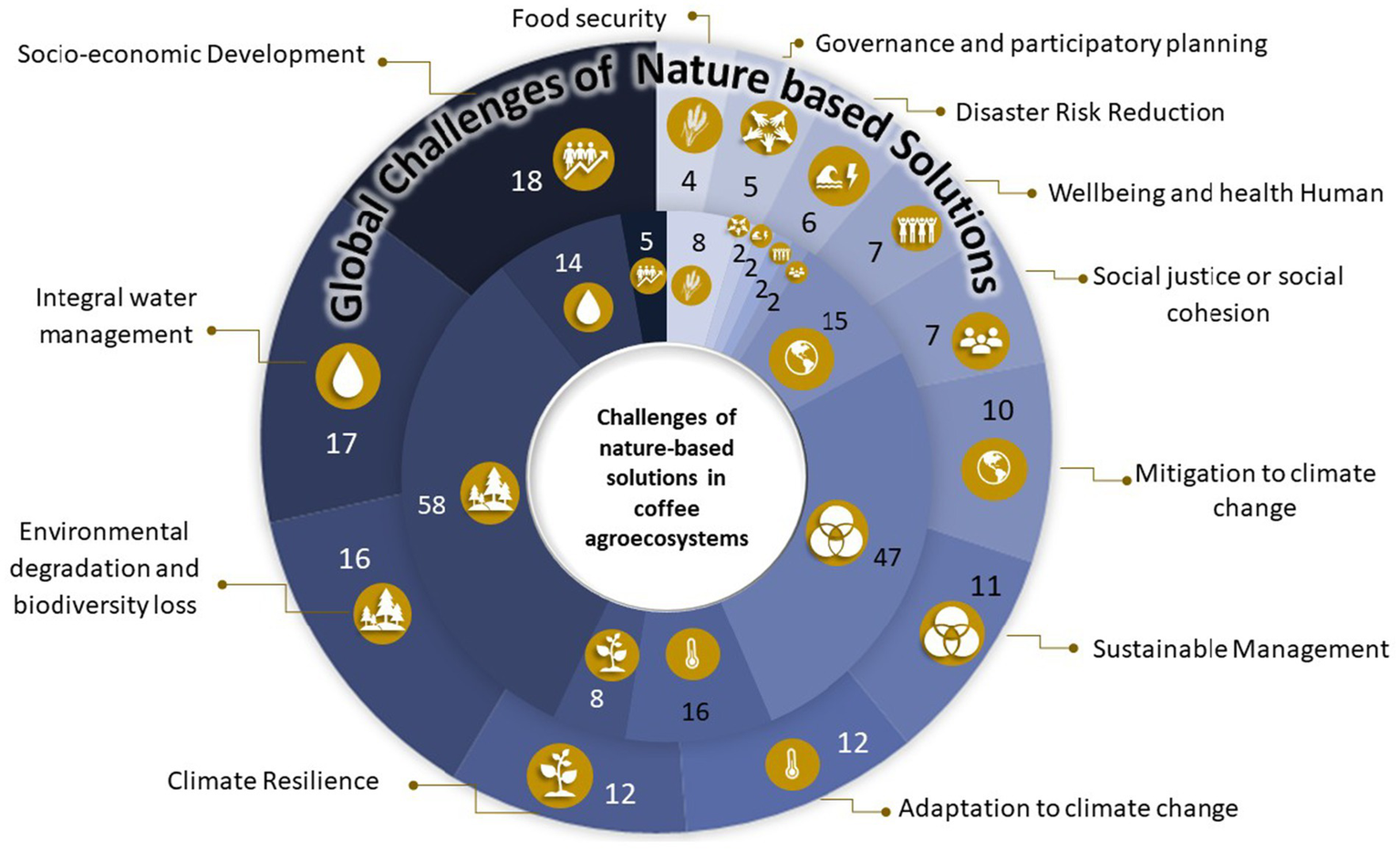
Frequency of mention of challenges afforded by nature-based solutions globally (external circle) and in coffee agroecosystems in Mexico (internal circle).
For Kumar et al. (2020), NbS should address the challenges of food security, human wellbeing, environmental degradation, biodiversity loss, and integrated water management. Dumitru and Wendling (2021) agree that NbS should focus on environmental degradation and biodiversity loss, but mention that participatory governance and planning, social justice or social cohesion, and climate resilience are also important. On the other hand, Nika et al. (2020), Raymond et al. (2017), the European Commission (2021), and the International Union for Conservation of Nature (2020) agree that NbS should address multiple challenges related to biodiversity, water management, climate change mitigation and adaptation, climate resilience, human wellbeing, food security, disaster risk reduction, and maintaining sustainable community development considering governance and economic development.
We found 18 criteria that have been defined in the selected literature for an action to be considered as NbS (Table 1). NbS actions must meet one or more challenges faced by stakeholders, taking into account the social, economic, and ecological contexts (International Union for Conservation of Nature, 2020), so they must necessarily have a holistic approach (Arfaoui et al., 2022; Raymond et al., 2017; Kumar et al., 2020), where planning and decision-making is carried out jointly with all stakeholders (Arfaoui et al., 2022). When implemented at the landscape level (Ingegnoli, 2015) at different scales and dimensions (social, economic, and environmental processes; International Union for Conservation of Nature, 2020), alone or synergistically with other solutions (Shah et al., 2023), including civil engineering measures (Bayulken et al., 2021; Arfaoui et al., 2022; Key et al., 2022), NbS can address disaster risk related to different hydro-meteorological hazards affecting the system (Andrés et al., 2021; Bayulken et al., 2021; Shah et al., 2023).
Table 1
| Criteria | |
|---|---|
|
|
|
|
|
|
|
|
|
|
|
|
|
|
|
|
|
|
Criteria identified in this review for an action to be considered NbS.
Another fundamental criterion of NbS is that they must enhance the biological diversity and ecological integrity of the intervention area and its surroundings, as well as avoid further fragmentation of an ecosystem (International Union for Conservation of Nature, 2020). They are, therefore, obliged to maintain, enhance, and restore biodiversity and ecosystems in the long term (Viti et al., 2022; Key et al., 2022) through the sustainable management of natural and modified ecosystems (Gonzalez-Ollauri et al., 2021; Viti et al., 2022) so that ecosystem services are maintained (Bayulken et al., 2021). By generating a range of goods, ecosystem services (Gonzalez-Ollauri et al., 2021), landscape value, and cultural heritage (Shah et al., 2023), NbS are considered multifunctional (Nika et al., 2020).
However, the trade-offs between the different parts of the system are not always the same, as in natural or modified systems where an NbS action occurs, unintended consequences could be created, so a structured and iterative process must be carried out at the time of implementation to reduce uncertainty (van der Meulen et al., 2022) and thus avoid potential externalities and negative trade-offs (Pogliani et al., 2023). NbS must recognize and respect stakeholders’ cultural practices and land use (de Lima et al., 2022), in addition to requiring the participation and knowledge of multiple societal, scientific, and political actors (Kumar et al., 2020). Finally, NbS must be economically viable, capable of generating benefits, and have sufficient profitability to compensate for the risks incurred (Escamilla-Prado et al., 2021; Ruiz-García et al., 2020b; Ruiz-García et al., 2020a; Albers et al., 2021).
3.2 Second stage
What are the NbS for traditional coffee agroecosystems in Mexico?
So far, five coffee agroecosystems are recognized in Mexico: (1) Rustic polyculture (RP); (2) Diverse polyculture (DP); (3) Simple polyculture (SP); (4) Simplified shade (SS); and (5) Full sun cultivation (Moguel and Toledo, 1999; Hernández-Martínez et al., 2009). The first four agroecosystems use native or introduced trees and shrubs to provide shade for various varieties of Arabica coffee (Coffea arabica L.) with varying densities and management methods. In full-sun cultivation, however, robusta coffee (Coffea canephora P.) is primarily used. This coffee does not require shade for its development but requires a predominant use of chemical fertilizers, herbicides, and pesticides (Hernández-Martínez et al., 2009).
According to our results, we found that coffee agroecosystems using trees and shrubs of native or introduced species for the shade ones (RP, DP, SP, and SS) address 12 challenges identified in the first stage of the search (Figure 2). However, most of the articles found only used the term ‘shade coffee’, without differentiating between RP, DP, SP, and SS agroecosystems, which made it impossible to differentiate the challenges by type of agroecosystem using trees and shrubs for shade coffee. Environmental degradation and biodiversity loss were the most studied challenges by the analyzed articles (58 articles), followed by sustainable management of the system (47 articles; Figure 2).
The challenges of social justice and cohesion, governance and participatory planning, human wellbeing and health, and disaster risk reduction (2 articles per challenge) have been seldom studied in shaded coffee systems in Mexico (RP, DP, SP, and SS; Figure 2). As for full-sun coffee cultivation, it was found only to have the potential to address the food security challenge (Morales et al., 2022). Regarding the criteria that an NbS must fulfill, evidence showed that the different shaded coffee agroecosystems (RP, DP, SP, and SS) fulfill 14 of the 18 criteria identified in the first search. Full-sun coffee cultivation fulfills 5 of the 18 criteria (Table 2).
Table 2
| Criteria | Coffee agroecosystem | References | ||||
|---|---|---|---|---|---|---|
| RP | DP | SP | SS | SC | ||
| √ | √ | √ | √ | √ | Koutouleas et al. (2022) |
| √ | √ | √ | √ | √ | Libert et al. (2020) |
| √ | √ | √ | √ | √ | Libert et al. (2020); Escamilla-Prado et al. (2021) |
| --- | --- | --- | --- | --- | --- |
| √ | √ | √ | √ | X | Koutouleas et al. (2022); Mayorga et al. (2022) |
| √ | √ | √ | √ | X | Teixeira et al. (2022) |
| --- | --- | --- | --- | --- | --- |
| --- | --- | --- | --- | --- | --- |
| √ | √ | √ | √ | X | Escobar-Ocampo et al. (2023); Alvarez-Alvarez et al. (2021) |
| √ | √ | √ | √ | X | Teixeira et al. (2022); Mayorga et al. (2022) |
| √ | √ | √ | √ | X | Villarreyna et al. (2020) |
| √ | √ | √ | √ | X | Tschora and Cherubini (2020); Villarreyna et al. (2020) |
| --- | --- | --- | --- | --- | --- |
| √ | √ | √ | √ | X | Mayorga et al. (2022); Escamilla-Prado et al. (2021) |
| √ | √ | √ | √ | √ | Ruiz-García et al. (2021); Escamilla-Prado et al. (2021) |
| √ | √ | √ | √ | X | Lamond et al. (2019) |
| √ | √ | √ | √ | √ | Ruiz-García et al. (2021); Escamilla-Prado et al. (2021) |
| √ | √ | √ | √ | √ | Albers et al. (2021) |
NbS criteria that different coffee agroecosystems in Mexico meet.
Meets the criterion = √; does not meet the criterion = X; no evidence = ---. RP, Rustic polyculture; DP, Diverse polyculture; SP, Simple polyculture; SS, Simplified shade; SC, Full sun cultivation.
3.3 Third stage
What indicators can be used for the evaluation of the effectiveness of NbS in traditional coffee cultivation in Mexico?
There is still no standardized methodology to assess the effectiveness and degree of compliance with the challenges and criteria of NbS in production systems and, particularly, in Mexico’s coffee agroecosystem. In spite of this, in recent years, various international specialists have taken up the subject to provide key points that help in the evaluation of NbS at the local and regional levels. The EKLIPSE approach (Raymond et al., 2017) is one of the most cited methodologies. This framework generated a tool to plan methods and indicators for assessing NbS in the urban sector. Palomo et al. (2021) suggested a three-sphere methodology: (1) identification of knowledge, values, and visions of stakeholders; (2) consideration of rules, economic instruments, and governance; and (3) measuring behaviors, management, and technical responses. Rödl and Arlati (2022) proposed a four-step methodology for the assessment of NbS: (1) description of the object under assessment; (2) determination of suitable indicators; (3) data collection to quantify the indicators; and (4) participatory assessment of NbS.
It was identified that the European Union has worked with greater impetus in the evaluation of the effectiveness of NbS, mainly to address the challenge of disaster risk reduction in the urban sector, through the use of socioeconomic performance indicators and use of efficiency key indicators (67% of the studies analyzed; Figure 3). Socioeconomic performance indicators evaluate the social and economic development (using quantitative or qualitative metrics) of an activity in a territory during a given period (Caroppi et al., 2023), whereas efficiency key indicators allow to evaluate the progress of an activity (Mosca et al., 2023). As for Latin America, Del Pino and Marquez (2023) found that non-governmental organizations (NGOs) are the primary entities promoting the use of NbS. The main challenge that has been addressed is that of mitigation and adaptation to climate change in the urban sector (Figure 3). To evaluate the effectiveness of these NbS, Del Pino and Marquez (2023) used impact-oriented indicators, which relate quantitative values with qualitative results to express the resulting changes caused by the establishment of NbS (Del Pino and Marquez, 2023).
Figure 3
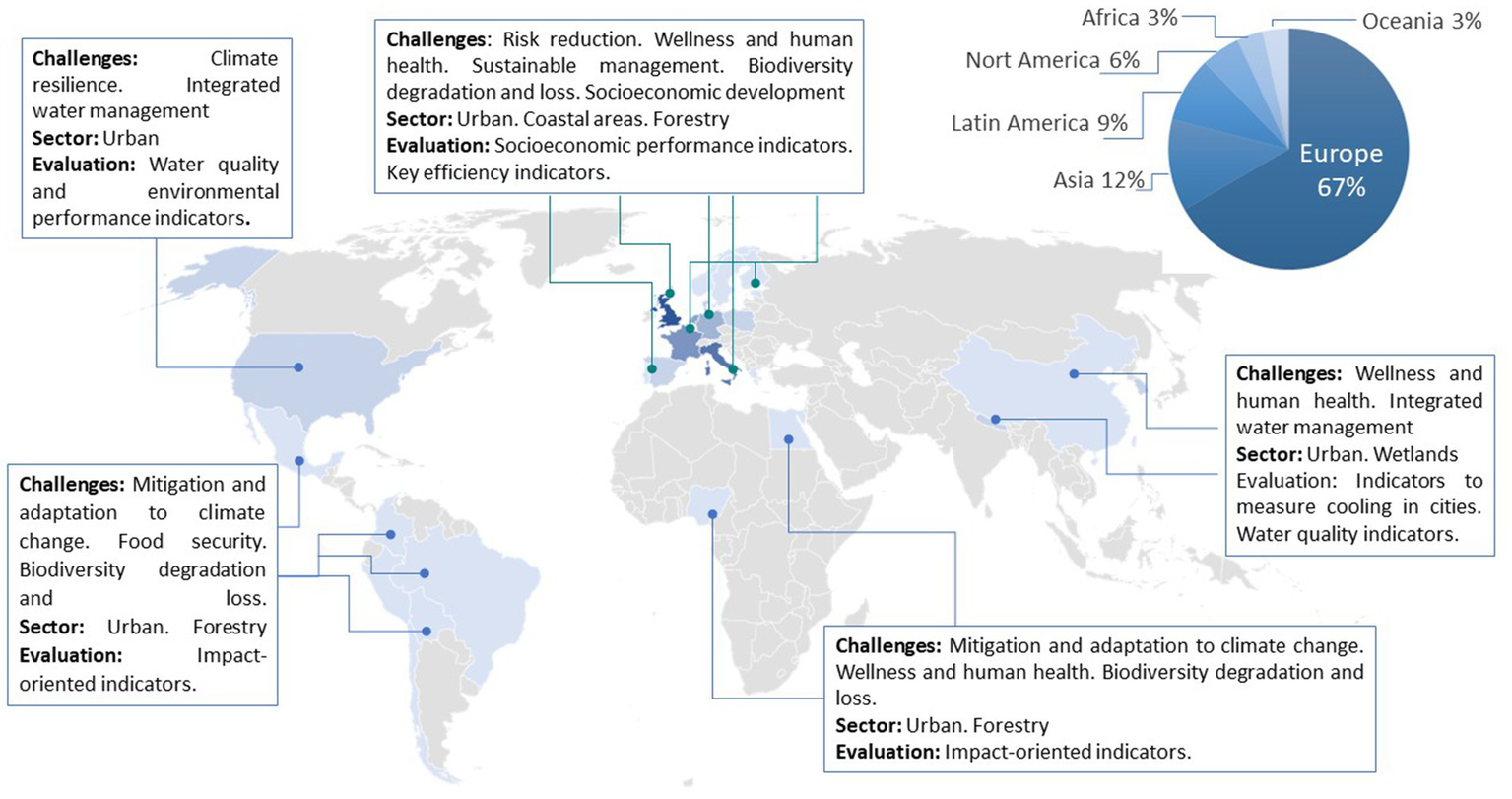
Spatial distribution of the reviewed articles that assessed the effectiveness of NbS in different sectors using indicators to address an NbS challenge. The color shades in the map reflect the relative number of articles per country. The graph at the top right of the figure indicates the percentage of articles reviewed per region.
From the articles selected in this third stage, an analysis of the indicators used to evaluate the effectiveness of NbS in the different sectors was carried out. Through this analysis, 33 indicators were identified with the potential to be used in the evaluation of the effectiveness of NbS in the different coffee agroecosystems. These indicators were adjusted, taking into account the challenges and criteria identified in the first stage of the search (Table 3).
Table 3
| Challenge | Criteria* | Selected indicators | Unit of measure | Description |
|---|---|---|---|---|
| Number of challenges addressed by the coffee agroecosystem** | Number | Evaluate the effectiveness of an NbS in addressing more than one local problem in the coffee agroecosystem. | |
| --- | ---- | ----- | |
| Integrated water management |
| Number of the producer’s rainwater harvesting works in the coffee agroecosystem (Gupta et al., 2019). | Number | Number of rainwater harvesting works present in the coffee agroecosystem, such as ditches, trenches, blind vats, terraces, embankments, ponds, irrigation ditches, dams, etc. (Bolaños et al., 2014). |
| Percentage of producers who carry out water management and sanitation derived from the processing of coffee fruit (Andrés et al., 2021) | % | Rationalization of water consumption in the stages of demucilagination, washing, and classification of coffee and the cleaning of the processing area, either by means of dry hoppers, demucilagination by natural or mechanical fermentation, pulping of the fruits without water, and their transportation by gravity to the pits. Water treatment by means of anaerobic digestion (González-Freire and Martínez-Hernández, 2022) | ||
| Disaster risk reduction |
| Number of climate-smart infrastructure/works developed to reduce the risk of disasters in coffee plantations (Del Pino and Marquez, 2023). | Number | Works to reduce soil drag and sliding, as well as water runoff in coffee agroecosystems with slopes between 15 and 60% (e.g., slope stability, dams for silt control, wire mesh dams, andirons, branches, arranged stone, tires, masonry, gabions, and other; Bolaños et al., 2014). |
| Number application of formal and informal plans, programs, or schemes implemented in the community for land use planning in response to natural disasters (Del Pino and Marquez, 2023). | Number | Consider community norms for developing or participating in local hazard diagnosis and vulnerability assessments, raising awareness of risks and practical prevention and mitigation measures, maintaining public infrastructure, creating rescue and volunteer committees, providing shelter, food, water, and other life-saving assistance during emergencies, and helping to restore livelihoods after a disaster (Food and Agriculture Orgnization, 2015) | ||
| Environmental degradation and loss of biodiversity |
| Total species richness (RI) in the coffee agroecosystem (Key et al., 2022; Andrés et al., 2021). | Number | Total number of native tree and shrub species and/or multiple-use species (grains, vegetables, mushrooms, fruit trees, forage grasses, ornamentals, beekeeping, edible insects, and others) present in the coffee agroecosystem (Manson et al., 2018). |
| Relative Importance Value (RIV) Index in the coffee agroecosystem (Raymond et al., 2017; Hernández-Martínez et al., 2009). | % | The indicator defines which of the species present contribute to the character and structure of the coffee agroecosystem (Manson et al., 2018). | ||
| Landscape diversity | Shannon-Weaver Index | Presence of diverse natural vegetation around the coffee agroecosystem (e.g., vegetation strips, forests, or remnants of natural vegetation, etc.; Nicholls et al., 2020). | ||
| Percentage of soil organic matter in the coffee agroecosystem (Andrés et al., 2021). | % | Measures the amount of organic matter present in the soil of the coffee agroecosystem. Organic matter is a fundamental component of the soil that is of great importance for plant growth and soil fertility (Food and Agriculture Orgnization, 2015). | ||
| Soil biological diversity index in the coffee agroecosystem (Gonzalez-Ollauri et al., 2021). | Shannon-Weaver Index | It reflects the variety of living organisms present in the soil of the coffee agroecosystem. It includes organisms, such as microorganisms (e.g., bacteria, fungi, protozoa, and nematodes), mesofauna (e.g., mites and springtails), and macrofauna (e.g., earthworms and termites; Food and Agriculture Orgnization, 2015). | ||
| Total of coffee producers who carry out practices for the conservation of biological diversity (Del Pino and Marquez, 2023). | % | It includes conservation and diversification practices for native trees that form various strata (tree, shrub, and herbaceous) within the coffee plantation’s agroecosystem, low intensity in the use of agrochemicals, avoiding the removal of orchids and other species that grow on tree branches, maintaining organic matter in the soil, not clearing the edges or boundaries of the coffee farm, agreeing to community forest reserves, etc. (Manson et al., 2018). | |
| Percentage of producers who carry out soil management and conservation practices in the coffee agroecosystem (Núñez et al., 2023; Gupta et al., 2019). | % | Consider conservation tillage practices, use of cover crops, application of biochar, compost, crop waste, humus, mulches, green manures, etc. (Bolaños et al., 2014). | ||
| Sustainable management—Human health and well-being |
| Percentage of producers who use sustainable management of organic fertilizers and manures in the coffee agroecosystem (Gupta et al., 2019). | % | Consider the producer’s capacity on what, how much, how, and when to apply the fertilizer or organic manure in the coffee agroecosystem (Manson et al., 2018). |
| Producers who carry out comprehensive management and monitoring practices for pests, diseases and weeds in their coffee plantations (Núñez et al., 2023). | Number | It refers to biological, cultural, physical, and chemical control practices (e.g., traps, pheromones, protective barriers, use of predators, use of repellent plants) that allow the producer to combat and observe the evolution of pests and diseases in their crops, to take timely measures and prevent them from affecting production (González-Freire and Martínez-Hernández, 2022). | ||
| Percentage of producers who have access to various energy sources for coffee processing (Gupta et al., 2019). | % | Includes the use of solar energy, wind energy, biogas, biofuels, etc., for the processing of coffee beans (Gupta et al., 2019). | ||
| Percentage of solid waste from coffee processing managed sustainably (Hale et al., 2023). | % | It refers to the transformation of the shell, pulp, husk, and mucilage of the coffee bean into organic compost through composting or vermicomposting (González-Freire and Martínez-Hernández, 2022). | ||
| Climate change mitigation |
| Total amount of carbon (C) stored in soil organic matter and aboveground biomass of the coffee agroecosystem (Ruiz-García et al., 2022; Gonzalez-Ollauri et al., 2021; Andrés et al., 2021). | t C ha−1 | Measures the amount of soil organic carbon and living biomass that is stored in the coffee agroecosystem (Ruiz-García et al., 2022) |
| Net balance of greenhouse gases (GHG) generated in the different coffee production processes (Raymond et al., 2017). | t CO2 eq ha −1 año −1 | It consists of quantifying the balance of GHG emissions and fixation of CO2e ha−1 year −1 in the aboveground and underground biomass produced in the coffee agroecosystem, as well as through the application of fertilizers, amendments, and organic matter, among other practices (Raymond et al., 2017). | ||
| Food security |
| Crop diversity in the agro-ecosystem (Soto-Pinto et al., 2022; Núñez et al., 2023; Nicholls et al., 2020). | Number | Total products obtained in the coffee agroecosystem (e.g., fruits, vegetables, mushrooms, edible insects) for self-consumption of the family unit (Soto-Pinto et al., 2022). |
| Percentage of producers with stability and access to the basic basket (Soto-Pinto et al., 2022; Andrés et al., 2021). | % | It refers to the access and stability of a set of products (basic food items, cleaning, and personal hygiene items) and essential services (drinking water, electricity, drainage, etc.) for the subsistence and wellbeing of the coffee producer’s family unit. Andrés et al., 2021). | ||
| Percentage of producers who have seed banks(Soto-Pinto et al., 2022). | % | It refers to producers who have a place where the appropriate conditions are maintained to preserve seed specimens of different plant species (wild or cultivated) to guarantee the preservation of the greatest possible number of plants for posterity(Soto-Pinto et al., 2022). | ||
| Adaptation to climate change |
| Percentage of producers who are organized (Bui and Do, 2022; Núñez et al., 2023). | % | It consists of grouping coffee producers to improve the marketing of coffee, reduce the costs of processing the grain, facilitate access to markets, request support for technical assistance, etc. (Ruiz-García et al., 2021). |
| Percentage of producers who can read and write (Bui and Do, 2022; Núñez et al., 2023). | % | It measures the level of education of coffee producers, which is essential to have greater access to knowledge and information to promote innovation and improve their agroecosystem (Maldonado-Méndez et al., 2022). | ||
| Number of years (average) of experience, skills and knowledge that the producer has in the production and management of his coffee plantation (Bui and Do, 2022; Núñez et al., 20230). | Number | It measures the level of experience and skills that the coffee producer has in the production and management of his agroecosystem to make adjustments in his production and management that allow him to face negative impacts (Monterroso and Conde, 2018). | ||
| Percentage of producers who carry out some activity to confront some threat or extreme hydrometeorological event in their coffee plantation (Gupta et al., 2019). | % | It refers to the use of coffee agroecosystem management practices carried out by the producer to face a climatic threat that affects the crop (e.g., use of living barriers, living fences, use of drought-resistant coffee varieties, etc.; Ruiz-García et al., 2021). | ||
| Social justice or social cohesion |
| Percentage of producers who incorporate local knowledge in the planning, design, and management of coffee systems (Bui and Do, 2022; Hale et al., 2023; Núñez et al., 2023). | % | It consists of the implementation of management practices in the coffee agroecosystem carried out by the producer based on his traditional and cultural knowledge (Ruiz-García et al., 2021). |
| Number of educational and awareness programs on the use, management and prevalence of traditional coffee systems aimed at relevant social groups that are associated with the processes of the coffee cycle (Hale et al., 2023). | Number | It includes courses, conferences, field trips, student stays, social service, and summer courses for children and young people, which are related to the management and prevalence of coffee agroecosystems. These educational programs can be taught by producers, technicians, scientists, or politicians (Hale et al., 2023). | ||
| Participatory governance and planning |
| Percentage of producers who have received political support (e.g., economic, technical) to promote, plan and implement coffee systems (Hale et al., 2023; Raymond et al., 2017). | % | It considers government support for infrastructure, equipment, and inputs for the construction of seedbeds and nurseries, as well as the acquisition of genetically improved coffee plants, application of inputs, and technical support that guarantees good agronomic management of the crop (Hale et al., 2023; Raymond et al., 2017). |
| Climate resilience |
| Percentage of producers who report coffee farm recovery after an extreme hydrometeorological event(Mayorga et al., 2022). | % | It refers to the recovery of processes, practices, and structures of the coffee agroecosystem after having suffered the impact of an extreme hydrometeorological event (frost, hail, heavy rain, droughts, others)(Mayorga et al., 2022). |
| Percentage of producers who have access to climate information and alerts that could affect their coffee plantations (Bui and Do, 2022; Núñez et al., 2023). | % | Includes integrated communication systems (e.g., local radio and television, community alerts, and others) to help communities prepare for weather-related hazards (Bui and Do, 2022; Núñez et al., 2023). | ||
| Socioeconomic development | 18. They are economically viable | Percentage of producers who have access to insurance(Wendling et al., 2018). | % | Refers to producers who have access to a risk management tool (frost, hail, drought, flooding, pests, and others) for production in the coffee agroecosystem Comisión Nacional de Seguros y Finanzas, 2017). |
| Percentage of producers who have access to credit (Kumari et al., 2023). | % | It refers to producers who have access to monetary capital granted by institutions (e.g., National Financial Institution for Agricultural, Rural, Forestry and Fisheries Development) to cover working capital needs (inputs, raw materials, daily wages) or investment in production (Maldonado-Méndez et al., 2022). | ||
| Percentage of producers who have legal possession of their coffee farm (Wendling et al., 2018). | % | It refers to producers who own their coffee farms, which gives them greater decision-making capacity and long-term changes in the coffee agroecosystem (Maldonado-Méndez et al., 2022). | ||
| Gross Domestic Product of the coffee agroecosystem (GDP; Rodríguez and Ruiz, 2018). | $ (dollars) | It is estimated by the gross added value (GAV) obtained by the difference between the Gross Production Value (GPV) and Domestic Consumption (DC; Rodríguez and Ruiz, 2018). | ||
| Productivity (Nicholls et al., 2020). | Kg ha−1 | Amount of dry parchment coffee obtained per hectare in the coffee agro-ecosystem (Rodríguez and Ruiz, 2018). |
Indicators to evaluate the effectiveness of shade-grown coffee agroecosystems in Mexico by challenge and criteria attended.
*The numbers correspond to the criteria identified in the first stage of the search. For more details, see Table 1. **Authors’ proposal, --- no information.
4 Discussion
Addressing the 12 challenges and meeting the 14 criteria by shade coffee agroecosystems in Mexico (RP, DP, SP, and SS) may be because these agroecosystems can conserve the native biodiversity of flora and fauna (Beltrán- Vargas et al., 2023). They improve soil fertility by maintaining microorganisms and their physicochemical characteristics, which are fundamental for mineralizing organic carbon (Carrasco-Espinosa et al., 2022). They improve microclimatic conditions and buffer temperature extremes (Koutouleas et al., 2022). They can store large amounts of carbon in soil organic matter and living biomass, both under current conditions and climate change scenarios (Ruiz-García et al., 2022). They have high soil water infiltration capacity and minimize water loss by reducing soil evaporation and crop transpiration (Marín-Castro et al., 2017).
By generating a diversification of products derived from the use of multifunctional species for shade coffee, extra income can be obtained and contribute to the food security of the smallholder (Núñez et al., 2023; Soto-Pinto et al., 2022). Shade coffee cultivation is strongly linked to the community’s culture, traditional knowledge, and collective action (Escamilla-Prado et al., 2021). In addition, government efforts in managing shade coffee systems are linked in mutually constitutive transformation processes with the communities that carry out this activity (Hausermann, 2012). They are also considered a strategic mode of production focused on the sustainable development of small coffee producers in Mexico (Ruiz-García et al., 2020b; Ruiz-García et al., 2020a). Therefore, shaded coffee agroecosystems (RP, DP, SP, and SS) have the potential to be considered NbS (Koutouleas et al., 2022).
However, the type of management given to the different shade coffee agroecosystems (RP, DP, SP, and SS) may influence the degree of compliance with the challenges and criteria they address and meet. For example, the high richness of native woody species and high structural composition of the vegetation, which characterize the PR and PD agroecosystems (Hernández-Martínez et al., 2009), could give them the quality of having a higher degree of compliance with the criteria of maintenance, enhancement, and restoration of biodiversity and ecosystems in the long term (Alvarez-Alvarez et al., 2021; Escobar-Ocampo et al., 2023), which leads to the generation of a more significant number of ecosystem services and collateral social, economic, and cultural benefits (Mayorga et al., 2022). Meanwhile, the SS agroecosystem, which is characterized by a low presence of native woody species and a high dominance of one or two mainly introduced tree species (Hernández-Martínez et al., 2009), may address the different challenges found in this review differently, as well as in the fulfillment of the criteria analyzed.
Therefore, the type of management applied to a coffee agroecosystem can influence the multiple ecosystem services they provide and how nature is conserved. Agroecological management, as well as regenerative agriculture and ecological intensification, have been shown to ensure food security, safeguard farmers’ livelihoods, and generate income and cultural identity while protecting or enhancing biodiversity within and outside the agricultural area (Lavandero et al., 2025; Silva et al., 2023; Fenster et al., 2021; Nicholls et al., 2020). Similarly, agroecological management simultaneously improves agricultural productivity and resilience through a set of ecologically focused or nature-based practices (Tamburini et al., 2020; Nicholls and Altieri, 2018), ultimately promoting equity and social wellbeing (Lavandero et al., 2025).
Regarding economic viability, the RP agroecosystem, with its excess shade, can reduce coffee bean production (Albers et al., 2021). In addition, as it does not have many multiple-use species (fruit and timber species), the producer depends on the market price of the coffee bean, which generates uncertainty in the producer’s economy (Ruiz-García et al., 2020b; Ruiz-García et al., 2020a). On the other hand, SP and SS, by having a high dominance of multiple-use species, whether native or introduced, and not depending exclusively on coffee beans, give them the ability to have a higher profit/cost ratio (Escamilla-Prado et al., 2021) and therefore could have a higher degree of economic viability.
The Full-sun coffee cultivation, addresses the challenge of food security (Morales et al., 2022) as well as some criteria such as adaptability to different scales and dimensions, can be implemented alone or synergistically with other solutions, are determined by area-specific natural and cultural contexts, and are economically viable. However, do not have the potential to be considered as NbS, because they are not capable of halting ecosystem degradation and biodiversity loss, which is a fundamental requirement for an action (in this case management) to be considered as NbS (Raymond et al., 2017; Kumar et al., 2020). In addition, there is controversy about its use; since its establishment and sound development of the coffee variety that is established (Coffea canephora P.), it is necessary to remove the existing native vegetation in the area (Hernández-Martínez et al., 2009; Moguel and Toledo, 1999). It has been reported that the intensified use of herbicides, insecticides, and chemical fertilizers used in full-sun coffee cultivation (Hernández-Martínez et al., 2009; Moguel and Toledo, 1999) can cause problems of soil erosion and degradation, long-term losses of soil organic carbon, as well as loss of native biodiversity in the area (Virginio et al., 2015).
The above methodologies agree that indicators must be identified for the proper evaluation of NbS. In this analysis, it was detected that there are not enough studies in Mexico that evaluate NbS through indicators in the different sectors, including the agricultural sector, where different coffee agroecosystems are located. This may be due to the complexity involved in evaluating NbS, conflicting objectives, limited funding for its evaluation, or lack of data (Rödl and Arlati, 2022). Collecting data that measure the multiple ecosystem services provided by different coffee agroecosystems can help fill the current information gap and provide a better understanding of the benefits provided by shade-grown coffee in Mexico. The indicators selected and adjusted in this review are mostly socioeconomic performance indicators and efficiency key indicators, which are helpful in evaluating the existing NbS in Mexico’s different coffee agroecosystems. However, it is necessary to delve deeper into impact-oriented indicators when establishing new NbS in future in coffee agroecosystems. Future research is encouraged to test the indicators proposed in this review through pilot field tests to determine which ones are most effective in evaluating NbS in the coffee sector. This will allow for qualitative and quantitative tools to know to what extent NbS in coffee agroecosystems are meeting and addressing the different criteria and challenges established so far in the literature.
Most of the indicators proposed in this review can be measured in the field through semi-structured surveys conducted with coffee agroecosystem owners, as they allow for the collection of both quantitative and qualitative data, which facilitates a more comprehensive understanding of the indicators (Lecegui et al., 2022). Semi-structured surveys have been employed in various studies that require the collection of indicator information for constructing indices. They have been used to measure the effectiveness of climate change adaptation actions (Bui and Do, 2022), to assess the adaptive capacity of producers (Hoang et al., 2023), or to evaluate the resilience of an agricultural system (Lecegui et al., 2022). However, some of the proposed indicators need to be measured directly on the coffee farm. This can be done by measuring the structural composition of trees and shrubs in coffee plantations (an indicator of species richness and landscape diversity; Ruiz-García et al., 2020b; Ruiz-García et al., 2020a), by obtaining soil samples (percentage of organic matter, soil biodiversity) or by an inventory of carbon pools and CO2 emissions (Ruiz-García et al., 2022). Evaluating the effectiveness of nature-based interventions in coffee cultivation through indicators is essential to provide guidance and advice on replicating, maintaining, and improving the system (Sowińska-Świerkosz and García, 2022).
5 Conclusion
In this analysis, it was possible to identify 12 challenges and 18 criteria that have been established globally for an action to be considered as NbS. However, the issue of NbS is an approach that is still under construction, so there is still no clear consensus on the challenges and criteria that need to be addressed and met. Despite this, the results obtained in the first stage of this research provided an overview of the challenges and criteria addressing coffee agroecosystems in Mexico. It is necessary to continue exploring the subject, using different concepts that contribute to the term NdS to reinforce the results found in this research. The coffee agroecosystems that utilize trees and shrubs for shade (rustic polyculture, diversified polyculture, simple polyculture, and simplified shade) address the challenges encountered in the first stage of the search and meet 14 of the 18 criteria for NbS. The type of management for different agroecosystems can have varying influences on the degree of compliance with NbS criteria and, consequently, on addressing the challenges, which is why it is necessary to evaluate their effectiveness. It is necessary to quantify the various functions of coffee agroecosystems to understand the status of each type of management. This could contribute to the dissemination of knowledge and the adoption of NbS in coffee cultivation. To date, Mexico lacks methodologies and indicators to evaluate the effectiveness of NbS in the coffee sector. The selection and adjustment of indicators carried out in this study can help fill the existing information gap in Mexico. The evaluation of NbS using the indicators proposed in this review can contribute to providing guidance and advice, as well as to the replication, maintenance, and improvement of coffee agroecosystems. However, it will depend on the scale at which this knowledge is applied, as well as local soil, climatic, and socio-ecological conditions for the NbS to be adopted by coffee farmers. Researchers are encouraged to test the relevance, advantages, and disadvantages of the indicators selected in this review to assess the effectiveness of NbS in the coffee sector in Mexico. Latin America and the Caribbean face significant challenges, including climate change, deforestation, pollution, and social inequality. NbS can contribute to mitigating these challenges and promoting sustainable development. However, they require rigorous planning and management to ensure their effectiveness and durability; policymakers are invited to take a closer look at this issue.
Statements
Data availability statement
The raw data supporting the conclusions of this article will be made available by the authors, without undue reservation.
Author contributions
PR-G: Conceptualization, Investigation, Writing – original draft. AM-R: Conceptualization, Investigation, Validation, Writing – review & editing. AC-Á: Conceptualization, Supervision, Validation, Writing – review & editing.
Funding
The author(s) declare that financial support was received for the research and/or publication of this article. P. Ruiz-García received a grant from the National Autonomous University of Mexico (UNAM).
Acknowledgments
All authors thank the Universidad Nacional Autónoma de México (ICAyCC) and the Universidad Autónoma Chapingo (CIRENAM, DGIP, Departamento de Suelos). We gratefully acknowledge the reviewers’ comments and suggestions, which have substantially improved the article.
Conflict of interest
The authors declare that the research was conducted in the absence of any commercial or financial relationships that could be construed as a potential conflict of interest.
Generative AI statement
The author(s) declare that no Gen AI was used in the creation of this manuscript.
Publisher’s note
All claims expressed in this article are solely those of the authors and do not necessarily represent those of their affiliated organizations, or those of the publisher, the editors and the reviewers. Any product that may be evaluated in this article, or claim that may be made by its manufacturer, is not guaranteed or endorsed by the publisher.
Supplementary material
The Supplementary material for this article can be found online at: https://www.frontiersin.org/articles/10.3389/fsufs.2025.1604520/full#supplementary-material
References
1
AlbersH. J.BrockmannS.Ávalos-SartorioB. (2021). Assessing policies to mitigate abandonment of shade-grown coffee production in forest systems amid low and uncertain prices. Environ. Dev. Econ.26, 403–428. doi: 10.1017/S1355770X20000443
2
Alvarez-AlvarezE. A.Almazán-NúñezR. C.González-GarcíaF.Brito-MillánM.Méndez-BahenaA.García-IbáñezS. (2021). Shade coffee plantations maintain woody plant diversity and structure in a cloud forest landscape of southern Mexico. J. For. Res.32, 637–648. doi: 10.1007/s11676-020-01143-5
3
AndrésP.Doblas-MirandaE.MattanaS.Molowny-HorasR.VayredaJ.GuardiolaM.et al. (2021). Battery of soil and plant indicators of NBS environmental performance in the context of global change. Sustain. For.13:1913. doi: 10.3390/su13041913
4
ArfaouiN.GnonlonfinA.PitonG.DouaiA. (2022). Economic efficiency and financing of nature-based solutions: the Brague River case study. Nat. Sci. Soc.30, 238–253. doi: 10.1051/nss/2023010
5
BayulkenB.HuisinghD.FisherP. M. J. (2021). How are nature based solutions helping in the greening of cities in the context of crises such as climate change and pandemics? A comprehensive review. J. Clean. Prod.288:125569. doi: 10.1016/j.jclepro.2020.125569
6
Beltrán- VargasH. J.Flores- SánchezD.Vázquez- GarcíaV.Espinosa- CalderónA. (2023). Agroecological management of smallholding coffee cropping systems in the highlands of Veracruz, Mexico. Trop. Subtrop. Agroecosyst.26:077. doi: 10.56369/tsaes.4604
7
BolañosJ. N.CardozaV. R.GarcíaC. J. S.GuerreroJ. A. H.LiraM. L. Q.NievesJ. L. F.et al. (2014). Manual de Obras y Prácticas. Jalisco, México: Comisión Nacional Forestal, Press.
8
BoyleA.KuhlL. (2021). Nature-based solutions are job and livelihood solutions. Nature-based solutions policy briefs. Available online at: https://ssrn.com/abstract=3843420 (accessed February, 13, 2025).
9
BuiH. T.DoT. A. (2022). Choice of adaptation strategies to climate change among farm households in mountainous areas of northeastern Vietnam. GeoJournal87, 4947–4960. doi: 10.1007/s10708-021-10544-w
10
CaroppiG.PuglieseF.GerundoC.De PaolaF.StanganelliM.UrciuoliG.et al. (2023). A comprehensive framework tool for performance assessment of NBS for hydro-meteorological risk management. J. Environ. Plan. Manag.67, 1231–1257. doi: 10.1080/09640568.2023.2166818
11
Carrasco-EspinosaK.AvitiaK.Barrón-SandovalA.AbbruzziniT. F.SalazarU. I.Arroyo-LambaerC. D.et al. (2022). Land-use change and management intensification is associated with shifts in composition of soil microbial communities and their functional diversity in coffee agroecosystems. Microorganisms.10:1763. doi: 10.3390/microorganisms10091763
12
Centro de Estudios para el Desarrollo Rural Sustentable y la Soberanía Alimentaria (2020). Investigación interna. Comercio internacional del café, el caso de México. México: CEDRSS Press.
13
ChaussonA.TurnerB.SeddonD.ChabaneixN.GirardinC. A. J.KaposV.et al. (2020). Mapping the effectiveness of nature-based solutions for climate change adaptation. Glob. Change Biol.26:6134–6155. doi: 10.1111/gcb.15310
14
Cohen-ShachamE.AndradeA.DaltonJ.DudleyN.JonesM.KumarC.et al. (2019). Core principles for successfully implementing and upscaling nature-based solutions. Environ. Sci. Pol.98, 20–29. doi: 10.1016/j.envsci.2019.04.014
15
Comisión Nacional de Seguros y Finanzas (2017). El Seguro agrícola y de animales en México. México: CNSF Press.
16
CreswellJ. W. (2012). Educational research: Planning, conducting, and evaluating quantitative and qualitative research. Pearson, Boston: MA, USA Press.
17
de LimaA. P. M.RodriguesA. F.LatawiecA. E.DibV.GomesF. D.MaioliV.et al. (2022). Framework for planning and evaluation of nature-based solutions for water in Peri-urban areas. Sustain. For.14:7952. doi: 10.3390/su14137952
18
DebeleS. E.LeoL. S.KumarP.SahaniJ.OmmerJ.BucchignaniE.et al. (2023). Nature-based solutions can help reduce the impact of natural hazards: a global analysis of NBS case studies. Sci. Total Environ.902:165824. doi: 10.1016/j.scitotenv.2023.165824
19
Del PinoD. P.MarquezJ. F. (2023). Complementary ideas for the implementation of nature-based solutions. Environ. Sci. Pol.141, 146–157. doi: 10.1016/j.envsci.2023.01.008
20
DumitruA.WendlingL. (2021). Evaluating the impact of nature-based solutions: A handbook for practitioners. Luxembourg: European Union Press.
21
Escamilla-PradoE.Tinoco-RuedaJ. Á.Pérez-VillatoroH. A.Aguilar-CalvoJ. Á.Sánchez-HernándezR.Ayala-MontejoD. (2021). Socio-ecological transformation in the coffee agroecosystem affected by rust in Chiapas, México. Rev. Fitotec. Mex.44, 643–653. doi: 10.35196/rfm.2021.4.643
22
Escobar-OcampoM. C.Castillo-SantiagoM. Á.Ochoa-GaonaS.EnríquezP. L.Mondragón-VázquezE.Espinosa-JiménezF. R.et al. (2023). Drivers of land-use change in agroforestry landscapes of southern Mexico. Hum. Ecol.51, 409–422. doi: 10.1007/s10745-023-00417-w
23
European Commission (2021). Evaluating the impact of nature based solutions: A handbook for practitioners. Brussels: Research & Innovation Press.
24
FensterT. L. D.OikawaP. Y.LundgrenJ. G. (2021). Regenerative almond production systems improve soil health, biodiversity, and profit. Front. Sustain. Food Syst.5:664359. doi: 10.3389/fsufs.2021.664359
25
Food and Agriculture Orgnization (2015). Intergovernmental technical panel soils, status of de world’s soil resources (SWSR). Rome, Italy: FAO Press.
26
González-FreireA.Martínez-HernándezC. M. (2022). Improvement and use of effluents for the benefit of coffee. Rev. Cie. Téc. Agr.31, 1–7.
27
Gonzalez-OllauriA.MunroK.MickovskiS. B.ThomsonC. S.EmmanuelR. (2021). The ‘rocket framework’: a novel framework to define Key performance indicators for nature-based solutions against shallow landslides and Erosion. Front. Earth Sci.9:676059. doi: 10.3389/feart.2021.676059
28
GuptaK.NegiM.NandyS.AlataloJ. M.SinghV.PandeyR. (2019). Assessing the vulnerability of socio-environmental systems to climate change along an altitude gradient in the Indian Himalayas. Ecol. Indic.106:105512. doi: 10.1016/j.ecolind.2019.105512
29
HaleS. E.TannL. V. D.RebeloA. J.EslerK. J.de LimaA. P. M.RodriguesA. F.et al. (2023). Evaluating nature-based solutions for water Management in Peri-Urban Areas. WaterSA15:893. doi: 10.3390/w15050893
30
HausermannH. (2012). From polygons to politics: everyday practice and environmental governance in Veracruz. Mexico. Geoforum.43, 1002–1013. doi: 10.1016/j.geoforum.2012.06.002
31
HeinkU.KowarikI. (2010). What are indicators? On the definition of indicators in ecology and environmental planning. Ecol. Indic.10, 584–593. doi: 10.1016/j.ecolind.2009.09.009
32
Hernández-MartínezG.MansonR. H.ContrerasH. A. (2009). Quantitative classification of coffee agroecosystems spanning a range of production intensities in Central Veracruz, Mexico. Agric. Ecosyst. Environ.134, 89–98. doi: 10.1016/j.agee.2009.05.020
33
HoangL. P.PotM.TranD. D.HoL. H.ParkE. (2023). Adaptive capacity of high- and low dyke farmers to hydrological changes in the Vietnamese Mekong delta. Environ. Res.224:115423. doi: 10.1016/j.envres.2023.115423
34
IngegnoliV. (2015). Landscape bionomics biological-integrated landscape ecology. Roma, Italy: Springler Press.
35
International Union for Conservation of Nature (2020). “Guidance for using the IUCN global standard for nature-based solutions” in A user-friendly framework for the verification, design and scaling up of nature-based solutions (Gland, Switzerland: IUCN Press).
36
KeyI. B.SmithA. C.TurnerB.ChaussonA.GirardinC. A. J.MacgillivrayM.et al. (2022). Biodiversity outcomes of nature-based solutions for climate change adaptation: characterising the evidence base. Front. Environ. Sci.10:905767. doi: 10.3389/fenvs.2022.905767
37
KoutouleasA.SarzynskiT.BordeauxM.BosselmannA. S.CampaC.EtienneH.et al. (2022). Shaded-coffee: a nature-based strategy for coffee production under climate change? A review. Front. Sustain. Food Syst.6:877476. doi: 10.3389/fsufs.2022.877476
38
KumarP.DebeleS. E.SahaniJ.AragãoL.BarisaniF.BasuB.et al. (2020). Towards an operationalisation of nature-based solutions for natural hazards. Sci. Total Environ.731:138855. doi: 10.1016/j.scitotenv.2020.138855
39
KumariG.SharmaY.SajjadH. (2023). Assessing livelihood vulnerability of rural communities in Dimapur district of Nagaland state, India: policy implications. GeoJournal88, 3143–3162. doi: 10.1080/26883597.2025.2474426
40
LamondG.SandbrookL.GassnerA.SinclairF. L. (2019). Local knowledge of tree attributes underpins species selection on coffee farms. Exp. Agric.55, 35–49. doi: 10.1017/S0014479716000168
41
LavanderoB.González-ChangM.Jara-RojasR.GallardoI.WyckhuysK. (2025). Enhancing agroecological transitions: from locally.Adapted protocols to a global transdisciplinary applied approach. Farming. System3:100154. doi: 10.1016/j.farsys.2025.100154
42
LeceguiA.OlaizolaA. M.López-i-GelatsF.VarelaE. (2022). Implementing the livelihood resilience framework: an indicator-based model for assessing mountain pastoral farming systems. Agric. Syst.199:103405. doi: 10.1016/j.agsy.2022.103405
43
LibertA. A.Ituarte-LimaC.ElmqvistT. (2020). Learning from social–ecological crisis for legal resilience building: multi-scale dynamics in the coffee rust epidemic. Sustain. Sci.15, 485–501. doi: 10.1007/s11625-019-00703-x
44
Maldonado-MéndezM. D. L.Romo-LozanoJ. L.Monterroso-RivasA. I. (2022). Determinant indicators for assessing the adaptive capacity of agricultural producers to climate change. Atmosfera13:1114. doi: 10.3390/atmos13071114
45
MansonR. H.BarreraF. L.FernándezV. S.PieckA. O. (2018). Biodiversidad y otros servicios ambientales en cafetales-Manual de mejores prácticas. Ciudad de México: Comisión Nacional para el Conocimiento y Uso de la Biodiversidad Press.
46
Marín-CastroB. E.Negrete-YankelevichS.GeissertD. (2017). Litter thickness, but not root biomass, explains the average and spatial structure of soil hydraulic conductivity in secondary forests and coffee agroecosystems in Veracruz. Mexico. Sci. Total Environ.607, 1357–1366. doi: 10.1016/j.scitotenv.2017.07.064
47
MayorgaI.MendonçaJ. L. V.Hajian-ForooshaniZ.Lugo-PerezJ.PerfectoI. (2022). Tradeoffs and synergies among ecosystem services, biodiversity conservation, and food production in coffee agroforestry. Front. For. Glob. Change.5:690164. doi: 10.3389/ffgc.2022.690164
48
MoguelP.ToledoV. M. (1999). Biodiversity conservation in traditional coffee systems of México. Conserv. Biol.13, 11–21. doi: 10.1046/j.1523-1739.1999.97153.x
49
MonterrosoA. I.CondeC. (2018). Adaptive capacity: identifying the challenges faced by municipalities addressing climate change in Mexico. Clim. Dev.10, 1–13. doi: 10.1080/17565529.2017.1372264
50
MoralesM. G. M. M.HerreraH. O. D.SotoL. P.EscamilloE. P. (2022). Estrategias de familias cafetaleras hacia la producción de café de calidad y soberanía alimentaria en la Sierra Madre de Chiapas. Chiapas, México: El Colegio de la Frontera Sur, Press.
51
MoscaF.CanepaM.PeriniK. (2023). Strategies for adaptation to and mitigation of climate change: key performance indicators to assess nature-based solutions performances. Urban Clim.49:101580. doi: 10.1016/j.uclim.2023.101580
52
NelsonD. R.BledsoeB. P.FerreiraS.NibbelinkN. P. (2020). Challenges to realizing the potential of nature-based solutions. ScienceDirect, 45:49–55. doi: 10.1016/j.cosust.2020.09.001
53
NichollsC. I.AltieriM. A. (2018). Pathways for the amplification of agroecology. Agroecol. Sustain. Food Syst, 42:1170–1193. doi: 10.1080/21683565.2018.1499578
54
NichollsC. I.AltieriM. A.KobayashiM.TamuraN.McGreevyS.HitakaK. (2020). Assessing the agroecological status of a farm: a principle-based assessment tool for farmers. Agrosur48, 29–41. doi: 10.4206/agrosur.2020.v48n2-04
55
NikaC. E.GusmaroliL.GhafourianM.AtanasovaN.ButtiglieriG.KatsouE. (2020). Nature-based solutions as enablers of circularity in water systems: a review on assessment methodologies, tools and indicators. Water Res.183:115988. doi: 10.1016/j.watres.2020.115988
56
NúñezA. P.Gutiérrez-MontesI.Hernández-NúñezH. E.GutiérrezD. R. S.GutiérrezG. A. G.SuárezJ. C.et al. (2023). Diverse farmer livelihoods increase resilience to climate variability in southern Colombia. Land Use Policy131:106731. doi: 10.1016/j.landusepol.2023.106731
57
PalomoI.LocatelliB.OteroI.ColloffM.CrouzatE.Cuni-SanchezA.et al. (2021). Assessing nature-based solutions for transformative change. One Earth.4, 730–741. doi: 10.1016/j.oneear.2021.04.013
58
PoglianiL.RonchiS.ArcidiaconoA.di MartinoV.MazzaF. (2023). Regeneration in an ecological perspective. Urban and territorial equalisation for the provision of ecosystem services in the Metropolitan City of Milan. Land Use Policy129:106606. doi: 10.1016/j.landusepol.2023.106606
59
RaymondC. M.FrantzeskakiN.KabischN.BerryP.BreilM.NitaM. R.et al. (2017). A framework for assessing and implementing the co-benefits of nature-based solutions in urban areas. Environ. Sci. Pol.77, 15–24. doi: 10.1016/j.envsci.2017.07.008
60
ReidH.HicksC.JonesX. H.KaposV.RizviA. R.WicanderS. (2019). Soluciones basadas en la naturaleza para la adaptación al cambio climático. London: IIED Press.
61
RödlA.ArlatiA. (2022). A general procedure to identify indicators for evaluation and monitoring of nature-based solution projects. Ambio51, 2278–2293. doi: 10.1007/s13280-022-01740-0
62
RodríguezC. M. C.RuizA. L. C. D. (2018). Determinación del Producto Interno Bruto y Neto Ecológico para el sector agrícola paraguayo en el periodo 2005-2007. Poblac. Desarro.24, 021–034. doi: 10.18004/pdfce/2076-054x/2018.024(47)021-034
63
Ruiz-GarcíaP.Conde-ÁlvarezC.Gómez-DíazJ. D.Monterroso-RivasA. I. (2021). Projections of local knowledge-based adaptation strategies of Mexican coffee farmers. Climate.9, 1–17. doi: 10.3390/cli9040060
64
Ruiz-GarcíaP.Gómez-DíazJ. D.Valdés-VelardeE.Monterroso-RivasA. I. (2020a). Sistemas agroforestales de café como alternativa de producción sustentable para pequeños productores de México. Ra Ximhai.16, 137–158. doi: 10.35197/rx.16.04.2020.07.pr
65
Ruiz-GarcíaP.Gómez-DíazJ. D.Valdes-VelardeE.Tinoco-RuedaJ. A.Flores-OrdoñezM.Monterroso-RivasA. I. (2020b). Caracterización biofísica y de composición estructural en sistemas agroforestales de café orgánico de Veracruz. Trop. Subtrop. Agroecosyst.23, 1–17. doi: 10.56369/tsaes.3102
66
Ruiz-GarcíaP.Monterroso-RivasA. I.Valdés-VelardeE.Escamilla-PradoE.Gómez-DíazJ. D. (2022). Carbon stocks in coffee agroforestry systems in the face of climate change: case México. Agron. Mesoam.33:48671. doi: 10.15517/am.v33i3.48671
67
ShahM. A. R.XuJ.CarisiF.PaolaF. D.SabatinoS. D.DomeneghettiA.et al. (2023). Quantifying the effects of nature-based solutions in reducing risks from hydrometeorological hazards: examples from Europe. IJDDR.93:103771. doi: 10.1016/j.ijdrr.2023.103771
68
SilvaE. M.WezelA.StaffordC.BrivesJ.BosselerN.CecchinatoN.et al. (2023). Insights into agroecological farming practice implementation by conservation-minded farmers in North America. Front. Sustain. Food Syst.7:1090690. doi: 10.3389/fsufs.2023.1090690
69
Soto-PintoL.ColmenaresS. E.KanterM. B.CruzA. L.LugoE. E.HernándezB. H.et al. (2022). Contributions of agroforestry systems to food provisioning of peasant households: conflicts and synergies in Chiapas, Mexico. Front. Sustain. Food Syst.5:756611. doi: 10.3389/fsufs.2021.756611
70
Sowińska-ŚwierkoszB.GarcíaB. J. (2021). A new evaluation framework for nature-based solutions (NBS) projects based on the application of performance questions and indicators approach. Sci. Total Environ.787:147615. doi: 10.1016/j.scitotenv.2021.147615
71
Sowińska-ŚwierkoszB.GarcíaB. J. (2022). What are nature-based solutions (NbS)? Setting core ideas for concept clarification. Nature-Based Solutions2:100009. doi: 10.1016/j.nbsj.2022.100009
72
TamburiniG.BommarcoR.WangerT. C.KremenC.van der HeijdenM. G. A.LiebmanM.et al. (2020). Agricultural diversification promotes multiple ecosystem services without compromising yield. Sci. Adv.6:eaba1715. doi: 10.1126/SCIADV.ABA1715
73
TeixeiraH. M.SchulteR. P. O.AntenN. P. R.BoscoL. C.BaartmanJ. E. M.MoinetG. Y. K.et al. (2022). How to quantify the impacts of diversification on sustainability? A review of indicators in coffee systems. Agron. Sustain. Dev.42, 2–26. doi: 10.1007/s13593-022-00785-5
74
TriccoA. C.AntonyJ.ZarinW.StriflerL.GhassemiM.IvoryJ.et al. (2015). A scoping review of rapid review methods. BMC Med.13:224. doi: 10.1186/s12916-015-0465-6
75
TschoraH.CherubiniF. (2020). Co-benefits and trade-offs of agroforestry for climate change mitigation and other sustainability goals in West Africa. Glob. Ecol. Conserv.22:e00919. doi: 10.1016/j.gecco.2020.e00919
76
TynkeR.SiegersmaP.WillemsenW. J. M.HorstmanE. M.HuZ.BorsjeB. W. (2023). Protective structures as adaptive management strategy in nature-based solutions to mitigate sea level rise effects. Ecol. Eng.196:107079. doi: 10.1016/j.ecoleng.2023.107079
77
United Nations Environment Programme. (2022). Environment assembly concludes with 14 resolutions to curb pollution, protect and restore nature worldwide, UNEA-5. Available online at: https://www.unep.org/news-and-stories/press-release/un-environment-assembly-concludes-14-resolutions-curb-pollution (Accessed March 29, 2024).
78
van der MeulenF.IjffS.van ZettenR. (2022). Nature-based solutions for coastal adaptation management, concepts and scope, an overview. Nor. J. Bot.1:e03290. doi: 10.1111/njb.03290
79
VillarreynaR.AvelinoJ.CerdaR. (2020). Ecosystem-based adaptation: effect of shade trees on ecosystem services in coffee plantations. Agron. Mesoam.31, 499–516. doi: 10.15517/am.v31i2.3759
80
VirginioF. E.CasanovesF.HaggarJ.StaverC.SotoG.AvelinoJ.et al. (2015). “La productividad útil, la materia orgánica y el suelo en los primeros 10 años de edad en sistemas de producción de café a pleno sol y bajo varios tipos de sombra y niveles de insumos orgánicos y convencionales en Costa Rica” in Sistemas agroforestales: funciones productivas, socioeconómicas y ambientales. eds. MontagniniF.SomarribaE.MurgueitioE.FassolaH.EiblB., Serie técnica informe técnico (CATIE, Turrialba: CIPAV, Press), 131–151.
81
VitiM.LöweR.SørupH. J. D.RasmussenM.Arnbjerg-NielsenK.McKnightU. S. (2022). Knowledge gaps and future research needs for assessing the non-market benefits of nature-based solutions and nature-based solution-like strategies. Sci. Total Environ.841:156636. doi: 10.1016/j.scitotenv.2022.156636
82
WendlingL. A.HuovilaA.Castell-RüdenhausenM.HukkalainenM.AiraksinenM. (2018). Benchmarking nature-based solution and smart city assessment schemes against the sustainable development goal indicator framework. Front. Environ. Sci.6:69. doi: 10.3389/fenvs.2018.00069
Summary
Keywords
coffee agroecosystems, NbS effectiveness, NbS evaluation methodologies, NbS standards, social, environmental, and social challenges
Citation
Ruiz-García P, Monterroso-Rivas AI and Conde-Álvarez AC (2025) Nature-based solutions in coffee agroecosystems in Mexico: evaluation for adoption. Front. Sustain. Food Syst. 9:1604520. doi: 10.3389/fsufs.2025.1604520
Received
02 April 2025
Accepted
17 June 2025
Published
08 July 2025
Volume
9 - 2025
Edited by
Bruno José Rodrigues Alves, Brazilian Agricultural Research Corporation (EMBRAPA), Brazil
Reviewed by
Mauricio Gonzalez-Chang, Austral University of Chile, Chile
Bablu Kumar Dhar, Mahidol University, Thailand
Updates
Copyright
© 2025 Ruiz-García, Monterroso-Rivas and Conde-Álvarez.
This is an open-access article distributed under the terms of the Creative Commons Attribution License (CC BY). The use, distribution or reproduction in other forums is permitted, provided the original author(s) and the copyright owner(s) are credited and that the original publication in this journal is cited, in accordance with accepted academic practice. No use, distribution or reproduction is permitted which does not comply with these terms.
*Correspondence: Ana Cecilia Conde-Álvarez, acconde@yahoo.com
Disclaimer
All claims expressed in this article are solely those of the authors and do not necessarily represent those of their affiliated organizations, or those of the publisher, the editors and the reviewers. Any product that may be evaluated in this article or claim that may be made by its manufacturer is not guaranteed or endorsed by the publisher.