 Li Zhou
 Hao Tang
 Yading Li2
- 1Division of Key Laboratory of Carbonate Reservoirs of CNPC, Southwest Petroleum University, Chengdu, China
- 2Sichuan Shale Gas Exploration and Development Co. LTD, Chengdu, China
- 3The 2nd Oil Production Plant, Northwest Oilfield Branch of Sinopec, Luntai, China
- 4Research Institute of Exploration and Development, PetroChina Southwest Oil and Gas Field Company, Chengdu, China
- 5The 3rd Oil Production Plant, PetroChina Qinghai Oil Field Company, Dunhuang, China
Although the Ordovician petroleum exploration in the Sichuan Basin has been developed slowly for a long time, deepening the research of reservoir characteristics and genesis is still a robust way to accelerate it. This paper characterizes the Ordovician reservoirs in the central part of Sichuan Basin and analyzes their genesis based on cores, thin sections, well logs and drilling data. The results show the reservoirs concentrated in the Lower Ordovician Tongzi Formation, which consist mainly of sandy oolitic dolostones, bioclastic dolostones, fine crystalline dolostones, sandy dolomitized conglomerates, sandy dolostones and dolomite sandstone. The porosity types include interparticle pore, intraparticle pore, moldic pore, fracture and vug. Throats are mostly necked and flaky. The Tongzi Formation reservoirs mainly experienced three types of diageneses, including compaction, cementation and dissolution. The reservoir development was controlled by multiple factors of deposition, diagenesis and tectonics; the shoal facies is the basis, the penecontemporaneous dissolution and dolomitization are the main driving force, and the burial dissolution is the aid. The study can provide reference for deepening the Ordovician petroleum exploration and development in the Sichuan Basin.
Introduction
Ordovician is in great significance of the marine carbonate petroleum in China; the Yijianfang, Yingshan and Lianglitage formations in Tarim Basin, and the Majiagou Formation in Ordos Basin are prominent in the Ordovician large-scaled gas fields (Yang et al., 2014; Lan et al., 2021). However, the Sichuan Basin, one of the most famous marine carbonate petroliferous basins in China, has not achieved any great commercial discovery in Ordovician marine sediments by now (Zhang et al., 2020). In addition, Sinian and Lower Paleozoic are main strata for marine carbonate petroleum in Sichuan Basin (e.g. Li et al., 2013; Yang et al., 2016; Yang et al., 2017b; Yang et al., 2019; Tan et al., 2022; Yang et al., 2022), nevertheless, the Ordovician has not been in one of them. Reservoir research is the basic task of oil and gas exploration, thus deepening research on the reservoir characteristic and genesis will have a positive impact on the Ordovician petroleum exploration in Sichuan Basin.
At present, there are few systematic studies on the characteristics and genesis of Ordovician reservoirs. Huang et al. (2011) argues the Ordovician carbonate reservoirs in the Sichuan Basin are generally tight, and the Nantsinkuan, Fenhsiang, Hunghuayuan, and Pagoda formations (the Nantsinkuan and Fenhsiang formations correspond to the Tongzi Formation) developed reservoirs. Huang et al. (2011) further point out the Ordovician reservoir rocks are mainly crystalline dolostones and grainy dolostones that own intraparticle pores, moldic pores and intercrystalline pores. Yang et al. (2012) considers that the Tongzi Formation reservoir rocks are mainly grainy dolostones and the porosity types include intraparticle pores, intercrystalline pores and interparticle pores. Liu et al. (2017) argues that although the Ordovician carbonate rocks are generally tight and dense, the dolomitization, karst and fractures could result in the formation of reservoir. Recently, Huang et al. (2020) and Liu et al. (2021) studied the dolomitization of the Tongzi Formation, which provide clues for the evolution of reservoir porosity. In conclusion, despite of the above works describing the Tongzi Formation reservoir, we lack of systematic study on the reservoir characteristic and genesis, calling for more detailed works.
Given most wells drilled across the Ordovician are distributed in the central part of Sichuan Basin, this paper aims to describe the basic characteristics of Ordovician reservoirs in this area and discuss its genesis, so as to provide reference and basis for the deepening of Ordovician petroleum exploration in Sichuan Basin.
Geologic setting
The Ordovician stratum in the central Sichuan Basin consist of the Tongzi, Hunghuayuan, Meitan, Shizipu, Pagoda, Linhsiang and Wufeng formations (Li et al., 2015; Xing et al., 2018; Hu et al., 2019; Tao et al., 2022) (Figure 1). Due to the Late Cambrian Orogeny in South China (referring to Yunan Orogeny in Chinese literatures), the Upper Cambrian was exposed and formed the unconformity between the Upper Cambrian Xixiangchi Formation and the Lower Ordovician Tongzi Formation (Zhu et al., 2015). In addition, the top surfaces of Hunghuayuan, Linhsiang and Wufeng formations are defined as unconformities (Tang et al., 2022).
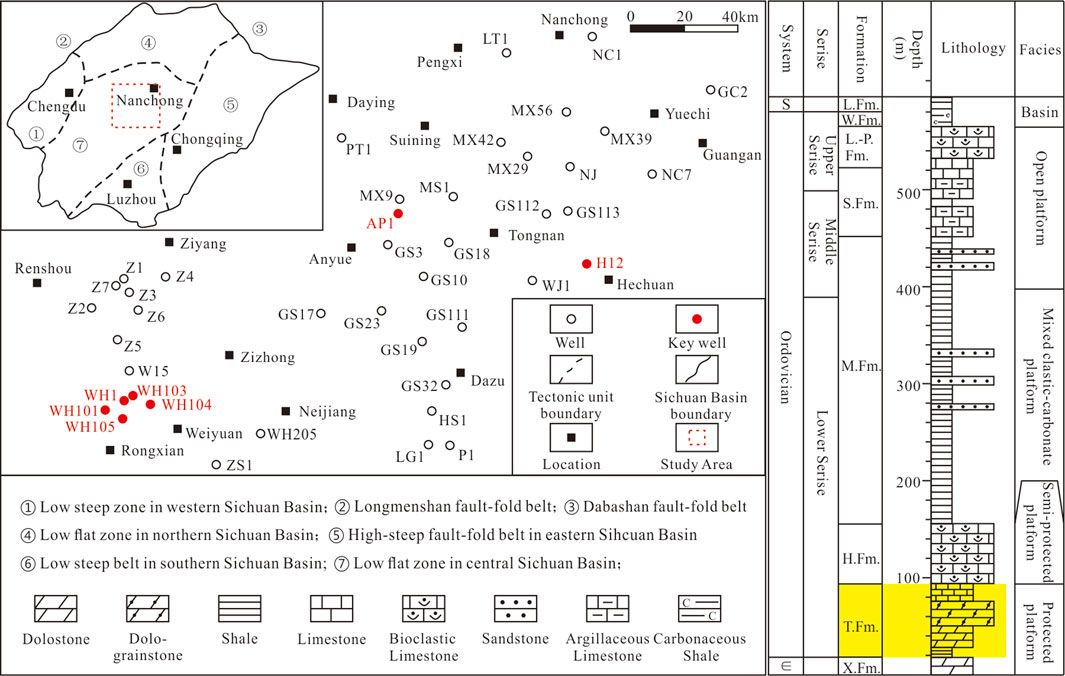
FIGURE 1. Well locations and stratigraphic column of the Ordovician in central Sichuan Basin. Map of Sichuan Basin is modified from Tang et al. (2014). The stratigraphic column is modified from Xie et al. (2019) and Chen et al. (2020). S = Silurian, ∈ = Cambrian, X. Fm. = the Xixiangchi Formation, T. Fm. = the Tongzi Formation, H. Fm. = the Hunghuayuan Formation, M.F = the Meitan Formation, S. Fm. = the Shizipu Formation, L. Fm -P. Fm. = the Pagoda and Linhsiang formations, W. Fm. = the Wufeng Formation, L. Fm. = the Lungmachi Formation.
During the Ordovician, the Sichuan Basin basically inherited the Late Cambrian paleogeography, and accumulated carbonate platform sediments (Li et al., 2015; Xing et al., 2018; Hu et al., 2019; Tao et al., 2022). The Tongzi Formation is characterized by the development of protected platform facies, which can be further divided into tidal shoal and protected lagoon subfacies. The Tongzi Formation consists mainly of sandy dolostones, dolomitic sandstones and grainy dolostones. The Hunghuayuan Formation is mainly semi-protected platform sediments that consist of bioclastic limestones and dolomicrites. During the depositional period of the Meitan Formation, the mixed platform facies and delta facies were mainly developed with the sedimentation of shales, sandstones and bioclastic limestones. The Shizipu and Pagoda formations were characterized by open platform sediments consisting mainly of argillaceous limestones and bioclastic limestones. The Wufeng Formation is composed of black shales, which formed during the large-scaled transgression at the end of Ordovician in South China.
Map of Sichuan Basin is modified from Tang et al. (2014). The stratigraphic column is modified from Xie et al. (2019) and Chen et al. (2020). S = Silurian, ∈ = Cambrian, X. Fm. = the Xixiangchi Formation, T. Fm. = the Tongzi Formation, H. Fm. = the Hunghuayuan Formation, M.F = the Meitan Formation, S. Fm. = the Shizipu Formation, L. Fm -P. Fm. = the Pagoda and Linhsiang formations, W. Fm. = the Wufeng Formation, L. Fm. = the Lungmachi Formation.
Material and method
Well logs, cuttings, cores data were integrated and analyzed for characterizing the reservoir and reveal its genesis. In addition, seven cored wells (WH 1, WH 101, WH 103, WH 104, WH 105, AP 1 and H 12) were selected for detailed analysis. More than 200 m cores and 80 thin sections were observed for describing macro-to microscopic lithologic characteristics of reservoirs. The porosity and permeability of 115 samples and the mercury injected curves of five samples were analyzed for characterizing the physic property and the structure of pores and throats. Based on the above reservoir characteristic study, and combining with the geological background, the controlling factors and genesis of reservoir was discussed at last. The nomenclature of porosity is after Choquette and Pray (1970).
Reservoir characteristic
Reservoir rock
Based on cores and thin sections, the main reservoir rocks of the Tongzi Formation have been recognized, which are dolomitic sandstones, fine crystalline dolostones, bioclastic dolostones, sandy dolomitized conglomerates, sandy oolitic dolostones and sandy dolostones. Among them, sandy oolitic dolostones, bioclastic dolostones and fine crystalline dolostones are advantage in porosity.
Sandy oolitic dolostones are most porous and prevalent in the Tongzi Formation, which even illustrate numerous pores observed by naked-eyes on cores (Figure 2A). Under the microscope, the pores are mainly moldic (Figure 2B), formed by the dissolution of ooids that might be aragonites prone to being dissolved in the eogenetic zone. In some cases, the moldic pores are filled with saddle dolomites (Figure 2C). In addition, sandy oolitic dolostones are characterized by dispersed quartz clasts in the matrix (Figures 2B,C), which may result from the injection of terrigenous influx. Bioclastic dolostones developed much less but are still relatively porous; bioclasts were dissolved to form intraparticle pores filled with bitumen (Figure 2D). Fine crystalline dolostones own good porosity and permeability with much intercrystalline pores and flaky throats (Figure 2E). The rocks mostly originate from grainy limestones by robust dolomitization destroying original fabric completely, evidenced by relics of grainy structures (Figure 2E). Sandy dolostones, dolomite sandstones and sandy dolomitized conglomerates (Figure 2F) also take some proportion in the Tongzi Formation reservoir, but the porosity is poor.
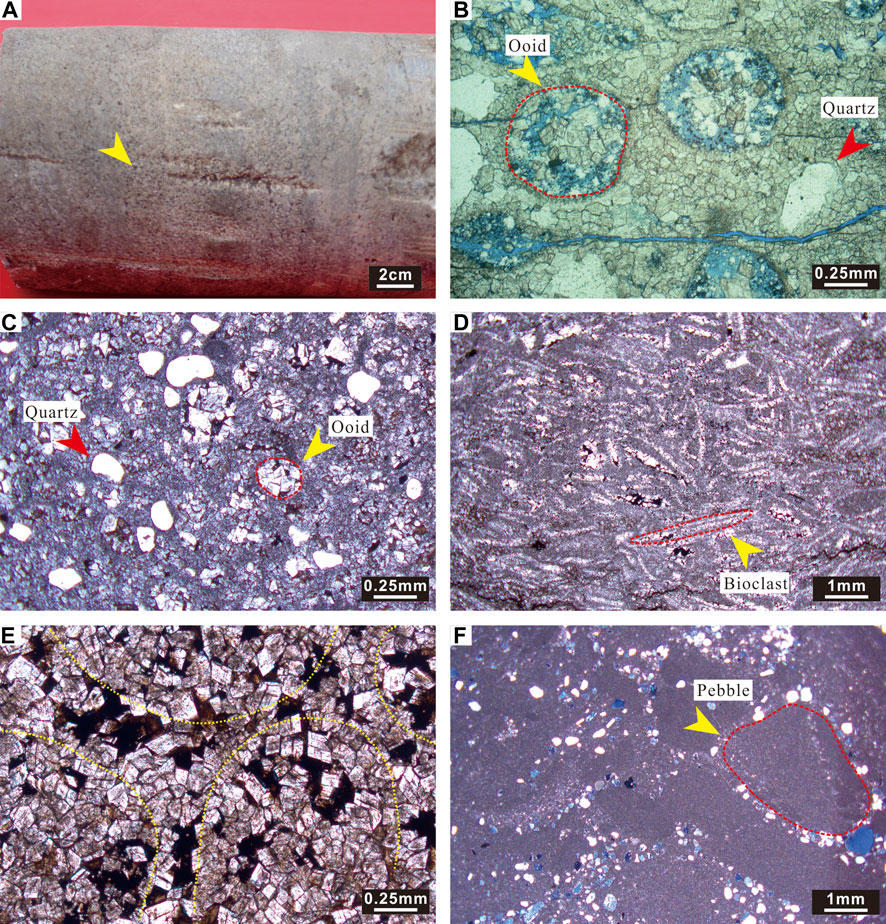
FIGURE 2. Photos of main types of the Tongzi Formation reservoir rocks. (A) Photo of porous sandy oolitic dolostones, showing a large number of pores (yellow arrow) that can be even observed by naked-eyes. 2069.03–2069.14 m, WH 1. (B) Photomicrograph of sandy oolitic dolostones, cited from the Liu (2016). Ooids were dissolved to form moldic pores. Quartz grains were dispersed in space between ooids. The thin section is impregnated with blue-dyed epoxy. Plane-polarized light, 2072.38 m, WH 1. (C) Moldic pores of sandy oolitic dolostones were filled with saddle dolomites and bitumen. Plane-polarized light, 4,468.69 m, AP 1. (D) Photomicrograph of bioclastic dolostones, illustrating bioclasts were mostly recrystallized, or were dissolved to form intragranular pores that were filled dolomites and bitumen. Plane-polarized light, 4,479.53 m, AP 1. (E) Photomicrograph of fine crystal dolostones. They might be grainstones or packstones previously but the dolomitization has destroyed the original structure completely leaving quite ambiguous relic of previous grain boundaries (yellow dotted lines). The black bitumen was filled within dolomite crystals. Plane-polarized light, 4,445.70 m, AP 1. (F) Photomicrograph of sandy dolomitized conglomerate. Silicate grains and micrites were deposited between carbonate pebbles leaving few spaces filled with bitumen. Cross-polarized light, 4,567.50 m, AP 1.
Porosity type
The Tongzi Formation reservoir owns various porosity types, including interparticle pores, moldic pores, intercrystalline pores, fractures and vugs. Moldic and intercrystalline pores are prevalent whereas interparticle pores, fractures and vugs are rare (Table 1). Moldic porosity is mainly developed in sandy oolitic dolostones and bioclastic dolostones, characterized by ooid (Figures 2B,C, 3A) and bioclast molds (Figures 2D, 3B) that were filled with cements and bitumen in some cases (Figures 2C,D, 3A,B). Intercrystalline porosity is polygonal and prominent in fine crystalline dolostone that could originate from grainy dolostones (Figures 2E, 3C). In addition, bioclastic dolostones, sandy oolitic dolostones and sandy dolostones own intercrystalline pores with much smaller proportion and size. Interparticle porosity can be observed in most rocks but take a very small proportion (Table 1), and is reduced by cements mostly (Figure 3D). Fractures are nearly developed in all kinds of rocks in the Tongzi Formation reservoir, but their occurrence are rare in each type of reservoir rocks, and most were filled except for a few solution fractures (Figure 3E). Vugs are mostly in sandy oolitic dolostones, formed by the enlargement of molds due to solution (Figure 3F).
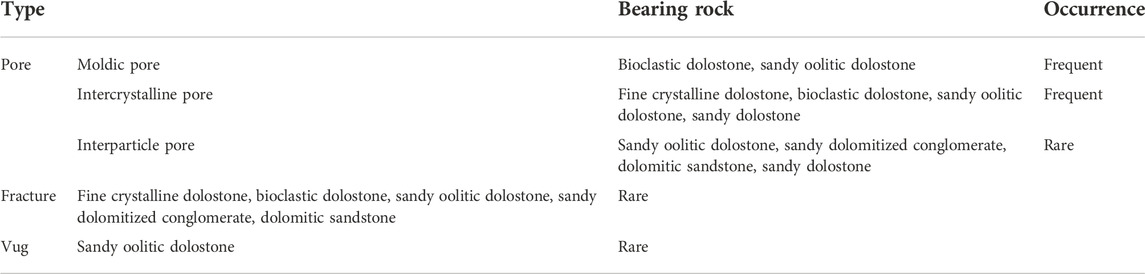
TABLE 1. Porosity types and their occurrence of the Tongzi Formation reservoir.
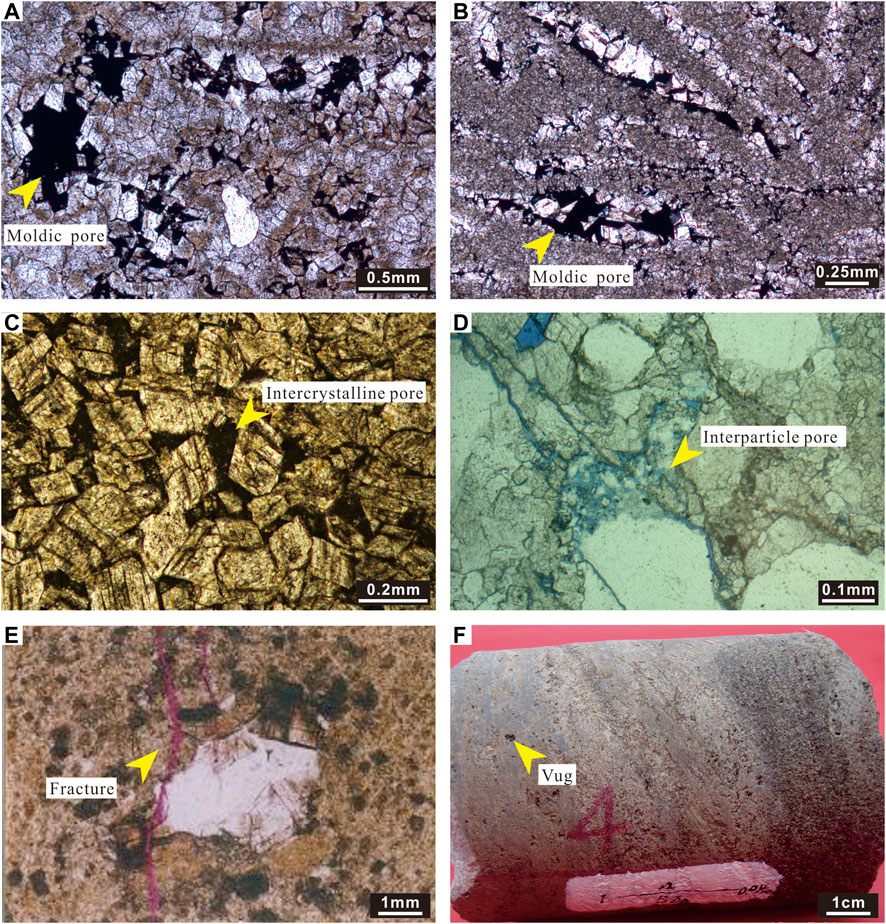
FIGURE 3. Photos of main porosity types of the Tongzi Formation reservoir. (A) Photomicrograph of moldic porosity in sandy oolitic dolostone. Moldic pores were filled with cements and bitumen. Plane-polarized light, 4,466.70 m, AP 1. (B) Photomicrograph of moldic porosity filled with bitumen in bioclastic dolostone. Plane-polarized light, 4,479.53 m, AP 1. (C) Photomicrograph of intercrystalline porosity in fine crystalline dolostone, which is polygonal and filled with bitumen. Plane-polarized light, 4,960.53 m, H 12. (D) Photomicrograph of interparticle porosity in sandy oolitic dolostone. The thin section is impregnated with blue-dyed epoxy. Plane-polarized light, 2072.38 m, WH 1. (E) Photomicrograph of fractures in dolostone. The thin section is impregnated with red-dyed epoxy. Plane-polarized light, 2077.04 m, WH 1. (F) Photo of vugs in the core of sandy oolitic dolostone. 2068.68–2068.77 m, WH 1.
Petrophysical property
115 reservoir samples compiled from the seven cored boreholes were analyzed for the porosity and permeability. The results show the Tongzi Formation reservoir porosity is relatively good with the maximum 13.9% and the average 3.33%, in addition to the samples of porosity more than 2% accounting for 64.5% (Figure 4A). The permeability is not bad; 36.7% samples are more than 0.01 mD, and the maximum is 86.3 mD, and the average permeability was 1.65 mD (Figure 4B).
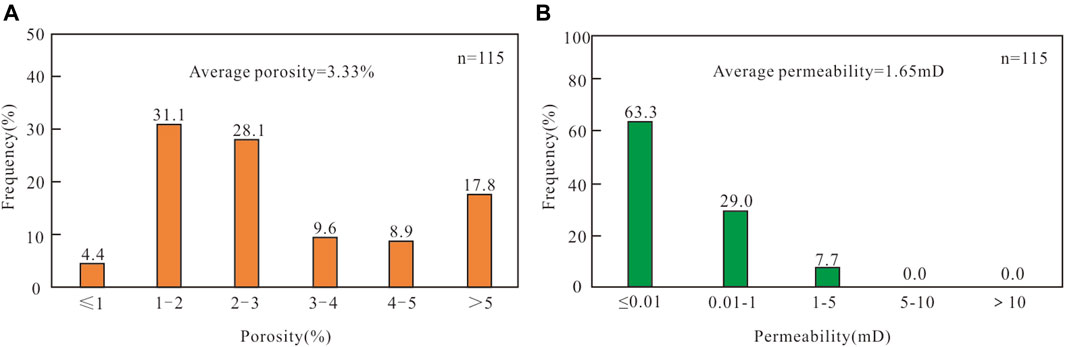
FIGURE 4. Frequency distribution histogram of porosity (A) and permeability (B) of the Tongzi Formation reservoir.
The cross plot (Figure 5) shows a low-slope positive relationship between porosity and permeability within the permeability field ranging from 0.0001 through 0.1 mD, reflecting the characteristics of porous reservoir. However, in the porosity field ranging from 0 to 2%, the relationship between permeability and porosity is also positive but high-slope. Thus, the Tongzi Formation reservoir is fracture-porous type.
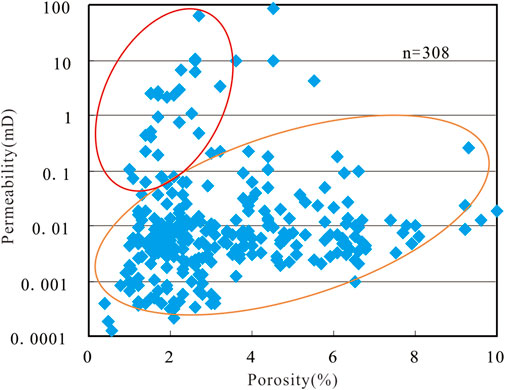
FIGURE 5. Cross plot between total porosity and air permeability for the Tongzi Formation reservoirs.
Pore structure
Thin sections show the throats of the Tongzi Formation reservoirs are mainly necked and flaky. The necked throats are common in grainy dolostones while the flaky throat are prevalent in most dolostones (Figures 2, 3). The capillary pressure curve of sandy oolitic dolostones, the most prevalent reservoir rocks, shows the pore-throat sorting is relatively even reflected by the flat transition of drainage curve, which is consistent with the observation of porosity and throat (Figure 6). The radius of most pore-throats is distributed around 0.0735 microns, suggesting a low to medium pore-throat size, which is likely associated with the samples owning pores filled with bitumen completely (Figures 2, 3). In total, the Tongzi Formation reservoir owns the assemblage of moldic, intercrystalline pores and necked, flaky throats, which provides a medium and evenly-sorted pore-throat size.
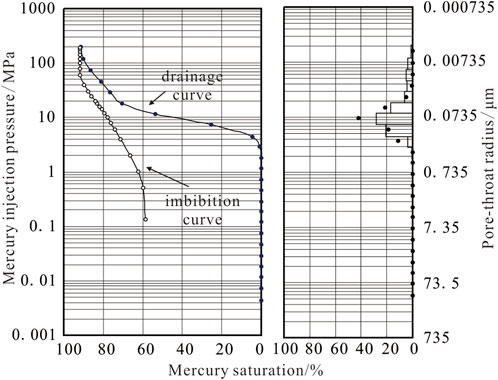
FIGURE 6. Typical capillary pressure curve of the sandy oolitic dolostone of WH 104.
Discussion
Shoal facies is the basis for reservoir development
The Tongzi Formation in the central Sichuan Basin was mainly accumulated on a protected carbonate platform environment which had several sub-environments including lagoon, tidal flat and intraplatform shoal. Due to the extensive area, the interior of epeiric platform trends to be subsided unevenly, to form highlands and sags (Reading, 1996). The micro-highlands in the carbonate platform are prone to developing shoal facies where grainy sediments are abundant due to the agitated condition. In contrast, sags are prone to accumulating micritic deposits because of quiet and protected setting. Given most reservoir rocks of the Tongzi Formation are grainy, e.g., sandy oolitic dolostones, bioclastic dolostones, and the fine crystalline dolostone is also able to be traced to the dolomitization of grainy limestones, the shoal facies thus provided material basis for the development of the Tongzi Formation reservoirs.
Penecontemporaneous dissolution and dolomitization are the main driving force for reservoir development
Thin sections show moldic and intercrystalline pores are the main porosity types in the Tongzi Formation reservoir, central Sichuan Basin (Figures 2, 3). Moldic pores are selective porosity, formed by the solution of unstable minerals (e.g., aragonites) of particles during the contemporaneous stage (Choquette and Pray, 1970). Although the Ordovician seawater in the worldwide are considered as the calcite sea that is prone to calcite sedimentation (Sandberg, 1983), the molds of ooids and bioclasts were indeed formed in the Tongzi Formation in central Basin (Figures 2, 3). This might be associated with the period of the Tongzi Formation, which is the earliest Ordovician, a transition from calcite sea to aragonite sea (Sandberg, 1983). In addition, Moldic porosity are mainly developed at the upper part or top of the shoaling upward sedimentary sequence (Figure 7), suggesting the penecontemporaneous atmospheric precipitation resulted in the solution of calcite grains of shoal facies (Figure 8).
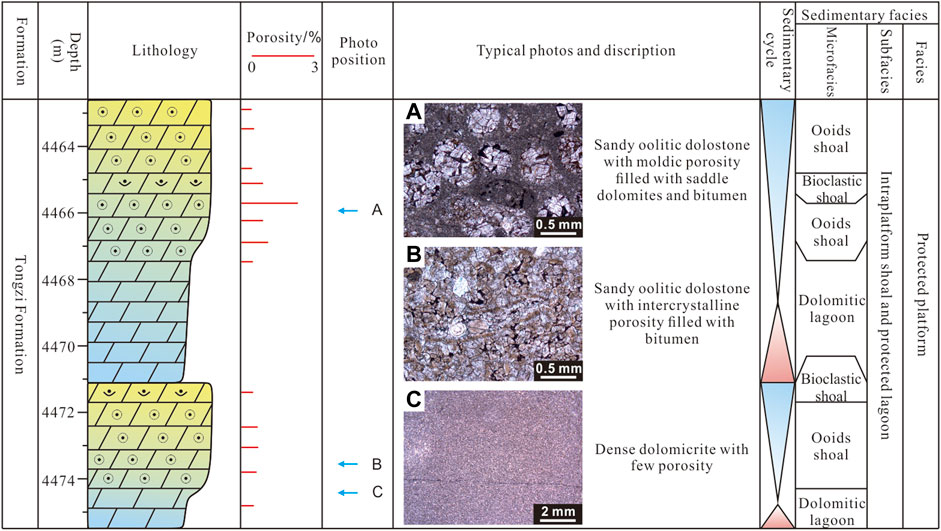
FIGURE 7. Shoal facies sedimentary sequence in the Tongzi Formation, AP 1. The lithologic log and photomicrographs (A–C) indicates the upward coarsening and shoaling sequence of shoal facies.
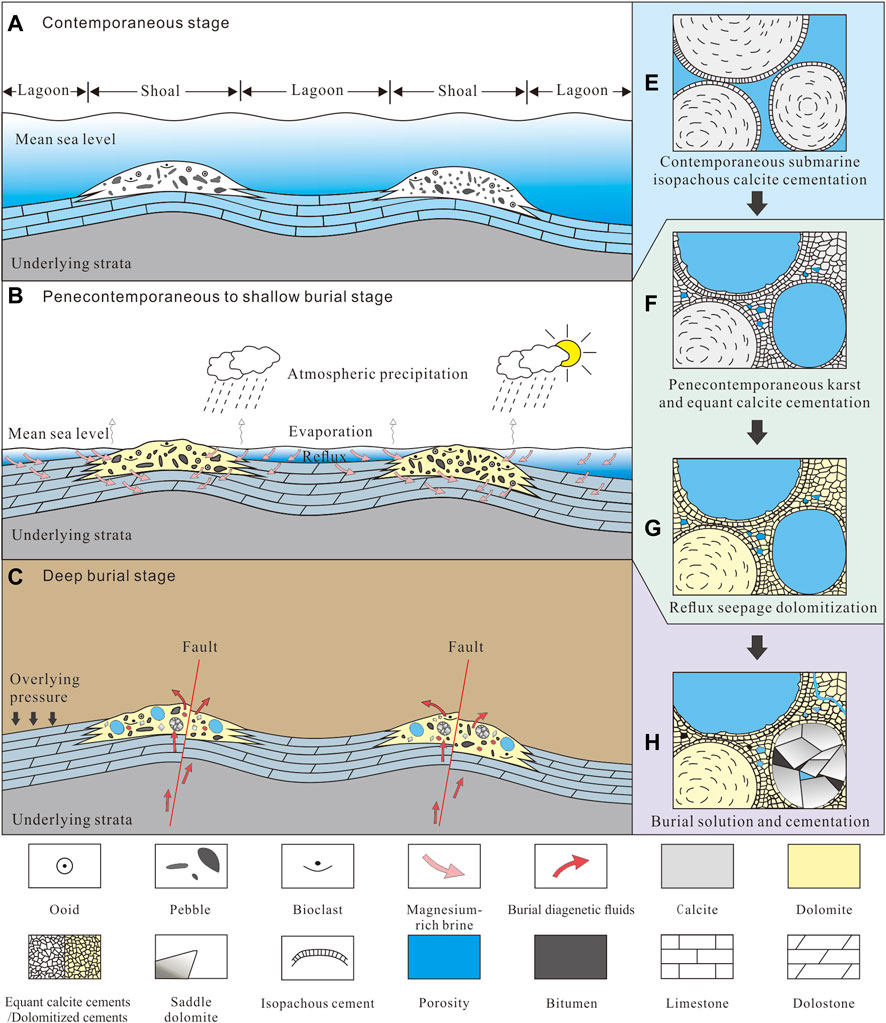
FIGURE 8. Genetic model of the Tongzi Formation reservoir in central Sichuan Basin. In the contemporaneous stage, shoal faices were developed on micro-highlands in the carbonate platform (A) where the agitated setting produced grainy sediments that owned isopachous cements and interparticular pores (D), forming the basis of reservoir. In the penecomporaneous to shallow burial stage, the relative sea level dropping resulted in penecontemporaneous karst and reflux dolomitization of shoal facies (B). Consequently, the moldic pores greatly improving the porosity of reservoir precursor although parts of interparticular pores were eliminated by equant sparite (E), while the dolomitization produced abundant intercrystalline pores further increasing the porosity (F). In the deep burial stage, aggressive fluids transported along faults enlarged previous pores and fractures by dissolution, while saddle dolomite cements were precipitated by hydrothermal dolomitization in some cases (G).
Shoaling upward also caused another important process for the reservoir formation, the penecontemporaneous (reflux) dolomitization (Figure 8). Lagoons were protected by surrounding shoals to form a restricted environment for the development of hypersaline or brine seawater, in particular, during the growth of shoal facies along with the shoaling upward. Although there is no gypsum found in the Tongzi Formation, penesaline seawater is able to lead to the reflux dolomitization during penecontemporaneous stage (Yang et al., 2017a). Stable isotopic compositions of dolostones from the Tongzi Formation are characterized by the enrichment with respect to δ18O (Tao et al., 2022), indicating the dolomitization fluids originated from evaporative environments. South China Block was located around the equator during the Ordovician, and gypsum were developed in the Lower Ordovician Taching Formation at the southwest of Yangtze Block (Tang et al., 2022), both of which suggest a geologic setting dominated by evaporation. Therefore, it is prone to forming a restricted and evaporative lagoon surrounded by shoals, providing penesaline seawater to cause reflux dolomitization of shoal grainy sediments (Figure 8).
Reflux dolomitization is able to produce abundant intercrystalline pores increasing porosity and improving permeability, although its contribution to total porosity is less than penecontemporaneous dissolution. In addition, the dolomitized rock framework has a good resistance to compression and solution, so that it can prevent the early pores (interparticle and moldic pores) from destruction (Lu et al., 2021). It is noted that some moldic pores of the Tongzi Formation were filled with saddle dolomites that could result from hydrothermal dolomitization (Figure 2C). In the situation, the dolomitization in burial stage reduced the porosity although it had limited influence on the reservoirs. Thus, penecontemporaneous dissolution and dolomitization are the driven force for the Tongzi Formation reservoirs formation, which are also main factors for carbonate reservoir development in many cases (e.g. Tang et al., 2014; Liu et al., 2016; Yang et al., 2017c; Su et al., 2017; Tan et al., 2020).
Burial dissolution is the aid for the reservoir development
High pressures, temperatures, hydrocarbon generation/maturation/degradation, collision tectonism, and post orogenic meteoric recharge have all been advanced as sources of aggressive subsurface fluids with the capability of generating subsurface secondary porosity in carbonates (Moore, 2013). Fractures and vugs are typical burial porosity in the Tongzi Formation reservoirs (Figures 3D–F). Microscopic observation suggests fractures are empty and own coarse boundary indicating the dissolution from aggressive fluids (Figures 3D,E). Core observation shows vugs are on-selective porosity and could be originated from the enlargement of moldic and interparticle pores by solution (Figure 3F). Fractures and vugs may result from the tectonics and karst in teleogenetic zones during the Caledonian uplift of central Sichuan Basin (Yang et al., 2017c), or are associated with Indosinian hydrocarbon maturation and injection (Jiang et al., 2022). Considering fractures and vugs take minor proportion (Table 1) although improving porosity and permeability, thus the burial dissolution is the aid to the development of the Tongzi Formation reservoirs.
Conclusion
1) The Ordovician Tongzi Formation reservoir in the central Sichuan Basin consist mainly of sandy oolitic dolostones, bioclastic dolostones, fine crystalline dolostones, sandy dolomitized conglomerates, dolomitic sandstones, and sandy dolostones. Moldic pores, intercrystalline pores, interparticle pores, fractures and vugs are main porosity types.
2) The Tongzi Formation reservoirs were formed by multiple factors of deposition, diagenesis and tectonics; the shoal facies is the basis, the penecontemporaneous dissolution and dolomitization are the main driving force, and the burial dissolution is the aid to improving reservoir.
Data availability statement
The original contributions presented in the study are included in the article, further inquiries can be directed to the corresponding author.
Author contributions
LZ, HT, and XT contributed to conception and design of the study. YL, RT, and WY collected relevant information. LZ and HT wrote the first draft of the manuscript. SP, YD, ZT, TM, and XY draw some figures. All authors contributed to manuscript revision, read, and approved the submitted version.
Funding
The research was supported by National Natural Science Foundation of China (42102190 and 42102193), Natural Science Foundation of Sichuan Province (2022NSFSC1105), Open Experiment Funding of Southwest Petroleum University (2021KSZ02008 and 2021KSP02031), and CNPC Upstream Field Fundamental Forward-looking Projects: Research on Reconstruction Technology of Remaining Marine Basin Tectonic-Lithofacies Paleogeography (2021DJ0501).
Acknowledgments
We thank editors and reviewers for their efforts on improving the manuscript.
Conflict of Interest
Author YL was employed by the company Sichuan Shale Gas Exploration and Development Co. LTD.; Author RT was employed by the company The 2nd Oil Production Plant, Northwest Oilfield Branch of Sinopec; Author WY was employed by the company PetroChina Southwest Oil and Gas Field Company; Author ZT was employed by the company The third Oil Production Plant, PetroChina Qinghai Oil field Company.
The remaining authors declare that the research was conducted in the absence of any commercial or financial relationships that could be construed as a potential conflict of interest.
Publisher’s note
All claims expressed in this article are solely those of the authors and do not necessarily represent those of their affiliated organizations, or those of the publisher, the editors and the reviewers. Any product that may be evaluated in this article, or claim that may be made by its manufacturer, is not guaranteed or endorsed by the publisher.
References
Chen, C., Yang, X., Wang, X., Zeng, D., Feng, M., Xie, L., et al. (2020). Pore-fillings of dolomite reservoirs in sinian dengying Formation in Sichuan Basin. Petroleum 6 (1), 14–22. doi:10.1016/j.petlm.2019.03.006
Choquette, P. W., and Pray, L. C. (1970). Geologic nomenclature and classification of porosity in sedimentary carbonates. Am. Assoc. Pet. Geol. Bull. 54 (2), 207–250. doi:10.1306/5d25c98b-16c1-11d7-8645000102c1865d
Hu, H., Xing, F., and Hou, M. (2019). Ordovician sequence and lithofacies paleogeography reconstruction in Upper Yangtze region and its inspiration for oil and gas exploration. Geosciences 44 (3), 798–809. doi:10.103799/dqkx.2018.338
Huang, H., Tian, Y., and Zeng, T. (2020). Characteristics and genetic analysis of dolomite in Tongzi Formation of lower ordovician in southern sichuan. Mineral. Rocks 40 (2), 92–103. doi:10.19719/j.cnki.1001-6872.2020.02.09
Huang, W., Liu, S., and Ma, W. (2011). Petroleum exploration potential of the ordovician in the Sichuan Basin. Pet. Nat. Gas. Geol. 32 (3), 461–473. doi:10.1007/s12182-011-0123-3
Jiang, H., Li, W., Huang, S., Jiang, Q., Zhai, X., Gu, Z., et al. (2022). Process and model of hydrocarbon accumulation spanning major tectonic phases of Sinian Dengying Formation in the Sichuan Basin. Nat. Gas. Ind. 42 (5), 11–23. doi:10.3787/j.issn.1000-0976.2022.05.002
Lan, H., Fu, M., Deng, H., Lei, T., Wu, D., Xu, W., et al. (2021). Reservoir types and Genesis of the Majiagou Formation daniudi gas field, Ordos Basin. J. Sedimentol. 5, 1–10. doi:10.14027/j.issn.1000-0550.2021.121
Li, J., He, D., and Mei, Q. (2015). Tectonic-sedimentary environment and proto-type basins evolution of the Ordovician in Sichuan Basin and adjacent areas. J. Pet. 36 (4), 427–445. doi:10.7623/syxb201504004
Li, L., Tan, X., Zeng, W., Zhou, T., Yang, Y., Hong, H., et al. (2013). Development and reservoir significance of mud mounds in sinian dengying formation, Sichuan Basin. Petroleum Explor. Dev. 40 (6), 714–721. doi:10.1016/s1876-3804(13)60096-8
Liu, H., Ma, T., Tan, X., Zeng, W., Hu, G., Xiao, D., et al. (2016). Origin of structurally controlled hydrothermal dolomite in epigenetic karst system during shallow burial: An example from Middle Permian Maokou Formation, central Sichuan Basin, SW China. Petroleum Explor. Dev. 43 (6), 1000–1012. doi:10.1016/s1876-3804(16)30117-3
Liu, W., Hong, H., Xu, A., Jiang, H., and Shi, S. (2017). Paleogeography and exploration potential of ordovician lithofacies in Sichuan Basin. Mar. Pet. Geol. 22 (4), 1–10. doi:10.3969/j.issn.1672-9854.2017.04.001
Liu, Z. (2016). “Characters and formation mechanism study for lower ordovician carbonatite reservoir in Sichuan basin,” (Beijing China: China University of Petroleum (Beijing) press). MA thesis.
Liu, Z., Xing, F., Hu, H., and Chen, X. (2021). Multi-origin of dolomite in lower ordovician Tongzi Formation of Sichuan Basin, Western China. Geoscience 46 (2), 583–599. doi:10.3799/dqkx.2020.026
Lu, F., Tan, X., Wang, L., Tang, Q., Xiao, D., Dong, S., et al. (2021). Characteristics and controlling factors of dolomite reservoirs within shoal-controlled karst in the Middle Permian Qixia Formation, central Sichuan Basin. J. Sedimentol. 39 (2), 456–469. doi:10.14027/j.issn.1000-0550.2020.020
Moore, C. H. (2013). Carbonate reservoirs: Porosity and diagensis in a sequence stratigraphic framework. Oxford: Elsevier press.
Reading, H. G. (1996). Sedimentary environments: Processes, facies and stratigraphy. New Jersey, United States: John Wiley & Sons, 704.
Sandberg, P. A. (1983). An oscillating trend in Phanerozoic non-skeletal carbonate mineralogy. Nature 3 (5), 19–22. doi:10.1038/305019a0
Su, C., Tan, X., Shi, K., Zou, J., Lu, F., Luo, S., et al. (2017). Characteristics and significance of the penecontemporaneous karst in lacustrine carbonate, Da’anzhai Member, Lower Jurassic, Beibei area, eastern Sichuan Basin. Petroleum 3 (3), 292–300. doi:10.1016/j.petlm.2016.12.006
Tan, L., Liu, H., Chen, K., Ni, H., Zhou, G., Zhang, X., et al. (2022). Sequence sedimentary evolution and reservoir distribution in the third and fourth members of Sinian Dengying Formation, Gaomo area, Sichuan Basin, SW China. Pet. Explor. Dev. 49 (5), 871–883. doi:10.11698/PED.20220144
Tan, L., Liu, H., Tang, Y., Luo, B., Zhang, Y., Yang, Y., et al. (2020). Characteristics and mechanism of upper permian reef reservoirs in the eastern longgang area, northeastern Sichuan Basin, China. Petroleum 6 (2), 130–137. doi:10.1016/j.petlm.2019.06.008
Tang, H., Tan, X., Liu, H., Zhou, Y., Li, L., Ding, X., et al. (2014). Genesis and dolomitization of “khali” powder crystal dolomite in triassic jialingjiang formation, moxi gas field, central Sichuan Basin, SW China. Petroleum Explor. Dev. 41 (4), 553–562. doi:10.1016/S1876-3804(14)60066-5
Tang, H., Xu, Q., Li, S., Li, L., Wang, X., Tan, X., et al. (2022). The Ordovician retroarc foreland basin on the Yangtze Block linked to the final assemblage of Gondwana. Lithosphere. (in press).
Tao, R., Tang, H., Yan, W., Li, Y., Mo, Q., Li, L., et al. (2022). Characteristics and genesis of shoal facies reservoir of the lower ordovician Tongzi Formation in southeastern Sichuan Basin. South China: Petroleum. (in press and online available). doi:10.1016/j.petlm.2022.03.008
Xie, H., Zhao, J., Wang, P., Xie, W., and Yang, Y. (2019). Ordovician sequence stratigraphic framework in the Middle-Upper Yangtze area. Acta Pet. Sin. 40 (10), 1202–1222. doi:10.7623/syxb201910006
Xing, F., Hu, H., Hou, M., and Lu, Y. (2018). Carbonate reservoirs cycles and assemblages under the tectonic and palaeogeoraphy control: A case study from Sichuan Basin. Geoscience 43 (10), 3540–3552. doi:10.3799/dqkx.2018.310
Yang, W., Xie, W., and Wei, G. (2012). Sequence lithofacies paleogeography, favorable reservoir distribution and exploration zones of the Cambrian and Ordovician in Sichuan Basin, China. Acta Pet. Sin. 33 (S2), 21–34.
Yang, X., Huang, Z., Wang, X., Wang, Y., Li, K., and Zeng, D. (2019). Origin of crystal dolomite and its reservoir formation mechanism in the Xixiangchi Formation, upper cambrian in southeastern Sichuan Basin. Carbonates Evaporites 34 (4), 1537–1549. doi:10.1007/s13146-019-00499-y
Yang, X., Tang, H., Wang, X., Wang, Y., and Yang, Y. (2017a). Dolomitization by penesaline sea water in early cambrian longwangmiao formation, central Sichuan Basin, China. J. Earth Sci. 28, 305–314. doi:10.1007/s12583-017-0761-5
Yang, X., Tang, H., Zhang, J., Du, Y., Tang, R., Pan, S., et al. (2022). Mottled dolomite in the lower cambrian longwangmiao Formation in the northern Sichuan Basin. South China: Petroleum. (in press and online available). doi:10.1016/j.petlm.2022.01.005
Yang, X., Wang, X., Tang, H., Ding, Y., Lv, H. T., and Liu, C. G. (2014). The early hercynian paleo-karstification in the Block 12 of tahe oilfield, northern Tarim Basin, China. Carbonates Evaporites 29, 251–261. doi:10.1007/s13146-013-0167-0
Yang, X., Wang, X., Tang, H., Yang, Y., Xie, J., Luo, W., et al. (2016). Reservoir characteristics and main controlling factors of the Longwangmiao Formation in the Moxi area, central Sichuan Basin, China. Arab. J. Geosci. 9 (3), 217–227. doi:10.1007/s12517-015-2066-2
Yang, X., Wang, X., Tang, H., Yang, Y., Xie, J., Luo, W., et al. (2017b). The caledonian paleokarstification of longwangmiao formation, lower cambrian in the central Sichuan Basin, China. Carbonates Evaporites 32, 325–335. doi:10.1007/s13146-016-0303-8
Yang, X., Wang, Y., Wang, X., Zeng, D., Xu, L., Huang, Z., et al. (2017c). Evaluation of dolomite reservoirs in the longwangmiao formation, lower cambrian in northern Sichuan Basin, China. Petroleum 3 (4), 406–413. doi:10.1016/j.petlm.2017.06.003
Zhang, D., He, Z., and Li, G. (2020). Geochemistry and accumulation model of ordovician hydrocarbon in Sichuan Basin. Nat. Gas. Geosci. 31 (3), 428–435. doi:10.11764/j.issn.1672-1926.2019.12.005
Keywords: reservoir characteristics, diagenesis, Ordovician, Sichuan Basin, reservoir origin
Citation: Zhou L, Tang H, Li Y, Tao R, Yan W, Ma T, Pan S, Du Y, Tan Z and Yang X (2023) Reservoir characteristics and genesis of the Lower Ordovician Tongzi Formation in central Sichuan Basin, China. Front. Earth Sci. 10:984491. doi: 10.3389/feart.2022.984491
Received: 02 July 2022; Accepted: 05 September 2022;
Published: 11 January 2023.
Edited by:
Jian Wang, China University of Petroleum (East China), ChinaReviewed by:
Kunyu Wu, China National Petroleum Corporation, ChinaYufeng Li, Fuzhou University, China
Copyright © 2023 Zhou, Tang, Li, Tao, Yan, Ma, Pan, Du, Tan and Yang. This is an open-access article distributed under the terms of the Creative Commons Attribution License (CC BY). The use, distribution or reproduction in other forums is permitted, provided the original author(s) and the copyright owner(s) are credited and that the original publication in this journal is cited, in accordance with accepted academic practice. No use, distribution or reproduction is permitted which does not comply with these terms.
*Correspondence: Hao Tang, dGh1Zm9jb21AMTYzLmNvbQ==