 Israa S. Abu-Mahfouz
- Department of Geosciences, King Fahd University of Petroleum and Minerals, Dhahran, Saudi Arabia
Silica diagenesis plays a critical yet understudied role in modifying the hydrocarbon potential of organic-rich carbonate source rocks. This review systematically examines how silica transformations—from biogenic opal to quartz—fundamentally alter rock properties through three key mechanisms: First, mineralogical reorganization, where silica dissolution creates secondary porosity while cementation occludes pore throats, directly impacting fluid flow pathways. Second, geochemical feedbacks, including pH-driven carbonate dissolution and catalytic effects on organic matter maturation that influence hydrocarbon generation kinetics. Third, pore network evolution, where silica-induced microfractures provide migration conduits but heterogeneous cementation can trap hydrocarbons. The synthesis highlights three novel insights: (1) The timing of silica diagenesis relative to hydrocarbon generation determines whether pores remain open for migration or become sealed; (2) Microscale silica-carbonate interactions control reservoir quality more significantly than previously recognized; and (3) Modern analytical techniques reveal complex diagenetic histories that challenge traditional models. By integrating petrographic, geochemical, and petrophysical evidence, this work establishes a predictive framework for evaluating how silica diagenesis impacts petroleum systems, from source rock maturation to trap integrity. The findings are particularly relevant for unconventional carbonate reservoirs, where subtle diagenetic modifications disproportionately affect producibility. This comprehensive analysis advances our capacity to interpret reservoir behavior and optimize exploration strategies in silica-rich sedimentary basins worldwide.
1 Introduction
Sedimentary basins are dynamic environments where post-depositional physical, chemical, and biological processes, collectively termed diagenesis (Sujkowski, 1958; Dayal, 2017), govern the ultimate characteristics and hydrocarbon potential of sedimentary rocks. Among these processes, silica diagenesis stands out as a critical yet underexplored factor influencing organic-rich carbonate source rocks. While previous studies have examined silica transformations in siliciclastic and chert-rich systems (e.g., Calvert, 1975; Hesse, 1988), their role in carbonate-dominated, organic-rich formations remains less understood, despite these rocks being key reservoirs and source rocks for hydrocarbons.
The various forms of silica that interact with carbonate minerals during diagenetic processes (Bustillo, 2010; Maliva and Maliva, 2016) create a complex network of reactions that can significantly alter the properties of sedimentary rocks. The resulting reactions include phenomena such as mineral replacement, cementation, and other textural modifications within sedimentary rocks (Morse, 2003; Klein and Walter, 1996; Varkouhi et al., 2020; Varkouhi et al., 2024). These diagenetic interactions are governed by a range of geochemical and physical factors, including the concentration and availability of dissolved silica, pH conditions, temperature regimes, and the compositional characteristics of the surrounding pore fluids (Calvert, 1975; Huggett et al., 2017; LeBlanc, 2017; Varkouhi et al., 2020).
Recent studies have highlighted the influence of stratigraphic and depositional controls on silica distribution within carbonate formations (Saffari and Kianoush, 2025; Yazdanpanah et al., 2025; Farzaneh et al., 2025), yet systematic reviews bridging these processes to hydrocarbon systems remain scarce. Saffari and Kianoush (2025) demonstrated how variations in stratigraphy across the Zagros region influence mineralization patterns, including silica-rich zones, through integrated petrophysical analysis. Similarly, Yazdanpanah et al. (2025) linked biostratigraphic and microfacies variations in the Jahrum Formation to diagenetic processes affecting silica distribution, emphasizing the role of depositional environment and stratigraphic position.
The significance of silica diagenesis is particularly noticeable in organic-rich carbonate formations (Huggett et al., 2017; Abu-Mahfouz et al., 2020), which serve as significant reservoirs for hydrocarbons. These formations exhibit distinctive mineralogical compositions and are especially sensitive to diagenetic alterations. Particularly, in these organic-rich carbonate formations, silica diagenesis involves the transformation and alteration of silica minerals, which can significantly impact the physical and chemical characteristics of the rock (Milliken and Olson, 2017). The distinctive mineralogical compositions of these formations often result from the interaction between the original sedimentary environment and subsequent diagenetic processes that occur after burial (Figures 1, 2).
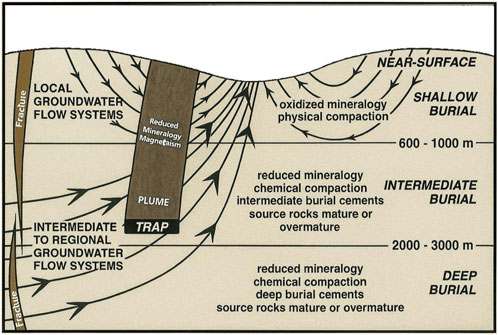
Figure 1. Schematic illustration depicting diagenetic environments influenced by mineralogy, petroleum, hydro-geochemistry, and hydro-geology (modified from Machel, 1999). For clarity, the geological section is considered isotropic, featuring idealized groundwater flow lines. The hydrocarbon-contaminated plume shows a slight deviation due to local and regional groundwater flow systems. The depth limits distinguishing the burial diagenetic settings are approximate and informed by geological characteristics. Near-surface environments may be meteoric, brackish, marine, or hyper-saline.
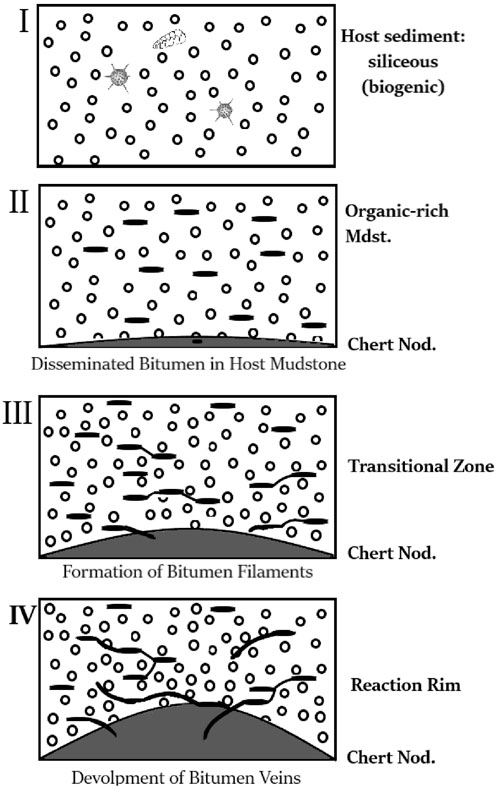
Figure 2. A schematic diagram showing (from I to IV) the evolution of chert concretions, bitumen filaments, and bitumen veins. From precursor host sediment of siliceous (biogenic), organic-rich mudstone, to concretion formation, to reaction rim and fracturing/bitumen migration (From Abu-Mahfouz et al., 2020, supplementary materials).
Carbonate rocks that contain high levels of organic matter can contribute to the generation of hydrocarbons under the right thermal conditions (Parnell et al., 2005; Abu-Mahfouz et al., 2019; Abu-Mahfouz et al., 2020; Farzaneh et al., 2025). However, the presence of silica can influence the porosity and permeability of the rock (Huggett et al., 2017; Abu-Mahfouz et al., 2020; Abu-Mahfouz et al., 2023a; El-Feky et al., 2025), affecting both the storage capacity of hydrocarbons and their mobility within the reservoir. For instance, the dissolution of silica can create additional pore spaces, enhancing the overall reservoir quality (e.g., Salem et al., 2005; Varkouhi et al., 2020; El-Feky et al., 2025). These physical modifications impact the storage capacity of reservoirs and the pathways available for hydrocarbon movement. Enhanced porosity resulting from silica dissolution can increase hydrocarbon storage potential, while permeability variations determine the ease with which hydrocarbons can flow through the rock matrix. Conversely, overgrowth or precipitation of silica can occlude pores and restrict fluid flow, thereby hindering hydrocarbon extraction (e.g., Higgs et al., 2007).
Furthermore, organic-rich carbonates are sensitive to diagenetic alterations due to their complex mineralogy and the interactions between organic matter and minerals during the burial process (Figure 1). Changes in temperature, pressure, and the surrounding chemical environment can lead to significant transformations in silica content (Calvert, 1975; Huggett et al., 2017), which in turn can affect the overall integrity and functionality of the reservoir. Thus, understanding silica diagenesis in these formations is crucial for evaluating their hydrocarbon potential. It can provide insights into the timing and conditions of hydrocarbon generation and migration, ultimately guiding exploration and production strategies in these valuable geological settings. Comprehensive studies that focus on the interactions between silica diagenesis and organic-rich carbonates can enhance the knowledge of reservoir behavior and inform better management practices for hydrocarbon resources. To this end, this review synthesizes recent advances in understanding how silica diagenesis alters the mineralogical, geochemical, and petrophysical properties of organic-rich carbonate rocks, with direct implications for hydrocarbon generation, migration, and retention. Unlike prior works that focus on silica diagenesis in isolation, we emphasize its interplay with organic matter maturation and pore network evolution, bridging gaps between traditional diagenesis studies and petroleum system analysis. The synthesis highlights three novel insights: (1) The timing of silica diagenesis relative to hydrocarbon generation determines whether pores remain open for migration or become sealed; (2) Microscale silica-carbonate interactions control reservoir quality more significantly than previously recognized; and (3) Modern analytical techniques reveal complex diagenetic histories that challenge traditional models.
In particular, this work systematically links silica diagenesis to hydrocarbon system dynamics, including catalytic effects on kerogen cracking and modifications to primary/secondary migration pathways. Most literature addresses silica diagenesis in cherts or sandstones; this work highlights its unique role in carbonate source rocks, where silica-carbonate-organic matter interactions dictate reservoir quality. Moreover, this review incorporates cutting-edge techniques (e.g., nano-scale imaging, Si-O isotopes) to decode diagenetic histories, offering new insights into timing and fluid-rock interactions.
1.1 Key objectives
• To evaluate how silica diagenesis modifies mineralogy and pore structure in organic-rich carbonates, impacting hydrocarbon storage and flow.
• To assess the geochemical feedbacks (e.g., pH changes, catalytic effects) of silica transformations on organic matter preservation and hydrocarbon generation.
• To explore the timing and spatial variability of silica diagenesis relative to hydrocarbon maturation, informing predictive models for exploration.
• To highlight emerging technologies (e.g., reactive transport modeling) that can refine diagenetic process understanding.
By addressing these objectives, this review aims to advance predictive capabilities in petroleum geology, offering a framework to optimize exploration strategies in silica-rich carbonate systems. The findings are particularly relevant for unconventional reservoirs, where subtle diagenetic changes significantly impact producibility. A flowchart outlining the systematic approach utilized in this paper to review silica diagenesis is shown in Figure 3.
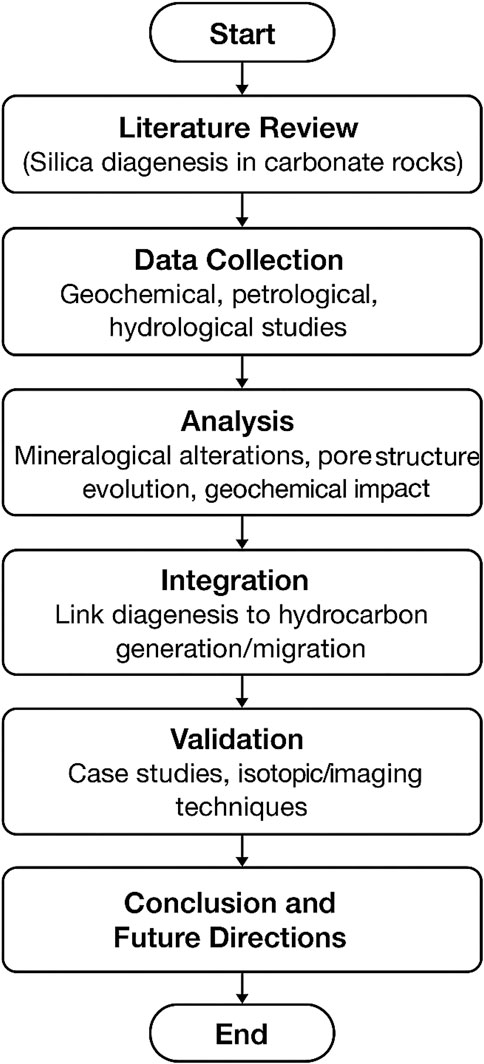
Figure 3. A flowchart outlining the systematic approach utilized in this paper to review silica diagenesis.
2 Impact of silica diagenesis on carbonate source rock properties
Silica diagenesis involves a complex series of transformations in organic-rich carbonate source rocks, significantly modifying their mineral composition, pore structure, and, indirectly, their internal geochemical environment. These alterations have profound implications for the ability of rock to generate, store, and expel hydrocarbons (Worden et al., 2018; Abu-Mahfouz et al., 2020).
2.1 Mineralogical alterations
The process of silica within carbonate sedimentary formations begins with its incorporation from diverse sources present during deposition. These sources commonly include the skeletal remains of siliceous microorganisms like diatoms and radiolarians (biogenic silica, primarily in the metastable forms of opal-A and opal-CT), detrital grains of quartz transported from continental sources, and volcanic ash, which can devitrify to form various silica phases (Huggett et al., 2017; Smirnov et al., 2020; Varkouhi et al., 2020; Pellegrino et al., 2020; Pellegrino et al., 2023). In particular, diatoms, siliceous phytoplankton, serve as the primary producers of biogenic silica in both freshwater and oceanic ecosystems. However, they represent only one among numerous biological groups capable of synthesizing biogenic silica, highlighting the diversity of organisms involved in silica production across different aquatic environments (Knoll, 2003). In marine environments, diatoms play a crucial role by contributing approximately 40% to the overall primary productivity, as noted by Armbrust (2009) and Nelson et al. (1995). Their abundance and activity make them a vital part of the biological pump, a complex system responsible for transferring elements from the surface to the depths of ocean. This process involves the production, aggregation, and sinking of particulate organic matter and biominerals, effectively redistributing nutrients and elements throughout the water column (Frings et al., 2024). The significance of diatoms in this context underscores their influence on oceanic biogeochemical cycles, highlighting their importance in maintaining marine ecosystem dynamics (De La Rocha and Passow, 2006; Pellegrino et al., 2020).
The burial of biogenic silica serves as a significant sink in the silicon resources of oceans and lakes (Jurkowska, 2022; Frings et al., 2024), playing a crucial role in regulating silicon cycling. At the same time, this process preserves a valuable record of past environmental conditions, forming a biosiliceous archive that offers insights into historical ecological and climatic changes. As the sediments are buried and subjected to increasing temperatures and pressures during diagenesis, the initial silica phases undergo significant transformations. The less stable biogenic opal-A and opal-CT are particularly prone to dissolution (Hooker et al., 2017; Varkouhi et al., 2020). This dissolution process releases significant amounts of dissolved silica into the ambient pore fluids. As burial depth and temperature continue to increase, this dissolved silica becomes supersaturated with respect to more stable silica polymorphs, primarily quartz and chert (Hesse, 1988; Van den Boorn, 2008). Consequently, precipitation of these more stable phases occurs, often at different locations within the sediment or rock (Worden et al., 2018).
These silica transformations do not occur in isolation; they actively interact with the dominant carbonate components of the rock (Huggett et al., 2017; Hooker et al., 2017). The precipitation of authigenic quartz (forms in place within the rock during diagenesis, rather than being transported from elsewhere) or chert can directly impact the existing carbonate mineralogy. For example, growing quartz crystals can displace or even replace pre-existing carbonate grains (e.g., Klein and Walter, 1996; Abu-Mahfouz et al., 2020), leading to a reduction in the overall carbonate content and a corresponding increase in the silica fraction of the rock (Figure 2). This replacement process can also alter the textural characteristics of the carbonate framework (Hooker et al., 2019; Abu-Mahfouz et al., 2023b; Usman et al., 2024), potentially affecting its mechanical strength and fracturing behavior.
Furthermore, the pore fluids enriched in dissolved silica, resulting from the dissolution of earlier silica phases, can significantly influence the processes of carbonate diagenesis, most notably dolomitization (Hooker et al., 2017; Fang and Xu, 2022). Dolomitization, the replacement of calcium carbonate (calcite) by magnesium-rich dolomite, is a complex process often mediated by the composition of the pore fluids. Silica-rich fluids can alter the Mg/Ca ratio and the overall ionic strength of the pore water, potentially either promoting or inhibiting dolomitization depending on the specific geochemical conditions. The interaction between silica diagenesis and dolomitization can lead to complex mineralogical zonation and textural patterns within the carbonate source rock, ultimately influencing its petrophysical properties and hydrocarbon potential (Worden et al., 2018; Abu-Mahfouz et al., 2020). For instance, dolomitization can create significant secondary porosity, but subsequent silica cementation might occlude these newly formed pores (Flügel, 2004). Understanding the paragenetic sequence (the order in which mineralization and diagenetic events occur during rock formation) of these mineralogical transformations is therefore crucial for deciphering the diagenetic history and predicting the reservoir characteristics of these formations.
2.2 Pore structure evolution
The evolution of the pore structure within carbonate source rocks is a dynamic process significantly influenced by the diagenetic transformation of silica (Huggett et al., 2017; Varkouhi et al., 2020; Abu-Mahfouz et al., 2020; Kianoush et al., 2023; El-Feky et al., 2025). These changes in porosity, permeability, pore size distribution, and connectivity are critical as they directly control the storage capacity for hydrocarbons and the ease with which fluids, including hydrocarbons, can migrate through the rock (Worden et al., 2018).
The dissolution of silica phases, often including biogenic opal-A and opal-CT, which are metastable at burial temperatures, releases silica into the pore fluids (Abu-Mahfouz et al., 2020; Varkouhi et al., 2020). This dissolution can create or significantly enhance secondary porosity (Salem et al., 2005; Lu et al., 2020), particularly in carbonate rocks that initially possess low primary porosity, such as micritic limestones or tightly cemented carbonates. The removal of silica framework grains or the leaching of silica cements can generate new pore spaces or enlarge existing ones, leading to a net increase in pore volume. Furthermore, silica dissolution can improve permeability by creating better-connected pathways for fluid flow (Figure 4). This is especially important for the expulsion of hydrocarbons during primary migration and the subsequent accumulation in reservoir rocks (Worden et al., 2018; Abu-Mahfouz et al., 2020). The enhanced permeability facilitates the movement of hydrocarbons through the source rock matrix and into more permeable carrier beds (Lu et al., 2020; Klaver et al., 2024; El-Feky et al., 2025).
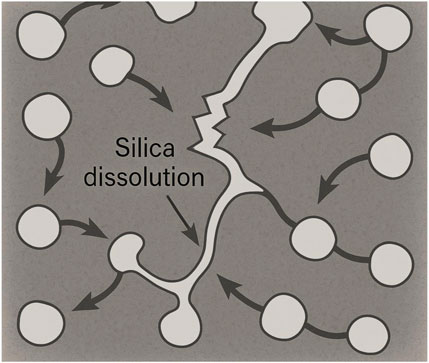
Figure 4. Schematic drawing showing silica dissolution enhancing connectivity by creating pathways between isolated pores.
Conversely, Silica cement precipitation often reduces porosity and impairs permeability in carbonate source rocks (Higgs et al., 2007). Dissolved silica in the pore fluids can precipitate as more stable phases like quartz overgrowths on detrital quartz grains (if present), as microquartz within the carbonate matrix, or as macroscopic chert nodules and layers. These silica cements tend to preferentially occlude pore throats, the narrow constrictions connecting larger pore bodies (El-Feky et al., 2025). The blockage of pore throats significantly reduces permeability, even if the overall porosity is not drastically diminished. This can severely hinder both primary and secondary migration of hydrocarbons. In the context of primary migration, constricted pore throats increase the capillary entry pressure that generated hydrocarbons must overcome to be expelled from the source rock (Pepper, 1991; Pang et al., 2005). In reservoir rocks, silica cementation reduces storage capacity and impedes hydrocarbon flow during production (Tosca and Wright, 2018).
The relationship between silica dissolution and precipitation can result in complex pore network characteristics. For instance, dissolution in one area might provide the silica for precipitation in another, leading to heterogeneity in porosity and permeability within the same rock unit (Lu et al., 2020; Klaver et al., 2024; El-Feky et al., 2025). The resulting pore size distribution is also significantly affected by these processes. Dissolution tends to create larger pores, while precipitation often fills smaller ones, leading to a shift in the dominant pore sizes and affecting capillary forces and fluid retention. Connectivity, the degree to which pores are interconnected, is perhaps the most crucial factor for fluid flow. Silica dissolution can enhance connectivity by creating pathways between isolated pores (Figure 4), whereas silica precipitation, particularly at pore throats, can drastically reduce connectivity, effectively trapping fluids within isolated pore spaces.
Ultimately, the diagenetic evolution of silica within carbonate source rocks plays a crucial role in determining their effectiveness in generating and expelling hydrocarbons, as well as the potential of associated carbonate and siliciclastic rocks to serve as viable reservoirs. Understanding the timing, extent, and spatial distribution of silica dissolution and precipitation is therefore essential for accurate petroleum system analysis and hydrocarbon exploration.
2.3 Geochemical environment
While the physical modifications to pore structure and mineralogy are significant, silica diagenesis also exerts an indirect yet important influence on the geochemical environment within organic-rich carbonate source rocks (Fantle et al., 2020). These alterations to the pore fluid chemistry can have cascading effects on the stability of the carbonate matrix (Figure 5), the preservation of organic matter, and the processes of hydrocarbon generation and migration. As silica minerals transform, they can influence the chemical reactions that produce and preserve hydrocarbons within the reservoir (Abu-Mahfouz et al., 2020).
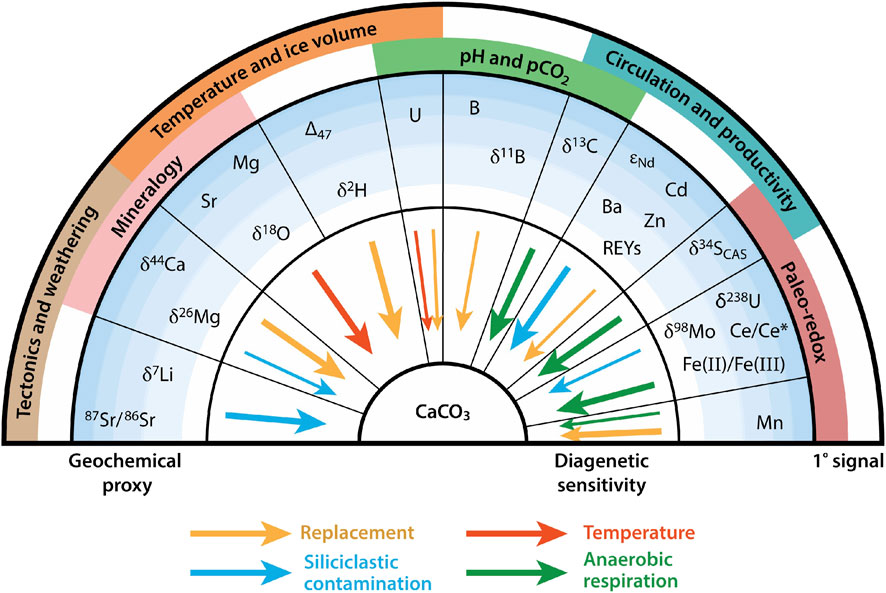
Figure 5. Geochemical proxies and diagenetic alterations in carbonates (From Fantle et al., 2020). Arrow thickness indicates relative sensitivity to alterations.
The dissolution of various silica phases, particularly the more reactive biogenic silica (opal-A and opal-CT), releases silicic acid (H4SiO4) into the pore fluids (Varkouhi et al., 2020). The dissociation of silicic acid can lead to an increase in pH, potentially creating more alkaline conditions within the microenvironment of the source rock (Figure 5). This alkaline shift can have several consequences for the carbonate components. While slightly alkaline conditions might promote the precipitation of certain carbonate cements under specific circumstances, more significant increases in pH could potentially lead to the dissolution of carbonate minerals, particularly calcite, depending on the saturation state of the pore fluids. This carbonate dissolution can further modify the pore network and release calcium and carbonate ions into the solution, influencing subsequent diagenetic reactions.
The alteration of pore fluid chemistry due to silica dissolution can also impact the preservation of organic matter (Varkouhi et al., 2020). Alkaline conditions, particularly in the early stages of diagenesis, can sometimes inhibit the activity of certain microorganisms responsible for the degradation of organic matter, potentially leading to a higher preservation rate of the kerogen. Conversely, the release of dissolved silica and associated ions might influence the complex interactions between organic matter and mineral surfaces, affecting its long-term stability and reactivity.
Furthermore, the presence of different silica phases within the carbonate matrix can influence the adsorption of organic molecules, including hydrocarbons (Parida et al., 2006). The surface properties of various silica minerals (e.g., surface area, charge) can affect the extent to which organic compounds are adsorbed onto their surfaces. This adsorption can impact the mobility of hydrocarbons during primary migration and their distribution within the pore network (Abu-Mahfouz et al., 2020). Strong adsorption could potentially hinder expulsion, while weaker adsorption might facilitate movement.
As highlighted by Huggett et al. (2017), the surfaces of silica minerals can also play a role in the catalytic cracking of kerogen during thermal maturation. The specific surface area and the presence of active sites on different silica phases can influence the rate and selectivity of these reactions, potentially affecting the yield and composition of the generated hydrocarbons. The evolving mineralogy due to silica diagenesis can therefore have a dynamic impact on the catalytic potential within the source rock.
Silica diagenesis is not just a process that modifies the physical framework of carbonate source rocks; it also actively participates in shaping their geochemical environment. The changes in pH and ionic concentrations resulting from silica dissolution can affect carbonate stability and organic matter preservation. Moreover, the presence and evolving nature of silica surfaces can influence the adsorption of organic molecules and potentially catalyze hydrocarbon generation reactions. Understanding these complex geochemical interactions is crucial for a holistic assessment of hydrocarbon generation and expulsion from organic-rich carbonate source rocks.
3 Implications for hydrocarbon generation and migration
The alterations in mineralogy and pore structure induced by silica diagenesis have profound implications for the generation, migration, and retention of hydrocarbons within organic-rich carbonate source rocks.
3.1 Influence on hydrocarbon generation
Silica diagenesis can exert a subtle yet significant influence on the fundamental processes of hydrocarbon generation within organic-rich carbonate source rocks, primarily by modulating the thermal regime and potentially through catalytic effects (Huggett et al., 2017).
The rock matrix’s thermal conductivity determines how efficiently heat is transferred to organic matter (kerogen), influencing its maturation and hydrocarbon generation (Waples, 1994). Higher thermal conductivity means faster heating, which can lead to quicker and more efficient hydrocarbon production. Conversely, lower thermal conductivity can delay the maturation process. The presence and type of silica minerals, which often have different thermal conductivities compared to the dominant carbonate minerals (calcite and dolomite) can alter the overall thermal conductivity of the source rock. For instance, quartz exhibits a considerably higher thermal conductivity than calcite (García-Ten et al., 2010). Therefore, the precipitation of significant amounts of quartz during silica diagenesis can enhance the bulk thermal conductivity of the carbonate source rock. This increased thermal conductivity could potentially lead to a more rapid heating of the organic matter under a given geothermal gradient, accelerating the kinetics of kerogen cracking and hydrocarbon generation, potentially shifting the oil and gas windows to shallower depths or earlier times in the basin’s history (Wei et al., 2023). Conversely, if silica diagenesis results in the formation of less thermally conductive silica phases or if it inhibits the formation of highly conductive minerals, it could have the opposite effect, slowing down the maturation process.
Beyond its influence on thermal conductivity, the presence of silica surfaces within the source rock has been proposed to exhibit catalytic effects on the chemical reactions involved in kerogen cracking (Huggett et al., 2017; Abu-Mahfouz et al., 2020). Certain mineral surfaces can act as catalysts, lowering the activation energy required for specific chemical bonds in kerogen to break, thus facilitating the generation of hydrocarbons at lower temperatures or with different product yields. The specific type and surface area of the silica phases formed during diagenesis (e.g., microquartz, chert, or even remnants of biogenic silica) could influence the extent and nature of this catalytic activity. For example, the highly reactive surfaces of freshly precipitated silica or the porous structure of some biogenic silica remnants might offer more active sites for catalytic reactions compared to well-crystallized quartz. This catalytic influence could potentially alter the composition of the generated hydrocarbons, affecting the relative proportions of oil, gas, and bitumen.
Furthermore, silica diagenesis can indirectly influence hydrocarbon generation by affecting the pore fluid chemistry. The dissolution of silica can alter the pH and the concentration of dissolved ions in the pore water, which in turn might impact the stability and reactivity of organic matter. While the direct catalytic role of silica is still an area of active research, the interplay between silica diagenesis, thermal evolution, and the chemical environment within organic-rich carbonate source rocks underscores the complex ways in which this diagenetic process can influence the timing, rate, and potentially the products of hydrocarbon generation. Further research employing sophisticated experimental and modeling techniques is needed to fully elucidate these intricate relationships.
3.2 Impact on primary migration pathways
Primary migration, the process by which newly generated hydrocarbons are expelled from organic-rich source rocks (Littke and Welte, 1992; Peters and Fowler, 2002), is fundamentally controlled by the complex architecture and connectivity of the pore network within these fine-grained sediments (Klaver et al., 2024; El-Feky et al., 2025). Silica diagenesis exerts a significant influence on this pore system in carbonate rocks, thereby playing a critical role in determining the efficiency and timing of hydrocarbon expulsion (Abu-Mahfouz et al., 2020).
The dissolution of unstable silica phases, such as biogenic opal or early-formed silica cements, can lead to an increase in both the overall porosity and, more importantly, the connectivity of the pore network (Huggett et al., 2017; Abu-Mahfouz et al., 2020). This enhancement in permeability, even if localized, can create more efficient pathways for hydrocarbons to overcome capillary entry pressures and move out of the source rock matrix. The creation of larger, interconnected pores facilitates the bulk flow of hydrocarbons (Figure 4), potentially leading to earlier and more effective expulsion. Furthermore, the dissolution of silica associated with organic matter degradation might create pathways directly linked to hydrocarbon generation sites, further aiding primary migration.
The diagenesis of biogenic silica, in some cases, particularly the development of chert nodules (e.g., Abu-Mahfouz et al., 2023a), is an important factor contributing to fracture formation in these rocks. As burial progresses, biogenic silica undergoes recrystallization into chert, generating internal stress that can lead to localized overpressuring. This pressure buildup is capable of initiating microfractures within the source rock (Abu-Mahfouz et al., 2020), driven by the substantial force associated with silica recrystallization. These microfractures act as migration pathways for bitumen released during the initial stages of hydrocarbon maturation (Figure 2). Understanding the interaction between silica crystallization and bitumen movement is essential to interpreting the mechanics of fracture initiation and hydrocarbon migration. The stress required to induce bitumen-driven mode I fractures is lower than the pressure exerted by quartz crystallization under equivalent conditions, typically exceeding 40 MPa (Maliva and Siever, 1988). This difference supports the hypothesis that silica-induced overpressure is sufficient to form microfractures that facilitate the escape and movement of bitumen.
On the other hand, the precipitation of various silica phases, including quartz overgrowths, microquartz, or the formation of chert nodules and layers (Abu-Mahfouz et al., 2023a), can severely impede primary migration. These authigenic silica minerals often preferentially precipitate within pore throats, effectively constricting or completely occluding the narrow passages that are crucial for fluid flow in low-permeability source rocks. This reduction in pore connectivity increases the tortuosity of migration pathways and significantly elevates the capillary entry pressures that hydrocarbons must overcome to be expelled. As a result, hydrocarbon expulsion may be delayed, less efficient, or require the buildup of higher pore fluid pressures within the source rock. This can lead to increased retention of hydrocarbons within the source rock matrix, potentially subjecting them to further maturation or even cracking if expulsion is significantly hindered.
The timing of silica diagenesis relative to the onset of hydrocarbon generation is also a critical factor. If significant silica cementation occurs prior to or during the early stages of hydrocarbon generation (Figure 6), the developing pore pressure from hydrocarbon generation might be insufficient to overcome the reduced permeability, leading to hydrocarbon retention. Conversely, if silica dissolution occurs concurrently with hydrocarbon generation, it could facilitate expulsion.
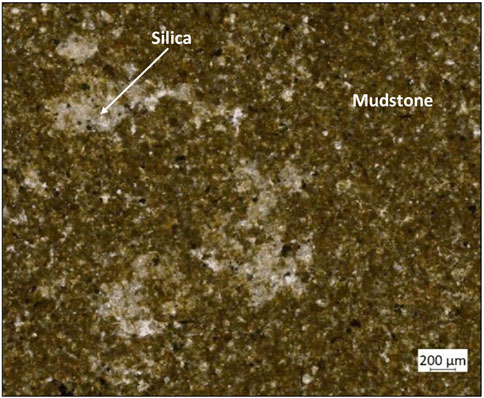
Figure 6. Thin section image of carbonate mudrock from the Upper Cretaceous source rock sequence in central Jordan, displaying silica cement disseminated throughout the matrix, indicative of silica diagenesis processes.
The complex relationship between carbonate mineral diagenesis and silica diagenesis further complicates the evolution of primary migration pathways. For example, dolomitization, a common diagenetic process in carbonates, can lead to significant changes in pore size and distribution (Flügel, 2004; Al-Ramadan et al., 2020), which can be either enhanced or counteracted by concurrent or subsequent silica precipitation or dissolution. Understanding the paragenetic sequence of these diagenetic events is therefore essential for accurately assessing their combined impact on primary migration in organic-rich carbonate source rocks. Advanced analytical techniques, such as high-resolution imaging and mercury intrusion porosimetry, coupled with detailed petrographic and geochemical analyses, are crucial for characterizing the complex pore networks and the influence of silica diagenesis on primary migration pathways at the micro- and nanoscale (El-Feky et al., 2025).
3.3 Effects on secondary migration and entrapment
The influence of silica diagenesis is not confined to the source rock; it extends to the broader petroleum system, critically impacting the processes of secondary migration and ultimate hydrocarbon entrapment (Mclimans, 1987; Ellis, 1998). Secondary migration involves the movement of hydrocarbons from the source rock through permeable carrier beds to a reservoir (Spencer, 1983). The efficiency of this process is highly sensitive to the petrophysical properties of these carrier beds, which can be significantly modified by silica diagenesis (Luo et al., 2023). For instance, the precipitation of silica cements, such as quartz overgrowths or the formation of microquartz within the pore spaces of sandstone or fractured carbonate carrier beds, can drastically reduce their permeability (e.g., Higgs et al., 2007; Hooker et al., 2017). This reduction in permeability can impede the flow of hydrocarbons, potentially leading to slower migration rates, increased losses due to biodegradation or adsorption, or even the compartmentalization of hydrocarbon accumulations. Furthermore, the reduction in porosity due to silica cementation directly diminishes the storage capacity of potential reservoir units encountered along the migration pathway, potentially hindering the accumulation of significant hydrocarbon volumes. Conversely, in some scenarios, silica diagenesis might indirectly enhance secondary migration (Abu-Mahfouz et al., 2020). For example, the dissolution of unstable silica phases could locally increase permeability within certain conduits (Figure 4), facilitating hydrocarbon movement. However, the more commonly observed and impactful effect is the impedance of flow due to silica cementation.
The role of silica diagenesis in the formation and maintenance of effective caprocks is equally significant for hydrocarbon entrapment. Caprocks, which are impermeable layers overlying reservoir rocks, prevent the buoyant escape of hydrocarbons. The precipitation of silica minerals, such as the formation of dense chert layers or the infilling of fractures with quartz cement within shale or tight carbonate caprocks (e.g., Abu-Mahfouz et al., 2023a), can significantly enhance their sealing capacity. These silica-rich zones reduce the permeability of the caprock, thereby increasing the capillary entry pressure required for hydrocarbons to break through and leak to the surface (Major, 2018). A well-developed silica-cemented caprock can thus be a critical factor in the long-term preservation of hydrocarbon accumulations.
Understanding the temporal and spatial evolution of silica diagenetic processes across the entire sedimentary basin, including source rocks, carrier beds, and caprocks, is therefore paramount for accurately predicting the location, size, and longevity of hydrocarbon accumulations. The timing of silica diagenesis relative to hydrocarbon generation and migration pathways is particularly crucial (Abu-Mahfouz et al., 2020). For example, early silica cementation in a carrier bed might occur before significant hydrocarbon expulsion from the source rock (Hooker et al., 2017; Huggett et al., 2017), potentially hindering migration. On the contrary, late-stage formation of a silica-rich seal above an already filled reservoir can ensure its long-term integrity. Therefore, integrating the diagenetic history with the thermal and burial history of the basin is essential for a comprehensive understanding of petroleum system dynamics.
4 Methodological advancements
Recent advancements in analytical technologies and modeling methodologies have profoundly clarified the role of silica diagenesis in carbonate source rocks. High-resolution imaging techniques, particularly scanning electron microscopy (SEM) coupled with energy-dispersive X-ray spectroscopy (EDS), transmission electron microscopy (TEM), and synchrotron-based X-ray microtomography, have provided unprecedented insight into pore structure evolution at the micro- and nanoscale (e.g., Loucks et al., 2009; Bernard et al., 2012; Milliken et al., 2013; Anovitz et al., 2015; Gou et al., 2019; El-Feky et al., 2025). These tools allow for detailed visualization of the spatial and textural relationships between silica and carbonate phases, shedding light on the mechanisms of silica dissolution, mobilization, and reprecipitation, and their implications for porosity and permeability development (El-Feky et al., 2025). Such insights are vital for evaluating reservoir quality and predicting fluid flow behavior.
The stable isotopes of silicon (δ28Si, δ29Si, δ30Si) are an important source of information about the past and present silica cycle. In particular, isotopic analyses, especially those involving stable isotopes of oxygen (δ18O) and silicon (δ30Si), have emerged as vital tools for tracing the origin and evolution of silica in marine and lacustrine settings (Frings et al., 2024), particularly within carbonate systems. These isotopes act as sensitive geochemical tracers that reflect both the source material and the environmental conditions prevailing during silica mobilization and transformation (Poitrasson, 2017; Wang et al., 2019). Variations in δ18O values, for instance, are influenced by temperature-dependent fractionation processes between quartz, chert, and associated fluids, allowing for the estimation of paleo-temperatures during diagenesis. In contrast, δ30Si values are primarily governed by silica precipitation, dissolution, and biological uptake, providing insights into the biogenic or detrital origins of silica and the extent of isotopic re-equilibration during burial (Frings et al., 2024).
The combination of δ18O and δ30Si isotopic data serves as a powerful geochemical chronometer, offering temporal constraints on the timing and progression of diagenetic events (Figure 7). Analyzing these signatures in chert nodules, quartz overgrowths, and matrix silica helps reconstruct the sequence of fluid-rock interactions, including episodes of silica dissolution, recrystallization, and cementation (e.g., Frings et al., 2024). This isotopic evidence also sheds light on the sources of silica-bearing fluids, whether derived from seawater, meteoric input, or hydrothermal activity, and the pathways by which these fluids infiltrate the carbonate matrix (Huggett et al., 2017; Varkouhi et al., 2020).
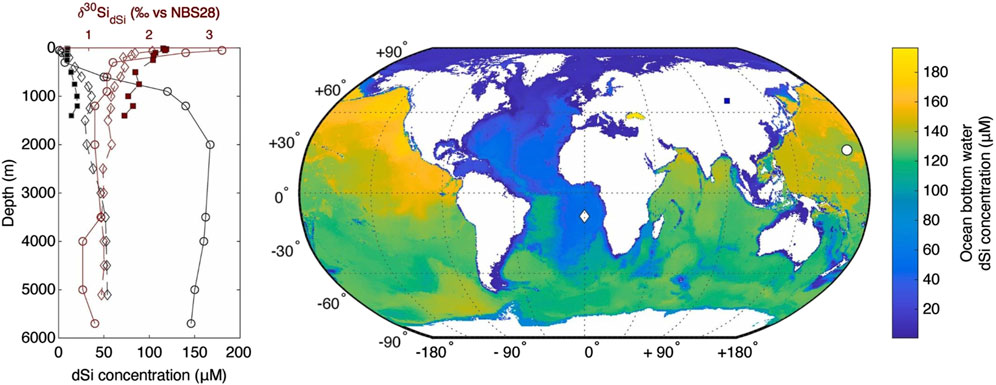
Figure 7. Major vertical and lateral gradients in the modern ocean silicon cycle. Vertical profiles of silicon concentrations (black lines) and dissolved silicon δ30Si (red lines) from the Equatorial Atlantic (diamonds), North Pacific (circles), and Lake Baikal (filled squares) display typical ‘nutrient-like’ patterns (from Frings et al., 2024). These distributions are governed by biomass production in the euphotic zone and its gradual dissolution during sinking. Data sources include de Souza et al. (2012) and Reynolds et al. (2006) for the Atlantic and Pacific profiles, respectively, and Panizzo et al. (2017) for Lake Baikal. Dissolved silicon concentrations in ocean bottom waters show lower [dSi] in the North Atlantic and higher [dSi] in the North Pacific, reflecting variations in water mass age. Symbols indicate the sampling locations from panel A. These data are derived from the WOCE Global Hydrographic Climatology (Gouretski and Koltermann, 2004).
Moreover, isotope-based reconstructions contribute to understanding the role of temperature, pressure, and fluid composition in driving diagenetic transformation (Huggett et al., 2017; Hooker et al., 2017), which in turn influences porosity evolution and reservoir quality. When integrated with petrographic, mineralogical, and geochemical data, stable isotope analyses enable a multidimensional view of silica diagenesis, offering critical insights into both local-scale pore evolution and basin-scale fluid migration systems. As such, isotopic tools not only enhance the reconstruction of diagenetic environments but also support predictive modeling of reservoir development and hydrocarbon migration in silica-rich carbonate settings.
Complementing these empirical approaches, reactive transport modeling has emerged as a crucial tool for simulating the coupled geochemical and hydrological processes that drive silica and carbonate diagenesis. These simulations incorporate variable parameters such as temperature, pressure, mineral surface reactivity, and fluid composition to predict mineralogical changes and porosity evolution over geological timescales (Huggett et al., 2017). Such models not only enhance predictive capabilities but also aid in hypothesis testing and scenario evaluation, allowing researchers to explore diagenetic pathways under different boundary conditions.
A multidimensional integration of data across scales, from pore-scale imaging and isotopic geochemistry to core-scale petrophysical measurements and basin-scale modeling, has culminated in a more comprehensive framework for interpreting silica diagenesis. The synthesis of porosity and permeability data from core analyses and well logs with mineralogical, petrographic, and geochemical datasets enables more accurate assessments of reservoir heterogeneity and diagenetic alteration (e.g., Usman et al., 2024). This holistic approach not only refines interpretations of diagenetic history but also informs more effective strategies for hydrocarbon exploration and production, particularly in complex carbonate systems where silica diagenesis plays a critical role in shaping reservoir properties.
5 Limitations, advantages, and future directions
5.1 Limitations
• The review primarily concentrates on silica diagenesis within carbonate rocks, with relatively limited discussion on siliciclastic systems. Since siliciclastic rocks can also undergo similar silica-related diagenetic processes, expanding coverage to these systems could provide a more comprehensive understanding.
• Additionally, the manuscript does not extensively explore the role of microbial activity in mediating silica diagenesis. Emerging research suggests that microbes can significantly influence silica mineralization and dissolution, and incorporating this aspect could enhance the depth of the discussion.
5.2 Advantages
• The manuscript offers a holistic perspective on silica diagenesis, effectively integrating mineralogical, geochemical, and hydrological processes. This interconnected approach facilitates a better understanding of how silica transformations impact hydrocarbon system development and maturation.
• The inclusion of advanced analytical techniques, such as high-resolution imaging and isotopic analyses, underscores the manuscript’s relevance to contemporary research methodologies. These approaches enable detailed characterization of diagenetic features, fostering more accurate interpretations of silica-related processes.
5.3 Future directions
• Further investigation into how microbial communities influence silica diagenesis is warranted, particularly regarding their role in mineral transformations and implications for hydrocarbon preservation.
• Developing basin-scale predictive models that incorporate silica diagenesis and fluid migration patterns could improve exploration strategies and risk assessments.
• The application of machine learning and data-driven approaches to analyze large petrographic and geochemical datasets holds promise for identifying subtle diagenetic trends and enhancing predictive capabilities in silica diagenesis studies.
6 Conclusion and future perspectives
Silica diagenesis plays a pivotal and multifaceted role in shaping the properties and hydrocarbon potential of organic-rich carbonate source rocks. The dissolution and precipitation of silica phases significantly alter the mineralogy and pore structure of these formations, with direct consequences for hydrocarbon generation, primary and secondary migration pathways, and ultimate retention. Recent methodological advancements, including high-resolution imaging, isotopic analyses, and geochemical modeling, are providing unprecedented insights into these complex diagenetic processes.
Despite these advancements, several key areas warrant further investigation. Future research should focus on:
• Developing more integrated studies that combine advanced analytical techniques with robust geochemical modeling to better quantify the impact of silica diagenesis on hydrocarbon generation kinetics and expulsion efficiency.
• Investigating the potential role of microbial activity in mediating silica diagenetic reactions within organic-rich carbonate environments.
• Exploring the influence of silica diagenesis on the development of unconventional hydrocarbon resources in carbonate mudstones and shales.
• Establishing more predictive models that can incorporate the effects of silica diagenesis into reservoir characterization and flow simulations.
A deeper understanding of the intricate relationship between silica diagenesis and organic-rich carbonates will undoubtedly lead to improved predictive capabilities in petroleum geology, ultimately contributing to more effective strategies for hydrocarbon exploration and resource management in these critical geological settings.
Author contributions
IA-M: Conceptualization, Data curation, Funding acquisition, Investigation, Methodology, Resources, Validation, Visualization, Writing – original draft, Writing – review and editing.
Funding
The author(s) declare that financial support was received for the research and/or publication of this article. College of Petroleum Engineering and Geosciences, King Fahd University of Petroleum and Minerals.
Conflict of interest
The author declares that the research was conducted in the absence of any commercial or financial relationships that could be construed as a potential conflict of interest.
Generative AI statement
The author(s) declare that no Generative AI was used in the creation of this manuscript.
Any alternative text (alt text) provided alongside figures in this article has been generated by Frontiers with the support of artificial intelligence and reasonable efforts have been made to ensure accuracy, including review by the authors wherever possible. If you identify any issues, please contact us.
Publisher’s note
All claims expressed in this article are solely those of the authors and do not necessarily represent those of their affiliated organizations, or those of the publisher, the editors and the reviewers. Any product that may be evaluated in this article, or claim that may be made by its manufacturer, is not guaranteed or endorsed by the publisher.
References
Abu-Mahfouz, I. S., Cartwright, J. A., Idiz, E., Hooker, J. N., Robinson, S., and van den Boorn, S. (2019). Genesis and role of bitumen in fracture development during early catagenesis. Pet. Geosci. 25 (4), 371–388. doi:10.1144/petgeo2018-179
Abu-Mahfouz, I. S., Cartwright, J., Idiz, E., Hooker, J. N., and Robinson, S. A. (2020). Silica diagenesis promotes early primary hydrocarbon migration. Geology 48 (5), 483–487. doi:10.1130/g47023.1
Abu-Mahfouz, I. S., Iakusheva, R., Finkbeiner, T., Cartwright, J., and Vahrenkamp, V. (2023b). Rock mechanical properties of immature, organic-rich source rocks and their relationships to rock composition and lithofacies. Pet. Geosci. 29 (1), 2022–021. doi:10.1144/petgeo2022-021
Abu-Mahfouz, I. S., Cartwright, J. A., Powell, J. H., Abu-Mahfouz, M. S., and Podlaha, O. G. (2023a). Diagenesis, compaction strain and deformation associated with chert and carbonate concretions in organic-rich marl and phosphorite; Upper Cretaceous to Eocene, Jordan. Sedimentology 70 (5), 1521–1552. doi:10.1111/sed.13085
Al-Ramadan, K., Koeshidayatullah, A., Cantrell, D., and Swart, P. K. (2020). Impact of basin architecture on diagenesis and dolomitization in a fault-bounded carbonate platform: outcrop analogue of a pre-salt carbonate reservoir, Red Sea rift, NW Saudi Arabia. Pet. Geosci. 26 (3), 448–461. doi:10.1144/petgeo2018-125
Anovitz, L. M., Cole, D. R., Sheets, J. M., Swift, A., Elston, H. W., Welch, S., et al. (2015). Effects of maturation on multiscale (nanometer to millimeter) porosity in the eagle ford shale. Interpretation 3 (3), SU59–SU70. doi:10.1190/int-2014-0280.1
Armbrust, E. V. (2009). The life of diatoms in the world's oceans. Nature 459 (7244), 185–192. doi:10.1038/nature08057
Bernard, S., Wirth, R., Schreiber, A., Schulz, H. M., and Horsfield, B. (2012). Formation of nanoporous pyrobitumen residues during maturation of the barnett shale (fort worth basin). Int. J. Coal Geol. 103, 3–11. doi:10.1016/j.coal.2012.04.010
Bustillo, M. A. (2010). Silicification of continental carbonates. Dev. Sedimentology 62, 153–178. doi:10.1016/S0070-4571(09)06203-7
Calvert, S. E. (1975). Deposition and diagenesis of silica in marine sediments in Pelagic sediments: on land and under the sea. 273–299.
de La Rocha, C. L., and Passow, U. (2006). The biological pump. Treatise Geochem. 6, 83–111. doi:10.1016/B0-08-043751-6/06107-7
de Souza, G. F., Reynolds, B. C., Rickli, J., Frank, M., Saito, M. A., Gerringa, L. J., et al. (2012). Southern Ocean control of silicon stable isotope distribution in the deep Atlantic Ocean. Glob. Biogeochem. Cycles 26 (2). doi:10.1029/2011gb004141
El-Feky, Y., Abu-Mahfouz, I. S., and El-Husseiny, A. (2025). Microscopic characterization and modeling of pore structure heterogeneity in Upper Cretaceous immature, organic-rich carbonate source rocks, central Jordan. Pet. Geosci. 2025–017. doi:10.1144/petgeo2025-017
Ellis, G. K. (1998). Fluid flow, diagenesis and hydrocarbon entrapment history of the plover formation. Australia: Sahul Platform.
Fang, Y., and Xu, H. (2022). Dissolved silica-catalyzed disordered dolomite precipitation. Am. Mineralogist 107 (3), 443–452. doi:10.2138/am-2021-7474
Fantle, M. S., Barnes, B. D., and Lau, K. V. (2020). The role of diagenesis in shaping the geochemistry of the marine carbonate record. Annu. Rev. Earth Planet. Sci. 48 (1), 549–583. doi:10.1146/annurev-earth-073019-060021
Farzaneh, M., Maleki, Z., Arian, M., Ganjavian, M. A., and Kianoush, P. (2025). Investigating hydrocarbon potential utilizing isopach maps in the paleo-environment of the external Fars region, zagros fold-thrust belt. Solid Earth Sci. 10 (2), 100242. doi:10.1016/j.sesci.2025.100242
Flügel, E. (2004). “Diagenesis, porosity, and dolomitization,” in In microfacies of carbonate rocks: analysis, interpretation and application (Berlin, Heidelberg: Springer Berlin Heidelberg), 267–338.
Frings, P. J., Panizzo, V. N., Sutton, J. N., and Ehlert, C. (2024). Diatom silicon isotope ratios in Quaternary research: where do we stand? Quat. Sci. Rev. 344, 108966. doi:10.1016/j.quascirev.2024.108966
García-Ten, J., Orts, M. J., Saburit, A., and Silva, G. (2010). Thermal conductivity of traditional ceramics: part II: influence of mineralogical composition. Ceram. Int. 36 (7), 2017–2024. doi:10.1016/j.ceramint.2010.05.013
Gou, Q., Xu, S., Hao, F., Yang, F., Zhang, B., Shu, Z., et al. (2019). Full-scale pores and micro-fractures characterization using FE-SEM, gas adsorption, nano-CT and micro-CT: a case study of the Silurian longmaxi formation shale in the fuling area, sichuan basin, China. Fuel 253, 167–179. doi:10.1016/j.fuel.2019.04.116
Hesse, R. (1988). Diagenesis 13. Origin of chert: diagenesis of biogenic siliceous sediments. Geosci. Can. 15 (3), 171–192. Available online at: https://id.erudit.org/iderudit/geocan15_3art01.
Higgs, K. E., Zwingmann, H., Reyes, A. G., and Funnell, R. H. (2007). Diagenesis, porosity evolution, and petroleum emplacement in tight gas reservoirs, Taranaki basin, New Zealand. J. Sediment. Res. 77 (12), 1003–1025. doi:10.2110/jsr.2007.095
Hooker, J. N., Huggett, J. M., Cartwright, J., and Ali Hussein, M. (2017). Regional-scale development of opening-mode calcite veins due to silica diagenesis. Geochem. Geophys. Geosystems 18 (7), 2580–2600. doi:10.1002/2017gc006888
Hooker, J. N., Abu-Mahfouz, I. S., Meng, Q., and Cartwright, J. (2019). Fractures in mudrocks: advances in constraining timing and understanding mechanisms. J. Struct. Geol. 125, 166–173. doi:10.1016/j.jsg.2018.04.020
Huggett, J., Hooker, J. N., and Cartwright, J. (2017). Very early diagenesis in a calcareous, organic-rich mudrock from Jordan. Arabian J. Geosciences 10 (12), 270. doi:10.1007/s12517-017-3038-5
Jurkowska, A. (2022). The biotic-abiotic control of Si burial in marine carbonate systems of the pre-eocene Si cycle. Glob. Biogeochem. Cycles 36 (3), e2021GB007079. doi:10.1029/2021gb007079
Kianoush, P., Mohammadi, G., Hosseini, S. A., Keshavarz Faraj Khah, N., and Afzal, P. (2023). ANN-based estimation of pore pressure of hydrocarbon reservoirs—a case study. Arabian J. Geosciences 16 (5), 302. doi:10.1007/s12517-023-11373-6
Klaver, J., Grohmann, S., Gaus, G., Abu-Mahfouz, I. S., Patzek, T., Vahrenkamp, V., et al. (2024). Microstructural BIB-SEM investigation of Upper Cretaceous Jordanian carbonate-rich oil shales bearing type II-S kerogen. Int. J. Earth Sci. 113 (8), 2233–2249. doi:10.1007/s00531-024-02444-4
Klein, R. T., and Walter, L. M. (1996). Interactions between dissolved silica and carbonate minerals: an experimental study at 25-50° C. Oceanogr. Lit. Rev. 4 (43), 368. doi:10.1016/0009-2541(95)00080-6
Knoll, A. H. (2003). Biomineralization and evolutionary history. Rev. mineralogy Geochem. 54 (1), 329–356. doi:10.2113/0540329
LeBlanc, J. (2017). Origin and types of silica in the lower Eocene carbonates of the rus formation, Qatar, middle-east. Interpretation 47, 5.
Littke, R., and Welte, D. H. (1992). Hydrocarbon source rocks. Cambridge, United Kingdom: Cambridge University Press, 364–374.
Loucks, R. G., Reed, R. M., Ruppel, S. C., and Jarvie, D. M. (2009). Morphology, genesis, and distribution of nanometer-scale pores in siliceous mudstones of the Mississippian barnett shale. J. Sediment. Res. 79 (12), 848–861. doi:10.2110/jsr.2009.092
Lu, L., Liu, W., Yu, L., Zhang, W., Shen, B., and Teng, G. (2020). Early diagenesis characteristics of biogenic opal and its influence on porosity and pore network evolution of siliceous shale. Pet. Geol. Exp. 42 (3), 363–370. doi:10.11781/sysydz202003363
Luo, X., Zhang, L., Zhang, L., Lei, Y., Li, J., Yang, W., et al. (2023). Heterogeneity in siliciclastic carrier beds: implications for hydrocarbon migration and accumulation. AAPG Bull. 107 (7), 1017–1036. doi:10.1306/10242221067
Machel, H. G. (1999). Effects of groundwater flow on mineral diagenesis, with emphasis on carbonate aquifers. Hydrogeology 7, 94–107. doi:10.1007/s100400050182
Major, J. R. (2018). Natural fractures in mudrocks and top seal integrity: insights from diagenesis, rock mechanics, and modeling applied to CO2 sequestration and hydrocarbon exploration. Austin: The University of Texas at Austin.
Maliva, R. G., and Maliva, R. G. (2016). Carbonate facies models and diagenesis. Aquifer Charact. Tech. Schlumberger Methods Water Resour. Eval. 4, 91–110. doi:10.1007/978-3-319-32137-0_4
Maliva, R. G., and Siever, R. (1988). Diagenetic replacement controlled by force of crystallization. Geology 16 (8), 688–691. doi:10.1130/0091-7613(1988)016<0688:drcbfo>2.3.co;2
Mclimans, R. K. (1987). The application of fluid inclusions to migration of oil and diagenesis in petroleum reservoirs. Appl. Geochem. 2 (5-6), 585–603. doi:10.1016/0883-2927(87)90011-4
Milliken, K. L., and Olson, T. (2017). Silica diagenesis, porosity evolution, and mechanical behavior in siliceous mudstones, mowry Shale (Cretaceous), rocky Mountains, USA. J. Sediment. Res. 87 (4), 366–387. doi:10.2110/jsr.2017.24
Milliken, K. L., Rudnicki, M., Awwiller, D. N., and Zhang, T. (2013). Organic matter–hosted pore system, marcellus formation (devonian), Pennsylvania. AAPG Bull. 97 (2), 177–200. doi:10.1306/07231212048
Nelson, D. M., Tréguer, P., Brzezinski, M. A., Leynaert, A., and Quéguiner, B. (1995). Production and dissolution of biogenic silica in the ocean: revised global estimates, comparison with regional data and relationship to biogenic sedimentation. Glob. Biogeochem. cycles 9 (3), 359–372. doi:10.1029/95gb01070
Pang, X., Jiang, Z., Zuo, S., and Lerche, I. (2005). Dynamics of hydrocarbon expulsion from shale source rocks. Energy Explor. and exploitation 23 (5), 333–355. doi:10.1260/014459805775992735
Panizzo, V. N., Swann, G. E., Mackay, A. W., Vologina, E., Alleman, L., André, L., et al. (2017). Constraining modern-day silicon cycling in Lake Baikal. Glob. Biogeochem. Cycles 31 (3), 556–574. doi:10.1002/2016gb005518
Parida, S. K., Dash, S., Patel, S., and Mishra, B. K. (2006). Adsorption of organic molecules on silica surface. Adv. colloid interface Sci. 121 (1-3), 77–110. doi:10.1016/j.cis.2006.05.028
Parnell, J., Osinski, G. R., Lee, P., Green, P. F., and Baron, M. J. (2005). Thermal alteration of organic matter in an impact crater and the duration of postimpact heating. Geology 33 (5), 373–376. doi:10.1130/g21204.1
Pellegrino, L., Dela Pierre, F., Jordan, R. W., Abe, K., Mikami, Y., Natalicchio, M., et al. (2020). The upper Miocene diatomaceous sediments of the northernmost mediterranean region: a lamina-scale investigation of an overlooked palaeoceanographic archive. Sedimentology 67 (7), 3389–3421. doi:10.1111/sed.12748
Pellegrino, L., Natalicchio, M., Birgel, D., Pastero, L., Carnevale, G., Jordan, R. W., et al. (2023). From biogenic silica and organic matter to authigenic clays and dolomite: insights from Messinian (upper Miocene) sediments of the northern mediterranean. Sedimentology 70 (2), 505–537. doi:10.1111/sed.13053
Pepper, A. S. (1991). Estimating the petroleum expulsion behaviour of source rocks: a novel quantitative approach. Geol. Soc. 59 (1), 9–31. doi:10.1144/gsl.sp.1991.059.01.02
Peters, K. E., and Fowler, M. G. (2002). Applications of petroleum geochemistry to exploration and reservoir management. Org. Geochem. 33 (1), 5–36. doi:10.1016/s0146-6380(01)00125-5
Poitrasson, F. (2017). Silicon isotope geochemistry. Rev. Mineralogy Geochem. 82 (1), 289–344. doi:10.2138/rmg.2017.82.8
Reynolds, B. C., Frank, M., and Halliday, A. N. (2006). Silicon isotope fractionation during nutrient utilization in the north Pacific. Earth Planet. Sci. Lett. 244 (1-2), 431–443. doi:10.1016/j.epsl.2006.02.002
Saffari, M., and Kianoush, P. (2025). Integrated petrophysical evaluation of sarvak, gadvan, and fahliyan formations in the zagros area. J. Petroleum Explor. Prod. Technol. 15 (3), 54. doi:10.1007/s13202-025-01953-5
Salem, A. M., Ketzer, J. M., Morad, S., Rizk, R. R., and Al-Aasm, I. S. (2005). Diagenesis and reservoir-quality evolution of incised-valley sandstones: evidence from the abu madi gas reservoirs (upper Miocene), the nile Delta basin, Egypt. J. Sediment. Res. 75 (4), 572–584. doi:10.2110/jsr.2005.047
Smirnov, P., Deryagina, O., Afanasieva, N., Rudmin, M., and Gursky, H. J. (2020). Clay minerals and detrital material in Paleocene–Eocene biogenic siliceous rocks (Sw Western Siberia): implications for volcanic and depositional environment record. Geosciences 10 (5), 162. doi:10.3390/geosciences10050162
Sujkowski, Z. L. (1958). Diagenesis. AAPG Bull. 42 (11), 2692–2717. doi:10.1306/0bda5c09-16bd-11d7-8645000102c1865d
Tosca, N. J., and Wright, V. P. (2018). Diagenetic pathways linked to labile Mg-clays in lacustrine carbonate reservoirs: a model for the origin of secondary porosity in the Cretaceous pre-salt Barra Velha Formation, offshore Brazil. 435, 33–46. doi:10.1144/sp435.1
Usman, M., Grohmann, S., Abu-Mahfouz, I. S., Vahrenkamp, V., and Littke, R. (2024). Effects of geochemical compositional heterogeneities on hydrocarbon expulsion and thermal maturation: an analog study of maastrichtian source rocks from Jordan. Int. J. Coal Geol. 294, 104587. doi:10.1016/j.coal.2024.104587
Van den Boorn, S. H. J. M. (2008). Silicon isotopes and the origin of Archaean cherts. Utrecht: University of Utrecht, 277.
Varkouhi, S., Tosca, N. J., and Cartwright, J. A. (2020). Pore-water chemistry: a proxy for tracking the signature of ongoing silica diagenesis. J. Sediment. Res. 90 (9), 1037–1067. doi:10.2110/jsr.2020.56
Varkouhi, S., Tosca, N. J., Cartwright, J. A., Guo, Z., Kianoush, P., and Jurkowska, A. (2024). Pore water chemical constraints on petrophysical shifts following biosilica diagenesis. Geochem. Perspect. Lett. 32, 39–45. doi:10.7185/geochemlet.2440
Wang, W., Wei, H. Z., Jiang, S. Y., Liu, X., Lei, F., Lin, Y. B., et al. (2019). Silicon isotope geochemistry: fractionation linked to silicon complexations and its geological applications. Molecules 24 (7), 1415. doi:10.3390/molecules24071415
Waples, D. W. (1994). Maturity modeling: thermal indicators, hydrocarbon generation, and oil cracking.
Wei, S., Hu, M., He, S., Shu, Y., Dong, T., He, Q., et al. (2023). Effects of quartz precipitation on the abundance and preservation of organic matter pores in Cambrian marine shale in South China. J. Mar. Sci. Eng. 11 (7), 1267. doi:10.3390/jmse11071267
Worden, R. H., Armitage, P. J., Butcher, A. R., Churchill, J. M., Csoma, A. E., Hollis, C., et al. (2018). Petroleum reservoir quality prediction: overview and contrasting approaches from sandstone and carbonate communities. 435, 1–31. doi:10.1144/sp435.21
Keywords: silica diagenesis, carbonates, source rocks, hydrocarbon maturation, hydrocarbon migration
Citation: Abu-Mahfouz IS (2025) The impact of silica diagenesis on organic-rich carbonate source rocks: a review. Front. Earth Sci. 13:1674784. doi: 10.3389/feart.2025.1674784
Received: 28 July 2025; Accepted: 27 August 2025;
Published: 05 September 2025.
Edited by:
Shahab Varkouhi, University College London, United KingdomReviewed by:
Pooria Kianoush, Islamic Azad University South Tehran Branch, IranHanbing Ai, China University of Geosciences, China
Copyright © 2025 Abu-Mahfouz. This is an open-access article distributed under the terms of the Creative Commons Attribution License (CC BY). The use, distribution or reproduction in other forums is permitted, provided the original author(s) and the copyright owner(s) are credited and that the original publication in this journal is cited, in accordance with accepted academic practice. No use, distribution or reproduction is permitted which does not comply with these terms.
*Correspondence: Israa S. Abu-Mahfouz, aXNyYWEuYWJ1bWFoZm91ekBrZnVwbS5lZHUuc2E=