 Mark C. Mainwaring
- Lancaster University Centre, Lancaster University, Lancaster, United Kingdom
Nest building is an important and yet under-studied stage of the reproductive cycle in many taxa, including birds, and whilst we have a decent understanding of interspecific variation in avian nesting behaviors, our understanding of intraspecific variation in nesting behaviors is much less developed. This is largely because an insufficient number of studies have been performed on any one species to draw robust conclusions. Fortunately, though, the amount of research on the nesting behaviors of nestbox-breeding blue tits (Cyanistes caeruleus) and great tits (Parus major) has increased dramatically in recent years and their nesting behaviors are now sufficiently well-studied to offer useful insights into intraspecific variation in avian nesting behaviors. Studies show that individuals of both species select nest sites based on the presence and/or absence of conspecifics and heterospecifics and whilst neighbors were assumed to adversely affect focal individuals by competing for resources, they are now considered beneficial as they provide information about habitat quality and contribute to anti-predator defenses. Nest-building females accurately gauge local weather conditions and respond to predictable variation in environmental conditions by building nests with variable amounts of cup lining material to create suitable nest microclimates for nestlings. Meanwhile, both species vary the amount of aromatic plant materials in their nests in relation to the abundance of nest-dwelling parasites and pathogens and as aromatic plant materials also play a role in sexual selection then nest materials can have multiple functions. The height of nests is negatively correlated with the local risk of predation but whilst predator avoidance favors lower nests, sexual selection favors taller nests. In fact, higher quality females build taller nests that contain more green plant material which in turn influences the amount of care provided by males. This suggests there is considerable intraspecific variation in nesting behaviors in blue and great tits, and in birds generally, and highlights that birds are adept at adaptively varying their nesting behaviors in response to multiple factors. There is, however, a paucity of evidence directly linking such variation in nest building behaviors to reproductive success or fitness more broadly and so further studies could usefully examine such links because trade-offs between competing selection pressures may constrain adaptive nesting behaviors.
Introduction
All birds and most fish, reptiles, monotremes, amphibians, insects, molluscs, and arachnids exhibit oviparous reproduction and thus, reproduce by laying eggs. Oviparous reproduction consists of little or no embryonic development within mothers and differs from those taxa with viviparous reproduction, such as mammals, in which a considerable amount of embryonic development occurs within mothers who subsequently give birth to live young (Clutton-Brock, 1991; Lessells, 1991; Alonzo and Klug, 2012). As birds and (mammalian) monotremes are endotherms, then the eggs and hatchlings of altricial and semi-precocial species need to be warmed up and in turn, this means that the location and design of nests influence offspring development and are thus under strong selection pressures (Hansell and Deeming, 2002; Mainwaring, 2016). However, the optimal location and design of nests are likely to be the result of evolutionary trade-offs between competing selection pressures because, for example, the benefits accrued through locating nests in conspicuous locations that are exposed to the warm sun must be traded-off against the increased risk of predation at those conspicuous locations (Collias and Collias, 1984; Collias, 1997; Hansell, 2005; Lima, 2009).
Interspecific Variation in Nest Location and Design
There is a huge amount of interspecific variation in the location and design of birds' nests, ranging from raptors building huge stick nests in trees, passerines constructing small cup nests in bushes, oceanic seabirds laying their eggs on bare cliff ledges and waders laying their eggs in scrapes on the ground (Hansell, 2000). The evolutionary causes and ecological consequences of such interspecific variation have been well-studied using comparative techniques (reviewed by Martin, 1993; Mainwaring et al., 2014b). Such variation is determined over evolutionary timescales by the risk of predation and hence, by natural selection (e.g., Martin, 1995; but see Martin and Li, 1992) but also by aspects of sexual selection (Soler et al., 1998). Meanwhile, interspecific variation in nest location and design at least indirectly affect various aspects of parental care and offspring development through associated variation in the daily risk of nest predation (e.g., Remeš and Martin, 2002; reviewed by Martin, 1993). Thus, we have a good understanding of the causes and consequences of interspecific variation in the location and design of birds' nests although our understanding of intraspecific variation is comparatively poor.
Intraspecific Variation in Nest Location and Design
Intraspecific variation in the location and design of birds' nests is generally determined by some combination of five main factors: social behaviors over spatial scales, environmental adjustment, parasite avoidance, predator avoidance, and sexual selection (Hansell, 2000; Mainwaring et al., 2014b). Our understanding of intraspecific variation in nest location and design is relatively poor as there are usually an insufficient number of studies performed on any one species to gain a comprehensive understanding of variation in their nest building behaviors. Whilst other reviews have examined, for example, the design and function of the nests across all bird species (Mainwaring et al., 2014b), and also how climate change is likely to affect all bird species (Mainwaring, 2015b) and all taxa globally (Mainwaring et al., 2017), this review examines intraspecific variation in nest location and design in two of the most popular species for inclusion in scientific research. The nest building behaviors of blue tits (Cyanistes caeruleus) and great tits (Parus major) are now sufficiently well-studied to be able to offer some useful insights, which is at least partly because they are amongst the most widely used model species in scientific research globally (Lambrechts et al., 2010). Pertinently, the amount of research focusing on the nest building behaviors of both blue tits and great tits has increased rapidly in recent years and here, I synthesize our current understanding of the causes and consequences of intraspecific variation in their nest building behaviors before highlighting those areas where further research may prove fruitful.
Blue Tits and Great Tits
Both blue tits and great tits are seasonally breeding insectivorous birds that spend the winter months in mixed species flocks with other passerine birds. In late winter, the mixed species flocks begin to break up and both blue tits and great tits begin forming pair bonds and selecting nest sites as early as January (Stokes, 1960). Blue tits (Figure 1) breed inside tree cavities or nestboxes and whilst the females build the nest and incubate the clutch of 7–13 eggs alone, both parents contribute to provisioning the nestlings (Gibb, 1950; Perrins, 1970, 1979, 1991). Great tits (Figure 2), meanwhile, nest in tree cavities or nestboxes and similarly to blue tits the females build the nest and incubate the clutch of 7–9 eggs alone before both parents contribute to provisioning the nestlings (Betts, 1955; Gosler, 1993). The nestlings of both species are fed with caterpillars, whilst the adults eat insects during the summer months and increasing amounts of both fruit and seeds during the winter months (Cramp and Perrins, 1993; Otter, 2007).
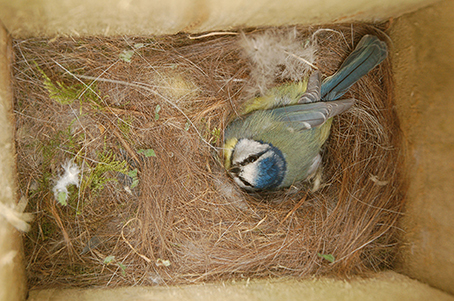
Figure 1. Female blue tit incubating eggs (Photo: Mark C. Mainwaring).
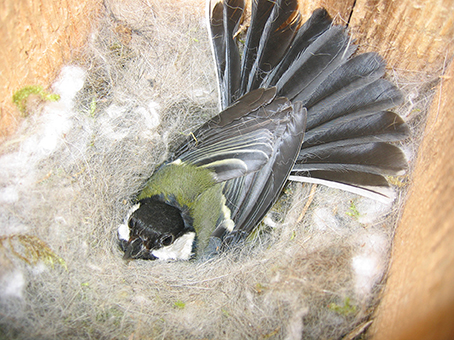
Figure 2. Female great tit incubating eggs (Photo: Ian R. Hartley).
Studies of blue tits and great tits breeding in natural cavities and in the complete absence of nestboxes are rare. However, a notable exception comes from a study of the birds inhabiting remnants of the original primeval forest that used to cover much of Europe that still remain in Białowieża National Park in eastern Poland. That study has examined the ecology of birds within the primeval woodland (e.g., Wesołowski, 1989, 2000, 2002, 2003; Wesołowski and Maziarz, 2001; Wesołowski and Stańska, 2001; Wesołowski et al., 2002; Wesołowski and Tomiałojć, 2005; Hebda and Wesołowski, 2012; Maziarz et al., 2016) including some of the nesting behaviors of blue tits and great tits. Pertinently, blue tits were found to have an abundance of potential nesting cavities and preferentially selected those located in live trees and those with narrow openings as those features minimized the risks from predation and nest soaking (Wesołowski and Rowiński, 2012, 2014). Great tits, meanwhile, also had an abundance of potential nesting cavities and preferentially selected those with narrow openings and those located at intermediate heights in living tree trunks with intermediate girths at breast height as such features reduced the risks from predation and nest soaking (Maziarz et al., 2015). More broadly, both species selected their nest sites in a non-random manner (Maziarz and Wesołowski, 2013) indicating intraspecific variation and selection on the location of their nests.
Studies examining blue tits and great tits breeding in natural cavities are rare compared to those studies that have examined both species breeding inside man-made nestboxes (van Balen, 1973; van Balen et al., 1982). The earliest study of nestbox-breeding great tits began near Wageningen in the Netherlands in 1912 and that study was later moved to the nearby Hoge Veluwe in 1944, which was shortly before a parallel study of great tits and blue tits began in Marley Wood in England (Perrins, 1991). The ease with which these studies attracted tits to breed inside the nestboxes did not go unnoticed by other researchers and there are now dozens of studies of both blue tits and great tits across Europe. Their tolerance of routine monitoring activities and of experimental manipulations has led to both blue tits and great tits being amongst the most frequently used model species in ecological, behavioral and evolutionary research globally (e.g., Dhondt, 1977, 1989; Perrins, 1991; Gosler, 1993; Mainwaring, 2011, 2015a; discussed by Møller, 1989, 1992; Lambrechts et al., 2010; Mainwaring et al., 2010; Wesołowski, 2011). Accordingly, both species have been used as model systems in studies examining a range of issues including nest site selection (Slagsvold, 1975), the role of nestbox design in determining reproductive parameters (Karlsson and Nilsson, 1977; Lambrechts et al., 2010; Møller et al., 2014a) and host-parasite interactions (Hebda et al., 2013). Meanwhile, other studies have examined temporal (Visser et al., 1998, 2006) and spatial variation in their reproductive parameters (Visser et al., 2003; Møller et al., 2014b) and as large proportions of birds occupy nestboxes, then other studies have examined their population dynamics (Kluijver, 1951; Sæther et al., 2007).
In this review, I begin by outlining and synthesizing our current understanding of the causes and consequences of intraspecific variation in the nest building behaviors of both blue tits and great tits breeding inside nestboxes, whilst highlighting those instances where nesting materials, such as feathers or aromatic plant material, serve multiple functions. I then go on to highlight those areas where further research is likely to prove fruitful.
Social Behaviours Over Spatial Scales
The selection of a suitable nest site is an important reproductive decision because whilst nest predation events are lethal, even non-lethal effects such as the conditions experienced by the embryos and nestlings within the nest can also have important consequences for individuals throughout their adult life (Metcalfe and Monaghan, 2001; Lloyd and Martin, 2004). In territorially breeding species such as blue tits and great tits, the presence of both conspecific and heterospecific neighbors have traditionally been assumed to have only negative effects on focal individuals. This is because they compete for local resources such as food and nest sites (Minot and Perrins, 1986; Stamps, 1994) whilst also offering opportunities for their reproductive partners to engage in extra-pair copulations (Ramsay et al., 1999; Westneat and Stewart, 2003), meaning that smaller distances between nest sites were expected to be disadvantageous for focal individuals (Taylor, 1976; Stamps and Krishman, 1990). However, more recent evidence suggests that whilst neighboring birds can adversely affect focal individuals in the ways outlined above, neighboring conspecifics and heterospecifics can also provide significant benefits by providing information about breeding habitat quality (Giraldeau et al., 2002; Pärt and Doligez, 2003; Danchin et al., 2004; Dall et al., 2005; Galef and Laland, 2005; Seppänen et al., 2007), opportunities for extra pair copulations with higher quality birds (Kempenaers et al., 1992) and cooperating in anti-predator defense behaviors (Grabowska-Zhang et al., 2012). Consequently, there is evidence that birds select nest sites in close proximity to conspecifics (Boulinier et al., 1996; Valone, 1996; Boulinier and Danchin, 1997; Pärt and Doligez, 2003; Stamps and Krishman, 2005; Pärt et al., 2011; Jaakkonen et al., 2013) and heterospecifics (Parejo et al., 2005; Seppänen and Forsman, 2007) and gain fitness benefits by doing so (Beletsky and Orians, 1989; Betts et al., 2008; reviewed by Valone and Templeton, 2002; Valone, 2007).
In blue and great tits, neighboring conspecifics have usually been assumed to negatively affect focal individuals by competing with them for local resources such as nest sites or food and also by providing opportunities for their reproductive partners to copulate with extra pair birds. Although empirical evidence for conspecific neighbors competing for local resources is limited (Minot and Perrins, 1986), there is evidence that conspecific neighbors do provide opportunities for focal males to be cuckolded as female blue tits actively solicit extra pair copulations with high quality males (Kempenaers et al., 1992). The proportion of extra pair nestlings within blue tit broods is influenced by the number of breeding neighbors within 100 m of focal nestboxes although interestingly, the nearest neighbors accounted for only 39.3 per cent of extra-pair paternities (Charmantier and Perret, 2004). This suggests that females were actively engaging in extra pair copulations with high quality males, rather than the closest males, to increase the genetic fitness of their offspring. Irrespective of the identity of extra pair males, however, male blue tits that suspect that they have been cuckolded reduce their parental investment (García-Navas et al., 2013) meaning that females may have to compensate by increasing their own investment. Thus, the presence of conspecific neighbors can be disadvantageous for blue tits and particularly so for lower quality males who are likely to be cuckolded by higher quality males breeding within the vicinity of their nests.
The presence of neighboring conspecifics can, however, also be advantageous and there is evidence that at the landscape scale, blue tits use social information cues, such as the density of breeding birds and the number of fledglings they produce, to select nest sites (Parejo et al., 2007a,b). Whilst young blue tits breeding for the first time were not equipped with such information and hence, never based their settlement decisions on such cues, older birds did use such information to select nest sites. Interestingly though, their response varied depending on their own reproductive success in the previous year as failed breeders moved to areas with a low density of birds that had high levels of reproductive success whilst successful breeders moved to areas with a high density of birds with low levels of reproductive success (Parejo et al., 2007a). This pattern of social information use was also tested experimentally by transferring nestlings from nests in “decreased” patches to nests in “increased” patches so that nests in “increased” patches contained a higher number of fledglings in poorer condition than nests in “decreased” patches, whilst nests in “control” patches produced an intermediate number of fledglings in an intermediate condition. Adult emigration the following year was higher from “decreased” than from either “control” or “increased” patches, which suggests that resident breeders relied mainly on fledgling quantity to make emigration decisions whilst the emigration patterns of juveniles did not vary in relation to the experimental manipulation of social information cues (Parejo et al., 2007b). At the territory level, meanwhile, great tit pairs with old males preferred to copy the nest site choices of previously settled conspecifics whilst pairs with young males never used such cues. This pattern occurred irrespective of a simultaneous clutch size manipulation experiment whereby clutch sizes were increased or decreased by two eggs (Loukola et al., 2012) and suggests that males were not basing their settlement decisions on the reproductive success of other pairs. Instead, it is likely that older males preferred to nest close to conspecifics because they could acquire extra pair paternities, whilst younger males were wary of being cuckolded. More broadly, it suggests that males may play a greater role in choosing nest sites than has been traditionally thought (Cramp and Perrins, 1993) and this possibility warrants further investigation. More specifically, the study by Loukola et al. (2012) suggests that older males preferred to nest close to conspecifics to obtain extra pair paternities and so studies that experimentally alter the clumping patterns of nestboxes, so that some are solitary whilst others are grouped, and which then examine the age of males and patterns of paternity within those broods are likely to be informative.
In territorially breeding species such as blue and great tits, the presence of heterospecifics can be disadvantageous as they compete for resources such as food and nest sites, with larger and more dominant species gaining preferential access to such resources (Dhondt, 2011). Illustratively, blue tits are smaller and subordinate to great tits and so whilst the breeding density of blue tits was negatively related to the density of great tits, the density of great tits was independent of the density of blue tits (Minot and Perrins, 1986). Resident great tits are also dominant over migratory pied flycatchers and as the tits breed earlier than the flycatchers, then the tits are usually incubating eggs when the flycatchers arrive from their African wintering grounds. When the empty nestboxes that were left unused by the tits were made uninhabitable to the flycatchers prior to their arrival, competition for the nestboxes already inhabited by the great tits increased and although the flycatchers only managed to usurp the tits on two occasions, fights were frequent and at least one male flycatcher died in the struggles (Slagsvold, 1978). Even in the absence of nest site shortages, great tits and pied flycatchers have an antagonistic relationship because great tits with neighboring pied flycatchers have lower clutch sizes than conspecifics without neighboring flycatchers, whilst the flycatchers benefit from neighboring tits by having larger clutch sizes than conspecifics without tit neighbors. This has resulted in an arms race between the two species and in an attempt to hide their eggs from prospecting flycatchers, great tits usually cover them with nesting materials whenever they leave the nest during the egg laying period in order to prevent flycatchers using them as a cue in their nest site selection decisions (Loukola et al., 2014). Nevertheless, there is widespread evidence that several species of migratory passerine birds base their settlement decisions on the settlement decisions of the resident tits (Mönkkönen et al., 1990; Forsman et al., 2002, 2007, 2008, 2009; Forsman and Seppänen, 2011; Loukola et al., 2012, 2013; Jaakkonen et al., 2015). Illustratively, both the average number of species and the total density of migratory birds that chose to breed in habitat patches were positively correlated with the experimentally-varied density of titmice already breeding within those habitat patches, thereby indicating that migrants probably use titmice density as an indicator of breeding habitat quality because they share similar food resources (Forsman et al., 2009). Migrants therefore use the resident tits as a source of information at the landscape level but they also use them as a source of information at the territory level, and particularly so when deciding how many eggs to lay in their clutch. Shortly after their arrival from Africa, pied and collared flycatchers prospect the nests of resident tits about once per day (Forsman and Thomson, 2008) and use the tits' clutch sizes as cues when deciding where to nest, with larger clutch sizes indicating higher quality habitat (Forsman and Seppänen, 2011). Thus, the presence of the resident heterospecific tits was advantageous for the migratory flycatchers as they provided valuable information regarding both where to nest and the level of effort to invest in that particular reproductive event. However, there is evidence that the presence of such heterospecific neighbors may be disadvantageous for great tits by reducing their breeding success (Loukola et al., 2014) meaning that the antagonistic relationship between the resident tits and the migratory flycatchers deserves further research attention.
Heterospecific neighbors can be advantageous for focal species (Seppänen and Forsman, 2007; Dhondt, 2011) but I am not aware of any evidence showing that either blue tits or great tits benefit from the presence of heterospecific neighbors. In summary, this means that patterns of nest site selection in blue and great tits do vary in relation to the presence or absence of both conspecifics and heterospecifics in complex ways that depend on the advantages and disadvantages accrued by individuals and species, respectively. In terms of conspecifics, variation in nest site selection decisions probably reflects variation in the likelihood of gaining or losing paternity and in terms of heterospecifics, dominant great tits can prevent subordinate species from breeding when nest sites are limited although there is good evidence that migratory species such as flycatchers often use the presence of the resident tits to select breeding habitats at the landscape scale and usually reduce the breeding success of the tits by doing so. This has resulted in an arms race between the resident tits and migratory flycatchers whereby the tits attempt to conceal their nest sites from the flycatchers. Meanwhile, a fascinating study examined if patterns of nest site selection were determined by natal experience and showed that great tits naturally occupy larger nestboxes whilst blue tits occupy smaller nestboxes and yet when the nestlings of the two species were swapped between the two nestbox types early in the nestling period, those birds went on to occupy whichever type of nestbox they were raised in during adulthood (Slagsvold et al., 2013). These studies suggest that birds ubiquitously use social information when making decisions regarding where to breed and that those decisions are routinely influenced by social experiences acquired by focal individuals during development and adulthood. Further, such choices have fitness consequences as blue and great tits have lower levels of reproductive success when breeding close to heterospecifics. However, these studies are usually performed on one or two study plots which may mean that the findings are unrepresentative of the species behaviors' which in turn, may limit our ability to draw solid conclusions. Consequently, there is a need for studies that examine birds from multiple study sites.
Environmental Adjustment
Nests must provide a suitable microclimate for developing embryos and offspring because suboptimal nest microclimates negatively affect their growth (Drent, 1975; Ar and Sidis, 2002). In passerine birds, optimal embryonic development only occurs within narrow thermal limits, 34–40°C, and extended periods of time spent either below or above these limits result in abnormal embryonic development and mortality, respectively (Webb, 1987; DuRant et al., 2013). The thermal conditions experienced by embryos during incubation also affect their phenotypes after hatching, with both higher and lower than optimal temperatures resulting in nestlings having lower masses and body condition scores at pre-fledging than nestlings that developed in optimal conditions (Dawson et al., 2005; Ardia et al., 2008; Peréz et al., 2008). Birds are therefore under strong selection pressures to select a nest site and construct nests that provide suitable thermal conditions for embryonic development. Parental brooding behaviors can regulate nest microclimates, but such behaviors are energetically costly and parents can mitigate these demands by altering the design of nests in relation to predictable variation in environmental conditions (Mertens, 1977; Møller, 1984; Lombardo, 1994; Hilton et al., 2004; Dawson et al., 2011; Heenan and Seymour, 2012; Ardia, 2013; Heenan, 2013; Windsor et al., 2013; Cruz et al., 2016).
Both blue tits and great tits readily occupy nestboxes and whilst this makes them amongst the most widely used model species in scientific research globally (Lambrechts et al., 2010), the characteristics of the nestboxes may influence nest microclimates. More specifically, birds are able to influence nest microclimates by preferentially occupying nestboxes in relation to the orientation of their entrance hole which influences the exposure to cold winds (e.g., Ardia et al., 2006) and their construction material because woodcrete nestboxes are about 1.5°C higher on average than wooden nestboxes (e.g., García-Navas et al., 2008). Studies show that whilst great tits avoided nestboxes orientated toward south-southwest, there was no such relationship in blue tits, although the orientation of nestboxes did not influence reproductive success in either species (Goodenough et al., 2008). Meanwhile, both blue tits and great tits preferentially occupied woodcrete nestboxes rather than wooden nestboxes, although the breeding success again did not vary between nestbox types (Browne, 2006). Another study also showed that blue tits and great tits preferred to occupy woodcrete rather than wooden nestboxes but this time, nest predation was significantly greater in woodcrete nestboxes (Bueno-Enciso et al., 2016). Pertinently, the height of great tit nests was significantly higher in woodcrete nestboxes than in wooden nestboxes, thus indicating that the construction material influences nest building behaviors. Further, laying dates were earlier in woodcrete nestboxes, and whilst nestbox type did not influence clutch size, the eggs of both species were significantly smaller in woodcrete boxes and pairs occupying woodcrete nestboxes had lower levels of breeding success than conspecifics occupying wooden nestboxes (Bueno-Enciso et al., 2016). In addition to the characteristics of nestboxes, blue and great tit nest design should vary in relation to environmental conditions as the design of birds' nests vary with increasing temperatures as spring advances in temperate environments (McGowan et al., 2004; Liljesthröm et al., 2009), as altitude decreases (Kern and van Riper, 1984) and as latitude decreases (Crossman et al., 2011; Mainwaring et al., 2014a).
Blue tits and great tits adaptively adjust the design of their nests as ambient spring temperatures increase in temperate environments. The number of days taken to construct nests decreases as the season progresses and whilst there is no seasonal trend in the mass of entire nests nor in the mass of the nests' moss base material, the mass of nests' cup lining material decreases as the season progresses (Mainwaring and Hartley, 2008; Britt and Deeming, 2011; Deeming et al., 2012; Harničárová and Adamík, 2016). This suggests that nest-building females selectively adjust the amount of cup lining material they add to their nests to create nest microclimates for optimal embryonic and offspring development (Glądalski et al., 2016). Meanwhile, the absence of any seasonal changes in the mass of the nests' moss base highlights that nests are multi-functional structures. This is because whilst the cup lining material serves to create optimal environmental conditions for embryonic and offspring development, the moss base material serves to protect the offspring from predators (Mazgajski and Rykowska, 2008; Kaliński et al., 2014) or to play a role in sexual selection (Sanz and García-Navas, 2011; Tomás et al., 2013).
The only study to have examined altitudinal variation in nest characteristics reported that the design of great tit nests did not vary along an altitudinal temperature gradient in Austria. Despite high altitude locations experiencing cooler ambient temperatures than lower altitude locations, nests built at high altitudes had similar amounts of cup lining materials and similar insulation properties to nests built at lower altitudes (Schöll and Hille, 2015). However, as the birds breeding at higher altitudes laid their eggs later than conspecifics at lower altitudes, then it is likely that during their respective nest building and incubation periods, birds experienced similar ambient temperatures along the altitudinal gradient. This possibility would certainly explain why the amount of cup lining material incorporated into nests and the insulation properties of nests did not vary over the altitudinal gradient, although it is clear that further studies are needed to gain a more complete understanding of how the nest building behaviors of both blue tits and great tits vary with altitude.
Blue tits and great tits are resident across much of the western Palearctic ranging from Norway in the north to Morocco in the south (Perrins, 1979; Gosler, 1993; Sanz, 2002). Given that environmental conditions vary considerably over such broad latitudinal gradients then it is unsurprising that various life history and reproductive parameters of blue and great tits vary with latitude (e.g., Sanz et al., 2000; Møller et al., 2014a,b) although only one study has examined latitudinal variation in their nest characteristics (Mainwaring et al., 2012). As spring temperatures increased with decreasing latitude across seven study sites spread over 5° of latitude in the United Kingdom, the mass of the nests' moss base material did not vary in either species, but the mass of the nests' cup lining material and nest insulation properties decreased in both species. This suggests that nest-building females were able to gauge local environmental conditions and adjust the design of their nests accordingly, although similarly to the situation with altitude, further studies are required before confident assertions can be made. Specifically, studies that experimentally swap nests between locations varying in latitude or altitude provide a powerful way of disentangling the relative contributions of nest site and nest design in creating suitable nest microclimates for embryonic and offspring development.
Blue and great tits appear able to gauge predictable variation in environmental conditions and adjust the amount of cup lining material in their nests to create suitable microclimates for embryonic development. Such flexibility is adaptive as nest temperatures during incubation influence fledging success in blue tits, but not great tits (Deeming and Pike, 2015) and cup lining material mass is positively correlated with hatching success in blue tits and with both hatching and fledging success in great tits (Glądalski et al., 2016). Perhaps worryingly though, environmental conditions are also changing in less predictable ways with anthropogenic climate change. Such climatic changes may affect nest building birds in numerous ways (Møller, 2006; Mainwaring, 2015b) and in blue and great tits, may alter the distribution and abundance of bryophytes (O'Neil, 2000; Jägerbrand et al., 2003) which constitute the main nesting material. Whilst the evidence suggests that both species can adaptively adjust their nest building behaviors to changes in environmental conditions, long-term studies that monitor nest composition (e.g., 18 years: Lambrechts et al., 2016a,b) may be useful.
Parasite Avoidance
Birds play host to a plethora of parasites including fleas, lice, fungi, mites, leaches, ticks, and bacteria and yet despite their prevalence, the impacts of such parasites on their avian hosts remained poorly understood, apart from commercially valuable game birds, until the 1980's (Loye and Zuk, 1991; Clayton and Moore, 1997). It was then that the seminal paper by Hamilton and Zuk (1982) reported that the elaborate displays of North American birds evolved as a direct consequence of parasite-mediated sexual selection, which highlighted the considerable impacts that parasites have on their avian hosts. Accordingly, empirical studies have since shown that parasites are detrimental to their avian hosts by reducing their survival and reproductive success (e.g., Møller, 1990b, 1993; Burtt et al., 1991; reviewed by Loye and Zuk, 1991; Richner et al., 1993; de Lope et al., 1993; Oppliger et al., 1994; Clayton and Moore, 1997; Tripet and Richner, 1997, 1999; Merino et al., 2000; Proctor, 2003). In great tits, for example, experimental pairs that had hen fleas (Ceratophyllus gallinae) added to their nests fledged fewer and poorer quality nestlings than control pairs that had hen fleas eliminated from their nests (Richner et al., 1993). Given that it is now clear that parasites usually have negative consequences for the fitness of their avian hosts, then it is unsurprising that the hosts have evolved a wide variety of defenses to mitigate both the abundance and virulence of the parasites. In birds, such defenses vary from the employment of feather toxins, plumage maintenance behaviors such as the molting of worn feathers, various preening and dusting behaviors and a range of nest building behaviors (Loye and Zuk, 1991; Toft, 1991; Proctor, 2003).
Breeding birds can limit the adverse effects of parasites by choosing nest sites with few parasites and by incorporating plants into their nests that repel parasites. To this end, several species of hole-nesting passerines such as European starlings (Sturnus vulgaris), tree swallows (Tachycineta bicolor) and both blue tits and great tits incorporate aromatic plant materials into their nests. Their inclusion is noteworthy because they constitute only a small fraction of the plants available as nesting materials within the wider environment, and yet they are highly sought after because they contain a high abundance of volatile secondary metabolites that reduce the abundance of a range of nest-dwelling parasites (Belandrin et al., 1985; Dubiec et al., 2013). Accordingly, there is evidence that birds mitigate the effects of parasites by choosing nest sites containing few parasites (Mappes et al., 1994; Rendell and Verbeek, 1996; Mazgajski, 2007; Suárez-Rodríguez et al., 2013) and by incorporating aromatic plant materials into their nests to reduce either the abundance or virulence of parasites (Wimberger, 1984; Clark and Mason, 1985, 1987, 1988; Clark, 1991; Shutler and Campbell, 2007). Both blue tits and great tits incorporate aromatic plants into their nests (Cowie and Hinsley, 1988; Bańbura et al., 1995) and detailed studies of Corsican blue tits have shown that nest-building females incorporate between one and five aromatic herb species into their nests (Lambrechts and dos Santos, 2000; Lafuma et al., 2001; Petit et al., 2002; Lambrechts et al., 2008; Mennerat et al., 2008). The evidence suggests that aromatic plants are purposely sought out by nest-building females because they are a widely used nesting material despite constituting only a small fraction of the plants available within territories (Dubiec et al., 2013). Further, female blue tits respond to the experimental removal of aromatic plants from their nests by immediately replenishing their nests with more aromatic plant material (Lambrechts and dos Santos, 2000). The inclusion of aromatic plant materials into the nests of blue tits and great tits is determined by the presence of nest-dwelling parasites and their inclusion has important consequences for the behavior and fitness of both the parents and nestlings (Heeb et al., 2000; Bańbura et al., 2001; Słomczyński et al., 2006; Mennerat, 2008). There is variation in the amount of aromatic plant material incorporated into the nests of blue tits, however, and that variation is determined not by the availability of aromatic plant material within territories or by the breeding experience of nest-building females but by female identity as individual females showed preferences for aromatic plant materials that were repeatable both within and across years (Mennerat et al., 2009a). Meanwhile, the inclusion of aromatic plants within nests significantly affects the structure of bacterial communities as the experimental addition of aromatic plant materials reduced the level of bacterial richness on nestling but not adult blue tits (Mennerat et al., 2009c). This appears to benefit the nestlings as the experimental addition of aromatic plants to blue tit nests resulted in faster growth of nestlings in experimental nests than in control broods where mosses, which are a benign plant species, were added to nests (Mennerat et al., 2009b). Although the size of the nestlings did not vary at the pre-fledging stage immediately before they left the nestboxes, these studies suggest that aromatic plant materials do mitigate the negative effects of parasites on their blue and great tit hosts.
The selection of a nest site containing few parasites is an obvious way in which birds can limit the adverse effects of parasites, yet to the best of my knowledge no studies have examined patterns of nest site selection by blue tits or great tits in relation to the variation in the abundance of parasites in potential nesting sites. However, one study highlighted the importance of choosing a nest site containing few parasites by allowing blue tits to breed either in nestboxes with an old nest which contained the most ectoparasites, empty nestboxes which contained an intermediate number of ectoparasites or nestboxes with an old nest fumigated with insecticide which contained the fewest ectoparasites. Pairs breeding inside nestboxes that contained old nests from the previous season, and thus had a high abundance of parasites, had lower levels of reproductive success and the female parents had lower body masses at the end of the breeding season than conspecifics breeding in nests in the other two treatments that contained fewer ectoparasites (Tomás et al., 2007). Thus, the abundance of nest-dwelling parasites has important consequences for their hosts and so studies examining how both species choose their nest sites in relation to the abundance and virulence of parasites would be useful.
The nest building behaviors of blue tits were also directly influenced by the abundance of fleas inside their nestboxes because the density of fleas affected the nest sanitation behaviors of the female parents, with females occupying experimental nestboxes where fleas had been added performing more nest sanitation behaviors than females occupying control nestboxes without fleas (Tripet et al., 2002). In great tits, meanwhile, both the number of adult fleas and the number of larvae within nestboxes were positively correlated with the fresh mass of the nests (Heeb et al., 1996). Further, the experimental infestation of nestboxes with hen fleas resulted in females at those experimental nestboxes building heavier nests than control females breeding in nestboxes in which hen fleas were experimentally eliminated (Heeb et al., 1996). It is unclear why an increase in the abundance of fleas should cause females to build heavier nests as the bulk of the additional material would presumably have been mosses which have no effect on the abundance or virulence of ectoparasites. In addition to nest building behaviors, parental provisioning behaviors can mask the negative effect of ectoparasites on blue tit nestlings because parents at experimentally infested nests increased their food provisioning rate by 29 per cent meaning that the parents bore the costs of parasitism rather than the nestlings (Tripet and Richner, 1997). Further, the plant material composition of nests varies greatly between species occupying the same habitat. Given that nest-dwelling parasites are much more abundant in the nests of pied flycatchers (Ficedula hypoleuca) and collared flycatchers (Ficedula albicollis) than in the nests of blue tits and great tits, then it has been posited that such differences occur because of the species-specific nest material composition because whilst the tit nests consist largely of mosses, the flycatcher nests consist largely of grass and leaves. However, when the nests of pied flycatchers and blue tits (Moreno et al., 2009) and great tits and collared flycatchers (Remeš and Krist, 2005) were experimentally swapped, the abundance of parasites within focal nestboxes remained unaltered, thereby indicating that nest material composition does not influence the abundance of nest-dwelling ectoparasites on co-existing bird species.
In summary, there is good evidence that both blue tits and great tits actively incorporate aromatic plant materials into their nests specifically to limit the adverse effects of a range of nest-dwelling parasites and pathogens. In particular, studies of Corsican blue tits have demonstrated that their inclusion within nests does effectively reduce the abundance and virulence of ectoparasites and bacteria and thus, has positive effects on the fitness of both the nestlings and attending parents (e.g., Lambrechts and dos Santos, 2000; Lafuma et al., 2001; Petit et al., 2002; Lambrechts et al., 2008; Mennerat et al., 2008). However, it is prudent to acknowledge that nest materials can have multiple functions and that aromatic plant materials play an important role in the process of sexual selection in European starlings and other species (Fauth et al., 1991; Gwinner, 1997; Gwinner et al., 2000; Brouwer and Komdeur, 2004). Meanwhile, feathers, which are thought by some to be incorporated into nests to provide a physical barrier between nestlings and ectoparasites instead appear to create a suitable microclimate for offspring development as reported primarily in tree swallows and less commonly in other species (Winkler, 1993; Lombardo et al., 1995; Dawson, 2004; Liljesthröm et al., 2009; Stephenson et al., 2009; Dawson et al., 2011). This suggests that nesting materials do indeed simultaneously serve multiple functions when used by blue and great tits (reviewed by Toft, 1991; Dubiec et al., 2013; Mainwaring et al., 2014b) and that in addition to repelling parasites and pathogens, and acting as sexual signals during courtship, nesting materials may also serve to create optimal environmental conditions for offspring growth and development.
Predator Avoidance
The risk of predation is ubiquitous for breeding birds and natural selection favors those individuals that successfully reproduce without having their nests predated (Caro, 2005). Therefore, the risk of predation exerts strong selection pressures not only on the location and design of birds' nests but also on the behaviors of the parent birds when they visit the nest site (reviewed by Martin, 1993; Lima, 2009; Mainwaring et al., 2014b, 2015; Ibáñez-Álamo et al., 2015). Accordingly, the risk of predation influences aspects of nest site selection (Marzluff, 1988; Forstmeier and Weiss, 2004; Eggers et al., 2006) and nest design (Biancucci and Martin, 2010; Lovell et al., 2013) in a wide range of birds. For example, the open cup nests of common blackbirds (Turdus merula) that were experimentally increased in size were predated more often than either control nests that remained unchanged in size or nests that were experimentally decreased in size (Møller, 1990a). Meanwhile, parental nest visitation rates are often negatively correlated with the risk of nest predation (Martin et al., 2000; Fontaine and Martin, 2006) although some studies report that nest predation rates are independent of parental behaviors (Cresswell, 1997). Nevertheless, there is overwhelming evidence that the risk of predation is ubiquitous for breeding birds and empirical studies report that natural selection exerts selective pressures on both the location and design of birds' nests (Lima, 2009; Mainwaring et al., 2014b, 2015; Ibáñez-Álamo et al., 2015).
Both blue tits and great tits are hole nesting species and at the interspecific level, those species breeding in holes usually suffer lower predation rates than both open cup nesting species and ground nesting species (Nilsson, 1986; Martin, 1993). However, it is prudent to consider that such differences may be less pronounced for hole nesting birds breeding inside natural holes rather than in nestboxes because predation rates are generally higher in the former cavity type (e.g., Nilsson, 1984; reviewed by Lambrechts et al., 2010). To the best of my knowledge, though, no studies have examined intraspecific variation in the predation rates of either blue tit or great tit nests, or provisioning parents, in relation to the location of the nestboxes in which they are breeding.
The risk of predation does influence the design of both blue tit and great tit nests though. The overwhelming majority of nest predators are too large to squeeze through the entrance holes of nestboxes and so it is the height of nests within cavities that determines the risk of predation with higher nests within those cavities being more vulnerable to predation than lower nests because the eggs, nestlings, and attending parents are physically closer to the entrance holes of the nestboxes. Mazgajski and Rykowska (2008) provided great tits with both deep and shallow nestboxes that had depths of 21 and 16 cm, respectively, and found that great tits built significantly higher nests within the deep nestboxes than in the shallow nestboxes. As the deep nestboxes had a greater depth than the shallow nestboxes, then the distance between the nest entrance and the nest rim was kept constant in the two nestbox types. Kaliński et al. (2014), meanwhile, added plastic tubes that protruded from the entrance holes of nestboxes so that the distances from the exterior entrance holes to the nest contents were experimentally increased at nestboxes of two different sizes. Both blue tits and great tits built taller nests within nestboxes with anti-predator devices added to them regardless of nestbox size. This had important fitness consequences as nests in smaller nestboxes were predated more frequently by pine martens (Martes martes) than nests in bigger nestboxes (Kaliński et al., 2014). The height of great tit nests was inversely related to the risk of predation which means that when the risk of predation was high the height of nests was low, so that in turn, the distance between the entrance hole of the nestbox and the nest contents was greater when the risk of predation was high. Natural selection should therefore favor birds that build shallower and lower nests and so it is not presently clear why both observational (Tomás et al., 2006; Mainwaring et al., 2008; Broggi and Senar, 2009) and experimental (Mainwaring and Hartley, 2009) studies show that both blue tits and great tits preferentially build taller and higher nests whenever they are able to do so. It is likely that higher nests either confer thermoregulatory benefits for the birds by being bulkier (Ar and Sidis, 2002) or possibly that they act as a signal of the female builders' phenotypic quality which influences the non-building males' investment in reproduction (Tomás et al., 2013).
Sexual Selection
The design of both blue tit and great tit nests are influenced by natural selection, yet the design of their nests may also act as extended phenotypic signals of the female builders' quality and hence, also be influenced by sexual selection. Intraspecific signaling between conspecifics usually consists of behavioral or physical signals such as elaborate songs, extravagant ornaments such as crests or long tails, or brightly colored plumages (Andersson, 1982). However, some species build structures that signal their phenotypic quality and whilst species such as bowerbirds build structures whose sole purpose is to attract a mate (Schaedelin and Taborsky, 2009), nests also contain eggs and/or offspring which suggests a direct trade-off between the conflicting requirements of natural and sexual selection (Sergio et al., 2011). For nest building behaviors to be extended phenotypic signals of the building individuals' quality, they must reliably indicate the quality of the builder by being associated with energetic costs (Nager and van Noordwijk, 1992; Maynard Smith and Harper, 2003; Moreno, 2012). There is now evidence that constructing a nest is energetically expensive for birds and that whilst those costs are less substantial than provisioning nestlings or incubating eggs, they are nevertheless far more substantial than they were generally considered to be just a couple of decades ago (e.g., Withers, 1977; Hansell and Ruxton, 2002; Soler et al., 2007; Moreno et al., 2008, 2010; reviewed by Mainwaring and Hartley, 2013). Thus, nest building behaviors and the design of completed nests may act as sexual signals and there is widespread evidence that they play a role in sexual selection in species where nests are built by males alone (Lens et al., 1994; Evans and Burn, 1996; Gwinner, 1997; Evans, 1997a,b; Soler et al., 2001; de Neve and Soler, 2002; Brouwer and Komdeur, 2004; Polo et al., 2004, 2010; Veiga and Polo, 2005; Polo and Veiga, 2006; Veiga et al., 2006), by females alone (Moreno et al., 2008, 2010) and by both parents (Soler et al., 1998; Sergio et al., 2011).
For blue tit and great tit nest building behaviors to be extended phenotypic signals of the building females' quality, they must be associated with costs (Moreno, 2012). Evidence of nest building being energetically expensive comes indirectly from studies showing that both species often travel considerable distances to collect nesting materials (Hansell, 1995; Surgey et al., 2012) whilst more direct evidence comes from studies specifically examining the energetic costs of nest building. Two studies have provided blue tits and great tits with food during the nest building period and the first one found that experimental blue tit females constructed heavier nests, with greater amounts of moss base materials but similar amounts of cup lining materials, than unfed control females, despite there being no differences in the nest building period (Mainwaring and Hartley, 2009, 2016). The second study, meanwhile, found that whilst female blue tits at experimentally fed nests built significantly shallower nests in a shorter time period than unfed control females, neither the length of the nest building period nor the depth of nests differed between treatments in great tits (Smith et al., 2012). The contrasting findings of these two studies suggest that the availability of food influences nest building females in complex ways that vary over temporal and spatial scales and further studies in which blue tits or great tits are provided with supplementary food during the nest building period would be informative. Nevertheless, when the nests and eggs of experimental blue tit pairs were removed after 5 days of incubation so that they were forced to build their nests again, they built smaller nests and laid smaller replacement clutches (Lambrechts et al., 2012). Thus, there is evidence that nest building is an energetically expensive activity that is limited by the availability of food (Martin, 1987) in birds generally and also in blue tits, and probably therefore also in great tits, meaning that their nest building behaviors are extended phenotypic signals of the females' quality and may play a role in sexual selection.
Studies examining sexual selection in blue tits and great tits have traditionally concentrated on the role of the ultra violet plumage coloration of breeding adults (Andersson et al., 1998; Hunt et al., 1998; Sheldon et al., 1999; Doutrelant et al., 2008) although it is prudent to consider that most of those studies are based on correlational data rather than experimental approaches, and a meta-analysis showed that there was no overall effect of ultra violet plumage coloration in adults on brood sex ratios (Ewen et al., 2004). There is, however, now observational and experimental evidence that nest building behaviors also play a role in sexual selection. In blue tits, larger females (Mainwaring et al., 2008) and healthier females that were less infected with Trypanosoma avium (Tomás et al., 2006) built heavier nests than smaller females and females with higher infection rates of Trypanosoma avium, respectively. Meanwhile, other studies report no effect of the phenotypic quality of female great tits on the size of their nests but report that nest size was positively correlated with reproductive success (Álvarez and Barba, 2008). These patterns may be explained by the findings of another study in which female great tits with higher chromatic breast plumage built bigger nests than conspecifics with lower chromatic breast plumage, and especially so when they were paired to males which also had higher chromatic breast plumage (Broggi and Senar, 2009). However, none of these studies provide evidence that males are responding to the cues provided by the nesting behaviors of their female partners. Consequently, as it could be plausibly argued that females of higher phenotypic quality build better i.e., higher nests because it provides their eggs, nestlings or themselves with benefits when they are incubating or brooding, then studies that search for male responses from female cues are required.
In addition to the observational evidence above, there is also experimental evidence that nest building behaviors are a sexually selected trait in blue tits. When the size of blue tit nests were experimentally increased in size, experimentally decreased in size or kept the same size as a control treatment during the nest building period, male provisioning rates did not differ between treatments but their risk taking behaviors during nestling provisioning did vary in relation to nest size (Tomás et al., 2013). Their risk taking behavior was quantified in terms of their trappability at the nestbox and was found to be significantly lower for males at experimentally smaller nests than in males at unchanged control nests or experimentally larger nests. Meanwhile, in a separate part of the same study, male risk taking behaviors were significantly higher at experimental blue tit nests that had aromatic plants added to them than at control nests that had control plants, that were not aromatic, added to them. Such variation in risk taking behaviors between males was important and also adaptive as they were a key determinant of the reproductive success of breeding pairs and thereby also on female fitness because the males' willingness to defend the nest from predators directly benefited the female. However, the manipulation had no effect on brood sizes or any other reproductive parameters that were quantified (Tomás et al., 2013). More broadly, this study highlights that aromatic plants serve multiple functions as whilst they play a role in sexual selection, they also help to repel ectoparasites. Both blue tits and great tits incorporate aromatic plants into their nests (Lambrechts and dos Santos, 2000; Lambrechts et al., 2008; Mennerat et al., 2008, 2009a,b,c).
Whilst female blue tits build the nest on their own, some males carry feathers into the nest after nest building has finished and place them on top of the completed nest. Those males that delivered feathers to their nests had longer tarsi and had higher provisioning rates than those males that did not deliver feathers to nests, and perhaps surprisingly, the females at those nests responded to the delivery of feathers by males by reducing their own nestling provisioning rates. However, not only did the females save energy by provisioning their nestlings less frequently, they also obtained direct fitness benefits as their nestlings fledged in better condition than nestlings raised in nests where males did not carry any feathers into the nest (Sanz and García-Navas, 2011). However, when feathers were added to experimental blue tit nests in order to mimic the nest building behaviors of extra-pair males in two studies, the social males responded by promptly removing the feathers (Mainwaring et al., 2016) and by reducing the amount of care they provided for the nestlings, both in terms of their provisioning rates and their nest defense behaviors, when compared to males at control nests (García-Navas et al., 2013). It is likely that the social males removed the feathers or reduced the amount of care they provided because they assumed that another male had brought in the feather and thus, they were suspicious of having been cuckolded.
There is good evidence that the nest building behaviors of female blue tits and the occasional feather carrying behaviors of males are both associated with sexual selection and whilst there is less evidence in great tits, this probably results from the scarcity of studies involving that species rather than their nest building behaviors not being influenced by sexual selection. The possibility that females signal their phenotypic quality to males through their nest building behaviors has only recently been considered, having previously been overlooked as it was thought that the expression of a certain amount of ornamentation in females could be explained as a genetically correlated result of sexual selection acting on males (Maynard Smith and Harper, 2003). Thus, empirical studies of female displays are relatively rare (Schaedelin and Taborsky, 2009) and this means that studies of female nest building behaviors in both blue and great tits (Broggi and Senar, 2009; Tomás et al., 2013) and other species (e.g., spotless starlings (Sturnus unicolor): Veiga and Polo, 2005; Polo and Veiga, 2006) have significantly advanced our understanding of female displays more broadly. Pertinently, empirical studies have now convincingly demonstrated that the size and composition of female-built blue tit nests directly influences the parental care provided by their male partners and that such care determines both the number and quality of offspring raised (García-Navas et al., 2013; Tomás et al., 2013). Meanwhile, there is also some evidence that females differentially allocate (Sheldon, 2000) their investment in nest building in accordance with the attractiveness of their social partner (Broggi and Senar, 2009; but see Mainwaring et al., 2008) although given the mixed findings to date, then this is an area where further studies are required before robust conclusions can be drawn. Nevertheless, there is good evidence that the nest building behaviors of blue tits and great tits are associated with sexual selection and this may explain why levels of hatching and fledging success are higher in taller nests than in lower nests (Alabrudzińska et al., 2003; Mazgajski and Rykowska, 2008). This suggests that the height of blue tit and great tits nests reflects the outcome of contradictory pressures associated with the need for nests to be low enough to reduce the risk of predation and yet high enough to confer thermoregulatory benefits and/or act as a sexual signal that influences paternal provisioning rates (Alabrudzińska et al., 2003). Further empirical and modeling studies that examine the resolution of this trade-off would be useful as the optimal height of nests is likely to vary both temporally and spatially and in this regard, empirical studies examining how the height of nests vary in relation to the occurrence of nest predators at the landscape scale may be particularly informative.
More broadly, there are three areas in which further research could prove enlightening. First, there is now evidence that the size of blue tit nests act as a sexual signal that informs their partners of their phenotypic quality, yet we still know remarkably little about the relative importance of such signals when compared to other signals such as plumage brightness or song complexity, in influencing their partners' provisioning rates and reproductive investment. In this regard, studies that experimentally disentangle the relative contributions of potential signals by, for example, swapping nests between nestboxes which decouples nest design and plumage brightness in a controlled manner, and then quantifies male provisioning rates are likely to be informative. Second, there is evidence that the height of blue tit and great tit nests act as a sexual signal that informs their partners of their phenotypic quality which means that sexual selection favors birds that build high nests. However, natural selection favors those birds that build low nests as the height of nests is negatively related to the risk of predation. Thus, it seems that natural and sexual selection exert contradictory pressures on the height of nests and given that the risk of predation is greater in higher nests, then it is unclear why the birds build higher nests whenever possible although they may confer thermoregulatory benefits or act as sexual signals that prompt greater male investment in reproduction. Thus, further studies could usefully quantify the thermal properties and moisture retention of nests of varying heights and more broadly, examine how blue and great tits resolve the trade-off between natural and sexual selection over the optimal height of their nests. Third, there is a growing interest in nest building behaviors as a cognitive trait (Guillette and Healy, 2015; Breen et al., 2016) and also on the links between cognition and fitness in the wild (Cole et al., 2012; Cauchard et al., 2013) and so studies that examine the cognitive basis of nest building in blue tits and great tits are likely to prove enlightening.
Conclusions and Suggestions for Future Work
To conclude, blue tits and great tits exhibit a considerable amount of intraspecific variation in the location and design of their nests and our understanding of the causes and consequences of such variation is set to increase further as more studies of birds breeding inside nestboxes are published. There is good evidence that both species select nest sites based on the presence and/or absence of both conspecifics and heterospecifics and whilst neighboring birds were traditionally assumed to adversely affect focal individuals by competing for local resources, they are now considered to sometimes benefit focal individuals by providing information about habitat quality and by contributing to anti-predator defenses. Nest-building females are also able to accurately gauge ambient weather conditions and respond to predictable variation in environmental conditions by building nests with variable amounts of cup lining material to create suitable nest microclimates for nestling growth and development. Meanwhile, both species limit the adverse effects of nest-dwelling parasites and pathogens by incorporating aromatic plant materials that contain a high abundance of volatile secondary metabolites into their nests and reduce the abundance of parasites and thereby increase the fitness of the nestlings and attending parents. The height of their nests is negatively correlated with the risk of predation and so whilst natural selection favors lower nests, it is presently unclear why they build higher nests whenever possible, although it is likely that higher nests confer thermoregulatory benefits or act as sexual signals that prompt greater male investment in reproduction. Indeed, the nest building behaviors of females and the occasional feather carrying behaviors of males are both associated with sexual selection and the size and composition of the female-built nests directly influences male care that subsequently determines both the number and quality of nestlings raised. This suggests that the nest building behaviors of blue tits and great tits vary adaptively in relation to various influences and that nest materials such as feathers and aromatic plants can simultaneously serve multiple functions (Deeming and Mainwaring, 2015) as both play a role in repelling parasites and sexual selection.
The increasing number of studies examining the causes and consequences of intraspecific variation in nest building behaviors in blue tits and great tits, and other species more broadly, reveal a dynamic field of research. There is, nevertheless, plenty of scope for future studies to provide important new insights into their nest building behaviors and whilst I have highlighted specific areas in the sections above, I now highlight some general areas that are also likely to prove fruitful, as further highlighted in Table 1. First, there is a need for better designed studies because many studies of blue tits and great tits have just one study plot with one treatment and another plot with another treatment which leaves a single contrast with one degree of freedom (as highlighted by Charmantier and Perret, 2004) thereby limiting the ability to draw solid conclusions. This particularly applies to experimental studies that really need more one study plot with one treatment and another plot with more than one of another treatment. Second, the majority of studies involving nestbox-breeding blue and great tits have been performed in high quality deciduous woodland habitats where the caterpillars on which they feed their nestlings are abundant. However, this is not representative of the full range of habitats in which both species live and means that our understanding of their nesting behaviors may be biased. Thus, further studies could usefully examine the nesting behaviors of great and blue tits living in habitats other than pristine deciduous woodlands, such as urban habitats, which are becoming increasingly prevalent globally (Vaugoyeau et al., 2016). A recent study showed that whilst anthropogenic materials were incorporated into 73 per cent of blue tit nests along an urban-rural gradient in the city of Birmingham, UK, the inclusion of such materials in nests was unrelated to the position along that gradient (Reynolds et al., 2016). However, as the authors of that study suggest, further research is required to assess whether the inclusion of such materials influences the birds' reproductive success. Third, there is evidence that blue and great tit nest building behaviors vary adaptively in relation to, for example, predation risk and environmental conditions and yet direct evidence that nest building behaviors directly influence breeding success remain scarce (but see Álvarez and Barba, 2011; Glądalski et al., 2016; Lambrechts et al., 2016b). This is surprising because higher-quality females building larger nests are expected to enjoy higher levels of reproductive success, whilst larger nests are also expected to provide more protection for the nestlings, in the absence of predation, than smaller nests. However, an 18 year study showed that nest size was unrelated to reproductive success in blue tits (Lambrechts et al., 2016c) and so studies examining how nest size influences breeding success are required. It has been suggested that the absence of a discernible relationship may have arisen because unlike natural holes in trees, nestboxes have a relatively uniform size, even between study sites (Møller et al., 2014a), and as the size of the largest nestboxes are much smaller than the largest natural holes, then this may constrain the ability of higher-quality females that have higher levels of breeding success to build significantly larger nests than lower quality females (Lambrechts et al., 2016c). Alternatively, smaller nests may be beneficial in some instances because, for example, they keep the eggs and nestlings safer from predators and so perhaps we should not expect a relationship between nest size and reproductive success. Either way, studies are required to explicitly examine the link between nest building behaviors and reproductive success as the relationship may well be a complex one that varies over both spatial and temporal scales.
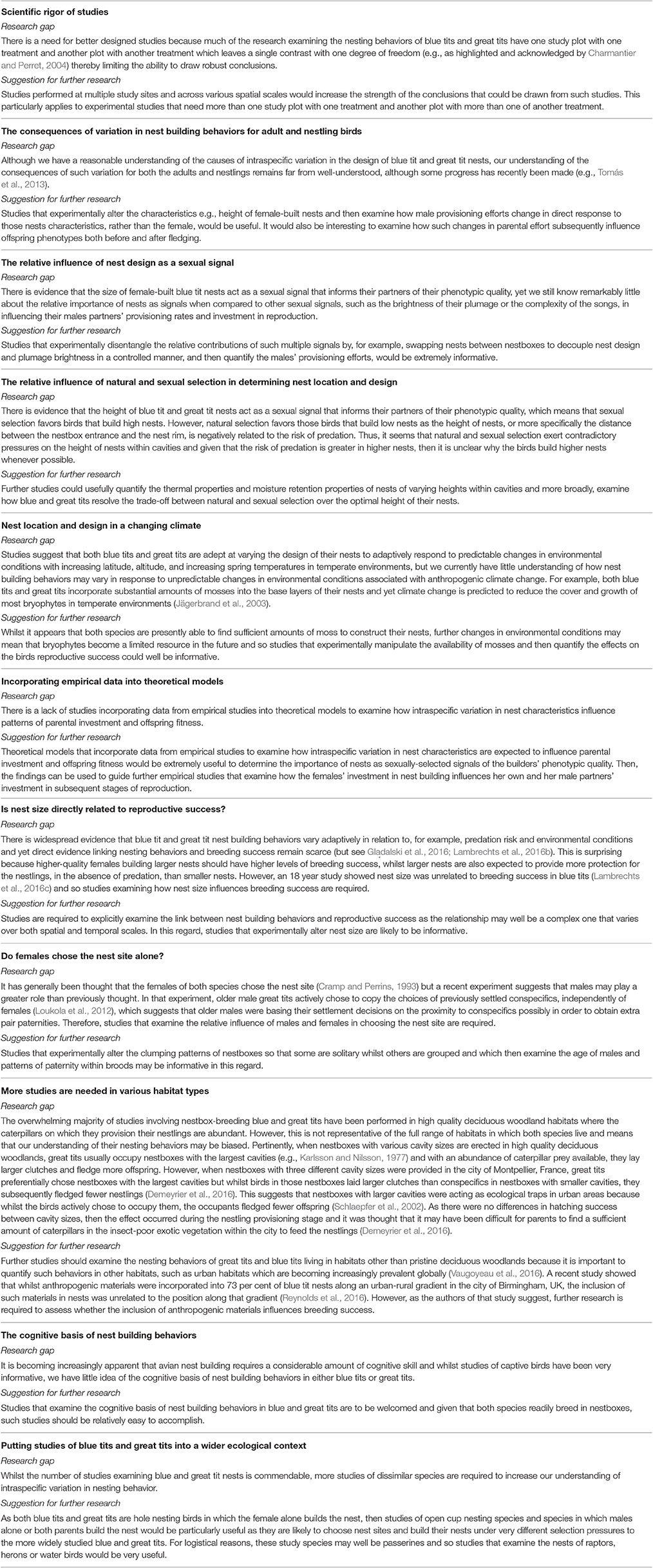
Table 1. Gaps in the research examining the location and design of blue tit and great tit nests and some suggestions for further research.
Author Contributions
The author confirms being the sole contributor of this work and approved it for publication.
Conflict of Interest Statement
The author declares that the research was conducted in the absence of any commercial or financial relationships that could be construed as a potential conflict of interest.
Acknowledgments
I would like to thank Ian Hartley, Charles Deeming, Jim Reynolds, Marcel Lambrechts, and Michał Glądalski for many useful discussions about the nest building behaviors of blue tits and great tits, the British Ecological Society for funding some of my research, and three reviewers for providing extremely useful comments that improved this review.
References
Alabrudzińska, J. M., Kaliński, A., Słomczyński, R., Wawrzyniak, J., Zieliński, P., and Bańbura, J. (2003). Effects of nest characteristics on breeding success of great tits Parus major. Acta Ornithol. 38, 151–154. doi: 10.3161/068.038.0202
Alonzo, S. H., and Klug, H. (2012). “Maternity, paternity and parental care,” in The Evolution of Parental Care, eds N. J. Royle, P. T. Smiseth, and M. Kölliker (Oxford: Oxford University Press), 189–205.
Álvarez, E., and Barba, E. (2008). Nest quality in relation to adult bird condition and its impact on reproduction in great tits Parus major. Acta Ornithol. 39, 87–92. doi: 10.3161/000164508X345275
Álvarez, E., and Barba, E. (2011). Nest characteristics and reproductive performance in great tits Parus major. Ardeola 58, 125–136. doi: 10.13157/arla.58.1.2011.125
Andersson, M. (1982). Sexual selection, natural selection and quality advertisement. Biol. J. Linn. Soc. 17, 375–393. doi: 10.1111/j.1095-8312.1982.tb02028.x
Andersson, S., Ornborg, J., and Andersson, M. (1998). Ultraviolet sexual dimorphism and assortative mating in blue tits. Proc. R. Soc. Lond. B 265, 445–450. doi: 10.1098/rspb.1998.0315
Ar, A., and Sidis, Y. (2002). “Nest microclimate during incubation,” in Avian Incubation: Behaviour, Environment and Evolution, ed D. C. Deeming (Oxford: Oxford University Press), 143–160.
Ardia, D. R. (2013). The effects of nestbox thermal environment on fledging success and haematocrit in Tree Swallows. Avian Biol. Res. 6, 9–103. doi: 10.3184/175815513X13609528031394
Ardia, D. R., Peréz, J. H., and Clotfelter, E. D. (2006). Nest box orientation affects internal temperature and nest site selection in tree swallows. J. Field Ornithol. 77, 339–344. doi: 10.1111/j.1557-9263.2006.00064.x
Ardia, D. R., Peréz, J. H., and Clotfelter, E. D. (2008). Experimental cooling during incubation leads to reduced innate immunity and body condition in nestling tree swallows. Proc. Biol. Sci. 277, 1881–1888. doi: 10.1098/rspb.2009.2138
Bańbura, J., Blondel, J., de Wilde-Lambrechts, H., and Perret, P. (1995). Why do female Blue Tits (Parus caeruleus) bring fresh plants to their nests? J. Ornithol. 136, 217–221. doi: 10.1007/BF01651244
Bańbura, J., Perret, P., Blondel, J., Sauvages, A., Galan, M.-J., and Lambrechts, M. M. (2001). Sex differences in parental care in a Corsican Blue Tit Parus caeruleus population. Ardea 89, 517–526.
Belandrin, M. F., Klocke, J. A., Wurtele, E. S., and Bollinger, W. H. (1985). Natural plant chemicals: sources of industrial and medicinal materials. Science 228, 1154–1160. doi: 10.1126/science.3890182
Beletsky, L. D., and Orians, G. H. (1989). Familiar neighbours enhance breeding success in birds. Proc. Natl. Acad. Sci. U.S.A. 86, 7933–7936. doi: 10.1073/pnas.86.20.7933
Betts, M. G., Hadley, A. S., Rodenhouse, H., and Nocera, J. J. (2008). Social information trumps vegetation structure in breeding-site selection by a migrant songbird. Proc. R. Soc. Lond. B 275, 2257–2263. doi: 10.1098/rspb.2008.0217
Betts, M. M. (1955). The food of titmice in oak woodland. J. Anim. Ecol. 24, 431–445. doi: 10.2307/1715
Biancucci, L., and Martin, T. E. (2010). Can selection on nest size from nest predation explain the latitudinal gradient in clutch size? J. Anim. Ecol. 79, 1086–1092. doi: 10.1111/j.1365-2656.2010.01720.x
Boulinier, T., and Danchin, E. (1997). The use of conspecific reproductive success for breeding patch selection in territorial migratory species. Evol. Ecol. 11, 505–517. doi: 10.1007/s10682-997-1507-0
Boulinier, T., Danchin, E., Monnat, J.-Y., Doutrelant, C., and Cadiou, B. (1996). Timing of prospecting and the value of information in a colonial breeding bird. J. Avian Biol. 27, 252–256. doi: 10.2307/3677230
Breen, A., Guillette, L. M., and Healy, S. D. (2016). What can nest-building birds teach us? Comp. Cogn. Behav. Rev. 11, 83–102. doi: 10.3819/ccbr.2016.110005
Britt, J., and Deeming, D. C. (2011). First-egg date and air temperature affect nest construction in Blue Tits Cyanistes caeruleus but not in Great Tits Parus major. Bird Study 58, 78–89. doi: 10.1080/00063657.2010.524916
Broggi, J., and Senar, J. C. (2009). Brighter great tit parents build bigger nests. Ibis 151, 588–591. doi: 10.1111/j.1474-919X.2009.00946.x
Brouwer, L., and Komdeur, J. (2004). Green nesting material has a function in mate attraction in the European Starling. Anim. Behav. 67, 539–548. doi: 10.1016/j.anbehav.2003.07.005
Browne, S. J. (2006). Effect of nestbox construction and colour on the occupancy and breeding success of nesting tits Parus spp. Bird Study 53, 187–192. doi: 10.1080/00063650609461432
Bueno-Enciso, J., Ferrer, E. S., Barrientos, R., and Sanz, J. J. (2016). Effect of nestbox type on the breeding performance of two secondary hole-nesting passerines. J. Ornithol. 157, 759–772. doi: 10.1007/s10336-016-1339-1
Burtt, E. H., Chow, W., and Babbitt, G. A. (1991). “Occurrence and demography of mites of tree swallow, house wren, and eastern bluebird nests,” in Bird-Parasite Interactions: Ecology, Evolution and Behaviour, eds J. E. Loye, and M. Zuk (Oxford: Oxford University Press), 104–122.
Cauchard, L., Boogert, N. J., Lefebvre, L., Dubois, F., and Doligez, B. (2013). Problem-solving performance is correlated with reproductive success in a wild bird population. Anim. Behav. 85, 19–26. doi: 10.1016/j.anbehav.2012.10.005
Charmantier, A., and Perret, P. (2004). Manipulation of nest-box density affects extra-pair paternity in a population of blue tits (Parus caeruleus). Behav. Ecol. Sociobiol. 56, 360–365. doi: 10.1007/s00265-004-0794-5
Clark, L. (1991). “The nest protection hypothesis: the adaptive use of plant secondary compounds by European starlings,” in Bird-Parasite Interactions: Ecology, Evolution and Behaviour, eds J. E. Loye, and M. Zuk (Oxford: Oxford University Press), 204–221.
Clark, L., and Mason, J. R. (1985). Use of nest material as insecticidal and anti-pathogenic agents by the European Starling. Oecologia 67, 169–176. doi: 10.1007/BF00384280
Clark, L., and Mason, J. R. (1987). Olfactory discrimination of plant volatiles by the European Starling. Anim. Behav 35, 227–235. doi: 10.1016/S0003-3472(87)80228-2
Clark, L., and Mason, J. R. (1988). Effect of biologically active plants used as nest material and the derived benefit to starling nestlings. Oecologia 77, 174–180. doi: 10.1007/BF00379183
Clutton-Brock, T. H. (1991). The Evolution of Parental Care. Princeton, NJ: Princeton University Press.
Cole, E. F., Morand-Ferron, J., Hinks, A. E., and Quinn, J. L. (2012). Cognitive ability influences reproductive life history variation in the wild. Curr. Biol. 22, 1808–1812. doi: 10.1016/j.cub.2012.07.051
Collias, N. E. (1997). On the origin and evolution of nest building by passerine birds. Condor 99, 253–270. doi: 10.2307/1369932
Collias, N. E., and Collias, E. C. (1984). Nest Building and Bird Behaviour. Princeton, NJ: Princeton University Press.
Cowie, R. J., and Hinsley, S. A. (1988). Timing of return with green vegetation by nesting blue tits (Parus caeruleus). Ibis 130, 553–559. doi: 10.1111/j.1474-919X.1988.tb02722.x
Cramp, S., and Perrins, C. M. (1993). The Birds of the Western Palearctic, Volume 7: Flycatchers to Shrikes. Oxford: Oxford University Press.
Cresswell, W. (1997). Nest predation: the relative effects of nest characteristics, clutch size and parental behaviour. Anim. Behav. 53, 93–103. doi: 10.1006/anbe.1996.0281
Crossman, C. A., Hohwer, V. G., and Martin, P. R. (2011). Variation in the structure of bird nests between northern Manitoba and southeastern Ontario. PLoS ONE 6:e19086. doi: 10.1371/journal.pone.0019086
Cruz, Á., Álvarez, E., and Barba, E. (2016). Nest insulating capacity during incubation and after fledging are related. Avian Biol. Res. 9, 22–27. doi: 10.3184/175815516X14453606332392
Dall, S. R. X., Giraldeau, L. A., Olsson, O., McNamara, J. M., and Stephens, D. W. (2005). Information and its use by animals in evolutionary ecology. Trends Ecol. Evol. 20, 187–192. doi: 10.1016/j.tree.2005.01.010
Danchin, E., Giraldeau, L. A., Valone, T. J., and Wagner, R. H. (2004). Public information: from noisy neighbours to cultural evolution. Science 305, 487–491. doi: 10.1126/science.1098254
Dawson, R. D. (2004). Does fresh vegetation protect avian nests from ectoparasites? An experiment with tree swallows. Can. J. Zool. 82, 1005–1010. doi: 10.1139/z04-076
Dawson, R. D., Lawrie, C. C., and O'Brien, E. L. (2005). The importance of microclimate variation in determining size, growth and survival of avian offspring: experimental evidence from a cavity nesting passerine. Oecologia 144, 499–507. doi: 10.1007/s00442-005-0075-7
Dawson, R. D., O'Brien, E. L., and Mlynowski, T. J. (2011). The price of insulation: costs and benefits of feather delivery to nests for male tree swallows Tachycineta bicolor. J. Avian Biol. 42, 93–102. doi: 10.1111/j.1600-048X.2010.05208.x
de Lope, F., González, G., Pérez, J. J., and Møller, A. P. (1993). Increased detrimental effects of ectoparasites on their bird hosts during adverse environmental conditions. Oecologia 95, 234–240. doi: 10.1007/BF00323495
de Neve, L., and Soler, J. J. (2002). Nest-building activity and laying date influence female reproductive investment in magpies: an experimental study. Anim. Behav. 63, 975–980. doi: 10.1006/anbe.2001.1989
Deeming, D. C., and Mainwaring, M. C. (2015). “The functional properties of nests,” in Nest, Eggs, and Incubation: New Ideas about Avian Reproduction, eds D. C. Deeming and S. J. Reynolds (Oxford: Oxford University Press), 29–49.
Deeming, D. C., and Pike, T. W. (2015). Nest surface temperature predicts fledging success of blue tits Cyanistes caeruleus but not in great tits Parus major. Acta Ornithol. 50, 247–251. doi: 10.3161/00016454AO2015.50.2.012
Deeming, D. C., Mainwaring, M. C., Hartley, I. R., and Reynolds, S. J. (2012). Local temperature and not latitude determines the design of Blue tit and Great tit nests. Avian Biol. Res. 12, 203–208. doi: 10.3184/175815512X13528874959581
Demeyrier, V., Lambrechts, M. M., Perret, P., and Grégoire, A. (2016). Experimental demonstration of an ecological trap for a wild bird in a human-transformed environment. Anim. Behav. 118, 181–190. doi: 10.1016/j.anbehav.2016.06.007
Dhondt, A. A. (1977). Interspecific competition between great and blue tit. Nature 268, 521–523. doi: 10.1038/268521a0
Dhondt, A. A. (1989). The effect of old age on the reproduction of Great Tits Parus major and Blue Tits Parus caeruleus. Ibis 131, 268–280. doi: 10.1111/j.1474-919X.1989.tb02770.x
Doutrelant, C., Gregoire, A., Grnac, N., Gomez, D., Lambrechts, M. M., and Perret, P. (2008). Female colouration indicates female reproductive capacity in Blue Tits. J. Evol. Biol. 21, 226–233.
Drent, R. (1975). “Incubation,” in Avian Biology, eds D. S. Farner, J. R. King, and K. C. Parkes (New York, NY: Academic Press), 333–420.
Dubiec, A., Góżdż, I., and Mazgagski, T. D. (2013). Green plant material in avian nests. Avian Biol. Res. 6, 133–146. doi: 10.3184/175815513X13615363233558
DuRant, S. E., Hopkins, W. A., Hepp, G. R., and Walters, J. R. (2013). Ecological, evolutionary, and conservation implications of incubation temperature-dependent phenotypes in birds. Biol. Rev. 88, 499–509. doi: 10.1111/brv.12015
Eggers, S., Griesser, M., Hystrand, M., and Ekman, J. (2006). Predation risk induces changes in nest-site selection and clutch size in the Siberian jay. Proc. R. Soc. Lond. B 273, 701–706. doi: 10.1098/rspb.2005.3373
Evans, M. R. (1997a). Nest building signals male condition rather than age in wrens. Anim. Behav. 53, 749–755. doi: 10.1006/anbe.1996.0311
Evans, M. R. (1997b). The influence of habitat and male morphology on a mate choice cue: the display nests of wrens. Anim. Behav. 54, 485–491. doi: 10.1006/anbe.1996.0493
Evans, M. R., and Burn, J. L. (1996). An experimental analysis of mate choice in the wren: a monomorphic, polygynous passerine. Behav. Ecol. 7, 101–108. doi: 10.1093/beheco/7.1.101
Ewen, J. G., Cassey, P., and Møller, A. P. (2004). Facultative primary sex variation: a lack of evidence in birds? Proc. R. Soc. Lond. B 271, 1277–1282. doi: 10.1098/rspb.2004.2735
Fauth, P. T., Krementz, D. G., and Hines, J. E. (1991). Ectoparasitism and the role of green nesting material in the European starling. Oecologia 88, 22–29. doi: 10.1007/BF00328399
Fontaine, J. J., and Martin, T. E. (2006). Parent birds assess nest predation risk and adjust their reproductive strategies. Ecol. Lett. 9, 428–434. doi: 10.1111/j.1461-0248.2006.00892.x
Forsman, J. T., and Seppänen, J.-T. (2011). Learning what (not) to do: testing rejection and copying of heterospecific behavioural trait. Anim. Behav. 81, 879–883. doi: 10.1016/j.anbehav.2011.01.029
Forsman, J. T., and Thomson, R. L. (2008). Evidence of information collection from heterospecifics in cavity-nesting birds. Ibis 150, 409–412. doi: 10.1111/j.1474-919X.2007.00773.x
Forsman, J. T., Hjernquist, M. B., and Gustafsson, L. (2009). Experimental evidence for the use of density based interspecific social information in forest birds. Ecography 32, 539–545. doi: 10.1111/j.1600-0587.2008.05635.x
Forsman, J. T., Hjernquist, M. B., Taipale, J., and Gustafsson, L. (2008). Competitor density cues for habitat quality facilitating habitat selection and investment decisions. Behav. Ecol. 19, 539–545. doi: 10.1093/beheco/arn005
Forsman, J. T., Seppänen, J.-T., and Mönkkönen, M. (2002). Positive fitness consequences of interspecific interaction with a potential competitor. Proc. R. Soc. Lond. B 269, 1619–1623. doi: 10.1098/rspb.2002.2065
Forsman, J. T., Thomson, R. L., and Seppänen, J.-T. (2007). Mechanisms and fitness effects of interspecific information use between resident and migrant birds. Behav. Ecol. 18, 888–894. doi: 10.1093/beheco/arm048
Forstmeier, W., and Weiss, I. (2004). Adaptive plasticity in nest-site selection in response to changing predation risk. Oikos 104, 487–499. doi: 10.1111/j.0030-1299.1999.12698.x
Galef, B. G., and Laland, K. N. (2005). Social learning in animals: empirical studies and theoretical models. Bioscience 55, 489–499. doi: 10.1641/0006-3568(2005)055[0489:SLIAES]2.0.CO;2
García-Navas, V., Arroyo, L., Sanz, J. J., and Díaz, M. (2008). Effect of nestbox type on occupancy and breeding biology of Tree Sparrows Passer montanus in central Spain. Ibis 150, 356–364. doi: 10.1111/j.1474-919X.2008.00799.x
García-Navas, V., Ortego, J., Ferrer, E. S., and Sanz, J. J. (2013). Feathers, suspicions, and infidelities: an experimental study on parental care and certainty of paternity in the blue tit. Biol. J. Linn. Soc. 109, 552–561. doi: 10.1111/bij.12079
Gibb, J. A. (1950). The breeding biology of the Great and Blue Titmice. Ibis 92, 507–539. doi: 10.1111/j.1474-919X.1950.tb01759.x
Giraldeau, L. -A., Valone, T. J., and Templeton, J. J. (2002). Potential disadvantages of using socially acquired information. Philos. Trans. R. Soc. Lond. B 357, 1559–1566. doi: 10.1098/rstb.2002.1065
Glądalski, M., Bańbura, M., Kaliński, A., Markowski, M., Skwarska, J., Wawrzyniak, J., et al. (2016). Effects of nest characteristics on reproductive performance in Blue Tits Cyanistes caeruleus and Great Tits Parus major. Avian Biol. Res. 9, 37–43. doi: 10.3184/175815516X14447556559088
Goodenough, A. E., Maitland, D. P., Hart, A. G., and Elliot, S. L. (2008). Nestbox orientation: a species-specific influence on occupation and breeding success in woodland passerines. Bird Study 55, 222–232. doi: 10.1080/00063650809461526
Grabowska-Zhang, A., Sheldon, B. C., and Hinde, C. A. (2012). Long-term familiarity promotes helping in neighbour nest defence. Biol. Lett. 8, 544–546. doi: 10.1098/rsbl.2012.0183
Guillette, L. M., and Healy, S. D. (2015). Nest building, the forgotten behaviour. Curr. Opin. Behav. Sci. 6, 90–96. doi: 10.1016/j.cobeha.2015.10.009
Gwinner, H. (1997). The function of green plants in nest of European starlings Sturnus vulgaris. Behaviour 134, 337–351. doi: 10.1163/156853997X00575
Gwinner, H., Oltrogge, M., Trost, L., and Nienaber, U. (2000). Green plants in starling nests: effects on nestlings. Anim. Behav. 59, 301–309. doi: 10.1006/anbe.1999.1306
Hamilton, W. D., and Zuk, M. (1982). Heritable true fitness and bright birds: a role for parasites? Science 218, 384–387. doi: 10.1126/science.7123238
Hansell, M. H. (1995). The demand for feathers as building material by woodland nesting birds. Bird Study 42, 240–245. doi: 10.1080/00063659509477173
Hansell, M. H. (2000). Bird Nests and Construction Behaviour. Cambridge: Cambridge University Press.
Hansell, M. H., and Deeming, D. C. (2002). “Location, structure and function of incubation sites,” in Avian Incubation: Behaviour, Environment and Evolution, ed D. C. Deeming (Oxford: Oxford University Press), 8–27.
Hansell, M. H., and Ruxton, G. D. (2002). An experimental study of the availability of feathers for avian nest building. J. Avian Biol. 33, 318–320. doi: 10.1034/j.1600-048X.2002.330316.x
Harničárová, K., and Adamík, P. (2016). Mammal hair in nests of four cavity-nesting songbirds: occurrence, diversity and seasonality. Bird Study 63, 181–186. doi: 10.1080/00063657.2016.1183584
Hebda, G., and Wesołowski, T. (2012). Low flea loads in birds' nests in tree cavities. Ornis Fenn. 89, 139–144.
Hebda, G., Pochrzɑst, K., Mitrus, S., and Wesołowski, T. (2013). Disappearance rates of old nest material from tree cavities: an experimental study. Scand. J. Forest Res. 28, 445–450. doi: 10.1080/02827581.2013.783100
Heeb, P., Kölliker, M., and Richner, H. (2000). Bird-ectoparasite interactions, nest humidity, and ectoparasite community structure. Ecology 81, 958–968. doi: 10.1890/0012-9658(2000)081[0958:BEINHA]2.0.CO;2
Heeb, P., Werner, I., Richner, H., and Kölliker, M. (1996). Horizontal transmission and reproductive rates of hen fleas in great tit nests. J. Anim. Ecol. 65, 474–484. doi: 10.2307/5782
Heenan, C. B. (2013). An overview of the factors influencing the morphology and thermal properties of avian nests. Avian Biol. Res. 6, 104–118. doi: 10.3184/003685013X13614670646299
Heenan, C. B., and Seymour, R. S. (2012). The effect of wind on the rate of heat loss from avian cup-shaped nests. PLoS ONE 7:e32252. doi: 10.1371/journal.pone.0032252
Hilton, G. M., Hansell, M. H., Ruxton, J. M., Reid, J. M., and Monaghan, P. (2004). Using artificial nests to test importance of nesting material and nest shelter for incubation energetics. Auk 121, 777–787. doi: 10.1642/0004-8038(2004)121[0777:UANTTI]2.0.CO;2
Hunt, S., Bennett, A. T. D., Cuthill, I. C., and Griffiths, R. (1998). Blue tits are ultraviolet tits. Proc. R. Soc. Lond. B 265, 451–455. doi: 10.1098/rspb.1998.0316
Ibáñez-Álamo, J. D., Magrath, R. D., Oteyza, J. C., Chalfoun, A. D., Haff, T. M., Schmidt, K. A., et al. (2015). Nest predation research: recent findings and future perspectives. J. Ornithol. 156, 247–262. doi: 10.1007/s10336-015-1207-4
Jaakkonen, T., Kari, A., and Forsman, J. T. (2013). Flycatchers copy conspecifics in nest-site selection but neither personal experience nor frequency of tutors have an effect. PLoS ONE 8:e60395. doi: 10.1371/journal.pone.0060395
Jaakkonen, T., Kivelä, S. M., Meier, C. M., and Forsman, J. T. (2015). The use and relative importance of intraspecific and interspecific social information in a bird community. Behav. Ecol. 26, 55–64. doi: 10.1093/beheco/aru144
Jägerbrand, A., Molau, U., and Alatalo, J. M. (2003). Responses of bryophytes to simulated environmental change at Latnjajaure, northern Sweden. J. Bryol. 25, 163–168. doi: 10.1179/037366803235001634
Kaliński, A., Wawrzyniak, J., Bańbura, M., Skwarska, J., Zieliński, P., Glądalski, M., et al. (2014). Does the threat of European Pine Marten (Martes martes) predation influence the height of nests built by Blue Tits (Cyanistes caeruleus) and Great Tits (Parus major)? Avian Biol. Res. 7, 83–90. doi: 10.3184/175815514x13983550506873
Karlsson, J., and Nilsson, S. G. (1977). The influence of nest-box area on clutch size in some hole-nesting passerines. Ibis 119, 207–211. doi: 10.1111/j.1474-919X.1977.tb03542.x
Kempenaers, B., Verheyen, G. R., van den Broek, M., Burke, T., Vanbroeckhoven, C., and Dhondt, A. A. (1992). Extrapair paternity results from female preference for high quality males in the blue tit (Parus caeruleus). Nature 537, 494–496. doi: 10.1038/357494a0
Kern, M. D., and van Riper, I. I. I., C. (1984). Altitudinal variations in nests of the Hawaiian honeycreeper Hemignathus virens virens. Condor 86, 443–454. doi: 10.2307/1366825
Lafuma, L., Lambrechts, M. M., and Raymond, M. (2001). Aromatic plants in bird nests as a protection against blood-sucking flying insects? Behav. Proc. 56, 113–120. doi: 10.1016/S0376-6357(01)00191-7
Lambrechts, M. M., Adriaensen, F., Ardia, D. R., Artemyev, A. V., Atiénzar, F., Bańbura, J., et al. (2010). The design of artificial nestboxes for the study of secondary hole-nesting birds: a review of methodological inconsistencies and potential biases. Acta Ornithol. 45, 1–26. doi: 10.3161/000164510X516047
Lambrechts, M. M., Aimé, C., Midamegbe, A., Galan, M.-J., Perret, P., Grégoire, A., et al. (2012). Nest size and breeding success in first and replacement clutches: an experimental study in Blue Tits. J. Ornithol. 53, 173–179. doi: 10.1007/s10336-011-0722-1
Lambrechts, M. M., and dos Santos, A. (2000). Aromatic herbs in Corsican blue tit nests: the ‘potpourri’ hypothesis. Acta Ornithol. 21, 175–178. doi: 10.1016/s1146-609x(00)00122-3
Lambrechts, M. M., Blondel, J., Bernard, C., Caro, S., Charmantier, A., Demeyrier, V., et al. (2016a). Exploring biotic and abiotic determinants of nest size in Mediterranean Great Tits (Parus major) and Blue Tits (Cyanistes caeruleus). Ethology 122, 492–501. doi: 10.1111/eth.12494
Lambrechts, M. M., Blondel, J., de Franceschi, C., and Doutrelant, C. (2016b). Nest size is positively correlated with fledging success in Corsican Blue Tits (Cyanistes caeruleus) in an insular oak-dominated habitat mosaic. J. Ornithol. 158, 125–132. doi: 10.1007/s10336-016-1377-8
Lambrechts, M. M., Marrot, P., Fargevieille, A., Giovannini, P., Lucas, A., Demeyrier, V., et al. (2016c). Nest size is not closely related to breeding success in Blue Tits: a long-term nest-box study in a Mediterranean oak habitat. Auk 133, 198–204. doi: 10.1642/AUK-15-214.1
Lambrechts, M. M., Schatz, B., and Bourgault, P. (2008). Interactions between ants and breeding Paridae in two distinct Corsican oak habitats. Folia Zool. 57, 264–268.
Lens, L., Wauters, L. A., and Dhondt, A. A. (1994). Nest-building by Crested Tit Parus cristatus males. Behav. Ecol. 35, 431–436. doi: 10.1007/BF00165846
Lessells, C. M. (1991). “The evolution of life histories,” in Behavioural Ecology: an Evolutionary Approach, eds J. R. Krebs and N. B. Davies (Oxford: Blackwell Science), 32–68.
Liljesthröm, M., Schiavini, A., and Reboreda, J. C. (2009). Chilean swallows (Tachycineta meyeni) adjust the number of feathers added to the nest with time of breeding. Wilson J. Ornithol. 121, 783–788. doi: 10.1676/09-018.1
Lima, S. L. (2009). Predators and the breeding bird: behavioural and reproductive flexibility under the risk of predation. Biol. Rev. 84, 485–513. doi: 10.1111/j.1469-185X.2009.00085.x
Lloyd, J., and Martin, T. E. (2004). Nest-site preference and maternal effects on offspring growth. Behav. Ecol. 15, 816–823. doi: 10.1093/beheco/arh085
Lombardo, M. P. (1994). Nest architecture and reproductive performance in tree swallows (Tachycineta bicolor). Auk 111, 814–824. doi: 10.2307/4088813
Lombardo, M. P., Bosman, R. M., Faro, C. A., Houtteman, S. G., and Kluisza, T. S. (1995). Effect of feathers as nest insulation on incubation behaviour and reproductive performance of Tree Swallows Tachycineta bicolor. Auk 112, 973–981. doi: 10.2307/4089028
Loukola, O. J., Laaksonen, T., Seppänen, J.-T., and Forsman, J. T. (2014). Active hiding of social information from information-parasites. BMC Evol. Biol. 14:32. doi: 10.1186/1471-2148-14-32
Loukola, O. J., Seppänen, J.-T., and Forsman, J. T. (2012). Intraspecific social information use in the selection of nest site characteristics. Anim. Behav. 83, 629–633. doi: 10.1016/j.anbehav.2011.12.004
Loukola, O. J., Seppänen, J.-T., Krams, I., Torvinen, S. S., and Forsman, J. T. (2013). Observed fitness may affect niche overlap in competing species via selective social information use. Am. Nat. 182, 474–483. doi: 10.1086/671815
Lovell, P. G., Ruxton, G. D., Langridge, K. V., and Spencer, K. A. (2013). Egg-laying substrate selection for optimal camouflage by quail. Curr. Biol. 23, 260–264. doi: 10.1016/j.cub.2012.12.031
Loye, J. E., and Zuk, M. (1991). Bird-Parasite Interactions: Ecology, Evolution and Behaviour. Oxford: Oxford University Press.
Mainwaring, M. C. (2011). The use of nestboxes by roosting birds during the non-breeding season: a review of the costs and benefits. Ardea 99, 167–176. doi: 10.5253/078.099.0206
Mainwaring, M. C. (2015a). The use of man-made structures as nesting sites by birds: a review of the costs and benefits. J. Nature Cons. 25, 17–22. doi: 10.1016/j.jnc.2015.02.007
Mainwaring, M. C. (2015b). “Nest construction and incubation in a changing climate,” in Nest, Eggs, and Incubation: New Ideas about Avian Reproduction, eds D. C. Deeming, and S. J. Reynolds (Oxford: Oxford University Press), 65–74.
Mainwaring, M. C. (2016). The transition from dependence to independence in birds. Behav. Ecol. Sociobiol. 70, 1419–1431. doi: 10.1007/s00265-016-2186-z
Mainwaring, M. C., and Hartley, I. R. (2008). Seasonal adjustments in nest cup lining in Blue Tits Cyanistes caeruleus. Ardea 96, 278–282. doi: 10.5253/078.096.0213
Mainwaring, M. C., and Hartley, I. R. (2009). Experimental evidence for state-dependent nest weight in the blue tit, Cyanistes caeruleus. Behav. Proc. 81, 144–146. doi: 10.1016/j.beproc.2009.02.001
Mainwaring, M. C., and Hartley, I. R. (2013). The energetic costs of nest building in birds. Avian Biol. Res. 6, 12–17. doi: 10.3184/175815512X13528994072997
Mainwaring, M. C., and Hartley, I. R. (2016). Experimentally reduced nest-building costs result in higher provisioning rates but not increased offspring fitness in Blue Tits. Avian Biol. Res. 9, 52–57. doi: 10.3184/175815516X14551234001807
Mainwaring, M. C., Barber, I., Deeming, D. C., Pike, D. A., Roznik, E. A., and Hartley, I. R. (2017). Climate change and nesting behaviour in vertebrates: a review of the ecological effects and potential for adaptive responses. Biol. Rev. doi: 10.1111/brv.12317. [Epub ahead of print].
Mainwaring, M. C., Benskin, C. M. H., and Hartley, I. R. (2008). The weight of female-built nests correlates with female but not male quality in the Blue Tit Cyanistes caeruleus. Acta Ornithol. 43, 43–48. doi: 10.3161/000164508X345310
Mainwaring, M. C., Deeming, D. C., Jones, C. I., and Hartley, I. R. (2014a). Adaptive latitudinal variation in Common Blackbird (Turdus merula) nest characteristics. Ecol. Evol. 4, 841–851. doi: 10.1002/ece3.952
Mainwaring, M. C., Dickens, M., and Hartley, I. R. (2010). Environmental and not maternal effects determine variation in offspring phenotypes in a passerine bird. J. Evol. Biol. 23, 1302–1311. doi: 10.1111/j.1420-9101.2010.01997.x
Mainwaring, M. C., Hartley, I. R., Bearhop, S., Brulez, K., du Feu, C. R., Murphy, G., et al. (2012). Latitudinal variation in blue tit and great tit nest characteristics indicates environmental adjustment. J. Biogeog. 39, 1669–1677. doi: 10.1111/j.1365-2699.2012.02724.x
Mainwaring, M. C., Hartley, I. R., Lambrechts, M. M., and Deeming, D. C. (2014b). The design and function of birds' nests. Ecol. Evol. 4, 3909–3928. doi: 10.1002/ece3.1054
Mainwaring, M. C., Reynolds, S. J., and Weidinger, K. (2015). “The influence of predation on the location and design of nests,” in Nest, Eggs, and Incubation: New Ideas about Avian Reproduction, eds D. C. Deeming and S. J. Reynolds (Oxford: Oxford University Press), 50–64.
Mainwaring, M. C., Wolfenden, A., Read, J. E., Robson, J. M. A., Tomlinson, C. J., and Hartley, I. R. (2016). Feathering nest: the effects of feather supplementation to Blue Tit nests. Avian Biol. Res. 9, 89–95. doi: 10.3184/175815516X14551240159329
Mappes, T., Mappes, J., and Kotiaho, J. (1994). Ectoparasites, nest site choice and breeding success in the pied flycatcher. Oecologia 98, 147–149. doi: 10.1007/BF00341466
Martin, T. E. (1987). Food as a limit on breeding birds: a life-history perspective. Ann. Rev. Ecol. Syst. 18, 453–487. doi: 10.1146/annurev.es.18.110187.002321
Martin, T. E. (1993). Nest predation and nest sites: new perspectives on old patterns. Bioscience 43, 523–532. doi: 10.2307/1311947
Martin, T. E. (1995). Avian life history evolution in relation to nest sites, nest predation, and food. Ecol. Monogr. 65, 101–127. doi: 10.2307/2937160
Martin, T. E., and Li, P. (1992). Life history traits of open- vs. cavity-nesting birds. Ecology 73, 579–592. doi: 10.2307/1940764
Martin, T. E., Scott, J., and Menge, C. (2000). Nest predation increases with parental activity: separating nest site and parental activity effects. Proc. R. Soc. Lond. B 267, 2287–2293. doi: 10.1098/rspb.2000.1281
Marzluff, J. M. (1988). Do pinyon jays alter nest placement based on prior experience? Anim. Behav. 36, 1–10. doi: 10.1016/S0003-3472(88)80244-6
Mazgajski, T. D. (2007). Effect of old nest material on nest site selection and breeding parameters in secondary hole nesters – a review. Acta Ornithol. 42, 1–14. doi: 10.3161/068.042.0107
Mazgajski, T. D., and Rykowska, Z. (2008). Dependence of nest mass on nest hole depth in the Great Tit Parus major. Acta Ornithol. 43, 49–55. doi: 10.3161/000164508X345329
Maziarz, M., and Wesołowski, T. (2013). Microclimate of tree cavities used by Great Tits (Parus major) in a primeval forest. Avian Biol. Res. 6, 47–56. doi: 10.3184/175815513X13611994806259
Maziarz, M., Wesołowski, T., Hebda, G., and Cholewa, M. (2015). Natural nest-sites of Great Tits (Parus major) in a primeval temperate forest (Białowieża National Park, Poland). J. Ornithol. 156, 613–623. doi: 10.1007/s10336-015-1169-6
Maziarz, M., Wesołowski, T., Hebda, G., Cholewa, M., and Broughton, R. K. (2016). Breeding success of the Great Tit Parus major in relation to attributes of natural nest cavities in a primeval forest. J. Ornithol. 157, 343–354. doi: 10.1007/s10336-015-1294-2
McGowan, A., Sharp, S. P., and Hatchwell, B. J. (2004). The structure and function of nests of long-tailed tits Aegithalos caudatus. Funct. Ecol. 18, 578–583. doi: 10.1111/j.0269-8463.2004.00883.x
Mennerat, A. (2008). Blue tits (Cyanistes caeruleus) respond to an experimental change in the aromatic plant odour composition of their nest. Behav. Proc. 79, 189–191. doi: 10.1016/j.beproc.2008.07.003
Mennerat, A., Mirleau, J., Blondel, J., Perret, P., Lambrechts, M. M., and Heeb, P. (2009c). Aromatic plants in nests of the blue tit Cyanistes caeruleus protect chicks from bacteria. Oecologia 161, 849–855. doi: 10.1007/s00442-009-1418-6
Mennerat, A., Perret, P., and Lambrechts, M. M. (2009a). Local individual preferences for nesting materials in a passerine bird. PLoS ONE 4:e5104. doi: 10.1371/journal.pone.0005104
Mennerat, A., Perret, P., Bourgault, P., Blondel, J., Gimenez, O., Thomas, D. W., et al. (2009b). Aromatic plants in nests of blue tits: positive effects on nestlings. Anim. Behav. 77, 569–574. doi: 10.1016/j.anbehav.2008.11.008
Mennerat, A., Perret, P., Caro, S. P., Heeb, P., and Lambrechts, M. M. (2008). Aromatic plants in blue tit Cyanistes caeruleus nests: no negative effect on blood-sucking Protocalliphora blow fly larvae. J. Avian Biol. 39, 127–132. doi: 10.1111/j.0908-8857.2008.04400.x
Merino, S., Moreno, J., Sanz, J. J., and Arriero, E. (2000). Are avian blood parasites pathogenic in the wild? A medication experiment in blue tits (Parus caeruleus). Proc. R. Soc. Lond. B 267, 2507–2510. doi: 10.1098/rspb.2000.1312
Mertens, J. A. L. (1977). Thermal conditions for successful breeding in Great Tits (Parus major L.). II. Thermal properties of nests and nestboxes and their implications for the range of temperature tolerance of great tit broods. Oecologia 28, 31–56. doi: 10.1007/BF00346835
Metcalfe, N. B., and Monaghan, P. (2001). Compensation for a bad start: grow now, pay later? Trends Ecol. Evol. 16, 254–260. doi: 10.1016/S0169-5347(01)02124-3
Minot, E. O., and Perrins, C. M. (1986). Interspecific interference competition-nest sites for Blue and Great Tits. J. Anim. Ecol. 55, 331–350. doi: 10.2307/4712
Møller, A. P. (1984). On the use of feathers in birds' nests: predictions and tests. Ornis Scand. 15, 38–42. doi: 10.2307/3676000
Møller, A. P. (1989). Parasites, predators and nest boxes: facts and artefacts in nest box studies of birds? Oikos 56, 421–423. doi: 10.2307/3565628
Møller, A. P. (1990a). Nest predation selects for small nest size in the blackbird. Oikos 57, 237–240. doi: 10.2307/3565945
Møller, A. P. (1990b). Effects of parasitism by a haematophagous mite on reproduction in the barn swallow. Ecology 71, 2345–2357. doi: 10.2307/1938645
Møller, A. P. (1992). Nest boxes and the scientific rigour of experimental studies. Oikos 63, 309–311. doi: 10.2307/3545393
Møller, A. P. (1993). Ectoparasites increase the cost of reproduction in their hosts. J. Anim. Ecol. 62, 309–322. doi: 10.2307/5362
Møller, A. P. (2006). Rapid change in nest size of a bird related to change in a secondary sexual character. Behav. Ecol. 17, 108–116. doi: 10.1093/beheco/arj003
Møller, A. P., Adriaensen, F., Artemyev, A., Bańbura, J., Barba, E., Biard, C., et al. (2014a). Clutch size variation in Western Palearctic secondary hole-nesting passerine birds in relation to nestbox design. Methods Ecol. Evol. 5, 353–362. doi: 10.1111/2041-210X.12160
Møller, A. P., Adriaensen, F., Artemyev, A., Bańbura, J., Barba, E., Biard, C., et al. (2014b). Variation in clutch size in relation to nest size in birds. Ecol. Evol. 4, 3583–3595. doi: 10.1002/ece3.1189
Mönkkönen, M., Helle, P., and Soppela, K. (1990). Numerical and behavioural responses of migrant passerines to experimental manipulation of resident tits (Parus spp.): heterospecific attraction in northern bird communities? Oecologia 85, 218–225. doi: 10.1007/BF00319404
Moreno, J. (2012). Avian nests and nest-building as signals. Avian Biol. Res. 5, 238–251. doi: 10.3184/175815512X13534385822786
Moreno, J., Lobato, E., González-Braojos, S., and Ruiz-de-Castañeda, R. (2010). Nest construction costs affect nestling growth: a field experiment in a cavity-nesting passerine. Acta Ornithol. 45, 139–145. doi: 10.3161/000164510X551291
Moreno, J., Martínez, J., Corral, C., Lobato, E., Merino, S., Morales, J., et al. (2008). Nest construction rate and stress in female Pied Flycatchers Ficedula hypoleuca. Acta Ornithol. 43, 57–64. doi: 10.3161/000164508X345338
Moreno, J., Merino, S., Lobato, E., Ruiz-de-Castañeda, R., Martinez-de la Puente, J., del Cerro, S., et al. (2009). Nest-dwelling ectoparasites of two sympatric hole-nesting passerines in relation to nest composition: an experimental study. Ecoscience 16, 418–427. doi: 10.2980/16-3-3233
Nager, R. G., and van Noordwijk, A. J. (1992). Energetic limitation in the egg-laying period of great tits. Proc. R. Soc. Lond. B 249, 259–263. doi: 10.1098/rspb.1992.0112
Nilsson, S. G. (1984). The evolution of nest-site selection among hole-nesting birds: the importance of nest predation and competition. Ornis Scand. 15, 167–175. doi: 10.2307/3675958
Nilsson, S. G. (1986). Evolution of hole-nesting in birds: on balancing selection pressures. Auk 103, 432–435.
O'Neil, K. P. (2000). “Role of bryophyte-dominated ecosystems in the global carbon budget,” in Bryophyte biology, eds A. J. Shaw and B. Goffinet (Cambridge: Cambridge University Press), 344–368.
Oppliger, A., Richner, H., and Christe, P. (1994). Effect of an ectoparasite on lay date, nest-site choice, desertion, and hatching success in the great tit (Parus major). Behav. Ecol. 5, 130–134. doi: 10.1093/beheco/5.2.130
Otter, K. A. (2007). Ecology and Behavior of Chickadees and Titmice: An Integrated Approach. Oxford: Oxford University Press.
Parejo, D., Danchin, E., and Avilés, J. M. (2005). The heterospecific habitat copying hypothesis: can competitors indicate habitat quality? Behav. Ecol. 16, 96–105. doi: 10.1093/beheco/arh136
Parejo, D., White, J., and Danchin, E. (2007a). Settlement decisions in blue tits: difference in the use of social information according to age and individual success. Naturwissenschaften 94, 749–757. doi: 10.1007/s00114-007-0253-z
Parejo, D., White, J., Clobert, J., Dreiss, A., and Danchin, E. (2007b). Blue tits use fledgling quality and quantity as public information in breeding site choice. Ecology 88, 2373–2382. doi: 10.1890/06-2000.1
Pärt, T., and Doligez, B. (2003). Gathering public information for habitat selection: prospecting birds cue on parental activity. Proc. R. Soc. Lond. B 270, 1809–1813. doi: 10.1098/rspb.2003.2419
Pärt, T., Arlt, D., Doligez, B., Low, M., and Qvarnström, A. (2011). Prospectors combine social and environmental information to improve habitat selection and breeding success in the subsequent year. J. Anim. Ecol. 80, 1227–1235. doi: 10.1111/j.1365-2656.2011.01854.x
Peréz, J. H., Ardia, D. R., Chad, E. K., and Clotfelter, E. D. (2008). Experimental heating reveals nest temperature affects nestling condition in tree swallows (Tachycineta bicolor). Biol. Lett. 4, 468–471. doi: 10.1098/rsbl.2008.0266
Perrins, C. M. (1970). The timing of birds' breeding seasons. Ibis 112, 242–255. doi: 10.1111/j.1474-919X.1970.tb00096.x
Perrins, C. M. (1991). Tits and their caterpillar food supply. Ibis 133, 49–54. doi: 10.1111/j.1474-919X.1991.tb07668.x
Petit, C., Hossaert-Mckey, M., Perret, P., Blondel, J., and Lambrechts, M. M. (2002). Blue tits use selected plants and olfaction to maintain an aromatic environment for nestlings. Ecol. Lett. 5, 585–589. doi: 10.1046/j.1461-0248.2002.00361.x
Polo, V., and Veiga, J. P. (2006). Nest ornamentation by female spotless starlings in response to a male display: an experimental study. J. Anim. Ecol. 75, 942–947. doi: 10.1111/j.1365-2656.2006.01103.x
Polo, V., López-Rull, I., Gil, D., and Veiga, J. P. (2010). Experimental addition of green plants to the nest increases testosterone levels in female spotless starlings. Ethology 116, 129–137. doi: 10.1111/j.1439-0310.2009.01724.x
Polo, V., Veiga, J. P., Cordero, P. J., Vinuela, J., and Monaghan, P. (2004). Female starlings adjust primary sex ratio in response to aromatic plants in the nest. Proc. R. Soc. Lond. B 1551, 1929–1933. doi: 10.1098/rspb.2004.2801
Proctor, H. C. (2003). Feather mites (Acari: Astigmata): ecology, behaviour, and evolution. Ann. Rev. Entomol. 48, 185–209. doi: 10.1146/annurev.ento.48.091801.112725
Ramsay, S. M., Otter, K., and Ratcliffe, L. M. (1999). Nest-site selection by female black-capped chickadees: settlement based on conspecific attraction? Auk 116, 604–617. doi: 10.2307/4089322
Remeš, V., and Krist, M. (2005). Nest design and the abundance of parasitic Protocalliphora blow flies in two hole-nesting passerines. Ecoscience 12, 549–553. doi: 10.2980/i1195-6860-12-4-549.1
Remeš, V., and Martin, T. E. (2002). Environmental influences on the evolution of growth and developmental rates in passerines. Evolution 56, 2505–2518. doi: 10.1111/j.0014-3820.2002.tb00175.x
Rendell, W. B., and Verbeek, N. A. (1996). Old nest material in nest boxes of tree swallows: effects on nest-site choice and nest building. Auk 113, 319–328. doi: 10.2307/4088898
Reynolds, S. J., Davies, C. S., Elwell, E., Tasker, P. J., Williams, A., Sadler, J. P., et al. (2016). Does the urban gradient influence the composition and ectoparasite load of nests of an urban bird species? Avian Biol. Res. 11, 224–234. doi: 10.3184/175815516X14725499175665
Richner, H., Oppliger, A., and Christe, P. (1993). Effect of an ectoparasite on reproduction in great tits. J. Anim. Ecol. 62, 703–710. doi: 10.2307/5390
Sæther, B. -E., Engen, S., Grøtan, V., Fiedler, W., Matthysen, E., Visser, M. E., et al. (2007). The extended Moran effect and large-scale synchronous fluctuations in the size of great tit and blue tit populations. J. Anim. Ecol. 76, 315–325. doi: 10.1111/j.1365-2656.2006.01195.x
Sanz, J. J. (2002). Climate change and breeding parameters of great and blue tits throughout the western Palaearctic. Glob. Change Biol. 8, 409–422. doi: 10.1046/j.1365-2486.2002.00496.x
Sanz, J. J., and García-Navas, V. (2011). Nest ornamentation in blue tits: is feather carrying ability a male status signal? Behav. Ecol. 22, 240–247. doi: 10.1093/beheco/arq199
Sanz, J. J., Tinbergen, J. M., Moreno, J., Orell, M., and Verhulst, S. (2000). Latitudinal variation in parental energy expenditure during brood rearing in the great tit. Oecologia 122, 149–154. doi: 10.1007/PL00008842
Schaedelin, F. C., and Taborsky, M. (2009). Extended phenotypes as signals. Biol. Rev. 84, 293–313. doi: 10.1111/j.1469-185X.2008.00075.x
Schlaepfer, M. A., Runge, M. C., and Sherman, P. W. (2002). Ecological and evolutionary traps. Trends Ecol. Evol. 17, 474–480. doi: 10.1016/S0169-5347(02)02580-6
Schöll, E. M., and Hille, S. M. (2015). Do Great Tits Parus major nesting at high altitudes build better insulated nests? Ardeola 61, 323–333. doi: 10.13157/arla.61.2.2014.323
Seppänen, J.-T., and Forsman, J. T. (2007). Interspecific social learning: novel preference can be acquired from a competing species. Curr. Biol. 17, 1248–1252. doi: 10.1016/j.cub.2007.06.034
Seppänen, J.-T., Forsman, J. T., Mönkkönen, M., and Thomson, R. L. (2007). Social information use is a process across space, time and ecology, reaching heterospecifics. Ecology 88, 1622–1633. doi: 10.1890/06-1757.1
Sergio, F., Blas, J., Blanco, G., Tanferna, A., López, L., Lemus, J. A., et al. (2011). Raptor nest decorations are a reliable threat against conspecifics. Science 331, 327–330. doi: 10.1126/science.1199422
Sheldon, B. C. (2000). Differential allocation: tests, mechanisms and implications. Trends Ecol. Evol. 15, 397–402. doi: 10.1016/S0169-5347(00)01953-4
Sheldon, B. C., Andersson, S., Griffith, S. C., Ornborg, J., and Sendecka, J. (1999). Ultraviolet colour variation influences blue tit sex ratios. Nature 402, 874–877. doi: 10.1038/47239
Shutler, D., and Campbell, A. A. (2007). Experimental addition of greenery reduces flea loads in nests of a non-greenery using species, the tree swallow, Tachycineta bicolor. J. Avian Biol. 38, 7–12. doi: 10.1111/j.2007.0908-8857.04015.x
Slagsvold, T. (1975). Competition between the great tit Parus major and the pied flycatcher Ficedula hypoleuca in the breeding season. Ornis Scand. 6, 179–190. doi: 10.2307/3676230
Slagsvold, T. (1978). Competition between the Great Tit Parus major and the Pied Flycatcher Ficedula hypoleuca; an experiment. Ornis Scand. 9, 46–50. doi: 10.2307/3676138
Slagsvold, T., Wigdahl Kleiven, K., Eriksen, A., and Johannessen, L. E. (2013). Vertical and horizontal transmission of nest preferences in titmice. Anim. Behav. 85, 323–328. doi: 10.1016/j.anbehav.2012.10.024
Słomczyński, R., Kaliński, A., Wawrzyniak, J., Bańbura, M., Skwarska, J., Zieliński, P., et al. (2006). Effects of experimental reduction in nest micro-parasite and macro-parasite loads on nestling haemoglobin level in blue tits Parus caeruleus. Acta Ornithol. 30, 223–227. doi: 10.1016/j.actao.2006.04.003
Smith, J. A., Harrison, T. J. E., Martin, G. R., and Reynolds, S. J. (2012). Feathering the nest: food supplementation influences nest construction by Blue tits (Cyanistes caeruleus) and Great tit (Parus major). Avian Biol. Res. 6, 18–25. doi: 10.3184/175815512X13530764553094
Soler, J. J., de Neve, L., Martínez, J. G., and Soler, M. (2001). Nest size affects clutch size and the start of incubation in magpies: an experimental study. Behav. Ecol. 12, 301–307. doi: 10.1093/beheco/12.3.301
Soler, J. J., Martín-Vivaldi, M., Hausey, C., and Møller, A. P. (2007). Intra- and interspecific relationships between nest size and immunity. Behav. Ecol. 18, 781–791. doi: 10.1093/beheco/arm045
Soler, J. J., Møller, A. P., and Soler, M. (1998). Nest building, sexual selection and parental investment. Evol. Ecol. 12, 427–441. doi: 10.1023/A:1006520821219
Stamps, J. A. (1994). Territorial behaviour: testing the assumptions. Adv. Study Behav. 23, 173–232. doi: 10.1016/S0065-3454(08)60354-X
Stamps, J. A., and Krishman, V. V. (1990). The effect of settlement tactics on territorial sizes. Am. Nat. 135, 527–546. doi: 10.1086/285060
Stamps, J. A., and Krishman, V. V. (2005). Nonintuitive cue use in habitat selection. Ecology 86, 2860–2867. doi: 10.1890/05-0290
Stephenson, S., Hannon, S., and Proctor, H. (2009). The function of feathers in tree swallow nests: insulation or ectoparasite barrier? Condor 111, 479–487. doi: 10.1525/cond.2009.090074
Stokes, A. W. (1960). Nest-site selection and courtship behaviour of the blue tit Parus caeruleus. Ibis 102, 507–519. doi: 10.1111/j.1474-919X.1960.tb07127.x
Suárez-Rodríguez, M., López, I., and Garcia, C. M. (2013). Incorporation of cigarette butts into nests reduces nest ectoparasite load in urban birds: new ingredients for an old recipe? Biol. Lett. 9:20120931. doi: 10.1098/rsbl.2012.0931
Surgey, J., du Feu, C. R., and Deeming, D. C. (2012). Opportunistic use of a wool-like artificial material as lining of tit (Paridae) nests. Condor 114, 385–392. doi: 10.1525/cond.2012.110111
Taylor, J. R. (1976). The advantage of spacing out. J. Theor. Biol. 59, 485–490. doi: 10.1016/0022-5193(76)90184-3
Toft, C. A. (1991). “Current theory of host-parasite interactions,” in Bird-Parasite Interaction: Ecology, Evolution and Behaviour, eds J. E. Loye and M. Zuk (Oxford: Oxford University Press), 3–15.
Tomás, G., Merino, S., Martínez de la Puente, J., Moreno, J., Morales, J., and Rivero de Aguilar, J. (2013). Nest size and aromatic plants in the nest as sexually selected female traits in blue tits. Behav. Ecol. 24, 926–934. doi: 10.1093/beheco/art015
Tomás, G., Merino, S., Moreno, J., and Morales, J. (2007). Consequences of nest reuse for parasite burden and female health and condition in blue tits, Cyanistes caeruleus. Anim. Behav. 73, 805–814. doi: 10.1016/j.anbehav.2006.06.016
Tomás, G., Merino, S., Moreno, J., Sanz, J. J., Morales, J., and García-Fraile, S. (2006). Nest weight and female health in the blue tit (Cyanistes caeruleus). Auk 123, 1013–1021. doi: 10.1642/0004-8038(2006)123[1013:nwafhi]2.0.co;2
Tripet, F., and Richner, H. (1997). Host responses to ectoparasites: food compensation by parent blue tits. Oikos 78, 557–561. doi: 10.2307/3545617
Tripet, F., and Richner, H. (1999). Dynamics of hen flea Ceratophyllus gallinae subpopulations in blue tit nests. J. Insect Behav. 12, 159–174. doi: 10.1023/A:1020958615191
Tripet, F., Glaser, M., and Richner, H. (2002). Behavioural responses to ectoparasites: time-budget adjustments and what matters to blue tits Parus caeruleus infested by fleas. Ibis 144, 461–469. doi: 10.1046/j.1474-919X.2002.00018.x
Valone, T. J. (1996). Food-associated calls as public information about patch quality. Oikos 77, 153–157. doi: 10.2307/3545595
Valone, T. J. (2007). From eavesdropping on performance to copying the behavior of others: a review of public information use. Behav. Ecol. Sociobiol. 62, 1–14. doi: 10.1007/s00265-007-0439-6
Valone, T. J., and Templeton, J. J. (2002). Public information for the assessment of quality: a widespread social phenomenon. Philos. Trans. R. Soc. Lond. B 357, 1549–1557. doi: 10.1098/rstb.2002.1064
van Balen, J. H. (1973). A comparative study of the breeding ecology of the great tit Parus major in different habitats. Ardea 61, 1–93.
van Balen, J. H., Booy, C. J. H., Franeker, J. A., and Osiek, E. R. (1982). Studies on hole-nesting birds in natural cavities. I. Availability and occupation of natural sites. Ardea 70, 1–24.
Vaugoyeau, M., Adriaensen, F., Artemyev, A., Bańbura, J., Barba, E., Biard, C., et al. (2016). Interspecific variation in the relationship between clutch size, laying date and intensity of urbanization in four species of hole-nesting birds. Ecol. Evol. 6, 5907–5920. doi: 10.1002/ece3.2335
Veiga, J. P., and Polo, V. (2005). Feathers at nests are potential female signals in the spotless starling. Biol. Lett. 1, 334–337. doi: 10.1098/rsbl.2005.0329
Veiga, J. P., Polo, V., and Vińuela, J. (2006). Nest green plants as a male status signal and courtship display in the spotless starling. Ethology 112, 194–204. doi: 10.1111/j.1439-0310.2006.01148.x
Visser, M. E., Adriaensen, F., van Balen, J. H., Blondel, J., Dhondt, A. A., van Dongen, S., et al. (2003). Variable responses to large-scale climate change in European Parus populations. Proc. R. Soc. Lond. B 270, 367–372. doi: 10.1098/rspb.2002.2244
Visser, M. E., Holleman, L. J. M., and Gienapp, P. (2006). Shifts in caterpillar biomass phenology due to climate change and its impact on the breeding biology of an insectivorous bird. Oecologia 147, 164–172. doi: 10.1007/s00442-005-0299-6
Visser, M. E., van Noordwijk, A. J., Tinbergen, J. M., and Lessells, C. M. (1998). Warmer springs lead to a mistimed reproduction in great tits (Parus major). Proc. R. Soc. Lond. B 265, 1867–1870. doi: 10.1098/rspb.1998.0514
Webb, D. R. (1987). Thermal tolerance of avian embryos – a review. Condor 89, 874–898. doi: 10.2307/1368537
Wesołowski, T. (1989). Nest-sites of hole-nesters in a primeval forest (Białowieża National Park, Poland). Acta Ornithol. 25, 321–351.
Wesołowski, T. (2000). What happens to old nests in natural cavities? Auk 117, 498–500. doi: 10.1642/0004-8038(2000)117[0498:WHTONI]2.0.CO;2
Wesołowski, T. (2002). Anti-predator adaptations in nesting Marsh Tits Parus palustris: the role of nest-site security. Ibis 144, 593–601. doi: 10.1046/j.1474-919X.2002.00087.x
Wesołowski, T. (2003). Clutch size and breeding performance of Marsh Tits Parus palustris in relation to hole size in a primeval forest. Acta Ornithol. 38, 65–72. doi: 10.3161/068.038.0102
Wesołowski, T. (2011). Reports from nestbox studies; a review of inadequacies. Acta Ornithol. 46, 13–17. doi: 10.3161/000164511X589866
Wesołowski, T., and Maziarz, M. (2001). Dark tree cavities – a challenge for hole nesting birds? J. Avian Biol. 43, 454–460. doi: 10.1111/j.1600-048X.2012.05704.x
Wesołowski, T., and Rowiński, P. (2012). The breeding performance of Blue Tits Cyanistes caeruleus in relation to the attributes of natural holes in a primeval forest. Bird Study 59, 437–448. doi: 10.1080/00063657.2012.722189
Wesołowski, T., and Rowiński, P. (2014). Do Blue Tits Cyanistes caeruleus synchronize reproduction with caterpillar peaks in a primeval forest? Bird Study 61, 231–245. doi: 10.1080/00063657.2014.899307
Wesołowski, T., and Stańska, M. (2001). High ectoparasite loads in hole nesting birds – a nest box bias? J. Avian Biol. 32, 281–285. doi: 10.1111/j.0908-8857.2001.320313.x
Wesołowski, T., and Tomiałojć, L. (2005). Nest sites, nest depredation, and productivity of avian broods in a primeval temperate forest: do the generalisations hold? J. Avian Biol. 36, 361–367. doi: 10.1111/j.0908-8857.2005.03570.x
Wesołowski, T., Czeszewik, D., Rowiński, P., and Walankiewicz, W. (2002). Nest soaking in natural holes – a serious cause of breeding failure? Ornis Fenn. 79, 132–138.
Westneat, D. F., and Stewart, I. R. K. (2003). Extra-pair paternity in birds: causes, correlates, and conflict. Annu. Rev. Ecol. Evol. Syst. 34, 365–396. doi: 10.1146/annurev.ecolsys.34.011802.132439
Wimberger, P. H. (1984). The use of green material in bird nests to avoid ectoparasites. Auk 101, 615–618.
Windsor, R. L., Fegely, J. L., and Ardia, D. R. (2013). The effects of nest size and insulation on thermal properties of tree swallow nests. J. Avian Biol. 44, 305–310. doi: 10.1111/j.1600-048X.2013.05768.x
Winkler, D. W. (1993). Use and importance of feathers as nest lining in tree swallows (Tachycineta bicolor). Auk 110, 29–36.
Keywords: passerines, nest building, reproductive success, social behaviors, environmental adjustment, parasite avoidance, predator avoidance, sexual selection
Citation: Mainwaring MC (2017) Causes and Consequences of Intraspecific Variation in Nesting Behaviors: Insights from Blue Tits and Great Tits. Front. Ecol. Evol. 5:39. doi: 10.3389/fevo.2017.00039
Received: 06 December 2016; Accepted: 18 April 2017;
Published: 11 May 2017.
Edited by:
Patrick S. Fitze, University of Lausanne, SwitzerlandReviewed by:
Pierre Bize, University of Aberdeen, United kingdomEmilio Barba, Universitat de València, Spain
Copyright © 2017 Mainwaring. This is an open-access article distributed under the terms of the Creative Commons Attribution License (CC BY). The use, distribution or reproduction in other forums is permitted, provided the original author(s) or licensor are credited and that the original publication in this journal is cited, in accordance with accepted academic practice. No use, distribution or reproduction is permitted which does not comply with these terms.
*Correspondence: Mark C. Mainwaring, bS5tYWlud2FyaW5nQGxhbmNhc3Rlci5hYy51aw==