 Lynne Shannon
 Lauren Waller
- 1Department of Biological Sciences, University of Cape Town, Cape Town, South Africa
- 2SANCCOB Seabird Rehabilitation Centre, Cape Town, South Africa
- 3Department of Biodiversity and Conservation Biology, University of the Western Cape, Cape Town, South Africa
By supporting the fishmeal industry, are we competing with marine predators? Should we be taking away food from marine predators to subsidize agriculture? If not for human consumption, should forage fish be left in the sea for predators? Are there more sustainable alternatives to fishmeal; can the fishing industry be part of developing these? These are all pressing questions being posed by marine scientists, particularly in the light of the increasing aquaculture industry and associated increasing demand in recent decades for fishmeal and oil to sustain cultured fish. We concisely summarize the global context of marine sourced fishmeal and then use the South African marine ecosystem as a working example. This article draws on research into the trophic role of forage fish in marine ecosystems and ponders whether a reduced demand for fishmeal, given increasing global pressures such as climate change, could benefit marine ecosystems, fisheries on predatory species, and vulnerable marine predators.
Introduction
Supply of fish for human consumption has more than doubled since 1995, peaking at 151.2 million tons in 2016, largely due to aquaculture (Food and Agriculture Organization [FAO], 2018). World food fish aquaculture production had risen to around 80.4 million tons in 2016, reflecting the increased contribution of aquaculture to fish supply for human consumption from 7% in 1974 to 53% in 2016 (Food and Agriculture Organization [FAO], 2018). It is important to note that around 64% of fishmeal and fish oil used to feed aquaculture species is obtained directly from fish (largely forage fish – Alder et al., 2008) that are captured specifically for this purpose, as opposed to by-products of fisheries (see Figure 1A). This has sparked intense discussion around direct versus indirect consumption (for land farming and aquaculture) of small pelagic fish (e.g., Tacon and Metian,2009a,b; Fisheries HS, 2014). Close to 70% of farmed finfish production is dependent on artificial feeding rather than on the natural environment for sustenance (Food and Agriculture Organization [FAO], 2014; WOA, 2016, chapter 12). This has food-web and socio-economic implications; for example removal of forage fish from the natural ecosystem to support farming/culturing of animals (marine and livestock) has implications for predatory fish relying on these fish as prey, and the fisheries that target these predatory fish. In fact, it has been estimated that 90% of the fish not directly used for human consumption is food-grade fish (Cashion et al., 2017). Nevertheless, economically, it has made sense to direct fish to the reduction fisheries in some cases (Tacon and Metian, 2009a; Cashion et al., 2017). The IFFO (the Marine Ingredients Organization)1 reported that in 2018, 73% and 75% of fish oil and fishmeal respectively went to supporting the aquaculture industry. Mullon et al. (2009) modeled the local drivers of fishmeal and oil production and their markets, concluding that the industry cannot be viewed in isolation from the global interconnections and context in which it operates.
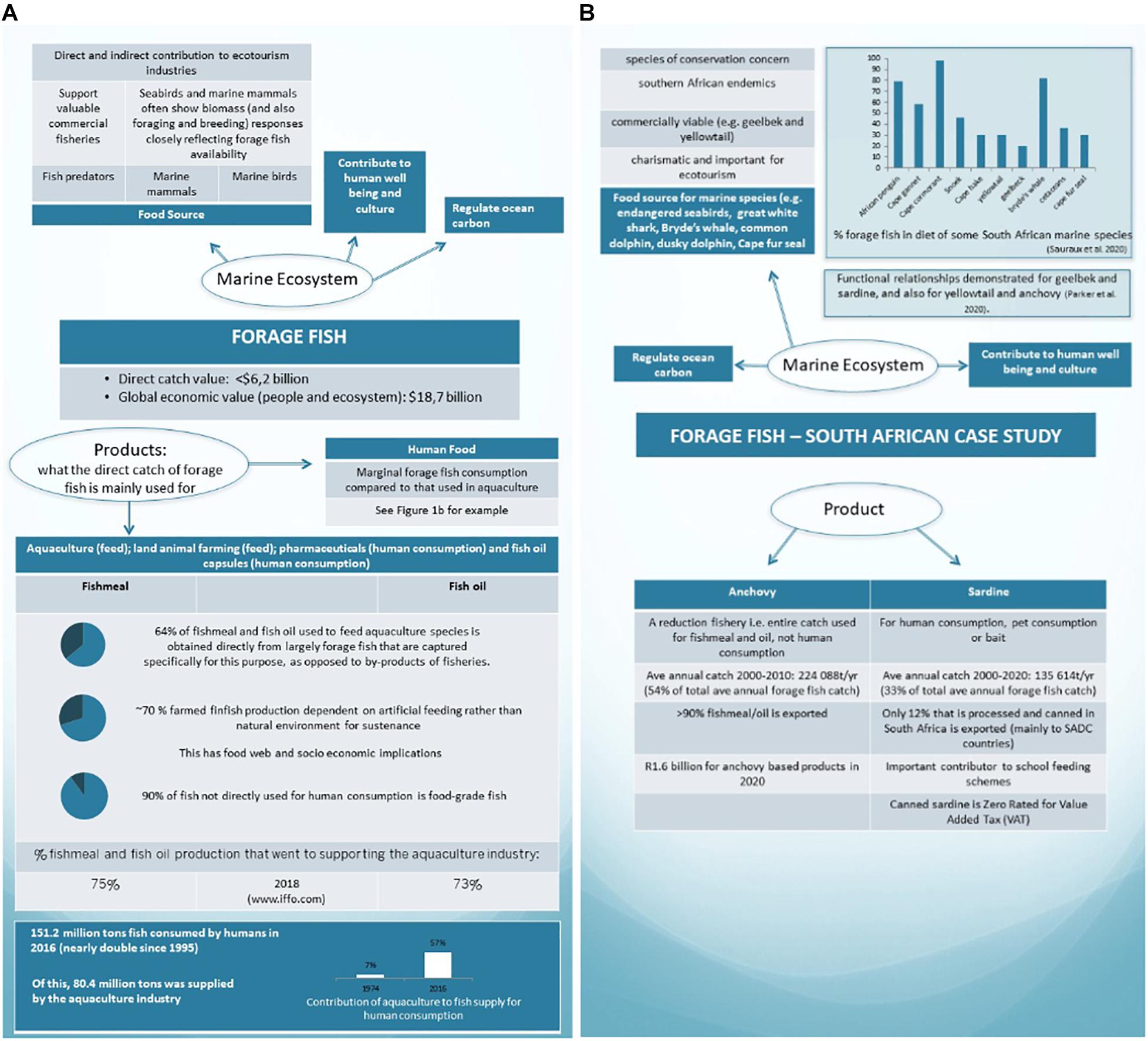
Figure 1. Infographics summarizing key aspects of the forage fish-fisheries-ecosystem services web discussed in the article for (A) the global perspective and (B) the South African case study. Values and key attributes that appear in the infographic are cited and discussed in the text.
Thus, not only are forage fish important providers of fish as human food and feed for agri/aquaculture industries, they are also a major food source for fish predators [many of which themselves support valuable commercial fisheries – Pikitch et al. (2012, 2014)], marine birds and marine mammals, and directly or indirectly contribute to varied ecotourism industries. Further, they play important roles in regulating ocean carbon, and contribute to community wellbeing and culture (Konar et al., 2019). Global economic value of forage fish (to include a wide array of contributions of forage fish to people and the ecosystem) was estimated to be 18.7 billion USD per annum, which is more than triple the direct catch value of these fish (Konar et al., 2019).
With respect to sustaining ecosystem functioning, there is high variability in both direction and magnitude of change in biomass of predatory fish in response to changes in catch of forage fish, dependent on ecosystem, local predator-prey relationships, and the spatial and temporal scales examined (e.g., Smith et al., 2011; Koehn et al., 2017). Seabirds and marine mammals often show biomass (and also foraging and breeding) responses closely reflecting forage fish availability (Koehn et al., 2017; Campbell et al., 2019; Saraux et al., 2020). Further, it is no simple matter to compare economic trade-offs between forage fish and their predators (Koehn et al., 2017; Konar et al., 2019), and a full socio-economic analysis is warranted at the local scale. Nevertheless, it is important to acknowledge that the conversation needs to extend beyond only considering the changes in predator biomass, and even beyond also considering economic and social (stakeholder – see Koehn et al., 2017) trade-offs in forage fisheries versus conservation for the sake of their predators. The discussion also needs to include how forage fisheries impact ecosystem functioning and the state of marine ecosystems across the world (e.g., Smith et al., 2011).
This article draws on research into the trophic role of forage fish in marine ecosystems and explores whether a reduced demand for fishmeal may benefit marine ecosystems, fisheries on higher trophic level species, and vulnerable marine predators. We concisely summarize the global context of marine sourced fishmeal and then use the South African marine ecosystem as a working example from which to draw support for ideas currently being debated worldwide.
A Brief Overview of the Role of Small Pelagic Fish in Marine Ecosystems
Small pelagic fish have been described as “wasp-waist” species by virtue of their large abundances yet constrained species numbers, which act to channel energy both up and down marine food webs (Cury et al., 2000). An extensive ecosystem modeling study showed that forage fisheries operating at the normal maximum sustainable yield levels can still have large, detrimental impacts on marine ecosystems, largely related to the notable biomasses of forage fish, as well as the strong linkages between these species and their predators and prey (Smith et al., 2011). Homing in on seabirds, a global comparative study based on observational data showed a significant decline in the breeding success of seabirds across multiple marine ecosystems when their prey bases dropped to below one third of maximum abundance levels (Cury et al., 2011). Furthermore, a recent study drawing on data from the same ecosystems suggests that forage fish should be carefully managed so as to remain at levels above 18% of maximum abundance levels, since predation mortality inflicted on forage fish by seabird predators significantly increases below this fish abundance level (Saraux et al., 2020). The need for conservative management measures at low stock levels may be even more crucial as we suffer the effects of climate change. Given the pivotal role of small pelagic fish in upwelling ecosystems such as the Northern and Southern Benguela systems, for example, the well-being of forage fish stocks and their reliant fisheries may be further exacerbated by the added effects of climate change acting on these low trophic level species (Shannon et al., 2009). This is a wide-ranging, global concern; in its global biodiversity assessment, the Intergovernmental Science-Policy Platform on Biodiversity and Ecosystem Services (IPBES) specifically noted that climate change is a direct driver that is increasingly exacerbating the impact of other drivers (exploitation, land/sea use change, pollution, and invasive species) on nature and human well-being (Díaz et al., 2019, 2020).
Several marine species inhabiting South African waters, and relying on forage fish as prey, are either charismatic and important for ecotourism, commercially valuable and/or are species of conservation concern, including three endemic species of endangered seabirds (African penguin Spheniscus demersus, Cape gannet Morus capensis, and Cape Cormorant Phalacrocorax capensis), great white shark Carcharodon carcharias, Bryde’s whale Balaenoptera edeni, common dolphin Delphinus delphis, dusky dolphin Lagenorhynchus obscurus, and Cape fur seal Arctocephalus pusillus. Sardine Sardinops sagax and anchovy Engraulis encrasicolus comprise notable portions of the diet of many top predators off South Africa: African penguin – 79%, Cape gannet – 58%, Cape Cormorant – 98%, and snoek Thyrsites atun - 46%, Cape hake Merluccius capensis and M. paradoxus – 10 to 40% depending on hake size class considered, yellowtail Seriola lalandei - 30%, geelbek Atractoscion aequidens - 20%, Bryde’s Whale - 82%, cetaceans in general – 37%, and Cape fur seal - 30% (Saraux et al., 2020). Economically valuable predatory fish include geelbek and yellowtail, both especially caught in the line fishery, and both heavily dependent on availability of anchovy and sardine prey. Functional relationships have been demonstrated for geelbek and sardine, and also for yellowtail and anchovy (Parker et al., 2020). Time-dynamic trophic model simulation incorporating altered anchovy availability between 1978 and 2015 supports the latter finding in particular (Shannon et al., 2020). Further, Crawford et al. (2019) have undertaken Principal Component analyses of the diet and life history parameters of the three South African seabirds heavily reliant on sardine and anchovy prey, deriving a Forage Availability Index to provide thresholds required to maintain numbers of Cape gannet and Cape cormorant, and survival of adult penguins.
A Brief Overview of the Fishmeal Industry, Potential Fishmeal Alternatives, and Possible Industry Response
Fishmeal and oil serve the following markets: aquaculture (feed), land animal farming (feed), pharmaceuticals (human consumption), and fish oil capsules (human consumption) (Shepherd and Jackson, 2013). Currently, fishmeal is largely composed of whole fish, with just 25–33% comprised of fishery by-products or unwanted discards, although this fraction is likely to increase in the future (Shepherd and Jackson, 2013)2. In the 1960s, fish oil was mostly used in margarine and shortenings whereas by 2010, over 70% of fish oil production was directed to aquatic feeds, although the demand for fish oil for direct human consumption (nutrition and pharmaceutical uses) may increase (Shepherd and Jackson, 2013).
The growing aquaculture industry may be placing unsustainable demands on the fishmeal (and oil) industry (e.g., Shepherd and Jackson, 2013). It may be viewed as encouraging that there has been a change in use of some fish species like Atlantic herring, away from fishmeal and oil to direct human consumption (Cashion et al., 2017). Alder et al. (2008) discuss the complex factors driving the global use of forage fish catches for fishmeal/oil versus for human consumption, and show a clear increasing trend in forage fish being consumed by humans in the period 1987–2007. However, although the proportion of global fish production that is used by humans for purposes excluding food has steadily declined from 30% in the 1990s (Cashion et al., 2017) to around 12% in 2016, it still lies at around 20 million tons per year, most of which is comprised of fishmeal and oil (Food and Agriculture Organization [FAO], 2018). Perhaps on a positive note, the IFFO report that supply of fishmeal and oil has not increased despite the increasing demand. This is largely a result of the decline in catches of fish that are usually destined for the reduction fishery (particularly in Peru and Chile (Fréon et al., 2014)).
In addition to weighing up the direct versus indirect uses of forage fish and the pressures imposed on forage fish stocks by the growing aquaculture industry (Figure 1A), aquaculture operations have a range of environmental impacts that need to be taken into consideration (WOA, 2016, chapter 12). Marine aquaculture, for example, is noted for reducing coastal esthetics, depositing effluent including medicines and pollutants into the ocean, propagating disease, and genetic alterations from farmed to wild stocks, amongst other impacts (see e.g., Fernandes et al., 2002 for a review of environmental impacts and their regulation in marine aquaculture operations in Europe). However, mariculture if appropriately managed, can enhance provisioning and regulating as well as protect cultural ecosystem services and can even have positive effects on marine habitat and coastal ecosystems (Alleway et al., 2019).
Given the increased demand for fishmeal and oil, alternative sources of protein for aquafeeds are being sourced and the sustainability of forage fish stocks will be influenced by this (e.g., Merino et al., 2010; Froehlich et al., 2018b; Cottrell et al., 2020). Alternatives include byproducts from the squid (Abdul Kader et al., 2012), poultry and cattle industry, but most notably plant oils and seeds, especially soya bean-based feeds. This trend is reflected in the fishmeal:soybean price ratio, which despite large fluctuations, has increased linearly since 1993 (Asche et al., 2013; Figure 2). Much research is going into plant-based substitutes in aquafeeds to meet the challenges of supplying a nutritionally balanced and suitable feed for aquaculture purposes (e.g., Hardy, 2010). However, simulations suggest that by 2050, crop and land use required to sustain increased aquaculture to account for up to a third of food security for the World’s increasing population will be lower than if terrestrial farming supplies these needs (Froehlich et al., 2018c). Nevertheless, there are recognized environmental trade-offs including deforestation arising from soy-based industries (Richens et al., 2020) if we are to rely more heavily on land-based, plant-based substitutes, such that alternative ingredients like microbes and algae may be more promising prospects (Malcorps et al., 2019). In recent years, insect larvae are being explored as a suitable alternative protein source (Stamer, 2015; Nyakeri et al., 2017). Pacific White shrimp fed a diet comprising a substantial proportion of Insect-based protein as opposed to fishmeal-based feed showed higher growth rates and improved immunity (Motte et al., 2019). Alternative ingredients to fishmeal and oil, and fuller utilization of fish byproducts in meal production, have reduced the global contribution to feeds for aquatic farming since the 1990s (Kok et al., 2020). This is captured by various methods of estimating the “Fish-in:Fish-out” ratio, which generally suggest that globally, most fish-producing aquaculture industries are now largely net producers of fish rather than net users (Kok et al., 2020). Nevertheless, the importance of considering nutrient ratios, ratios of protein, and energy content between fish directed to feed versus fish grown on that feed, could help improve the efficiency and ethics of the world’s aquaculture industry (Kaushik and Troell, 2010).
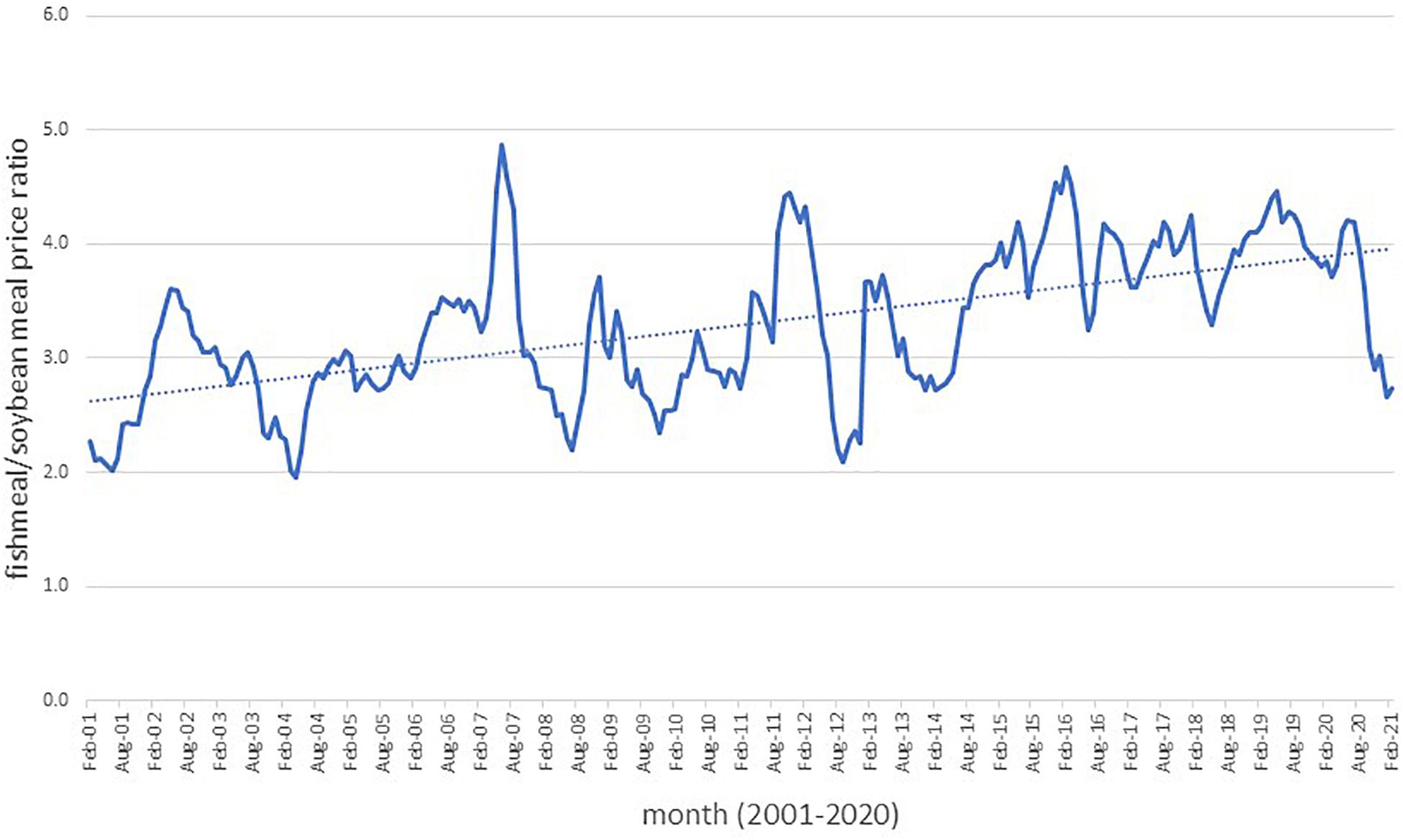
Figure 2. Monthly ratio of fishmeal:soybean meal price (calculated in South African Rands) over the past 20 years. This figure is an updated version of Figure 2 in Asche et al. (2013). Source: https://www.indexmundi.com/commodities/?commodity=fish-meal&months=240¤cy=zar&commodity=soybean-meal&indicator =price-ratio; World Bank database. The linear increase over time is shown by the trendline (R2 = 0.353).
Apart from sourcing alternative protein sources for feeds, how else could the move away from our dependence on forage fish be influenced? One mechanism that can be used to encourage sustainable use of forage resources is through environmental and social governance (ESG) criteria. ESG criteria are an increasingly popular way for investors to evaluate companies in which they might want to invest (Chen, 2020). Environmental criteria consider how a company performs as a steward of nature, and may include a company’s energy use, waste, pollution, natural resource conservation, and treatment of animals, while the criteria can also be used in evaluating any environmental risks a company might face and how the company is managing those risks (Chen, 2020). Social criteria examine how it manages relationships with employees, suppliers, customers, and the communities in which it operates (Chen, 2020). There is an increasing trend in investments chosen according to ESG criteria as well as investment houses reporting according to ESG principles (e.g., see Wells Fargo and Company, 2020). According to the US SIF Foundation, investors held $11.6 trillion in assets chosen according to ESG criteria at the beginning of 2018, an increase from $8.1 trillion just two years earlier (US SIF Foundation, 2018).
In South Africa, anchovy is a reduction fishery i.e., all anchovy caught is used for fishmeal and oil, not for direct human consumption, whereas sardine is channeled for direct human consumption (see Figure 1B). Further, over 90% of this fishmeal/oil is exported (SAPFIA)3, thus the fishery is driven by global supply-demand dynamics (currently demand exceeds supply). By comparison, only 12% of the sardine processed and canned in South Africa is exported, and this is mainly to SADC countries (South African Pelagic Fishing Industry Association (SAPFIA) website)3. To provide an estimate of value of this fishery, a 2020 report compiled by the small pelagics fishing industry (Anonymous, 2020) calculated the following: “At an exchange rate of 17 [South African Rand] to the US$, fish meal is expected to be sold at R23 800 per ton and fish oil at R32 300 per ton. One ton of landed anchovy is expected to produce 220kg of fish meal and 18kg of fish oil and thus one ton of anchovy caught should result in a product value of R5 817.” In 2020, 282 820 tons of anchovy (directed catch) was caught (updated to 2 December 2020). Using the exchange rate and product value figures quoted, this amounts to an overall product value of over R1.6 billion for anchovy-based products in 2020 (exactly half the 2019 annual overall small pelagic fish product value reported by SAPFIA).
As mentioned earlier, forage fish are crucial for a number of marine species. If one considers criteria for investing in a fishing company engaged in fishing for forage fish, environmental criteria might include indicators that give clear information as to how ecosystem considerations are dealt with in the management of the fishery and criteria on managing top predator conflict, etc. For the Oceana Group4, one of the top seafood companies in the world, five sustainability focus areas have been developed with admirable targets set for each. However, while an acknowledgment is made of bird mortality being reduced from their lines and that 91% of their catch by volume is on the South African Sustainable Seafood Initiative green list (Oceana Group, 2019), there are no indicators that an investor can clearly pick up on in terms of ecosystem approach to fisheries contributions, particularly in the South African small pelagic fishing sector. This aspect certainly needs further attention across the broader South African fishing industry in general. With respect to the fishmeal/oil industry of focus here, perhaps through ESG influence on investor decisions, the small pelagic fishing industry could be encouraged to themselves invest in other sources of protein for animal feed, for example, that could then be channeled through their supply chains already set up, and could help to offset some of the ecosystem concerns discussed above.
Putting the Picture Together
Fish or Feed? – The South African Case
In South Africa, sardine are canned for human consumption, processed for pet consumption or used as bait. Anchovy and redeye round herring Etrumeus whiteheadi are largely reduced to fishmeal and oil. Fréon et al. (2014) examined the social and economic explanations for why Peruvian anchoveta (anchovy) are still largely reduced to fish meal and fish oil, rather than directed into food products for human consumption especially by the local Peruvian population suffering high levels of malnutrition, poverty and unemployment. Some of the reasons provided by these authors for limited direction of anchovy for direct human consumption in Peru may be relevant also in the case of South African anchovy and redeye. Drawing from Fréon et al.’s (2014) study and considering Cochrane et al. (2020), the following drivers would need consideration as to relevance and potential solutions if there is to be possible redirection of some of the South African anchovy and redeye round herring reduction fishery to products for direct human consumption: global demand for fishmeal and oil, dietary preference of local people, local markets for canned/whole redeye, local markets for canned or dried anchovy, local market for redeye as bait in place of sardine, the cost of canning or alternative packaging, ship-based refrigeration and the cold chain, government incentives and regulations, profit margins, provision of processing facilities on South Africa’s south coast to support smaller companies there, not to mention the Rand-Dollar exchange rate. Sardine is a staple food in South Africa, distributed to 600 children daily as part of the school feeding program (Oceana Group, 2019), and is zero-rated for value added tax (VAT). By contrast, redeye incurs 15% VAT. Adding redeye as a VAT zero-rated product is encouraged in order to facilitate the canning of redeye being explored (Cochrane et al., 2020).
Although no definitive results are available yet, it is encouraging that collaborative research between social scientists, food technologists and industry is on the cards in South Africa to explore possibilities for products that would make use of anchovy or redeye for human consumption, as well as possible alternative sardine products that would make use of the whole fish rather than fillets, the latter aimed at the lower end of the consumer market (Prof Mafa Hara, University of the Western Cape, pers. comm.). Furthermore, Isaacs (2016) advises that the role of South African small-scale fisheries be explored in terms of provision of anchovy for human consumption.
To Increase or Decrease Fishing on Small Pelagics?
A question worth pursuing here may be whether it would be economically advantageous to leave forage fish in the water so that fisheries based on predator species could potentially benefit from larger catches? Alternatively, in some cases where piscivorous fish are heavily fished, fishing simultaneously on forage fish can be beneficial, in contrast to the situation where more lightly fished piscivorous stocks fair better under low levels of fishing on forage fish stocks (Soudijn et al., 2021). By comparison, modeling work performed on the California Current ecosystem has suggested that catches of high-trophic-level species such as salmon and halibut may be reduced by fishing on low-trophic-level species including sardine, anchovy, and herring (Koehn et al., 2017). However, with respect to economic trade-offs, projected economic gain from increased forage fish catches off California tended to outweigh the economic losses suffered under reduced predator catch (Koehn et al., 2017). Nevertheless, in the case of non-exploited species such as seabirds and marine mammals, the authors noted the possibility that economic value of these species may exceed forage fish catch value such that conservation of forage fish may be the most economically viable option. This serves to highlight the complex trade-offs that need to be carefully considered with respect to management of small pelagic fish; from a fisheries perspective, the benefits of reducing forage fish catches may be clear in some regions and not so clear in others; much depends on whether the fish are reduced to fishmeal/oil or used for higher market value products such as canning. Irrespective of the latter, the ecological and economic benefits for the non-consumptive sector (ecotourism) may be enormous. Currently, a study looking at exactly these socio-economic trade-offs and compromises is underway for the South African sardine and anchovy resources with respect to vulnerable predators such as the African penguin, as well as socio-economic tradeoffs associated with maintaining sustainable line and trawl fisheries. Social objectives need consideration; optimization of jobs in the different sectors should be reviewed. Along these lines, it has been predicted that in Peru, 16 times more jobs are provided for an anchovy food fish processing plant than an average fishmeal processing plant (Fréon et al., 2014). These kinds of industry intricacies are real constraints requiring careful attention as management decisions are made into the future.
The South African small pelagics fishery contributes the largest catches (and second largest commercial value) of any South African fishing sector and provides full time employment to over 5000 people, excluding seasonal workers (Cochrane et al., 2020; van der Lingen, 2021). However, the current dismal status of South African sardine, possibly partly related to climate change, is exacerbating the socio-economic stresses on forage fisheries in South Africa. In addition to abundance issues are shifts in the geographical distribution (and thus availability of fish to fisheries and predators) from west to south coasts for both sardine and anchovy (van der Lingen, 2021).
The Added Complexity of Climate Change
The impact of climate change on small pelagic fisheries has been highlighted in a recent publication by Pincinato et al. (2020), showing an increase since 1979 in price volatility in tropical and sub-polar regions where climate impacts are greatest, compared to relatively stable price volatility in temperate regions. Vulnerability of small pelagic fishing industries off the south-west coast of Africa has been the subject of a recent intense study involving industry stakeholders (Cochrane et al., 2020). Fu et al. (2018), examining multiple model simulations of fishing in combination with climate variability and directional change across several ecosystems around the world (including the Southern Benguela case study), found a higher risk of negative synergism for low-trophic-level species such as anchovy and sardine. This was interpreted as a larger-than-expected decline in biomass of low-trophic-level species under conditions of low primary productivity when fishing pressure on these species was increased, compared to the situation where climate change is not superimposed on increased low-trophic level fishing. In a similar vein, Ortega-Cisneros et al. (2018) showed that maintaining current fishing levels to 2050 would be detrimental to predatory fish off South Africa, with trophic benefits for their prey species such as small pelagics off South Africa, but that projected warming scenarios imposed on these fishing strategies would cause biomass of small pelagics to decline. Taking this notion a little further and in another direction, model simulation under a scenario of increased primary productivity, as might be expected under directional climate change, suggested that it may be possible to increase fishing pressure on low-trophic-level fish species off South Africa without jeopardizing the health of the marine ecosystem (Lockerbie and Shannon, 2019). However, several caveats are noted including that only one aspect of climate change was modeled here and that spatialized models currently under development for the Southern Benguela will further facilitate these exploratory investigations. Indeed, drawing on their existing model results, Lockerbie and Shannon (2019) warn that should fishing intensity on predatory species at higher trophic levels be simultaneously increased with low-trophic-level fishing, the ecosystem state may well deteriorate (Lockerbie and Shannon, 2019). This kind of work demonstrates the need for improved future climate projections and quantification of climate-fish-fisheries interactions (such as that underway in the Fish-MIP project, Tittensor et al., 2018), so that fisheries management, especially that of wildly fluctuating small pelagics, can adapt to make better usage of living marine resources when ecosystem conditions allow (Fréon et al., 2005). Currently, an alternative adaptive measure employed by the South African small pelagic fishing industry, to ensure canning factories can continue operating to meet the local demand of 90,000 tonnes per annum, is importation of frozen sardine from Morocco (Cochrane et al., 2020).
In addition to the impacts of climate change on small pelagic fish, the regionally specific implications of climate change on aquaculture itself also needs serious consideration with respect to vulnerability and adaptation of the industry in its endeavors to address the increasing global food demand (Froehlich et al., 2018a).
Weighing Up the Discussion
By supporting the fishmeal industry, are we competing with marine predators? The reliance by marine predators on forage fish has been demonstrated, as too has the dominance of reliance on forage fish to support the fishmeal industry. The question remains as to whether we should be taking away food from marine predators (fished and non-fished predators) to subsidize agriculture/aquaculture, or whether there are potential sustainable alternatives to ensure more balanced mutual benefits for humans and ecosystems. The recent report on “A Sustainable Ocean Economy in 2030” (Richens et al., 2020) recognizes the dilemma of “over-reliance on wild caught fish to feed those that are farmed,” and notes several initiatives world-wide that are investigating cell-based fish production, which in turn is likely to bring with it its own host of constraints.
Given the ecological and socio-economic intricacies and feedbacks, it may well turn out that further unpacking of this complicated and sensitive conundrum reverts to an ethical debate. Notwithstanding, as curators of the ocean and its marine resources, we will be forced to start tackling these kinds of complex questions head-on. Addressing issues of social justice and social responsibility together with environmental/ecological responsibility is increasingly being recognized as a necessity in marine conservation and fisheries (Fréon et al., 2014; Bennett et al., 2017; Kittinger et al., 2017). Laso et al. (2018) developed a methodology based on indicators to assess the environmental and economic efficiency (eco-efficiency index) of an anchovy canning fishery, and propose eco-labeling to inform stakeholders of product value in the context of sustainable use. Simultaneous consideration of ecological, social and economic sustainability is indeed what the ecosystem approach to fisheries (Garcia et al., 2003) attempts to promote.
In summary, we propose that curbing any increase in forage fisheries, whether for direct or indirect human consumption, may address the multiplicity of factors that are currently at play in small pelagic fisheries and their management, including addressing their impact on vulnerable marine top predators reliant on forage fish. However, we acknowledge that on the local scale, productivity regimes related to climate change may facilitate expansion of low trophic level fisheries, depending on how the higher trophic levels are fished and/or managed. We propose that investors pay careful attention to the environmental and social governance (ESG) criteria against which they evaluate the fishing companies in which they invest, thereby encouraging industry contributions to ecosystem based fisheries management. We also propose that industry plays a more active role in facilitating the use of alternatives to forage fish in fishmeal, partnering with companies that are using alternative forms of protein production. We applaud environmentally beneficial initiatives such as the Cape Town based companies Inseco and AgriProtein; food waste that would normally end on landfills is used to farm black soldier flies Hermetia illucens, and the fly larvae (maggots) are harvested and ground into a high protein meal palatable to pets, fish and chickens5, 6. All in all, it is our opinion that the argument condenses into an ethical one. Given the urgent need for poverty alleviation through creation of jobs and affordable food products for vulnerable human communities, we advocate for direction of a greater proportion of forage fish catches to direct human consumption while ensuring marine ecosystem functioning and sustainability, with more specific ESG investment criteria being developed to address this, and we encourage bio-recycling as a sustainable alternative to fish-based feed.
Data Availability Statement
The original contributions presented in the study are included in the article/supplementary material, further inquiries can be directed to the corresponding author.
Author Contributions
LS conceptualized and wrote the manuscript. LW was active in discussions of the article ideas and developing of the article outline, and contributed to the text and literature. Both authors contributed to the article and approved the submitted version.
Funding
This work was undertaken with funding from United Kingdom Research and Innovation (UKRI) Global Challenges Research Fund (GCRF) One Ocean Hub (Grant Ref: NE/S008950/1), the European Union’s Horizon 2020 Research and Innovation Program under Grant Agreement No. 8862428 (Mission Atlantic) administered through the South African Research Chair Initiative at the University of Cape Town, and the Leiden Conservation Fellowship administered through SANCOBB.
Conflict of Interest
The authors declare that the research was conducted in the absence of any commercial or financial relationships that could be construed as a potential conflict of interest.
Footnotes
- ^ https://www.iffo.com/
- ^ https://www.iffo.com/
- ^ https://sapfia.org.za/facts-figures/
- ^ https://oceana.co.za/about-oceana/our-company/
- ^ https://time.com/3825158/farming-flies-south-africa/
- ^ https://inseco.co.za/
References
Abdul Kader, M., Koshio, S., Ishikawa, M., Yokoyama, S., Bulbul, M., Nguyen, B. T., et al. (2012). Can fermented soybean meal and squid by-product blend be used as fishmeal replacements for Japanese flounder (Paralichthys olivaceus)? Aquaculture Research 43, 1427–1438. doi: 10.1111/j.1365-2109.2011.02945.x
Alder, J., Campbell, B., Karpouzi, V., Kaschner, K., and Pauly, D. (2008). Forage fish: From ecosystems to markets. Annual Review of Environment and Resources 33, 153–166. doi: 10.1146/annurev.environ.33.020807.143204
Alleway, H. K., Gillies, C. L., Bishop, M. J., Gentry, R. R., Theuerkauf, S. J., and Jones, R. (2019). The ecosystem services of marine aquaculture: valuing benefits to people and nature. BioScience 69, 59–68. doi: 10.1093/biosci/biy137
Anonymous (2020). Industry proposals for the survey and a pre-survey TAC adjustment. Unpublished document submitted to the Department of Environment, Forestry and Fisheries. FISHERIES/2020/JUN/SWG-PEL/42REV. 5pp. ∗Cq.
Asche, F., Oglend, A., and Tveteras, S. (2013). Regime shifts in the fish meal/soybean meal price ratio. Journal of Agricultural Economics 64, 97–111. doi: 10.1111/j.1477-9552.2012.00357.x
Bennett, N. J., The, L., Ota, Y., Christie, P., Ayers, A., Day, J. C., et al. (2017). An appeal for a code of conduct for marine conservation. Marine Policy 81, 411–418. doi: 10.1016/j.marpol.2017.03.035
Campbell, K. J., Steinfurth, A., Underhill, L. G., Coetzee, J. C., Dyer, B. M., Ludynia, K., et al. (2019). Local forage fish abundance influences foraging effort and offspring condition in an endangered marine predator. Journal of Applied Ecology 56, 1751–1760. doi: 10.1111/1365-2664.13409
Cashion, T., Le Manach, F., Zeller, D., and Pauly, D. (2017). Most fish destined for fishmeal production are food-grade fish. Fish and Fisheries 18, 837–844. doi: 10.1111/faf.12209
Chen, J. (2020). Environmental, Social, and Governance (ESG) Criteria. Available online at: https://www.investopedia.com/terms/e/environmental-social-and-governance-esg-criteria.asp (accessed Dec 16, 2020).
Cochrane, K. L., Ortega-Cisneros, K., Iitembu, J. A., dos Santos, C. I., and Sauer, W. H. H. (2020). Application of a general methodology to understand vulnerability and adaptability of the fisheries for small pelagic species in the Benguela countries: Angola, Namibia and South Africa. African Journal of Marine Science 42, 473–493. doi: 10.2989/1814232X.2020.1844798
Cottrell, R. S., Blanchard, J. L., Halpern, B. S., Metian, M., and Froehlich, H. E. (2020). Global adoption of novel aquaculture feeds could substantially reduce forage fish demand by 2030. Nature Food 1, 301–308. doi: 10.1038/s43016-020-0078-x
Crawford, R. J., Sydeman, W. J., Thompson, S. A., Sherley, R. B., and Makhado, A. B. (2019). Food habits of an endangered seabird indicate recent poor forage fish availability off western South Africa. ICES Journal of Marine Science 76, 1344–1352.
Cury, P. M., Boyd, I. L., Bonhommeau, S., Anker-Nilssen, T., Crawford, R. J. M., Furness, R. W., et al. (2011). Global seabird response to forage fish depletion – one-third for the birds. Science 334, 1703–1706. doi: 10.1126/science.1212928
Cury, P., Bakun, A., Crawford, R. J. M., Jarre-Teichmann, A., Quinones, R. A., Shannon, L. J., et al. (2000). Small pelagics in upwelling systems: patterns of interaction and structural changes in “wasp-waist” ecosystems. ICES Journal of Marine Science, Symposium Edition 57, 603–618. doi: 10.1006/jmsc.2000.0712
Díaz, S., Settele, J., Brondízio, E., Ngo, H. T., Guèze, M., Agard, J., et al. (2019). Summary for policymakers of the global assessment report on biodiversity and ecosystem services. IPBES: Bonn.∗ed
Díaz, S., Zafra-Calvo, N., Purvis, A., Verburg, P. H., Obura, D., Leadley, P., et al. (2020). Set ambitious goals for biodiversity and sustainability. Science 370, 411–413.
Fernandes, T. F., Eleftheriou, A., Ackefors, H., Eleftheriou, M., Ervik, A., Sanchez-Mata, A., et al. (2002). The Management of the Environmental Impacts of Aquaculture. Aberdeen: Scottish Executive, 88.
Fisheries, HS. (2014). Aquaculture for Food Security and Nutrition. A report by the High Level Panel of Experts on Food Security and Nutrition of the Committee on World Food Security. Committee on World Food Security: Rome.
Food and Agriculture Organization [FAO] (2018). The State of World Fisheries and Aquaculture 2018 - Meeting the sustainable development goals. Rome: FAO. Licence: CC BY-NC-SA 3.0 IGO.
Fréon, P., Cury, P., Shannon, L., and Roy, C. (2005). Sustainable exploitation of small pelagic fish stocks challenged by environmental and ecosystem changes: a review. Bulletin of Marine Science 76, 385–462.
Fréon, P., Sueiro, J. C., Iriarte, F., Miro Evar Oscar, F., Landa, Y., Mittaine, J. F., et al. (2014). Harvesting for food versus feed: a review of Peruvian fisheries in a global context. Rev. Fish Biol. Fish. 24, 381–398. doi: 10.1007/s11160-013-9336-4
Froehlich, H. E., Gentry, R. R., and Halpern, B. S. (2018a). Global change in marine aquaculture production potential under climate change. Nature ecology & evolution 2, 1745–1750. doi: 10.1038/s41559-018-0669-1
Froehlich, H. E., Jacobsen, N. S., Essington, T. E., Clavelle, T., and Halpern, B. S. (2018b). Avoiding the ecological limits of forage fish for fed aquaculture. Nature Sustainability 1, 298–303. doi: 10.1038/s41893-018-0077-1
Froehlich, H. E., Runge, C. A., Gentry, R. R., Gaines, S. D., and Halpern, B. S. (2018c). Comparative terrestrial feed and land use of an aquaculture-dominant world. Proceedings of the National Academy of Sciences 115, 5295–5300. doi: 10.1073/pnas.1801692115
Fu, C., Travers-Trolet, M., Velez, L., Grüss, A., Bundy, A., Shannon, L. J., et al. (2018). Risky business: the combined effects of fishing and changes in primary productivity on fish communities. Ecol. Modell. 368, 265–276. doi: 10.1016/j.ecolmodel.2017.12.003
Garcia, S. M., Zerbi, A., Aliaume, C., Do Chi, T., and Lasserre, G. (2003). The ecosystem approach to fisheries. Issues, Terminology, Principles, Institutional Foundations, Implementation and Outlook. Rome: FAO, 71. FAO Fisheries Technical Paper No. 443.
Hardy, R. W. (2010). Utilization of plant proteins in fish diets: effects of global demand and supplies of fishmeal. Aquaculture Research 41, 770–776. doi: 10.1111/j.1365-2109.2009.02349.x
Isaacs, M. (2016). The humble sardine (small pelagics): fish as food or fodder. Agriculture & Food Security 5, 1–14. doi: 10.1300/j030v09n04_01
Kaushik, S., and Troell, M. (2010). Taking the fish-in fish-out ratio a step further. Aquaculture 35, 15–17.
Kittinger, J. N., The, L. C., Allison, E. H., Bennett, N. J., Crowder, L. B., Finkbeiner, E. M., et al. (2017). Committing to socially responsible seafood. Science 356, 912–913.
Koehn, L. E., Essington, T. E., Marshall, K. N., Sydeman, W. J., Szoboszlai, A. I., and Thayer, J. A. (2017). Trade-offs between forage fish fisheries and their predators in the California Current. ICES Journal of Marine Science 74, 2448–2458. doi: 10.1093/icesjms/fsx072
Kok, B., Malcorps, W., Tlusty, M. F., Eltholth, M. M., Auchterlonie, N. A., Little, D. C., et al. (2020). Fish as feed: Using economic allocation to quantify the Fish In: Fish Out ratio of major fed aquaculture species. Aquaculture 528, 735474. doi: 10.1016/j.aquaculture.2020.735474
Konar, M., Qiu, S., Tougher, B., Vause, J., Tlusty, M., Fitzsimmons, K., et al. (2019). Illustrating the hidden economic, social and ecological values of global forage fish resources. Resources, Conservation and Recycling 151, 104456. doi: 10.1016/j.resconrec.2019.104456
Laso, J., García-Herrero, I., Margallo, M., Vázquez-Rowe, I., Fullana, P., Bala, A., et al. (2018). Finding an economic and environmental balance in value chains based on circular economy thinking: An eco-efficiency methodology applied to the fish canning industry. Resources, Conservation and Recycling 133, 428–437. doi: 10.1016/j.resconrec.2018.02.004
Lockerbie, E. M., and Shannon, L. J. (2019). Toward exploring possible future states of the southern Benguela. Frontiers in Marine Science 6:380.
Malcorps, W., Kok, B., van‘t Land, M., Fritz, M., van Doren, D., Servin, K., et al. (2019). The Sustainability Conundrum of Fishmeal Substitution by Plant Ingredients in Shrimp Feeds. Sustainability 11:1212. doi: 10.3390/su11041212
Merino, G., Barange, M., and Mullon, C. (2010). Climate variability and change scenarios for a marine commodity: modelling small pelagic fish, fisheries and fishmeal in a globalized market. Journal of Marine Systems 81, 196–205. doi: 10.1016/j.jmarsys.2009.12.010
Motte, C., Rios, A., Lefebvre, T., Do, H., Henry, M., and Jintasataporn, O. (2019). Replacing fish meal with defatted insect meal (Yellow Mealworm Tenebrio molitor) improves the growth and immunity of pacific white shrimp (Litopenaeus vannamei). Animals 9, 258. doi: 10.3390/ani9050258
Mullon, C., Mittaine, J. F., Thébaud, O., Péron, G., Merino, G., and Barange, M. (2009). Modeling the global fishmeal and fish oil markets. Natural Resource Modeling 22, 564–609. doi: 10.1111/j.1939-7445.2009.00053.x
Nyakeri, E. M., Ogola, H. J., Ayieko, M. A., and Amimo, F. A. (2017). An open system for farming black soldier fly larvae as a source of proteins for smallscale poultry and fish production. Journal of Insects as Food and Feed 3, 51–56. doi: 10.3920/jiff2016.0030
Oceana Group (2019). Positively Impacting Lives, 2019 Sustainability Report. 1–58. Available online at: https://oceana.co.za/pdf/Oceana_Sustainability_Report_2019.pdf (accessed 16 Dec, 2020).
Ortega-Cisneros, K., Cochrane, K. L., Fulton, E. A., Gorton, R., and Popova, E. (2018). Evaluating the effects of climate change in the southern Benguela upwelling system using the Atlantis modelling framework. Fish. Oceanogr. 27, 489–503. doi: 10.1111/fog.12268
Parker, D., Coetzee, J. C., Winker, H., and van der Lingen, C. D. (2020). Accounting for linefish dependency in management of the South African small pelagic fishery. Afr. J. Mar. Sci. 42, 283–294. doi: 10.2989/1814232x.2020.1788160
Pikitch, E. K., Rountos, K. J., Essington, T. E., Santora, C., Pauly, D., Watson, R., et al. (2014). The global contribution of forage fish to marine fisheries and ecosystems. Fish Fish. 15, 43–64. doi: 10.1111/faf.12004
Pikitch, E., Boersma, P. D., Boyd, I. L., Conover, D. O., Cury, P., Essington, T., et al. (2012). Little Fish, Big Impact: Managing a Crucial Link in Ocean Food Webs. Washington, DC: Lenfest Ocean Program, 108.
Pincinato, R. B. M., Asche, F., and Oglend, A. (2020). Climate change and small pelagic fish price volatility. Clim. Change 161, 591–599. doi: 10.1007/s10584-020-02755-w
Richens, J., Koehring, M., et al. (2020). A Sustainable Ocean Economy in 2030: Opportunities and Challenges. The Economist Group World Ocean Initiative 44. ∗cq.
Saraux, C., Sydeman, W., Piatt, J., Anker-Nilssen, T., Hentati-Sundberg, J., Bertrand, S., et al. (2020). Seabird-Induced Natural Mortality of Forage Fish Varies with Fish Abundance: Evidence from 5 Ecosystems. Fish and Fisheries in press. ∗CQ.
Shannon, L. J., Coll, M., Neira, S., Cury, P. M., and Roux, J.-P. (2009). “Impacts of fishing and climate change explored using trophic models,” in Climate Change and Small Pelagic Fish, Vol. 7, eds D. M. Checkley, C. Roy, J. Alheit, and Y. Oozeki (Cambridge: Cambridge University Press), 158–190. doi: 10.1017/cbo9780511596681.010
Shannon, L. J., Ortego Cisneros, K., Lamont, T., Winker, H., Crawford, R., Jarre, A., et al. (2020). Exploring temporal variability in the Southern Benguela ecosystem over the past four decades using a time-dynamic ecosystem model. Front. Mar. Sci.. 7:540. doi: 10.3389/fmars.2020.00540
Shepherd, C. J., and Jackson, A. J. (2013). Global fishmeal and fish-oil supply: inputs, outputs and marketsa. J. Fish Biol. 83, 1046–1066. doi: 10.1111/jfb.12224
Smith, A. D. M., Brown, C. J., Bulman, C. M., Fulton, E. A., Johnson, P., Kaplan, I. C., et al. (2011). Impacts of fishing low-trophic level species on marine ecosystems. Science 333, 1147–1150. doi: 10.1126/science.1209395
Soudijn, F. H., Daniël van Denderen, P., Heino, M., Dieckmann, U., and de Roos, A. M. (2021). Harvesting forage fish can prevent fishing-induced population collapses of large piscivorous fish. Proc. Natl. Acad. Sci.U.S.A. 118:e1917079118. doi: 10.1073/pnas.1917079118
Stamer, A. (2015). Insect proteins—a new source for animal feed. the use of insect larvae to recycle food waste in high-quality protein for livestock and aquaculture feeds is held back largely owing to regulatory hurdles. EMBO Rep. 16, 676–680. doi: 10.15252/embr.201540528
Tacon, A. G., and Metian, M. (2009a). Fishing for aquaculture: non-food use of small pelagic forage fish—a global perspective. Rev. Fish. Sci. 17, 305–317. doi: 10.1080/10641260802677074
Tacon, A. G., and Metian, M. (2009b). Fishing for feed or fishing for food: increasing global competition for small pelagic forage fish. Ambio 38, 294–302. doi: 10.1579/08-a-574.1
Tittensor, D. P., Eddy, T. D., Lotze, H. K., Galbraith, E. D., Cheung, W., Barange, M., et al. (2018). A protocol for the intercomparison of marine fishery and ecosystem models: Fish-MIP v1. 0. Geosci. Model Dev. 11, 1421–1442.
US SIF Foundation (2018). Report on US Sustainable, Responsible and Impact Investing Trends. https://www.ussif.org/files/Trends/Trends%202018%20executive%20summary%20FINAL.pdf (accessed 16 Dec, 2016).
van der Lingen, C. D. (2021). “Adapting to climate change in the South African small pelagic fishery,” in Adaptive Management of Fisheries in Response to Climate Change, 177–194. ∗Cq.
Wells Fargo and Company (2020). Environmental, Social, and Governance (ESG) Report. 1–93. Available online at: https://www08.wellsfargomedia.com/assets/pdf/about/corporate-responsibility/environmental-social-governance-report.pdf (accessed 16 Dec, 2020).
WOA (2016). The First Global Integrated Marine Assessment, World Ocean Assessment I. United Nations: New York, NY. The Group of Experts of the Regular Process: Lorna Inniss and Alan Simcock (Joint Coordinators), Amanuel Yoanes Ajawin, Angel C. Alcala, Patricio Bernal, Hilconida P. Calumpong, Peyman Eghtesadi Araghi, Sean O. Green, Peter Harris, Osman Keh Kamara, Kunio Kohata, Enrique Marschoff, Georg Martin, Beatrice Padovani Ferreira, Chul Park, Rolph Antoine Payet, Jake Rice, Andrew Rosenberg, Renison Ruwa, Joshua T. Tuhumwire, Saskia Van Gaever, Juying Wang, Jan Marcin Wêsławski. Under the auspices of the United Nations General Assembly and its Regular Process for Global Reporting and Assessment of the State of the Marine Environment, including Socioeconomic Aspects.
Keywords: fishmeal, ecosystem, forage fish, South Africa, anchovy
Citation: Shannon L and Waller L (2021) A Cursory Look at the Fishmeal/Oil Industry From an Ecosystem Perspective. Front. Ecol. Evol. 9:645023. doi: 10.3389/fevo.2021.645023
Received: 22 December 2020; Accepted: 31 March 2021;
Published: 22 April 2021.
Edited by:
Sebastian Villasante, University of Santiago de Compostela, SpainReviewed by:
Konstantinos Tsagarakis, Hellenic Centre for Marine Research (HCMR), GreeceLaura Koehn, National Marine Fisheries Service (NOAA), United States
Marta Albo-Puigserver, University of Algarve, Portugal
Copyright © 2021 Shannon and Waller. This is an open-access article distributed under the terms of the Creative Commons Attribution License (CC BY). The use, distribution or reproduction in other forums is permitted, provided the original author(s) and the copyright owner(s) are credited and that the original publication in this journal is cited, in accordance with accepted academic practice. No use, distribution or reproduction is permitted which does not comply with these terms.
*Correspondence: Lynne Shannon, bHlubmUuc2hhbm5vbkB1Y3QuYWMuemE=