 Yunbo Jiao1*†
 Tien Ming Lee2*†
- 1School of Law, Sun Yat-sen University, Guangzhou, China
- 2Schools of Life Sciences and Ecology, and State Key Laboratory of Biological Control, Sun Yat-sen University, Guangzhou, China
China’s supply-side conservation efforts in the past decades have led to two bewildering juxtapositions: a rapidly expanding farming industry vs. overexploitation, which remains one of the main threats to Chinese vertebrates. COVID-19 was also the second large-scale zoonotic disease outbreak since the 2002 SARS. Here, we reflect on China’s supply-side conservation strategy by examining its policies, laws, and practices concerning wildlife protection and utilization, and identify the unintended consequences that likely have undermined this strategy and made it ineffective in protecting threatened wildlife and preventing zoonotic diseases. We call for China to overhaul its conservation strategy to limit and phase out risky and unsustainable utilization, while improving legislation and enforcement to establish full chain-of-custody regulation over existing utilization.
Introduction
As China fought to bring the coronavirus disease (COVID-19) pandemic under control since the beginning of 2020, this was already the second large-scale zoonotic disease outbreak in China within just two decades [the first being the severe acute respiratory syndrome (SARS) coronavirus outbreak in late 20021 ]. Similar to the SARS coronavirus, the international scientific community confirmed that the COVID-19 coronavirus also originated in wildlife (Calisher et al., 2020), though its host species are still undetermined (Zhou and Shi, 2021). Nonetheless, to reduce the risk of animal-to-human transmission, the Chinese government promptly imposed a temporary ban in January 2020 on the transport and sale of wildlife in markets, restaurants, and online (Zhou et al., 2020), and a complete ban in the following month on the consumption of most terrestrial wild animal species as food (including both wild and captive sources) (Koh et al., 2021). But how did we get here?
While acknowledging that the direct and indirect factors contributing to biodiversity loss and outbreak of zoonotic disease are complex and multifaceted, here we focus on explaining why China’s conservation strategy must either reconcile its contemporary wildlife use and trade practices or run the continued risk of being rendered ineffective in protecting threatened species and preventing future zoonotic pandemics. We reflect on China’s conservation strategy by reviewing its policies, laws, and practices concerning wildlife protection and utilization, identify the unintended consequences that may have undermined this strategy, and make recommendations to overcome them. Consequently, the insights and takeaways from China’s lesson may prove valuable for many other countries worldwide.
China’s Legal Framework for Wildlife Protection and Utilization
China has a complex mix of laws, regulations, and policy directives for the protection and management of wildlife species as well as their habitats. Currently, there are over 50 wildlife-related national legal documents in effect (MEE, 2014). Among them, the Wildlife Protection Law (WPL; revised in 2016) – by setting out the wildlife ownership, scope of protection, protection and management mechanisms, and the administrative liability and penalties for violation – serves as the backbone of China’s wildlife legal framework.
The wild fauna species protected by the WPL include those listed in: (1) the List of Wildlife under Special State Protection (SSP), which is further differentiated between the first-class SSP (Class-I SSP) and second-class SSP (Class-II SSP); and (2) the List of Terrestrial Species of Important Ecological, Scientific or Social Values. The List of SSP wildlife was firstly promulgated in January 1989 (NFGA and MARA, 1989) and remained largely unchanged until February 2021 when an updated List was released with substantial revisions, including enlisting of 517 new species (the SSP species now totaled at 980) and uplisting of 65 species from Class-II to Class-I SSP (NFGA and MARA, 2021). In 1993, in fulfilling its obligation under the Convention on International Trade in Endangered Species of Wild Fauna and Flora (CITES), CITES Appendix-I and Appendix-II non-native species were granted the Class-I SSP and Class-II SSP, respectively (NFGA (National Forestry and Grassland Administration), 1993).
In Chinese wildlife legal parlance, the term utilization ( Liyong) is referred broadly to activities associated with the exploitation and trade of wildlife, including living organisms, their body parts, and products. The WPL 2016 prohibits hunting/catching, killing, sale, purchase, and end-use of SSP species and their products (Article 21, 27, 30). However, the Law gives exemptions to the utilization of SSP species for a specified range of purposes and sets up various regulatory schemes (Table 1), with a view to ensuring that such exempted uses and trades are under “adequate regulation and stringent supervision” (Article 4) and not detrimental to the survival of wild populations. In contrast, the utilization of non-protected species is less regulated by the current legislation (i.e., their hunting and farming do not mandate relevant permits) (Xiao et al., 2021).
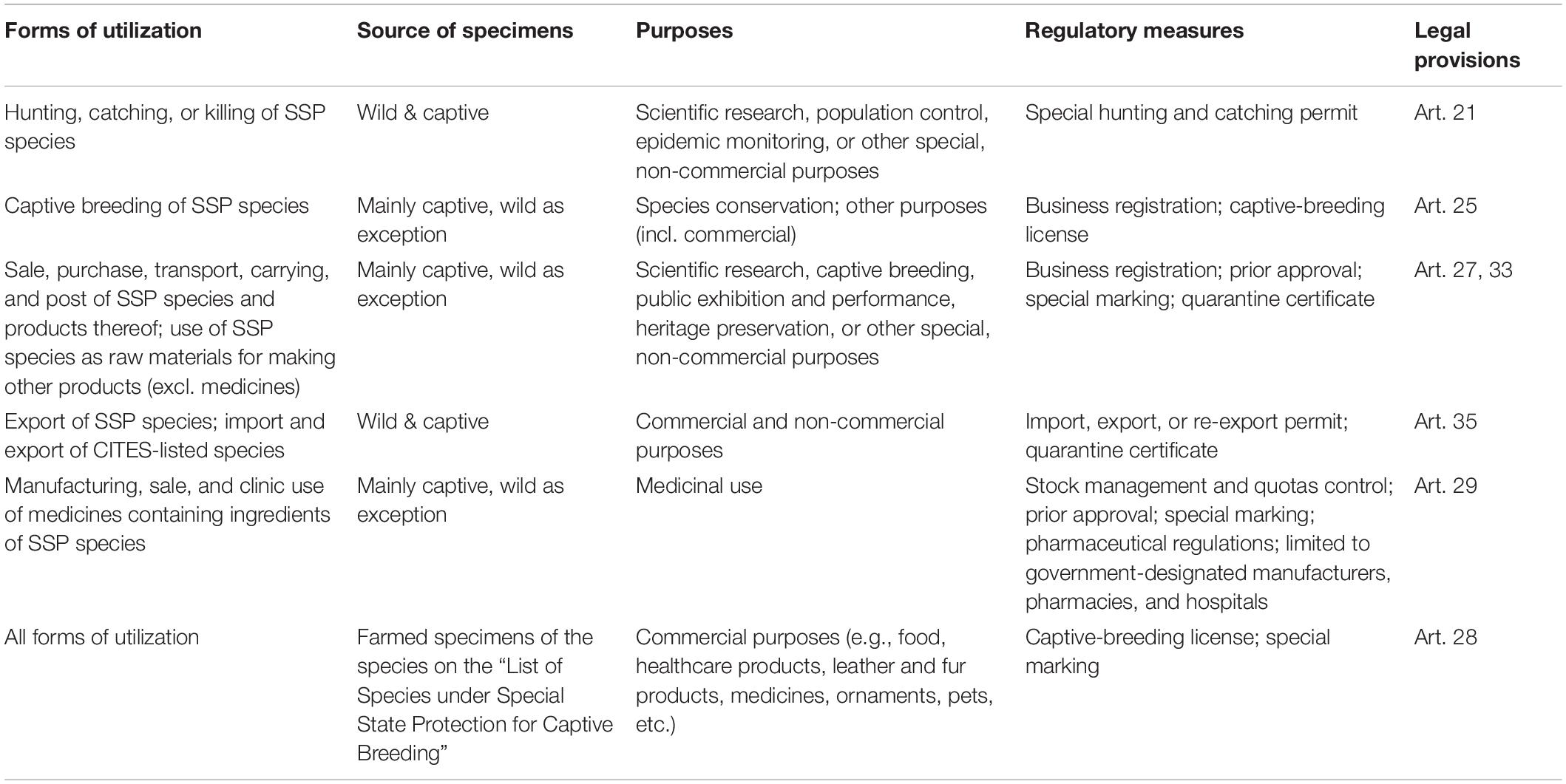
Table 1. Permissible forms of utilization of species under special state protection (SPP), as stipulated in China’s Wildlife Protection Law 2016.
The WPL 2016 supports the utilization of protected species for species conservation, public education, scientific research and other non-commercial purposes (Table 1), but restricts the commercial utilization to captive-bred specimens of the SSP species for which (1) there exist well-established breeding techniques; (2) there is a relatively large stock of captive populations; (3) restocking can be met by individuals in captivity; and (4) such utilization is conducive to reducing exploitation pressure on wild stocks (Xinhua News, 2017). The Law authorizes the National Forestry and Grassland Administration (NFGA) and the Ministry of Agriculture and Rural Affairs (MARA) to draw up and promulgate, within their respective remit and based on scientific evaluation, a utilization list of terrestrial/aquatic species that meet the above terms (Article 28). Once included in the utilization list, the Law allows for the revocation of the SSP status from the farmed populations of such SSP species, albeit their wild counterparts remaining as SSP protected and may still be threatened by trade to a varying extent. During 2017–2019, the NFGA and the MARA released three successive utilization lists, which contain a total of 30 SSP and CITES-listed species [e.g., sika deer (Cervus nippon) and Indian bullfrog (Hoplobatrachus tigerinus)] for full commercial farming and trade (NFGA, 2017a; MARA, 2017, 2019).
China’s Wildlife Farming and Trading Practices
China’s wildlife farming began in the 1950s (Ma, 1992) and expanded in the 1980s (Li, 2007). In the early 2000s, in response to the decimation of the wild populations of many medicinally and economically important species (e.g., bear, musk deer), a series of regulations and policies were introduced to tighten the restriction on commercial harvesting of wild animals and support the development of domestic farming industry, so as to promote the strategic transition in the use of wildlife from relying on wild to captive-bred sources.
The most notable was the 2003 Circular on the List of 54 Terrestrial Animal Species… (hereafter the “54-species List”) issued by the NFGA (2003), which had, for the first time, expressly legalized the commercial farming and trade of some 54 fauna species for which there was claimed to have in place well-established breeding techniques. Following this, China put in place a set of preferential policies (e.g., tax deduction, low-interest loans, and secured market entry) to guide and incentivize new investments [especially from manufacturers of traditional Chinese medicine (TCM) and light industrial goods] in breeding these 54 species (NFGA, 2004). As a result, local farming operations mushroomed after 2000 (e.g., Yunnan province; Yang and Li, 2009).
By 2016, the number of registered commercial farms reached 7,958, with an annual production value of USD 7.9 billion (NFGA, 2017b). Between 2005 and 2019, the NFGA had granted a total of 4,194 “Permits for Captive Breeding SSP-I Species” to 3,054 entities, of which 2,718 were commercial farms (including 1,538 deer farms) (NFGA, 2019).
Across China, there are at least 80 species of wild animals being farmed for different commercial purposes (MARA, 2020; NFGA, 2020). Use as food has increasingly become the main boost for the farming operations in several provinces [e.g., Zhejiang (Zhu et al., 2008) and Yunnan (Xiao et al., 2018)] in terms of both the magnitude of farms involved and stock in captivity.
In order to track the sale and purchase of wildlife products from protected species and attest their legality, China instituted, since May 2003, a pilot scheme called “Special Marking for Wildlife Trade and Utilization” (NFGA and MARA, 2003). Such markings have been given to business entities and the animals they raise or the wildlife products they produce and sell; wildlife affixed with a special marking can be transported and sold legally. In the WPL 2016, the special marking scheme was elevated to be one of the fundamental management mechanisms for wildlife farming and trade. So far, only a small proportion (1,300 by 2015; Wang, 2016) of wildlife farming and trading businesses is covered by the special marking scheme (Table 2). The species legalized for commercial farming and trade include not only those on the 54-species List for which there are relatively abundant, exploitable farmed specimens, but also the state-protected and CITES-listed species – e.g., leopard, saiga antelope (Saiga tatarica), and rare snake species – for which captive breeding is not viable at the commercial level (Xiao et al., 2018; Challender et al., 2019a) and their supply is reliant on stockpiles and wild extraction from within China and abroad (NFGA et al., 2007).
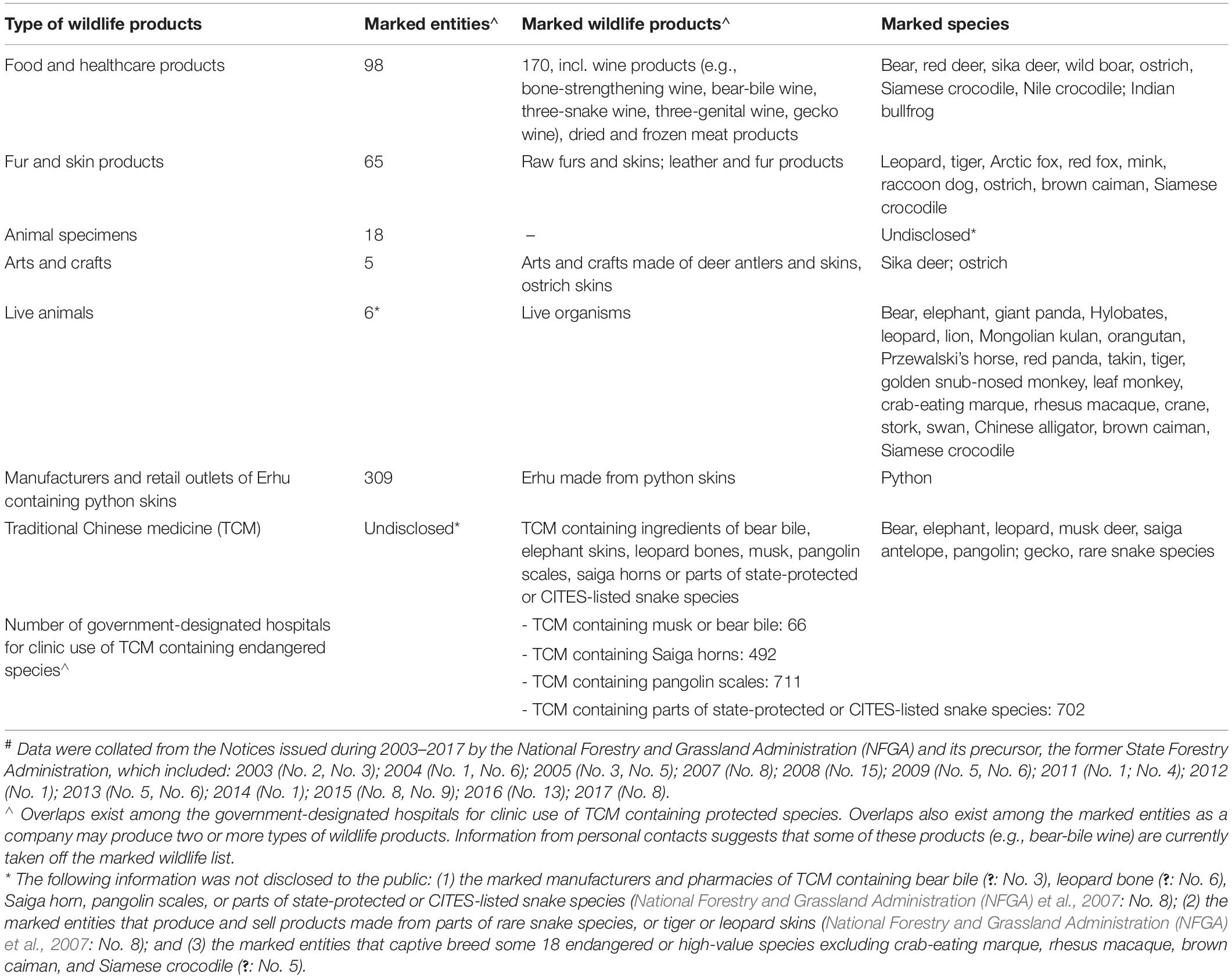
Table 2. Entities and wildlife products covered by the special marking scheme during 2003–2017#.
Unintended Consequences of a Conservation Strategy
From the above review, it is evident that China has attuned its national conservation strategy towards the supply side since the early 2000s for a solution to balancing the competing needs for species conservation and meeting an increasing demand for wildlife products. On the one hand, this “conservation through commercial farming and utilization” strategy, which is also known as supply-side conservation (Phelps et al., 2013), supports the development of a wildlife farming industry and promotes related commercial trade and use of their farmed specimens. Through the provision of captive products, wildlife farming is expected to attain the simultaneous achievement of meeting the social–cultural demand for wildlife products and alleviating the poaching and hunting pressure on wild populations (Jiang et al., 2007; Wang et al., 2019). On the other hand, China’s wildlife legislation sets in place a complex licensing system built around the permits for hunting, captive breeding, import and export, and special marking scheme with an aim to regulate the legal trade and to prevent the illegal trade.
However, this strategy did not work well for Chinese-protected species. Some of the intensely farmed and exploited species – e.g., forest musk deer (Moschus berezovskii) (Wang and Harris, 2015) and Sika deer (Harris, 2015) – have fragmented ranges or are experiencing a continuing decline in their wild populations, despite their increasing farmed stocks. However, updated assessments of the status of wild populations of many other farmed species are evidently lacking. Nevertheless, overexploitation for food and TCM remains one of the major recent causes of the endangerment of most of the imperiled Chinese vertebrates (MEE and CAS, 2015). Here, we highlight three specific unintended consequences that we believe have undermined China’s supply-side conservation strategy, making it ineffective in protecting threatened species and preventing zoonotic disease outbreaks.
First, while advancing wildlife farming and trade in the name of protection, this strategy did not consider the preconditions underlying supply-side approach (Tensen, 2016) against China’s contexts, such as the consumer preference for wild over captive (Gratwicke et al., 2008; Dutton et al., 2011), and dependency on wild for restocking for many species (e.g., frogs, snakes) (Xiao et al., 2018). This has resulted in the failure of farmed specimens to substitute for wild-sourced ones and unabated exploitation of wild populations, as well as an increased demand (especially for wild meat and health tonics; Zhang and Yin, 2014) due to the presence of the legal market.
Second, the existing special marking scheme that was devised to help wildlife regulators and enforcers tackle the laundering of wild animals was not effective. This is due to the following: (1) High policing burden. The existence of large numbers of small, scattered, and often unregistered household farms makes regulation and enforcement extremely challenging. A nationwide law enforcement campaign against illegal wildlife trade launched between January and February 2020 revealed that the total number of Chinese wildlife breeding sites could be over 16,000 (Xinhua News, 2020), which is double the number of the registered commercial farms (close to 8000) noted previously. (2) Limited application on live animals. So far, only 18 species have been requested to apply the marking scheme to their live specimens (Table 2). (3) Lack of forensic tools. Critically, forensic tools, particularly those that can be conducted in situ, are needed in determining specimen identity, provenance, or legal status. However, the shortage of wildlife forensics laboratories and their limited testing capacity (currently restricted to only species identification) impair wildlife authorities’ ability to detect illegal trade, including the abuse and forgery of the markings (Shao and Jiang, 2017).
Third, the legal gaps, the jurisdictional overlaps among multiple wildlife regulators, and the lax enforcement led to the absence of wildlife quarantine and market supervision. Despite the WPL 2016 stipulating that wildlife in sale must come with a quarantine certificate (Article 27), the animal health supervision station under the MARA focuses their work mainly on poultry and livestock, and rarely conducts quarantine on wild and farmed animals before butchering, transport, and sale due to the lack of protocols, pathogen data, and vaccinations (Liu et al., 2015). As for market supervision, while both the NFGA and the State Administration for Market Regulation are mandated to establish enduring working mechanisms for inspecting wildlife sold within and outside of local marketplaces, their enforcement efforts appear ineffective in preventing the illegal trade in part due to overlapped supervisory remit, overburdened workload, and a lack of expertise, trained personnel, and resources (Li, 2018; Liu and Zhang, 2020).
In short, the rapid expansion of wildlife farming and trade for commercial ends, coupled with the inability of China’s regulatory system to effectively distinguish wild-sourced and captive-bred wildlife, has created a loophole where farming facilities are laundering wild animals and local markets selling illegal wildlife. With the poorly enforced animal quarantine and market supervision, the intermingling of wild, captive, and domestic animals presents an ideal opportunity for the exchange of pathogens among diverse species and the spillover from wild hosts to humans.
Recommendations
As such, we call for an overhaul of China’s conservation strategy to limit and phase out risky and unsustainable wildlife farming and trade, while improving legislation and enforcement to establish solid, full chain-of-custody regulation over the existing utilization from harvesting and farming to end-use. We make the following four inter-related suggestions.
Ban on Risky Use of Wildlife
Given China’s ingrained cultural beliefs and large numbers of household-based farms, an outright ban on wildlife trade may lead to the perpetuation of black markets and substantial loss of livelihoods (Challender et al., 2019b; Roe and Lee, 2021). Hence, we suggest a reassessment of current permissible farming and trading practices based on their potential public health risk and conservation, cultural and economic benefits, and banning all forms of high health-risk use of wildlife that involves close human–animal contact yet lacking appropriate quarantine inspection (e.g., exotic pets). For cultural and TCM use, we suggest improving the sustainability and traceability of supply chains through initiatives including (1) seeking substitutes (Luo et al., 2013) (e.g., water buffalo horn is a widely known substitute for rhino; Hinsley et al., 2020); (2) developing certification schemes underpinned by the special marking for farming operations and farmed products (e.g., as an extension of the existing China Forest Certification; Wang et al., 2017), as well as sustainability standards for wild extraction (e.g., FairWild Standard for the harvest of wild medicinal and aromatic plants; Hinsley et al., 2020); and (3) engaging stakeholders (e.g., wildlife farming/trading businesses and local communities) in standard setting and encouraging public reporting of non-compliance behavior (Tröster and Hiete, 2018). On the consumer end, we suggest reducing or redirecting demand through initiatives including (4) education and awareness-raising campaigns to dispel myths about wildlife’s curative or tonic effects (e.g., the alleged use of pangolin scales in stimulating breast milk secretion; Hua et al., 2015); and (5) social marketing campaigns (Greenfield and Verissimo, 2019) to encourage abandonment of unsustainable traditional customs, or to redirect demand onto non-threatened substitutes with similar cultural credibility (e.g., directing demand for animal-derived TCM onto herbal substitutes; Moorhouse et al., 2020).
Expanding the WPL’s Protection Scope
We propose the following: (1) while retaining the key state protection for rare or endangered species through the SSP listing, the WPL’s protection scope should be augmented to offer universal protection to all wild species (Chang et al., 2015; Liu, 2020; Lü and Chen, 2020); (2) conducting regular national wildlife surveys to enable a better and timely understanding of the current status of and the evolving threats to species and habitats; and (3) adjusting the SSP list regularly to reflect the latest changes in population status and threats and offer the appropriate level of protection (Zhou, 2015; Gong et al., 2020).
Clarifying Jurisdictional Boundaries and Strengthening Surveillance System
(1) We propose accelerating the updating and amendment of relevant supporting regulations, measures, standards, and technical manuals for the WPL (including developing wildlife quarantine protocols with reference to those currently available for poultry and livestock), such that the jurisdiction for various wildlife authorities along the chain of custody is clear and well-defined. (2) We recommend incorporating the One Health approach (WHO (World Health Organization), 2017) into building an integrated inter-agency and inter-sector national surveillance system for infectious zoonoses that is supported by a network of accredited veterinary and public health diagnostic laboratories, a better reporting system from both formal (e.g., medical care facilities) and informal (the public) channels, and a shared national pathogen database for both wild and farmed animals (Gebreyes et al., 2014; Guo, 2020).
Combating Wildlife Laundering and Illegal Trade
We suggest the following: (1) registering all farming facilities, closing out those having no valid permits or not meeting the legal requirements on breeding operations (e.g., founder stock), and promoting the consolidation of small family-based farms into satellite farms affiliated to a few large-scale farms in order to facilitate management and enforcement (e.g., python farming in Hainan Province; Natusch and Lyons, 2014); (2) registering and applying special marking to farmed animals, and establishing individual-based archives (e.g., genealogy) to enable traceability; (3) placing the burden of proof on farmers and traders to provide evidence for the provenance of the animals they raise or sell; (4) strengthening both paperwork oversight and on-the-ground inspection of farms and trading sites, and cracking down on illegal purchase and resale of poached animals under the guise of captive breeding or special markings; and (5) investing and leveraging modern and advanced forensic techniques such as high-resolution x-ray fluorescence (Brandis et al., 2018), and isotopic and elemental markers (Natusch et al., 2017) to reinforce the utility of the special marking.
Conclusion
Making supply-side conservation work is critical at the global scale because of its potential to be both a conservation tool and a solution for sustainable use of wild species for a significant number of countries where the use of wildlife by local communities is often an imperative rather than a choice (Roe, 2008). The current setback in China serves as an important warning for the world of the potential negative impact of commercial farming and trade as a supply-side conservation approach when implemented improperly. Nevertheless, if China can take advantage of this opportunity to remedy its conservation strategy, it could become a role model for the rest of the supply-side conservation world. In this sense, the upcoming new amendment of the Wildlife Protection Law (The NPC, 2020) is a fundamental window for China to overhaul its conservation strategy to better serve the triple goals of conserving biological diversity and ecological integrity, facilitating the establishment and strengthening of conditions for promoting sustainable and equitable use of wildlife, and preventing the emergence and spread of zoonotic diseases in China and around the world.
Author Contributions
YJ did the data collection and analysis. Both authors did the study design, writing, and manuscript revisions, and approved the final manuscript.
Funding
This work was supported by research grants from Sun Yat-sen University (20wkpy08) to YJ and from the National Natural Science Foundation of China (grants 41180944 and 41180953), the Guangdong Provincial Research Fund (grant 42150016), and the European Commission (grant ENV/2018/403-527) to TL.
Conflict of Interest
The authors declare that the research was conducted in the absence of any commercial or financial relationships that could be construed as a potential conflict of interest.
Acknowledgments
We thank Rick Ruan for comments on an earlier version of the manuscript, and two reviewers for their constructive feedback.
Footnotes
- ^ World Health Organization. SARS (Severe Acute Respiratory Syndrome). Available online at: https://www.who.int/ith/diseases/sars/en/ (accessed March 2, 2021).
References
Brandis, K. J., Meagher, P. J. B., Tong, L. J., Shaw, M., Mazumder, D., Gadd, P., et al. (2018). Novel detection of provenance in the illegal wildlife trade using elemental data. Sci. Rep. 8:15380. doi: 10.1038/s41598-018-33786-0
Calisher, C., Carroll, D., Colwell, R., Corley, R. B., Daszak, P., Drosten, C., et al. (2020). Statement in support of the scientists, public health professionals, and medical professionals of China combatting COVID-19. Lancet 395, e42–e43. doi: 10.1016/S0140-6736(20)30418-9
Challender, D. W. S., Sas-Rolfes, M., Ades, G. W. J., Chin, J. S. C., Sun, N. C. M., Chong, J. L., et al. (2019a). Evaluating the feasibility of pangolin farming and its potential conservation impact. Glob. Ecol. Conserv. 20:e00714. doi: 10.1016/j.gecco.2019.e00714
Challender, D. W. S., Hinsley, A., and Milner-Gulland, E. J. (2019b). Inadequacies in establishing CITES trade bans. Front. Ecol. Environ. 17:199–200. doi: 10.1002/fee.2034
Chang, J. W., Guo, S., Wang, X., Liu, L., and Wei, Z. C. (2015). Issues and suggestions for the amendment of China’s Wildlife Protection Law). Chin. J. Environ. Manag. 1, 73–77.
Dutton, A. J., Hepburn, C., and Macdonald, D. W. (2011). A stated preference investigation into the Chinese demand for farmed vs. wild bear bile. PLoS One 6:e21243. doi: 10.1371/journal.pone.0021243
Gebreyes, W. A., Dupouy-Camet, J., Newort, M. J., Oliveira, C. J. B., Schlesinger, L. S., Saif, Y. M., et al. (2014). The global One Health paradigm: challenges and opportunities for tackling infectious diseases at the human, animal, and environmental interface in low-resource settings. PLoS Negl. Trop. Dis. 8:e3257. doi: 10.1371/journal.pntd.0003257
Gong, S. P., Wu, J., Gao, Y. C., Fong, J. J., Parham, J. F., and Shi, H. (2020). Integrating and updating wildlife conservation in China. Curr. Biol. 30, 905–931. doi: 10.1016/j.cub.2020.06.080
Gratwicke, B., Mills, J., Dutton, A. J., Gabriel, G., Long, B., Seidensticker, J., et al. (2008). Attitudes toward consumption and conservation of tigers in China. PLoS One 7:e2544. doi: 10.1371/journal.pone.0002544
Greenfield, S., and Verissimo, D. (2019). To what extent is social marketing used in demand reduction campaigns for illegal wildlife products? Insights from elephant ivory and rhino horn. Soc. Mar. Q. 25, 40–54. doi: 10.1177/1524500418813543
Guo, Z. R. (2020). The urgency of strengthening the veterinarian’s role in China’s public health system through One Health approach. Chin. J. Vet. Sci. 40, 842–849. doi: 10.16303/j.cnki.1005-4545.2020.04.30
Harris, A. (2015). Cervus nippon. The IUCN Red List of Threatened Species e.T41788A22155877. Available online at: http://dx.doi.org/10.2305/IUCN.UK.2015-2.RLTS.T41788A22155877.en (accessed November 7, 2017).
Hinsley, A., Milner-Gulland, E. J., Cooney, R., Tomoshyna, A., Ruan, X. D., and Lee, T. M. (2020). Building sustainability into the Belt and Road Initiative’s Traditional Chinese Medicine trade. Nat. Sustain. 3, 96–100. doi: 10.1038/s41893-019-0460-6
Hua, L. S., Gong, S. P., Wang, F. M., Li, W. Y., Ge, Y., Li, X. N., et al. (2015). Captive breeding of pangolins: current status, problems and future prospects. ZooKeys 507, 99–114. doi: 10.3897/zookeys.507.6970
Jiang, Z., Li, C., Fang, H., Meng, Z., and Zeng, Y. (2007). Captive-bred tigers and the fate of wild tigers. BioScience 57:725. doi: 10.1641/B570922
Li, P. (2007). Enforcing wildlife protection in China: the legislative and political solutions. China Inf. 21, 71–107. doi: 10.1177/0920203X07075082
Li, S. K. (2018). Thoughts on establishing a management system of special identification for animals and products in accordance with the law. Chin. J. Wildl. 39, 723–727.
Liu, H., Zheng, L., and Chen, H. (2015). Thinking on management of prevention and quarantine of the wild animal diseases. Anim. Quar. 33, 48–59. doi: 10.3969/j.issn.1005-944X.2016.12.014
Liu, P., and Zhang, Y. (2020). The regulation of wildlife trade in China: current status, problems and policy suggestions. Soc. Sci. Nanjing 5, 68–75. doi: 10.15937/j.cnki.issn1001-8263.2020.05.010
Luo, J. Y., Yan, D., Song, J. Y., Zhang, D., Xing, X. Y., Han, Y. M., et al. (2013). A strategy for trade monitoring and substitution of the organs of threatened animals. Sci. Rep. 3:3108. doi: 10.1038/srep03108
Lü, Z. M., and Chen, Z. L. (2020). Revision of the Law of the People’s Republic of China on the Protection of Wildlife: background, issues and suggestions. Biodiv. Sci. 5, 550–557. doi: 10.17520/biods.2020120
Ma, J. (1992). Pioneering a new situation in China’s wildlife farming under the banner of economic construction as the national priority. Chin. Wildl. 4, 12–14. doi: 10.9711/j.cnki.issn2310-1490.1992.04.003
MARA (Ministry of Agriculture and Rural Affairs). (2019). List of Aquatic Species under Special State Protection for Captive Breeding (Second Batch). Available online at: http://www.moa.gov.cn/gk/tzgg_1/gg/201908/t20190802_6322028.htm (accessed March 2, 2021).
MARA. (2017). List of Aquatic Species under Special State Protection for Captive Breeding (First Batch). Available online at: http://www.moa.gov.cn/nybgb/2017/201712/201802/t20180202_6136346.htm (accessed March 2, 2021).
MEE (Ministry of Ecology and Environment). (2014). China’s Fifth National Report on the Implementation of the Convention on Biological Diversity. Available online at: https://www.cbd.int/countries/?country=cn (accessed March 2, 2021).
MEE, and Chinese Academy of Sciences (CAS) (2015). Redlist of China’s Biodiversity: Vertebrate Volume. Beijing: MEE.
Moorhouse, T. P., Coals, P. G., D’Cruze, N. C., and Macdonald, D. W. (2020). Reduce or redirect? Which social marketing interventions could influence demand for traditional medicines? Biol. Conserv. 242:108391. doi: 10.1016/j.biocon.2019.108391
Natusch, D. J. D., Carter, J. F., Aust, P. W., Van Tri, N., Tinggi, U., and Mumpuni, et al. (2017). Serpent’s source: determining the source and geographic origin of traded python skins using isotopic and elemental markers. Biol. Conserv. 209, 406–414. doi: 10.1016/j.biocon.2017.02.042
Natusch, D. J. D., and Lyons, J. A. (2014). Assessment of python breeding farms supplying the international high-end leather industry. Occasional Paper of the IUCN Species Survival Commission. Switzerland: IUCN.
NFGA. (2003). Circular on the Release of 54 Terrestrial Animal Species Including Sika Deer that Already Have Mature Technology for Domestication and Captive Breeding and that Are Allowed for Commercial Farming and Trade. Beijing: NFGA
NFGA. (2004). Guidelines on Promoting the Sustainable Development of Wild Fauna and Flora Resources. Beijing: NFGA.
NFGA. (2005). Notice No. 3. Available online at: http://www.forestry.gov.cn/sites/main/main/gov/content.jsp?TID=1104 (accessed May 28, 2021).
NFGA. (2017a). List of Terrestrial Species under Special State Protection for Captive Breeding (First Batch). Available online at: http://www.forestry.gov.cn/main/3457/content-995142.html (accessed March 2, 2021).
NFGA. (2020). Circular on the Classification and Management of Wild Animal Species Banned from Consumption. Available online at: https://www.forestry.gov.cn/main/5461/20200930/165748565561144.html (accessed March 2, 2021).
NFGA, and Ministry of Agriculture and Rural Affairs (MARA). (1989). List of Wildlife under Special State Protection. Beijing: NFGA
NFGA, and MARA. (2003). Circular on Straightening Out Entities Manufacturing or Selling Wildlife Products and Launching the Pilot Marking Scheme. Beijing: NFGA
NFGA, and MARA. (2021). List of Wildlife under Special State Protection. Available online at: http://www.forestry.gov.cn/main/5461/20210205/122418860831352.html (accessed March 2, 2021).
NFGA (National Forestry and Grassland Administration). (1993). Circular on approving some endangered wildlife as special state protected species. Beijing: NFGA
NFGA, National Health Commission, State Administration for Market Regulation, National Medical Products Administration, and National Administration of Traditional Chinese Medicine (2007). Circular on Strengthening the Protection and Regulation of Medicinal Use of Saiga Antelope, Pangolin and Rare Snake Species. Beijing: NFGA
Phelps, J., Carrasco, L. R., and Webb, E. L. (2013). A framework for assessing supply-side wildlife conservation. Conserv. Biol. 28, 244–257. doi: 10.1111/cobi.12160
Koh, L. P., Li, Y. H., and Lee, J. S. H. (2021). The value of China’s ban on wildlife trade and consumption. Nat. Sustain. 4, 2–4. doi: 10.1038/s41893-020-00677-0
Roe, D. (2008). Trading nature. A report, with case studies, on the contribution of wildlife trade management to sustainable livelihoods and the Millennium Development Goals. Cambridge: TRAFFIC International.
Roe, D., and Lee, T. M. (2021). Possible negative consequences of a wildlife trade ban. Nat. Sustain. 4, 5–6. doi: 10.1038/s41893-020-00676-1
Shao, Z., and Jiang, N. (2017). Review and prospect of wildlife forensic identification in China. J. Econ. Anim. 21, 169–180. doi: 10.13326/j.jea.2017.1177
Tensen, L. (2016). Under what circumstances can wildlife farming benefit species conservation? Glob. Ecol. Conserv. 6, 286–298. doi: 10.1016/j.gecco.2016.03.007
The NPC. (2020). The 13th NPC Standing Committee’s work plan for legislative amendments to strengthen the rule of law and safeguard public health. Available online at: http://www.npc.gov.cn/npc/c30834/202004/eacce363c350473f9c28723f7687c61c.shtml (accessed March 2, 2021).
Tröster, R., and Hiete, M. (2018). Success of voluntary sustainability certification schemes – A comprehensive review. J. Clean. Prod. 196, 1034–1043. doi: 10.1016/j.jclepro.2018.05.240
Wang, H. J. (2016). Interpretation on the Wildlife Protection Law of the People’s Republic of China. Beijing: China Legal Publishing House.
Wang, W. X., Chen, S. Z., Hu, Y. J., Yang, L. L., Huang, S. L., and Xu, H. J. (2017). A new field in China’s forest certification system-wildlife feeding and management). Chin. J. Wildl. 38, 671–674.
Wang, W. X., Yang, L. L., Wronski, T., Chen, S. Z., Hu, Y. J., and Huang, S. L. (2019). Captive breeding of wildlife resources—China’s revised supply-side approach to conservation. Wildl. Soc. Bull. 43, 425-435. doi: 10.1002/wsb.988
Wang, Y., and Harris, R. (2015). Moschus berezovskii. The IUCN Red List of Threatened Species e.T13894A103431781. Switzerland: IUCN
WHO (World Health Organization). (2017). One Health. Available online at: https://www.who.int/news-room/q-a-detail/one-health (accessed March 2, 2021).
Xiao, J., Fang, R. M., and Liu, B. (2018). Investigation and evaluation of artificial breeding industry of wild animals in Yunnan Province. For. Ind. Plan. 43, 130–138. doi: 10.3969/j.issn.1671-3168.2018.01.025
Xiao, L. Y., Lu, Z., Li, X. Y., Zhao, X., and Li, B. V. (2021). Why do we need a wildlife consumption ban in China? Curr. Biol. 31, 168–172. doi: 10.1016/j.cub.2020.12.036
Xinhua News. (2017). Why these nine terrestrial SSP species are allowed for commercial utilization. Available online at: http://www.xinhuanet.com/2017-06/30/c_1121242972.htm (accessed March 2, 2021).
Xinhua News. (2020). China to further crack down illegal wildlife trade: official. Available online at: http://www.xinhuanet.com/english/2020-02/08/c_138766214.htm (accessed March 2, 2021).
Yang, G. F., and Li, B. F. (2009). Survey of developmental status of wildlife domesticating and breeding enterprises in Yunnan Province and its analysis. Chin. J. Wildl. 30, 108–112.
Zhang, L., and Yin, F. (2014). Wildlife consumption and conservation awareness in China: a long way to go. Biodiv. Conserv. 23, 2371–2381. doi: 10.1007/s10531-014-0708-4
Zhou, P., and Shi, Z. L. (2021). SARS-CoV-2 spillover events: spillover from mink to humans highlights SARS-CoV-2 transmission routes from animals. Science 371, 120–122. doi: 10.1126/science.abf6097
Zhou, Z., Buesching, C. D., Macdonald, D. W., and Newman, C. (2020). China: clamp down on violations of wildlife trade ban. Nature 578:217. doi: 10.1038/d41586-020-00378-w
Keywords: supply-side conservation, wildlife farming, wildlife trade, species conservation, COVID-19
Citation: Jiao YB and Lee TM (2021) China’s Conservation Strategy Must Reconcile Its Contemporary Wildlife Use and Trade Practices. Front. Ecol. Evol. 9:675400. doi: 10.3389/fevo.2021.675400
Received: 03 March 2021; Accepted: 06 May 2021;
Published: 14 June 2021.
Edited by:
Franco Andreone, Museo Regionale di Scienze Naturali, ItalyReviewed by:
Amaël Borzée, Nanjing Forestry University, ChinaZhaomin Zhou, China West Normal University, China
Copyright © 2021 Jiao and Lee. This is an open-access article distributed under the terms of the Creative Commons Attribution License (CC BY). The use, distribution or reproduction in other forums is permitted, provided the original author(s) and the copyright owner(s) are credited and that the original publication in this journal is cited, in accordance with accepted academic practice. No use, distribution or reproduction is permitted which does not comply with these terms.
*Correspondence: Yunbo Jiao, amlhb3l1bmJvQG1haWwuc3lzdS5lZHUuY24=; Tien Ming Lee, bGVldG1AbWFpbC5zeXN1LmVkdS5jbg==
†ORCID: Yunbo Jiao, orcid.org/0000-0001-6473-6357; Tien Ming Lee, orcid.org/0000-0003-2698-9358