 Yahui He
 Haitao Zhao3
 Li Liu
- 1Department of East Asian Languages and Cultures, Stanford University, Stanford, CA, United States
- 2Stanford Archaeology Center, Stanford University, Stanford, CA, United States
- 3Institute of Archaeology, Chinese Academy of Social Sciences, Beijing, China
The Bronze Age in China is characterized by the appearance of bronze ritual vessels, such as gui and he pitchers and jue cups, which were symbols of high social status and likely used in ritual feasting events. Their forms imitate similar ceramic vessels made of white clay. This transformation of such ceramic vessels into their bronze counterparts took place at the Erlitou site in the Yiluo basin, North China (ca. 1,800–1,500 BC). Such white pottery types are commonly regarded as alcohol-related vessels, but there is a lack of scientific analysis of organic remains on vessels’ interior surfaces to understand their functions. In this study, we analyzed microfossil remains on 16 ceramic vessels unearthed from Erlitou and discovered direct evidence of the production and consumption of fermented beverages that were prepared using qu starter as a saccharification agent. Dakouzun wide-orifice vats may have been used for fermentation, likely in semi-solid-state fermentation conditions; narrow-orifice jars zun for storage; gui and he pitchers for heating and/or pouring the beverages; and jue cups for drinking. Monascus mold and herbs were probably used to make qu starter. Fermentation ingredients were primarily rice and wheat, sometimes mixed with broomcorn millet, Job’s tears, roots of snake gourd, among other plants. Rice and wheat were minor crops in the region, probably cultivated for special uses and received by the Erlitou elites as tributary items for making alcoholic beverages. This research demonstrates that Erlitou feasting activities involved serving luxury drinks with prestige utensils in socially exclusive spaces, which emphasized social status, wealth, and power. The development of such drinking materiality and social values coincided with increased social differentiation at the time of early state formation.
Introduction
China’s long history of making and drinking alcohol can be traced back to the early Neolithic time (ca. 9,000–7,000 cal. BP). Residue analyses of ceramic globular jars from the Jiahu site in Henan province and the Qiaotou site in Zhejiang province indicate that such vessels once contained mixed fermented beverages of rice, honey and fruit at Jiahu (McGovern et al., 2004) and rice-based fermented beverages mixed with Job’s tears and tubers at Qiaotou (Wang et al., 2021). During the middle Neolithic period (ca. 7,000–4,900 cal. BP), fermentation and drinking vessels became more diverse regionally. In the middle Yellow River region, a rather limited number of forms of jiandiping amphorae were used for fermentation and communal drinking in the Yangshao culture (Liu, 2021). In the lower Yellow River region, on the other hand, a variety of vessels with exquisite craftmanship were used for brewing, heating, pouring, and drinking alcoholic beverages, coinciding with the development of social differentiation in the Dawenkou culture (ca. 6,100–2,600 cal. BP) (Liu, 2017; Liu et al., 2021b). As societies became more stratified during the late Neolithic period of the Longshan culture (ca. 5,000–3,900 cal. BP), the alcohol-related vessels also became more elaborate in form, specialized in function, and often appeared in concentration at large sites or elite burials. These parallel developments suggest that consumption of alcoholic beverages was an important part of feasting ritual activities at political and economic centers (McGovern et al., 2005; Underhill, 2018; He et al., 2021).
Feasts were a significant part of various rituals in prehistory, and the artifacts associated with such activities are important material remains for studying ritual behaviors and social relations in the past (Dietler and Hayden, 2001; Hayden, 2014). The ceramic assemblages for alcohol consumption, which include serving vessels (e.g., gui and he pitchers for heating and pouring liquid) and drinking vessels (e.g., jue and bei cups), became widespread in most of the Yellow River valley from the late Neolithic to the early Bronze Age. Chinese archeologists have studied these vessels for decades, exploring their origins and development mainly by studying typological changes (Gao and Shao, 1981; Du, 1990, 1992). These studies demonstrate that these vessels were the prototypes of the first bronze ritual vessels, such as gui, he, and jue, found at the Erlitou site in Henan province, the development of which marked the beginning of the Bronze Age in north China. Thus, ceramic drinking vessels laid the foundation for the emergence and institutionalization of bronze ritual vessel types, and this transformation first took place at the Erlitou site.
Despite of the importance of these vessels, there has been little scientific analysis of their functions. It is still unclear how these hypothetically alcohol-related vessels were used and what brewing methods were practiced in the Erlitou culture. To address these issues, this paper aims to provide direct evidence of the alcohol-making technology and drinking practices at the Erlitou site. By analyzing the residues on ceramic vessels and their archeological contexts, the results will shed new light on the production and consumption of alcoholic beverages at Erlitou, and on the social function of ritual feasting in the emergence of state-level civilization.
Materials and Methods
Archeological Background
The Erlitou site in Henan province (c. 1,900/1,800–1,500 BC) was the first Bronze Age urban center and is also regarded by many as a capital of Xia, the first dynasty in China. For over 60 years, excavations have revealed a well-designed political and economic center (300 ha in area) with a clear social hierarchy in mortuary practices and residential arrangements. Elaborate ceramic drinking vessels have also been found in elite burials and in the palatial area (Liu and Chen, 2012; Figure 1). These vessels include gui and he pitchers for serving and jue cups for drinking, and are mostly made of non-local white clays (Li et al., 2010). The vessels are white, light yellow, and light pink in color (Figure 2), and the rarity of the raw materials and unusual aesthetic designs may have been symbols of the high social status of the Erlitou elites (Liu, 2003). Therefore, our sampling strategy was to primarily focus on white ceramic serving and drinking vessels unearthed from the palatial area and from an elite cemetery. Since it is also important to understand what brewing methods involved in alcohol production, we focused on two vessel types, wide-orifice vats (dakouzun; vat hereafter) and narrow-orifice jars (zun; jar hereafter), that are often assumed to be used in the fermentation process (Bao and Zhou, 2007, p. 13–23).
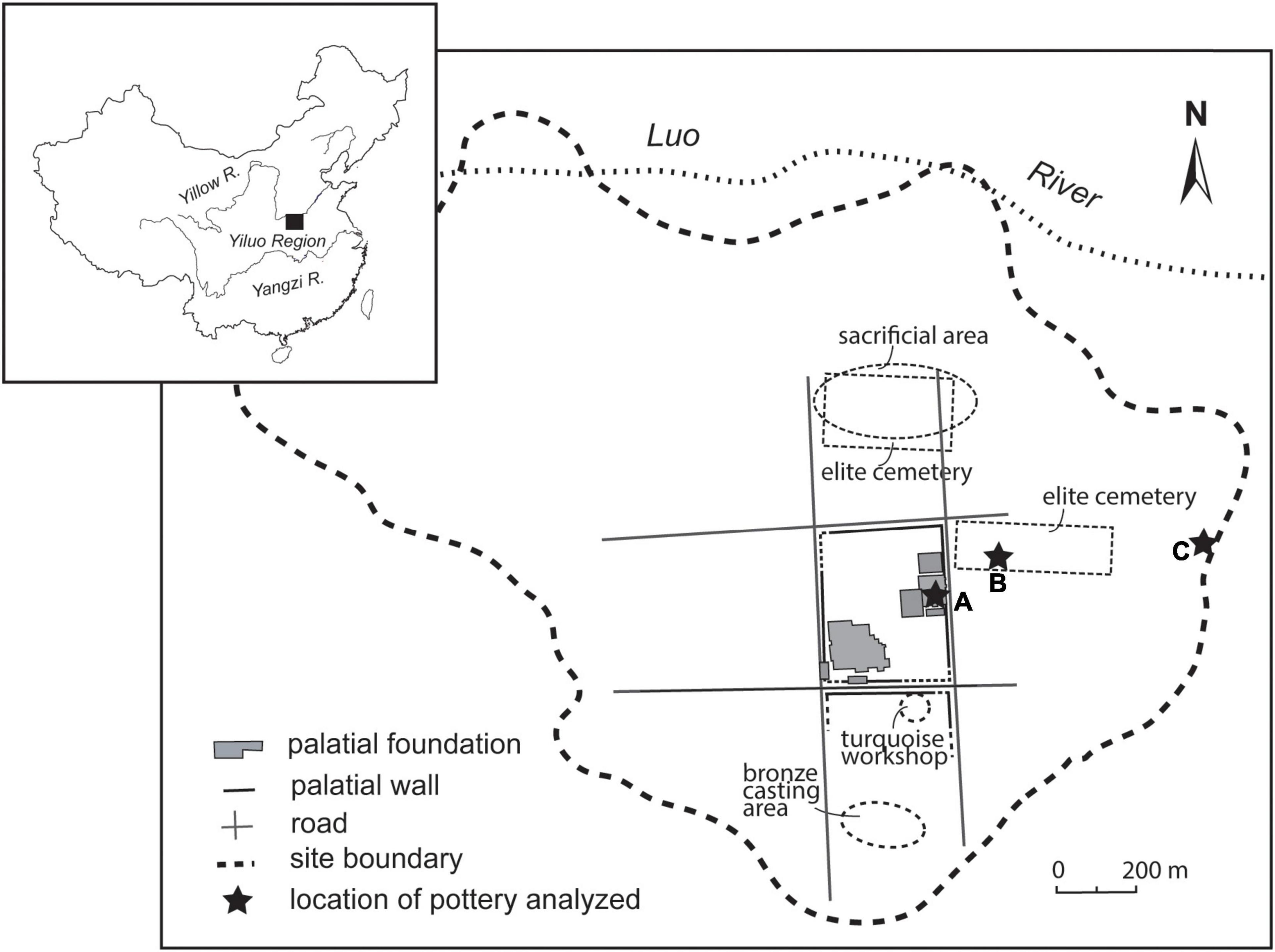
Figure 1. Locations of pottery samples excavated from the Erlitou site in the Yiluo region. (A) General area where pottery sherds were unearthed from the eastern part of the palatial zone; (B) location of the elite tomb 2015YLVM7; (C) location of Jar4.
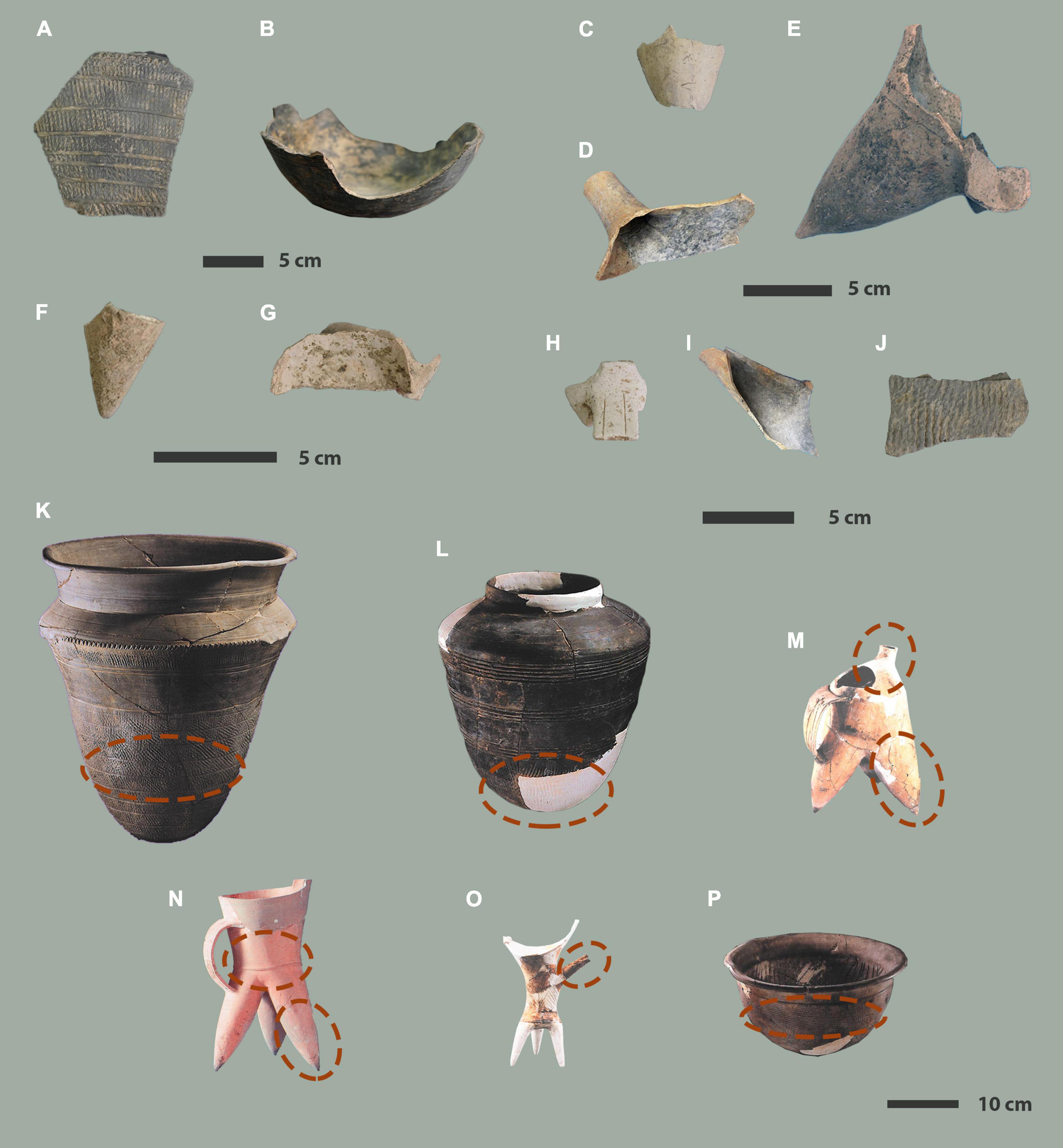
Figure 2. Selected pottery sherds analyzed (A–J) and corresponding complete vessels (J–O). (A) Dakouzun Urn, body; (B) zun Jar2, base; (C) he Pitcher1, spout; (D) he Pitcher4, spout; (E) he Pitcher5, foot; (F) gui Pitcher1, foot; (G) gui Pitcher3, body; (H) jue Cup1, body; (I) jue Cup2, spout; (J) kecaopen grooved basin, body; (K) dakouzun urn (2001VH272:19); (L) zun jar (2001VH12:7); (M) he pitcher (2002VM4:6); (N) gui pitcher (82YLIX M10:6); (O) jue cup (2001VM1:10); (P) 2002VH87:18 (circles indicate the vessel parts corresponding to the sherds analyzed).
The ceramic samples analyzed were mostly found in close proximity to the palace foundations in the eastern section of the palatial zone. Some samples come from a tomb (2015YLVM7) ranked in the first tier of the Erlitou elite burial assemblage. This tomb is about 3 m2 in area, furnished with cinnabar on the bottom, and associated with many grave goods, including jades, turquoise beads, laquear wares, and ceramic vessels. We studied residue remains adhering to the interior surfaces of 16 pottery sherds, including one dakouzun vat, five zun jars, five he pitchers, three gui pitchers, and two jue cups, which are considered alcohol-related pottery vessels. We collected three control samples to compare with the residue samples. Two were sediments from the external surfaces of two he pitchers, which likely reflect the soil matrix around the artifacts in the archeological deposits. The third control sample was from the interior surface of a kecaopen grooved basin, unlikely related to an alcohol fermentation process. This vessel type has been found in many Neolithic and early Bronze Age sites, and may have been used for grinding/processing foodstuffs based on residue analysis (Sun et al., 2019; Reinhart, 2020). All these sherds come from the deposits from the Erlitou Phases II, IV and Upper Erligang phases, dating to around 1,800/1,700–1,400 BC (Figure 2 and Table 1).
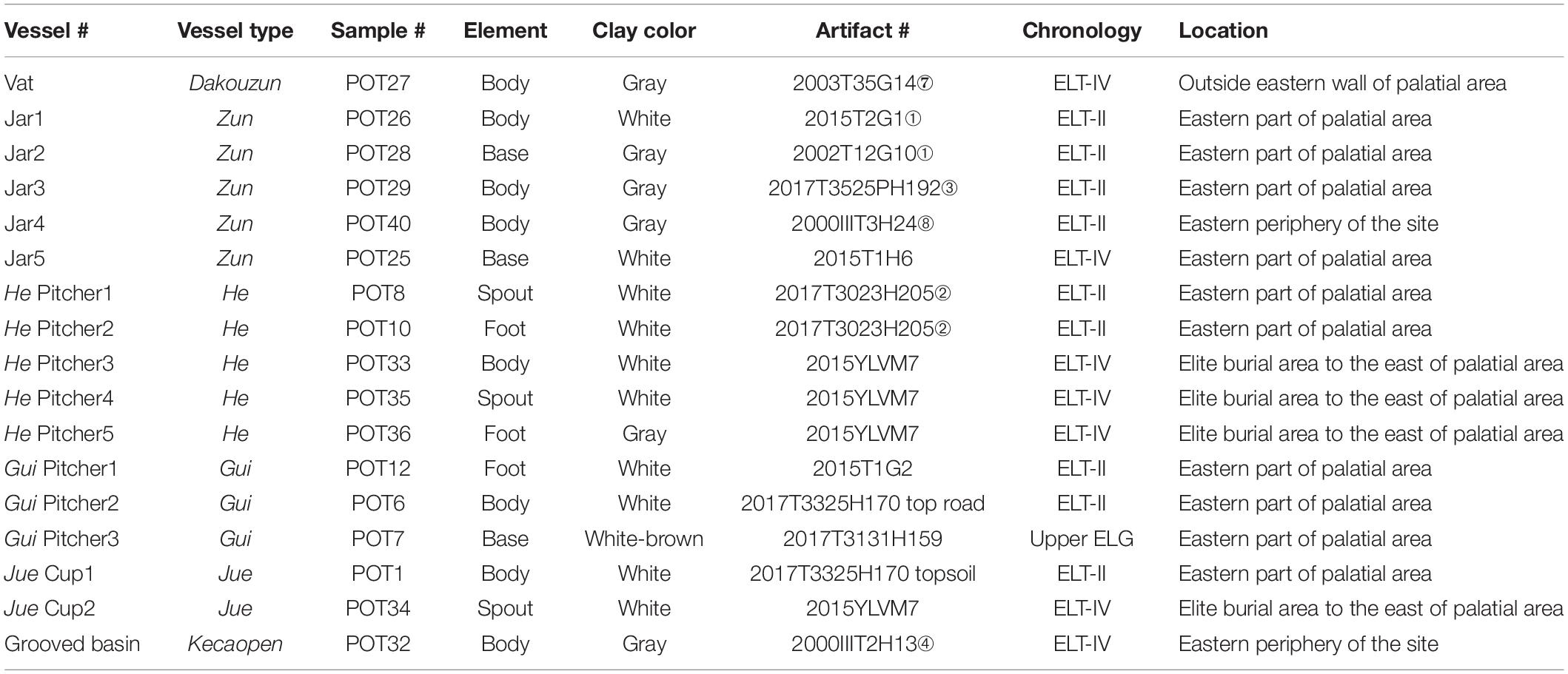
Table 1. Ceramic samples analyzed.
Methods
Four sherds (from he pitchers and a jue cup) from the elite tomb were sampled in situ during the excavation, while the rest of the sherds were cleaned by the excavators before our sampling. The process of collecting and analyzing the residue samples is as follows. Each pottery sherd was first cleaned with a new toothbrush to remove loose soil on the interior surface of the vessel. Residues adhering to the vessel interior surface were then extracted using a clean ultrasonic toothbrush and distilled water for 3 min. The residue liquid from each sample was kept in a test tube. We also used clean blades to scrape off visible residue sediments on the vessels’ interior surfaces and stored the sediments in small plastic bags.
Residue samples, including the control samples, were processed using protocols established by the Stanford Archeology Center that involve two procedures: EDTA (ethylenediaminetetraacetic acid; 0.1%) dispersion and heavy liquid (sodium polytungstate, density 2.35) separation (Liu et al., 2019). Congo red (0.1%, 1 mg / ml) was used to dye a small part of the residue of some samples to identify the presence of gelatinized starch granules (Lamb and Loy, 2005). Extractions obtained from residue samples were mounted in 50% (vol/vol) glycerol and 50% (vol/vol) distilled water on glass slides and scanned under a Zeiss Axio Scope A1 microscope fitted with polarizing filters and differential interference contrast (DIC) optics, at 200 × and 400 × to identify starch, phytoliths, and fungi. Photographs were taken using a Zeiss Axiocam HRc3 digital camera and Zeiss Axiovision software version 4.9.1.
Identification of microfossil remains was based on modern reference collections, which contain more than 1,300 plant specimens, in the Stanford Archeology Center, Stanford University. We have conducted experimental brewing of many types of plants to generate a database for identifying fermentation-related starch morphologies, which are partially published (Wang et al., 2017). We also consulted other studies on morphological alterations of cooked starch (Henry et al., 2009). Phytolith identification was based on our reference database and published information (Piperno, 2006; Lu et al., 2009). Fungi were identified according to our microbial database and published sources (Young, 1931; Bao and Zhou, 2007; St-Germain and Summerbell, 2011).
Results
Our analysis revealed abundant microfossil remains, including starch granules, phytoliths and fermentation-related fungi (molds and yeast cells).
Starch Granules
A total of 743 starch granules were found in the 16 residue samples, of which 534 (71.9%) were classified into five types that correspond to certain taxa in modern reference data (Figure 3). We recorded starch counts and ubiquity measures [percentage presence, calculated as (the total number of samples that one plant taxon is identified)/(the total number of residue samples)] (Pearsall, 1989, p. 212–217) to indicate relative abundances of plant taxa. Six granules (0.8%) exhibit characteristics of underground storage organs (USOs) but could not be further identified taxonomically. Two hundred and three (27.3%) starch granules were either badly damaged or lacked diagnostic characteristics and thus were classified as unidentifiable (UNID). A great majority of starches were damaged (n = 682; 91.8% of the total; 93.8% ubiquity); causes of their morphological alternation included enzyme digestion, fermentation, and cooking (steaming or boiling) (Table 2). The damage patterns observed included the disappearance of extinction crosses (Figures 4E–H); pitting, deep channels, and broken edges (Figures 4B,D,I,J); central depressions (Figures 4F,G,J); and gelatinization (Figure 4K). These damage patterns are consistent with those appearing on fermented cereal starch granules in our reference data (Figures 3B,D,F–H,J,K) and with published information (Henry et al., 2009; Wang et al., 2017).
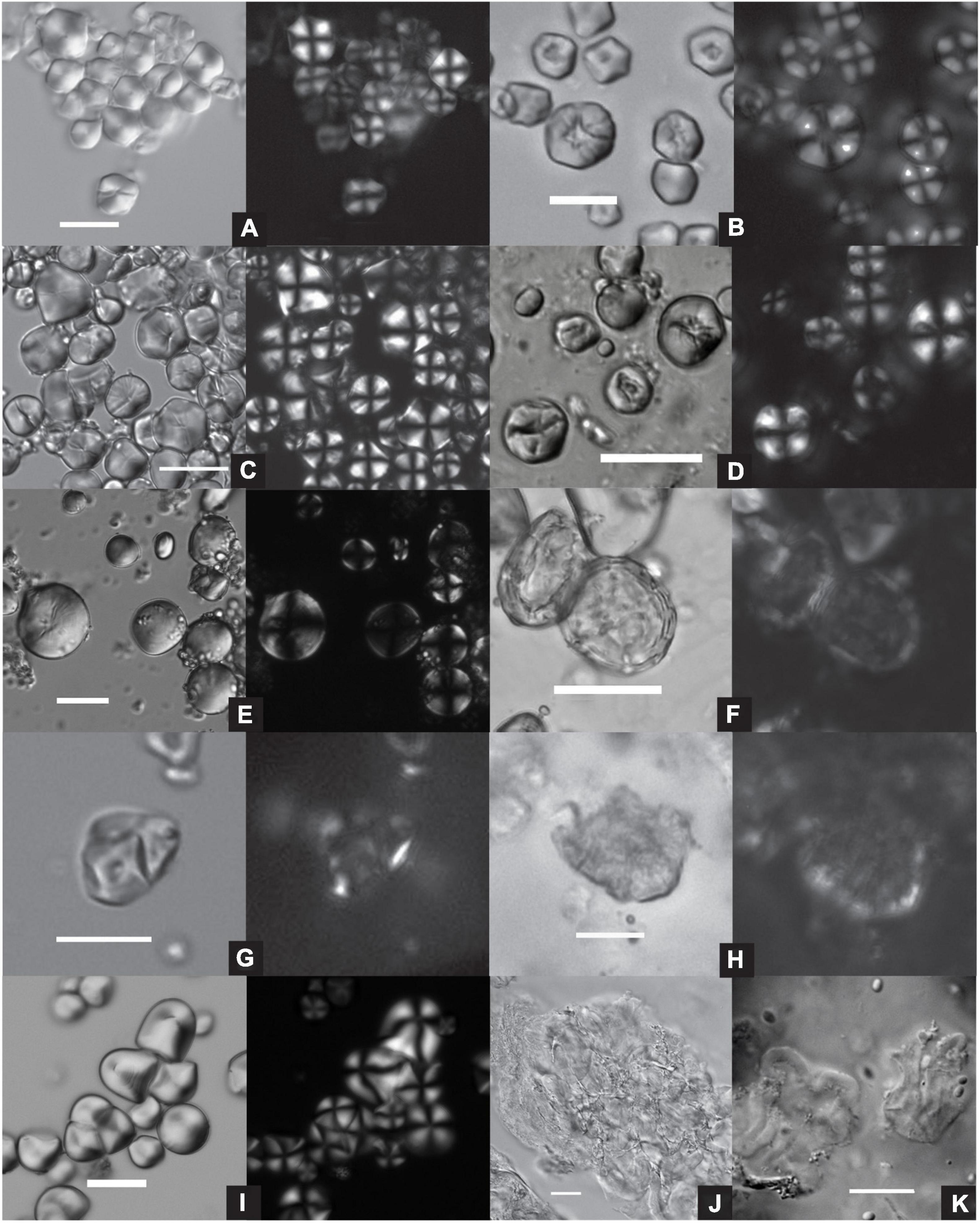
Figure 3. Modern starch reference examples related to this paper (each starch image is shown in DIC and polarized views). (A) Broomcorn millet Panicum miliaceum; (B) mashed broomcorn millet with deep fissures and concave center in bright field; (C) job’s tears Coix lacryma-jobi; (D) mashed Job’s tears with deep fissures and concave center in bright field; (E) barley Hordeum vulgare; (F) barley fermented for 40 days with concave center, deep fissures, and pits in bright field, and disappeared birefringence in polarized light; (G) rice Oryza sativa, fermented for 18 days, concave center in bright field and blurry birefringence in polarized light; (H) rice, fermented for 1 year, blurry granule edge in bright field, birefringence only shown at the edge in polarized light; (I) snake gourd root Trichosanthes kirilowii; (J) gelatinized barley, boiled for 3 min; (K) gelatinized starch granules from the modern-day millet beer, hunjiu, produced in Yulin, Shaanxi. (Scales, A,B,G,H: 10 μm; rest: 20 μm).
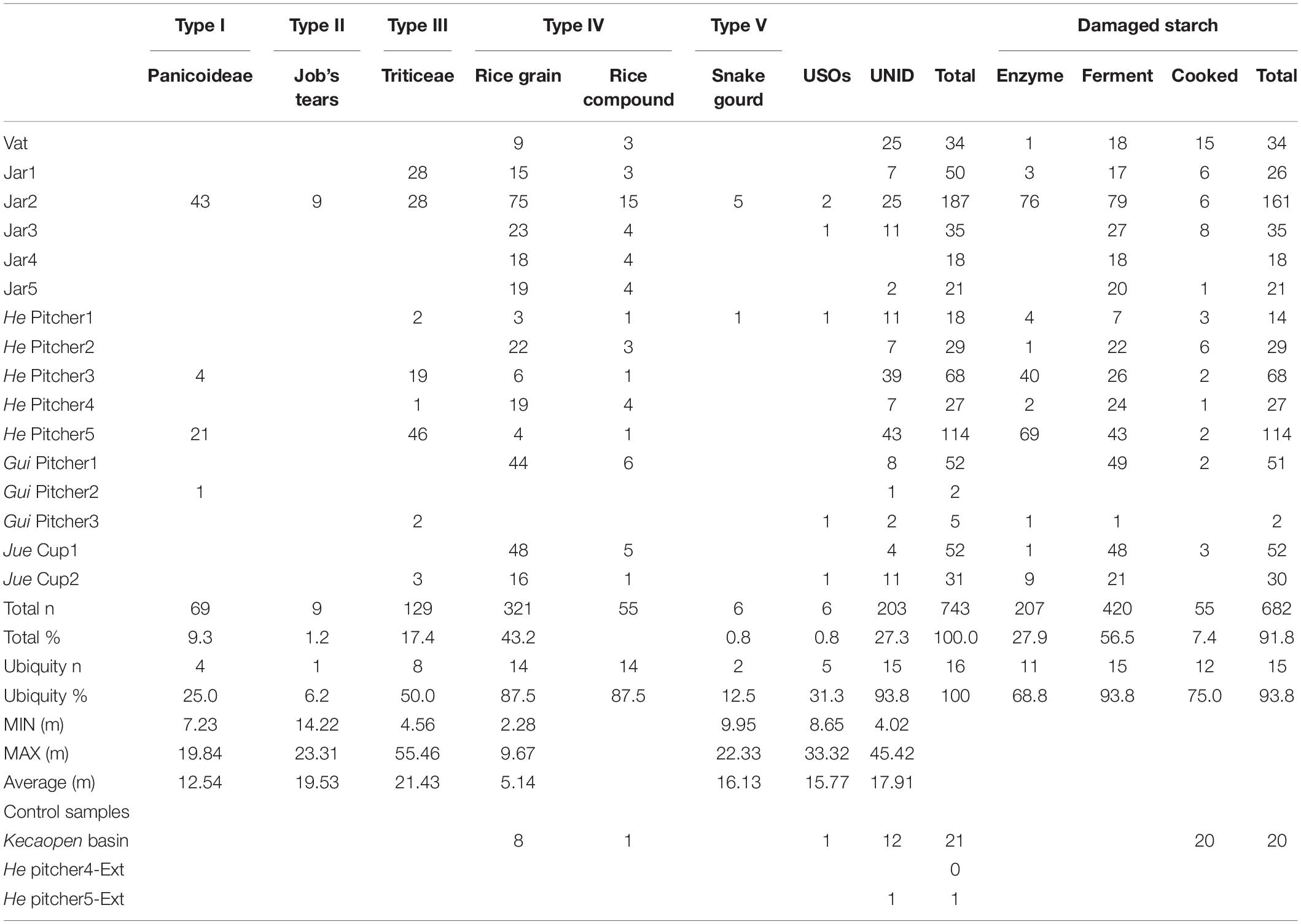
Table 2. Erlitou starch record.
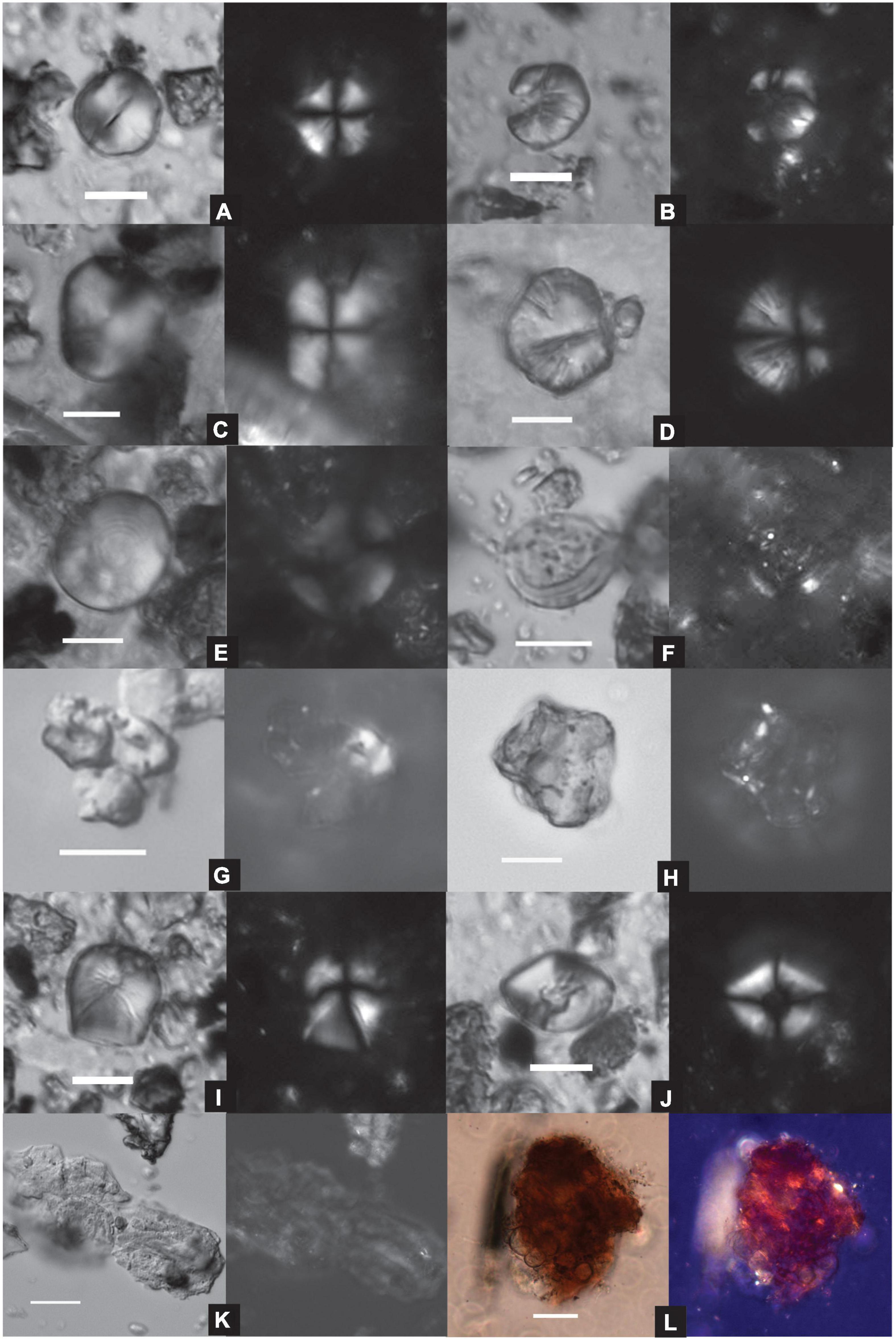
Figure 4. Ancient starch granules from Erlitou pottery vessels (each starch image is shown in DIC and polarized views). (A) Paniceae; (B) damaged Paniceae with edge partially missing and deep fissures; (C) job’s tears; (D) damaged Job’s tears with pitting and deep fissures in bright field; (E) damaged Triticeae, blurry birefringence in polarized light; (F) damaged Triticeae with pitting, deep fissures, and concave center in bright field, birefringence only shown at the edge in polarized light; (G) damaged rice cluster, concave center in bright field and disappeared birefringence in polarized light; (H) damaged rice cluster, partially gelatinized, some showing complete granule shapes; (I) damaged snake gourd root with pitting; (J) damaged snake gourd root with disappeared center and deep fissures; (K) unidentified gelatinized starch; (L) starch cluster, dyed with Congo red (Scales, A–J: 10 μm; K,L: 20 μm).
When we used Congo red to stain the residue samples, the gelatinized starch granules were easily identified, showing red color in bright-field microscopy and red or orange-yellow gloss under polarized light (Figure 4L). Smoke marks were observed on the external surface of the baggy foot of the he pitcher (Figure 2E). These marks, along with the gelatinized starch granules in the pitcher samples, indicate that the liquid foods inside the vessels were heated at a high temperature.
Type I starch, identified as Panicoideae, including foxtail millet (Setaria italica), broomcorn millet (Panicum miliaceum), and probably small granules from Job’s tears (Coix lacryma-jobi L.) (n = 69; 9.3% of the total), was found in four samples (25.0% ubiquity). Starch granules from these three species share some common characteristics, making it difficult to separate them precisely (Liu et al., 2014). The size range of Type I granules was 7.23–19.84 μm, and the shapes were polygonal or near circular. The hila were centric, and fissures were often observed. The damaged granules showed diagnostic features consistent with fermentation in our modern reference data (Figures 4A,B compared with Figures 3A,B).
Type II starch, identified as Job’s tears (C. lacryma-jobi L.) (n = 9; 1.2% of the total), was found in only one sample (Jar2; 6.2% ubiquity). These granules were polygonal in shape, and their size range was 14.22–23.31 μm. Their morphology differed from that of millets, but had certain characteristics consistent with Job’s tears, such as larger sizes, eccentric hila, and the extinction crosses with zig-zag arms (Liu et al., 2014; Figures 4C,D compared with Figures 3C,D).
Type III starch, identified as Triticeae (n = 129; 17.4% of the total), appeared in eight samples (50.0% ubiquity). The granules’ size range was 4.56–55.46 μm, shape was lenticular, and hila were centric. Type III starch granules were consistent with wheat or barley (Figures 4E,F compared with Figures 3E,F). However, due to damages caused by fermentation and gelatinization, some granules were larger than granules of native Triticeae starches from our modern reference data (size ranges: 6.31–35.49 μm for barley; 5.84–36.41 μm for wheat).
Type IV starch, identified as rice (Oryza sp.) and appearing in a compound form consisting of multiple small granules (2.28–9.67 μm), was found in 14 samples (87.5% ubiquity). We counted visible individual granules in order to calculate the percentage of Type IV starch present (n = 321 granules, 55 compounds; 43.2% of the total). Most individual granules were blurry without clear morphology. When the starch granules’ morphology was discernible, they were polygonal in shape. The birefringence of the granules was weak, without extinction crosses. These morphological features were consistent with fermented rice starch from our modern reference data (Figures 4G,H compared with Figures 3G,H). Rice starch granules are very small, and most of them lose their original integrity after fermentation, making it difficult to identify them. Even though some rice compounds are preserved, few granules exhibit a complete shape. Since our rice starch counts were based on the number of measurable granules, the recorded number of rice starch granules is likely to be far lower than the actual number. Despite these problems in preservation, rice starch had the most numerous counts and the highest ubiquity in the assemblage.
Type V starch, identified as the root of snake gourd Trichosanthes kirilowii of the Cucurbitaceae family (n = 6; 0.8% of the total), was found in two samples (ubiquity 12.5%). The size range was 9.95–22.33 μm. The granules’ forms included round, bell-shaped, and semi-circular. Their hila were centric or eccentric, and extinction crosses often had curved arms (Figures 4I,J comparable with Figure 3I). This plant is distributed widely in China (Wu et al., 2011b), and its root was traditionally used as famine food (Zhu, 1406) and as an ingredient for making medicinal alcohol (Li, 1981).
Only one starch granule was found in the two control samples from exteriors of he pitchers, confirming that the starches in the residues found on the interior walls of the pottery were not contaminated by the surrounding soil. In the control sample from the grooved basin, 21 starch granules were found, with a great majority (n = 20) showing characteristics of gelatinization caused by cooking (steaming or boiling) and unidentifiable taxonomically (Table 2). This basin may have been used for processing various foodstuffs, including cooked ones, thus serving as a non-alcohol related food vessel.
Phytoliths
A total of 754 phytoliths were recorded (Table 3). The morphotypes found were mainly associated with Poaceae. The most abundant morphotype, elongated psilate/sinuate in silica skeletons (Figure 5M) and in single cells from leaves and stems (n = 296; 39.7% of the total), was found in 15 samples (93.8% ubiquity). The second most numerous morphotype, double-peaked phytoliths from rice husks (n = 125; 16.7% of the total, Figure 5A), was found in seven samples (43.8% ubiquity). We also identified η-type phytoliths from broomcorn millet husk (n = 2; Figure 5N); a Paniceae husk type (n = 1); bilobates (n = 88; Figure 5E), polylobates (n = 2), and crosses (n = 30) likely from Panicoideae; and, in four samples, elongated dendriform phytoliths (n = 7; Figure 5I) that may have come from Triticeae (possibly wheat or barley) husks. Other morphotypes found include rondel (n = 16; Figure 5F), common bulliform (n = 30; Figure 5G), rice type bulliform (n = 4; Figure 5H), scooped parallel bilobate (n = 15; Figure 5D), and hair cell (n = 22; Figures 5J,K).
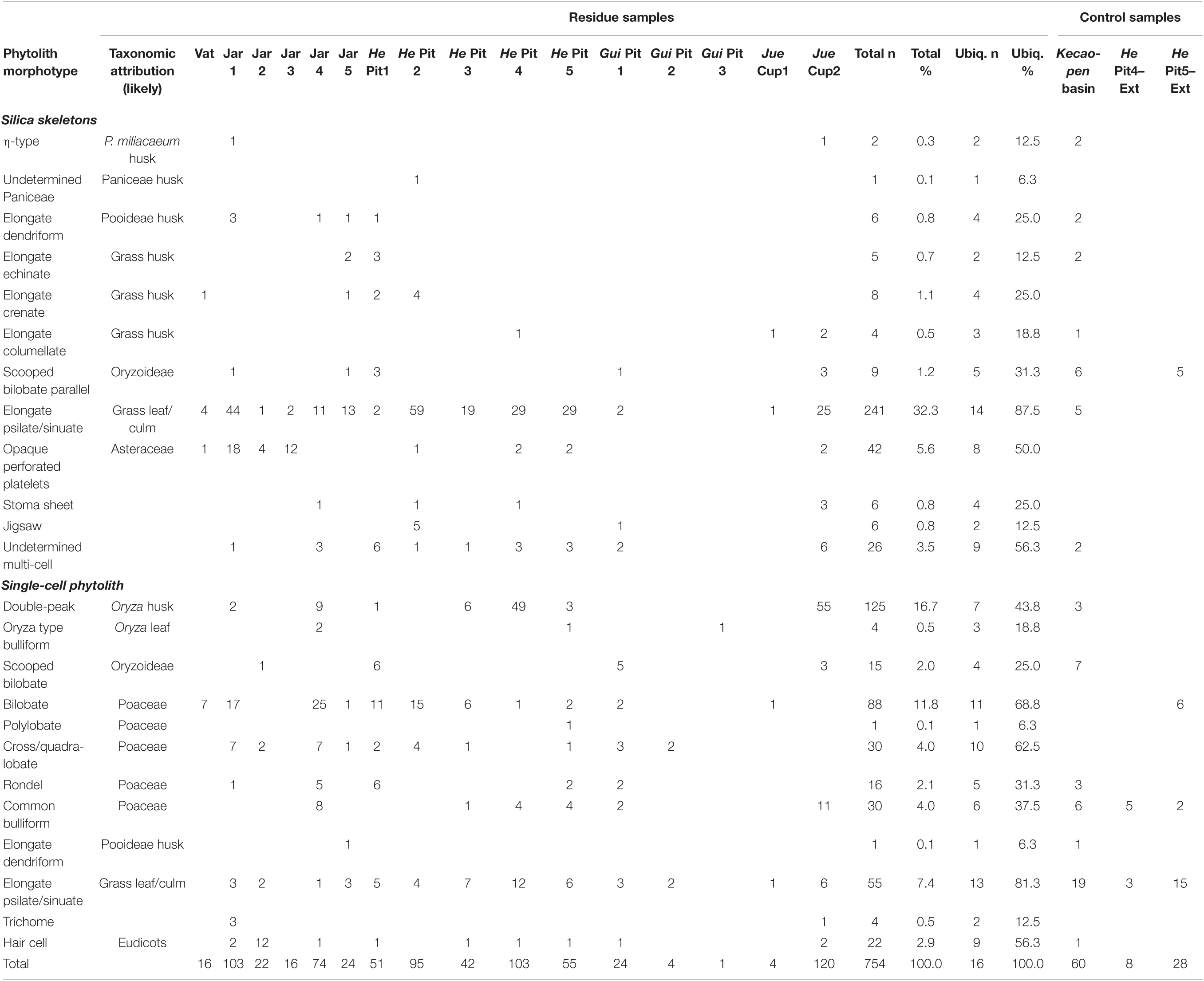
Table 3. Erlitou phytolith record.
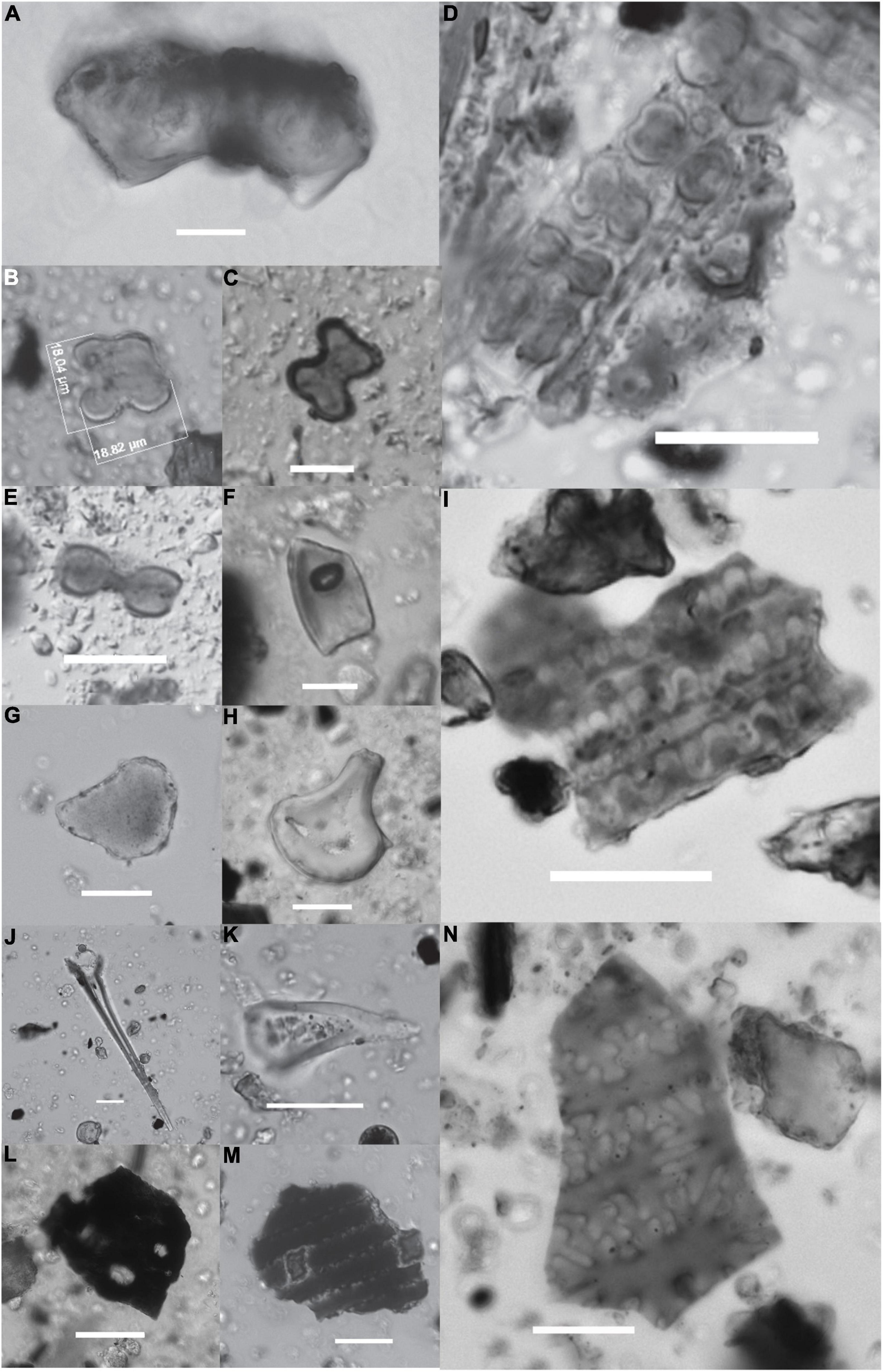
Figure 5. Phytolith remains from Erlitou pottery vessels. (A) Rice double-peak husk; (B) Job’s tears cross; (C) cross; (D) Oryzoideae scooped parallel bilobate; (E) bilobate; (F) rondel; (G) common bulliform; (H) rice bulliform; (I) dendriform husk, possibly Triticeae; (J,K) hair cell; (L) opaque perforated platelets; (M) burnt Elongate sinuate skeleton; (N) broomcorn millet η-type husk. (Scales, C,F: 10 μm; L: 50 μm; rest: 20 μm).
It has been reported that the glumes and leaves of Job’s tears produce great varieties of bilobate, polylobate, cross, and rondel phytoliths, with particularly abundant Variant-1 crosses (quadrilobate forms) in medium (11.5–15.97 μm), large (15.98–20.60 μm), and extra-large (≥20.61 μm) widths. In contrast, broomcorn millet and foxtail millet produce smaller Variant-1 crosses (<13 μm) (Duncan et al., 2019). In our samples, several crosses were classified as large-size and medium-size Variant-1 type; one was found in Jar2 (Figure 5B), in which we also identified Job’s tears starch granules. These correlated findings strongly support the existence of Job’s tears in this sample (Tables 2, 3). In addition, husk phytoliths from broomcorn millet, rice and Triticeae were identified in several samples, as were their corresponding starches, providing mutual confirmation of the existence of these cereals. Hair cells were primarily found in Jar2, as were snake gourd root starch granules. Since hair cells are often from eudicots, including Cucurbitaceae, those identified in our sample may be correlated with the snake gourd root starch granules identified (Tables 2, 3). However, the origins of hair cells remain uncertain as they have not yet been studied. One source may be snake gourd root, but more research is needed.
Opaque perforated platelet phytoliths (n = 42; Figure 5L) were discovered in eight samples (50.0% ubiquity), the majority of which were from Jar1 and Jar3. This type of phytolith exhibits regular or irregular perforations, and commonly exists in the inflorescences of daisies (Asteraceae) (Piperno, 2006:196). Asteraceae is a large family, with 18 genera and 1,145 species native to China (Wu et al., 2011a); therefore, we were unable to further identify the taxonomical origins of these phytoliths.
Abundant micro-charcoal fragments and blackened phytoliths were found in the residues from the body and foot of two he pitchers (3, 5) (Figure 5M), indicating that the vessels were in contact with fire. These findings are consistent with the presence of smoke marks on the outer wall of the foot of he Pitcher3 and with the large number of gelatinized starch granules in its residue sample, supporting the previous speculation that he pitchers were used to heat alcoholic beverages.
In the two control samples from the he pitchers, only small numbers of phytoliths from grass stems and leaves were found (n = 8, 28), and no phytoliths of millet husk and rice husk were present. The contrast between the phytolith findings in these two control samples and in the residue samples rules out the possibility of soil contamination. In the sample from the grooved basin, 60 phytoliths were recorded, including husks from broomcorn millet, rice, and Triticeae, along with other grass phytoliths (Table 3). These may be related to the various foodstuffs processed in this basin.
Fungi
Many fungal particles (n = 203), including molds (n = 177) and yeast cells (n = 26), were found in 15 samples (Table 4). The most numerous elements found were cleistothecia, which are consistent with genus Monascus molds (n = 102; 50.2% of the total; 86.7% ubiquity). Hyphae and mycelia (n = 52; 25.6% of the total) were found in 10 vessels (66.7% ubiquity); they were septate or aseptate, white or brown, and many were also consistent with Monascus molds (Figure 6).
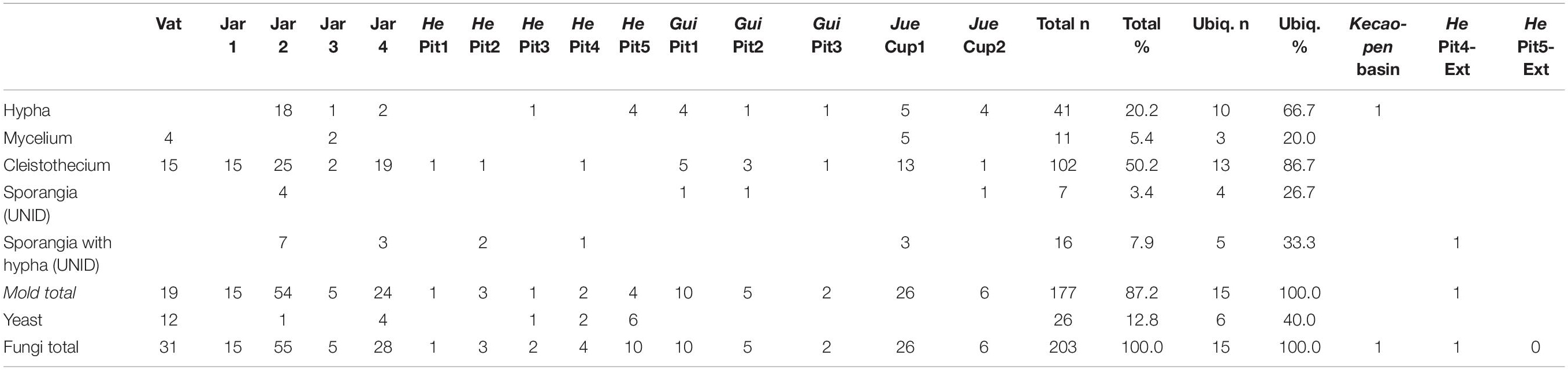
Table 4. Erlitou fungi record.
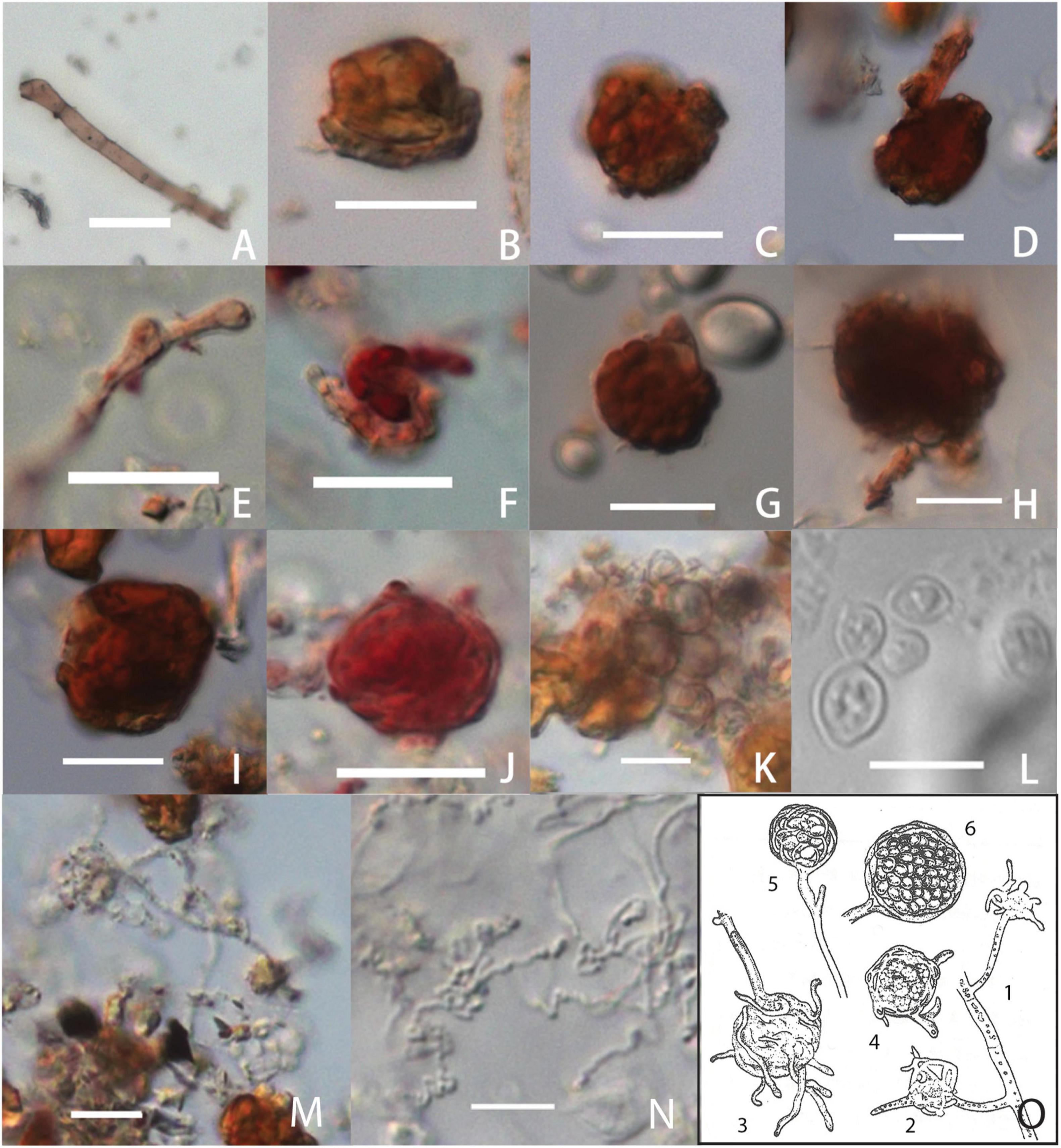
Figure 6. Fungi from Erlitou pottery vessels (A–D,I,K,M) compared to modern reference (E–H,J,L,N,O). Erlitou fungi: (A) Septate hyphae, with protruding part on the left, an indication of reproduction; (B) Monascus cleistothecium; (C) Monascus cleistothecium with ascospores; (D) Monascus cleistothecium connected to hyphae; (I) Monascus cleistothecium with clear peridial wall cell, asci, and ascospores; (K) clustered yeast cells; (M) mycelia. Modern fungi: (E) Hyphae, with protruding part on the right, an indication of reproduction; (F) hyphae surrounding the Monascus ascogonium, in the formation process of cleistothecium; (G) Monascus cleistothecium with ascospores; (H) Monascus cleistothecium connected to hyphae; (J) Monascus cleistothecium with clear peridial wall, asci, and ascospores; (L) S. cerevisiae yeast cells; (N) Monascus mycelia; (O) Monascus in various development states (1–3: Ascogenous cleistothecia; 4.5: Immature cleistothecia; 6: Mature cleistothecium; after Bao and Zhou, 2007; Figures 4–6) (Scales, K–N: 10 μm; rest: 20 μm).
Monascus is characterized by a cleistothecium, which consists of curved ascogenous hyphae enclosing asci that contain ascospores. The cleistothecium is spherical or oval (25–75 μm) in shape, and normally orange or red in color. Hyphae are branched and septate and ascospores are spherical (ca. 5 μm in diameter) or ovoid (6 × 5 μm). The mycelium is white during the early stages of development, but rapidly changes to orange and later to red or crimson (Young, 1931; Manan et al., 2017). The genus Monascus is divided into more than a dozen species, which are mainly found in oriental food. This fungus produces a bright red pigment, and has been used as a fermentation starter, a food pigment, and in traditional Chinese medicine. Monascus purpureus is known to have been used to make the red rice qu starter for brewing traditional rice-based red beer (Huang, 2000, p. 192–203; Bao and Zhou, 2007, p. 166–169). The morphology of the cleistothecia found in the Erlitou vessels match very well that of Monascus sp. in our reference sample (Figures 6A–D,I,M compared with Figures 6E–H,J,N) and in published information (Bao and Zhou, 2007, p. 166–169).
Yeast cells (n = 26) were found in six vessels. They were round or oval and measured 4.66–9.83 μm in size with an average of 6.76 μm. Some cells in the vat were clustered, and some appeared to be in the process of budding, characterized by one or more small protuberances on the parent cell, or by a smaller cell attached to a bigger parent cell. Their morphology is similar to that of Saccharomyces cerevisiae, which is the most commonly used yeast for alcohol fermentation (Boulton and Quain, 2001). However, we were unable to identify their taxonomy based on morphology alone in this study (Figure 6K compared with Figure 6L).
The presence of Monascus molds and yeast cells provide strong evidence that these vessels were used for alcohol fermentation and drinking. Monascus appears to have been the mold type primarily used as the fermentation agent. Jar5 had no fungal remains, suggesting that its function was different from that of other vessels.
Only two fungal elements were recovered from the three control samples. This observation is in clear contrast to the residues in the alcohol-related vessels, indicating that the abundant fungal remains in the residues were associated with alcohol production and consumption as their original function.
Discussion
Based on the above analyses of various microbotanical and microbial remains in the residues, we observed the following phenomena.
(1) Fermentation method: The two most common methods of brewing cereal-based alcoholic beverages in China include the use of malts and the use of qu starter as saccharification agents (Ling, 1958). According to previous studies, if malts were used there may be husks left in the fermentation liquid, so there may be many husk phytoliths in the residues of fermentation vessels. If qu starter was used, there may be fermentation-related molds in the residues (Wang et al., 2016; Liu et al., 2019; Liu, 2021). Monascus has traditionally been used for brewing rice-based fermented beverages in China (Bao and Zhou, 2007, p.166–169). We found mold components in 15 out of 16 vessels, among which cleistothecia and hyphae of Monascus were the most common elements. The co-existence of rice starches and phytoliths with Monascus components in our samples suggests that the brewing method at Erlitou likely used qu starter with Monascus molds and rice as the fermentation agent.
The fermented beverages made by Monascus molds and rice are red, and are called hongqujiu, red mold beer. In modern times, red beer is mainly produced in Zhejiang and Fujian provinces in southern China. It is generally believed that this brewing method originated in the lower Yangtze River region and later dispersed to other regions (Bao and Zhou, 2007, p. 104–110). According to the published archeological data currently available, the history of using Monascus molds as starter for brewing beer in the Yellow River Basin can be traced back at least to the middle phase of the Yangshao culture, such as the Xipo site in Lingbao and the Dingcun site in Mianchi, all in Henan Province, dating to ca. 6,000–5,100 years ago (Feng et al., 2021; Liu et al., 2021a). Thus, the alcohol-making method at Erlitou apparently inherited the fermentation tradition that had already existed for thousands of years in the Central Plains.
It is also interesting to note that some wide-orifice vats and narrow-orifice jars both were likely related to the brewing process, given that residues from such vessels tested in this study contained abundant Monascus mold components and yeast cells. These vessels are most likely to have facilitated the semi-solid-state fermentation (semi-SSF) process, during which vats were used for primary fermentation, and jars for secondary fermentation and storage. This brewing technique is still practiced in southern China today (Bao and Zhou, 2007, p. 155–260).
The semi-SSF method is different from the earlier liquid-state fermentation technique, which used globular jars and jiandiping amphorae as fermenters during the early and middle Neolithic periods (Liu et al., 2019; Liu, 2021). The Erlitou brewing method appears to be consistent with the brewing tradition that uses Dakougang wide-orifice vats as the fermenter for making hongqujiu red beer, which may have originated in the Lower Yangzi River valley and spread to northern China. This hypothesis is based on the evidence that Monascus molds and rice starches have been found in the residues from wide-orifice vats at Xipo in Henan (Feng et al., 2021) and a Dawenkou culture site at Yuchisi in Anhui (Liu et al., under review1).
(2) Rice for beer brewing: Rice starch and rice husk phytoliths were found in 14 vessels, accounting for 87.5% in ubiquity, indicating that rice was the basic raw material for alcohol making. The microfossil analysis of the floors from a large public building and associated ceramic vessels of the Yangshao culture at the Huizui site, about 15 km east of Erlitou, showed that rice was one of the ingredients for alcohol making (Liu et al., 2018). Therefore, using rice to make alcohol may have been a local tradition.
In the Yiluo region, where Erlitou is located, rice has never been a major crop. Prior studies have identified limited remains of carbonized rice grains in only a few locations at late Yangshao, late Longshan, and Erlitou culture sites. In the flotation samples from 15 sites contemporary with Erlitou in the Yiluo region, only 19 rice grains have been recovered from five sites (Lee et al., 2019). In contrast, flotation samples from the Erlitou site have revealed abundant rice, totaling 5,687 grains, and accounting for 23.9% of the total unearthed plant seeds and 30.8% of the total unearthed crop seeds, second only to millet (11,059 grains) (Institute of Archaeology CASS, 2014). Such a clear discrepancy between Erlitou and other sites in the quantity of rice remains raises a question about the sources of rice. It is unlikely that the large amount of rice unearthed in the central area of Erlitou was produced by Erlitou urban residents themselves; thus, rice may have been a tributary item obtained from small and medium-sized settlements that mainly engaged in agricultural production in the Yiluo region and beyond.
(3) Wheat for beer brewing: Triticeae starches and/or dendriform phytoliths (from husk of Pooideae, possibly Triticeae) were found in ten vessels, accounting for 62.5% in ubiquity. They may come from wild Triticeae grasses or domesticated wheat/barley. Wild Triticeae seeds or domesticated barley were not found in flotation samples from sites dating to Erlitou period in the Yiluo basin (Institute of Archaeology CASS, 2014; Lee et al., 2019), so it is reasonable to rule out these two taxa as possible origins of these microfossil remains. Wheat was introduced to the Central Plains from West Asia through Central Asia in the late Neolithic times, around the third millennium BC (Liu et al., 2017). In the Yiluo region, carbonized wheat seeds dating to the Erlitou period have been uncovered from flotation samples, but in very small quantity. Only three wheat grains were found in Phase IV deposits at the Erlitou site, while four wheat grains were unearthed from two other Erlitou culture sites, suggesting that wheat may have been cultivated locally in limited quantities (Institute of Archaeology CASS, 2014; Lee et al., 2019). Therefore, it is likely that the Triticeae starches and dendriform phytoliths in the vessels were from wheat, which may have been produced locally in the Yiluo region and/or was obtained from places farther away. We speculate that in this early stage of the introduction of wheat to the Yiluo region, its function may have been special, perhaps primarily related to alcohol making.
(4) Millet and Job’s tears for beer brewing: Residues containing millet starches and husk phytoliths appeared in six vessels, with two husk phytoliths identifiable as broomcorn millet, together accounting for only 37.5% in ubiquity. In contrast, the abundance of millets found in flotation samples from the Erlitou site show that millets were the main crops, of which foxtail millet accounts for 60.0% of unearthed crop seeds, and broomcorn millet accounts for 8.3%. According to previous studies, the raw materials for alcohol-brewing in the Yellow River region during the Neolithic period were primarily broomcorn millet, rice and Triticeae (Liu et al., 2019; He et al., 2021; Liu, 2021). Therefore, we speculate that broomcorn millet may have also been one of the main ingredients in alcohol-making at Erlitou, although it was used less frequently than were rice and wheat.
(5) Job’s tears and snake gourd roots for beer brewing: The use of Job’s tears, snake gourd root, and other tubers for alcohol production can be traced back to the early and middle Neolithic periods (Liu et al., 2019; Liu, 2021). We found very low quantities of these in this study: Job’s tears starches and phytoliths (large Variant 1 type) were found in only one vessel, and snake gourd root starches in two vessels. These observations suggest that these traditional alcohol-making ingredients were still in use, but infrequently, at Erlitou.
(6) The relationship between starch and phytolith remains: In several cases, starch granules and phytoliths from rice, wheat, millet, and Job’s tears coexisted in the same vessels, increasing the reliability of taxonomical identification. However, there were far greater numbers of starch granules identifiable as rice, wheat, millet, and Job’s tears (n = 321, 129, 25, 9, respectively) than there were husk phytoliths from the corresponding plants (n = 125, 7, 2, 1, respectively). This observation suggests that rice, wheat, millet, and Job’s tears were probably hulled before entering these vessels, and that the existence of small amounts of husk phytolith is likely the result of insufficient hulling, rather than a result of using germinated cereals as saccharifying agents. This, along with the abundant Monascus mold elements found in the residues, indicate that qu starter was used for alcohol fermentation.
(7) Use of herbal qu starter: Most vessels revealed many phytoliths from stems and leaves (e.g., elongated psilate/sinuate morphotype), which cannot be used for taxonomical identification. Some of them may come from herbs related to making qu, commonly referred to as caoqu, or herbal qu starter. Molds and yeasts naturally attach to the stems and leaves of some plants, and the traditions of making qu by adding stems, leaves, and seeds of various wild plants can be found today in the Yangzi River valley and among the indigenous peoples in Taiwan (Ling, 1958; Yu, 2003). At present, we cannot further identify these phytoliths in our samples.
(8) Alcohol-brewing ingredients and luxury foods: When further comparing the plant types in different vessels, we can see that Jar2 has the most diverse ingredients, including rice, millet, Job’s tears, Triticeae and snake gourd root, while other vessels revealed mainly rice, Triticeae and millet. The starch types with highest counts and ubiquity were from rice (321, 87.5%) and from Triticeae (129, 50.0%), suggesting that rice and Triticeae (likely wheat, as discussed above) were the most common basic raw materials, while other plants were used much less frequently (Figure 7). In the Yiluo region, which is part of the Loess Plateau suitable for dryland farming, millets were the major cultivars in subsistence economies, while rice and wheat were minor crops (Lee et al., 2019). It is possible that rice and wheat were produced mainly for alcohol production, given that rice has been essential for making qu starter with Monascus mold and also used as the main ingredient for brewing red rice beer (Bao and Zhou, 2007), and wheat has also been a traditionally preferred cereal for making qu starter (Jin et al., 2017). The importance of rice and wheat in alcohol production suggests that they were especially needed for feasting activities of the Erlitou elites. Such characteristics, i.e., being in high demand by elites but not widely available to commoners, are typical traits of luxury foods (Veen, 2003).
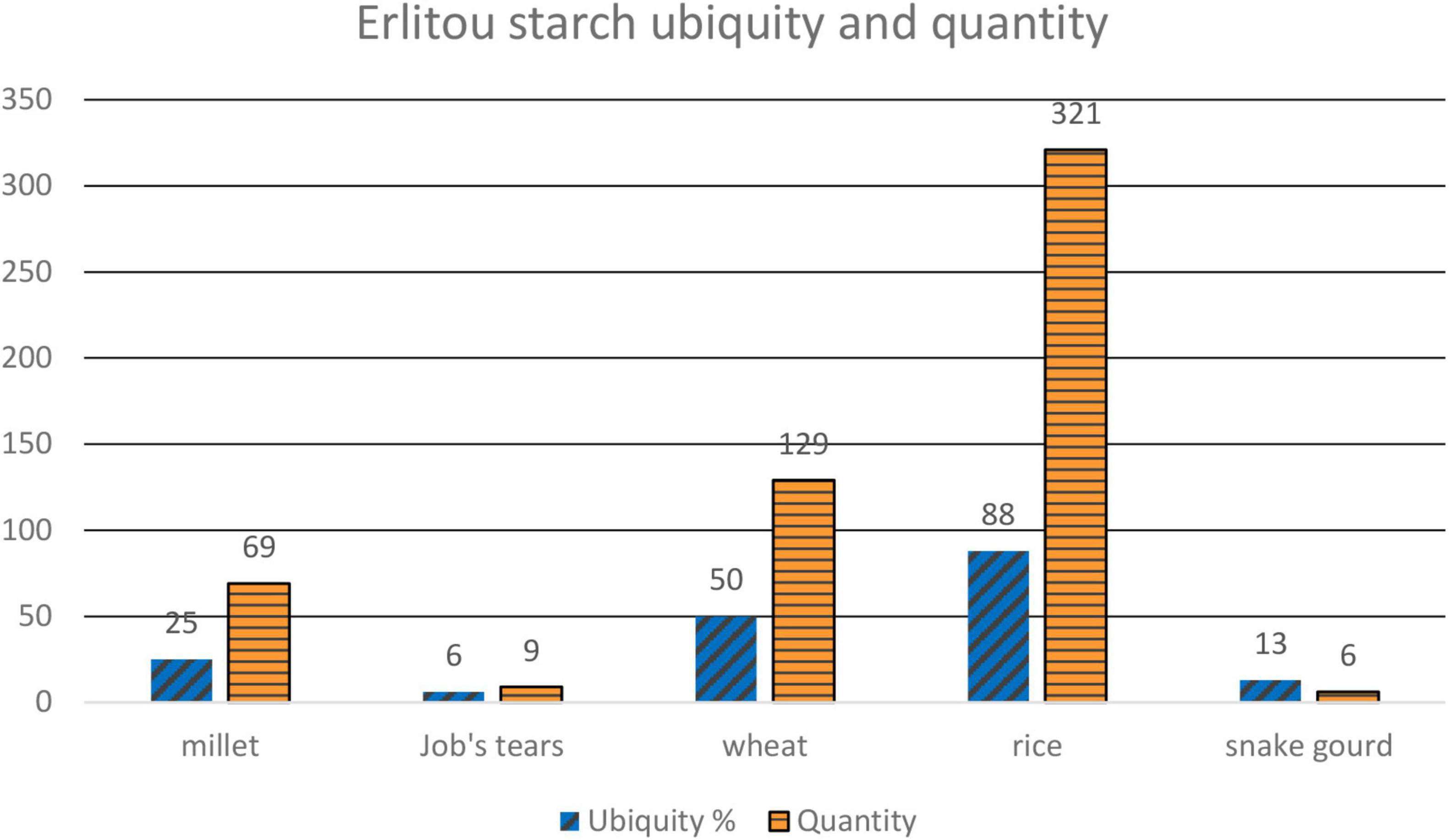
Figure 7. Comparison of starch ubiquity (%) and quantity among alcohol-brewing ingredients at Erlitou.
(9) Drinking practice and social relations in transition: Compared to the alcohol production and consumption in the previous Neolithic period, several changes in raw materials of fermentation, in drinking vessels, and in consumption practices appeared during the Erlitou period. First, using multiple grains and tubers/roots to make alcoholic beverages was a long-lasting tradition during the Neolithic times in the Yellow River region. Based on the analysis of the jiandiping amphorae of the Yangshao culture, brewing ingredients included mainly broomcorn millet, together with rice, Job’s tears, Triticeae, snake gourd root, yam, and lily, among others (Liu, 2021). This Neolithic tradition, using mostly staple foods for alcohol making, was gradually replaced by methods that used only grains as brewing ingredients in the historical period (Bao and Zhou, 2007). This transition may have taken place in the Erlitou culture, when rice and wheat became primary ingredients, while millet and roots/tubers declined in use. If rice and wheat, being luxury foods, were obtained by Erlitou elites from tribute goods, the ability to make alcoholic beverages with such food items would have demonstrated their prestige, wealth, and power. Second, during the Neolithic Yangshao culture, jiandiping amphorae used for both production and consumption of alcoholic beverages were ordinary vessels, frequently found in all archeological contexts. Communal drinking through reed straws may have been a common practice in feasting activities which took place in public buildings or central plazas in settlements. Such a feasting tradition apparently emphasized group solidarity and social inclusion (Liu, 2021). In contrast, the alcohol-related pottery assemblage at Erlitou is composed of specialized vessel forms used for brewing, storing, serving (heating and pouring), and drinking, suggesting more elaborated procedures involved in feasting activities. Serving and drinking vessels made of white clay were likely also luxury items, which have been found mainly in the walled palatial areas and elite burials. These changes indicate that the feasting activities may have been socially exclusive in nature. Considered together, serving luxury drinks with prestige utensils in socially exclusive spaces may have become the focus of ritual feasting held by the Erlitou elites, which also emphasized social status, wealth, and power. These changes in drinking materiality and social values occurred in the late Neolithic Longshan culture (Underhill, 2018), and became more formalized and perhaps institutionalized at Erlitou, coinciding with greater social differentiation and heightened elite power at the time of early state formation.
Conclusion
Based on multiple lines of evidence from microfossil analyses in this preliminary study of Erlitou pottery vessels, we can tentatively reconstruct the processes of alcohol production and consumption at Erlitou, the first Bronze Age urban center in north China. Various ceramic vessels were involved in these processes. Dakouzun wide-orifice vats were used for fermentation, likely in semi-solid-state fermentation conditions; zun narrow-orifice jars for storage of the beverages; gui and he pitchers for heating and pouring; and jue cups for drinking. The brewing method likely first prepared qu starter with Monascus mold, also added herbs to aid fermentation. The brewing ingredients may have included primarily rice and wheat, sometimes mixed with broomcorn millet, Job’s tears and roots of snake gourd. Rice and wheat may have been partially received as tributes from the surrounding settlements in the Yiluo region and beyond.
The use of precious white clay to produce alcohol-related serving and drinking vessels also indicates that alcohol consumption was a high-ranking elite activity. Such feasting events involving fermented beverages, held in palaces and associated with elite burial rituals, coincided with the growth of elite power and social stratification at Erlitou. Alcohol apparently played a significant role in the emergence of the first Bronze Age state in China, a research topic which has not yet been explored adequately. This study opens a new window for further investigation of alcohol-related material remains and social activities, as well as their relation to state formation in prehistoric China.
Data Availability Statement
The raw data supporting the conclusions of this article will be made available by the authors, without undue reservation.
Author Contributions
LL conceptualized and designed the study. LL and YH analyzed samples and wrote the manuscript. HZ and HX excavated the site and provided the materials and data. All authors contributed to the article and approved the submitted version.
Funding
This Project was supported by the Min Kwaan Chinese Archaeology Program in Stanford Archaeological Center, Stanford University.
Conflict of Interest
The authors declare that the research was conducted in the absence of any commercial or financial relationships that could be construed as a potential conflict of interest.
Publisher’s Note
All claims expressed in this article are solely those of the authors and do not necessarily represent those of their affiliated organizations, or those of the publisher, the editors and the reviewers. Any product that may be evaluated in this article, or claim that may be made by its manufacturer, is not guaranteed or endorsed by the publisher.
Acknowledgments
We would like to thank the following individuals: Zhenxiang Wang and other archeologists in the Institute of Archaeology, Chinese Academy of Social Sciences, assisted with the sample collection process. Jianping Zhang helped with some phytolith identifications. Victoria Bartlett and Thomas Bartlett edited the English of this manuscript. Xianglong Chen and two reviewers provided constrictive comments.
Footnotes
- ^ Liu, L., Wang, J., Chen, X., and Liang, Z. (under review). The quest for red rice beer: transregional interactions and development of competitive feasting in Neolithic China. Archaeol. Anthropol. Sci.
References
Dietler, M., and Hayden, B. (eds) (2001). Feasts: Archaeological and Ethnographic Perspectives on Food, Politics, and Power. Washington: Smithsonian Institution Press.
Du, J. (1990). Tao jue: Zhongguo gudai jiuqi yanjiu zhiyi (Pottery jue pitcher: study of ancient drinking vessels in China). Kaogu 6, 519–530.
Du, J. (1992). Fengdinghe yanjiu (On the fengdinghe vessels). Kaogu Xuebao 1, 1–33. doi: 10.1163/24684791-12340011
Duncan, N. A., Starbuck, J., and Liu, L. (2019). A Method to identify cross-shaped phytoliths of job’s tears, Coix lacryma-jobi L., in Northern China. J. Archaeol. Sci. Rep. 24, 16–23. doi: 10.1016/j.jasrep.2018.12.010
Feng, S., Liu, L., Wang, J., Levin, M. J., Li, X., and Ma, X. (2021). Red beer consumption and elite utensils: the emergence of competitive feasting in the Yangshao culture, North China. J. Anthropol. Archaeol. 64:101365. doi: 10.1016/j.jaa.2021.101365
Gao, G., and Shao, W. (1981). Shiqian tao gui chulun (On the pottery gui vessels in prehistory). Kaogu Xuebao 4, 427–457.
Hayden, B. (2014). The Power of Feasts: From Prehistory to the Present. Cambridge: Cambridge University Press.
He, Y., Liu, L., Sun, Z., Shao, J., and Di, N. (2021). “Proposing a toast” from the first urban center in the north Loess Plateau, China: alcoholic beverages at Shimao. J. Anthropol. Archaeol. 64:101352. doi: 10.1016/j.jaa.2021.101352
Henry, A. G., Hudson, H. F., and Piperno, D. R. (2009). Changes in starch grain morphologies from cooking. J. Archaeol. Sci. 36, 915–922. doi: 10.1016/j.jas.2008.11.008
Huang, H. T. (2000). Science and Civilisation in China: Vol 6, Biology and Biological Technology, Part V: Fermentations and Food Science. Cambridge: Cambridge University Press.
Jin, G., Zhu, Y., and Xu, Y. (2017). Mystery behind Chinese liquor fermentation. Trends Food Sci. Technol. 63, 18–28. doi: 10.3389/fmicb.2019.00696
Lamb, J., and Loy, T. (2005). Seeing red: the use of Congo Red dye to identify cooked and damaged starch grains in archaeological residues. J. Archaeol. Sci. 32, 1433–1440. doi: 10.1016/j.jas.2005.03.020
Lee, G.-A., Crawford, G. W., Walsh, R. C., Kim, H., Kneisly, A., Lee, H., et al. (2019). “Archaeobotanical analysis on sites surveyed in the Yiluo region (1998-2011),” in Luoyang Pendi Zhong Dong Bu Diqu Xian-Qin Shiqi Yizhi Diaocha Baogao (Survey Report of Pre-Qin Sites in East-central Luoyang Basin), eds Institute of Archaeology CASS and Sino-Australian Yiluo Region Archaeology Team (Beijing: Kexue Press), 204–228.
Li, B.-P., Liu, L., Chen, X.-C., Zhao, J.-X., Drennan, J., Greig, A., et al. (2010). Chemical comparison of rare Chinese white pottery from four sites of the Erlitou state: results and archaeometrical implications. Archaeometry 52, 760–776. doi: 10.1111/j.1475-4754.2009.00510.x
Li, S. (1981). Bencao Gangmu (Materia Medica, Arranged According to Drug Descriptions and Technical Aspects). Beijing: Public Health Press.
Ling, C. (1958). Zhongguo jiu zhi qiyuan (The origins of alcohol in China). Bull. Inst. Hist. Philol. 29, 883–901.
Liu, L. (2003). “The products of minds as well as of hands”: production of prestige goods in the Neolithic and early state periods of China. Asian Perspect. 42, 1–40. doi: 10.1353/asi.2003.0025
Liu, L. (2017). Zaoqi taoqi, zhuzhou, niangjiu yu shehui fuzahua de fazhan (Early pottery, porridge, and development of social complexity). Zhongyuan Wenwu 2, 24–34.
Liu, L. (2021). Communal drinking rituals and social formations in the Yellow River valley of Neolithic China. J. Anthropol. Archaeol. 63:101310. doi: 10.1016/j.jaa.2021.101310
Liu, L., and Chen, X. (2012). The Archaeology of China: From the Late Palaeolithic to the Early Bronze Age. Cambridge: Cambridge University Press.
Liu, L., Ma, S., and Cui, J. (2014). Identification of starch granules using a two-step identification method. J. Archaeol. Sci. 52, 421–427. doi: 10.1016/j.jas.2014.09.008
Liu, L., Wang, J., Chen, X., and Liang, Z. (2021b). Shandong Dawenkou wenhua jiuqi chutan (Investigation of alcohol-related vessels of the Dawenkou culture in Shandong). Huaxia Kaogu 1, 49–61.
Liu, L., Li, Y., and Hou, J. (2021a). Mianchi Dingcun yizhi Yangshao wenhua de qujiu he guyajiu (Alcoholic beverages made of qu and mults discovered at the Yangshao culture site of Dingcun in Mianchi). Zhongyuan Wenwu 5, 75–85.
Liu, L., Wang, J., Chen, X., Li, Y., and Zhao, H. (2018). Yangshao wenhua dafangzi yu yanyin chuantong: Henan Yanshi Huizui yizhi F1 dimian he taoqi canliuwu fenxi (Large houses and feasting tradition of the Yangshao Culture: Starch and phytolith analyses of the residues from pottery vessels and floors of House No.1 at Huizui in Yanshi, Henan). Zhongyuan Wenwu 1, 32–43.
Liu, L., Wang, J., Levin, M. J., Sinnott-Armstrong, N., Zhao, H., Zhao, Y., et al. (2019). The origins of specialized pottery and diverse alcohol fermentation techniques in Early Neolithic China. Proc. Natl. Acad. Sci. U. S. A. 116, 12767–12774. doi: 10.1073/pnas.1902668116
Liu, X., Lister, D. L., Zhao, Z., and Petrie, C. A. (2017). Journey to the east: diverse routes and variable flowering times for wheat and barley en route to prehistoric China. PLoS One 12:e0209518. doi: 10.1371/journal.pone.0209518
Lu, H., Zhang, J., Wu, N., Liu, K.-B., Xu, D., and Li, Q. (2009). Phytolith analysis for the discrimination of Foxtail millet (Setaria italica) and Common millet (Panicum miliaceum). PLoS One 4:e4448. doi: 10.1371/journal.pone.0004448
Manan, M. A., Mohamad, R., and Ariff, A. (2017). The morphology and structure of red pigment producing fungus: Monascus purpureus. J. Microbiol. Exp. 5:00138.
McGovern, P. E., Underhill, A., Fang, H., Luan, F., Hall, G., Yu, H., et al. (2005). Chemical identification and cultural implications of a mixed fermented beverage from late prehistoric China. Asian Perspect. 44, 249–275. doi: 10.1353/asi.2005.0026
McGovern, P. E., Zhang, J., Tang, J., Zhang, Z., Hall, G. R., Moreau, R. A., et al. (2004). Fermented beverages of pre- and proto-historic China. Proc. Natl. Acad. Sci. U. S. A. 101, 17593–17598. doi: 10.1073/pnas.0407921102
Piperno, D. R. (2006). Phytoliths: A Comprehensive Guide for Archaeologists and Paeoecologists. Lanham: Altamira Press.
Reinhart, K. (2020). Analysis of grooved ceramic vessels from the early Chinese Bronze Age site of Yanshi Shangcheng: preliminary evidence of food preparation methods through starch analysis. J. Archaeol. Sci. Rep. 29:101852. doi: 10.1016/j.jasrep.2019.05.017
St-Germain, G., and Summerbell, R. (2011). Identifying Fungi: A Clinical Laboratory Handbook. Belmont: Star Publishing Company.
Sun, Q., Shuo, Z., Wu, Y., and Yang, Y. (2019). Anhui Hanshan Lingjiatan yizhi chutu kecaopen de dianfenli fenxi (Anaysis of starch granules on grooved basins from the Lingjiatan site in Hanshan, Anhui). Acta Anthropol. Sin. 38, 132–147. doi: 10.16359/j.cnki.cn11-1963/q.2018.0036
Underhill, A. P. (2018). Urbanization and new social contexts for consumption of food and drink in northern China. Archaeol. Res. Asia 14, 7–19. doi: 10.1016/j.ara.2017.07.004
Veen, M. V. D. (2003). When is food a luxury? World Archaeol. 34, 405–427. doi: 10.1080/0043824021000026422
Wang, J., Jiang, L., and Sun, H. (2021). Early evidence for beer drinking in a 9000-year-old platform mound in southern China. PLoS One 16:e0255833. doi: 10.1371/journal.pone.0255833
Wang, J., Liu, L., Ball, T., Yu, L., Li, Y., and Xing, F. (2016). Revealing a 5,000-y-old beer recipe in China. Proc. Natl. Acad. Sci. U. S. A. 113, 6444–6448. doi: 10.1073/pnas.1601465113
Wang, J., Liu, L., Georgescu, A., Le, V. V., Ota, M. H., Tang, S., et al. (2017). Identifying ancient beer brewing through starch analysis: a methodology. J. Archaeol. Sci. Rep. 15, 150–160. doi: 10.1016/j.jasrep.2017.07.016
Wu, Z. Y., Raven, P. H., and Hong, D. Y. (eds) (2011b). Flora of China Vol. 19 (Cucurbitaceae through Valerianaceae, with Annonaceae and Berberidaceae). Beijing: Science Press.
Wu, Z. Y., Raven, P. H., and Hong, D. Y. (eds) (2011a). Flora of China Volume 20-21 (Asteraceae). Beijing: Science Press.
Young, E. M. (1931). The morphology and cytology of Monascus ruber. Am. J. Bot. 18, 499–517. doi: 10.1002/j.1537-2197.1931.tb09606.x
Yu, W. (2003). Niangzao Jiangnan mijiu de caoqu (The herb-starter for making rice wine in southern China). Dongfang Meishi Xueshuban 4, 75–80.
Keywords: starch granules, phytoliths, Monascus mold, yeast, qu starter, rice, wheat, white pottery
Citation: He Y, Zhao H, Liu L and Xu H (2022) Brewing and Serving Alcoholic Beverages to Erlitou Elites of Prehistoric China: Residue Analysis of Ceramic Vessels. Front. Ecol. Evol. 10:845065. doi: 10.3389/fevo.2022.845065
Received: 29 December 2021; Accepted: 01 March 2022;
Published: 25 March 2022.
Edited by:
Chuan-Chao Wang, Xiamen University, ChinaReviewed by:
Yimin Yang, University of Chinese Academy of Sciences, ChinaYaowu Hu, Fudan University, China
Copyright © 2022 He, Zhao, Liu and Xu. This is an open-access article distributed under the terms of the Creative Commons Attribution License (CC BY). The use, distribution or reproduction in other forums is permitted, provided the original author(s) and the copyright owner(s) are credited and that the original publication in this journal is cited, in accordance with accepted academic practice. No use, distribution or reproduction is permitted which does not comply with these terms.
*Correspondence: Li Liu, bGlsaXVAc3RhbmZvcmQuZWR1
†These authors have contributed equally to this work and share first authorship