 Zhi-Cong Dai
 Bin Zhu
 Justin S. H. Wan
 Susan Rutherford
- 1Institute of Environmental Health and Ecological Security, School of Environment and Safety Engineering, Jiangsu University, Zhenjiang, China
- 2Jiangsu Collaborative Innovation Center of Technology and Material of Water Treatment, Suzhou University of Science and Technology, Suzhou, China
- 3Department of Biology, University of Hartford, West Hartford, CT, United States
Editorial on the Research Topic
Global Changes and Plant Invasions
Introduction
Biological invasions are a significant contributor to global environmental change (Dawson and Schrama, 2016). Globalization has resulted in a significant increase in the introduction of alien species to new areas with deleterious effects on ecosystems (Hanfling and Kollmann, 2002). Invasive plants can displace native plants, degrade ecosystems, and negatively impact human health (Zhu et al., 2018; Xie et al., 2020). Plant invasions may also contribute to the homogenization of biological systems worldwide and global biodiversity loss (Soulé, 1991; Lockwood and Mckinney, 2001). Funding is required to deal with these problems, and it is conservatively estimated that invasive species cost the worldwide economy more than $1.4 trillion per year (Pimentel et al., 2001).
In recent times, another great threat that has become much more apparent is human-induced climate change. Interactions between biological invasions and climate change can have severe environmental impacts (Crowl et al., 2008). Drastic environmental changes have already accelerated the spread of invaders (Demertzis and Iliadis, 2018), and promoted the expansion of previously resident native species (Kurz et al., 2008). Over the last two decades, there has been increasing interest in the interactions between global changes and plant invasions (Figure 1). To more fully appreciate these links, it is imperative that we enhance our understanding of the mechanisms that promote invasions (Dai et al., 2020). Specifically, it is necessary to examine when and how these mechanisms produce the most serious of invasions. This Research Topic assembles articles focusing on interactions between plant invasions and global changes (particularly between introduced plants and the abiotic and biotic environment).
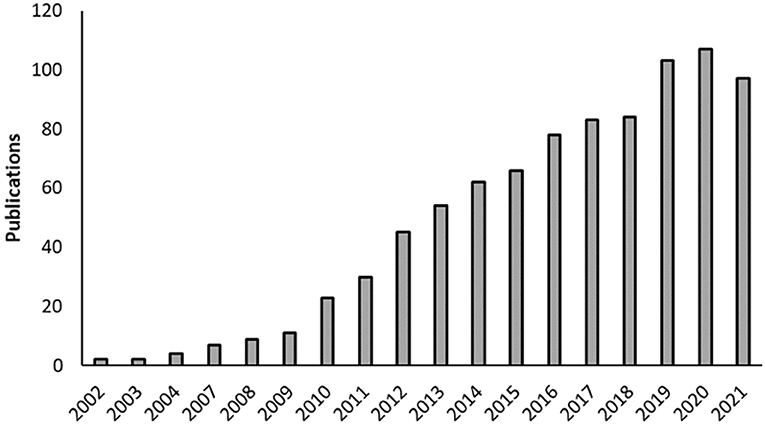
Figure 1. Publications retrieved (per year) using four combinations of keywords “global change(s)” and “plant invasion(s)” to search the PubMed database (https://www.ncbi.nlm.nih.gov/pmc).
Abiotic and Biotic Interactions Under Global Change and Plant Invasions
Invasive plants are exposed to new abiotic and biotic conditions in the novel range (Hierro et al., 2005; Mitchell et al., 2006). As the climate changes, new conditions are encountered by invasive species with shifts in each global change factor (e.g., temperature, rainfall, nutrient cycling). Climate change will likely increase the magnitude and duration of extreme events worldwide, such as heat waves, floods, and droughts (IPCC, 2007). Changes in rainfall and temperature have long been known to affect growth and survival of plants, including invasive species (Thuiller et al., 2008). In South Africa, heavy rainfall enhanced the growth of invasive trees in arid savannah (Richardson et al., 2000). Similarly, climate warming has been found to alter the timing and rate of germination, as well as longevity of seeds (Bernareggi et al., 2015), which has implications for plant invasions (explored in this topic by Zhou and He).
Increases in global temperature are predicted to significantly change vegetation communities around the world (Lu et al., 2013) and may promote plant invasions. In Swiss forests, the range of alien evergreen plants has already expanded in response to declines in the frequency of frost intervals (Walther, 2002). The complexity of global change factors on plant invasions is further exemplified in this Research Topic, where the interaction between competition and different hydrological conditions on Bunias orientalis invasion was investigated (Corli et al.). It was found that conditions such as disturbance and the presence of dry habitats likely aided the invasion. The effects of warming on plants can depend on precipitation rate, as well as the biome (Fazlioglu and Wan, 2021). The importance of testing the effects of hydrological shifts on invaders across different ecosystems is highlighted in this topic.
Increases in temperature and droughts are predicted to change the composition and activity of plant-associated microbial communities, thereby affecting the growth of resident plant species (Compant et al., 2010). Shifts in the abundance of arbuscular mycorrhizal fungi (AMF) can alter soil properties to benefit the invader and enhance its competiveness over natives (Chen et al.; Shen et al.). In turn, invasive species can modify soils leading to functional shifts (e.g., changes in the cycling of nutrients, Trognitz et al., 2016). Such shifts are associated with the reorganization of internal feedback mechanisms (e.g., plant-soil feedbacks, Gaertner et al., 2014). For instance, litter decomposition from invasive Sphagneticola trilobata changed soil properties, which promoted its own growth while inhibiting its native congener (Sun et al., 2021). Similarly, soil organic carbon is altered with invasion by Alternanthera philoxeroides across wetland and river habitats with potential impacts on microorganisms and functional shifts (Yang et al.).
Implications for Management and Future Research
The relationship between plant invasions and global change is highly complex (IPCC, 2007; Vilà et al., 2007). Although some changes in abiotic conditions are predicted to enhance invasion (e.g., increases in CO2), others may help or hinder invasions (e.g., changes in temperature and precipitation) (Bradley et al., 2010). Global changes are likely to impact different invasive species differently, and untangling cause and effect is often extremely difficult for natural phenomena. Thus, there is a great deal of uncertainty regarding the impact of alien species under global environmental change (Bradley et al., 2010). This makes developing management strategies for invasive species and predicting which introduced species will become problematic highly challenging. Elucidating the effects of multiple factors on both native and invasive plants is an important first step toward this goal.
A multifaceted approach is likely most useful in untangling the complexity of the interaction between climate change and plant invasions (Kueffer, 2010). Transcriptomics in combination with growth experiments are increasingly being used to identify the genes involved in abiotic and biotic interactions of invasive plants (e.g., Manoharan et al., 2019; Zhang et al., 2021). Examining alien species at the population level in both the native and invasive ranges (Bossdorf et al., 2005) and incorporating genomics (e.g., Rutherford et al., 2021) could advance our understanding of the mechanisms underlying plant response to global changes. Assessing the impacts of environmental changes on invasions during each invasion stage is important (Catford et al., 2020), as well as long-term experiments (Corli et al.). The field of biological invasions is evolving rapidly as massive changes are underway at the global level. The authors believe that an expansion of approaches in this direction will lead to significant insights that would best equip us to overcome the challenges ahead.
Author Contributions
Z-CD, SR, and JW conceptualized this editorial. BZ contributed ideas. SR and JW wrote the manuscript. All authors reviewed the manuscript and provided comments. All authors contributed to the article and approved the submitted version.
Funding
Z-CD was supported by the Natural Science Foundation of Jiangsu (BK20211321). JW was supported by the Jiangsu Province Young Scientists Fund (BK20200905). SR was supported by the National Natural Science Foundation of China (32001087). JW and SR were supported by the Jiangsu University Research Foundation (20JDG055, 20JDG056). The plant invasions research group at JSU is supported by the Priority Academic Program Development of Jiangsu Higher Education Institution (PAPD).
Conflict of Interest
The authors declare that the research was conducted in the absence of any commercial or financial relationships that could be construed as a potential conflict of interest.
Publisher's Note
All claims expressed in this article are solely those of the authors and do not necessarily represent those of their affiliated organizations, or those of the publisher, the editors and the reviewers. Any product that may be evaluated in this article, or claim that may be made by its manufacturer, is not guaranteed or endorsed by the publisher.
References
Bernareggi, G., Carbognani, M., Petraglia, A., and Mondoni, A. (2015). Climate warming could increase seed longevity of alpine snowbed plants. Alpine Botany. 125, 69–78. doi: 10.1007/s00035-015-0156-0
Bossdorf, O., Auge, H., Lafuma, L., Rogers, W. E., Siemann, E., and Prati, D. (2005). Phenotypic and genetic differentiation between native and introduced plant populations. Oecologia. 144, 1–11. doi: 10.1007/s00442-005-0070-z
Bradley, B. A., Blumenthal, D. M., Wilcove, D. S., and Ziska, L. H. (2010). Predicting plant invasions in an era of global change. Trends Eco Evolut. 25, 310–318. doi: 10.1016/j.tree.2009.12.003
Catford, J. A., Dwyer, J. M., Palma, E., Cowles, J. M., and Tilman, D. (2020). Community diversity outweighs effect of warming on plant colonization. Global Change Bio. 26, 3079–3090. doi: 10.1111/gcb.15017
Compant, S., Van Der Heijden, M. G., and Sessitsch, A. (2010). Climate change effects on beneficial plant–microorganism interactions. FEMS Microbiology Ecology. 73, 197–214. doi: 10.1111/j.1574-6941.2010.00900.x
Crowl, T. A., Crist, T. O., Parmenter, R. R., Belovsky, G., and Lugo, A. E. (2008). The spread of invasive species and infectious disease as drivers of ecosystem change. Front. Eco. Environ. 6, 238–246. doi: 10.1890/070151
Dai, Z. C., Wan, L. Y., Qi, S. S., Rutherford, S., Ren, G. Q., Wan, J. S. H., et al. (2020). Synergy among hypotheses in the invasion process of alien plants: a road map within a timeline. Pers Plant Ecol. Evol. Syst. 10, 125575. doi: 10.1016/j.ppees.2020.125575
Dawson, W., and Schrama, M. (2016). Identifying the role of soil microbes in plant invasions. J Ecol. 104, 1211–1218. doi: 10.1111/1365-2745.12619
Demertzis, K, and Iliadis, L. (2018). The Impact of Climate Change on Biodiversity: The ecological consequences of invasive species in Greece. In: Leal Filho, W., Manolas, E., Azul, A., Azeiteiro, U., and McGhie, H,. (eds) Handbook of Climate Change Communication: Vol. 1. Climate Change Management. Cham: Springer. doi: 10.1007/978-3-319-69838-0_2
Fazlioglu, F., and Wan, J. S. (2021). Warming matters: alpine plant responses to experimental warming. Climatic Change 164, 1–7. doi: 10.1007/s10584-021-02996-3
Gaertner, M., Biggs, R., Te Beest, M., Hui, C., Molofsky, J., and Richardson, D. M. (2014). Invasive plants as drivers of regime shifts: identifying high-priority invaders that alter feedback relationships. Divers. Distrib. 20, 733–744. doi: 10.1111/ddi.12182
Hanfling, B., and Kollmann, J. (2002). An evolutionary perspective of biological invasions. Trends Ecol. Evol. 17, 545–546. doi: 10.1016/S0169-5347(02)02644-7
Hierro, J. L., Maron, J. L., and Callaway, R. M. (2005). A biogeographical approach to plant invasions: the importance of studying exotics in their introduced and native range. J Ecol. 93, 5–15. doi: 10.1111/j.0022-0477.2004.00953.x
IPCC (2007). Climate Change 2007: The Physical Science Basis. Contribution of Working Group I to the Fourth Assessment Report of the Intergovernmental Panel on Climate Change. Cambridge: Cambridge University Press.
Kueffer, C. (2010). Transdisciplinary research is needed to predict plant invasions in an era of global change. Trends Ecol. Evol. 25, 619. doi: 10.1016/j.tree.2010.08.001
Kurz, W. A., Dymond, C. C., Stinson, G., Rampley, G. J., Neilson, E. T., Carroll, A. L., et al. (2008). Mountain pine beetle and forest carbon feedback to climate change. Nature. 452, 987–990. doi: 10.1038/nature06777
Lockwood, J. L., and Mckinney, M. L. (2001). Biotic homogenization. Kluwer Academic. New York: Plenum Publisher. doi: 10.1007/978-1-4615-1261-5
Lu, X., Siemann, E., Shao, X., Wei, H., and Ding, J. (2013). Climate warming affects biological invasions by shifting interactions of plants and herbivores. Global Change Biology. 19, 2339–2347. doi: 10.1111/gcb.12244
Manoharan, B., Qi, S. S., Dhandapani, V., Chen, Q., Rutherford, S., Wan, J. S. H., et al. (2019). Gene expression profiling reveals enhanced defense responses in an invasive weed compared to its native congener during pathogenesis. Int. J. Mol. Sci. 20, 4916. doi: 10.3390/ijms20194916
Mitchell, C. E., Agrawal, A. A., Bever, J. D., Gilbert, G. S., Hufbauer, R. A., Klironomos, J. N., et al. (2006). Biotic interactions and plant invasions. Ecol. Lett. 9, 726–740. doi: 10.1111/j.1461-0248.2006.00908.x
Pimentel, D., McNair, S., Janecka, J., Wightman, J., Simmonds, C., O'Connell, C., et al. (2001). Economic and environmental threats of alien plant, animal, and microbe invasions. Agric Ecosyst Environ. 84, 1–20. doi: 10.1016/S0167-8809(00)00178-X
Richardson, D. M., Bond, W. J., Dean, W. R. J., Higgins, S. I., Midgley, G. F., Milton, S. J., et al. (2000). “Invasive alien organisms and global change: a South African perspective”, in Invasive Species in a Changing World, eds H. A. Mooney, R. J. Hobbs (Washington, DC: Island Press), 303–349.
Rutherford, S., Wan, J. S. H., Cohen, J., Benson, D., and Rossetto, M. (2021). Looks can be deceiving: speciation dynamics of co-distributed Angophora (Myrtaceae) species in a varying landscape. Evolution. 75, 310–329. doi: 10.1111/evo.14140
Soulé, M. E. (1991). Conservation: tactics for a constant crisis. Science. 253, 744–750. doi: 10.1126/science.253.5021.744
Sun, J., Rutherford, S., Ullah, M. S., Ullah, I., Javed, Q., Rasool, G., et al. (2021). Plant-soil feedback during biological invasions: effect of litter decomposition from an invasive plant (Sphagneticola trilobata) on its native congener (S. calendulacea). J. Plant Ecol. rtab095. doi: 10.1093/jpe/rtab095. [Epub ahead of print].
Thuiller, W., Richardson, D. M., and Midgley, G. F. (2008). “Will climate change promote alien plant invasions?,” in Biological Invasions (Berlin; Heidelberg: Springer), 197–211.
Trognitz, F., Hackl, E., Widhalm, S., and Sessitsch, A. (2016). The role of plant–microbiome interactions in weed establishment and control. FEMS Microbiol Ecol. 92, 1–15. doi: 10.1093/femsec/fiw138
Vilà, M., Corbin, J. D., Dukes, J. S., Pino, J., and Smith, S. D. (2007). “Linking plant invasions to global environmental change”, in Terrestrial Ecosystems in a Changing World (Berlin; Heidelberg: Springer), 93–102.
Walther, G. R. (2002). Weakening of climatic constraints with global warming and its consequences for evergreen broad-leaved species. Folia Geobotanica 37, 129–139 doi: 10.1007/BF02803195
Xie, W., Zhong, C., Li, X., Guo, Z., and Shi, S. (2020). Hybridization with natives augments the threats of introduced species in Sonneratia mangroves. Aquatic Botany. 160, 103166. doi: 10.1016/j.aquabot.2019.103166
Zhang, H. Y., Rutherford, S., Huang, P., Qi, S. S., Dai, Z. C., Ren, G. Q., et al. (2021). Transcriptome profiling of Arabidopsis thaliana roots in response to allelopathic effects of Conyza canadensis. Ecotoxicology. 31, 53–63. doi: 10.1007/s10646-021-02489-0
Keywords: abiotic, biotic, climate change, invasion mechanisms, multifaceted approach
Citation: Dai Z-C, Zhu B, Wan JSH and Rutherford S (2022) Editorial: Global Changes and Plant Invasions. Front. Ecol. Evol. 10:845816. doi: 10.3389/fevo.2022.845816
Received: 30 December 2021; Accepted: 21 January 2022;
Published: 01 March 2022.
Edited and reviewed by: Qinfeng Guo, United States Forest Service (USDA), United States
Copyright © 2022 Dai, Zhu, Wan and Rutherford. This is an open-access article distributed under the terms of the Creative Commons Attribution License (CC BY). The use, distribution or reproduction in other forums is permitted, provided the original author(s) and the copyright owner(s) are credited and that the original publication in this journal is cited, in accordance with accepted academic practice. No use, distribution or reproduction is permitted which does not comply with these terms.
*Correspondence: Justin S. H. Wan, d2FuanVzdGluc2hAZ21haWwuY29t; Susan Rutherford, c3VzYW5fcnV0aGVyZm9yZEB1anMuZWR1LmNu
†ORCID: Zhi-Cong Dai orcid.org/0000-0002-0748-8059
Bin Zhu orcid.org/0000-0002-3672-6124
Justin S. H Wan orcid.org/0000-0002-3184-8683
Susan Rutherford orcid.org/0000-0001-9723-0790
‡These authors share senior authorship