 Tuyet-Anh T. Le1,2,3*
- 1Transdisciplinary Sustainability Program, School of Science and the Environment, Memorial University of Newfoundland, Corner Brook, NL, Canada
- 2Environmental Policy Institute, Memorial University of Newfoundland, Corner Brook, NL, Canada
- 3Forestry Economics Research Centre, Vietnamese Academy of Forest Sciences, Hanoi, Vietnam
Introduction
In a vastly negative impacted world by global environmental changes, to facilitate transitions to sustainability, transdisciplinary approaches (TDA) have been explored to link between scientific and social fields as an inevitable development in recent decades (Max-Neef, 2005; Costanza and Kubiszewski, 2012; Popa et al., 2015; Barry, 2017; Steger et al., 2021). The transdisciplinary research (TDR)—as a new discipline and a way of being (Rigolot, 2020), or as a concept in flux and a practice (Pohl, 2010), is getting much credit as a holistic approach for producing knowledge and decision-making to addresses global issues, contributing to sustainable development (SD) (Brandt et al., 2013; Rigolot, 2020). TDR is commonly used to describe a process of co-knowledge production conducted by integrating between academic and non-academic partners (Brandt et al., 2013; Rigolot, 2020). Notably, ecosystem services (ES) topic, one of typical themes of transdisciplinary sustainability (TDS) research (Costanza and Kubiszewski, 2012; Schneider et al., 2019) was assessed as a pivotal role in attaining sustainable development goals (SDG). Forest ecosystem services (FES), in particular, not only provide vital ES to humanity (Luchetti et al., 2017; Martínez Pastur et al., 2018), but also contain most of the global terrestrial biodiversity (Martínez Pastur et al., 2018). In the lens of sustainability, climate and biodiversity, forests have returned to their central role in global conservation (Oldekop et al., 2020). Although TDR has become an important term in sustainability science (SS) debates (Renn, 2021), the awareness of TDA in valuing ES has still limited (Shackleton et al., 2017). Little is known about the activities of scientists in transdisciplinarity (TD), especially those just starting their careers (Ruppert-Winkel et al., 2015). This option article, therefore, based on an overview of TDR, argues that although TDR plays an essential role in valuing FES for sustainability, its challenges remain enormous.
An Overview of TDR For Sustainability
TD was formed for the first introduction in 1970 in education (Nicolescu, 2006; Hillel, 2015) to meet the development of complex environmental problems, which resulted in the first “named” environmental studies and environmental science training programs in the 1970s (Cooke and Vermaire, 2015). The TD concept had led to the birth of TDA that sought to make ground in relation to efforts to confront wicked problems (Norris et al., 2016; Yeung et al., 2021). Because there is no single, clear or optimal way to handle wicked problems, TDA are often employed to develop potentially useful interventions (Hillel, 2015; Yeung et al., 2021). Interestingly, the concept of sustainability originated from the German forestry industry in the 18th century due to increasing logging (Spindler, 2013; Ekardt, 2020). Only the forestry industry could not save this alarming situation, but required the responsibility of the economy as a whole societal task (Spindler, 2013). Hence, the importance of sustainability, can be seen as the product of the environmental movements (Spindler, 2013). In 1987, the official concept of SD (“SD is development that meets the needs of the present without compromising the ability of future generations to meet their own needs”) was introduced in a report of the World Commission on Environment and Development, “Our Common Future” (referred to as the Brundtland Commission's report) (WCED, 1987), and it has since then become central to decision-making worldwide (Mebratu, 1998; Du Pisani, 2006; Spindler, 2013). Accordingly, the literature on SS has flourished since the 1980s (Steelman et al., 2015). Mentioned since 1970 but TD remained undeveloped and almost uncited until the early 1990s (Hillel, 2015). Sustainability and global environmental crises promoted the redebates of TD concepts in science and planning since the United Nations (UN) Earth Summit in Rio de Janeiro in 1992 (Hillel, 2015). Two years later, the First World Congress on TD was organized in Convento da Arrábida (Portugal), producing a Charter of TD (Hillel, 2015). Since the 1990s, using TD is becoming increasingly important, in particular over the last half of the 2000s (Stock and Burton, 2011). Yet, until 2012–2017, not only has the awareness of TDA in established scientific disciplines still limited, TD has also not become a central component in SS (Brandt et al., 2013; Rokaya et al., 2017). However, in the few recent years, the scientific community has used the term TDR as a keyword in debates about sustainability and social transformation (Renn, 2021).
TDS research aims to handle complex societal problems and advance the co-productions of scientific knowledge (Lux et al., 2019). There are numerous studies mentioning TD definitions and concepts (i.e., Pohl and Hirsch Hadorn, 2007; Hadorn et al., 2008; Lang et al., 2012; Mullally et al., 2017; Pohl et al., 2021). Formulated from the relevant previous publications, this study synthesizes TDR in 10 ideal characteristics (Figure 1), including: (C1) Real-world complex problems; (C2) Disciplines/fields; (C3) Participants; (C4) Research scales; (C5) Dataset types; (C6) Process phases; (C7) Knowledge types; (C8) Intensity of involvement of non-academic stakeholders; (C9) Social learning in transdisciplinary co-productions (TDCP); and (C10) Societal effects. The opinions of the strengths/importance (+) and weaknesses/challenges (-) of TDR in valuing FES in this study will be considered from these characteristics.
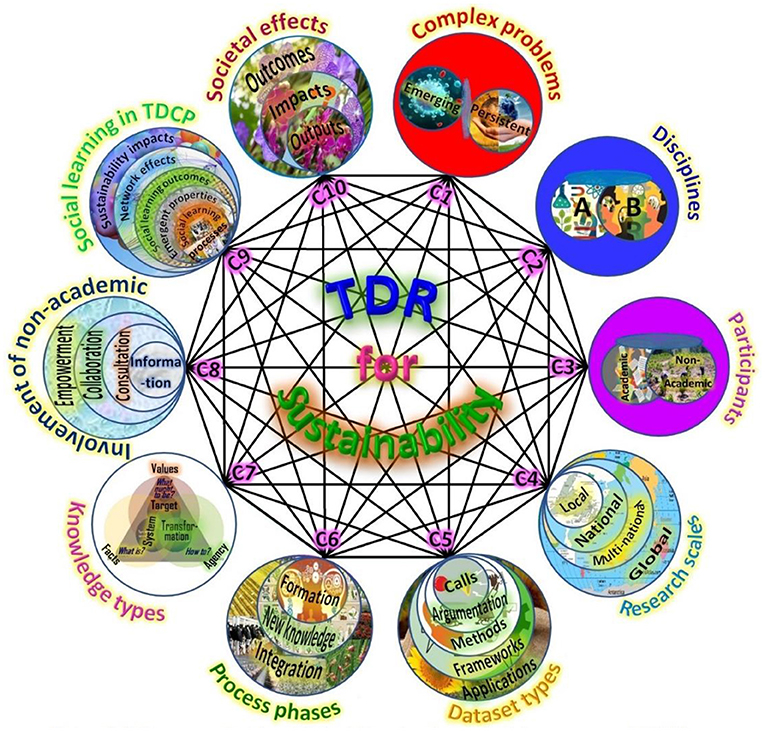
Figure 1. Overview of TDR for sustainability, synthesized from ProClim (1997), Pohl and Hirsch Hadorn (2007), Walter et al. (2007), Hadorn et al. (2008), Pohl (2010), Stauffacher et al. (2010), Brandt et al. (2013), Ruppert-Winkel et al. (2015), Steelman et al. (2015), and Slater and Robinson (2020).
The Importance of TDR in Valuing Forest Ecosystem Services for Sustainability
ES topic is an important domain of SS (Aryal et al., 2022). Scientific research on ES and human well-being is considered as an emerging field (O'Farrell and Anderson, 2010; Aznar-Sánchez et al., 2018; Wang et al., 2021). The original idea of ES and goods was mentioned from 1959 by Odum while discussing the use of natural resources through the forms of agriculture, forestry, hunting, fishery, and addressed human populations as the part of ecosystems (Odum, 1959). ES concept, then, has been enhanced in the scientific literature since the end of the 1970s. And this term (or environmental services, ecological services, and ecosystem goods) was re-explored in the 1990s. However, until 2005 when the Millennium Ecosystem Assessment (hereafter MA) has gained a milestone in summarizing past ecosystem change and assessing the humankind's future, ES concept just was accepted in both the scientific and especially the political perspective (Vihervaara et al., 2010). Accordingly, the quantity of ES publications has developed strikingly since the MA (Vihervaara et al., 2010; Aznar-Sánchez et al., 2018; Wang et al., 2021). Notably, the ES concept has changed our paradigm of how nature is important to human societies, from viewing we sacrifice our well-being if choosing the preservation of nature to perceiving the environment as natural capital—one of society's important assets. But ES are becoming scarcer (Liu et al., 2010). To resolve this, convincing society to recognize the natural value is a challenge due to the lack of valuation. ES valuation is the method to handle such this barrier with the process of assessing ES contributions to sustainable scale, fair distribution, and efficient allocation (Liu et al., 2010). Because ES is a key concept often mentioned in the literature of valuing nature (Yu et al., 2019). This aspect was rooted since 1997 by Costanza et al., when they discussed the global valuation of nature's capital assets and ES (Costanza et al., 1997; Vihervaara et al., 2010). Meanwhile, TD science, which emerged from 1995 (Lynch et al., 2015; White et al., 2021) implies the core idea of different academic disciplines working jointly with non-academic partners (practitioners, local people) to solve common problems (Guimarães et al., 2018; Margules et al., 2020) (C2+ and C3+, respectively). Complex social-ecological problems cannot be tackled in a sustainable manner if lacking this strong relationship (Grima et al., 2017; Grove and Pickett, 2019; Edrisi and Abhilash, 2021). Interestingly, evaluation is also a major issue in TDR discussions (Zscheischler et al., 2018). Hence, in the ES science community, the developments of TDA through participatory tools and methods explicitly are promising (Carmen et al., 2018; Steger et al., 2021). In turn, the characteristics of ES also are as a TD field (Costanza and Kubiszewski, 2012; Steger et al., 2018).
FES are a fundamental part of ES (Martínez Pastur et al., 2018; Oldekop et al., 2020). Yet forest ecosystems (FE) degradation in both quality and quantity remain huge global environmental challenges (Begemann et al., 2021), and lead to serious consequences for society's important assets (Liu et al., 2010), especially in rural livelihoods of forest-dependent areas (Pattanayak et al., 2006; Oldekop et al., 2020) (C1+). Indeed, forests are linked to livelihoods in a globalized world, as demonstrated not only by an extensive body of studies (Oldekop et al., 2020), but also in the development of national and international commitments across research and policy communities, all of which need TDA (Gergel et al., 2020). Forests are necessary to most of the SDG through contributions to ES, green economic opportunities, social, and environmental justice agendas. Forests are also linked to the Paris Climate Agreement, the Aichi Biodiversity Targets and the Post-2020 Global Biodiversity Framework. Besides, forests play a meaningful role to the Bonn Challenge (to restore 350 million ha of degraded lands globally by 2030), or the New York Declaration on Forests (with 10 specific global forest goals). Through forest protection, restoration and afforestation, forests remain a key mechanism to mitigate climate change (Oldekop et al., 2020). TDR is also crucial for implementing restoration on the ground successful as expected in the vision of the UN Decade (2021–2030) on Ecosystem Restoration (Gergel et al., 2020; Edrisi and Abhilash, 2021; Fischer et al., 2021). In facts, the correlation of forests to sustain human well-being and the relevant serious threats have led to a substantial growth in FES research in the last few years (Aznar-Sánchez et al., 2018). Because TDR includes integrated processes from co-designing research agendas to co-producing knowledge and co-disseminating the applications with researchers, decision makers and stakeholders (Mauser et al., 2013) through co-creation of win-win scenarios (Aryal et al., 2022) to address challenges for global sustainability and strengthening possible solutions (Mauser et al., 2013; Lynch et al., 2015; White et al., 2021) (C6+). Therefore, considering TDA in valuing FES and the consequent issues is getting more scientific attention, i.e., in biodiversity and ecology conservations (Pattanayak et al., 2006; Margules et al., 2020; Pardini et al., 2021), ecosystem restoration (Futter et al., 2011; Edrisi and Abhilash, 2021; Fischer et al., 2021), climate change crises (Serrao-Neumann et al., 2015; Begemann et al., 2021; Chao and Enari, 2021), diseases, as malaria (Pattanayak et al., 2006), COVID-19 pandemic (Pardini et al., 2021), and forest livelihoods (Pattanayak et al., 2006; Bodonirina et al., 2018).
The Challenges of TDR in Valuing FES
ES science is now a well-defined and active (Costanza and Kubiszewski, 2012) to bring TD teams together to attain societal goals, because the ES framework provides a common language for across research disciplines, among scientists, managers, policy-makers worldwide (Quintas-Soriano et al., 2018; Steger et al., 2018) and through global markets to communicate (Steger et al., 2018). The authorship structure of ES is considered as a TD field of scholarship (Costanza and Kubiszewski, 2012). Although the link between ES and TDR has made relevant advances, the promise that decision making will be decided and conducted better by contributing from ES assessments has not been proven (Saarikoski et al., 2018). The challenges of TDR in valuing ES, including FES have been demonstrated in numerous studies. The first overarching challenge is that TD empirical scholarship or applications have been uncommon compared to TD conceptual scholarship (especially in developing countries) (Steelman et al., 2015) or other forms (TDR calls, argumentation, frameworks and methods) (Brandt et al., 2013) (C5−). Astonishingly, expert perspectives are often used in empirical studies, nonetheless, applying knowledge of the experiences, attitudes, and motivations of a broader science-practice community to TDR remains rare (Zscheischler et al., 2018), with few exceptions (Boyle et al., 2021), while even ES knowledge has not acted “as an impartial arbiter between policy options” (Saarikoski et al., 2018) (p. 579) or most knowledge was considered from modern science primary that has not opened for increased dialogue between different ways of knowing such as science and mysticism (Knapp et al., 2019). There are not any application studies that classify the TD knowledge types in FES research (C7−).
Regarding the non-academic stakeholders in TDR, several scholars emphasized on the lack of human capital—a very important factor which needs for further development of the integrated approaches in the value of ES (Turner et al., 2015) (C8−). Accordingly, this special factor also remains rare to participate from problem definition to implementation, so empowerment was rarely discovered within case studies of ES research based on TDR (Brandt et al., 2013; Turner et al., 2015; Knapp et al., 2019) (C6− and C8−). Decision-making capacity of the non-academic stakeholders (“outcome”) is the highest level of the evaluation model by societal effects in TDR (C10−), yet so far, it is rare to find empirically based analyses of the links between the quality of the research process and the methods applied as well as the effects achieved (Lux et al., 2019). Although a range of methodological efforts to trace and describe the effects of TDR has been introduced, its definitions in terms of the scope and different forms of effects are inconsistent (Schäfer et al., 2021). Additionally, social learning in TDCP (C9+) has achieved relevance, i.e., proposing generic mechanisms of impact generation for TDCP of knowledge and sustainability transformations (Schneider et al., 2019; Revez et al., 2022), or designing and testing a TDR framework for TDCP through five focal areas (inclusion, collaboration, integration, usability, and reflexivity) in three research phases (formulate, generate, evaluate) (Polk, 2015), etc., but there is rarely empirical TD evidence showing to FES research (C9−).
Considering the research scales (C4), although TDR can be implemented at all scales from local to global (Mauser et al., 2013; Coggon, 2020; Jacobi et al., 2020; Zabaniotou et al., 2020), the research cooperation network on FES in developed countries was assessed to be much stronger than in developing regions (Schomers and Matzdorf, 2013; Aznar-Sánchez et al., 2018; Wang et al., 2021). The United States (USA), the United Kingdom (UK), Australia, Germany, and China were the most productive countries in ES and human well-being (Wang et al., 2021). Interestingly, most of them (US, China, and UK) had the highest number of publications in FES (Aznar-Sánchez et al., 2018).
Conclusions
Undoubtedly, TD is a new promising approach that has been creating a significant attraction in the valuing ES since the 1990s (Liu et al., 2010), but it has remained substantial downsides and various challenges which show a high potential field to develop for FES aspects and beyond. Therefore, developing the achievements of TD research, i.e., increasing the scalability and transferability of results into other contexts, addressing the lack of legitimacy of TD outcomes, tracking scientific and societal impacts are key topics for future studies (Lang et al., 2012; Polk, 2015). Furthermore, although the role of TDA in ES research is still under debate, more and more scholars have been supporting this win-win relationship as an indisputable trend of development to resolve complex issues at all scales, from local to global.
Author Contributions
The author confirms being the sole contributor of this work and has approved it for publication.
Conflict of Interest
The author declares that the research was conducted in the absence of any commercial or financial relationships that could be construed as a potential conflict of interest.
Publisher's Note
All claims expressed in this article are solely those of the authors and do not necessarily represent those of their affiliated organizations, or those of the publisher, the editors and the reviewers. Any product that may be evaluated in this article, or claim that may be made by its manufacturer, is not guaranteed or endorsed by the publisher.
Acknowledgments
This paper was created as one of the parts of the author's PhD program in TD sustainability for the first students' cohort (2021–2024) of Grenfell Campus, Memorial University of Newfoundland (MUN). The author would like to thank all supports from the Rural Resilience lab in Grenfell, MUN (https://ruralresilience.ca/) led by Dr. Kelly Vodden, especially my sincere gratitude to the PhD scholarship funded by the School of Graduate Studies (Grenfell, MUN) and the great funding and other thoughtful supports (study devices and places) from my two supervisors' (Dr. Jianghua Wu and Dr. Kelly Vodden). I am very grateful to Dr. Gabriela Sabau, Dr. Lakshman Galagedara, Dr. Garrett Richards, and Dr. Robert Scott for the useful knowledge and valuable experiences imparted to me during the two courses (Foundations of Sustainability and SS, and TD Methods in Sustainability Research) at Grenfell in the Winter semester, 2021. Also, I would like to send my thanks to anonymous reviewers with their valuable comments and suggestions on the manuscript.
References
Aryal, K., Maraseni, T., and Apan, A. (2022). How much do we know about trade-offs in ecosystem services? A systematic review of empirical research observations. Sci. Total Environ. 806:151229. doi: 10.1016/j.scitotenv.2021.151229
Aznar-Sánchez, J. A., Belmonte-Ureña, L. J., López-Serrano, M. J., and Velasco-Muñoz, J. F. (2018). Forest ecosystem services: an analysis of worldwide research. Forests 9:453. doi: 10.3390/f9080453
Barry, J. (2017). Transdisciplinary Perspectives on Transitions to Sustainability. London; New York, NY: Oxon; Routledge.
Begemann, A., Giessen, L., Roitsch, D., Roux, J. L., Lovrić, M., Azevedo-Ramos, C., et al. (2021). Quo vadis global forest governance? A transdisciplinary delphi study. Environ. Sci. Policy 123, 131–141. doi: 10.1016/j.envsci.2021.03.011
Bodonirina, N., Reibelt, L. M., Stoudmann, N., Chamagne, J., Jones, T. G., Ravaka, A., et al. (2018). Approaching local perceptions of forest governance and livelihood challenges with companion modeling from a case study around Zahamena National Park, Madagascar. Forests 9:624. doi: 10.3390/f9100624
Boyle, E., Watson, C., Mcgookin, C., Deane, A., De, D., Mcelligott, C., et al. (2021). Reflecting on a collaborative approach to a regional sustainability transition: Dingle Peninsula 2030. Reflective Pract. 22, 416–430. doi: 10.1080/14623943.2021.1911794
Brandt, P., Ernst, A., Gralla, F., Luederitz, C., Lang, D. J., Newig, J., et al. (2013). A review of transdisciplinary research in sustainability science. Ecol. Econ. 92, 1–15. doi: 10.1016/j.ecolecon.2013.04.008
Carmen, E., Watt, A., Carvalho, L., Dick, J., Fazey, I., Garcia-Blanco, G., et al. (2018). Knowledge needs for the operationalisation of the concept of ecosystem services. Ecosyst. Serv. 29, 441–451. doi: 10.1016/j.ecoser.2017.10.012
Chao, S., and Enari, D. (2021). Decolonising climate change: a call for beyond-human imaginaries and knowledge generation. eTropic 20, 32–54. doi: 10.25120/etropic.20.2.2021.3796
Coggon, J. (2020). Legal, moral and political determinants within the social determinants of health: approaching transdisciplinary challenges through intradisciplinary reflection. Public Health Ethics 13, 41–47. doi: 10.1093/phe/phaa009
Cooke, S. J., and Vermaire, J. C. (2015). Environmental studies and environmental science today: inevitable mission creep and integration in action-oriented transdisciplinary areas of inquiry, training and practice. J. Environ. Stud. Sci. 5, 70–78. doi: 10.1007/s13412-014-0220-x
Costanza, R., D'Arge, R., De Groot, R., Farber, S., Grasso, M., Hannon, B., et al. (1997). The value of the world's ecosystem services and natural capital. Nature 387, 253–260. doi: 10.1038/387253a0
Costanza, R., and Kubiszewski, I. (2012). The authorship structure of “ecosystem services” as a transdisciplinary field of scholarship. Ecosyst. Serv. 1, 16–25. doi: 10.1016/j.ecoser.2012.06.002
Du Pisani, J. A. (2006). Sustainable development - historical roots of the concept. Environ. Sci. 3, 83–96. doi: 10.1080/15693430600688831
Edrisi, S. A., and Abhilash, P. C. (2021). Need of transdisciplinary research for accelerating land restoration during the UN Decade on Ecosystem Restoration. Restor. Ecol. 29:e13531. doi: 10.1111/rec.13531
Ekardt, F. (2020). Sustainability Transformation, Governance, Ethics, Law. Leipzig/Berlin: Springer Nature Switzerland.
Fischer, J., Riechers, M., Loos, J., Martin-Lopez, B., and Temperton, V. M. (2021). Making the UN decade on ecosystem restoration a social-ecological endeavour. Trends Ecol. Evol. 36, 20–28. doi: 10.1016/j.tree.2020.08.018
Futter, M. N., Keskitalo, E. C. H., Ellison, D., Pettersson, M., Strom, A., Andersson, E., et al. (2011). Forests, forestry and the water framework directive in Sweden: a trans-disciplinary commentary. Forests 2, 261–282. doi: 10.3390/f2010261
Gergel, S. E., Powell, B., Baudron, F., Wood, S. L. R., Rhemtulla, J. M., Kennedy, G., et al. (2020). Conceptual links between landscape diversity and diet diversity: a roadmap for transdisciplinary research. Bioscience 70, 563–575. doi: 10.1093/biosci/biaa048
Grima, N., Singh, S. J., and Smetschka, B. (2017). Decision making in a complex world: using OPTamos in a multi-criteria process for land management in the Cuitzmala watershed in Mexico. Land Use Policy 67, 73–85. doi: 10.1016/j.landusepol.2017.05.025
Grove, J. M., and Pickett, S. T. (2019). From transdisciplinary projects to platforms: expanding capacity and impact of land systems knowledge and decision making. Curr. Opin. Environ. Sustain. 38, 7–13. doi: 10.1016/j.cosust.2019.04.001
Guimarães, M. H., Guiomar, N., Surová, D., Godinho, S., Correia, T. P., Sandberg, A., et al. (2018). Structuring wicked problems in transdisciplinary research using the Social-Ecological systems framework: an application to the montado system, Alentejo, Portugal. J. Clean. Prod. 191, 417–428. doi: 10.1016/j.jclepro.2018.04.200
Hadorn, G., Hoffmann-Riem, H., Biber-Klemm, S., Grossenbacher-Mansuy, W., Joye, D., Pohl, C., et al. (2008). Handbook of Transdisciplinary Research. Dordrecht: Springer.
Hillel, J. (2015). Transdisciplinarity: a review of its origins, development, and current issues. J. Res. Pract. 11, 1–20.
Jacobi, J., Llanque, A., Bieri, S., Birachi, E., Cochard, R., Chauvin, N. D., et al. (2020). Utilization of research knowledge in sustainable development pathways: Insights from a transdisciplinary research-for-development programme. Environ. Sci. Policy 103, 21–29. doi: 10.1016/j.envsci.2019.10.003
Knapp, C. N., Reid, R. S., Fernández-Giménez, M. E., Klein, J. A., and Galvin, K. A. (2019). Placing transdisciplinarity in context: a review of approaches to connect scholars, society and action. Sustainability 11, 1–25. doi: 10.3390/su11184899
Lang, D. J., Wiek, A., Bergmann, M., Stauffacher, M., Martens, P., Moll, P., et al. (2012). Transdisciplinary research in sustainability science: practice, principles, and challenges. Sustain. Sci. 7, 25–43. doi: 10.1007/s11625-011-0149-x
Liu, S., Costanza, R., Farber, S., and Troy, A. (2010). Valuing ecosystem services: theory, practice, and the need for a transdisciplinary synthesis. Ann. N. Y. Acad. Sci. 1185, 54–78. doi: 10.1111/j.1749-6632.2009.05167.x
Luchetti, D., Campanhola, C., and Hofer, T. (2017). Ecosystem services for sustainable agriculture, forestry and fisheries. Nat. Faune 31, 48–51. doi: 10.4324/9781315627106-4
Lux, A., Schäfer, M., Bergmann, M., Jahn, T., Marg, O., Nagy, E., et al. (2019). Societal effects of transdisciplinary sustainability research-How can they be strengthened during the research process? Environ. Sci. Policy 101, 183–191. doi: 10.1016/j.envsci.2019.08.012
Lynch, A. J. J., Thackway, R., Specht, A., Beggs, P. J., Brisbane, S., Burns, E. L., et al. (2015). Transdisciplinary synthesis for ecosystem science, policy and management: the Australian experience. Sci. Total Environ. 534, 173–184. doi: 10.1016/j.scitotenv.2015.04.100
Margules, C., Boedhihartono, A. K., Langston, J. D., Riggs, R. A., Sari, D. A., Sarkar, S., et al. (2020). Transdisciplinary science for improved conservation outcomes. Environ. Conserv. 47, 224–233. doi: 10.1017/S0376892920000338
Martínez Pastur, G., Perera, A. H., Peterson, U., and Iverson, L. R. (2018). “Ecosystem services from forest landscapes: an overview,” in Ecosystem Services from Forest Landscapes: Broadscale Considerations, eds. A. H. Perera, U. Peterson, G. M. Pastur, and L. R. Iverson (New York, NY: Springer International), 1–10.
Mauser, W., Klepper, G., Rice, M., Schmalzbauer, B. S., Hackmann, H., Leemans, R., et al. (2013). Transdisciplinary global change research: the co-creation of knowledge for sustainability. Curr. Opin. Environ. Sustain. 5, 420–431. doi: 10.1016/j.cosust.2013.07.001
Max-Neef, M. A. (2005). Foundations of transdisciplinarity. Ecol. Econ. 53, 5–16. doi: 10.1016/j.ecolecon.2005.01.014
Mebratu, D. (1998). Sustainability and sustainable development: historical and conceptual review. Environ. Impact Assess. Rev. 18, 493–520. doi: 10.1016/S0195-9255(98)00019-5
Mullally, G., Byrne, E. P., and Sage, C. (2017). “Disciplines, perspectives and conversations,” in Transdisciplinary Perspectives on Transitions to Sustainability, eds. E. Byrne, G. Mullally, and C. Sage (Oxon: Routledge), 21–40.
Norris, P. E., O'Rourke, M., Mayer, A. S., and Halvorsen, K. E. (2016). Managing the wicked problem of transdisciplinary team formation in socio-ecological systems. Landsc. Urban Plan. 154, 115–122. doi: 10.1016/j.landurbplan.2016.01.008
O'Farrell, P. J., and Anderson, P. M. L. (2010). Sustainable multifunctional landscapes: a review to implementation. Curr. Opin. Environ. Sustain. 2, 59–65. doi: 10.1016/j.cosust.2010.02.005
Oldekop, J. A., Rasmussen, L. V., Agrawal, A., Bebbington, A. J., Meyfroidt, P., Bengston, D. N., et al. (2020). Forest-linked livelihoods in a globalized world. Nat. Plants 6, 1400–1407. doi: 10.1038/s41477-020-00814-9
Pardini, R., Bertuol-Garcia, D., Demasi Araújo, B., Mesquita, J. P., Moraes Murer, B., do Carmo Pônzio, M., et al. (2021). COVID-19 pandemic as a learning path for grounding conservation policies in science. Perspect. Ecol. Conserv. 19, 109–114. doi: 10.1016/j.pecon.2021.02.009
Pattanayak, S., Dickinson, K., Corey, C., Murray, B., Sills, E., and Kramer, R. (2006). Deforestation, malaria, and poverty: a call for transdisciplinary research to support the design of cross-sectoral policies. Sustain. Sci. Pract. Policy 2, 45–56. doi: 10.1080/15487733.2006.11907984
Pohl, C. (2010). From transdisciplinarity to transdisciplinary research. Transdiscipl. J. Eng. Sci. 1, 65–73. doi: 10.22545/2010/0006
Pohl, C., and Hirsch Hadorn, G. (2007). Principles for Designing Transdisciplinary Research. München: Oekom Verlag.
Pohl, C., Thompson, J., Hoffmann, S., Mitchell, C., and Fam, D. (2021). Conceptualising transdisciplinary integration as a multidimensional interactive process. Environ. Sci. Policy 118, 18–26. doi: 10.1016/j.envsci.2020.12.005
Polk, M. (2015). Transdisciplinary co-production: designing and testing a transdisciplinary research framework for societal problem solving. Futures 65, 110–122. doi: 10.1016/j.futures.2014.11.001
Popa, F., Guillermin, M., and Dedeurwaerdere, T. (2015). A pragmatist approach to transdisciplinarity in sustainability research: from complex systems theory to reflexive science. Futures 65, 45–56. doi: 10.1016/j.futures.2014.02.002
ProClim (1997). Research on Sustainability and Global Change - Visions in Science Policy by Swiss Researchers. Forum for Climate and Global Change.
Quintas-Soriano, C., García-Llorente, M., and Castro, A. J. (2018). What has ecosystem service science achieved in Spanish drylands? Evidences of need for transdisciplinary science. J. Arid Environ. 159, 4–10. doi: 10.1016/j.jaridenv.2018.01.004
Renn, O. (2021). Transdisciplinarity: synthesis towards a modular approach. Futures 130, 1–18. doi: 10.1016/j.futures.2021.102744
Revez, A., Dunphy, N., Harris, C., Rogan, F., Byrne, E., Mcgookin, C., et al. (2022). Mapping emergent public engagement in societal transitions : a scoping review. Energy. Sustain. Soc. 4, 1–18. doi: 10.1186/s13705-021-00330-4
Rigolot, C. (2020). Transdisciplinarity as a discipline and a way of being: complementarities and creative tensions. Humanit. Soc. Sci. Commun. 7, 1–5. doi: 10.1057/s41599-020-00598-5
Rokaya, P., Sheikholeslami, R., Kurkute, S., Nazarbakhsh, M., Zhang, F., and Reed, M. G. (2017). Multiple factors that shaped sustainability science journal: a 10-year review. Sustain. Sci. 12, 855–868. doi: 10.1007/s11625-017-0495-4
Ruppert-Winkel, C., Arlinghaus, R., Deppisch, S., Eisenack, K., Gottschlich, D., Hirschl, B., et al. (2015). Characteristics, emerging needs, and challenges of transdisciplinary sustainability science: experiences from the German social-ecological research program. Ecol. Soc. 20:13. doi: 10.5751/ES-07739-200313
Saarikoski, H., Primmer, E., Saarela, S. R., Antunes, P., Aszalós, R., Baró, F., et al. (2018). Institutional challenges in putting ecosystem service knowledge in practice. Ecosyst. Serv. 29, 579–598. doi: 10.1016/j.ecoser.2017.07.019
Schäfer, M., Bergmann, M., and Theiler, L. (2021). Systematizing societal effects of transdisciplinary research. Res. Eval. 30, 484–99. doi: 10.1093/reseval/rvab019
Schneider, F., Giger, M., Harari, N., Moser, S., Oberlack, C., Providoli, I., et al. (2019). Transdisciplinary co-production of knowledge and sustainability transformations: three generic mechanisms of impact generation. Environ. Sci. Policy 102, 26–35. doi: 10.1016/j.envsci.2019.08.017
Schomers, S., and Matzdorf, B. (2013). Payments for ecosystem services: a review and comparison of developing and industrialized countries. Ecosyst. Serv. 6, 16–30. doi: 10.1016/j.ecoser.2013.01.002
Serrao-Neumann, S., Schuch, G., Harman, B., Crick, F., Sano, M., Sahin, O., et al. (2015). One human settlement: a transdisciplinary approach to climate change adaptation research. Futures 65, 97–109. doi: 10.1016/j.futures.2014.08.011
Shackleton, R. T., Angelstam, P., van der Waal, B., and Elbakidze, M. (2017). Progress made in managing and valuing ecosystem services: a horizon scan of gaps in research, management and governance. Ecosyst. Serv. 27, 232–241. doi: 10.1016/j.ecoser.2016.11.020
Slater, K., and Robinson, J. (2020). Social learning and transdisciplinary co-production: a social practice approach. Sustainability 12, 1–17. doi: 10.3390/su12187511
Spindler, E. A. (2013). “The history of sustainability the origins and effects of a popular concept,” in Sustainability in Tourism: A Multidisciplinary Approach, eds I. Jenkins, and R. Schröder (Springer Gabler), 9–31. doi: 10.1007/978-3-8349-7043-5_1
Stauffacher, M., Krütli, P., Flüeler, T., and Scholz, R. W. (2010). A functional-dynamic approach to collaboration among diverse actors in applied energy settings. J. Risk Res. 13, 861–875. doi: 10.1080/13669871003703252
Steelman, T., Nichols, E. G., James, A., Bradford, L., Ebersöhn, L., Scherman, V., et al. (2015). Practicing the science of sustainability: the challenges of transdisciplinarity in a developing world context. Sustain. Sci. 10, 581–599. doi: 10.1007/s11625-015-0334-4
Steger, C., Hirsch, S., Cosgrove, C., Inman, S., Nost, E., Shinbrot, X., et al. (2021). Linking model design and application for transdisciplinary approaches in social-ecological systems. Glob. Environ. Chang. 66:102201. doi: 10.1016/j.gloenvcha.2020.102201
Steger, C., Hirsch, S., Evers, C., Branoff, B., Petrova, M., Nielsen-Pincus, M., et al. (2018). Ecosystem services as boundary objects for transdisciplinary collaboration. Ecol. Econ. 143, 153–160. doi: 10.1016/j.ecolecon.2017.07.016
Stock, P., and Burton, R. J. F. (2011). Defining terms for integrated (multi-inter-trans-disciplinary) sustainability research. Sustainability 3, 1090–1113. doi: 10.3390/su3081090
Turner, K. G., Anderson, S., Gonzales-Chang, M., Costanza, R., Courville, S., Dalgaard, T., et al. (2015). A review of methods, data, and models to assess changes in the value of ecosystem services from land degradation and restoration. Ecol. Modell. 319, 190–207. doi: 10.1016/j.ecolmodel.2015.07.017
Vihervaara, P., Rönkä, M., and Walls, M. (2010). Trends in ecosystem service research: early steps and current drivers. Ambio 39, 314–324. doi: 10.1007/s13280-010-0048-x
Walter, A. I., Helgenberger, S., Wiek, A., and Scholz, R. W. (2007). Measuring societal effects of transdisciplinary research projects: design and application of an evaluation method. Eval. Program Plann. 30, 325–338. doi: 10.1016/j.evalprogplan.2007.08.002
Wang, B., Zhang, Q., and Cui, F. (2021). Scientific research on ecosystem services and human well-being: a bibliometric analysis. Ecol. Indic. 125:107449. doi: 10.1016/j.ecolind.2021.107449
WCED. (1987). Our Common Future: A Report from the United Nations World Commission on Environment and Development.
White, A., Faulkner, J. W., Conner, D., Barbieri, L., Adair, E. C., Niles, M. T., et al. (2021). Measuring the supply of ecosystem services from alternative soil and nutrient management practices: a transdisciplinary, field-scale approach. Sustainability. 13:10303. doi: 10.3390/su131810303
Yeung, E., Carlin, L., Sandassie, S., and Jaglal, S. (2021). Transdisciplinary training: what does it take to address today's “wicked problems”? Innov. Educ. 3, 1–8. doi: 10.1186/s42862-021-00011-1
Yu, H., Wang, Y., Li, X., Wang, C., Sun, M., and Du, A. (2019). Measuring ecological capital: state of the art, trends, and challenges. J. Clean. Prod. 219, 833–845. doi: 10.1016/j.jclepro.2019.02.014
Zabaniotou, A., Syrgiannis, C., Gasperin, D., Guevera, A. H., Fazenda, I., and Huisingh, D. (2020). From multidisciplinarity to transdisciplinarity and from local to global foci: integrative approaches to systemic resilience based upon the value of life in the context of environmental and gender vulnerabilities with a special focus upon the brazilian am. Sustainabilty 12, 1–32. doi: 10.3390/su12208407
Keywords: forest ecosystem services, valuing forest ecosystems, transdisciplinary research, transdisciplinary approaches, transdisciplinarity, sustainability
Citation: Le T-AT (2022) Transdisciplinary Research in Valuing Forest Ecosystem Services for Sustainability: The Importance and Challenges. Front. Ecol. Evol. 10:859748. doi: 10.3389/fevo.2022.859748
Received: 21 January 2022; Accepted: 11 March 2022;
Published: 12 April 2022.
Edited by:
Juan A. Blanco, Public University of Navarre, SpainReviewed by:
Edmond Byrne, University College Cork, IrelandCopyright © 2022 Le. This is an open-access article distributed under the terms of the Creative Commons Attribution License (CC BY). The use, distribution or reproduction in other forums is permitted, provided the original author(s) and the copyright owner(s) are credited and that the original publication in this journal is cited, in accordance with accepted academic practice. No use, distribution or reproduction is permitted which does not comply with these terms.
*Correspondence: Tuyet-Anh T. Le, dGF0bGVAbXVuLmNh