 Stefan Gurres
 Klaus-Ulrich Dillmann2
 Christoph M. Krick
- 1Department of Neuroradiology, Medical Faculty, University of Saarland, Homburg, Germany
- 2Department of Neurology, Medical Faculty, University of Saarland, Homburg, Germany
Many young people decide their professional direction during adolescence. This often coincides with vulnerable phases of puberty-related maturation that is usually accompanied by difficulties in assessing one’s personal inclinations and competences. Several psychological tests have been established among teachers and career advisers serving as a tool for professional coaching the teenagers’ competences and preferences. Many tools are based on the “Theory of Vocational Personalities in Work Environment” developed by John L. Holland since the 1950s, comprising the “RIASEC” model. Today, this theory provides the basis for tests which are used and refined all over the world. Professor Stangl’s online assessable “Situational Interest Test” (SIT) is based on Holland’s theory. By means of 30 short assessments the SIT questionnaire assesses the participant’s personality traits: Realistic (“Doers”), Investigative (“Thinkers”), Artistic (“Creators”), Social (“Helpers”), Enterprising (“Persuaders”), and Conventional (“Organizers”). Modern Magnetic Resonance Imaging (MRI) is able to discriminate between the brain’s compartments as Gray and White Matter using Voxel-Based Morphometry (VBM). This tool allows to reshape and to normalize human brains’ structure to statistically examining individual brains. Up to now findings from 20 years of functional MRI gave detailed insights in correlations between brain structures and mental functions. Hence, knowledge on structural base of cognitive or behavioral patterns is available as a brain’s map for assigning anatomical regions to their functions. The present study demonstrates that there are statistically relevant correlations between all dimensions of Holland’s RIASEC theory by assessing individual professional inclinations and the neuronal structures of the brain. Results show correspondence between the personality traits assigned by the RIASEC test and the functions of significant structural alterations in distinct brain areas well-known from literature.
Introduction
Vocational Choices
The decision of career path often coincides with puberty, when young people suffer from difficulties in assessing their personal inclinations and abilities toward future vocational choices (Ladouceur et al., 2012; Berenbaum et al., 2015). Due to lack of adolescents’ self-awareness, psychological questionnaires have been established as a tool in professional counseling. These instruments aim to capture the personality profile to recommend a suitable job description from an objective perspective. Previous studies demonstrated that entering a job, which matched the estimated personality profile, mostly led to a happy and successful professional life (Matching- or Trait-and-Factor-Theories) (Parson, 1909; Jones 1994).
Numerous aptitude and interest tests since the 1950s are based on the “Theory of Vocational Personalities in Work Environment” developed by John L. Holland with his RIASEC model (Holland, 1958; Holland, 1997; Eder and Bergmann, 2015) They are used worldwide and still are under further development (Stangl, 1991; Bergmann and Eder, 1994; Hell et al., 2005; Leung, 2008; Joerin Fux et al., 2013; Eder and Bergmann, 2015; Hartmann et al., 2015; Nagy et al., 2015; Stangl, 2016; Bergmann and Eder, 2018).
An essential aspect of the model is the assumption that there are six basic personality types: Realistic (R), Investigative (I), Artistic (A), Social (S), Enterprising (E) und Conventional (C):
Realistic (R) “Doers” (Handicraft-Technical)
People with this preference like dealing with objects or materials that can be processed manually or mechanically. Strength, skill, and coordination are used with pleasure (Leung, 2008; Joerin Fux et al., 2013; Eder and Bergmann, 2015). Hand-eye-coordinated object manipulation requires visual guidance of hands’ motor action (Crawford et al., 2004). However, early experiences with sensory-motor letter learning strategies in preschoolers enabled visual areas even more than visually learning the letters (James, 2010). Thus, brain regions along the central sulcus for sensory motor control as well as visual brain regions may strengthened in acquired type of “Realistic”. Actually, Schroeder et al. (2012) were able to confirm these expectations in adults that were classified to the “Realistic” trait by Holland’s “Self-Directed Search” (SDS) questionnaire.
Investigative (I) “Thinkers” (Investigative-Research)
People with this personal type like dealing with physical, biological, or cultural phenomena. They work systematically, observing. Their focus is on research. Problems are investigated with the help of new ideas, logical thinking, or precise observation (Leung, 2008; Joerin Fux et al., 2013; Eder and Bergmann, 2015). Whereas the associative “learning by doing” strategy of “Doers” initially bases on feed-back from successful or erroneous outcomes (Marco-Pallarés et al., 2007), initial observing objects and their relations deals with analytic derivations first to evaluate best strategy. Schroeder et al. (2012) found a positive correlation between “Investigative” trait and general intelligence in adults, associated with a higher structural density in frontal, temporal, and occipital brain regions.
Artistic (A) “Creators” (Artistic-Creative)
People with this focus prefer open, unstructured activities, with which they generate creative products with the help of materials, musical instruments, or their own body in order to embellish something or enrich cultural life. They are interested in languages, visual arts, music, acting or writing (Leung, 2008; Joerin Fux et al., 2013; Eder and Bergmann, 2015). Flexible thinking does not seem to base on a certain brain area but on enhanced connectivity between areas of the Default Mode Network (Jung et al., 2013) that in turn is known for abilities of daydreaming, future thinking, and self-awareness (Raichle, 2015). One can assume that persons with “Artistic” traits may exhibit higher connectivity along neural fiber tracts between areas of the Default-mode Network (DMN): frontal, parietal, and mesial temporal regions.
Social (S) “Helpers” (Educative-Caring)
People with this preference like caring for other people by training, teaching, advising, caring for or healing them. They show social empathy, patience, and pedagogical skills in fulfilling their tasks. They are considered idealistic, warm-hearted, sociable, and tolerant (Leung, 2008; Joerin Fux et al., 2013; Eder and Bergmann, 2015). Social cognition and social abilities were commonly associated with the absence of autistic behavior that in turn has been linked to functional deficits in the superior temporal sulcus (STS) (von dem Hagen et al., 2011). This brain structure converges perceived acoustic and visual information from social cues (Allison et al., 2000). Hence, skills of understanding the needs of others should be grounded on intact or even enhanced structure of STS.
Enterprising (E) “Persuaders” (Leading-Selling)
People with an entrepreneurial orientation like to organize, lead or manage. They prefer activities with which they influence, motivate, or manipulate others in order to achieve organizational or economic goals. They are regarded as self-confident, engaging, motivating, ambitious, dominant, dynamic, and responsible (Leung, 2008; Joerin Fux et al., 2013; Eder and Bergmann, 2015). Entrepreneurial communication comprises spontaneous comprehension of others financial and moral intensions, involving the intraparietal sulcus (Cloutier et al., 2012) that has been also found in numerical estimation (Deheane et al., 2003). Since numerical abilities also play a role in “Enterprising”, we assume the intraparietal sulcus (IPS) to be well developed in individuals with this trait.
Conventional (C) “Organizers” (Order-Managing)
People with this orientation like to work accurately and neatly. They prefer activities that involve the orderly and systematic handling of data or materials, e.g., arranging materials and data or creating documentation and records. They are considered to be precise, orderly, conscientious, persistent, practical and rather careful (Leung, 2008; Joerin Fux et al., 2013; Eder and Bergmann, 2015). Working orderly and systematically may be associated with the trait of “conscientiousness” as part from the Big Five Theory (Rothmann and Coetzer, 2003). Wang et al. (2019) were able to assign this personality trait to the superior parietal cortices that in turn seems also play a role in number comparison and mental ability for spatial arranging countable entities (Deheane et al., 2003).
These descriptions are idealized images of the orientations on the one hand and mutual mental skills on the other hand. However, even if the neural base of certain cognitive processes or behavioral actions, respectively, has been more and more depicted during the last decades, there is still less knowledge on the neural base of a certain personality characteristic so far. Holland assumes that most people have at least one of these orientations as their main type. Most of the people show more orientations than their main one. Therefore, Holland suggests that people, as well as professions, should be typed with a three-letter code (“3-letter code”).
The Holland’s personality types often were visualized by a hexagon (Leung, 2008; Eder and Bergmann, 2015; Joerin Fux et al., 2013) placing similar personality types in juxtaposition and arranging more different personality traits oppositely (Holland, 1997). Resulting correlation coefficients were then each assigned to every pair of vocational interest types (Figure 1). An example published by Yu and Alvi (1996) shows mean correlations of vocational interests in 409 secondary school students. According to Holland’s model, neighboring traits show a higher degree of coherence, whereas opposite traits show a lower degree of coherence. Such a coherence view corresponds to Holland’s calculus hypothesis (Eder and Bergmann, 2015; Nagy et al., 2015).
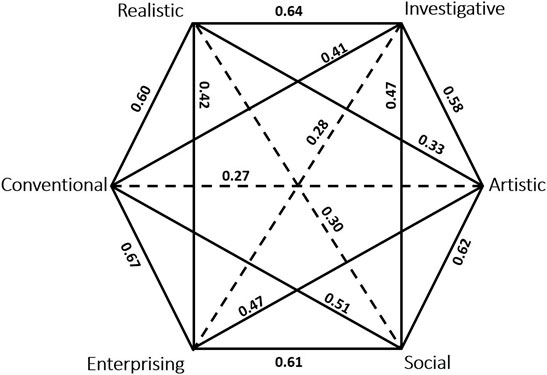
FIGURE 1. Based on Yu and Alvi (1996), Correlations between Holland’s Self-Directed Search (SDS) scores arranged as hexagonal ordered relations in 409 students from a technical secondary school in China.
Magnetic Resonance Tomography: Instrument for Research Into Neuroplasticity
The structural and functional adaptation processes known as neuroplasticity have been researched for over 70 years (Hebb, 1949; Bailey and Chen, 1988; Morris, 1999; Kapfhammer, 2000; Yang et al., 2014; Wenger et al., 2017). With the imaging methods of magnetic resonance imaging available today and the possibilities of Voxel-Based Morphometry (VBM), statistical analyses of the distribution of Gray (GM) and White (WM) brain matter can be carried out despite the individual shape and size of the brains examined, thus demonstrating the phenomenon of neuroplasticity in vivo (Ashburner and Friston, 2000; Good et al., 2001; Pieperhoff et al., 2007; Stöcker and Shah, 2007; Reith, 2011; Wang et al., 2014; Lanfermann et al., 2015).
The findings on the function of distinct brain areas have also made rapid progress in recent years, so that correlations between the statistical assignment in Gray matter and White matter and the function of the respective area can be established.
Evidence of neuronal adaptation can be found in both longitudinal and cross-sectional studies. In longitudinal studies, the effect of training on a single group of subjects is examined according to defined time intervals. It can be observed that training leads to an intra-individual shift toward an increase in Gray matter at the cost of a decrease in the relative extent of White matter in the corresponding brain regions (Draganski et al., 2006; Krick et al., 2015; Garner et al., 2019). Those structural shifts usually were correlated to gradually measured performance scores.
In contrast, in cross-sectional studies, differences between a group of participants exhibiting a certain attribute is compared to a similar control group without this property. Those inter-individual observations can detect differences in brain regions associated with the participants’ certain personality traits as shown by the personality trait of impulsivity (Besteher et al., 2019) and by differences among the Big Five personality traits (DeYoung et al., 2010). In each case the differences between (self-) tests’ scores and VBM-derived brain differences were assigned. Schroeder et al. (2012) analyzed the neural base of “Realistic” and “Investigative” traits from Holland’s RIASEC model by the identical VBM approach as used in our study. Although both traits were highly coherent using the Holland’s SDS questionnaire (Holland, 1994), the authors found differences in the brain’s structure. Especially clusters in motor and premotor areas as well as in secondary visual areas in the case of “Realistic”. In the case of “Investigative” they reported clusters in frontal areas and in secondary visual areas. Thus, this neuroimaging approach has been proved to be feasibly and successfully applied. However, many studies do not clearly specify whether a certain attribute is associated with a higher or lower density of Gray or White matter (Sluming et al., 2002; Hänggi et al., 2015; Vaquero et al., 2016).
Hypothesis
Counseling instruments for career choice are an integral part of the daily pedagogical routine of teachers and career counsellors. Aptitudes, interests, and abilities are collected and analyzed. Based on this data, recommendations for career decisions are given.
We aimed to investigate whether there are indications of statistically relevant neuronal correlated to the results of a psychological interest test for recording individual vocational inclinations. By means of VBM analysis, the distinct hypothesis challenged differences in Gray or White Matter of brain tissue induced by the six individual traits as revealed by Stangls’s Situational Interest Test (SIT) in this case (Stangl, 2016).
Materials and Methods
Study Design
The study presented here is a cross-sectional study. After the acquisition of the participants at the vocational school in Zweibrücken (Ignaz-Roth-Schule, BBS Zweibrücken, Germany) and the Department for Neuroradiology of the University of Saarland (Germany), the Situational Interest Test (Online-SIT) and an MRI imaging of the brain were performed. A questionnaire was used to collect covariates (age, gender, and relevant exclusion criteria).
Participants
A total of 104 MRIs were performed over four days, including 67 female and 37 male participants (average age of 28.68 years ± SD 12.78 years). Each participant was asked to conduct the SIT online test.
The study was approved by the Ethics Commission of the Saarland (No. 142/12) as well as by the regional supervisory school authorities (No. A 4/C -2.7.4.1) due to the importance of considering individual skills during school education.
Data Acquisition
Stangl’s online Vocational Interest Test (SIT). We used Prof. Stangl’s Situational Interest Test (SIT) to assess the professional interests of the participants. Although this interest test is based on Holland’s theory and the RIASEC model, it rather computes the differences than the coherences between the six vocational interests (Stangl, 1991). The online test can be found on the website of Professor Werner Stangl (http://arbeitsblaetter.stangl-taller.at/TEST/SIT/index.php). Since 2003 it has been registered in PSYNDEX, the database of the Leibniz Center for Psychological Information and Documentation (ZPID), by the number 9005219 (PSYNEX-Tests, 2017). Assessing the participants’ individual SIT triplets (3-letter codes) was based on the current version 3.0 of the Situational Interest Test of September 26th, 2013.
During the test, the user is confronted with 30 fictitious situations, each corresponding to one of the six categories of Holland’s environmental types. The user is asked to decide which of two displayed activities offered he/she prefers. The offered activities correspond to a large extent to the categories of Holland’s personality types. The user locates him-/herself by mouse click in a four-point Likert scale. Thus, there is no possibility of a middle position, forcing a certain preference along the four-level selection field (Figure 2). So, the test construction of the SIT differentiates between the six RIASEC types.
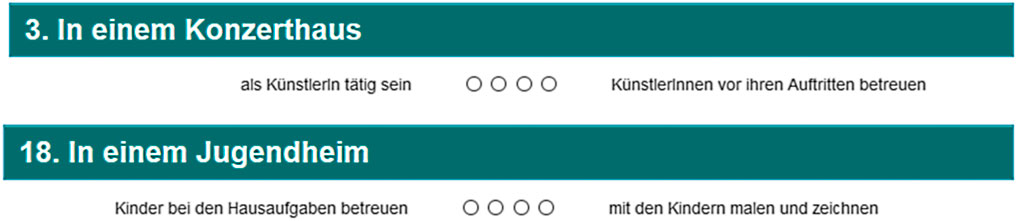
FIGURE 2. Two questions on the personality types ‘Artistic’ and ‘Social’ presented in the environmental types ‘Artistic’ and ‘Social’ (translation below). The user locates his inclination by mouse click in a four-level selection field (Stangl, 2016). Question No 3. In a concerthall: work as an artist O O looking after artists before their performances Question No 18. In a youth home. looking after children during their homework O O painting and drawing with children.
After completing the test, the user is informed on the own personality type (Stangl, 2016). The scores yielded in all six RIASEC categories are displayed and a subset of three categories scoring highest are selected (3-Letter-Code).
Magnetic resonance examination: structural magnetic resonance tomography. The magnetic resonance images were taken at the Department of Diagnostic and Interventional Neuroradiology at Saarland University Hospital in Homburg. A 3 T MRI scanner from Siemens, model Skyra, with a 20-channel head coil was used.
T1-weighted MPRAGE sequences with the following parameters were used: repetition time (TR): 1900 ms, echo time (TE): 2.13 ms, inversion time (TI): 900 ms, excitation angle (flip-angle): 9°, matrix 256 × 256, 192 slices with 0.9 mm thickness, consisting in voxels of 0.94 mm × 0.94 mm × 0.9 mm edge length. The measurement time of the MPRAGE measurement lasted 4.5 min.
For processing and statistical analysis of the image data, the program “Statistical Parametric Mapping” based on MATLAB (Mathworks Inc., Natick, Massachusetts, United States) in version 8 (SPM8, Welcome Department of Cognitive Neurology, London, United Kingdom, www.fil.ion.ucl.ac.uk/spm) was used. The image data were available in DICOM format. Data were imported into SMP8 and converted into the NIfTI data format using the integrated tools.
Consecutive normalization, segmentation and smoothing were realized with the VBM Toolbox (VBM8) in SPM8. This add-on was developed by the Structural Brain Mapping Group around Dr. Christian Gaser at the University of Jena (http://www.neuro.uni-jena.de/vbm/). The whole pre-processing procedure was in accordance with the “optimized processing” of Good et al. (2001). Using the diffeomorphic image processing algorithm DARTEL (Ashburner, 2007), the image data were normalized to the stereotactic space of a reference brain (ICBM 152), segmented into WM, GM, and cerebrospinal fluid space (CSF), and smoothed with a Gaussian filter (FWHM of 10 mm × 10 mm × 10 mm) to obtain comparable images for statistical analysis.
Modeling structural brain data by RIASEC traits from SIT. Due to the Holland’s triplet profiles a high number of possible variants of the 3-letter code (120 possibilities) described the participants’ interests. We decided to include all traits in a multiple regression model but to evaluate the influence of each single trait against the mean effects of any other traits either among the three-letter code or not. Additionally, age, gender, and the individual brain size were included as regressors, but their effects were zeroed and thus neutralized in respect to the influence on brain tissue alterations. The statistical evaluation was further carried out with SPM using a multiple regression analysis contrasting triplets including one certain feature of the RIASEC model against the mean effect of the other five traits of the RIASEC model. Further, resulting effects were controlled by age and gender and the individual total brain volume. Resulting ß-weights of this model (“contains the characteristic” vs. “does not contain the characteristic”, controlled for age, gender, and brain volume) was further used to display neural correlates of each RIASEC dimension in the brain’s tissue. The smoothed GM and WM data of the participants were entered into the SPM test procedure and then the differences were contrasted at a significance level of 99.5% (alpha error p < 0.005). Significant differences with a minimum cluster size of 20 contiguous voxels (extent threshold) were subsequently color-coded on the superimposed “standard brain”. The coding here corresponded to the test’s co-efficient.
The following Figure 3 displays two examples out of SPM data output showing brain tissue density increase of either (A) Gray matter by “Social” trait or (B) of White matter by “Artistic” trait.
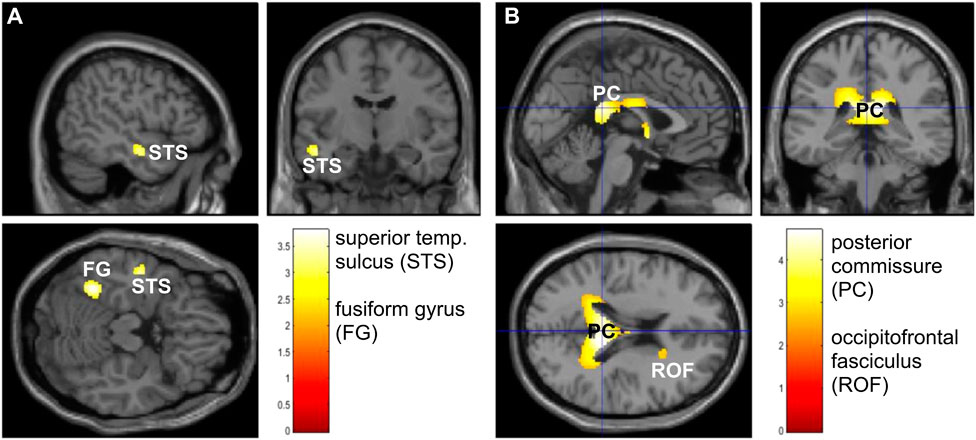
FIGURE 3. Examples of brain tissue alterations in relation to certain personality traits among the leading 3-letter code (A) Increased Gray matter density in individuals with personality trait ‘Social’ and (B) increased White matter density with personality trait ‘Artistic’, each presenting clusters as indicated in the figure (p < 0.005; extent threshold 20 voxels).
Assignments of the statistical results (clusters) to the topography of the reference brain ICBM152 were performed in SPM8 with the add-on “Anatomy Toolbox” of version 2.2b. This tool was developed at the Research Center Jülich by the working group “Architectonics and Brain Function” of Professor Simon Eickhoff headed by Professor Katrin Amunts (Eickhoff et al., 2005).
Results
When arranging resulting SIT scores along the RIASEC hexagon the six calculated personality traits predominantly show opposite correlations to the other traits. Figure 4 displays the Pearson’s correlation coefficients between all RIASEC traits.
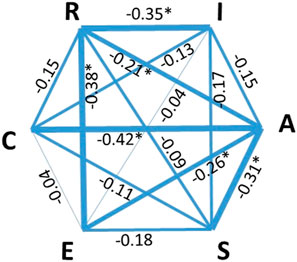
FIGURE 4. Resulting Pearson’s correlations between RIASEC scores from SIT arranged in the Holland’s hexagon predominantly revealed inverse relations that were marked with an asterisk in the case of significance (p < 0.05).
Only results with a cluster significance threshold of p < 0.005, uncorrected for multiple comparisons and a cluster size k > 20 voxels were considered. Additionally, the significance (p) of the maximum in the cluster had to be below 0.002 (uncorr). A strict FWE correction was not applied because of the known variance between different brains in relation to the sample size.
Outside of the brain’s cerebral fluid, brain tissue in each MRI voxel comprises a certain ratio of both GM and WM. This however implies that a higher volume of GM in a brain area must necessarily cause a lower volume of WM. Of course, the opposite relation is also true. For this reason, in the listing of the results (Table 1), the statistical findings of an increased density in one tissue type are merged with revealed clusters from decreasing density in the other tissue type.

TABLE 1. Overview of the results with assignment of the function.
In Table 1, all displayed structural results in the brain and the corresponding connection to approbate functions as derived from literature are presented. An interpretation is given in the following discussion.
Discussion
Methodological Discussion
We decided to use Prof. Stangl’s Situational Interest Test (SIT) to assess differences in the participants’ professional interests. The questionnaire is based on Holland’s theory and the RIASEC model, since Stangl (1991) refers the former version of the SIT to the Holland’s model. In contrast to the Holland’s calculus, Stangl’s SIT rather calculates differences than coherences between the hexagonal positions among the RIASEC traits (Figure 5). This in turn can be considered as an advantageous base for a cross-sectional VBM study, since we focus on brain differences assignable to differences in vocational interests.
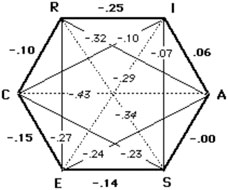
FIGURE 5. Hexagonal ordered RIASEC traits assessed by Stangl (1991) for scientific validation of his interest test.
The reciprocal correlations between the traits from Stangl’s test do not exactly correspond to Holland’s calculus hypothesis that rather displays the degree of similarity between the traits. Nevertheless, our findings yielded reciprocal correlations similar to Stangl’s calculus (Figure 4). Our results underline the fact that Stangl’s SIT construction focuses on differences instead on coherences between the traits. This constellation, however, seems in line with the consideration that our VBM study also focused on tissue differences. Consequently, we decided to use Stangl’s online test yielding personality differences that in turn matched our study’s aim to assess related brain tissue differences. Schroeder et al. (2012) using Holland’s SDS were able to show similar findings regarding “Realistic” and “Investigative” despite a small sample size of 40 subjects. However, they failed to present structural differences regarding the other traits. Potentially, modeling morphological differences basing on the degree of personality similarities did not gain consistent results in each case.
The SIT’s conformity to DIN 33430 (requirements for vocational aptitude testing) was approved (Stiftung Warentest, 2007), however, it was not used for scientific studies so far. Moreover, Stangl’s Situational Interest Test only requires about 10 min to complete and it was available in German language. The short duration ensured a high level of compliance among the German participants.
Assessing personality traits by VBM has been demonstrated as suitable for discovering their neural base (DeYoung et al., 2010; Besteher et al., 2019). Sample sizes of former studies ranged between 85 (Besteher et al., 2019) and 116 (DeYoung et al., 2010). Schroeder et al. (2012) compared the traits of “Realistic” and “Investigative” to spatial abilities and general intelligence by means of VBM, too. However, the latter study based on 40 participants only. In our study 104 participants were included and all six Holland’s interest dimensions were regarded. Thus, the statistical base of our data seems comparable to preceding studies in this scientific field.
Contrasting the occurrence of a certain RIASEC trait against the mean effect of the other five traits was motivated by the SIT’s result of predominantly reciprocal relations between the traits (Figure 4). Thus, regarding all RIASEC features allowed controlling and weighting the interference between the traits in one model. Since it is known that age, gender, and total brain volume effectuate alterations on brain morphology, zeroing their effects eliminated biological bias from model.
Significance of the Results
Similar to our approach, Besteher et al. (2019), DeYoung et al. (2010), and Schroeder et al. (2012) were able to isolate brain tissue alterations due to the personality traits by means of VBM. However, the interpretation of statistical results must be carried out with great care. It has not yet been conclusively clarified the interpretation of increasing or decreasing tissue density. Although the significance of voxel-based morphometry can be better derived from structural changes gained by longitudinal studies (Draganski et al., 2006; Draganski and May, 2008), cross-sectional studies have been also successfully carried out (Draganski et al., 2011). Nevertheless, rather cautious interpretation is advised since a lower volume of Gray matter can be caused both by the neglect of skills (Langer et al., 2012) and by decades of intensive training (Hänggi et al., 2014; Vaquero et al., 2016). Moreover, independently from cognitive effort by school exercises brain maturation during adolescence leads to a shift toward increasing WM that in turn causes a relative GM decrease within the whole brain volume.
For this reason, the present paper will primarily use the term “statistical results” or “statistical effects” in interpreting the results. The present work is a cross-sectional study, which comprises a rather homogeneous group of individuals. Although a vocational interest cannot be equalized with trained skills one can assume that metalizing those skills may frame in some extent the corresponding brain structures over long time. Thus, as a first approximation cortical clusters showing increased Gray matter/decreased White matter may support the assigned abilities or personality traits, respectively, by enhanced cortical tissue. In the case of clusters located in nerve fiber tracks decreased Gray matter/increased White matter may also support the abilities and personality traits due to a higher connectivity.
Realistic (R) “Doers”
People with this preference like dealing with objects and materials that can be processed manually or mechanically. Strength, skill, and coordination are used with pleasure (Leung, 2008; Joerin Fux et al., 2013; Eder and Bergmann, 2015).
Participants showing the aspect of “Realistic” in their SIT triplet yielded statistical effects in their MRI images, especially in the brain regions related to seeing, hearing, grasping, orientation in space, motor action planning and learning or performing complex sequences of actions (Stephan et al., 1995; Shima and Tanji, 1998; Rottschy et al., 2007; Nachev et al., 2008; Bludau et al., 2014; Vernet et al., 2014; Neszmélyi and Horváth, 2019). In fact, these are key competences particularly required in skilled trades. People in these professions must be able to grasp things blindly and carry out complex manual sequences of actions precisely and routinely. The results show a high degree of agreement with the characteristics of personality type “Realistic” described by Holland.
Results of the “Realistic” trait revealed in our approach were in accordance with the findings of Schroeder et al. (2012). This personality type converged to special and motor abilities.
Investigative (I) “Thinkers”
People with this personal type like dealing with physical, biological, or cultural phenomena. They work systematically and like observing before doing. Their focus is on research. Problems are investigated with the help of new ideas, logical thinking, or precise observation (Leung, 2008; Joerin Fux et al., 2013; Eder and Bergmann, 2015).
Participants who showed the “Investigative” trait in the triplet, revealed significant effects in brain regions which are involved in cognitive abilities, tactile information processing, observation in environment and visuo-spatial processing (Stephan et al., 1995; Klingberg, 2006; Coggan et al., 2019; Farah et al., 2020). They show a lower connectivity in brain regions related to creativity, verbal expression, and audiovisual processing abilities (Stephan et al., 1995; Hesling et al., 2005; Fadiga et al., 2006; Luders et al., 2007; Moreno et al., 2014; Coggan et al., 2019; Neszmélyi and Horváth, 2019; Farah et al., 2020). Most probably, frontal areas and inferior parietal areas should be assigned to the frontoparietal network involved in complex cognitive tasks (Shashidhara et al., 2019).
The brain regions to which spatial attention, and reorientation, manual competence and motor skills are attributed show a lower GM density (Karni et al., 1998; Shima and Tanji, 1998; Buccino et al., 2004; Thier, 2006; Rottschy et al., 2007; Nachev et al., 2008; Seghier, 2013; Papadopoulos et al., 2018; Caspers S. et al., 2013). The same is true for areas associated with competence in musical interpretation and painting (Rottschy et al., 2007; Neszmélyi and Horváth, 2019). In contrast, stronger connectivity is found for brain regions associated with observational skills, visuo-spatial working memory, learning processes, attention processes, and visual processing of objects’ color and shape (Amunts et al., 2000; Klingberg, 2006; Rottschy et al., 2007; Roe et al., 2012; Kujovic et al., 2013; Raichle, 2015; Caspers J. et al., 2013; Brodt et al., 2016; Neszmélyi and Horváth, 2019).
Thus, it can be stated that the statistical effects of brain morphology suggest a cognitive rather than a manual orientation of this group of people. The respective pattern of brain areas is usually assigned to higher cognitive functions related to higher intelligence (Schroeder et al., 2012).
Artistic (A) “Creators”
People with this focus prefer open and unstructured activities, which allow developing creative products using unconventional materials, musical instruments, or their own body in order to embellish or enrich cultural life. They are interested in languages, visual arts, music, acting, or writing (Leung, 2008; Joerin Fux et al., 2013; Eder and Bergmann, 2015). This way of thinking has been associated with cognitive flexibility (Leber et al., 2008).
The participants with the characteristic “Artistic” show many effects in their brain structure, which correspond to the characteristics of an artistic-linguistic or artistic-creative person type. Our data linked this characteristic to large scale interconnections both between the brain’s hemispheres and in the fronto-occipital direction. These connections have been assigned to creative thinking and cognitive flexibility (Leber et al., 2008; Jung et al., 2013). Skills in creativity, dance (movement planning and execution) and speech are supported by significant alterations in the Corpus Callosum (Luders et al., 2007; Moreno et al., 2014) and in the Brodmann areas 46 (Levitin and Menon, 2003; Patel, 2003; Lissek et al., 2008; Price, 2010). In addition, clusters are found in brain regions indicating increased hedonic experience and emotionality (BA 10, BA 11) as reported by Kringelbach (2005). Areas assigned to emotional behavior control (Amygdala) and acquisition of musical structures (BA 46) can be based on reports by Lissek et al. (2008), Levitin and Menon (2003), Patel (2003), and Price (2010). These properties are also commonly associated with artistically oriented personality traits, even if they are not explicitly described by Holland. Overall, there is a high degree of agreement between the functions of statistically significant brain areas and the characteristics of the “Artistic” personality type described by Holland.
Social (S) “Helpers”
People with this preference like caring for other people by training, teaching, advising, caring for or healing them. They show social empathy, patience, and pedagogical skills in fulfilling their tasks. They are considered idealistic, warm-hearted, sociable, and tolerant (Leung, 2008; Joerin Fux et al., 2013; Eder and Bergmann, 2015).
In subjects with the personality trait “Social”, significant effects can be demonstrated in brain regions that belong to the key competences of social professions (von dem Hagen et al., 2011). This is especially underlined by the effect (increase of Gray matter) in the STS, since this area is active in social perception and the mental sharing of feelings, goals, and actions (Allison et al., 2000; Paus, 2005; van Overwalle and Baetens, 2009; Jankowiak-Siuda et al., 2011). The cluster found in the STS belongs to the mirror neuron system and suggests an increased capacity for empathy. However, the hit in the left Brodmann area 37 also supports the impression gained, since this structure is activated during face, word, and object recognition (Weiner and Zilles, 2016; Lorenz et al., 2017). Thus, the neuronal structure in this group of test persons also corresponds with essential features of social/educational/care-giving personality type.
Enterprising (E) “Persuaders”
People with an entrepreneurial orientation like to organize, lead, or manage. They prefer activities with which they influence, motivate, or manipulate others in order to achieve organizational or economic goals. They are regarded as self-confident, engaging, motivating, ambitious, dominant, dynamic, and responsible (Leung, 2008; Joerin Fux et al., 2013; Eder and Bergmann, 2015).
Test persons with the personality type “Enterprising” show statistical effects in brain regions that are needed for (self-) conscious movements of hands and head (BA 1) (Cloutier et al., 2012; Sepulcre, 2015). This makes it easier for them to use gestures and facial expressions in a targeted manner. In addition, densification of the Gray matter can be seen in the IPL, SPL, and intraparietal sulcus (IPS). These areas have been assigned to numerical skills (Deheane et al., 2003). The finding in the Thalamus suggests connections to linguistic and social functions (Amunts and Zilles, 2010). Increased connectivity to the caudate nucleus may be interpreted to higher abilities in a goal-directed behavior (Grahn et al., 2008). These are helpful skills for influencing and motivating others in customer/sales talks or in personnel management as postulated by Holland for this personality type: self-confidence, ambition, and dominance.
Conventional (C) “Organizers”
People with this orientation like to work accurately and neatly. They prefer activities that involve the orderly and systematic handling of data or materials, e.g. arranging materials and data or creating documentation and records. They are considered to be precise, orderly, conscientious, persistent, practical, and rather careful (Leung, 2008; Joerin Fux et al., 2013; Eder and Bergmann, 2015).
The participants with triplets including the characteristic “Conventional” show a network for integration of rule-based information into motor actions (thalamic motor nuclei, premotor and superior parietal regions) for trained operations (Karni et al., 1998; Hawkins et al., 2013) but a tendency for minor social skills (Allison et al., 2000; Paus, 2005; van Overwalle and Baetens, 2009; Jankowiak-Siuda et al., 2011). Especially, the observed superior parietal cluster that can be assigned to the personality trait of conscientiousness may characterize the “Conventional” type (Wang et al., 2019). Consequently, the characteristics of the personality type “Conventional” as described by Holland seems consistent with statistically relevant brain regions, too.
Considering the above relations between differences in RIASEC traits and structural brain differences, the SIT’s calculus seemed play a crucial role. To emphasize this point, we may imagine a salesman and a nursery teacher. Whereas the salesman must develop financial interests, the nursery teacher rather likes to help children. Consequently, our results highlighted brain regions related to numerical functions in the case of “Enterprising” trait, whereas in the case of “Social” trait regions related to social understanding have been discovered. However, regarding coherences between Holland’s vocational types should be integrated in future projects, too. Thus, the salesman and the nursery teacher will each do a good job if relishing to interact with human beings. This bias regarding coherent jobs has been not regarded in our study. Thus, a future project should consider comprising both differences and coherences between the RIASEC traits by integrating both SIT’s and SDS’ calculi. Potentially, forming an integrative vocational test instrument might link both perspectives. Since the findings by Schroeder et al. (2012) covered only two of six RIASEC types a future approach should compare the structural effects regarding all types resulting from both SIT’s and SDS’ calculus. Those data will be also necessary to validate the SIT’s calculus on the base of a frequently applied test in scientific research.
Limitations
The use of HOLLAND-based tools for career guidance has been established for many decades. There are a number of research papers dealing with the English language original or its national adaptations. There is no doubt that both the model and some of the guidance tools based on the model have been sufficiently tested and are widely used (Schinka et al., 1997; Petrides and McManus, 2004; Pellerone et al., 2015). However, the quality criteria of Stangl’s Situational Interest Test have not been scientifically verified so far. Moreover, the SIT’s results represent differences between the RIASEC types, whereas Holland’s SDS calculates coherences between the vocational interests.
Further, we did not consider the individual degree of previous experience in an area of vocational interest that potentially caused additional effects on the subjects’ neuronal structure. However, developing a certain interest may certainly involve attention, thoughts, and acting in the same direction.
Data groups with the criterion “triplet contains R/I/A/S/E or C” were formed. This is associated with a degree of uncertainty due to the degree of interference from other characteristics. Although, we included all individual interest pattern in one statistical model, the contrast of one trait to the mean of the others may anyway confounded with an unknown relationship between the traits.
Although cross-sectional studies assessing personality traits have been successfully established (DeYoung et al., 2010; Schroeder et al., 2012; Besteher et al., 2019), cautious interpretation is recommended when explaining alterations of Gray matter, since it can be caused both by the neglect of skills (Langer et al., 2012) and by decades of intensive training (Hänggi et al., 2014; Vaquero et al., 2016).
Conclusion
At the beginning of our considerations stood the hypothesis that there is a significant correlation between the results of the Situational Interest Test as an instrument for assessing a professional inclination and the neuronal structure of the respondents. It was found that in all data groups of the property characteristics Realistic, Investigative, Artistic, Social, Enterprising and Conventional statistically relevant correlations or anti-correlations to the density of Gray and White brain matter could be detected.
In addition, the characteristics of the six personality types postulated by Holland Realistic, Investigative, Artistic, Social, Enterprising and Conventional correspond explainable with the described functions of the statistically assigned brain regions.
In conclusion, Stangl’s Situational Interest Test was able to meet the neuronal base of the participants’ mental predispositions. It can be stated that, in principle, voxel-based morphometry can be used to demonstrate correlations between the scores of a vocational interest test and the neuronal architecture of assignable brain functions. The correspondence between certain neural predisposition and differences in the individual SIT profile underpins the brain’s framing by individual personality traits. Consequently, the result of the Situational Interest Test may be considered as an approbate contribution to the counseling of young people due to assigning existing personality traits to related brain structures. According to Holland (1997), a higher degree of congruence between personality type and vocational environment may lead to higher job satisfaction.
Finally, we suggest an integrative view on both differences and coherences between vocational traits in future projects to consider a bias from similarities in neighboring RIASEC types.
Data Availability Statement
The datasets presented in this article are not readily available because the datasets contain identifiable data of participants. Requests to access anonymized datasets should be directed to Y2hyaXN0b3BoLmtyaWNrQHVrcy5ldQ==.
Ethics Statement
The studies involving human participants were reviewed and approved by the Ethics Commission of Saarland (No. 142/12) and the regional supervisory school authorities (No. A 4/C -2.7.4.1). Written informed consent to participate in this study was provided by the participants’ legal guardian/next of kin.
Author Contributions
Gurres: Study design, data acquisition, data evaluation and interpretation Dillmann: Professional competence Reith: MRI imaging Krick: Data evaluation. All authors contributed to the article and approved the submitted version.
Conflict of Interest
The authors declare that the research was conducted in the absence of any commercial or financial relationships that could be construed as a potential conflict of interest.
Acknowledgments
Many thanks to all participants and to the staff of the Department of Neuroradiology. The University of Saarland supported this research financially but had no role in study design, data collection, analysis, decision to publish or preparation of the manuscript.
References
Allison, T., Puce, A., and McCarthy, G. (2000). Social perception from visual cues: role of the STS region. Trends Cogn. Sci. 4, 267–278. doi:10.1016/s1364-6613(00)01501-1
Amunts, K., Kedo, O., Kindler, M., Pieperhoff, P., Mohlberg, H., Shah, N. J., et al. (2005). Cytoarchitectonic mapping of the human amygdala, hippocampal region and entorhinal cortex: intersubject variability and probability maps. Anat. Embryol. 210, 343–352. doi:10.1007/s00429-005-0025-5
Amunts, K., Malikovic, A., Mohlberg, H., Schormann, T., and Zilles, K. (2000). Brodmann’s areas 17 and 18 brought into stereotaxic space-where and how variable?. NeuroImage 11, 66–84. doi:10.1006/nimg.1999.0516
Amunts, K., and Zilles, K. (2010). “Makroskopische und mikroskopische Anatomie von Gehirn und Rückenmark,” in Anatomie. Editors K. Zilles, and B. N. Tillmann (Berlin, Germany: Springer), 624–626.
Ashburner, J. (2007). A fast diffeomorphic image registration algorithm. NeuroImage 38 (1), 95–113. doi:10.1016/j.neuroimage.2007.07.007
Ashburner, J., and Friston, K. J. (2000). Voxel-based morphometry–the methods. NeuroImage 11, 805–821. doi:10.1006/nimg.2000.0582
Bailey, C. H., and Chen, M. (1988). Long-term memory in aplysia modulates the total number of varicosities of single identified sensory neurons. Proc. Natl. Acad. Sci. U. S. A. 85, 2373–2377. doi:10.1073/pnas.85.7.2373
Berenbaum, S. A., Beltz, A. M., and Corley, R. (2015). The importance of puberty for adolescent development: conceptualization and measurement. Adv. Child. Dev. Behav. 48, 53–92. doi:10.1016/bs.acdb.2014.11.002
Bergmann, C., and Eder, F. (2018). Allgemeiner interessen-struktur-test mit umwelt-struktur-test. Göttingen, Germany: Hogrefe (UST-3) – Version 3..
Bergmann, C., and Eder, F. (1994). “Laufbahnberatung als Entwicklungsanstoß und Entscheidungshilfe. Ein Beratungsmodell für Maturanten,” in Lehrer/in Werden. Editor J. Mayr (Innsbruck, Austria: Österreichischer Studien Verlag), 248–262.
Berridge, K. C., and Kringelbach, M. L. (2015). Pleasure systems in the brain. Neuron 86, 646–664. doi:10.1016/j.neuron.2015.02.018
Besteher, B., Gaser, C., and Nenadić, I. (2019). Brain structure and trait impulsivity: a comparative VBM study contrasting neural correlates of traditional and alternative concepts in healthy subjects. Neuropsychologia 131, 139–147. doi:10.1016/j.neuropsychologia.2019.04.021
Bludau, S., Eickhoff, S. B., Mohlberg, H., Caspers, S., Laird, A. R., Fox, P. T., et al. (2014). Cytoarchitecture, probability maps and functions of the human frontal pole. NeuroImage 93, 260–275. doi:10.1016/j.neuroimage.2013.05.052
Brodt, S., Pöhlchen, D., Flanagin, V. L., Glasauer, S., Gais, S., and Schönauer, M. (2016). Rapid and independent memory formation in the parietal cortex. Proc. Natl. Acad. Sci. USA 113 (46), 13251–13256. doi:10.1073/pnas.1605719113
Buccino, G.Vogt, S.Ritzl, A.Fink, G. R.Zilles, K.Freund, H. J.Rizzolatti, G. (2004). Neural circuits underlying imitation learning of hand actions: an event-related fMRI study. Neuron 42 (2), 323–334. doi:10.1016/s0896-6273(04)00181-3
Caspers, J., Zilles, K., Eickhoff, S. B., Schleicher, A., Mohlberg, H., and Amunts, K. (2013). Cytoarchitectonical analysis and probabilistic mapping of two extrastriate areas of the human posterior fusiform gyrus. Brain Struct. Funct. 218, 511–526. doi:10.1007/s00429-012-0411-8
Caspers, S., Schleicher, A., Bacha-Trams, M., Palomero-Gallagher, N., Amunts, K., and Zilles, K. (2013). Organization of the human inferior parietal lobule based on receptor architectonics. Cereb. Cortex 23, 615–628. doi:10.1093/cercor/bhs048
Cloutier, J., Ambady, N., Meagher, T., and Gabrieli, J. D. (2012). The neural substrates of person perception: spontaneous use of financial and moral status knowledge. Neuropsychologia 50 (9), 2371–2376. doi:10.1016/j.neuropsychologia.2012.06.010
Coggan, D. D., Baker, D. H., and Andrews, T. J. (2019). Selectivity for mid-level properties of faces and places in the fusiform face area and parahippocampal place area. Eur. J. Neurosci. 49 (12), 1587–1596. doi:10.1111/ejn.14327
Crawford, J. D., Medendorp, W. P., and Marotta, J. J. (2004). Spatial transformations for eye-hand coordination. J. Neurophysiol. 92 (1), 10–19. doi:10.1152/jn.00117.2004
Dehaene, S., Piazza, M., Pinel, P., and Cohen, L. (2003). Three parietal circuits for number processing. Cogn. Neuropsychol. 20 (3), 487–506. doi:10.1080/02643290244000239
DeYoung, C. G., Hirsh, J. B., Shane, M. S., Papademetris, X., Rajeevan, N., and Gray, J. R. (2010). Testing predictions from personality neuroscience. Brain structure and the big five. Psychol. Sci. 21 (6), 820–828. doi:10.1177/0956797610370159
Draganski, B., Ashburner, J., Hutton, C., Kherif, F., Frackowiak, R. S., Helms, G., et al. (2011). Regional specificity of MRI contrast parameter changes in normal ageing revealed by voxel-based quantification. NeuroImage 55 (4), 1423–1434. doi:10.1016/j.neuroimage.2011.01.052
Draganski, B., Gaser, C., Kempermann, G., Kuhn, H. G., Winkler, J., Büchel, C., et al. (2006). Temporal and spatial dynamics of brain structure changes during extensive learning. J. Neurosci. 26, 6314–6317. doi:10.1523/JNEUROSCI.4628-05.2006
Draganski, B., and May, A. (2008). Training-induced structural changes in the adult human brain. Behav. Brain Res. 192, 137–142. doi:10.1016/j.bbr.2008.02.015
Eder, F., and Bergmann, C. (2015). “Das Person-Umwelt-Modell von J. L. Holland: Grundlagen – Konzepte – Anwendungen,” in Berufliche Interessen – Beiträge zur Theorie von J. L. Editors F. G. Hartmann, and C. Tarnai (Münster, Germany: Waxmann), 11–30.
Eickhoff, S. B., Stephan, K. E., Mohlberg, H., Grefkes, C., Fink, G. R., Amunts, K., et al. (2005). A new SPM toolbox for combining probabilistic cytoarchitectonic maps and functional imaging data. NeuroImage 25, 1325–1335. doi:10.1016/j.neuroimage.2004.12.034
Fadiga, L., Craighero, L., Destro, M. F., Finos, L., Cotillon-Williams, N., Smith, A. T., et al. (2006). Language in shadow. Soc. Neurosci. 1 (2), 77–89. doi:10.1080/17470910600976430
Farah, R., Tzafrir, H., and Horowitz-Kraus, T. (2020). Association between diffusivity measures and language and cognitive-control abilities from early toddler’s age to childhood. Brain Struct. Funct. 225 (3), 1103–1122. doi:10.1007/s00429-020-02062-1
Garner, M., Reith, W., and Krick, C. (2019). 10-Week hatha yoga increases right hippocampal density compared to active and passive control groups: a controlled structural cMRI study. J. Neuroimaging Psychiatry Neurol. 4 (1), 1–11.
Good, C. D., Johnsrude, I. S., Ashburner, J., Henson, R. N., Friston, K. J., and Frackowiak, R. S. (2001). A voxel-based morphometric study of ageing in 465 normal adult human brains. NeuroImage 14, 21–36. doi:10.1006/nimg.2001.0786
Grahn, J. A., Parkinson, J. A., and Owen, A. M. (2008). The cognitive functions of the caudate nucleus. Prog. Neurobiol. 86 (3), 141–155. doi:10.1016/j.pneurobio.2008.09.004
Hänggi, J., Langer, N., Lutz, K., Birrer, K., Mérillat, S., and Jäncke, L. (2015). Structural brain correlates associated with professional handball playing. PLoS ONE 10 (4), e0124222. doi:10.1371/journal.pone.0124222
Hänggi, J., Brütsch, K., Siegel, A. M., and Jäncke, L. (2014). The architecture of the chess player’s brain. Neuropsychologia 62, 152–162. doi:10.1016/j.neuropsychologia.2014.07.019
Hartmann, F. G., Ramsauer, K., and Tarnai, C. (2015). “Literatur zur Theorie von Holland im deutschsprachigen Raum,” in Berufliche Interessen – Beiträge zur Theorie von J. L. Holland. Editors F. G. Hartmann, and C. Tarnai (Münster, Germany: Waxmann), 223–246.
Hawkins, K. M., Sayegh, P., Yan, X., Crawford, J. D., and Sergio, L. E. (2013). Neural activity in superior parietal cortex during rule-based visual-motor transformations. J. Cogn. Neurosci. 25 (3), 436–454. doi:10.1162/jocn_a_00318
Hell, B., Schuler, H., and Päßler, K. (2005). Ein Selbsttest zur Studienorientierung. Available at: http://www.was-studiere-ich.de (Accessed January 7, 2017).
Henssen, A., Zilles, K., Palomero-Gallagher, N., Schleicher, A., Mohlberg, H., Gerboga, F., et al. (2016). Cytoarchitecture and probability maps of the human medial orbitofrontal cortex. Cortex 75, 87–112. doi:10.1016/j.cortex.2015.11.006
Hesling, I., Clément, S., Bordessoules, M., and Allard, M. (2005). Cerebral mechanisms of prosodic integration: evidence from connected speech. Neuroimage 24, 937–947. doi:10.1016/j.neuroimage.2004.11.003
Lanfermann, H., Raab, P., Kretschmann, H.-J., and Weinrich, W. (2015). Klinische Neuroanatomie – kranielle MRT und CT. New York, NY: Thieme.
Holland, J. L. (1994). Self-Directed Search Form R. 4th Edn.. Lutz, FL:Psychological Assessment Resources, Inc.
Holland, J. L. (1997). Making vocational choices: A theory of vocational personalities and work environments. 3rd Edn. Odessa: Florida:Psychological Assessment Resources.
Holland, J. L. (1958). A personality inventory employing occupational titles. J. Appl. Psychol. 42, 336–342. doi:10.1037/h0047330
James, K. H. (2010). Sensori-motor experience leads to changes in visual processing in the developing brain. Dev. Sci. 13 (2), 279–288. doi:10.1111/j.1467-7687.2009.00883.x
Jankowiak-Siuda, K., Rymarczyk, K., and Grabowska, A. (2011). How we empathize with others: a neurobiological perspective. Med. Sci. Monit. 17 (1), RA18–24. doi:10.12659/msm.881324
Joerin Fux, S., Stoll, F., Bergmann, C., Eder, F., and Hell, B. (2013). Explorix®: das Werkzeug zur Berufswahl und Laufbahnplanung. Deutschsprachige adaption und Weiterentwicklung des self-directed search nach John L. Holland. Edison, NJ: Huber.
Jones, L. K. (1994). Frank Parsons’ contribution to career counseling. J. Career Dev. 20, 287–294. doi:10.1007/bf02106301
Jung, R. E., Mead, B. S., Carrasco, J., and Flores, R. A. (2013). The structure of creative cognition in the human brain. Front. Hum. Neurosci. 7, 330. doi:10.3389/fnhum.2013.00330
Kapfhammer, J. P. (2000). Lexikon der neurowissenschaft: plastizität im nervensystem. Heidelberg, Germany: Spektrum.
Karni, A., Meyer, G., Rey-Hipolito, C., Jezzard, P., Adams, M. M., Turner, R., et al. (1998). The acquisition of skilled motor performance: fast and slow experience-driven changes in primary motor cortex. Proc. Natl. Acad. Sci. USA 95 (3), 861–868. doi:10.1073/pnas.95.3.861
Klingberg, T. (2006). Development of a superior frontal-intraparietal network for visuo-spatial working memory. Neuropsychologia 44 (11), 2171–2177. doi:10.1016/j.neuropsychologia.2005.11.019
Krick, C. M., Grapp, M., Daneshvar-Talebi, J., Reith, W., Plinkert, P. K., and Bolay, H. V. (2015). Cortical reorganization in recent-onset tinnitus patients by the heidelberg model of music therapy. Front. Neurosci. 9, 49. doi:10.3389/fnins.2015.00049
Kringelbach, M. L. (2005). The human orbitofrontal cortex: linking reward to hedonic experience. Nat. Rev. Neurosci. 6 (9), 691–702. doi:10.1038/nrn1747
Kujovic, M., Zilles, K., Malikovic, A., Schleicher, A., Mohlberg, H., Rottschy, C., et al. (2013). Cytoarchitectonic mapping of the human dorsal extrastriate cortex. Brain Struct. Funct. 218, 157–172. doi:10.1007/s00429-012-0390-9
Ladouceur, C. D., Peper, J. S., Crone, E. A., and Dahl, R. E. (2012). White matter development in adolescence: the influence of puberty and implications for affective disorders. Dev. Cogn. Neurosci. 2 (1), 36–54. doi:10.1016/j.dcn.2011.06.002
Langer, N., Hänggi, J., Müller, N. A., Simmen, H. P., and Jäncke, L. (2012). Effects of limb immobilization on brain plasticity. Neurology 78 (3), 182–188. doi:10.1212/WNL.0b013e31823fcd9c
Leber, A. B., Turk-Browne, N. B., and Chun, M. M. (2008). Neural predictors of moment-to-moment fluctuations in cognitive flexibility. Proc. Natl. Acad. Sci. U. S. A. 105 (36), 13592–13597. doi:10.1073/pnas.0805423105
Leung, S. A. (2008). “The big five career theories,” in International Handbook of Career Guidance. Editors J. A. Athanasou, and R. Van Esbroeck (Berlin, Germany: Springer), 115–132.
Levitin, D. J., and Menon, V. (2003). Musical structure is processed in “language” areas of the brain: a possible role for brodmann area 47 in temporal coherence. NeuroImage 20, 2142–2152. doi:10.1016/j.neuroimage.2003.08.016
Lissek, S., Peters, S., Fuchs, N., Witthaus, H., Nicolas, V., Tegenthoff, M., et al. (2008). Cooperation and deception recruit different subsets of the theory-of-mind network. PLoS One 3 (4), e2023. doi:10.1371/journal.pone.0002023
Lorenz, S., Weiner, K. S., Caspers, J., Mohlberg, H., Schleicher, A., Bludau, S., et al. (2017). Two new cytoarchitectonic areas on the human mid-fusiform gyrus. Cereb. Cortex 27, 373–385. doi:10.1093/cercor/bhv225
Luders, E., Narr, K. L., Bilder, R. M., Thompson, P. M., Szeszko, P. R., Hamilton, L., et al. (2007). Positive correlations between corpus callosum thickness and intelligence. NeuroImage 37, 1457–1464. doi:10.1016/j.neuroimage.2007.06.028
Marco-Pallarés, J., Müller, S. V., and Münte, T. F. (2007). Learning by doing: an fMRI study of feedback-related brain activations. Neuroreport 18 (14), 1423–1426. doi:10.1097/wnr.0b013e3282e9a58c
Marklund, P., and Persson, J. (2012). Context-dependent switching between proactive and reactive working memory control mechanisms in the right inferior frontal gyrus. NeuroImage 63 (3), 1552–1560. doi:10.1016/j.neuroimage.2012.08.016
Mohades, S. G., Van Schuerbeek, P., Rosseel, Y., Van De Craen, P., Luypaert, R., and Baeken, C. (2015). White-matter development is different in bilingual and monolingual children: a longitudinal DTI study. PLoS one 10 (2), e0117968. doi:10.1371/journal.pone.0117968
Moreno, M. B., Concha, L., González-Santos, L., Ortiz, J. J., and Barrios, F. A. (2014). Correlation between Corpus Callosum sub-segmental area and cognitive processes in school-age children. PLoS One 9 (8), e104549. doi:10.1371/journal.pone.0104549
Morris, R. G. (1999). D. O. Hebb: the organizatioin of behavior, Wiley: New York; 1949. Brain Res. Bull. 50, 437. doi:10.1016/s0361-9230(99)00182-3
Nachev, P., Kennard, C., and Husain, M. (2008). Functional role of the supplementary and pre-supplementary motor areas. Nat. Rev. Neurosci. 9, 856–869. doi:10.1038/nrn2478
Nagy, G., Lindner, C., Lüdtke, O., and Trautwein, U. (2015). “Ein konfirmatorisches Cosinusfunktionsmodell für den Circumplex: eine Integration des variablenbezogenen und personenbezogenen Aspekts des Circumplex,” in Berufliche Interessen – Beiträge Zur Theorie von J. L. Holland. Editors F. G. Hartmann, and C. Tarnai (Münster, Germany: Waxmann), 185–221.
Neszmélyi, B., and Horváth, J. (2019). The role of auditory context in action-effect-related motor adaptation. Hum. Mov. Sci. 67, 102503. doi:10.1016/j.humov.2019.102503
Orr, J. M., Smolker, H. R., and Banich, M. T. (2015). Organization of the human frontal Pole revealed by large-scale DTI-based connectivity: implications for control of behavior. PloS One 10 (5), e0124797. doi:10.1371/journal.pone.0124797
Papadopoulos, A., Sforazzini, F., Egan, G., and Jamadar, S. (2018). Functional subdivisions within the human intraparietal sulcus are involved in visuospatial transformation in a non-context-dependent manner. Hum. Brain Mapp. 39, 354–368. doi:10.1002/hbm.23847
Patel, A. D. (2003). Language, music, syntax and the brain. Nat. Neurosci. 6, 674–681. doi:10.1038/nn1082
Paus, T. (2005). Mapping brain maturation and cognitive development during adolescence. Trends Cogn. Sci. 9, 60–68. doi:10.1016/j.tics.2004.12.008
Pellerone, M., Passanisi, A., and Bellomo, M. F. (2015). Identity development, intelligence structure, and interests: a cross-sectional study in a group of Italian adolescents during the decision-making process. Psychol. Res. Behav. Manag. 8, 239–249. doi:10.2147/PRBM.S88631
Petrides, K. V., and McManus, I. C. (2004). Mapping medical careers: questionnaire assessment of career preferences in medical school applicants and final-year students. BMC Med. Educ. 4, 18. doi:10.1186/1472-6920-4-18
Pieperhoff, P., Mohlberg, H., and Amunts, K. (2007). “Grundlagen der Morphometrie und Integration anatomischer und funktioneller Bilddaten,” in Funktionelle MRT in Psychiatrie und Neurologie. Editors F. Schneider, and G. R. Fink (Berlin, Germany: Springer), 80–89.
Price, C. J. (2010). The anatomy of language: a review of 100 fMRI studies published in 2009. Ann. N. Y Acad. Sci. 1191, 62–88. doi:10.1111/j.1749-6632.2010.05444.x
PSYNDEX-Tests (2017). Psyndex-Dokument 9005219. Available at: https://www.zpid.de/psychologie/PSYNDEX.php?search=psychauthors&id=9005219 (Accessed July 17, 2017).
Rahmani, F., Sobhani, S., and Aarabi, M. H. (2017). Sequential language learning and language immersion in bilingualism: diffusion MRI connectometry reveals microstructural evidence. Exp. Brain Res. 235 (10), 2935–2945. doi:10.1007/s00221-017-5029-x
Raichle, M. E. (2015). The brain’s default mode network. Annu. Rev. Neurosci. 38, 433–447. doi:10.1146/annurev-neuro-071013-014030
Reith, W. (2011). “Magnetresonanztomographie,” in Diagnostische und Interventionelle Radiologie. Editors T. J. Vogl, W. Reith, and E. J. Rummeny (Berlin, Germany: Springer), 38–44.
Roe, A. W., Chelazzi, L., Connor, C. E., Conway, B. R., Fujita, I., Gallant, J. L., et al. (2012). Toward a unified theory of visual area V4. Neuron 74 (1), 12–29. doi:10.1016/j.neuron.2012.03.011
Rothmann, S., and Coetzer, E. (2003). The big five personality dimensions and job performance. SA J. Ind. Psychol. 29 (1), 68–74. doi:10.4102/sajip.v29i1.88
Rottschy, C., Eickhoff, S. B., Schleicher, A., Mohlberg, H., Kujovic, M., Zilles, K., et al. (2007). Ventral visual cortex in humans: cytoarchitectonic mapping of two extrastriate areas. Hum. Brain Mapp. 28, 1045–1059. doi:10.1002/hbm.20348
Schinka, J. A., Dye, D. A., and Curtiss, G. (1997). Correspondence between five-factor and RIASEC models of personality. J. Pers Assess. 68, 355–368. doi:10.1207/s15327752jpa6802_7
Schroeder, D. H., Haier, R. J., and Tang, C. Y. (2012). Regional gray matter correlates of vocational interests. BMC Res. Notes 5, 242. doi:10.1186/1756-0500-5-242
Seghier, M. L. (2013). The angular gyrus: multiple functions and multiple subdivisions. Neuroscientist 19 (1), 43–61. doi:10.1177/1073858412440596
Sepulcre, J. (2015). An OP4 functional stream in the language-related neuroarchitecture. Cereb. Cortex 25 (3), 658–666. doi:10.1093/cercor/bht256
Shashidhara, S., Mitchell, D. J., Erez, Y., and Duncan, J. (2019). Progressive recruitment of the frontoparietal multiple-demand system with increased task complexity, time pressure, and reward. J. Cogn. Neurosci. 31 (11), 1617–1630. doi:10.1162/jocn_a_01440
Shima, K., and Tanji, J. (1998). Both supplementary and presupplementary motor areas are crucial for the temporal organization of multiple movements. J. Neurophysiol. 80, 3247–3260. doi:10.1152/jn.1998.80.6.3247
Sluming, V., Barrick, T., Howard, M., Cezayirli, E., Mayes, A., and Roberts, N. (2002). Voxel-based morphometry reveals increased gray matter density in Broca’s area in male symphony orchestra musicians. NeuroImage 17, 1613–1622. doi:10.1006/nimg.2002.1288
Stangl, W. (1991). Der freizeit-interessen-test. Z. für Differentielle Diagnostische Psychol. 12, 231–244.
Stangl, W. (2016). Situativer Interessen Test – das Modell [werner stangl]s Arbeitsblätter. Available at: http://www.stangl-taller.at/ARBEITSBLAETTER/TEST/SIT/theorie.shtml (Accessed July 29, 2016).
Stephan, K. M., Fink, G. R., Passingham, R. E., Silbersweig, D., Ceballos-Baumann, A. O., Frith, C. D., et al. (1995). Functional anatomy of the mental representation of upper extremity movements in healthy subjects. J. Neurophysiol. 73, 373–386. doi:10.1152/jn.1995.73.1.373
Stiftung Warentest (2007). Onlinetests zur Selbsteinschätzung: Eignungsprüfung im Netz. Available at: https://www.test.de/Onlinetests-zur-Selbsteinschaetzung-Eignungspruefung-im-Netz-1493119-2493119/ (Accessed March 15, 2007).
Stöcker, T., and Shah, N. J. (2007). “Grundlagen der MR-Bildgebung,” in Funktionelle MRT in Psychiatrie und Neurologie. Editors F. Schneider, and G. R. Fink (Berlin, Germany: Springer), 61–78.
Streffing-Hellhake, P., Luft, A. R., and Hosp, J. A. (2020). Motor learning induces profound but delayed dendritic plasticity in M1 layer II/III pyramidal neurons. Neuroscience 442, 17–28. doi:10.1016/j.neuroscience.2020.06.039
Thier, P. (2006). “Anatomie und Physiologie des parietalen Kortex,” in Neuropsychologie. Editors H-O. Karnath, and P. Thier (Berlin, Germany: Springer Medizin), 163–169.
van Overwalle, F., and Baetens, K. (2009). Understanding others’ actions and goals by mirror and mentalizing systems: a meta-analysis. NeuroImage 48, 564–584. doi:10.1016/j.neuroimage.2009.06.009
Vaquero, L., Hartmann, K., Ripollés, P., Rojo, N., Sierpowska, J., François, C., et al. (2016). Structural neuroplasticity in expert pianists depends on the age of musical training onset. NeuroImage 126, 106–119. doi:10.1016/j.neuroimage.2015.11.008
Vernet, M., Quentin, R., Chanes, L., Mitsumasu, A., and Valero-Cabré, A. (2014). Frontal eye field, where art thou? Anatomy, function, and non-invasive manipulation of frontal regions involved in eye movements and associated cognitive operations. Front. Integr. Neurosci. 8, 66. doi:10.3389/fnint.2014.00066
von dem Hagen, E. A., Nummenmaa, L., Yu, R., Engell, A. D., Ewbank, M. P., and Calder, A. J. (2011). Autism spectrum traits in the typical population predict structure and function in the posterior superior temporal sulcus. Cereb. Cortex 21 (3), 493–500. doi:10.1093/cercor/bhq062
Wang, J., He, L., Zheng, H., and Lu, Z. L. (2014). Optimizing the magnetization-prepared rapid gradient-echo (MP-RAGE) sequence. PLoS One 9 (5), e96899. doi:10.1371/journal.pone.0096899
Wang, S., Zhao, Y., Li, J., Wang, X., Luo, K., and Gong, Q. (2019). Brain structure links trait conscientiousness to academic performance. Sci. Rep. 9 (1), 12168. doi:10.1038/s41598-019-48704-1
Weiner, K. S., and Zilles, K. (2016). The anatomical and functional specialization of the fusiform gyrus. Neuropsychologia 83, 48–62. doi:10.1016/j.neuropsychologia.2015.06.033
Wenger, E., Brozzoli, C., Lindenberger, U., and Lövdén, M. (2017). Expansion and renormalization of human brain structure during skill acquisition. Trends Cogn. Sci. 21, 930–939. doi:10.1016/j.tics.2017.09.008
Yang, G.Lai, C. S.Cichon, J.Ma, L.Li, W.and Gan, W. B. (2014). Sleep promotes branch-specific formation of dendritic spines after learning. Science (New York, N.Y.) 344 (6188), 1173–1178. doi:10.1126/science.1249098
Keywords: vocational interests, John L. Holland, RIASEC, magnetic resonance imaging, voxel based morphometry, gray matter, white matter
Citation: Gurres S, Dillmann K-U, Reith W and Krick CM (2021) The Individual Inclination to an Occupation and its Neuronal Correlate. Front. Educ. 6:633962. doi: 10.3389/feduc.2021.633962
Received: 26 November 2020; Accepted: 11 February 2021;
Published: 12 April 2021.
Edited by:
Robbert Smit, University of Teacher Education St. Gallen, SwitzerlandReviewed by:
Tomasz Prauzner, Jan Długosz University, PolandGabriel Nagy, University of Kiel, Germany
Małgorzata Chojak, Marie Curie-Sklodowska University, Poland
Hans Schachl, Private University College of Education of the Diocese of Linz, Austria
Copyright © 2021 Gurres, Dillmann, Reith and Krick. This is an open-access article distributed under the terms of the Creative Commons Attribution License (CC BY). The use, distribution or reproduction in other forums is permitted, provided the original author(s) and the copyright owner(s) are credited and that the original publication in this journal is cited, in accordance with accepted academic practice. No use, distribution or reproduction is permitted which does not comply with these terms.
*Correspondence: Stefan Gurres, Z3VycmVzQHdlYi5kZQ==