 Giovanni Bonaiuti
 Lucia Campitiello
 Stefano Di Tore
 Arianna Marras
- 1Department of Literature, Languages and Cultural Heritage, University of Cagliari, Cagliari, Italy
- 2Department of Humanities, Philosophy and Education, University of Salerno, Salerno, Italy
In recent years, there has been increasing attention to applying educational robotics (ER) in learning settings and, consequently, it has concerned and involved the entire pedagogical field, giving rise to a large amount of experimentation and research. Educational robots are used within the school curriculum and in extra-curricular activities to improve student interest, engagement and academic achievement in various fields, such as STEM and digital literacy, and in many other ways, for example fostering specific cognitive and socio-relational skills. In Italy, as in many other countries, an increasing number of publications are featuring this subject. While there are also some reviews, none of them has been interested in reviewing studies published in Italian journals. The aim of this work is to provide a systematic review of the literature regarding studies investigating educational robotics and provide suggestions for further research and teaching practices. To do this we used the PRISMA statement process. In total, 28 studies published between 2011 and 2021 in 49 Italian journals were analyzed. The main findings from this review provide the current state of the art on research in ER. Furthermore, the paper discusses trends and the vision toward the future and opportunities for further research.
Introduction
Since from Papert's (1980) work, educational robotics has received global attention from the world of education, which has increasingly invested in this area of practice and research. Interest, which continues to grow to this day, has intensified over the last 10 years, as can be seen from the many literature reviews published on the international scene. These works highlight the breadth of the phenomenon, showing the different aspects and the varied research focuses. Benitti's (2012) review, one of the most cited, pointed out the potential of robotics in schools, highlighting the pedagogical features of projects but also the shortage of more quantitative work. The lack of meta-analysis can also be noted on this side. Mubin et al. (2013), in a review on the applicability of robotics in education, focused on the several practical aspects of using robots in education, addressing issues such as child-robot interaction and highlighting the added value of robots as stimulating and engaging teaching aids in the classroom.
Some authors have explored the use and teaching of robotics in the school context by highlighting the central role of the teacher who is required to act as a researcher to process new knowledge (Papadakis et al., 2021; Tzagkaraki et al., 2021; Papadakis and Kalogiannakis, 2022). Although the potential of robotic technologies is widely recognized in the school context, some studies have investigated teachers' perceptions about the use of ER in preschools and elementary schools, and how these perceptions may affect the use of robots in educational practices (Papadakis et al., 2021; Papadakis and Kalogiannakis, 2022).
The subjects examined by the researchers ranged from early childhood education (Frison, 2019) to K-12 (Karim et al., 2015; Xia and Zhong, 2018; Kyriazopoulos et al., 2021; Tzagkaraki et al., 2021), as well as young children (Toh et al., 2016; Jung and Won, 2018). Additionally, they examined the learning environments in which such projects have been implemented: from the non-formal and extracurricular associative environment to the formal and curricular environment of school, including primary education (Kyriazopoulos et al., 2021; Tzagkaraki et al., 2021). The richness, heterogeneity, and variety of work is explained by the fact that robots are intrinsically versatile tools. In fact, apparently, only hardware features define the affordance of the device. Many researches demonstrate that the multi-faceted nature of robotics fosters the design of countless new multidisciplinary activities in which technical-practical and social arguments coexist (Anwar et al., 2019).
Research shows that robotics has also proved to be an important opportunity in inclusive education, distinguishing itself as a medium capable of providing effective support, in terms of wellbeing, attitude and knowledge, to socio-cultural disadvantage, special educational needs and qualify as a mediator and promoter of gender equality (Daniela and Lytras, 2019; Sullivan and Bers, 2019; Bagattini and Miotti, 2022). In this vein, the synthesis by Pivetti et al. (2020) investigates studies on educational robotics to support children with neurodevelopmental disorders. Beyond the numerous studies that have classified multiple educational robots as particularly effective tools in the STEM disciplines (Benitti, 2012; Toh et al., 2016), few of them have tried to evaluate the potential of robots with social-assistive attributes to foster understanding of scientific concepts (Papadopoulos et al., 2020). In recent years, also in the field of social robotics, numerous studies have been conducted on the use of social robots to promote the development of specific skills in students, particularly for children with Autism Spectrum Disorder (ASD) (Ferrari et al., 2009; Dunst et al., 2013; Conti et al., 2015), with the aim of promoting the development of social skills through verbal or non-verbal feedback. In educational settings, social robots are also used to fill the role of tutors or peers (Belpaeme et al., 2018), supporting lessons and encouraging students to acquire new skills (Leite et al., 2013), for example learning a second language. Although the use of educational robotics is widespread in each country and a variety of reviews are already available on specific aspects of the topic (see Table 1), we believe it is valuable to analyze specificities existing within a specific cultural context.
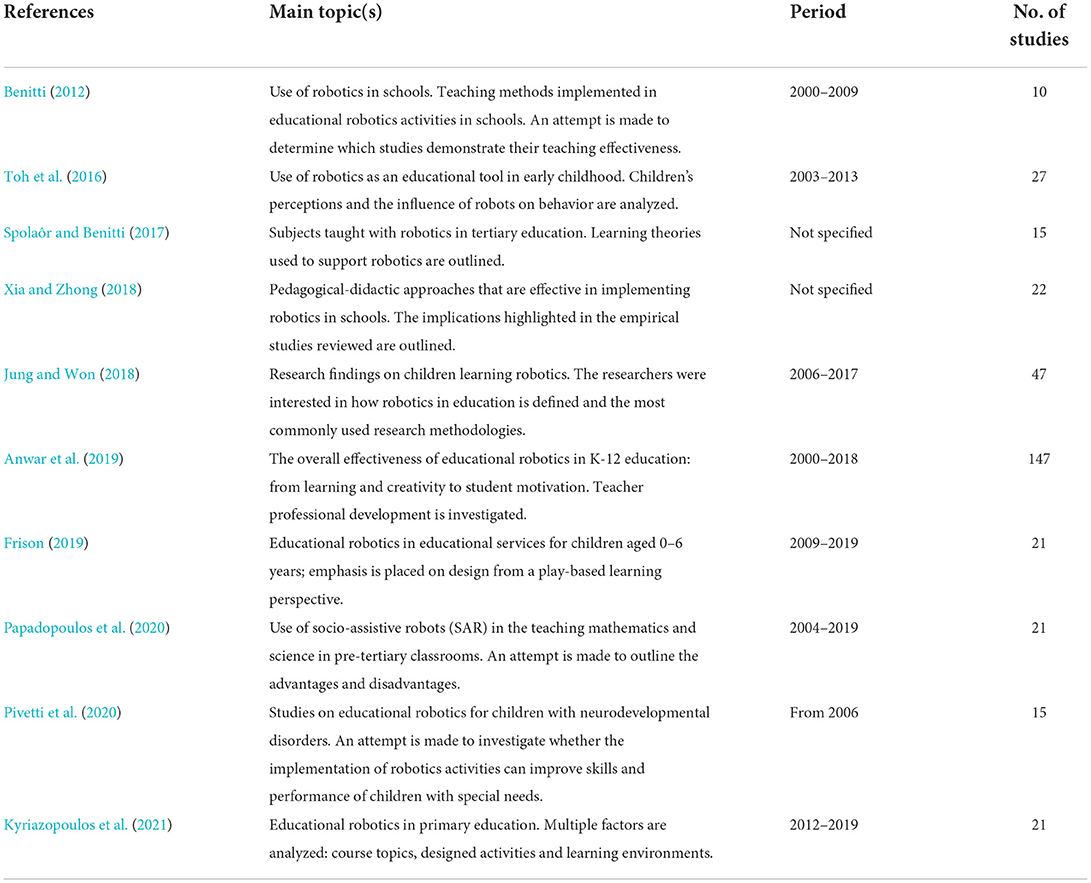
Table 1. Systematic reviews of robotics in education.
This has driven us to undertake this systematic review of the research literature published in Italy over the past decade. This review has multiple purposes: to verify what types of experiences have been documented in Italian journals; to provide educational professionals and researchers with a reasoned summary of the work published to date, in order to understand the direction of research, what types of devices have been most widely tested in which educational settings, for what ages, and for the enhancement of which specific social, cognitive, motor skills; to provide researchers with directions that could facilitate the implementation of new robotics projects, with the intention of prompting new empirical research in order to enrich the scientific landscape1. Specifically, our research aims to examine the state of research in educational robotics based on the following research questions:
Question 1: For what specific purposes are robots used in educational contexts, and how are these practices implemented (which teaching methods were used most)?
Question 2: What are the general benefits of educational robotics according to the articles reviewed?
Methods
With the goal of capturing a clear picture of what has been published on the topic in the last 10 years in Italy, we have done a systematic literature review using Borrego et al. (2015) four-step process: search, selection, coding, and synthesis. The first two steps correspond to the stages of the PRISMA statement process—search (identification), selection (screening, eligibility, included)—while the other two concern the analysis work (coding and synthesis).
Search method
Since there is no specific database containing all the papers published in Italian journals, to retrieve the best Italian literature on robotics in education, it was necessary to find and search within each journal. Therefore, the first step was to carefully select the journals to be screened. For this purpose, we used the list of Class A journals2 accredited by ANVUR, the Italian agency for the evaluation of academic research, selecting, in particular, those in the disciplinary area dealing with didactics, educational technology and educational research methodology (11/D2 sector). Forty-nine Italian journals were selected (see Appendix 1).
Articles were identified by working in two steps. First, using the Google search engine, a limited search was performed with the qualifier “site:journalname.it” (where “journalname.it” means the website of each journal identified). The search string used was the follow:
“(Robot OR Robots OR Robotics OR Robotica) AND (coding OR pensiero computazionale OR computational thinking OR Social OR Sociale OR Student OR studente OR alunno OR School OR Scuola OR Education OR Educational OR Educazione OR Educativa OR inclusione OR inclusion OR Teaching OR Insegnamento OR Learning OR apprendimento OR didattica OR docente OR insegnante OR Formazione).”
Subsequently, in order to check the completeness of the results, a search of each journal's website was executed using the same keywords. The lack of a specialized database for collecting articles published by Italian journals makes the task of compiling a research synthesis even more complicated. The search was performed from the beginning of February 2022 to the end of May 2022. A total of 122 papers were identified through Google search and websites.
Selection strategy
In the second phase, according to the PRISMA statement, the retrieved papers were analyzed based on the inclusion and exclusion criteria (Table 2). Two of the authors of this study worked together on deciding to include or exclude a study. As already noted, a total of 122 papers were identified through Google search and websites (Figure 1), of which 3 were reviews of other texts. Of these, 57 studies were discarded because, after reading their abstracts, they did not meet some of the identified inclusion criteria. The remaining 62 papers were independently evaluated by two authors who then compared them with the identified criteria and, after discussion, excluded an additional 34 papers, one of which was excluded because it was in Spanish.
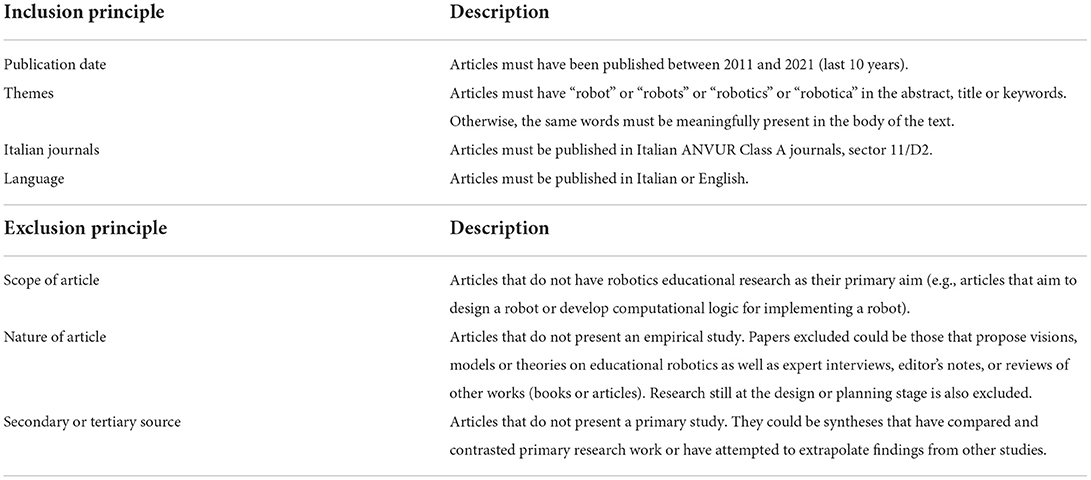
Table 2. Criteria for the inclusion and exclusion of studies.
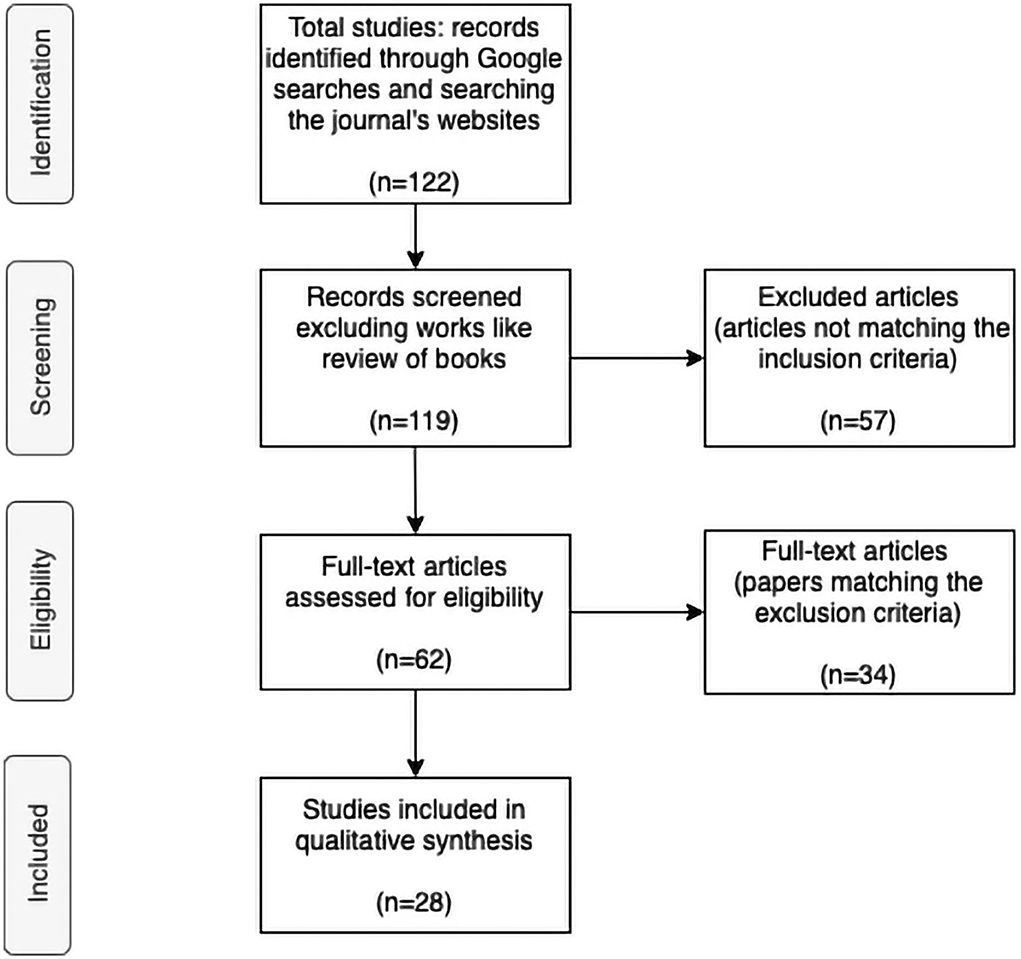
Figure 1. Flow chart according to the PRISMA declaration (Moher et al., 2019).
The diagram depicted in Figure 1, based on the PRISMA declaration (Preferred Reporting Items for Systematic Reviews and Meta- Analyses), shows the entire process after which 28 papers were included in this review and subsequently thoroughly viewed and analyzed by the authors of this work. The papers included are listed in the “Results” section (see Table 3) and highlighted with an asterisk in the references.
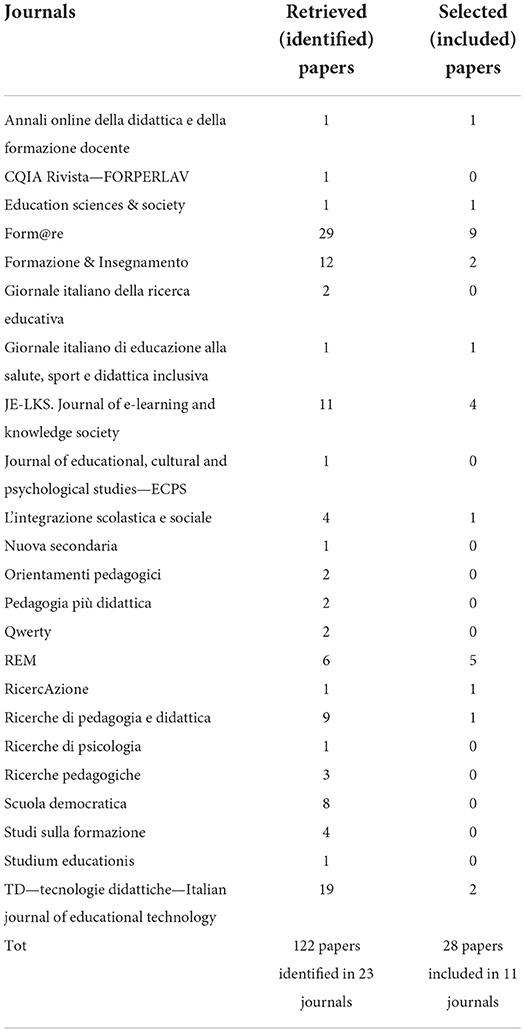
Table 3. Papers identified and included in each Journal.
Coding and synthesis
In the third phase of the process, we collected relevant data and chose criteria to classify all studies. We arranged the 28 papers in a spreadsheet and listed them according to following information and features: (1) research method applied (qualitative, quantitative, mixed methods); (2) data collection used (observation, interview or focus group, test or assessment, questionnaire, student product evaluation); (3) Goals (education in robotics, education with robotics, teacher training, media education); (4) setting (formal, non-formal); (5) target (children, teenagers, adults); (6) school level (pre-school, primary school, middle school, high school, university); (7) subject (arts or humanities, life skills, inclusion, second language, STEM); (8) robot type (built by student, compact, social); (9) number of participants; (10) duration of empirical research. We then defined other categories, inferring them from reading the articles included and, in part, retrieving and adapting categories from other systematic reviews (Bacca et al., 2014; Jung and Won, 2018). These categories may indicate some of the dimensions presented and analyzed in the research articles. Sometimes the information was not made explicit by the authors. Due to the lack of clarity, some authors' statements were interpreted. Some papers may provide data categorized into more than one subcategory (in which case, the categorizations in the tables of this paper have an asterisk symbol to the right of the category name). In the last stage, synthesis, we summarized the main findings of the selected articles, answering the research questions.
Results
The papers analyzed were published from 2011 to 2021. Studies published in 2022 were not taken into account due to the publication time of this work. To date, different studies on the topic are “pending publication,” and they are not yet fully available; therefore, in this work, any papers from 2022 have not been evaluated. Figure 2 shows the trend in publications within the time range analyzed. As the graph shows, there is a publication spike in 2019. This variation is due to the publication of a special issue of the journal Form@re on the topic of robotics.
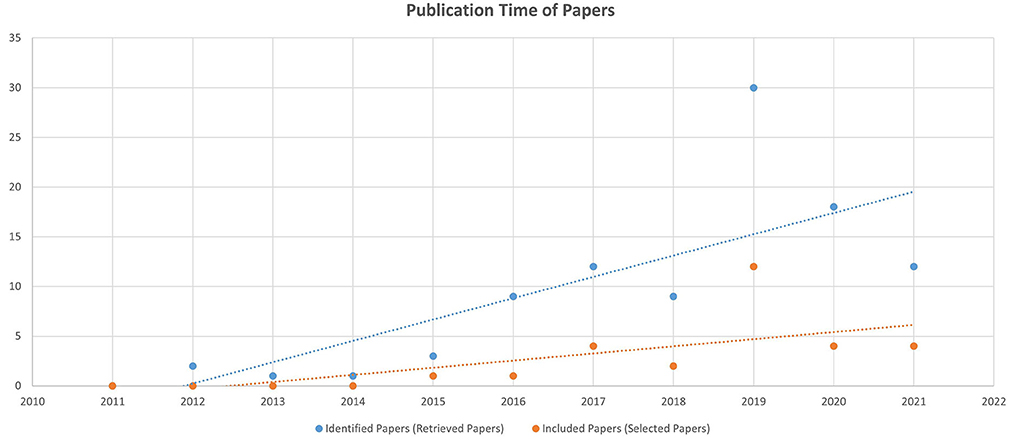
Figure 2. Retrieved and selected papers.
Our search, which considered 49 Italian journals, led to identify 122 papers in 23 journals and, after the analysis and evaluation phases, to select 28 papers from 11 different journals (see Table 3). Remarkably, in 26 Italian journals, educational robotics issues it seems that are never considered.
In the Table 4 we summarize main design features of 28 papers included.
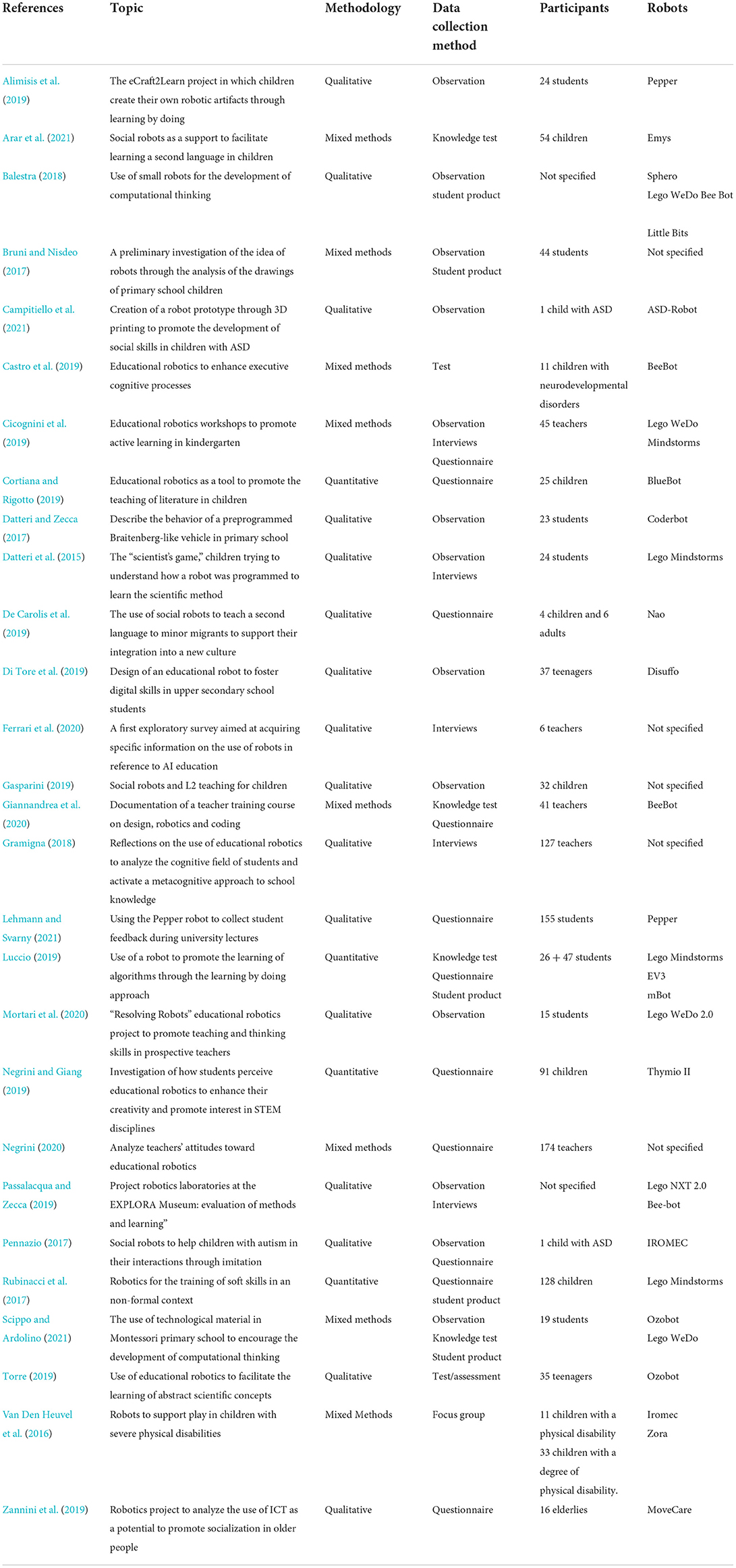
Table 4. Articles selected and study type.
Table 5 reports the main features that characterize the selected research papers.
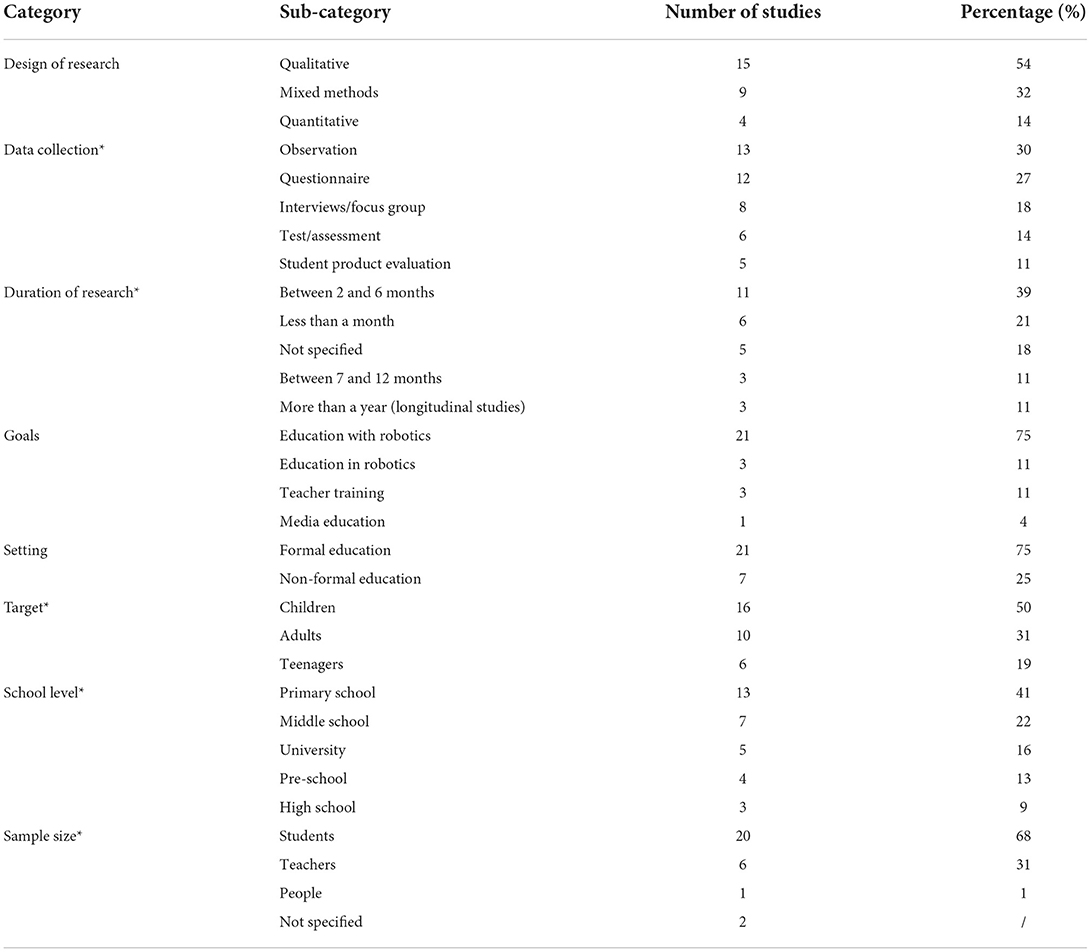
Table 5. Summary of research data.
Based on the data summarized by the table above, we can state that:
• the preferred type of research design was qualitative (54%);
• the preferred type of data collection was observation (30%);
• the average duration of the research analyzed was around 6 months;
• 75% of the research has focused on the goal of education with robotics;
• 75% of the research has preferred a formal setting;
• most of research was conducted with students attending primary school;
• the average sample was composed of 49 subjects.
The samples retrieved from the analyzed research broken down in Table 6.

Table 6. Descriptive sample statistics.
According to the data shown in the table above, the sample size varies greatly, as summarized by the variation coefficient (1,2). This variation is partially due to the type of research, with the case studies on inclusion and disabilities having small samples. It is also interesting that two studies (7% of total analyzed studies) do not give any information about their samples. With respect to subjects, most of the research was aimed at fostering the development of STEM competencies, as Table 7 illustrates.
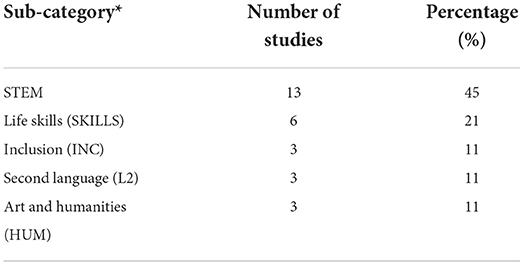
Table 7. Area of knowledge/subjects.
To answer the second research question, aimed at identifying the general benefits of educational robotics, we attempted to isolate and summarize the main educational objectives of the works through a categorization of the dimensions analyzed (see Table 8). Such dimensions (problem-solving, motivation, inclusion, etc.) point out the authors' interest in some aspects related to specific expected benefits through the practice of educational robotics. However, as we shall see in the discussion, in several cases the data stop at mere statements of principle without adequately supporting them with empirical data or arguments.
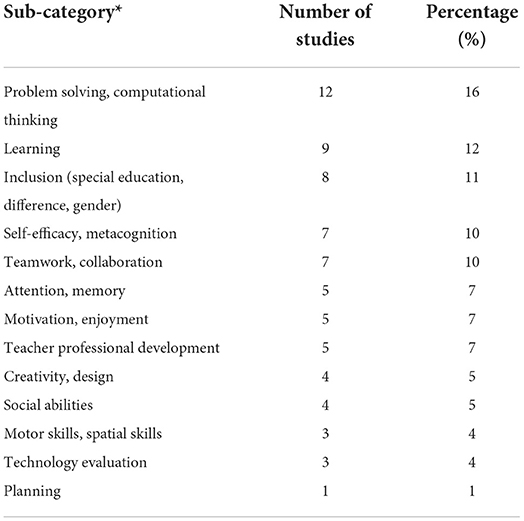
Table 8. Dimensions analyzed.
As Table 8 illustrates, most of the studies were conducted with the aim of fostering the development of computational thinking (16%), while only 4% of studies were conducted with the aim of evaluating the technology from a usability, effectiveness, acceptability, or sustainability point of view. Two researchers independently coded the papers in order to categorize them. The rules were developed through discussions between the authors of this paper. Interrater reliability (Cohen's Kappa) was strong (k = 0.89), and disagreements between raters were all resolved through discussion.
Aggregating the data from Table 8 we can see that 45% of the analyzed papers focused on fostering the development of metacognition processes and 26% were related to inclusion and social topics. Only 7% of the studies were conducted to foster teachers' professional development.
As Table 9 shows, most of the studies (28%) were conducted using a project-based approach as teaching method, while only 7% of the studies were conducted using a free-play-approach. Most of them were organized as group work.
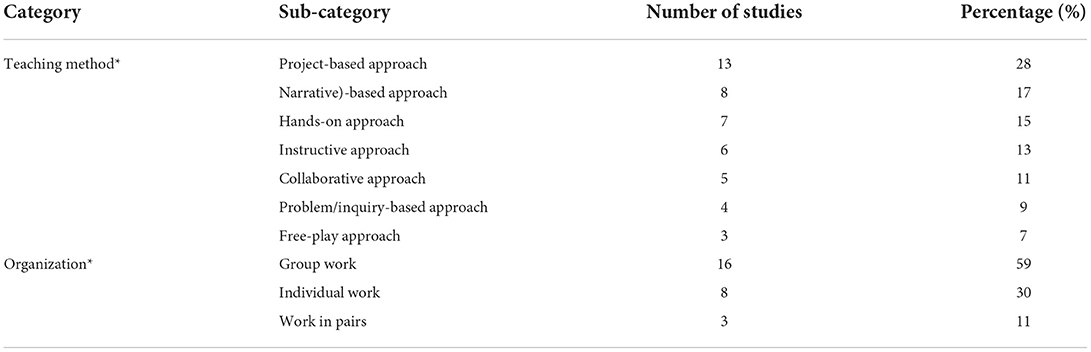
Table 9. Classroom work.
Table 10 shows that most of the studies (82%) used robotic hardware. Of the total studies included, 17 (61%) used an educational robot, within that number, 3 studies used built and compact robots, and for this reason they were calculated twice within the subcategory. Only 6 researches (21%) used a social robot, and 5 researches (18%) did not use any robotic devices.

Table 10. Robot types.
Discussion
Based on the research questions that guided our investigation, we must point out the limitations of this work and suggest new frontiers of research on educational robotics. Of the 28 papers accepted published between 2011 and 2021, 26 were published in the last 5 years and 12 in 2019 alone. These data allow us to surmise that, also in Italy (see Figure 2), there has been growing interest in robotics, confirmed by the scientific literature. This is in line with the references of several researchers (Sullivan and Bers, 2019; Ching et al., 2019; Kyriazopoulos et al., 2021) regarding the lack of research on robotics (before 2017), a trend that does not reflect the growth observed in recent years.
Main findings
Our work, the main aim of which was to retrieve and analyze articles published in Italian Class A journals on the subject of educational robotics over the last 10 years (2011–2021), sought to answer two main research questions that guided the investigation from the outset. Regarding the first question, namely “For what specific purposes are robots used in educational contexts, and how are these practices implemented (which teaching methods were used most)?”, we can state that we are in line with what has been reported in the international literature (e.g., Benitti, 2012; Anwar et al., 2019; Kyriazopoulos et al., 2021), i.e., that the main reason for its adoption is related to the promotion of STEAM skills. A series of Italian works have stated the potential of robotics in educational competitions to promote the development of problem-solving skills and computational thinking (Balestra, 2018; Luccio, 2019; Mortari et al., 2020; Scippo and Ardolino, 2021), soft skills (Rubinacci et al., 2017) and disciplinary topics (Cortiana and Rigotto, 2019; Torre, 2019). Torre (2019) introduces math reasoning in high school in an interdisciplinary way through examination of dilemmas in a literary tale. The proposed story involves different time trajectories for the various protagonists to be achieved through problem solving and robot programming. Educational robots are also used to promote the development of scientific thinking (investigating the ability to intuit the behavior of a robot) and the use of scientific method (Tzagkaraki et al., 2021) using an inquiry-based approach (Datteri et al., 2015; Datteri and Zecca, 2017). A type of robot called “MoveCare,” on the other hand, has been used to improve the autonomy of elderly people (Zannini et al., 2019), confirming that the potential purposes of robotics are multiple and ever-expanding.
Social robots are also present in the literature investigated in the field of special education, either to help children with ASD in social interactions by observing behavior and using human-robot imitative modeling to support the development of basic social skills (Pennazio, 2017; Campitiello et al., 2021), or as in the case of Iromec and Zora (Van Den Heuvel et al., 2016), to support play in children with severe motor disabilities. Robots with social features have taken on the role of tutors in teaching a second language (De Carolis et al., 2019; Gasparini, 2019; Arar et al., 2021). De Carolis et al. (2019) explore how social robots (specifically NAO) can be used in teaching a second language to unaccompanied migrant children. The overall aim of this research is to support the cultural processes of inclusion. The work has given ample space to the cultural aspect of the gestures required to enable social inclusion. Gasparini (2019) presents a preliminary study on the use of the social robot NAO for teaching L2 vocabulary through the selection of gestures that can accompany comprehension. However, the work does not yet provide direct evidence. Lehmann and Svarny (2021) were interested in probing students' thoughts and opinions on the role of Pepper, a humanoid social robot, in providing learning support during university lectures. The authors also wondered which type of feedback from the robot was most productive.
Some work focused on technology evaluation and measured whether the robotic technologies designed and implemented were sustainable and/or accepted by teachers and students. Two examples are works on the alpha and beta testing phases of designed and 3D-printed artifacts: a built robot (Di Tore et al., 2019) to develop digital skills in high school and a social robot (Campitiello et al., 2021) to foster the development of social skills in children with ASD. A considerable number of studies analyzed the aspect of teacher and student perceptions of robotics resulting from the use and implementation of this practice at school. In general, this type of research has been conducted through the use of questionnaires or interviews. There are at least five papers (Gramigna, 2018; Cicognini et al., 2019; Ferrari et al., 2020; Giannandrea et al., 2020; Negrini, 2020) that, overall, show that teachers have a strong interest in robotics. Regarding students' perceptions of educational robotics, Negrini and Giang (2019) investigated its pedagogical value in formal education. Following a semester of workshops with Thymio II, four dimensions were investigated through a questionnaire: creativity, collaboration, computer skills (computational thinking), and promotion of interest in STEM. The work of Rubinacci et al. (2017) also aims to investigate the expectations and opinions of students and teachers with respect to the development of soft skills, teamwork, understanding and problem solving.
Overall, based on our findings, we can state that the research published in Italian journals is moving in different directions, but the environment in which the experience takes place, in most of the works, appears to be formal. This finding helps us answer the second part of the question, which aims to examine which teaching methods were used when the research involved students. The results show a variety of methodological approaches (see Table 9) in the implementation of these practices, aimed at making the role of the student active and the teacher a facilitator (Tzagkaraki et al., 2021). Often, the teaching method was not explained in the articles, so it was difficult for the authors to determine which method accompanied these experiences. When the child-robot interaction was free and there was no instructional approach, the authors interpreted it as free play. In many works, however, it seems possible to interpret an eclectic use of multiple methodologies. Many educational robotics activities for students are supported by collaborative architectures. In 10% of them, working in pairs was preferred (Pennazio, 2017; Rubinacci et al., 2017; Scippo and Ardolino, 2021), while in 13% the working in a group was open (Balestra, 2018; Giannandrea et al., 2020; Arar et al., 2021; Lehmann and Svarny, 2021), even to different age groups, which may mean the coexistence of other methodologies such as peer tutoring. Indeed, it would seem that the collaborative approach can be put into practice in different ways and is sometimes supported by other methodologies and, in particular, exploratory architectures.
The second research question in this review seeks to define the general benefits of robotics in the educational environment and the evidence on which they are based. Arar et al. (2021), in the social robotic area, have provided reliable results indicating that the use of a social robot in children's L2 learning increases the effectiveness of the educational process and significantly improves learning gains. De Carolis et al. (2019), in a preliminary study, show the effectiveness of the proposed approach in learning gestures using a social robot as well. The interaction was found to be engaging and quite spontaneous. Pennazio (2017) pilot study notes the robot's ability to promote the acquisition of social skills through imitation and interaction. The author reports an increase in different measures (e.g., eye contact and attention) and a smooth transition in communication aspects. The child moves from seeking contact (e.g., caresses, hugs) from the robot to contact with the teacher and then with peers. Van Den Heuvel et al. (2016) evaluated the usability and playfulness of the Zora and Iromec robots with children with severe disabilities and found a significant and promising contribution in supporting free play and achievement of predetermined goals in rehabilitation and special education. Regarding teachers' perceptions, Negrini's (2020) results show an interest and propensity to use robots for soft skills development. The study highlights factors that teachers believe limit the implementation of robotics in the classroom (e.g., cost and instructional design time). However, they prefer to use robots as educational technology tools to be programmed rather than as social robots that function as tutors or assistants. Rubinacci et al. (2017) also noted that teachers see robotics as a useful tool for promoting soft skills, although, it is unclear whether it is the laboratory as an experience rather than the use of robots that develops these skills. The research also reports that students rated the lab positively in terms of promoting technical skills. In terms of enhancing soft skills, it emerges that students have high expectations for teamwork, understanding and problem solving. Importantly, for students in the post-test, the perceived effectiveness of robotics in supporting teamwork skills decreases. Negrini and Giang (2019) showed that students were generally interested in working with the robot and believed that educational robotics enhanced twenty-first century skills. However, the greatest perceived improvements were found in the two dimensions of soft skills (i.e., collaboration and creativity) and not in the two dimensions of technical skills (i.e., computational thinking and computer science). The study on children's imagery by Bruni and Nisdeo (2017) shows as overall results a strong prevalence of an anthropomorphic view of the robot. Scippo and Ardolino (2021), through a longitudinal study and a mixed-method approach, observed an increase in creativity, sense of community, good self-efficacy, and low error pervasiveness after a course with the robot Ozobot. Cortiana and Rigotto (2019), on the other hand, noted the usefulness of ER in encouraging readers' identification with characters proposed by literary texts. In an experiment conducted in a primary school, through pre-post administration of an adaptation of a validated questionnaire, they showed that robotics supports the development of affective-emotional dimensions by making the student more engaged and motivated. Significant change was shown in the area related to pleasure associated with reading. Two works (Datteri et al., 2015; Datteri and Zecca, 2017) were interested in understanding the development of students' scientific thinking through the use of robots. The authors, analyzing student transcripts, found a category-structured taxonomy for assessing children's modes of explanation, useful for teachers to make an analysis of the cognitive skills employed during robotics activities. Castro et al. (2019) have also experimented with educational robotics in school settings. Various tests were administered before and after the workshops, which showed improvement in executive functions (e.g., inhibition). Luccio (2019) focused on performance, showing that the hands-on robot programming project significantly improved exam performance. From the test results on student performance, it was argued that, in general, educational robotics supported by an instructional methodology, such as the project-based approach, can support the learning process by making it more interesting, increasing collaboration skills and also the very knowledge of theoretical concepts.
Limitations
This study has several limitations. Primarily, although a thorough search strategy was used, some empirical studies on the use of ER may not have been found for several reasons: the lack of a single, reliable search engine capable of indexing all Italian journals; the fact that not all publishers publish articles online in digital format (or that they must be paid for); the fact that some journals have changed publishers over time, leaving the repositories partially incomplete. The search for studies also did not cover either chapter in volumes of texts on robotics or conference proceedings. Secondly, several of the included studies showed, on one hand, a lack of information and data clarifying the implemented research design and, on the other, methodological weaknesses. In fact, very few studies presented a strict experimental-type structure. The methodological nature, therefore, included the possibility of being able to trace the evidence on the effectiveness of the experiments presented. Thirdly, many of the included studies took place in poorly controlled settings or with small sample sizes, which does not allow for generalization of the reported results.
Conclusion and future directions
This study presents a review of the literature recently published in Italian Class A journals on educational robotics. The review conducted suggests, as Benitti (2012) reported 10 years ago, the limited number of experimental and quantitative studies regarding learning through the use of robotics in education, which would seem to be a general trend in educational research in Italy. Regarding the work on teachers and students' perceptions, questionnaires implemented by the authors and not validated were used (in some cases, only Cronbach's alpha was calculated). This criticality also involves international work, which could be explained by the skills and timing required for statistical validation of an instrument. Interestingly, around 21% of the articles included in this work were written by international academics. This implies a general openness of the journals to research conducted outside national borders and the consequences of the Italian academic community being fully integrated into the international scientific debate. We can also conclude the need to conduct more longitudinal and long-term studies to investigate the impact of ER over time. In fact, only three articles reported experiences longer than 1 year. Two had adults, school teachers and computer science undergraduates as targets (Cicognini et al., 2019; Luccio, 2019), and only one investigated a primary school class during the entire 5-year cycle (Scippo and Ardolino, 2021). Most of the studies were conducted in a formal environment, which is in line with other systematic reviews (e.g., Kyriazopoulos et al., 2021), indicating a propensity to include robotics practice at an institutional setting. It should be emphasized that, despite general encouragement by institutions and growing interest on the part of teachers, robotics at school has not been systematically integrated into curricula (Alimisis, 2013; Mubin et al., 2013; Tzagkaraki et al., 2021). ER practice is often characterized as an optional or extracurricular activity. As pointed out by Tzagkaraki et al. (2021), the analysis of the selected articles in this study does not reveal a link between ER and STEAM (which also sees an interconnection with Art) and there is not enough information on the role of teachers in the implementation of the practice itself. From this systematic research, one can see, in line with Kyriazopoulos et al. (2021) but in contrast to Benitti (2012), a decline in the use of LEGO robots in favor of new devices, which are cheaper, in step with technological advances and driven by open-source and maker logic. There is, however, an increase in studies using social robots, although these are very expensive devices. Finally, despite the positive effect of ER attested by the authors on cognitive, social-affective and learning dimension outcomes, there are several cases where the results are not clearly defined and no data were found to support them, thus creating the need for further investigation. Among future prospects, it is interesting to see whether the project proposals included in the review will be realized in quantitative works. Such types of research could enrich the international landscape of empirical research on robotics in education and could be included in a meta-analysis.
Data availability statement
The raw data supporting the conclusions of this article will be made available by the authors, without undue reservation.
Author contributions
The authors have conceived together the overall structure of the paper. The work is the result of a collaborative commitment. Nevertheless section # 1 (Introduction) was edited by LC and AM, section # 2 (Methods) was edited by GB, section # 3 (Results) was edited by SD and LC, and section # 4 (Discussion) was edited by AM. All authors contributed to the article and approved the submitted version.
Conflict of interest
The authors declare that the research was conducted in the absence of any commercial or financial relationships that could be construed as a potential conflict of interest.
Publisher's note
All claims expressed in this article are solely those of the authors and do not necessarily represent those of their affiliated organizations, or those of the publisher, the editors and the reviewers. Any product that may be evaluated in this article, or claim that may be made by its manufacturer, is not guaranteed or endorsed by the publisher.
Footnotes
. ^1 Although our research includes works published in Italian scientific journals, it is not intended to take a snapshot of the state of the art of educational research in Italy about educational robotics, but rather to detect the interest in the subject on the part of Italian publishers.
. ^2 ANVUR (Italian National Agency for the evaluation of universities and research institutes) makes lists of journals for each scientific field in order to assess academic research. We used history, philosophy and pedagogy (area 11). https://www.anvur.it/en/activities/rating-of-scientific-journals/.
References
Alimisis, D. (2013). Educational robotics: open questions and new challenges. Themes Sci. Technol. Educ. 6, 63–71.
*Alimisis, D., Alimisi, R., and Zoulias, E. (2019). Kids make their own robots: good practices from the eCraft2Learn project. Form@re Open J. Formazione Rete 19, 12–29. doi: 10.13128/formare-24733
Anwar, S., Bascou, N. A., Menekse, M., and Kardgar, A. (2019). A systematic review of studies on educational robotics. J. Pre Coll. Eng. Educ. Res. 9, 19–42. doi: 10.7771/2157-9288.1223
*Arar, C., Belazoui, A., and Telli, A. (2021). Adoption of social robots as pedagogical aids for efficient learning of second language vocabulary to children. J. E-Learn. Knowl. Soc. 17, 119–126. doi: 10.20368/1971-8829/1135551
Bacca, J., Baldiris, S., Fabregat, R., Graf, S., and Kinshuk. (2014). Augmented reality trends in education: A systematic review of research and applications. Educ. Techno. Soc. 17, 133–149.
Bagattini, D., and Miotti, B. (2022). Lavorare sul genere a scuola con coding e robotica educativa. Roma: Carocci Editore.
*Balestra, A. (2018). Nuove tecnologie e pensiero computazionale fra passato e presente: un'esperienza didattica nella scuola del primo ciclo. Annali Online Della Didattica e Della Formazione Docente 9, 318–331. doi: 10.15160/2038-1034/1585
Belpaeme, T., Kennedy, J., Ramachandran, A., Scassellati, B., and Tanaka, F. (2018). Social robots for education: a review. Sci. Robot. 3, 1–9. doi: 10.1126/scirobotics.aat5954
Benitti, F. B. V. (2012). Exploring the educational potential of robotics in schools: a systematic review. Comput. Educ. 58, 978–988. doi: 10.1016/j.compedu.2011.10.006
Borrego, M., Foster, M. J., and Froyd, J. E. (2015). What is the state of the art of systematic review in engineering education? J. Eng. Educ. 104, 212–242. doi: 10.1002/jee.20069
*Bruni, F., and Nisdeo, M. (2017). Educational robots and children's imagery: a preliminary investigation in the first year of primary school. Res. Educ. Media 9, 37–44. doi: 10.1515/rem-2017-0007
*Campitiello, L., Di Tore, S., Lecce, A., Viola, I., and Sibilio, M. (2021). ASD-ROBOT: an approach that takes into account the sensoriality in the interaction between child, therapist and robot. Italian J. Health Educ. Sports Inclusive Didactics 28, 8–16. doi: 10.17471/2499-4324/1136
*Castro, E., Di Lieto, M., Chiara, P., Inguaggiato, E., Cecchi, F., Dario, P., et al. (2019). Educational Robotics and empowerment of executive cognitive processes: from typical development to special educational needs. Form@re Open J. Formazione Rete 19, 60–77. doi: 10.13128/formare-24782
Ching, Y. H., Yang, D., Wang, S., Baek, Y., Swanson, S., and Chittoori, B. (2019). Elementary school student development of STEM attitudes and perceived learning in a STEM integrated robotics curriculum. TechTrends 63, 590–601. doi: 10.1007/s11528-019-00388-0
*Cicognini, M. E., Miotti, B., and Bizzarri, C. (2019). Educational robotics laboratories for active learning. The case study of Florence schools joining the Le Chiavi della Città project. Form@re Open J. Formazione Rete 19, 149–164. doi: 10.13128/formare-24760
Conti, D., Di Nuovo, S., Buono, S., Trubia, G., and Di Nuovo, A. (2015). “Use of robotics to stimulate imitation in children with Autism Spectrum Disorder: a pilot study in a clinical setting,” in Proceedings of the 24th IEEE International Symposium on Robot and Human Interactive Communication (Kobe).
*Cortiana, P., and Rigotto, C. (2019). Teaching literature through educational robotics: an experience in the primary school. Form@re Open J. Formazione Rete 19, 91–105. doi: 10.13128/formare-24635
Daniela, L., and Lytras, M. D. (2019). Educational robotics for inclusive education. Technol. Knowl. Learn. 24, 219–225. doi: 10.1007/s10758-018-9397-5
*Datteri, E., Bozzi, G., and Zecca, L. (2015). Il “gioco dello scienziato” per l'apprendimento del metodo scientifico nella scuola primaria. TD Tecnologie Didattiche 23, 172–175.
*Datteri, E., and Zecca, L. (2017). Theoretical vocabularies and styles of explanation of robot behaviours in children. Res. Educ. Media 9, 3–9. doi: 10.1515/rem-2017-0002
*De Carolis, B., Palestra, G., Della Penna, C., Cianciotta, M., and Cervelione, A. (2019). Social robots supporting the inclusion of unaccompanied migrant children: teaching the meaning of culture-related gestures. J. E-Learning Knowl. Soc. 15, 43–57. doi: 10.20368/1971-8829/1636
*Di Tore, S., Todino, M. D., and Sibilio, M. (2019). Disuffo: Design, prototyping and development of an open-source educational robot. Form@re Open J. Formazione Rete 19, 106–116. doi: 10.13128/formare-24446
Dunst, C. J., Trivette, C. M., Prior, J., Hamby, D. W., and Embler, D. (2013). Parents' judgments of the acceptability and importance of socially interactive robots for intervening with young children with disabilities. Soc. Robots Res. Rep. 1, 1–5.
Ferrari, E., Robins, B., and Dautenhahn, K. (2009). “Therapeutic and educational objectives in robot assisted play for children with autism,” in The 18th IEEE International Symposium on Robot and Human Interactive Communication (Toyama).
*Ferrari, L., Macauda, A., Soriani, A., and Russo, V. (2020). Educational robotics and artificial intelligence education: what priorities for schools? TT - Robotica educativa ed educazione all'intelligenza artificiale: quali priorità per la scuola? Form@re Open J. Formazione Rete 20, 68–85. doi: 10.13128/form-10038
Frison, D. (2019). Educational robotics in the early childhood settings 0-6: a systematic review. Form@re Open J. Formazione Rete 19, 30–46. doi: 10.13128/formare-24937
*Gasparini, S. (2019). Social robots and L2 teaching for children: a preliminary study on the embodiment of gestures Robot sociali e insegnamento di L2 ai bambini: uno studio preliminare sull'embodiment della gestualità. Form@re Open J. Formazione Rete, 19, 47–59. doi: 10.13128/formare-24600
*Giannandrea, L., Gratani, F., and Renieri, A. (2020). Crossing boundaries: documentation of a teacher training course on design, robotics and coding. Res. Educ. Media 12, 85–92. doi: 10.2478/rem-2020-0010
*Gramigna, A. (2018). RoboticaMente: metacognizione e innovazione nella scuola dei talenti RoboticaAlly: metacognition and innovation in talent's school. Formazione Insegnamento 16, 291–304. doi: 10.107346/-fei-XVI-02-18_23
Jung, S. E., and Won, E. S. (2018). Systematic review of research trends in robotics education for young children. Sustainability 10, 1–24. doi: 10.3390/su10040905
Karim, M. E., Lemaignan, S., and Mondada, F. (2015). “A review: can robots reshape K-12 STEM education?” in Proceedings of IEEE Workshop on Advanced Robotics and Its Social Impacts, ARSO. doi: 10.1109/ARSO.2015.7428217
Kyriazopoulos, I., Koutromanos, G., Voudouri, A., and Galani, A. (2021). “Educational robotics in primary education: A systematic literature review,” in Handbook of Research on Using Education Robotics to Facilitate Student Learning, eds St. Papadakis and M. Kalogiannakis (IGI Global),377–401. doi: 10.4018/978-1-7998-6717-3.ch015
*Lehmann, H., and Svarny, P. (2021). Using a social robot for different types of feedback during university lectures. Educ. Sci. Soc. 2, 282–295. doi: 10.3280/ess2-2021oa12485
Leite, I., Martinho, C., and Paiva, A. (2013). Social robots for long-term interaction: a survey. Int. J. Soc. Robot. 5, 291–308. doi: 10.1007/s12369-013-0178-y
*Luccio, F. L. (2019). Learning distributed algorithms by programming robots. J. E-Learn. Knowl. Soc. 15, 89–100. doi: 10.20368/1971-8829/1625
Moher, D., Liberati, A., Tetzlaff, J., and Altman, D. G. (2009). Preferred reporting items for systematic reviews and meta-analyses: The PRISMA statement. PLoS Med. 6, e1000097. doi: 10.1371/journal.pmed.1000097
*Mortari, L., Silva, R., and Zanotti, A. (2020). Quando il Service Learning pone la ricerca educativa a servizio della formazione docente e dell'innovazione didattica: il “caso” Resolving Robots. RicercAzione 12, 83–105. doi: 10.32076/RA12106
Mubin, O., Stevens, C. J., Shahid, S., Mahmud, A., Al, and Dong, J.-J. (2013). A review of the applicability of robots in education. Technol. Educ. Learn. 1, 1–7. doi: 10.2316/Journal.209.2013.1.209-0015
*Negrini, L. (2020). Teachers' attitudes towards educational robotics in compulsory school. Gli atteggiamenti degli insegnanti della scuola dell'obbligo nei confronti della robotica educativa. TD Tecnologie Didattiche 77–90.
*Negrini, L., and Giang, C. (2019). How do pupils perceive educational robotics as a tool to improve their 21st century skills? J. E-Learning Knowl. Soc. 15, 77–87. doi: 10.20368/1971-8829/1628
Papadakis, S., and Kalogiannakis, M. (2022). “Exploring preservice teachers' attitudes about the usage of educational robotics in preschool education,” in Research Anthology on Computational Thinking, Programming, and Robotics in the Classroom (IGI Global), 807–823.
Papadakis, S., Vaiopoulou, J., Sifaki, E., Stamovlasis, D., and Kalogiannakis, M. (2021). Attitudes towards the use of educational robotics: exploring pre-service and in-service early childhood teacher profiles. Educ. Sci. 11, 204. doi: 10.3390/educsci11050204
Papadopoulos, I., Lazzarino, R., Miah, S., Weaver, T., Thomas, B., and Koulouglioti, C. (2020). A systematic review of the literature regarding socially assistive robots in pre-tertiary education. Comput. Educ. 155, 103924. doi: 10.1016/j.compedu.2020.103924
*Passalacqua, F., and Zecca, L. (2019). Valutare laboratori di robotica educativa: studio di un approccio partecipativo evaluating educational robotics laboratories: a study of a participatory approach. Formazione Insegnamento 17, 449–456. doi: 10.107346/-fei-XVII-01-19_35
*Pennazio, V. (2017). Social robotics to help children with autism in their interactions through imitation. Res. Educ. Media 9, 10–16. doi: 10.1515/rem-2017-0003
Pivetti, M., Di Battista, S., Agatolio, F., Simaku, B., Moro, M., and Menegatti, E. (2020). Educational Robotics for children with neurodevelopmental disorders: a systematic review. Heliyon 6, e05160. doi: 10.1016/j.heliyon.2020.e05160
*Rubinacci, F., Ponticorvo, M., Passariello, R., and Miglino, O. (2017). Robotics for soft skills training. Res. Educ. Media 9, 20–25. doi: 10.1515/rem-2017-0010
*Scippo, S., and Ardolino, F. (2021). Computational thinking in Montessori primary school. Ricerche Di Pedagogia e Didattica 2, 59–76. doi: 10.6092/issn.1970-2221/12163
Spolaôr, N., and Benitti, F. B. V. (2017). Robotics applications grounded in learning theories on tertiary education: a systematic review. Comput. Educ. 112, 97–107. doi: 10.1016/j.compedu.2017.05.001
Sullivan, A., and Bers, M. U. (2019). Investigating the use of robotics to increase girls' interest in engineering during early elementary school. Int. J. Technol. Design Educ. 29, 1033–1051. doi: 10.1007/s10798-018-9483-y
Toh, L. P. E., Causo, A., Tzuo, P. W., Chen, I. M., and Yeo, S. H. (2016). A review on the use of robots in education and young children. Educ. Technol. Soc. 19, 148–163.
*Torre, M. (2019). Seven Ozobot messengers: a story by Buzzati between mathematics and robotics I sette messaggeri Ozobot: un racconto di Buzzati tra matematica e robotica. Form@re Open J. Formazione Rete 19, 392–400. doi: 10.13128/formare-24519
Tzagkaraki, E., Papadakis, S., and Kalogiannakis, M. (2021). “Exploring the use of educational robotics in primary school and its possible place in the curricula,” in Educational Robotics International Conference EDUROBOTICS 2021, Vol. 982, ed M. Malvezzi (Springer International Publishing),216–229.
*Van Den Heuvel, R., Lexis, M., and De Witte, L. (2016). Giochi di prossima generazione I robot per supportare il gioco dei bambini con severe disabilità fisiche. L'integrazione Scolastica e Sociale 15, 125–138.
Xia, L., and Zhong, B. (2018). A systematic review on teaching and learning robotics content knowledge in K-12. Comput. Educ. 127, 267–282. doi: 10.1016/j.compedu.2018.09.007
*Zannini, L., Mazzolatti, D., Bernardelli, G., Antonacci, F., Borghese, N., and Daniele, K. (2019). Evaluating online games/activities by a group of elderly in a robotic experience aimed at supporting their independent living. Form@re Open J. Formazione Rete 19, 312–327. doi: 10.13128/formare-24615
*^Studies included in the Systematic Review.
Appendix
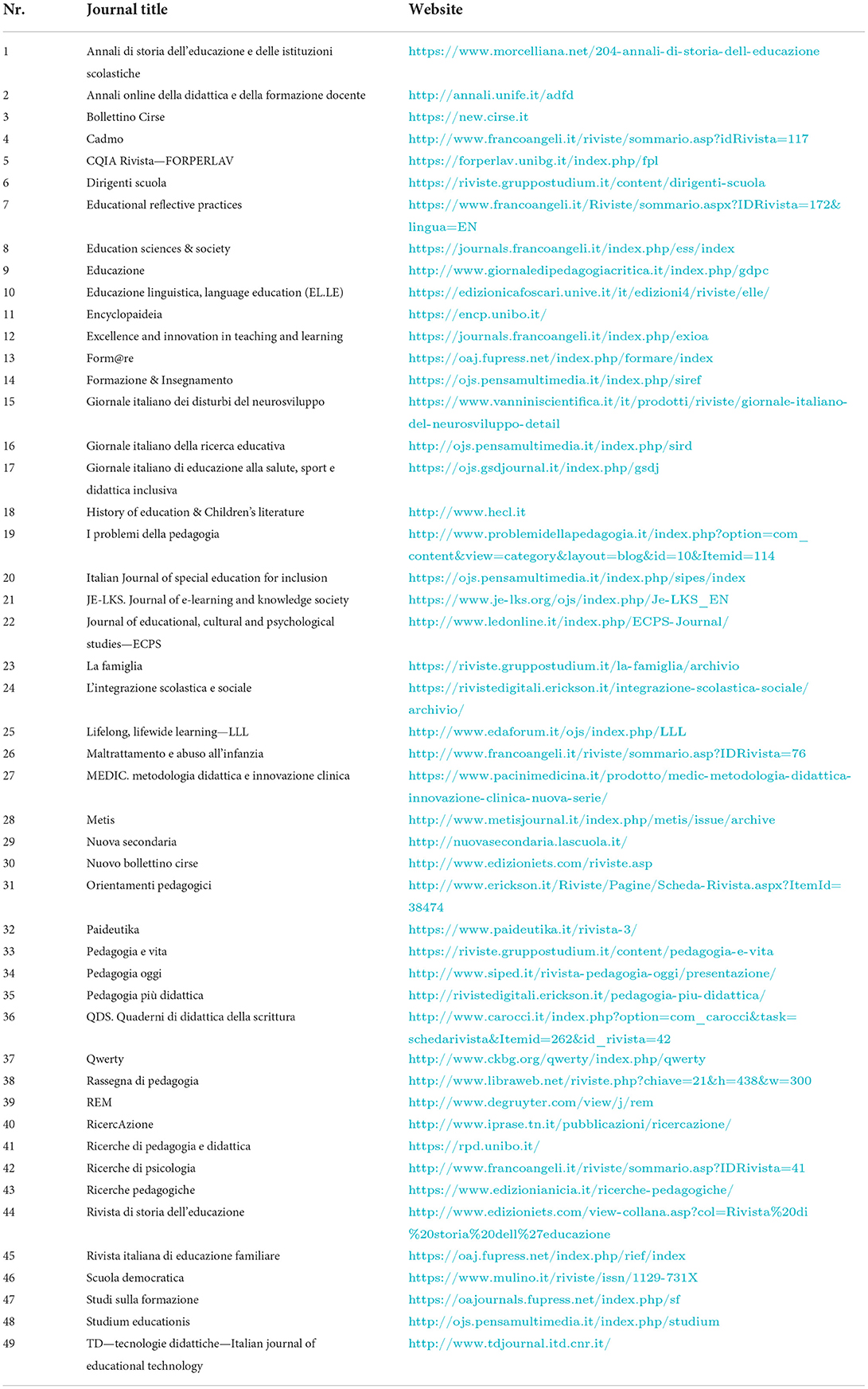
Table A1. Class A Italian journals.
Keywords: educational robotics, Italian journals, social robotics, systematic review, STEM
Citation: Bonaiuti G, Campitiello L, Di Tore S and Marras A (2022) Educational robotics studies in Italian scientific journals: A systematic review. Front. Educ. 7:1005669. doi: 10.3389/feduc.2022.1005669
Received: 28 July 2022; Accepted: 21 September 2022;
Published: 13 October 2022.
Edited by:
Stamatios Papadakis, University of Crete, GreeceReviewed by:
Hassan A. El-Sabagh, Mansoura University, EgyptEffransia Tzagkaraki, University of Crete, Greece
Alkinoos Ioannis Zourmpakis, University of Crete, Greece
Michail Kalogiannakis, University of Crete, Greece
Copyright © 2022 Bonaiuti, Campitiello, Di Tore and Marras. This is an open-access article distributed under the terms of the Creative Commons Attribution License (CC BY). The use, distribution or reproduction in other forums is permitted, provided the original author(s) and the copyright owner(s) are credited and that the original publication in this journal is cited, in accordance with accepted academic practice. No use, distribution or reproduction is permitted which does not comply with these terms.
*Correspondence: Giovanni Bonaiuti, Z2lvdmFubmkuYm9uYWl1dGlAdW5pY2EuaXQ=