Abstract
At present, there is a great deal of research demonstrating the educational potential of heritage for the teaching of history. However, relevant studies have shown that, although it is a resource which is widely valued by teachers, its incorporation into the classroom remains limited. The aim of this study is to analyze the opinions of teachers in initial training regarding the use of heritage in the classrooms and to inquire about their relationship with their own teaching approaches, given that these may influence the use or evaluation they make of this resource. This study, which is non-experimental and quantitative in nature, has employed as a research tool a questionnaire with the participation of 646 students of the master’s degrees in Teacher Training in Geography and History of 22 different universities, representing 70% of the universities that offer this degree in Spain. The most significant results show a broad interest in heritage among future secondary education and baccalaureate level teachers, although there is a preference for heritage resources more linked to their undergraduate studies (History, History of Art, Archeology) compared with heritage resources of a technological nature. Regarding teaching approaches, it has been observed that those who present a student-based approach (CCSF) value heritage more highly. Given these results, we consider it necessary to improve the initial training of teachers regarding existing heritage resources and to adapt teaching approaches in order to achieve a greater integration of heritage in history education.
Introduction
The performative dimension of heritage in the context of education is based on the possibility it affords students to become aware of the dialectics which exist between the past and the present (Soininen, 2017), confirmed as one of the fundamental elements in ensuring the development of historical thinking among students (Miralles et al., 2017). Over the past 20 years, this situation has led to a considerable increase in scientific production analyzing the use of heritage in formal contexts (Martínez, 2016; Monteagudo-Fernández et al., 2021), which has become consolidated as one of the most prolific lines of research on an international scale (Fontal and Ibáñez-Etxeberria, 2017).
In this regard, being aware of the opinions of future secondary teachers in Spain regarding the teaching of history via the use of heritage acquires considerable importance, given their capacity for renewing the methodological and epistemological scenario of the teaching of the social sciences (Cuenca, 2002; Fontal, 2003; Davis, 2007; Copeland, 2009; Calaf, 2010; Martín and Cuenca, 2011; Estepa, 2013; Pinto, 2013; Fontal et al., 2015; Fontal and Ibáñez, 2015; Semedo, 2015; Van Boxtel et al., 2015; Vicent et al., 2015; Fontal and Gómez-Redondo, 2016; Gosselin and Livingstone, 2016; Cuenca-López et al., 2017; Cuenca et al., 2018; Chaparro and Felices, 2019; Van Doorsselaere, 2021). It is well known that trainee teachers confer great value upon heritage, be it tangible or intangible, although they lack the necessary skills to propose its implementation in the classroom (Felices et al., 2020). This situation is understandable due to the fact that these students’ approach to heritage in their experience of education has relied on factual knowledge, i.e., it has been linked to their scientific discipline (History, History of Art, Archeology, etc.). Consequently, teacher training in cultural heritage issues requires improvement (Jagielska-Burduk and Stec, 2019) in order to implement a critical and reflexive education in heritage which distances students from ethnocentric thinking (Roll and Meyer, 2020).
Research focusing on secondary education reveals that, in this stage, the traditional model of history teaching, disconnected from the everyday life of present-day and past societies and new historiographical trends (Miralles and Rodríguez, 2015), plays a greater role (Rodríguez et al., 2017). The predominance of traditional methodologies in the classroom implies that teachers attribute a passive role to students (Merchán, 2005), particularly when they adhere to an expository methodology. In this context, the use of the textbook and the application of a summative evaluation become the strategies of preference (Miralles, 2015; Martínez-Hita and Gómez, 2018; Valls, 2018), over the implementation of more innovative teaching strategies which attribute an active and critical role to students (Gómez et al., 2019). Aware of this fact, future secondary education teachers desire an approach to history teaching which combines conceptual elements with procedural and behavioral aspects, and which ensures that students acquire skills, learn to think historically and become critical and democratic citizens (Gómez and Miralles, 2016; Rodríguez-Medina et al., 2020).
With this diagnosis, there are many heritage resources which can be transferred to the classroom and which have great educational potential. This is the case, for example, with mobile applications and virtual recreations (Chih-Hong and Yi-Ting, 2013; Suominen and Sivula, 2013; Luna et al., 2019; Malegiannaki et al., 2020; Torsi et al., 2020; Andrés and Checa, 2021; Edwards et al., 2021), although, as demonstrated by some studies, their level of integration in all levels of education and in the context of teacher training is extremely low (Monteagudo et al., 2020).
The scarcity or total lack of these resources in teaching and learning processes is sometimes due to deficiencies in the training of future teachers of history, impeding the development of the necessary skills for integrating them into their teaching and, consequently, leading to a low evaluation of their educational possibilities for the teaching of history (Felices et al., 2020). Faced with this situation, it is understandable that trainee teachers do not see these heritage resources as facilitators of learning, an opinion which, in our view, will have an influence on their future approach to teaching and professional identity.
In this regard, from the field of social sciences teaching and, specifically, history teaching, it is essential to identify the teaching approaches of trainee teachers regarding the subject of history, as well as the epistemological approach which they apply to this subject and the aims which they consider should be achieved in the present day and age. Being aware of these aspects will make it possible to improve their teaching skills in order to encourage new ways of teaching and learning. It is of particular interest to discover their opinion of the use of heritage elements for the teaching of history and to verify whether these opinions are related with their teaching approaches as, nowadays, these are considered to be one of the main educational reference points for teachers when teaching historical contents.
Ultimately, with the continued existence of traditional teaching methods in the classroom, it is essential to investigate the mental representations of both trainee and active teachers regarding the use of heritage in educational contexts, particularly in the interest of improving the teaching of social contents (Gómez et al., 2020b; Guerrero-Romera et al., 2021) and reducing rote learning processes (Gómez et al., 2018, 2020c). We consider it particularly necessary to research the teaching approaches of current trainee secondary education teachers in Spain due to the fact that their future teaching identity is built based on their experiences in their training period (Martínez et al., 2009). This diagnosis should, without a doubt, oblige university teachers to seek to change their students’ conceptions to encourage a change in educational routines (König et al., 2017).
Among the studies which focus on the teaching perspectives of teachers, those which focus on teaching approaches have gained greater notoriety and particular relevance over recent years (Yunga-Godoy et al., 2016). In this regard, the ATI (Approaches to Teaching Inventory) developed by Trigwell and Prosser (1996) stands out as a valid tool for addressing this type of study. In this context, recent research (Dejene et al., 2018) has determined that there are basically two approaches to teaching: one focused on the transmission of information by the teacher (ITTF) and another focused on the students’ conceptual change (CCSF).
These teaching approaches are closely linked, not only with teachers’ methodologies, but also with the epistemological principles which the teacher introduces in his/her classes (Yunga-Godoy et al., 2016; Dejene et al., 2018; Miralles et al., 2019). Thus, a teaching approach focused on the teacher (ITTF) is linked with superficial learning, whereas an approach focused on the student (CCSF) is assimilated preferably to a deep learning approach (Trigwell and Prosser, 1996).
This conclusion concerning teaching approaches is related with three variables which should be taken into account when carrying out this type of study: the students and their learning path, the teachers and their teaching path and, lastly, the context in which this education process takes place (Guillermo et al., 2018). Along these lines, some research on the teaching and learning processes of contents has shown that the teaching approach adopted by teachers influences how students learn and, in turn, the learning approach adopted by students can also define their education (Gargallo et al., 2015).
Methodology
Objectives
The general objective (GO) of this research is to analyze the opinions of trainee teachers regarding the use of historical and cultural heritage in the classroom and its relationship with their own teaching approaches. This GO can be broken down into the following specific objectives (SO):
1. To define trainee teachers’ opinions on the use of heritage-based resources for the teaching of history in secondary education.
2. To analyze the response profiles and their differences with regard to the teaching approaches shown in the ATI questionnaire.
Design
A descriptive-explanatory design of a quantitative non-experimental nature has been employed with data being collected via a questionnaire with a Likert (1–5) scale (Hernández and Maquilón, 2010). This type of design was chosen as it is able to respond to problems in descriptive terms and in relation to the variables when data is collected systematically (Sapsford and Jupp, 2006).
Sample
A total of 646 students of master’s degrees in teacher training specializing in Geography and History from 22 different universities took part in this research: Murcia, Alicante, Valencia, Jaume I, Barcelona, La Rioja, Zaragoza, Oviedo, the Basque Country, Santiago de Compostela, Complutense University of Madrid, Autonomous University of Madrid, Valladolid, Extremadura, Castilla-La Mancha, Huelva, Seville, Córdoba, Málaga, Almería, Jaén and Granada. 70% of the universities which offer master’s degrees in Geography and History teacher training participated in this research.
The sample consisted of 358 men (55.41%) and 280 women (43.34%). 51.7% of the students consulted were, at the time of completion of the questionnaire, between 18 and 24 years of age; 37.92% were between 25 and 34; and 7.58% were over 35 years of age.
Data Collection Tool
The study was carried out using the tool known as “Approaches to history teaching,” a set of tools consisting of two parts. On the one hand, there is an initial 20-item questionnaire based on the Approaches to Teaching Inventory (Trigwell et al., 2005) in the version translated by Monroy et al. (2015). In a similar way to Stes et al. (2010), items were reformulated where ambiguity as to whether they conveyed an ITTF or a CCSF notion was suspected (Table 1). On the other hand, there is a set of tools on the opinion of trainee teachers regarding the topics, methods, resources and techniques of evaluation most suited to the teaching of history in the secondary classroom. In the development of the present study, the ATI questionnaire has been used, along with Set II.3 (Table 2) of the second part of the tool.
TABLE 1
| 1.- It is recommendable for students to focus their study of history on what is provided by their teacher |
| 2.- In order to evaluate students, they should be asked to describe all the historical contents which correspond to the specific objectives and which they must use to respond in their assessment |
| 3.- The teacher should discuss the topics being studied with the students |
| 4.- In the teaching of history, the most important aspect is presenting students with extremely complete information |
| 5.- Part of the time should be reserved for students to discuss concepts and key ideas of history among themselves |
| 6.- History classes should focus on teaching information available in texts and key readings |
| 7.- Students should be encouraged to restructure their prior knowledge in order to be able to develop a new way of thinking about history |
| 8.- In class sessions, debates and discussions should be planned and encouraged |
| 9.- History classes should help students to pass their exams |
| 10.- Students should be provided with a good set of notes to learn history |
| 11.- Students should be provided with the information they need to pass the subject of history |
| 12.- It is important to respond to any questions about history that students may ask |
| 13.- An attempt should be made so that students can discuss their changes of opinion and understanding of history |
| 14.- A large part of the time dedicated to the teaching of history should be used to question the students’ ideas |
| 15.- The history teaching model should be focused on a good presentation of the information for the students |
| 16.- I understand the teaching of history as a way of helping students to develop new ways of thinking about the topics studied |
| 17.- When teaching history, it is important to supervise students’ changes in understanding in relation to the topics studied |
| 18.- The way of teaching history is focused on transmitting my knowledge to the students |
| 19.- The teaching of this subject should encourage students to question their own understanding of history |
| 20.- The teaching of history should include helping students to find their own learning resources |
Approaches to teaching inventory questionnaire.
Approaches to Teaching Inventory (Trigwell et al., 2005).
TABLE 2
| Item | Resource |
| 50 | Textbook |
| 51 | Websites of historical contents and with resources for history classes (other teachers’ blogs, etc.). |
| 52 | Primary documentary sources |
| 53 | Oral sources (interviews with grandparents, family members, neighbors, etc.). |
| 54 | Printed or digital press |
| 55 | Teacher’s notes |
| 56 | Museums and other places of heritage interpretation |
| 57 | Films and documentaries on historical topics |
| 58 | Historical novels, comics and children’s literature |
| 59 | Reports in popular science magazines on historical topics |
| 60 | Videogames |
| 61 | Festivals and local and regional traditions with historical content |
| 62 | Virtual recreations of museums and other centers of heritage interest |
| 63 | Mobile telephone and tablet applications with historical and heritage content |
| 64 | Artistic productions (paintings, architecture, sculptures, contemporary art, etc.) |
| 65 | Local historical and cultural heritage |
Set II.3. In your opinion, which materials and resources are most suitable for the teaching of history?
Own.
The validation of the contents of Set II.3 regarding opinions on the most relevant materials and resources for history classes was carried out by seven experts. This validation was carried out via a questionnaire in which the experts were asked to evaluate the sufficiency, clarity and relevance of the items on a scale of 1–4. In the case of the items from Set II.3, the results were satisfactory in terms of sufficiency (M = 3.57; SD = 0.12), clarity (M = 3.85; SD = 0.13) and relevance (M = 3.85; SD = 0.23). The Bangdiwala’s Weighted Agreement Coefficients (BWN) (Bangdiwala, 1987) proved to be excellent in the mentioned variables (sufficiency BWN = 0.929; clarity BWN = 0.901; relevance BWN = 0.931), as well as on an overall level (BWN = 0.920).
To carry out the reliability analysis of the ATI questionnaire, the method of internal consistency based on Cronbach’s alpha was employed. As a general criterion, the coefficient must be higher than 0.70 (George and Mallery, 2011). In the case of the ATI questionnaire, on an overall level, it was 0.78. Therefore, the coefficient can be considered to be acceptable (Extremera et al., 2017). On the other hand, with regard to the coefficient of Set II.3, a Cronbach’s alpha value of 0.82 was obtained, which can be considered to be adequate. In this regard, other authors propose the omega coefficient, also known as Jöreskog’s rho (Ventura-León and Caycho-Rodríguez, 2017), taking as a general criterion a coefficient greater than 0.70. In our case, the overall McDonald’s omega coefficient for the ATI scale is 0.79, which is an acceptable value (Robles et al., 2020). As far as the McDonald’s omega coefficient of Set II.3 is concerned, a value of 0.83 was obtained, which is also considered to be adequate.
To examine the construct validity of the ATI scale in more depth, structural equation modeling (SEM) was carried out in order to confirm the existence of a series of constructs in the questionnaire. As a Likert scale was used, the assumption of normality is not fulfilled and the decision was taken to make a robust estimation of the χ2 statistic via the Diagonal Weighted Least Squares (DWLS) estimator, that is, a weighted estimator of least squares (Beaujean, 2014).
Bartlett’s test was carried out to verify that the matrix was not similar to an identity matrix. A p-value < 0.05 was obtained, indicating that the matrix was not similar to the identity matrix. Furthermore, a KMO value of 0.84 was obtained, showing that the matrix is factorizable.
After separating the two scales, their reliability was reviewed, obtaining adequate results. For the CCS scale, an ordinal alpha = 0.87 and ωt = 0.87 were obtained. In the case of the ITT scale, an ordinal alpha = 0.72; and ωt = 0.74 were obtained. The relationship between the two scales is low negative (–0.15), but significant. The adjustment index of this model is acceptable [χ2(169) = 674.68, p < 0.001, CFI 0.936, TLI 0.928, RMSEA 0.07]. However, although the model has an acceptable fit, the decision was taken to eliminate item 12, because this item does not reach the minimum saturation of 0.3 (McDonald, 1985) in either of the two factors. Consequently, item 12 contributed very little to the ITT factor. As a consequence, the indices improved notably [χ2(151) = 478.93, p < 0.001, CFI 0.957, TLI 0.951, RMSEA 0.059]. As far as reliability is concerned, for the CCS scale, the ordinal alpha was still = 0.87 and ωt = 0.87. In the case of the ITT scale, there was an improvement toward an ordinal alpha = 0.74; and ωt = 0.75. In Figure 1, the graphic representation of the model can be observed. The relationship between the two scales is negative and significant, albeit with a low factor loading (–0.17). There is no single bipolar continuum between the subject-based and student-based approaches. In fact, the preference for one function or another as a combination of two different factors which are not very dependent, in such a way that people can be observed who prefer the items of one factor but do not reject those of the other. These results are similar to those obtained in other studies which have analyzed the metric properties and the factorial structure of the ATI scale (Prosser and Trigwell, 2006; Monroy et al., 2015).
FIGURE 1
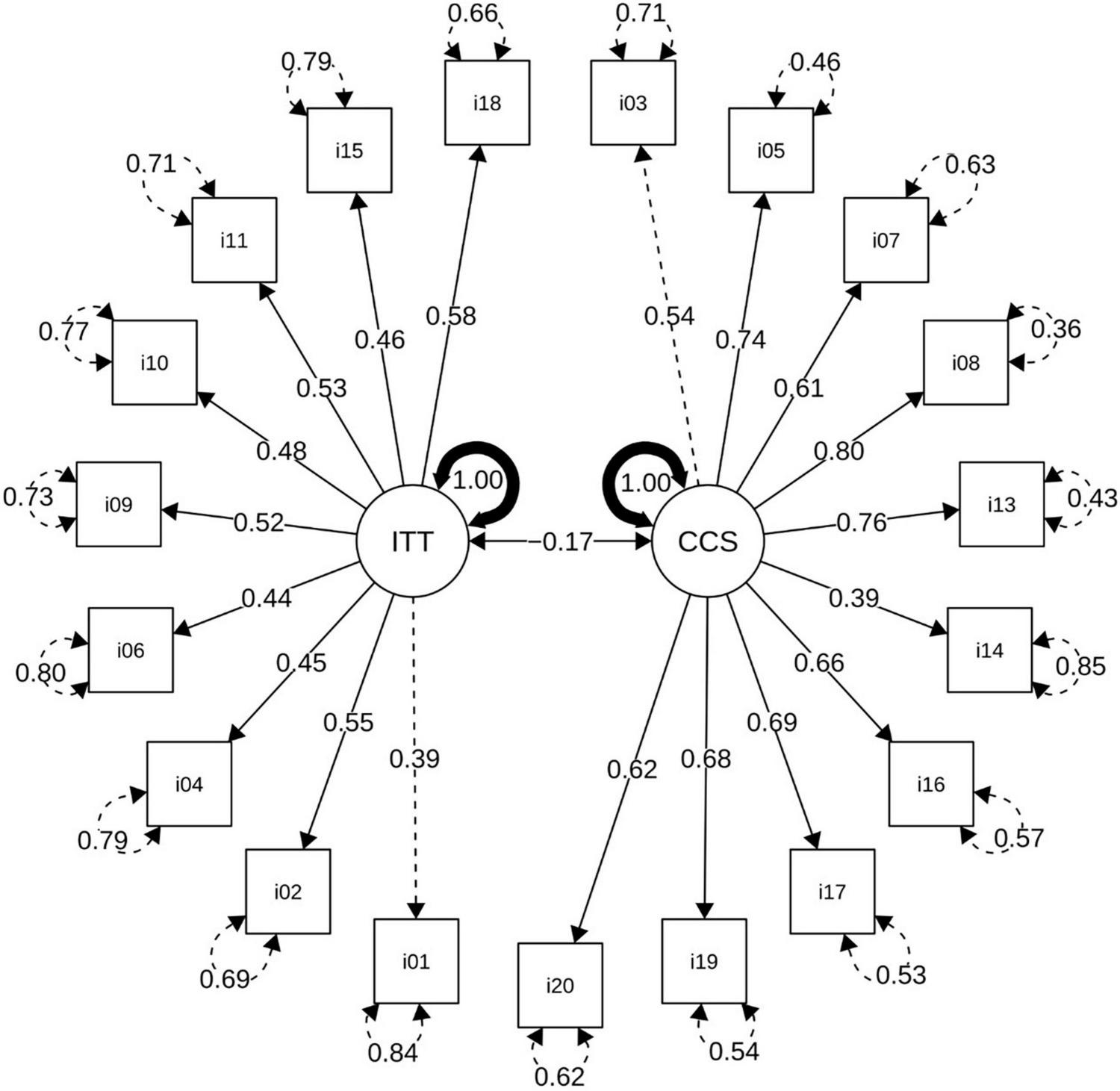
Representation of the structural model. Own.
As far as Set II.3 is concerned, in order to guarantee the quality of the measurement, exploratory and confirmatory factor analyses were carried out. First of all, the original sample was divided into two random sub-samples of n = 323 participants each and an exploratory factor analysis (EFA) was carried out on the polychoric correlation matrix among the items (Hair et al., 2010). After verifying the fit of the data for the factor analysis by way of the Kaiser Meyer Olkin (KMO) test and Bartlett’s test of sphericity [KMO = 0.852; Bartlett’s test of sphericity, χ2(120) = 4316.1; p < 0.001], the dimensionality of the scale was analyzed via parallel analysis (Timmerman and Lorenzo-Seva, 2011). Subsequently, the confirmatory models were estimated on the polychoric correlation matrix obtained with the second random sub-sample (n = 323). In order to evaluate the appropriacy of the model’s fit, the previously mentioned indices were employed (TLI, CFI, RMSEA).
The parallel optimization analysis on 1,000 random replies reached an optimal solution of three factors when the 95th percentile of the proportion of random variance was considered, and of four factors when considering its mean (Table 3). The solution of four factors selected explains 63.7% of the common variance. The first factor, with an eigenvalue of 5.8, explains 36.3% of the common variance and has been called heritage resources. It is made up of 5 items (56, 61, 62, 64, 65). The second factor, with an eigenvalue of 1.65, explains 10.3% of the common variance and has been called sources. It is made up of 3 items (52, 53, 54). The third factor, with an eigenvalue of 1.56, explains 9.75% of the common variance and has been called traditional resources. It is made up of 2 items (50, 55). Last of all, the fourth factor, with an eigenvalue of 1.17, explains 7.3% of the common variance and has been called digital resources/mass media. It is made up of 6 items (51, 57, 58, 59, 60, 63). Finally, the goodness of fit of four alternative models of one, two, three and four factors was compared. The result was extremely favorable to the four correlated factors [χ2 (99) = 282.83, p < 0.001, CFI 0.956, TLI 0.947, RMSEA 0.054]. As far as the reliability of each of the subscales is concerned, the results obtained were also adequate (heritage resources α = 0.87, ω = 0.84; sources α = 0.75, ω = 0.68; traditional resourcesα = 0.68, ω = 0.67; digital resources/mass mediaα = 0.79, ω = 0.74).
TABLE 3
| Items | F1 | F2 | F3 |
| Textbook | 0.071 | –0.281 | –0.666 |
| Web sites of historical contents and with resources for history classes (other teachers’ blogs, etc.). | 0.406 | –0.429 | –0.231 |
| Primary documentary sources | 0.488 | 0.333 | –0.173 |
| Oral sources (interviews with grandparents, family members, neighbors, etc.). | 0.584 | 0.218 | 0.072 |
| Printed or digital press | 0.509 | 0.147 | –0.235 |
| Teacher’s notes | 0.219 | –0.029 | –0.524 |
| Museums and other places of heritage interpretation | 0.744 | 0.132 | –0.071 |
| Films and documentaries on historical topics | 0.682 | –0.074 | 0.018 |
| Historical novels, comics and children’s literature | 0.631 | –0.287 | 0.138 |
| Reports in popular science magazines on historical topics | 0.551 | –0.100 | –0.029 |
| Videogames | 0.503 | –0.487 | 0.275 |
| Festivals and local and regional traditions with historical content | 0.660 | –0.033 | 0.206 |
| Virtual recreations of museums and other centers of heritage interest | 0.729 | –0.083 | 0.099 |
| Mobile telephone and tablet applications with historical and heritage content | 0.552 | –0.357 | 0.079 |
| Artistic productions (paintings, architecture, sculptures, contemporary art, etc.) | 0.727 | 0.298 | –0.020 |
| Local historical and cultural heritage | 0.755 | 0.439 | 0.015 |
Principal component analysis.
Procedure and Data Analysis
The research was carried out following approval by the ethics committee of the University of Murcia. A letter explaining the objectives of the project was sent to the coordinators of the master’s degrees and a link to the website was provided via which the students were able to take part in the study. On the first page of this link an informed consent agreement was included for the participants before beginning the survey, which they could complete between November 2019 and February 2020.
The data analysis was carried out in three phases: (a) a descriptive analysis of Set II.3 of the questionnaire in order to discover the teachers’ responses regarding the most suitable resources and materials for the teaching of history; (b) an agglomerative hierarchical cluster analysis to establish the response profiles of trainee teachers regarding the most suitable historical and cultural heritage resources for the teaching of history; and (c) an inferential analysis (one-way ANOVA) between the response profiles and the mean scores of the CCSF and ITTF factor. All of these analyses were carried out using the R lavaan library (Rosseel, 2012) and the XLSTAT program in its 2020.3.1 version.
Results
Descriptive Analysis
Table 4 presents the descriptive statistics of Set II.3 of the questionnaire, in which the trainee teachers evaluated which resources they considered to be most appropriate for the teaching of history. Thus, if the mean score awarded by the participants in the survey to each of the items is taken as a guideline, the three resources considered to be most suitable were: local historical and cultural heritage (Item 65), with 4.61; Museums and other places of heritage interpretation (Item 56), with 4.49; and artistic productions (Item 64), with 4.45. On the other hand, the resources which proved to be least suitable for teaching historical contents were as follows: websites of historical content (Item 51), with 3.61; videogames (Item 60), with 3.24; and the textbook (Item 50), with 2.93.
TABLE 4
| Item | N | Mean | Median | %1 | %2 | %3 | %4 | %5 | SD |
| 50 | 644 | 2.93 | 3.00 | 9.01 | 23.40 | 38.20 | 23.90 | 5.43 | 1.02 |
| 51 | 645 | 3.61 | 4.00 | 1.86 | 7.44 | 32.90 | 43.30 | 14.60 | 0.89 |
| 52 | 645 | 4.27 | 4.00 | 0.16 | 4.19 | 11.20 | 37.40 | 47.10 | 0.83 |
| 53 | 645 | 4.11 | 4.00 | 0.62 | 4.19 | 18.10 | 37.50 | 39.50 | 0.89 |
| 54 | 643 | 3.82 | 4.00 | 1.09 | 4.82 | 27.10 | 45.10 | 21.90 | 0.87 |
| 55 | 642 | 3.64 | 4.00 | 1.25 | 7.94 | 34.10 | 39.10 | 17.60 | 0.90 |
| 56 | 643 | 4.49 | 5.00 | 0.00 | 0.78 | 6.22 | 35.80 | 57.20 | 0.65 |
| 57 | 643 | 4.19 | 4.00 | 0.16 | 2.02 | 14.00 | 46.70 | 37.20 | 0.76 |
| 58 | 644 | 3.74 | 4.00 | 2.64 | 7.30 | 27.00 | 39.40 | 23.60 | 0.98 |
| 59 | 644 | 3.87 | 4.00 | 1.71 | 5.28 | 24.40 | 41.90 | 26.70 | 0.93 |
| 60 | 645 | 3.24 | 3.00 | 7.13 | 16.70 | 34.90 | 27.30 | 14.00 | 1.11 |
| 61 | 644 | 3.86 | 4.00 | 1.40 | 5.28 | 27.20 | 38.70 | 27.50 | 0.93 |
| 62 | 641 | 4.12 | 4.00 | 0.62 | 3.28 | 16.40 | 42.60 | 37.10 | 0.84 |
| 63 | 644 | 3.65 | 4.00 | 4.19 | 7.14 | 27.60 | 41.30 | 19.70 | 1.01 |
| 64 | 644 | 4.45 | 5.00 | 0.31 | 0.47 | 8.70 | 34.50 | 56.10 | 0.70 |
| 65 | 645 | 4.61 | 5.00 | 0.00 | 0.46 | 5.58 | 26.80 | 67.10 | 0.62 |
| Total | 643.35 | 3.91 | 4.06 | 2.01 | 6.29 | 22.10 | 37.58 | 32.02 | 0.87 |
Descriptive statistics regarding opinions on the use of resources.
In the biplot graph of the EFA of Set II.3 of the questionnaire (Figure 2), it can be observed how the resources linked with heritage mark two trends with opposite directions. On the one hand, resources such as museums, local cultural heritage and artistic productions can be identified located around factor 1. In other words, they are related with aspects of a procedural nature (primary documentary sources, oral sources and printed and digital press resources) and, consequently, with the students’ original scientific disciplines. On the other hand, heritage elements appear with characteristics which are particularly digital (virtual recreations of museums and other centers of heritage interest and applications for mobile telephones and tablets with historical and heritage contents), more related with factor 2, while being grouped preferentially with resources such as films, documentaries and videogames. Also in factor 2, in addition to resources linked with the mass media, more traditional approaches can be found, such as the textbook and the teacher’s notes.
FIGURE 2
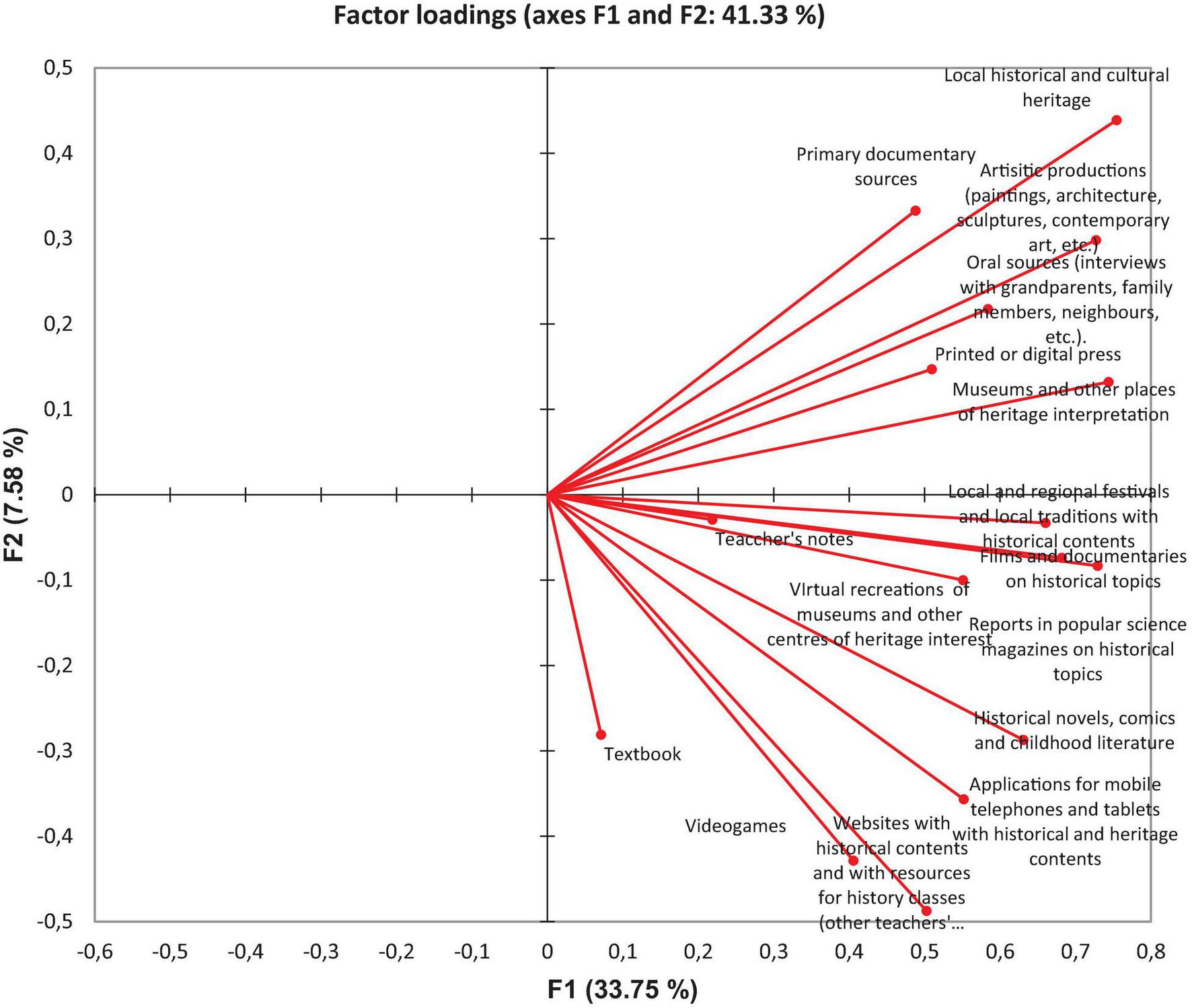
Biplot graph of the EFA of Set II.3.
Profile Analysis
In order to define the response profiles, the decision was taken to employ agglomerative hierarchical clustering (AHC) of the items of the questionnaire related with heritage (Table 5), obtaining three classes as a result. The data indicate that class 3 (314 participants) was the most numerous, followed by class 1 (176) and class 2 (156). Class 1 is that with the most variance (5.6) and that with the greatest distance from the centroid (2.2). As can be observed in the dendrogram (Figure 3), this class (green) is in the corner of the figure.
TABLE 5
| Variable | Sample | Mean | Standard dev. |
| Museums and other places of heritage interpretation. | 646 | 4.495 | 0.648 |
| Local and regional festivals and traditions with historical content. | 646 | 3.856 | 0.928 |
| Virtual recreations of museums and other centers of heritage interest. | 646 | 4.123 | 0.838 |
| Mobile telephone and tablet applications with historical and heritage content. | 646 | 3.652 | 1.007 |
| Artistic productions (paintings, architecture, sculptures, contemporary art, etc.). | 646 | 4.455 | 0.697 |
| Local historical and cultural heritage. | 646 | 4.606 | 0.615 |
| Fieldwork (data collection, exercises) during a visit to a museum or other site of historical interest. | 646 | 4.365 | 0.763 |
| Investigation of local and family history. | 646 | 4.196 | 0.804 |
Agglomerative hierarchical clustering of the items related with heritage.
FIGURE 3
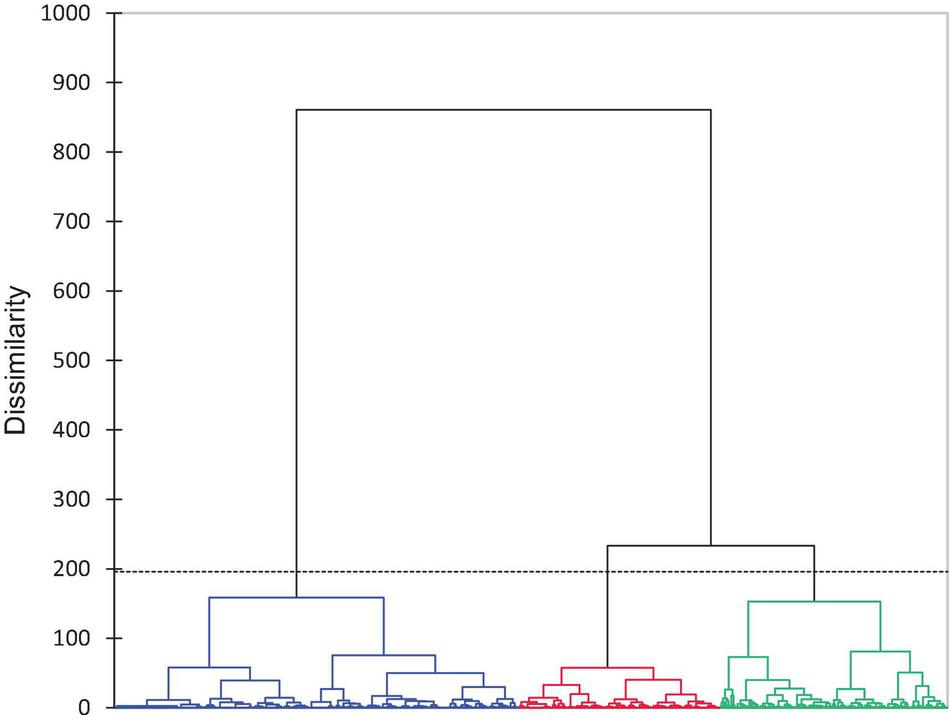
Dendrogram of the classes.
As far as the profile of the classes (Figure 4) is concerned, it can be seen that class 3 is that which scores significantly higher for resources linked to the use of heritage in the classroom, for example, local historical and cultural heritage, artistic productions and fieldwork during visits to a museum or site of historical interest.
FIGURE 4
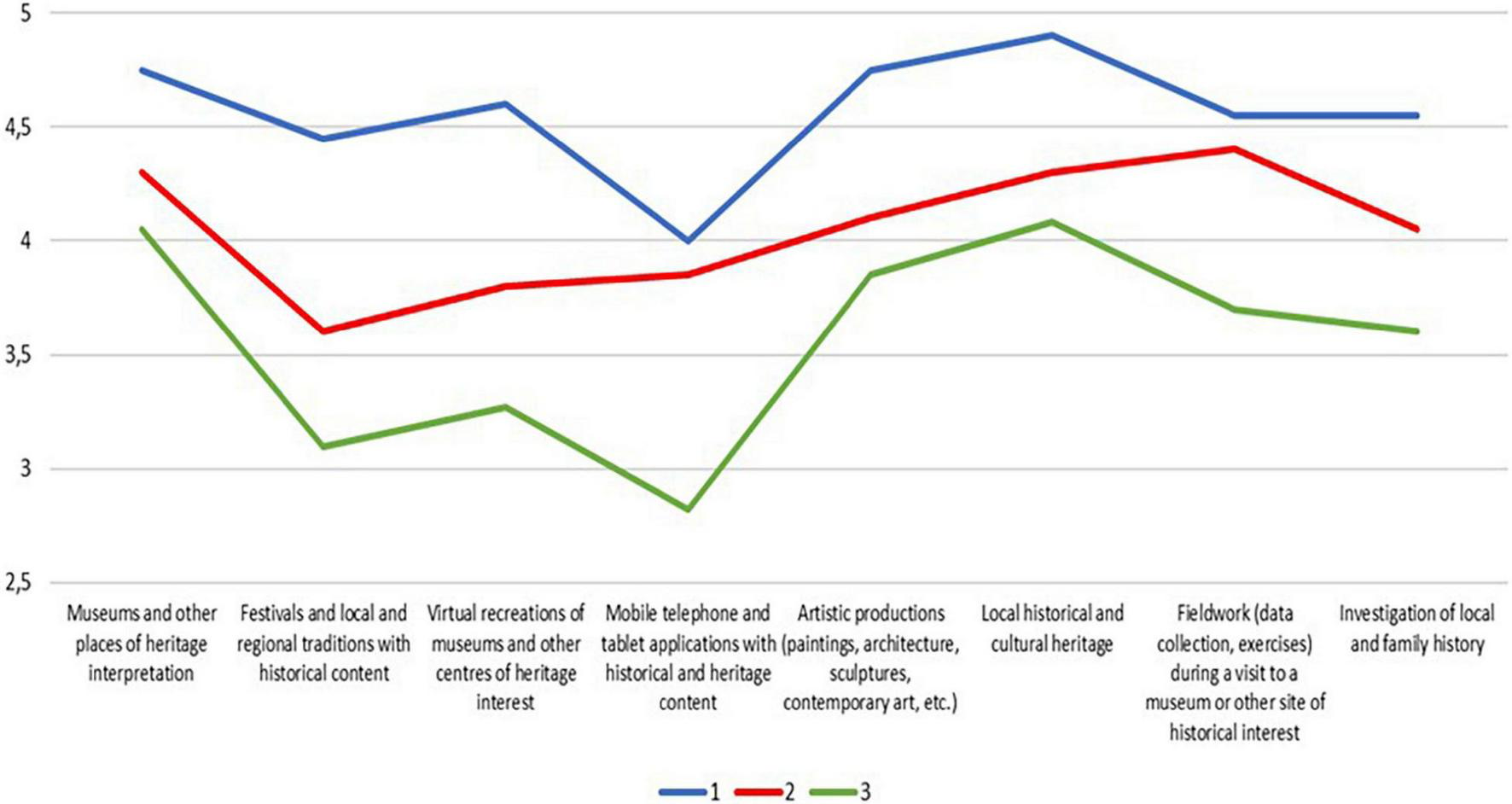
Profile of the classes.
Inferential Analysis (ANOVA)
In order to identify the differences which exist between the different profiles according to the teaching approaches manifested in the ATI questionnaire, an inferential analysis was carried out via one-way ANOVA with the factor scores of the CCST and ITTF factors. No significant differences were found between the classes and the subject-based approach (Table 6).
TABLE 6
| Source | GL | Sum of squares | Mean squares | F | Pr > F |
| Model | 2 | 0.469 | 0.235 | 0.758 | 0.469 |
| Error | 643 | 199.080 | 0.310 | ||
| Corrected total | 645 | 199.549 |
Analysis of variance (ANOVA) between the subject-based (ITT) approach and the classes on the use of heritage.
Calculated against the Y model Y = Mean (Y).
On the other hand, with regard to the factor referring to the student-based teaching approach, in the ANOVA inferential analysis of the CCSF factor, significant differences were found in the classes with a factor of 32,513 where Pr > F is < 0,0001 (Table 7).
TABLE 7
| Source | GL | Sum of squares | Mean squares | F | Pr > F |
| Model | 2 | 15.076 | 7.538 | 32.513 | <0.0001 |
| Error | 643 | 149.083 | 0.232 | ||
| Corrected total | 645 | 164.159 |
Analysis of variance (ANOVA) between the student-based approach and the classes on the use of heritage.
Calculated against the model Y = Mean (Y).
It was observed that the profile of class three (in blue) is that which scored the items of the student-based approach (CCSF) most highly. Thus, the class which scored heritage resources most highly is also that which scored the items of the student-based approach most highly (Figure 5).
FIGURE 5
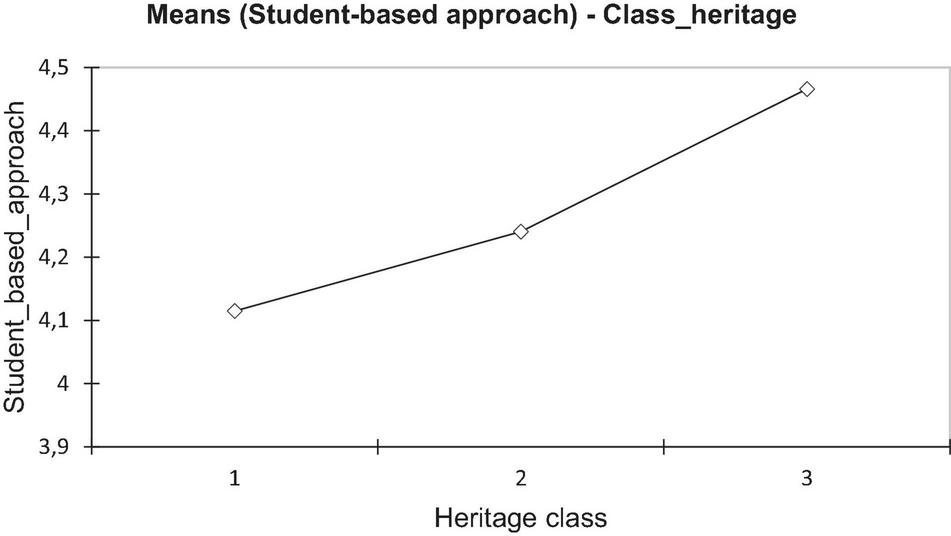
Inferential analysis through ANOVA.
Finally, Tukey’s range test was carried out in order to verify the differences between classes. The main differences arose between class 3 with classes 1 and 2, although there were no significant differences between classes 1 and 2 in their mean scores for the CCSF factor (Table 8).
TABLE 8
| Contrast | Difference | Standardized difference | Critical value | Pr > Diff | Significant |
| 3 vs. 1 | 0.351 | 7.745 | 2.349 | <0.0001 | Yes |
| 3 vs. 2 | 0.226 | 4.782 | 2.349 | <0.0001 | Yes |
| 2 vs. 1 | 0.126 | 2.372 | 2.349 | 0.047 | Yes |
| Critical value of Tukey’s d | 3.322 | ||||
Class_heritage/Tukey (HSD)/analysis of the differences between the categories with a confidence interval of 95% (Student_based_approach).
Discussion and Conclusion
Taking into account the first specific objective of the research, it should be highlighted that the opinions manifested by the trainee teachers regarding the use of resources linked with heritage for the teaching of history show a tendency to use cultural assets linked with their academic disciplines (History, History of Art, etc.) due to their nature as evidence or historical sources. Thus, local historical and cultural heritage was the most valued item, along with places of heritage interpretation and artistic productions compared with websites of historical content, videogames and the textbook. In this regard, it should be highlighted that there was a lack of consideration on the part of the students for resources with a heritage dimension of a technological nature, a field which is particularly suited for accessing heritage and its elements from the field of education (Chih-Hong and Yi-Ting, 2013; Suominen and Sivula, 2013; Luna et al., 2019; Malegiannaki et al., 2020; Torsi et al., 2020; Andrés and Checa, 2021; Edwards et al., 2021).
As for the response profiles of trainee history teachers on the use of historical and cultural heritage in secondary education and its relationship with teaching approaches (the second specific objective), it was observed that class 3 (the most numerous with 314 individuals) is that which scores heritage resources most highly. Likewise, this class values most highly the student-based teaching approach (CCSF), which, as mentioned above, is related with deep and significant student learning (Trigwell and Prosser, 1996).
Consequently, in response to the general objective of this research, it is clear that future teachers who have a higher consideration toward a student-based teaching approach and its importance within the teaching and learning process are also those who value more highly the use of heritage resources linked particularly to local historical and cultural heritage, artistic productions and fieldwork during visits to museums or places of historical interest.
As Estepa (2017) states, the main points of reference which guide teachers’ teaching approaches are their own memories. It is also known that prior conceptions and school memories have a notable effect on the teaching approaches which trainee teachers develop later in their classes (González and Fuentes, 2011). Consequently, it is important to be aware of the epistemological principles held by trainee teachers and their teaching approaches in order to establish plans of action which contribute toward adapting these representations with the aim of seeking improvement in educational contexts (King et al., 2019; Thompson, 2019). It is also essential to reflect on the training offered to future teachers and the methodological strategies and resources which they are given to face the new challenges of history education, which imply, among other aspects, shaping a critical and democratic citizenship which is capable of interpreting its present and participated in it.
It is well known that the introduction of new teaching resources in secondary education is a necessity, along with the implementation of new teaching methodologies, which are more active and innovative and encourage an appropriate training in historical thinking. In this context, heritage has, undoubtedly, been revealed as a tool with great educational potential (Cuenca and Delgado, 2020). New strategies, supported by new resources, will improve learning processes and academic results (Gómez et al., 2020a). However, without appropriate initial teacher training in this sense, there is a risk that this trend will not be continued, and that deeply rooted routines within school culture will be perpetuated.
In conclusion, in relation with the educational implications of this study, we highlight the need to reinforce teacher training programs regarding the use of heritage resources of all kinds and characteristics, in such a way that the preparation that future secondary education teachers receive can be improved. In this context, the importance of broadening the knowledge of trainee teachers regarding heritage resources with technological characteristics, such as videogames, mobile applications and virtual recreations, becomes clear (Kortabitarte et al., 2018; Martínez et al., 2018; Núñez-Barriopedro et al., 2020). Both elements, heritage and technology, are revealed as great allies which can foster history learning via the use of resources which activate the motivation and involvement of students in their own learning processes. Therefore, training processes which help future teachers to be aware of the educational potential of all heritage tools (be they physical or virtual) for the teaching of historical contents should be encouraged. Furthermore, teaching practices are required in teacher training which capacitate students for the use of these resources in their future careers. In this context, including heritage in classes as a resource for the teaching of historical contents may influence the teaching approaches of trainee teachers. In this regard, we consider it necessary to deepen, in future studies, about why there is little interest regarding technological heritage resources, concretely, we need to confirm if it is due to the inadequate quality of these resources, if the reason is that they do not know how to use these resources or, finally, if exist another different raison.
Finally, in terms of the main limitation of this study, we would highlight the need to contrast the data presented with others of a qualitative nature, collected via interviews and discussion groups, which would enable us to gain a greater insight into the quantitative part already carried out. In terms of future research, it is considered of interest to reinforce teacher training programs in order to improve the use of heritage in secondary education and, at the same time, to investigate the impact of these programs on the preparation of students to implement these resources and approaches in their teaching practice.
Publisher’s Note
All claims expressed in this article are solely those of the authors and do not necessarily represent those of their affiliated organizations, or those of the publisher, the editors and the reviewers. Any product that may be evaluated in this article, or claim that may be made by its manufacturer, is not guaranteed or endorsed by the publisher.
Statements
Data availability statement
The raw data supporting the conclusions of this article will be made available by the authors, without undue reservation.
Ethics statement
The studies involving human participants were reviewed and approved by the Research Ethics Commission of the University of Murcia. The patients/participants provided their written informed consent to participate in this study.
Author contributions
CG-C was the primary author of the manuscript. CG-C and JR-M conceived and designed the project of which this study was part. MF-D and ÁC-S wrote the first draft of the manuscript and contributed to revisions, read, and approved the submitted manuscript. All authors contributed to the article and approved the submitted version.
Funding
This research was funded by the Spanish Ministry for Science, Innovation and Universities. Secretary of State for Universities, Research, Development and Innovation (grant no. PGC2018-094491-B-C33), the Seneca Foundation. Regional Agency for Science and Technology (grant no. 20638/JLI/18), the Research project HistoryLab for European Civic Engagement (grant no. 2020-1-ES01-KA226-HE-095430), funded by the ERASMUS + KA226 and the Spanish Ministry for Science and Innovation (grant nos. MCIN/AEI/10.13039/501100011033 and PID2020-113453RB-I00).
Conflict of interest
The authors declare that the research was conducted in the absence of any commercial or financial relationships that could be construed as a potential conflict of interest.
References
1
AndrésG.ChecaD. (2021). Experiences of knowledge transfer on industrial heritage using games, storytelling, and new technologies: “a history of enterprises”.J. Comput. Cult. Herit.191–26. 10.1145/3424951
2
BangdiwalaS. (1987). Using SAS software graphical procedures for the observer agreement chart.Proc. SAS Users Group Int. Conf.121083–1088.
3
BeaujeanA. (2014). Latent variable Modeling Using R: A Step-By-Step Guide.Milton Park: Routledge. 10.4324/9781315869780
4
CalafR. (2010). Un modelo de investigación didáctica del patrimonio.Enseñanza De Cienc. Soc.917–27.
5
ChaparroA.FelicesM. M. (2019). Percepciones del profesorado en formación inicial sobre el uso del patrimonio en contextos educativos.Rev. Interuniv. De Form. Del Prof.33327–346. 10.9685/74264
6
Chih-HongH.Yi-TingH. (2013). An annales school-based serious game creation framework for taiwanese indigenous cultural heritage.J. Comput. Cult. Herit.91–31. 10.1145/2460376.2460380
7
CopelandT. (2009). Archaeological heritage education: citizenship from the ground up.Treb. Arqueol.159–20.
8
CuencaJ. M. (2002). El Patrimonio En La Didáctica De Las Ciencias Sociales. Análisis De Concepciones, Dificultades Y Obstáculos Para Su Integración En La Enseñanza Obligatoria. Doctoral Thesis, Universidad de Huelva, Huelva, Spain.
9
CuencaJ. M.DelgadoE. J. (2020). Handbook of Research on Citizenship and Heritage Education.Pennsylvania, PA: IGI Global.
10
CuencaJ. M.MolinaS.MartínM. (2018). Identidad, ciudadanía y patrimonio. Análisis comparativo de su tratamiento didáctico en museos de estados unidos y españa. arbor.Rev. De Ciencia Pensamiento Y Cult.1941–13. 10.3989/arbor.2018.788n2007
11
Cuenca-LópezJ. M.Estepa-GiménezJ.Martiìn CáceresM. J. (2017). Heritage, education, identity and citizenship. Teachers and textbooks in compulsory education.Rev. De Educ.375136–159. 10.4438/1988-592X-RE-2016-375-338
12
DavisP. (2007). “Place exploration: museums, identity, community,” in Museums And Their Communities, ed.WatsonS. (Abingdon: Routledge), 1–23.
13
DejeneW.BishawA.DagnewA. (2018). Preservice teachers’ approaches to learning and their teaching approach preferences: secondary teacher education program in focus.Cogent. Educ.51–15. 10.1080/2331186X.2018.1502396
14
EdwardsB.EdwardsB. B.GriffithsS.ReynoldsF. F.StanfordA.WoodsM. (2021). The bryn celli ddu minecraft experience: a workflow and problem-solving case study in the creation of an archaeological reconstruction in minecraft for cultural heritage education.J. Comput. Cult. Herit.231–16. 10.1145/3427913
15
EstepaJ. (2013). La Educación Patrimonial En La Escuela Y El Museo: Investigación Y Experiencias.Huelva: University of Huelva, Spain.
16
EstepaJ. (2017). Otra Didáctica De La Historia Para Otra Escuela.Huelva: Universidad de Huelva.
17
ExtremeraM. O.MorenoE. O.GonzálezM. C.OrtegaF. Z.RuzR. P. (2017). Validation of Resilience Scale (CD-RISC) in elite athletes through a structural equation model. RETOS. Nuevas Tendencias en Educación Física.Deporte Y Recreación3296–100. 10.47197/retos.v0i32.49910
18
FelicesM. M.ChaparroA.RodríguezR. A. (2020). Perceptions on the use of heritage to teach history in Secondary Education teachers in training.Humanit. Soc. Sci. Commun.7:123. 10.1057/s41599-020-00619-3
19
FontalO. (2003). La Educación Patrimonial. Teoría Y Práctica En El Aula, El Museo E Internet.Gijón: Trea.
20
FontalO.Gómez-RedondoC. (2016). Heritage education and heritagization processes: sheo methodology for educational programs evaluation.Interchange4765–90. 10.1007/s10780-015-9269-z
21
FontalO.IbáñezA. (2015). Estrategias e instrumentos para la educación patrimonial en España.Educ. Siglo XXI3315–32. 10.6018/j/222481
22
FontalO.Ibáñez-EtxeberriaA. (2017). La investigación en educación patrimonial. Evolución y estado actual a través del análisis de indicadores de alto impacto.Rev. De Educ.375184–214. 10.4438/1988-592X-RE-2016-375-340
23
FontalO.GarcíaS.IbáñezA. (2015). Educación Y Patrimonio. Visiones Caleidoscópicas.Oviedo: Trea.
24
GargalloB.GarfellaP. R.SahuquilloP. M.VerdeI.JiménezM. Á (2015). Métodos centrados en el aprendizaje, estrategias y enfoques de aprendizaje en estudiantes universitarios.Rev. De Educ.370229–254. 10.4438/1988-592X-RE-2015-370-304
25
GeorgeD.MalleryP. (2011). IBM SPSS Statistics 19 Step by Step: A Simple Guide and Reference.London: Pearson.
26
GómezC. J.MirallesP. (2016). Historical skills in compulsory education: assessment. Inquiry Based Strategies and Argumentation.New Approaches Educ. Res.5139–146. 10.7821/naer.2016.7.172
27
GómezC. J.ChaparroA.FelicesM. M.CózarR. (2020a). Estrategias metodológicas y uso de recursos digitales para la enseñanza de la historia. Análisis de recuerdos y opiniones del profesorado en formación inicial.Aula Abierta4965–74. 10.17811/rifie.49.1.2020.65-74
28
GómezC. J.MirallesP.Rodríguez-MedinaJ.MaquilónJ. (2020b). Perceptions on the procedures and techniques for assessing history and defining teaching profiles. Teacher training in Spain and the United Kingdom.Educ. Stud.431–19. 10.1080/03055698.2019.1707069
29
GómezC. J.MonteagudoJ.MorenoJ. R.SainzM. (2020c). Evaluation of a gamification and flipped-classroom program used in teacher training: perception of learning and outcome.PLoS One15:0236083. 10.1371/journal.pone.0236083
30
GómezC. J.Monteagudo-FernándezJ.Rodríguez MedinaJ.Miralles MartínezP. (2019). “Evaluación de un programa de intervención sobre educación histórica en la formación inicial del profesorado de educación secundaria,” in Investigación, Innovación Docente y TIC. Nuevos Horizontes Educativos, edsAlonso GarcíaS.Romero RodríguezJ. M.Rodríguez-JiménezC.Sola RecheJ. M. (Madrid: Dykinson), 1648–1661.
31
GómezC. J.RodríguezR. A.MireteA. B. (2018). Percepción de la enseñanza de la historia y concepciones epistemológicas. Una investigación con futuros maestros.Rev. Complut. De Educ.29237–250. 10.5209/RCED.52233
32
GonzálezM.FuentesE. J. (2011). El Practicum en el aprendizaje de la profesión docente.Rev. De Educ.35447–70.
33
GosselinV.LivingstoneP. (eds) (2016). Museums And The Past. Constructing Historical Consciousness.Vancouver, BC: UBC Press.
34
Guerrero-RomeraC.Sánchez-IbáñezR.Escribano-MirallesA.Vivas-MorenoV. (2021). Active teachers’ perceptions on the most suitable resources for teaching history.Humanit. Soc. Sci. Commun.8:61. 10.1057/s41599-021-00736-7
35
GuillermoM.CárdenasF. A.Hernández-PinaF. (2018). Enfoques de enseñanza y enfoques de aprendizaje perspectivas teóricas promisorias para el desarrollo de investigaciones en educación en ciencias.Cienc. Educ.24993–1012. 10.1590/1516-731320180040012
36
HairJ. F.BlackW. C.BabinB. J.AndersonR. E. (2010). Multivariate Data Analysis, 7th.Edn. Hoboken, NJ: Prentice Hall.
37
HernándezF.MaquilónJ. J. (2010). “Introducción a los diseños de investigación educativa,” in Principios, Métodos Y Técnicas Esenciales Para La Investigación Educativa, ed.NietoS. (Madrid: Dykinson), 109–126.
38
Jagielska-BurdukA.StecP. (2019). Council of europe cultural heritage and education policy: preserving identity and searching for a common core?Rev. Electrón. Interuniv. Form. Profr.221–12. 10.6018/reifop.22.1.354641
39
KingF.LoganA.LohanA. (2019). Self-study enabling understanding of the scholarship of teaching and learning: an exploration of collaboration among teacher educators for special and inclusive education.Stud. Teach. Educ.15118–138. 10.1080/17425964.2019.1587607
40
KönigJ.LigtvoetaR.KlemenzaS.RothlandbM. (2017). Effects of opportunities to learn in teacher preparation on future teachers’ general pedagogical knowledge: analyzing program characteristics and outcomes.Stud. Educ. Eval.53122–133. 10.1016/j.stueduc.2017.03.001
41
KortabitarteA.GillateI.LunaU.Ibáñez-EtxeberriaA. (2018). Las aplicaciones móviles como recursos de apoyo en el aula de Ciencias Sociales: estudio exploratorio con la app “architecture gothique/romane” en educación secundaria. ENSAYOS.Rev. De La Facul. De Educ. De Albacete3365–79. 10.18239/ensayos.v33i1.1743
42
LunaÚIbáñez-EtxeberriaA.RiveroP. (2019). El patrimonio aumentado. 8 apps de Realidad Aumentada para la enseñanza-aprendizaje del patrimonio.Rev. Electrón. Interuniv. Form. Profr.3343–62. 10.47553/rifop.v33i1.72088
43
MalegiannakiI. A.DaradoumisT.RetalisS. (2020). Teaching cultural heritage through a narrative-based game.J. Comput. Cult. Herit.271–28. 10.1145/3414833
44
MartínM. J.CuencaJ. M. (2011). La enseñanza y el aprendizaje del patrimonio en los museos: la perspectiva de los gestores.Rev. De Psicodidáctica1699–122.
45
MartínezJ. M.EgeaA.AriasL. (2018). Evaluación de un videojuego educativo de contenido histórico. La opinión de los estudiantes.Relat. Rev. Latinoamericana De Tecnol. Educ.1761–75. 10.17398/1695-288X.17.1.61
46
MartínezM. (2016). “Análisis comparativo de la imagen del patrimonio en la legislación nacional y autonómica, dentro de la educación obligatoria,” in Patrimonio, Identidad Y Ciudadanía En La Enseñanza De Las Ciencias Sociales, edsMolinaS.EscribanoA.DíazJ. (Murcia: Editorial Universidad de Murcia), 186–199.
47
MartínezN.MirallesP.NavarroE. (2009). Análisis de cómo los docentes plantean el inicio de las clases, desde la perspectiva del alumnado.Rev. Educ.348413–433.
48
Martínez-HitaM.GómezC. J. (2018). Nivel cognitivo y competencias de pensamiento histórico en los libros de texto de Historia de España e Inglaterra. Un estudio comparativo.Rev. Educ.379145–169. 10.4438/1988-592X-RE-2017-379-364
49
McDonaldR. P. (1985). Factor Analysis And Related Methods.Hillsdale, NJ: Erlbaum.
50
MerchánF. J. (2005). Enseñanza, Examen Y Control: Profesores Y Alumnos En La Clase De Historia.Barcelona: Octaedro.
51
MirallesP. (2015). “Investigaciones sobre evaluación en ciencias sociales en educación básica. Propuestas para la mejora de la práctica educativa,” in Didáctica De La Historia. Problemas Y Métodos, edsLimaL.PernasP. (México, DF: El Dragón Rojo), 99–129.
52
MirallesP.RodríguezR. A. (2015). Estado de la cuestión sobre la investigación en didáctica de la historia en españa.Índice Histórico Español12867–95. 10.1344/ihe.2015.0.
53
MirallesP.GómezC. J.AriasV.FontalO. (2019). Digital resources and didactic methodology in the initial training of History teachers, Comunicar.Media Educ. Res. J.2741–51. 10.3916/C61-2019-04
54
MirallesP.GómezC. J.RodríguezR. A. (2017). Patrimonio, competencias históricas y metodologías activas de aprendizaje. Un análisis de las opiniones de los docentes en formación en España e Inglaterra.Estud. Pedagóg.43161–184. 10.4067/S0718-07052017000400009
55
MonroyF.González-GeraldoJ. L.Hernández-PinaF. (2015). A psychometric analysis of the Approaches to Teaching Inventory (ATI) and a proposal for a Spanish version (S-ATI-20).An. Psicol.31172–183. 10.6018/analesps.31.1.190261
56
MonteagudoJ.RodríguezR. A.EscribanoA.RodríguezA. M. (2020). Percepciones de los estudiantes de Educación Secundaria sobre la enseñanza de la historia a través del uso de las TIC y recursos digitales.Rev. Electrón. Interuniv. Form. Profr.2367–79. 10.6018/reifop.417611
57
Monteagudo-FernándezJ.Gómez-CarrascoC. J.Chaparro-SainzÁ (2021). Heritage education and research in museums. conceptual, intellectual and social structure within a knowledge domain (2000–2019).Sustainability13:6667. 10.3390/su13126667
58
Núñez-BarriopedroE.Sanz-GómezY.Ravina-RipollR. (2020). Los videojuegos en la educación: beneficios y perjuicios.Rev. Electrón. Educ.241–18. 10.15359/ree.24-2.12
59
PintoH. (2013). Usos del patrimonio en la didáctica de la historia: perspectivas de alumnos y profesores portugueses relativas a identidad y conciencia histórica.Educ. Siglo3161–88.
60
ProsserM.TrigwellK. (2006). Confirmatory factor analysis of the approaches to teaching inventory.Br. J. Educ. Psychol.76405–419. 10.1348/000709905x43571
61
RoblesY. I.SaavedraJ. E.AgüeroY. D. (2020). Propiedades psicométricas y métodos de medición de la escala de autoinforme sobre el trastorno de déficit de atención e hiperactividad en adultos–tamizaje (ASRS-Tamizaje) en la población de Lima.Rev. Neuro Psiquiatr.83217–227. 10.20453/rnp.v83i4.3887
62
RodríguezR. A.SimónM. M.MolinaS. (2017). La Región de Murcia en los manuales escolares de educación secundaria: una narrativa a la sombra de España y Europa.Hist. Mem. Educ.6241–277. 10.5944/hme.6.2017.17133
63
Rodríguez-MedinaJ.Gómez-CarrascoC. J.Miralles-MartínezP.Aznar-DíazI. (2020). An evaluation of an intervention programme in teacher training for geography and history: a reliability and validity analysis.Sustainability12:3124. 10.3390/su12083124
64
RollV.MeyerC. (2020). Young people’s perceptions of world cultural heritage: suggestions for a critical and reflexive world heritage education.Sustainability12:8640. 10.3390/su12208640
65
RosseelY. (2012). Lavaan: an R package for structural equation modeling.J. Statist. Softw.481–36. 10.18637/jss.v048.i02
66
SapsfordR.JuppV. (2006). Data Collection and Analysis.London: Sage Publications.
67
SemedoA. (2015). Representações e identidade em exposições de museus.Clío. History History Teach.41Available online at:https://dialnet.unirioja.es/servlet/articulo?codigo=5303966(accessed November 9, 2021).
68
SoininenT. (2017). Adopt-a-monument: preserving archaeological heritage for the people, with the people.J. Commun. Archaeol. Herit.4131–137. 10.1080/20518196.2017.1293926
69
StesA.De MaeyerS.Van PetegemP. (2010). Approaches to teaching in higher education: validation of a dutch version of the approaches to teaching inventory.Learn. Environ. Res.1359–73. 10.1007/s10984-009-9066-7
70
SuominenJ.SivulaA. (2013). Gaming legacy? four approaches to the relation between cultural heritage and digital technology.J. Comput. Cult. Herit.121–18. 10.1145/2499931.2499933
71
ThompsonM. (2019). Early childhood pedagogy in a socio-cultural medley in ghana: case studies in kindergarten.Int. J. Early Child.51177–192. 10.1007/s13158-019-00242-7
72
TimmermanM. E.Lorenzo-SevaU. (2011). Dimensionality assessment of ordered polytomous items with parallel analysis.Psychol. Methods16209–220. 10.1037/a0023353
73
TorsiS.ArditoC.RebekC. (2020). An interactive narrative to improve cultural heritage experience in elementary school children.J. Comput. Cult. Herit.221–14. 10.1145/3382771
74
TrigwellK.ProsserM. (1996). Congruence between intention and strategy in science teachers’ approach to teaching.High. Educ.3277–87. 10.1007/BF00139219
75
TrigwellK.ProsserM.GinnsP. (2005). Phenomenographic pedagogy and a revised approaches to teaching inventory.High. Educ. Res. Dev.24349–360. 10.1080/07294360500284730
76
VallsR. (2018). “Los manuales en el aula de historia,” in O Manual Escolar No Ensino Da História. Visões Historiográficas e Didáticas. Associação De Professores De História, edsSoléG.BarcaI. (Lisboa: Associação de Professores de História), 350–370.
77
Van BoxtelC.GreverM.KleinS. (2015). “Heritage as a resource for enhancing and assessing historical thinking: reflections from the netherlands,” in New Directions in Assessing Historical Thinking, edsErcikanK.SeixasP. (New York, NY: Routledge), 40–50.
78
Van DoorsselaereJ. (2021). Connecting sustainable development and heritage education? an analysis of the curriculum reform in flemish public secondary schools.Sustainability13:1857. 10.3390/su13041857
79
Ventura-LeónJ. L.Caycho-RodríguezT. (2017). El coeficiente Omega: un método alternativo para la estimación de la confiabilidad.Rev. Latinoam. Cienc. Soc. Ninez Juv.15625–627.
80
VicentN.IbáñezA.AsensioM. (2015). Evaluación de programas de educación patrimonial de base tecnológica.Virtual Archaeol. Rev.1318–25. 10.4995/var.2015.4367
81
Yunga-GodoyD.LoaizaM. I.Ramón-JaramilloL. N.PuertasL. (2016). Enfoques de la enseñanza en educación universitaria: una exploración desde la perspectiva latinoamericana.Profesorado20313–333.
Summary
Keywords
cultural heritage, teaching approaches, initial teacher training, secondary school, history education, baccalaureate
Citation
Chaparro-Sainz Á, Felices-De la Fuente MdM, Rodríguez-Medina J and Gómez-Carrasco CJ (2022) Heritage Resources and Teaching Approaches. A Study With Trainee Secondary Education History Teachers. Front. Educ. 7:814197. doi: 10.3389/feduc.2022.814197
Received
12 November 2021
Accepted
18 March 2022
Published
25 April 2022
Volume
7 - 2022
Edited by
Dominik E. Froehlich, University of Vienna, Austria
Reviewed by
Delfín Ortega-Sánchez, University of Burgos, Spain; Xavier Romão, University of Porto, Portugal
Updates
Copyright
© 2022 Chaparro-Sainz, Felices-De la Fuente, Rodríguez-Medina and Gómez-Carrasco.
This is an open-access article distributed under the terms of the Creative Commons Attribution License (CC BY). The use, distribution or reproduction in other forums is permitted, provided the original author(s) and the copyright owner(s) are credited and that the original publication in this journal is cited, in accordance with accepted academic practice. No use, distribution or reproduction is permitted which does not comply with these terms.
*Correspondence: María del Mar Felices-De la Fuente, marfelices@ual.es
This article was submitted to Teacher Education, a section of the journal Frontiers in Education
Disclaimer
All claims expressed in this article are solely those of the authors and do not necessarily represent those of their affiliated organizations, or those of the publisher, the editors and the reviewers. Any product that may be evaluated in this article or claim that may be made by its manufacturer is not guaranteed or endorsed by the publisher.